

The impact of educational gamification on cognition, emotions, and motivation: a randomized controlled trial
Open accessThe DOI matches its Crossref record; 189 of the 191 references it cites were found in a registry or an index, and 1 are not checked yet; none of the 100 sources its claims cite is checked for support yet.
Abstract
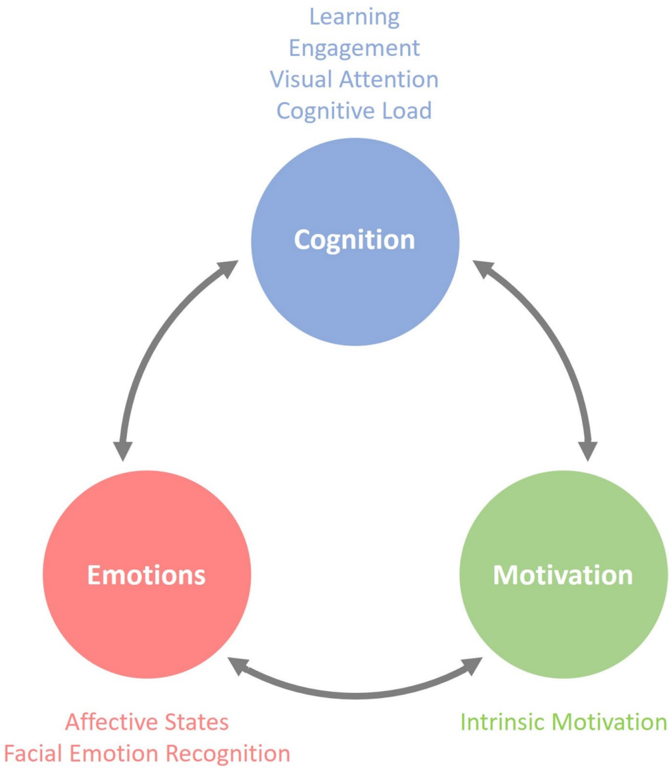
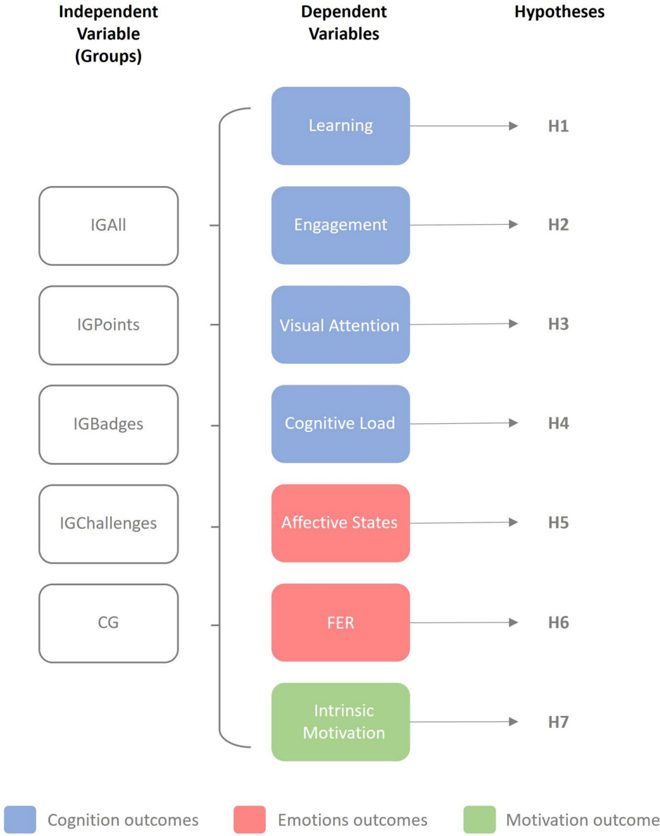
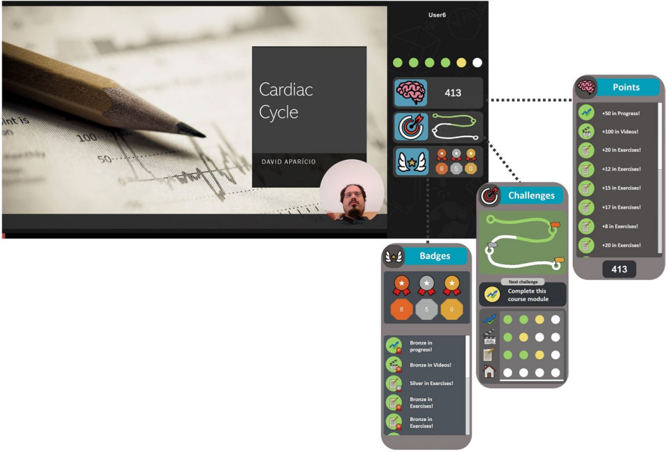
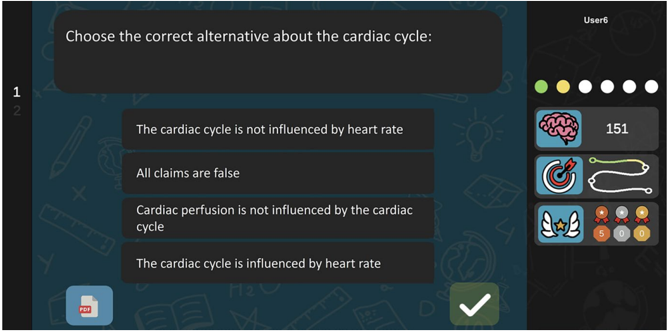
This study examines the impact of gamification on education using a novel gamified digital learning platform and a randomized controlled trial (RCT) protocol. Following established research guidelines (CONSORT, Cochrane Collaboration, EVAT©), we assessed the individual and combined effects of points, badges, and challenges against a control group without gamification. The RCT evaluated participant characteristics (sociodemographics, game habits, player traits) and outcomes in cognition (learning, engagement, webcam-based eye-tracking for visual attention, cognitive load), emotions (affective states, webcam-based facial emotion recognition), and motivation (intrinsic motivation). Results showed significantly higher learning for participants using all game elements versus the control group, while badges alone increased cognitive load compared to the other gamification groups. These findings suggest that gamification is more effective when thoughtfully integrating game elements rather than applying elements in isolation, aligning goal-setting with feedback, and combining intrinsic and extrinsic motivational cues. The absence of significant results in other variables may reflect the novelty effect, emphasizing the importance of aligning gamification with pedagogical goals, considering individual and contextual factors, and designing systems that address usability and long-term impact. Educational implications and design recommendations are provided.
Checked 2026-11-23 · 1 reference not checked yet
Overview
CoChat Summary
TL;DR
This randomized controlled trial tested isolated and combined gamification elements (points, badges, challenges) against a non-gamified control in an undergraduate nursing course. Combining all three elements improved learning performance versus control, while badges alone increased cognitive load; most other cognitive, emotional, and motivational outcomes showed no significant group differences.
Key findings
- A one-way MANOVA showed a significant effect of learning environment on the eight response variables: Roy’s Largest Root = 0.318; F(8, 73) = 2.902, p = 0.007; partial η² = 0.241.
- Learning performance was significantly higher in IGAll than CG (95% CI −3.83, −0.38; p = 0.009); IGAll mean = 3.28 (SD = 2.024) vs CG mean = 1.18 (SD = 1.741). H1a was supported, but H1b and H1c were rejected.
- Cognitive load differed by group: IGBadges had higher load than IGChallenges (95% CI 0.236, 9.044; p = 0.034) and IGAll (95% CI 0.482, 8.903; p = 0.021), with a near-significant difference vs IGPoints (95% CI −0.026, 8.638; p = 0.052). IGBadges mean = 21.2019 (SD = 4.86110) vs IGAll = 16.5094 (SD = 3.87113).
- No significant group differences were found for engagement, visual attention, valence, arousal, interest/enjoyment, or proportion of neutral emotion; hypotheses H2–H7 were not supported.
Methods
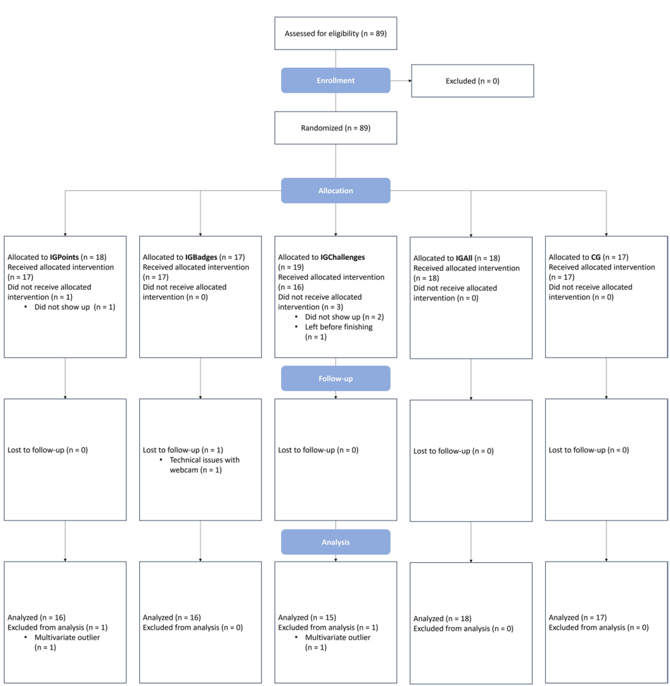
- Between-subjects RCT with five groups: IGPoints (n = 16), IGBadges (n = 16), IGChallenges (n = 15), IGAll (n = 18), and CG (n = 17). Participants were 82 undergraduate nursing students (72 women, 10 men; ages 17–30, M = 18.67, SD = 1.89) recruited from an Anatomy and Physiology course in Lisbon, Portugal; 89 were recruited and 82 analyzed after exclusions.
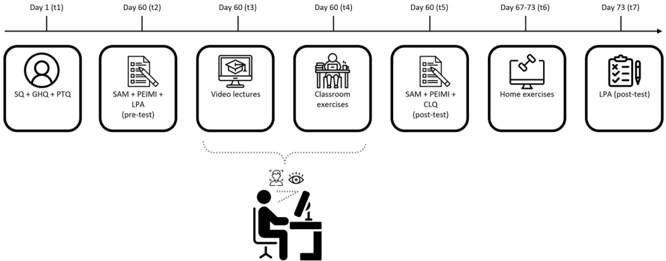
- The digital course was nested in a gamified platform with four gamified versions and one control version. Measures included learning performance (10 multiple-choice pre/post exam), engagement (80 home exercises), visual attention (WebGazer webcam eye-tracking gaze points), cognitive load (18-item CLQ, 11-point Likert), affective states (SAM valence/arousal), facial emotion recognition (Morphcast proportion of neutral emotion), and intrinsic motivation (PEIMI Interest/Enjoyment scale).
- Analysis used one-way MANOVA with learning environment as the independent variable and eight response variables, followed by univariate ANOVAs and post-hoc Tukey tests. An a priori power analysis using G*Power specified N = 80 with medium effect size f²(V) = 0.09, power = 0.80, alpha = 0.05.
Limitations
- The paper states the sample was mainly women aged 17–20, nursing students, born in Portugal, who played less than 10 hours weekly or not at all, with challenge and goal orientation as predominant traits; it was a convenience sample selected due to available professors and calendar constraints.
- The paper states the intervention measured only short-term effects due to limited course duration; the novelty effect may have influenced results; the CLQ was translated and back-translated because no validated Portuguese version existed; webcam eye-tracking is less precise than infrared eye-tracking; webcam FER may introduce bias, inaccuracy, and miscategorization; and sample size limited statistical power for moderator and mediator analyses.
- The text also makes evident that most outcomes showed no significant effects, that badges lacked clear achievement criteria, and that the combined gamification group’s learning gain may reflect cumulative or novelty-related effects rather than a single measured mediator.
Model-written summary. Check it against the paper before relying on it.
Integrity signals
Registry
Cites
Statistics
Figures

Verification
Claims the paper makes
0 Valid · 1 Not valid · 65 Not checked · 66 Own results and interpretations
A result the paper reports from its own data — it cites no other source for it, so there is none to check. The quote shows it is in the paper.
In the paper
“Results showed significantly higher learning for participants using all game elements versus the control group, while badges alone increased cognitive load compared to the other gamification groups.”
§ The impact of educational gamification on cognition, emotions, and motivation: a randomized controlled trial > Abstract
plainstates a cause- Asserted: passes — The authors put it forward as true.
- Checkable: passes — It can be checked against evidence.
- Load-bearing: passes — The paper’s conclusions depend on it.
- Based: passes — The paper gives a reason why it holds.
A result the paper reports from its own data — it cites no other source for it, so there is none to check. The quote shows it is in the paper.
In the paper
“while badges alone increased cognitive load compared to the other gamification groups.”
§ The impact of educational gamification on cognition, emotions, and motivation: a randomized controlled trial > Abstract
plainstates a cause- Asserted: passes — The authors put it forward as true.
- Checkable: passes — It can be checked against evidence.
- Load-bearing: passes — The paper’s conclusions depend on it.
- Based: passes — The paper gives a reason why it holds.
A result the paper reports from its own data — it cites no other source for it, so there is none to check. The quote shows it is in the paper.
In the paper
“One-way MANOVA analysis revealed an effect of the learning environment on the response variables [Roy's Largest Root = 0.318; F(8, 73) = 2.902, p = 0.007; partial η 2 = 0.241)].”
§ The impact of educational gamification on cognition, emotions, and motivation: a randomized controlled trial > Results
plainstates an association- Asserted: passes — The authors put it forward as true.
- Checkable: passes — It can be checked against evidence.
- Load-bearing: passes — The paper’s conclusions depend on it.
- Based: passes — The paper gives a reason why it holds.
- Rests on an assumption not shown here.
A result the paper reports from its own data — it cites no other source for it, so there is none to check. The quote shows it is in the paper.
In the paper
“comparison of Cognitive Load's means between IGBadges and IGPoints tend to significance (I.C. 95%) -0.026, 8.638; p = 0.052)”
§ The impact of educational gamification on cognition, emotions, and motivation: a randomized controlled trial > Results
hedged- Asserted: passes — The authors put it forward as true.
- Checkable: passes — It can be checked against evidence.
- Load-bearing: unclear — It is unclear whether the paper’s conclusions depend on it.
- Based: passes — The paper gives a reason why it holds.
- Rests on an assumption not shown here.
A result the paper reports from its own data — it cites no other source for it, so there is none to check. The quote shows it is in the paper.
In the paper
“When points, badges, and challenges were combined, there was a significant positive impact on learning performance.”
§ The impact of educational gamification on cognition, emotions, and motivation: a randomized controlled trial > Gamification and education
plainstates a cause- Asserted: passes — The authors put it forward as true.
- Checkable: passes — It can be checked against evidence.
- Load-bearing: passes — The paper’s conclusions depend on it.
- Based: passes — The paper gives a reason why it holds.
37 more claims
Create a free account to see all 132 claims and to verify the 89 references still open.
- It may state two separate claims as one. 66
- Probably not a substantial claim. 49
- The quote only partly states this claim. 2
Statistics that don’t add up
Each reported p-value recomputed from its test statistic and degrees of freedom, each partial η² from its F, and each ratio, mean difference or B printed with a p checked against its own confidence interval.
Rated minor: it would not touch a result — a value no result rests on, a p-value that stays on the same side of the significance level, or a conflict that is clerical, resolved elsewhere in the paper, or outside its own findings.
In the paper
“F(4, 77) = 0.637, p = 0.612”
§ The impact of educational gamification on cognition, emotions, and motivation: a randomized controlled trial > Results
Reported p = .612 · recomputed p = .638
Statistics recomputed
Every reported test result, recomputed from its test statistic and degrees of freedom. A result shows as not adding up only once an independent check has confirmed it.
- Doesn’t add upF(4, 77) = 0.637reported p = .612 · recomputed p = .638
“F(4, 77) = 0.637, p = .612”
- ConsistentF(4, 77) = 0.137reported p = .968 · recomputed p = .968
“F(4, 77) = 0.137, p = .968”
- ConsistentF(4, 77) = 0.203reported p = .936 · recomputed p = .936
“F(4, 77) = 0.203, p = .936”
- ConsistentF(4, 77) = 0.339reported p = .851 · recomputed p = .851
“F(4, 77) = 0.339, p = .851”
- ConsistentF(4, 77) = 0.303reported p = .875 · recomputed p = .875
“F(4, 77) = 0.303, p = .875”
9 more recomputed tests
Create a free account to see every test the Stats check recomputed.
Self-check
Percentages, sums and reported differences re-computed from the paper’s own numbers.
Each contradiction between two passages listed here was confirmed by an independent check.
Rated major: it would touch a result — a value a result rests on, reported and recomputed p-values on opposite sides of the significance level, two passages that conflict with no sign which is right, or a cited work retracted before this paper was published.
In the paper
§ The impact of educational gamification on cognition, emotions, and motivation: a randomized controlled trial > Discussion
“Our results support hypothesis H1a (refer to Table 6 for Learning Performance data and Post-hoc Tukey's Tests), indicating that integrating all game elements enhances learning performance compared to other IG and CG groups.”
§ The impact of educational gamification on cognition, emotions, and motivation: a randomized controlled trial > Results
“The other comparisons are non-significant.”
Citations
Cites
Tabachnick, B. G., & Fidell, L. S. (1983) · Cited by 80,058
Faul, F., Erdfelder, E., Lang, A.-G., & Buchner, A. (2007) · Behavior Research Methods · doi:10.3758/bf03193146 · Cited by 65,971 · cited 7×
“One-way MANOVA analysis revealed an effect of the learning environment on the response variables [Roy’s Largest Root = 0.318; F(8, 73) = 2.902, p = 0.007; partial η 2 = 0.241)].”
InfluentialRyan, R. M., & Deci, E. L. (2000) · American Psychologist · doi:10.1037//0003-066x.55.1.68 · Cited by 54,599
Guidelines for the process of cross-cultural adaptation of self-report measures
Beaton, D. E., Bombardier, C., Guillemin, F., & Ferraz, M. B. (2000) · Spine · doi:10.1097/00007632-200012150-00014 · Cited by 14,542
CONSORT 2010 Statement: updated guidelines for reporting parallel group randomised trials
Schulz, K. F., Altman, D. G., Moher, D., & for the CONSORT Group (2010) · BMJ · doi:10.1136/bmj.c332 · Cited by 9,329
From game design elements to gamefulness: defining "gamification"
Deterding, S., Dixon, D., Khaled, R., & Nacke, L. (2011) · Proceedings of the 15th International Academic MindTrek Conference: Envisioning Future Media Environments · doi:10.1145/2181037.2181040 · Cited by 8,402 · cited 1×
“Gamification involves integrating game elements into non-game contexts and is distinct from traditional gameplay (Deterding et al., 2011, 2013).”
Ryan, R. M., & Deci, E. L. (2020) · Contemporary Educational Psychology · doi:10.1016/j.cedpsych.2020.101860 · Cited by 6,037
Csíkszentmihályi, M. (1975) · Cited by 5,690
Does Gamification Work? -- A Literature Review of Empirical Studies on Gamification
Hamari, J., Koivisto, J., & Sarsa, H. (2014) · 2014 47th Hawaii International Conference on System Sciences · doi:10.1109/hicss.2014.377 · Cited by 5,201 · cited 1×
“Gamification itself can act as a novelty effect, which may be short-lived rather than enduring (Hamari et al., 2014).”
Heuristic evaluation of user interfaces
Nielsen, J., & Molich, R. (1990) · Proceedings of the SIGCHI conference on Human factors in computing systems Empowering people - CHI '90 · doi:10.1145/97243.97281 · Cited by 3,533
The emotion probe: Studies of motivation and attention.
Lang, P. J. (1995) · American Psychologist · doi:10.1037//0003-066x.50.5.372 · Cited by 2,746
The gamification of learning: a meta-analysis
Sailer, M., & Homner, L. (2020) · Educational Psychology Review · doi:10.1007/s10648-019-09498-w · Cited by 2,594 · cited 1×
“…in education—spanning general education (from basic to higher levels, including courses and training) (Koivisto & Hamari, 2019; Majuri et al., 2018; Sailer & Homner, 2020), e-learning in higher education (Khaldi et al., 2023; Smiderle et al., 2020; van Roy & Zaman, 2018), and cognitive processes…”
Cognitive Architecture and Instructional Design: 20 Years Later
Sweller, J., van Merriënboer, J. J. G., & Paas, F. (2019) · Educational Psychology Review · doi:10.1007/s10648-019-09465-5 · Cited by 2,337 · cited 4×
“Gamification should align pedagogy with design, as cognitive load is related to unnecessary learning demands (Sweller et al., 2019).”
InfluentialSweetser (2005) · doi:10.1145/1077246.1077253 · Cited by 2,124 · cited 1×
“We suggest assessing these in future studies, utilizing tools like the Online Learning Satisfaction (OLS) framework (Martin & Bolliger, 2022) for satisfaction and GameFlow (Sweetser & Wyeth, 2005) to gauge flow.”
Sailer, M., Hense, J. U., Mayr, S. K., & Mandl, H. (2017) · Computers in Human Behavior · doi:10.1016/j.chb.2016.12.033 · Cited by 2,064 · cited 1×
“Another study testing gamification through badges, leaderboards, and performance graphs found that these elements improved competence satisfaction and task meaningfulness, while avatars, stories, and teammates enhanced feelings of social relatedness (Sailer et al., 2017).”
Hanus, M. D., & Fox, J. (2015) · Computers & Education · doi:10.1016/j.compedu.2014.08.019 · Cited by 1,918 · cited 2×
“Initial excitement from game elements can decline over time (Hanus & Fox, 2015).”
A meta-analysis of the cognitive and motivational effects of serious games.
Wouters, P., van Nimwegen, C., van Oostendorp, H., & van der Spek, E. D. (2013) · Journal of Educational Psychology · doi:10.1037/a0031311 · Cited by 1,864
The rise of motivational information systems: A review of gamification research
Koivisto, J., & Hamari, J. (2019) · International Journal of Information Management · doi:10.1016/j.ijinfomgt.2018.10.013 · Cited by 1,750
Enhancing the explanatory power of usability heuristics
Nielsen, J. (1994) · Proceedings of the SIGCHI Conference on Human Factors in Computing Systems · doi:10.1145/191666.191729 · Cited by 1,439 · cited 2×
“Also, usability principles and heuristic evaluations help improve interface clarity (Benaida, 2023; Nielsen, 1994; Nielsen & Molich, 1990), potentially avoiding the increase of cognitive load.”
Actionable Gamification: Beyond Points, Badges, and Leaderboards
Chou, Y.-K. (2015) · Medical Entomology and Zoology · Cited by 1,190
Development of an instrument for measuring different types of cognitive load
Leppink, J., Paas, F., Van der Vleuten, C. P. M., Van Gog, T., & Van Merriënboer, J. J. G. (2013) · Behavior Research Methods · doi:10.3758/s13428-013-0334-1 · Cited by 1,066 · cited 3×
“Cognitive load comprises three types (Leppink et al., 2013; Timo-thy et al., 2023): (1) intrinsic load, tied to task difficulty; (2) extraneous load, from instructional information not essential for learning; and (3) germane load, from activities enhancing long-term knowledge structures.”
Encyclopedia of Personality and Individual Differences
(2018) · Springer eBooks · doi:10.1007/978-3-319-28099-8 · Cited by 985
Developing a Theory of Gamified Learning: Linking Serious Games and Gamification of Learning
Landers, R. N. (2014) · Simulation & Gaming · doi:10.1177/1046878114563660 · Cited by 918
Skulmowski, A., & Xu, K. M. (2022) · Educational Psychology Review · doi:10.1007/s10648-021-09624-7 · Cited by 678
Do badges increase user activity? A field experiment on the effects of gamification
Hamari, J. (2017) · Computers in Human Behavior · doi:10.1016/j.chb.2015.03.036 · Cited by 675
Best practices in eye tracking research
Carter, B. T., & Luke, S. G. (2020) · International Journal of Psychophysiology · doi:10.1016/j.ijpsycho.2020.05.010 · Cited by 659
Working memory and attention - a conceptual analysis and review
Oberauer, K. (2019) · Journal of Cognition · doi:10.5334/joc.58 · Cited by 634 · cited 1×
“Attention is essential for selecting, processing, and prioritizing information, directly influencing learning (Oberauer, 2019; Rueda et al., 2023).”
Klepsch, M., Schmitz, F., & Seufert, T. (2017) · Frontiers in Psychology · doi:10.3389/fpsyg.2017.01997 · Cited by 601
Lumsden, J., Edwards, E. A., Lawrence, N. S., Coyle, D., & Munafò, M. R. (2016) · JMIR Serious Games · doi:10.2196/games.5888 · Cited by 555 · cited 1×
“…et al., 2023; Smiderle et al., 2020; van Roy & Zaman, 2018), and cognitive processes such as learning and executive functions (Coelho & Abreu, 2025; Lumsden et al., 2016; Vermeir et al., 2020; Wouters et al., 2013)—shows promise but identifies several limitations, including: (1) Lack of…”
The Emerging Neuroscience of Intrinsic Motivation: A New Frontier in Self-Determination Research
Di Domenico, S. I., & Ryan, R. M. (2017) · Frontiers in Human Neuroscience · doi:10.3389/fnhum.2017.00145 · Cited by 542 · cited 1×
“The theory is central to understanding intrinsic motivation, which involves engaging in activities for inherent satisfaction and interest, in contrast to extrinsic motivation, which is driven by achieving external rewards or avoiding punishment (Di Domenico & Ryan, 2017).”
Emotional Expression: Advances in Basic Emotion Theory
Keltner, D., Sauter, D., Tracy, J., & Cowen, A. (2019) · Journal of Nonverbal Behavior · doi:10.1007/s10919-019-00293-3 · Cited by 521
Smiderle, R., Rigo, S. J., Marques, L. B., Peçanha de Miranda Coelho, J. A., & Jaques, P. A. (2020) · Smart Learning Environments · doi:10.1186/s40561-019-0098-x · Cited by 502 · cited 1×
“…courses and training) (Koivisto & Hamari, 2019; Majuri et al., 2018; Sailer & Homner, 2020), e-learning in higher education (Khaldi et al., 2023; Smiderle et al., 2020; van Roy & Zaman, 2018), and cognitive processes such as learning and executive functions (Coelho & Abreu, 2025; Lumsden et…”
Gamification of task performance with leaderboards: A goal setting experiment
Landers, R. N., Bauer, K. N., & Callan, R. C. (2017) · Computers in Human Behavior · doi:10.1016/j.chb.2015.08.008 · Cited by 474 · cited 2×
“Leaderboards showed a strong impact in a brainstorming task, working as a goal-setting tool that boosted idea generation and performance (Landers et al., 2017a, 2017b), and outperformed game elements of cooperation and badges in boosting learning performance (Puritat, 2019).”
Li, M., Ma, S., & Shi, Y. (2023) · Frontiers in Psychology · doi:10.3389/fpsyg.2023.1253549 · Cited by 439 · cited 1×
“Concerning the effect size selected, a recent meta-analysis on gamification in education found a significant overall large effect on students’ learning outcomes (Li et al., 2023).”
Psychology: The Science of Mind and Behaviour
Holt, N., Bremner, A. J., Sutherland, E. H., Vliek, M., Passer, M. W., & Ronald, S. (2012) · Cited by 437
Gamification of e-learning in higher education: a systematic literature review
Khaldi, A., Bouzidi, R., & Nader, F. (2023) · Smart Learning Environments · doi:10.1186/s40561-023-00227-z · Cited by 409
Tailored gamification: A review of literature
Klock, A. C. T., Gasparini, I., Pimenta, M. S., & Hamari, J. (2020) · International Journal of Human-Computer Studies · doi:10.1016/j.ijhcs.2020.102495 · Cited by 403
Gamification in assessment: Do points affect test performance?
Attali, Y., & Arieli-Attali, M. (2015) · Computers & Education · doi:10.1016/j.compedu.2014.12.012 · Cited by 392
Gamification Science, Its History and Future: Definitions and a Research Agenda
Landers, R. N., Auer, E. M., Collmus, A. B., & Armstrong, M. B. (2018) · Simulation & Gaming · doi:10.1177/1046878118774385 · Cited by 388 · cited 6×
“Our study was based on the theory of gamified learning and gamification science (Landers, 2014; Landers et al., 2017a, 2018), which offers frameworks for examining gamification’s educational potential by analyzing individual game elements along with psychological and contextual factors.”
InfluentialWong, Z. Y., & Liem, G. A. D. (2022) · Educational Psychology Review · doi:10.1007/s10648-021-09628-3 · Cited by 370
(2018) · Tampere University Institutional Repository (Tampere University) · Cited by 349
Tailored gamification in education: A literature review and future agenda
Oliveira, W., Hamari, J., Shi, L., Toda, A. M., Rodrigues, L., Palomino, P. T., & Isotani, S. (2023) · Education and Information Technologies · doi:10.1007/s10639-022-11122-4 · Cited by 341
Kyewski, E., & Krämer, N. C. (2018) · Computers & Education · doi:10.1016/j.compedu.2017.11.006 · Cited by 327
Pietarinen, J., Soini, T., & Pyhältö, K. (2014) · International Journal of Educational Research · doi:10.1016/j.ijer.2014.05.001 · Cited by 319
Mapping discrete and dimensional emotions onto the brain: controversies and consensus
Hamann, S. (2012) · Trends in Cognitive Sciences · doi:10.1016/j.tics.2012.07.006 · Cited by 316
The Dark Side of Gamification: An Overview of Negative Effects of Gamification in Education
Toda, A. M., Valle, P. H. D., & Isotani, S. (2018) · Communications in Computer and Information Science · doi:10.1007/978-3-319-97934-2_9 · Cited by 305
Cognitive load in multimedia learning environments: A systematic review
Mutlu-Bayraktar, D., Cosgun, V., & Altan, T. (2019) · Computers & Education · doi:10.1016/j.compedu.2019.103618 · Cited by 304
Alexander, R., Aragón, O. R., Bookwala, J., Cherbuin, N., Gatt, J. M., Kahrilas, I. J., Kästner, N., Lawrence, A., Lowe, L., Morrison, R. G., et al. (2021) · Neuroscience & Biobehavioral Reviews · doi:10.1016/j.neubiorev.2020.12.002 · Cited by 303
Students' learning performance and perceived motivation in gamified flipped-class instruction
Zainuddin, Z. (2018) · Computers & Education · doi:10.1016/j.compedu.2018.07.003 · Cited by 288
Childhood Origins of Young Adult Environmental Behavior
Evans, G. W., Otto, S., & Kaiser, F. G. (2018) · Psychological Science · doi:10.1177/0956797617741894 · Cited by 277
A review of the motivation theories in learning
Gopalan, V., Bakar, J. A. A., Zulkifli, A. N., Alwi, A., & Mat, R. C. (2017) · AIP Conference Proceedings · doi:10.1063/1.5005376 · Cited by 276
Need-supporting gamification in education: An assessment of motivational effects over time
van Roy, R., & Zaman, B. (2018) · Computers & Education · doi:10.1016/j.compedu.2018.08.018 · Cited by 273
Almeida, C., Kalinowski, M., Uchôa, A., & Feijó, B. (2023) · Information and Software Technology · doi:10.1016/j.infsof.2022.107142 · Cited by 256
Exploring the impact of gamification on student engagement and involvement with e-learning systems
Bouchrika, I., Harrati, N., Wanick, V., & Wills, G. (2021) · Interactive Learning Environments · doi:10.1080/10494820.2019.1623267 · Cited by 256
Analysing gamification elements in educational environments using an existing Gamification taxonomy
Toda, A. M., Klock, A. C. T., Oliveira, W., Palomino, P. T., Rodrigues, L., Shi, L., Bittencourt, I., Gasparini, I., Isotani, S., & Cristea, A. I. (2019) · Smart Learning Environments · doi:10.1186/s40561-019-0106-1 · Cited by 252
Back-translation practices in organizational research: Avoiding loss in translation.
Klotz, A. C., Swider, B. W., & Kwon, S. H. (2023) · Journal of Applied Psychology · doi:10.1037/apl0001050 · Cited by 243
Gamification: A cognitive-emotional view
Mullins, J. K., & Sabherwal, R. (2020) · Journal of Business Research · doi:10.1016/j.jbusres.2018.09.023 · Cited by 242
Considine, J., Botti, M., & Thomas, S. (2005) · Collegian · doi:10.1016/s1322-7696(08)60478-3 · Cited by 237
Heidig, S., Müller, J., & Reichelt, M. (2015) · Computers in Human Behavior · doi:10.1016/j.chb.2014.11.009 · Cited by 234
Examining competitive, collaborative and adaptive gamification in young learners' math learning
Jagušt, T., Botički, I., & So, H.-J. (2018) · Computers & Education · doi:10.1016/j.compedu.2018.06.022 · Cited by 231
Ratinho, E., & Martins, C. (2023) · Heliyon · doi:10.1016/j.heliyon.2023.e19033 · Cited by 221 · cited 2×
“Designers, researchers, and educators must also consider the novelty effect, which can spark initial interest but often fade as users adapt to the system (Ratinho & Martins, 2023).”
The Impact of Fun and Enjoyment on Adult's Learning
Lucardie, D. (2014) · Procedia - Social and Behavioral Sciences · doi:10.1016/j.sbspro.2014.07.696 · Cited by 219
Wei, X., Saab, N., & Admiraal, W. (2022) · The Internet and Higher Education · doi:10.1016/j.iheduc.2022.100880 · Cited by 215
Leonhardt, M., & Overå, S. (2021) · International Journal of Environmental Research and Public Health · doi:10.3390/ijerph18116085 · Cited by 207
Souchet, A. D., Philippe, S., Lourdeaux, D., & Leroy, L. (2022) · International Journal of Human–Computer Interaction · doi:10.1080/10447318.2021.1976509 · Cited by 204
Findley, M. G., Kikuta, K., & Denly, M. (2021) · Annual Review of Political Science · doi:10.1146/annurev-polisci-041719-102556 · Cited by 204
Luarn, P., Chen, C.-C., & Chiu, Y. (2023) · International Journal of Information and Learning Technology · doi:10.1108/ijilt-07-2022-0145 · Cited by 199
Jeno, L. M., Vandvik, V., Eliassen, S., & Grytnes, J.-A. (2019) · Computers & Education · doi:10.1016/j.compedu.2018.10.008 · Cited by 198
Designing gamification: creating gameful and playful experiences
Deterding, S., Björk, S. L., Nacke, L. E., Dixon, D., & Lawley, E. (2013) · CHI '13 Extended Abstracts on Human Factors in Computing Systems · doi:10.1145/2468356.2479662 · Cited by 192
Ninaus, M., Greipl, S., Kiili, K., Lindstedt, A., Huber, S., Klein, E., Karnath, H.-O., & Moeller, K. (2019) · Computers & Education · doi:10.1016/j.compedu.2019.103641 · Cited by 189
Gamification and Education: Achievements, Cognitive Loads, and Views of Students
Turan, Z., Avinc, Z., Kara, K., & Goktas, Y. (2016) · International Journal of Emerging Technologies in Learning (iJET) · doi:10.3991/ijet.v11i07.5455 · Cited by 189
Tsay, C. H., Kofinas, A. K., Trivedi, S. K., & Yang, Y. (2020) · Journal of Computer Assisted Learning · doi:10.1111/jcal.12385 · Cited by 188
Studies of student engagement in gamified online discussions
Ding, L., Kim, C., & Orey, M. (2017) · Computers & Education · doi:10.1016/j.compedu.2017.06.016 · Cited by 186
Lopez-Fernandez, O., Williams, A. J., Griffiths, M. D., & Kuss, D. J. (2019) · Frontiers in Psychiatry · doi:10.3389/fpsyt.2019.00454 · Cited by 186
Dupré, D., Krumhuber, E. G., Küster, D., & McKeown, G. J. (2020) · PLOS ONE · doi:10.1371/journal.pone.0231968 · Cited by 186
A systematic evaluation of game elements effects on students’ motivation
Leitão, R., Maguire, M. C., Turner, S., & Guimarães, L. (2021) · Education and Information Technologies · doi:10.1007/s10639-021-10651-8 · Cited by 178
Wang, J., Antonenko, P., & Dawson, K. (2020) · Computers & Education · doi:10.1016/j.compedu.2019.103779 · Cited by 177
Dynamical model for gamification of learning (DMGL)
Kim, J. T., & Lee, W.-H. (2015) · Multimedia Tools and Applications · doi:10.1007/s11042-013-1612-8 · Cited by 175
Reeve, J., Cheon, S. H., & Jang, H. (2020) · Contemporary Educational Psychology · doi:10.1016/j.cedpsych.2020.101899 · Cited by 175
Chans, G. M., & Portuguez Castro, M. (2021) · Computers · doi:10.3390/computers10100132 · Cited by 174
The effects of gamification on computerized cognitive training: Systematic review and meta-analysis
Vermeir, J. F., White, M. J., Johnson, D., Crombez, G., & Van Ryckeghem, D. M. L. (2020) · JMIR Serious Games · doi:10.2196/18644 · Cited by 172 · cited 2×
“…et al., 2020; van Roy & Zaman, 2018), and cognitive processes such as learning and executive functions (Coelho & Abreu, 2025; Lumsden et al., 2016; Vermeir et al., 2020; Wouters et al., 2013)—shows promise but identifies several limitations, including: (1) Lack of theoretical models complicating…”
The Role of Positive Emotions in Education: A Neuroscience Perspective
Li, L., Gow, A. D. I., & Zhou, J. (2020) · Mind, Brain, and Education · doi:10.1111/mbe.12244 · Cited by 162
Automatic Facial Expression Recognition in Standardized and Non-standardized Emotional Expressions
Küntzler, T., Höfling, T. T. A., & Alpers, G. W. (2021) · Frontiers in Psychology · doi:10.3389/fpsyg.2021.627561 · Cited by 159
How to Use Game Elements to Enhance Learning: Applications of the Theory of Gamified Learning
Landers, R. N., Armstrong, M. B., & Collmus, A. B. (2017) · Springer eBooks · doi:10.1007/978-3-319-51645-5_21 · Cited by 158
Wu, C.-H., Liu, C.-H., & Huang, Y.-M. (2022) · International Journal of STEM Education · doi:10.1186/s40594-022-00346-y · Cited by 144
Shin, G., Feng, Y., Jarrahi, M. H., & Gafinowitz, N. (2019) · JAMIA Open · doi:10.1093/jamiaopen/ooy048 · Cited by 143
Student Engagement in Online Learning: A Review
Hu, M., & Li, H. (2017) · 2017 International Symposium on Educational Technology (ISET) · doi:10.1109/iset.2017.17 · Cited by 143
Liu, Y., Hau, K., Liu, H., Wu, J., Wang, X., & Zheng, X. (2020) · Journal of Personality · doi:10.1111/jopy.12512 · Cited by 139 · cited 2×
“Addressing these factors through intrinsic and extrinsic motivational cues can help engage diverse learners—intrinsic motivation benefits those already motivated, while extrinsic rewards aid those less motivated (Liu et al., 2020).”
Enhancing Learning Engagement: A Study on Gamification’s Influence on Motivation and Cognitive Load
Baah, C., Govender, I., & Subramaniam, P. R. (2024) · Education Sciences · doi:10.3390/educsci14101115 · Cited by 139
Diefenbach, S., & Müssig, A. (2018) · International Journal of Human-Computer Studies · doi:10.1016/j.ijhcs.2018.09.004 · Cited by 139
Csíkszentmihályi, M. (2000) · Oxford University Press eBooks · doi:10.1037/10516-164 · Cited by 138
Empirical Support for a Causal Relationship Between Gamification and Learning Outcomes
Denny, P., McDonald, F., Empson, R., Kelly, P., & Petersen, A. (2018) · Proceedings of the 2018 CHI Conference on Human Factors in Computing Systems · doi:10.1145/3173574.3173885 · Cited by 135
Surprise disrupts cognition via a fronto-basal ganglia suppressive mechanism
Wessel, J. R., Jenkinson, N., Brittain, J.-S., Voets, S. H. E. M., Aziz, T. Z., & Aron, A. R. (2016) · Nature Communications · doi:10.1038/ncomms11195 · Cited by 127
Bynion, T., & Feldner, M. T. (2017) · Springer eBooks · doi:10.1007/978-3-319-28099-8_77-1 · Cited by 122
Kaya, O. S., & Ercag, E. (2023) · Education and Information Technologies · doi:10.1007/s10639-023-11585-z · Cited by 121 · cited 1×
“Challenge-based gamification also supports constructivist learning by fostering active, collaborative, and experiential learning (Kaya & Ercag, 2023).”
Krieglstein, F., Beege, M., Rey, G. D., Ginns, P., Krell, M., & Schneider, S. (2022) · Educational Psychology Review · doi:10.1007/s10648-022-09683-4 · Cited by 118
Attention: The grounds of self‐regulated cognition
Rueda, M. R., Moyano, S., & Rico‐Picó, J. (2021) · Wiley Interdisciplinary Reviews Cognitive Science · doi:10.1002/wcs.1582 · Cited by 115
Andersen, M. S., & Makransky, G. (2021) · Journal of Computer Assisted Learning · doi:10.1111/jcal.12478 · Cited by 104
Effects of sustained attention and video lecture types on learning performances
Kokoç, M., Ilgaz, H., & Altun, A. (2020) · Educational Technology Research and Development · doi:10.1007/s11423-020-09829-7 · Cited by 101
Monteiro, V., Mata, L., & Peixoto, F. (2015) · Psicologia: Reflexão e Crítica · doi:10.1590/1678-7153.201528302 · Cited by 97
Follow the heart or the head? The interactive influence model of emotion and cognition
Luo, J., & Yu, R. (2015) · Frontiers in Psychology · doi:10.3389/fpsyg.2015.00573 · Cited by 97
External Validity and Model Validity: A Conceptual Approach for Systematic Review Methodology
Khorsan, R., & Crawford, C. (2014) · Evidence-Based Complementary and Alternative Medicine · doi:10.1155/2014/694804 · Cited by 95
A Gamification Framework for Cognitive Assessment and Cognitive Training: Qualitative Study
Khaleghi, A., Aghaei, Z., & Mahdavi, M. A. (2021) · JMIR Serious Games · doi:10.2196/21900 · Cited by 93
John, D., Hussin, N., Zaini, M. K., Ametefe, D. S., Aliu, A. A., & Caliskan, A. (2023) · International Journal of Serious Games · doi:10.17083/ijsg.v10i3.633 · Cited by 92
A Systematic Review of International Affective Picture System (IAPS) around the World
Branco, D., Gonçalves, Ó. F., & Badia, S. B. I. (2023) · Sensors · doi:10.3390/s23083866 · Cited by 89
Player Characteristics and Video Game Preferences
Tondello, G. F., & Nacke, L. E. (2019) · Annual Symposium on Computer-Human Interaction in Play · doi:10.1145/3311350.3347185 · Cited by 88
The Impact of Gamification on Learning Outcomes of Computer Science Majors
Ahmad, A., Zeshan, F., Khan, M. S., Marriam, R., Ali, A., & Samreen, A. (2020) · ACM Transactions on Computing Education · doi:10.1145/3383456 · Cited by 86
Martin, F., & Bolliger, D. U. (2022) · International Journal of Educational Technology in Higher Education · doi:10.1186/s41239-022-00355-5 · Cited by 82
CONSORT: when and how to use it
Falci, S. G. M., & Marques, L. S. (2015) · Dental Press Journal of Orthodontics · doi:10.1590/2176-9451.20.3.013-015.ebo · Cited by 80
Towards a Trait Model of Video Game Preferences
Tondello, G. F., Valtchanov, D., Reetz, A., Wehbe, R. R., Orji, R., & Nacke, L. E. (2018) · International Journal of Human-Computer Interaction · doi:10.1080/10447318.2018.1461765 · Cited by 78
The influence of time on task on mind wandering and visual working memory
Krimsky, M., Forster, D. E., Llabre, M. M., & Jha, A. P. (2017) · Cognition · doi:10.1016/j.cognition.2017.08.006 · Cited by 77
Koch, M. R., von Luck, K., Schwarzer, J., & Draheim, S. (2018) · Gesellschaft für Informatik (GI) · doi:10.18420/ecscw2018_3 · Cited by 74
Webcam-based eye tracking to detect mind wandering and comprehension errors
Hutt, S., Wong, A., Papoutsaki, A., Baker, R. S., Gold, J. I., & Mills, C. (2023) · Behavior Research Methods · doi:10.3758/s13428-022-02040-x · Cited by 73
Mazarakis, A., & Bräuer, P. (2023) · International Journal of Human–Computer Interaction · doi:10.1080/10447318.2022.2041909 · Cited by 70
Olfers, K. J. F., & Band, G. P. H. (2018) · Psychological Research · doi:10.1007/s00426-017-0933-z · Cited by 67
Madan, C. R. (2017) · Collabra Psychology · doi:10.1525/collabra.111 · Cited by 65
Gamification to enhance engagement and higher order learning in entrepreneurial education
Lyons, R. M., Fox, G., & Stephens, S. (2023) · Education + Training · doi:10.1108/et-05-2022-0204 · Cited by 65
Mattioli, M., & Cabitza, F. (2024) · Machine Learning and Knowledge Extraction · doi:10.3390/make6040109 · Cited by 60
The eye–mind wandering link: Identifying gaze indices of mind wandering across tasks.
Faber, M., Krasich, K., Bixler, R. E., Brockmole, J. R., & D'Mello, S. K. (2020) · Journal of Experimental Psychology: Human Perception and Performance · doi:10.1037/xhp0000743 · Cited by 60
Treiblmaier, H., & Putz, L.-M. (2020) · Learning and Motivation · doi:10.1016/j.lmot.2020.101655 · Cited by 56
Examining the effects of goal-setting, feedback, and incentives on sustained attention.
Robison, M. K., Unsworth, N., & Brewer, G. A. (2021) · Journal of Experimental Psychology Human Perception & Performance · doi:10.1037/xhp0000926 · Cited by 54
Huseinović, L. (2023) · MAP Education and Humanities · doi:10.53880/2744-2373.2023.4.10 · Cited by 52
Analyzing the Role of Human Computer Interaction Principles for E-Learning Solution Design
Mahdi, Z. A., Naidu, V. R., & Kurian, P. S. (2019) · Advances in Science, Technology & Innovation/Advances in science, technology & innovation · doi:10.1007/978-3-030-01659-3_6 · Cited by 51
Valence, arousal, and dominance ratings for facial stimuli
Sutton, T. M., Herbert, A. M., & Clark, D. Q. (2019) · Quarterly Journal of Experimental Psychology · doi:10.1177/1747021819829012 · Cited by 49
Hadie, S. N. H., Hassan, A., Ismail, Z. I. M., Ismail, H. N., Talip, S. B., & Rahim, A. F. A. (2016) · Innovations in Education and Teaching International · doi:10.1080/14703297.2016.1252685 · Cited by 49
Šukys, S., Česnaitienė, V. J., Emeljanovas, A., Miežienė, B., Valantinė, I., & Ossowski, Z. M. (2019) · Perceptual and Motor Skills · doi:10.1177/0031512519869089 · Cited by 49
Reyssier, S., Hallifax, S., Serna, A., Marty, J.-C., Simonian, S., & Lavoue, E. (2022) · IEEE Transactions on Learning Technologies · doi:10.1109/tlt.2022.3153239 · Cited by 48 · cited 2×
“…for a task (e.g., bronze, silver, or gold) (Ahmad et al., 2020), but they may function as controlling rewards by promoting specific actions while limiting them to predefined objectives, which can influence and potentially restrict learning processes (Hanus & Fox, 2015; Reyssier et al., 2022).”
Zhao, Y., Summers, R., Gathara, D., & English, M. (2024) · Journal of Global Health · doi:10.7189/jogh.14.04151 · Cited by 48
Investigating the causal relationships between badges and learning outcomes in SQL-Tutor
Tahir, F., Mitrović, A., & Sotardi, V. A. (2022) · Research and Practice in Technology Enhanced Learning · doi:10.1186/s41039-022-00180-4 · Cited by 47
“I Don’t Fit into a Single Type”: A Trait Model and Scale of Game Playing Preferences
Tondello, G. F., Arrambide, K., Ribeiro, G., Cen, A. J.-L., & Nacke, L. E. (2019) · Lecture Notes in Computer Science · doi:10.1007/978-3-030-29384-0_23 · Cited by 45
Groening, C., & Binnewies, C. (2021) · International Journal of Human–Computer Interaction · doi:10.1080/10447318.2020.1870828 · Cited by 44
Factors that impact student frustration in digital learning environments
Novak, E., McDaniel, K., & Li, J. (2023) · Computers and Education Open · doi:10.1016/j.caeo.2023.100153 · Cited by 43
Functional Neuroradiology: Principles and Clinical Applications
Kim, E. E. (2014) · Journal of Nuclear Medicine · doi:10.2967/jnumed.114.144345 · Cited by 41
Enhanced Knowledge and Engagement of Students Through the Gamification Concept of Game Elements
Puritat, K. (2019) · Int. J. Eng. Pedagog. · doi:10.3991/ijep.v9i5.11028 · Cited by 39
Scharinger, C., Prislan, L., Bernecker, K., & Ninaus, M. (2023) · Biological Psychology · doi:10.1016/j.biopsycho.2023.108545 · Cited by 38
Cross-Cultural Analysis of Gamer Identity: A Comparison of the United States and Poland
Ćwil, M., & Howe, W. T. (2020) · Simulation & Gaming · doi:10.1177/1046878120945735 · Cited by 38
Reliability and validity of machine vision for the assessment of facial expressions
Beringer, M., Spohn, F., Hildebrandt, A., Wacker, J., & Recio, G. (2019) · Cognitive Systems Research · doi:10.1016/j.cogsys.2019.03.009 · Cited by 37
Effects of valence and arousal on working memory performance in virtual reality gaming
Gabana, D., Tokarchuk, L., Hannon, E., & Gunes, H. (2017) · 2017 Seventh International Conference on Affective Computing and Intelligent Interaction (ACII) · doi:10.1109/acii.2017.8273576 · Cited by 35
A cross-cultural comparison of intrinsic and extrinsic motivational drives for learning
Zhang, Z., van Lieshout, L. L. F., Colizoli, O., Li, H., Yang, T., Liu, C., Qin, S., & Bekkering, H. (2024) · Cognitive Affective & Behavioral Neuroscience · doi:10.3758/s13415-024-01228-2 · Cited by 34
Applying Cognitive Load Theory in Teacher Education
Timothy, V., Fischer, F., Watzka, B., Girwidz, R., & Stadler, M. J. (2023) · Psychological Test Adaptation and Development · doi:10.1027/2698-1866/a000052 · Cited by 34
Chen, Y., Zhang, L., & Yin, H. (2022) · Sustainability · doi:10.3390/su141710905 · Cited by 33
Li, X., Yang, Y., & Chu, S. K. W. (2024) · Educational Technology Research and Development · doi:10.1007/s11423-023-10341-x · Cited by 33
Chapman, J. R., Kohler, T. B., Rich, P. J., & Trego, A. (2025) · Journal of Research on Technology in Education · doi:10.1080/15391523.2023.2242981 · Cited by 32
King, J., Marcus, T., & Markant, J. C. (2023) · Scientific Reports · doi:10.1038/s41598-023-32069-7 · Cited by 32
Combining Cultural Heritage and Gaming Experiences: Enhancing Location-Based Games for Generation Z
Yun, H.-Y. (2023) · Sustainability · doi:10.3390/su151813777 · Cited by 32
Do Badges Increase Student Engagement and Motivation?
Dicheva, D., Caldwell, R., & Guy, B. S. (2020) · Conference on Information Technology Education · doi:10.1145/3368308.3415393 · Cited by 30
Higher education students’ motivation to transfer learning: a scoping review
Bredenkamp, D., Botma, Y., & Nyoni, C. N. (2022) · Higher Education Skills and Work-based Learning · doi:10.1108/heswbl-03-2022-0057 · Cited by 28
Slim, M. S., Kandel, M., Yacovone, A., & Snedeker, J. (2024) · Open Mind · doi:10.1162/opmi_a_00171 · Cited by 28
Cognitive Psychology: Overview ☆
Kihlstrom, J. F., & Park, L. (2018) · Elsevier eBooks · doi:10.1016/b978-0-12-809324-5.21702-1 · Cited by 28
Wang, W.-T., & Kartika Sari, M. (2024) · Journal of Educational Computing Research · doi:10.1177/07356331231187285 · Cited by 26
Gong, X., Xu, W., Yu, S., Ma, J., & Qiao, A. (2025) · British Journal of Educational Technology · doi:10.1111/bjet.13482 · Cited by 25
A Comparison of the Performance of Webcam vs. Infrared Eye Tracking Technology
Burton, L., Albert, W., & Flynn, M. (2014) · Proceedings of the Human Factors and Ergonomics Society Annual Meeting · doi:10.1177/1541931214581300 · Cited by 25
Importance of Reliability and Validity in Research
Karnia, R. (2024) · Psychology and Behavioral Sciences · doi:10.11648/j.pbs.20241306.11 · Cited by 23
Developing and extending usability heuristics evaluation for user interface design via AHP
Benaida, M. (2023) · Soft Computing · doi:10.1007/s00500-022-07803-4 · Cited by 23
College students’ perceptions of healthy and unhealthy leisure: associations with leisure behaviour
Agans, J. P., Hanna, S. R., Weybright, E. H., & Son, J. S. (2022) · Leisure Studies · doi:10.1080/02614367.2022.2055773 · Cited by 20
Video Games: Developing Resilience, Competence, and Mastery
Tichon, J., & Tornqvist, D. (2016) · Advances in psychology, mental health, and behavioral studies (APMHBS) book series · doi:10.4018/978-1-4666-9986-1.ch011 · Cited by 19
Beyond the novelty effect: EFL learners' attitudes towards ICT use in the classroom
Kopinska, M. (2020) · The Hungarian Educational Research Journal · doi:10.1556/063.2020.00001 · Cited by 17
The Effects of Points for Preparation Guides in Interteaching Procedures
Filipiak, S. N., Rehfeldt, R. A., Heal, N. A., & Baker, J. C. (2010) · European Journal of Behavior Analysis · doi:10.1080/15021149.2010.11434338 · Cited by 17
Ray, S., Ngomba, R. T., & Ahmed, S. I. (2022) · Essays in Biochemistry · doi:10.1042/ebc20210056 · Cited by 16
Hu, Z., & Razlog, R. (2023) · Journal for the Education of Gifted Young Scientists · doi:10.17478/jegys.1277401 · Cited by 15
Rapp, A. (2023) · Oxford University Press eBooks · doi:10.1093/acrefore/9780190236557.013.47 · Cited by 15
What the Eyes Can Tell: Analyzing Visual Attention with an Educational Video Game
Lu, W., He, H., Urban, A. C., & Griffin, J. (2021) · ACM Symposium on Eye Tracking Research and Applications (ETRA) · doi:10.1145/3448018.3459654 · Cited by 15
The Impact of Game-Based Interventions on Adult Cognition: A Systematic Review
Coelho, F., Gonçalves, D., & Abreu, A. M. (2025) · International Journal of Human–Computer Interaction · doi:10.1080/10447318.2025.2462746 · Cited by 14
Self-citationHuman‐Computer Interaction and Education
Ahn, J., & Clegg, T. (2017) · Wiley eBooks · doi:10.1002/9781118976005.ch38 · Cited by 14
The Corporate (Magic) Circle: Fun Work or Controlled Play?
Coelho, F., & Abreu, A. M. (2022) · TechTrends · doi:10.1007/s11528-022-00776-z · Cited by 14
Self-citationBoukarras, S., Ferri, D., Borgogni, L., & Aglioti, S. M. (2024) · Frontiers in Integrative Neuroscience · doi:10.3389/fnint.2024.1321130 · Cited by 13
Soepriyatna, & Pangaribuan, C. H. (2022) · International Journal of Information Engineering and Electronic Business · doi:10.5815/ijieeb.2022.04.05 · Cited by 13
Marston, H. R., & del Carmen Miranda Duro, M. (2020) · The Computer Games Journal · doi:10.1007/s40869-020-00099-0 · Cited by 12
Coelho, F., Abreu, A. M., Gonçalves, D. J. V., Sousa, P. P., Rando, B., & Aparício, D. (2025) · Open Science Framework · doi:10.17605/osf.io/34wjh · Cited by 11
Self-citationLong-Term Gamification: A Survey
Huang, L., Deng, C., Hoffman, J., Hadi Mogavi, R., Kim, J. J., & Hui, P. (2024) · Lecture Notes in Computer Science · doi:10.1007/978-3-031-60692-2_3 · Cited by 9
Understanding the Elements of Challenge and Skills in Educational Games
Sasupilli, M., & Bokil, P. (2022) · European Conference on Games Based Learning · doi:10.34190/ecgbl.16.1.655 · Cited by 8
Genesis of a Gaming Culture: a Historical Analysis Based on the Computer Press in Portugal
Lima, L., Pinto, C., & Gouveia, P. (2022) · doi:10.26503/dl.v2022i1.1326 · Cited by 8
Influence of Gamification Elements on Explicit Motive Dispositions
Durmaz, T. B., Fuertes, J. L., & Imbert, R. (2022) · IEEE Access · doi:10.1109/access.2022.3220254 · Cited by 7
Game On: A Pilot Study of a Gamified Digital Learning Platform and Protocol
Coelho, F., Goncalves, D., & Abreu, A. M. (2024) · Proceedings of the 2024 8th International Conference on Digital Technology in Education (ICDTE) · doi:10.1145/3696230.3696235 · Cited by 7
Self-citationReflective Design for Informal Participatory Algorithm Auditing: A Case Study with Emotion AI
Howell, N., Hartsoe, W. F., Amin, J., & Namani, V. (2024) · Nordic Conference on Human-Computer Interaction · doi:10.1145/3679318.3685411 · Cited by 7
Papanthymou, A., & Darra, M. (2022) · Journal of Education and Learning · doi:10.5539/jel.v12n1p67 · Cited by 7
Functional MRI: Cognitive Neuroscience Applications
D’Esposito, M., Kayser, A. S., & Chen, A. J.-W. (2011) · Springer eBooks · doi:10.1007/978-1-4419-0345-7_34 · Cited by 7
The Influence of Cognitive Load on Distractor-Response Bindings
Singh, T., & Schubert, T. (2021) · Frontiers in Psychology · doi:10.3389/fpsyg.2021.696353 · Cited by 7
Center for Interdisciplinary Research in Health (CIIS) National Meeting 2023
(2023) · BMC Proceedings · doi:10.1186/s12919-023-00269-8 · Cited by 6
Lemos, T. C., Silva, L. A. A., Gaspar, S. D. J., Coutinho, G. M. S., Stariolo, J. B., Oliveira, P. G. M. R., Conceicao, L. S., Volchan, E., & David, I. A. (2024) · Psicologia: Reflexão e Crítica · doi:10.1186/s41155-024-00326-x · Cited by 6
Effect of Facial Expression Categories and Calculation Methods on Automatic Emotion Recognition
Dupre, D. (2021) · 2021 IEEE International Conference on Pervasive Computing and Communications Workshops and other Affiliated Events (PerCom Workshops) · doi:10.1109/percomworkshops51409.2021.9430999 · Cited by 5
Sports ingroup love does not make me like the sponsor’s beverage but gets me buying it
Franco, S., Abreu, A. M., Biscaia, R., & Gama, S. P. (2021) · PLoS ONE · doi:10.1371/journal.pone.0254940 · Cited by 5
Self-citationEffect of Cognitive Mental Load on Attended and Nonattended Visual Stimuli
Mahjoob, M., & Anderson, A. J. (2023) · Optometry and Vision Science · doi:10.1097/opx.0000000000001989 · Cited by 5
Socioeconomic and sociocultural differences in adolescents’ leisure motivations
Elsen, S. V., Lagaert, S., Spruyt, B., & Bradt, L. (2024) · Loisir et Société / Society and Leisure · doi:10.1080/07053436.2024.2423313 · Cited by 4
Towards more effective gamification: Does deploying semiotics help design better perceivable badges?
Matallaoui, A. (2018) · 2018 4th International Conference on Computer and Technology Applications (ICCTA) · doi:10.1109/cata.2018.8398670 · Cited by 4
Real-Time Emotional Analysis from A Live Webcam Using Deep Learning
Kumar, C. A., & Anitha Sheela, K. (2022) · 2022 3rd International Conference for Emerging Technology (INCET) · doi:10.1109/incet54531.2022.9824894 · Cited by 3
Finding flow: unpacking the capacity of in-lecture question activities to engage online students
Miles, N. G., Hicks, K., Nelson, K., Cahill, M. A., Scott, C. J., & John, G. K. (2023) · Technology, Pedagogy and Education · doi:10.1080/1475939x.2023.2167859 · Cited by 3
García, G. M. R., Ramírez-Vásquez, N., & Grimaldo, C. A. P. (2023) · Future of Educational Innovation-Workshop Series Data in Action · doi:10.1109/ieeeconf56852.2023.10104795 · Cited by 3
Neurosociological perspectives on video games: A narrative review
Coelho, F., & Abreu, A. M. (2025) · Human Technology · doi:10.14254/1795-6889.2025.21-3.1 · Cited by 2
Self-citationDEVELOPING ASSESSMENT INSTRUMENTS FOR LEARNING OUTCOMES
Magdalena, I., Arwindi, S., & Hasan, S. N. (2023) · ROMEO REVIEW OF MULTIDISCIPLINARY EDUCATION CULTURE AND PEDAGOGY · doi:10.55047/romeo.v3i1.946 · Cited by 2
Research works printed but not linked: 4
- Berglund, A., & Jedel, I. (2023). Higher education students' perceptions of the game element points in a gamified learning management system. The 7th International GamiFIN Conference, Lap- land, Finland. https:// ceur-ws. org/ Vol-3405/ paper 12. pdf
- Borys, M., & Plechawska-Wójcik, M. (2017). Eye-tracking metrics in perception and visual attention research. European Journal of Medical Technologies, 3(16), 11-23.
- Marôco, J. (2023). Análise Estatística com o SPSS Statistics (8th ed.). ReportNumber.
- Papoutsaki, A., Sangkloy, P., Laskey, J., Daskalova, N., Huang, J., & Hays, J. (2016). Webgazer: Scal- able webcam eye tracking using user interactions. In Proceedings of the Twenty-Fifth International Joint Conference on Artificial Intelligence (IJCAI), pp. 3839-3845. https:// doi. org/ 10. 5555/ 30610 53. 30611 56 · doi:10.5555/3061053.3061156
Cited by
Systemic Gamification Theory (SGT): A Holistic Model for Inclusive Gamified Digital Learning
Coelho, F., & Abreu, A. M. (2025) · Multimodal Technologies and Interaction · doi:10.3390/mti9070070 · Cited by 20
Self-citationThe Psychology of EdTech Nudging: Persuasion, Cognitive Load, and Intrinsic Motivation
Balaskas, S., Yfantidou, I., Nikolopoulos, T., & Komis, K. (2025) · European Journal of Investigation in Health Psychology and Education · doi:10.3390/ejihpe15090179 · Cited by 20
Coelho, F., Rando, B., Bernardes, R. A., Pontífice-Sousa, P., Gonçalves, D. J. V., & Abreu, A. M. (2025) · Entertainment Computing · doi:10.1016/j.entcom.2025.101065 · Cited by 18
Self-citationRahimipour, M., Haghjoo, R., Mosalanejad, L., & Karimian, Z. (2025) · BMC Medical Education · doi:10.1186/s12909-025-07922-0 · Cited by 10
Jumanto, & Wicaksono, A. G. (2026) · Attractive Innovative Education Journal · doi:10.51278/aj.v8i2.2356 · Cited by 10
Metadata
- Authors
- Coelho, F., Rando, B., Aparício, D., Pontífice-Sousa, P., Gonçalves, D., & Abreu, A. M.
- Affiliations
- Universidade Católica Portuguesa (PT)
- University of Lisbon (PT)
- Instituto de Engenharia de Sistemas e Computadores Investigação e Desenvolvimento (PT)
- Corresponding author
- Coelho, Franz
- ORCID
- Venue
- Journal of Computers in Education
- Published
- 2025-07-15
- Volume
- 13
- Issue
- 2
- Pages
- 537-584
- ISSN
- 2197-9995 (ISSN-L)
- 2197-9987
- OpenAlex
- W4412414972
- Cited by
- 102
- References
- 191
- Citations by year
- 2026: 80 · 2025: 21
- FWCI
- 60.13
- Type
- journal article
- Language
- en
- Open access
- hybrid
- doi.org
- Licence
- cc-by
- creativecommons.org/licenses/by/4.0 (tdm)
- creativecommons.org/licenses/by/4.0 (vor)
- Locations
- Journal of Computers in Education (publishedVersion, cc-by)
- Portuguese National Funding Agency for Science, Research and Technology (RCAAP Project by FCT) (submittedVersion, other-oa)
- Funders
- Fundação para a Ciência e a Tecnologia (UID/04279 - Centro de investigação Interdisciplinar em Saúde (CIIS), 2022.10688.BD)
- Universidade Católica Portuguesa
- Topics
- Social Sciences › Psychology › Developmental and Educational Psychology › Educational Games and Gamification
- Physical Sciences › Computer Science › Computer Science Applications › Online Learning and Analytics
- Social Sciences › Sociology and Political Science › Digital Games and Media
- Keywords
- educational gamification, points, badges, challenges, intrinsic motivation, extrinsic motivation, cognitive load, visual attention, facial emotion recognition, affective states, learning outcomes, digital learning platforms, novelty effect
About these checks
Registry, retraction, Cites and statistics results are computed, not judged, with one exception: a printed reference that no index lists is read once by a model before it counts as a citation error. Claims are extracted by a model and kept only when their quote appears verbatim in the text; each cited source is then checked, with a model’s help, for whether it says what the claim relies on. Those verdicts can be wrong — read the claim’s quote and the cited source before relying on one.
A language model drew the claims from the paper on 2026-11-23, under version 3 of the claim definition (model deepseek-v4.1-flash, prompt extract-v3).
A second model labelled each claim on 2026-11-23 (model jev-1.13-20260917, definition revision gold-guideline-v0.2).
Statistics and arithmetic are recomputed, not judged.
Confidence bands are shown only for fields calibrated on our annotated test set. None is calibrated yet, so no band is shown.
What counts as a claim ›How we measure confidence ›How we check this ›
Are you an author, or do you see a problem with this page? Request a review
Data sources
Bibliographic data: Semantic Scholar, OpenAlex, Crossref.
Contains information from the Semantic Scholar Academic Graph Datasets, made available under the ODC Attribution License (ODC-BY 1.0).
Semantic Scholar’s data is described in: Kinney, R., et al. (2023). The Semantic Scholar Open Data Platform. arXiv:2301.10140.
