

Environmental consequences of interacting effects of changes in stratospheric ozone, ultraviolet radiation, and climate: UNEP Environmental Effects Assessment Panel, Update 2024
Open accessThe DOI matches its Crossref record; 244 of the 245 references it cites were found in a registry or an index; 130 of the 306 sources its claims cite were checked for support.
Abstract
This Assessment Update by the Environmental Effects Assessment Panel (EEAP) of the United Nations Environment Programme (UNEP) addresses the interacting effects of changes in stratospheric ozone, solar ultraviolet (UV) radiation, and climate on the environment and human health. These include new modelling studies that confirm the benefits of the Montreal Protocol in protecting the stratospheric ozone layer and its role in maintaining a stable climate, both at low and high latitudes. We also provide an update on projected levels of solar UV-radiation during the twenty-first century. Potential environmental consequences of climate intervention scenarios are also briefly discussed, illustrating the large uncertainties of, for example, Stratospheric Aerosol Injection (SAI). Modelling studies predict that, although SAI would cool the Earth's surface, other climate factors would be affected, including stratospheric ozone depletion and precipitation patterns. The contribution to global warming of replacements for ozone-depleting substances (ODS) are assessed. With respect to the breakdown products of chemicals under the purview of the Montreal Protocol, the risks to ecosystem and human health from the formation of trifluoroacetic acid (TFA) as a degradation product of ODS replacements are currently de minimis. UV-radiation and climate change continue to have complex interactive effects on the environment due largely to human activities. UV-radiation, other weathering factors, and microbial action contribute significantly to the breakdown of plastic waste in the environment, and in affecting transport, fate, and toxicity of the plastics in terrestrial and aquatic ecosystems, and the atmosphere. Sustainability demands continue to drive industry innovations to mitigate environmental consequences of the use and disposal of plastic and plastic-containing materials. Terrestrial ecosystems in alpine and polar environments are increasingly being exposed to enhanced UV-radiation due to earlier seasonal snow and ice melt because of climate warming and extended periods of ozone depletion. Solar radiation, including UV-radiation, also contributes to the decomposition of dead plant material, which affects nutrient cycling, carbon storage, emission of greenhouse gases, and soil fertility. In aquatic ecosystems, loss of ice cover is increasing the area of polar oceans exposed to UV-radiation with possible negative effects on phytoplankton productivity. However, modelling studies of Arctic Ocean circulation suggests that phytoplankton are circulating to progressively deeper ocean layers with less UV irradiation. Human health is also modified by climate change and behaviour patterns, resulting in changes in exposure to UV-radiation with harmful or beneficial effects depending on conditions and skin type. For example, incidence of melanoma has been associated with increased air temperature, which affects time spent outdoors and thus exposure to UV-radiation. Overall, implementation of the Montreal Protocol and its Amendments has mitigated the deleterious effects of high levels of UV-radiation and global warming for both environmental and human health.
Overview
CoChat Summary
TL;DR
This UNEP Environmental Effects Assessment Panel Update 2024 synthesizes recent evidence on interacting stratospheric ozone, UV radiation, and climate effects on the environment and human health. It reaffirms Montreal Protocol benefits, assesses climate intervention uncertainties, and updates risks from ODS replacements, plastics, ecosystems, and UV-related health outcomes.
Key findings
- Montreal Protocol “world avoided” modelling indicates that without the Protocol, continued ODS emissions would have increased global surface temperature by 2.3 °C over the twenty-first century, with up to 12 °C warming over parts of the Arctic, and would have substantially altered tropical ozone, circulation, and precipitation patterns.
- Twenty-first-century UV projections show increases in the UV Index of 1.5–3.5 by century’s end in parts of eastern and south-central China, the United States, the Middle East, and India under SSP1-2.6/SSP2-4.5, while SSP3-7.0 indicates decreases up to 2.5 in June in the Northern Hemisphere; Southern Ocean/Antarctica UV Index is expected to decrease in December by up to 1.5 under all SSPs.
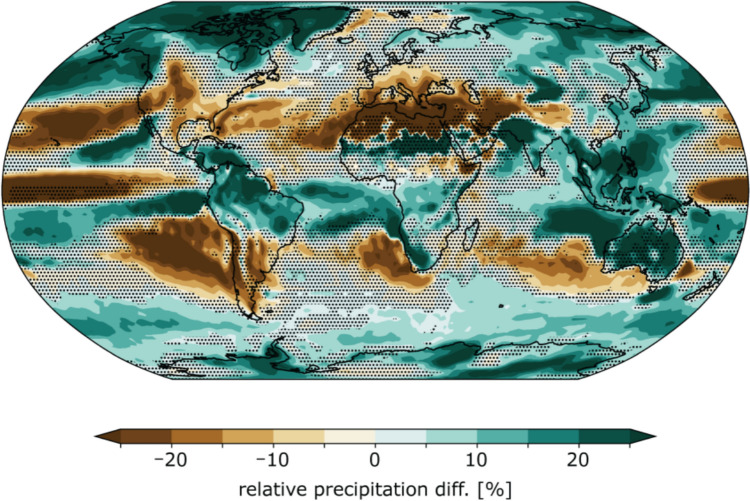
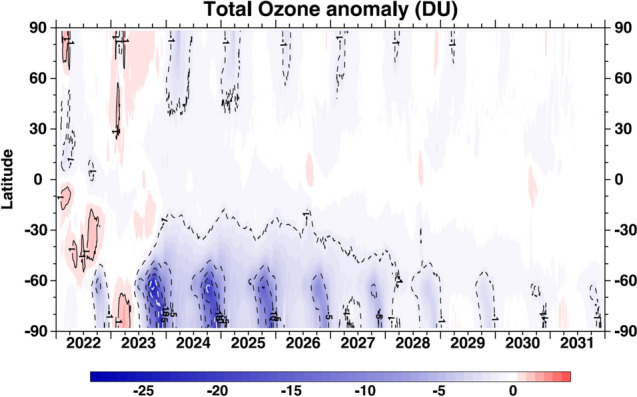
- Stratospheric Aerosol Injection (SAI) modelling projects 1–2% global total-column ozone depletion by the 2030s, Antarctic spring ozone reductions of 58 ± 20 DU, and mean global precipitation declines of 2–3%, with regional reductions up to 10% in Amazonia and Patagonia during June–August.
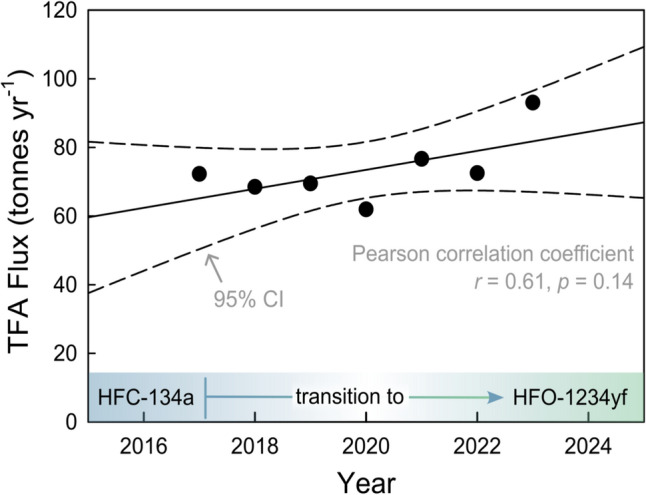
- TFA risks from ODS replacements remain de minimis at current environmental concentrations; in the River Rhine, TFA flux in 2023 was ca 93 tonnes, with no statistically significant increase over 2017–2023 (slope 2.8 ± 3.2 tonnes year−1), indicating Montreal Protocol chemicals were not the dominant TFA source in that basin.
Methods
- Design: UNEP Environmental Effects Assessment Panel (EEAP) Update 2024, a narrative assessment of recent peer-reviewed literature, modelling studies, meta-analyses, and monitoring data relevant to ozone, UV radiation, climate, environment, and health.
- Data/sample: The update draws on multiple external studies, including CMIP6 projections, chemistry-climate models, world-avoided simulations, environmental monitoring datasets, epidemiological studies, and laboratory experiments; it does not present a single new primary dataset.
- Analysis: The paper synthesizes and interprets findings across thematic sections, including ozone–climate interactions, UV projections, SAI, tropospheric chemistry, ODS replacement breakdown products, plastics, terrestrial and aquatic ecosystems, and human health.
Limitations
- The paper states large uncertainties and unknown consequences for global ecosystems from SAI, and notes that further study is needed before its viability can be assessed with confidence.
- It states that projected UV changes may be biased because one key study did not consider future changes in clouds or surface albedo from melting snow/ice, and that CMIP6 models have not addressed whether changes in Arctic mixing will affect summer UV-B exposure.
- The paper identifies data gaps including limited quantitative dose–response information on UV-B-driven plastic photodegradation, detection limits for nanoplastics, uncertain toxicity of TFA to marine organisms and chronic freshwater exposures, and lack of human dietary TFA studies; it also notes that many vertebrate UV studies used artificial laboratory UV sources and that climate-variable correlations in melanoma analyses require caution.
Model-written summary. Check it against the paper before relying on it.
Integrity signals
Registry
Cites
Statistics
Figures
Verification
Claims the paper makes
98 Valid · 7 Not valid · 118 Not checked · 84 Own results and interpretations
The cited sources support only part of this claim — read each source’s verdict below.
In the paper
“However, the absolute levels of UV-radiation are not expected to exceed those of the 1950s as reported previously [7, 8].”
§ Environmental consequences of interacting effects of changes in stratospheric ozone, ultraviolet radiation, and climate: UNEP Environmental Effects Assessment Panel, Update 2024 > Changes in the ozone layer and ultraviolet radiation and their interaction with the climate system > Projections of ultraviolet radiation during the twenty-first century
What the sources say
- Could not verifycites [7] Bernhard, G. H., Bais, A. F., Aucamp, P. J., Klekociuk, A. R., Liley, J. B., & McKenzie, R. L. (2023). Stratospheric ozone, UV-radiation, and climate interactions. Photochemical & Photobiological Sciences, 22 (5), 937–989. 10.1007/s43630-023-00371-y 37083996 PMC10120513 sourceExperimental — accuracy not yet measured
The Projections of UV radiation section compares projected UV Index levels in 2100 with calculations for the 1960s, not the 1950s. A search for “1950s” found no comparison establishing whether future UV levels will exceed those of that decade. The 1960s projection cannot settle the claim about the 1950s. (LLM, conf=0.70)
- Partly supportedcites [8] Bais, A. F., Bernhard, G., McKenzie, R. L., Aucamp, P. J., Young, P. J., Ilyas, M., Jockel, P., & Deushi, M. (2019). Ozone-climate interactions and effects on solar ultraviolet radiation. Photochemical & Photobiological Sciences, 18 (3), 602–640. 10.1039/c8pp90059k 30810565 sourceExperimental — accuracy not yet measured
The paper’s §5, “Projections of UV radiation” (page unavailable), projects lower noon UV Index in 2075–2095 than in 1955–1975 at northern and southern mid-latitudes under one emissions scenario. It does not support the unqualified claim about absolute UV levels: the same section projects increases relative to the 1960s under another scenario, and the projections vary by latitude and season. (LLM, conf=0.86)
plain- Asserted: passes — The authors put it forward as true.
- Checkable: passes — It can be checked against evidence.
- Load-bearing: passes — The paper’s conclusions depend on it.
- Based: passes — The paper gives a reason why it holds.
- Could not verify
The cited sources support only part of this claim — read each source’s verdict below.
In the paper
“Specifically, water vapour was removed through condensation in June and July 2023 before processes that would have led to ozone depletion were impacted [29–31].”
§ Environmental consequences of interacting effects of changes in stratospheric ozone, ultraviolet radiation, and climate: UNEP Environmental Effects Assessment Panel, Update 2024 > Changes in the ozone layer and ultraviolet radiation and their interaction with the climate system > Effect of the Hunga Tonga–Hunga Ha’apai eruption on ozone, UV-radiation, and climate
What the sources say
- Supportedcites [29] Wohltmann, I., Santee, M. L., Manney, G. L., & Millán, L. F. (2024). The chemical effect of increased water vapor from the Hunga Tonga–Hunga Ha’apai eruption on the Antarctic ozone hole. Geophysical Research Letters, 51 (4), e2023GL106980. 10.1029/2023GL106980 source
The Results section says water vapour decreased through condensation and sedimentation from mid-May to the start of July 2023, with the model runs converging by early July. The Discussion and Summary says this dehydration reset the excess water vapour before it could affect ozone loss. The cited paper therefore supports the claim, although it places the decline primarily before July rather than throughout that month. (LLM, conf=0.89)
- Partly supportedcites [30] Santee, M. L., Manney, G. L., Lambert, A., Millán, L. F., Livesey, N. J., Pitts, M. C., Froidevaux, L., Read, W. G., & Fuller, R. A. (2024). The influence of stratospheric hydration from the Hunga eruption on chemical processing in the 2023 Antarctic vortex. Journal of Geophysical Research: Atmospheres, 129 (16), e2023JD040687. 10.1029/2023jd040687 sourceExperimental — accuracy not yet measured
Our copy clearly supports the first half: H2O was drawn down into ice PSCs and permanently removed in May–July 2023, with the Conclusions stating that by mid-July 'the denitrification and dehydration processes had run their course' and 'much of the H2O was removed from the vortex core' (Section 4; see also Sections 3.2.6–3.2.8, where vortex-averaged H2O at 500 K flattens in early July and at 600 K plummets in mid-June). However, the paper explicitly argues the low gas-phase H2O from July onward is 'largely ascribed to dehydration and not merely condensation in still-present ice PSCs' (Section 3.2.8), so 'removed through condensation' understates its mechanism. The temporal/causal clause is also not the paper's framing: it reports that the PSC condensation itself drove the exceptional early-winter chlorine activation and among the fastest May–July ozone loss rates, and that it was 'the saturation of heterogeneous chemical processing' — not removal preceding the depletion processes — that kept 2023 ozone loss unremarkable (Sections 3.2.7 and 4). (LLM, conf=0.72)
- Partly supportedcites [31] Zhou, X., Dhomse, S. S., Feng, W., Mann, G., Heddell, S., Pumphrey, H., Kerridge, B. J., Latter, B., Siddans, R., Ventress, L., Querel, R., Smale, P., Asher, E., Hall, E. G., Bekki, S., & Chipperfield, M. P. (2024). Antarctic vortex dehydration in 2023 as a substantial removal pathway for Hunga Tonga–Hunga Ha’apai water vapor. Geophysical Research Letters, 51 (8), e2023GL1 07630. 10.1029/2023GL107630 sourceExperimental — accuracy not yet measured
Section 4 (page not available in our copy) reports a sharp loss of Antarctic-vortex water vapour from June to July 2023, associated with polar stratospheric cloud processes. Section 6 says dehydration limited the added water vapour’s effect in the vortex core, but it also reports enhanced ozone depletion at the vortex edge from June to September. The claim overstates the timing by implying ozone-depletion processes were not impacted until after the water was removed. (LLM, conf=0.85)
plainstates a cause- Asserted: passes — The authors put it forward as true.
- Checkable: passes — It can be checked against evidence.
- Load-bearing: passes — The paper’s conclusions depend on it.
- Based: passes — The paper gives a reason why it holds.
- Supported
Every source the paper cites for this claim was checked and supports it.
In the paper
“McGillen et al. [93] reported molar yields of 0.37–3.11% CF3H.”
§ Environmental consequences of interacting effects of changes in stratospheric ozone, ultraviolet radiation, and climate: UNEP Environmental Effects Assessment Panel, Update 2024 > Update on the chemistry of replacements for ozone-depleting substances in relation to chemicals under the purview of the Montreal Protocol > Formation of trifluoromethane from atmospheric degradation of replacements for ozone-depleting substances
What the sources say
- Supportedcites McGillen et al. [93] McGillen, M. R., Fried, Z. T., Khan, M. A. H., Kuwata, K. T., Martin, C. M., Odoherty, S., Pecere, F., Shallcross, D. E., Stanley, K. M., & Zhang, K. (2023). Ozonolysis can produce long-lived greenhouse gases from commercial refrigerants. Proceedings of the National Academy of Sciences, 120 (51), e2312714120. 10.1073/pnas.2312714120 PMC10742373 38079548 source
The Results report experimental CHF3 yields of 0.37 ± 0.02% and 3.11 ± 0.05% for two of the refrigerants studied. CHF3 and CF3H are the same compound, so the cited range matches. (LLM, conf=0.95)
plain- Asserted: passes — The authors put it forward as true.
- Checkable: passes — It can be checked against evidence.
- Load-bearing: passes — The paper’s conclusions depend on it.
- Based: passes — The paper gives a reason why it holds.
- Supported
Every source the paper cites for this claim was checked and supports it.
In the paper
“Specifically, the projected increases in Arctic ozone during springtime would weaken the polar vortex, counteracting the strengthening of the vortex resulting from increasing greenhouse gases.”
§ Environmental consequences of interacting effects of changes in stratospheric ozone, ultraviolet radiation, and climate: UNEP Environmental Effects Assessment Panel, Update 2024 > Changes in the ozone layer and ultraviolet radiation and their interaction with the climate system > Effect of Arctic ozone recovery on surface climate
What the sources say
- Supportedcites [19] Chiodo, G., Friedel, M., Seeber, S., Domeisen, D., Stenke, A., Sukhodolov, T., & Zilker, F. (2023). The influence of future changes in springtime Arctic ozone on stratospheric and surface climate. Atmospheric Chemistry and Physics, 23 (18), 10451–10472. 10.5194/acp-23-10451-2023 source
Section 3.2 reports that future Arctic ozone changes weaken polar-stratospheric westerly winds and offset the influence of greenhouse-gas cooling, which would strengthen the vortex by itself. The Conclusions likewise state that increased springtime Arctic ozone weakens the polar vortex. (LLM, conf=0.94)
hedgedstates a cause- Asserted: passes — The authors put it forward as true.
- Checkable: passes — It can be checked against evidence.
- Load-bearing: passes — The paper’s conclusions depend on it.
- Based: passes — The paper gives a reason why it holds.
- Supported
The cited sources support only part of this claim — read each source’s verdict below.
In the paper
“Effects in marine organisms and chronic exposures in freshwater organisms remain the greatest uncertainty, as noted previously [84, 110].”
§ Environmental consequences of interacting effects of changes in stratospheric ozone, ultraviolet radiation, and climate: UNEP Environmental Effects Assessment Panel, Update 2024 > Update on the chemistry of replacements for ozone-depleting substances in relation to chemicals under the purview of the Montreal Protocol > Effects of trifluoroacetic acid on ecosystems and human health
What the sources say
- Partly supportedcites [84] Madronich, S., Bernhard, G. H., Neale, P. J., Heikkilä, A., Andersen, M. P. S., Andrady, A. L., Aucamp, P. J., Bais, A. F., Banaszak, A. T., Barnes, P. J., Bornman, J. F., Bruckman, L. S., Busquets, R., Chiodo, G., Häder, D. P., Hanson, M. L., Hylander, S., Jansen, M. A. K., Lingham, G., … Neale, R. E. (2024). Continuing benefits of the Montreal Protocol and protection of the stratospheric ozone layer for human health and the environment. Photochemical & Photobiological Sciences, 23, 1087–1115. 10.1007/s43630-024-00577-8 38763938 sourceExperimental — accuracy not yet measured
Section 6.4 (page unavailable) says effects in marine organisms remain the greatest uncertainty in assessing ecological risk. It does not identify chronic exposures in freshwater organisms as another greatest uncertainty; instead, it describes risks for organisms in flowing water as de minimis. (LLM, conf=0.88)
- Not checked — no full text of the sourcecites [110] Hanson, M. L., Madronich, S., Solomon, K., Sulbaek Andersen, M. P., & Wallington, T. J. (2024). Trifluoroacetic acid in the environment: Consensus, gaps, and next steps. Environmental Toxicology and Chemistry, 43 (10), 2091–2093. 10.1002/etc.5963 39078279 source
plain- Asserted: passes — The authors put it forward as true.
- Checkable: passes — It can be checked against evidence.
- Load-bearing: unclear — It is unclear whether the paper’s conclusions depend on it.
- Based: passes — The paper gives a reason why it holds.
- Partly supported
183 more claims · 61 with their cited sources checked
Create a free account to see all 307 claims and to verify the 72 references still open.
- It may state two separate claims as one. 100
- Probably not a substantial claim. 30
- The quote only partly states this claim. 1
Self-check
Percentages, sums and reported differences re-computed from the paper’s own numbers.
Each contradiction between two passages listed here was confirmed by an independent check.
Rated minor: it would not touch a result — a value no result rests on, a p-value that stays on the same side of the significance level, or a conflict that is clerical, resolved elsewhere in the paper, or outside its own findings.
In the paper
§ Environmental consequences of interacting effects of changes in stratospheric ozone, ultraviolet radiation, and climate: UNEP Environmental Effects Assessment Panel, Update 2024 > UV-B radiation-induced impacts on tropospheric photo-oxidants > Offsetting harmful and beneficial human health effects of increased UV-B radiation
“Taking RAF ~ 1.2 [76, 77], BAF ~ 0.6 [78]”
§ Environmental consequences of interacting effects of changes in stratospheric ozone, ultraviolet radiation, and climate: UNEP Environmental Effects Assessment Panel, Update 2024 > References
“77. Albers, C. N., & Sültenfuss, J. (2024). A 60-year increase in the ultrashort-chain PFAS trifluoroacetate and its suitability as a tracer for groundwater age.”
Rated minor: it would not touch a result — a value no result rests on, a p-value that stays on the same side of the significance level, or a conflict that is clerical, resolved elsewhere in the paper, or outside its own findings.
In the paper
§ Environmental consequences of interacting effects of changes in stratospheric ozone, ultraviolet radiation, and climate: UNEP Environmental Effects Assessment Panel, Update 2024 > Update on the chemistry of replacements for ozone-depleting substances in relation to chemicals under the purview of the Montreal Protocol > No discernible contribution yet to trifluoroacetic acid in the River Rhine from degradation of replacements for ozone-depleting substances
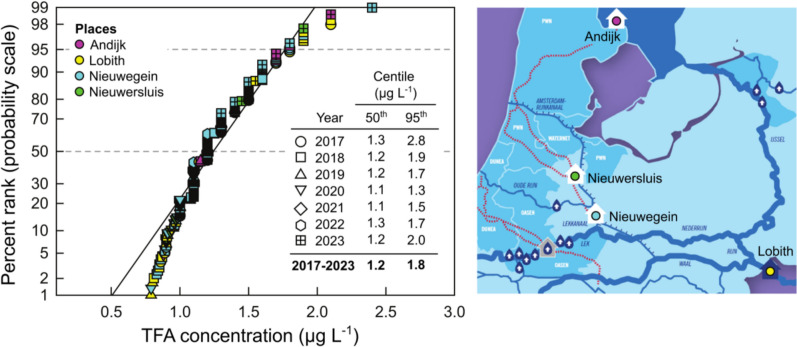
“A cumulative frequency distribution of combined data from all measurements of TFA in the River Rhine (2017–2022). Data from the RIWA reports for 2017 to 2023 (n = 297)”
§ Environmental consequences of interacting effects of changes in stratospheric ozone, ultraviolet radiation, and climate: UNEP Environmental Effects Assessment Panel, Update 2024 > Update on the chemistry of replacements for ozone-depleting substances in relation to chemicals under the purview of the Montreal Protocol > No discernible contribution yet to trifluoroacetic acid in the River Rhine from degradation of replacements for ozone-depleting substances
“In Fig. 5, data from 2017–2023 for four locations (Lobith, Andijk, Nieuwersluis, and Nieuwegein) were ranked and plotted as cumulative frequency distributions for illustrative purposes.”
Rated minor: it would not touch a result — a value no result rests on, a p-value that stays on the same side of the significance level, or a conflict that is clerical, resolved elsewhere in the paper, or outside its own findings.
In the paper
§ Environmental consequences of interacting effects of changes in stratospheric ozone, ultraviolet radiation, and climate: UNEP Environmental Effects Assessment Panel, Update 2024 > UV-B radiation-induced impacts on tropospheric photo-oxidants > Offsetting harmful and beneficial human health effects of increased UV-B radiation
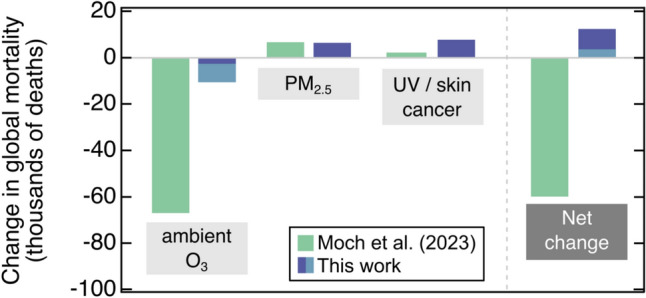
“A re-examination of the model results of Moch et al. [64] gives a reduction in annual deaths attributable to reduction in tropospheric ozone of 2000 to 10,600”
§ Environmental consequences of interacting effects of changes in stratospheric ozone, ultraviolet radiation, and climate: UNEP Environmental Effects Assessment Panel, Update 2024 > References
“69. Moch, J. M., Mickley, L. J., Eastham, S. D., Lundgren, E. W., Shah, V., Buonocore, J. J., Pang, J. Y. S., Sadiq, M., & Tai, A. P. K. (2023).”
Rated minor: it would not touch a result — a value no result rests on, a p-value that stays on the same side of the significance level, or a conflict that is clerical, resolved elsewhere in the paper, or outside its own findings.
In the paper
§ Environmental consequences of interacting effects of changes in stratospheric ozone, ultraviolet radiation, and climate: UNEP Environmental Effects Assessment Panel, Update 2024 > UV-B radiation-induced impacts on tropospheric photo-oxidants > Offsetting harmful and beneficial human health effects of increased UV-B radiation
“The mortality attributed to a 2 ppbv increase in ambient ozone is about one order of magnitude smaller than the estimate by Moch et al.”
§ Environmental consequences of interacting effects of changes in stratospheric ozone, ultraviolet radiation, and climate: UNEP Environmental Effects Assessment Panel, Update 2024 > UV-B radiation-induced impacts on tropospheric photo-oxidants > Offsetting harmful and beneficial human health effects of increased UV-B radiation
“the relative risk (RR) for 10 ppbv increase in ozone [73] scaled to a 2 ppbv decrease in surface ozone”
Rated minor: it would not touch a result — a value no result rests on, a p-value that stays on the same side of the significance level, or a conflict that is clerical, resolved elsewhere in the paper, or outside its own findings.
In the paper
§ Environmental consequences of interacting effects of changes in stratospheric ozone, ultraviolet radiation, and climate: UNEP Environmental Effects Assessment Panel, Update 2024 > Update on the chemistry of replacements for ozone-depleting substances in relation to chemicals under the purview of the Montreal Protocol > New measurements of concentrations of trifluoroacetic acid, perfluoropropanoic acid, and perfluorobutanoic acid in the environment
“Zhao and colleagues [95] sampled soils near oil refineries (n = 21) and from reference sites (n = 5).”
§ Environmental consequences of interacting effects of changes in stratospheric ozone, ultraviolet radiation, and climate: UNEP Environmental Effects Assessment Panel, Update 2024 > References
“95. Zhou, Y., Wang, C., Dong, H., & Wang, X. (2024). Escalating global pollution of trifluoroacetic acid.”
Citations
Cites
Items 201–245 of 245
Thermal compensation reduces DNA damage from UV radiation
Hird, C., Cramp, R. L., & Franklin, C. E. (2023) · Journal of Thermal Biology · doi:10.1016/j.jtherbio.2023.103711 · Cited by 11 · cited 1×
“However, a recent study shows that Striped Marsh Frog larvae ( Limnodynastes peronei ), pre-acclimated to cooler temperatures, are less susceptible to damage by UV-B radiation, implying more tolerance to UV-radiation in their natural habitat than previously expected [232].”
Investigation on the Durability of a Polypropylene Geotextile under Artificial Aging Scenarios
Scholz, P., Falkenhagen, J., Wachtendorf, V., Brüll, R., & Simon, F.-G. (2024) · Sustainability · doi:10.3390/su16093559 · Cited by 11 · cited 1×
“In contrast, there was little effect of exposure to high temperature and humidity [167].”
Ferrari, M., Laranjeiro, F., Sugrañes, M., Oliva, J., & Beiras, R. (2024) · Scientific Reports · doi:10.1038/s41598-024-60886-x · Cited by 11 · cited 1×
“The fragments that are exposed to UV-radiation or weathering are often more toxic to ingesting organisms than the raw plastic particles [130–132].”
Moustaqim-Barrette, A., Conte, S., Kelly, A., Lebeau, J., Alli, S., Lagacé, F., & Litvinov, I. V. (2024) · JAAD International · doi:10.1016/j.jdin.2024.05.009 · Cited by 11 · cited 1×
“A national study conducted in Canada examined the association between environmental factors and melanoma incidence, both averaged across the period 2011 to 2017, for each of ca 1000 administrative areas [250].”
Hartikainen, S. M., & Robson, T. M. (2022) · Frontiers in Plant Science · doi:10.3389/fpls.2022.1058162 · Cited by 10 · cited 1×
“Whilst plants and animals in alpine regions are well adapted to both high UV-B radiation and cold environments [197, 198], there is some evidence that such adaptation may reduce their capacity to adapt to warming environments [199].”
Self-citationGenotoxic risk assessment of solar UV radiation in tadpoles from Brazilian wetlands
Santos, M. B. D., Londero, J. E. L., Mainardi, Á. A., Cechin, S. Z., & Schuch, A. P. (2023) · Mutation Research/Genetic Toxicology and Environmental Mutagenesis · doi:10.1016/j.mrgentox.2022.503578 · Cited by 10 · cited 1×
“Furthermore, amphibian reproduction is dependent on ponds, and a recent study in a Brazilian system suggests that transparency to UV-radiation is low in these ponds, protecting tadpoles from exposure to UV-B radiation [233].”
No evidence of worsening Arctic springtime ozone losses over the 21st century
Polvani, L. M., Keeble, J., Banerjee, A., Checa-Garcia, R., Chiodo, G., Rieder, H. E., & Rosenlof, K. H. (2023) · Nature Communications · doi:10.1038/s41467-023-37134-3 · Cited by 10 · cited 2×
“This finding was challenged in a study by Polvani et al. [14] who found, based on chemistry-climate models with interactive ozone chemistry, that Arctic ozone depletion will lessen over this period.”
Self-citationThe influence of future changes in springtime Arctic ozone on stratospheric and surface climate
Chiodo, G., Friedel, M., Seeber, S., Domeisen, D., Stenke, A., Sukhodolov, T., & Zilker, F. (2023) · Atmospheric Chemistry and Physics · doi:10.5194/acp-23-10451-2023 · Cited by 10 · cited 1×
“Aside from variations on inter-annual time-scales, one recent study suggests that long-term future trends in Arctic strato-spheric ozone may influence stratospheric circulation and its coupling to surface climate [19].”
Self-citationMoch, J. M., Mickley, L. J., Eastham, S. D., Lundgren, E. W., Shah, V., Buonocore, J. J., Pang, J. Y. S., Sadiq, M., & Tai, A. P. K. (2023) · AGU Advances · doi:10.1029/2023av000911 · Cited by 10 · cited 4×
“Our re-evaluation supports the established view that the increases in UV-B radiation lead to a detrimental net effect on human health, and is at odds with the suggestion by Moch et al. [69] that stratospheric ozone depletion may have net benefits.”
InfluentialPeng, H., Yu, H., Zhan, T., Jiang, J., & Lyu, J. (2024) · European Journal of Wood and Wood Products · doi:10.1007/s00107-023-02034-2 · Cited by 10 · cited 1×
“Similarly, the extracts from red pine ( Pinus koraiensis Sieb. et Zucc.) wood retarded the rate of lignin degradation, and restricted colour changes [186] on exposure to solar UV-radiation.”
Cahoon, E. K., Mandal, S., Pfeiffer, R. M., Wheeler, D. C., Sargen, M. R., Alexander, B. H., Kitahara, C. M., Linet, M. S., & Mai, J. Z. (2024) · JNCI: Journal of the National Cancer Institute · doi:10.1093/jnci/djae186 · Cited by 10 · cited 1×
“…80% women) linking residential exposure history and satellite-derived estimates of ambient UV-B and UV-A radiation reported that exposure to UV-A radiation during childhood was associated with melanoma after adjusting for exposure to lifetime UV-B radiation and other known risk factors [251].”
Müller, R. C., Kim, J.-S., Lee, H., Muri, H., Tjiputra, J., Yoon, J.-H., & Schaepman-Strub, G. (2024) · Communications Earth & Environment · doi:10.1038/s43247-024-01329-3 · Cited by 9 · cited 1×
“Excluding high-latitude regions, it has also been suggested that SAI would reduce the land area burned by wildfires because of decreasing temperatures and wind speed coupled with increasing relative humidity and soil moisture [62, 63].”
Self-citationDrying Over Eastern China Driven by the Depletion of Arctic Stratospheric Ozone During Boreal Spring
Hu, D., Zhang, Z., & Guan, Z. (2024) · Geophysical Research Letters · doi:10.1029/2023gl108008 · Cited by 9 · cited 1×
“Specifically, observations have shown that a decrease in Arctic stratospheric ozone during March is correlated with decreased precipitation over Eastern China due to changes in atmospheric circulation [11, 12].”
Wang, Y., & Huang, Y. (2024) · Science Advances · doi:10.1126/sciadv.adl2842 · Cited by 9 · cited 1×
“However, the few studies that are available conclude that changes in global surface air temperature were smaller than ± 0.04 °C and will further diminish over time [32–34].”
InfluentialDeota, P. T., Parmar, H. S., Patel, G. M., & Bhatt, G. J. (2022) · Environmental Science and Pollution Research · doi:10.1007/s11356-022-21247-1 · Cited by 8 · cited 1×
“For example, solar UV-radiation changes the persistence of pesticides in the environment [212].”
Growing ZnO nanowires on aramid fabric for improving the ultraviolet aging property
Chu, Y., Chen, C., Huang, W., et al. (2022) · Textile Research Journal · doi:10.1177/00405175221116055 · Cited by 8 · cited 1×
“Examples of such nano-oxides are TiO 2 [160], ZnO nanowires [161], graphene oxide-melamine [162], and atomic layer-depos-ited aluminium oxide/TiO 2 [163].”
Linnik, P., Osadchyi, V., & Osadcha, N. (2023) · Lakes & Reservoirs: Science, Policy and Management for Sustainable Use · doi:10.1111/lre.12436 · Cited by 8 · cited 1×
“…transformation involves reactive intermediates such as the hydroxyl ( • OH) and carbonate (CO 3•− ) radicals, singlet oxygen ( 1 O 2 ), and excited triplet states ( 3 CDOM*) that are photochemically generated by nitrate, nitrite, and chromophoric dissolved organic matter (CDOM) [217, 236].”
Liu, Y., Li, L., Wang, S., & Li, X. (2023) · Frontiers in Plant Science · doi:10.3389/fpls.2023.1200155 · Cited by 8 · cited 1×
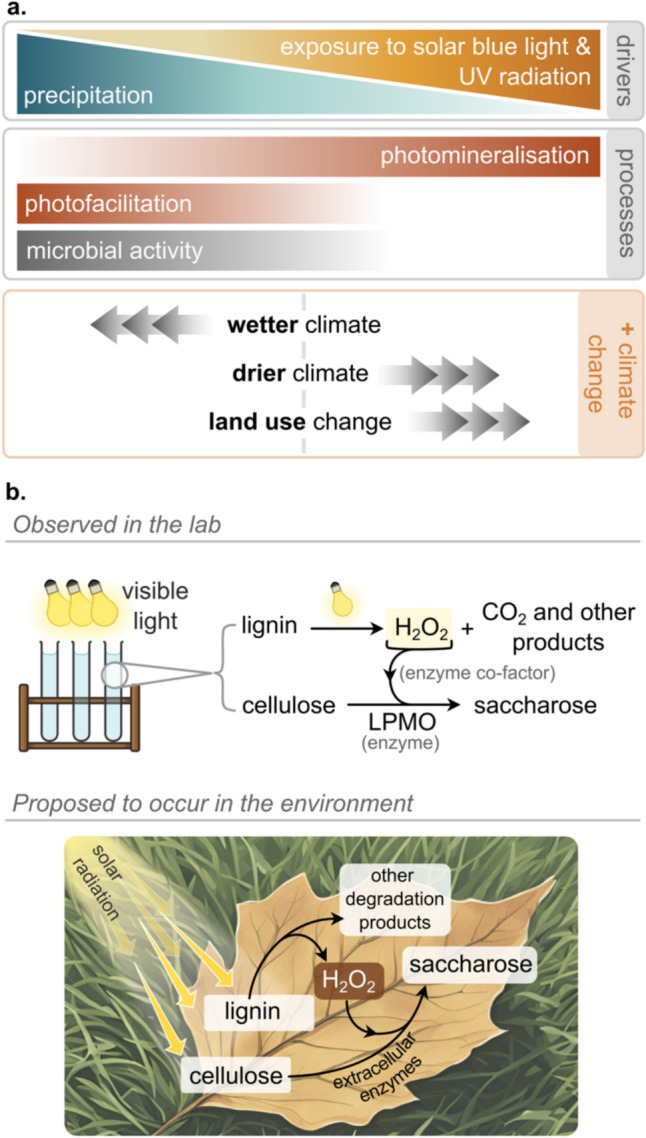
“In general, with increasing precipitation, the primary role of solar UV-radiation shifts from photominer-alisation to photofacilitation, which in turn increases leaching and microbial degradation [206, 207].”
Park, J. J., Kim, J. H., Kang, E. H., et al. (2023) · Journal of Industrial and Engineering Chemistry · doi:10.1016/j.jiec.2023.10.006 · Cited by 8 · cited 1×
“Examples of such nano-oxides are TiO 2 [160], ZnO nanowires [161], graphene oxide-melamine [162], and atomic layer-depos-ited aluminium oxide/TiO 2 [163].”
Ultraviolet resistance on weft knitted fabric coated by benzotriazoles
Nguyen, T. A., & Nu, N. T. N. (2024) · Fashion and Textiles · doi:10.1186/s40691-024-00376-w · Cited by 8 · cited 1×
“Physical fabric structures created by different weaving techniques also contribute to the fabric’s UV-blocking capability [157].”
Physiological and Ultrastructural Changes in Alpine Plants Exposed to High Levels of UV and Ozone
Lütz, C., & Seidlitz, H. K. (2012) · Plants in Alpine Regions · doi:10.1007/978-3-7091-0136-0_4 · Cited by 7 · cited 1×
“Whilst plants and animals in alpine regions are well adapted to both high UV-B radiation and cold environments [197, 198], there is some evidence that such adaptation may reduce their capacity to adapt to warming environments [199].”
Li, F., Li, H., Xu, T., Li, S., & Xu, J. (2022) · Frontiers in Marine Science · doi:10.3389/fmars.2022.905255 · Cited by 7 · cited 1×
“These results have recently been extended to more species of diatoms [228–230], whilst information gaps remain for other phytoplankton groups.”
Zang, S., Xu, Z., Yan, F., & Wu, H. (2022) · Journal of Photochemistry and Photobiology B: Biology · doi:10.1016/j.jphotobiol.2022.112572 · Cited by 7 · cited 1×
“These results have recently been extended to more species of diatoms [228–230], whilst information gaps remain for other phytoplankton groups.”
Early exposure to sunlight and allergic morbidity: The PARIS birth cohort
Lefebvre, L., Amazouz, H., Rancière, F., & Momas, I. (2024) · Science of The Total Environment · doi:10.1016/j.scitotenv.2024.172543 · Cited by 7 · cited 1×
“The importance of early life exposure was exemplified by a study of 2260 children born in one of five maternity hospitals in Paris between 2003 and 2006 who underwent examinations at 18 months and/or 8 years of age [263].”
The atmospheric ‘cold blob’ over Fennoscandia from October 2023 to January 2024
Rantanen, M., Hyvärinen, O., Vajda, A., & Karpechko, A. (2025) · Weather · doi:10.1002/wea.4570 · Cited by 7 · cited 1×
“The spatial temperature pattern of these changes is similar to that observed from October 2023 to January 2024 [37].”
Yamamoto, A. L. C., Corrêa, M. D. P., Torres, R. R., Martins, F. B., & Godin-Beekmann, S. (2024) · Photochemical & Photobiological Sciences · doi:10.1007/s43630-024-00594-7 · Cited by 7 · cited 1×
“A new study [9] provided projections of future UV-radiation for cloud-free conditions based on total column ozone and aerosol optical depth data from six CMIP6 (Coupled Model Intercomparison Project Phase 6) models following four Shared Socio-economic Pathway (SSP) scenarios 1 [10], which supersede…”
Autumn sunlight promotes aboveground carbon loss in a temperate mixed forest
Li, X., Wang, Y., Zhang, J., Robson, T. M., Kurokawa, H., Peng, H., Zhou, L., Yu, D., Deng, J., & Wang, Q.-W. (2024) · Ecological Processes · doi:10.1186/s13717-024-00528-2 · Cited by 7
Self-citationKumar, B., & Kumar, N. (2024) · Journal of Structural Integrity and Maintenance · doi:10.1080/24705314.2024.2376804 · Cited by 7
Reply to: No evidence of worsening Arctic springtime ozone losses over the 21st century
von der Gathen, P., Kivi, R., Wohltmann, I., Salawitch, R. J., & Rex, M. (2023) · Nature Communications · doi:10.1038/s41467-023-37135-2 · Cited by 6 · cited 1×
“These results were disputed by von der Gathen et al. [15] who argued that the projected loss found in their previous study is limited to the polar vortex area, whilst the study by Polvani et al. [14] considers the polar cap (latitudes of 60–90° N) and uses models that have difficulty representing…”
Dorr, M. M., & Rochette, P. J. (2023) · PLOS ONE · doi:10.1371/journal.pone.0283572 · Cited by 6
Yin, P., Zhai, K., Zhang, W., Yang, Q., Chen, L., Guan, X., Zeng, Z., Zhu, M., Yu, X., Wang, Q., et al. (2023) · Plant and Soil · doi:10.1007/s11104-023-05994-9 · Cited by 6 · cited 1×
“Changes in vegetation cover (i.e., deforestation and wildfires) can also shift the relative contribution of photodegradation by altering the amount of UV-radiation reaching plant litter [208–210].”
Self-citationAlton, L. A., Novelo, M., Beaman, J. E., Arnold, P. A., Bywater, C. L., Kerton, E. J., Lombardi, E. J., Koh, C., & McGraw, E. A. (2023) · Global Change Biology · doi:10.1111/gcb.16906 · Cited by 6 · cited 2×
“[235].”
Tonis, E., Frousiou, E., Heliopoulos, N. S., et al. (2023) · Materials Today Chemistry · doi:10.1016/j.mtchem.2023.101695 · Cited by 6 · cited 1×
“UV-absorbers, such as 2,4-dihydroxy-benzophenones [158], poly(hexamethylene guanidine), and polydopamine [159], can be grafted onto the surface of aramid fibres to make them more UV-resistant whilst limiting the leaching of the absorbers.”
Characterizing the Tensile Behaviour of Woven and Composite Fabrics under UV Exposure
Jie, S. Y., Hoe, L. Z., Paul, S. C., & Anggraini, V. (2022) · Applied Sciences · doi:10.3390/app122211440 · Cited by 5 · cited 3×
“When exposed to solar UV-radiation during transport, storage, and use, geotextiles leach additives into the environment and become brittle [164], which can lead to fragmentation.”
Albi, L. S., Guo, Z., Chen, G., & Yoshimura, C. (2023) · Environmental Advances · doi:10.1016/j.envadv.2023.100346 · Cited by 5 · cited 3×
“…in total column ozone from 450 to 250 DU would enhance CO 3•− and • OH reactions by 10 to 25% and comparably enhance degradation of such common contaminants as carbamazepine, atrazine, diuron, acesulfame K, saturated hydrocarbons, plus phenol and anilines in organic-poor waters [237, 238].”
Xu, Z., Yang, S., Li, M., Bao, M., & Wu, H. (2023) · Frontiers in Microbiology · doi:10.3389/fmicb.2023.1284792 · Cited by 5 · cited 1×
“Several recent studies of diatoms show that warming generally results in photosynthesis becoming more resistant to inhibition by UV irradiation, although warming above the optimal temperature for growth either does not enhance resistance or, for some species, can exacerbate inhibition [224–226].”
Bi, D., Cao, L., An, Y., Xu, J., & Wu, Y. (2024) · PLOS ONE · doi:10.1371/journal.pone.0295686 · Cited by 5
Sun exposure guidance should be tailored to individuals, says NICE
Wise, J. (2016) · BMJ · doi:10.1136/bmj.i789 · Cited by 4 · cited 1×
“The balance of these is not the same for all people, but most sun protection policies (with few exceptions [254]) present a ‘one-size-fits-all’ message that does not take account of the underlying risks of skin cancer and vitamin D deficiency.”
Farnet Da Silva, A.-M., Foli, L., Boudenne, J.-L., Ziarelli, F., & Rebufa, C. (2023) · European Journal of Forest Research · doi:10.1007/s10342-022-01521-0 · Cited by 4 · cited 1×
“This occurs through direct breakdown of the lignin component of plant litter (photomineralisation) by the radiation [201, 202] and indirectly by facilitating subsequent microbial degradation (photofacilitation) [203–205].”
Zilker, F., Sukhodolov, T., Chiodo, G., Friedel, M., Egorova, T., Rozanov, E., Sedlacek, J., Seeber, S., & Peter, T. (2023) · Atmospheric Chemistry and Physics · doi:10.5194/acp-23-13387-2023 · Cited by 3 · cited 2×
“5 scenario [3, 4], these large decreases in tropical ozone would have drastically cooled the tropical tropopause, thereby reducing the equator-to-pole temperature gradient and weakening the winter polar vortices in both hemispheres.”
InfluentialSelf-citationZhang, H., Hu, D., & Han, T. (2024) · Atmospheric Research · doi:10.1016/j.atmosres.2024.107321 · Cited by 3
Cantón-Vitoria, R., Kagkoura, A., Tonis, E., et al. (2024) · Materials Today Chemistry · doi:10.1016/j.mtchem.2024.102041 · Cited by 3 · cited 1×
“Examples of such nano-oxides are TiO 2 [160], ZnO nanowires [161], graphene oxide-melamine [162], and atomic layer-depos-ited aluminium oxide/TiO 2 [163].”
Olsen, C. M., Pandeya, N., Neale, R. E., & Whiteman, D. C. (2024) · Medical Journal of Australia · doi:10.5694/mja2.52293 · Cited by 3 · cited 1×
“Several studies have demonstrated that the incidence of both melanoma [245–247] and keratinocyte cancer [248] has decreased in younger people and in more recent birth cohorts in some high-risk populations.”
Self-citationBarbosa, A. B., Mosley, B. A., Galvão, H. M., & Domingues, R. B. (2023) · Microorganisms · doi:10.3390/microorganisms11102559 · Cited by 2
Cao, L., Bi, D., Fan, W., Xu, J., Beardall, J., Gao, K., & Wu, Y. (2024) · Photochemistry and Photobiology · doi:10.1111/php.13844 · Cited by 1 · cited 1×
“Several recent studies of diatoms show that warming generally results in photosynthesis becoming more resistant to inhibition by UV irradiation, although warming above the optimal temperature for growth either does not enhance resistance or, for some species, can exacerbate inhibition [224–226].”
Research works printed but not linked: 5
- WMO. (2022). Scientific assessment of ozone depletion: 2022, chapter 6: Stratospheric aerosol injection and its potential effect on the stratospheric ozone layer. Gaw report no. 278, 509 pp., WMO: Geneva. https://ozone.unep.org/science/assessment/sap
- Andersen, M. P. S., & Nielsen, O. J. (2022). Tropospheric photolysis of cf 3 cho. Atmospheric Environment, 272, 118935. 10.1016/j.atmosenv.2023.120087 · DOI · Paper page
- Carneiro, J. R., & Lopes, M. d. L. (2023). Weathering resistance of an unstabilised polypropylene geotextile. Paper presented at the Proceedings of the 9ICEG. 9th International Congress on Environmental Geotechnics 25–28 June, 2023, Chania, Greece, 10.53243/ICEG2023-198 · doi:10.53243/iceg2023-198
- Intergovernmental Science-Policy Platform on Biodiversity and Ecosystem Services. (2019). Global assessment report on biodiversity and ecosystem services of the Intergovernmental Science-policy Platform on Biodiversity and Ecosystem Services, [E. S. Brondizio, J. Settele, S. Díaz, & H. T. Ngo (Eds.)]. Bonn, Germany.
- International Agency for Research on Cancer (2012). International Agency for Research on Cancer (IARC) Monographs on the Evaluation of Carcinogenic Risks to Humans. Vol. 100D: A review of human carcinogens: Solar and ultraviolet radiation. Lyon: IARC.
Cited by
Ali, M. S. B., Al-Maadid, A. A., & Bergougui, B. (2025) · Sustainable Development · doi:10.1002/sd.70244 · Cited by 30
Henne, S., Storck, F. R., Wöhrnschimmel, H., Leuenberger, M., Vollmer, M. K., & Reimann, S. (2025) · Atmospheric chemistry and physics · doi:10.5194/acp-25-18157-2025 · Cited by 34
Moscato, A., Longo, M. V., Ferrante, M., & Fiore, M. (2025) · Environments · doi:10.3390/environments12080277 · Cited by 15
“In addition, recent studies have raised the possibility that natural sources of TFA, particularly in marine environments, may contribute to its global occurrence, although their role remains uncertain and not yet fully characterized [10].”
InfluentialKhan, M. A. H., Mendes, D. C., Holland, R. E. T., Garavagno, M. D. L. A., Orr‐Ewing, A. J., Stanley, K. M., O’Doherty, S., Young, D., Vollmer, M. K., Antony, A. J., et al. (2026) · Environmental Science Atmospheres · doi:10.1039/d5ea00108k · Cited by 12
Self-citationInhibition of Tyrosinase and Melanogenesis by a White Mulberry Fruit Extract
Prasawang, N., Sutjarit, N., Sitthipunya, A., Suwannalert, P., Monsuwan, W., & Charoenchon, N. (2025) · International Journal of Molecular Sciences · doi:10.3390/ijms26157589 · Cited by 9
“Global warming and ozone depletion further exacerbate this issue by increasing UV exposure worldwide [8].”
Metadata
- Authors
- Neale, P. J., Hylander, S., Banaszak, A. T., Häder, D.-P., Rose, K. C., Vione, D., Wängberg, S.-Å., Jansen, M. A. K., Busquets, R., Andersen, M. P. S., Madronich, S., Hanson, M. L., Schikowski, T., Solomon, K. R., Sulzberger, B., Wallington, T. J., Heikkilä, A. M., Pandey, K. K., Andrady, A. L., Bruckman, L. S., White, C. C., Zhu, L., Bernhard, G. H., Bais, A., Aucamp, P. J., Chiodo, G., Cordero, R. R., Petropavlovskikh, I., Neale, R. E., Olsen, C. M., Hales, S., Lal, A., Lingham, G., Rhodes, L. E., Young, A. R., Robson, T. M., Robinson, S. A., Barnes, P. W., Bornman, J. F., Harper, A. B., Lee, H., Calderón, R. M., Ossola, R., Paul, N. D., Revell, L. E., Wang, Q.-W., & Zepp, R. G.
- Affiliations
- Smithsonian Institution (US)
- Linnaeus University (SE)
- Universidad Nacional Autónoma de México (MX)
- Friedrich-Alexander-Universität Erlangen-Nürnberg (DE)
- Rensselaer Polytechnic Institute (US)
- University of Turin (IT)
- University of Gothenburg (SE)
- University College Cork (IE)
- Kingston University London (GB)
- University of Copenhagen (DK)
- NSF National Center for Atmospheric Research (US)
- University of Manitoba (CA)
- Bielefeld University (DE)
- University of Guelph (CA)
- Swiss Federal Institute of Aquatic Science and Technology (CH)
- University of Michigan (US)
- Finnish Meteorological Institute (FI)
- North Carolina State University (US)
- Case Western Reserve University (US)
- ENVIRON (United States) (US)
- Donghua University (CN)
- Biospherical Instruments (United States) (US)
- Aristotle University of Thessaloniki (GR)
- Consejo Superior de Investigaciones Científicas (ES)
- Universidad de Santiago de Chile (CL)
- Cooperative Institute for Research in Environmental Sciences (US)
- The University of Queensland (AU)
- University of Otago (NZ)
- Australian National University (AU)
- Lions Eye Institute (AU)
- University of Manchester (GB)
- King's College London (GB)
- University of Helsinki (FI)
- University of Wollongong (AU)
- Loyola University New Orleans (US)
- Murdoch University (AU)
- University of Georgia (US)
- Norwegian University of Science and Technology (NO)
- Colorado State University (US)
- Lancaster University (GB)
- University of Canterbury (NZ)
- Environmental Protection Agency (US)
- Corresponding author
- Bornman, Janet F.
- ORCID
- Neale, Patrick J.
- Hylander, Samuel
- Banaszak, Anastazia T.
- Häder, Donat-P.
- Rose, Kevin C.
- Vione, Davide
- Wängberg, Sten-Åke
- Jansen, Marcel A. K.
- Busquets, Rosa
- Andersen, Mads P. Sulbæk
- Madronich, Sasha
- Hanson, Mark L.
- Schikowski, Tamara
- Solomon, Keith R.
- Sulzberger, Barbara
- Wallington, Timothy J.
- Heikkilä, Anu M.
- Pandey, Krishna K.
- Andrady, Anthony L.
- Bruckman, Laura S.
- White, Christopher C.
- Zhu, Liping
- Bernhard, Germar H.
- Bais, Alkiviadis
- Aucamp, Pieter J.
- Chiodo, Gabriel
- Cordero, Raúl R.
- Petropavlovskikh, Irina
- Neale, Rachel E.
- Olsen, Catherine M.
- Hales, Simon
- Lal, Aparna
- Lingham, Gareth
- Rhodes, Lesley E.
- Young, Antony R.
- Robson, T. Matthew
- Robinson, Sharon A.
- Barnes, Paul W.
- Bornman, Janet F.
- Harper, Anna B.
- Lee, Hanna
- Calderón, Roy Mackenzie
- Ossola, Rachele
- Paul, Nigel D.
- Revell, Laura E.
- Wang, Qing-Wei
- Zepp, Richard G.
- Venue
- Photochemical & Photobiological Sciences
- Published
- 2025-03
- Volume
- 24
- Issue
- 3
- Pages
- 357-392
- ISSN
- 1474-905X (ISSN-L)
- 1474-9092
- PMC
- PMC11971163
- OpenAlex
- W4408525894
- Cited by
- 32
- References
- 245
- Citations by year
- 2026: 19 · 2025: 13
- FWCI
- 13.84
- Type
- journal article
- Language
- en
- Update notices
- correction (2025-05-08)
- Open access
- hybrid
- doi.org
- Licence
- cc-by
- creativecommons.org/licenses/by/4.0 (tdm)
- creativecommons.org/licenses/by/4.0 (vor, 16 d)
- Locations
- Photochemical & Photobiological Sciences (publishedVersion, cc-by)
- Europe PMC (PubMed Central) (publishedVersion, other-oa)
- PubMed Central (publishedVersion, cc-by)
- UWA Profiles and Research Repository (UWA) (publishedVersion, cc-by)
- PubMed (publishedVersion)
- Research at the University of Copenhagen (University of Copenhagen) (publishedVersion, cc-by)
- Research Repository (Kingston University London) (acceptedVersion)
- Työväentutkimus Vuosikirja (acceptedVersion)
- Insight (University of Cumbria) (acceptedVersion)
- Diva portal (Dalarna University Library) (submittedVersion, other-oa)
- DORA Eawag (Swiss Federal Institute of Aquatic Science and Technology (Eawag)) (submittedVersion, other-oa)
- Institutional Research Information System University of Turin (University of Turin) (submittedVersion, cc-by)
- Murdoch University Research Portal (submittedVersion, cc-by)
- DIGITAL.CSIC (Spanish National Research Council (CSIC)) (submittedVersion, other-oa)
- Työväentutkimus Vuosikirja (submittedVersion, cc-by)
- University of Canterbury Research Repository (University of Canterbury) (submittedVersion, cc-by)
- ANU Open Research (Australian National University) (submittedVersion)
- Research Explorer (The University of Manchester) (submittedVersion)
- Funders
- Environmental Protection Agency Ireland
- UNEP Ozone Secretariat
- ANID/BASAL and Millennium Science Initiative (FB210018, ICN2021_002)
- ANID ANILLO and FONDECYT (ACT210046, F1221122)
- US Global Change Research Program
- ARC SRIEAS Grant Securing Antarctica’s Environmental Future (SR200100005)
- US Simons Foundation and European Commission (SFI-MPS-SRM-00005217, 101078127)
- Bundesministerium für Umwelt, Naturschutz und Reaktorsicherheit
- Swedish Environmental Protection Agency
- Smithsonian Institution
- Rutherford Discovery Fellowships New Zealand
- NIHR Manchester Biomedical Research Centre, UK
- Self-funded
- Oskar Öflunds Stiftelse
- Murdoch University
- Topics
- Physical Sciences › Earth and Planetary Sciences › Atmospheric Science › Atmospheric Ozone and Climate
- Physical Sciences › Environmental Science › Global and Planetary Change › Climate Change and Environmental Impact
- Physical Sciences › Earth and Planetary Sciences › Atmospheric Science › Atmospheric chemistry and aerosols
- Keywords
- stratospheric ozone depletion, solar ultraviolet radiation, climate change, Montreal Protocol, ozone-depleting substances, stratospheric aerosol injection, climate intervention, trifluoroacetic acid, plastic degradation, Arctic Ocean circulation, phytoplankton, nutrient cycling, soil carbon storage, greenhouse gas emissions, melanoma, skin cancer
- MeSH terms
- Climate, Humans, Ozone, Ultraviolet Rays, United Nations, Climate Change, Stratospheric Ozone, Ozone Depletion
About these checks
Registry, retraction, Cites and statistics results are computed, not judged, with one exception: a printed reference that no index lists is read once by a model before it counts as a citation error. Claims are extracted by a model and kept only when their quote appears verbatim in the text; each cited source is then checked, with a model’s help, for whether it says what the claim relies on. Those verdicts can be wrong — read the claim’s quote and the cited source before relying on one.
The claim verdicts this report counts are experimental: their accuracy is not yet measured.
A language model drew the claims from the paper on 2026-10-10, under version 3 of the claim definition (model deepseek-v4.1-flash, prompt extract-v3).
A second model labelled each claim on 2026-10-10 (model jev-1.13-20260917, definition revision gold-guideline-v0.2).
Cited sources are checked with a language model’s help (gpt-6-sol and qwen3.8-omni-flash).
Statistics and arithmetic are recomputed, not judged.
Confidence bands are shown only for fields calibrated on our annotated test set. None is calibrated yet, so no band is shown.
What counts as a claim ›How we measure confidence ›How we check this ›
Are you an author, or do you see a problem with this page? Request a review
Data sources
Bibliographic data: Semantic Scholar, OpenAlex, Crossref.
Contains information from the Semantic Scholar Academic Graph Datasets, made available under the ODC Attribution License (ODC-BY 1.0).
Semantic Scholar’s data is described in: Kinney, R., et al. (2023). The Semantic Scholar Open Data Platform. arXiv:2301.10140.
