

Environmental consequences of interacting effects of changes in stratospheric ozone, ultraviolet radiation, and climate: UNEP Environmental Effects Assessment Panel, Update 2024
Open accessThe DOI matches its Crossref record; 244 of the 245 references it cites were found in a registry or an index; 130 of the 306 sources its claims cite were checked for support.
Abstract
This Assessment Update by the Environmental Effects Assessment Panel (EEAP) of the United Nations Environment Programme (UNEP) addresses the interacting effects of changes in stratospheric ozone, solar ultraviolet (UV) radiation, and climate on the environment and human health. These include new modelling studies that confirm the benefits of the Montreal Protocol in protecting the stratospheric ozone layer and its role in maintaining a stable climate, both at low and high latitudes. We also provide an update on projected levels of solar UV-radiation during the twenty-first century. Potential environmental consequences of climate intervention scenarios are also briefly discussed, illustrating the large uncertainties of, for example, Stratospheric Aerosol Injection (SAI). Modelling studies predict that, although SAI would cool the Earth's surface, other climate factors would be affected, including stratospheric ozone depletion and precipitation patterns. The contribution to global warming of replacements for ozone-depleting substances (ODS) are assessed. With respect to the breakdown products of chemicals under the purview of the Montreal Protocol, the risks to ecosystem and human health from the formation of trifluoroacetic acid (TFA) as a degradation product of ODS replacements are currently de minimis. UV-radiation and climate change continue to have complex interactive effects on the environment due largely to human activities. UV-radiation, other weathering factors, and microbial action contribute significantly to the breakdown of plastic waste in the environment, and in affecting transport, fate, and toxicity of the plastics in terrestrial and aquatic ecosystems, and the atmosphere. Sustainability demands continue to drive industry innovations to mitigate environmental consequences of the use and disposal of plastic and plastic-containing materials. Terrestrial ecosystems in alpine and polar environments are increasingly being exposed to enhanced UV-radiation due to earlier seasonal snow and ice melt because of climate warming and extended periods of ozone depletion. Solar radiation, including UV-radiation, also contributes to the decomposition of dead plant material, which affects nutrient cycling, carbon storage, emission of greenhouse gases, and soil fertility. In aquatic ecosystems, loss of ice cover is increasing the area of polar oceans exposed to UV-radiation with possible negative effects on phytoplankton productivity. However, modelling studies of Arctic Ocean circulation suggests that phytoplankton are circulating to progressively deeper ocean layers with less UV irradiation. Human health is also modified by climate change and behaviour patterns, resulting in changes in exposure to UV-radiation with harmful or beneficial effects depending on conditions and skin type. For example, incidence of melanoma has been associated with increased air temperature, which affects time spent outdoors and thus exposure to UV-radiation. Overall, implementation of the Montreal Protocol and its Amendments has mitigated the deleterious effects of high levels of UV-radiation and global warming for both environmental and human health.
Overview
CoChat Summary
TL;DR
This UNEP Environmental Effects Assessment Panel Update 2024 synthesizes recent evidence on interacting stratospheric ozone, UV radiation, and climate effects on the environment and human health. It reaffirms Montreal Protocol benefits, assesses climate intervention uncertainties, and updates risks from ODS replacements, plastics, ecosystems, and UV-related health outcomes.
Key findings
- Montreal Protocol “world avoided” modelling indicates that without the Protocol, continued ODS emissions would have increased global surface temperature by 2.3 °C over the twenty-first century, with up to 12 °C warming over parts of the Arctic, and would have substantially altered tropical ozone, circulation, and precipitation patterns.
- Twenty-first-century UV projections show increases in the UV Index of 1.5–3.5 by century’s end in parts of eastern and south-central China, the United States, the Middle East, and India under SSP1-2.6/SSP2-4.5, while SSP3-7.0 indicates decreases up to 2.5 in June in the Northern Hemisphere; Southern Ocean/Antarctica UV Index is expected to decrease in December by up to 1.5 under all SSPs.
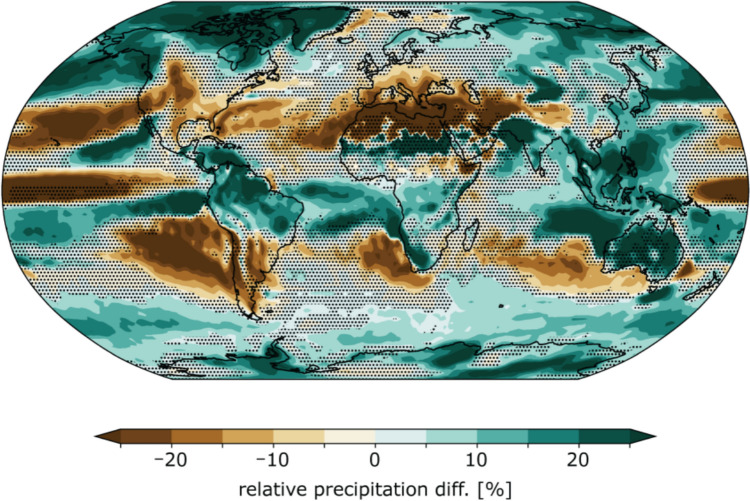
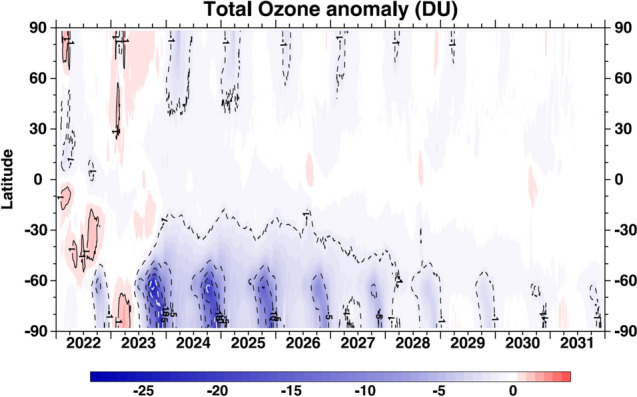
- Stratospheric Aerosol Injection (SAI) modelling projects 1–2% global total-column ozone depletion by the 2030s, Antarctic spring ozone reductions of 58 ± 20 DU, and mean global precipitation declines of 2–3%, with regional reductions up to 10% in Amazonia and Patagonia during June–August.
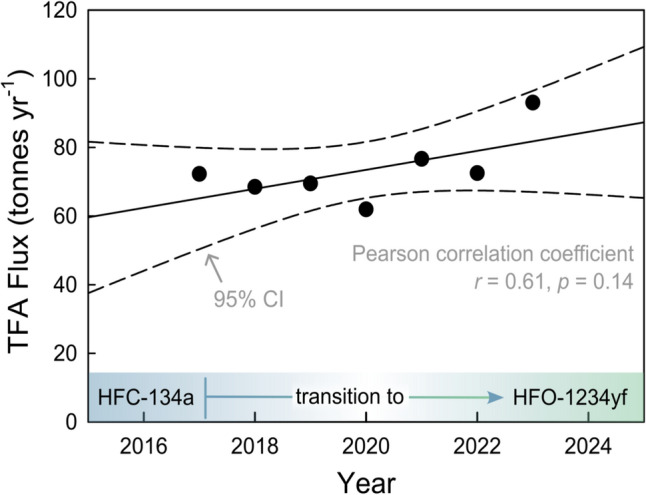
- TFA risks from ODS replacements remain de minimis at current environmental concentrations; in the River Rhine, TFA flux in 2023 was ca 93 tonnes, with no statistically significant increase over 2017–2023 (slope 2.8 ± 3.2 tonnes year−1), indicating Montreal Protocol chemicals were not the dominant TFA source in that basin.
Methods
- Design: UNEP Environmental Effects Assessment Panel (EEAP) Update 2024, a narrative assessment of recent peer-reviewed literature, modelling studies, meta-analyses, and monitoring data relevant to ozone, UV radiation, climate, environment, and health.
- Data/sample: The update draws on multiple external studies, including CMIP6 projections, chemistry-climate models, world-avoided simulations, environmental monitoring datasets, epidemiological studies, and laboratory experiments; it does not present a single new primary dataset.
- Analysis: The paper synthesizes and interprets findings across thematic sections, including ozone–climate interactions, UV projections, SAI, tropospheric chemistry, ODS replacement breakdown products, plastics, terrestrial and aquatic ecosystems, and human health.
Limitations
- The paper states large uncertainties and unknown consequences for global ecosystems from SAI, and notes that further study is needed before its viability can be assessed with confidence.
- It states that projected UV changes may be biased because one key study did not consider future changes in clouds or surface albedo from melting snow/ice, and that CMIP6 models have not addressed whether changes in Arctic mixing will affect summer UV-B exposure.
- The paper identifies data gaps including limited quantitative dose–response information on UV-B-driven plastic photodegradation, detection limits for nanoplastics, uncertain toxicity of TFA to marine organisms and chronic freshwater exposures, and lack of human dietary TFA studies; it also notes that many vertebrate UV studies used artificial laboratory UV sources and that climate-variable correlations in melanoma analyses require caution.
Model-written summary. Check it against the paper before relying on it.
Integrity signals
Registry
Cites
Statistics
Figures
Verification
Claims the paper makes
98 Valid · 7 Not valid · 118 Not checked · 84 Own results and interpretations
The cited sources support only part of this claim — read each source’s verdict below.
In the paper
“However, the absolute levels of UV-radiation are not expected to exceed those of the 1950s as reported previously [7, 8].”
§ Environmental consequences of interacting effects of changes in stratospheric ozone, ultraviolet radiation, and climate: UNEP Environmental Effects Assessment Panel, Update 2024 > Changes in the ozone layer and ultraviolet radiation and their interaction with the climate system > Projections of ultraviolet radiation during the twenty-first century
What the sources say
- Could not verifycites [7] Bernhard, G. H., Bais, A. F., Aucamp, P. J., Klekociuk, A. R., Liley, J. B., & McKenzie, R. L. (2023). Stratospheric ozone, UV-radiation, and climate interactions. Photochemical & Photobiological Sciences, 22 (5), 937–989. 10.1007/s43630-023-00371-y 37083996 PMC10120513 sourceExperimental — accuracy not yet measured
The Projections of UV radiation section compares projected UV Index levels in 2100 with calculations for the 1960s, not the 1950s. A search for “1950s” found no comparison establishing whether future UV levels will exceed those of that decade. The 1960s projection cannot settle the claim about the 1950s. (LLM, conf=0.70)
- Partly supportedcites [8] Bais, A. F., Bernhard, G., McKenzie, R. L., Aucamp, P. J., Young, P. J., Ilyas, M., Jockel, P., & Deushi, M. (2019). Ozone-climate interactions and effects on solar ultraviolet radiation. Photochemical & Photobiological Sciences, 18 (3), 602–640. 10.1039/c8pp90059k 30810565 sourceExperimental — accuracy not yet measured
The paper’s §5, “Projections of UV radiation” (page unavailable), projects lower noon UV Index in 2075–2095 than in 1955–1975 at northern and southern mid-latitudes under one emissions scenario. It does not support the unqualified claim about absolute UV levels: the same section projects increases relative to the 1960s under another scenario, and the projections vary by latitude and season. (LLM, conf=0.86)
plain- Asserted: passes — The authors put it forward as true.
- Checkable: passes — It can be checked against evidence.
- Load-bearing: passes — The paper’s conclusions depend on it.
- Based: passes — The paper gives a reason why it holds.
- Could not verify
The cited sources support only part of this claim — read each source’s verdict below.
In the paper
“Specifically, water vapour was removed through condensation in June and July 2023 before processes that would have led to ozone depletion were impacted [29–31].”
§ Environmental consequences of interacting effects of changes in stratospheric ozone, ultraviolet radiation, and climate: UNEP Environmental Effects Assessment Panel, Update 2024 > Changes in the ozone layer and ultraviolet radiation and their interaction with the climate system > Effect of the Hunga Tonga–Hunga Ha’apai eruption on ozone, UV-radiation, and climate
What the sources say
- Supportedcites [29] Wohltmann, I., Santee, M. L., Manney, G. L., & Millán, L. F. (2024). The chemical effect of increased water vapor from the Hunga Tonga–Hunga Ha’apai eruption on the Antarctic ozone hole. Geophysical Research Letters, 51 (4), e2023GL106980. 10.1029/2023GL106980 source
The Results section says water vapour decreased through condensation and sedimentation from mid-May to the start of July 2023, with the model runs converging by early July. The Discussion and Summary says this dehydration reset the excess water vapour before it could affect ozone loss. The cited paper therefore supports the claim, although it places the decline primarily before July rather than throughout that month. (LLM, conf=0.89)
- Partly supportedcites [30] Santee, M. L., Manney, G. L., Lambert, A., Millán, L. F., Livesey, N. J., Pitts, M. C., Froidevaux, L., Read, W. G., & Fuller, R. A. (2024). The influence of stratospheric hydration from the Hunga eruption on chemical processing in the 2023 Antarctic vortex. Journal of Geophysical Research: Atmospheres, 129 (16), e2023JD040687. 10.1029/2023jd040687 sourceExperimental — accuracy not yet measured
Our copy clearly supports the first half: H2O was drawn down into ice PSCs and permanently removed in May–July 2023, with the Conclusions stating that by mid-July 'the denitrification and dehydration processes had run their course' and 'much of the H2O was removed from the vortex core' (Section 4; see also Sections 3.2.6–3.2.8, where vortex-averaged H2O at 500 K flattens in early July and at 600 K plummets in mid-June). However, the paper explicitly argues the low gas-phase H2O from July onward is 'largely ascribed to dehydration and not merely condensation in still-present ice PSCs' (Section 3.2.8), so 'removed through condensation' understates its mechanism. The temporal/causal clause is also not the paper's framing: it reports that the PSC condensation itself drove the exceptional early-winter chlorine activation and among the fastest May–July ozone loss rates, and that it was 'the saturation of heterogeneous chemical processing' — not removal preceding the depletion processes — that kept 2023 ozone loss unremarkable (Sections 3.2.7 and 4). (LLM, conf=0.72)
- Partly supportedcites [31] Zhou, X., Dhomse, S. S., Feng, W., Mann, G., Heddell, S., Pumphrey, H., Kerridge, B. J., Latter, B., Siddans, R., Ventress, L., Querel, R., Smale, P., Asher, E., Hall, E. G., Bekki, S., & Chipperfield, M. P. (2024). Antarctic vortex dehydration in 2023 as a substantial removal pathway for Hunga Tonga–Hunga Ha’apai water vapor. Geophysical Research Letters, 51 (8), e2023GL1 07630. 10.1029/2023GL107630 sourceExperimental — accuracy not yet measured
Section 4 (page not available in our copy) reports a sharp loss of Antarctic-vortex water vapour from June to July 2023, associated with polar stratospheric cloud processes. Section 6 says dehydration limited the added water vapour’s effect in the vortex core, but it also reports enhanced ozone depletion at the vortex edge from June to September. The claim overstates the timing by implying ozone-depletion processes were not impacted until after the water was removed. (LLM, conf=0.85)
plainstates a cause- Asserted: passes — The authors put it forward as true.
- Checkable: passes — It can be checked against evidence.
- Load-bearing: passes — The paper’s conclusions depend on it.
- Based: passes — The paper gives a reason why it holds.
- Supported
Every source the paper cites for this claim was checked and supports it.
In the paper
“McGillen et al. [93] reported molar yields of 0.37–3.11% CF3H.”
§ Environmental consequences of interacting effects of changes in stratospheric ozone, ultraviolet radiation, and climate: UNEP Environmental Effects Assessment Panel, Update 2024 > Update on the chemistry of replacements for ozone-depleting substances in relation to chemicals under the purview of the Montreal Protocol > Formation of trifluoromethane from atmospheric degradation of replacements for ozone-depleting substances
What the sources say
- Supportedcites McGillen et al. [93] McGillen, M. R., Fried, Z. T., Khan, M. A. H., Kuwata, K. T., Martin, C. M., Odoherty, S., Pecere, F., Shallcross, D. E., Stanley, K. M., & Zhang, K. (2023). Ozonolysis can produce long-lived greenhouse gases from commercial refrigerants. Proceedings of the National Academy of Sciences, 120 (51), e2312714120. 10.1073/pnas.2312714120 PMC10742373 38079548 source
The Results report experimental CHF3 yields of 0.37 ± 0.02% and 3.11 ± 0.05% for two of the refrigerants studied. CHF3 and CF3H are the same compound, so the cited range matches. (LLM, conf=0.95)
plain- Asserted: passes — The authors put it forward as true.
- Checkable: passes — It can be checked against evidence.
- Load-bearing: passes — The paper’s conclusions depend on it.
- Based: passes — The paper gives a reason why it holds.
- Supported
Every source the paper cites for this claim was checked and supports it.
In the paper
“Specifically, the projected increases in Arctic ozone during springtime would weaken the polar vortex, counteracting the strengthening of the vortex resulting from increasing greenhouse gases.”
§ Environmental consequences of interacting effects of changes in stratospheric ozone, ultraviolet radiation, and climate: UNEP Environmental Effects Assessment Panel, Update 2024 > Changes in the ozone layer and ultraviolet radiation and their interaction with the climate system > Effect of Arctic ozone recovery on surface climate
What the sources say
- Supportedcites [19] Chiodo, G., Friedel, M., Seeber, S., Domeisen, D., Stenke, A., Sukhodolov, T., & Zilker, F. (2023). The influence of future changes in springtime Arctic ozone on stratospheric and surface climate. Atmospheric Chemistry and Physics, 23 (18), 10451–10472. 10.5194/acp-23-10451-2023 source
Section 3.2 reports that future Arctic ozone changes weaken polar-stratospheric westerly winds and offset the influence of greenhouse-gas cooling, which would strengthen the vortex by itself. The Conclusions likewise state that increased springtime Arctic ozone weakens the polar vortex. (LLM, conf=0.94)
hedgedstates a cause- Asserted: passes — The authors put it forward as true.
- Checkable: passes — It can be checked against evidence.
- Load-bearing: passes — The paper’s conclusions depend on it.
- Based: passes — The paper gives a reason why it holds.
- Supported
The cited sources support only part of this claim — read each source’s verdict below.
In the paper
“Effects in marine organisms and chronic exposures in freshwater organisms remain the greatest uncertainty, as noted previously [84, 110].”
§ Environmental consequences of interacting effects of changes in stratospheric ozone, ultraviolet radiation, and climate: UNEP Environmental Effects Assessment Panel, Update 2024 > Update on the chemistry of replacements for ozone-depleting substances in relation to chemicals under the purview of the Montreal Protocol > Effects of trifluoroacetic acid on ecosystems and human health
What the sources say
- Partly supportedcites [84] Madronich, S., Bernhard, G. H., Neale, P. J., Heikkilä, A., Andersen, M. P. S., Andrady, A. L., Aucamp, P. J., Bais, A. F., Banaszak, A. T., Barnes, P. J., Bornman, J. F., Bruckman, L. S., Busquets, R., Chiodo, G., Häder, D. P., Hanson, M. L., Hylander, S., Jansen, M. A. K., Lingham, G., … Neale, R. E. (2024). Continuing benefits of the Montreal Protocol and protection of the stratospheric ozone layer for human health and the environment. Photochemical & Photobiological Sciences, 23, 1087–1115. 10.1007/s43630-024-00577-8 38763938 sourceExperimental — accuracy not yet measured
Section 6.4 (page unavailable) says effects in marine organisms remain the greatest uncertainty in assessing ecological risk. It does not identify chronic exposures in freshwater organisms as another greatest uncertainty; instead, it describes risks for organisms in flowing water as de minimis. (LLM, conf=0.88)
- Not checked — no full text of the sourcecites [110] Hanson, M. L., Madronich, S., Solomon, K., Sulbaek Andersen, M. P., & Wallington, T. J. (2024). Trifluoroacetic acid in the environment: Consensus, gaps, and next steps. Environmental Toxicology and Chemistry, 43 (10), 2091–2093. 10.1002/etc.5963 39078279 source
plain- Asserted: passes — The authors put it forward as true.
- Checkable: passes — It can be checked against evidence.
- Load-bearing: unclear — It is unclear whether the paper’s conclusions depend on it.
- Based: passes — The paper gives a reason why it holds.
- Partly supported
183 more claims · 61 with their cited sources checked
Create a free account to see all 307 claims and to verify the 72 references still open.
- It may state two separate claims as one. 100
- Probably not a substantial claim. 30
- The quote only partly states this claim. 1
Self-check
Percentages, sums and reported differences re-computed from the paper’s own numbers.
Each contradiction between two passages listed here was confirmed by an independent check.
Rated minor: it would not touch a result — a value no result rests on, a p-value that stays on the same side of the significance level, or a conflict that is clerical, resolved elsewhere in the paper, or outside its own findings.
In the paper
§ Environmental consequences of interacting effects of changes in stratospheric ozone, ultraviolet radiation, and climate: UNEP Environmental Effects Assessment Panel, Update 2024 > UV-B radiation-induced impacts on tropospheric photo-oxidants > Offsetting harmful and beneficial human health effects of increased UV-B radiation
“Taking RAF ~ 1.2 [76, 77], BAF ~ 0.6 [78]”
§ Environmental consequences of interacting effects of changes in stratospheric ozone, ultraviolet radiation, and climate: UNEP Environmental Effects Assessment Panel, Update 2024 > References
“77. Albers, C. N., & Sültenfuss, J. (2024). A 60-year increase in the ultrashort-chain PFAS trifluoroacetate and its suitability as a tracer for groundwater age.”
Rated minor: it would not touch a result — a value no result rests on, a p-value that stays on the same side of the significance level, or a conflict that is clerical, resolved elsewhere in the paper, or outside its own findings.
In the paper
§ Environmental consequences of interacting effects of changes in stratospheric ozone, ultraviolet radiation, and climate: UNEP Environmental Effects Assessment Panel, Update 2024 > Update on the chemistry of replacements for ozone-depleting substances in relation to chemicals under the purview of the Montreal Protocol > No discernible contribution yet to trifluoroacetic acid in the River Rhine from degradation of replacements for ozone-depleting substances
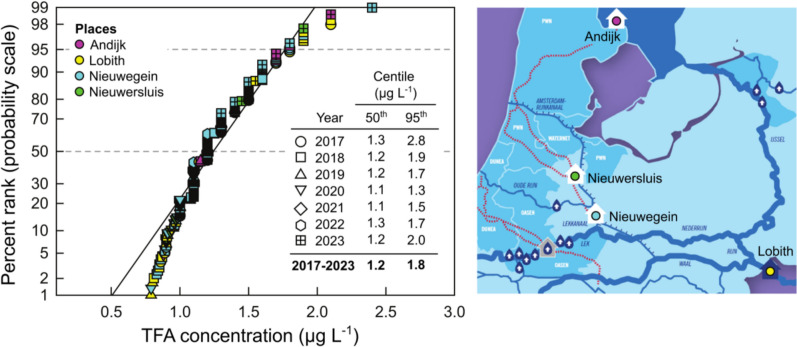
“A cumulative frequency distribution of combined data from all measurements of TFA in the River Rhine (2017–2022). Data from the RIWA reports for 2017 to 2023 (n = 297)”
§ Environmental consequences of interacting effects of changes in stratospheric ozone, ultraviolet radiation, and climate: UNEP Environmental Effects Assessment Panel, Update 2024 > Update on the chemistry of replacements for ozone-depleting substances in relation to chemicals under the purview of the Montreal Protocol > No discernible contribution yet to trifluoroacetic acid in the River Rhine from degradation of replacements for ozone-depleting substances
“In Fig. 5, data from 2017–2023 for four locations (Lobith, Andijk, Nieuwersluis, and Nieuwegein) were ranked and plotted as cumulative frequency distributions for illustrative purposes.”
Rated minor: it would not touch a result — a value no result rests on, a p-value that stays on the same side of the significance level, or a conflict that is clerical, resolved elsewhere in the paper, or outside its own findings.
In the paper
§ Environmental consequences of interacting effects of changes in stratospheric ozone, ultraviolet radiation, and climate: UNEP Environmental Effects Assessment Panel, Update 2024 > UV-B radiation-induced impacts on tropospheric photo-oxidants > Offsetting harmful and beneficial human health effects of increased UV-B radiation
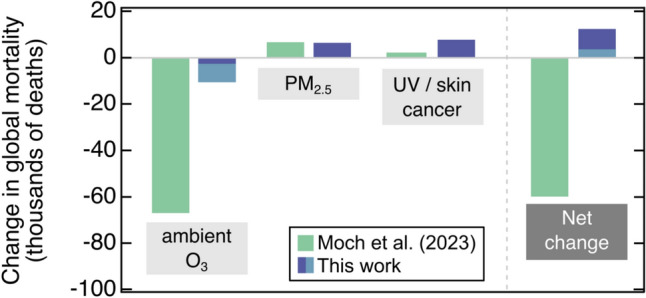
“A re-examination of the model results of Moch et al. [64] gives a reduction in annual deaths attributable to reduction in tropospheric ozone of 2000 to 10,600”
§ Environmental consequences of interacting effects of changes in stratospheric ozone, ultraviolet radiation, and climate: UNEP Environmental Effects Assessment Panel, Update 2024 > References
“69. Moch, J. M., Mickley, L. J., Eastham, S. D., Lundgren, E. W., Shah, V., Buonocore, J. J., Pang, J. Y. S., Sadiq, M., & Tai, A. P. K. (2023).”
Rated minor: it would not touch a result — a value no result rests on, a p-value that stays on the same side of the significance level, or a conflict that is clerical, resolved elsewhere in the paper, or outside its own findings.
In the paper
§ Environmental consequences of interacting effects of changes in stratospheric ozone, ultraviolet radiation, and climate: UNEP Environmental Effects Assessment Panel, Update 2024 > UV-B radiation-induced impacts on tropospheric photo-oxidants > Offsetting harmful and beneficial human health effects of increased UV-B radiation
“The mortality attributed to a 2 ppbv increase in ambient ozone is about one order of magnitude smaller than the estimate by Moch et al.”
§ Environmental consequences of interacting effects of changes in stratospheric ozone, ultraviolet radiation, and climate: UNEP Environmental Effects Assessment Panel, Update 2024 > UV-B radiation-induced impacts on tropospheric photo-oxidants > Offsetting harmful and beneficial human health effects of increased UV-B radiation
“the relative risk (RR) for 10 ppbv increase in ozone [73] scaled to a 2 ppbv decrease in surface ozone”
Rated minor: it would not touch a result — a value no result rests on, a p-value that stays on the same side of the significance level, or a conflict that is clerical, resolved elsewhere in the paper, or outside its own findings.
In the paper
§ Environmental consequences of interacting effects of changes in stratospheric ozone, ultraviolet radiation, and climate: UNEP Environmental Effects Assessment Panel, Update 2024 > Update on the chemistry of replacements for ozone-depleting substances in relation to chemicals under the purview of the Montreal Protocol > New measurements of concentrations of trifluoroacetic acid, perfluoropropanoic acid, and perfluorobutanoic acid in the environment
“Zhao and colleagues [95] sampled soils near oil refineries (n = 21) and from reference sites (n = 5).”
§ Environmental consequences of interacting effects of changes in stratospheric ozone, ultraviolet radiation, and climate: UNEP Environmental Effects Assessment Panel, Update 2024 > References
“95. Zhou, Y., Wang, C., Dong, H., & Wang, X. (2024). Escalating global pollution of trifluoroacetic acid.”
Citations
Cites
Cohen, A. J., Brauer, M., Burnett, R., Anderson, H. R., Frostad, J., Estep, K., Balakrishnan, K., Brunekreef, B., Dandona, L., Dandona, R., et al. (2017) · The Lancet · doi:10.1016/s0140-6736(17)30505-6 · Cited by 6,583 · cited 2×
“Using current annual deaths attributable to ambient tropospheric ozone of 254,000–1,330,000 [71, 72], and the relative risk (RR) for 10 ppbv increase in ozone [73] Figure 3 summarises this re-evaluation.”
The contribution of outdoor air pollution sources to premature mortality on a global scale
Lelieveld, J., Evans, J. S., Fnais, M., Giannadaki, D., & Pozzer, A. (2015) · Nature · doi:10.1038/nature15371 · Cited by 5,977 · cited 1×
“Recent estimates of the global premature mortality due to ambient ozone range widely, from ca 140,000 [70] to 1,330,000 [71] per year, with the Global Burden of Disease estimate being 254,000 [72].”
Hahladakis, J. N., Velis, C. A., Weber, R., Iacovidou, E., & Purnell, P. (2018) · Journal of Hazardous Materials · doi:10.1016/j.jhazmat.2017.10.014 · Cited by 3,873 · cited 1×
“However, the mechanical stability of recycled plastics within asphalt that is exposed to solar radiation is difficult to determine because of the complex composition of these composite materials [181].”
The shared socio-economic pathway (SSP) greenhouse gas concentrations and their extensions to 2500
Meinshausen, M., Nicholls, Z. R. J., Lewis, J., Gidden, M. J., Vogel, E., Freund, M., Beyerle, U., Gessner, C., Nauels, A., Bauer, N., et al. (2020) · Geoscientific Model Development · doi:10.5194/gmd-13-3571-2020 · Cited by 1,815 · cited 1×
“…projections of future UV-radiation for cloud-free conditions based on total column ozone and aerosol optical depth data from six CMIP6 (Coupled Model Intercomparison Project Phase 6) models following four Shared Socio-economic Pathway (SSP) scenarios 1 [10], which supersede the RCP scenarios.”
The epidemiology of UV induced skin cancer
Armstrong, B. K., & Kricker, A. (2001) · Journal of Photochemistry and Photobiology B: Biology · doi:10.1016/s1011-1344(01)00198-1 · Cited by 1,811
Long-term ozone exposure and mortality
Jerrett, M., Burnett, R. T., Pope, C. A., Ito, K., Thurston, G., Krewski, D., Shi, Y., Calle, E., & Thun, M. (2009) · New England Journal of Medicine · doi:10.1056/nejmoa0803894 · Cited by 1,602 · cited 2×
“Using current annual deaths attributable to ambient tropospheric ozone of 254,000–1,330,000 [71, 72], and the relative risk (RR) for 10 ppbv increase in ozone [73] Figure 3 summarises this re-evaluation.”
InfluentialTwenty years of microplastic pollution research—what have we learned?
Thompson, R. C., Courtene-Jones, W., Boucher, J., Pahl, S., Raubenheimer, K., & Koelmans, A. A. (2024) · Science · doi:10.1126/science.adl2746 · Cited by 1,521
Air pollution and mortality in the Medicare population
Di, Q., Wang, Y., Zanobetti, A., Wang, Y., Koutrakis, P., Choirat, C., Dominici, F., & Schwartz, J. D. (2017) · New England Journal of Medicine · doi:10.1056/nejmoa1702747 · Cited by 1,510 · cited 1×
“Other estimates of relative risk are even smaller; e.g., 1.02 (95% CI 1.01–1.04) [74] and 1.01 (95% CI 0.9–1.1) [75].”
InfluentialMicroplastics and Nanoplastics in Atheromas and Cardiovascular Events
Marfella, R., Prattichizzo, F., Sardu, C., Fulgenzi, G., Graciotti, L., Spadoni, T., D’Onofrio, N., Scisciola, L., La Grotta, R., Frigé, C., et al. (2024) · New England Journal of Medicine · doi:10.1056/nejmoa2309822 · Cited by 1,223 · cited 1×
“The ubiquitous presence of MNPs in natural environments is exemplified by their presence in, for example, arterial plaque in humans [115], semen [116, 117], and placentas [118].”
Long-term ozone exposure and mortality in a large prospective study
Turner, M. C., Jerrett, M., Pope, C. A., Krewski, D., Gapstur, S. M., Diver, W. R., Beckerman, B. S., Marshall, J. D., Su, J., Crouse, D. L., et al. (2016) · American Journal of Respiratory and Critical Care Medicine · doi:10.1164/rccm.201508-1633oc · Cited by 938 · cited 1×
“Other estimates of relative risk are even smaller; e.g., 1.02 (95% CI 1.01–1.04) [74] and 1.01 (95% CI 0.9–1.1) [75].”
InfluentialNano-enabled pesticides for sustainable agriculture and global food security
Wang, D., Saleh, N. B., Byro, A., Zepp, R., Sahle-Demessie, E., Luxton, T. P., Ho, K. T., Burgess, R. M., Flury, M., White, J. C., et al. (2022) · Nature Nanotechnology · doi:10.1038/s41565-022-01082-8 · Cited by 877 · cited 1×
“Some of these environmental effects of UV-radiation, mediated through pesticides and their breakdown products, are counteracted by encapsulating pesticides in nano-sized carriers, such as polymers, nano-clays, and metal organic frameworks, resulting in reduced residues from photodegradation [215].”
Self-citationScientific Assessment of Ozone Depletion: 1998
Renger, W., & Wirth, M. (1999) · elib (German Aerospace Center) · Cited by 773
Blum, A., Behl, M., Birnbaum, L. S., Diamond, M. L., Phillips, A., Singla, V., Sipes, N. S., Stapleton, H. M., & Venier, M. (2019) · Environmental Science & Technology Letters · doi:10.1021/acs.estlett.9b00582 · Cited by 651 · cited 1×
“The application of OPEs is increasing since the phasing-out of brominated flame retardants [139].”
Childhood sun exposure as a risk factor for melanoma: a systematic review of epidemiologic studies
Whiteman, D. C., Whiteman, C. A., & Green, A. C. (2001) · Cancer Causes & Control · doi:10.1023/a:1008980919928 · Cited by 633 · cited 2×
“It has long been known that sun exposure in childhood is strongly associated with risk of melanoma [242], but the relative causative contributions of UV-A and UV-B radiation are unknown.”
Ozone depletion and climate change: impacts on UV radiation
McKenzie, R. L., Aucamp, P. J., Bais, A. F., Björn, L. O., Ilyas, M., & Madronich, S. (2011) · Photochemical & Photobiological Sciences · doi:10.1039/c0pp90034f · Cited by 609
Self-citationA new model for global glacier change and sea-level rise
Huss, M., & Hock, R. (2015) · Frontiers in Earth Science · doi:10.3389/feart.2015.00054 · Cited by 569 · cited 1×
“Spatial analysis using the Global Glacier Evolution Model [195] suggests that by 2100, loss of glaciers could expose an area ranging from 149,000 to 339,000 km 2 , depending on the greenhouse gas emission scenario [194].”
Impact of geoengineering schemes on the global hydrological cycle
Bala, G., Duffy, P. B., & Taylor, K. E. (2008) · Proceedings of the National Academy of Sciences · doi:10.1073/pnas.0711648105 · Cited by 361 · cited 1×
“Some studies indicate that mean global precipitation would decline by 2–3% under SAI [46], which would more than offset the expected precipitation increase due to greenhouse gas-driven climate change (e.g., [47]).”
Ozone depletion, ultraviolet radiation, climate change and prospects for a sustainable future
Barnes, P. W., Williamson, C. E., Lucas, R. M., Robinson, S. A., Madronich, S., Paul, N. D., Bornman, J. F., Bais, A. F., Sulzberger, B., Wilson, S. R., et al. (2019) · Nature Sustainability · doi:10.1038/s41893-019-0314-2 · Cited by 360 · cited 1×
“Changes to the position of wet and dry zones, and wind patterns and their intensity, are known to affect biodiversity and ecosystem services [53, 54].”
Self-citationBais, A. F., Lucas, R. M., Bornman, J. F., Williamson, C. E., Sulzberger, B., Austin, A. T., Wilson, S. R., Andrady, A. L., Bernhard, G., McKenzie, R. L., et al. (2018) · Photochemical & Photobiological Sciences · doi:10.1039/c7pp90043k · Cited by 350
Self-citationRecord low Antarctic sea ice coverage indicates a new sea ice state
Purich, A., & Doddridge, E. W. (2023) · Communications Earth & Environment · doi:10.1038/s43247-023-00961-9 · Cited by 339 · cited 1×
“In Antarctica, the persistence of the ozone hole into early summer coincided with unprecedented sea ice losses during 2022–2024 [192, 193].”
Drivers and Impacts of the Record-Breaking 2023 Wildfire Season in Canada
Jain, P., Barber, Q. E., Taylor, S. W., Whitman, E., Castellanos Acuna, D., Boulanger, Y., Chavardès, R. D., Chen, J., Englefield, P., Flannigan, M., et al. (2024) · Nature Communications · doi:10.1038/s41467-024-51154-7 · Cited by 319 · cited 1×
“Changes in vegetation cover (i.e., deforestation and wildfires) can also shift the relative contribution of photodegradation by altering the amount of UV-radiation reaching plant litter [208–210].”
Garcia, M. A., Liu, R., Nihart, A., El Hayek, E., Castillo, E., Barrozo, E. R., Suter, M. A., Bleske, B., Scott, J., Forsythe, K., et al. (2024) · Toxicological Sciences · doi:10.1093/toxsci/kfae021 · Cited by 308 · cited 1×
“The ubiquitous presence of MNPs in natural environments is exemplified by their presence in, for example, arterial plaque in humans [115], semen [116, 117], and placentas [118].”
Global trends in incidence, death, burden and risk factors of early-onset cancer from 1990 to 2019
Zhao, J., Xu, L., Sun, J., Song, M., Wang, L., Yuan, S., Zhu, Y., Wan, Z., Larsson, S., Tsilidis, K., et al. (2023) · BMJ Oncology · doi:10.1136/bmjonc-2023-000049 · Cited by 306 · cited 1×
“Several studies have demonstrated that the incidence of both melanoma [245–247] and keratinocyte cancer [248] has decreased in younger people and in more recent birth cohorts in some high-risk populations.”
The Hunga Tonga‐Hunga Ha'apai Hydration of the Stratosphere
Millán, L., Santee, M. L., Lambert, A., Livesey, N. J., Werner, F., Schwartz, M. J., Pumphrey, H. C., Manney, G. L., Wang, Y., Su, H., et al. (2022) · Geophysical Research Letters · doi:10.1029/2022gl099381 · Cited by 284
Unusual Southern Hemisphere tree growth patterns induced by changes in the Southern Annular Mode
Villalba, R., Lara, A., Masiokas, M. H., Urrutia, R., Luckman, B. H., Marshall, G. J., Mundo, I. A., Christie, D. A., Cook, E. R., Neukom, R., et al. (2012) · Nature Geoscience · doi:10.1038/ngeo1613 · Cited by 258 · cited 1×
“In southern Chile, where changes in precipitation would coincide with the enhanced UV-radiation mentioned above, increased drought [47] could lead to reductions in both forest growth [55] and energy generation from hydroelectric plants [56].”
Raman Microspectroscopy evidence of microplastics in human semen
Montano, L., Giorgini, E., Notarstefano, V., Notari, T., Ricciardi, M., Piscopo, M., & Motta, O. (2023) · Science of The Total Environment · doi:10.1016/j.scitotenv.2023.165922 · Cited by 243 · cited 1×
“The ubiquitous presence of MNPs in natural environments is exemplified by their presence in, for example, arterial plaque in humans [115], semen [116, 117], and placentas [118].”
Manney, G. L., Livesey, N. J., Santee, M. L., Froidevaux, L., Lambert, A., Lawrence, Z. D., Millán, L. F., Neu, J. L., Read, W. G., Schwartz, M. J., et al. (2020) · Geophysical Research Letters · doi:10.1029/2020gl089063 · Cited by 233 · cited 1×
“Hence, extreme Arctic ozone depletion over an area as extensive as the one observed in 2020 [17] and associated substantial increases in UV-radiation [18] will become less likely in the future as concentrations of ODS are declining.”
What would have happened to the ozone layer if chlorofluorocarbons (CFCs) had not been regulated?
Newman, P. A., Oman, L. D., Douglass, A. R., Fleming, E. L., Frith, S. M., Hurwitz, M. M., Kawa, S. R., Jackman, C. H., Krotkov, N. A., Nash, E. R., et al. (2009) · Atmospheric Chemistry and Physics · doi:10.5194/acp-9-2113-2009 · Cited by 220 · cited 1×
“Without the Montreal Protocol (i.e., the “world avoided” scenario), emissions of ozone-depleting substances (ODS) would have continued to increase and large decreases in tropical stratospheric ozone would have occurred by the end of the twenty-first century [1, 2].”
Solomon, K. R., Velders, G. J. M., Wilson, S. R., Madronich, S., Longstreth, J., Aucamp, P. J., & Bornman, J. F. (2016) · Journal of Toxicology and Environmental Health, Part B · doi:10.1080/10937404.2016.1175981 · Cited by 213 · cited 1×
“From a human health perspective, the effects of TFA salts on mammals have been reviewed previously [94, 111, 112] and these reviews have included characterisation of the risks of TFA to humans.”
Self-citationEffects of UV-B Radiation on Terrestrial and Aquatic Primary Producers
Day, T. A., & Neale, P. J. (2002) · Annual Review of Ecology and Systematics · doi:10.1146/annurev.ecolsys.33.010802.150434 · Cited by 211 · cited 1×
“Exposure to UV-B radiation can reduce this function, as well as the growth rate, and shift the biochemical composition of phytoplankton [218].”
Self-citationEnvironmental Risk Assessment of Trifluoroacetic Acid
Boutonnet, J. C., Bingham, P., Calamari, D., Rooij, C. D., Franklin, J., Kawano, T., Libre, J.-M., McCul-loch, A., Malinverno, G., Odom, J. M., et al. (1999) · Human and Ecological Risk Assessment: An International Journal · doi:10.1080/10807039991289644 · Cited by 206
Ozone—climate interactions and effects on solar ultraviolet radiation
Bais, A. F., Bernhard, G., McKenzie, R. L., Aucamp, P. J., Young, P. J., Ilyas, M., Jöckel, P., & Deushi, M. (2019) · Photochemical & Photobiological Sciences · doi:10.1039/c8pp90059k · Cited by 206
Self-citationEffects of UVB radiation on marine and freshwater organisms: a synthesis through meta‐analysis
Bancroft, B. A., Baker, N. J., & Blaustein, A. R. (2007) · Ecology Letters · doi:10.1111/j.1461-0248.2007.01022.x · Cited by 205 · cited 2×
“Responses occur at all trophic levels and life stages, but we first consider effects on the smallest organisms that have the least capacity to shield against UV-radiation followed by interactions affecting larger organisms [220].”
Simpson, I. R., Tilmes, S., Richter, J. H., Kravitz, B., MacMartin, D. G., Mills, M. J., Fasullo, J. T., & Pendergrass, A. G. (2019) · Journal of Geophysical Research: Atmospheres · doi:10.1029/2019jd031093 · Cited by 202 · cited 3×
“However, there would be substantial regional variation in the extent and direction of changes in precipitation [48–50].”
Mechanical recycling of plastic waste as a point source of microplastic pollution
Suzuki, G., Uchida, N., Tuyen, L. H., Tanaka, K., Matsukami, H., Kunisue, T., Takahashi, S., Viet, P. H., Kuramochi, H., & Osako, M. (2022) · Environmental Pollution · doi:10.1016/j.envpol.2022.119114 · Cited by 198 · cited 1×
“However, there is concern that mechanical grinding of plastic waste results in point-source emission of MNPs into the environment [146].”
The environmental impact of CFC replacements - HFCs and HCFCs
Wallington, T. J., Schneider, W. F., Worsnop, D. R., Nielsen, O. J., Sehested, J., Debruyn, W. J., & Shorter, J. A. (1994) · Environmental Science & Technology · doi:10.1021/es00056a002 · Cited by 198 · cited 1×
“This is also incorrect; the atmospheric fate of CF 3 O 2 radicals are reactions with NO, NO 2 , HO 2 , and RO 2 radicals [92].”
Self-citationFuture emergence of new ecosystems caused by glacial retreat
Bosson, J. B., Huss, M., Cauvy-Fraunié, S., Clément, J. C., Costes, G., Fischer, M., Poulenard, J., & Arthaud, F. (2023) · Nature · doi:10.1038/s41586-023-06302-2 · Cited by 197 · cited 3×
“Potentially, 7–10% of the newly exposed ground will be along the Andes and in Ant-arctica [194, 196].”
Pitari, G., Aquila, V., Kravitz, B., Robock, A., Watanabe, S., Cionni, I., Luca, N. D., Genova, G. D., Mancini, E., & Tilmes, S. (2014) · Journal of Geophysical Research: Atmospheres · doi:10.1002/2013jd020566 · Cited by 196 · cited 1×
“Models project that immediate implementation of SAI could produce 1–2% depletion of the total column ozone globally by the 2030s ([42]; reviewed by Hyunh & McNeill [40]).”
(2022) · The Ocean and Cryosphere in a Changing Climate · doi:10.1017/9781009157964.001 · Cited by 195
UV‐induced skin cancer in a hairless mouse model
de Gruijl, F. R., & Forbes, P. D. (1995) · BioEssays · doi:10.1002/bies.950170711 · Cited by 186
Long-distance atmospheric transport of microplastic fibres influenced by their shapes
Xiao, S., Cui, Y., Brahney, J., Mahowald, N. M., & Li, Q. (2023) · Nature Geoscience · doi:10.1038/s41561-023-01264-6 · Cited by 181 · cited 1×
“Several recent studies have compared the long-range atmospheric transport of microfi-bres and fragments [120, 122, 123].”
Shape Matters: Long-Range Transport of Microplastic Fibers in the Atmosphere
Tatsii, D., Bucci, S., Bhowmick, T., Guettler, J., Bakels, L., Bagheri, G., & Stohl, A. (2024) · Environmental Science & Technology · doi:10.1021/acs.est.3c08209 · Cited by 181 · cited 2×
“…experiments demonstrate that microfibres have smaller settling velocities (the speed at which they fall to the ground), by as much as a factor of four, compared to spheres of comparable mass and volume, indicating that they can be efficiently transported from populated to remote regions [123].”
Long-range atmospheric transport of microplastics across the southern hemisphere
Chen, Q., Shi, G., Revell, L. E., Zhang, J., Zuo, C., Wang, D., Le Ru, E. C., Wu, G., & Mitrano, D. M. (2023) · Nature Communications · doi:10.1038/s41467-023-43695-0 · Cited by 178 · cited 1×
“Several recent studies have compared the long-range atmospheric transport of microfi-bres and fragments [120, 122, 123].”
Self-citationResponses of plants in polar regions to UVB exposure: a meta‐analysis
NEWSHAM, K. K., & ROBINSON, S. A. (2009) · Global Change Biology · doi:10.1111/j.1365-2486.2009.01944.x · Cited by 175 · cited 1×
“Studies of the response of polar vegetation to ozone depletion suggest that ozone depletion of 20–40 DU could lead to at most a 13% reduction in above-ground biomass (meta-analysis; [44]).”
Self-citationWilliamson, C. E., Neale, P. J., Hylander, S., Rose, K. C., Figueroa, F. L., Robinson, S. A., Häder, D.-P., Wä, S.-Å., & Worrest, R. C. (2019) · Photochemical & Photobiological Sciences · doi:10.1039/c8pp90062k · Cited by 169 · cited 1×
“However, these studies all deal with effects known to have a UV-B component, ranging from damage to DNA, which is mostly induced by UV-B irradiation, to inhibition of photosynthesis in phytoplankton for which UV-B irradiation plays a minor role [234].”
Self-citationThe effects of exposure to solar radiation on human health
Neale, R. E., Lucas, R. M., Byrne, S. N., Hollestein, L., Rhodes, L. E., Yazar, S., Young, A. R., Berwick, M., Ireland, R. A., & Olsen, C. M. (2023) · Photochemical & Photobiological Sciences · doi:10.1007/s43630-023-00375-8 · Cited by 162 · cited 1×
“The UNEP EEAP has monitored trends in skin cancer as one way of assessing the effects of the Montreal Protocol and its Amendments [239, 240].”
Self-citationTrisos, C. H., Amatulli, G., Gurevitch, J., Robock, A., Xia, L., & Zambri, B. (2018) · Nature Ecology & Evolution · doi:10.1038/s41559-017-0431-0 · Cited by 157 · cited 1×
“This could pose a significant threat to biodiversity as organisms may be unable to acclimate or adapt to these sudden environmental changes [67, 68]).”
Whole genome landscapes of uveal melanoma show an ultraviolet radiation signature in iris tumours
Johansson, P. A., Brooks, K., Newell, F., Palmer, J. M., Wilmott, J. S., Pritchard, A. L., Broit, N., Wood, S., Carlino, M. S., Leonard, C., et al. (2020) · Nature Communications · doi:10.1038/s41467-020-16276-8 · Cited by 153 · cited 1×
“These are also the sites known to be exposed to UV-radiation (posterior structures are largely shielded by the cornea and lens) and show evidence of UV-radiation signature mutations [262].”
MacFadyen, E. J., Williamson, C. E., Grad, G., Lowery, M., Jeffrey, W. H., & Mitchell, D. L. (2004) · Global Change Biology · doi:10.1111/j.1529-8817.2003.00750.x · Cited by 152 · cited 1×
“Other “winners” may result from ocean warming, which can enhance the defences of organisms against the effects of exposure to UV-B radiation; e.g., by increasing the rate of repair of UV-damaged DNA [223].”
Roles of UVA radiation and DNA damage responses in melanoma pathogenesis
Khan, A. Q., Travers, J. B., & Kemp, M. G. (2018) · Environmental and Molecular Mutagenesis · doi:10.1002/em.22176 · Cited by 152 · cited 1×
“Nevertheless, the findings are consistent with the other studies that indicate that UV-A radiation may contribute to the development of melanoma [252], and highlight the need for sun protection that covers both UV-A and UV-B radiation.”
Microplastic and plastic pollution: impact on respiratory disease and health
Vasse, G. F., & Melgert, B. N. (2024) · European Respiratory Review · doi:10.1183/16000617.0226-2023 · Cited by 146 · cited 1×
“Due to limited data on the abundance and size of particles smaller than 1 µm, which have a higher probability of penetrating to the deeper areas of lung tissues, effects on human health via respiratory inhalation are also not well established [128].”
Visioni, D., MacMartin, D. G., Kravitz, B., Boucher, O., Jones, A., Lurton, T., Martine, M., Mills, M. J., Nabat, P., Niemeier, U., et al. (2021) · Atmospheric Chemistry and Physics · doi:10.5194/acp-21-10039-2021 · Cited by 145 · cited 2×
“In southern Chile, where changes in precipitation would coincide with the enhanced UV-radiation mentioned above, increased drought [47] could lead to reductions in both forest growth [55] and energy generation from hydroelectric plants [56].”
Formation of environmentally persistent free radicals on microplastics under UV irradiations
Liu, S., Huang, W., Yang, J., Xiong, Y., Huang, Z., Wang, J., Cai, T., Dang, Z., & Yang, C. (2023) · Journal of Hazardous Materials · doi:10.1016/j.jhazmat.2023.131277 · Cited by 143
Stratospheric ozone, UV radiation, and climate interactions
Bernhard, G. H., Bais, A. F., Aucamp, P. J., Klekociuk, A. R., Liley, J. B., & McKenzie, R. L. (2023) · Photochemical & Photobiological Sciences · doi:10.1007/s43630-023-00371-y · Cited by 138
Self-citationYe, L., Li, J., Gong, S., Herczegh, S. M., Zhang, Q., Letcher, R. J., & Su, G. (2023) · Journal of Hazardous Materials · doi:10.1016/j.jhazmat.2023.132095 · Cited by 128
Scenarios for modeling solar radiation modification
MacMartin, D. G., Visioni, D., Kravitz, B., Richter, J. H., Felgenhauer, T., Lee, W. R., Morrow, D. R., Parson, E. A., & Sugiyama, M. (2022) · Proceedings of the National Academy of Sciences · doi:10.1073/pnas.2202230119 · Cited by 125
Bernhard, G. H., Neale, R. E., Barnes, P. W., Neale, P. J., Zepp, R. G., Wilson, S. R., Andrady, A. L., Bais, A. F., McKenzie, R. L., Aucamp, P. J., et al. (2020) · Photochemical & Photobiological Sciences · doi:10.1039/d0pp90011g · Cited by 122 · cited 1×
“The UNEP EEAP has monitored trends in skin cancer as one way of assessing the effects of the Montreal Protocol and its Amendments [239, 240].”
Self-citationBarnes, P. W., Robson, T. M., Neale, P. J., Williamson, C. E., Zepp, R. G., Madronich, S., Wilson, S. R., Andrady, A. L., Heikkilä, A. M., Bernhard, G. H., et al. (2022) · Photochemical & Photobiological Sciences · doi:10.1007/s43630-022-00176-5 · Cited by 121 · cited 1×
“Photodegradation by shortwave radiation (UV-B, UV-A, and blue light) has been identified as a ubiquitous contributing driver of litter decomposition and carbon cycling over the Earth’s biomes [138, 200].”
Self-citationPotential ecological impacts of climate intervention by reflecting sunlight to cool Earth
Zarnetske, P. L., Gurevitch, J., Franklin, J., Groffman, P. M., Harrison, C. S., Hellmann, J. J., Hoffman, F. M., Kothari, S., Robock, A., Tilmes, S., et al. (2021) · Proceedings of the National Academy of Sciences · doi:10.1073/pnas.1921854118 · Cited by 119
Hu, J., Kang, L., Li, Z., Feng, X., Liang, C., Wu, Z., Zhou, W., Liu, X., Yang, Y., & Chen, L. (2023) · Nature Communications · doi:10.1038/s41467-023-39432-2 · Cited by 114 · cited 1×
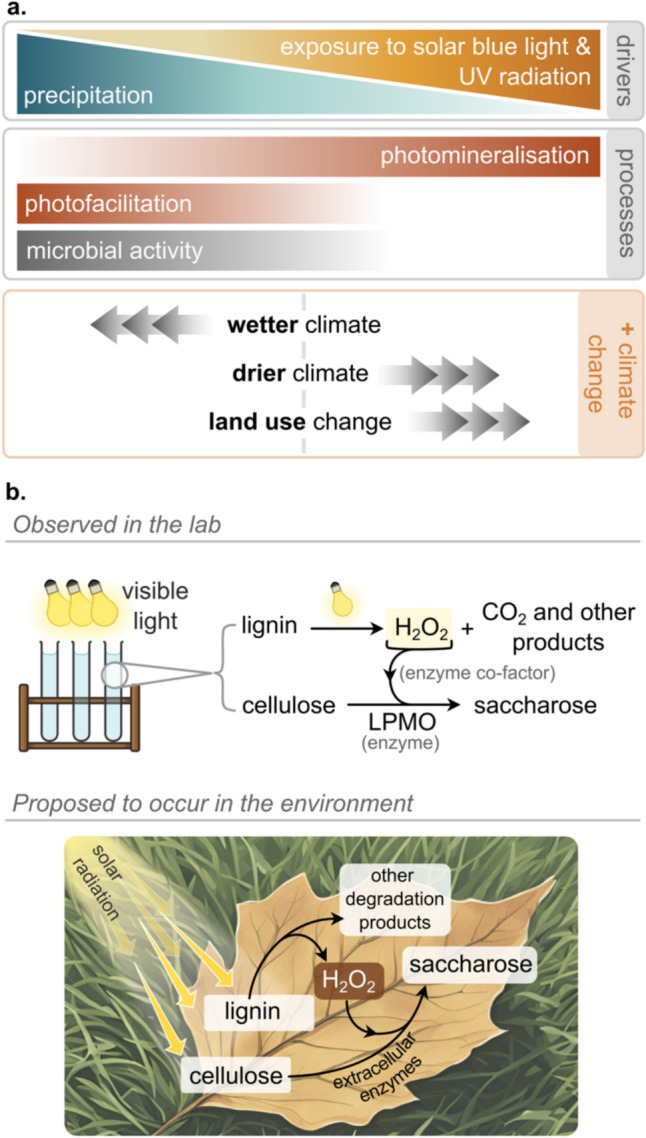
“This occurs through direct breakdown of the lignin component of plant litter (photomineralisation) by the radiation [201, 202] and indirectly by facilitating subsequent microbial degradation (photofacilitation) [203–205].”
Nominally identical microplastic models differ greatly in their particle-cell interactions
Wieland, S., Ramsperger, A. F. R. M., Gross, W., Lehmann, M., Witzmann, T., Caspari, A., Obst, M., Gekle, S., Auernhammer, G. K., Fery, A., et al. (2024) · Nature Communications · doi:10.1038/s41467-024-45281-4 · Cited by 114 · cited 1×
“Relatively minor surface modifications resulting from UV-radiation, such as changes in electrical potential, can modify interactions of plastics with living cells, and hence can cause toxicity [136].”
Barnes, P. W., Robson, T. M., Zepp, R. G., Bornman, J. F., Jansen, M. A. K., Ossola, R., Wang, Q.-W., Robinson, S. A., Foereid, B., Klekociuk, A. R., et al. (2023) · Photochemical & Photobiological Sciences · doi:10.1007/s43630-023-00376-7 · Cited by 113 · cited 3×
“Photodegradation by shortwave radiation (UV-B, UV-A, and blue light) has been identified as a ubiquitous contributing driver of litter decomposition and carbon cycling over the Earth’s biomes [138, 200].”
Self-citationWang, Y., Okochi, H., Tani, Y., Hayami, H., Minami, Y., Katsumi, N., Takeuchi, M., Sorimachi, A., Fujii, Y., Kajino, M., et al. (2023) · Environmental Chemistry Letters · doi:10.1007/s10311-023-01626-x · Cited by 110 · cited 1×
“Microplastics have been detected in clouds and rainwater [124, 125] and UV-radiation appears to increase their cloud-condensation properties [125].”
Li, N., Yang, H., Dong, Y., Wei, B., Liang, L., Yun, X., Tian, J., Zheng, Y., Duan, S., & Zhang, L. (2024) · Science of The Total Environment · doi:10.1016/j.scitotenv.2024.173522 · Cited by 110 · cited 1×
“The ubiquitous presence of MNPs in natural environments is exemplified by their presence in, for example, arterial plaque in humans [115], semen [116, 117], and placentas [118].”
Beardall, J., Sobrino, C., & Stojkovic, S. (2009) · Photochemical & Photobiological Sciences · doi:10.1039/b9pp00034h · Cited by 108 · cited 1×
“Limited previous work on diatoms found that elevated CO 2 concentrations make photosynthesis more efficient, but also increases sensitivity of diatom photosynthesis to inhibition by UV-radiation (both UV-A and UV-B) [227].”
Pega, F., Momen, N. C., Streicher, K. N., Leon-Roux, M., Neupane, S., Schubauer-Berigan, M. K., Schüz, J., Baker, M., Driscoll, T., Guseva Canu, I., et al. (2023) · Environment International · doi:10.1016/j.envint.2023.108226 · Cited by 105
Goßmann, I., Herzke, D., Held, A., Schulz, J., Nikiforov, V., Georgi, C., Evangeliou, N., Eckhardt, S., Gerdts, G., Wurl, O., et al. (2023) · Nature Communications · doi:10.1038/s41467-023-39340-5 · Cited by 103 · cited 1×
“Since our last assessment, microplastics continue to be identified in air samples, including from remote mountainous and oceanic regions [119–121].”
Antarctic Landfast Sea Ice: A Review of Its Physics, Biogeochemistry and Ecology
Fraser, A. D., Wongpan, P., Langhorne, P. J., Klekociuk, A. R., Kusahara, K., Lannuzel, D., Massom, R. A., Meiners, K. M., Swadling, K. M., Atwater, D. P., et al. (2023) · Reviews of Geophysics · doi:10.1029/2022rg000770 · Cited by 102
Global perturbation of stratospheric water and aerosol burden by Hunga eruption
Khaykin, S., Podglajen, A., Ploeger, F., Grooß, J.-U., Tence, F., Bekki, S., Khlopenkov, K., Bedka, K., Rieger, L., Baron, A., et al. (2022) · Communications Earth & Environment · doi:10.1038/s43247-022-00652-x · Cited by 101 · cited 1×
“On 15 January 2022, the Hunga Tonga–Hunga Ha’apai (HTHH) underwater volcano (20.5° S, 175.4° W) erupted and injected a large amount of water vapour into the strato-sphere, thereby increasing stratospheric water vapour concentration by about 10% [23–25].”
InfluentialClimate change favours large seasonal loss of Arctic ozone
von der Gathen, P., Kivi, R., Wohltmann, I., Salawitch, R. J., & Rex, M. (2021) · Nature Communications · doi:10.1038/s41467-021-24089-6 · Cited by 100 · cited 1×
“…projections of stratospheric halogen loading with fore-casts of stratospheric temperatures derived from general circulation models, von der Gathen [13] concluded that severe episodic Arctic ozone loss could persist or even worsen during the twenty-first century if greenhouse gases in the…”
Review of ultraviolet ageing mechanisms and anti-ageing methods for asphalt binders
Li, Y., Feng, J., Wu, S., Chen, A., Kuang, D., Bai, T., Gao, Y., Zhang, J., Li, L., Wan, L., et al. (2022) · Journal of Road Engineering · doi:10.1016/j.jreng.2022.04.002 · Cited by 99 · cited 1×
“Asphalt pavements age due to photo-degradation of binders, and UV-radiation-initiated ageing that advances further into the asphalt than the depth of penetration of UV-radiation [180].”
Tonga eruption increases chance of temporary surface temperature anomaly above 1.5 °C
Jenkins, S., Smith, C., Allen, M., & Grainger, R. (2023) · Nature Climate Change · doi:10.1038/s41558-022-01568-2 · Cited by 97 · cited 1×
“However, the few studies that are available conclude that changes in global surface air temperature were smaller than ± 0.04 °C and will further diminish over time [32–34].”
InfluentialFuture Emissions and Atmospheric Fate of HFC-1234yf from Mobile Air Conditioners in Europe
Henne, S., Shallcross, D. E., Reimann, S., Xiao, P., Brunner, D., O’Doherty, S., & Buchmann, B. (2012) · Environmental Science & Technology · doi:10.1021/es2034608 · Cited by 95 · cited 1×
“Henne et al. [108] constructed high and low emission scenarios and found that emissions of HFO-1234yf would lead to deposition of 0.37–0.76 kg TFA km −2 year −1 in Europe in 2020.”
InfluentialYang, W., Zhou, Q., Pan, W., Zhu, S., Wei, C., Lu, H., Yang, W., & Yuen, A. C. Y. (2023) · Chemical Engineering Journal · doi:10.1016/j.cej.2023.143935 · Cited by 95 · cited 1×
“Other naturally derived UV-absorbers, such as vanillin [153, 154], tannic acid [155], or lignin [156], are more sustainable, safer alternatives for use in UV-protective fab-rics.”
Natural short-lived halogens exert an indirect cooling effect on climate
Saiz-Lopez, A., Fernandez, R. P., Li, Q., Cuevas, C. A., Fu, X., Kinnison, D. E., Tilmes, S., Mahajan, A. S., Gómez Martín, J. C., Iglesias-Suarez, F., et al. (2023) · Nature · doi:10.1038/s41586-023-06119-z · Cited by 91 · cited 2×
“5, respectively [81].”
InfluentialStratospheric sulfate geoengineering could enhance the terrestrial photosynthesis rate
Xia, L., Robock, A., Tilmes, S., & Neely III, R. R. (2016) · Atmospheric Chemistry and Physics · doi:10.5194/acp-16-1479-2016 · Cited by 89 · cited 1×
“In addition to the projected changes in precipitation, the reductions in surface temperatures and decreased ratio of direct-to-diffuse radiation resulting from the implementation of SAI would also likely affect ecosystems [57].”
Environmental Trifluoroacetate
Frank, H., Klein, A., & Renschen, D. (1996) · Nature · doi:10.1038/382034a0 · Cited by 89 · cited 2×
“These results can be compared with measurements of TFA levels of 190–210 ng L −1 in a depth profile to 4150 m in the mid-Atlantic in 1998 [98, 99] and 28–200 ng L −1 in depth profiles to 5300 m in 1998 and 2002 in the North and South Atlantic [98, 99].”
Trifluoroacetate Profiles in the Arctic, Atlantic, and Pacific Oceans
Scott, B. F., Macdonald, R. W., Kannan, K., Fisk, A., Witter, A., Yamashita, N., Durham, L., Spencer, C., & Muir, D. C. G. (2005) · Environmental Science & Technology · doi:10.1021/es047975u · Cited by 88 · cited 2×
“These results can be compared with measurements of TFA levels of 190–210 ng L −1 in a depth profile to 4150 m in the mid-Atlantic in 1998 [98, 99] and 28–200 ng L −1 in depth profiles to 5300 m in 1998 and 2002 in the North and South Atlantic [98, 99].”
McKenzie, R., Bernhard, G., Liley, B., Disterhoft, P., Rhodes, S., Bais, A., Morgenstern, O., Newman, P., Oman, L., Brogniez, C., et al. (2019) · Scientific Reports · doi:10.1038/s41598-019-48625-z · Cited by 88
Self-citationTjiputra, J. F., Grini, A., & Lee, H. (2016) · Journal of Geophysical Research: Biogeosciences · doi:10.1002/2015jg003045 · Cited by 87 · cited 2×
“Some studies suggest that large decreases in carbon uptake by ecosystems in the tropics and slight increases in carbon uptake at high latitudes could occur [58–60].”
Self-citationReduction in surface climate change achieved by the 1987 Montreal Protocol
Goyal, R., England, M. H., Sen Gupta, A., & Jucker, M. (2019) · Environmental Research Letters · doi:10.1088/1748-9326/ab4874 · Cited by 86 · cited 1×
“These increases are consistent with a study published in 2019 [6] and the conclusions in our previous assessment [7].”
The Antarctic ozone hole and the pattern effect on climate sensitivity
Hartmann, D. L. (2022) · Proceedings of the National Academy of Sciences · doi:10.1073/pnas.2207889119 · Cited by 84 · cited 1×
“There have been recent suggestions that the Antarctic ozone hole may affect sea surface temperature patterns over the Southern Ocean, and in particular, the recent cooling trend between 1979 and 2021 [20].”
Jansen, M. A. K., Andrady, A. L., Bornman, J. F., Aucamp, P. J., Bais, A. F., Banaszak, A. T., Barnes, P. W., Bernhard, G. H., Bruckman, L. S., Busquets, R., et al. (2024) · Photochemical & Photobiological Sciences · doi:10.1007/s43630-024-00552-3 · Cited by 83 · cited 4×
“Toxicity of UV-radiation-degraded MNPs can be partially attributed to increased leaching of additives [114].”
InfluentialSelf-citationFelter, S. P., Foreman, J. E., Boobis, A., Corton, J. C., Doi, A. M., Flowers, L., Goodman, J., Haber, L. T., Jacobs, A., Klaunig, J. E., et al. (2018) · Regulatory Toxicology and Pharmacology · doi:10.1016/j.yrtph.2017.11.003 · Cited by 80 · cited 1×
“The review [94] noted that the liver is the most sensitive organ to exposure to TFA and that mild hypertrophy of the liver and increased expression of some enzymes in the liver suggest that TFA is a peroxisome proliferator, a mechanism of action not relevant to humans [113].”
Neale, P. J., Williamson, C. E., Banaszak, A. T., Häder, D.-P., Hylander, S., Ossola, R., Rose, K. C., Wängberg, S.-Å., & Zepp, R. (2023) · Photochemical & Photobiological Sciences · doi:10.1007/s43630-023-00370-z · Cited by 79 · cited 5×
“Exposure to excess UV-B radiation can be detrimental, with some of the most significant negative effects being DNA damage and mortality [217].”
InfluentialSelf-citationRobinson, S. A., & Erickson, D. J. (2015) · Global Change Biology · doi:10.1111/gcb.12739 · Cited by 78 · cited 1×
“Changes to the position of wet and dry zones, and wind patterns and their intensity, are known to affect biodiversity and ecosystem services [53, 54].”
Self-citationUntangling the chemical complexity of plastics to improve life cycle outcomes
Law, K. L., Sobkowicz, M. J., Shaver, M. P., & Hahn, M. E. (2024) · Nature Reviews Materials · doi:10.1038/s41578-024-00705-x · Cited by 78 · cited 1×
“Currently there are over 10,000 potential additives for polymeric materials [148].”
Rifa, A., Subhani, S. M., Bahurudeen, A., & Santhosh, K. G. (2023) · Journal of Building Engineering · doi:10.1016/j.jobe.2023.107695 · Cited by 75 · cited 1×
“Incorporating recycled plastic in concrete leads to better absorption of mechanical energy, greater thermal insulation, lighter weight, and lower water absorption by the pavement [173, 174].”
Islands in the ice: Potential impacts of habitat transformation on Antarctic biodiversity
Lee, J. R., Waterman, M. J., Shaw, J. D., Bergstrom, D. M., Lynch, H. J., Wall, D. H., & Robinson, S. A. (2022) · Global Change Biology · doi:10.1111/gcb.16331 · Cited by 74 · cited 1×
“Potentially, 7–10% of the newly exposed ground will be along the Andes and in Ant-arctica [194, 196].”
Self-citationFelton, S. J., Cooke, M. S., Kift, R., Berry, J. L., Webb, A. R., Lam, P. M. W., Gruijl, F. R., Vail, A., & Rhodes, L. E. (2016) · British Journal of Dermatology · doi:10.1111/bjd.14863 · Cited by 71 · cited 1×
“There have been relatively few studies that have examined the effect of exposure to chronic low-dose UV-radiation, rather than to a single higher dose [258, 259].”
Self-citationBernhard, G. H., Fioletov, V. E., Grooß, J., Ialongo, I., Johnsen, B., Lakkala, K., Manney, G. L., Müller, R., & Svendby, T. (2020) · Geophysical Research Letters · doi:10.1029/2020gl090844 · Cited by 71 · cited 2×
“Hence, extreme Arctic ozone depletion over an area as extensive as the one observed in 2020 [17] and associated substantial increases in UV-radiation [18] will become less likely in the future as concentrations of ODS are declining.”
Self-citationVisioni, D., Bednarz, E. M., Lee, W. R., Kravitz, B., Jones, A., Haywood, J. M., & MacMartin, D. G. (2023) · Atmospheric Chemistry and Physics · doi:10.5194/acp-23-663-2023 · Cited by 69 · cited 2×
“These changes could result in reductions in precipitation of up to 10% during June, July, and August in Amazonia and Patagonia [48, 49].”
Chen, J., Liu, Z., Qiu, S., Li, Y., Sun, J., Li, H., Gu, X., & Zhang, S. (2023) · Chemical Engineering Journal · doi:10.1016/j.cej.2023.145000 · Cited by 69 · cited 1×
“Other naturally derived UV-absorbers, such as vanillin [153, 154], tannic acid [155], or lignin [156], are more sustainable, safer alternatives for use in UV-protective fab-rics.”
Rapid ozone depletion after humidification of the stratosphere by the Hunga Tonga Eruption
Evan, S., Brioude, J., Rosenlof, K. H., Gao, R.-S., Portmann, R. W., Zhu, Y., Volkamer, R., Lee, C. F., Metzger, J.-M., Lamy, K., et al. (2023) · Science · doi:10.1126/science.adg2551 · Cited by 68
Vione, D. (2019) · Molecules · doi:10.3390/molecules25010009 · Cited by 66 · cited 3×
“…in total column ozone from 450 to 250 DU would enhance CO 3•− and • OH reactions by 10 to 25% and comparably enhance degradation of such common contaminants as carbamazepine, atrazine, diuron, acesulfame K, saturated hydrocarbons, plus phenol and anilines in organic-poor waters [237, 238].”
Self-citationGabisa, E. W., Ratanatamskul, C., & Gheewala, S. H. (2023) · Sustainability · doi:10.3390/su151511529 · Cited by 66 · cited 1×
“Plastic recycling can reduce lifecycle greenhouse gas emissions and resource depletion [145].”
An Epidemiologic Analysis of Melanoma Overdiagnosis in the United States, 1975–2017
Kurtansky, N. R., Dusza, S. W., Halpern, A. C., Hartman, R. I., Geller, A. C., Marghoob, A. A., Rotemberg, V. M., & Marchetti, M. A. (2022) · Journal of Investigative Dermatology · doi:10.1016/j.jid.2021.12.003 · Cited by 65
Chowdhury, S., Pozzer, A., Dey, S., Klingmueller, K., & Lelieveld, J. (2020) · Environmental Research Letters · doi:10.1088/1748-9326/ab8334 · Cited by 64 · cited 2×
“Using current annual deaths attributable to ambient tropospheric ozone of 254,000–1,330,000 [71, 72], and the relative risk (RR) for 10 ppbv increase in ozone [73] Figure 3 summarises this re-evaluation.”
Leusch, F. D., Lu, H.-C., Perera, K., Neale, P. A., & Ziajahromi, S. (2023) · Environmental Pollution · doi:10.1016/j.envpol.2022.120984 · Cited by 64 · cited 1×
“Mathematical modelling predicts that the number of MNPs will increase with decreasing particle diameter, following a power-law relationship in air, water and sediments [127].”
Self-citationMadronich, S., Sulzberger, B., Longstreth, J. D., Schikowski, T., Andersen, M. P. S., Solomon, K. R., & Wilson, S. R. (2023) · Photochemical & Photobiological Sciences · doi:10.1007/s43630-023-00369-6 · Cited by 64 · cited 4×
“The inclusion of CF 3 H generated by ozonolysis does not alter our previous assessments [84, 85] that HFOs have minimal contributions to the radiative forcing of climate change.”
InfluentialSelf-citationStapleton, M. J., Ansari, A. J., Ahmed, A., & Hai, F. I. (2023) · Science of The Total Environment · doi:10.1016/j.scitotenv.2023.166090 · Cited by 64 · cited 1×
“Whilst it is not known to what extent recycling contributes to worldwide production and release of MNPs, in laboratory studies where plastics were pre-exposed to UV-radiation before mechanical grinding, production of MNPs increased by 120–180% [147].”
Muñoz, A. A., González-Reyes, A., Lara, A., Sauchyn, D., Christie, D., Puchi, P., Urrutia-Jalabert, R., Toledo-Guerrero, I., Aguilera-Betti, I., Mundo, I., et al. (2016) · Climate Dynamics · doi:10.1007/s00382-016-3068-9 · Cited by 63 · cited 1×
“In southern Chile, where changes in precipitation would coincide with the enhanced UV-radiation mentioned above, increased drought [47] could lead to reductions in both forest growth [55] and energy generation from hydroelectric plants [56].”
Young, A. R., Orchard, G. E., Harrison, G. I., & Klock, J. L. (2006) · Journal of Investigative Dermatology · doi:10.1038/sj.jid.5700606 · Cited by 61 · cited 1×
“There have been relatively few studies that have examined the effect of exposure to chronic low-dose UV-radiation, rather than to a single higher dose [258, 259].”
Self-citationSeasonally Modulated Stratospheric Aerosol Geoengineering Alters the Climate Outcomes
Visioni, D., MacMartin, D. G., Kravitz, B., Richter, J. H., Tilmes, S., & Mills, M. J. (2020) · Geophysical Research Letters · doi:10.1029/2020gl088337 · Cited by 61 · cited 2×
“However, there would be substantial regional variation in the extent and direction of changes in precipitation [48–50].”
Chiappero, M. S., Malanca, F. E., Argüello, G. A., Wooldridge, S. T., Hurley, M. D., Ball, J. C., Wallington, T. J., Waterland, R. L., & Buck, R. C. (2006) · The Journal of Physical Chemistry A · doi:10.1021/jp064262k · Cited by 60 · cited 1×
“The quantum (1a) yield range of Φ 1b = 0.003–0.010 assumed by Pérez-Peña and colleagues [88] is inconsistent with the upper limits of Φ 1b < 0.0034 measured by Chiappero et al. [89] and Φ 1b < 5 × 10 –4 which can be derived from the work of Sulbæk Andersen and Nielsen [90].”
InfluentialSelf-citationSon, S.-W., Han, B.-R., Garfinkel, C. I., Kim, S.-Y., Park, R., Abraham, N. L., Akiyoshi, H., Archibald, A. T., Butchart, N., Chipperfield, M. P., et al. (2018) · Environmental Research Letters · doi:10.1088/1748-9326/aabf21 · Cited by 58 · cited 1×
“Hence, the SAM trend in recent decades, which has been shown to be influenced by the ozone hole [22], is unlikely to be the main cause of the observed cooling of the Southern Ocean, pointing to a limited role of the Antarctic ozone hole.”
Self-citationKommedal, E. G., Angeltveit, C. F., Klau, L. J., Ayuso-Fernández, I., Arstad, B., Antonsen, S. G., Stenstrøm, Y., Ekeberg, D., Gírio, F., Carvalheiro, F., et al. (2023) · Nature Communications · doi:10.1038/s41467-023-36660-4 · Cited by 58 · cited 1×
“A recent laboratory study on the photochemistry of pho-tofacilitation has shown that hydrogen peroxide (H 2 O 2 ), produced during lignin photo-oxidation, can enhance the activity of microbial enzymes [211].”
Dissolved organic carbon leaching from microplastics and bioavailability in coastal ecosystems
Egea, L. G., Brun, F. G., & Jiménez-Ramos, R. (2024) · Science of The Total Environment · doi:10.1016/j.scitotenv.2023.168673 · Cited by 57 · cited 1×
“…new research indicates that plastics exposed to natural solar radiation in coastal surface waters release more dissolved organic carbon compared with lower light conditions below the water surface; and the leached dissolved organic carbon can be quickly taken up by microbial communities [142].”
A review on the influence of recycled plastic aggregate on the engineering properties of concrete
Guo, Y.-C., Li, X.-M., Zhang, J., & Lin, J.-X. (2023) · Journal of Building Engineering · doi:10.1016/j.jobe.2023.107787 · Cited by 56 · cited 1×
“Incorporating recycled plastic in concrete leads to better absorption of mechanical energy, greater thermal insulation, lighter weight, and lower water absorption by the pavement [173, 174].”
Dekant, W., & Dekant, R. (2023) · Archives of Toxicology · doi:10.1007/s00204-023-03454-y · Cited by 55 · cited 6×
“The current concentrations of TFA in drinking water and surface waters remain below current thresholds of concern for human and ecological health [85, 94].”
InfluentialAdaptive evolution of the enigmatic Takakia now facing climate change in Tibet
Hu, R., Li, X., Hu, Y., Zhang, R., Lv, Q., Zhang, M., Sheng, X., Zhao, F., Chen, Z., Ding, Y., et al. (2023) · Cell · doi:10.1016/j.cell.2023.07.003 · Cited by 55 · cited 1×
“Whilst plants and animals in alpine regions are well adapted to both high UV-B radiation and cold environments [197, 198], there is some evidence that such adaptation may reduce their capacity to adapt to warming environments [199].”
Weisenstein, D. K., Visioni, D., Franke, H., Niemeier, U., Vattioni, S., Chiodo, G., Peter, T., & Keith, D. W. (2022) · Atmospheric Chemistry and Physics · doi:10.5194/acp-22-2955-2022 · Cited by 53
Self-citationStratospheric Temperature and Ozone Impacts of the Hunga Tonga‐Hunga Ha'apai Water Vapor Injection
Fleming, E. L., Newman, P. A., Liang, Q., & Oman, L. D. (2024) · Journal of Geophysical Research: Atmospheres · doi:10.1029/2023jd039298 · Cited by 53 · cited 2×
“On 15 January 2022, the Hunga Tonga–Hunga Ha’apai (HTHH) underwater volcano (20.5° S, 175.4° W) erupted and injected a large amount of water vapour into the strato-sphere, thereby increasing stratospheric water vapour concentration by about 10% [23–25].”
InfluentialSolar geoengineering can alleviate climate change pressures on crop yields
Fan, Y., Tjiputra, J., Muri, H., Lombardozzi, D., Park, C.-E., Wu, S., & Keith, D. (2021) · Nature Food · doi:10.1038/s43016-021-00278-w · Cited by 50 · cited 1×
“Some studies suggest that large decreases in carbon uptake by ecosystems in the tropics and slight increases in carbon uptake at high latitudes could occur [58–60].”
Trifluoroacetic acid in ancient freshwater
Nielsen, O. J., Scott, B. F., Spencer, C., Wallington, T. J., & Ball, J. C. (2001) · Atmospheric Environment · doi:10.1016/s1352-2310(01)00148-0 · Cited by 48 · cited 1×
“This is in agreement with previous ice core and freshwater measurements [96].”
Self-citationManney, G. L., Santee, M. L., Lambert, A., Millán, L. F., Minschwaner, K., Werner, F., Lawrence, Z. D., Read, W. G., Livesey, N. J., & Wang, T. (2023) · Geophysical Research Letters · doi:10.1029/2023gl103855 · Cited by 48 · cited 1×
“There was almost no effect from the HTHH eruption on the 2022 Antarctic ozone hole, because the polar vortex had already formed when the HTHH water vapour reached high southern latitudes in June 2022 and presented a strong transport barrier at its edge [28].”
Persistent extreme ultraviolet irradiance in Antarctica despite the ozone recovery onset
Cordero, R. R., Feron, S., Damiani, A., Redondas, A., Carrasco, J., Sepúlveda, E., Jorquera, J., Fernandoy, F., Llanillo, P., Rowe, P. M., et al. (2022) · Scientific Reports · doi:10.1038/s41598-022-05449-8 · Cited by 47 · cited 1×
“In southernmost South America, extended periods of Antarctic ozone depletion caused transient, extremely high UV Index values, affecting over 400,000 inhabitants and Patagonian ecosystems and biota [191].”
Self-citationBednarz, E. M., Visioni, D., Kravitz, B., Jones, A., Haywood, J. M., Richter, J., MacMartin, D. G., & Braesicke, P. (2023) · Atmospheric Chemistry and Physics · doi:10.5194/acp-23-687-2023 · Cited by 47 · cited 2×
“In the Southern Hemisphere, SAI is predicted to lead to an increasingly positive Southern Annular Mode (SAM) [51, 52].”
Ozonolysis can produce long-lived greenhouse gases from commercial refrigerants
McGillen, M. R., Fried, Z. T. P., Khan, M. A. H., Kuwata, K. T., Martin, C. M., O’Doherty, S., Pecere, F., Shallcross, D. E., Stanley, K. M., & Zhang, K. (2023) · Proceedings of the National Academy of Sciences · doi:10.1073/pnas.2312714120 · Cited by 47 · cited 2×
“McGillen et al. [93] reported molar yields of 0.37–3.11% CF 3 H.”
InfluentialThe Estimated Climate Impact of the Hunga Tonga‐Hunga Ha'apai Eruption Plume
Schoeberl, M. R., Wang, Y., Ueyama, R., Dessler, A., Taha, G., & Yu, W. (2023) · Geophysical Research Letters · doi:10.1029/2023gl104634 · Cited by 46
Albers, C. N., & Sültenfuss, J. (2024) · Environmental Science & Technology Letters · doi:10.1021/acs.estlett.4c00525 · Cited by 46 · cited 1×
“A comprehensive study of TFA in groundwater of various ages in Denmark found a strong relationship between the age of the water and the TFA concentration [77].”
Burrows, S., Colwell, J., Costanzo, S., Kaserzon, S., Okoffo, E., Ribeiro, F., O'Brien, S., Toapanta, T., Rauert, C., Thomas, K. V., et al. (2024) · Journal of Hazardous Materials Advances · doi:10.1016/j.hazadv.2024.100428 · Cited by 44 · cited 2×
“However, oxidation and leaching rates can vary substantially amongst plastic types and with different additives [143].”
Characterization of Microplastics in Clouds over Eastern China
Xu, X., Li, T., Zhen, J., Jiang, Y., Nie, X., Wang, Y., Yuan, X.-Z., Mao, H., Wang, X., Xue, L., et al. (2024) · Environmental Science & Technology Letters · doi:10.1021/acs.estlett.3c00729 · Cited by 43 · cited 2×
“Microplastics have been detected in clouds and rainwater [124, 125] and UV-radiation appears to increase their cloud-condensation properties [125].”
InfluentialBalancing the risks and benefits of sun exposure: A revised position statement for Australian adults
Neale, R. Ε., Beedle, V., Ebeling, P. R., Elliott, T., Francis, D., Girgis, C. M., Gordon, L. G., Janda, M., Jones, G., Lucas, R. M., et al. (2024) · Australian and New Zealand Journal of Public Health · doi:10.1016/j.anzjph.2023.100117 · Cited by 43
Self-citationStrong, UV-blocking, and hydrophobic PVA composite films containing tunable lignin nanoparticles
Tian, R., Liu, Y., Wang, C., Jiang, W., Janaswamy, S., Yang, G., Ji, X., & Lyu, G. (2024) · Industrial Crops and Products · doi:10.1016/j.indcrop.2023.117842 · Cited by 42 · cited 1×
“Similarly, solid lignin nano-particles incorporated into poly(vinyl alcohol) nanocomposite films produced materials with excellent tensile strength and high UV-blocking properties [188].”
Olsen, C. M., Pandeya, N., Ragaini, B. S., Neale, R. E., & Whiteman, D. C. (2024) · British Journal of Dermatology · doi:10.1093/bjd/ljad425 · Cited by 41 · cited 2×
“…trends in the SCC-to-melanoma incidence rate ratio in seven populations with good-quality incidence data from mid-to-high latitudes, where ozone depletion and subsequent recovery have been greatest: namely, Denmark, Finland, the Netherlands, Norway, Scotland, Sweden, and Tasmania (Australia) [244].”
Self-citationMéndez, M. S., Ballaré, C. L., & Austin, A. T. (2022) · New Phytologist · doi:10.1111/nph.18253 · Cited by 38 · cited 2×
“This occurs through direct breakdown of the lignin component of plant litter (photomineralisation) by the radiation [201, 202] and indirectly by facilitating subsequent microbial degradation (photofacilitation) [203–205].”
Xu, Y., Xiong, B., Huang, Y.-M. M., Xu, J., He, Y., & Lu, Z. (2024) · Science of The Total Environment · doi:10.1016/j.scitotenv.2024.170763 · Cited by 38 · cited 1×
“Similarly, plasticisers, such as potentially harmful phthalate esters (PAE), leach following the UV-radiation-mediated degradation of plastic [141].”
Interactive impacts of photoaged micro(nano)plastics and co-occurring chemicals in the environment
Junaid, M., Hamid, N., Liu, S., Abbas, Z., Imran, M., Haider, M. R., Wang, B., Chen, G., Khan, H. K., Yue, Q., et al. (2024) · Science of The Total Environment · doi:10.1016/j.scitotenv.2024.172213 · Cited by 37 · cited 1×
“The increase in toxicity may arise from three processes: (i) the increase in bioavailability resulting from the reduction in particle size [131, 133, 134]; (ii) the generation of reactive functional surface groups (e.g., ketones, hydroxides, and peroxides) and persistent oxidative free radicals…”
Photodegradation in terrestrial ecosystems
Austin, A. T., & Ballaré, C. L. (2024) · New Phytologist · doi:10.1111/nph.20105 · Cited by 37 · cited 3×
“This occurs through direct breakdown of the lignin component of plant litter (photomineralisation) by the radiation [201, 202] and indirectly by facilitating subsequent microbial degradation (photofacilitation) [203–205].”
Webb, A. R., Alghamdi, R., Kift, R., & Rhodes, L. E. (2021) · Endocrine Connections · doi:10.1530/ec-21-0308 · Cited by 36 · cited 1×
“The model underpinning these calculations uses the results of a meta-analysis to estimate the average dose of vitamin D-weighted UV-radiation needed to maintain a person’s existing 25-hydroxy vitamin D concentration [257].”
Self-citationBadia, A., Iglesias‐Suarez, F., Fernandez, R. P., Cuevas, C. A., Kinnison, D. E., Lamarque, J., Griffiths, P. T., Tarasick, D. W., Liu, J., & Saiz‐Lopez, A. (2021) · Journal of Geophysical Research: Atmospheres · doi:10.1029/2021jd034859 · Cited by 35 · cited 3×
“4) [80].”
InfluentialLim, S. M., He, M., Hao, G., Ng, T. C. A., & Ong, G. P. (2024) · Construction and Building Materials · doi:10.1016/j.conbuildmat.2024.137299 · Cited by 35 · cited 1×
“Adding polymers to hot mix asphalt may improve its properties [176–179].”
Downie, A. T., Wu, N. C., Cramp, R. L., & Franklin, C. E. (2023) · Global Change Biology · doi:10.1111/gcb.16848 · Cited by 34 · cited 1×
“Moreover, a recent meta-analysis suggests that amphibians and fish are the most susceptible groups amongst the vertebrates [231].”
Evolution of the Climate Forcing During the Two Years After the Hunga Tonga‐Hunga Ha'apai Eruption
Schoeberl, M. R., Wang, Y., Taha, G., Zawada, D. J., Ueyama, R., & Dessler, A. (2024) · Journal of Geophysical Research: Atmospheres · doi:10.1029/2024jd041296 · Cited by 34 · cited 1×
“There is evidence that the effect of HTHH on tropospheric temperatures had largely dissipated by the end of 2023 because aerosols had been removed from the atmosphere by then and the water vapour anomaly had largely dispersed in the lower stratosphere [35].”
Trifluoroacetic Acid in the Environment: Consensus, Gaps, and Next Steps
Hanson, M. L., Madronich, S., Solomon, K., Sulbaek Andersen, M. P., & Wallington, T. J. (2024) · Environmental Toxicology and Chemistry · doi:10.1002/etc.5963 · Cited by 34 · cited 1×
“Effects in marine organisms and chronic exposures in freshwater organisms remain the greatest uncertainty, as noted previously [84, 110].”
Self-citationLee, H., Ekici, A., Tjiputra, J., Muri, H., Chadburn, S. E., Lawrence, D. M., & Schwinger, J. (2019) · Earth's Future · doi:10.1029/2018ef001146 · Cited by 31 · cited 1×
“Cooler surface temperatures could slow the rate of permafrost thaw and thereby reduce the emissions of carbon from permafrost regions [64, 65], although the cooling effect of SAI is expected to be less pronounced at high latitudes than at mid and low latitudes [51, 52, 66].”
Self-citationZhou, X., Dhomse, S. S., Feng, W., Mann, G., Heddell, S., Pumphrey, H., Kerridge, B. J., Latter, B., Siddans, R., Ventress, L., et al. (2024) · Geophysical Research Letters · doi:10.1029/2023gl107630 · Cited by 31 · cited 1×
“Specifically, water vapour was removed through condensation in June and July 2023 before processes that would have led to ozone depletion were impacted [29–31].”
Study of the Ultraviolet Effect and Thermal Analysis on Polypropylene Nonwoven Geotextile
Valentin, C. A., Kobelnik, M., Franco, Y. B., Lavoie, F. L., da Silva, J. L., & da Luz, M. P. (2021) · Materials · doi:10.3390/ma14051080 · Cited by 30 · cited 1×
“Most reported data on their durability come from accelerated ageing studies [165, 166].”
Chen, H., Gu, Y., Tan, S., Chen, X., Jiang, Y., Guo, H., Chen, J., Wang, C., Chen, C., Li, H., et al. (2024) · Environmental Science & Technology · doi:10.1021/acs.est.4c02755 · Cited by 30 · cited 1×
“The increase in toxicity may arise from three processes: (i) the increase in bioavailability resulting from the reduction in particle size [131, 133, 134]; (ii) the generation of reactive functional surface groups (e.g., ketones, hydroxides, and peroxides) and persistent oxidative free radicals…”
Montreal Protocol's impact on the ozone layer and climate
Egorova, T., Sedlacek, J., Sukhodolov, T., Karagodin-Doyennel, A., Zilker, F., & Rozanov, E. (2023) · Atmospheric Chemistry and Physics · doi:10.5194/acp-23-5135-2023 · Cited by 29
Side Effects of Sulfur‐Based Geoengineering Due To Absorptivity of Sulfate Aerosols
Wunderlin, E., Chiodo, G., Sukhodolov, T., Vattioni, S., Visioni, D., & Tilmes, S. (2024) · Geophysical Research Letters · doi:10.1029/2023gl107285 · Cited by 29 · cited 2×
“In the Southern Hemisphere, SAI is predicted to lead to an increasingly positive Southern Annular Mode (SAM) [51, 52].”
Self-citationWhiteman, D. C., Neale, R. E., Baade, P., Olsen, C. M., & Pandeya, N. (2024) · Medical Journal of Australia · doi:10.5694/mja2.52404 · Cited by 29 · cited 1×
“The declining incidence amongst high-risk (European-origin) Australians aged under 30 years persisted, although the change was somewhat smaller, after accounting for age-specific changes in the ancestral composition of the population over time [249].”
Self-citationAnjana, R. K., Keerthana, S., & Arnepalli, D. N. (2023) · Geotextiles and Geomembranes · doi:10.1016/j.geotexmem.2022.11.005 · Cited by 28 · cited 1×
“After ca 42 days of exposure to UV lamps, impermeable high-density poly-ethylene geotextiles used as a barrier in engineered landfills lost gas permeability due to increased crystallinity, which also caused brittleness [168].”
Zhao, B., Ni, Y., Chen, K., Lin, Z., Jia, Z., & Qiu, H. (2023) · Progress in Organic Coatings · doi:10.1016/j.porgcoat.2023.107518 · Cited by 28 · cited 1×
“Other naturally derived UV-absorbers, such as vanillin [153, 154], tannic acid [155], or lignin [156], are more sustainable, safer alternatives for use in UV-protective fab-rics.”
Mahboob, A., Hassanshahi, O., Safi, M., & Majid, T. A. (2024) · Advanced Composite Materials · doi:10.1080/09243046.2024.2322799 · Cited by 28 · cited 1×
“Recy-cled plastic fibre-reinforced concrete also exhibits superior performance in the mechanical properties and durability of concrete [175].”
Modelled sources of airborne microplastics collected at a remote Southern Hemisphere site
Aves, A., Ruffell, H., Evangeliou, N., Gaw, S., & Revell, L. E. (2024) · Atmospheric Environment · doi:10.1016/j.atmosenv.2024.120437 · Cited by 28 · cited 1×
“Since our last assessment, microplastics continue to be identified in air samples, including from remote mountainous and oceanic regions [119–121].”
Self-citationThe potential environmental and climate impacts of stratospheric aerosol injection: a review
Huynh, H. N., & McNeill, V. F. (2024) · Environmental Science: Atmospheres · doi:10.1039/d3ea00134b · Cited by 27 · cited 2×
“Models project that immediate implementation of SAI could produce 1–2% depletion of the total column ozone globally by the 2030s ([42]; reviewed by Hyunh & McNeill [40]).”
Domingues, R. B., Guerra, C. C., Barbosa, A. B., Brotas, V., & Galvão, H. M. (2014) · Journal of Plankton Research · doi:10.1093/plankt/fbt135 · Cited by 26 · cited 1×
“The same study previously reported that this combination of UV-radiation and elevated CO 2 resulted in a shift in the dominant phytoplankton species from cyanobacteria to cryptophytes and diatoms [222].”
Marrot, L., Zouari, M., Schwarzkopf, M., & DeVallance, D. B. (2023) · Progress in Organic Coatings · doi:10.1016/j.porgcoat.2023.107428 · Cited by 26 · cited 1×
“For instance, the coating of wood substrates (beech and oak) with tung oil dispersed with biocarbon increases hydrophobicity and restricts discoloration under natural weathering [183].”
Pérez-Peña, M. P., Fisher, J. A., Hansen, C. S., & Kable, S. H. (2023) · Environmental Science Atmospheres · doi:10.1039/d3ea00120b · Cited by 26
Jang, M., Lee, M., Chung, S., Park, S.-A., Park, H., Jeon, H., Jegal, J., Park, S. B., Oh, D. X., Shin, G., et al. (2024) · Science of The Total Environment · doi:10.1016/j.scitotenv.2024.172903 · Cited by 25 · cited 2×
“Unfortunately, many biodegradable plastics, deemed eco-friendly, include PAEs as plasticisers [137].”
Sampsonidis, I., Michailidou, K., Spritinoudi, K., Dimitriadi, A., Ainali, N. M., Bobori, D. C., Lambropoulou, D. A., Kyzas, G. Z., Bikiaris, D. N., & Kalogiannis, S. (2024) · Chemosphere · doi:10.1016/j.chemosphere.2024.142619 · Cited by 25 · cited 1×
“The increase in toxicity may arise from three processes: (i) the increase in bioavailability resulting from the reduction in particle size [131, 133, 134]; (ii) the generation of reactive functional surface groups (e.g., ketones, hydroxides, and peroxides) and persistent oxidative free radicals…”
Response of Surface Ultraviolet and Visible Radiation to Stratospheric SO2 Injections
Madronich, S., Tilmes, S., Kravitz, B., MacMartin, D. G., & Richter, J. H. (2018) · Atmosphere · doi:10.3390/atmos9110432 · Cited by 24 · cited 1×
“This would result in increased UV-B (280–315 nm) radiation at the Earth’s surface, but the magnitude of these increases would depend on other factors such as cloud cover [7, 43].”
Self-citationAccelerated Aging Ultraviolet of a PET Nonwoven Geotextile and Thermoanalytical Evaluation
Franco, Y. B., Valentin, C. A., Kobelnik, M., da Silva, J. L., Ribeiro, C. A., & da Luz, M. P. (2022) · Materials · doi:10.3390/ma15124157 · Cited by 24 · cited 1×
“Most reported data on their durability come from accelerated ageing studies [165, 166].”
Stratospheric ozone depletion inside the volcanic plume shortly after the 2022 Hunga Tonga eruption
Zhu, Y., Portmann, R. W., Kinnison, D., Toon, O. B., Millán, L., Zhang, J., Vömel, H., Tilmes, S., Bardeen, C. G., Wang, X., et al. (2023) · Atmospheric Chemistry and Physics · doi:10.5194/acp-23-13355-2023 · Cited by 24
Salierno, G. (2024) · ChemSusChem · doi:10.1002/cssc.202400280 · Cited by 24 · cited 2×
“Salierno [91] suggested that trifluoromethyl radicals (CF 3 ), formed during the atmospheric degradation of HFOs, could react with hydrogen-containing species such as water and methane to produce CF 3 H.”
Dual Functional Titanium Hydride Particles for Anti‐Ultraviolet and Anti‐Oxidant Applications
Gao, W., Wang, Z., Tan, G., Liu, W., Sendeku, M. G., Tang, Y., Kuang, Y., & Sun, X. (2023) · Advanced Functional Materials · doi:10.1002/adfm.202209422 · Cited by 23 · cited 1×
“Nano-titanium hydride (TiH 2 ) was reported to be a promising and safe alternative that blocks UV-radiation and acts as an antioxidant [150].”
Hueholt, D. M., Barnes, E. A., Hurrell, J. W., & Morrison, A. L. (2024) · Nature Communications · doi:10.1038/s41467-024-47656-z · Cited by 23 · cited 1×
“This could pose a significant threat to biodiversity as organisms may be unable to acclimate or adapt to these sudden environmental changes [67, 68]).”
Lee, H., Muri, H., Ekici, A., Tjiputra, J., & Schwinger, J. (2021) · Earth System Dynamics · doi:10.5194/esd-12-313-2021 · Cited by 22
Self-citationSharma, V., & Wazed Ali, S. (2024) · Materials Chemistry and Physics · doi:10.1016/j.matchemphys.2024.128930 · Cited by 22 · cited 1×
“Other naturally derived UV-absorbers, such as vanillin [153, 154], tannic acid [155], or lignin [156], are more sustainable, safer alternatives for use in UV-protective fab-rics.”
Wang, L., Hu, H., Du, Y., Mi, X., Zhu, Q., Chen, Q., Gui, Z., Zhang, B., & Yu, Z. (2024) · Cellulose · doi:10.1007/s10570-023-05724-5 · Cited by 22 · cited 1×
“However, a nat-ural dye extracted from gardenia ( Gardenia jasminoides ) can enhance the UV-screening of cellulosic fibres [152].”
Escalating global pollution of trifluoroacetic acid
Zhou, Y., Wang, C., Dong, H., & Wang, X. (2024) · 中国科学通报:英文版 · doi:10.1016/j.scib.2024.05.004 · Cited by 22 · cited 1×
“Zhao and colleagues [95] sampled soils near oil refineries ( n = 21) and from reference sites ( n = 5).”
Upcycling of plastic and tire waste toward use as modifier for asphalt binder
Lee, S., Park, Y., & Lee, J. (2023) · Energy & Environment · doi:10.1177/0958305x231173999 · Cited by 21
Impact of solar geoengineering on wildfires in the 21st century in CESM2/WACCM6
Tang, W., Tilmes, S., Lawrence, D. M., Li, F., He, C., Emmons, L. K., Buchholz, R. R., & Xia, L. (2023) · Atmospheric Chemistry and Physics · doi:10.5194/acp-23-5467-2023 · Cited by 21
Foetisch, A., Filella, M., Watts, B., Bragoni, M., & Bigalke, M. (2023) · Microplastics and Nanoplastics · doi:10.1186/s43591-023-00066-2 · Cited by 21
Recent Multi‐Decadal Southern Ocean Surface Cooling Unlikely Caused by Southern Annular Mode Trends
Dong, Y., Polvani, L. M., & Bonan, D. B. (2023) · Geophysical Research Letters · doi:10.1029/2023gl106142 · Cited by 21 · cited 1×
“A study using both observations and climate modelling over a similar period (1979–2022) reassessed this hypothesis by analysing the observed multi-decadal cooling of the Southern Ocean [21].”
A review on pesticides degradation by using ultraviolet light treatment in agricultural commodities
Lakshmipathy, K., Sindhu, S., Singh, A., Chikkaballapur Krishnappa, S., & Duggonahally Veeresh, C. (2024) · eFood · doi:10.1002/efd2.129 · Cited by 21 · cited 1×
“…crop loss by extending the active lifespan of the pesticide in the field, whereby less pesticide is used reducing damage by the toxic breakdown products generated by UV-radiation; (iii) decreased pesticide breakdown leads to increased pesticide residues on, for example, food products [214].”
Wohltmann, I., Santee, M. L., Manney, G. L., & Millán, L. F. (2024) · Geophysical Research Letters · doi:10.1029/2023gl106980 · Cited by 21 · cited 1×
“Specifically, water vapour was removed through condensation in June and July 2023 before processes that would have led to ozone depletion were impacted [29–31].”
Influences of extractives and thermal modification on the UV resistance of Albizia lebbeck wood
Anish, M. C., Giridhar, B. N., Nair, S., Anantha, N. S., & Pandey, K. K. (2023) · Wood Material Science & Engineering · doi:10.1080/17480272.2022.2053586 · Cited by 20 · cited 1×
“Extracts present in the heartwood of Siris ( Albizia lebbeck ) act as UV-absorbers and impart substantial UV-stability to both untreated and heat-treated wood [185].”
Self-citationPhoto-induced toxicity of pesticides in aqueous environment: A review
Fan, L., Zhang, X., Zang, S., & Wang, H. (2023) · Journal of Cleaner Production · doi:10.1016/j.jclepro.2023.136726 · Cited by 20 · cited 1×
“This has three possible consequences: (i) decreases in UV-B radiation can reduce the photo-induced toxicity of some pesticides [213]; (ii) decreased breakdown of pesticides can reduce the decline in pesticide efficacy, preventing crop loss by extending the active lifespan of the pesticide in the…”
Arctic Ocean simulations in the CMIP6 Ocean Model Intercomparison Project (OMIP)
Shu, Q., Wang, Q., Guo, C., Song, Z., Wang, S., He, Y., & Qiao, F. (2023) · Geoscientific Model Development · doi:10.5194/gmd-16-2539-2023 · Cited by 20 · cited 1×
“May) between 1978 and 2018 [219].”
Self-citationIkuno, Y., Tsujino, H., Haga, Y., Manabe, S., Idehara, W., Hokaku, M., Asahara, H., Higashisaka, K., & Tsutsumi, Y. (2024) · Ecotoxicology and Environmental Safety · doi:10.1016/j.ecoenv.2024.116346 · Cited by 20 · cited 1×
“The fragments that are exposed to UV-radiation or weathering are often more toxic to ingesting organisms than the raw plastic particles [130–132].”
He, A., Xing, T., Shi, Z., Zhang, Y., Luo, Y., Wang, M., Huang, Z., Qiao, S., Tong, A., Chen, S., et al. (2024) · Materials & Design · doi:10.1016/j.matdes.2024.112989 · Cited by 20 · cited 1×
“Examples of such nano-oxides are TiO 2 [160], ZnO nanowires [161], graphene oxide-melamine [162], and atomic layer-depos-ited aluminium oxide/TiO 2 [163].”
Zhao, X., Wang, C., Ding, Z., et al. (2020) · Composites Communications · doi:10.1016/j.coco.2020.100529 · Cited by 19 · cited 1×
“Laboratory studies [170] have also shown that waterborne polyurethane–TiO 2 emulsion coatings protect the geotextiles Fig.”
Chen, Y., Ji, D., Zhang, Q., Moore, J. C., Boucher, O., Jones, A., Lurton, T., Mills, M. J., Niemeier, U., Séférian, R., et al. (2023) · Earth System Dynamics · doi:10.5194/esd-14-55-2023 · Cited by 19
Guo, Q., Wei, D., Zhao, C., Wang, C., Ma, H., & Du, Y. (2023) · Chemical Engineering Journal · doi:10.1016/j.cej.2023.143899 · Cited by 19 · cited 1×
“Some chemical absorbers, such as 2,4-dihydroxy benzophenones, can break down into even more toxic products during UV irradiation in the presence of TiO 2 nanocomposites, which act as a physical UV-blocker [149].”
The role of recycling in UV and thermal ageing of polypropylene block copolymer
Grigoriadi, K., Nooijens, M., Vanhouttem, M. M. C., Barthelemy, V., Klemm, B., & Boersma, A. (2024) · Polymer Degradation and Stability · doi:10.1016/j.polymdegradstab.2024.110693 · Cited by 19 · cited 1×
“Exposure of recycled polypropylene copolymers to UV-radiation and heat can cause their faster degradation [182].”
Nosheen, A., Hussain, M. T., Ashraf, M., & Iqbal, K. (2022) · Dyes and Pigments · doi:10.1016/j.dyepig.2022.110486 · Cited by 18 · cited 1×
“Functionalised synthetic acid dyes increase the UV-protective effect of cotton fabric, achieving a UV-radiation protection factor (UPF) > 100 [151].”
Blazek, K., Furestad, E., Ryan, D., Damian, D., Fernandez-Penas, P., & Tong, S. (2022) · Cancer Epidemiology · doi:10.1016/j.canep.2022.102263 · Cited by 18 · cited 1×
“Several studies have demonstrated that the incidence of both melanoma [245–247] and keratinocyte cancer [248] has decreased in younger people and in more recent birth cohorts in some high-risk populations.”
Elliott, T. M., Gordon, L. G., Webb, A. R., Kift, R., Foeglein, A., & Neale, R. Ε. (2023) · Photochemistry and Photobiology · doi:10.1111/php.13854 · Cited by 18 · cited 1×
“…advice about the time required to obtain a vitamin D-effective dose according to geographic location, month of the year, time of day, and clothing for people with skin types I–IV (very pale to light brown sun-sensitive skin) vs skin types V and VI (dark brown to black sun-tolerant skin) [256].”
Self-citationWeakening of springtime Arctic ozone depletion with climate change
Friedel, M., Chiodo, G., Sukhodolov, T., Keeble, J., Peter, T., Seeber, S., Stenke, A., Akiyoshi, H., Rozanov, E., Plummer, D., et al. (2023) · Atmospheric Chemistry and Physics · doi:10.5194/acp-23-10235-2023 · Cited by 18
Self-citationPhotolysis of CF3CHO at 254 nm and potential contribution to the atmospheric abundance of HFC-23
Sulbaek Andersen, M. P., Madronich, S., Ohide, J. M., Frausig, M., & Nielsen, O. J. (2023) · Atmospheric Environment · doi:10.1016/j.atmosenv.2023.120087 · Cited by 18 · cited 2×
“However, their model erroneously used the upper limit for the molar yield of CF 3 H, reported by Sulbæk Andersen et al. [87], as the lower limit for the quantum yield (Φ 1b < 0.003).”
InfluentialSelf-citationSong, X., Guo, W., Zhu, Z., Han, G., & Cheng, W. (2024) · International Journal of Biological Macromolecules · doi:10.1016/j.ijbiomac.2023.128827 · Cited by 18 · cited 1×
“The film also exhibited excellent UV-A and UV-B blocking of 87% and 98%, respectively [189].”
Extended ozone depletion and reduced snow and ice cover—Consequences for Antarctic biota
Robinson, S. A., Revell, L. E., Mackenzie, R., & Ossola, R. (2024) · Global Change Biology · doi:10.1111/gcb.17283 · Cited by 18 · cited 3×
“During 2020–2023, the Antarctic ozone hole persisted into early summer [190], with implications for southern high-latitude ecosystems.”
InfluentialSelf-citationTaher, M. A., Hasan, K. M. F., Mahmud, S., Yi, X. Q., & Zhu, J. (2024) · Composites Communications · doi:10.1016/j.coco.2024.101941 · Cited by 18 · cited 1×
“A nanocomposite film, with lignin nanoparticles in an epoxy matrix, enhanced the UV-blocking and mechanical performance of the composite [187].”
Santee, M. L., Manney, G. L., Lambert, A., Millán, L. F., Livesey, N. J., Pitts, M. C., Froidevaux, L., Read, W. G., & Fuller, R. A. (2024) · Journal of Geophysical Research: Atmospheres · doi:10.1029/2023jd040687 · Cited by 17
Ambient ultraviolet radiation and ocular melanoma incidence in the United States, 2000−2019
Arockiaraj, B. M., Cahoon, E. K., Sargen, M. R., Long, E., Tucker, M. A., & Mai, J. Z. (2024) · Eye · doi:10.1038/s41433-024-02959-9 · Cited by 16 · cited 1×
“A new study, based in the United States National Cancer Institute’s Surveillance, Epidemiology, and End Results (SEER) programme, used county-level, satellite-based UV-radiation measures as an indicator of ocular exposure [261].”
Enhancement of antimicrobial and UV resistant properties of aramid III fiber through surface coating
Zhou, B., Wang, X., Wang, Z., et al. (2024) · Progress in Organic Coatings · doi:10.1016/j.porgcoat.2024.108317 · Cited by 16 · cited 1×
“UV-absorbers, such as 2,4-dihydroxy-benzophenones [158], poly(hexamethylene guanidine), and polydopamine [159], can be grafted onto the surface of aramid fibres to make them more UV-resistant whilst limiting the leaching of the absorbers.”
Kumar, R., Ray, S., Pandey, K. K., & Muthukumar, A. (2023) · ACS Sustainable Chemistry & Engineering · doi:10.1021/acssuschemeng.3c00811 · Cited by 15 · cited 1×
“Coating rubberwood ( Hevea brasiliensis ) surfaces with extractives derived from bark of red sanders ( Pterocarpus santalinus ) significantly reduced photo-yellowing under accelerated weathering conditions [184].”
Self-citationMadronich, S., Bernhard, G. H., Neale, P. J., Heikkilä, A., Andersen, M. P. S., Andrady, A. L., Aucamp, P. J., Bais, A. F., Banaszak, A. T., Barnes, P. J., et al. (2024) · Photochemical & Photobiological Sciences · doi:10.1007/s43630-024-00577-8 · Cited by 15 · cited 8×
“The global average deposition fluxes of TFA from degradation of HFC-134a and HFO-1234yf in 2020 have been estimated to be 20–60 and 60 g TFA km −2 year −1 , respectively [84].”
InfluentialSelf-citationWang, Z., Tan, B., Yang, W., Wang, Q., Chang, C., Wang, L., Li, H., You, C., Cao, R., Jiang, Y., et al. (2023) · European Journal of Forest Research · doi:10.1007/s10342-022-01503-2 · Cited by 14
Self-citationCloud condensation nuclei concentrations derived from the CAMS reanalysis
Block, K., Haghighatnasab, M., Partridge, D. G., Stier, P., & Quaas, J. (2024) · Earth System Science Data · doi:10.5194/essd-16-443-2024 · Cited by 14 · cited 1×
“Typical cloud-condensation nuclei concentrations range from 1.5 × 10 8 –1.5 × 10 9 m −3 at various latitudes, altitudes, and supersaturations [126].”
InfluentialHydrologic cycle weakening in hothouse climates
Liu, J., Yang, J., Ding, F., Chen, G., & Hu, Y. (2024) · Science Advances · doi:10.1126/sciadv.ado2515 · Cited by 14 · cited 1×
“Stratospheric heating by SAI could cause perturbations to global circulation patterns that, like stratospheric ozone depletion, would drive changes to the hydrological cycle, potentially disrupting ecosystem processes and the cycling of carbon and nitrogen [45].”
Lindley, A. A. (2023) · Journal of Geoscience and Environment Protection · doi:10.4236/gep.2023.113001 · Cited by 14
Long-Term Climate Impacts of Large Stratospheric Water Vapor Perturbations
Jucker, M., Lucas, C., & Dutta, D. (2024) · Journal of Climate · doi:10.1175/jcli-d-23-0437.1 · Cited by 13 · cited 1×
“However, one study predicted larger regional changes in surface air temperature, in particular over high northern latitudes, due to changes in circulation and clouds resulting from excess HTTH water vapour [36].”
Weathering of a Nonwoven Polypropylene Geotextile: Field vs. Laboratory Exposure
Carneiro, J. R., & Lopes, M. D. L. (2022) · Materials · doi:10.3390/ma15228216 · Cited by 12 · cited 1×
“The tensile strength of polypropylene geotextil dropped by ca 30% after 5 months and 24 months in natural outdoor weathering studies conducted in Malaysia [164] and Portugal [169], respectively.”
Xing, P., Wang, Y., Lu, X., Li, H., Guo, J., Li, Y., & Li, F. Y. (2024) · Science of The Total Environment · doi:10.1016/j.scitotenv.2024.172122 · Cited by 12 · cited 1×
“In general, with increasing precipitation, the primary role of solar UV-radiation shifts from photominer-alisation to photofacilitation, which in turn increases leaching and microbial degradation [206, 207].”
Chen, G., Ma, J., Xu, X., Pu, T., He, Y., & Zhang, Q. (2024) · Waste and Biomass Valorization · doi:10.1007/s12649-024-02646-6 · Cited by 12 · cited 1×
“Adding polymers to hot mix asphalt may improve its properties [176–179].”
Li, W., Wang, T., Campbell, D. A., & Gao, K. (2022) · Marine Life Science & Technology · doi:10.1007/s42995-022-00138-x · Cited by 11
Research works printed but not linked: 5
- WMO. (2022). Scientific assessment of ozone depletion: 2022, chapter 6: Stratospheric aerosol injection and its potential effect on the stratospheric ozone layer. Gaw report no. 278, 509 pp., WMO: Geneva. https://ozone.unep.org/science/assessment/sap
- Andersen, M. P. S., & Nielsen, O. J. (2022). Tropospheric photolysis of cf 3 cho. Atmospheric Environment, 272, 118935. 10.1016/j.atmosenv.2023.120087 · DOI · Paper page
- Carneiro, J. R., & Lopes, M. d. L. (2023). Weathering resistance of an unstabilised polypropylene geotextile. Paper presented at the Proceedings of the 9ICEG. 9th International Congress on Environmental Geotechnics 25–28 June, 2023, Chania, Greece, 10.53243/ICEG2023-198 · doi:10.53243/iceg2023-198
- Intergovernmental Science-Policy Platform on Biodiversity and Ecosystem Services. (2019). Global assessment report on biodiversity and ecosystem services of the Intergovernmental Science-policy Platform on Biodiversity and Ecosystem Services, [E. S. Brondizio, J. Settele, S. Díaz, & H. T. Ngo (Eds.)]. Bonn, Germany.
- International Agency for Research on Cancer (2012). International Agency for Research on Cancer (IARC) Monographs on the Evaluation of Carcinogenic Risks to Humans. Vol. 100D: A review of human carcinogens: Solar and ultraviolet radiation. Lyon: IARC.
Cited by
Ali, M. S. B., Al-Maadid, A. A., & Bergougui, B. (2025) · Sustainable Development · doi:10.1002/sd.70244 · Cited by 30
Henne, S., Storck, F. R., Wöhrnschimmel, H., Leuenberger, M., Vollmer, M. K., & Reimann, S. (2025) · Atmospheric chemistry and physics · doi:10.5194/acp-25-18157-2025 · Cited by 34
Moscato, A., Longo, M. V., Ferrante, M., & Fiore, M. (2025) · Environments · doi:10.3390/environments12080277 · Cited by 15
“In addition, recent studies have raised the possibility that natural sources of TFA, particularly in marine environments, may contribute to its global occurrence, although their role remains uncertain and not yet fully characterized [10].”
InfluentialKhan, M. A. H., Mendes, D. C., Holland, R. E. T., Garavagno, M. D. L. A., Orr‐Ewing, A. J., Stanley, K. M., O’Doherty, S., Young, D., Vollmer, M. K., Antony, A. J., et al. (2026) · Environmental Science Atmospheres · doi:10.1039/d5ea00108k · Cited by 12
Self-citationInhibition of Tyrosinase and Melanogenesis by a White Mulberry Fruit Extract
Prasawang, N., Sutjarit, N., Sitthipunya, A., Suwannalert, P., Monsuwan, W., & Charoenchon, N. (2025) · International Journal of Molecular Sciences · doi:10.3390/ijms26157589 · Cited by 9
“Global warming and ozone depletion further exacerbate this issue by increasing UV exposure worldwide [8].”
Metadata
- Authors
- Neale, P. J., Hylander, S., Banaszak, A. T., Häder, D.-P., Rose, K. C., Vione, D., Wängberg, S.-Å., Jansen, M. A. K., Busquets, R., Andersen, M. P. S., Madronich, S., Hanson, M. L., Schikowski, T., Solomon, K. R., Sulzberger, B., Wallington, T. J., Heikkilä, A. M., Pandey, K. K., Andrady, A. L., Bruckman, L. S., White, C. C., Zhu, L., Bernhard, G. H., Bais, A., Aucamp, P. J., Chiodo, G., Cordero, R. R., Petropavlovskikh, I., Neale, R. E., Olsen, C. M., Hales, S., Lal, A., Lingham, G., Rhodes, L. E., Young, A. R., Robson, T. M., Robinson, S. A., Barnes, P. W., Bornman, J. F., Harper, A. B., Lee, H., Calderón, R. M., Ossola, R., Paul, N. D., Revell, L. E., Wang, Q.-W., & Zepp, R. G.
- Affiliations
- Smithsonian Institution (US)
- Linnaeus University (SE)
- Universidad Nacional Autónoma de México (MX)
- Friedrich-Alexander-Universität Erlangen-Nürnberg (DE)
- Rensselaer Polytechnic Institute (US)
- University of Turin (IT)
- University of Gothenburg (SE)
- University College Cork (IE)
- Kingston University London (GB)
- University of Copenhagen (DK)
- NSF National Center for Atmospheric Research (US)
- University of Manitoba (CA)
- Bielefeld University (DE)
- University of Guelph (CA)
- Swiss Federal Institute of Aquatic Science and Technology (CH)
- University of Michigan (US)
- Finnish Meteorological Institute (FI)
- North Carolina State University (US)
- Case Western Reserve University (US)
- ENVIRON (United States) (US)
- Donghua University (CN)
- Biospherical Instruments (United States) (US)
- Aristotle University of Thessaloniki (GR)
- Consejo Superior de Investigaciones Científicas (ES)
- Universidad de Santiago de Chile (CL)
- Cooperative Institute for Research in Environmental Sciences (US)
- The University of Queensland (AU)
- University of Otago (NZ)
- Australian National University (AU)
- Lions Eye Institute (AU)
- University of Manchester (GB)
- King's College London (GB)
- University of Helsinki (FI)
- University of Wollongong (AU)
- Loyola University New Orleans (US)
- Murdoch University (AU)
- University of Georgia (US)
- Norwegian University of Science and Technology (NO)
- Colorado State University (US)
- Lancaster University (GB)
- University of Canterbury (NZ)
- Environmental Protection Agency (US)
- Corresponding author
- Bornman, Janet F.
- ORCID
- Neale, Patrick J.
- Hylander, Samuel
- Banaszak, Anastazia T.
- Häder, Donat-P.
- Rose, Kevin C.
- Vione, Davide
- Wängberg, Sten-Åke
- Jansen, Marcel A. K.
- Busquets, Rosa
- Andersen, Mads P. Sulbæk
- Madronich, Sasha
- Hanson, Mark L.
- Schikowski, Tamara
- Solomon, Keith R.
- Sulzberger, Barbara
- Wallington, Timothy J.
- Heikkilä, Anu M.
- Pandey, Krishna K.
- Andrady, Anthony L.
- Bruckman, Laura S.
- White, Christopher C.
- Zhu, Liping
- Bernhard, Germar H.
- Bais, Alkiviadis
- Aucamp, Pieter J.
- Chiodo, Gabriel
- Cordero, Raúl R.
- Petropavlovskikh, Irina
- Neale, Rachel E.
- Olsen, Catherine M.
- Hales, Simon
- Lal, Aparna
- Lingham, Gareth
- Rhodes, Lesley E.
- Young, Antony R.
- Robson, T. Matthew
- Robinson, Sharon A.
- Barnes, Paul W.
- Bornman, Janet F.
- Harper, Anna B.
- Lee, Hanna
- Calderón, Roy Mackenzie
- Ossola, Rachele
- Paul, Nigel D.
- Revell, Laura E.
- Wang, Qing-Wei
- Zepp, Richard G.
- Venue
- Photochemical & Photobiological Sciences
- Published
- 2025-03
- Volume
- 24
- Issue
- 3
- Pages
- 357-392
- ISSN
- 1474-905X (ISSN-L)
- 1474-9092
- PMC
- PMC11971163
- OpenAlex
- W4408525894
- Cited by
- 32
- References
- 245
- Citations by year
- 2026: 19 · 2025: 13
- FWCI
- 13.84
- Type
- journal article
- Language
- en
- Update notices
- correction (2025-05-08)
- Open access
- hybrid
- doi.org
- Licence
- cc-by
- creativecommons.org/licenses/by/4.0 (tdm)
- creativecommons.org/licenses/by/4.0 (vor, 16 d)
- Locations
- Photochemical & Photobiological Sciences (publishedVersion, cc-by)
- Europe PMC (PubMed Central) (publishedVersion, other-oa)
- PubMed Central (publishedVersion, cc-by)
- UWA Profiles and Research Repository (UWA) (publishedVersion, cc-by)
- PubMed (publishedVersion)
- Research at the University of Copenhagen (University of Copenhagen) (publishedVersion, cc-by)
- Research Repository (Kingston University London) (acceptedVersion)
- Työväentutkimus Vuosikirja (acceptedVersion)
- Insight (University of Cumbria) (acceptedVersion)
- Diva portal (Dalarna University Library) (submittedVersion, other-oa)
- DORA Eawag (Swiss Federal Institute of Aquatic Science and Technology (Eawag)) (submittedVersion, other-oa)
- Institutional Research Information System University of Turin (University of Turin) (submittedVersion, cc-by)
- Murdoch University Research Portal (submittedVersion, cc-by)
- DIGITAL.CSIC (Spanish National Research Council (CSIC)) (submittedVersion, other-oa)
- Työväentutkimus Vuosikirja (submittedVersion, cc-by)
- University of Canterbury Research Repository (University of Canterbury) (submittedVersion, cc-by)
- ANU Open Research (Australian National University) (submittedVersion)
- Research Explorer (The University of Manchester) (submittedVersion)
- Funders
- Environmental Protection Agency Ireland
- UNEP Ozone Secretariat
- ANID/BASAL and Millennium Science Initiative (FB210018, ICN2021_002)
- ANID ANILLO and FONDECYT (ACT210046, F1221122)
- US Global Change Research Program
- ARC SRIEAS Grant Securing Antarctica’s Environmental Future (SR200100005)
- US Simons Foundation and European Commission (SFI-MPS-SRM-00005217, 101078127)
- Bundesministerium für Umwelt, Naturschutz und Reaktorsicherheit
- Swedish Environmental Protection Agency
- Smithsonian Institution
- Rutherford Discovery Fellowships New Zealand
- NIHR Manchester Biomedical Research Centre, UK
- Self-funded
- Oskar Öflunds Stiftelse
- Murdoch University
- Topics
- Physical Sciences › Earth and Planetary Sciences › Atmospheric Science › Atmospheric Ozone and Climate
- Physical Sciences › Environmental Science › Global and Planetary Change › Climate Change and Environmental Impact
- Physical Sciences › Earth and Planetary Sciences › Atmospheric Science › Atmospheric chemistry and aerosols
- Keywords
- stratospheric ozone depletion, solar ultraviolet radiation, climate change, Montreal Protocol, ozone-depleting substances, stratospheric aerosol injection, climate intervention, trifluoroacetic acid, plastic degradation, Arctic Ocean circulation, phytoplankton, nutrient cycling, soil carbon storage, greenhouse gas emissions, melanoma, skin cancer
- MeSH terms
- Climate, Humans, Ozone, Ultraviolet Rays, United Nations, Climate Change, Stratospheric Ozone, Ozone Depletion
About these checks
Registry, retraction, Cites and statistics results are computed, not judged, with one exception: a printed reference that no index lists is read once by a model before it counts as a citation error. Claims are extracted by a model and kept only when their quote appears verbatim in the text; each cited source is then checked, with a model’s help, for whether it says what the claim relies on. Those verdicts can be wrong — read the claim’s quote and the cited source before relying on one.
The claim verdicts this report counts are experimental: their accuracy is not yet measured.
A language model drew the claims from the paper on 2026-10-10, under version 3 of the claim definition (model deepseek-v4.1-flash, prompt extract-v3).
A second model labelled each claim on 2026-10-10 (model jev-1.13-20260917, definition revision gold-guideline-v0.2).
Cited sources are checked with a language model’s help (gpt-6-sol and qwen3.8-omni-flash).
Statistics and arithmetic are recomputed, not judged.
Confidence bands are shown only for fields calibrated on our annotated test set. None is calibrated yet, so no band is shown.
What counts as a claim ›How we measure confidence ›How we check this ›
Are you an author, or do you see a problem with this page? Request a review
Data sources
Bibliographic data: Semantic Scholar, OpenAlex, Crossref.
Contains information from the Semantic Scholar Academic Graph Datasets, made available under the ODC Attribution License (ODC-BY 1.0).
Semantic Scholar’s data is described in: Kinney, R., et al. (2023). The Semantic Scholar Open Data Platform. arXiv:2301.10140.
