

Facial emotion discrimination: II. Behavioral findings in depression
Open accessThe DOI matches its Crossref record; 17 of the 18 references it cites were found in a registry or an index.
Abstract
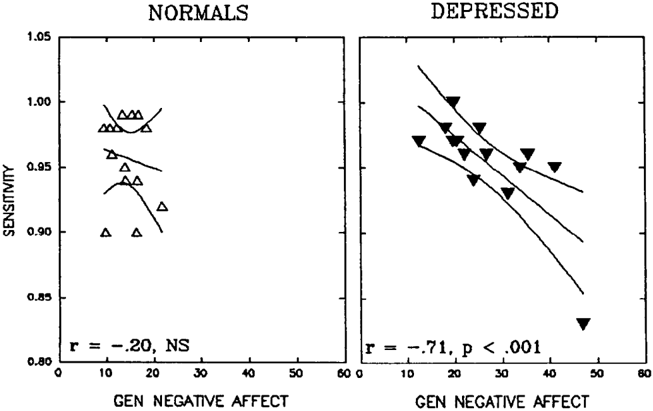
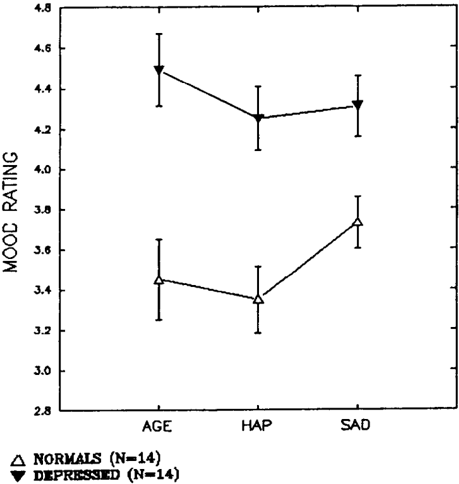
The facial discrimination tasks described in part I (Erwin et al., 1992) were administered to a sample of 14 patients with depression and 14 normal controls matched for sex (12 women, 2 men) and balanced for age and sociodemographic characteristics. Patients performed more poorly on measures of sensitivity for happy discrimination and specificity for sad discrimination, and had a higher negative bias across tasks. Severity of negative affect was correlated with poorer performance for patients. The results suggest that depression is associated with an impaired ability to recognize facial displays of emotion.
Overview
The claims and statistics of this paper haven’t been checked yet.
Free: it reads the open-access text and checks the first 5 claims that cite a source we can check. Create a free account to check every claim.
Integrity signals
Registry
Cites
Statistics
Figures
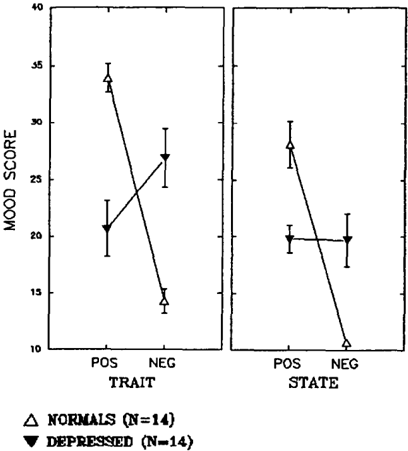
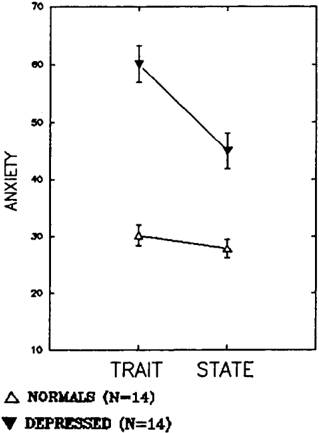
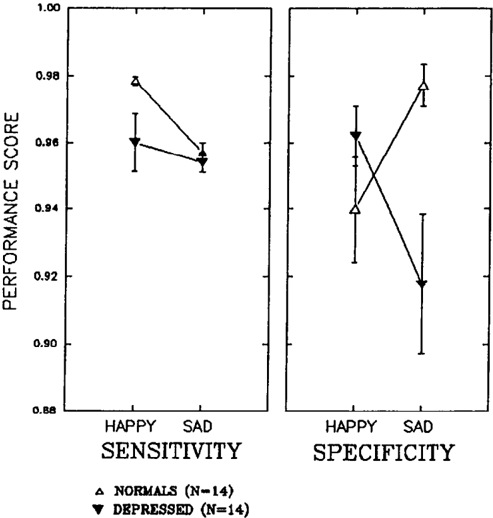
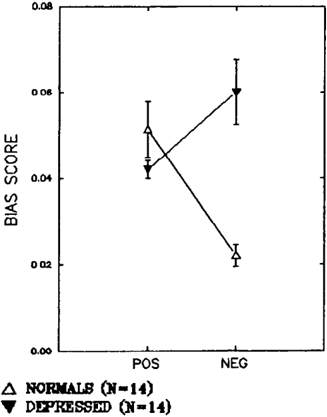
Verification
Claims the paper makes
The claims and statistics of this paper haven’t been checked yet.
Free: it reads the open-access text and checks the first 5 claims that cite a source we can check. Create a free account to check every claim.
Claims other papers make about this one
Each is checked against this paper’s own text: does it say what the citing paper says it does?
The cited source doesn’t support the claim as written.
In the citing paper
“Enhanced recognition of sad facial expressions has also been consistently reported in acutely depressed patients.73,[143][144][145][146][147][148]”
From Systematic review of the neural basis of social cognition in patients with mood disorders (2012) · cites this paper as [144]
Checked by a reasoning model — may be wrong.
Experimental — accuracy not yet measuredThe source backs part of the claim, not all of it — or backs it for a different population, condition or comparison.
In the citing paper
“studies examining patients with bipolar disorder in a depressed phase of illness reveal a mood congruent bias in emotion perception tasks, including difficulties labelling happy faces 97,102 and a tendency to misinterpret neutral facial stimuli as sad 144,183 and happy faces as angry.”
From Systematic review of the neural basis of social cognition in patients with mood disorders (2012) · cites this paper as [144]
Experimental — accuracy not yet measuredIn the citing paper
“others have argued that depressed patients exhibit negative biases in identifying facial emotions; patients are more likely to interpret neutral faces as sad and happy faces as neutral, resulting in an overall negative bias compared to controls (Gur et al., 1992;Surguladze et al. 2004).”
From Affective Cognition and its Disruption in Mood Disorders (2011) · cites this paper as Gur et al., 1992
In the citing paper
“Depression has long been associated with a pattern of cognition biased towards negative information, with depressed individuals showing a tendency to remember negative items and to rate experiences or stimuli as more negative than do controls (e.g.Gur et al., 1992;Mogg et al., 1995).”
From Affective Cognition and its Disruption in Mood Disorders (2011) · cites this paper as Gur et al., 1992
Self-check
Percentages, sums and reported differences re-computed from the paper’s own numbers.
The self-check needs the paper’s full text.
Citations
Cites
Statistical Power Analysis for the Behavioral Sciences
Muller, K. (1989) · Technometrics · doi:10.1080/00401706.1989.10488618 · Cited by 99,167
Statistical power analysis for the behavioral sciences
(1990) · Computers, Environment and Urban Systems · doi:10.1016/0198-9715(90)90050-4 · Cited by 65,269
An inventory for measuring depression
BECK, A. T. (1961) · Archives of General Psychiatry · doi:10.1001/archpsyc.1961.01710120031004 · Cited by 38,032
Statistical Power Analysis for the Behavioral Sciences (2nd ed.).
Lachenbruch, P. A., & Cohen, J. (1989) · Journal of the American Statistical Association · doi:10.2307/2290095 · Cited by 37,395
Hamilton, M. (1960) · Journal of Neurology, Neurosurgery & Psychiatry · doi:10.1136/jnnp.23.1.56 · Cited by 32,817
(1970) · Cited by 24,983
The structure of mood change: An idiographic/nomothetic analysis.
Zevon, M. A., & Tellegen, A. (1982) · Journal of Personality and Social Psychology · doi:10.1037//0022-3514.43.1.111 · Cited by 740
Facial Discrimination and Emotional Recognition in Schizophrenia and Affective Disorders
Feinberg, T. E. (1986) · Archives of General Psychiatry · doi:10.1001/archpsyc.1986.01800030094010 · Cited by 363 · cited 1×
“Patients with affective illness have often been used as a psychiatric control group (Cutting, 1981; Feinberg et al., 1986; Zuroff and Colussy, 1986; Gessler et al., 1989).”
MethodFacial emotion discrimination: I. Task construction and behavioral findings in normal subjects
Erwin, R. J., Gur, R. C., Gur, R. E., Skolnick, B., Mawhinney-Hee, M., & Smailis, J. (1992) · Psychiatry Research · doi:10.1016/0165-1781(92)90115-j · Cited by 275
Self-citationDeficits in Facial-affect Recognition and Schizophrenia
Morrison, R. L., Bellack, A. S., & Mueser, K. T. (1988) · Schizophrenia Bulletin · doi:10.1093/schbul/14.1.67 · Cited by 202
Research works printed but not linked: 1
- American Psychiatric Association. DSM-III-R: Diagnostic and Statistical Manual of Mental Disorders. 3rd ed., revised. Washington, DC: American Psychiatric Press, 1987.
Cited by
Items 101–200 of 592
Understanding the neurobiology of emotion perception: implications for psychiatry
Phillips, M. L. (2003) · British Journal of Psychiatry · doi:10.1192/bjp.182.3.190 · Cited by 121
Yoon, K. L., Joormann, J., & Gotlib, I. H. (2009) · Journal of Abnormal Psychology · doi:10.1037/a0014658 · Cited by 121
“These findings are also consistent with previous studies using full-intensity facial expressions that reported that participants with depression tended to interpret happy faces as neutral (Gur et al., 1992; Suslow, Junghanns, & Arolt, 2001).”
Differential impairments of facial affect recognition in schizophrenia subtypes and major depression
Weniger, G., Lange, C., Rüther, E., & Irle, E. (2004) · Psychiatry Research · doi:10.1016/j.psychres.2003.12.027 · Cited by 103
Silver, H., Shlomo, N., Turner, T. H., & Gur, R. C. (2002) · Schizophrenia Research · doi:10.1016/s0920-9964(01)00208-0 · Cited by 120
Self-citationvan der Veen, F. M., Evers, E. A. T., Deutz, N. E. P., & Schmitt, J. A. J. (2007) · Neuropsychopharmacology · doi:10.1038/sj.npp.1301212 · Cited by 118
“One way to recognize these emotions is to monitor facial expressions, which appears to be disturbed in depression (Bhagwagar et al, 2004; Gur et al, 1992; Surguladze et al, 2004).”
BackgroundEmotional processing in bipolar disorder: Behavioural and neuroimaging findings
Wessa, M., & Linke, J. (2009) · International Review of Psychiatry · doi:10.1080/09540260902962156 · Cited by 108
Facial emotion recognition in patients with bipolar I and bipolar II disorder
Derntl, B., Seidel, E., Kryspin‐Exner, I., Hasmann, A., & Dobmeier, M. (2009) · British Journal of Clinical Psychology · doi:10.1348/014466509x404845 · Cited by 117
Risk for depression and neural responses to fearful facial expressions of emotion
Chan, S. W. Y., Norbury, R., Goodwin, G. M., & Harmer, C. J. (2009) · British Journal of Psychiatry · doi:10.1192/bjp.bp.107.047993 · Cited by 117
“001) and middle temporal gyrus (F (2, 46) =18.”
InfluentialNaranjo, C., Kornreich, C., Campanella, S., Noël, X., Vandriette, Y., Gillain, B., de Longueville, X., Delatte, B., Verbanck, P., & Constant, E. (2011) · Journal of Affective Disorders · doi:10.1016/j.jad.2010.06.039 · Cited by 117
“Findings about intensity evaluations are controversial: some suggest that severe depressive symptoms are associated with lower ratings of the perceived intensity of affective stimuli in general (Hale et al., 1998; Gur et al., 1992), whereas others indicate that depressed patients are inclined to perceive negative cues…”
BackgroundResultInfluentialIdentification of emotional facial expressions following recovery from depression
LeMoult, J., Joormann, J., Sherdell, L., Wright, Y., & Gotlib, I. H. (2009) · Journal of Abnormal Psychology · doi:10.1037/a0016944 · Cited by 117
“In an emotion discrimination task, Gur et al. (1992) reported that the tendency to misinterpret happy faces as neutral best discriminated depressed patients from control participants.”
BackgroundResultInterpretation of infant facial expression in the context of maternal postnatal depression
Stein, A., Arteche, A., Lehtonen, A., Craske, M., Harvey, A., Counsell, N., & Murray, L. (2010) · Infant Behavior and Development · doi:10.1016/j.infbeh.2010.03.002 · Cited by 90
Access of emotional information to visual awareness in patients with major depressive disorder
Sterzer, P., Hilgenfeldt, T., Freudenberg, P., Bermpohl, F., & Adli, M. (2011) · Psychological Medicine · doi:10.1017/s0033291710002540 · Cited by 98
A Translational Rodent Assay of Affective Biases in Depression and Antidepressant Therapy
Stuart, S. A., Butler, P., Munafò, M. R., Nutt, D. J., & Robinson, E. S. (2013) · Neuropsychopharmacology · doi:10.1038/npp.2013.69 · Cited by 103
Emotional processing in schizophrenia
Kohler, C. G., & Martin, E. A. (2006) · Cognitive Neuropsychiatry · doi:10.1080/13546800500188575 · Cited by 89
Dialectical Behavior Therapy Group Skills Training for Bipolar Disorder
Eisner, L., Eddie, D., Harley, R., Jacobo, M., Nierenberg, A. A., & Deckersbach, T. (2017) · Behavior Therapy · doi:10.1016/j.beth.2016.12.006 · Cited by 85
Facial Emotion Processing in Acutely Ill and Euthymic Patients With Pediatric Bipolar Disorder
Schenkel, L. S., Pavuluri, M. N., Herbener, E. S., Harral, E. M., & Sweeney, J. A. (2007) · Journal of the American Academy of Child & Adolescent Psychiatry · doi:10.1097/chi.0b013e3180600fd6 · Cited by 107
Anatomical MRI study of corpus callosum in unipolar depression
Lacerda, A. L. T., Brambilla, P., Sassi, R. B., Nicoletti, M., Mallinger, A. G., Frank, E., Kupfer, D. J., Keshavan, M. S., & Soares, J. C. (2004) · Journal of Psychiatric Research · doi:10.1016/j.jpsychires.2004.10.004 · Cited by 107
Perception of facial emotion in adults with bipolar or unipolar depression and controls
Schaefer, K. L., Baumann, J., Rich, B. A., Luckenbaugh, D. A., & Zarate, C. A. (2010) · Journal of Psychiatric Research · doi:10.1016/j.jpsychires.2010.04.024 · Cited by 88
Rowland, J. E., Hamilton, M. K., Vella, N., Lino, B. J., Mitchell, P. B., & Green, M. J. (2013) · Frontiers in Psychology · doi:10.3389/fpsyg.2012.00607 · Cited by 80
Empathic behavioral and physiological responses to dynamic stimuli in depression
Schneider, D. A., Regenbogen, C., Kellermann, T., Finkelmeyer, A. E., Kohn, N., Derntl, B., Schneider, F. W., & Habel, U. (2012) · Psychiatry Research · doi:10.1016/j.psychres.2012.03.054 · Cited by 105
Two-Level Domain Adaptation Neural Network for EEG-Based Emotion Recognition
Bao, G., Zhuang, N., Tong, L., Yan, B., Shu, J., Wang, L., Zeng, Y., & Shen, Z. (2021) · Frontiers in Human Neuroscience · doi:10.3389/fnhum.2020.605246 · Cited by 100
Reduced Sustained Brain Activity During Processing of Positive Emotional Stimuli in Major Depression
Shestyuk, A. Y., Deldin, P. J., Brand, J. E., & Deveney, C. M. (2005) · Biological Psychiatry · doi:10.1016/j.biopsych.2005.02.013 · Cited by 99
Yoo, M., Lee, S., & Ha, T. (2018) · Information Processing & Management · doi:10.1016/j.ipm.2018.10.001 · Cited by 98
Neural Biases to Covert and Overt Signals of Fear: Dissociation by Trait Anxiety and Depression
Williams, L. M., Kemp, A. H., Felmingham, K., Liddell, B. J., Palmer, D. M., & Bryant, R. A. (2007) · Journal of Cognitive Neuroscience · doi:10.1162/jocn.2007.19.10.1595 · Cited by 85
Abnormal Facial Emotion Recognition in Depression: Serial Testing in an Ultra-Rapid-Cycling Patient
George, M. S., Huggins, T., Mcdermut, W., Parekh, P. I., Rubinow, D., & Post, R. M. (1998) · Behavior Modification · doi:10.1177/01454455980222007 · Cited by 87
Emotional memory processing is influenced by sleep quality
Tempesta, D., De Gennaro, L., Natale, V., & Ferrara, M. (2015) · Sleep Medicine · doi:10.1016/j.sleep.2015.01.024 · Cited by 84
Emotion Recognition Deficits in Pediatric Anxiety Disorders: Implications for Amygdala Research
Easter, J., McClure, E. B., Monk, C. S., Dhanani, M., Hodgdon, H., Leibenluft, E., Charney, D. S., Pine, D. S., & Ernst, M. (2005) · Journal of Child and Adolescent Psychopharmacology · doi:10.1089/cap.2005.15.563 · Cited by 76
Social cognition as an RDoC domain
Gur, R. C., & Gur, R. E. (2016) · American Journal of Medical Genetics Part B: Neuropsychiatric Genetics · doi:10.1002/ajmg.b.32394 · Cited by 85
Self-citationHow do depressed and healthy adults interpret nuanced facial expressions?
Gollan, J. K., McCloskey, M., Hoxha, D., & Coccaro, E. F. (2010) · Journal of Abnormal Psychology · doi:10.1037/a0020234 · Cited by 94
Perception of facial expressions of emotion during binocular rivalry.
Yoon, K. L., Hong, S. W., Joormann, J., & Kang, P. (2009) · Emotion · doi:10.1037/a0014714 · Cited by 94
Neutral faces activate the amygdala during identity matching
Wright, P., & Liu, Y. (2005) · NeuroImage · doi:10.1016/j.neuroimage.2005.07.047 · Cited by 94
Facial emotion recognition in first-episode schizophrenia and bipolar disorder with psychosis
Daros, A. R., Ruocco, A. C., Reilly, J. L., Harris, M. S. H., & Sweeney, J. A. (2014) · Schizophrenia Research · doi:10.1016/j.schres.2014.01.009 · Cited by 92
Стрелец, В. Б., Валерьевна, Г. Ж., & Новотоцкий-Власов, В. Ю. (2007) · Neuroscience and Behavioral Physiology · doi:10.1007/s11055-007-0025-4 · Cited by 91
Hoertnagl, C. M., Muehlbacher, M., Biedermann, F., Yalcin, N., Baumgartner, S., Schwitzer, G., Deisenhammer, E. A., Hausmann, A., Kemmler, G., Benecke, C., et al. (2011) · Bipolar Disorders · doi:10.1111/j.1399-5618.2011.00947.x · Cited by 81
Gaffrey, M. S., Luby, J. L., Belden, A. C., Hirshberg, J. S., Volsch, J., & Barch, D. M. (2011) · Journal of Affective Disorders · doi:10.1016/j.jad.2010.08.031 · Cited by 84
Votruba, K. L., & Langenecker, S. A. (2013) · Journal of Clinical and Experimental Neuropsychology · doi:10.1080/13803395.2012.758239 · Cited by 76
Raes, F., Hermans, D., & Williams, J. M. G. (2006) · Journal of Nervous & Mental Disease · doi:10.1097/01.nmd.0000240187.80270.bb · Cited by 71
Rojahn, J., Lederer, M., & Tassé, M. J. (1995) · Research in Developmental Disabilities · doi:10.1016/0891-4222(95)00019-j · Cited by 89
Battaglia, M., Ogliari, A. L., Zanoni, A., Villa, F., Citterio, A., Binaghi, F., Fossati, A., & Maffei, C. (2004) · Journal of the American Academy of Child & Adolescent Psychiatry · doi:10.1097/00004583-200403000-00019 · Cited by 88
Facial emotion recognition, theory of mind and the role of facial mimicry in depression
Zwick, J. C., & Wolkenstein, L. (2016) · Journal of Affective Disorders · doi:10.1016/j.jad.2016.12.022 · Cited by 88
Gray, J., Venn, H., Montagne, B., Murray, L., Burt, M., Frigerio, E., Perrett, D., & Young, A. H. (2006) · Cognitive Neuropsychiatry · doi:10.1080/13546800544000028 · Cited by 66
P3 components and adolescent binge drinking in Southwest California Indians
Ehlers, C. L., Phillips, E., Finnerman, G., Gilder, D. A., Lau, P., & Criado, J. R. (2006) · Neurotoxicology and Teratology · doi:10.1016/j.ntt.2006.11.013 · Cited by 83
Cognitive and emotion recognition deficits in obsessive–compulsive disorder
Aigner, M., Sachs, G., Bruckmüller, E., Winklbaur, B., Zitterl, W., Kryspin‐Exner, I., Gur, R. C., & Katschnig, H. (2006) · Psychiatry Research · doi:10.1016/j.psychres.2005.12.006 · Cited by 83
Self-citationMurphy, S. E., Longhitano, C., Ayres, R. E., Cowen, P. J., & Harmer, C. J. (2006) · Psychopharmacology · doi:10.1007/s00213-006-0401-8 · Cited by 81
“Depression has been associated with a decreased perception of happy facial expressions and an increased classification of ambiguous faces as negative expressions, and this tendency predicts later relapse (Bouhuys et al. 1999; Gur et al. 1992; Surguladze et al. 2004).”
BackgroundThe judgment of facial expressions by depressed patients, their partners and controls
Hale, W. W., Jansen, J. H. C., Bouhuys, A. L., & van den Hoofdakker, R. H. (1998) · Journal of Affective Disorders · doi:10.1016/s0165-0327(97)00112-2 · Cited by 81
Hummer, T. A., Hulvershorn, L. A., Karne, H. S., Gunn, A. D., Wang, Y., & Anand, A. (2013) · Biological Psychiatry · doi:10.1016/j.biopsych.2012.06.036 · Cited by 71
Gender differences in facial emotion recognition in persons with chronic schizophrenia
Weiss, E., Kohler, C., Brensinger, C., Bilker, W., Loughead, J., Delazer, M., & Nolan, K. (2007) · European psychiatry · doi:10.1016/j.eurpsy.2006.05.003 · Cited by 71
Agomelatine facilitates positive versus negative affective processing in healthy volunteer models
Harmer, C. J., de Bodinat, C., Dawson, G. R., Dourish, C. T., Waldenmaier, L., Adams, S., Cowen, P. J., & Goodwin, G. M. (2011) · Journal of Psychopharmacology · doi:10.1177/0269881110376689 · Cited by 77
Lopez‐Duran, N. L., Kuhlman, K. R., George, C. J., & Kovács, M. (2012) · Journal of Child Psychology and Psychiatry · doi:10.1111/jcpp.12005 · Cited by 75
Perceptual biases in facial emotion recognition in borderline personality disorder.
Daros, A. R., Uliaszek, A. A., & Ruocco, A. C. (2014) · Personality Disorders: Theory, Research, and Treatment · doi:10.1037/per0000056 · Cited by 53
Major depressive disorder skews the recognition of emotional prosody
Péron, J., El Tamer, S., Grandjean, D., Leray, E., Travers, D., Drapier, D., Vérin, M., & Millet, B. (2011) · Progress in Neuro-Psychopharmacology and Biological Psychiatry · doi:10.1016/j.pnpbp.2011.01.019 · Cited by 73
“The present results are thus more comparable to those of studies on the recognition of facial expressions using a methodology similar to ours, that is, by asking MDD patients to rate the intensity of different emotional states displayed in pictures of facial expressions (Bouhuys et al., 1995, 1999, 1997, 1996; Gur et…”
InfluentialHarmer, C. J., Perrett, D. I., Cowen, P. J., & Goodwin, G. M. (2001) · Psychopharmacology · doi:10.1007/s002130000654 · Cited by 73
“In depression, patients show a negative bias: labeling neutral faces as sad and happy faces as neutral (Gur et al. 1992; George et al. 1998).”
Background“Don't [ruminate], be happy”: A cognitive perspective linking depression and anhedonia
Rutherford, A. V., McDougle, S. D., & Joormann, J. (2023) · Clinical Psychology Review · doi:10.1016/j.cpr.2023.102255 · Cited by 75
The HTR1A and HTR1B receptor genes influence stress-related information processing
Mekli, K., Payton, A., Miyajima, F., Platt, H., Thomas, E., Downey, D., Lloyd-Williams, K., Chase, D. S., Toth, Z. G., Elliott, R., et al. (2010) · European Neuropsychopharmacology · doi:10.1016/j.euroneuro.2010.06.013 · Cited by 74
Wu, J. C., Buchsbaum, M. S., Johnson, J. C., Hershey, T. G., Wagner, E. A., Tung, C., & Lottenberg, S. (1993) · Journal of Affective Disorders · doi:10.1016/0165-0327(93)90073-s · Cited by 72
Bouhuys, A. L., Geerts, E., Mersch, P. P. A., & Jenner, J. A. (1996) · Psychiatry Research · doi:10.1016/s0165-1781(96)02930-7 · Cited by 72
Negative biases and risk for depression; integrating self-report and emotion task markers
Watters, A. J., & Williams, L. M. (2011) · Depression and Anxiety · doi:10.1002/da.20854 · Cited by 71
A Comparison of Facial Emotion Processing in Neurological and Psychiatric Conditions
Bediou, B., Brunelin, J., d’Amato, T., Fecteau, S., Saoud, M., Hénaff, M., & Krolak‐Salmon, P. (2012) · Frontiers in Psychology · doi:10.3389/fpsyg.2012.00098 · Cited by 71
Vai, B., Bulgarelli, C., Godlewska, B. R., Cowen, P. J., Benedetti, F., & Harmer, C. J. (2016) · European Neuropsychopharmacology · doi:10.1016/j.euroneuro.2016.09.640 · Cited by 70
Geerts, E., & Bouhuys, N. (1998) · Psychiatry Research · doi:10.1016/s0165-1781(98)00021-3 · Cited by 73
Horder, J., Cowen, P. J., Di Simplicio, M., Browning, M., & Harmer, C. J. (2009) · Psychopharmacology · doi:10.1007/s00213-009-1517-4 · Cited by 69
“no effect upon other measures of emotional processing which have been associated with both antidepressant drug administration and the state of depression (Bouhuys et al. 1999; Gur et al. 1992; Harmer et al. 2003) such as facial expression recognition accuracy.”
BackgroundHarmer, C. J., Heinzen, J., O’Sullivan, U., Ayres, R. A., & Cowen, P. J. (2008) · Psychopharmacology · doi:10.1007/s00213-007-1058-7 · Cited by 69
“recognition of disgusted and other negative facial expressions has been associated with depression itself (Hayward et al. 2005; Gur et al. 1992), and repeated administration of reboxetine or citalopram decreased the recognition of this emotion (Harmer et al.”
BackgroundBouhuys, A. L., Geerts, E., & Mersch, P. P. A. (1997) · Journal of Affective Disorders · doi:10.1016/s0165-0327(97)01432-8 · Cited by 71
Penton‐Voak, I. S., Munafo, M. R., & Looi, C. Y. (2017) · Current Directions in Psychological Science · doi:10.1177/0963721417704405 · Cited by 70
Robinson, E. S. J. (2018) · Philosophical Transactions of the Royal Society B Biological Sciences · doi:10.1098/rstb.2017.0036 · Cited by 69
Münkler, P., Rothkirch, M., Dalati, Y., Schmack, K., & Sterzer, P. (2015) · PLOS ONE · doi:10.1371/journal.pone.0129863 · Cited by 67
Manelis, A., Huppert, T. J., Rodgers, E. V., Swartz, H. A., & Phillips, M. L. (2019) · Journal of Affective Disorders · doi:10.1016/j.jad.2019.08.006 · Cited by 67
Arnsten, A., Joyce, M. K. P., & Roberts, A. C. (2022) · Neuroscience and Biobehavioral Reviews · doi:10.1016/j.neubiorev.2022.105000 · Cited by 51
Schneider, S., Christensen, A., Häußinger, F. B., Fallgatter, A. J., Giese, M. A., & Ehlis, A. (2013) · NeuroImage · doi:10.1016/j.neuroimage.2013.07.078 · Cited by 66
A negative emotional and economic judgment bias in major depression
Scheele, D., Mihov, Y., Schwederski, O., Maier, W., & Hurlemann, R. (2013) · European Archives of Psychiatry and Clinical Neuroscience · doi:10.1007/s00406-013-0392-5 · Cited by 67
Soltani, S., Newman, K. R., Quigley, L., Fernandez, A., Dobson, K. S., & Sears, C. R. (2015) · Psychiatry Research · doi:10.1016/j.psychres.2015.09.036 · Cited by 65
Effects of Social Anxiety on Nonverbal Accuracy and Response Time I: Facial Expressions
Mullins, D. T., & Duke, M. P. (2004) · Journal of Nonverbal Behavior · doi:10.1023/b:jonb.0000017865.24656.98 · Cited by 65
Csukly, G., Telek, R., Filipovits, D., Takács, B., Unoka, Z., & Simon, L. (2010) · Journal of Behavior Therapy and Experimental Psychiatry · doi:10.1016/j.jbtep.2010.08.003 · Cited by 66
Gender-specific disruptions in emotion processing in younger adults with depression
Wright, S. L., Langenecker, S. A., Deldin, P. J., Rapport, L. J., Nielson, K. A., Kade, A. M., Own, L. S., Akil, H., Young, E. A., & Zubieta, J.-K. (2009) · Depression and Anxiety · doi:10.1002/da.20502 · Cited by 56
Beevers, C. G., Wells, T. T., Ellis, A. J., & Fischer, K. (2008) · Cognitive Therapy and Research · doi:10.1007/s10608-008-9198-6 · Cited by 65
Rutter, L. A., Dodell‐Feder, D., Vahia, I. V., Forester, B. P., Ressler, K. J., Wilmer, J. B., & Germine, L. T. (2019) · Journal of Experimental Psychology General · doi:10.1037/xge0000559 · Cited by 64
Patients with bipolar disorder show impaired performance on complex tests of social cognition
Cusi, A. M., MacQUEEN, G. M., & McKinnon, M. C. (2012) · Psychiatry Research · doi:10.1016/j.psychres.2012.06.021 · Cited by 66
Horne, C. M., & Norbury, R. (2018) · NeuroImage · doi:10.1016/j.neuroimage.2018.01.025 · Cited by 64
Rubinow, D. R., SMITH, M. J., Schenkel, L. A., Schmidt, P. J., & Dancer, K. (2007) · Journal of Affective Disorders · doi:10.1016/j.jad.2007.01.031 · Cited by 61
RECOGNITION OF EMOTIONAL FACIAL EXPRESSIONSIN DEPRESSED CHILDREN AND ADOLESCENTS
Lenti, C., Giacobbe, A., & Pegna, C. (2000) · Perceptual and Motor Skills · doi:10.2466/pms.2000.91.1.227 · Cited by 59
Negativity bias for sad faces in depression: An event-related potential study
Dai, Q., Wei, J., Shu, X., & Feng, Z. (2016) · Clinical Neurophysiology · doi:10.1016/j.clinph.2016.10.003 · Cited by 59
Cingulum stimulation enhances positive affect and anxiolysis to facilitate awake craniotomy
Bijanki, K. R., Manns, J. R., Inman, C. S., Choi, K. S., Harati, S., Pedersen, N. P., Drane, D. L., Waters, A. C., Fasano, R. E., Mayberg, H. S., et al. (2019) · Journal of Clinical Investigation · doi:10.1172/jci120110 · Cited by 59
Facial expression perception: an objective outcome measure for treatment studies in mood disorders?
Venn, H. R., Watson, S., Gallagher, P., & Young, A. H. (2005) · The International Journal of Neuropsychopharmacology · doi:10.1017/s1461145705006012 · Cited by 52
Emotion Recognition Biases in Alcohol Use Disorder
Freeman, C. R., Wiers, C. E., Sloan, M. E., Zehra, A., Ramirez, V., Wang, G., & Volkow, N. D. (2018) · Alcoholism: Clinical and Experimental Research · doi:10.1111/acer.13802 · Cited by 57
Interaction between a history of depression and rumination on neural response to emotional faces
Thomas, E. J., Elliott, R., McKie, S., Arnone, D., Downey, D., Juhasz, G., Deakin, J. F. W., & Anderson, I. M. (2011) · Psychological Medicine · doi:10.1017/s0033291711000043 · Cited by 53
Stuart, S. A., Hinchcliffe, J. K., & Robinson, E. S. J. (2019) · Neuropsychopharmacology · doi:10.1038/s41386-019-0388-6 · Cited by 57
The error processing system in major depressive disorder: Cortical phenotypal marker hypothesis
Schoenberg, P. L. A. (2014) · Biological Psychology · doi:10.1016/j.biopsycho.2014.03.005 · Cited by 57
Processing of Emotional Facial Expressions in Korsakoff's Syndrome
Montagne, B., Kessels, R. P. C., Wester, A. J., & de Haan, E. H. F. (2006) · Cortex · doi:10.1016/s0010-9452(08)70408-8 · Cited by 57
Bouhuys, A. L., Geerts, E., & Gordijn, M. C. M. (1999) · Psychiatry Research · doi:10.1016/s0165-1781(99)00003-7 · Cited by 57
Rheenen, T. E. V., & Rossell, S. L. (2013) · Acta Psychiatrica Scandinavica · doi:10.1111/acps.12125 · Cited by 56
Brennan, S., McLoughlin, D. M., O’Connell, R. G., Bogue, J., O'Connor, S., McHugh, C., & Glennon, M. (2016) · Journal of Clinical and Experimental Neuropsychology · doi:10.1080/13803395.2016.1230595 · Cited by 55
Facial perception bias in patients with major depression
Liu, W., Huang, J., Wang, L.-Z., Gong, Q., & Chan, R. C. K. (2012) · Psychiatry Research · doi:10.1016/j.psychres.2011.09.021 · Cited by 55
Auerbach, R. P., Stewart, J. G., Stanton, C. H., Mueller, E. M., & Pizzagalli, D. A. (2015) · Depression and Anxiety · doi:10.1002/da.22381 · Cited by 55
Langenecker, S. A., Caveney, A. F., Giordani, B., Young, E. A., Nielson, K. A., Rapport, L. J., Bieliauskas, L. A., Mordhorst, M. J., Marcus, S. M., Yodkovik, N., et al. (2007) · Psychiatry Research · doi:10.1016/j.psychres.2006.03.019 · Cited by 54
Residual cognitive impairments in remitted depressed patients
Merens, W., Booij, L., & Van Der Does, A. J. W. (2008) · Depression and Anxiety · doi:10.1002/da.20391 · Cited by 44
Prior experience as a stimulus category confound: an example using facial expressions of emotion
Somerville, L. H., & Whalen, P. J. (2006) · Social Cognitive and Affective Neuroscience · doi:10.1093/scan/nsl040 · Cited by 51
Trait and state dependent functional impairments in bipolar disorder
van der Schot, A. C., Kahn, R. S., Ramsey, N. F., Nolen, W. A., & Vink, M. (2010) · Psychiatry Research Neuroimaging · doi:10.1016/j.pscychresns.2010.07.009 · Cited by 54
Masked facial affect priming is associated with therapy response in clinical depression
Dannlowski, U., Kersting, A., Donges, U., Lalee-Mentzel, J., Arolt, V., & Suslow, T. (2005) · European Archives of Psychiatry and Clinical Neuroscience · doi:10.1007/s00406-005-0628-0 · Cited by 54
Nonverbal attunement between depressed patients and an interviewer predicts subsequent improvement
Geerts, E., Bouhuys, N., & van den Hoofdakker, R. H. (1996) · Journal of Affective Disorders · doi:10.1016/0165-0327(96)00037-7 · Cited by 53
Weiss, E. M., Stadelmann, E., Kohler, C. G., Brensinger, C. M., Nolan, K. A., Oberacher, H., Parson, W., Pitterl, F., Niederstätter, H., Kemmler, G., et al. (2007) · Journal of the International Neuropsychological Society · doi:10.1017/s1355617707070932 · Cited by 53
Metadata
- Authors
- Gur, R. C., Erwin, R. J., Gur, R. E., Zwil, A. S., Heimberg, C., & Kraemer, H. C.
- Affiliations
- University of Pennsylvania (US)
- Thomas Jefferson University (US)
- Stanford University (US)
- Corresponding author
- Gur, Ruben C.
- Venue
- Psychiatry Research
- Publisher
- Elsevier BV
- Published
- 1992-06
- Volume
- 42
- Issue
- 3
- Pages
- 241-251
- ISSN
- 0165-1781 (ISSN-L)
- OpenAlex
- W2091936017
- Semantic Scholar
- 5b9df7fb4f352fac01a9362e9de58fe0dca4160b
- Cited by
- 500
- References
- 18
- Citations by year
- 2026: 3 · 2025: 11 · 2024: 17 · 2023: 14 · 2022: 9 · 2021: 12 · 2020: 8 · 2019: 16 · 2018: 14 · 2017: 15 · 2016: 21 · 2015: 27 · 2014: 19 · 2013: 35 · 2012: 25
- FWCI
- 2.33
- Type
- journal article
- Language
- en
- Open access
- hybrid
- doi.org
- Licence
- cc-by-nc-nd
- www.elsevier.com/tdm/userlicense/1.0/ (tdm)
- www.elsevier.com/legal/tdmrep-license (tdm)
- creativecommons.org/licenses/by-nc-nd/4.0/ (vor, 4013 d)
- Locations
- Psychiatry Research (publishedVersion, cc-by-nc-nd)
- PubMed (publishedVersion)
- Funders
- John D. and Catherine T. MacArthur Foundation
- National Institutes of Health (5r29mh045113-03, 2k02mh000586-06)
- National Institute of Mental Health (MH 00586, MH45113, MH 43880)
- Topics
- Life Sciences › Neuroscience › Cognitive Neuroscience › Face Recognition and Perception
- Social Sciences › Psychology › Experimental and Cognitive Psychology › Anxiety, Depression, Psychometrics, Treatment, Cognitive Processes
- Life Sciences › Neuroscience › Cognitive Neuroscience › Neural and Behavioral Psychology Studies
- Keywords
- facial emotion recognition, depression, emotion discrimination, negative affect, negative bias, facial expression perception
- MeSH terms
- Adult, Aged, Attention, Bipolar Disorder, Brain Mapping, Depressive Disorder, Discrimination Learning, Emotions, Facial Expression, Female, Humans, Male, Middle Aged, Pattern Recognition, Visual, Personality Assessment
About these checks
Registry, retraction, Cites and statistics results are computed, not judged, with one exception: a printed reference that no index lists is read once by a model before it counts as a citation error. Claims are extracted by a model and kept only when their quote appears verbatim in the text; each cited source is then checked, with a model’s help, for whether it says what the claim relies on. Those verdicts can be wrong — read the claim’s quote and the cited source before relying on one.
Statistics and arithmetic are recomputed, not judged.
Confidence bands are shown only for fields calibrated on our annotated test set. None is calibrated yet, so no band is shown.
What counts as a claim ›How we measure confidence ›How we check this ›
Are you an author, or do you see a problem with this page? Request a review
Data sources
Bibliographic data: Semantic Scholar, OpenAlex, Crossref.
Contains information from the Semantic Scholar Academic Graph Datasets, made available under the ODC Attribution License (ODC-BY 1.0).
Semantic Scholar’s data is described in: Kinney, R., et al. (2023). The Semantic Scholar Open Data Platform. arXiv:2301.10140.
