

The DOI matches its Crossref record; 40 of the 41 references it cites were found in a registry or an index.
Nothing is safe: Intolerance of uncertainty is associated with compromised fear extinction learning
Open accessAbstract
Extinction-resistant fear is considered to be a central feature of pathological anxiety. Here we sought to determine if individual differences in Intolerance of Uncertainty (IU), a potential risk factor for anxiety disorders, underlies compromised fear extinction. We tested this hypothesis by recording electrodermal activity in 38 healthy participants during fear acquisition and extinction. We assessed the temporality of fear extinction, by examining early and late extinction learning. During early extinction, low IU was associated with larger skin conductance responses to learned threat vs. safety cues, whereas high IU was associated with skin conductance responding to both threat and safety cues, but no cue discrimination. During late extinction, low IU showed no difference in skin conductance between learned threat and safety cues, whilst high IU predicted continued fear expression to learned threat, indexed by larger skin conductance to threat vs. safety cues. These findings suggest a critical role of uncertainty-based mechanisms in the maintenance of learned fear.
Overview
The claims and statistics of this paper haven’t been checked yet.
Run the check — free, no account needed. It reads the open-access text and checks the sources it cites.
Integrity signals
Registry
Cites
Statistics
Figures
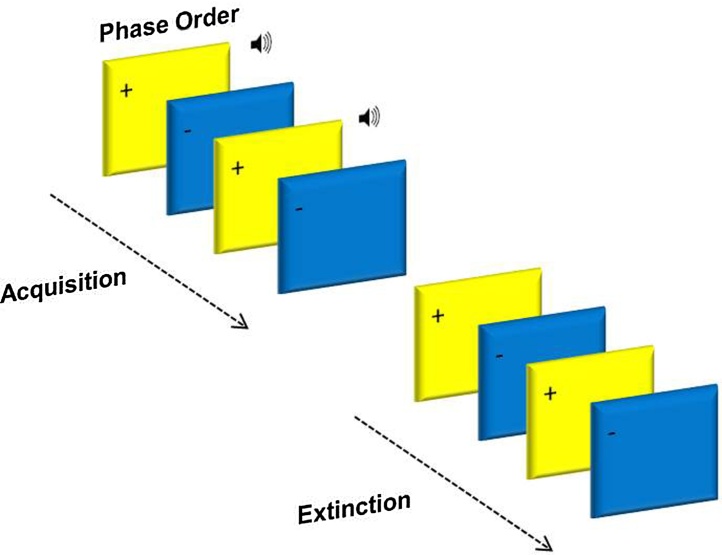
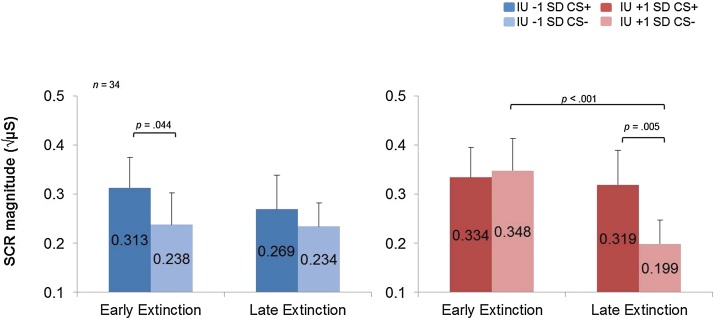
Verification
Claims the paper makes
The claims and statistics of this paper haven’t been checked yet.
Run the check — free, no account needed. It reads the open-access text and checks the sources it cites.
Claims other papers make about this one
Each is checked against this paper’s own text: does it say what the citing paper says it does?
The cited source doesn’t support the claim as written.
In the citing paper
“Two recent studies have demonstrated that individuals with high intolerance of uncertainty do not discriminate between threat and safety cues during fear acquisition and have slower fear extinction than those with low intolerance of uncertainty (Morriss, Macdonald, & van Reekum, 2016; Morriss, Christakou, & van Reekum, 2016).”
From Enhancing Inhibitory Learning: The Utility of Variability in Exposure (2019) · cites this paper as Morriss, Christakou, & van Reekum, 2016
Checked by a reasoning model — may be wrong.
Experimental — accuracy not yet measuredThe cited source doesn’t support the claim as written.
In the citing paper
“The majority of studies have found specificity of IU over other self-reported anxiety measures in predicting 1) differences in SCR to both learned threat and safety during early trials, 2) greater SCR to learned threat cues versus safety cues during late trials (36,37), or 3) greater SCR to learned threat cues across all trials (15,35).”
From I Doubt It Is Safe: A Meta-analysis of Self-reported Intolerance of Uncertainty and Threat Extinction Training (2021) · cites this paper as [37]
Checked by a reasoning model — may be wrong.
Experimental — accuracy not yet measuredThe source backs part of the claim, not all of it — or backs it for a different population, condition or comparison.
In the citing paper
“Intolerance of uncertainty may affect fear learning and fear extinction.”
From Enhancing Inhibitory Learning: The Utility of Variability in Exposure (2019) · cites this paper as Morriss, Christakou, & van Reekum, 2016
Experimental — accuracy not yet measuredThe cited source says what the claim attributes to it.
In the citing paper
“Two recent studies have demonstrated that individuals with high intolerance of uncertainty do not discriminate between threat and safety cues during fear acquisition and have slower fear extinction than those with low intolerance of uncertainty (Morriss, Macdonald, & van Reekum, 2016; Morriss, Christakou, & van Reekum, 2016).”
From Enhancing Inhibitory Learning: The Utility of Variability in Exposure (2019) · cites this paper as Morriss, Christakou, & van Reekum, 2016
The cited source says what the claim attributes to it.
In the citing paper
“In previous research, a few studies observed differences in SCR to both learned threat and safety cues during the early trials of threat extinction training (36,37).”
From I Doubt It Is Safe: A Meta-analysis of Self-reported Intolerance of Uncertainty and Threat Extinction Training (2021) · cites this paper as [37]
The cited source says what the claim attributes to it.
In the citing paper
“Notably, the original studies that found a relationship between IU and early extinction used a 100% reinforcement rate during acquisition (36,37), where the change in contingencies between acquisition and extinction are more obvious.”
From I Doubt It Is Safe: A Meta-analysis of Self-reported Intolerance of Uncertainty and Threat Extinction Training (2021) · cites this paper as [37]
In the citing paper
“We have previously shown the same experimental design to successfully evoke concomitant threat extinction psychophysiology and brain activation in adult populations41,44, similar to other labs using 100% reinforcement45.”
From Multimodal evidence for delayed threat extinction learning in adolescence and young adulthood (2019) · cites this paper as [44]
In the citing paper
“The conditioning task was identical to those used in previous studies41,42,44.”
From Multimodal evidence for delayed threat extinction learning in adolescence and young adulthood (2019) · cites this paper as [44]
Self-check
Percentages, sums and reported differences re-computed from the paper’s own numbers.
The self-check needs the paper’s full text.
Citations
Cites
Development and validation of brief measures of positive and negative affect: The PANAS scales.
Watson, D., Clark, L. A., & Tellegen, A. (1988) · Journal of Personality and Social Psychology · doi:10.1037/0022-3514.54.6.1063 · Cited by 32,433
Development and validation of the Penn State Worry Questionnaire
Meyer, T. J., Miller, M. L., Metzger, R. L., & Borkovec, T. D. (1990) · Behaviour Research and Therapy · doi:10.1016/0005-7967(90)90135-6 · Cited by 5,099 · cited 2×
“…such as expectancy of potential threat that may impede the re-establishment of a previously paired CS+ as safe, with implications for targeted treatment, with implications for targeted treatment (Dugas & Robichaud, 2007; Dunsmoor et al., In press; van der Heiden, Muris, & van der Molen, 2012)”
Neurons in medial prefrontal cortex signal memory for fear extinction
Milad, M. R., & Quirk, G. J. (2002) · Nature · doi:10.1038/nature01138 · Cited by 1,836
Effects of an expanding-spaced vs massed exposure schedule on fear reduction and return of fear
Rowe, M. K., & Craske, M. G. (1998) · Behaviour Research and Therapy · doi:10.1016/s0005-7967(97)10016-x · Cited by 1,782
Phelps, E. A., Delgado, M. R., Nearing, K. I., & LeDoux, J. E. (2004) · Neuron · doi:10.1016/j.neuron.2004.08.042 · Cited by 1,753 · cited 1×
“The conditioned response score was the first 2CS+ trials − the first 2CS − trials, similar to previous work assessing conditioned responses in extinction (Dunsmoor et al., In press; Milad et al., 2009; Phelps et al., 2004 .”
Fear Extinction as a Model for Translational Neuroscience: Ten Years of Progress
Milad, M. R., & Quirk, G. J. (2012) · Annual Review of Psychology · doi:10.1146/annurev.psych.121208.131631 · Cited by 1,466
LaBar, K. S., Gatenby, J. C., Gore, J. C., LeDoux, J. E., & Phelps, E. A. (1998) · Neuron · doi:10.1016/s0896-6273(00)80475-4 · Cited by 1,402
The intolerance of uncertainty scale: psychometric properties of the English version
Buhr, K., & Dugas, M. J. (2002) · Behaviour Research and Therapy · doi:10.1016/s0005-7967(01)00092-4 · Cited by 1,391
Neurobiological Basis of Failure to Recall Extinction Memory in Posttraumatic Stress Disorder
Milad, M. R., Pitman, R. K., Ellis, C. B., Gold, A. L., Shin, L. M., Lasko, N. B., Zeidan, M. A., Handwerger, K., Orr, S. P., & Rauch, S. L. (2009) · Biological Psychiatry · doi:10.1016/j.biopsych.2009.06.026 · Cited by 1,339 · cited 2×
“The conditioned response score was the first 2CS+ trials − the first 2CS − trials, similar to previous work assessing conditioned responses in extinction (Dunsmoor et al., In press; Milad et al., 2009; Phelps et al., 2004 .”
InfluentialThe Tie That Binds? Coherence Among Emotion Experience, Behavior, and Physiology.
Mauss, I. B., Levenson, R. W., McCarter, L., Wilhelm, F. H., & Gross, J. J. (2005) · Emotion · doi:10.1037/1528-3542.5.2.175 · Cited by 1,201
Research works printed but not linked: 1
- Spielberger, C. D., Gorsuch, R. L., Lushene, R., Vagg, P., & Jacobs, G. (1983). Palo Alto (CA): Consulting Psychologists Press, Inc. 2».
Cited by
Sorted by citations
Lonsdorf, T. B., Menz, M. M., Andreatta, M., Fullana, M. A., Golkar, A., Haaker, J., Heitland, I., Hermann, A., Kuhn, M., Kruse, O., et al. (2017) · Neuroscience & Biobehavioral Reviews · doi:10.1016/j.neubiorev.2017.02.026 · Cited by 837
Satici, B., Saricali, M., Satici, S. A., & Griffiths, M. D. (2022) · International Journal of Mental Health and Addiction · doi:10.1007/s11469-020-00305-0 · Cited by 580
Lonsdorf, T. B., & Merz, C. J. (2017) · Neuroscience & Biobehavioral Reviews · doi:10.1016/j.neubiorev.2017.07.007 · Cited by 253
Tanovic, E., Gee, D. G., & Joormann, J. (2018) · Clinical Psychology Review · doi:10.1016/j.cpr.2018.01.001 · Cited by 214
“Similarly, (Morriss et al. (2016) found evidence of weaker fear extinction among individuals with higher IU.”
BackgroundResearch Review: Pediatric Anxiety Disorders—What Have We Learnt in the Last 10 Years?
Strawn, J. R., Lu, L., Peris, T. S., Levine, A., & Walkup, J. T. (2021) · Journal of Child Psychology and Psychiatry · doi:10.1111/jcpp.13262 · Cited by 168
Intolerance of uncertainty as a vulnerability factor for excessive and inflexible avoidance behavior
Flores, A., López, F. J., Vervliet, B., & Cobos, P. L. (2018) · Behaviour Research and Therapy · doi:10.1016/j.brat.2018.02.008 · Cited by 155
Understanding clinical fear and anxiety through the lens of human fear conditioning
Beckers, T., Hermans, D., Lange, I., Luyten, L., Scheveneels, S., & Vervliet, B. (2023) · Nature Reviews Psychology · doi:10.1038/s44159-023-00156-1 · Cited by 178
Deniz, M. E. (2021) · Personality and Individual Differences · doi:10.1016/j.paid.2021.110824 · Cited by 145
“From this perspective it is accepted that intolerance of uncertainty is the underlying component of anxiety disorders (Morriss et al., 2016).”
Morriss, J., Zuj, D. V., & Mertens, G. (2021) · International Journal of Psychophysiology · doi:10.1016/j.ijpsycho.2021.05.011 · Cited by 116
“…of studies have found IU to modulate different readout measures during threat extinction training (Bauer et al., 2020; Morriss, 2019; Morriss et al., 2015; Morriss et al., 2016a; Morriss et al., 2016b; Morriss et al., 2019c; Morriss and van Reekum, 2019; Wake et al., 2021; Wake et al., 2020).”
BackgroundMethodResultInfluentialIdentifying Transdiagnostic Mechanisms in Mental Health Using Computational Factor Modeling
Wise, T., Robinson, O. J., & Gillan, C. M. (2023) · Biological Psychiatry · doi:10.1016/j.biopsych.2022.09.034 · Cited by 108
“A growing literature suggests that this intolerance of uncertainty (58) may represent a transdiagnostic construct.”
Role of Human Ventromedial Prefrontal Cortex in Learning and Recall of Enhanced Extinction
Dunsmoor, J. E., Kroes, M. C. W., Li, J., Daw, N. D., Simpson, H. B., & Phelps, E. A. (2019) · Journal of Neuroscience · doi:10.1523/jneurosci.2713-18.2019 · Cited by 110
Mertens, G., Boddez, Y., Sevenster, D., Engelhard, I. M., & Houwer, J. D. (2018) · Biological Psychology · doi:10.1016/j.biopsycho.2018.07.002 · Cited by 100
Sep, M. S. C., Steenmeijer, A., & Kennis, M. (2019) · Neuroscience & Biobehavioral Reviews · doi:10.1016/j.neubiorev.2019.09.029 · Cited by 100
Sjouwerman, R., Scharfenort, R., & Lonsdorf, T. B. (2020) · Scientific Reports · doi:10.1038/s41598-020-72007-5 · Cited by 82
Using expectation violation models to improve the outcome of psychological treatments
Rief, W., Sperl, M. F. J., Braun-Koch, K., Khosrowtaj, Z., Kirchner, L., Schäfer, L. N., Schwarting, R. K. W., Teige‐Mocigemba, S., & Panitz, C. (2022) · Clinical Psychology Review · doi:10.1016/j.cpr.2022.102212 · Cited by 78
Enhancing Inhibitory Learning: The Utility of Variability in Exposure
Knowles, K. A., & Olatunji, B. O. (2019) · Cognitive and Behavioral Practice · doi:10.1016/j.cbpra.2017.12.001 · Cited by 60
Intolerance of uncertainty and obsessive-compulsive disorder dimensions
Pinciotti, C. M., Riemann, B. C., & Abramowitz, J. S. (2021) · Journal of Anxiety Disorders · doi:10.1016/j.janxdis.2021.102417 · Cited by 81
A Decision Architecture for Safety Computations
Tashjian, S. M., Zbozinek, T. D., & Mobbs, D. (2021) · Trends in Cognitive Sciences · doi:10.1016/j.tics.2021.01.013 · Cited by 62
Akbari, M., Spada, M. M., Nikčević, A. V., & Zamani, E. (2021) · Clinical Psychology & Psychotherapy · doi:10.1002/cpp.2628 · Cited by 63
Computational validity: using computation to translate behaviours across species
Redish, A. D., Kepecs, Á., Anderson, L. M., Calvin, O. L., Grissom, N. M., Haynos, A. F., Heilbronner, S. R., Herman, A. B., Jacob, S., Ma, S., et al. (2021) · Philosophical Transactions of the Royal Society B Biological Sciences · doi:10.1098/rstb.2020.0525 · Cited by 63
“Direct manipulation of outcome uncertainty may provide additional opportunities for identifying specific computations [168 – 170].”
BackgroundMorriss, J., Wake, S., Elizabeth, C., & van Reekum, C. M. (2021) · Biological Psychiatry Global Open Science · doi:10.1016/j.bpsgos.2021.05.011 · Cited by 52
“The majority of studies have found specificity of IU over other self-reported anxiety measures in predicting 1) differences in SCR to both learned threat and safety during early trials, 2) greater SCR to learned threat cues versus safety cues during late trials (36,37), or 3) greater SCR to learned threat cues across…”
BackgroundResultIntolerance of uncertainty and threat generalization: A replication and extension
Bauer, E., MacNamara, A., Sandre, A., Lonsdorf, T. B., Weinberg, A., Morriss, J., & van Reekum, C. M. (2020) · Psychophysiology · doi:10.1111/psyp.13546 · Cited by 64
“, 2016; Nelson et al., 2015). To determine whether IU is associated with threat generalization as evidenced by self-reported uneasiness ratings and skin conductance response (SCR), Morriss, Macdonald, et al. (2016) used a CS+ and three perceptually graded GS that resembled the CS+ to varying degrees (GS1, most similar…”
BackgroundInfluentialTransdiagnostic computations of uncertainty: towards a new lens on intolerance of uncertainty
Sandhu, T. R., Xiao, B., & Lawson, R. P. (2023) · Neuroscience & Biobehavioral Reviews · doi:10.1016/j.neubiorev.2023.105123 · Cited by 51
Morriss, J., & van Reekum, C. M. (2019) · Behaviour Research and Therapy · doi:10.1016/j.brat.2019.03.004 · Cited by 46
“The sound consisted of a fear inducing female scream used in our previous experiments (Morriss et al., 2015; Morriss et al., 2016).”
MethodFlores, A., López, F. J., Vervliet, B., & Cobos, P. L. (2020) · Journal of Behavior Therapy and Experimental Psychiatry · doi:10.1016/j.jbtep.2019.101527 · Cited by 45
Morriss, J., Saldarini, F., Chapman, C., Pollard, M. I., & van Reekum, C. M. (2019) · Journal of Experimental Psychopathology · doi:10.1177/2043808719834451 · Cited by 45
Morriss, J. (2019) · Psychophysiology · doi:10.1111/psyp.13396 · Cited by 42
“The sound consisted of a threat inducing female scream used in previous experiments (Morriss et al., 2015; Morriss et al., 2016).”
MethodThe role of threat level and intolerance of uncertainty in extinction
Morriss, J., Saldarini, F., & van Reekum, C. M. (2019) · International Journal of Psychophysiology · doi:10.1016/j.ijpsycho.2019.05.013 · Cited by 39
Self-citationBartoszek, G., Ranney, R. M., Curanovic, I., Costello, S. J., & Behar, E. (2022) · Behaviour Research and Therapy · doi:10.1016/j.brat.2022.104125 · Cited by 44
Wake, S. J., Morriss, J., Johnstone, T., van Reekum, C. M., & Dodd, H. F. (2021) · Behaviour Research and Therapy · doi:10.1016/j.brat.2021.103818 · Cited by 33
Morriss, J., & McSorley, E. (2019) · Behaviour Research and Therapy · doi:10.1016/j.brat.2019.03.011 · Cited by 37
Morriss, J., Wake, S., Lindner, M., McSorley, E., & Dodd, H. (2020) · International Journal of Psychophysiology · doi:10.1016/j.ijpsycho.2020.04.012 · Cited by 33
Self-citationHunt, C., Exline, J. J., Fletcher, T. L., & Teng, E. J. (2022) · Journal of Anxiety Disorders · doi:10.1016/j.janxdis.2022.102530 · Cited by 38
Towards a theory of well-being in digital sports viewing behavior
Rejikumar, G., Jose, A., Mathew, S., Chacko, D. P., & Ajitha, A. A. (2021) · Journal of Services Marketing · doi:10.1108/jsm-06-2020-0247 · Cited by 37
Coping during socio-political uncertainty
Khoury-Malhame, M. E., Malhab, S. B., Chaaya, R., Sfeir, M., & Khoury, S. E. (2024) · Frontiers in Psychiatry · doi:10.3389/fpsyt.2023.1267603 · Cited by 39
Morriss, J., Chapman, C., Tomlinson, S., & van Reekum, C. M. (2018) · Biological Psychology · doi:10.1016/j.biopsycho.2018.08.017 · Cited by 32
Human fear conditioning is moderated by stimulus contingency instructions
Mertens, G., Boddez, Y., Krypotos, A., & Engelhard, I. M. (2020) · Biological Psychology · doi:10.1016/j.biopsycho.2020.107994 · Cited by 37
Morriss, J., McSorley, E., & van Reekum, C. M. (2017) · Cognition & Emotion · doi:10.1080/02699931.2017.1370418 · Cited by 33
Multimodal evidence for delayed threat extinction learning in adolescence and young adulthood
Morriss, J., Christakou, A., & van Reekum, C. M. (2019) · Scientific Reports · doi:10.1038/s41598-019-44150-1 · Cited by 32
Heterogeneity in Fear Processing across and within Anxiety, Eating, and Compulsive Disorders
Fyer, A. J., Schneier, F. R., Simpson, H. B., Choo, T. H., Tacopina, S., Kimeldorf, M. B., Steinglass, J. E., Wall, M., & Walsh, B. T. (2020) · Journal of Affective Disorders · doi:10.1016/j.jad.2020.03.091 · Cited by 28
de Sousa, A. R., Teixeira, J. R. B., Palma, E. M. S., Moreira, W. C., Santos, M. B., de Carvalho, H. E. F., Almeida, É. S., Florêncio, R. M. S., de Queiroz, A. M., das Mercês, M. C., et al. (2021) · International Journal of Environmental Research and Public Health · doi:10.3390/ijerph19010350 · Cited by 29
“Thus, intolerance to uncertainty is considered as one of the main underlying components of anxiety disorders [13], Obsessive Compulsive Disorder (OCD) [14], post-traumatic stress disorder in depression [15], depression [16] and panic disorder [17].”
BackgroundReliability of web-based affective auditory stimulus presentation
Seow, T. X. F., & Hauser, T. U. (2021) · Behavior Research Methods · doi:10.3758/s13428-021-01643-0 · Cited by 31
Palitz, S. A., Rifkin, L. S., Norris, L. A., Knepley, M., Fleischer, N. J., Steinberg, L., & Kendall, P. C. (2019) · Journal of Anxiety Disorders · doi:10.1016/j.janxdis.2019.102146 · Cited by 26
Morriss, J., Bell, T., Biagi, N., Johnstone, T., & van Reekum, C. M. (2021) · Cognitive Affective & Behavioral Neuroscience · doi:10.3758/s13415-021-00932-7 · Cited by 28
Shu, J., Ochsner, K. N., & Phelps, E. A. (2022) · Affective Science · doi:10.1007/s42761-022-00115-8 · Cited by 27
“IUS scores have been associated with slowed extinction to threat cues (Morriss et al., 2016, 2019) and with more spontaneous recovery of learned threat responses (Dunsmoor, Campese, et al., 2015).”
BackgroundEffects of Negative Emotions and Cognitive Characteristics on Impulse Buying During COVID-19
Yu, Y. (2022) · Frontiers in Psychology · doi:10.3389/fpsyg.2022.848256 · Cited by 39
“Intolerance to uncertainty has been found among individuals diagnosed with anxiety disorder (Morriss et al., 2016), post-traumatic stress disorder, and depression disorder (Hollingsworth et al.”
BackgroundMorriss, J., Biagi, N., & Dodd, H. F. (2020) · International Journal of Psychophysiology · doi:10.1016/j.ijpsycho.2020.07.009 · Cited by 25
Generalization of extinction of a generalization stimulus in fear learning
Wong, A. H. K., & Lovibond, P. F. (2019) · Behaviour Research and Therapy · doi:10.1016/j.brat.2019.103535 · Cited by 24
Kesby, A., Maguire, S., Vartanian, L. R., & Grisham, J. R. (2019) · Journal of Behavior Therapy and Experimental Psychiatry · doi:10.1016/j.jbtep.2019.101492 · Cited by 28
The effect of social anxiety on the acquisition and extinction of low-cost avoidance
Wake, S., van Reekum, C. M., & Dodd, H. F. (2021) · Behaviour Research and Therapy · doi:10.1016/j.brat.2021.103967 · Cited by 19
The Impact of Intolerance of Uncertainty and Cognitive Behavioural Instructions on Safety Learning
Wake, S., van Reekum, C. M., Dodd, H., & Morriss, J. (2020) · Cognitive Therapy and Research · doi:10.1007/s10608-020-10113-4 · Cited by 20
Morriss, J., Bennett, K. P., & Larson, C. L. (2020) · Journal of Behavior Therapy and Experimental Psychiatry · doi:10.1016/j.jbtep.2020.101620 · Cited by 21
Klingelhöfer-Jens, M., Morriss, J., & Lonsdorf, T. B. (2022) · International Journal of Psychophysiology · doi:10.1016/j.ijpsycho.2022.05.006 · Cited by 19
Cantarella, S., Hillenbrand, C., & Brooks, C. (2023) · Journal of Behavioral and Experimental Economics · doi:10.1016/j.socec.2023.102124 · Cited by 29
Jovanović, T., Wiltshire, C., Reda, M., France, J. M., Wanna, C., Minton, S. T., Davie, W., Grasser, L. R., Winters, S., Schacter, H. L., et al. (2022) · International Journal of Psychophysiology · doi:10.1016/j.ijpsycho.2022.06.008 · Cited by 18
Wroblewski, A., Hollandt, M., Yang, Y., Ridderbusch, I. C., Pietzner, A., Szeska, C., Lotze, M., Wïttchen, H., Heinig, I., Pittig, A., et al. (2022) · International Journal of Psychophysiology · doi:10.1016/j.ijpsycho.2022.09.001 · Cited by 20
“…IU show biased uncertainty about safety, social evaluation, or health status, providing a risk for manifold maladaptive behaviors (Birrell et al., 2011; Carleton et al., 2012; Grenier et al., 2005; Lonsdorf and Merz, 2017; Morriss et al., 2016a, 2016b; Morriss et al., 2021a; Morriss et al., 2021b).”
BackgroundResultInfluentialDaşcı, E., Salihoğlu, K., & Daşcı, E. (2023) · Frontiers in Psychology · doi:10.3389/fpsyg.2023.1272205 · Cited by 21
Individual differences in anxiety and fear learning: The role of working memory capacity
Laing, P. A. F., Burns, N. R., & Baetu, I. (2018) · Acta Psychologica · doi:10.1016/j.actpsy.2018.12.006 · Cited by 16
Uncertainty and anxiety: Evolution and neurobiology
Blanchard, D. C., & Canteras, N. S. (2024) · Neuroscience & Biobehavioral Reviews · doi:10.1016/j.neubiorev.2024.105732 · Cited by 16
Leen, N. A., Duits, P., & Baas, J. M. P. (2021) · Journal of Behavior Therapy and Experimental Psychiatry · doi:10.1016/j.jbtep.2021.101653 · Cited by 12
Mertens, G., Wolf, N. D., Bouwman, V., & Engelhard, I. M. (2022) · International Journal of Psychophysiology · doi:10.1016/j.ijpsycho.2022.04.011 · Cited by 16
“…that several studies have found a relation between IU and skin conductance with differing reinforcement rates (e. g., Sjouwerman et al., 2017; Bauer et al., 2020; Morriss et al., 2016b), though other studies did not report such a relation (see Morriss et al., 2021; Klingelhöfer-Jens et al., 2021).”
BackgroundMethodResultInfluentialFeeling safe: Judgements of safety and anxiety as a function of worry and intolerance of uncertainty
Cupid, J., Stewart, K. E., Sumantry, D., & Koerner, N. (2021) · Behaviour Research and Therapy · doi:10.1016/j.brat.2021.103973 · Cited by 24
Pinciotti, C. M., Bulkes, N. Z., Bailey, B. E., Storch, E. A., Abramowitz, J. S., Fontenelle, L. F., & Riemann, B. C. (2023) · Psychological Assessment · doi:10.1037/pas0001254 · Cited by 18
Morriss, J., Biagi, N., & Wake, S. J. (2024) · International Journal of Psychophysiology · doi:10.1016/j.ijpsycho.2024.112427 · Cited by 13
“…IU and skin conductance responses during threat extinction training (Goldfarb et al., 2021; Kanen et al., 2021; Lucas et al., 2018; Morriss, 2019; Morriss et al., 2015, 2016, 2020; Morriss and van Reekum, 2019; Sjouwerman et al., 2016, 2020, un-published data 2020; Steinman et al., 2022;…”
Graffeo, M. T., Albano, G., Salerno, L., Blasi, M. D., & Coco, G. L. (2022) · Psych · doi:10.3390/psych4020023 · Cited by 13
“In conclusion, considering the central role of IU in distress management [45,46], anxiety and fear, as well as the power of IU to compromise fear extinction learning [58] and its ability to amplify risk estimates [17,55], the current results provide a potentially useful new path for future investigations: monitoring t…”
ResultConceptual‐level disgust conditioning in contamination‐based obsessive‐compulsive disorder
Wang, J., Becker, B., Wang, Y., Ming, X., Lei, Y., & Wikgren, J. (2024) · Psychophysiology · doi:10.1111/psyp.14637 · Cited by 9
Shahnawaz, M., Nabi, W., Nabi, S., Afaq, M., Paul, M. A., War, F. A., & Shah, N. N. (2022) · Current Psychology · doi:10.1007/s12144-022-03577-y · Cited by 14
“It is also associated with different psychopathologies (Dugas et al., 1997; Morriss et al., 2016).”
Fear expression is suppressed by tyrosine administration
Soranzo, A., & Aquili, L. (2019) · Scientific Reports · doi:10.1038/s41598-019-52610-x · Cited by 10
A Neuroeconomics Approach to Obesity
Dan, O., Wertheimer, E. K., & Levy, I. (2021) · Biological Psychiatry · doi:10.1016/j.biopsych.2021.09.019 · Cited by 10
The role of intolerance of uncertainty in the acquisition and extinction of reward
Morriss, J., Biagi, N., Lonsdorf, T. B., & Andreatta, M. (2021) · European Journal of Neuroscience · doi:10.1111/ejn.15173 · Cited by 9
Patterson, R. R., Lipp, O. V., & Luck, C. C. (2022) · Cognition & Emotion · doi:10.1080/02699931.2022.2047897 · Cited by 9
“We administered self-report questionnaires to control for differences between groups on dimensions that have been shown to influence fear learning (Böhnlein et al., 2019; Morriss et al., 2016).”
MethodDecision-making in uncertain contexts: The role of autonomic markers in resolving indecision
Lees, T., White, R., Zhang, X., Ram, N., & Gatzke‐Kopp, L. M. (2022) · International Journal of Psychophysiology · doi:10.1016/j.ijpsycho.2022.05.014 · Cited by 8
Intolerance of uncertainty and neural measures of anticipation and reactivity for affective stimuli
Wiese, A. D., Lim, S.-L., Filion, D. L., & Kang, S. S. (2022) · International Journal of Psychophysiology · doi:10.1016/j.ijpsycho.2022.11.010 · Cited by 8
McEvoy, P. M., Carleton, R. N., Correa, K. A., Shankman, S. A., & Shihata, S. (2018) · Cambridge University Press eBooks · doi:10.1017/9781108140416.008 · Cited by 9
Yılmaz, Y., Bahadır, E., & Erdoğan, A. (2021) · Journal of Clinical Psychiatry · doi:10.5505/kpd.2021.40221 · Cited by 9
“Duygusal zorlukların altında yatan ve bilinmeyenin yoğun olarak algılandığı durumlarda kaygıya neden olan korku olarak tanımlanana belirsizliğe tahammülsüzlük, anksiyete bozukluklarının altında yatan ana bileşen olarak kabul edilmektedir (10, 11).”
The dynamics of pain avoidance: the exploration–exploitation dilemma
Krypotos, A., Crombez, G., & Vlaeyen, J. W. S. (2024) · Pain · doi:10.1097/j.pain.0000000000003222 · Cited by 8
Fu, H., Xia, Z., Tan, Y., Peng, Y. L., Fan, C., & Guo, X. (2024) · Journal of Construction Engineering and Management · doi:10.1061/jcemd4.coeng-14618 · Cited by 8
Mouguiama-Daouda, C., Blanchard, M. A., & Heeren, A. (2023) · PsyArXiv (OSF Preprints) · doi:10.31234/osf.io/cdz8g · Cited by 8
Genç, A. B. (2024) · Türk Psikolojik Danışma ve Rehberlik Dergisi · doi:10.17066/tpdrd.1311383_7 · Cited by 7
Погорільська, Н., Synelnykov, R. Y., Palamar, B. I., Тукаєв, С., & Nezhyva, L. L. (2021) · Wiadomości Lekarskie · doi:10.36740/wlek202106104 · Cited by 7
“In conditions where uncertainty is perceived especially intensely, intolerance to uncertainty against the background of aggravating emotional problems leads to the development of anxiety disorders [6; 7; 8; 9].”
BackgroundA Preliminary Test of Novelty-Facilitated Extinction in Individuals With Pathological Anxiety
Steinman, S. A., Dunsmoor, J. E., Gazman, Z., Stovezky, Y. R., Pascucci, O., Pomerenke, J., Phelps, E. A., Fyer, A. J., & Simpson, H. B. (2022) · Frontiers in Behavioral Neuroscience · doi:10.3389/fnbeh.2022.873489 · Cited by 7
Şirin, H. D., Şirin, E. F., & Erdoğan, A. (2023) · Gazi Beden Eğitimi ve Spor Bilimleri Dergisi · doi:10.53434/gbesbd.1190801 · Cited by 7
Intolerance of uncertainty and novelty facilitated extinction: The impact of reinforcement schedule
Wake, S. J., Dodd, H. F., & Morriss, J. (2021) · British Journal of Psychology · doi:10.1111/bjop.12538 · Cited by 5
Kumar, S., Davidson, C. A., Saini, R., & Jain, R. (2024) · The Journal of Psychology · doi:10.1080/00223980.2024.2372578 · Cited by 5
“Moreover, studies have shown that IU is a determinant of aberrant fear conditioning (Morriss et al., 2016) and aberrant fear conditioning is characteristic of individuals with high schizotypal personality (González-Rodríguez et al., 2021) and schizophrenia (Holt et al., 2012; Jensen et al., 2008;…”
Wendt, J., & Morriss, J. (2022) · International Journal of Psychophysiology · doi:10.1016/j.ijpsycho.2022.05.005 · Cited by 5
Mouakket, S., & Aboelmaged, M. G. S. (2023) · Information Development · doi:10.1177/02666669231213940 · Cited by 6
“IU may increase the effect of post-traumatic stress disorder and anxiety disorder (Morriss et al. 2016; Hollingsworth et al. 2018).”
What characterizes and determines threat-related biases in fear and anxiety?
Aue, T., & Okon‐Singer, H. (2016) · Biological Psychology · doi:10.1016/j.biopsycho.2016.11.005 · Cited by 4
Assessment of intolerance of uncertainty: Validation of a modified anagram task
O’Bryan, E. M., Beadel, J. R., McLeish, A. C., & Teachman, B. A. (2021) · Journal of Behavior Therapy and Experimental Psychiatry · doi:10.1016/j.jbtep.2021.101671 · Cited by 4
Harnessing temperament to elucidate the complexities of serotonin function
Kanen, J. W., Robbins, T. W., & Trofimova, I. N. (2022) · Current Opinion in Behavioral Sciences · doi:10.1016/j.cobeha.2022.101108 · Cited by 7
Cobos, P. L., Valle, T. M., Quintero, M. J., & López, F. J. (2023) · Collabra Psychology · doi:10.1525/collabra.84914 · Cited by 4
Elizabeth A. Hebert, J. M. S., & Dugas, M. J. (2017) · Sage eBooks · doi:10.4135/9781483365817.n761 · Cited by 4
Can Threat Information Bias Fear Learning? Some Tentative Results and Methodological Considerations
Mertens, G., & Houwer, J. D. (2017) · Journal of Experimental Psychopathology · doi:10.5127/jep.060616 · Cited by 3
“These equivocal findings observed here, as well as those observed in earlier studies, may indicate that the STAI-T does not essentially measures the cognitive mechanisms involved in (maladaptive) fear acquisition, extinction or reinstatement (see Morriss et al., 2016 for a discussion).”
ResultJohnson, D. J., Ho, W., Uddin, B., Tetteh-Quarshie, S., & Morriss, J. (2023) · Collabra Psychology · doi:10.1525/collabra.74822 · Cited by 4
“Morriss, Christakou, et al. (2016)) used a fear generalization paradigm to show that high IU was associated with higher threat generalization from threat to safety cues during acquisition.”
Shifty Eyes: The Impact of Intolerance of Uncertainty on Gaze Behaviour During Threat Conditioning
Rodriguez-Sobstel, C., Wake, S. J., Dodd, H. F., McSorley, E., van Reekum, C. M., & Morriss, J. (2023) · Collabra Psychology · doi:10.1525/collabra.82229 · Cited by 3
“…(e.g. skin conductance, corru-gator supercilii) to the CS+ vs. CS-during threat extinction learning and retention (Bauer et al., 2020; Morriss, 2019; Morriss, Christakou, et al., 2016; Morriss et al., 2015, 2019; Morriss, Macdonald, et al., 2016; Morriss & van Reekum, 2019; Wake et al., 2021).”
Akgül, Ö., Uzgan, B. Ö., Tetik, M., & Aykaç, C. (2023) · Turkish Journal of Psychiatry · doi:10.5080/u27017 · Cited by 5
Morriss, J., Wake, S. J., elizabeth, C., & van Reekum, C. M. (2021) · PsyArXiv (OSF Preprints) · doi:10.31234/osf.io/nrqv6 · Cited by 7
Finke, J. B., & Klucken, T. (2025) · Biological Psychology · doi:10.1016/j.biopsycho.2025.109046 · Cited by 4
“In particular, although some studies have successfully induced conditioned fear using unpleasant, arousing sounds such as screams as US (e.g., Morriss et al., 2016), very little is known about the capacity of auditory sexual stimuli (ASS) to act as reinforcers on their own (without additional…”
Intolerance of uncertainty modulates amygdala habituation to emotional faces
Jeon, J., Kim, H., Hur, J., & Kim, M. J. (2026) · NeuroImage · doi:10.1016/j.neuroimage.2026.121691 · Cited by 2
Kelek, Ş., UÇAR, M. S., YILDIRIM, N. H., & Düşünceli̇, B. (2022) · Sakarya University Journal of Education · doi:10.19126/suje.1057831 · Cited by 3
Metadata
- Authors
- Morriss, J., Christakou, A., & van Reekum, C. M.
- Affiliations
- University of Reading (GB)
- Venue
- Biological Psychology
- Publisher
- Elsevier BV
- Published
- 2016-12
- Volume
- 121
- Issue
- Pt B
- Pages
- 187-193
- ISSN
- 0301-0511 (ISSN-L)
- PMC
- PMC5154327
- OpenAlex
- W2378955611
- Cited by
- 152
- References
- 41
- Citations by year
- 2026: 8 · 2025: 5 · 2024: 13 · 2023: 13 · 2022: 29 · 2021: 43 · 2020: 12 · 2019: 15 · 2018: 7 · 2017: 5 · 2016: 1
- FWCI
- 5.94
- Type
- journal article
- Language
- en
- Open access
- hybrid
- doi.org
- Locations
- Biological Psychology (publishedVersion, cc-by)
- PubMed Central (publishedVersion, cc-by)
- PubMed (publishedVersion)
- CentAUR (University of Reading) (submittedVersion)
- ePrints Soton (University of Southampton) (submittedVersion)
- Funders
- Centre for Integrative Neuroscience and Neurodynamics (MR/J003980/1)
- Natalia Kontoudaki & Karolina Tokarska for their help in collecting the data
- Topics
- Life Sciences › Neuroscience › Cognitive Neuroscience › Memory and Neural Mechanisms
- Social Sciences › Psychology › Experimental and Cognitive Psychology › Anxiety, Depression, Psychometrics, Treatment, Cognitive Processes
- Life Sciences › Neuroscience › Cognitive Neuroscience › Memory Processes and Influences
- Keywords
- intolerance of uncertainty, fear extinction, fear acquisition, anxiety disorders, skin conductance response, electrodermal activity, cue discrimination, individual differences
- MeSH terms
- Acoustic Stimulation, Adolescent, Adult, Anxiety Disorders, Arousal, Autonomic Nervous System, Conditioning, Classical, Cues, Extinction, Psychological, Fear, Female, Galvanic Skin Response, Humans, Male, Pattern Recognition, Visual, Risk Factors, Safety, Uncertainty, Young Adult
About these checks
Registry, retraction, Cites and statistics results are computed, not judged, with one exception: a printed reference that no index lists is read once by a model before it counts as a citation error. Claims are extracted by a model and kept only when their quote appears verbatim in the text; each cited source is then checked, with a model’s help, for whether it says what the claim relies on. Those verdicts can be wrong — read the claim’s quote and the cited source before relying on one.
Statistics and arithmetic are recomputed, not judged.
Confidence bands are shown only for fields calibrated on our annotated test set. None is calibrated yet, so no band is shown.
What counts as a claim ›How we measure confidence ›How we check this ›
Are you an author, or do you see a problem with this page? Request a review
