

The DOI matches its Crossref record; 49 of the 49 references it cites were found in a registry or an index.
Local Production of Osteoprotegerin by Osteoblasts Suppresses Bone Resorption
Open accessAbstract
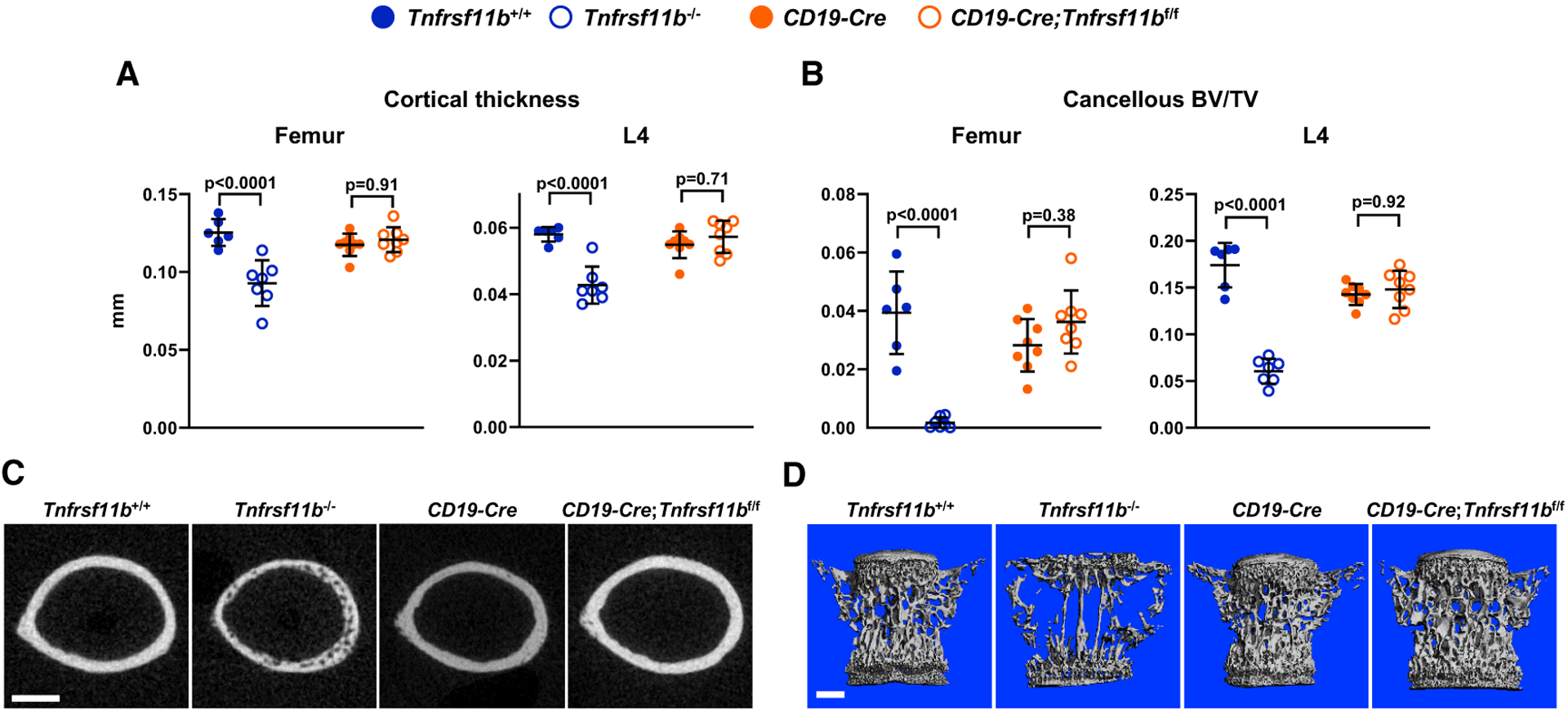
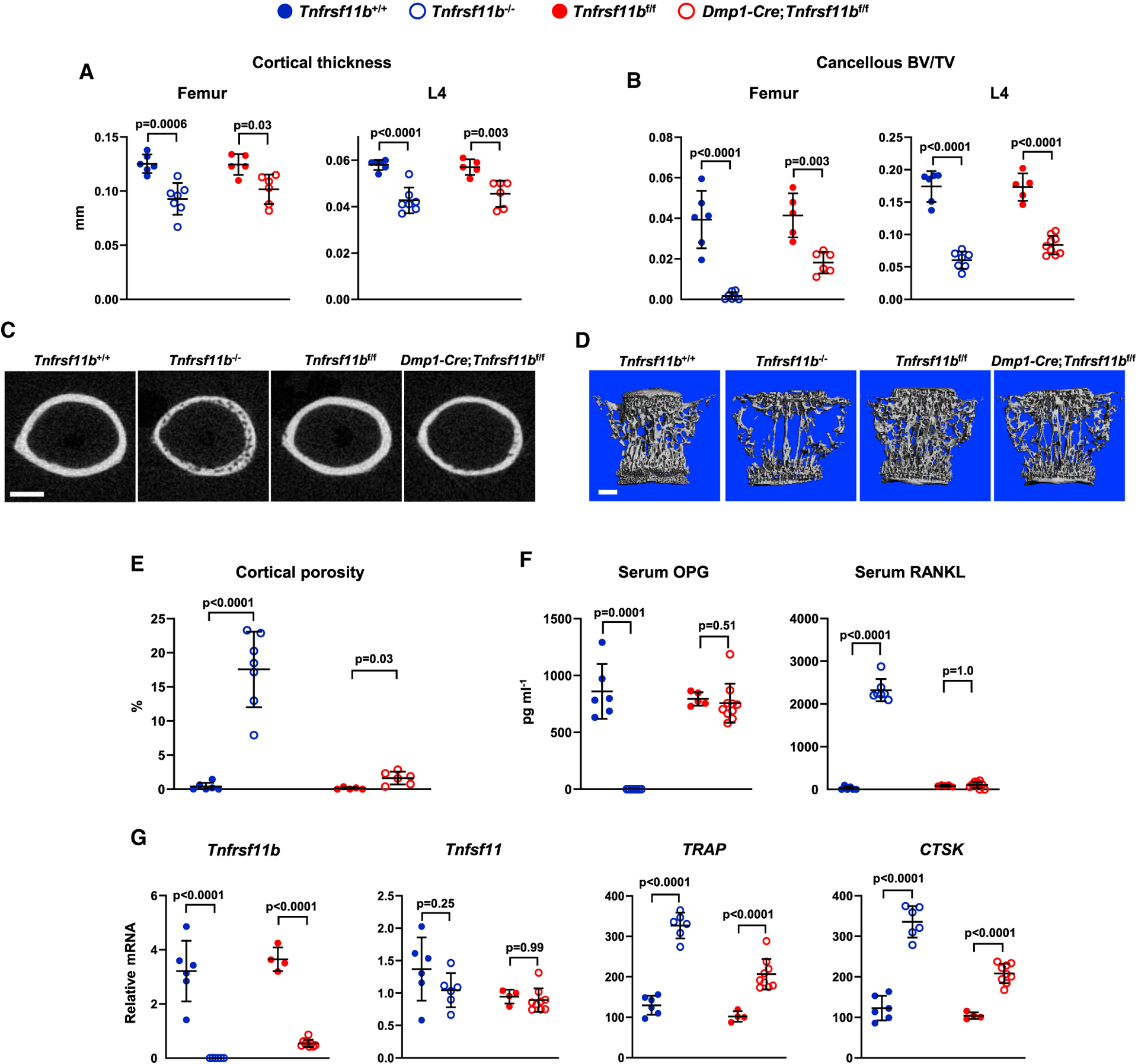
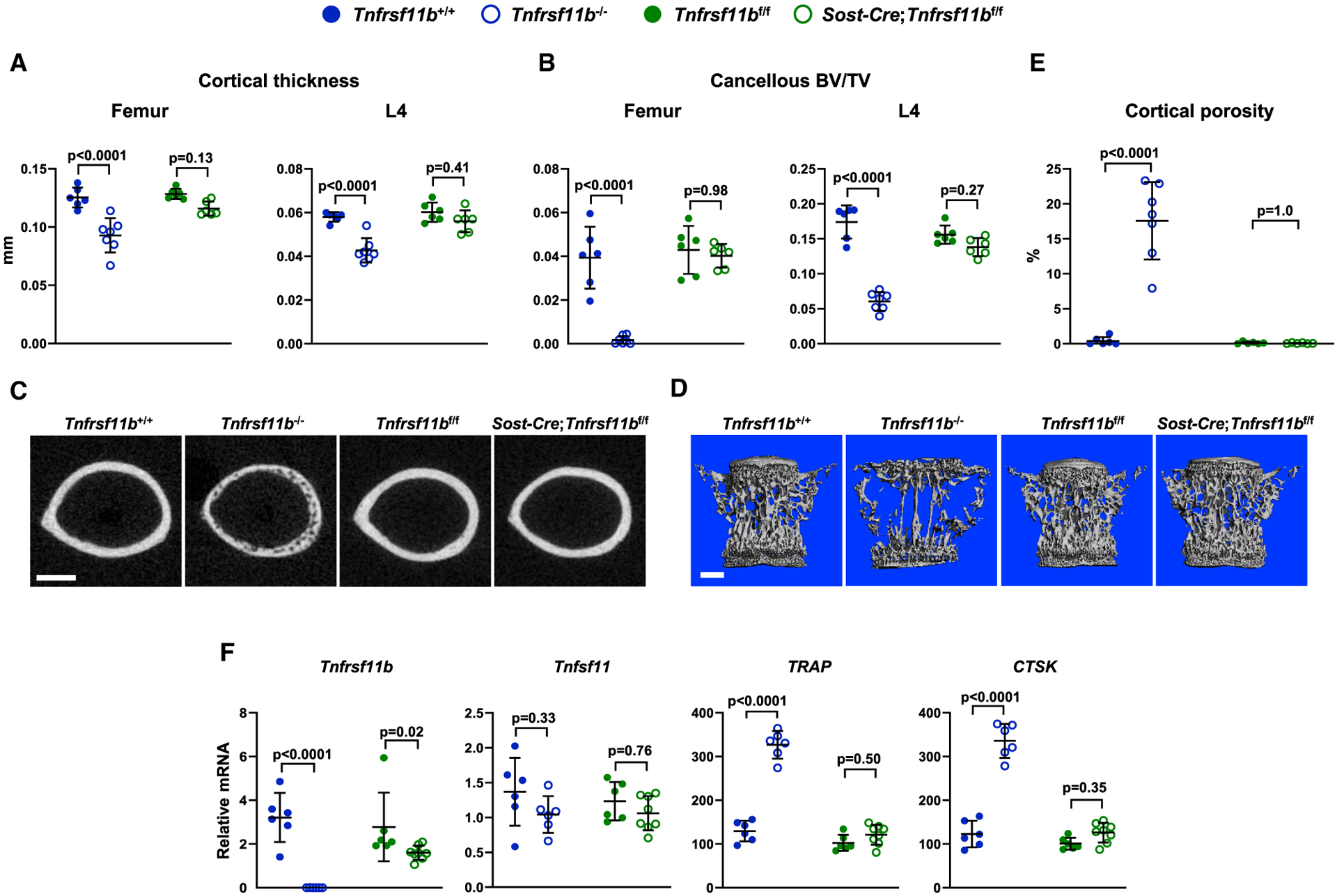
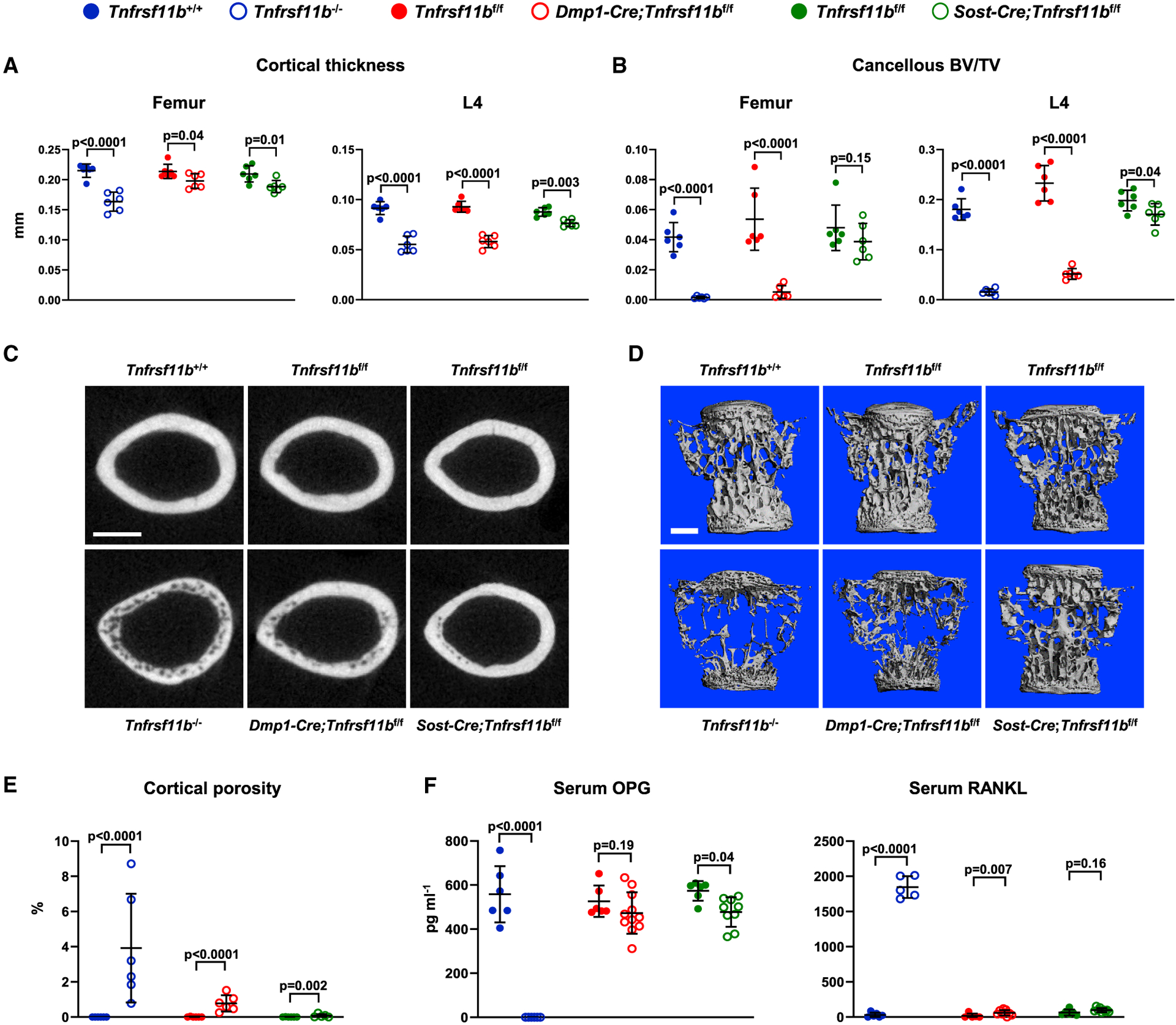
Osteoprotegerin (OPG) inhibits the ability of receptor activator of nuclear factor κB (NF-κB) ligand (RANKL) to stimulate the differentiation, activity, and survival of bone-resorbing osteoclasts. Genetic studies in mice show that osteocytes are an important source of RANKL, but the cellular sources of OPG are unclear. We use conditional deletion of Tnfrsf11b, which encodes OPG, from different cell populations to identify functionally relevant sources of OPG in mice. Deletion from B lymphocytes and osteocytes, two cell types commonly thought to supply OPG, has little or no impact on bone mass. By contrast, deletion of Tnfrsf11b from osteoblasts increases bone resorption and reduces bone mass to an extent similar to germline deletion, demonstrating that osteoblasts are an essential source of OPG. These results suggest that, in addition to producing new bone matrix, osteoblasts also play an active role in terminating the resorption phase of the bone remodeling cycle by suppressing RANKL activity.
Overview
The claims and statistics of this paper haven’t been checked yet.
Run the check — free, no account needed. It reads the open-access text and checks the sources it cites.
Integrity signals
Registry
Cites
Statistics
Figures
Verification
Claims the paper makes
The claims and statistics of this paper haven’t been checked yet.
Run the check — free, no account needed. It reads the open-access text and checks the sources it cites.
Claims other papers make about this one
Each is checked against this paper’s own text: does it say what the citing paper says it does?
The source backs part of the claim, not all of it — or backs it for a different population, condition or comparison.
In the citing paper
“Furthermore, T cells signal to B cells to induce OPG expression [76, 77].”
From Osteoimmunology of Fracture Healing. (2024) · cites this paper as [76]
Experimental — accuracy not yet measuredIn the citing paper
“Nevertheless, OPG released by mature osteoblasts and/or osteocytes may constitute the termination signal of the resorption phase in the remodeling cycle.77”
From Bone remodeling: an operational process ensuring survival and bone mechanical competence (2022) · cites this paper as [77]
In the citing paper
“This inhibitory activity is mandatory for the correct shift from bone resorption to bone formation and protects newly formed bone against untimely resorption.77”
From Bone remodeling: an operational process ensuring survival and bone mechanical competence (2022) · cites this paper as [77]
In the citing paper
“Cawley’s study stressed the concept “that the local concentration of OPG near the cell surface is a key factor in its ability to block the activity of RANKL”.”
From Bone remodeling: an operational process ensuring survival and bone mechanical competence (2022) · cites this paper as [77]
In the citing paper
“Hence, osteocytes can be considered dynamic cells capable of reconstituted mechanical sensitivity after replacement293 as well as the inhibitory control over osteoclastogenesis via the local production of OPG.77”
From Bone remodeling: an operational process ensuring survival and bone mechanical competence (2022) · cites this paper as [77]
In the citing paper
“Moreover, as cells mature, they secrete more ECM and exert local inhibitory control over osteoclastogenesis by releasing the osteoclastogenic inhibitor OPG.77”
From Bone remodeling: an operational process ensuring survival and bone mechanical competence (2022) · cites this paper as [77]
In the citing paper
“Osteoblasts are considered the major sources of OPG in cancellous bone, acting in concert with osteocytes and other cells to modulate the RANKL/RANK ratio and reduce resorption by osteoclasts.”
From Bone remodeling: an operational process ensuring survival and bone mechanical competence (2022) · cites this paper as [77]
Self-check
Percentages, sums and reported differences re-computed from the paper’s own numbers.
The self-check needs the paper’s full text.
Citations
Cites
Analysis of Relative Gene Expression Data Using Real-Time Quantitative PCR and the 2−ΔΔCT Method
Livak, K. J., & Schmittgen, T. D. (2001) · Methods · doi:10.1006/meth.2001.1262 · Cited by 180,860
A robust and high-throughput Cre reporting and characterization system for the whole mouse brain
Madisen, L., Zwingman, T. A., Sunkin, S. M., Oh, S. W., Zariwala, H. A., Gu, H., Ng, L. L., Palmiter, R. D., Hawrylycz, M. J., Jones, A. R., et al. (2010) · Nature Neuroscience · doi:10.1038/nn.2467 · Cited by 6,907
Osteoprotegerin ligand is a cytokine that regulates osteoclast differentiation and activation.
Lacey, D. L., Timms, E., Tan, H.-L., Kelley, M. J., Dunstan, C. R., Burgess, T., Elliott, R., Colombero, A., Elliott, G., Scully, S., et al. (1998) · Cell · doi:10.1016/s0092-8674(00)81569-x · Cited by 5,439
Osteoprotegerin: a novel secreted protein involved in the regulation of bone density.
Simonet, W. S., Lacey, D. L., Dunstan, C. R., Kelley, M., Chang, M.-S., Lüthy, R., Nguyen, H. Q., Wooden, S., Bennett, L., Boone, T., et al. (1997) · Cell · doi:10.1016/s0092-8674(00)80209-3 · Cited by 5,130
Bone Resorption by Osteoclasts
Teitelbaum, S. L. (2000) · Science · doi:10.1126/science.289.5484.1504 · Cited by 3,962
OPGL is a key regulator of osteoclastogenesis, lymphocyte development and lymph node organogenesis.
Kong, Y.-Y., Yoshida, H., Sarosi, I., Tan, H.-L., Timms, E., Capparelli, C., Morony, S., Oliveira-dos-Santos, A. J., Van, G., Itie, A., et al. (1999) · Nature · doi:10.1038/16852 · Cited by 3,351
Osteoprotegerin-deficient mice develop early onset osteoporosis and arterial calcification.
Bucay, N., Sarosi, I., Dunstan, C. R., Morony, S., Tarpley, J., Capparelli, C., Scully, S., Tan, H. L., Xu, W., Lacey, D. L., et al. (1998) · Genes & Development · doi:10.1101/gad.12.9.1260 · Cited by 2,483
Kitamura, D., Roes, J., Kühn, R., & Rajewsky, K. (1991) · Nature · doi:10.1038/350423a0 · Cited by 1,783
Evidence for osteocyte regulation of bone homeostasis through RANKL expression
Nakashima, T., Hayashi, M., Fukunaga, T., Kurata, K., Oh-hora, M., Feng, J. Q., Bonewald, L. F., Kodama, T., Wutz, A., Wagner, E. F., et al. (2011) · Nature Medicine · doi:10.1038/nm.2452 · Cited by 1,778
The molecular understanding of osteoclast differentiation
Asagiri, M., & Takayanagi, H. (2007) · Bone · doi:10.1016/j.bone.2006.09.023 · Cited by 1,363
Matrix-embedded cells control osteoclast formation
Xiong, J., Onal, M., Jilka, R. L., Weinstein, R. S., Manolagas, S. C., & O'Brien, C. A. (2011) · Nature Medicine · doi:10.1038/nm.2448 · Cited by 1,304
Self-citationEfficient in vivo manipulation of mouse genomic sequences at the zygote stage.
Lakso, M., Pichel, J. G., Gorman, J. R., Sauer, B., Okamoto, Y., Lee, E., Alt, F. W., & Westphal, H. (1996) · Proceedings of the National Academy of Sciences · doi:10.1073/pnas.93.12.5860 · Cited by 1,125
Li, X., Ominsky, M. S., Niu, Q., Sun, N., Daugherty, B., D’Agostin, D. M., Kurahara, C., Gao, Y., Cao, J., Gong, J., et al. (2008) · Journal of Bone and Mineral Research · doi:10.1359/jbmr.080216 · Cited by 941
Severe osteoporosis in mice lacking osteoclastogenesis inhibitory factor/osteoprotegerin.
Mizuno, A., Amizuka, N., Irie, K., Murakami, A., Fujise, N., Kanno, T., Sato, Y., Nakagawa, N., Yasuda, H., Mochizuki, S.-I., et al. (1998) · Biochemical and Biophysical Research Communications · doi:10.1006/bbrc.1998.8697 · Cited by 775
O’Brien, C. A., Jia, D., Plotkin, L. I., Bellido, T., Powers, C. C., Stewart, S. A., Manolagas, S. C., & Weinstein, R. S. (2003) · Endocrinology · doi:10.1210/en.2003-0990 · Cited by 771
Self-citationB lymphocyte-specific, Cre-mediated mutagenesis in mice
Rickert, R. (1997) · Nucleic Acids Research · doi:10.1093/nar/25.6.1317 · Cited by 729
Osteocyte Wnt/β-Catenin Signaling Is Required for Normal Bone Homeostasis
Krämer, I., Halleux, C. M., Keller, H., Pegurri, M., Gooi, J. H., Weber, P. B., Feng, J. Q., Bonewald, L. F., & Kneissel, M. (2010) · Molecular and Cellular Biology · doi:10.1128/mcb.01428-09 · Cited by 575
Li, Y., Toraldo, G., Li, A., Yang, X., Zhang, H., Qian, W.-P., & Weitzmann, M. N. (2007) · Blood · doi:10.1182/blood-2006-07-037994 · Cited by 520
Udagawa, N., Takahashi, N., Yasuda, H., Mizuno, A., Itoh, K., Ueno, Y., Shinki, T., Gillespie, M. T., Martin, T. J., Higashio, K., et al. (2000) · Endocrinology · doi:10.1210/endo.141.9.7634 · Cited by 411
Collin-Osdoby, P., Rothe, L., Anderson, F., Nelson, M., Maloney, W., & Osdoby, P. (2001) · Journal of Biological Chemistry · doi:10.1074/jbc.m010153200 · Cited by 398
Bone development and age-related bone loss in male C57BL/6J mice
Ferguson, V. L., Ayers, R. A., Bateman, T. A., & Simske, S. J. (2003) · Bone · doi:10.1016/s8756-3282(03)00199-6 · Cited by 384
Osteoprotegerin Is an αvβ3-induced, NF-κB-dependent Survival Factor for Endothelial Cells
Malyankar, U. M., Scatena, M., Suchland, K. L., Yun, T. J., Clark, E. A., & Giachelli, C. M. (2000) · Journal of Biological Chemistry · doi:10.1074/jbc.c000290200 · Cited by 348
Xiong, J., Piemontese, M., Onal, M., Campbell, J., Goellner, J. J., Dusevich, V., Bonewald, L., Manolagas, S. C., & O’Brien, C. A. (2015) · PLOS ONE · doi:10.1371/journal.pone.0138189 · Cited by 323
Self-citationMLO-Y4 Osteocyte-Like Cells Support Osteoclast Formation and Activation
Zhao, S., Kato, Y., Zhang, Y., Harris, S., Ahuja, S. S., & Bonewald, L. F. (2002) · Journal of Bone and Mineral Research · doi:10.1359/jbmr.2002.17.11.2068 · Cited by 322
A network of trans-cortical capillaries as mainstay for blood circulation in long bones
Grüneboom, A., Hawwari, I., Weidner, D., Culemann, S., Müller, S., Henneberg, S., Brenzel, A., Merz, S. F., Bornemann, L., Zec, K., et al. (2018) · Nature Metabolism · doi:10.1038/s42255-018-0016-5 · Cited by 310
Dissociation between bone resorption and bone formation in osteopenic transgenic mice
Corral, D. A., Amling, M., Priemel, M., Loyer, E. M., Fuchs, S., Ducy, P. F., Baron, R., & Karsenty, G. (1998) · Proceedings of the National Academy of Sciences · doi:10.1073/pnas.95.23.13835 · Cited by 231
Kanzaki, H., Chiba, M., Shimizu, Y., & Mitani, H. (2001) · Journal of Dental Research · doi:10.1177/00220345010800030801 · Cited by 216
Rogers, A., & Eastell, R. (2005) · The Journal of Clinical Endocrinology & Metabolism · doi:10.1210/jc.2005-0794 · Cited by 215
Correlates of osteoprotegerin levels in women and men.
Khosla, S., Arrighi, H. M., Melton, III, Atkinson, E. J., O'Fallon, W. M., Dunstan, C., & Riggs, B. L. (2002) · Osteoporosis International · doi:10.1007/s001980200045 · Cited by 205
Rogers, A., Saleh, G., Hannon, R. A., Greenfield, D., & Eastell, R. (2002) · The Journal of Clinical Endocrinology & Metabolism · doi:10.1210/jc.2002-020396 · Cited by 200
Osteoprotegerin regulates bone formation through a coupling mechanism with bone resorption.
Nakamura, M., Udagawa, N., Matsuura, S., Mogi, M., Nakamura, H., Horiuchi, H., Saito, N., Hiraoka, B. Y., Kobayashi, Y., Takaoka, K., et al. (2003) · Endocrinology · doi:10.1210/en.2003-0717 · Cited by 191
Identification of subepithelial mesenchymal cells that induce IgA and diversify gut microbiota
Nagashima, K., Sawa, S., Nitta, T., Tsutsumi, M., Okamura, T., Penninger, J. M., Nakashima, T., & Takayanagi, H. (2017) · Nature Immunology · doi:10.1038/ni.3732 · Cited by 154
Lassen, N. E., Andersen, T. L., Pløen, G. G., Søe, K., Hauge, E. M., Harving, S., Eschen, G. E. T., & Delaisse, J.-M. (2017) · Journal of Bone and Mineral Research · doi:10.1002/jbmr.3091 · Cited by 152
Xiong, J., Cawley, K., Piemontese, M., Fujiwara, Y., Zhao, H., Goellner, J. J., & O’Brien, C. A. (2018) · Nature Communications · doi:10.1038/s41467-018-05244-y · Cited by 144
Self-citationPiemontese, M., Xiong, J., Fujiwara, Y., Thostenson, J. D., & O’Brien, C. A. (2016) · American Journal of Physiology-Endocrinology and Metabolism · doi:10.1152/ajpendo.00219.2016 · Cited by 118
Self-citationOsteoprotegerin in the Inner Ear May Inhibit Bone Remodeling in the Otic Capsule
Zehnder, A. F., Kristiansen, A. G., Adams, J. C., Merchant, S. N., & McKenna, M. J. (2005) · The Laryngoscope · doi:10.1097/01.mlg.0000150702.28451.35 · Cited by 113
Conditional Ablation of the Osteoblast Lineage in Col2.3Δtk Transgenic Mice
Višnjić, D., Kalajzić, I., Gronowicz, G., Aguila, H. L., Clark, S. H., Lichtler, A., & Rowe, D. W. (2001) · Journal of Bone and Mineral Research · doi:10.1359/jbmr.2001.16.12.2222 · Cited by 110
Zehnder, A. F., Kristiansen, A. G., Adams, J. C., Kujawa, S. G., Merchant, S. N., & McKenna, M. J. (2006) · The Laryngoscope · doi:10.1097/01.mlg.0000191466.09210.9a · Cited by 107
Taylor, S., Ominsky, M. S., Hu, R., Pacheco, E., He, Y. D., Brown, D. L., Aguirre, J. I., Wronski, T. J., Buntich, S., Afshari, C. A., et al. (2016) · Bone · doi:10.1016/j.bone.2015.12.013 · Cited by 106
Fujiwara, Y., Piemontese, M., Liu, Y., Thostenson, J. D., Xiong, J., & O’Brien, C. A. (2016) · Journal of Biological Chemistry · doi:10.1074/jbc.m116.742452 · Cited by 99
Self-citationBone Formation Is Coupled to Resorption Via Suppression of Sclerostin Expression by Osteoclasts
Koide, M., Kobayashi, Y., Yamashita, T., Uehara, S., Nakamura, M., Hiraoka, B. Y., Ozaki, Y., Iimura, T., Yasuda, H., Takahashi, N., et al. (2017) · Journal of Bone and Mineral Research · doi:10.1002/jbmr.3175 · Cited by 77
O’Brien, C. A., Jilka, R. L., Fu, Q., Stewart, S. A., Weinstein, R. S., & Manolagas, S. C. (2005) · American Journal of Physiology-Endocrinology and Metabolism · doi:10.1152/ajpendo.00029.2005 · Cited by 71
Self-citationResorption of auditory ossicles and hearing loss in mice lacking osteoprotegerin
Kanzaki, S., Ito, M., Takada, Y., Ogawa, K., & Matsuo, K. (2006) · Bone · doi:10.1016/j.bone.2006.01.155 · Cited by 69
Cbfa1 does not regulate RANKL gene activity in stromal/osteoblastic cells
O’Brien, C. A., Kern, B., Gubrij, I. B., Karsenty, G., & Manolagas, S. C. (2002) · Bone · doi:10.1016/s8756-3282(01)00692-5 · Cited by 55
Self-citationNakamichi, Y., Udagawa, N., Kobayashi, Y., Nakamura, M., Yamamoto, Y., Yamashita, T., Mizoguchi, T., Sato, M., Mogi, M., Penninger, J. M., et al. (2007) · The Journal of Immunology · doi:10.4049/jimmunol.178.1.192 · Cited by 50
Heparan Sulfate Regulates the Structure and Function of Osteoprotegerin in Osteoclastogenesis
Li, M., Yang, S., & Xu, D. (2016) · Journal of Biological Chemistry · doi:10.1074/jbc.m116.751974 · Cited by 39
Osteoblastic heparan sulfate regulates osteoprotegerin function and bone mass
Nozawa, S., Inubushi, T., Irie, F., Takigami, I., Matsumoto, K., Shimizu, K., Akiyama, H., & Yamaguchi, Y. (2018) · JCI Insight · doi:10.1172/jci.insight.89624 · Cited by 28
Loss of Functional Osteoprotegerin: More Than a Skeletal Problem
Grasemann, C., Unger, N., Hövel, M., Arweiler‐Harbeck, D., Herrmann, R., Schündeln, M. M., Müller, O. J., Schweiger, B., Lausch, E. U., Meißner, T., et al. (2016) · The Journal of Clinical Endocrinology & Metabolism · doi:10.1210/jc.2016-2905 · Cited by 17
Sarink, D., Yang, J., Johnson, T., Chang-Claude, J. C., Overvad, K., Olsen, A., Tjønneland, A. M., Fournier, A., Mancini, F. R., Kvaskoff, M., et al. (2019) · Cancer Epidemiology Biomarkers & Prevention · doi:10.1158/1055-9965.epi-19-0241 · Cited by 8
Cited by
Sorted by citations
Bone remodeling: an operational process ensuring survival and bone mechanical competence
Bolamperti, S., Villa, I., & Rubinacci, A. (2022) · Bone Research · doi:10.1038/s41413-022-00219-8 · Cited by 482
The osteocyte as a signaling cell
Delgado‐Calle, J., & Bellido, T. (2021) · Physiological Reviews · doi:10.1152/physrev.00043.2020 · Cited by 280
Osteoclasts, Master Sculptors of Bone
Novack, D. V., & O’Brien, C. A. (2022) · Annual Review of Pathology Mechanisms of Disease · doi:10.1146/annurev-pathmechdis-031521-040919 · Cited by 208
Self-citationRANKL as the master regulator of osteoclast differentiation
Takayanagi, H. (2021) · Journal of Bone and Mineral Metabolism · doi:10.1007/s00774-020-01191-1 · Cited by 175
Targeting strategies for bone diseases: signaling pathways and clinical studies
Xu, H., Wang, W., Liu, X., Huang, W. H., Chen, Z., Xu, Y., Yang, H., Bai, J., & Geng, D. (2023) · Signal Transduction and Targeted Therapy · doi:10.1038/s41392-023-01467-8 · Cited by 177
Metadata
- Authors
- Cawley, K. M., Bustamante-Gomez, N. C., Guha, A. G., MacLeod, R. S., Xiong, J., Gubrij, I., Liu, Y., Mulkey, R., Palmieri, M., Thostenson, J. D., Goellner, J. J., & O’Brien, C. A.
- Affiliations
- University of Arkansas for Medical Sciences (US)
- Central Arkansas Veterans Healthcare System (US)
- Corresponding author
- O’Brien, Charles A.
- ORCID
- Venue
- Cell Reports
- Publisher
- Elsevier BV
- Published
- 2020-09
- Volume
- 32
- Issue
- 10
- Pages
- 108052
- ISSN
- 2211-1247 (ISSN-L)
- PMC
- PMC7493998
- OpenAlex
- W3084164734
- Cited by
- 114
- References
- 49
- Citations by year
- 2026: 15 · 2025: 18 · 2024: 15 · 2023: 20 · 2022: 28 · 2021: 13 · 2020: 5
- FWCI
- 5.35
- Type
- journal article
- Language
- en
- Update notices
- erratum (2025-06-24)
- Open access
- gold
- doi.org
- Licence
- Locations
- Cell Reports (publishedVersion, cc-by-nc-nd)
- PubMed (publishedVersion)
- PubMed Central (acceptedVersion, cc-by-nc-nd)
- Funders
- U.S. Department of Veterans Affairs (I01 BX000294)
- University of Arkansas for Medical Sciences
- National Institutes of Health (R01AR049794, P20GM125503)
- Topics
- Life Sciences › Biochemistry, Genetics and Molecular Biology › Molecular Biology › Bone Metabolism and Diseases
- Health Sciences › Medicine › Orthopedics and Sports Medicine › Bone health and osteoporosis research
- Health Sciences › Medicine › Rheumatology › Osteomyelitis and Bone Disorders Research
- Keywords
- osteoprotegerin, osteoblasts, bone resorption, RANKL, osteocytes, B cells, bone remodeling, conditional gene deletion, bone mass, osteoclasts
- MeSH terms
- Animals, Cell Differentiation, Humans, Osteoblasts, Osteoclasts, Osteocytes, Bone Remodeling, Mice, Osteoprotegerin
About these checks
Registry, retraction, Cites and statistics results are computed, not judged, with one exception: a printed reference that no index lists is read once by a model before it counts as a citation error. Claims are extracted by a model and kept only when their quote appears verbatim in the text; each cited source is then checked, with a model’s help, for whether it says what the claim relies on. Those verdicts can be wrong — read the claim’s quote and the cited source before relying on one.
Statistics and arithmetic are recomputed, not judged.
Confidence bands are shown only for fields calibrated on our annotated test set. None is calibrated yet, so no band is shown.
What counts as a claim ›How we measure confidence ›How we check this ›
Are you an author, or do you see a problem with this page? Request a review
