

The DOI matches its Crossref record; 59 of the 62 references it cites were found in a registry or an index, and 2 are not checked yet.
RETRACTED: Factors influencing pre-service special education teachers’ intention toward AI in education: Digital literacy, teacher self-efficacy, perceived ease of use, and perceived usefulness
Open accessAbstract
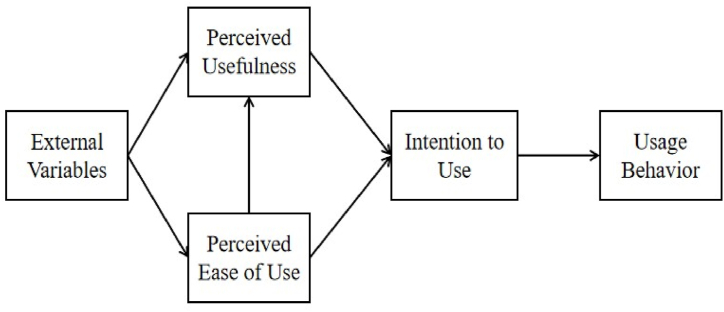
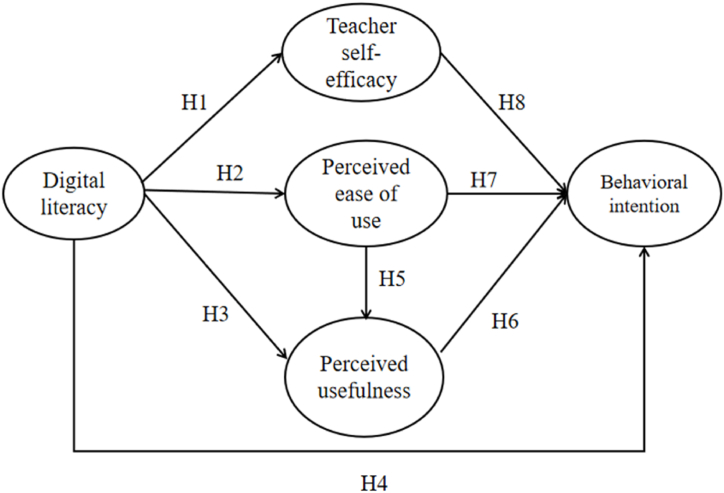
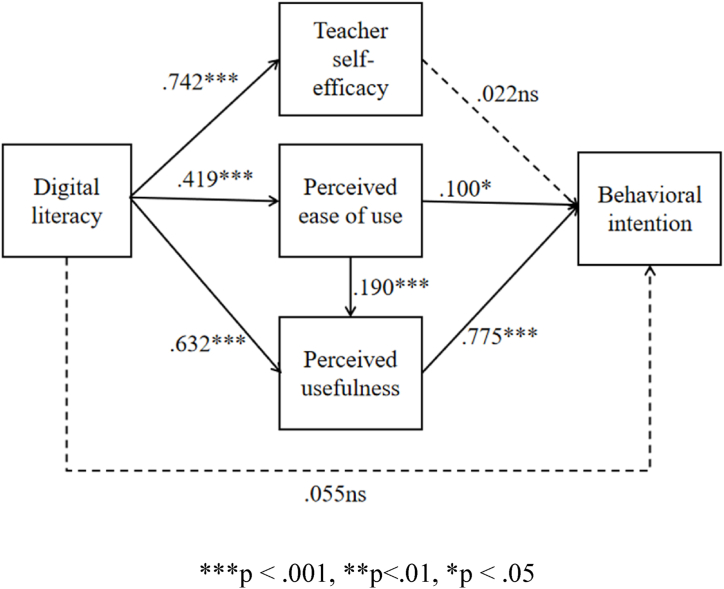
The use of artificial intelligence in education (AIEd) has become increasingly significant globally. In China, there is a lack of research examining the behavioral intention toward AIEd among pre-service special education (SPED) teachers in terms of digital literacy and teacher self-efficacy. Building on the technology acceptance model, our study evaluated the aspects influencing pre-service special education teachers' intention toward AI in education. Data was gathered from 274 pre-service SPED teachers studying at a Chinese public normal university of special education and analyzed using structural equation modeling (SEM). The results show that digital literacy is associated with the perceived usefulness and ease of use of AIEd, which influences SPED teachers' intention to use AIEd. Additionally, digital literacy significantly impacts the self-efficacy of SPED teachers. Given these results, AI designers in special education should comprehend the effectiveness and usability of AIEd for fostering behavioral intention formation. Simultaneously, special educational programs that identify key content and activities for digital literacy training should be developed, and educators should attempt to execute the relevant pre-service training to enhance the intention of pre-service SPED teachers toward AIEd.
Overview
The claims and statistics of this paper haven’t been checked yet.
Run the check — free, no account needed. It reads the open-access text and checks the sources it cites.
Integrity signals
Registry
Cites
Statistics
Figures
Verification
Claims the paper makes
The claims and statistics of this paper haven’t been checked yet.
Run the check — free, no account needed. It reads the open-access text and checks the sources it cites.
Claims other papers make about this one
Each is checked against this paper’s own text: does it say what the citing paper says it does?
The source backs part of the claim, not all of it — or backs it for a different population, condition or comparison.
In the citing paper
“Studies also indicate that digitally literate teachers are more inclined to participate in AI-related training (Yao & Wang, 2020)”
From Integrating artificial intelligence into preservice teacher education: enhancing AI literacy and digital material design competency (2026) · cites this paper as Yao & Wang, 2020
Experimental — accuracy not yet measured
Self-check
Percentages, sums and reported differences re-computed from the paper’s own numbers.
The self-check needs the paper’s full text.
Citations
Cites
Evaluating structural equation models with unobservable variables and measurement error
Fornell, C., & Larcker, D. F. (1981) · Journal of Marketing Research · doi:10.1177/002224378101800104 · Cited by 109,190
Perceived usefulness, perceived ease of use, and user acceptance of information technology
Davis, F. D. (1989) · MIS Quarterly · doi:10.2307/249008 · Cited by 68,483
User Acceptance of Information Technology: Toward A Unified View1
Venkatesh, V., Morris, M. G., Davis, G. B., & Davis, F. D. (2003) · MIS Quarterly · doi:10.2307/30036540 · Cited by 45,035
A Theoretical Extension of the Technology Acceptance Model: Four Longitudinal Field Studies
Venkatesh, V., & Davis, F. D. (2000) · Management Science · doi:10.1287/mnsc.46.2.186.11926 · Cited by 23,066
Bandura, A. (1977) · Zenodo (CERN European Organization for Nuclear Research) · doi:10.5281/zenodo.15521699 · Cited by 7,585
Zawacki-Richter, O., Marín, V. I., Bond, M., & Gouverneur, F. (2019) · International Journal of Educational Technology in Higher Education · doi:10.1186/s41239-019-0171-0 · Cited by 7,242 · cited 1×
“The application of AI technology in educational settings, known as AI in education (AIEd), has been widely regarded as one of the most significant advancements in this century [2,3].”
BackgroundTeacher efficacy: capturing an elusive construct
Tschannen-Moran, M., & Hoy, A. W. (2001) · Teaching and Teacher Education · doi:10.1016/s0742-051x(01)00036-1 · Cited by 6,839 · cited 1×
“Tschannen-Moran and Woolfolk Hoy [53] specifically defined teacher self-efficacy as belief concerning one ’ s ability to teach, to establish and enforce classroom regulations, as well as to inspire students ’ learning motivation.”
BackgroundA Beginner's Guide to Structural Equation Modeling
Finkelstein, D. (2005) · Technometrics · doi:10.1198/tech.2005.s328 · Cited by 6,087
Duan, Y., Edwards, J. S., & Dwivedi, Y. K. (2019) · International Journal of Information Management · doi:10.1016/j.ijinfomgt.2019.01.021 · Cited by 2,628 · cited 1×
“Similarly, the rapid progress of information processing technology and computer technology (e. g., advanced algorithms, Big Data) has significantly expedited the advancement and implementation of AI, which has increased in contemporary times [38].”
BackgroundVision, challenges, roles and research issues of Artificial Intelligence in Education
Hwang, G.-J., Xie, H., Wah, B. W., & Gašević, D. (2020) · Computers and Education: Artificial Intelligence · doi:10.1016/j.caeai.2020.100001 · Cited by 1,435
Evolution and Revolution in Artificial Intelligence in Education
Roll, I., & Wylie, R. (2016) · International Journal of Artificial Intelligence in Education · doi:10.1007/s40593-016-0110-3 · Cited by 1,229
Perceived Teacher Self‐Efficacy as a Predictor of Job Stress and Burnout: Mediation Analyses
Schwarzer, R., & Hallum, S. (2008) · Applied Psychology · doi:10.1111/j.1464-0597.2008.00359.x · Cited by 1,179
The Multivariate Social Scientist: Introductory Statistics Using Generalized Linear Models
Hutcheson, G. (1999) · Cited by 1,127
Disentangling behavioral intention and behavioral expectation
Warshaw, P. R., & Davis, F. D. (1985) · Journal of Experimental Social Psychology · doi:10.1016/0022-1031(85)90017-4 · Cited by 963
AI technologies for education: Recent research & future directions
Zhang, K., & Aslan, A. B. (2021) · Computers and Education: Artificial Intelligence · doi:10.1016/j.caeai.2021.100025 · Cited by 923
Designing for Virtual Communities in the Service of Learning
(2004) · Cambridge University Press eBooks · doi:10.1017/cbo9780511805080 · Cited by 727
AI literacy in K-12: a systematic literature review
Casal-Otero, L., Catala, A., Fernández-Morante, C., Taboada, M., Cebreiro, B., & Barro, S. (2023) · International Journal of STEM Education · doi:10.1186/s40594-023-00418-7 · Cited by 724 · cited 1×
“The ultimate goal of AI is to grasp, conceptualize, and reproduce human intelligence and cognitive processes within artificial systems [40].”
BackgroundCan teachers’ digital competence influence technology acceptance in vocational education?
Antonietti, C., Cattáneo, A., & Amenduni, F. (2022) · Computers in Human Behavior · doi:10.1016/j.chb.2022.107266 · Cited by 551
Schlager, M. S., & Fusco, J. (2003) · The Information Society · doi:10.1080/01972240309464 · Cited by 511
A paradigm for examining second-order factor models employing structural equation modeling
Koufteros, X. A., Babbar, S., & Kaighobadi, M. (2009) · International Journal of Production Economics · doi:10.1016/j.ijpe.2009.04.010 · Cited by 326
Kramarski, B., & Michalsky, T. (2009) · Learning and Instruction · doi:10.1016/j.learninstruc.2009.05.003 · Cited by 318
Siddiq, F., Scherer, R., & Tondeur, J. (2015) · Computers & Education · doi:10.1016/j.compedu.2015.10.006 · Cited by 313
semPower: General power analysis for structural equation models
Moshagen, M., & Bader, M. (2023) · Behavior Research Methods · doi:10.3758/s13428-023-02254-7 · Cited by 308 · cited 1×
“The reason for employing SEM was its wide utilization in testing a range of substantive hypotheses, as it has the ability to generate hypotheses that align with the overall research objectives while considering the theoretical framework [64].”
BackgroundRohatgi, A., Scherer, R., & Hatlevik, O. E. (2016) · Computers & Education · doi:10.1016/j.compedu.2016.08.001 · Cited by 295
Artificial intelligence in special education: a systematic review
Hopcan, S., Polat, E., Öztürk, M. E., & Ozturk, L. (2022) · Interactive Learning Environments · doi:10.1080/10494820.2022.2067186 · Cited by 254
Horizon Report - 2017 Higher Education Edition
Jaramillo, S. G. (2017) · Cuaderno activa · Cited by 216
Moreira-Fontán, E., García-Señorán, M., Conde-Rodríguez, Á., & González, A. (2019) · Computers & Education · doi:10.1016/j.compedu.2019.02.007 · Cited by 195
Mohammed, P. S., & Watson, E. ‘. (2019) · Perspectives on rethinking and reforming education · doi:10.1007/978-981-13-8161-4_2 · Cited by 173
Wang, Y., Wang, Y., Pan, Z., & Ortega-Martín, J. L. (2023) · The Asia-Pacific Education Researcher · doi:10.1007/s40299-023-00750-0 · Cited by 170
Dalton, E. M., Lyner-Cleophas, M., Ferguson, B. T., & McKenzie, J. (2019) · African Journal of Disability · doi:10.4102/ajod.v8i0.519 · Cited by 162
A differentiated discussion about AI education K-12
Steinbauer, G., Kandlhofer, M., Chklovski, T., Heintz, F., & Koenig, S. (2021) · KI - Künstliche Intelligenz · doi:10.1007/s13218-021-00724-8 · Cited by 160
The Future of Artificial Intelligence in Special Education Technology
Marino, M. T., Vasquez, E., Dieker, L., Basham, J., & Blackorby, J. (2023) · Journal of Special Education Technology · doi:10.1177/01626434231165977 · Cited by 142
Factors impacting special education teachers’ acceptance and actual use of technology
Siyam, N. (2019) · Education and Information Technologies : Official Journal of the IFIP technical committee on Education · doi:10.1007/s10639-018-09859-y · Cited by 136
Lim, E. M. (2023) · Education and Information Technologies · doi:10.1007/s10639-023-11724-6 · Cited by 133
Thongsri, N., Shen, L., & Bao, Y. (2019) · Innovations in Education and Teaching International · doi:10.1080/14703297.2019.1585904 · Cited by 106
Gouseti, A., Lakkala, M., Raffaghelli, J. E., Ranieri, M., Roffi, A., & Ilomäki, L. (2023) · Educational Review · doi:10.1080/00131911.2022.2159933 · Cited by 94
Quaicoe, J. S., & Pata, K. (2020) · Education and Information Technologies · doi:10.1007/s10639-020-10158-8 · Cited by 93
(2021) · DOAJ (DOAJ: Directory of Open Access Journals) · Cited by 91
Technology use as a support tool by secondary students with autism
Hedges, S. H., Odom, S. L., Hume, K., & Sam, A. M. (2017) · Autism · doi:10.1177/1362361317717976 · Cited by 84
Methodology of the Social Sciences
Cairns, H., & Kaufmann, F. (1945) · The University of Chicago Law Review · doi:10.2307/1597571 · Cited by 76
Teacher Professional Development, Technology, and Communities of Practice
Schlager, M. S., & Fusco, J. (2004) · Cambridge University Press eBooks · doi:10.1017/cbo9780511805080.009 · Cited by 68
Clinical teacher self-efficacy: A concept analysis
Bourne, M. J., Smeltzer, S. C., & Kelly, M. M. (2021) · Nurse Education in Practice · doi:10.1016/j.nepr.2021.103029 · Cited by 63
Paetsch, J., Franz, S., & Wolter, I. (2023) · Teaching and Teacher Education · doi:10.1016/j.tate.2023.104318 · Cited by 59
ICT integration in teachers’ lesson plans: A scoping review of empirical studies
König, J., Heine, S., Jäger-Biela, D. J., & Rothland, M. (2022) · European Journal of Teacher Education · doi:10.1080/02619768.2022.2138323 · Cited by 55
Rafique, H., Islam, Z. U., & Shamim, A. (2023) · Interactive Learning Environments · doi:10.1080/10494820.2022.2164783 · Cited by 50
Farooq, U., Rahim, M. S. M., & Abid, A. (2023) · Neural Computing and Applications · doi:10.1007/s00521-023-08424-0 · Cited by 42
Artificial intelligence in education: an exploration
Cumming, G. (1998) · Journal of Computer Assisted Learning · doi:10.1046/j.1365-2729.1998.1440251.x · Cited by 40
Three Interviews About K-12 AI Education in America, Europe, and Singapore
Heintz, F. (2021) · KI - Künstliche Intelligenz · doi:10.1007/s13218-021-00730-w · Cited by 34
Teachers’ perceived information literacy self-efficacy
Shonfeld, M., Aharony, N., & Nadel-Kritz, N. (2021) · Journal of Librarianship and Information Science · doi:10.1177/09610006211026950 · Cited by 32
Factors Influencing Intention to Use Web 2.0 in Indonesian Vocational High Schools
Prasojo, L. D., Habibi, A., Mukminin, A., Sofyan, S., Indrayana, B., & Anwar, K. (2020) · International Journal of Emerging Technologies in Learning (iJET) · doi:10.3991/ijet.v15i05.10605 · Cited by 31
Xianhan, H., Lai, C., Sun, M., & Cai-xia, S. (2022) · Computers & Education · doi:10.1016/j.compedu.2022.104604 · Cited by 26
Shi, R., & Wan, X. (2024) · Humanities and Social Sciences Communications · doi:10.1057/s41599-024-03010-8 · Cited by 25
Digital Competence of Special Education Teachers: Impact, Challenges and Opportunities
Rueda, M. M., & Fernández‐Batanero, J. M. (2022) · Australasian Journal of Special and Inclusive Education · doi:10.1017/jsi.2022.8 · Cited by 25
Mekler, E. D., Emmerich, K., Tanenbaum, T. J., Lankes, M., Birk, M. V., & Gil-Iranzo, R. (2019) · doi:10.1145/3341215 · Cited by 22
Woulfin, S. L., & Jones, B. L. (2023) · Journal of Educational Change · doi:10.1007/s10833-023-09483-9 · Cited by 17
Huang, K., Chen, Y.-H., & Jang, S. (2020) · International Journal of Disability Development and Education · doi:10.1080/1034912x.2020.1717450 · Cited by 17
Zhao, F., Liu, G.-Z., Zhou, J., & Yin, C. (2023) · DOAJ (DOAJ: Directory of Open Access Journals) · doi:10.30191/ets.202301_26(1).0010 · Cited by 16
News From CEC: High-Leverage Practices in Special Education
(2017) · Teaching Exceptional Children · doi:10.1177/0040059917713206 · Cited by 14
Development a Scale for e-Learning Digital Literacy`
Yang, M., & Jeong-Kyoum, K. (2016) · Korean Association for Educational Information and Media · doi:10.15833/kafeiam.22.3.485 · Cited by 10
Hamadneh, B. M., AL-Azzam, M. M., Alqarni, T. M., & Almalki, A. D. (2023) · International Journal of Education in Mathematics Science and Technology · doi:10.46328/ijemst.3762 · Cited by 5
Video To Braille Transcription For Visually Impaired People
Verma, I., Rai, A., Yadav, H., Rastogi, V., & Satija, S. (2021) · International Conference on Simulation, Automation & Smart Manufacturing (SASM) · doi:10.1109/sasm51857.2021.9841184 · Cited by 2
Research works printed but not linked: 4
- Exploring the Relationships between Reading Behavior Patterns and Learning Outcomes Based on Log Data from E-Books: A Human Factor Approach: Int. J. Hum. Comput. Interact.: Vol 35, No 4–5 - Get Access’. Accessed: July. 1, 2024. [Online]. Available: https://www.tandfonline.com/doi/full/10.1080/10447318.2018.1543077. · DOI
- Quaicoe, 2020, Teachers' digital literacy and digital activity as digital divide components among basic schools in Ghana, Educ. Inf. Technol., 25, 4077, 10.1007/s10639-020-10158-8 · DOI · Paper page
- Riina, 2022, DigComp 2.2: The Digital Competence Framework for Citizens - With new examples of knowledge, skills and attitudes, JRC Research Reports, 1
- Quaicoe, 2020, Teachers' digital literacy and digital activity as digital divide components among basic schools in Ghana, Educ. Inf. Technol., 25, 4077, 10.1007/s10639-020-10158-8 · DOI · Paper page
Cited by
Sorted by citations
Zhang, Q., Nie, H., Fan, J., & Liu, H. (2025) · Behavioral Sciences · doi:10.3390/bs15040523 · Cited by 154
Pan, Z., & Wang, Y. (2025) · European Journal of Education · doi:10.1111/ejed.70020 · Cited by 143
Schmidt, D. A., Alboloushi, B., Thomas, A., & Magalhães, R. (2025) · Computers and Education Open · doi:10.1016/j.caeo.2025.100274 · Cited by 171
Runge, I., Hebibi, F., & Lazarides, R. (2025) · Education Sciences · doi:10.3390/educsci15020167 · Cited by 85
Ocen, S., Elasu, J., Aarakit, S. M., & Olupot, C. (2025) · Frontiers in Education · doi:10.3389/feduc.2025.1530247 · Cited by 157
Metadata
- Authors
- Yao, N., & Wang, Q.
- Affiliations
- Nanjing Normal University of Special Education (CN)
- Corresponding author
- Yao, Ni
- ORCID
- Yao, Ni
- Venue
- Heliyon
- Publisher
- Elsevier BV
- Published
- 2024-07
- Volume
- 10
- Issue
- 14
- Pages
- e34894
- ISSN
- 2405-8440 (ISSN-L)
- PMC
- PMC11325385
- OpenAlex
- W4400768008
- Cited by
- 150
- References
- 62
- Citations by year
- 2026: 62 · 2025: 84 · 2024: 4
- FWCI
- 56.40
- Type
- journal article
- Language
- en
- Status
- Retracted
- Update notices
- Open access
- gold
- doi.org
- Licence
- Locations
- Heliyon (publishedVersion, cc-by-nc)
- PubMed Central (publishedVersion, cc-by-nc)
- PubMed (publishedVersion)
- DOAJ (DOAJ: Directory of Open Access Journals) (submittedVersion)
- Funders
- Government of Jiangsu Province
- Nanjing Normal University
- Topics
- Social Sciences › Education › Artificial Intelligence in Education
- Social Sciences › Decision Sciences › Information Systems and Management › Technology Adoption and User Behaviour
- Social Sciences › Education › Digital literacy in education
- Keywords
- artificial intelligence in education, pre-service special education teachers, digital literacy, teacher self-efficacy, perceived ease of use, perceived usefulness, technology acceptance model, special education teacher training, retracted article
About these checks
Registry, retraction, Cites and statistics results are computed, not judged, with one exception: a printed reference that no index lists is read once by a model before it counts as a citation error. Claims are extracted by a model and kept only when their quote appears verbatim in the text; each cited source is then checked, with a model’s help, for whether it says what the claim relies on. Those verdicts can be wrong — read the claim’s quote and the cited source before relying on one.
Statistics and arithmetic are recomputed, not judged.
Confidence bands are shown only for fields calibrated on our annotated test set. None is calibrated yet, so no band is shown.
What counts as a claim ›How we measure confidence ›How we check this ›
Are you an author, or do you see a problem with this page? Request a review
