

The DOI matches its Crossref record; 42 of the 42 references it cites were found in a registry or an index.
Enterohemorrhagic Escherichia coli Reduces Mucus and Intermicrovillar Bridges in Human Stem Cell-Derived Colonoids
Open accessAbstract
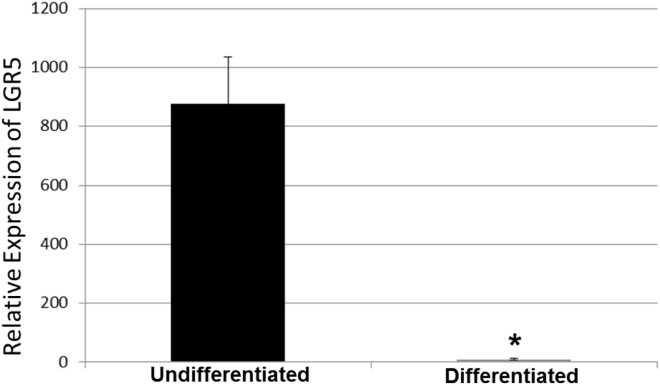
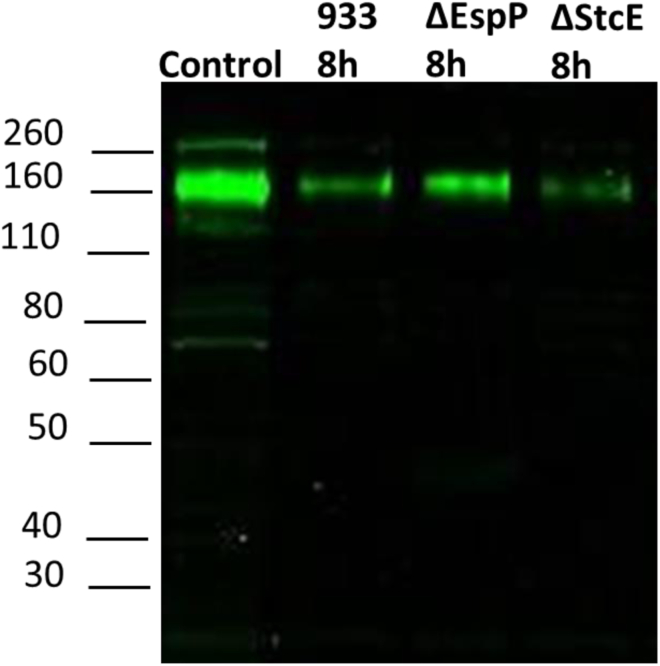
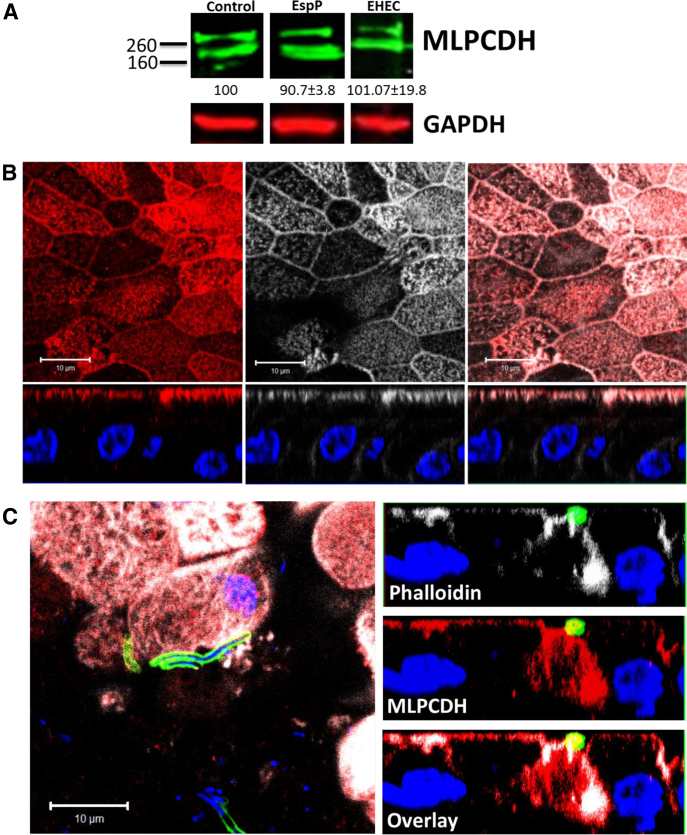
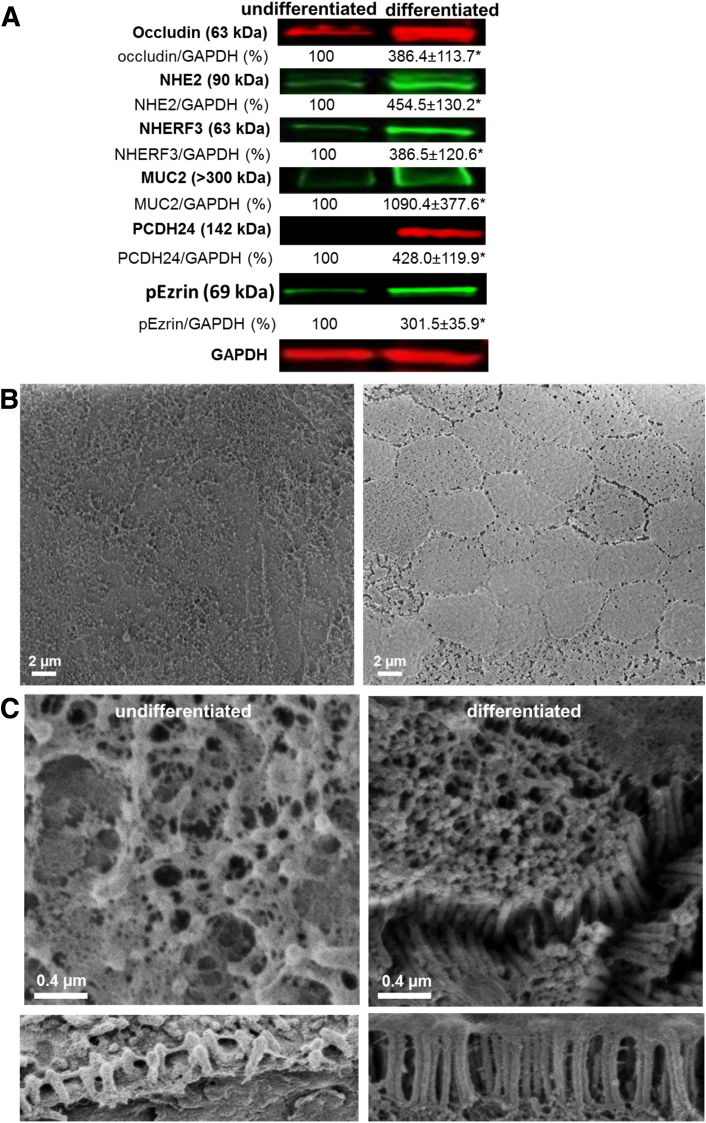
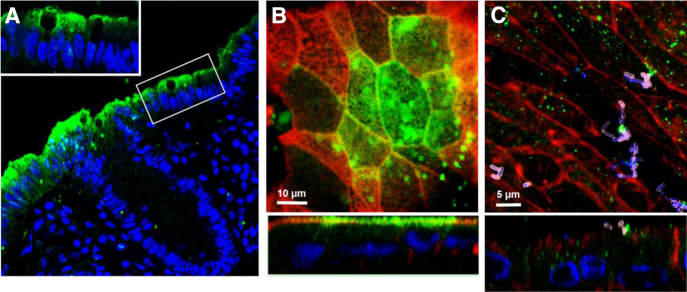
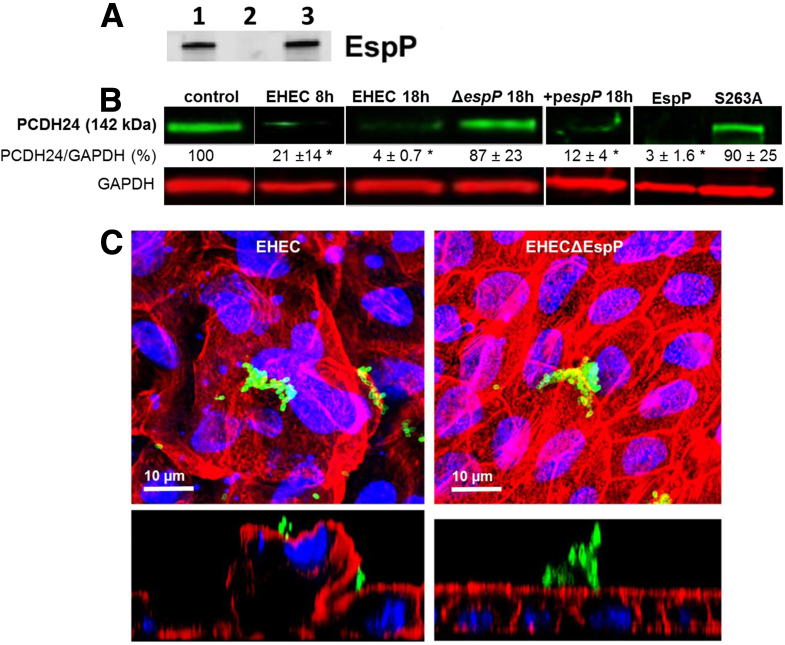
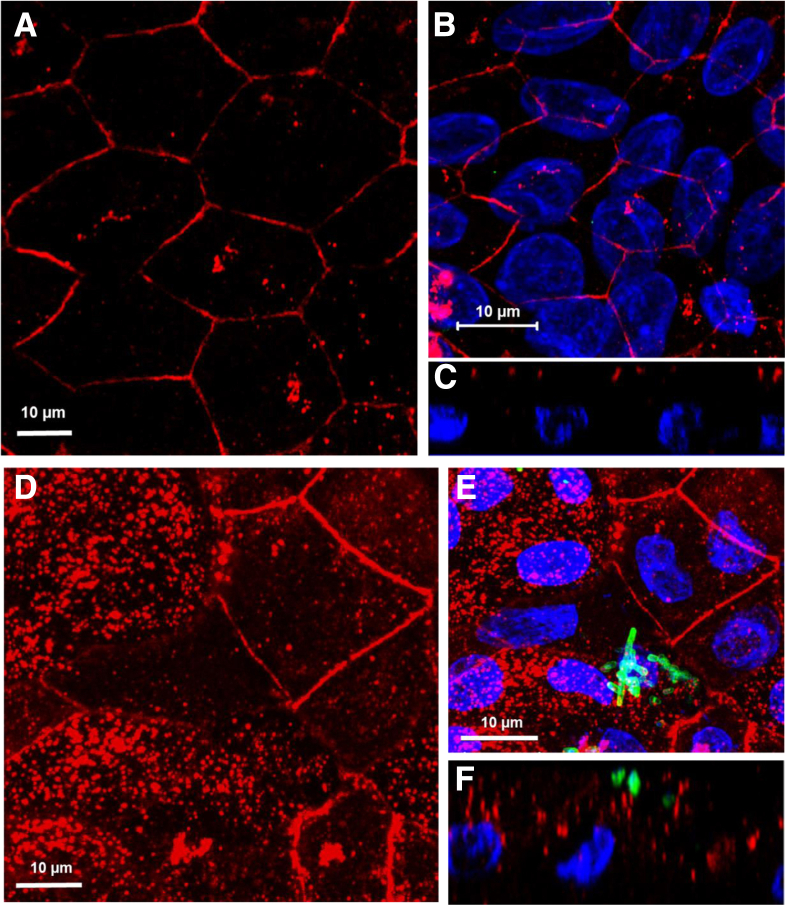
BACKGROUND AND AIMS: (EHEC) causes over 70,000 episodes of foodborne diarrhea annually in the USA. The early sequence of events which precede life-threatening hemorrhagic colitis and hemolytic uremic syndrome are not fully understood due to the initial asymptomatic phase of the disease and the lack of a suitable animal model. The aim of this study was to determine the initial molecular events in the interaction between EHEC and human colonic epithelium. METHODS: Human colonoids derived from adult proximal colonic stem cells were developed into monolayers to study EHEC-epithelial interactions. Monolayer confluency and differentiation were monitored by transepithelial electrical resistance (TER) measurements. The monolayers were apically infected with EHEC and the progression of epithelial damage over time was assessed using biochemical and imaging approaches. RESULTS: Human colonoid cultures recapitulate the differential protein expression patterns characteristic of the crypt and surface colonocytes. Mucus-producing differentiated colonoid monolayers are preferentially colonized by EHEC. Upon colonization, EHEC forms characteristic attaching and effacing lesions on the apical surface of colonoid monolayers. Mucin 2, a main component of colonic mucus, and protocadherin 24 (PCDH24), a microvillar resident protein, are targeted by EHEC at early stages of infection. The EHEC secreted serine protease, EspP, initiates brush border damage through PCDH24 reduction. CONCLUSIONS: Human colonoid monolayers are a relevant pathophysiological model which allows the study of early molecular events during enteric infections. Colonoid monolayers provide access to both apical and basolateral surfaces, thus providing an advantage over 3D cultures to study host-pathogen interactions in a controllable and tractable manner. EHEC reduces colonic mucus and affects the brush border cytoskeleton in the absence of commensal bacteria.
Overview
The claims and statistics of this paper haven’t been checked yet.
Run the check — free, no account needed. It reads the open-access text and checks the sources it cites.
Integrity signals
Registry
Cites
Statistics
Figures
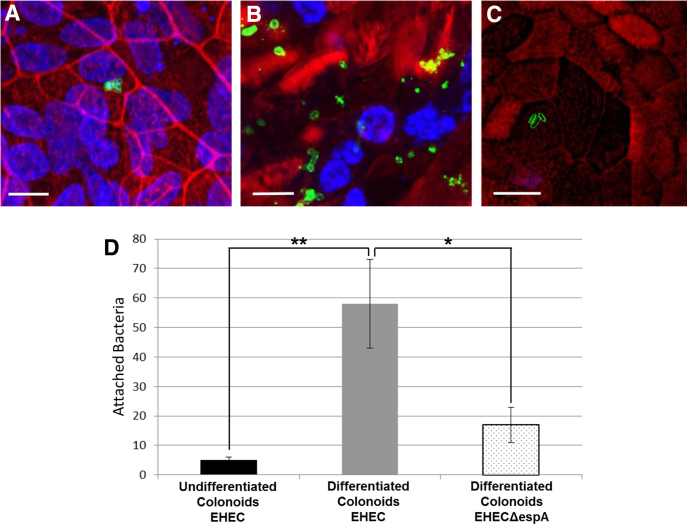
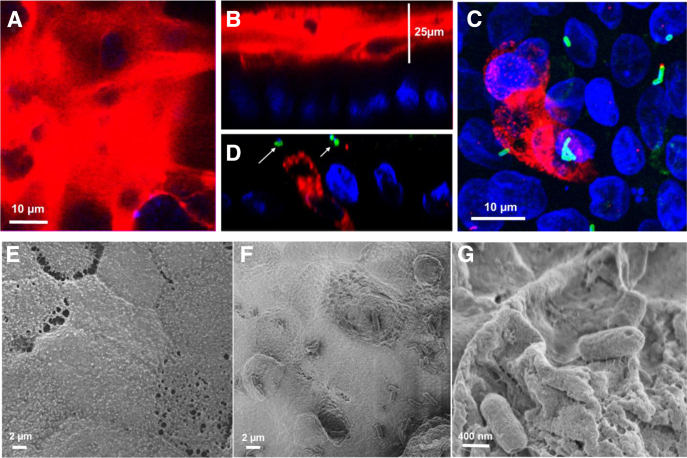
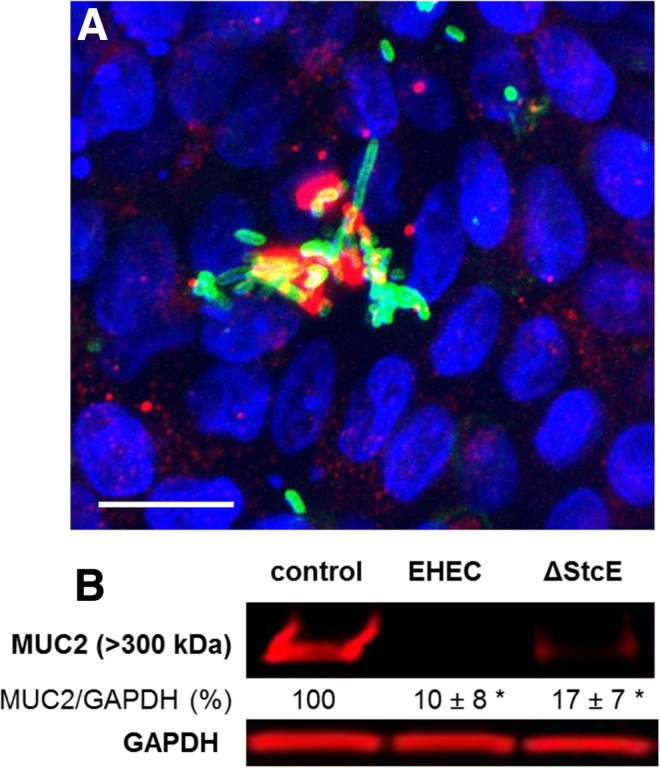
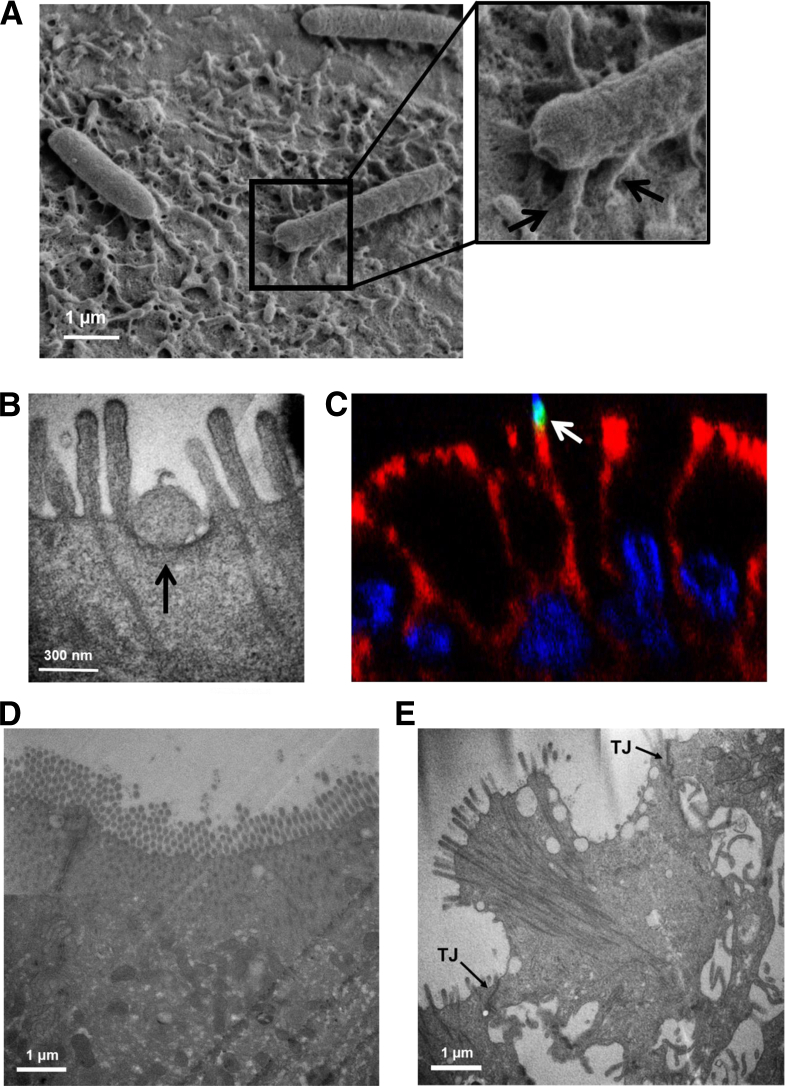
Verification
Claims the paper makes
The claims and statistics of this paper haven’t been checked yet.
Run the check — free, no account needed. It reads the open-access text and checks the sources it cites.
Claims other papers make about this one
Each is checked against this paper’s own text: does it say what the citing paper says it does?
The cited source says what the claim attributes to it.
In the citing paper
“Furthermore, the recent development of organoid-derived 2D monolayer culture models has been instrumental for studies in which access to the apical surface is important [10,11,44].”
From Regulation of Enterocyte Brush Border Membrane Primary Na-Absorptive Transporters in Human Intestinal Organoid-Derived Monolayers (2024) · cites this paper as [44]
Self-check
Percentages, sums and reported differences re-computed from the paper’s own numbers.
The self-check needs the paper’s full text.
Citations
Cites
One-step inactivation of chromosomal genes in Escherichia coli K-12 using PCR products.
Datsenko, K., & Wanner, B. (2000) · Proceedings of the National Academy of Sciences of the United States of America · doi:10.1073/pnas.120163297 · Cited by 15,902
Kaper, J. B., Nataro, J. P., & Mobley, H. L. T. (2004) · Nature Reviews Microbiology · doi:10.1038/nrmicro818 · Cited by 5,583
Self-citationSato, T., Stange, D. E., Ferrante, M., Vries, R. G. J., van Es, J. H., van den Brink, S., van Houdt, W. J., Pronk, A., van Gorp, J., Siersema, P. D., et al. (2011) · Gastroenterology · doi:10.1053/j.gastro.2011.07.050 · Cited by 3,753
Organoid Models and Applications in Biomedical Research
Xinaris, C., Brizi, V., & Remuzzi, G. (2015) · The Nephron journals/Nephron journals · doi:10.1159/000433566 · Cited by 3,519
The gastrointestinal mucus system in health and disease
Johansson, M. E. V., Sjövall, H., & Hansson, G. C. (2013) · Nature Reviews Gastroenterology & Hepatology · doi:10.1038/nrgastro.2013.35 · Cited by 1,438
Molecular mechanisms of Escherichia coli pathogenicity
Croxen, M. A., & Finlay, B. B. (2009) · Nature Reviews Microbiology · doi:10.1038/nrmicro2265 · Cited by 1,222
Origins of the E. coli Strain Causing an Outbreak of Hemolytic–Uremic Syndrome in Germany
Rasko, D. A., Webster, D. R., Sahl, J. W., Bashir, A., Boisen, N., Scheutz, F., Paxinos, E. E., Sebra, R., Chin, C.-S., Iliopoulos, D., et al. (2011) · New England Journal of Medicine · doi:10.1056/nejmoa1106920 · Cited by 835
Isolation and in vitro expansion of human colonic stem cells
Jung, P., Sato, T., Merlos-Suárez, A., Barriga, F. M., Iglesias, M., Rossell, D., Auer, H., Gallardo, M., Blasco, M. A., Sancho, E., et al. (2011) · Nature Medicine · doi:10.1038/nm.2470 · Cited by 709
Kosinski, C., Li, V. S. W., Chan, A. S. Y., Zhang, J., Ho, C., Tsui, W. Y., Chan, T. L., Mifflin, R. C., Powell, D. W., Yuen, S. T., et al. (2007) · Proceedings of the National Academy of Sciences · doi:10.1073/pnas.0707210104 · Cited by 596
Verocytotoxin-producing Escherichia coli (VTEC)
Karmali, M. A., Gannon, V. P. J., & Sargeant, J. M. (2009) · Veterinary Microbiology · doi:10.1016/j.vetmic.2009.04.011 · Cited by 543
VanDussen, K. L., Marinshaw, J. M., Shaikh, N., Miyoshi, H., Moon, C., Tarr, P. I., Ciorba, M. A., & Stappenbeck, T. S. (2015) · Gut · doi:10.1136/gutjnl-2013-306651 · Cited by 525
Fucose sensing regulates bacterial intestinal colonization
Pacheco, A. R., Curtis, M. M., Ritchie, J. M., Munera, D., Waldor, M. K., Moreira, C. G., & Sperandio, V. (2012) · Nature · doi:10.1038/nature11623 · Cited by 499
Ermund, A., Schutte, A. H., Johansson, M., Gustafsson, J. K., & Hansson, G. C. (2013) · American Journal of Physiology-Gastrointestinal and Liver Physiology · doi:10.1152/ajpgi.00046.2013 · Cited by 413
Enterohemorrhagic E. coli (EHEC) pathogenesis
Nguyen, Y., & Sperandio, V. (2012) · Frontiers in Cellular and Infection Microbiology · doi:10.3389/fcimb.2012.00090 · Cited by 315
Rendón, M. A., Saldaña‐Ahuactzi, Z., Erdem, A. L., Monteiro‐Neto, V., Vázquez, A., Kaper, J. B., Puente, J. L., & Girón, J. A. (2007) · Proceedings of the National Academy of Sciences · doi:10.1073/pnas.0704104104 · Cited by 305
Self-citationHeijmans, J., van Lidth de Jeude, J. F., Koo, B.-K., Rosekrans, S. L., Wielenga, M. C. B., van de Wetering, M., Ferrante, M., Lee, A. S., Onderwater, J. J. M., Paton, J. C., et al. (2013) · Cell Reports · doi:10.1016/j.celrep.2013.02.031 · Cited by 293
Prominin-1/CD133 Marks Stem Cells and Early Progenitors in Mouse Small Intestine
Snippert, H. J. G., van Es, J. H., van den Born, M., Begthel, H., Stange, D. E., Barker, N., & Clevers, H. C. (2009) · Gastroenterology · doi:10.1053/j.gastro.2009.03.002 · Cited by 223
The glycosphingolipid globotriaosylceramide in the metastatic transformation of colon cancer
Kovbasnjuk, O. N., Mourtazina, R., Baibakov, B. A., Wang, T., Elowsky, C. G., Choti, M. A., Kane, A. V., & Donowitz, M. (2005) · Proceedings of the National Academy of Sciences · doi:10.1073/pnas.0506474102 · Cited by 194
Self-citationIntestinal Brush Border Assembly Driven by Protocadherin-Based Intermicrovillar Adhesion
Crawley, S. W., Shifrin, D. A., Grega‐Larson, N. E., McConnell, R. E., Benesh, A. E., Mao, S., Zheng, Y., Zheng, Q. Y., Nam, K. T., Millis, B. A., et al. (2014) · Cell · doi:10.1016/j.cell.2014.01.067 · Cited by 186
Human enteroids as an ex-vivo model of host–pathogen interactions in the gastrointestinal tract
Foulke-Abel, J., In, J., Kovbasnjuk, O., Zachos, N. C., Ettayebi, K., Blutt, S. E., Hyser, J. M., Zeng, X.-L., Crawford, S. E., Broughman, J. R., et al. (2014) · Experimental Biology and Medicine · doi:10.1177/1535370214529398 · Cited by 179
Self-citationErdem, A. L., Avelino, F., Xicohtencatl‐Cortés, J., & Girón, J. A. (2007) · Journal of Bacteriology · doi:10.1128/jb.00464-07 · Cited by 174
Shiga toxin in enterohemorrhagic E.coli: regulation and novel anti-virulence strategies
Pacheco, A. R., & Sperandio, V. (2012) · Frontiers in Cellular and Infection Microbiology · doi:10.3389/fcimb.2012.00081 · Cited by 165
Mouse Models of Escherichia coli O157:H7 Infection and Shiga Toxin Injection
Mohawk, K. L., & O’Brien, A. D. (2011) · BioMed Research International · doi:10.1155/2011/258185 · Cited by 164
Enteropathogenic E. coli disrupts tight junction barrier function and structure in vivo
Shifflett, D. E., Clayburgh, D. R., Koutsouris, A., Turner, J. R., & Hecht, G. A. (2005) · Laboratory Investigation · doi:10.1038/labinvest.3700330 · Cited by 150
Human Response to Escherichia coli O157:H7 Infection: Antibodies to Secreted Virulence Factors
Li, Y., Frey, E. A., Mackenzie, A. M. R., & Finlay, B. B. (2000) · Infection and Immunity · doi:10.1128/iai.68.9.5090-5095.2000 · Cited by 140
Grys, T. E., Siegel, M. B., Lathem, W. W., & Welch, R. A. (2005) · Infection and Immunity · doi:10.1128/iai.73.3.1295-1303.2005 · Cited by 138
An unusual signal peptide facilitates late steps in the biogenesis of a bacterial autotransporter
Szabady, R. L., Peterson, J. H., Skillman, K. M., & Bernstein, H. D. (2004) · Proceedings of the National Academy of Sciences · doi:10.1073/pnas.0406055102 · Cited by 137
Self-citationTreatment of enterohemorrhagic Escherichia coli (EHEC) infection and hemolytic uremic syndrome (HUS)
Goldwater, P. N., & Bettelheim, K. A. (2012) · BMC Medicine · doi:10.1186/1741-7015-10-12 · Cited by 128
代替指標としてCD8 + 細胞におけるローダミン123蓄積を用いる,In vivo塩酸セファランチンのP糖蛋白質調節作用の研究
Li, H., Zhang, Y., Wang, N., Guo, X., Zang, C.-H., Jiang, J., Ma, F., & Wang, Q. (2011) · BioMed Research International · Cited by 119
Roxas, J. L., Koutsouris, A., Bellmeyer, A., Tesfay, S., Royan, S. V., Falzari, K., Harris, A., Cheng, H., Rhee, K. J., & Hecht, G. A. (2010) · Laboratory Investigation · doi:10.1038/labinvest.2010.91 · Cited by 114
Donohue‐Rolfe, A., Kondova, I. I., Oswald, S., Hutto, D., & Tzipori, S. R. (2000) · The Journal of Infectious Diseases · doi:10.1086/315421 · Cited by 96
Bertin, Y., Chaucheyras‐Durand, F., Masselot, C. R., Durand, A., Foye, A. D. L., Harel, J., Cohen, P. S., Conway, T., Forano, É., & Martin, C. (2012) · Environmental Microbiology · doi:10.1111/1462-2920.12019 · Cited by 73
Sjogren, R. W., Neill, R. J., Rachmilewitz, D., Fritz, D., Newland, J. W., Sharpnack, D. D., Colleton, C. A., Fondacaro, J. D., Gemski, P., & Boedeker, E. C. (1994) · Gastroenterology · doi:10.1016/0016-5085(94)90587-8 · Cited by 73
Enterohemorrhagic Escherichia coli Colonization of Human Colonic Epithelium In Vitro and Ex Vivo
Lewis, S. B., Cook, V., Tighe, R., & Schüller, S. (2014) · Infection and Immunity · doi:10.1128/iai.02928-14 · Cited by 65
Brockmeyer, J., Bielaszewska, M., Fruth, A., Bonn, M. L., Mellmann, A., Humpf, H., & Karch, H. (2007) · Applied and Environmental Microbiology · doi:10.1128/aem.00920-07 · Cited by 60
Characterization of the StcE Protease Activity of Escherichia coli O157:H7
Grys, T. E., Walters, L. L., & Welch, R. A. (2006) · Journal of Bacteriology · doi:10.1128/jb.01806-05 · Cited by 51 · cited 1×
“However, StcE was shown to specifically target orally expressed MUC7,(29) and its role in the reduction of MUC2-positive mucus in nontransformed human colonic epithelial cells is unknown.(29) Therefore, we tested whether StcE contributes to EHECinduced reduction of the MUC2-positive mucus layer in HCM.”
BackgroundMunera, D., Ritchie, J. M., Hatzios, S. K., Bronson, R. T., Fang, G., Schadt, E. E., Davis, B. M., & Waldor, M. K. (2014) · Nature Communications · doi:10.1038/ncomms4080 · Cited by 45
Boisen, N., Hansen, A., Melton‐Celsa, A. R., Zangari, T., Mortensen, N. P., Kaper, J. B., O’Brien, A. D., & Nataro, J. P. (2014) · The Journal of Infectious Diseases · doi:10.1093/infdis/jiu399 · Cited by 41
Self-citationLukyanenko, V. I., Malyukova, I. V., Hubbard, A. L., Delannoy, M. R., Boedeker, E. C., Zhu, C., Cebotaru, L., & Kovbasnjuk, O. N. (2011) · American Journal of Physiology-Cell Physiology · doi:10.1152/ajpcell.00036.2011 · Cited by 40
Self-citationIn, J., Lukyanenko, V. I., Foulke-Abel, J. D., Hubbard, A. L., Delannoy, M. R., Hansen, A., Kaper, J. B., Boisen, N., Nataro, J. P., Zhu, C., et al. (2013) · PLoS ONE · doi:10.1371/journal.pone.0069196 · Cited by 26
Self-citationPrevalence, Biogenesis, and Functionality of the Serine Protease Autotransporter EspP
Weiss, A., & Brockmeyer, J. (2012) · Toxins · doi:10.3390/toxins5010025 · Cited by 22
Yashunsky, V., Kharilker, L., Zlotkin‐Rivkin, E., Rund, D., Melamed‐Book, N., Zahavi, E. E., Perlson, E., Mercone, S., Golosovsky, M., Davidov, D., et al. (2013) · PLoS ONE · doi:10.1371/journal.pone.0078431 · Cited by 8
Cited by
Sorted by citations
The intestinal epithelial barrier: a therapeutic target?
Odenwald, M. A., & Turner, J. R. (2017) · Nature Reviews Gastroenterology & Hepatology · doi:10.1038/nrgastro.2016.169 · Cited by 1,288
Martinez-Guryn, K., Hubert, N., Frazier, K., Urlass, S., Musch, M. W., Ojeda, P., Pierre, J. F., Miyoshi, J., Sontag, T. J., Cham, C. M., et al. (2018) · Cell Host & Microbe · doi:10.1016/j.chom.2018.03.011 · Cited by 663
Gut Microbiota and Colonization Resistance against Bacterial Enteric Infection
Ducarmon, Q. R., Zwittink, R. D., Hornung, B. V. H., van Schaik, W., Young, V. B., & Kuijper, E. J. (2019) · Microbiology and Molecular Biology Reviews · doi:10.1128/mmbr.00007-19 · Cited by 566
Human organoids in basic research and clinical applications
Tang, X.-Y., Wu, S., Wang, D., Chu, C., Hong, Y., Tao, M., Hu, H., Xu, M., Guo, X. L., & Liu, Y. (2022) · Signal Transduction and Targeted Therapy · doi:10.1038/s41392-022-01024-9 · Cited by 539
Nakamoto, N., Sasaki, N., Aoki, R., Miyamoto, K., Suda, W., Teratani, T., Suzuki, T., Koda, Y., Chu, P.-S., Taniki, N., et al. (2019) · Nature Microbiology · doi:10.1038/s41564-018-0333-1 · Cited by 425
Metadata
- Authors
- In, J., Foulke-Abel, J., Zachos, N. C., Hansen, A.-M., Kaper, J. B., Bernstein, H. D., Halushka, M., Blutt, S., Estes, M. K., Donowitz, M., & Kovbasnjuk, O.
- Affiliations
- Johns Hopkins University (US)
- University of Maryland, Baltimore (US)
- National Institutes of Health (US)
- Baylor College of Medicine (US)
- Corresponding author
- Kovbasnjuk, Olga
- ORCID
- Venue
- Cellular and Molecular Gastroenterology and Hepatology
- Publisher
- Elsevier BV
- Published
- 2016-01
- Volume
- 2
- Issue
- 1
- Pages
- 48-62.e3
- ISSN
- 2352-345X (ISSN-L)
- PMC
- PMC4740923
- OpenAlex
- W2193652497
- Cited by
- 239
- References
- 42
- Citations by year
- 2026: 4 · 2025: 13 · 2024: 24 · 2023: 22 · 2022: 30 · 2021: 28 · 2020: 34 · 2019: 30 · 2018: 23 · 2017: 22 · 2016: 6
- FWCI
- 14.03
- Type
- journal article
- Language
- en
- Open access
- gold
- doi.org
- Licence
- Locations
- Cellular and Molecular Gastroenterology and Hepatology (publishedVersion, cc-by-nc-nd)
- Europe PMC (PubMed Central) (publishedVersion, cc-by-nc-nd)
- PubMed Central (publishedVersion, cc-by-nc-nd)
- PubMed (publishedVersion)
- DOAJ (DOAJ: Directory of Open Access Journals) (submittedVersion, cc-by-sa)
- Funders
- Johns Hopkins University
- National Institutes of Health (5r24dk064388-07, U18TR000552)
- National Institute of Allergy and Infectious Diseases (U19AI116497)
- National Institute of Diabetes and Digestive and Kidney Diseases (T32DK007632, P30DK089502, R24DK-064388, P01DK072084, R01DK026523, R24DK099803)
- National Center for Advancing Translational Sciences
- Topics
- Life Sciences › Immunology and Microbiology › Microbiology › Escherichia coli research studies
- Health Sciences › Medicine › Infectious Diseases › Clostridium difficile and Clostridium perfringens research
- Life Sciences › Immunology and Microbiology › Microbiology › Enterobacteriaceae and Cronobacter Research
- Keywords
- enterohemorrhagic Escherichia coli, colonoids, mucus production, MUC2, attaching and effacing lesions, host-pathogen interaction, transepithelial electrical resistance
About these checks
Registry, retraction, Cites and statistics results are computed, not judged, with one exception: a printed reference that no index lists is read once by a model before it counts as a citation error. Claims are extracted by a model and kept only when their quote appears verbatim in the text; each cited source is then checked, with a model’s help, for whether it says what the claim relies on. Those verdicts can be wrong — read the claim’s quote and the cited source before relying on one.
Statistics and arithmetic are recomputed, not judged.
Confidence bands are shown only for fields calibrated on our annotated test set. None is calibrated yet, so no band is shown.
What counts as a claim ›How we measure confidence ›How we check this ›
Are you an author, or do you see a problem with this page? Request a review
