

The DOI matches its Crossref record; 135 of the 135 references it cites were found in a registry or an index.
How many TCR clonotypes does a body maintain?
Open accessAbstract
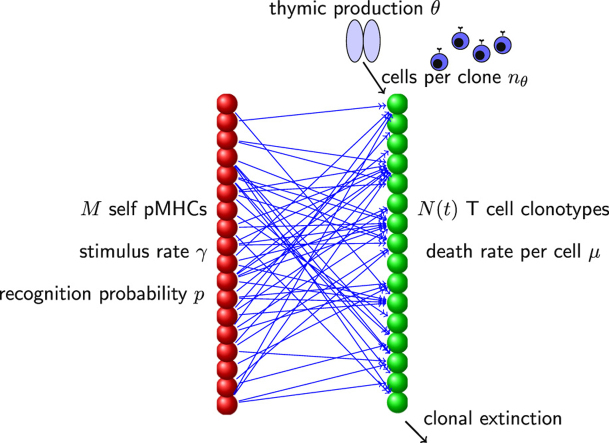
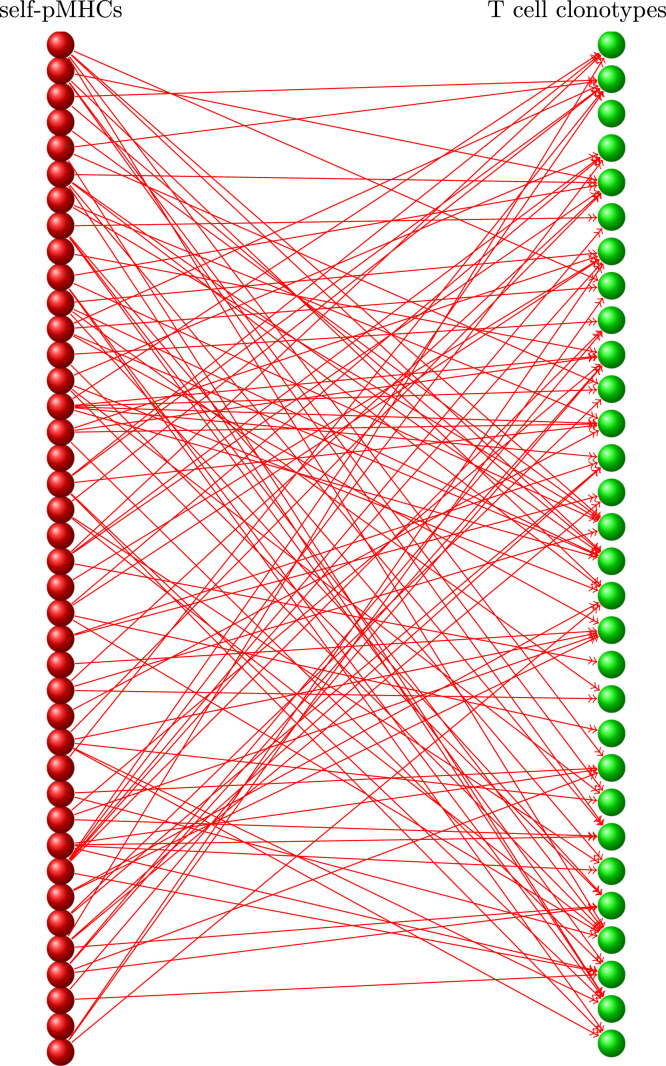
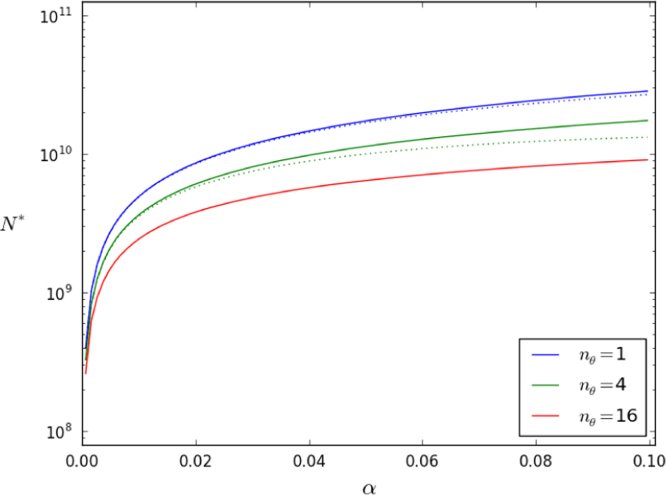
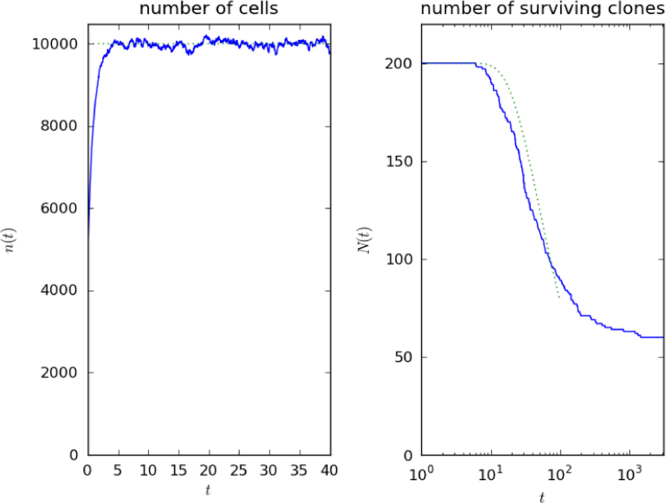
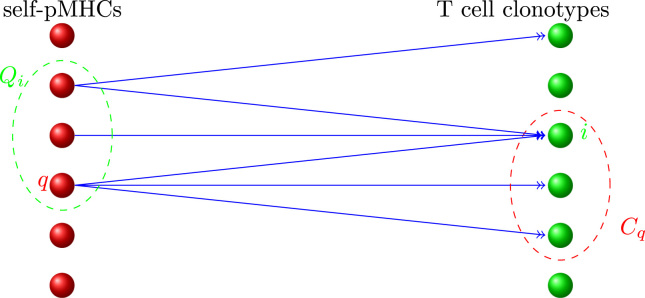
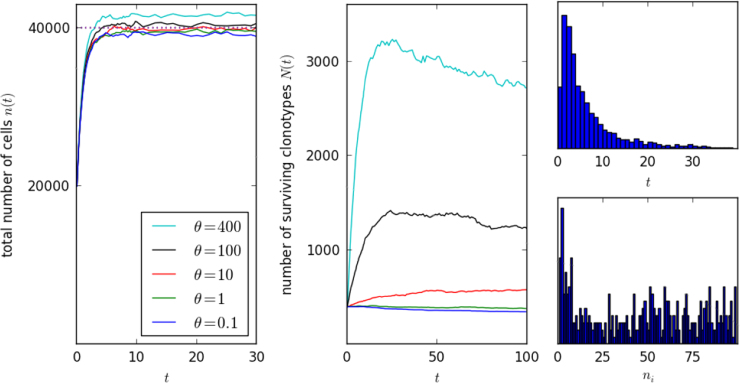
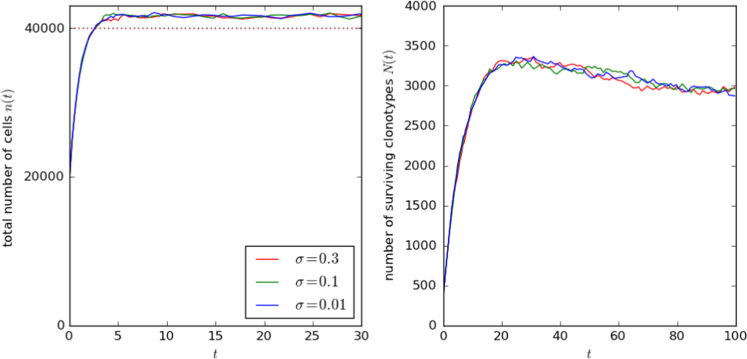
We consider the lifetime of a T cell clonotype, the set of T cells with the same T cell receptor, from its thymic origin to its extinction in a multiclonal repertoire. Using published estimates of total cell numbers and thymic production rates, we calculate the mean number of cells per TCR clonotype, and the total number of clonotypes, in mice and humans. When there is little peripheral division, as in a mouse, the number of cells per clonotype is small and governed by the number of cells with identical TCR that exit the thymus. In humans, peripheral division is important and a clonotype may survive for decades, during which it expands to comprise many cells. We therefore devise and analyse a computational model of homeostasis of a multiclonal population. Each T cell in the model competes for self pMHC stimuli, cells of any one clonotype only recognising a small fraction of the many subsets of stimuli. A constant mean total number of cells is maintained by a balance between cell division and death, and a stable number of clonotypes by a balance between thymic production of new clonotypes and extinction of existing ones. The number of distinct clonotypes in a human body may be smaller than the total number of naive T cells by only one order of magnitude.
Overview
The claims and statistics of this paper haven’t been checked yet.
Run the check — free, no account needed. It reads the open-access text and checks the sources it cites.
Integrity signals
Registry
Cites
Statistics
Figures
Verification
Claims the paper makes
The claims and statistics of this paper haven’t been checked yet.
Run the check — free, no account needed. It reads the open-access text and checks the sources it cites.
Claims other papers make about this one
Each is checked against this paper’s own text: does it say what the citing paper says it does?
In the citing paper
“This estimate is consistent with TREC frequencies as well as with modeling experiments which predict that the number of distinct sequences in humans is by only one order of magnitude lower than the number of total naive cells”
From Successful and Maladaptive T Cell Aging (2017) · cites this paper as Lythe et al., 2016
Self-check
Percentages, sums and reported differences re-computed from the paper’s own numbers.
The self-check needs the paper’s full text.
Citations
Cites
Continuous Martingales and Brownian Motion
Revuz, D., & Yor, M. (1999) · Grundlehren der mathematischen Wissenschaften · doi:10.1007/978-3-662-06400-9 · Cited by 6,353
An Introduction to Stochastic Modeling
Frey, M. R., Taylor, H. M., & Karlin, S. (1994) · Technometrics · doi:10.2307/1269970 · Cited by 1,278
Comprehensive assessment of T-cell receptor β-chain diversity in αβ T cells
Robins, H. S., Campregher, P. V., Srivastava, S. K., Wacher, A., Turtle, C. J., Kahsai, O., Riddell, S. R., Warren, E. H., & Carlson, C. S. (2009) · Blood · doi:10.1182/blood-2009-04-217604 · Cited by 1,122
A very high level of crossreactivity is an essential feature of the T-cell receptor.
Mason, D. (1998) · Immunology today (Amsterdam. Regular ed.) · doi:10.1016/s0167-5699(98)01299-7 · Cited by 1,067
Stochastic Modelling for Systems Biology
Wilkinson, D. (2006) · Chapman & Hall/CRC eBooks · doi:10.1201/9781420010664 · Cited by 1,041
Moon, J. J., Chu, H., Pepper, M., McSorley, S. J., Jameson, S. C., Kedl, R. M., & Jenkins, M. K. (2007) · Immunity · doi:10.1016/j.immuni.2007.07.007 · Cited by 977
IL-7 is critical for homeostatic proliferation and survival of naïve T cells
Tan, J. T., Dudl, E. P., LeRoy, E., Murray, R. M., Sprent, J., Weinberg, K. I., & Surh, C. D. (2001) · Proceedings of the National Academy of Sciences · doi:10.1073/pnas.161126098 · Cited by 966
A Direct Estimate of the Human αβ T Cell Receptor Diversity
Arstila, T. P., Casrouge, A., Baron, V., Even, J., Kanellopoulos, J., & Kourilsky, P. (1999) · Science · doi:10.1126/science.286.5441.958 · Cited by 931
Human memory T cells: generation, compartmentalization and homeostasis
Farber, D. L., Yudanin, N. A., & Restifo, N. P. (2014) · Nature Reviews Immunology · doi:10.1038/nri3567 · Cited by 897
The Influence of Age on T Cell Generation and TCR Diversity
Naylor, K., Li, G., Vallejo, A. N., Lee, W.-W., Koetz, K., Bryl, E., Witkowski, J., Fulbright, J., Weyand, C. M., & Goronzy, J. J. (2005) · The Journal of Immunology · doi:10.4049/jimmunol.174.11.7446 · Cited by 802
Selecting and maintaining a diverse T-cell repertoire
Goldrath, A. W., & Bevan, M. J. (1999) · Nature · doi:10.1038/46218 · Cited by 777
Diversity and clonal selection in the human T-cell repertoire
Qi, Q., Liu, Y., Cheng, Y., Glanville, J., Zhang, D., Lee, J.-Y., Olshen, R. A., Weyand, C. M., Boyd, S. D., & Goronzy, J. J. (2014) · Proceedings of the National Academy of Sciences · doi:10.1073/pnas.1409155111 · Cited by 755
Handbook of Stochastic Methods for Physics, Chemistry and the Natural Sciences.
Gardiner, C. W., Bhat, U. N., Stoyan, D., Daley, D. J., Кутоянц, Ю. А., & Рао, Б. Л. С. П. (1986) · Biometrics · doi:10.2307/2531274 · Cited by 718
Selecting and maintaining a diverse T-cell repertoire
Goldrath, A. W., & Bevan, M. J. (1999) · Nature · doi:10.1038/35005508 · Cited by 714
The many important facets of T-cell repertoire diversity
Nikolich‐Žugich, J., Slifka, M. K., & Messaoudi, I. (2004) · Nature reviews. Immunology · doi:10.1038/nri1292 · Cited by 681
Perelson, A. S., & OSTER, G. F. (1979) · Journal of Theoretical Biology · doi:10.1016/0022-5193(79)90275-3 · Cited by 648
Lifespan of human lymphocyte subsets defined by CD45 isoforms
Michie, C. A., McLean, A. R., Alcock, C. J., & Beverley, P. C. L. (1992) · Nature · doi:10.1038/360264a0 · Cited by 635
Maintaining the norm: T-cell homeostasis
Jameson, S. C. (2002) · Nature reviews. Immunology · doi:10.1038/nri853 · Cited by 597
Spatial map of human T cell compartmentalization and maintenance over decades of life
Thome, J. J. C., Yudanin, N., Ohmura, Y., Kubota, M., Grinshpun, B., Sathaliyawala, T., Kato, T., Lerner, H., Shen, Y., & Farber, D. L. (2014) · Cell · doi:10.1016/j.cell.2014.10.026 · Cited by 587
Estimating the Precursor Frequency of Naive Antigen-specific CD8 T Cells
Blattman, J. N., Antia, R., Sourdive, D. J. D., Wang, X., Kaech, S. M., Murali‐Krishna, K., Altman, J. D., & Ahmed, R. (2002) · The Journal of Experimental Medicine · doi:10.1084/jem.20001021 · Cited by 583
Maintenance of peripheral naive T cells is sustained by thymus output in mice but not humans
den Braber, I., Mugwagwa, T., Vrisekoop, N., Westera, L., Mögling, R., Bregje de Boer, A., Willems, N., Schrijver, E. H. R., Spierenburg, G., Gaiser, K., et al. (2012) · Immunity · doi:10.1016/j.immuni.2012.02.006 · Cited by 572 · cited 11×
“In our model, the thymus is a source of new T cell specificities, whereas division of T cells in the periphery can only contribute to the survival or expansion of existing clonotypes (den Braber et al., 2012).”
BackgroundMethodInfluentialDeconstructing the Peptide-MHC Specificity of T Cell Recognition
Birnbaum, M. E., Mendoza, J. L., Sethi, D. K., Dong, S., Glanville, J., Dobbins, J., Özkan, E., Davis, M. M., Wucherpfennig, K. W., & García, K. C. (2014) · Cell · doi:10.1016/j.cell.2014.03.047 · Cited by 567
Why must T cells be cross-reactive?
Sewell, A. K. (2012) · Nature reviews. Immunology · doi:10.1038/nri3279 · Cited by 567
The many faces of IL-7: from lymphopoiesis to peripheral T cell maintenance
Fry, T. J., & Mackall, C. L. (2005) · The Journal of Immunology · doi:10.4049/jimmunol.174.11.6571 · Cited by 563
Scollay, R. G., Butcher, E. C., & Weissman, I. L. (1980) · European Journal of Immunology · doi:10.1002/eji.1830100310 · Cited by 555
Bipartite Graphs and their Applications
Asratian, A. S., Denley, T. M. J., & Häggkvist, R. (1998) · Cambridge University Press eBooks · doi:10.1017/cbo9780511984068 · Cited by 499
Normal T cell homeostasis: the conversion of naive cells into memory-phenotype cells
Sprent, J., & Surh, C. D. (2011) · Nature Immunology · doi:10.1038/ni.2018 · Cited by 480
Interleukin 7 and T cell receptor signals regulate homeostasis of CD4 memory cells
Seddon, B. P., Tomlinson, P. D., & Zamoyska, R. (2003) · Nature Immunology · doi:10.1038/ni946 · Cited by 467
Britanova, O. V., Putintseva, E. V., Shugay, M., Merzlyak, E. M., Turchaninova, M. A., Staroverov, D. B., Bolotin, D. A., Lukyanov, S., Bogdanova, E. A., Mamedov, I. Z., et al. (2014) · The Journal of Immunology · doi:10.4049/jimmunol.1302064 · Cited by 465
Population Biology of Lymphocytes: The Flight for Survival
Freitas, A. A., & Rocha, B. (2000) · Annual Review of Immunology · doi:10.1146/annurev.immunol.18.1.83 · Cited by 435
Virus-specific CD4(+) memory-phenotype T cells are abundant in unexposed adults
Su, L. F., Kidd, B. A., Han, A., Kotzin, J. J., & Davis, M. M. (2013) · Immunity · doi:10.1016/j.immuni.2012.10.021 · Cited by 429 · cited 2×
“We take the value of p, the probability that interaction with a given self pMHC is capable of causing a randomly-selected T cell to divide, to be the same in humans and mice: p¼ 10 6 (Rizzuto et al., 2009; Su et al., 2013; Jenkins et al., 2009).”
BackgroundOrigins of CD4+ effector and central memory T cells
Pepper, M., & Jenkins, M. K. (2011) · Nature Immunology · doi:10.1038/ni.2038 · Cited by 415
Naive T cell homeostasis: from awareness of space to a sense of place
Takada, K., & Jameson, S. C. (2009) · Nature reviews. Immunology · doi:10.1038/nri2657 · Cited by 393
Naïve and Memory CD4 + T Cell Survival Controlled by Clonal Abundance
Hataye, J. M., Moon, J. J., Khoruts, A., Reilly, C., & Jenkins, M. K. (2006) · Science · doi:10.1126/science.1124228 · Cited by 351
Warren, R. M., Freeman, J., Zeng, T., Choe, G. H., Munro, S., Moore, R., Webb, J. R., & Holt, R. A. (2011) · Genome Research · doi:10.1101/gr.115428.110 · Cited by 351
Weissman, I. L. (1967) · The Journal of Experimental Medicine · doi:10.1084/jem.126.2.291 · Cited by 347
Functional heterogeneity of human memory CD4 + T cell clones primed by pathogens or vaccines
Becattini, S., Latorre, D., Mele, F., Foglierini, M., Gregorio, C. D., Cassotta, A., Fernandez, B., Kelderman, S., Schumacher, T. N., Corti, D., et al. (2014) · Science · doi:10.1126/science.1260668 · Cited by 323
Size Estimate of the αβ TCR Repertoire of Naive Mouse Splenocytes
Casrouge, A., Beaudoing, E., Dalle, S., Pannetier, C., Kanellopoulos, J., & Kourilsky, P. (2000) · The Journal of Immunology · doi:10.4049/jimmunol.164.11.5782 · Cited by 312
Mandl, J. N., Monteiro, J. P., Vrisekoop, N., & Germain, R. N. (2013) · Immunity · doi:10.1016/j.immuni.2012.09.011 · Cited by 308
Košmrlj, A., Read, E. L., Qi, Y., Allen, T. M., Altfeld, M. A., Deeks, S. G., Pereyra, F., Carrington, M. N., Walker, B. D., & Chakraborty, A. K. (2010) · Nature · doi:10.1038/nature08997 · Cited by 301
Statistical inference of the generation probability of T-cell receptors from sequence repertoires
Murugan, A., Mora, T., Walczak, A. M., & Callan, C. G. (2012) · Proceedings of the National Academy of Sciences · doi:10.1073/pnas.1212755109 · Cited by 292
Jenkins, M. K., Chu, H., McLachlan, J. B., & Moon, J. J. (2010) · Annual Review of Immunology · doi:10.1146/annurev-immunol-030409-101253 · Cited by 256
Cold Spring Harbor Symposia on Quantitative Biology
(1937) · PROTOPLASMA · doi:10.1007/bf01625030 · Cited by 244
Quantifying T lymphocyte turnover
de Boer, R. J., & Perelson, A. S. (2013) · Journal of Theoretical Biology · doi:10.1016/j.jtbi.2012.12.025 · Cited by 242
How Much TCR Does a T Cell Need?
Labrecque, N., Whitfield, S., Obst, R., Waltzinger, C., Benoist, C. O., & Mathis, D. J. (2001) · Immunity · doi:10.1016/s1074-7613(01)00170-4 · Cited by 231
Vrisekoop, N., den Braber, I., de Boer, A. B., Ruiter, A. F. C., Ackermans, M. T., van der Crabben, S. N., Schrijver, E. H. R., Spierenburg, G. T., Sauerwein, H. P., Hazenberg, M. D., et al. (2008) · Proceedings of the National Academy of Sciences · doi:10.1073/pnas.0709713105 · Cited by 229
Evavold, B. D., Sloan‐Lancaster, J., Wilson, K. J., Rothbard, J. B., & Allen, P. M. (1995) · Immunity · doi:10.1016/1074-7613(95)90010-1 · Cited by 203
Immunosequencing: applications of immune repertoire deep sequencing
Robins, H. S. (2013) · Current Opinion in Immunology · doi:10.1016/j.coi.2013.09.017 · Cited by 198
Rapid Turnover of Effector–Memory CD4+ T Cells in Healthy Humans
Macallan, D. C., Wallace, D. L., Zhang, Y., de Lara, C., Worth, A. T., Ghattas, H., Griffin, G. E., Beverley, P. C. L., & Tough, D. F. (2004) · The Journal of Experimental Medicine · doi:10.1084/jem.20040341 · Cited by 193
Bousso, P., Casrouge, A., Altman, J. D., Haury, M., Kanellopoulos, J., Abastado, J., & Kourilsky, P. (1998) · Immunity · doi:10.1016/s1074-7613(00)80599-3 · Cited by 188
The Biology of Recent Thymic Emigrants
Fink, P. J. (2012) · Annual Review of Immunology · doi:10.1146/annurev-immunol-032712-100010 · Cited by 186
Estimating the Diversity, Completeness, and Cross-Reactivity of the T Cell Repertoire
Zarnitsyna, V. I., Evavold, B. D., Schoettle, L. N., Blattman, J. N., & Antia, R. (2013) · Frontiers in Immunology · doi:10.3389/fimmu.2013.00485 · Cited by 180
Thymic output: a bad TREC record
Hazenberg, M. D., Borghans, J. A. M., de Boer, R. J., & Miedema, F. F. (2003) · Nature Immunology · doi:10.1038/ni0203-97 · Cited by 167
Almeida, A. R. M., Borghans, J. A. M., & Freitas, A. A. (2001) · The Journal of Experimental Medicine · doi:10.1084/jem.194.5.591 · Cited by 166
A central role for thymic emigrants in peripheral T cell homeostasis
Berzins, S. P., Godfrey, D. I., Miller, J. F. A. P., & Boyd, R. L. (1999) · Proceedings of the National Academy of Sciences · doi:10.1073/pnas.96.17.9787 · Cited by 163
Towards a general function describing t cell proliferation
de Boer, R. J., & Perelson, A. S. (1995) · Journal of Theoretical Biology · doi:10.1006/jtbi.1995.0165 · Cited by 162
Rudd, B. D., Venturi, V., Li, G., Samadder, P. P., Ertelt, J. M., Way, S. S., Davenport, M. P., & Nikolich‐Žugich, J. (2011) · Proceedings of the National Academy of Sciences · doi:10.1073/pnas.1107594108 · Cited by 153
Quantifying the development of the peripheral naive CD4+ T-cell pool in humans
Bains, I., Antia, R., Callard, R. E., & Yates, A. J. (2009) · Blood · doi:10.1182/blood-2008-10-184184 · Cited by 152
Self-citationMin, B., Foucras, G., Meier‐Schellersheim, M., & Paul, W. E. (2004) · Proceedings of the National Academy of Sciences · doi:10.1073/pnas.0400606101 · Cited by 148
Quantifying selection in immune receptor repertoires
Elhanati, Y., Murugan, A., Callan, C. G., Mora, T., & Walczak, A. M. (2014) · Proceedings of the National Academy of Sciences · doi:10.1073/pnas.1409572111 · Cited by 145
Westera, L., Drylewicz, J., den Braber, I., Mugwagwa, T., van der Maas, I., Kwast, L., Volman, T., van de Weg-Schrijver, E. H. R., Bartha, I., Spierenburg, G., et al. (2013) · Blood · doi:10.1182/blood-2013-03-488411 · Cited by 136
Tanchot, C., Rosado, M. M., Agenès, F., Freitas, A. A., & Rocha, B. (1997) · Seminars in Immunology · doi:10.1006/smim.1997.0090 · Cited by 134
Bains, I., Thiébaut, R., Yates, A. J., & Callard, R. E. (2009) · The Journal of Immunology · doi:10.4049/jimmunol.0900743 · Cited by 133
Self-citationMurray, J. M., Kaufmann, G. R., Hodgkin, P. D., Lewin, S. R., Kelleher, A. D., Davenport, M. P., & Zaunders, J. (2003) · Immunology and Cell Biology · doi:10.1046/j.1440-1711.2003.01191.x · Cited by 132
Troy, A. E., & Shen, H. (2003) · The Journal of Immunology · doi:10.4049/jimmunol.170.2.672 · Cited by 123
Competition for self ligands restrains homeostatic proliferation of naive CD4 T cells
Moses, C. T., Thorstenson, K. M., Jameson, S. C., & Khoruts, A. (2003) · Proceedings of the National Academy of Sciences · doi:10.1073/pnas.0334572100 · Cited by 122
T cell homeostasis: Keeping useful T cells alive and live T cells useful
Jameson, S. C. (2005) · Seminars in Immunology · doi:10.1016/j.smim.2005.02.003 · Cited by 118
Methods for diversity and overlap analysis in T-cell receptor populations
Rempała, G. A., & Seweryn, M. T. (2012) · Journal of Mathematical Biology · doi:10.1007/s00285-012-0589-7 · Cited by 117
Langman, R. E., & Cohn, M. (1987) · Molecular Immunology · doi:10.1016/0161-5890(87)90050-2 · Cited by 117
Thymic regeneration: teaching an old immune system new tricks
Berzins, S. P., Uldrich, A. P., Sutherland, J. S., Gill, J. W., MILLER, J. F. A. P., Godfrey, D. I., & Boyd, R. L. (2002) · Trends in Molecular Medicine · doi:10.1016/s1471-4914(02)02415-2 · Cited by 115
Rizzuto, G. A., Merghoub, T., Hirschhorn-Cymerman, D., Liu, C., Lesokhin, A. M., Sahawneh, D., Zhong, H., Panageas, K. S., Perales, M., Altan-Bonnet, G. Y., et al. (2009) · The Journal of Experimental Medicine · doi:10.1084/jem.20081382 · Cited by 113
Binomial tau-leap spatial stochastic simulation algorithm for applications in chemical kinetics
Marquez‐Lago, T. T., & Burrage, K. (2007) · The Journal of Chemical Physics · doi:10.1063/1.2771548 · Cited by 103
Thomas, N., Best, K., Cinelli, M., Reich-Zeliger, S., Gal, H., Shifrut, E., Madi, A., Friedman, N., Shawe-Taylor, J. S., & Chain, B. (2014) · Bioinformatics · doi:10.1093/bioinformatics/btu523 · Cited by 103
Theories and Quantification of Thymic Selection
Yates, A. J. (2014) · Frontiers in Immunology · doi:10.3389/fimmu.2014.00013 · Cited by 99
An introduction to stochastic modeling
(1994) · Choice Reviews Online · doi:10.5860/choice.31-5510 · Cited by 99
Asymmetric thymocyte death underlies the CD4:CD8 T-cell ratio in the adaptive immune system
Sinclair, C., Bains, I., Yates, A. J., & Seddon, B. P. (2013) · Proceedings of the National Academy of Sciences · doi:10.1073/pnas.1304859110 · Cited by 98
Lymphocyte maintenance during healthy aging requires no substantial alterations in cellular turnover
Westera, L., van Hoeven, V., Drylewicz, J., Spierenburg, G., van Velzen, J. F., de Boer, R. J., Tesselaar, K., & Borghans, J. A. M. (2015) · Aging Cell · doi:10.1111/acel.12311 · Cited by 96
Johnson, P. L. F., Yates, A. J., Goronzy, J. J., & Antia, R. (2012) · Proceedings of the National Academy of Sciences · doi:10.1073/pnas.1209283110 · Cited by 94
Mathematical Modeling Reveals Kinetics of Lymphocyte Recirculation in the Whole Organism
Ganusov, V. V., & Auerbach, J. (2014) · PLoS Computational Biology · doi:10.1371/journal.pcbi.1003586 · Cited by 93
Maintaining system homeostasis: the third law of Newtonian immunology
Germain, R. N. (2012) · Nature Immunology · doi:10.1038/ni.2404 · Cited by 88
TCR signaling requirements for activating T cells and for generating memory
Zehn, D., King, C. G., Bevan, M. J., & Palmer, E. (2012) · Cellular and Molecular Life Sciences · doi:10.1007/s00018-012-0965-x · Cited by 86
Comprehensive Assessment and Mathematical Modeling of T Cell Population Dynamics and Homeostasis
Thomas‐Vaslin, V., Altes, H. K., de Boer, R. J., & Klatzmann, D. (2008) · The Journal of Immunology · doi:10.4049/jimmunol.180.4.2240 · Cited by 86
Calis, J. J. A., de Boer, R. J., & Keşmir, C. (2012) · PLoS Computational Biology · doi:10.1371/journal.pcbi.1002412 · Cited by 85
Laethem, F. V., Tikhonova, A. N., & Singer, A. (2012) · Trends in Immunology · doi:10.1016/j.it.2012.05.006 · Cited by 84
Diversity of Human αβ T Cell Receptors
Keşmir, C., Borghans, J. A. M., & de Boer, R. J. (2000) · Science · doi:10.1126/science.288.5469.1135a · Cited by 80
CD69 Expression Discriminates MHC-Dependent and -Independent Stages of Thymocyte Positive Selection
Hare, K. J., Jenkinson, E. J., & Anderson, G. (1999) · The Journal of Immunology · doi:10.4049/jimmunol.162.7.3978 · Cited by 79
A Reliable and Safe T Cell Repertoire based on Low-affinity T Cell Receptors
van den Berg, H. A., Rand, D. A. J., & Burroughs, N. J. (2001) · Journal of Theoretical Biology · doi:10.1006/jtbi.2001.2281 · Cited by 78
Antia, R., Pilyugin, S. S., & Ahmed, R. (1998) · Proceedings of the National Academy of Sciences · doi:10.1073/pnas.95.25.14926 · Cited by 78
Method for assessing the similarity between subsets of the T cell receptor repertoire
Venturi, V., Kedzierska, K., Tanaka, M. M., Turner, S. J., Doherty, P. C., & Davenport, M. P. (2007) · Journal of Immunological Methods · doi:10.1016/j.jim.2007.09.016 · Cited by 77
Quantification of T‐cell dynamics: from telomeres to DNA labeling
Borghans, J. A. M., & de Boer, R. J. (2007) · Immunological Reviews · doi:10.1111/j.1600-065x.2007.00497.x · Cited by 76
Signaling thresholds govern heterogeneity in IL‐7‐receptor‐mediated responses of naïve CD8+ T cells
Palmer, M. J., Mahajan, V. S., Chen, J., Irvine, D. J., & Lauffenburger, D. A. (2011) · Immunology and Cell Biology · doi:10.1038/icb.2011.5 · Cited by 75
Discriminating self from nonself with short peptides from large proteomes
Burroughs, N. J., de Boer, R. J., & Keşmir, C. (2004) · Immunogenetics · doi:10.1007/s00251-004-0691-0 · Cited by 73
Hare, K. J., Jenkinson, E. J., & Anderson, G. (2000) · The Journal of Immunology · doi:10.4049/jimmunol.165.5.2410 · Cited by 71
How Specific Should Immunological Memory Be?
Borghans, J. A. M., Noest, A. J., & de Boer, R. J. (1999) · The Journal of Immunology · doi:10.4049/jimmunol.163.2.569 · Cited by 69
Newell, E. W., Ely, L. K., Kruse, A. C., Reay, P. A., Rodriguez, S. N., Lin, A. E., Kuhns, M. S., García, K. C., & Davis, M. M. (2011) · The Journal of Immunology · doi:10.4049/jimmunol.1100197 · Cited by 68
Recent thymic emigrants are preferentially incorporated only into the depleted T-cell pool
Houston, E. G., Higdon, L. E., & Fink, P. J. (2011) · Proceedings of the National Academy of Sciences · doi:10.1073/pnas.1015286108 · Cited by 68
Bourgeois, C., Hao, Z., Rajewsky, K., Potocnik, A. J., & Stockinger, B. (2008) · Proceedings of the National Academy of Sciences · doi:10.1073/pnas.0803732105 · Cited by 65
Mutually exclusive regulation of T cell survival by IL-7R and antigen receptor-induced signals
Koenen, P., Heinzel, S., Carrington, E. M., Happo, L., Alexander, W. S., Zhang, J., Herold, M. J., Scott, C. L., Lew, A. M., Strasser, A., et al. (2013) · Nature Communications · doi:10.1038/ncomms2719 · Cited by 61
Thomas, P. G., Handel, A., Doherty, P. C., & Gruta, N. L. L. (2013) · Proceedings of the National Academy of Sciences · doi:10.1073/pnas.1222149110 · Cited by 53
Stochastic Population Processes: Analysis, Approximations, Simulations
Renshaw, E. (2011) · Cited by 49
Homeostasis of T cell diversity.
Mahajan, V. S., Leskov, I. B., & Chen, J. Z. (2005) · PubMed · Cited by 46
Stochastic niche structure and diversity maintenance in the T cell repertoire
Stirk, E. R., Molina-Parı́s, C., & van den Berg, H. A. (2008) · Journal of Theoretical Biology · doi:10.1016/j.jtbi.2008.07.017 · Cited by 46
Self-citationThe clone size of peripheral CD8 T cells is regulated by TCR promiscuity
Hao, Y., Legrand, N., & Freitas, A. A. (2006) · The Journal of Experimental Medicine · doi:10.1084/jem.20052174 · Cited by 46
Quantitative theories of T‐cell responsiveness
van den Berg, H. A., & Rand, D. A. J. (2007) · Immunological Reviews · doi:10.1111/j.1600-065x.2006.00491.x · Cited by 45
Competitive control of the self-renewing T cell repertoire
de Boer, R. J. (1997) · International Immunology · doi:10.1093/intimm/9.5.779 · Cited by 45
Bosco, N., Agenès, F., & Ceredig, R. H. (2005) · The Journal of Immunology · doi:10.4049/jimmunol.175.1.162 · Cited by 42
Singh, N. J., Bando, J. K., & Schwartz, R. H. (2012) · Immunity · doi:10.1016/j.immuni.2012.08.008 · Cited by 41
Clonally Diverse T Cell Homeostasis Is Maintained by a Common Program of Cell-Cycle Control
Hogan, T. V., Shuvaev, А. N., Commenges, D., Yates, A. J., Callard, R. E., Thiébaut, R., & Seddon, B. P. (2013) · The Journal of Immunology · doi:10.4049/jimmunol.1203213 · Cited by 38
Self-citationSinclair, C., Saini, M., van der Loeff, I. S., Sakaguchi, S., & Seddon, B. P. (2011) · Science Signaling · doi:10.1126/scisignal.2002246 · Cited by 36
The Rate of Immune Escape Vanishes When Multiple Immune Responses Control an HIV Infection
van Deutekom, H. W. M., Wijnker, G., & de Boer, R. J. (2013) · The Journal of Immunology · doi:10.4049/jimmunol.1300962 · Cited by 34
Regulation of peripheral T-cell homeostasis by receptor signalling
Seddon, B. P., & Zamoyska, R. (2003) · Current Opinion in Immunology · doi:10.1016/s0952-7915(03)00049-9 · Cited by 33
Multivariate Competition Processes
Iglehart, D. L. (1964) · The Annals of Mathematical Statistics · doi:10.1214/aoms/1177703758 · Cited by 32
Bergot, A., Chaara, W., Ruggiero, E., Mariotti‐Ferrandiz, E., Dulauroy, S., Schmidt, M., Kalle, C. V., Six, A., & Klatzmann, D. (2015) · European Journal of Immunology · doi:10.1002/eji.201445269 · Cited by 28
Ciupe, S. M., Devlin, B. H., Markert, M. L., & Kepler, T. B. (2009) · PLoS Computational Biology · doi:10.1371/journal.pcbi.1000396 · Cited by 26
TCR Triggering by the pMHC Complex: Valency, Affinity, and Dynamics
Varma, R. (2008) · Science Signaling · doi:10.1126/stke.119pe21 · Cited by 25
Paul, W. E., Milner, J. D., & Grossman, Z. (2013) · Cold Spring Harbor Symposia on Quantitative Biology · doi:10.1101/sqb.2013.78.020198 · Cited by 24
Modelling deuterium labelling of lymphocytes with temporal and/or kinetic heterogeneity
de Boer, R. J., Perelson, A. S., & Ribeiro, R. M. (2012) · Journal of The Royal Society Interface · doi:10.1098/rsif.2012.0149 · Cited by 24
Quantification of total T-cell receptor diversity by flow cytometry and spectratyping
Ciupe, S. M., Devlin, B. H., Markert, M. L., & Kepler, T. B. (2013) · BMC Immunology · doi:10.1186/1471-2172-14-35 · Cited by 22
Efficient characterization of the TCR repertoire in lymph nodes by flow cytometry
Salameire, D., Bris, Y. L., Fabre, B., Fauconnier, J., Solly, F., Pernollet, M., Bonnefoix, T., Leroux, D., Plumas, J., & Jacob, M. (2009) · Cytometry Part A · doi:10.1002/cyto.a.20767 · Cited by 22
Leitão, C., Freitas, A. A., & Garcia, S. (2009) · The Journal of Immunology · doi:10.4049/jimmunol.0804071 · Cited by 20
Monitoring the Dynamics of T Cell Clonal Diversity Using Recombinant Peptide:MHC Technology
Blanchfield, L., Shorter, S. K., & Evavold, B. D. (2013) · Frontiers in Immunology · doi:10.3389/fimmu.2013.00170 · Cited by 19
Tamargo, B., Nápoles, Y. M., González, W. R., Cedré, B., Fresno, M., & Sierra, G. (2013) · BMC Immunology · doi:10.1186/1471-2172-14-s1-s12 · Cited by 18
The Thymus in Immunity and in Malignancy
von Boehmer, H. (2014) · Cancer Immunology Research · doi:10.1158/2326-6066.cir-14-0070 · Cited by 18
Agenès, F., Dangy, J., & Kirberg, J. (2008) · The Journal of Experimental Medicine · doi:10.1084/jem.20070467 · Cited by 17
Stirk, E. R., Lythe, G., van den Berg, H. A., Hurst, G. A. D., & Molina-Parı́s, C. (2010) · Mathematical Biosciences · doi:10.1016/j.mbs.2009.12.004 · Cited by 16
Self-citationPearson, C. F., SILVA, A. C. F. D., Saini, M. K., & Seddon, B. P. (2011) · European Journal of Immunology · doi:10.1002/eji.201141514 · Cited by 14
Development of the T-Cell Repertoire: of Clone Size Distribution
Merrill, S. J., DEBOER, R., & Perelson, A. S. (1993) · Rocky Mountain Journal of Mathematics · doi:10.1216/rmjm/1181072462 · Cited by 11
Nota Bene: Population Biology of Lymphocytes
Gallagher, R. B. (1997) · Science · doi:10.1126/science.276.5320.1817 · Cited by 11
How Does Cross-Reactive Stimulation Affect the Longevity of CD8+ T Cell Memory?
Ganusov, V. V., Pilyugin, S. S., Ahmed, R., & Antia, R. (2006) · PLoS Computational Biology · doi:10.1371/journal.pcbi.0020055 · Cited by 8
Thomas, N., Best, K., Cinelli, M., et al. (2014) · bioRxiv (Cold Spring Harbor Laboratory) · doi:10.1101/001883 · Cited by 8
Quantifying selection in immune receptor repertoiresPreprint
Elhanati, Y., Murugan, A., Callan, C. G., et al. (2014) · bioRxiv (Cold Spring Harbor Laboratory) · doi:10.1101/004341 · Cited by 8
Correction: How Does Cross-Reactive Stimulation Affect the Longevity of CD8+ T Cell Memory?
Ganusov, V. V., Pilyugin, S. S., Ahmed, R., & Antia, R. (2006) · PLoS Computational Biology · doi:10.1371/journal.pcbi.0020097 · Cited by 4
Multivariate Competition Processes: A Model for Two Competing T Cell Clonotypes
Molina-Parı́s, C., Lythe, G., & Stirk, E. R. (2011) · Springer eBooks · doi:10.1007/978-1-4419-7725-0_9 · Cited by 2
Self-citationBe fruitful, multiply, and replenish
Borghans, J. A. M., & Tesselaar, K. (2009) · Blood · doi:10.1182/blood-2009-03-207266 · Cited by 2
Continuous-Time Birth and Death Processes: Diversity Maintenance of Naïve T Cells in the Periphery
Molina-Parı́s, C., Stirk, E. R., Quinn, K., & Lythe, G. (2011) · Springer eBooks · doi:10.1007/978-1-4419-7725-0_8 · Cited by 2
Self-citation
Research works printed but not linked: 2
- Hershberg, 2003, What is the basis of the immune systems specificity?, Math. Model. Comput. Biol. Med., 377
- Merrill, 1994, Development of the T-cell repertoire, Rocky Mt. J. Math., 24, 214
Cited by
Sorted by citations
Mechanisms underlying T cell ageing
Goronzy, J. J., & Weyand, C. M. (2019) · Nature Reviews Immunology · doi:10.1038/s41577-019-0180-1 · Cited by 506
Successful and Maladaptive T Cell Aging
Goronzy, J. J., & Weyand, C. M. (2017) · Immunity · doi:10.1016/j.immuni.2017.03.010 · Cited by 362
Principles and therapeutic applications of adaptive immunity
Chi, H., Pepper, M., & Thomas, P. G. (2024) · Cell · doi:10.1016/j.cell.2024.03.037 · Cited by 394
Cancer Therapy With TCR-Engineered T Cells: Current Strategies, Challenges, and Prospects
Shafer, P. W., Somes, L. K., & Hoyos, V. (2022) · Frontiers in Immunology · doi:10.3389/fimmu.2022.835762 · Cited by 292
Sethna, Z. M., Elhanati, Y., Callan, C. G., Walczak, A. M., & Mora, T. (2019) · Bioinformatics · doi:10.1093/bioinformatics/btz035 · Cited by 235
Metadata
- Authors
- Lythe, G., Callard, R. E., Hoare, R. L., & Molina-París, C.
- Affiliations
- University of Leeds (GB)
- University College London (GB)
- Corresponding author
- Lythe, Grant
- Venue
- Journal of Theoretical Biology
- Publisher
- Elsevier BV
- Published
- 2016-01
- Volume
- 389
- Pages
- 214-224
- ISSN
- 0022-5193 (ISSN-L)
- PMC
- PMC4678146
- OpenAlex
- W2141312574
- Cited by
- 175
- References
- 134
- Citations by year
- 2026: 10 · 2025: 13 · 2024: 14 · 2023: 25 · 2022: 26 · 2021: 22 · 2020: 22 · 2019: 15 · 2018: 13 · 2017: 11 · 2016: 4
- FWCI
- 4.59
- Type
- journal article
- Language
- en
- Open access
- hybrid
- doi.org
- Locations
- Journal of Theoretical Biology (publishedVersion, cc-by)
- PubMed Central (publishedVersion, cc-by)
- PubMed (publishedVersion)
- White Rose Research Online (University of Leeds, The University of Sheffield, University of York) (acceptedVersion)
- UCL Discovery (University College London) (submittedVersion)
- Funders
- BBSRC Research Development Fellowship (BB/G023395/1)
- Topics
- Life Sciences › Immunology and Microbiology › Immunology › T-cell and B-cell Immunology
- Physical Sciences › Computer Science › Artificial Intelligence › Artificial Immune Systems Applications
- Life Sciences › Biochemistry, Genetics and Molecular Biology › Genetics › Evolution and Genetic Dynamics
- Keywords
- T cell clonotypes, T cell receptor repertoire, thymic output, naive T cells
- MeSH terms
- Algorithms, Animals, Cell Division, Computer Simulation, Homeostasis, Humans, Immunologic Memory, Models, Theoretical, Receptors, Antigen, T-Cell, Stochastic Processes, T-Lymphocytes, Thymus Gland, Mice
About these checks
Registry, retraction, Cites and statistics results are computed, not judged, with one exception: a printed reference that no index lists is read once by a model before it counts as a citation error. Claims are extracted by a model and kept only when their quote appears verbatim in the text; each cited source is then checked, with a model’s help, for whether it says what the claim relies on. Those verdicts can be wrong — read the claim’s quote and the cited source before relying on one.
Statistics and arithmetic are recomputed, not judged.
Confidence bands are shown only for fields calibrated on our annotated test set. None is calibrated yet, so no band is shown.
What counts as a claim ›How we measure confidence ›How we check this ›
Are you an author, or do you see a problem with this page? Request a review
