

The DOI matches its Crossref record; 4 of the 4 references it cites were found in a registry or an index.
Mast cell progenitors: Origin, development and migration to tissues
Overview
The claims and statistics of this paper haven’t been checked yet.
Run the check — free, no account needed. It reads the open-access text and checks the sources it cites.
Integrity signals
Registry
Cites
Statistics
Figures
Verification
Claims the paper makes
The claims and statistics of this paper haven’t been checked yet.
Run the check — free, no account needed. It reads the open-access text and checks the sources it cites.
Claims other papers make about this one
Each is checked against this paper’s own text: does it say what the citing paper says it does?
In the citing paper
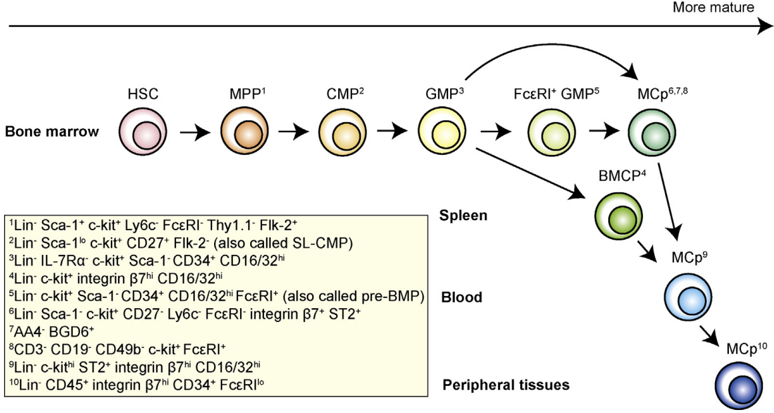
“In both mice 64 , 73 and humans, 74 , 75 BM HSCs produce mast cells in a stepwise process from multipotent (MPP) to lineage‐committed progenitors via common myeloid (CMP) and granulocyte‐monocyte progenitor (GMP) intermediates. 76 , 77”
From Mast cell ontogeny: From fetal development to life‐long health and disease (2023) · cites this paper as [76]
Self-check
Percentages, sums and reported differences re-computed from the paper’s own numbers.
The self-check needs the paper’s full text.
Citations
Cites
A clonogenic common myeloid progenitor that gives rise to all myeloid lineages
Akashi, K., Traver, D., Miyamoto, T., & Weissman, I. L. (2000) · Nature · doi:10.1038/35004599 · Cited by 2,617
Increased mast cells in the irritable bowel syndrome
O’Sullivan, Clayton, Breslin, Harman, Bountra, Mclaren, & O’Morain (2000) · Neurogastroenterology & Motility · doi:10.1046/j.1365-2982.2000.00221.x · Cited by 480
Walsh, J. C., DeKoter, R. P., Lee, H.-J., Smith, E. D., Lancki, D. W., Gurish, M. F., Friend, D. S., Stevens, R. L., Anastasi, J., & Singh, H. (2002) · Immunity · doi:10.1016/s1074-7613(02)00452-1 · Cited by 262 · cited 6×
“1deficient embryos did not generate mast cells when cultured in IL-3 and SCF (Walsh et al., 2002).”
BackgroundInfluentialTaghon, T., Yui, M. A., & Rothenberg, E. V. (2007) · Nature Immunology · doi:10.1038/ni1486 · Cited by 195
Research works printed but not linked: 87
- Abonia, 2005, Constitutive homing of mast cell progenitors to the intestine depends on autologous expression of the chemokine receptor CXCR2, Blood, 105, 4308, 10.1182/blood-2004-09-3578 · DOI
- Abonia, 2006, Alpha-4 integrins and VCAM-1, but not MAdCAM-1, are essential for recruitment of mast cell progenitors to the inflamed lung, Blood, 108, 1588, 10.1182/blood-2005-12-012781 · DOI
- Ammit, 1997, Mast cell numbers are increased in the smooth muscle of human sensitized isolated bronchi, Am. J. Respir. Crit. Care Med., 155, 1123, 10.1164/ajrccm.155.3.9116997 · DOI
- Arinobu, 2005, Developmental checkpoints of the basophil/mast cell lineages in adult murine hematopoiesis, Proc. Natl. Acad. Sci. U. S. A., 102, 18105, 10.1073/pnas.0509148102 · DOI · Paper page
- Asai, 2001, Regulation of mast cell survival by IgE, Immunity, 14, 791, 10.1016/S1074-7613(01)00157-1 · DOI
- Berlanga, 2005, GPIIb (CD41) integrin is expressed on mast cells and influences their adhesion properties, Exp. Hematol., 33, 403, 10.1016/j.exphem.2005.01.011 · DOI
- Brightling, 2002, Mast-cell infiltration of airway smooth muscle in asthma, N. Engl. J. Med., 346, 1699, 10.1056/NEJMoa012705 · DOI
- Brown, 2004, Expression of integrin-alphaE by mucosal mast cells in the intestinal epithelium and its absence in nematode-infected mice lacking the transforming growth factor-beta1-activating integrin alphavbeta6, Am. J. Pathol., 165, 95, 10.1016/S0002-9440(10)63278-6 · DOI
- Cantor, 2008, Antagonism of FOG-1 and GATA factors in fate choice for the mast cell lineage, J. Exp. Med., 205, 611, 10.1084/jem.20070544 · DOI
- Chang, 2011, Mast cells in tumor microenvironment promotes the in vivo growth of pancreatic ductal adenocarcinoma, Clin. Cancer Res. Off. J. Am. Assoc. Cancer Res., 17, 7015, 10.1158/1078-0432.CCR-11-0607 · DOI
- Chen, 2005, Identification of mast cell progenitors in adult mice, Proc. Natl. Acad. Sci. U. S. A., 102, 11408, 10.1073/pnas.0504197102 · DOI · Paper page
- Collington, 2010, The role of the CCL2/CCR2 axis in mouse mast cell migration in vitro and in vivo, J. Immunol., 184, 6114, 10.4049/jimmunol.0904177 · DOI
- Collmann, 2013, Transient targeting of phosphoinositide 3-kinase acts as a roadblock in mast cells’ route to allergy, J. Allergy Clin. Immunol., 132, 959, 10.1016/j.jaci.2013.03.008 · DOI
- Crapper, 1983, Frequency of mast cell precursors in normal tissues determined by an in vitro assay: antigen induces parallel increases in the frequency of P cell precursors and mast cells, J. Immunol., 131, 923, 10.4049/jimmunol.131.2.923 · DOI
- Dahlin, 2011, IgE immune complexes stimulate an increase in lung mast cell progenitors in a mouse model of allergic airway inflammation, PLoS ONE, 6, e20261, 10.1371/journal.pone.0020261 · DOI
- Dahlin, 2012, CD11c+ cells are required for antigen-induced increase of mast cells in the lung, J. Immunol., 189, 3869, 10.4049/jimmunol.1201200 · DOI
- Dahlin, 2013, Committed mast cell progenitors in mouse blood differ in maturity between Th1 and Th2 strains, Allergy, 68, 1333, 10.1111/all.12223 · DOI
- Dillon, 1986, Limit dilution analysis of mast cell precursor frequency in the gut epithelium of normal and Trichinella spiralis infected mice, Parasite Immunol., 8, 503, 10.1111/j.1365-3024.1986.tb00865.x · DOI
- Ebi, 1990, Mechanism of mast cell deficiency in mutant mice of mi/mi genotype: an analysis by co-culture of mast cells and fibroblasts, Blood, 75, 1247, 10.1182/blood.V75.6.1247.1247 · DOI
- Franco, 2010, Distinguishing mast cell and granulocyte differentiation at the single-cell level, Cell Stem Cell, 6, 361, 10.1016/j.stem.2010.02.013 · DOI
- Furuichi, 1985, The fate of IgE bound to rat basophilic leukemia cells. IV. Functional association between the receptors for IgE, J. Immunol., 134, 1766, 10.4049/jimmunol.134.3.1766 · DOI
- Guiraldelli, 2008, The low affinity IgG receptor Fc gamma RIIB contributes to the binding of the mast cell specific antibody, mAb BGD6, Mol. Immunol., 45, 2411, 10.1016/j.molimm.2007.07.041 · DOI
- Guiraldelli, 2013, Rat embryonic mast cells originate in the AGM, PLoS ONE, 8, e57862, 10.1371/journal.pone.0057862 · DOI · Paper page
- Guo, 1989, Monoclonal antibody AA4, which inhibits binding of IgE to high affinity receptors on rat basophilic leukemia cells, binds to novel alpha-galactosyl derivatives of ganglioside GD1b, J. Biol. Chem., 264, 13267, 10.1016/S0021-9258(18)51624-0 · DOI
- Gurish, 2001, Intestinal mast cell progenitors require CD49dbeta7 (alpha4beta7 integrin) for tissue-specific homing, J. Exp. Med., 194, 1243, 10.1084/jem.194.9.1243 · DOI · Paper page
- Guy-Grand, 1984, Gut mucosal mast cells. Origin, traffic, and differentiation, J. Exp. Med., 160, 12, 10.1084/jem.160.1.12 · DOI
- Hallgren, 2007, Pulmonary CXCR2 regulates VCAM-1 and antigen-induced recruitment of mast cell progenitors, Proc. Natl. Acad. Sci. U. S. A., 104, 20478, 10.1073/pnas.0709651104 · DOI
- Harigae, 1998, Differential roles of GATA-1 and GATA-2 in growth and differentiation of mast cells, Genes Cells, 3, 39, 10.1046/j.1365-2443.1998.00166.x · DOI
- Hayashi, 1985, Mast-cell precursors in the skin of mouse embryos and their deficiency in embryos of Sl/Sld genotype, Dev. Biol., 109, 234, 10.1016/0012-1606(85)90363-X · DOI
- Iwasaki, 2005, Identification of eosinophil lineage-committed progenitors in the murine bone marrow, J. Exp. Med., 201, 1891, 10.1084/jem.20050548 · DOI
- Iwasaki, 2006, The order of expression of transcription factors directs hierarchical specification of hematopoietic lineages, Genes Dev., 20, 3010, 10.1101/gad.1493506 · DOI
- Jamur, 2005, Identification and characterization of undifferentiated mast cells in mouse bone marrow, Blood, 105, 4282, 10.1182/blood-2004-02-0756 · DOI · Paper page
- Jamur, 2010, Mast cell repopulation of the peritoneal cavity: contribution of mast cell progenitors versus bone marrow derived committed mast cell precursors, BMC Immunol., 11, 32, 10.1186/1471-2172-11-32 · DOI
- Jones, 2009, Antigen-induced increases in pulmonary mast cell progenitor numbers depend on IL-9 and CD1d-restricted NKT cells, J. Immunol., 183, 5251, 10.4049/jimmunol.0901471 · DOI
- Jones, 2010, T regulatory cells control antigen-induced recruitment of mast cell progenitors to the lungs of C57BL/6 mice, J. Immunol., 185, 1804, 10.4049/jimmunol.1001146 · DOI
- Kakizoe, 1999, Increases in mast cells and chymase in fibroproliferative paws of collagen-induced arthritic mice, Inflamm. Res. Off. J. Eur. Histamine Res. Soc., 48, 318
- Kalesnikoff, 2001, Monomeric IgE stimulates signaling pathways in mast cells that lead to cytokine production and cell survival, Immunity, 14, 801, 10.1016/S1074-7613(01)00159-5 · DOI
- Kambe, 2001, Human skin-derived mast cells can proliferate while retaining their characteristic functional and protease phenotypes, Blood, 97, 2045, 10.1182/blood.V97.7.2045 · DOI
- Kasugai, 1995, Infection with Nippostrongylus brasiliensis induces invasion of mast cell precursors from peripheral blood to small intestine, Blood, 85, 1334, 10.1182/blood.V85.5.1334.bloodjournal8551334 · DOI
- Kempuraj, 1999, Characterization of mast cell-committed progenitors present in human umbilical cord blood, Blood, 93, 3338, 10.1182/blood.V93.10.3338.410k05_3338_3346 · DOI
- Khalil, 1996, Schistosoma mansoni infection in mice augments the capacity for interleukin 3 (IL-3) and IL-9 production and concurrently enlarges progenitor pools for mast cells and granulocytes–macrophages, Infect. Immun., 64, 4960, 10.1128/iai.64.12.4960-4966.1996 · DOI
- Kirshenbaum, 1991, Demonstration of the origin of human mast cells from CD34+ bone marrow progenitor cells, J. Immunol., 146, 1410, 10.4049/jimmunol.146.5.1410 · DOI · Paper page
- Kirshenbaum, 1999, Demonstration that human mast cells arise from a progenitor cell population that is CD34(+), c-kit(+), and expresses aminopeptidase N (CD13), Blood, 94, 2333, 10.1182/blood.V94.7.2333.419k30_2333_2342 · DOI
- Kitamura, 1977, Development of mast cells from grafted bone marrow cells in irradiated mice, Nature, 268, 442, 10.1038/268442a0 · DOI
- Kitaura, 2005, IgE− and IgE+Ag-mediated mast cell migration in an autocrine/paracrine fashion, Blood, 105, 3222, 10.1182/blood-2004-11-4205 · DOI
- Knight, 2002, Enteric expression of the integrin alpha(v)beta(6) is essential for nematode-induced mucosal mast cell hyperplasia and expression of the granule chymase, mouse mast cell protease-1, Am. J. Pathol., 161, 771, 10.1016/S0002-9440(10)64236-8 · DOI
- Knight, 2007, Aberrant mucosal mast cell protease expression in the enteric epithelium of nematode-infected mice lacking the integrin alphavbeta6, a transforming growth factor-beta1 activator, Am. J. Pathol., 171, 1237, 10.2353/ajpath.2007.061245 · DOI
- Kobayasi, 1969, Degranulation and regranulation of human mast cells. An electron microscopic study of the whealing reaction in urticaria pigmentosa, Acta Derm. Venereol., 49, 369, 10.2340/0001555549369381 · DOI
- Kondo, 1997, Identification of clonogenic common lymphoid progenitors in mouse bone marrow, Cell, 91, 661, 10.1016/S0092-8674(00)80453-5 · DOI · Paper page
- Liu, 2013, Mast cells recruited to mesenteric lymph nodes during helminth infection remain hypogranular and produce IL-4 and IL-6, J. Immunol., 190, 1758, 10.4049/jimmunol.1202567 · DOI · Paper page
- Lloyd, 2010, Functions of T cells in asthma: more than just T(H)2 cells, Nat. Rev. Immunol., 10, 838, 10.1038/nri2870 · DOI
- Metcalf, 2013, Concordant mast cell and basophil production by individual hematopoietic blast colony-forming cells, Proc. Natl. Acad. Sci. U. S. A., 110, 9031, 10.1073/pnas.1307711110 · DOI
- Migliaccio, 2003, GATA-1 as a regulator of mast cell differentiation revealed by the phenotype of the GATA-1low mouse mutant, J. Exp. Med., 197, 281, 10.1084/jem.20021149 · DOI
- Molin, 2002, Mast cell infiltration correlates with poor prognosis in Hodgkin's lymphoma, Br. J. Haematol., 119, 122, 10.1046/j.1365-2141.2002.03768.x · DOI
- Nakajima, 1997, Mast cell involvement in gastritis with or without Helicobacter pylori infection, Gastroenterology, 113, 746, 10.1016/S0016-5085(97)70167-7 · DOI
- Noelle, 2010, Cellular sources and immune functions of interleukin-9, Nat. Rev. Immunol., 10, 683, 10.1038/nri2848 · DOI
- Padawer, 1974, Editorial: the ins and outs of mast cell function, Am. J. Anat., 141, 299, 10.1002/aja.1001410302 · DOI
- Patella, 1998, Stem cell factor in mast cells and increased mast cell density in idiopathic and ischemic cardiomyopathy, Circulation, 97, 971, 10.1161/01.CIR.97.10.971 · DOI
- Pennock, 2004, In vivo exit of c-kit+/CD49d(hi)/beta7+ mucosal mast cell precursors from the bone marrow following infection with the intestinal nematode Trichinella spiralis, Blood, 103, 2655, 10.1182/blood-2003-09-3146 · DOI
- Poglio, 2010, Adipose tissue as a dedicated reservoir of functional mast cell progenitors, Stem Cells, 28, 2065, 10.1002/stem.523 · DOI · Paper page
- Qi, 2013, Antagonistic regulation by the transcription factors C/EBPalpha and MITF specifies basophil and mast cell fates, Immunity, 39, 97, 10.1016/j.immuni.2013.06.012 · DOI
- Ribatti, 2000, Angiogenesis and mast cell density with tryptase activity increase simultaneously with pathological progression in B-cell non-Hodgkin's lymphomas, Int. J. Cancer, 85, 171, 10.1002/(SICI)1097-0215(20000115)85:2%3C171::AID-IJC4%3E3.0.CO;2-W · DOI
- Robinson, 2010, The role of the T cell in asthma, J. Allergy Clin. Immunol., 126, 1081, 10.1016/j.jaci.2010.06.025 · DOI
- Rodewald, 1996, Identification of a committed precursor for the mast cell lineage, Science, 271, 818, 10.1126/science.271.5250.818 · DOI · Paper page
- Rosenkranz, 1998, Impaired mast cell development and innate immunity in Mac-1 (CD11b/CD18, CR3)-deficient mice, J. Immunol., 161, 6463, 10.4049/jimmunol.161.12.6463 · DOI
- Rottem, 1994, Mast cells cultured from the peripheral blood of normal donors and patients with mastocytosis originate from a CD34+/Fc epsilon RI- cell population, Blood, 84, 2489, 10.1182/blood.V84.8.2489.2489 · DOI · Paper page
- Sakanaka, 2008, Essential role of EP3 subtype in prostaglandin E2-induced adhesion of mouse cultured and peritoneal mast cells to the Arg-Gly-Asp-enriched matrix, Am. J. Physiol. Cell Physiol., 295, C1427, 10.1152/ajpcell.00218.2008 · DOI
- Sakata-Yanagimoto, 2008, Coordinated regulation of transcription factors through Notch2 is an important mediator of mast cell fate, Proc. Natl. Acad. Sci. U. S. A., 105, 7839, 10.1073/pnas.0801074105 · DOI
- Scott, 1994, Requirement of transcription factor PU.1 in the development of multiple hematopoietic lineages, Science, 265, 1573, 10.1126/science.8079170 · DOI · Paper page
- Shelburne, 2003, Stat5 expression is critical for mast cell development and survival, Blood, 102, 1290, 10.1182/blood-2002-11-3490 · DOI
- Sonoda, 1982, Concentration of mast-cell progenitors in bone marrow, spleen, and blood of mice determined by limiting dilution analysis, J. Cell Physiol., 112, 136, 10.1002/jcp.1041120120 · DOI
- Sonoda, 1983, Presence of mast cell precursors in the yolk sac of mice, Dev. Biol., 97, 89, 10.1016/0012-1606(83)90066-0 · DOI · Paper page
- Sonoda, 1984, Proliferation of peritoneal mast cells in the skin of W/Wv mice that genetically lack mast cells, J. Exp. Med., 160, 138, 10.1084/jem.160.1.138 · DOI
- Stechschulte, 1987, Effect of the mi allele on mast cells, basophils, natural killer cells, and osteoclasts in C57Bl/6J mice, J. Cell Physiol., 132, 565, 10.1002/jcp.1041320321 · DOI
- Steelman, 2004, JAK/STAT, Raf/MEK/ERK, PI3K/Akt and BCR-ABL in cell cycle progression and leukemogenesis, Leukemia, 18, 189, 10.1038/sj.leu.2403241 · DOI
- Stevens, 1982, Mast cells in spotted mutant mice (W Ph mi), Proc. R. Soc. Lond. Ser. B Biol. Sci., 215, 405
- Suda, 1983, Single-cell origin of mouse hemopoietic colonies expressing multiple lineages in variable combinations, Proc. Natl. Acad. Sci. U. S. A., 80, 6689, 10.1073/pnas.80.21.6689 · DOI
- Sugamata, 2005, Increase of activated mast cells in human endometriosis, Am. J. Reprod. Immunol., 53, 120, 10.1111/j.1600-0897.2005.00254.x · DOI · Paper page
- Sugiyama, 2008, Differential context-dependent effects of friend of GATA-1 (FOG-1) on mast-cell development and differentiation, Blood, 111, 1924, 10.1182/blood-2007-08-104489 · DOI
- Terada, 2000, Increased mast cells in hepatocellular carcinoma and intrahepatic cholangiocarcinoma, J. Hepatol., 33, 961, 10.1016/S0168-8278(00)80129-4 · DOI
- Tsai, 1994, An early haematopoietic defect in mice lacking the transcription factor GATA-2, Nature, 371, 221, 10.1038/371221a0 · DOI
- Walker, 1961, Mast cell turn-over in adult mice, Nature, 192, 980, 10.1038/192980a0 · DOI
- Weller, 2005, Leukotriene B4, an activation product of mast cells, is a chemoattractant for their progenitors, J. Exp. Med., 201, 1961, 10.1084/jem.20042407 · DOI
- Weller, 2007, Chemotactic action of prostaglandin E2 on mouse mast cells acting via the PGE2 receptor 3, Proc. Natl. Acad. Sci. U. S. A., 104, 11712, 10.1073/pnas.0701700104 · DOI
- Xiang, 2001, IgE-mediated mast cell degranulation and recovery monitored by time-lapse photography, J. Allergy Clin. Immunol., 108, 116, 10.1067/mai.2001.116124 · DOI
- Yamaguchi, 1997, IgE enhances mouse mast cell Fc(epsilon)RI expression in vitro and in vivo: evidence for a novel amplification mechanism in IgE-dependent reactions, J. Exp. Med., 185, 663, 10.1084/jem.185.4.663 · DOI
- Yu, 2006, Mast cells can promote the development of multiple features of chronic asthma in mice, J. Clin. Invest., 116, 1633, 10.1172/JCI25702 · DOI
Cited by
Sorted by citations
Interaction between bone and immune cells: Implications for postmenopausal osteoporosis
Fischer, V., & Haffner-Luntzer, M. (2022) · Seminars in Cell & Developmental Biology · doi:10.1016/j.semcdb.2021.05.014 · Cited by 759
Kucharik, A. H., & Chang, C. (2020) · Clinical Reviews in Allergy & Immunology · doi:10.1007/s12016-019-08755-8 · Cited by 122
Mast cell ontogeny: From fetal development to life‐long health and disease
Chia, S. L., Kapoor, S., Carvalho, C., Bajénoff, M., & Gentek, R. (2023) · Immunological Reviews · doi:10.1111/imr.13191 · Cited by 60
Mast Cells Trigger Disturbed Bone Healing in Osteoporotic Mice
Fischer, V., Ragipoglu, D., Diedrich, J., Steppe, L., Dudeck, A., Schütze, K., Kalbitz, M., Gebhard, F., Haffner-Luntzer, M., & Ignatius, A. (2020) · Journal of Bone and Mineral Research · doi:10.1002/jbmr.4455 · Cited by 42
Metadata
- Authors
- Dahlin, J. S., & Hallgren, J.
- Venue
- Molecular Immunology
- Publisher
- Elsevier BV
- Published
- 2015-01
- Volume
- 63
- Issue
- 1
- Pages
- 9-17
- ISSN
- 0161-5890
- Cited by
- 273
- References
- 4
- Language
- en
- Licence
- Funders
- Swedish Research Council
- the Swedish Heart-Lung Foundation
- Malin and Lennart Philipson Foundation
- Bror Hjerpstedts Foundation
- Agnes and Mac Rudberg Foundation
- Lennander Foundation
- Ellen, Walter and Lennart Hesselman Foundation
About these checks
Registry, retraction, Cites and statistics results are computed, not judged, with one exception: a printed reference that no index lists is read once by a model before it counts as a citation error. Claims are extracted by a model and kept only when their quote appears verbatim in the text; each cited source is then checked, with a model’s help, for whether it says what the claim relies on. Those verdicts can be wrong — read the claim’s quote and the cited source before relying on one.
Statistics and arithmetic are recomputed, not judged.
Confidence bands are shown only for fields calibrated on our annotated test set. None is calibrated yet, so no band is shown.
What counts as a claim ›How we measure confidence ›How we check this ›
Are you an author, or do you see a problem with this page? Request a review
