

The DOI matches its Crossref record; 16 of the 16 references it cites were found in a registry or an index.
Conceptual control across modalities: graded specialisation for pictures and words in inferior frontal and posterior temporal cortex
Overview
The claims and statistics of this paper haven’t been checked yet.
Run the check — free, no account needed. It reads the open-access text and checks the sources it cites.
Integrity signals
Registry
Cites
Statistics
Figures
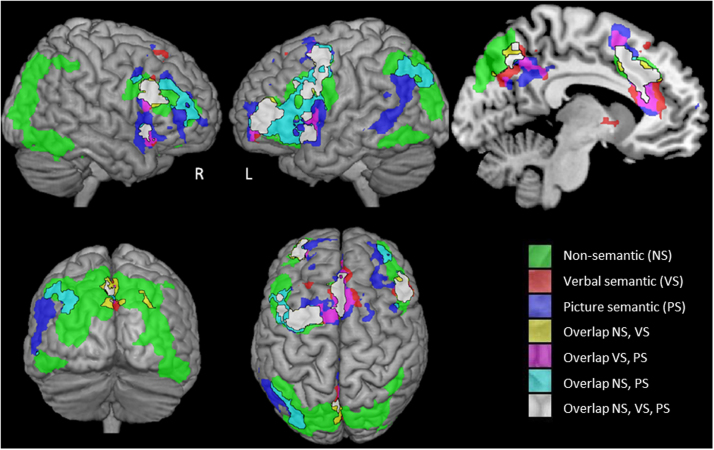
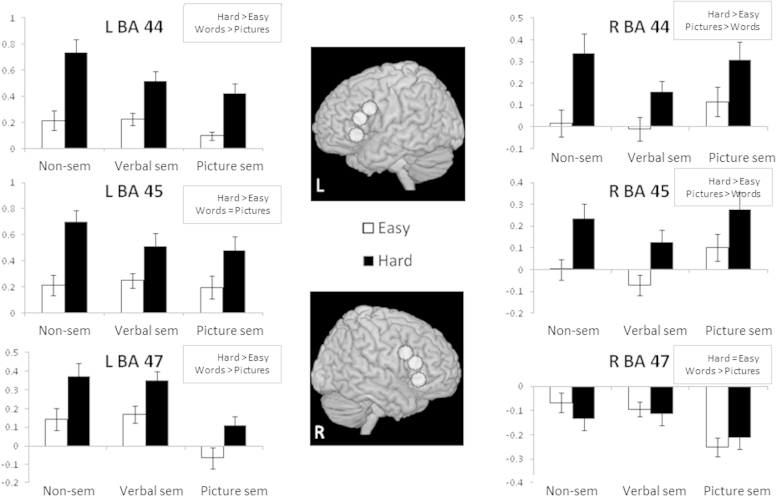
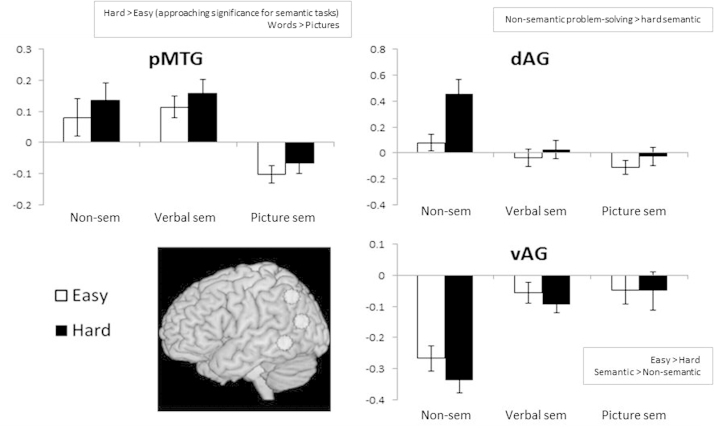
Verification
Claims the paper makes
The claims and statistics of this paper haven’t been checked yet.
Run the check — free, no account needed. It reads the open-access text and checks the sources it cites.
Claims other papers make about this one
Each is checked against this paper’s own text: does it say what the citing paper says it does?
In the citing paper
“For example, semantic areas in the inferior and middle temporal gyri are frequently activated during language tasks (Xu et al., 2009; Visser et al., 2012; Krieger-Redwood et al., 2015), but not during music tasks, although these areas can be modulated by music when the task is specifically focused on semantic properties (Koelsch et al., 2004).”
From A Joint Prosodic Origin of Language and Music (2017) · cites this paper as Krieger-Redwood et al., 2015
Self-check
Percentages, sums and reported differences re-computed from the paper’s own numbers.
The self-check needs the paper’s full text.
Citations
Cites
The cortical organization of speech processing
Hickok, G., & Poeppel, D. (2007) · Nature Reviews Neuroscience · doi:10.1038/nrn2113 · Cited by 5,495
Where do you know what you know? The representation of semantic knowledge in the human brain
Patterson, K., Nestor, P. J., & Rogers, T. T. (2007) · Nature Reviews Neuroscience · doi:10.1038/nrn2277 · Cited by 2,706
The multiple-demand (MD) system of the primate brain: mental programs for intelligent behaviour
Duncan, J. (2010) · Trends in Cognitive Sciences · doi:10.1016/j.tics.2010.01.004 · Cited by 1,846
Perisylvian language networks of the human brain
Catani, M., Jones, D. K., & ffytche, D. H. (2005) · Annals of Neurology · doi:10.1002/ana.20319 · Cited by 1,832
The anatomy of language: a review of 100 fMRI studies published in 2009
Price, C. J. (2010) · Annals of the New York Academy of Sciences · doi:10.1111/j.1749-6632.2010.05444.x · Cited by 1,387
Language‐specific tuning of visual cortex? Functional properties of the Visual Word Form Area
Cohen, L., Lehéricy, S., Chochon, F., Lemer, C., Rivaud, S., & Dehaene, S. (2002) · Brain · doi:10.1093/brain/awf094 · Cited by 1,254
A Parametric Manipulation of Factors Affecting Task-induced Deactivation in Functional Neuroimaging
McKiernan, K. A., Kaufman, J. N., Kucera-Thompson, J., & Binder, J. R. (2003) · Journal of Cognitive Neuroscience · doi:10.1162/089892903321593117 · Cited by 1,080
Is the rostro-caudal axis of the frontal lobe hierarchical?
Badre, D., & D'Esposito, M. (2009) · Nature Reviews Neuroscience · doi:10.1038/nrn2667 · Cited by 946
Badre, D., Poldrack, R. A., Paré-Blagoev, E. J., Insler, R. Z., & Wagner, A. D. (2005) · Neuron · doi:10.1016/j.neuron.2005.07.023 · Cited by 914
Petrides, M., & Pandya, D. N. (2002) · European Journal of Neuroscience · doi:10.1046/j.1460-9568.2001.02090.x · Cited by 882
Noonan, K. A., Jefferies, E., Visser, M., & Lambon Ralph, M. A. (2013) · Journal of Cognitive Neuroscience · doi:10.1162/jocn_a_00442 · Cited by 543
Self-citationAn anatomical signature for literacy
Carreiras, M., Seghier, M. L., Baquero, S., Estévez, A., Lozano, A., Devlin, J. T., & Price, C. J. (2009) · Nature · doi:10.1038/nature08461 · Cited by 512
Robust group analysis using outlier inference
Woolrich, M. (2008) · NeuroImage · doi:10.1016/j.neuroimage.2008.02.042 · Cited by 504 · cited 1×
“To analyse the data at the group level, we entered lower level FEAT directories into a higher level FMRIB'S Local Analysis of Mixed Effects (FLAME) Bayesian mixed effects analysis (Beckmann et al., 2003; Woolrich, 2008; Woolrich et al., 2004).”
Converging language streams in the human temporal lobe
Spitsyna, G., Warren, J. E., Scott, S. K., Turkheimer, F. E., & Wise, R. J. S. (2006) · The Journal of Neuroscience · doi:10.1523/jneurosci.0559-06.2006 · Cited by 312 · cited 1×
“These findings suggest that vAG is involved in relatively automatic aspects of semantic processing – consistent with the finding of activity in this region even when the demands on executive control are minimised, for example in naturalistic comprehension tasks (Humphreys and Lambon Ralph, 2014; Spitsyna et al., 2006).”
Chee, M. W. L., Weekes, B., Lee, K. M., Soon, C. S., Schreiber, A., Hoon, J. J., & Chee, M. (2000) · NeuroImage · doi:10.1006/nimg.2000.0631 · Cited by 227
Blank, I., Kanwisher, N., & Fedorenko, E. (2014) · Journal of Neurophysiology · doi:10.1152/jn.00884.2013 · Cited by 181
Research works printed but not linked: 95
- Adams, 2002, A comparison of neural circuits underlying auditory and visual object categorization, Neuroimage, 16, 361, 10.1006/nimg.2002.1088 · DOI
- Anwander, 2007, Connectivity-based parcellation of Broca’s area, Cereb. Cortex, 17, 816, 10.1093/cercor/bhk034 · DOI · Paper page
- Aron, 2004, Inhibition and the right inferior frontal cortex, Trend Cogn. Sci., 8, 170, 10.1016/j.tics.2004.02.010 · DOI · Paper page
- Beckmann, 2003, General multilevel linear modeling for group analysis in FMRI, Neuroimage, 20, 1052, 10.1016/S1053-8119(03)00435-X · DOI
- Binder, 2009, Where Is the semantic system? A critical review and meta-analysis of 120 functional neuroimaging studies, Cereb. Cortex, 19, 2767, 10.1093/cercor/bhp055 · DOI · Paper page
- Blumstein, 2005, The perception of voice onset time: an fMRI investigation of phonetic category structure, J. Cog. Neurosci., 17, 1353, 10.1162/0898929054985473 · DOI
- Bookheimer, 2002, Functional MRI of language: new approaches to understanding the cortical organization of semantic processing, Annu. Rev. Neurosci., 25, 151, 10.1146/annurev.neuro.25.112701.142946 · DOI · Paper page
- Bozeat, 2000, Non-verbal semantic impairment in semantic dementia, Neuropsychologia, 38, 1207, 10.1016/S0028-3932(00)00034-8 · DOI · Paper page
- Bright, 2004, Unitary vs multiple semantics: PET studies of word and picture processing, Brain Lang., 89, 417, 10.1016/j.bandl.2004.01.010 · DOI
- Brownell, 1986, Inference deficits in right brain-damaged patients, Brain Lang., 27, 310, 10.1016/0093-934X(86)90022-2 · DOI · Paper page
- Brownell, 1990, Appreciation of metaphoric alternative word meanings by left and right brain-damaged patients, Neuropsychologia, 28, 375, 10.1016/0028-3932(90)90063-T · DOI
- Chao, 1999, Attribute-based neural substrates in temporal cortex for perceiving and knowing about objects, Nat. Neurosci., 2, 913, 10.1038/13217 · DOI
- Chikazoe, 2007, Activation of right inferior frontal gyrus during response inhibition across response modalities, J. Cogn. Neurosci., 19, 69, 10.1162/jocn.2007.19.1.69 · DOI
- Coltheart, 1981, The MRC psycholinguistic database, Q. J. Exp. Psychol. Sect. A – Hum. Exp. Psychol., 33, 497, 10.1080/14640748108400805 · DOI
- Corbett, 2009, Different impairments of semantic cognition in semantic dementia and semantic aphasia: evidence from the non-verbal domain, Brain, 132, 2593, 10.1093/brain/awp146 · DOI
- Corbett, 2009, Exploring multimodal semantic control impairments in semantic aphasia: Evidence from naturalistic object use, Neuropsychologia, 47, 2721, 10.1016/j.neuropsychologia.2009.05.020 · DOI
- Corbett, 2011, Deregulated semantic cognition follows prefrontal and temporo-parietal damage: evidence from the impact of task constraint on nonverbal object use, J. Cogn. Neurosci., 23, 1125, 10.1162/jocn.2010.21539 · DOI
- Correia, 2014, Brain-based translation: fMRI decoding of spoken words in bilinguals reveals language-independent semantic representations in anterior temporal lobe, J. Neurosci., 34, 332, 10.1523/JNEUROSCI.1302-13.2014 · DOI
- Coutanche, 2014, Creating concepts from converging features in human cortex, Cereb. Cortex
- Crutch, 2008, The Influence of refractoriness upon comprehension of non-verbal auditory stimuli, Neurocase, 14, 494, 10.1080/13554790802498955 · DOI
- Demb, 1995, Semantic encoding and retrieval in the left inferior prefrontal cortex: a functional MRI study of task difficulty and process specificity, J. Neurosci., 15, 5870, 10.1523/JNEUROSCI.15-09-05870.1995 · DOI
- Devlin, 2003, Semantic processing in the left inferior prefrontal cortex: a combined functional magnetic resonance imaging and transcranial magnetic stimulation study, J. Cogn. Neurosci., 15, 71, 10.1162/089892903321107837 · DOI
- Duncan, 2000, Common regions of the human frontal lobe recruited by diverse cognitive demands, Trend Neurosci., 23, 475, 10.1016/S0166-2236(00)01633-7 · DOI · Paper page
- Fedorenko, 2012, Language-selective and domain-general regions lie side by side within Broca’s area, Curr. Biol., 22, 2059, 10.1016/j.cub.2012.09.011 · DOI
- Friederici, 2009, Pathways to language: fiber tracts in the human brain, Trend Cogn. Sci., 13, 175, 10.1016/j.tics.2009.01.001 · DOI
- Gabrieli, 1998, The role of the prefrontal cortex in language and memory, Proc. Natl. Acad. Sci., 95, 906, 10.1073/pnas.95.3.906 · DOI
- Garavan, 1999, Right hemispheric dominance of inhibitory control: an event-related functional MRI study, Proc. Natl. Acad. Sci., 96, 8301, 10.1073/pnas.96.14.8301 · DOI · Paper page
- Gardner, 2012, The differential contributions of pFC and temporo-parietal cortex to multimodal semantic control: exploring refractory effects in semantic aphasia, J. Cogn. Neurosci., 1
- Gennari, 2007, Context-dependent interpretation of words: evidence for interactive neural processes, Neuroimage, 35, 1278, 10.1016/j.neuroimage.2007.01.015 · DOI
- Gobel, 2001, The mental number line and the human angular gyrus, Neuroimage, 14, 1278, 10.1006/nimg.2001.0927 · DOI
- Gold, 2006, Dissociation of automatic and strategic lexical-semantics: functional magnetic resonance imaging evidence for differing roles of multiple frontotemporal regions, J. Neurosci., 26, 6523, 10.1523/JNEUROSCI.0808-06.2006 · DOI
- Gold, 2002, Common prefrontal regions coactivate with dissociable posterior regions during controlled semantic and phonological tasks, Neuron, 35, 803, 10.1016/S0896-6273(02)00800-0 · DOI
- Gough, 2005, Dissociating linguistic processes in the left inferior frontal cortex with transcranial magnetic stimulation, J. Neurosci., 25, 8010, 10.1523/JNEUROSCI.2307-05.2005 · DOI
- Grinband, 2008, Detection of time-varying signals in event-related fMRI designs, NeuroImage, 43, 509, 10.1016/j.neuroimage.2008.07.065 · DOI
- Hickok, 2000, Towards a functional neuroanatomy of speech perception, Trend Cogn. Sci., 4, 131, 10.1016/S1364-6613(00)01463-7 · DOI
- Hickok, 2004, Dorsal and ventral streams: a framework for understanding aspects of the functional anatomy of language, Cognition, 92, 67, 10.1016/j.cognition.2003.10.011 · DOI · Paper page
- Hirnstein, 2011, TMS over the left angular gyrus impairs the ability to discriminate left from right, Neuropsychologia, 49, 29, 10.1016/j.neuropsychologia.2010.10.028 · DOI
- Hoffman, 2012, Posterior middle temporal gyrus is involved in verbal and non-verbal semantic cognition: evidence from rTMS, Aphasiology, 26, 1119, 10.1080/02687038.2011.608838 · DOI
- Humphreys, 2014, Fusion and fission of cognitive functions in the human parietal cortex, Cereb. Cortex
- Humphreys, 2013, Motion and actions in language: semantic representations in occipito-temporal cortex, Brain Lang., 125, 94, 10.1016/j.bandl.2013.01.008 · DOI
- Jefferies, 2013, The neural basis of semantic cognition: Converging evidence from neuropsychology, neuroimaging and TMS, Cortex, 49, 611, 10.1016/j.cortex.2012.10.008 · DOI · Paper page
- Jefferies, 2007, Refractory effects in stroke aphasia: a consequence of poor semantic control, Neuropsychologia, 45, 1065, 10.1016/j.neuropsychologia.2006.09.009 · DOI
- Jefferies, 2006, Semantic impairment in stroke aphasia versus semantic dementia: a case-series comparison, Brain, 129, 2132, 10.1093/brain/awl153 · DOI
- Jefferies, 2008, Deficits of knowledge versus executive control in semantic cognition: Insights from cued naming, Neuropsychologia, 46, 649, 10.1016/j.neuropsychologia.2007.09.007 · DOI
- Jenkinson, 2002, Improved optimization for the robust and accurate linear registration and motion correction of brain images, Neuroimage, 17, 825, 10.1006/nimg.2002.1132 · DOI · Paper page
- Jung-Beeman, 2005, Bilateral brain proceses for comprehending natural language, Trend Cogn. Sci., 2005, 512, 10.1016/j.tics.2005.09.009 · DOI · Paper page
- Kable, 2005, Conceptual representations of action in the lateral temporal cortex, J. Cogn. Neurosci., 17, 1855, 10.1162/089892905775008625 · DOI
- Kanwisher, 1997, The fusiform face area: a module in human extrastriate cortex specialized for face perception, J. Neurosci., 17, 4302, 10.1523/JNEUROSCI.17-11-04302.1997 · DOI · Paper page
- Kellenbach, 2003, Actions speak louder than functions: the importance of manipulability and action in tool representation, J. Cogn. Neurosci., 15, 30, 10.1162/089892903321107800 · DOI
- Kelley, 1998, Hemispheric specialization in human dorsal frontal cortex and medial temporal lobe for verbal and nonverbal memory encoding, Neuron, 20, 927, 10.1016/S0896-6273(00)80474-2 · DOI
- Lambon Ralph, 2010, Coherent concepts are computed in the anterior temporal lobes, Proc. Natl. Acad. Sci., USA, 107, 2717, 10.1073/pnas.0907307107 · DOI
- Lambon Ralph, 2008, Generalization and differentiation in semantic memory, Ann. N. Y. Acad. Sci., 1124, 61, 10.1196/annals.1440.006 · DOI
- Lee, 2006, Metaphorical vs. literal word meanings: fMRI evidence against a selective role of the right hemisphere, NeuroImage, 29, 536, 10.1016/j.neuroimage.2005.08.003 · DOI
- Lenartowicz, 2011, Inhibition-related activation in the right inferior frontal gyrus in the absence of inhibitory cues, J. Cogn. Neurosci., 23, 3388, 10.1162/jocn_a_00031 · DOI
- Martin, 2007, The representation of object concepts in the brain, Annu. Rev. Psychol., 58, 25, 10.1146/annurev.psych.57.102904.190143 · DOI
- Mion, 2010, What the left and right anterior fusiform gyri tell us about semantic memory, Brain, 133, 3256, 10.1093/brain/awq272 · DOI · Paper page
- Nagel, 2008, Functional MRI investigation of verbal selection mechanisms in lateral prefrontal cortex, Neuroimage, 43, 801, 10.1016/j.neuroimage.2008.07.017 · DOI
- Nixon, 2004, The inferior frontal gyrus and phonological processing: An investigation using rTMS, J. Cogn. Neurosci., 16, 289, 10.1162/089892904322984571 · DOI
- Nobre, 2004, Orienting attention to locations in perceptual versus mental representations, J. Cogn. Neurosci., 16, 363, 10.1162/089892904322926700 · DOI
- Noonan, 2013, Demonstrating the qualitative differences between semantic aphasia and semantic dementia: a novel exploration of nonverbal semantic processing, Behav. Neurol., 26, 7, 10.1155/2013/941542 · DOI
- Noonan, 2010, Elucidating the nature of deregulated semantic cognition in semantic aphasia: evidence for the roles of prefrontal and temporo-parietal cortices, J. Cogn. Neurosci., 22, 1597, 10.1162/jocn.2009.21289 · DOI
- Noppeney, 2004, The neural areas that control the retrieval and selection of semantics, Neuropsychologia, 42, 1269, 10.1016/j.neuropsychologia.2003.12.014 · DOI
- Ojemann, 1979, Human language cortex: localization of memory, syntax, and sequential motor-phoneme identification systems, Science, 205, 1401, 10.1126/science.472757 · DOI
- Peelen, 2012, Conceptual object representations in human anterior temporal cortex, J. Neurosci., 32, 15728, 10.1523/JNEUROSCI.1953-12.2012 · DOI
- Pobric, 2010, Amodal semantic representations depend on both left and right anterior temporal lobes: new rTMS evidence, Neuropsychologia, 48, 1336, 10.1016/j.neuropsychologia.2009.12.036 · DOI
- Poldrack, 2001, Relations between the neural bases of dynamic auditory processing and phonological processing: Evidence from fMRI, J. Cogn. Neurosci., 13, 687, 10.1162/089892901750363235 · DOI
- Poldrack, 1999, Functional specialization for semantic and phonological processing in the left inferior prefrontal cortex, NeuroImage, 10, 15, 10.1006/nimg.1999.0441 · DOI · Paper page
- Rodd, 2005, The neural mechanisms of speech comprehension: fMRI studies of semantic ambiguity, Cereb. Cortex, 15, 1261, 10.1093/cercor/bhi009 · DOI
- Rogers, 2004, The structure and deterioration of semantic memory: a neuropsychological and computational investigation, Psychol. Rev., 111, 205, 10.1037/0033-295X.111.1.205 · DOI · Paper page
- Romero, 2006, The neural correlates of phonological short-term memory: a repetitive transcranial magnetic stimulation study, J. Cogn. Neurosci., 18, 1147, 10.1162/jocn.2006.18.7.1147 · DOI
- Saffran, 2000, The organization of semantic memory: in support of a distributed model, Brain Lang., 71, 204, 10.1006/brln.1999.2251 · DOI
- Saur, 2008, Ventral and dorsal pathways for language, Proc. Natl. Acad. Sci., 105, 18035, 10.1073/pnas.0805234105 · DOI
- Seghier, 2010, Functional subdivisions in the left angular gyrus where the semantic system meets and diverges from the default network, J. Neurosci., 30, 16809, 10.1523/JNEUROSCI.3377-10.2010 · DOI · Paper page
- Seghier, 2004, Variability of fMRI activation during a phonological and semantic language task in healthy subjects, Hum. Brain Mapp., 23, 140, 10.1002/hbm.20053 · DOI
- Sharp, 2010, The neural response to changing semantic and perceptual complexity during language processing, Hum. Brain Mapp., 31, 365, 10.1002/hbm.20871 · DOI
- Simanova, 2014, Modality-independent decoding of semantic information from the human brain, Cereb. Cortex, 24, 426, 10.1093/cercor/bhs324 · DOI · Paper page
- Snyder, 2007, Prefrontal cortical response to conflict during semantic and phonological tasks, J. Cogn. Neurosci., 19, 761, 10.1162/jocn.2007.19.5.761 · DOI
- Thompson-Schill, 1997, Role of left inferior prefrontal cortex in retrieval of semantic knowledge: a reevaluation, Proc. Natl. Acad. Sci. USA, 94, 14792, 10.1073/pnas.94.26.14792 · DOI
- Turken, 2011, The neural architecture of the language comprehension network: converging evidence from lesion and connectivity analyses, Front. Syst. Neurosci., 5, 1, 10.3389/fnsys.2011.00001 · DOI · Paper page
- Vandenberghe, 1996, Functional anatomy of a common semantic system for words and pictures, Nature, 383, 254, 10.1038/383254a0 · DOI
- Vigneau, 2006, Meta-analyzing left hemisphere language areas: phonology, semantics, and sentence processing, Neuroimage, 30, 1414, 10.1016/j.neuroimage.2005.11.002 · DOI · Paper page
- Visser, 2012, Both the middle temporal gyrus and the ventral anterior temporal area are crucial for multimodal semantic processing: distortion-corrected fmri evidence for a double gradient of information convergence in the temporal lobes, J. Cogn. Neurosci., 24, 1766, 10.1162/jocn_a_00244 · DOI · Paper page
- Visser, 2009, Semantic processing in the anterior temporal lobes: a meta-analysis of the functional neuroimaging literature, J. Cogn. Neurosci., 22, 1083, 10.1162/jocn.2009.21309 · DOI
- Visser, 2011, Differential contributions of bilateral ventral anterior temporal lobe and left anterior superior temporal gyrus to semantic processes, J. Cogn. Neurosci., 23, 3121, 10.1162/jocn_a_00007 · DOI
- Wagner, 1997, Semantic repetition priming for verbal and pictorial knowledge: a functional MRI study of left inferior prefrontal cortex, J. Cogn. Neurosci., 9, 714, 10.1162/jocn.1997.9.6.714 · DOI
- Wagner, 2001, Recovering meaning: left prefrontal cortex guides controlled semantic retrieval, Neuron, 31, 329, 10.1016/S0896-6273(01)00359-2 · DOI
- Warrington, 2004, A circumscribed refractory access disorder: a verbal semantic impairment sparing visual semantics, Cogn. Neuropsychol., 21, 299, 10.1080/02643290342000546 · DOI
- Whitney, 2009, The influence of multiple primes on bottom-up and top-down regulation during meaning retrieval: evidence for 2 distinct neural networks, Cereb. Cortex, 19, 2548, 10.1093/cercor/bhp007 · DOI
- Whitney, 2011, Heterogeneity of the left temporal lobe in semantic representation and control: priming multiple versus single meanings of ambiguous words, Cereb. Cortex, 21, 831, 10.1093/cercor/bhq148 · DOI
- Whitney, 2011, The neural organization of semantic control: tms evidence for a distributed network in left inferior frontal and posterior middle temporal gyrus, Cereb. Cortex, 21, 1066, 10.1093/cercor/bhq180 · DOI
- Whitney, 2012, Executive semantic processing is underpinned by a large-scale neural network: revealing the contribution of left prefrontal, posterior temporal, and parietal cortex to controlled retrieval and selection using TMS, J. Cogn. Neurosci., 24, 133, 10.1162/jocn_a_00123 · DOI
- Wilson, 1988, The MRC psycholinguistic databse: machine readable dictionary, version 2, Behav. Res. Methods, Instrum. Comput., 20, 6, 10.3758/BF03202594 · DOI
- Woolrich, 2004, Multilevel linear modelling for FMRI group analysis using Bayesian inference, Neuroimage, 21, 1732, 10.1016/j.neuroimage.2003.12.023 · DOI
- Xiang, 2010, Topographical functional connectivity pattern in the perisylvian language networks, Cereb. Cortex, 20, 549, 10.1093/cercor/bhp119 · DOI
- Zempleni, 2007, Semantic ambiguity processing in sentence context: Evidence from event-related fMRI, Neuroimage, 34, 1270, 10.1016/j.neuroimage.2006.09.048 · DOI
Cited by
Sorted by citations
Davey, J., Thompson, H. E., Hallam, G., Karapanagiotidis, T., Murphy, C., De Caso, I., Krieger-Redwood, K., Bernhardt, B. C., Smallwood, J., & Jefferies, E. (2016) · NeuroImage · doi:10.1016/j.neuroimage.2016.05.051 · Cited by 433
Self-citationA Joint Prosodic Origin of Language and Music
Brown, S. (2017) · Frontiers in Psychology · doi:10.3389/fpsyg.2017.01894 · Cited by 132
Krieger-Redwood, K., Jefferies, E., Karapanagiotidis, T., Seymour, R., Nunes, A., Ang, J. W. A., Majernikova, V., Mollo, G., & Smallwood, J. (2016) · NeuroImage · doi:10.1016/j.neuroimage.2016.07.060 · Cited by 106
Self-citation
Metadata
- Authors
- Krieger-Redwood, K., Teige, C., Davey, J., Hymers, M., & Jefferies, E.
- Venue
- Neuropsychologia
- Publisher
- Elsevier BV
- Published
- 2015-09
- Volume
- 76
- Pages
- 92-107
- ISSN
- 0028-3932
- PMC
- PMC4582805
- Cited by
- 105
- References
- 16
- Language
- en
- Funders
- BBSRC
- ERC (283530-SEMBIND)
About these checks
Registry, retraction, Cites and statistics results are computed, not judged, with one exception: a printed reference that no index lists is read once by a model before it counts as a citation error. Claims are extracted by a model and kept only when their quote appears verbatim in the text; each cited source is then checked, with a model’s help, for whether it says what the claim relies on. Those verdicts can be wrong — read the claim’s quote and the cited source before relying on one.
Statistics and arithmetic are recomputed, not judged.
Confidence bands are shown only for fields calibrated on our annotated test set. None is calibrated yet, so no band is shown.
What counts as a claim ›How we measure confidence ›How we check this ›
Are you an author, or do you see a problem with this page? Request a review
