

The DOI matches its Crossref record; 75 of the 75 references it cites were found in a registry or an index.
Antibody structure prediction using interpretable deep learning
Open accessPublished version of a preprint
Abstract
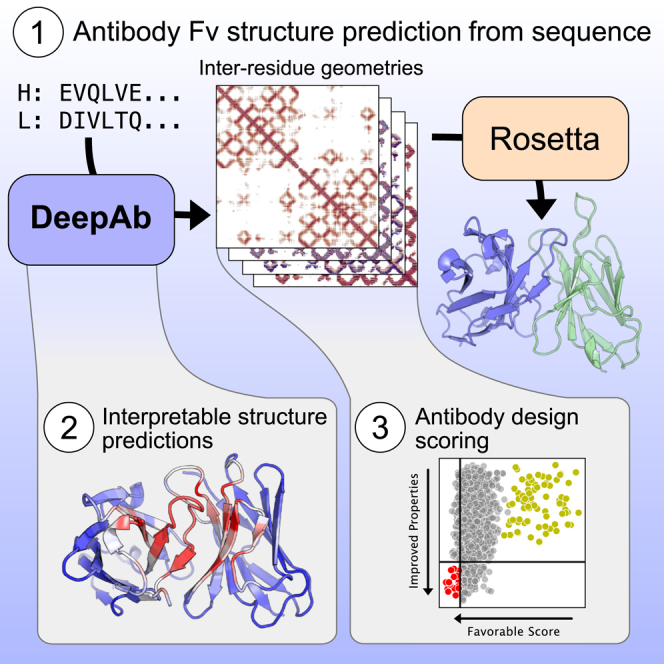
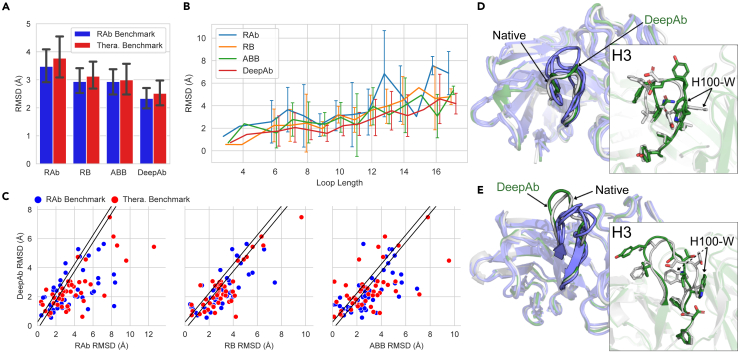
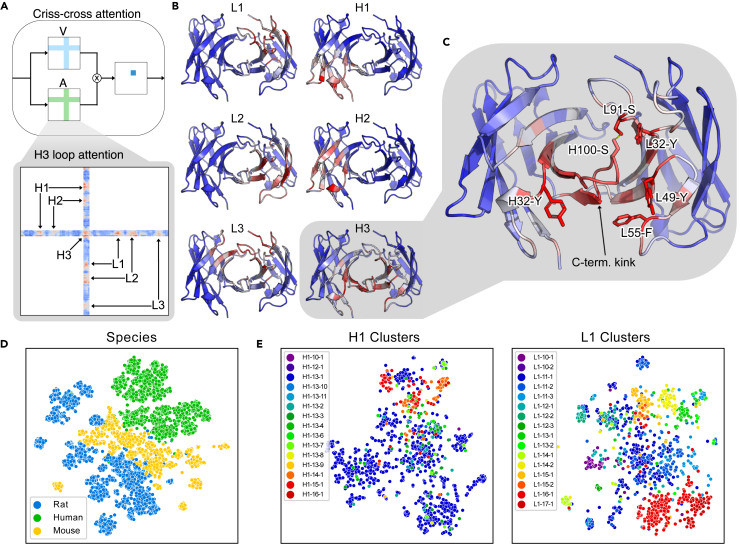
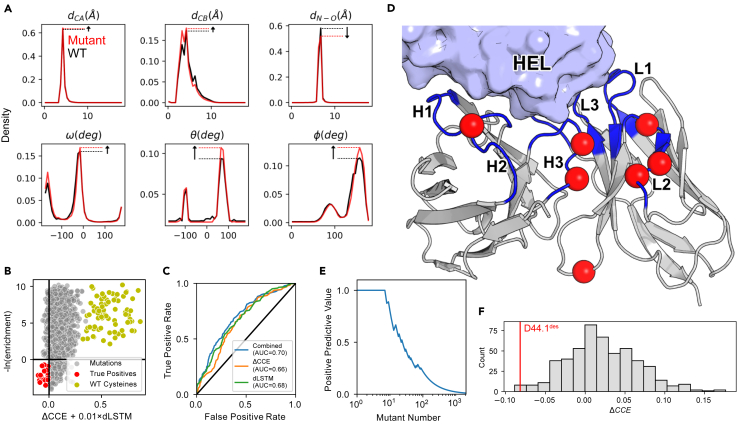
Abstract Therapeutic antibodies make up a rapidly growing segment of the biologics market. However, rational design of antibodies is hindered by reliance on experimental methods for determining antibody structures. In recent years, deep learning methods have driven significant advances in general protein structure prediction. Here, we present DeepAb, a deep learning method for predicting accurate antibody F V structures from sequence. We evaluate DeepAb on two benchmark sets – one balanced for structural diversity and the other composed of clinical-stage therapeutic antibodies – and find that our method consistently outperforms the leading alternatives. Previous deep learning methods have operated as “black boxes” and offered few insights into their predictions. By introducing a directly interpretable attention mechanism, we show that our network attends to physically important residue pairs. For example, in prediction of one CDR H3 residue conformation, the network attends to proximal aromatics and a key hydrogen bonding interaction that constrain the loop conformation. Finally, we present a novel mutant scoring metric derived from network confidence and show that for a particular antibody, all eight of the top-ranked mutations improve binding affinity. These results suggest that this model will be useful for a broad range of antibody prediction and design tasks. Significance Accurate structure models are critical for understanding the properties of potential therapeutic antibodies. Conventional methods for protein structure determination require significant investments of time and resources and may fail. Although greatly improved, methods for general protein structure prediction still cannot consistently provide the accuracy necessary to understand or design antibodies. We present a deep learning method for antibody structure prediction and demonstrate improvement over alternatives on diverse, therapeutically relevant benchmarks. In addition to its improved accuracy, our method reveals interpretable outputs about specific amino acids and residue interactions that should facilitate design of novel therapeutic antibodies.
Overview
The claims and statistics of this paper haven’t been checked yet.
Run the check — free, no account needed. It reads the open-access text and checks the sources it cites.
Integrity signals
Registry
Cites
Statistics
Figures
Verification
Claims the paper makes
The claims and statistics of this paper haven’t been checked yet.
Run the check — free, no account needed. It reads the open-access text and checks the sources it cites.
Self-check
Percentages, sums and reported differences re-computed from the paper’s own numbers.
The self-check needs the paper’s full text.
Citations
Cites
Adam: A Method for Stochastic Optimization
Kingma, D. P., & Ba, J. (2014) · arXiv · doi:10.48550/arxiv.1412.6980 · Cited by 98,946
Highly accurate protein structure prediction with AlphaFold
Jumper, J., Evans, R., Pritzel, A., Green, T., Figurnov, M., Ronneberger, O., Tunyasuvunakool, K., Bates, R., Žídek, A., Potapenko, A., et al. (2021) · Nature · doi:10.1038/s41586-021-03819-2 · Cited by 43,764
(2008) · Journal of Machine Learning Research · Cited by 33,051
Focal Loss for Dense Object Detection
Lin, T.-Y., Goyal, P., Girshick, R., He, K., & Dollar, P. (2017) · 2017 IEEE International Conference on Computer Vision (ICCV) · doi:10.1109/iccv.2017.324 · Cited by 30,581
Learning Phrase Representations using RNN Encoder–Decoder for Statistical Machine Translation
Cho, K., van Merrienboer, B., Gulcehre, C., Bahdanau, D., Bougares, F., Schwenk, H., & Bengio, Y. (2014) · Proceedings of the 2014 Conference on Empirical Methods in Natural Language Processing (EMNLP) · doi:10.3115/v1/d14-1179 · Cited by 25,545
Learning to Forget: Continual Prediction with LSTM
Gers, F. A., Schmidhuber, J., & Cummins, F. (2000) · Neural Computation · doi:10.1162/089976600300015015 · Cited by 6,122
Accurate prediction of protein structures and interactions using a 3-track network
Baek, M., DiMaio, F., Anishchenko, I., Dauparas, J., Ovchinnikov, S., Lee, G. R., Wang, J., Cong, Q., Kinch, L. N., Schaeffer, R. D., et al. (2021) · doi:10.1101/2021.06.14.448402 · Cited by 5,549
Lipton, Z. C. (2018) · Queue · doi:10.1145/3236386.3241340 · Cited by 5,427
Floyd, R. W. (1962) · Communications of the ACM · doi:10.1145/367766.368168 · Cited by 4,137
Improved protein structure prediction using potentials from deep learning
Senior, A. W., Evans, R., Jumper, J., Kirkpatrick, J., Sifre, L., Green, T., Qin, C., Žídek, A., Nelson, A. W. R., Bridgland, A., et al. (2020) · Nature · doi:10.1038/s41586-019-1923-7 · Cited by 3,378
Rives, A., Meier, J., Sercu, T., Goyal, S., Lin, Z., Liu, J., Guo, D., Ott, M., Zitnick, C. L., Ma, J., et al. (2021) · Proceedings of the National Academy of Sciences · doi:10.1073/pnas.2016239118 · Cited by 3,286
Rives, A., Meier, J., Sercu, T., Goyal, S., Lin, Z., Liu, J., Guo, D., Ott, M., Zitnick, C. L., Ma, J., et al. (2019) · doi:10.1101/622803 · Cited by 3,280
2017 IEEE International Conference on Computer Vision (ICCV)
(2017) · doi:10.1109/iccv37128.2017 · Cited by 3,129
Towards A Rigorous Science of Interpretable Machine Learning
Doshi-Velez, F., & Kim, B. (2017) · arXiv · doi:10.48550/arxiv.1702.08608 · Cited by 3,121
CCNet: Criss-Cross Attention for Semantic Segmentation
Huang, Z., Wang, X., Huang, L., Huang, C., Wei, Y., & Liu, W. (2019) · 2019 IEEE/CVF International Conference on Computer Vision (ICCV) · doi:10.1109/iccv.2019.00069 · Cited by 3,045
Berman, H. M., Battistuz, T., Bhat, T. N., Bluhm, W. F., Bourne, P. E., Burkhardt, K., Feng, Z., Gilliland, G. L., Iype, L. E., Jain, S. C., et al. (2002) · Acta Crystallographica Section D Biological Crystallography · doi:10.1107/s0907444902003451 · Cited by 2,622
Development of therapeutic antibodies for the treatment of diseases
Lu, R., Hwang, Y., Liu, I.-J., Lee, C., Tsai, H.-Z., Li, H., & Wu, H. (2020) · Journal of Biomedical Science · doi:10.1186/s12929-019-0592-z · Cited by 2,208
Leaver-Fay (2011) · doi:10.1016/b978-0-12-381270-4.00019-6 · Cited by 1,904
Self-citationPerineuronal nets stabilize the grid cell network
Christensen, A. C., Lensjø, K. K., Lepperød, M. E., Dragly, S.-A., Sutterud, H., Blackstad, J. S., Fyhn, M., & Hafting, T. (2021) · Nature Communications · doi:10.1038/s41467-020-20241-w · Cited by 1,865
Modern multidimensional scaling : theory and applications
Borg, I., & Groenen, P. J. F. (1997) · Springer eBooks · doi:10.1007/0-387-28981-x · Cited by 1,615
Improved protein structure prediction using predicted interresidue orientations
Yang, J., Anishchenko, I., Park, H., Peng, Z., Ovchinnikov, S., & Baker, D. (2020) · Proceedings of the National Academy of Sciences · doi:10.1073/pnas.1914677117 · Cited by 1,421
Canonical structures for the hypervariable regions of immunoglobulins
Chothia, C., & Lesk, A. M. (1987) · Journal of Molecular Biology · doi:10.1016/0022-2836(87)90412-8 · Cited by 1,406
Unified rational protein engineering with sequence-based deep representation learning
Alley, E. C., Khimulya, G., Biswas, S., AlQuraishi, M., & Church, G. M. (2019) · Nature Methods · doi:10.1038/s41592-019-0598-1 · Cited by 1,131 · cited 1×
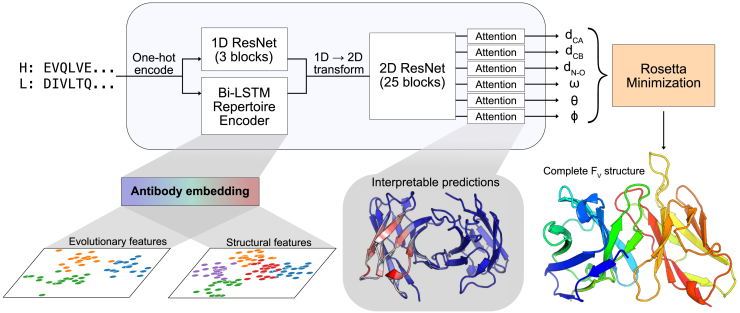
“In the recent UniRep method, RNNs were demonstrated to learn rich feature representations from protein sequences when trained on nextamino-acid prediction.(25) For our purposes, we developed an RNN encoder-decoder model(26); the encoder is a bidirectional long short-term memory (biLSTM) and the decoder is a long short…”
MethodMacromolecular modeling and design in Rosetta: recent methods and frameworks
Leman, J. K., Weitzner, B. D., Lewis, S. M., Adolf-Bryfogle, J., Alam, N., Alford, R. F., Aprahamian, M., Baker, D., Barlow, K. A., Barth, P., et al. (2020) · Nature Methods · doi:10.1038/s41592-020-0848-2 · Cited by 888
Self-citationSAbDab: the structural antibody database
Dunbar, J., Krawczyk, K., Leem, J., Baker, T., Fuchs, A., Georges, G., Shi, J., & Deane, C. M. (2014) · Nucleic Acids Research · doi:10.1093/nar/gkt1043 · Cited by 674
The promise and challenge of high-throughput sequencing of the antibody repertoire
Georgiou, G., Ippolito, G. C., Beausang, J., Busse, C. E., Wardemann, H., & Quake, S. R. (2014) · Nature Biotechnology · doi:10.1038/nbt.2782 · Cited by 652
De novo protein design by deep network hallucination
Anishchenko, I., Chidyausiku, T. M., Ovchinnikov, S., Pellock, S. J., & Baker, D. (2020) · doi:10.1101/2020.07.22.211482 · Cited by 629
CCNet: Criss-Cross Attention for Semantic Segmentation
Huang, Z., Wang, X., Wei, Y., Huang, L., Shi, H., Liu, W., & Huang, T. S. (2023) · IEEE Transactions on Pattern Analysis and Machine Intelligence · doi:10.1109/tpami.2020.3007032 · Cited by 524
ANARCI: antigen receptor numbering and receptor classification
Dunbar, J., & Deane, C. M. (2015) · Bioinformatics · doi:10.1093/bioinformatics/btv552 · Cited by 421
A new clustering of antibody CDR loop conformations
North, B., Lehmann, A., & Dunbrack, R. L. (2011) · Journal of Molecular Biology · doi:10.1016/j.jmb.2010.10.030 · Cited by 380
Five computational developability guidelines for therapeutic antibody profiling
Raybould, M. I. J., Marks, C., Krawczyk, K., Taddese, B., Nowak, J., Lewis, A. P., Bujotzek, A., Shi, J., & Deane, C. M. (2019) · Proceedings of the National Academy of Sciences · doi:10.1073/pnas.1810576116 · Cited by 357
CCNet: Criss-Cross Attention for Semantic SegmentationPreprint
Huang, Z., Wang, X., Wei, Y., Huang, L., Shi, H., Liu, W., & Huang, T. S. (2018) · arXiv (Cornell University) · doi:10.48550/arxiv.1811.11721 · Cited by 351
Rao, R., Liu, J., Verkuil, R., Meier, J., Canny, J. F., Abbeel, P., Sercu, T., & Rives, A. (2021) · doi:10.1101/2021.02.12.430858 · Cited by 350
Transformer protein language models are unsupervised structure learners
Rao, R., Meier, J., Sercu, T., Ovchinnikov, S., & Rives, A. (2020) · doi:10.1101/2020.12.15.422761 · Cited by 341
BERTology Meets Biology: Interpreting Attention in Protein Language Models
Vig, J., Madani, A., Varshney, L. R., Xiong, C., Socher, R., & Rajani, N. F. (2020) · doi:10.1101/2020.06.26.174417 · Cited by 338
Protein design and variant prediction using autoregressive generative models
Shin, J.-E., Riesselman, A. J., Kollasch, A. W., McMahon, C., Simon, E., Sander, C., Manglik, A., Kruse, A. C., & Marks, D. S. (2021) · Nature Communications · doi:10.1038/s41467-021-22732-w · Cited by 320
High-Throughput Mapping of B Cell Receptor Sequences to Antigen Specificity
Setliff, I., Shiakolas, A. R., Pilewski, K. A., Murji, A. A., Mapengo, R. E., Janowska, K., Richardson, S., Oosthuysen, C., Raju, N., Ronsard, L., et al. (2019) · Cell · doi:10.1016/j.cell.2019.11.003 · Cited by 314
Kaplon, H., & Reichert, J. M. (2021) · mAbs · doi:10.1080/19420862.2020.1860476 · Cited by 301
DSNet: Joint Semantic Learning for Object Detection in Inclement Weather Conditions
Huang, S.-C., Le, T.-H., & Jaw, D.-W. (2020) · IEEE Transactions on Pattern Analysis and Machine Intelligence · doi:10.1109/tpami.2020.2977911 · Cited by 267
Modeling and docking of antibody structures with Rosetta
Weitzner, B. D., Jeliazkov, J. R., Lyskov, S., Marze, N. A., Kuroda, D., Frick, R., Adolf‐Bryfogle, J., Biswas, N., Dunbrack, R. L., & Gray, J. J. (2017) · Nature Protocols · doi:10.1038/nprot.2016.180 · Cited by 266
Self-citationKing, H. W., Orban, N. T., Riches, J. C., Clear, A. J., Warnes, G., Teichmann, S. A., & James, L. K. (2021) · Science Immunology · doi:10.1126/sciimmunol.abe6291 · Cited by 262
Calibrating Deep Neural Networks using Focal LossPreprint
Mukhoti, J., Kulharia, V., Sanyal, A., Golodetz, S., Torr, P. H. S., & Dokania, P. K. (2020) · arXiv (Cornell University) · doi:10.48550/arxiv.2002.09437 · Cited by 248
Kovaltsuk, A., Leem, J., Kelm, S., Snowden, J., Deane, C. M., & Krawczyk, K. (2018) · The Journal of Immunology · doi:10.4049/jimmunol.1800708 · Cited by 247
Niederfellner, G. J., Lammens, A., Mundigl, O., Georges, G. J., Schäfer, W. M., Schwaiger, M., Franke, A., Wiechmann, K., Jenewein, S., Slootstra, J. W., et al. (2011) · Blood · doi:10.1182/blood-2010-09-305847 · Cited by 230
Deep Learning in Protein Structural Modeling and Design
Gao, W., Mahajan, S. P., Sulam, J., & Gray, J. J. (2020) · Patterns · doi:10.1016/j.patter.2020.100142 · Cited by 227
Self-citationSAbPred: a structure-based antibody prediction server
Dunbar, J., Krawczyk, K., Leem, J., Marks, C., Nowak, J., Regep, C., Georges, G. J., Kelm, S., Popovic, B., & Deane, C. M. (2016) · Nucleic Acids Research · doi:10.1093/nar/gkw361 · Cited by 202
Akbar, R., Robert, P. A., Pavlović, M., Jeliazkov, J. R., Snapkov, I., Slabodkin, A., Weber, C. R., Scheffer, L., Miho, E., Haff, I. H., et al. (2021) · Cell Reports · doi:10.1016/j.celrep.2021.108856 · Cited by 191
A Potently Neutralizing Antibody Protects Mice against SARS-CoV-2 Infection
Alsoussi, W. B., Turner, J. S., Case, J. B., Zhao, H., Schmitz, A. J., Zhou, J. Q., Chen, R. E., Lei, T., Rizk, A. A., McIntire, K. M., et al. (2020) · The Journal of Immunology · doi:10.4049/jimmunol.2000583 · Cited by 181
Greener, J. G., Kandathil, S. M., & Jones, D. T. (2019) · Nature Communications · doi:10.1038/s41467-019-11994-0 · Cited by 178
de Groot, D. H., van Boxtel, C., Planqué, R., Bruggeman, F. J., & Teusink, B. (2019) · PLoS Computational Biology · doi:10.1371/journal.pcbi.1006858 · Cited by 172
Goldstein, L. D., Chen, Y.-J. J., Wu, J., Chaudhuri, S., Hsiao, Y.-C., Schneider, K., Hoi, K. H., Lin, Z., Guerrero, S., Jaiswal, B. S., et al. (2019) · Communications Biology · doi:10.1038/s42003-019-0551-y · Cited by 162
Second antibody modeling assessment (AMA-II)
Almagro, J. C., Teplyakov, A., Luo, J., Sweet, R. W., Kodangattil, S., Hernandez‐Guzman, F., & Gilliland, G. L. (2014) · Proteins Structure Function and Bioinformatics · doi:10.1002/prot.24567 · Cited by 144
Protein sequence design by conformational landscape optimization
Norn, C., Wicky, B. I. M., Juergens, D., Liu, S., Kim, D., Tischer, D., Koepnick, B., Anishchenko, I., Players, F., Baker, D., et al. (2021) · Proceedings of the National Academy of Sciences · doi:10.1073/pnas.2017228118 · Cited by 144
Learning context-aware structural representations to predict antigen and antibody binding interfaces
Pittala, S., & Bailey‐Kellogg, C. (2020) · Bioinformatics · doi:10.1093/bioinformatics/btaa263 · Cited by 142
ABangle: characterising the VH-VL orientation in antibodies
Dunbar, J., Fuchs, A., Shi, J., & Deane, C. M. (2013) · Protein Engineering Design and Selection · doi:10.1093/protein/gzt020 · Cited by 125
Humanization of antibodies using a machine learning approach on large-scale repertoire data
Marks, C., Hummer, A. M., Chin, M., & Deane, C. M. (2021) · Bioinformatics · doi:10.1093/bioinformatics/btab434 · Cited by 124
PyIgClassify: a database of antibody CDR structural classifications
Adolf‐Bryfogle, J., Xu, Q., North, B., Lehmann, A., & Dunbrack, R. L. (2014) · Nucleic Acids Research · doi:10.1093/nar/gku1106 · Cited by 120
Warszawski, S., Katz, A. B., Lipsh‐Sokolik, R., Khmelnitsky, L., Ben‐Nissan, G., Javitt, G., Dym, O., Unger, T., Knop, O., Albeck, S., et al. (2019) · PLoS Computational Biology · doi:10.1371/journal.pcbi.1007207 · Cited by 114
The Origin of CDR H3 Structural Diversity
Weitzner, B. D., Dunbrack, R. L., & Gray, J. J. (2015) · Structure · doi:10.1016/j.str.2014.11.010 · Cited by 109
Self-citationThe H3 loop of antibodies shows unique structural characteristics
Regep, C., Georges, G., Shi, J., Popovic, B., & Deane, C. M. (2017) · Proteins Structure Function and Bioinformatics · doi:10.1002/prot.25291 · Cited by 99
Fast activation maximization for molecular sequence design
Linder, J., & Seelig, G. (2021) · BMC Bioinformatics · doi:10.1186/s12859-021-04437-5 · Cited by 79
MUFOLD: A new solution for protein 3D structure prediction
Zhang, J., Wang, Q., Barz, B., He, Z., Kosztin, I., Shang, Y., & Xu, D. H. (2009) · Proteins Structure Function and Bioinformatics · doi:10.1002/prot.22634 · Cited by 78
CDR-H3 loop ensemble in solution – conformational selection upon antibody binding
Fernández‐Quintero, M. L., Kraml, J., Georges, G. J., & Liedl, K. R. (2019) · mAbs · doi:10.1080/19420862.2019.1618676 · Cited by 77
A Review of Deep Learning Methods for Antibodies
Graves, J., Byerly, J., Priego, E., Makkapati, N., Parish, S., Medellin, B. P., & Berrondo, M. (2020) · Antibodies · doi:10.3390/antib9020012 · Cited by 76
Geometric potentials from deep learning improve prediction of CDR H3 loop structures
Ruffolo, J. A., Guerra, C., Mahajan, S. P., Sulam, J., & Gray, J. J. (2020) · Bioinformatics · doi:10.1093/bioinformatics/btaa457 · Cited by 74
Self-citationRepertoire Builder: high-throughput structural modeling of B and T cell receptors
Dimitri, S., Li, S., Rozewicki, J., Katoh, K., Yamashita, K., Volkmuth, W., Cavet, G., & Standley, D. M. (2019) · Molecular Systems Design & Engineering · doi:10.1039/c9me00020h · Cited by 67
Improved prediction of antibody VL–VHorientation
Marze, N. A., Lyskov, S., & Gray, J. J. (2016) · Protein Engineering Design and Selection · doi:10.1093/protein/gzw013 · Cited by 55
Self-citationWojciak, J. M., Zhu, N., Schuerenberg, K. T., Moreno, K. M., Shestowsky, W. S., Hiraiwa, M., Sabbadini, R. A., & Huxford, T. (2009) · Proceedings of the National Academy of Sciences · doi:10.1073/pnas.0906153106 · Cited by 51
Weitzner, B. D., & Gray, J. J. (2016) · The Journal of Immunology · doi:10.4049/jimmunol.1601137 · Cited by 45
Self-citationRobustification of RosettaAntibody and Rosetta SnugDock
Jeliazkov, J. R., Frick, R., Zhou, J., & Gray, J. J. (2021) · PLoS ONE · doi:10.1371/journal.pone.0234282 · Cited by 34
Self-citationPredicting Antibody Developability from Sequence using Machine LearningPreprint
Chen, X., Dougherty, T., Hong, C., Schibler, R. S., Zhao, Y. C., Sadeghi, R., Matasci, N., Wu, Y.-C., & Kerman, I. (2020) · bioRxiv (Cold Spring Harbor Laboratory) · doi:10.1101/2020.06.18.159798 · Cited by 26
T-bet+ Memory B Cells Link to Local Cross-Reactive IgG upon Human Rhinovirus Infection
Eccles, J. D., Turner, R. B., Kirk, N. A., Muehling, L. M., Borish, L., Steinke, J. W., Payne, S. C., Wright, P. W., Thacker, D. F., Lahtinen, S. J., et al. (2020) · Cell Reports · doi:10.1016/j.celrep.2019.12.027 · Cited by 25
Co-evolutionary distance predictions contain flexibility information
Schwarz, D., Georges, G. J., Kelm, S., Shi, J., Vangone, A., & Deane, C. M. (2021) · Bioinformatics · doi:10.1093/bioinformatics/btab562 · Cited by 17
Research works printed but not linked: 1
- Linder, 2020, Fast differentiable DNA and protein sequence optimization for molecular design, arXiv
Cited by
Sorted by citations
Fast, accurate antibody structure prediction from deep learning on massive set of natural antibodies
Ruffolo, J. A., Chu, L., Mahajan, S. P., & Gray, J. J. (2023) · Nature Communications · doi:10.1038/s41467-023-38063-x · Cited by 364
Self-citationImmuneBuilder: Deep-Learning models for predicting the structures of immune proteins
Abanades, B., Wong, W. K., Boyles, F., Georges, G. J., Bujotzek, A., & Deane, C. M. (2023) · Communications Biology · doi:10.1038/s42003-023-04927-7 · Cited by 323
Designing antibodies as therapeutics
Carter, P. J., & Rajpal, A. (2022) · Cell · doi:10.1016/j.cell.2022.05.029 · Cited by 282
Drug discovery and development: introduction to the general public and patient groups
Singh, N., Vayer, P., Tanwar, S., Poyet, J., Tsaioun, K., & Villoutreix, B. O. (2023) · Frontiers in Drug Discovery · doi:10.3389/fddsv.2023.1201419 · Cited by 235
Computational and artificial intelligence-based methods for antibody development
Kim, J., McFee, M., Fang, Q., Abdin, O., & Kim, P. M. (2023) · Trends in Pharmacological Sciences · doi:10.1016/j.tips.2022.12.005 · Cited by 178
Metadata
- Authors
- Ruffolo, J. A., Sulam, J., & Gray, J. J.
- Affiliations
- Johns Hopkins University (US)
- Corresponding author
- Gray, Jeffrey J.
- Venue
- Patterns
- Publisher
- Elsevier BV
- Published
- 2022-02
- Volume
- 3
- Issue
- 2
- Pages
- 100406
- ISSN
- 2666-3899 (ISSN-L)
- PMC
- PMC8848015
- OpenAlex
- W4226108318
- Cited by
- 216
- References
- 75
- Citations by year
- 2026: 26 · 2025: 42 · 2024: 50 · 2023: 58 · 2022: 37
- FWCI
- 11.62
- Type
- journal article
- Language
- en
- Open access
- gold
- doi.org
- Licence
- Locations
- Patterns (publishedVersion, cc-by-nc-nd)
- bioRxiv (Cold Spring Harbor Laboratory) (acceptedVersion, cc-by-nc)
- PubMed Central (publishedVersion, cc-by-nc-nd)
- PubMed (publishedVersion)
- Funders
- Maryland Advanced Research Computing Center
- National Institutes of Health (R01-GM078221, T32-GM008403)
- AstraZeneca plc
- Topics
- Life Sciences › Biochemistry, Genetics and Molecular Biology › Molecular Biology › Protein Structure and Dynamics
- Life Sciences › Immunology and Microbiology › Immunology › Monoclonal and Polyclonal Antibodies Research
- Life Sciences › Biochemistry, Genetics and Molecular Biology › Molecular Biology › vaccines and immunoinformatics approaches
- Keywords
- antibody structure prediction, therapeutic antibodies, explainable deep learning, attention mechanism, binding affinity, rational antibody design, hydrogen bonding
About these checks
Registry, retraction, Cites and statistics results are computed, not judged, with one exception: a printed reference that no index lists is read once by a model before it counts as a citation error. Claims are extracted by a model and kept only when their quote appears verbatim in the text; each cited source is then checked, with a model’s help, for whether it says what the claim relies on. Those verdicts can be wrong — read the claim’s quote and the cited source before relying on one.
Statistics and arithmetic are recomputed, not judged.
Confidence bands are shown only for fields calibrated on our annotated test set. None is calibrated yet, so no band is shown.
What counts as a claim ›How we measure confidence ›How we check this ›
Are you an author, or do you see a problem with this page? Request a review
