Cited by 28Genomics, phytochemicals, and oxidative stressRedox biology and oxidative stressNF-κB Signaling Pathways

The DOI matches its Crossref record; 529 of the 551 references it cites were found in a registry or an index.

Health position paper and redox perspectives – Bench to bedside transition for pharmacological regulation of NRF2 in noncommunicable diseases

Open access

Abstract

Nuclear factor erythroid 2-related factor 2 (NRF2) is a redox-activated transcription factor regulating cellular defense against oxidative stress, thereby playing a pivotal role in maintaining cellular homeostasis. Its dysregulation is implicated in the progression of a wide array of human diseases, making NRF2 a compelling target for therapeutic interventions. However, challenges persist in drug discovery and safe targeting of NRF2, as unresolved questions remain especially regarding its context-specific role in diseases and off-target effects. This comprehensive review discusses the dualistic role of NRF2 in disease pathophysiology, covering its protective and/or destructive roles in autoimmune, respiratory, cardiovascular, and metabolic diseases, as well as diseases of the digestive system and cancer. Additionally, we also review the development of drugs that either activate or inhibit NRF2, discuss main barriers in translating NRF2-based therapies from bench to bedside, and consider the ways to monitor NRF2 activation in vivo.

Overview

The claims and statistics of this paper haven’t been checked yet.

Run the check — free, no account needed. It reads the open-access text and checks the sources it cites.

A few free checks a day · papers already verified open instantly · results are public

Integrity signals

Registry

Crossref · 10.1016/j.redox.2025.103569

Cites

529 of 529 references verified0 citation errors · 0 not checkable

Statistics

Figures

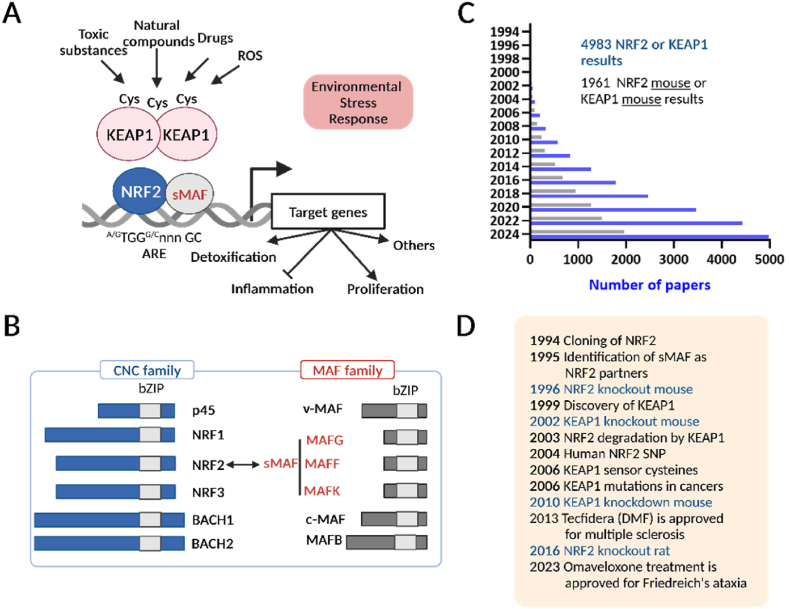
Fig. 1 The KEAP1-NRF2 system in environmental stress response. A. Cysteine residues in KEAP1 serve as sensors for external and/or internal chemicals, a mechanism commonly referred to as the “Cysteine Code”. NRF2 is a transcription factor belonging to the CNC family. NRF2 forms a heterodimer with sMAF and binds to the CsMBE (CNC-sMAF Binding Element), also known as the ARE/EpRE (Antioxidant/Electrophile Responsive Element). This NRF2-sMAF heterodimer governs the expression of an array of target genes related to detoxification, proliferation, and inhibition of inflammation among other processes. B. Structure comparison of NRF2-related proteins from the CNC family with the bZIP marked in a grey box on the left column. On the right column the simplified protein structure of the MAF family is represented, sMAF proteins that interact with NRF2 are highlighted in red. C. Since the cloning of NRF2, over the past 30 years, there has been a steady rise in the number of papers related to NRF2 or KEAP1 (depicted in orange) and those associated with NRF2 mouse or KEAP1 mouse (shown in grey). The paper search was conducted in Pubmed (https://pubmed.ncbi.nlm.nih.gov) as of Feb 4, 2025. D. Chronologic table illustrating the progression of the KEAP1-NRF2 studies including its discovery, the heterodimerization with sMAF proteins, the development of KO animals (highlighted in blue), key aspects of its regulation and the approval of NRF2 activators by the FDA for disease treatments. Abbreviations: ROS, reactive oxygen species; CNC, cap'n’collar; ARE, antioxidant response element; Cys, cysteine; NRF2, nuclear factor erythroid 2-related factor 2; sMAF, small musculoaponeurotic fibrosarcoma; KEAP1, Kelch like ECH associated protein 1; SNP, single nucleotide polymorphism; BACH, BTB domain and CNC homolog; DMF, Dimethyl fumarate.
Fig. 1 The KEAP1-NRF2 system in environmental stress response. A. Cysteine residues in KEAP1 serve as sensors for external and/or internal chemicals, a mechanism commonly referred to as the “Cysteine Code”. NRF2 is a transcription factor belonging to the CNC family. NRF2 forms a heterodimer with sMAF and binds to the CsMBE (CNC-sMAF Binding Element), also known as the ARE/EpRE (Antioxidant/Electrophile Responsive Element). This NRF2-sMAF heterodimer governs the expression of an array of target genes related to detoxification, proliferation, and inhibition of inflammation among other processes. B. Structure comparison of NRF2-related proteins from the CNC family with the bZIP marked in a grey box on the left column. On the right column the simplified protein structure of the MAF family is represented, sMAF proteins that interact with NRF2 are highlighted in red. C. Since the cloning of NRF2, over the past 30 years, there has been a steady rise in the number of papers related to NRF2 or KEAP1 (depicted in orange) and those associated with NRF2 mouse or KEAP1 mouse (shown in grey). The paper search was conducted in Pubmed (https://pubmed.ncbi.nlm.nih.gov) as of Feb 4, 2025. D. Chronologic table illustrating the progression of the KEAP1-NRF2 studies including its discovery, the heterodimerization with sMAF proteins, the development of KO animals (highlighted in blue), key aspects of its regulation and the approval of NRF2 activators by the FDA for disease treatments. Abbreviations: ROS, reactive oxygen species; CNC, cap'n’collar; ARE, antioxidant response element; Cys, cysteine; NRF2, nuclear factor erythroid 2-related factor 2; sMAF, small musculoaponeurotic fibrosarcoma; KEAP1, Kelch like ECH associated protein 1; SNP, single nucleotide polymorphism; BACH, BTB domain and CNC homolog; DMF, Dimethyl fumarate.CC BY-NC-ND · PubMed Central
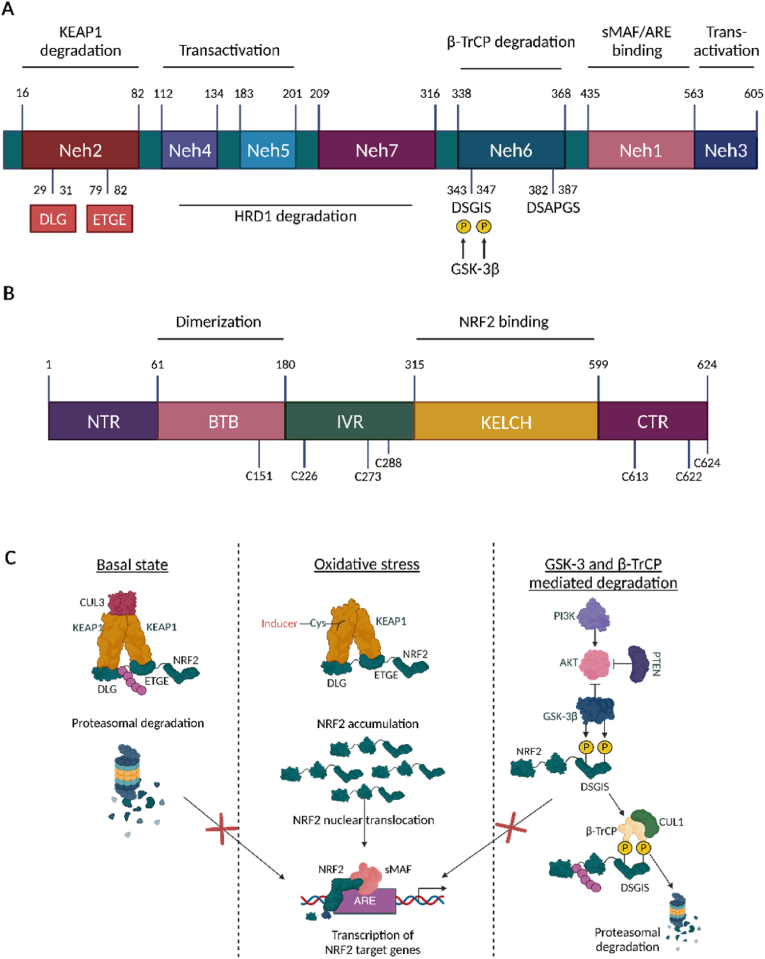
Fig. 2 A. Protein structure of the transcription factor NRF2. NRF2 contains seven conserved Neh domains. Neh1 serves as a heterodimerization domain with MAFs proteins and DNA binding. Neh2 and Neh6 direct NRF2 to proteasome-mediated degradation via KEAP1 and β-TrCP, respectively. Neh3, Neh4 and Neh5 are the transactivation domains, and Neh4 and Neh5 direct NRF2 to HRD1-mediated proteasomal degradation in the context of endoplasmic reticulum stress. Phosphorylation by GSK3-beta is needed in the DSGIS domain in Neh6 for β-TrCP degradation. The positions of each domain correspond to the human NRF2 protein. B. Structure of KEAP1. KEAP1 structure consists of five distinctive domains, NTR, BTB, IVR, Kelch, and CTR. The domains contain cysteine residues that react with various electrophiles, serving as sensors of redox changes. C. KEAP1-NRF2 mechanism of action in basal state, under oxidative stress, and the GSK-3 and β-TrCP mediated degradation. Under basal conditions, NRF2 is degraded through ubiquitination mediated by KEAP1. During oxidative or electrophilic stress, the sensor cysteines in KEAP1 undergo modifications by electrophiles and reactive oxygen species that result in KEAP1 conformational change, preventing ubiquitination of NRF2. As a result, NRF2 accumulates and translocates to the nucleus, leading to the transcription of NRF2 target genes. An alternative pathway to regulate NRF2 is the GSK-3/β-TrCP axis. GSK-3 inhibits NRF2 through phosphorylation of serine residues within the Neh6 domain, leading to the recognition by the β-TrCP-CUL1 ubiquitin ligase and subsequent proteasomal degradation. Abbreviations: Neh, NRF2-ECH homology; ARE, antioxidant response element; Cys, cysteine; NRF2, nuclear factor erythroid 2-related factor 2; sMAF, small musculoaponeurotic fibrosarcoma; KEAP1, Kelch like ECH associated protein 1; HRD1 HMG-CoA reductase degradation protein 1;CUL, cullin; GSK-3, glycogen synthase kinase 3; β-TrCP, β-transducin repeat-containing protein; HRD1, Hydroxymethyl glutaryl-coenzyme A reductase degradation protein.
Fig. 2 A. Protein structure of the transcription factor NRF2. NRF2 contains seven conserved Neh domains. Neh1 serves as a heterodimerization domain with MAFs proteins and DNA binding. Neh2 and Neh6 direct NRF2 to proteasome-mediated degradation via KEAP1 and β-TrCP, respectively. Neh3, Neh4 and Neh5 are the transactivation domains, and Neh4 and Neh5 direct NRF2 to HRD1-mediated proteasomal degradation in the context of endoplasmic reticulum stress. Phosphorylation by GSK3-beta is needed in the DSGIS domain in Neh6 for β-TrCP degradation. The positions of each domain correspond to the human NRF2 protein. B. Structure of KEAP1. KEAP1 structure consists of five distinctive domains, NTR, BTB, IVR, Kelch, and CTR. The domains contain cysteine residues that react with various electrophiles, serving as sensors of redox changes. C. KEAP1-NRF2 mechanism of action in basal state, under oxidative stress, and the GSK-3 and β-TrCP mediated degradation. Under basal conditions, NRF2 is degraded through ubiquitination mediated by KEAP1. During oxidative or electrophilic stress, the sensor cysteines in KEAP1 undergo modifications by electrophiles and reactive oxygen species that result in KEAP1 conformational change, preventing ubiquitination of NRF2. As a result, NRF2 accumulates and translocates to the nucleus, leading to the transcription of NRF2 target genes. An alternative pathway to regulate NRF2 is the GSK-3/β-TrCP axis. GSK-3 inhibits NRF2 through phosphorylation of serine residues within the Neh6 domain, leading to the recognition by the β-TrCP-CUL1 ubiquitin ligase and subsequent proteasomal degradation. Abbreviations: Neh, NRF2-ECH homology; ARE, antioxidant response element; Cys, cysteine; NRF2, nuclear factor erythroid 2-related factor 2; sMAF, small musculoaponeurotic fibrosarcoma; KEAP1, Kelch like ECH associated protein 1; HRD1 HMG-CoA reductase degradation protein 1;CUL, cullin; GSK-3, glycogen synthase kinase 3; β-TrCP, β-transducin repeat-containing protein; HRD1, Hydroxymethyl glutaryl-coenzyme A reductase degradation protein.CC BY-NC-ND · PubMed Central
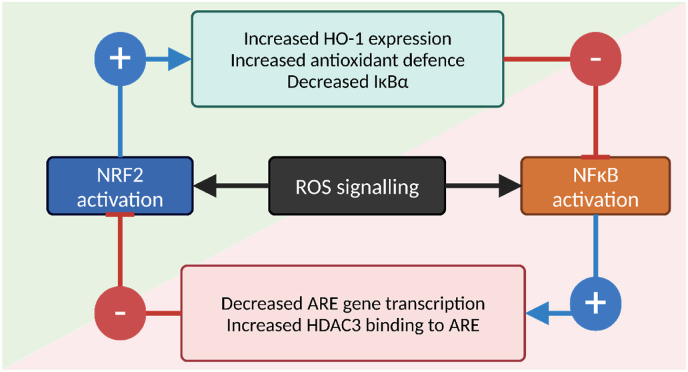
Fig. 3 Negative feedback regulation of the NRF2 and NFĸB pathways. NRF2 activates NFĸB by neutralizing ROS production, and by activating HO-1 and antioxidant enzymes. NRF2 also prevents the degradation of IĸBα which translates to inhibition of NFĸB. On the contrary, NFĸB mediated transcription reduces NRF2 activation by decreasing ARE gene transcription. Furthermore, increased recruitment of HDAC3 to the ARE region induced by NFĸB prevents NRF2 activation. Abbreviations: NRF2, nuclear factor erythroid 2-related factor 2; NFκB, nuclear factor kappa-B; CBP, CREB binding protein; ARE, antioxidant response element; HDAC3, histone deacetylase 3; HO-1, heme oxygenase-1.
Fig. 3 Negative feedback regulation of the NRF2 and NFĸB pathways. NRF2 activates NFĸB by neutralizing ROS production, and by activating HO-1 and antioxidant enzymes. NRF2 also prevents the degradation of IĸBα which translates to inhibition of NFĸB. On the contrary, NFĸB mediated transcription reduces NRF2 activation by decreasing ARE gene transcription. Furthermore, increased recruitment of HDAC3 to the ARE region induced by NFĸB prevents NRF2 activation. Abbreviations: NRF2, nuclear factor erythroid 2-related factor 2; NFκB, nuclear factor kappa-B; CBP, CREB binding protein; ARE, antioxidant response element; HDAC3, histone deacetylase 3; HO-1, heme oxygenase-1.CC BY-NC-ND · PubMed Central
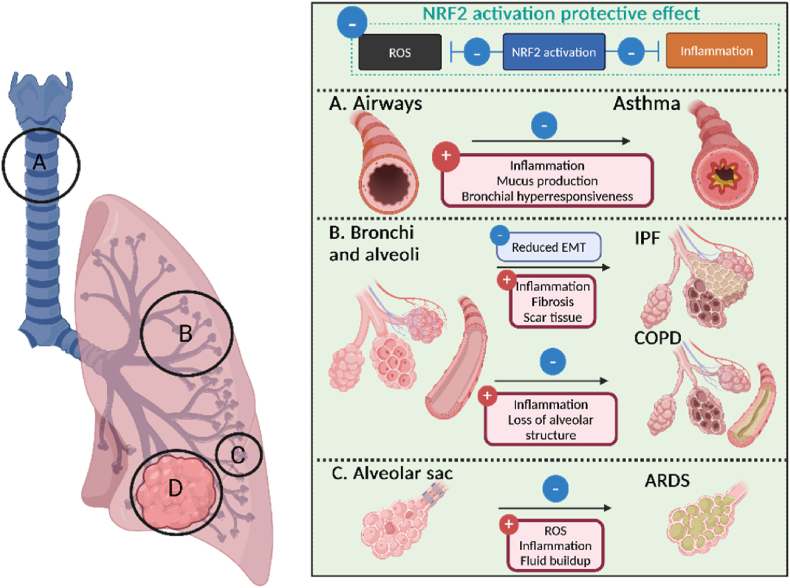
Fig. 4 Dysfunctional NRF2 activation implicated in pulmonary disorders. A) Asthma. Chronic inflammation, excess mucus production, and bronchial hyperresponsiveness in asthma are alleviated by NRF2-mediated anti-inflammatory activity. B) IPF and COPD. Idiopathic pulmonary fibrosis (IPF) results from excess deposition of fibrous matrix, resulting in scar tissue formation. NRF2 activation blocks disease progression by reducing matrix deposition and EMT through antioxidant and anti-inflammatory pathways. Chronic obstructive pulmonary disease (COPD) develops because of chronic inflammation and loss of alveolar structure. NRF2 activation alleviates inflammation by detoxifying ROS and blocking COPD disease progression. C) ARDS. ROS accumulation, inflammation, and bilateral fluid buildup lead to acute respiratory distress syndrome (ARDS). NRF2 activation prevents or ameliorates ARDS by detoxifying harmful ROS and reducing inflammation. Abbreviations: NRF2, nuclear factor erythroid 2-related factor 2; EMT, epithelial-to-mesenchymal transition; ROS, reactive oxygen species; IPF, idiopathic pulmonary fibrosis; COPD, chronic obstructive pulmonary disease; ARDS, acute respiratory distress syndrome.
Fig. 4 Dysfunctional NRF2 activation implicated in pulmonary disorders. A) Asthma. Chronic inflammation, excess mucus production, and bronchial hyperresponsiveness in asthma are alleviated by NRF2-mediated anti-inflammatory activity. B) IPF and COPD. Idiopathic pulmonary fibrosis (IPF) results from excess deposition of fibrous matrix, resulting in scar tissue formation. NRF2 activation blocks disease progression by reducing matrix deposition and EMT through antioxidant and anti-inflammatory pathways. Chronic obstructive pulmonary disease (COPD) develops because of chronic inflammation and loss of alveolar structure. NRF2 activation alleviates inflammation by detoxifying ROS and blocking COPD disease progression. C) ARDS. ROS accumulation, inflammation, and bilateral fluid buildup lead to acute respiratory distress syndrome (ARDS). NRF2 activation prevents or ameliorates ARDS by detoxifying harmful ROS and reducing inflammation. Abbreviations: NRF2, nuclear factor erythroid 2-related factor 2; EMT, epithelial-to-mesenchymal transition; ROS, reactive oxygen species; IPF, idiopathic pulmonary fibrosis; COPD, chronic obstructive pulmonary disease; ARDS, acute respiratory distress syndrome.CC BY-NC-ND · PubMed Central
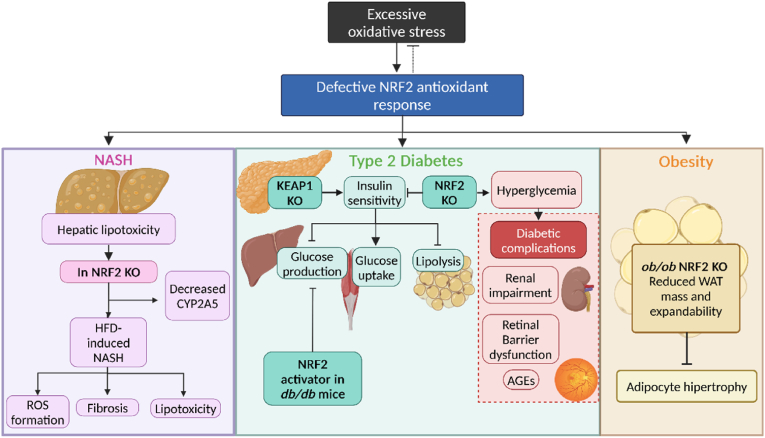
Fig. 5 Defective NRF2-mediated antioxidant response in metabolic diseases. Schematic picture of the impact of excessive oxidative stress and defective NRF2-mediated antioxidant responses in key tissues (liver, adipose tissue, skeletal muscle, pancreas) involved in metabolic diseases (type 2 diabetes, obesity, NASH). In NASH, the hepatic lipotoxicity in the NRF2 KO mice caused a decrease in CYP2A5 and results in NASH upon HFD. This NASH is characterized by ROS formation, fibrosis and lipotoxicity. In type 2 diabetes, a defective NRF2 response results in a reduced insulin sensitivity, affecting the glucose uptake, lipolysis and increasing glucose production. This hallmark of insulin desensitization leads in the NRF2 KO mice to hyperglycemia and diabetic complications. Regarding obesity a key characteristic is the adipocyte hypertrophy, which upon the combination of ob/ob mice with NRF2 deficiency is alleviated due to a reduced WAT mass and expendability. Abbreviations: NASH, non-alcoholic steatohepatitis; NRF2, nuclear factor erythroid 2-related factor 2; KO, knockout; HFD, high fat diet; ROS, reactive oxygen species; AGE, advanced glycation end product; WAT, white adipose tissue.
Fig. 5 Defective NRF2-mediated antioxidant response in metabolic diseases. Schematic picture of the impact of excessive oxidative stress and defective NRF2-mediated antioxidant responses in key tissues (liver, adipose tissue, skeletal muscle, pancreas) involved in metabolic diseases (type 2 diabetes, obesity, NASH). In NASH, the hepatic lipotoxicity in the NRF2 KO mice caused a decrease in CYP2A5 and results in NASH upon HFD. This NASH is characterized by ROS formation, fibrosis and lipotoxicity. In type 2 diabetes, a defective NRF2 response results in a reduced insulin sensitivity, affecting the glucose uptake, lipolysis and increasing glucose production. This hallmark of insulin desensitization leads in the NRF2 KO mice to hyperglycemia and diabetic complications. Regarding obesity a key characteristic is the adipocyte hypertrophy, which upon the combination of ob/ob mice with NRF2 deficiency is alleviated due to a reduced WAT mass and expendability. Abbreviations: NASH, non-alcoholic steatohepatitis; NRF2, nuclear factor erythroid 2-related factor 2; KO, knockout; HFD, high fat diet; ROS, reactive oxygen species; AGE, advanced glycation end product; WAT, white adipose tissue.CC BY-NC-ND · PubMed Central
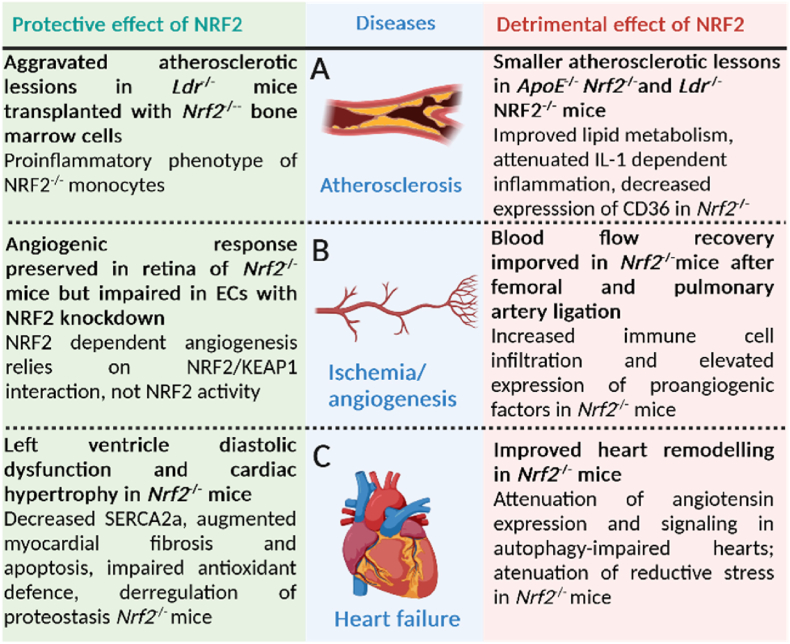
Fig. 6 NRF2 exhibits diverse effects across cardiovascular diseases. NRF2 can present both positive and negative effects in different heart diseases (atherosclerosis, heart failure, ischemia, and aneurysm). In atherosclerosis, NRF2 deficiency aggravates lesions but reduces atherosclerosis size, improving lipid metabolism and decreasing inflammation. For ischemia, NRF2 plays a dual role, promoting angiogenesis and immune cell infiltration. In heart failure, NRF2 KO leads to dysfunction and hypertrophy, but paradoxically improves heart remodeling while attenuating angiotensin expression. Abbreviations: NRF2, nuclear factor erythroid 2-related factor 2; LDR, low-density lipoprotein receptor; ApoE, apolipoprotein E; IL-1, interleukin 1; EC, endothelial cell; KEAP1, Kelch like ECH associated protein 1; SERCA2a, sarcoplasmic reticulum-adenosine triphosphatase 2A; VCAM1, vascular cell adhesion molecule 1; eNOS, endothelial nitric oxide synthase.
Fig. 6 NRF2 exhibits diverse effects across cardiovascular diseases. NRF2 can present both positive and negative effects in different heart diseases (atherosclerosis, heart failure, ischemia, and aneurysm). In atherosclerosis, NRF2 deficiency aggravates lesions but reduces atherosclerosis size, improving lipid metabolism and decreasing inflammation. For ischemia, NRF2 plays a dual role, promoting angiogenesis and immune cell infiltration. In heart failure, NRF2 KO leads to dysfunction and hypertrophy, but paradoxically improves heart remodeling while attenuating angiotensin expression. Abbreviations: NRF2, nuclear factor erythroid 2-related factor 2; LDR, low-density lipoprotein receptor; ApoE, apolipoprotein E; IL-1, interleukin 1; EC, endothelial cell; KEAP1, Kelch like ECH associated protein 1; SERCA2a, sarcoplasmic reticulum-adenosine triphosphatase 2A; VCAM1, vascular cell adhesion molecule 1; eNOS, endothelial nitric oxide synthase.CC BY-NC-ND · PubMed Central
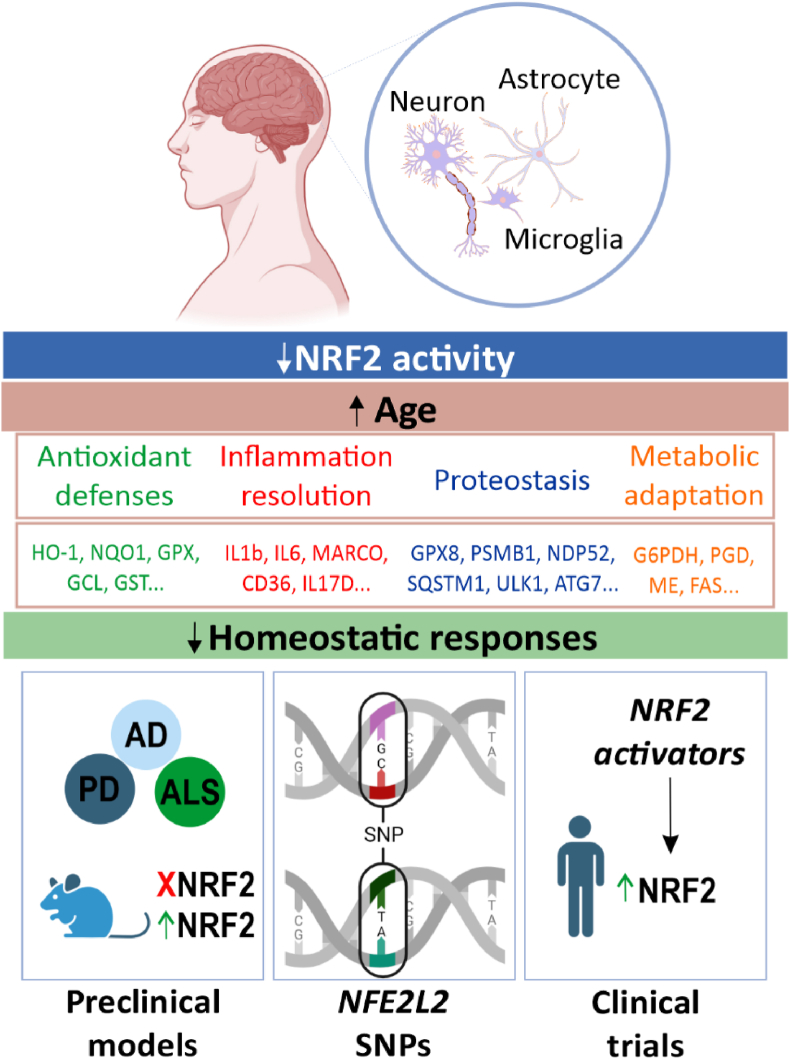
Fig. 7 NRF2 as a promising therapeutic target to reinforce the endogenous protective program in the central nervous system. Aging is the primary risk factor for developing neurodegenerative diseases in the CNS leading to homeostatic deviations including loss of activity of NRF2. This reduction negatively impacts on the expression levels of crucial genes associated with antioxidant defenses, inflammation resolution, proteostasis, and metabolic adaptation. Preclinical and genetic studies for main degenerative diseases, such as PD, AD and ALS, pave the way for investigating the therapeutic role of NRF2 in clinical trials enrolling patients suffering from neurodegenerative diseases. Some SNPS have been associated with a decreased risk or delayed onset of these neurodegenerative diseases, in certain populations, while others have been associated with earlier onset. These observations suggest the potential therapeutic effect that NRF2 could provide for neurodegenerative diseases Abbreviations: NRF2, nuclear factor erythroid 2-related factor 2; HO-1, heme oxygenase-1; NQO1, NAD(P)H:quinone oxidoreductase 1; GPX, glutathione peroxidase; GCL, glutamyl cysteine ligase; GST, glutathione-S-transferase; IL1b, interleukin 1β; IL6, interleukin 6; MARCO, macrophage receptor with collagenous structure; IL17D; interleukin 17D; PSMB7, proteasome subunit b type-7; NDP52, Calcium-binding and coiled-coil domain-containing protein 2; SQSTM1, sequestosome 1/p62; ULK1, unc-51 like autophagy activating kinase 1; ATG7, Autophagy Related 7; G6PDH, glucose-6-phosphate dehydrogenase; PGD, phosphogluconate dehydrogenase; ME, malic enzyme; FAS, fatty acid synthase. AD, Alzheimer's disease; PD, Parkinson's disease; ALS, amyotrophic lateral sclerosis.
Fig. 7 NRF2 as a promising therapeutic target to reinforce the endogenous protective program in the central nervous system. Aging is the primary risk factor for developing neurodegenerative diseases in the CNS leading to homeostatic deviations including loss of activity of NRF2. This reduction negatively impacts on the expression levels of crucial genes associated with antioxidant defenses, inflammation resolution, proteostasis, and metabolic adaptation. Preclinical and genetic studies for main degenerative diseases, such as PD, AD and ALS, pave the way for investigating the therapeutic role of NRF2 in clinical trials enrolling patients suffering from neurodegenerative diseases. Some SNPS have been associated with a decreased risk or delayed onset of these neurodegenerative diseases, in certain populations, while others have been associated with earlier onset. These observations suggest the potential therapeutic effect that NRF2 could provide for neurodegenerative diseases Abbreviations: NRF2, nuclear factor erythroid 2-related factor 2; HO-1, heme oxygenase-1; NQO1, NAD(P)H:quinone oxidoreductase 1; GPX, glutathione peroxidase; GCL, glutamyl cysteine ligase; GST, glutathione-S-transferase; IL1b, interleukin 1β; IL6, interleukin 6; MARCO, macrophage receptor with collagenous structure; IL17D; interleukin 17D; PSMB7, proteasome subunit b type-7; NDP52, Calcium-binding and coiled-coil domain-containing protein 2; SQSTM1, sequestosome 1/p62; ULK1, unc-51 like autophagy activating kinase 1; ATG7, Autophagy Related 7; G6PDH, glucose-6-phosphate dehydrogenase; PGD, phosphogluconate dehydrogenase; ME, malic enzyme; FAS, fatty acid synthase. AD, Alzheimer's disease; PD, Parkinson's disease; ALS, amyotrophic lateral sclerosis.CC BY-NC-ND · PubMed Central
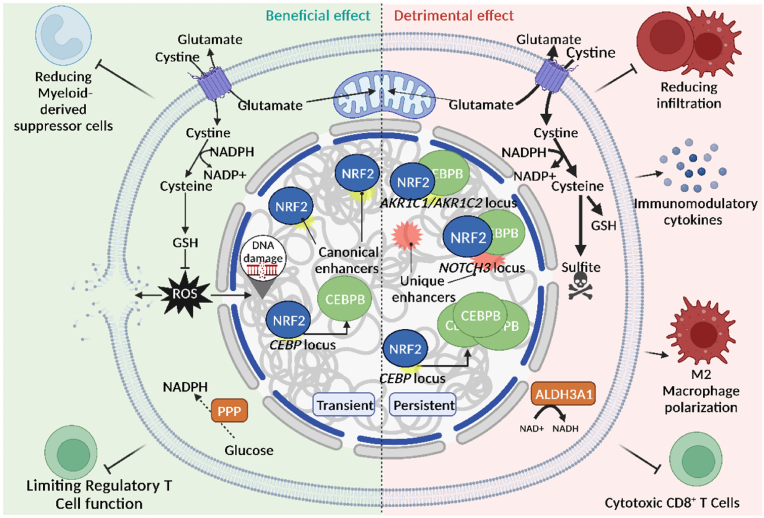
Fig. 8 Dichotomy of NRF2 in cancer. NRF2 plays an important role in cytoprotection from oxidative stress (beneficial effect, left half) and supports malignant phenotypes of cancer cells (detrimental effect, right half). NRF2 functions at three layers, transcription, metabolism, and tumor immunity, are illustrated. On the beneficial effect, NRF2 binds to its canonical enhancers upon oxidative stress, which can damage the DNA and is blocked by antioxidative enzymes regulated by NRF2, as well as NADPH mediated by NRF2 promotion of the PPP. In physiological conditions, NRF2 activation is transient and is eventually repressed by its degradation mechanism. On the other hand, NRF2 hyperactivation in cancer can result in worse prognosis and becoming dependent on NRF2 activity, inducing constant CEBPB expression. This leads to NRF2-CEBPB cooperativity that does not happen in normal cells, generating a unique enhancer at the NOTCH3 locus, leading to promotion of cancer stemness and contributes to the generation of super-enhancer at AKR1C1-AKR1C2 locus, further increasing drug resistance. Loss of KEAP1 regulation results in NRF2 promotion of immunomodulatory cytokines, inhibition of CD8 T cells, reduced immune system cells infiltration and induction of the M2 polarization of macrophages. Abbreviations: NADPH, nicotinamide adenine dinucleotide phosphate; GSH, glutathione; ROS, reactive oxygen species; PPP, pentose phosphate pathway; CEBP, CCAAT enhancer binding protein; NRF2, nuclear factor erythroid 2-related factor 2; AKR, aldo-keto reductase; ALDH, aldehyde dehydrogenase.
Fig. 8 Dichotomy of NRF2 in cancer. NRF2 plays an important role in cytoprotection from oxidative stress (beneficial effect, left half) and supports malignant phenotypes of cancer cells (detrimental effect, right half). NRF2 functions at three layers, transcription, metabolism, and tumor immunity, are illustrated. On the beneficial effect, NRF2 binds to its canonical enhancers upon oxidative stress, which can damage the DNA and is blocked by antioxidative enzymes regulated by NRF2, as well as NADPH mediated by NRF2 promotion of the PPP. In physiological conditions, NRF2 activation is transient and is eventually repressed by its degradation mechanism. On the other hand, NRF2 hyperactivation in cancer can result in worse prognosis and becoming dependent on NRF2 activity, inducing constant CEBPB expression. This leads to NRF2-CEBPB cooperativity that does not happen in normal cells, generating a unique enhancer at the NOTCH3 locus, leading to promotion of cancer stemness and contributes to the generation of super-enhancer at AKR1C1-AKR1C2 locus, further increasing drug resistance. Loss of KEAP1 regulation results in NRF2 promotion of immunomodulatory cytokines, inhibition of CD8 T cells, reduced immune system cells infiltration and induction of the M2 polarization of macrophages. Abbreviations: NADPH, nicotinamide adenine dinucleotide phosphate; GSH, glutathione; ROS, reactive oxygen species; PPP, pentose phosphate pathway; CEBP, CCAAT enhancer binding protein; NRF2, nuclear factor erythroid 2-related factor 2; AKR, aldo-keto reductase; ALDH, aldehyde dehydrogenase.CC BY-NC-ND · PubMed Central

Verification

Claims the paper makes

The claims and statistics of this paper haven’t been checked yet.

Run the check — free, no account needed. It reads the open-access text and checks the sources it cites.

A few free checks a day · papers already verified open instantly · results are public

Claims other papers make about this one

Each is checked against this paper’s own text: does it say what the citing paper says it does?

Self-check

Percentages, sums and reported differences re-computed from the paper’s own numbers.

The self-check needs the paper’s full text.

Citations

Cites

Show all 551 references

Cited by

Sorted by citations

See all 28

Metadata

Authors
Cuadrado, A., Cazalla, E., Bach, A., Bathish, B., Naidu, S. D., DeNicola, G. M., Dinkova-Kostova, A. T., Fernández-Ginés, R., Grochot-Przeczek, A., Hayes, J. D., Kensler, T. W., León, R., Liby, K. T., López, M. G., Manda, G., Shivakumar, A. K., Hakomäki, H., Moerland, J. A., Motohashi, H., Rojo, A. I., Sykiotis, G. P., Taguchi, K., Valverde, Á. M., Yamamoto, M., & Levonen, A.-L.
Affiliations
  • Biomedical Research Networking Center on Neurodegenerative Diseases (ES)
  • Consejo Superior de Investigaciones Científicas (ES)
  • University of Copenhagen (DK)
  • University of Dundee (GB)
  • Moffitt Cancer Center (US)
  • Fred Hutch Cancer Center (US)
  • Indiana University School of Medicine (US)
  • Hospital Universitario de La Princesa (ES)
  • Institutul National Victor Babes (RO)
  • University of Eastern Finland (FI)
  • Tohoku University (JP)
Corresponding author
Cuadrado, Antonio
Venue
Redox Biology
Publisher
Elsevier BV
Published
2025-04
Volume
81
Pages
103569
ISSN
2213-2317 (ISSN-L)
OpenAlex
W4408102298
Cited by
28
References
551
Citations by year
2026: 19 · 2025: 9
FWCI
8.37
Type
journal article
Language
en
Open access
Locations
  • Redox Biology (publishedVersion, cc-by-nc-nd)
  • PubMed Central (publishedVersion, cc-by-nc-nd)
  • PubMed (publishedVersion)
  • Discovery Research Portal (University of Dundee) (publishedVersion, cc-by-nc-nd)
  • Research at the University of Copenhagen (University of Copenhagen) (publishedVersion, cc-by-nc-nd)
  • SERVAL (Université de Lausanne) (publishedVersion, cc-by-nc-nd)
  • DIGITAL.CSIC (Spanish National Research Council (CSIC)) (submittedVersion, cc-by-nc-nd)
  • DOAJ (DOAJ: Directory of Open Access Journals) (submittedVersion, cc-by-sa)
  • IRIS (submittedVersion, cc-by-nc-nd)
  • Biblos-e Archivo (Universidad Autónoma de Madrid) (submittedVersion, public-domain)
  • IUScholarWorks (Indiana University) (submittedVersion, cc-by-nc-nd)
Funders
  • Instituto de Salud Carlos III (CB06/05/0010)
  • Biotechnology and Biological Sciences Research Council (BB/X00029X/1, BB/T508111/1)
  • Lundbeck Foundation (R366-2021-270)
  • Comunidad de Madrid (P2022/BMD-7230, P2022/BMD-7230-CAM-22)
  • Centro de Investigación Biomédica en Red sobre Enfermedades Neurodegenerativas
  • Syöpäsäätiö
  • Ministerio de Ciencia e Innovación
  • Foundation for the National Institutes of Health
  • Ministerio de Universidades (FPU21/02505, FPU2021)
  • Biogen (415,416, S217879)
  • National Institutes of Health (PID-2021-122766OB-1363 100, MICIU/AEI/10.13039/501100011033, F31 CA275239)
  • National Cancer Center
  • Schweizerischer Nationalfonds zur Förderung der Wissenschaftlichen Forschung (IZCOZ0_205415, 310030_212558)
  • Tenovus (T22-08)
  • European Cooperation in Science and Technology (CA20121)
  • Narodowe Centrum Nauki (2021/43/B/NZ4/02130)
  • Medical Research Council (MR/W023806/1, MR/T014644/1)
  • Sigrid Juséliuksen Säätiö
  • Ministerio de Ciencia, Innovación y Universidades (PID-2021-122766OB-100, PID2021-123481OB-I00, PDC2021-121 421-I00, PDC2022-133 765-I00)
Topics
  • Life Sciences › Biochemistry, Genetics and Molecular Biology › Molecular Biology › Genomics, phytochemicals, and oxidative stress
  • Life Sciences › Biochemistry, Genetics and Molecular Biology › Molecular Biology › Redox biology and oxidative stress
  • Life Sciences › Biochemistry, Genetics and Molecular Biology › Cancer Research › NF-κB Signaling Pathways
Keywords
Nrf2, redox signaling, oxidative stress, non-communicable diseases, Nrf2 activators, Nrf2 inhibitors, drug development, translational medicine, autoimmune disease, respiratory diseases, cardiovascular disease, metabolic disorders, gastrointestinal diseases, cancer, off-target effects
MeSH terms
Noncommunicable Diseases, Animals, Humans, Neoplasms, Oxidation-Reduction, Oxidative Stress, NF-E2-Related Factor 2

About these checks

Registry, retraction, Cites and statistics results are computed, not judged, with one exception: a printed reference that no index lists is read once by a model before it counts as a citation error. Claims are extracted by a model and kept only when their quote appears verbatim in the text; each cited source is then checked, with a model’s help, for whether it says what the claim relies on. Those verdicts can be wrong — read the claim’s quote and the cited source before relying on one.

Statistics and arithmetic are recomputed, not judged.

Confidence bands are shown only for fields calibrated on our annotated test set. None is calibrated yet, so no band is shown.

What counts as a claim ›How we measure confidence ›How we check this ›

Are you an author, or do you see a problem with this page? Request a review