

The DOI matches its Crossref record; 61 of the 61 references it cites were found in a registry or an index; 27 of the 37 sources its claims cite were checked for support.
Microglia secrete miR-146a-5p-containing exosomes to regulate neurogenesis in depression
Open accessAbstract
Enhancing neurogenesis within the hippocampal dentate gyrus (DG) is critical for maintaining brain development and function in many neurological diseases. However, the neural mechanisms underlying neurogenesis in depression remain unclear. Here, we show that microglia transfer a microglia-enriched microRNA, miR-146a-5p, via secreting exosomes to inhibit neurogenesis in depression. Overexpression of miR-146a-5p in hippocampal DG suppresses neurogenesis and spontaneous discharge of excitatory neurons by directly targeting Krüppel-like factor 4 (KLF4). Downregulation of miR-146a-5p expression ameliorates adult neurogenesis deficits in DG regions and depression-like behaviors in rats. Intriguingly, circular RNA ANKS1B acts as a miRNA sequester for miR-146a-5p to mediate post-transcriptional regulation of KLF4 expression. Collectively, these results indicate that miR-146a-5p can function as a critical factor regulating neurogenesis under conditions of pathological processes resulting from depression and suggest that microglial exosomes generate new crosstalk channels between glial cells and neurons.
Overview
AI snapshot
Written from the paper’s full text.
TL;DR
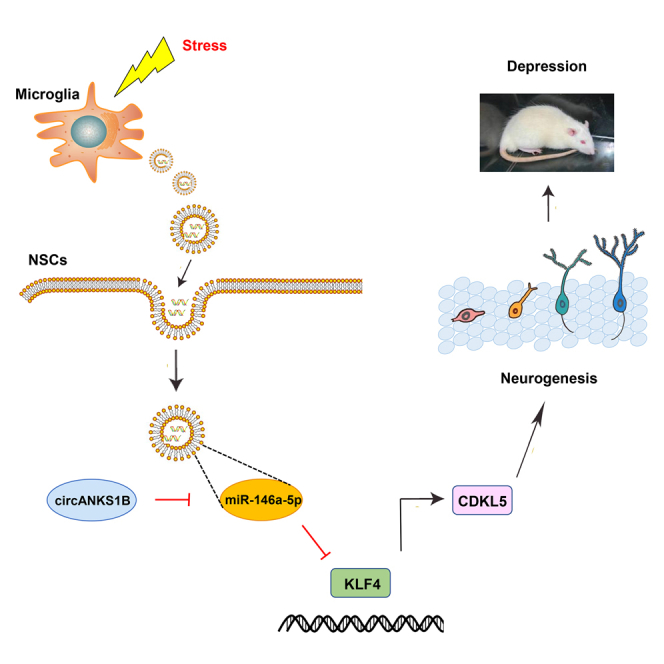
Microglia-derived exosomes carrying miR-146a-5p transfer to hippocampal dentate gyrus neurons, where miR-146a-5p targets KLF4 to suppress neurogenesis and contribute to depression-like behaviors in CUMS rats. circANKS1B acts as a miR-146a-5p sequester, and manipulating the miR-146a-5p/KLF4/CDKL5 pathway alters neurogenesis and depression-like phenotypes.
Key findings
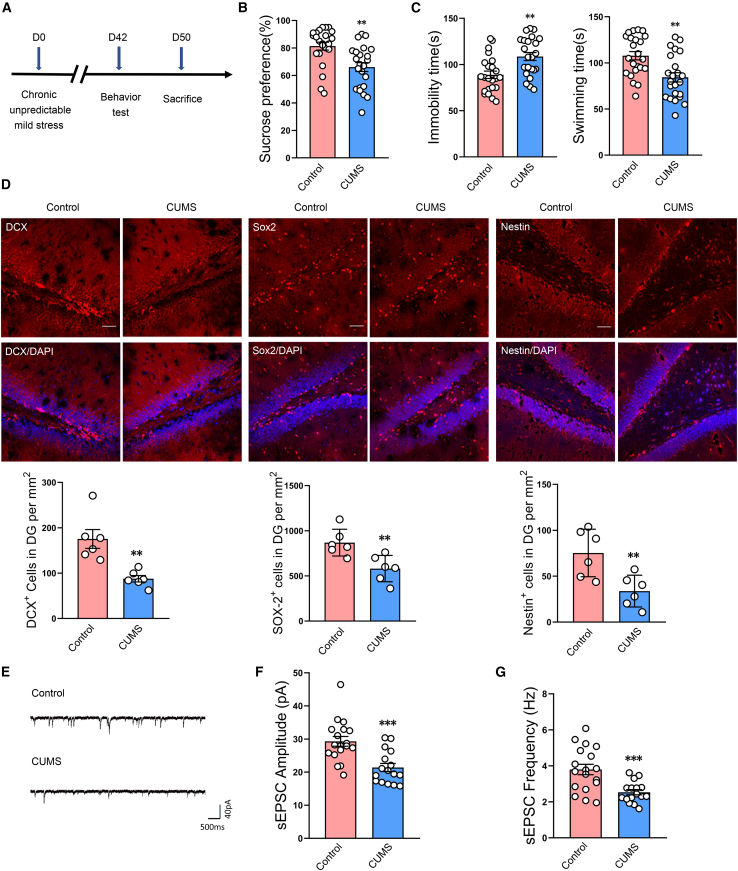
- CUMS rats showed reduced sucrose preference and increased forced-swim immobility (n = 23 per group, p < 0.01), fewer newly developed DG cells (n = 6 per group, p < 0.01), and decreased sEPSC amplitude/frequency in DG neurons (n = 18 neurons from 7 control rats; n = 16 neurons from 6 CUMS rats; p < 0.001).
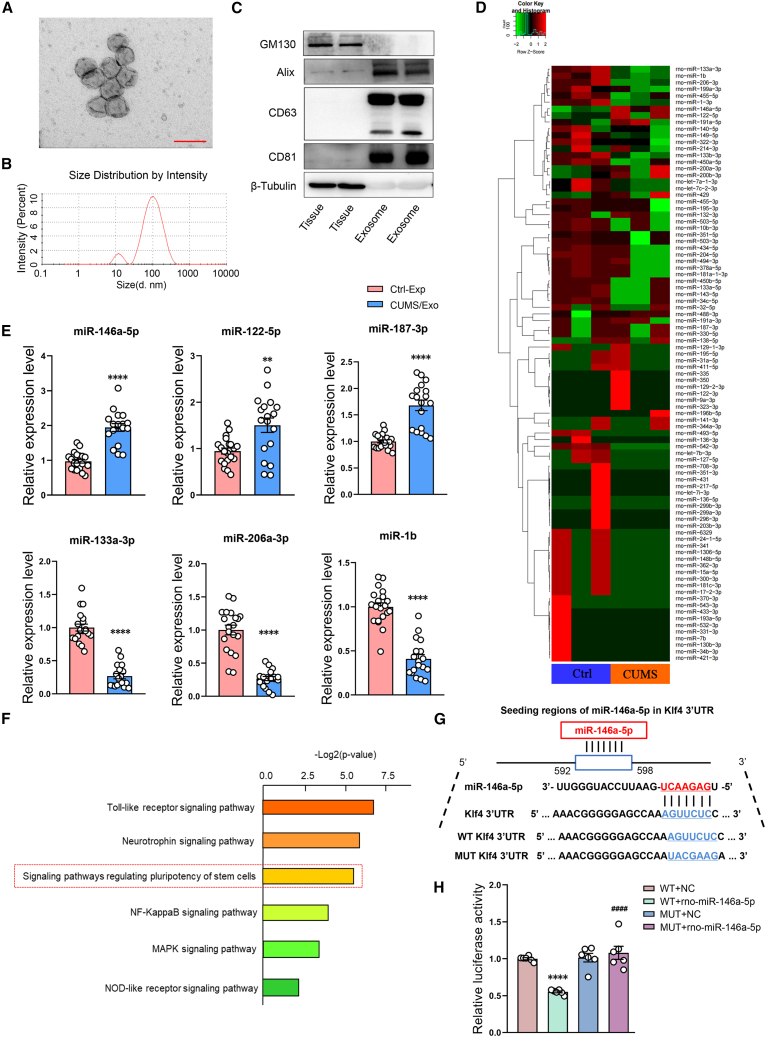
- Serum-derived exosomes from CUMS rats had a double-membrane structure, median diameter 91.28 nm, and exosomal markers CD63/CD81/Alix; miR-146a-5p was upregulated in CUMS exosomes and was most closely related to signaling pathways regulating pluripotency of stem cells.
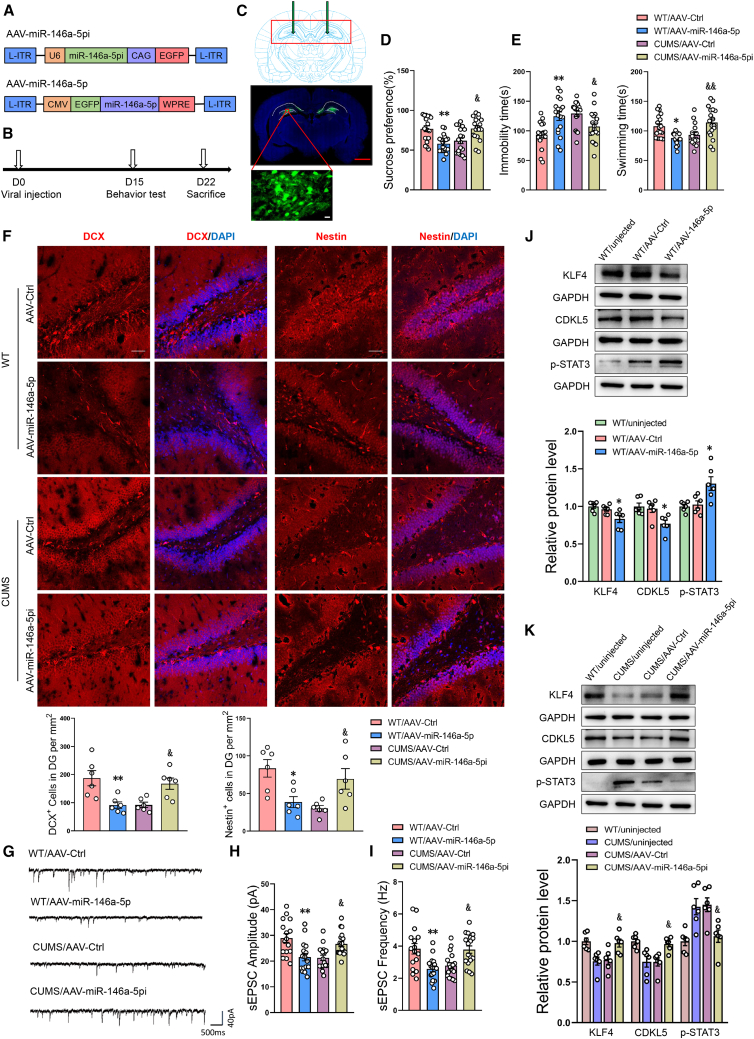
- miR-146a-5p directly repressed wild-type KLF4 3′ UTR luciferase reporter activity (n = 6 per group; p < 0.0001). DG overexpression of miR-146a-5p suppressed neurogenesis and sEPSC activity, decreased KLF4/CDKL5, and increased p-STAT3; miR-146a-5p knockdown in CUMS rats increased neurogenesis and reversed depression-like behaviors.
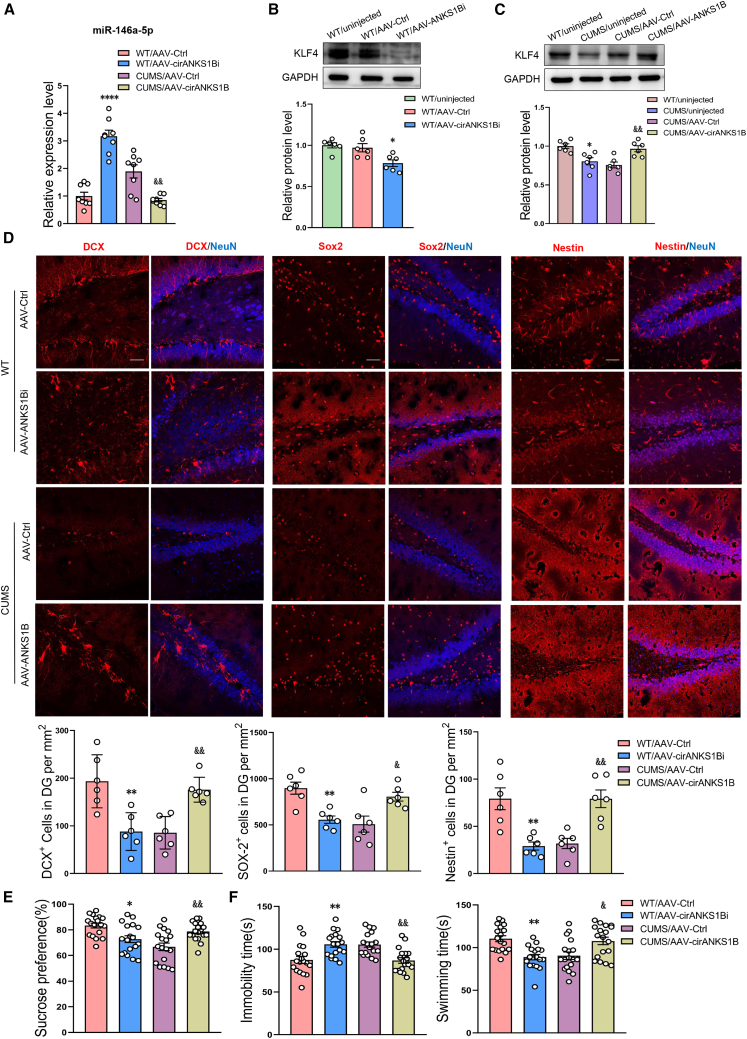
- circANKS1B was decreased in CUMS DG, bound miR-146a-5p, and regulated KLF4/CDKL5; circANKS1B knockdown reduced neurogenesis, while circANKS1B overexpression in CUMS rats increased newly developed cells and ameliorated depression-like behaviors.
Methods
- Male Wistar rats (120–140 g) underwent 5 weeks of chronic unpredictable mild stress (CUMS); behavioral testing used sucrose preference and forced swim tests, with stereotaxic AAV injections into hippocampal DG and whole-cell patch-clamp recordings of DG granule cell sEPSCs.
- Exosomes were isolated from rat serum by ultracentrifugation and precipitation; in vitro work used BV-2 microglia, LPS, GW4869, PLX3397, and cultured neural stem cells, with miRNA/circRNA high-throughput sequencing, qPCR, western blot, immunofluorescence, flow cytometry, dual-luciferase assays, and exosome labeling.
- Data are means ± SEM, analyzed with GraphPad Prism 8.0; Student’s t tests for two groups, one-way ANOVA with Tukey’s post hoc for >2 groups, normality testing, and p < 0.05 significance. RNA-seq data: GEO GSE185777.
Limitations
- The paper states it lacks definitive proof of glia-to-neuron shuttling of bioactive miR-146a-5p via exosomes; whether decreased KLF4 in the depression model is mediated by microglial exosomal miR-146a-5p needs further confirmation.
- The paper notes that LPS-induced in vitro inflammation may differ from chronic stress-induced inflammation in vivo, and whether LPS stimulation functionally regulates neurogenesis via the HPA axis remains unclear; other conserved miR-146a-5p targets such as IRAK1 and TRAF6 were not investigated.
- Evident from the text: all in vivo experiments used male Wistar rats, and no human cohort data are reported despite references to major depressive disorder.
Model-written summary. Check it against the paper before relying on it.
Integrity signals
Registry
Cites
Statistics
Figures
Verification
Claims the paper makes
72 Own result · 28 Own interpretation · 9 Supported · 9 Partly supported · 8 Own method · 7 No full text of the sources · 2 Supported so far · 2 Couldn’t confirm · 2 No basis given · 1 Not checked yet · accuracy not yet measured
Every source the paper cites for this claim was checked and supports it.
In the paper
“In patients with depression, the volume of the hippocampus was found to be significantly decreased,5”
§ Microglia secrete miR-146a-5p-containing exosomes to regulate neurogenesis in depression > Introduction
What the sources say
- Supportedcites [5] Schmaal, 2017, Cortical abnormalities in adults and adolescents with major depression based on brain scans from 20 cohorts worldwide in the ENIGMA Major Depressive Disorder Working Group, Mol. Psychiatry source
The Introduction (page unavailable) reports that an earlier analysis found the greatest subcortical volume differences between MDD patients and controls in the hippocampus. The Discussion’s “Cortical thickness” section (page unavailable) explicitly describes a previously reported hippocampal volume reduction. This paper reports that finding rather than presenting hippocampal-volume results from its own cortical analysis. (LLM, conf=0.84)
plaincorrelational- Asserted: passes — The authors put it forward as true.
- Checkable: passes — It can be checked against evidence.
- Load-bearing: passes — The paper’s conclusions depend on it.
- Based: passes — The paper gives a reason why it holds.
- Supported
Every source the paper cites for this claim was checked and supports it.
In the paper
“microglia are considered as active regulators of adult neurogenesis,19”
§ Microglia secrete miR-146a-5p-containing exosomes to regulate neurogenesis in depression > Introduction
What the sources say
- Supportedcites [19] Sierra, 2010, Microglia shape adult hippocampal neurogenesis through apoptosis-coupled phagocytosis, Cell Stem Cell source
The Discussion describes unchallenged microglia as an important component of the adult hippocampal neurogenic niche. It also reports that they phagocytose apoptotic newborn cells, supporting the broad characterization of microglia as active regulators of adult neurogenesis. (LLM, conf=0.90)
plaindirect- Asserted: passes — The authors put it forward as true.
- Checkable: passes — It can be checked against evidence.
- Load-bearing: passes — The paper’s conclusions depend on it.
- Based: passes — The paper gives a reason why it holds.
- Supported
The cited sources that could be checked couldn’t confirm or dispute this claim.
In the paper
“recent evidence has emerged indicating that miRNAs are important participants in the pathogenesis of depression.25”
§ Microglia secrete miR-146a-5p-containing exosomes to regulate neurogenesis in depression > Introduction
What the sources say
- Could not verifycites [25] Xiao, 2012, Prioritizing cancer-related key miRNA-target interactions by integrative genomics, Nucleic Acids Res. sourceExperimental — accuracy not yet measured
The Introduction links miRNAs to the pathogenesis of cancer, not depression. Searches for depression and related psychiatric terms found no passage in our copy addressing a role for miRNAs in depression. (LLM, conf=0.78)
hedgedcorrelational- Asserted: passes — The authors put it forward as true.
- Checkable: passes — It can be checked against evidence.
- Load-bearing: passes — The paper’s conclusions depend on it.
- Based: passes — The paper gives a reason why it holds.
- Could not verify
The cited sources support only part of this claim — read each source’s verdict below.
In the paper
“depression is closely associated with reduced neurogenesis.9”
§ Microglia secrete miR-146a-5p-containing exosomes to regulate neurogenesis in depression > Discussion
What the sources say
- Partly supportedcites [9] Boldrini, 2013, Hippocampal granule neuron number and dentate gyrus volume in antidepressant-treated and untreated major depression, Neuropsychopharmacology sourceExperimental — accuracy not yet measured
The Conclusions associate untreated major depression with fewer mature granule neurons in the anterior dentate gyrus, but say impaired maturation or survival of progenitor cells is only a possibility. The Introduction and Discussion report no detected reduction in progenitor or mitotic cells, so the paper does not establish the broad claim that depression is closely associated with reduced neurogenesis. (LLM, conf=0.87)
plaincorrelational- Asserted: passes — The authors put it forward as true.
- Checkable: passes — It can be checked against evidence.
- Load-bearing: passes — The paper’s conclusions depend on it.
- Based: passes — The paper gives a reason why it holds.
- Partly supported
The cited sources support only part of this claim — read each source’s verdict below.
In the paper
“A previous study reported that miR-146a-5p is a microglia-enriched miRNA, not present in hippocampal neurons, and expressed at much lower extent in astrocytes.29”
- Also stated in: § Exosomes transfer microglia-derived miR-146a-5p to DG neurons and inhibit the proliferation and differentiation of NSCs · plain
“Conversely, miR-146a-5p was undetectable in cultured hippocampal neurons, as well as expressed much lower in astrocytes than that in microglia (Figure S6).”
- Also stated in: § Exosomes transfer microglia-derived miR-146a-5p to DG neurons and inhibit the proliferation and differentiation of NSCs · boosted
“we have sorted and collected microglial, neuronal, and astroglial cells individually from dissociated brain tissue by flow cytometry and verified that miR-146a-5p is highly enriched in the microglia (Figure S7).”
§ Microglia secrete miR-146a-5p-containing exosomes to regulate neurogenesis in depression > Results > Exosomes transfer microglia-derived miR-146a-5p to DG neurons and inhibit the proliferation and differentiation of NSCs
What the sources say
- Partly supportedcites [29] Jovicic, 2013, Comprehensive expression analyses of neural cell-type-specific miRNAs identify new determinants of the specification and maintenance of neuronal phenotypes, J. Neurosci. sourceExperimental — accuracy not yet measured
Table 1 (section ‘Individual neural cell types have distinct miRNA expression profiles’; page unavailable) lists miR-146a as enriched in microglia and diminished in neurons relative to the other cell types, supporting the enrichment comparison. It does not establish that miR-146a is absent from hippocampal neurons: ‘diminished’ is not ‘not present,’ and the table does not specify hippocampal neurons. Its enrichment criteria also support higher expression in microglia than astrocytes. (LLM, conf=0.88)
boostedcorrelational- Asserted: passes — The authors put it forward as true.
- Checkable: passes — It can be checked against evidence.
- Load-bearing: passes — The paper’s conclusions depend on it.
- Based: passes — The paper gives a reason why it holds.
- Also stated in: § Exosomes transfer microglia-derived miR-146a-5p to DG neurons and inhibit the proliferation and differentiation of NSCs · plain
A result the paper reports from its own data — it cites no other source for it, so there is none to check. The quote shows it is in the paper.
In the paper
“the amplitude and frequency of spontaneous excitatory post-synaptic current (sEPSC) were markedly decreased in DG neurons of hippocampal slices in depressed versus control rats (Figures 1E–1G).”
§ Microglia secrete miR-146a-5p-containing exosomes to regulate neurogenesis in depression > Results > Neurogenesis is reduced in the hippocampal DG of CUMS rats
plaincorrelational- Asserted: passes — The authors put it forward as true.
- Checkable: passes — It can be checked against evidence.
- Load-bearing: unclear — It is unclear whether the paper’s conclusions depend on it.
- Based: passes — The paper gives a reason why it holds.
A result the paper reports from its own data — it cites no other source for it, so there is none to check. The quote shows it is in the paper.
In the paper
“as were sEPSC frequencies and amplitudes (Figures 4G–4I).”
§ Microglia secrete miR-146a-5p-containing exosomes to regulate neurogenesis in depression > Results > MIR-146a-5p suppresses neurogenesis via the KLF4/CDKL5 pathway
plaindirect- Asserted: passes — The authors put it forward as true.
- Checkable: passes — It can be checked against evidence.
- Load-bearing: unclear — It is unclear whether the paper’s conclusions depend on it.
- Based: passes — The paper gives a reason why it holds.
A result the paper reports from its own data — it cites no other source for it, so there is none to check. The quote shows it is in the paper.
In the paper
“the presence of miR-146a-5p in CSF showed increased levels of expression in CUMS rats as compared with that in the control group (Figure S4C).”
§ Microglia secrete miR-146a-5p-containing exosomes to regulate neurogenesis in depression > Results > MiR-146a-5p is upregulated in serum-derived exosomes of CUMS rats
plaincorrelational- Asserted: passes — The authors put it forward as true.
- Checkable: passes — It can be checked against evidence.
- Load-bearing: unclear — It is unclear whether the paper’s conclusions depend on it.
- Based: passes — The paper gives a reason why it holds.
A result the paper reports from its own data — it cites no other source for it, so there is none to check. The quote shows it is in the paper.
In the paper
“A heatmap showed that various miRNAs were significantly dysregulated in samples from CUMS versus control rats (Figures 2D and S3; and Table S1).”
§ Microglia secrete miR-146a-5p-containing exosomes to regulate neurogenesis in depression > Results > MiR-146a-5p is upregulated in serum-derived exosomes of CUMS rats
plaincorrelational- Asserted: passes — The authors put it forward as true.
- Checkable: passes — It can be checked against evidence.
- Load-bearing: passes — The paper’s conclusions depend on it.
- Based: passes — The paper gives a reason why it holds.
A result the paper reports from its own data — it cites no other source for it, so there is none to check. The quote shows it is in the paper.
In the paper
“After 5 weeks of CUMS exposure, the percent of sucrose consumption in the sucrose preference test was significantly reduced, and immobility times in the forced swim test were significantly increased, in these CUMS-exposed rats compared with that of the control group (Figures 1B and 1C).”
§ Microglia secrete miR-146a-5p-containing exosomes to regulate neurogenesis in depression > Results > Neurogenesis is reduced in the hippocampal DG of CUMS rats
plaindirect- Asserted: passes — The authors put it forward as true.
- Checkable: passes — It can be checked against evidence.
- Load-bearing: passes — The paper’s conclusions depend on it.
- Based: passes — The paper gives a reason why it holds.
- Probably not a substantial claim. 24
- It may state two separate claims as one. 27
- The quote only partly states this claim. 1
The cited sources support only part of this claim — read each source’s verdict below.
In the paper
“it has been reported that microglia can secrete exosomes carrying miRNA that are capable of exerting an acute impact upon adult neuroplasticity.17,18”
§ Microglia secrete miR-146a-5p-containing exosomes to regulate neurogenesis in depression > Introduction
What the sources say
- Partly supportedcites [17] McNeill, 2012, MicroRNAs shape the neuronal landscape, Neuron sourceExperimental — accuracy not yet measured
The section ‘In Vivo Analysis of Synapse Form and Function in Invertebrates’ (page unavailable) describes exosomes as a possible means of transferring miRNAs across synapses. The paper also discusses miRNAs in synaptic plasticity, but these passages do not report that microglia secrete the exosomes or that they have an acute effect on adult neuroplasticity. (LLM, conf=0.84)
- Partly supportedcites [18] Prada, 2018, Glia-to-neuron transfer of miRNAs via extracellular vesicles: a new mechanism underlying inflammation-induced synaptic alterations, Acta Neuropathol. sourceExperimental — accuracy not yet measured
The Results (EVs secreted from inflammatory glia transfer miR-146a-5p to neurons; page unavailable) show that microglial exosomes carry miRNA and transfer it to neurons. But the synaptic effects were demonstrated chiefly with microvesicles, and the effect in adult mice followed four days of EV delivery (Results, Chronic exposure to inflammatory EVs induces loss of dendritic spine in vivo). The paper therefore does not establish an acute effect of microglial exosomes on adult neuroplasticity. (LLM, conf=0.89)
plaindirect- Asserted: passes — The authors put it forward as true.
- Checkable: passes — It can be checked against evidence.
- Load-bearing: passes — The paper’s conclusions depend on it.
- Based: passes — The paper gives a reason why it holds.
Probably not a substantial claim.
- Partly supported
The cited sources support only part of this claim — read each source’s verdict below.
In the paper
“various miRNA alterations are present in cerebrospinal fluid, serum, and the ventral prefrontal cortex in patients with major depression disorder (MDD).26”
§ Microglia secrete miR-146a-5p-containing exosomes to regulate neurogenesis in depression > Introduction
What the sources say
- Partly supportedcites [26] Lopez, 2017, MicroRNAs 146a/b-5 and 425-3p and 24-3p are markers of antidepressant response and regulate MAPK/Wnt-system genes, Nat. Commun. sourceExperimental — accuracy not yet measured
The Results sections on vPFC dysregulation and blood-sample composition report altered miRNAs in the ventrolateral prefrontal cortex of depressed individuals and in blood and cell-free plasma after antidepressant treatment. They do not establish alterations in cerebrospinal fluid or serum; plasma is not serum. The blood findings are also specifically associated with treatment response, rather than MDD generally. No page numbers are available in our copy. (LLM, conf=0.88)
plaincorrelational- Asserted: passes — The authors put it forward as true.
- Checkable: passes — It can be checked against evidence.
- Load-bearing: fails — The paper’s conclusions may not depend on it.
- Based: passes — The paper gives a reason why it holds.
Probably not a substantial claim. The paper’s conclusions may not depend on it.
- Partly supported
Every source the paper cites for this claim was checked and supports it.
In the paper
“A previous study has reported that microglia participate in stem cell proliferation and survival through their release of important trophic factors and anti-inflammatory cytokines.16”
§ Microglia secrete miR-146a-5p-containing exosomes to regulate neurogenesis in depression > Introduction
What the sources say
- Supportedcites [16] Cope, 2019, Adult neurogenesis, glia, and the extracellular matrix, Cell Stem Cell source
The section “Glia regulate new neuron number and connectivity” states the attributed claim directly: microglia participate in stem cell proliferation and survival through release of trophic factors and anti-inflammatory cytokines. The source presents this as a reported finding, citing Battista et al. (2006) and Borsini et al. (2015). (LLM, conf=0.95)
plaindirect- Asserted: passes — The authors put it forward as true.
- Checkable: passes — It can be checked against evidence.
- Load-bearing: fails — The paper’s conclusions may not depend on it.
- Based: passes — The paper gives a reason why it holds.
Probably not a substantial claim. The paper’s conclusions may not depend on it.
- Supported
The cited sources support only part of this claim — read each source’s verdict below.
In the paper
“The capacity for transport of exosomes across the blood-brain barrier enables them to play a key role in cellular communication, neurogenesis, and synaptic plasticity in the central nervous system.13,14”
§ Microglia secrete miR-146a-5p-containing exosomes to regulate neurogenesis in depression > Introduction
What the sources say
- Partly supportedcites [13] Fruhbeis, 2012, Emerging roles of exosomes in neuron-glia communication, Front Physiol. sourceExperimental — accuracy not yet measured
The Introduction and Functions of Nervous System Exosomes section (pages not provided) describe exosomes as a possible means of CNS cell communication and implicate neuronal exosomes in synaptic plasticity. The paper presents these roles cautiously; our copy does not establish transport across the blood–brain barrier or a role in neurogenesis. It therefore does not support the full claim that such transport enables all three roles. (LLM, conf=0.88)
- Partly supportedcites [14] Xu, 2017, Neurons secrete miR-132-containing exosomes to regulate brain vascular integrity, Cell Res. sourceExperimental — accuracy not yet measured
The Introduction and Discussion describe exosomes as a route of intercellular communication and report roles in neural development and synaptic plasticity. They do not establish that exosomes cross the blood-brain barrier or specifically promote neurogenesis; the paper instead describes neuronal exosomes being taken up by adjacent brain endothelial cells. No page numbers are available in our copy. (LLM, conf=0.88)
plaindirect- Asserted: passes — The authors put it forward as true.
- Checkable: passes — It can be checked against evidence.
- Load-bearing: passes — The paper’s conclusions depend on it.
- Based: passes — The paper gives a reason why it holds.
Probably not a substantial claim. It may state two separate claims as one.
- Partly supported
The sources with a verdict support this claim; the rest weren’t checked yet, have no full text we could read, or their verdicts aren’t rated yet.
In the paper
“an effect often positively correlated with the duration of depression.6, 7, 8, 9”
§ Microglia secrete miR-146a-5p-containing exosomes to regulate neurogenesis in depression > Introduction
What the sources say
- Not checked — no full text of the sourcecites [6] Kempton, 2011, Structural neuroimaging studies in major depressive disorder meta-analysis and comparison with bipolar disorder, Arch. Gen. Psychiatry source
- Could not verifycites [7] Boldrini, 2018, Human hippocampal neurogenesis persists throughout aging, Cell Stem Cell sourceExperimental — accuracy not yet measured
The Discussion reports stable dentate gyrus volume across ages in subjects without neuropsychiatric disease, not a relationship between hippocampal volume and depression duration. Searches for “duration of depression hippocampal volume” and “depression hippocampal volume” found no passage addressing the claimed correlation. (LLM, conf=0.76)
- Not checked — no full text of the sourcecites [8] Cole, 2011, Hippocampal atrophy in first episode depression: a meta-analysis of magnetic resonance imaging studies, J. Affect Disord. source
- Supportedcites [9] Boldrini, 2013, Hippocampal granule neuron number and dentate gyrus volume in antidepressant-treated and untreated major depression, Neuropsychopharmacology source
The Discussion reports that longer duration of MDD is associated with a smaller hippocampus, citing prior studies. It also reports that cumulative time spent depressed and untreated correlates with smaller hippocampal volume. This supports the claimed relationship, though the paper reports it rather than establishing it in its own sample. (LLM, conf=0.90)
plaincorrelational- Asserted: passes — The authors put it forward as true.
- Checkable: passes — It can be checked against evidence.
- Load-bearing: fails — The paper’s conclusions may not depend on it.
- Based: passes — The paper gives a reason why it holds.
Probably not a substantial claim. The paper’s conclusions may not depend on it.
The cited sources support only part of this claim — read each source’s verdict below.
In the paper
“these microglia appear to perform this function at least by secreting exosomes to promote inter-neuronal communication.20”
§ Microglia secrete miR-146a-5p-containing exosomes to regulate neurogenesis in depression > Introduction
What the sources say
- Partly supportedcites [20] Budnik, 2016, Extracellular vesicles round off communication in the nervous system, Nat. Rev. Neurosci. sourceExperimental — accuracy not yet measured
In “Microglia-derived EVs in inflammation and synaptic talk” (page unavailable), the review says microglia release exosomes that can supply energy to neurons during synaptic activity. It attributes increased synaptic vesicle release to microglia-derived microvesicles, not exosomes, so it does not establish the claimed exosome-mediated promotion of inter-neuronal communication. (LLM, conf=0.87)
hedgedconditional- Asserted: passes — The authors put it forward as true.
- Checkable: passes — It can be checked against evidence.
- Load-bearing: passes — The paper’s conclusions depend on it.
- Based: passes — The paper gives a reason why it holds.
Probably not a substantial claim.
- Partly supported
The cited sources support only part of this claim — read each source’s verdict below.
In the paper
“miRNAs have been shown to be abundantly expressed in the brain, and miRNA dysfunction contributes to neurological diseases.22,23”
§ Microglia secrete miR-146a-5p-containing exosomes to regulate neurogenesis in depression > Introduction
What the sources say
- Partly supportedcites [22] Long, 2012, MicroRNA-153 physiologically inhibits expression of amyloid-beta precursor protein in cultured human fetal brain cells and is dysregulated in a subset of Alzheimer disease patients, J. Biol. Chem. sourceExperimental — accuracy not yet measured
The Discussion (page not provided) describes miR-153 as brain-specific and reports reduced levels in a subset of advanced Alzheimer disease specimens. It suggests that this reduction may contribute to elevated APP, but does not establish that miRNA dysfunction contributes to neurological diseases generally or that miRNAs as a group are abundantly expressed in the brain. (LLM, conf=0.87)
- Partly supportedcites [23] Long, 2014, MicroRNA-339-5p down-regulates protein expression of beta-site amyloid precursor protein-cleaving enzyme 1 (BACE1) in human primary brain cultures and is reduced in brain tissue specimens of Alzheimer disease subjects, J. Biol. Chem. sourceExperimental — accuracy not yet measured
The miR-339-5p Negatively Regulates BACE1 Expression section describes miR-124 as a highly abundant neuronal miRNA, and the Discussion reports dysregulated miRNAs in Alzheimer disease brains. But the paper does not establish that miRNAs generally are abundant throughout the brain or that their dysfunction causes neurological diseases broadly; it presents a possible role in Alzheimer disease. (LLM, conf=0.85)
plaindirect- Asserted: passes — The authors put it forward as true.
- Checkable: passes — It can be checked against evidence.
- Load-bearing: fails — The paper’s conclusions may not depend on it.
- Based: passes — The paper gives a reason why it holds.
Probably not a substantial claim. The paper’s conclusions may not depend on it. It may state two separate claims as one.
- Partly supported
The cited sources support only part of this claim — read each source’s verdict below.
In the paper
“miR-146a-5p has been shown to be a microglial-enriched miRNA that affects excitatory synapses.17,18”
§ Microglia secrete miR-146a-5p-containing exosomes to regulate neurogenesis in depression > Discussion
What the sources say
- Could not verifycites [17] McNeill, 2012, MicroRNAs shape the neuronal landscape, Neuron sourceExperimental — accuracy not yet measured
The ‘Synaptic Regulatory Functions for Individual miRNA’ section discusses effects of other miRNAs on synapses, including miR-485 and miR-181a. Searches for miR-146a-5p and miR-146a with microglia and excitatory synapses found no passage addressing whether miR-146a-5p is microglial-enriched or affects excitatory synapses. Page numbers were not available in our copy. (LLM, conf=0.75)
- Supportedcites [18] Prada, 2018, Glia-to-neuron transfer of miRNAs via extracellular vesicles: a new mechanism underlying inflammation-induced synaptic alterations, Acta Neuropathol. source
The Results section describes miR-146a-5p as microglia-enriched. The Discussion reports that its transfer to neurons reduces synapse density and strength through Nlg1 downregulation, supporting the claim that it affects excitatory synapses. Page numbers are not available in our copy. (LLM, conf=0.93)
plaindirect- Asserted: passes — The authors put it forward as true.
- Checkable: passes — It can be checked against evidence.
- Load-bearing: passes — The paper’s conclusions depend on it.
- Based: passes — The paper gives a reason why it holds.
It may state two separate claims as one.
- Could not verify
Every source the paper cites for this claim was checked and supports it.
In the paper
“One eukaryotic transcription factor, which is expressed in neuronal stem cells (NSCs) and regulates neuronal differentiation and migration in the brain, is that of KLF4.28”
§ Microglia secrete miR-146a-5p-containing exosomes to regulate neurogenesis in depression > Results > MiR-146a-5p is upregulated in serum-derived exosomes of CUMS rats
What the sources say
- Supportedcites [28] Cui, 2017, KLF4 knockdown attenuates TBI-induced neuronal damage through p53 and JAK-STAT3 signaling, CNS Neurosci. Ther. source
The Introduction explicitly describes KLF4 as a transcription factor expressed in neural stem cells that regulates neuronal differentiation and migration in the developing cerebral cortex. This supports the citing sentence; the source specifies the developing cortex rather than the brain generally. (LLM, conf=0.95)
plaindirect- Asserted: passes — The authors put it forward as true.
- Checkable: passes — It can be checked against evidence.
- Load-bearing: fails — The paper’s conclusions may not depend on it.
- Based: passes — The paper gives a reason why it holds.
Probably not a substantial claim. The paper’s conclusions may not depend on it. It may state two separate claims as one.
- Supported
Every source the paper cites for this claim was checked and supports it.
In the paper
“It has been reported that glial-enriched miR-146a-5p can inhibit neuronal differentiation.29”
§ Microglia secrete miR-146a-5p-containing exosomes to regulate neurogenesis in depression > Discussion
What the sources say
- Supportedcites [29] Jovicic, 2013, Comprehensive expression analyses of neural cell-type-specific miRNAs identify new determinants of the specification and maintenance of neuronal phenotypes, J. Neurosci. source
The neural stem cell differentiation results report that glia-enriched miRNAs reduced the fraction of cells differentiating into neurons. Figure 6C specifically identifies miR-146a among the glia-enriched miRNAs whose overexpression decreased the number of Tuj1-positive cells; the copy labels it miR-146a rather than miR-146a-5p. No page number is available in our copy. (LLM, conf=0.92)
plaindirect- Asserted: passes — The authors put it forward as true.
- Checkable: passes — It can be checked against evidence.
- Load-bearing: passes — The paper’s conclusions depend on it.
- Based: passes — The paper gives a reason why it holds.
Probably not a substantial claim.
- Supported
Every source the paper cites for this claim was checked and supports it.
In the paper
“miRNAs play important roles in neurogenesis and participate in the transition of NSCs from proliferation to differentiation stages.34”
§ Microglia secrete miR-146a-5p-containing exosomes to regulate neurogenesis in depression > Discussion
What the sources say
- Supportedcites [34] Marangon, 2019, MicroRNAs change the games in central nervous system pharmacology, Biochem. Pharmacol. source
Section 2.1 (p. 4) states that miRNAs play important roles in neurogenesis and an essential role in the transition between proliferation and differentiation of neural stem cells. The same section (p. 5) identifies miR-124 and miR-125b as important players in that transition. (LLM, conf=0.95)
plaincorrelational- Asserted: passes — The authors put it forward as true.
- Checkable: passes — It can be checked against evidence.
- Load-bearing: passes — The paper’s conclusions depend on it.
- Based: passes — The paper gives a reason why it holds.
Probably not a substantial claim. It may state two separate claims as one.
- Supported
Every source the paper cites for this claim was checked and supports it.
In the paper
“microglial degeneration is also observed in depressed patients.33”
§ Microglia secrete miR-146a-5p-containing exosomes to regulate neurogenesis in depression > Discussion
What the sources say
- Supportedcites [33] Brites, 2015, Neuroinflammation and depression: microglia activation, extracellular microvesicles and microRNA dysregulation, Front Cell Neurosci. source
The Introduction reports that microglial decline and senescence were observed in some depressed patients. This supports the claim’s description of microglial degeneration, without implying that it occurs in all depressed patients. (LLM, conf=0.91)
plaincorrelational- Asserted: passes — The authors put it forward as true.
- Checkable: passes — It can be checked against evidence.
- Load-bearing: fails — The paper’s conclusions may not depend on it.
- Based: passes — The paper gives a reason why it holds.
Probably not a substantial claim. The paper’s conclusions may not depend on it.
- Supported
Every source the paper cites for this claim was checked and supports it.
In the paper
“It has been reported that the expression of KLF4 in neural stem cells can regulate the differentiation and migration of neurons in the developing cerebral cortex.28”
§ Microglia secrete miR-146a-5p-containing exosomes to regulate neurogenesis in depression > Discussion
What the sources say
- Supportedcites [28] Cui, 2017, KLF4 knockdown attenuates TBI-induced neuronal damage through p53 and JAK-STAT3 signaling, CNS Neurosci. Ther. source
The Introduction (page not provided) states that KLF4 is expressed in neural stem cells and regulates neuronal differentiation and migration in the developing cerebral cortex. This directly supports the attributed paraphrase. (LLM, conf=0.94)
plaindirect- Asserted: passes — The authors put it forward as true.
- Checkable: passes — It can be checked against evidence.
- Load-bearing: fails — The paper’s conclusions may not depend on it.
- Based: passes — The paper gives a reason why it holds.
Probably not a substantial claim. The paper’s conclusions may not depend on it.
- Supported
The sources with a verdict support this claim; the rest weren’t checked yet, have no full text we could read, or their verdicts aren’t rated yet.
In the paper
“It is well known that miRNAs play a key role in post-transcriptional regulation and circRNAs function as miRNA sequesters to modulate the pathogenesis and progression of various diseases.32,52”
§ Microglia secrete miR-146a-5p-containing exosomes to regulate neurogenesis in depression > Discussion
What the sources say
- Not checked — no full text of the sourcecites [32] Piwecka, 2017, Loss of a mammalian circular RNA locus causes miRNA deregulation and affects brain function, Science source
- Supportedcites [52] Cheng, 2018, Circular RNA VMA21 protects against intervertebral disc degeneration through targeting miR-200c and X linked inhibitor-of-apoptosis protein, Ann. Rheum. Dis. source
The Introduction describes miRNAs as regulating protein production through interactions with target mRNAs, which supports their post-transcriptional role. The Discussion says circRNAs can act as miRNA sponges in the occurrence and progression of various diseases, while noting that this is not necessarily a major function of all circRNAs. (LLM, conf=0.90)
boosteddirect- Asserted: passes — The authors put it forward as true.
- Checkable: passes — It can be checked against evidence.
- Load-bearing: passes — The paper’s conclusions depend on it.
- Based: passes — The paper gives a reason why it holds.
Probably not a substantial claim. It may state two separate claims as one.
The cited sources that could be checked couldn’t confirm or dispute this claim.
In the paper
“KLF4 can specifically bind to the phosphorylated forms of STAT3 (p-STAT3) and inhibit its expression.30”
§ Microglia secrete miR-146a-5p-containing exosomes to regulate neurogenesis in depression > Discussion
What the sources say
- Could not verifycites [30] Gu, 2015, Mitochondrial E3 ligase March5 maintains stemness of mouse ES cells via suppression of ERK signalling, Nat. Commun. sourceExperimental — accuracy not yet measured
The Discussion (page unavailable) says active LIF–STAT3 signalling induces Klf4, and the Results identify March5—not STAT3—as a direct transcriptional target of Klf4. Searches for Klf4 binding phosphorylated STAT3 and inhibiting STAT3 expression found no passage addressing either claim. STAT3 inducing Klf4 does not rule out a separate feedback effect. (LLM, conf=0.72)
plaindirect- Asserted: passes — The authors put it forward as true.
- Checkable: passes — It can be checked against evidence.
- Load-bearing: fails — The paper’s conclusions may not depend on it.
- Based: passes — The paper gives a reason why it holds.
Probably not a substantial claim. The paper’s conclusions may not depend on it.
- Could not verify
Every source the paper cites for this claim was checked and supports it.
In the paper
“cyclin-dependent kinase-like 5 (CDKL5) is highly expressed in the brain and deficiencies in CDKL5 inhibit the formation of new granular neurons.31”
§ Microglia secrete miR-146a-5p-containing exosomes to regulate neurogenesis in depression > Discussion
What the sources say
- Supportedcites [31] Fuchs, 2014, Loss of CDKL5 impairs survival and dendritic growth of newborn neurons by altering AKT/GSK-3 beta signaling, Neurobiol. Dis. source
The Introduction states that CDKL5 is highly expressed in the brain. The Abstract and Discussion report that Cdkl5 loss increases the death of immature granule neurons in mice and reduces the total number of dentate-gyrus granule cells, supporting the claim about impaired formation of new granule neurons. Neural precursor proliferation increased, so the impairment reflects reduced survival rather than reduced proliferation. (LLM, conf=0.89)
plaindirect- Asserted: passes — The authors put it forward as true.
- Checkable: passes — It can be checked against evidence.
- Load-bearing: passes — The paper’s conclusions depend on it.
- Based: passes — The paper gives a reason why it holds.
It may state two separate claims as one.
- Supported
The cited sources support only part of this claim — read each source’s verdict below.
In the paper
“abnormal expressions of circRNAs are present in the blood of MDD patients.51”
§ Microglia secrete miR-146a-5p-containing exosomes to regulate neurogenesis in depression > Discussion
What the sources say
- Partly supportedcites [51] Jiang, 2017, Relationships of circular RNA with diabetes and depression, Sci. Rep. sourceExperimental — accuracy not yet measured
The Materials and Methods (Patient samples; page unavailable) identify whole-blood samples from patients with T2DM and current major depressive episodes. The Results (Profiles of circRNA expression; page unavailable) report differential circRNA expression compared with T2DM patients without depression. The claim omits the study’s restriction to patients with T2DM, so it is broader than the finding supports. (LLM, conf=0.89)
plaincorrelational- Asserted: passes — The authors put it forward as true.
- Checkable: passes — It can be checked against evidence.
- Load-bearing: fails — The paper’s conclusions may not depend on it.
- Based: passes — The paper gives a reason why it holds.
Probably not a substantial claim. The paper’s conclusions may not depend on it.
- Partly supported
A result the paper reports from its own data — it cites no other source for it, so there is none to check. The quote shows it is in the paper.
In the paper
“These vesicles possessed a double membrane structure (Figure 2A) and a median diameter of 91.28 nm (Figure 2B), characteristics which were suggestive of exosomes.”
§ Microglia secrete miR-146a-5p-containing exosomes to regulate neurogenesis in depression > Results > MiR-146a-5p is upregulated in serum-derived exosomes of CUMS rats
plain- Asserted: passes — The authors put it forward as true.
- Checkable: passes — It can be checked against evidence.
- Load-bearing: passes — The paper’s conclusions depend on it.
- Based: passes — The paper gives a reason why it holds.
It may state two separate claims as one.
The paper states this without a source or data behind it here, so there is nothing to check it against. The quote shows it is in the paper.
In the paper
“Similar effects are observed in patients with MDD.”
§ Microglia secrete miR-146a-5p-containing exosomes to regulate neurogenesis in depression > Discussion
plaincorrelational- Asserted: passes — The authors put it forward as true.
- Checkable: passes — It can be checked against evidence.
- Load-bearing: passes — The paper’s conclusions depend on it.
- Based: fails — The paper may give no reason why it holds.
Probably not a substantial claim. The paper may give no reason why it holds. The quote only partly states this claim.
A result the paper reports from its own data — it cites no other source for it, so there is none to check. The quote shows it is in the paper.
In the paper
“these behavioral responses were accompanied with alterations in neurogenesis and reductions in neuronal activity within the hippocampal DG area.”
§ Microglia secrete miR-146a-5p-containing exosomes to regulate neurogenesis in depression > Discussion
plaincorrelational- Asserted: passes — The authors put it forward as true.
- Checkable: passes — It can be checked against evidence.
- Load-bearing: passes — The paper’s conclusions depend on it.
- Based: passes — The paper gives a reason why it holds.
It may state two separate claims as one.
A result the paper reports from its own data — it cites no other source for it, so there is none to check. The quote shows it is in the paper.
In the paper
“it was also enriched and significantly increased in the exosomes of CUMS rats.”
§ Microglia secrete miR-146a-5p-containing exosomes to regulate neurogenesis in depression > Discussion
plaincorrelational- Asserted: passes — The authors put it forward as true.
- Checkable: passes — It can be checked against evidence.
- Load-bearing: unclear — It is unclear whether the paper’s conclusions depend on it.
- Based: passes — The paper gives a reason why it holds.
It may state two separate claims as one.
A result the paper reports from its own data — it cites no other source for it, so there is none to check. The quote shows it is in the paper.
In the paper
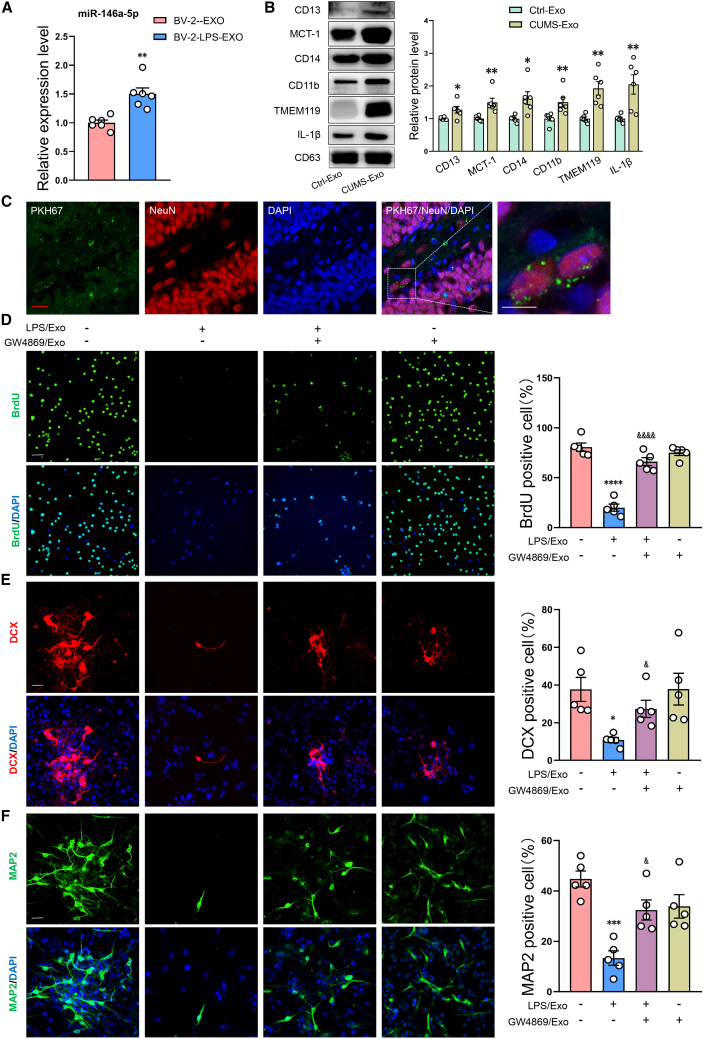
“PCR results confirmed that miR-146a-5p is present in cultured microglia and exosomes thereof, more abundantly under stimulation of LPS.”
§ Microglia secrete miR-146a-5p-containing exosomes to regulate neurogenesis in depression > Results > Exosomes transfer microglia-derived miR-146a-5p to DG neurons and inhibit the proliferation and differentiation of NSCs
boostedcorrelational- Asserted: passes — The authors put it forward as true.
- Checkable: passes — It can be checked against evidence.
- Load-bearing: passes — The paper’s conclusions depend on it.
- Based: passes — The paper gives a reason why it holds.
It may state two separate claims as one.
None of the sources cited for this claim have been checked yet.
In the paper
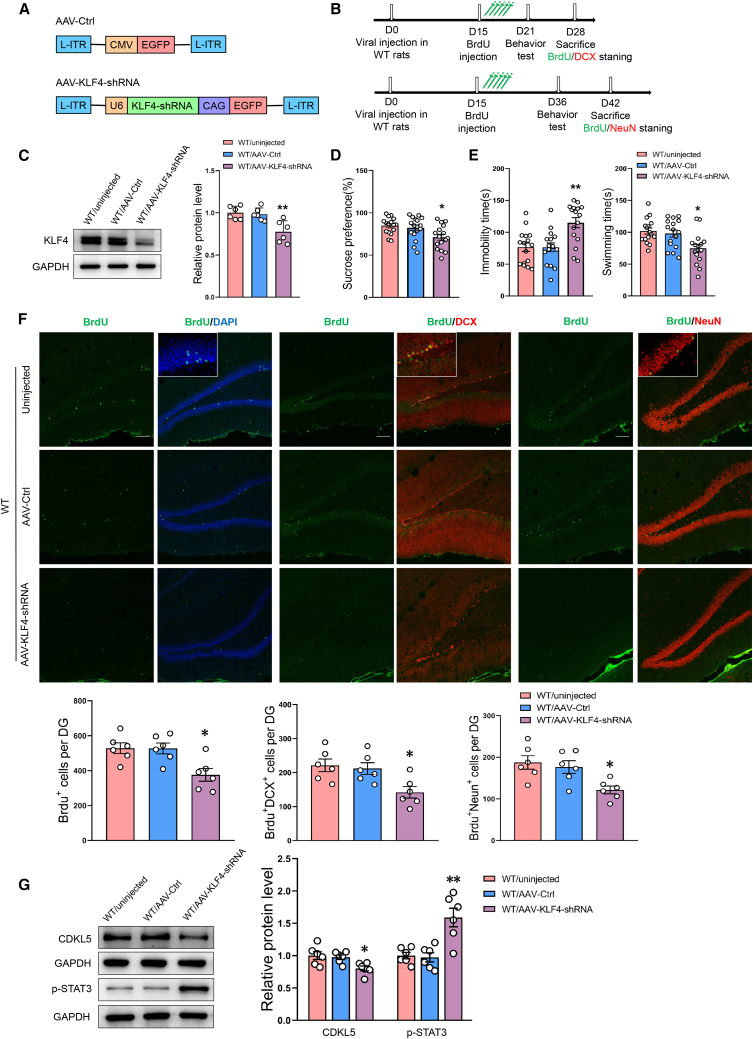
“KLF4 silencing induces depression-like behaviors and, consistent with previous studies, induces deficiencies in the development of new neurons.”
§ Microglia secrete miR-146a-5p-containing exosomes to regulate neurogenesis in depression > Discussion
plaindirect- Asserted: passes — The authors put it forward as true.
- Checkable: passes — It can be checked against evidence.
- Load-bearing: passes — The paper’s conclusions depend on it.
- Based: passes — The paper gives a reason why it holds.
It may state two separate claims as one.
A result the paper reports from its own data — it cites no other source for it, so there is none to check. The quote shows it is in the paper.
In the paper
“an overexpression of circANKS1B enhanced DG neurogenesis and ameliorated depression-like behaviors in CUMS rats.”
§ Microglia secrete miR-146a-5p-containing exosomes to regulate neurogenesis in depression > Discussion
plaindirect- Asserted: passes — The authors put it forward as true.
- Checkable: passes — It can be checked against evidence.
- Load-bearing: passes — The paper’s conclusions depend on it.
- Based: passes — The paper gives a reason why it holds.
It may state two separate claims as one.
A result the paper reports from its own data — it cites no other source for it, so there is none to check. The quote shows it is in the paper.
In the paper
“silencing circANKS1B significantly attenuated neurogenesis and induced depression-like symptoms in normal rats”
§ Microglia secrete miR-146a-5p-containing exosomes to regulate neurogenesis in depression > Discussion
plaindirect- Asserted: passes — The authors put it forward as true.
- Checkable: passes — It can be checked against evidence.
- Load-bearing: passes — The paper’s conclusions depend on it.
- Based: passes — The paper gives a reason why it holds.
It may state two separate claims as one.
In the paper
“the size and density of neurons and glial cells in the dorsolateral prefrontal cortex were also decreased in depression.10”
§ Microglia secrete miR-146a-5p-containing exosomes to regulate neurogenesis in depression > Introduction
What the sources say
- Not checked — no full text of the sourcecites [10] Fossati, 2004, Relevance of neuroplasticity and cellular resilience in bipolar disorder and depression: evidence from neuroimaging and cognitive studies, Eur. Neuropsychopharm. source
plaincorrelational- Asserted: passes — The authors put it forward as true.
- Checkable: passes — It can be checked against evidence.
- Load-bearing: fails — The paper’s conclusions may not depend on it.
- Based: passes — The paper gives a reason why it holds.
Probably not a substantial claim. The paper’s conclusions may not depend on it.
What the paper did — it cites no source for this, so there is none to check. The quote shows it is in the paper.
In the paper
“high expressions of the exosomal marker proteins, CD63, CD81, and Alix, were present in these vesicles. Meanwhile, poor levels of GM130 and albumin, markers of Golgi apparatus and lipoproteins, respectively, were detected by western blots”
§ Microglia secrete miR-146a-5p-containing exosomes to regulate neurogenesis in depression > Results > MiR-146a-5p is upregulated in serum-derived exosomes of CUMS rats
plain- Asserted: passes — The authors put it forward as true.
- Checkable: passes — It can be checked against evidence.
- Load-bearing: passes — The paper’s conclusions depend on it.
- Based: passes — The paper gives a reason why it holds.
It may state two separate claims as one.
In the paper
“Exosomes, which are a type of vesicle with a double membrane structure, can carry a variety of molecules, such as specific microRNAs, DNA, mRNA, and proteins, to recipient cells.12”
§ Microglia secrete miR-146a-5p-containing exosomes to regulate neurogenesis in depression > Introduction
What the sources say
- Not checked — no full text of the sourcecites [12] Saadatpour, 2016, Glioblastoma: exosome and microRNA as novel diagnosis biomarkers, Cancer Gene Ther. source
plaindirect- Asserted: passes — The authors put it forward as true.
- Checkable: passes — It can be checked against evidence.
- Load-bearing: passes — The paper’s conclusions depend on it.
- Based: passes — The paper gives a reason why it holds.
Probably not a substantial claim.
In the paper
“A diverse array of cells, including microglia, can secrete exosomes.15”
§ Microglia secrete miR-146a-5p-containing exosomes to regulate neurogenesis in depression > Introduction
What the sources say
- Not checked — no full text of the sourcecites [15] Valadi, 2007, Exosome-mediated transfer of mRNAs and microRNAs is a novel mechanism of genetic exchange between cells, Nat. Cell Biol. source
plain- Asserted: passes — The authors put it forward as true.
- Checkable: passes — It can be checked against evidence.
- Load-bearing: passes — The paper’s conclusions depend on it.
- Based: passes — The paper gives a reason why it holds.
Probably not a substantial claim.
A conclusion the paper draws from its own results — it cites no other source for it, so there is none to check. The quote shows it is in the paper.
In the paper
“confirming that exosomes in serum of CUMS rats were mainly derived from microglia, which may enrich miR-146a-5p (Figure S8).”
§ Microglia secrete miR-146a-5p-containing exosomes to regulate neurogenesis in depression > Results > Exosomes transfer microglia-derived miR-146a-5p to DG neurons and inhibit the proliferation and differentiation of NSCs
hedgedconditional- Asserted: passes — The authors put it forward as true.
- Checkable: passes — It can be checked against evidence.
- Load-bearing: passes — The paper’s conclusions depend on it.
- Based: passes — The paper gives a reason why it holds.
It may state two separate claims as one.
What the paper did — it cites no source for this, so there is none to check. The quote shows it is in the paper.
In the paper
“The markedly increased levels of circANKS1B in rats receiving AAV-circANKS1B and decreased levels in those receiving AAV-circANKS1B-shRNA verified that a high transfection efficiency was present in the DG (Figures S14D and S14E).”
§ Microglia secrete miR-146a-5p-containing exosomes to regulate neurogenesis in depression > Results > CircANKS1B is decreased in the DG region of CUMS rats and regulates neurogenesis via the miR-146a-5p/KLF4 pathway
plaindirect- Asserted: passes — The authors put it forward as true.
- Checkable: passes — It can be checked against evidence.
- Load-bearing: passes — The paper’s conclusions depend on it.
- Based: passes — The paper gives a reason why it holds.
It may state two separate claims as one.
In the paper
“Exosomes, which are considered as delivery vectors, can carry specific miRNAs to cell receptors, and play a key role in the pathogenesis of central nervous system diseases.36”
§ Microglia secrete miR-146a-5p-containing exosomes to regulate neurogenesis in depression > Discussion
What the sources say
- Not checked — no full text of the sourcecites [36] Tsilioni, 2014, Exosomes in neurologic and psychiatric disorders, Clin. Ther. source
plaindirect- Asserted: passes — The authors put it forward as true.
- Checkable: passes — It can be checked against evidence.
- Load-bearing: passes — The paper’s conclusions depend on it.
- Based: passes — The paper gives a reason why it holds.
It may state two separate claims as one.
A conclusion the paper draws from its own results — it cites no other source for it, so there is none to check. The quote shows it is in the paper.
In the paper
“chronic unpredictable stress induces depression-like symptoms, which are accompanied with an inhibition of hippocampal DG neurogenesis in rats”
§ Microglia secrete miR-146a-5p-containing exosomes to regulate neurogenesis in depression > Discussion
plaindirect- Asserted: passes — The authors put it forward as true.
- Checkable: passes — It can be checked against evidence.
- Load-bearing: passes — The paper’s conclusions depend on it.
- Based: passes — The paper gives a reason why it holds.
It may state two separate claims as one.
- Rests on an assumption: CUMS-induced depression-like behavior in rats is a valid model of human depression.
A conclusion the paper draws from its own results — it cites no other source for it, so there is none to check. The quote shows it is in the paper.
In the paper
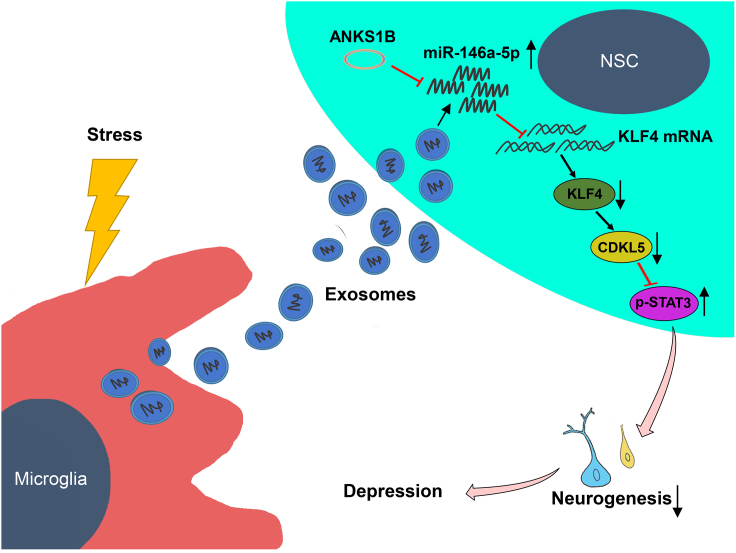
“Collectively, these data offer the novel hypothesis that microglia, which secrete exosomes containing miR-146a-5p, play an important role in the neurogenesis that is coupled with depression via the miR-146a-5p/KLF4 pathway (Figure 7).”
§ Microglia secrete miR-146a-5p-containing exosomes to regulate neurogenesis in depression > Discussion
hedgeddirect- Asserted: passes — The authors put it forward as true.
- Checkable: passes — It can be checked against evidence.
- Load-bearing: passes — The paper’s conclusions depend on it.
- Based: passes — The paper gives a reason why it holds.
Probably not a substantial claim.
- Rests on an assumption: CUMS-induced depression-like behavior in rats is a valid model of human depression.
In the paper
“As the DG of the adult brain represents a key region for neurogenesis,37”
§ Microglia secrete miR-146a-5p-containing exosomes to regulate neurogenesis in depression > Discussion
What the sources say
- Not checked — no full text of the sourcecites [37] Cameron, 2001, Adult neurogenesis produces a large pool of new granule cells in the dentate gyrus, J. Comp. Neurol. source
plain- Asserted: passes — The authors put it forward as true.
- Checkable: passes — It can be checked against evidence.
- Load-bearing: passes — The paper’s conclusions depend on it.
- Based: passes — The paper gives a reason why it holds.
Probably not a substantial claim.
A conclusion the paper draws from its own results — it cites no other source for it, so there is none to check. The quote shows it is in the paper.
In the paper
“These results suggest that circANKS1B can function as a sequester for miR-146a-5p to regulate the translational expression of KLF4, thus participating in the neurogenesis associated with depression.”
§ Microglia secrete miR-146a-5p-containing exosomes to regulate neurogenesis in depression > Results > CircANKS1B is decreased in the DG region of CUMS rats and regulates neurogenesis via the miR-146a-5p/KLF4 pathway
hedgeddirect- Asserted: passes — The authors put it forward as true.
- Checkable: passes — It can be checked against evidence.
- Load-bearing: passes — The paper’s conclusions depend on it.
- Based: passes — The paper gives a reason why it holds.
It may state two separate claims as one.
A conclusion the paper draws from its own results — it cites no other source for it, so there is none to check. The quote shows it is in the paper.
In the paper
“miR-146a-5p suppresses neurogenesis in the DG region of the hippocampus, thereby enhancing depression-like behaviors.”
§ Microglia secrete miR-146a-5p-containing exosomes to regulate neurogenesis in depression > Discussion
plaindirect- Asserted: passes — The authors put it forward as true.
- Checkable: passes — It can be checked against evidence.
- Load-bearing: passes — The paper’s conclusions depend on it.
- Based: passes — The paper gives a reason why it holds.
It may state two separate claims as one.
What the paper did — it cites no source for this, so there is none to check. The quote shows it is in the paper.
In the paper
“miR-146a-5p expression at this site was significantly upregulated in normal rats or downregulated in CUMS rats (Figures S12A and S12B).”
§ Microglia secrete miR-146a-5p-containing exosomes to regulate neurogenesis in depression > Results > MIR-146a-5p suppresses neurogenesis via the KLF4/CDKL5 pathway
plaindirect- Asserted: passes — The authors put it forward as true.
- Checkable: passes — It can be checked against evidence.
- Load-bearing: passes — The paper’s conclusions depend on it.
- Based: passes — The paper gives a reason why it holds.
It may state two separate claims as one.
What the paper did — it cites no source for this, so there is none to check. The quote shows it is in the paper.
In the paper
“All statistical tests were two-tailed and a p < 0.05 was required for results to be considered as statistically significant.”
§ Microglia secrete miR-146a-5p-containing exosomes to regulate neurogenesis in depression > Materials and methods > Statistical analysis
plain- Asserted: passes — The authors put it forward as true.
- Checkable: passes — It can be checked against evidence.
- Load-bearing: passes — The paper’s conclusions depend on it.
- Based: passes — The paper gives a reason why it holds.
Probably not a substantial claim. It may state two separate claims as one.
What the paper did — it cites no source for this, so there is none to check. The quote shows it is in the paper.
In the paper
“Injection sites were verified after behavioral tests and only data from rats with correct injection site placements were used for subsequent experiments.”
§ Microglia secrete miR-146a-5p-containing exosomes to regulate neurogenesis in depression > Materials and methods > Stereotaxic injection of the adeno-associated virus
plain- Asserted: passes — The authors put it forward as true.
- Checkable: passes — It can be checked against evidence.
- Load-bearing: passes — The paper’s conclusions depend on it.
- Based: passes — The paper gives a reason why it holds.
Probably not a substantial claim. It may state two separate claims as one.
A conclusion the paper draws from its own results — it cites no other source for it, so there is none to check. The quote shows it is in the paper.
In the paper
“we demonstrate that circANKS1B mediates miR-146a-5p regulation of KLF4 mRNA expression and its functional involvement in the neurogenesis of depression.”
§ Microglia secrete miR-146a-5p-containing exosomes to regulate neurogenesis in depression > Discussion
boosteddirect- Asserted: passes — The authors put it forward as true.
- Checkable: passes — It can be checked against evidence.
- Load-bearing: passes — The paper’s conclusions depend on it.
- Based: passes — The paper gives a reason why it holds.
It may state two separate claims as one.
A conclusion the paper draws from its own results — it cites no other source for it, so there is none to check. The quote shows it is in the paper.
In the paper
“miR-146a-5p, which is enriched in microglia-derived exosomes, is shuttled to DG neurons, leading to an inhibition of neurogenesis by affecting the target gene, KLF4.”
§ Microglia secrete miR-146a-5p-containing exosomes to regulate neurogenesis in depression > Discussion
plaindirect- Asserted: passes — The authors put it forward as true.
- Checkable: passes — It can be checked against evidence.
- Load-bearing: passes — The paper’s conclusions depend on it.
- Based: passes — The paper gives a reason why it holds.
It may state two separate claims as one.
- Rests on an assumption: Exosomes can cross the blood-brain barrier.
A conclusion the paper draws from its own results — it cites no other source for it, so there is none to check. The quote shows it is in the paper.
In the paper
“In this study, miR-146a-5p appears to bind with KLF4 to inhibit the expression of CDKL5 and increase STAT3 phosphorylation levels, thereby reducing neurogenesis and inducing depression-like behaviors.”
§ Microglia secrete miR-146a-5p-containing exosomes to regulate neurogenesis in depression > Discussion
hedgeddirect- Asserted: passes — The authors put it forward as true.
- Checkable: passes — It can be checked against evidence.
- Load-bearing: passes — The paper’s conclusions depend on it.
- Based: passes — The paper gives a reason why it holds.
It may state two separate claims as one.
What the paper did — it cites no source for this, so there is none to check. The quote shows it is in the paper.
In the paper
“Normality between group samples were assessed using the D'Agostino and Pearson omnibus normality test and Brown-Forsythe tests.”
§ Microglia secrete miR-146a-5p-containing exosomes to regulate neurogenesis in depression > Materials and methods > Statistical analysis
plain- Asserted: passes — The authors put it forward as true.
- Checkable: passes — It can be checked against evidence.
- Load-bearing: fails — The paper’s conclusions may not depend on it.
- Based: passes — The paper gives a reason why it holds.
Probably not a substantial claim. The paper’s conclusions may not depend on it.
The paper relies on this without support.
CUMS-induced depression-like behavior in rats is a valid model of human depression.
“With use of the chronic unpredictable mild stress (CUMS)-induced rat model of depression”
The paper relies on this without support.
Exosomes can cross the blood-brain barrier.
“As exosomes can cross the blood-brain barrier, they offer a means for achieving a precise delivery of miRNA to its intended central nervous system target.”
Claims other papers make about this one
Each is checked against this paper’s own text: does it say what the citing paper says it does?
The source backs part of the claim, not all of it — or backs it for a different population, condition or comparison.
In the citing paper
“The link between miRNAs and the pathophysiology of depression248–252 may be implicated by the fact that miRNAs regulate neuronal regulation, neurotransmitter regulation, and microglia activation.253,254”
From Epigenetic regulation in major depression and other stress-related disorders: molecular mechanisms, clinical relevance and therapeutic potential (2023) · cites this paper as [254]
Experimental — accuracy not yet measuredThe source backs part of the claim, not all of it — or backs it for a different population, condition or comparison.
In the citing paper
“sEVs could easily cross the BBB and enrich the infarct zone, transfer cargo to different types of brain cells, and effectively interact with cells in distant brain areas [36, 37].”
From M2 microglia-derived small extracellular vesicles modulate NSC fate after ischemic stroke via miR-25-3p/miR-93-5p-TGFBR/PTEN/FOXO3 axis (2025) · cites this paper as [37]
Experimental — accuracy not yet measuredThe cited source says what the claim attributes to it.
In the citing paper
“miR-146a-5p is transferred by microglia to the hippocampus DG, where it targets Krüppel-like factor 4 (KLF4) and inhibits neurogenesis and the spontaneous discharge of excitatory neurons.254”
From Epigenetic regulation in major depression and other stress-related disorders: molecular mechanisms, clinical relevance and therapeutic potential (2023) · cites this paper as [254]
In the citing paper
“They could inhibit NSC neurogenesis within the hippocampal Dentate Gyrus (DG) in pathological processes of depression [37].”
From M2 microglia-derived small extracellular vesicles modulate NSC fate after ischemic stroke via miR-25-3p/miR-93-5p-TGFBR/PTEN/FOXO3 axis (2025) · cites this paper as [37]
Self-check
Percentages, sums and reported differences re-computed from the paper’s own numbers.
Each contradiction between two passages listed here was confirmed by an independent check.
Rated minor: it would not touch a result — a value no result rests on, a p-value that stays on the same side of the significance level, or a conflict that is clerical, resolved elsewhere in the paper, or outside its own findings.
In the paper
§ Microglia secrete miR-146a-5p-containing exosomes to regulate neurogenesis in depression > Discussion
“We not only found that a specific miRNA, miR-146a-4p, was closely related to signaling pathways regulating pluripotency of stem cells, but that it was also enriched and significantly increased in the exosomes of CUMS rats.”
§ Microglia secrete miR-146a-5p-containing exosomes to regulate neurogenesis in depression > Results > MiR-146a-5p is upregulated in serum-derived exosomes of CUMS rats
“Notably, miR-146a-5p was identified as being most closely related to signaling pathways regulating pluripotency of stem cells (Figure 2F).”
Citations
Cites
MicroRNAs: Target Recognition and Regulatory Functions
Bartel, D. P. (2009) · Cell · doi:10.1016/j.cell.2009.01.002 · Cited by 20,068
Valadi, H., Ekström, K., Bossios, A., Sjöstrand, M., Lee, J. J., & Lötvall, J. O. (2007) · Nature Cell Biology · doi:10.1038/ncb1596 · Cited by 12,834
Natural RNA circles function as efficient microRNA sponges
Hansen, T. B., Jensen, T. I., Clausen, B. H., Bramsen, J. B., Finsen, B., Damgaard, C. K., & Kjems, J. (2013) · Nature · doi:10.1038/nature11993 · Cited by 7,985
Malhi, G. S., & Mann, J. J. (2018) · The Lancet · doi:10.1016/s0140-6736(18)31948-2 · Cited by 4,099
Identification of tissue-specific microRNAs from mouse
Lagos-Quintana, M., Rauhut, R., Yalcin, A., Meyer, J., Lendeckel, W., & Tuschl, T. (2002) · Current Biology · doi:10.1016/s0960-9822(02)00809-6 · Cited by 3,355
MicroRNAs in cancer: biomarkers, functions and therapy
Hayes, J., Peruzzi, P. P., & Lawler, S. (2014) · Trends in Molecular Medicine · doi:10.1016/j.molmed.2014.06.005 · Cited by 2,049
Microglia Shape Adult Hippocampal Neurogenesis through Apoptosis-Coupled Phagocytosis
Sierra, A., Encinas, J. M., Deudero, J. J. P., Chancey, J. H., Enikolopov, G., Overstreet-Wadiche, L. S., Tsirka, S. E., & Maletic-Savatic, M. (2010) · Cell Stem Cell · doi:10.1016/j.stem.2010.08.014 · Cited by 1,622
Willner, P. (2005) · Neuropsychobiology · doi:10.1159/000087097 · Cited by 1,605
Adult neurogenesis produces a large pool of new granule cells in the dentate gyrus
Cameron, H. A., & Mckay, R. D. G. (2001) · Journal of Comparative Neurology · doi:10.1002/cne.1040 · Cited by 1,585
Estimation of clinical trial success rates and related parameters
Wong, C. H., Siah, K. W., & Lo, A. W. (2019) · Biostatistics · doi:10.1093/biostatistics/kxx069 · Cited by 1,585
Cited by
Sorted by citations
Items 201–227 of 227
Li, C., Yan, M., Jiang, C., Hu, J., Chen, J., Ye, F., Song, S., Yang, C., Lin, F., & Li, T. (2025) · International Immunopharmacology · doi:10.1016/j.intimp.2025.115285
Kempermann, G. (2025) · Oxford University Press eBooks · doi:10.1093/med/9780197519233.003.0009
Extracellular Vesicles in Depression
Karaçiçek, B., Ceylan, D., Arat-Çelik, H. E., & Genç, Ş. (2025) · Springer eBooks · doi:10.1007/978-3-031-73368-0_34
Guo, R., Li, Y., Chen, X., Lou, H., Wang, M., & Yu, S. Y. (2025) · Behavioural Brain Research · doi:10.1016/j.bbr.2025.115825 · Cited by 1
Self-citationJi, X.-Y., Guo, Y.-X., Wang, L.-B., Wu, W.-C., Wang, J.-Q., He, J., Gao, R., Rasouli, J., Gao, M.-Y., Wang, Z.-H., et al. (2024) · Figshare · doi:10.6084/m9.figshare.25038074
Zhang, Y., Miao, Y., Xiong, X., Tan, J., Han, Z., Chen, F., Lei, P., & Zhang, Q. (2023) · Figshare · doi:10.6084/m9.figshare.23512723
Zhang, Y., Miao, Y., Xiong, X., Tan, J., Han, Z., Chen, F., Lei, P., & Zhang, Q. (2023) · Figshare · doi:10.6084/m9.figshare.23512720
Jiang, W., Yu, Y., 欧江华, Li, Y., & Zhu, N. (2023) · Figshare · doi:10.6084/m9.figshare.26635467
Self-citationFazakas, C., Végh, A. G., Dudás, T., Varga, D., Lüvi, A., Krecsmarik, M., Dér, A., Farkas, A. E., Krizbai, I. A., & Wilhelm, I. (2026) · bioRxiv (Cold Spring Harbor Laboratory) · doi:10.64898/2026.01.26.701753
Duan, Y., Zhou, S., Zeng, D., Shi, S., Chen, A., Du, F., Wu, Y., Wang, J., Yu, S., & Zhang, J. (2026) · iScience · doi:10.1016/j.isci.2026.115069
Self-citationZhuang, W., Ding, X., Luo, H., & Deng, L. (2026) · Personalized Medicine · doi:10.1080/17410541.2026.2634610
Ermakova, D. L., Rakhmonova, F. S., & Dolgushina, N. V. (2026) · GYNECOLOGY · doi:10.26442/20795696.2026.1.203566
Molecules in motion: A narrative review on exercise, exosomes and eating disorders.
Stoeren, M. S., Goleva-Fjellet, S., Edlund, K., & Bratland‐Sanda, S. (2026) · Complementary Therapies in Medicine · doi:10.1016/j.ctim.2026.103378
Interaction entre autophagie et exosomes au niveau synaptique dans la maladie de Parkinson
Sanchez-Mirasierra, I. (2023) · theses.fr (ABES) · doi:10.70675/7104d6d5z945ez494eza917zda9e6be1eea6
A female-specific role for Slit1 in prenatal stress-induced depression vulnerability
Xu, K., Chen, T., Yang, Y., Liu, W., Guo, H., Gong, Z., Ma, X., Liu, J., Lu, Y., Zhang, H., et al. (2026) · Neurotherapeutics · doi:10.1016/j.neurot.2026.e00916
Yang, Y., Yu, Z., Dou, W., Shi, S., Zhang, B., & Liu, X. (2026) · Frontiers in Pharmacology · doi:10.3389/fphar.2026.1822691
Xiong, X., Luo, Z., & Chen, J. (2026) · Research Square · doi:10.21203/rs.3.rs-9648687/v1
Targeting the non-coding RNA-PANoptosis axis: a novel frontier in disease diagnosis and therapy
Wang, S., Feng, C., Chen, X., Li, Y., Wang, K., Zhang, M., & Cheng, W. (2026) · APOPTOSIS · doi:10.1007/s10495-026-02413-z
Self-citationLi, J., Guan, X., Zhang, R., & Zhang, H. (2026) · Journal of Translational Medicine · doi:10.1186/s12967-026-08772-0
Jin, W., Chen, S., Li, D., Chen, Q., Wang, M., Fu, X., Qu, C., & Ping, L. (2026) · iScience · doi:10.1016/j.isci.2026.117224
Sleep and stress as modifiable drivers of Alzheimer’s disease
Wear, D., Hussaini, S. A., & Yu, W. H. (2026) · npj Dementia · doi:10.1038/s44400-026-00127-2
Beganovic, A., Flotho, M., Li, J., Guldner, I. H., Reich, M., Wahl, V., Graf, S., Donate, P., Rishik, S., Dashdorj, E. D., et al. (2026) · bioRxiv (Cold Spring Harbor Laboratory) · doi:10.64898/2026.09.03.745468
ELAVL Proteins, miRNA Fate, and Extracellular RNA Communication in Brain Aging and Neurodegeneration
Mukherjee, K., & Bhattacharyya, S. N. (2026) · Cells · doi:10.3390/cells15181649
Zhong, L., Guo, Y., Zong, J., Yang, X., Sun, J., Zhang, Y., Fan, J., Yuanhe, F., Wang, S., Wang, Y., et al. (2026) · Redox Biology · doi:10.1016/j.redox.2026.104409
Severtsev, V. V., Kesler, E. P., Tikhonova, Y. G., Kanevskii, N. I., Kamalieva, E. R., Pevunova, A. R., Finko, E. V., Sklyar, E. Y., Galeeva, M. S., Silachev, D. N., et al. (2026) · Neuroglia · doi:10.3390/neuroglia7040035
Adhish, M., Dey, S., Gupta, S., & Mitra, P. (2026) · NeuroMolecular Medicine · doi:10.1007/s12017-026-08950-9
Microglia in the neurogenic niche: emerging roles of immunometabolism
刘丹平, Li, Y., & Liu, Y. (2026) · Frontiers in Neuroscience · doi:10.3389/fnins.2026.2007175
Self-citation
Metadata
- Authors
- Fan, C., Li, Y., Lan, T., Wang, W., Long, Y., & Yu, S. Y.
- Affiliations
- Shandong University (CN)
- Corresponding author
- Yu, Shu Yan
- Venue
- Molecular Therapy
- Publisher
- Elsevier BV
- Published
- 2022-03
- Volume
- 30
- Issue
- 3
- Pages
- 1300-1314
- ISSN
- 1525-0016 (ISSN-L)
- PMC
- PMC8899528
- OpenAlex
- W3212530036
- Semantic Scholar
- 6861e6855aaca44197cb811ed5090831b96e0fc6
- Cited by
- 227
- References
- 61
- Citations by year
- 2026: 31 · 2025: 73 · 2024: 66 · 2023: 40 · 2022: 17
- FWCI
- 11.20
- Type
- journal article
- Language
- en
- Open access
- hybrid
- doi.org
- Licence
- Locations
- Molecular Therapy (publishedVersion, cc-by-nc-nd)
- SSRN Electronic Journal (acceptedVersion)
- PubMed Central (publishedVersion, cc-by-nc-nd)
- PubMed (publishedVersion)
- Funders
- National Natural Science Foundation of China (NSFC81873796, 82071513)
- Natural Science Foundation of Shandong Province
- National Natural Science Foundation of China-Shandong Joint Fund for Marine Science Research Centers (ZR2020ZD25)
- Fundamental Research Fund of Shandong University (2018JC008)
- Topics
- Life Sciences › Neuroscience › Developmental Neuroscience › Neurogenesis and neuroplasticity mechanisms
- Life Sciences › Biochemistry, Genetics and Molecular Biology › Molecular Biology › Extracellular vesicles in disease
- Life Sciences › Neuroscience › Neurology › Neuroinflammation and Neurodegeneration Mechanisms
- Keywords
- depression, microglia, exosomes, miR-146a, adult neurogenesis, dentate gyrus, KLF4, microRNA sequestration, post-transcriptional regulation
- MeSH terms
- Animals, Depression, Microglia, MicroRNAs, Rats, Exosomes, Neurogenesis
About these checks
Registry, retraction, Cites and statistics results are computed, not judged, with one exception: a printed reference that no index lists is read once by a model before it counts as a citation error. Claims are extracted by a model and kept only when their quote appears verbatim in the text; each cited source is then checked, with a model’s help, for whether it says what the claim relies on. Those verdicts can be wrong — read the claim’s quote and the cited source before relying on one.
A language model drew the claims from the paper on 2026-10-09, under version 3 of the claim definition (model deepseek-v4.1-flash, prompt extract-v3).
A second model labelled each claim on 2026-10-09 (model jev-1.13-20260917, definition revision gold-guideline-v0.2).
Cited sources are checked with a language model’s help (gpt-6-sol).
Statistics and arithmetic are recomputed, not judged.
Confidence bands are shown only for fields calibrated on our annotated test set. None is calibrated yet, so no band is shown.
What counts as a claim ›How we measure confidence ›How we check this ›
Are you an author, or do you see a problem with this page? Request a review
