

Global, regional, and national causes of under-5 mortality in 2000-15: an updated systematic analysis with implications for the Sustainable Development Goals
Open accessThe DOI matches its Crossref record; 35 of the 36 references it cites were found in a registry or an index.
Abstract
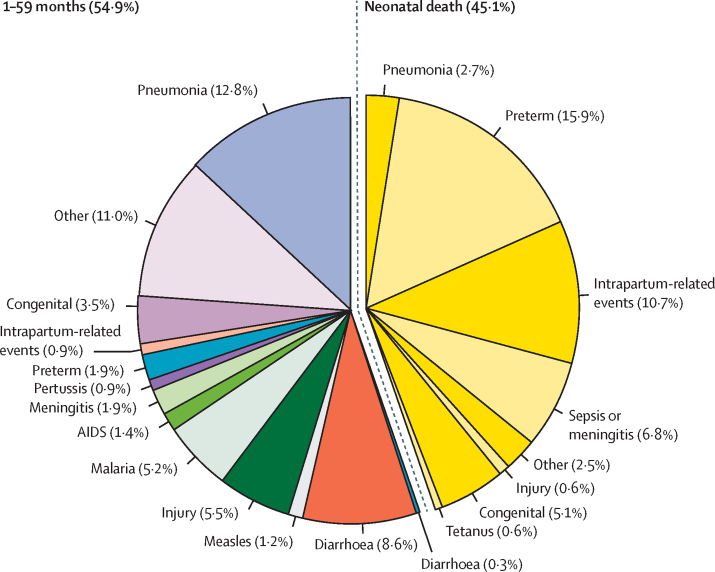
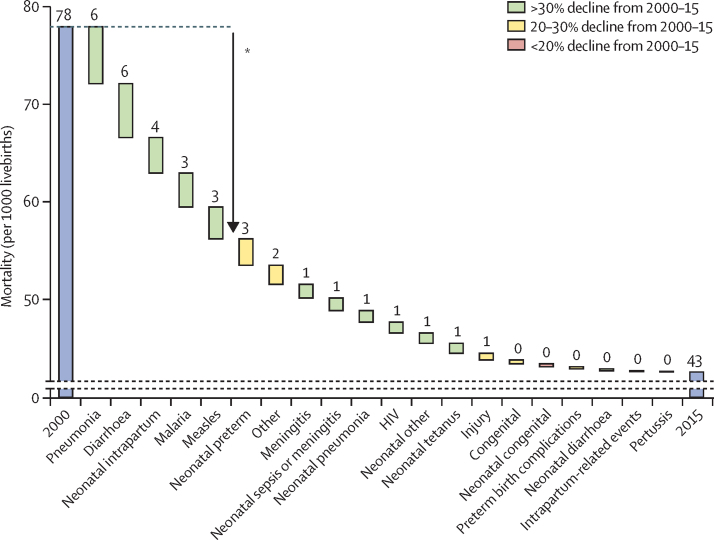
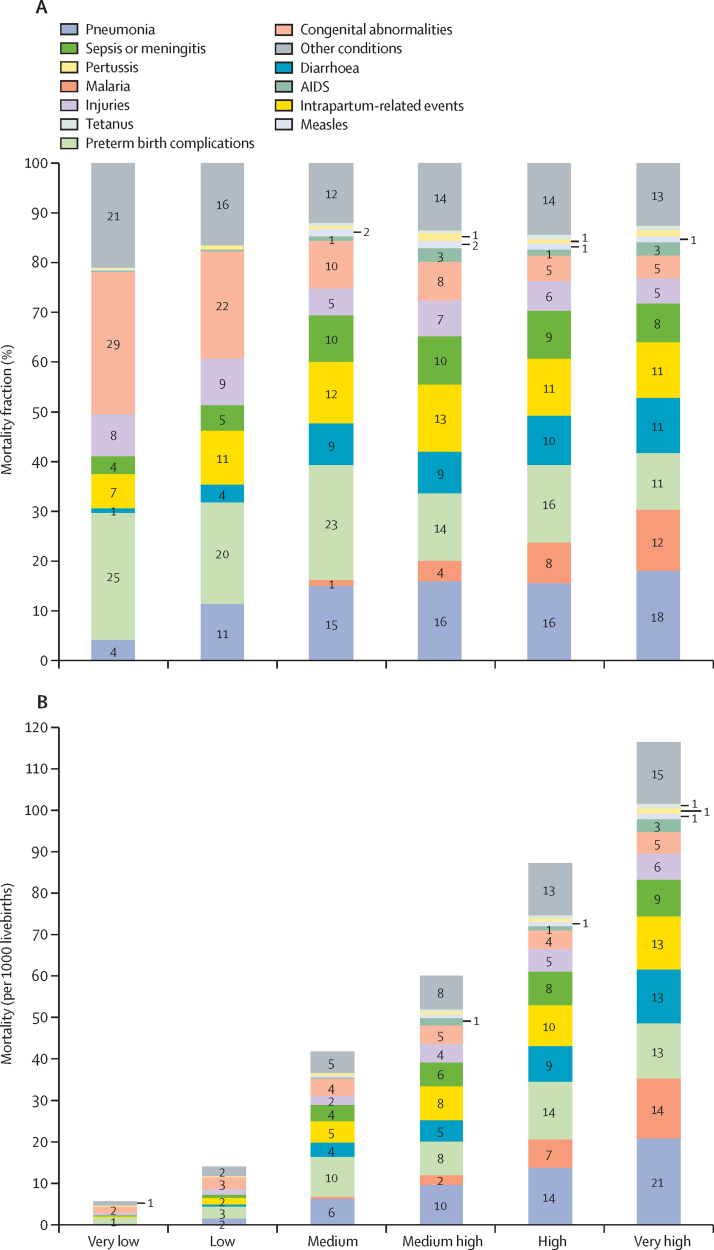
BACKGROUND: Despite remarkable progress in the improvement of child survival between 1990 and 2015, the Millennium Development Goal (MDG) 4 target of a two-thirds reduction of under-5 mortality rate (U5MR) was not achieved globally. In this paper, we updated our annual estimates of child mortality by cause to 2000-15 to reflect on progress toward the MDG 4 and consider implications for the Sustainable Development Goals (SDG) target for child survival. METHODS: We increased the estimation input data for causes of deaths by 43% among neonates and 23% among 1-59-month-olds, respectively. We used adequate vital registration (VR) data where available, and modelled cause-specific mortality fractions applying multinomial logistic regressions using adequate VR for low U5MR countries and verbal autopsy data for high U5MR countries. We updated the estimation to use Plasmodium falciparum parasite rate in place of malaria index in the modelling of malaria deaths; to use adjusted empirical estimates instead of modelled estimates for China; and to consider the effects of pneumococcal conjugate vaccine and rotavirus vaccine in the estimation. FINDINGS: In 2015, among the 5·9 million under-5 deaths, 2·7 million occurred in the neonatal period. The leading under-5 causes were preterm birth complications (1·055 million [95% uncertainty range (UR) 0·935-1·179]), pneumonia (0·921 million [0·812 -1·117]), and intrapartum-related events (0·691 million [0·598 -0·778]). In the two MDG regions with the most under-5 deaths, the leading cause was pneumonia in sub-Saharan Africa and preterm birth complications in southern Asia. Reductions in mortality rates for pneumonia, diarrhoea, neonatal intrapartum-related events, malaria, and measles were responsible for 61% of the total reduction of 35 per 1000 livebirths in U5MR in 2000-15. Stratified by U5MR, pneumonia was the leading cause in countries with very high U5MR. Preterm birth complications and pneumonia were both important in high, medium high, and medium child mortality countries; whereas congenital abnormalities was the most important cause in countries with low and very low U5MR. INTERPRETATION: In the SDG era, countries are advised to prioritise child survival policy and programmes based on their child cause-of-death composition. Continued and enhanced efforts to scale up proven life-saving interventions are needed to achieve the SDG child survival target. FUNDING: Bill & Melinda Gates Foundation, WHO.
Overview
The claims and statistics of this paper haven’t been checked yet.
Free: it reads the open-access text and checks the first 5 claims that cite a source we can check. Create a free account to check every claim.
Integrity signals
Registry
Cites
Statistics
Figures
Verification
Claims the paper makes
The claims and statistics of this paper haven’t been checked yet.
Free: it reads the open-access text and checks the first 5 claims that cite a source we can check. Create a free account to check every claim.
Claims other papers make about this one
Each is checked against this paper’s own text: does it say what the citing paper says it does?
In the citing paper
“it is the leading cause of neonatal mortality (18–20).”
In the citing paper
“Inadequate sanitation services and polluted water supplies are known to be leading drivers of diarrhoeal disease, and globally, diarrhoea represents the second highest cause of mortality among children under the age”
From A planetary health model for reducing exposure to faecal contamination in urban informal settlements: Baseline findings from Makassar, Indonesia. (2021) · cites this paper as Liu et al., 2016
Self-check
Percentages, sums and reported differences re-computed from the paper’s own numbers.
The self-check needs the paper’s full text.
Citations
Cites
Transforming Our World: The 2030 Agenda for Sustainable Development
(2018) · A New Era in Global Health · doi:10.1891/9780826190123.ap02 · Cited by 19,351
Liu, L., Johnson, H. L., Cousens, S., Perin, J., Scott, S., Lawn, J. E., Rudan, I., Campbell, H., Cibulskis, R., Li, M., et al. (2012) · The Lancet · doi:10.1016/s0140-6736(12)60560-1 · Cited by 3,934
Self-citationThe effect of malaria control on Plasmodium falciparum in Africa between 2000 and 2015
Bhatt, S., Weiss, D. J., Cameron, E., Bisanzio, D., Mappin, B., Dalrymple, U., Battle, K. E., Moyes, C. L., Henry, A., Eckhoff, P. A., et al. (2015) · Nature · doi:10.1038/nature15535 · Cited by 3,225
Liu, L., Oza, S., Hogan, D., Perin, J., Rudan, I., Lawn, J. E., Cousens, S., Mathers, C., & Black, R. E. (2015) · The Lancet · doi:10.1016/s0140-6736(14)61698-6 · Cited by 3,167
Self-citationAn Analytical Framework for the Study of Child Survival in Developing Countries
Mosley, W. H., & Chen, L. C. (1984) · Population and Development Review · doi:10.2307/2807954 · Cited by 1,471
Rajaratnam, J. K., Marcus, J. R., Flaxman, A. D., Wang, H., Levin-Rector, A., Dwyer, L., Costa, M., Lopez, A. D., & Murray, C. J. (2010) · The Lancet · doi:10.1016/s0140-6736(10)60703-9 · Cited by 898
You, D., Hug, L., Ejdemyr, S., Idele, P., Hogan, D., Mathers, C., Gerland, P., New, J. R., & Alkema, L. (2015) · The Lancet · doi:10.1016/s0140-6736(15)00120-8 · Cited by 830
Self-citationBhutta, Z. A., Das, J. K., Walker, N., Rizvi, A., Campbell, H., Rudan, I., & Black, R. E. (2013) · The Lancet · doi:10.1016/s0140-6736(13)60648-0 · Cited by 675
Self-citationAn analytical framework for the study of child survival in developing countries. 1984.
Mosley, W. H., & Chen, L.-C. (2003) · Europe PMC (PubMed Central) · Cited by 596
You, D., Hug, L., Ejdemyr, S., & Beise, J. (2015) · Cited by 563
Research works printed but not linked: 4
- United Nations Department of Economic and Social Affairs Population Division World Population Prospects: The 2015 Revision, DVD Edition 2015 United Nations New York
- WHO WHO recommendations on interventions to improve preterm birth outcomes 2015 World Health Organization Geneva http://apps.who.int/iris/bitstream/10665/183037/1/9789241508988_eng.pdf (accessed March 9, 2016). 26447264
- WHO Guideline: managing possible serious bacterial infection in young infants when referral is not feasible 2015 World Health Organization Geneva http://apps.who.int/iris/bitstream/10665/181426/1/9789241509268_eng.pdf (accessed March 9, 2016). 26447263
- The Bill & Melinda Gates Foundation The Bill & Melinda Gates Foundation to fund disease surveillance network in Africa and Asia to prevent childhood mortality and help prepare for the next epidemic. Seattle, USA http://www.gatesfoundation.org/Media-Center/Press-Releases/2015/05/Child-Health-and-Mortality-Prevention-Surveillance-Network 2015 (accessed Sept 30, 2015).
Cited by
Items 901–1,000 of 1,006
Bendixen, M. M., Iapicca, L. C., & Parker, L. A. (2022) · Advances in Neonatal Care · doi:10.1097/anc.0000000000000990 · Cited by 21
Cho, H., Lee, E. H., Lee, K., & Heo, J. S. (2022) · Scientific Reports · doi:10.1038/s41598-022-16234-y · Cited by 20
Rehman, S., Iqbal, Z., Qureshi, R., & Shah, G. M. (2023) · Ethnobotany Research and Applications · doi:10.32859/era.248.5.1-24 · Cited by 32
Albolino, S., Dagliana, G., Illiano, D., Tanzini, M., Ranzani, F., Bellandi, T., Fusco, I., Bellini, I., Carreras, G., Tommaso, M. D., et al. (2017) · Ergonomics · doi:10.1080/00140139.2017.1377772 · Cited by 18
“These data, with some minor differences, are confirmed by other recent studies (Liu et al. 2016).”
ResultEngle‐Stone, R., Perkins, A., Clermont, A., Walker, N., Haskell, M. J., Vosti, S. A., & Brown, K. H. (2017) · Journal of Nutrition · doi:10.3945/jn.116.242271 · Cited by 19
Maternal Carriage of Group B Streptococcus and Escherichia coli in a District Hospital in Mozambique
Madrid, L., Maculuve, S. A., Vilajeliu, A., Sáez-López, E., Massora, S., Cossa, A., Varo, R., Sitoe, A., Mosqueda, N., Anselmo, R., et al. (2018) · The Pediatric Infectious Disease Journal · doi:10.1097/inf.0000000000001979 · Cited by 19
Adeniran, A., Likaka, A. T. M., Knutsson, A., Costello, A. M. D. L., Daelmans, B. M. E. G., Maliqi, B., Burssa, D., Freer, J., Askew, I., Bowen, L., et al. (2018) · Bulletin of the World Health Organization · doi:10.2471/blt.17.197939 · Cited by 24
Nyishime, M., Borg, R., Ingabire, W., Hedt‐Gauthier, B., Nahimana, E., Gupta, N., Hansen, A. R., LaBrecque, M. A., Nkikabahizi, F., Mutaganzwa, C., et al. (2018) · BMC Pediatrics · doi:10.1186/s12887-018-1334-1 · Cited by 23
Zarante, I., Hurtado-Villa, P. M., Walani, S. R., Kancherla, V., López‐Camelo, J. S., Giugliani, R., Groisman, B., Howson, C. P., & Durán, P. (2019) · Revista Panamericana de Salud Pública · doi:10.26633/rpsp.2019.2 · Cited by 18
“Birth defects contribute up to 21% of under-5 mortality in Latin America and the Caribbean (LAC), compared to a global average of 9% (1).”
BackgroundFour delays of child mortality in Rwanda: a mixed methods analysis of verbal social autopsies
Roder‐DeWan, S., Gupta, N., Kagabo, D. M., Habumugisha, L., Nahimana, E., Mugeni, C., Bucyana, T., & Hirschhorn, L. R. (2019) · BMJ Open · doi:10.1136/bmjopen-2018-027435 · Cited by 24
“This progress, although exceptional by most measures, mirrors a global trend towards reduced childhood mortality and an epidemiological transition away from the most easily preventable causes of death.(4) As proficiency is gained in tackling the ‘low-hanging fruit’ of child health, health systems must turn their atten…”
BackgroundPropofol Suppresses LPS-Induced Inflammation in Amnion Cells via Inhibition of NF-κB Activation
Yoon, J.-Y., Kim, D. W., Ahn, J.-H., Choi, E., Kim, Y. H., Jeun, M., & Kim, E.-J. (2019) · Tissue Engineering and Regenerative Medicine · doi:10.1007/s13770-019-00194-y · Cited by 18
Pulse oximetry in paediatric primary care in low-income and middle-income countries
McCollum, E. D., King, C., Colbourn, T., Graham, H., Bernstein, M., Wilson, I. H., & Checkley, W. (2019) · The Lancet Respiratory Medicine · doi:10.1016/s2213-2600(19)30358-3 · Cited by 18
Trends in the global burden of paediatric lower respiratory infections
King, C., & McCollum, E. D. (2019) · The Lancet Infectious Diseases · doi:10.1016/s1473-3099(19)30557-2 · Cited by 18
Oltman, S. P., Rogers, E. E., Baer, R. J., Jasper, E. A., Anderson, J. G., Steurer, M. A., Pantell, M. S., Petersen, M. A., Partridge, J. C., Karasek, D. A., et al. (2020) · Pediatric Research · doi:10.1038/s41390-020-01148-0 · Cited by 22
Chaudhari, T. (2020) · Best Practice & Research Clinical Obstetrics & Gynaecology · doi:10.1016/j.bpobgyn.2020.09.004 · Cited by 28
Carlisle, N. H., Watson, H. A., Seed, P. T., Carter, J., Kuhrt, K., Tribe, R. M., & Shennan, A. H. (2020) · Midwifery · doi:10.1016/j.midw.2020.102864 · Cited by 20
Yeshaw, Y., Worku, M. G., Tessema, Z. T., Teshale, A. B., & Tesema, G. A. (2020) · PLoS ONE · doi:10.1371/journal.pone.0243245 · Cited by 22
Treleaven, E., Whidden, C., Cole, F., Kayentao, K., Traoré, M. B., Diakité, D., Sidibé, S., Lin, T. K., Boettiger, D. C., Cissouma, S., et al. (2021) · Tropical Medicine & International Health · doi:10.1111/tmi.13592 · Cited by 21
“Many of the leading causes of under-five mortality in high-burden settings are treatable, including pneumonia, diarrhoea and malaria [1], provided children are correctly diagnosed in a timely manner and receive effective treatment to avoid illness progression or death [11–13].”
BackgroundHybridized neural networks for non-invasive and continuous mortality risk assessment in neonates
Baker, S., Xiang, W., & Atkinson, I. (2021) · Computers in Biology and Medicine · doi:10.1016/j.compbiomed.2021.104521 · Cited by 21
Asymptomatic Viral Presence in Early Life Precedes Recurrence of Respiratory Tract Infections
Zuurbier, R. P., Bogaert, D., Piters, W. A. A. D. S., Arp, K., Chu, M. L. J. N., Sanders, E. A. M., & van Houten, M. A. (2022) · The Pediatric Infectious Disease Journal · doi:10.1097/inf.0000000000003732 · Cited by 18
Becker‐Dreps, S., Blette, B. S., Briceño, R., Alemán, J., Hudgens, M. G., Moreno, G., Ordoñez, A., Rocha, J., Weber, D. J., & Amaya, E. (2017) · PLoS ONE · doi:10.1371/journal.pone.0183348 · Cited by 17
Singh, A. K., Wagner, A. L., Joshi, J., Carlson, B. F., Aneja, S., & Boulton, M. L. (2018) · Expert Review of Vaccines · doi:10.1080/14760584.2018.1484285 · Cited by 20
Rerimoi, A. J., Jasseh, M., Agbla, S. C., Reniers, G., Roca, A., & Timæus, I. M. (2019) · PLoS ONE · doi:10.1371/journal.pone.0219919 · Cited by 20
Moxon, S. G., Blencowe, H., Bailey, P., Bradley, J., Day, L. T., Ram, P. K., Monet, J.-P., Moran, A. C., Zeck, W., & Lawn, J. E. (2019) · PLOS ONE · doi:10.1371/journal.pone.0218748 · Cited by 17
“The main causes of death are direct complications of prematurity (35%), infections (23%), and intrapartum complications leading to birth injury (24%) [2].”
BackgroundSelf-citationPark, J. S., Park, S.-Y., Moon, J. W., Kim, K., & Suh, D. I. (2025) · Journal of Medical Internet Research · doi:10.2196/66491 · Cited by 31
“Accurate and timely diagnosis is essential for the treatment of pediatric respiratory illnesses, which remain a leading cause of morbidity and mortality among children worldwide [1,2].”
Child Mortality Transition in the Arabian Gulf: Wealth, Health System Reforms, and Development Goals
Salam, A. A., & Al-Khraif, R. M. (2020) · Frontiers in Public Health · doi:10.3389/fpubh.2019.00402 · Cited by 19
Bieleninik, Ł., Konieczna-Nowak, L., Knapik-Szweda, S., & Kwaśniok, J. (2020) · Nordic Journal of Music Therapy · doi:10.1080/08098131.2020.1781233 · Cited by 19
Wu, Y., Yuan, Y., Kong, C., Ma, Q., Ye, H., Jing, W., Liu, J., & Liu, M. (2020) · European Journal of Nutrition · doi:10.1007/s00394-020-02409-8 · Cited by 18
Heinemann, M., Strauchs, C., Lütgehetmann, M., Aepfelbacher, M., Klupp, E.-M., Owusu‐Dabo, E., Rolling, T., Cramer, J. P., & Vinnemeier, C. D. (2021) · Clinical Microbiology and Infection · doi:10.1016/j.cmi.2021.03.020 · Cited by 17
Apte, A. A., Dayma, G., Naziat, H., Williams, L. J., Sanghavi, S., Uddin, J., Kawade, A. S., Islam, M., Kar, S., Li, Y., et al. (2021) · Journal of Global Health · doi:10.7189/jogh.11.04054 · Cited by 19
Lung and airway ultrasound in pediatric anesthesia
Adler, A. C., Siddiqui, A. A., Chandrakantan, A., & Matava, C. T. (2021) · Pediatric Anesthesia · doi:10.1111/pan.14337 · Cited by 17
Tactile Stimulation in Newborn Infants With Inadequate Respiration at Birth: A Systematic Review
Guinsburg, R., de Almeida, M. F. B., Finan, E., Perlman, J. M., Wyllie, J. P., Liley, H. G., Wyckoff, M. H., & Isayama, T. (2022) · PEDIATRICS · doi:10.1542/peds.2021-055067 · Cited by 24
Identification of Immune-Related Key Genes as Potential Diagnostic Biomarkers of Sepsis in Children
Wang, H., Huang, J., Yi, W., Li, J., He, N., Kang, L., He, Z., & Chen, C. (2022) · Journal of Inflammation Research · doi:10.2147/jir.s359908 · Cited by 23
Koul, P. A., Saha, S. S., Kaul, K. A., Mir, H., Potdar, V. A., Chadha, M., Iuliano, A. D., Lafond, K. E., Lal, R. B., & Krishnan, A. (2022) · Journal of Global Health · doi:10.7189/jogh.12.04050 · Cited by 19
Probst, V., Spieker, A. J., Stopczynski, T., Stewart, L. S., Haddadin, Z., Selvarangan, R., Harrison, C. J., Schuster, J. E., Staat, M. A., McNeal, M., et al. (2022) · Journal of the Pediatric Infectious Diseases Society · doi:10.1093/jpids/piac066 · Cited by 17
Gessesse, D. N., & Tarekegn, A. A. (2022) · Frontiers in Pediatrics · doi:10.3389/fped.2022.890304 · Cited by 17
Beck, D., Tabb, K. M., Tilea, A. M., Hall, S. V., Vance, A. J., Patrick, S. W., Schroeder, A., & Zivin, K. (2022) · Children · doi:10.3390/children9101550 · Cited by 24
“Annually, 1 in 10 families experiences a NICU hospitalization after childbirth in the US [20,21].”
BackgroundKazi, S., Hernstadt, H., Abo, Y., Graham, H., Palmer, M., Graham, H., & ARI Review group (2022) · Journal of Global Health · doi:10.7189/jogh.12.10013 · Cited by 17
“Pneumonia is a leading cause of death in under-five children living in under-resourced settings [1].”
BackgroundTaylor, J., Sharp, A., Rannard, S. P., Arrowsmith, S., & McDonald, T. O. (2023) · Nanoscale Advances · doi:10.1039/d2na00834c · Cited by 19
Chun, Y.-Y., Tan, K. S., Yu, L. X., Pang, M., Wong, M. H. M., Nakamoto, R., Chua, W.-Z., Wong, A. H., Lew, Z. Z. R., Ong, H. H., et al. (2023) · Proceedings of the National Academy of Sciences · doi:10.1073/pnas.2213584120 · Cited by 20
Risk Scoring Systems for Preterm Birth and Their Performance: A Systematic Review
Ferreira, A., Bernardes, J., & Gonçalves, H. M. D. S. L. M. (2023) · Journal of Clinical Medicine · doi:10.3390/jcm12134360 · Cited by 19
“PTB and its complications account for approximately 1 million child deaths each year, making it the leading cause of death in children under 5 years of age [3].”
BackgroundRetinopathy of prematurity: from oxygen management to molecular manipulation
Woods, J., & Biswas, S. (2023) · Molecular and Cellular Pediatrics · doi:10.1186/s40348-023-00163-5 · Cited by 18
“Preterm survival is also increasing globally; this progress is more marked in countries with rapidly improving neonatal facilities [2] that are sufficiently developed to increase preterm survival, but insufficiently developed to reduce associated morbidity [3].”
Influenza A virus selectively elevates prostaglandin E2 formation in pro-resolving macrophages
Jordan, P. M., Günther, K., Nischang, V., Ning, Y., Deinhardt‐Emmer, S., Ehrhardt, C., & Werz, O. (2023) · iScience · doi:10.1016/j.isci.2023.108775 · Cited by 16
Embracing oligodendrocyte diversity in the context of perinatal injury
Cunningham, L. A., Newville, J., & Jantzie, L. L. (2017) · Neural Regeneration Research · doi:10.4103/1673-5374.217320 · Cited by 24
“Preterm birth is the leading cause of infant morbidity and mortality in the United States (Wilson-Costello et al., 2005; Shapiro-Mendoza, 2016; Liu et al., 2017).”
BackgroundOnono, M. A., Abdi, M., Opondo, I., Okung'u, J., Asadhi, E., Nyamai, R., Karimurio, L., Okoth, P. O., & Qazi, S. (2018) · Acta Paediatrica · doi:10.1111/apa.14662 · Cited by 18
Grétarsdóttir, Á. S., Aspelund, T., Steingrímsdóttir, Þ., Bjarnadóttir, R. I., & Einarsdóttir, K. (2019) · Birth · doi:10.1111/birt.12467 · Cited by 33
“Globally, over one in ten births are preterm and it is estimated that there are 15 million preterm births every year worldwide (2).”
BackgroundInfluentialAbdela, J. (2019) · Journal of Evidence-Based Integrative Medicine · doi:10.1177/2515690x19891952 · Cited by 18
“According to this report, subSaharan Africa and southern Asia were recorded as the regions that experienced the highest child death toll as a result of diarrhea.(3) In Ethiopia, diarrheal disease is a major public health problem, and it is also one of the top 15 countries in which nearly three-fourths of child deaths…”
BackgroundOut of Pocket Expenditure for Sick Newborn Care in Referral Hospitals of Nepal
Sunny, A. K., Gurung, R., Gurung, A., Basnet, O., & Ashish, K. C. (2020) · Maternal and Child Health Journal · doi:10.1007/s10995-020-02881-y · Cited by 20
Nakwa, F. L., Lala, S. G., Madhi, S. A., & Dangor, Z. (2020) · The Pediatric Infectious Disease Journal · doi:10.1097/inf.0000000000002695 · Cited by 18
Determinants of clean birthing practices in low- and middle-income countries: a scoping review
Mills, J. E., Flynn, E. F., Cumming, O., & Dreibelbis, R. (2020) · BMC Public Health · doi:10.1186/s12889-020-8431-4 · Cited by 19
Pessoa, R. F., Figueiredo, I. A. D., Ferreira, S. R. D., Silva, A. R. L. D. F. C., Paiva, R. L. M., Cordeiro, L. V., Lima, E. D. O., Cabrera, S. P., Silva, T. M. S., & Cavalcante, F. D. A. (2020) · Journal of Ethnopharmacology · doi:10.1016/j.jep.2020.113564 · Cited by 18
Mogotsi, M. T., Mwangi, P. N., Bester, P. A., Mphahlele, M. J., Seheri, M. L., O’Neill, H. G., & Nyaga, M. M. (2020) · Viruses · doi:10.3390/v12111260 · Cited by 18
“Despite improvements in hygiene and prevention strategies, which significantly reduced the mortality rate due to diarrhea from 15% to 9% between 2008 and 2015 among children below the age of five years, infectious diarrhea is still a serious public health issue all over the world [15,16].”
BackgroundYaya, S., Anjorin, S., & Adedini, S. A. (2020) · BMJ Global Health · doi:10.1136/bmjgh-2020-003531 · Cited by 21
Michaelis, I., Krägeloh‐Mann, I., Manyisane, N., Mazinu, M., & Jordaan, E. (2021) · BMJ Paediatrics Open · doi:10.1136/bmjpo-2020-000918 · Cited by 17
Demis, A., Getie, ፟., Wondmieneh, A. B., Alemnew, B. T. T., & Gedefaw, G. A. (2021) · BMJ Open · doi:10.1136/bmjopen-2020-044390 · Cited by 33
Vessière, A., Font, H., Gabillard, D., Adonis-Koffy, L. Y., Borand, L., Chabala, C., Khosa, C., Mavale, S., Moh, R., Mulenga, V., et al. (2021) · BMC Pediatrics · doi:10.1186/s12887-021-02576-5 · Cited by 19
Utomo, M. T., Sumitro, K. R., Etika, R., & Widodo, A. D. W. (2021) · Iranian Journal of Microbiology · doi:10.18502/ijm.v13i3.6386 · Cited by 17
Horváth–Puhó, E., Snoek, L., van Kassel, M. N., Gonçalves, B. P., Chandna, J., Procter, S. R., van de Beek, D., de Gier, B., ENDE, A. V. D., Sørensen, H. T., et al. (2021) · Clinical Infectious Diseases · doi:10.1093/cid/ciab774 · Cited by 22
“Preterm infants are at higher risk of neonatal death [4, 5] and long-term neurological outcome disorders spanning the motor, sensorial, cognitive, and behavioral domains [6, 7].”
BackgroundSelf-citationEcological situation: the role of education and spirituality in improving health of population
Karshiboevna, K. N., Rakhimova, T., Allaberdiev, R., Mirzaeva, G. S., & Egamberdiyeva, U. T. (2021) · International Journal of Health Sciences · doi:10.53730/ijhs.v5n3.1512 · Cited by 19
“This system will serve as a program to achieve sustainable development of the country – the health of the next generation (Liu et al., 2016).”
BackgroundAssociations between early marriage and preterm delivery: Evidence from lowland Nepal
Miller, F. A., Marphatia, A. A., Wells, J. C. K., Cortina‐Borja, M., Manandhar, D. S., & Saville, N. M. (2021) · American Journal of Human Biology · doi:10.1002/ajhb.23709 · Cited by 21
“In South Asia, rates of children dying from complications following preterm delivery are declining at a slower rate compared to other causes of death regionally, meaning that the relative contribution of preterm delivery to childhood mortality has increased over the past 20 years (Liu et al., 2016).”
BackgroundInfluentialErchick, D. J., Lackner, J. B., Mullany, L. C., Bhandari, N., Shedain, P. R., Khanal, S., Dhakwa, J. R., & Katz, J. (2022) · Archives of Public Health · doi:10.1186/s13690-021-00771-5 · Cited by 29
Tuberculosis in children: under-counted and under-treated
Kendall, E. A. (2017) · The Lancet Global Health · doi:10.1016/s2214-109x(17)30305-4 · Cited by 17
Pohl, O., Marchand, L., Gotteland, J., Coates, S., Täubel, J., & Lorch, U. (2018) · British Journal of Clinical Pharmacology · doi:10.1111/bcp.13622 · Cited by 16
Value of sharing and networking among birth defects surveillance programs: an ICBDSR perspective
Bermejo, E., Botto, L. D., Feldkamp, M. L., Groisman, B., & Mastroiacovo, P. (2018) · Journal of Community Genetics · doi:10.1007/s12687-018-0387-z · Cited by 17
Antenatal prevention of cerebral palsy and childhood disability: is the impossible possible?
Ellery, S. J., Kelleher, M. A., Grigsby, P. L., Burd, I. D., Derks, J. B., Hirst, J. J., Miller, S., Sherman, L. S., Tolcos, M., & Walker, D. W. (2018) · The Journal of Physiology · doi:10.1113/jp275595 · Cited by 24
“The incidence of brain damage arising from ‘oxygen starvation’ and infection at birth, or from preterm birth, is about 5-fold greater in low-income than in high-income countries (Liu et al. 2016).”
BackgroundThomas, E., Zohura, F., Hasan, M. T., Rana, M. S., Teman, A., Parvin, T., Masud, J., Bhuyian, M. S. I., Hossain, M. K., Hasan, M., et al. (2020) · BMC Public Health · doi:10.1186/s12889-020-08727-0 · Cited by 22
de Seymour, J. V., Simmonds, L. A., Gould, J., Makrides, M., & Middleton, P. (2019) · Nutrition Journal · doi:10.1186/s12937-019-0499-2 · Cited by 16
Predicting risk of preterm birth in singleton pregnancies using machine learning algorithms
Yu, Q., Lin, Y. L., Zhou, Y.-R., Yang, X., & Hemelaar, J. (2024) · Frontiers in Big Data · doi:10.3389/fdata.2024.1291196 · Cited by 28
Barriers to Pediatric Emergency Care in Low-Resource Settings: A Narrative Review
Ahmed, M. M., Oweidat, M. H., Okesanya, O. J., Alaswad, M., Abdelbar, S. M. M., Gill, P., & Alsabri, M. (2025) · Sage Open Pediatrics · doi:10.1177/30502225251336861 · Cited by 23
Burden of infection in Australian infants
Rowland, R., Sass, Z., Ponsonby, A., Pezic, A., Tang, M. L. K., Vuillermin, P., Gray, L. E. K., Burgner, D. P., & Barwon Infant Study Investigator Group (2020) · Journal of Paediatrics and Child Health · doi:10.1111/jpc.15174 · Cited by 17
Accelerated fetal growth in early pregnancy and risk of preterm birth: a prospective cohort study
Elenis, E., Wikström, A., & Simić, M. (2020) · BMC Pregnancy and Childbirth · doi:10.1186/s12884-020-03458-x · Cited by 16
Mayor, A., Chesnay, A., Désoubeaux, G., Ternant, D., Heuzé‐Vourc'h, N., & Sécher, T. (2021) · Vaccines · doi:10.3390/vaccines9020151 · Cited by 17
“According to the World Health Organization (WHO), pneumonia is more lethal in children than the combined mortality from measles, malaria and acquired immune deficiency syndrome (AIDS) [3,4].”
BackgroundFatores associados à prematuridade em casos notificados de sífilis congênita
Araújo, M. A. L., Esteves, A. B. B., Rocha, A. F. B., da Silva, G. B., & Miranda, A. E. (2021) · Revista de Saúde Pública · doi:10.11606/s1518-8787.2021055002400 · Cited by 50
The amniotic fluid cell-free transcriptome in spontaneous preterm labor
Bhatti, G., Romero, R. J., Gomez‐Lopez, N., Piqué-Regi, R., Pacora, P., Jung, E., Yeo, L., Hsu, C., Kavdia, M., & Tarca, A. L. (2021) · Scientific Reports · doi:10.1038/s41598-021-92439-x · Cited by 21
Girma, B., & Nigussie, J. (2021) · BMJ Open · doi:10.1136/bmjopen-2021-051161 · Cited by 15
Mubeen, K., Baig, M., Abbas, S., Adnan, F., Lakhani, A., Bhamani, S. S., Rehman, B., Shahid, S., & Jan, R. (2021) · BMC Pediatrics · doi:10.1186/s12887-021-03014-2 · Cited by 25
Kortz, T. B., Nielsen, K. R., Mediratta, R. P., Reeves, H., O'Brien, N. F., Lee, J. H., Attebery, J. E., Bhutta, E. G., Biewen, C., Muñoz, Á. C., et al. (2022) · Frontiers in Pediatrics · doi:10.3389/fped.2022.756643 · Cited by 20
de Miguel‐Díez, J., López‐de‐Andrés, A., Hernández‐Barrera, V., de Miguel-Yanes, J. M., Carabantes-Alarcón, D., Ji, Z., Zamorano‐León, J. J., & Jiménez‐García, R. (2022) · European Journal of Pediatrics · doi:10.1007/s00431-022-04478-9 · Cited by 19
Goldenberg, R. L., Dhaded, S. M., Saleem, S., Goudar, S. S., Tikmani, S. S., Trotta, M., Hwang, K. S., Guruprasad, G., Kulkarni, V. G., Kumar, S., et al. (2022) · BJOG An International Journal of Obstetrics & Gynaecology · doi:10.1111/1471-0528.17220 · Cited by 17
Social Isolation Stress Modulates Pregnancy Outcomes and the Inflammatory Profile of Rat Uterus
Lopes, N. A., Falkenberg, E. A., Wiley, C., Patel, V., Serrano-Lomelin, J. A., Fang, X., Weiler, A. M., McCreary, J. K., Metz, G. A. S., & Olson, D. M. (2022) · International Journal of Molecular Sciences · doi:10.3390/ijms23116169 · Cited by 18
“Preterm labour is a complication that remains the leading cause of death during infancy with potentially lifelong neurodevelopmental and chronic consequences [49,50].”
BackgroundImmune Deviation in the Decidua During Term and Preterm Labor
Zha, Y., Liu, H., Lin, X., Yu, L., Gao, P., Li, Y., Wu, M., Gong, X., Bian, X., Kang, Q., et al. (2022) · Frontiers in Immunology · doi:10.3389/fimmu.2022.877314 · Cited by 17
Gudicha, D. W., Romero, R. J., Gomez‐Lopez, N., Galaz, J., Bhatti, G., Done, B., Jung, E., Gallo, D. M., Bosco, M., Suksai, M., et al. (2022) · Scientific Reports · doi:10.1038/s41598-022-15392-3 · Cited by 17
Genetically detoxified tetanus toxin as a vaccine and conjugate carrier protein
Chang, M.-J., Ollivault, M., Schuman, R. F., Nguyen, S. N., Kaltashov, I. A., Bobst, C. E., Rajagopal, S. P., Przedpelski, A., Barbieri, J. T., & Lees, A. (2022) · Vaccine · doi:10.1016/j.vaccine.2022.07.011 · Cited by 19
Cetin, K., Worku, D., Demtse, A. G., Melberg, A., & Miljeteig, I. (2022) · BMC Health Services Research · doi:10.1186/s12913-022-08568-0 · Cited by 19
“Persistently, the most common causes of neonatal death are preterm birth complications, birth asphyxia, and sepsis [8, 9].”
BackgroundWang, Y., Luo, S., Wang, K., Hou, Y., Yan, H., & Zhang, Y. (2022) · The Italian Journal of Pediatrics/Italian journal of pediatrics · doi:10.1186/s13052-022-01380-w · Cited by 19
Tack, B., Vita, D., Nketo, J., Wasolua, N., Ndengila, N., Herssens, N., Ntangu, E., Kasidiko, G., Nkoji, G., Phoba, M.-F., et al. (2023) · PLoS neglected tropical diseases · doi:10.1371/journal.pntd.0011156 · Cited by 18
Boah, M., Abdulai, N., Issah, A.-N., Yeboah, D., Kpordoxah, M. R., Aballo, J., & Adokiya, M. N. (2023) · Heliyon · doi:10.1016/j.heliyon.2023.e15391 · Cited by 19
Feng, J., Zhuang, Y., Luo, J., Xiao, Q., Wu, Y., Chen, Y., Chen, M., & Zhang, X. (2023) · Journal of Global Antimicrobial Resistance · doi:10.1016/j.jgar.2023.06.006 · Cited by 16
Erlwanger, A. S., Rocroi, I., Kirtley, S., & Hemelaar, J. (2024) · EClinicalMedicine · doi:10.1016/j.eclinm.2024.102532 · Cited by 20
Oral Rehydration Therapy for Diarrheal Diseases
Glass, R. I., & Stoll, B. J. (2018) · JAMA · doi:10.1001/jama.2018.10963 · Cited by 16
Freedman, S. B., Soofi, S. B., Willan, A. R., Williamson-Urquhart, S., Ali, N., Xie, J., Dawoud, F., & Bhutta, Z. A. (2018) · Annals of Emergency Medicine · doi:10.1016/j.annemergmed.2018.09.011 · Cited by 17
“INTRODUCTION Background Diarrhea accounts for greater than 500,000 deaths annually in children younger than 5 years.(1,2) A critical advance has been the introduction of oral rehydration therapy employing oral rehydration solution.”
BackgroundImproved oxygen systems at hospitals in three Nigerian states: An implementation research study
Fashanu, C., Mekonnen, T., Amedu, J. O., Onwundiwe, N., Adebiyi, A., Omokere, O., Olaleye, T., Gartley, M., Gansallo, S., Lewu, F., et al. (2020) · Pediatric Pulmonology · doi:10.1002/ppul.24694 · Cited by 17
Curriculum framework for advanced practice nursing in sub-Saharan Africa: a multimethod study
Christmals, C. D., & Armstrong, S. J. (2020) · BMJ Open · doi:10.1136/bmjopen-2019-035580 · Cited by 20
New Phage cocktail against infantile Sepsis bacteria
Kaabi, S. A. G., & Musafer, H. K. (2020) · Microbial Pathogenesis · doi:10.1016/j.micpath.2020.104447 · Cited by 15
Garrine, M., Matambisso, G., Nobela, N., Vubil, D. C., Massora, S., Acácio, S., Nhampossa, T., Alonso, P. L., & Mandomando, I. (2020) · BMC Infectious Diseases · doi:10.1186/s12879-020-05380-1 · Cited by 17
Mokoena, F., Esona, M. D., Seheri, L. M., Nyaga, M. M., Magagula, N. B., Mukaratirwa, A., Mulindwa, A., Abebe, A., Boula, A., Tsolenyanu, E., et al. (2021) · Frontiers in Microbiology · doi:10.3389/fmicb.2020.604444 · Cited by 16
Lalani, S. B., Dosani, A., Forcheh, N., Premji, S., Siddiqui, S., Shaikh, K., Mian, A., & Yim, I. S. (2021) · PLoS ONE · doi:10.1371/journal.pone.0250982 · Cited by 25
Blood protein profiles related to preterm birth and retinopathy of prematurity
Danielsson, H., Tebani, A., Zhong, W., Fagerberg, L., Brusselaers, N., Hård, A., Uhlén, M., & Hellström, A. (2021) · Pediatric Research · doi:10.1038/s41390-021-01528-0 · Cited by 17
Inequalities in immunization coverage in Indonesia: a multilevel analysis
Siramaneerat, & Agushybana, F. (2021) · Rural and Remote Health · doi:10.22605/rrh6348 · Cited by 16
de Guingand, D. L., Palmer, K. R., Bilardi, J. E., & Ellery, S. J. (2020) · Midwifery · doi:10.1016/j.midw.2019.102599 · Cited by 15
Metadata
- Authors
- Liu, L., Oza, S., Hogan, D., Chu, Y., Perin, J., Zhu, J., Lawn, J. E., Cousens, S., Mathers, C., & Black, R. E.
- Affiliations
- Johns Hopkins University (US)
- London School of Hygiene & Tropical Medicine (GB)
- Sichuan University (CN)
- World Health Organization (CH)
- Corresponding author
- Liu, Li
- Venue
- The Lancet
- Publisher
- Elsevier BV
- Published
- 2016-12
- Volume
- 388
- Issue
- 10063
- Pages
- 3027-3035
- ISSN
- 0099-5355 (ISSN-L)
- 0140-6736
- PMC
- PMC5161777
- OpenAlex
- W2549697535
- Semantic Scholar
- 121b2079d6548c8a5f02456e266dc6dcedfdd15d
- Cited by
- 3,453
- References
- 36
- Citations by year
- 2026: 151 · 2025: 268 · 2024: 326 · 2023: 461 · 2022: 486 · 2021: 548 · 2020: 491 · 2019: 350 · 2018: 263 · 2017: 95 · 2016: 9
- FWCI
- 278.12
- Type
- journal article
- Language
- en
- Open access
- hybrid
- doi.org
- Licence
- cc-by
- www.elsevier.com/tdm/userlicense/1.0/ (tdm)
- creativecommons.org/licenses/by/4.0/ (vor)
- Locations
- The Lancet (publishedVersion, cc-by)
- PubMed Central (publishedVersion, cc-by)
- PubMed (publishedVersion)
- LSHTM Research Online (London School of Hygiene and Tropical Medicine) (acceptedVersion)
- Funders
- Bill and Melinda Gates Foundation
- World Health Organization
- Topics
- Health Sciences › Medicine › Pediatrics, Perinatology and Child Health › Global Maternal and Child Health
- Health Sciences › Medicine › Pediatrics, Perinatology and Child Health › Maternal and Neonatal Healthcare
- Health Sciences › Nursing › Nutrition and Dietetics › Child Nutrition and Water Access
- Keywords
- under-five mortality, neonatal mortality, preterm birth complications, pneumonia, malaria, measles, diarrhea, congenital malformations, verbal autopsy, cause-specific mortality fractions, Millennium Development Goal 4, Sustainable Development Goal 3, child survival, pneumococcal conjugate vaccine, rotavirus vaccine
- MeSH terms
- Africa, Asia, Cause of Death, Child, Preschool, Communicable Diseases, Diarrhea, Goals, Humans, Infant, Infant, Newborn, Malaria, Plasmodium falciparum, Pneumonia, Global Health, Child Mortality
About these checks
Registry, retraction, Cites and statistics results are computed, not judged, with one exception: a printed reference that no index lists is read once by a model before it counts as a citation error. Claims are extracted by a model and kept only when their quote appears verbatim in the text; each cited source is then checked, with a model’s help, for whether it says what the claim relies on. Those verdicts can be wrong — read the claim’s quote and the cited source before relying on one.
Statistics and arithmetic are recomputed, not judged.
Confidence bands are shown only for fields calibrated on our annotated test set. None is calibrated yet, so no band is shown.
What counts as a claim ›How we measure confidence ›How we check this ›
Are you an author, or do you see a problem with this page? Request a review
Data sources
Bibliographic data: Semantic Scholar, OpenAlex, Crossref.
Contains information from the Semantic Scholar Academic Graph Datasets, made available under the ODC Attribution License (ODC-BY 1.0).
Semantic Scholar’s data is described in: Kinney, R., et al. (2023). The Semantic Scholar Open Data Platform. arXiv:2301.10140.
