

Global, regional, and national causes of under-5 mortality in 2000-15: an updated systematic analysis with implications for the Sustainable Development Goals
Open accessThe DOI matches its Crossref record; 35 of the 36 references it cites were found in a registry or an index.
Abstract
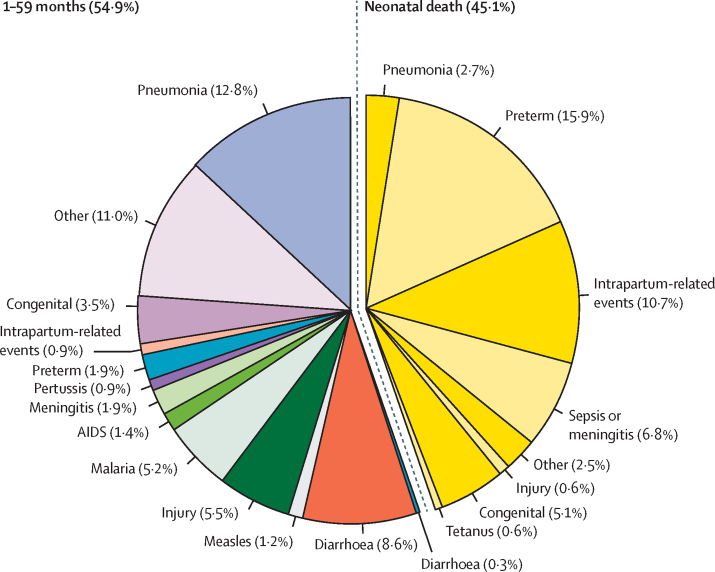
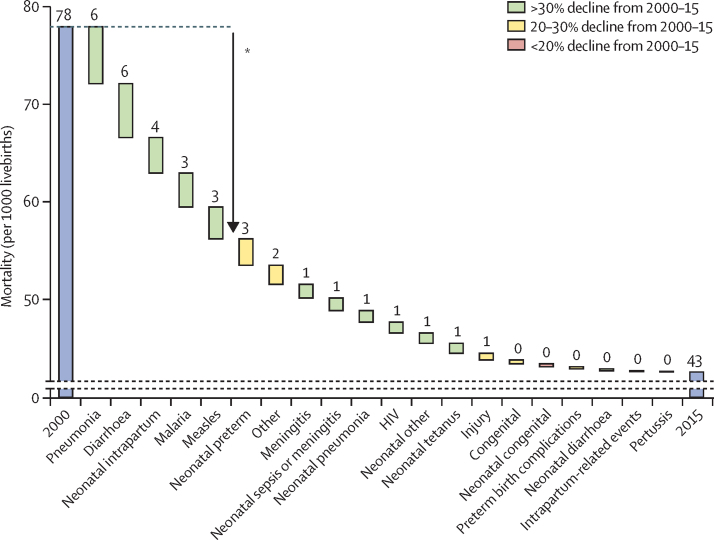
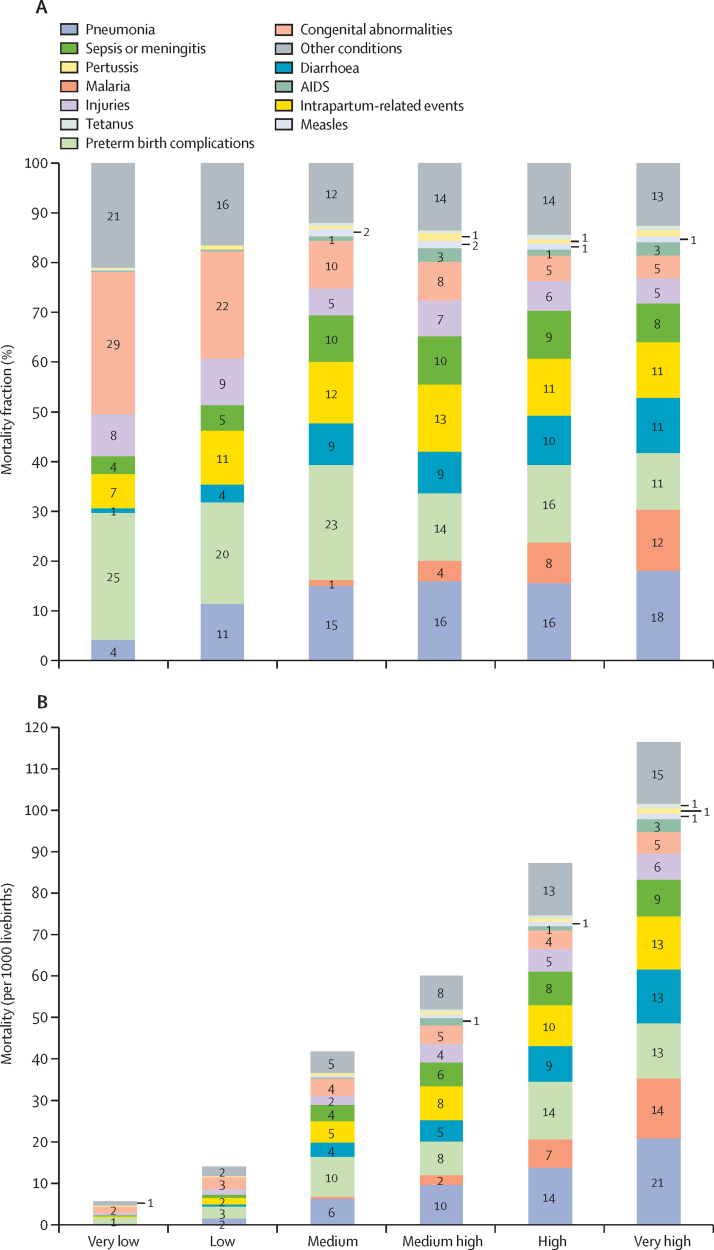
BACKGROUND: Despite remarkable progress in the improvement of child survival between 1990 and 2015, the Millennium Development Goal (MDG) 4 target of a two-thirds reduction of under-5 mortality rate (U5MR) was not achieved globally. In this paper, we updated our annual estimates of child mortality by cause to 2000-15 to reflect on progress toward the MDG 4 and consider implications for the Sustainable Development Goals (SDG) target for child survival. METHODS: We increased the estimation input data for causes of deaths by 43% among neonates and 23% among 1-59-month-olds, respectively. We used adequate vital registration (VR) data where available, and modelled cause-specific mortality fractions applying multinomial logistic regressions using adequate VR for low U5MR countries and verbal autopsy data for high U5MR countries. We updated the estimation to use Plasmodium falciparum parasite rate in place of malaria index in the modelling of malaria deaths; to use adjusted empirical estimates instead of modelled estimates for China; and to consider the effects of pneumococcal conjugate vaccine and rotavirus vaccine in the estimation. FINDINGS: In 2015, among the 5·9 million under-5 deaths, 2·7 million occurred in the neonatal period. The leading under-5 causes were preterm birth complications (1·055 million [95% uncertainty range (UR) 0·935-1·179]), pneumonia (0·921 million [0·812 -1·117]), and intrapartum-related events (0·691 million [0·598 -0·778]). In the two MDG regions with the most under-5 deaths, the leading cause was pneumonia in sub-Saharan Africa and preterm birth complications in southern Asia. Reductions in mortality rates for pneumonia, diarrhoea, neonatal intrapartum-related events, malaria, and measles were responsible for 61% of the total reduction of 35 per 1000 livebirths in U5MR in 2000-15. Stratified by U5MR, pneumonia was the leading cause in countries with very high U5MR. Preterm birth complications and pneumonia were both important in high, medium high, and medium child mortality countries; whereas congenital abnormalities was the most important cause in countries with low and very low U5MR. INTERPRETATION: In the SDG era, countries are advised to prioritise child survival policy and programmes based on their child cause-of-death composition. Continued and enhanced efforts to scale up proven life-saving interventions are needed to achieve the SDG child survival target. FUNDING: Bill & Melinda Gates Foundation, WHO.
Overview
The claims and statistics of this paper haven’t been checked yet.
Free: it reads the open-access text and checks the first 5 claims that cite a source we can check. Create a free account to check every claim.
Integrity signals
Registry
Cites
Statistics
Figures
Verification
Claims the paper makes
The claims and statistics of this paper haven’t been checked yet.
Free: it reads the open-access text and checks the first 5 claims that cite a source we can check. Create a free account to check every claim.
Claims other papers make about this one
Each is checked against this paper’s own text: does it say what the citing paper says it does?
In the citing paper
“it is the leading cause of neonatal mortality (18–20).”
In the citing paper
“Inadequate sanitation services and polluted water supplies are known to be leading drivers of diarrhoeal disease, and globally, diarrhoea represents the second highest cause of mortality among children under the age”
From A planetary health model for reducing exposure to faecal contamination in urban informal settlements: Baseline findings from Makassar, Indonesia. (2021) · cites this paper as Liu et al., 2016
Self-check
Percentages, sums and reported differences re-computed from the paper’s own numbers.
The self-check needs the paper’s full text.
Citations
Cites
Transforming Our World: The 2030 Agenda for Sustainable Development
(2018) · A New Era in Global Health · doi:10.1891/9780826190123.ap02 · Cited by 19,351
Liu, L., Johnson, H. L., Cousens, S., Perin, J., Scott, S., Lawn, J. E., Rudan, I., Campbell, H., Cibulskis, R., Li, M., et al. (2012) · The Lancet · doi:10.1016/s0140-6736(12)60560-1 · Cited by 3,934
Self-citationThe effect of malaria control on Plasmodium falciparum in Africa between 2000 and 2015
Bhatt, S., Weiss, D. J., Cameron, E., Bisanzio, D., Mappin, B., Dalrymple, U., Battle, K. E., Moyes, C. L., Henry, A., Eckhoff, P. A., et al. (2015) · Nature · doi:10.1038/nature15535 · Cited by 3,225
Liu, L., Oza, S., Hogan, D., Perin, J., Rudan, I., Lawn, J. E., Cousens, S., Mathers, C., & Black, R. E. (2015) · The Lancet · doi:10.1016/s0140-6736(14)61698-6 · Cited by 3,167
Self-citationAn Analytical Framework for the Study of Child Survival in Developing Countries
Mosley, W. H., & Chen, L. C. (1984) · Population and Development Review · doi:10.2307/2807954 · Cited by 1,471
Rajaratnam, J. K., Marcus, J. R., Flaxman, A. D., Wang, H., Levin-Rector, A., Dwyer, L., Costa, M., Lopez, A. D., & Murray, C. J. (2010) · The Lancet · doi:10.1016/s0140-6736(10)60703-9 · Cited by 898
You, D., Hug, L., Ejdemyr, S., Idele, P., Hogan, D., Mathers, C., Gerland, P., New, J. R., & Alkema, L. (2015) · The Lancet · doi:10.1016/s0140-6736(15)00120-8 · Cited by 830
Self-citationBhutta, Z. A., Das, J. K., Walker, N., Rizvi, A., Campbell, H., Rudan, I., & Black, R. E. (2013) · The Lancet · doi:10.1016/s0140-6736(13)60648-0 · Cited by 675
Self-citationAn analytical framework for the study of child survival in developing countries. 1984.
Mosley, W. H., & Chen, L.-C. (2003) · Europe PMC (PubMed Central) · Cited by 596
You, D., Hug, L., Ejdemyr, S., & Beise, J. (2015) · Cited by 563
Research works printed but not linked: 4
- United Nations Department of Economic and Social Affairs Population Division World Population Prospects: The 2015 Revision, DVD Edition 2015 United Nations New York
- WHO WHO recommendations on interventions to improve preterm birth outcomes 2015 World Health Organization Geneva http://apps.who.int/iris/bitstream/10665/183037/1/9789241508988_eng.pdf (accessed March 9, 2016). 26447264
- WHO Guideline: managing possible serious bacterial infection in young infants when referral is not feasible 2015 World Health Organization Geneva http://apps.who.int/iris/bitstream/10665/181426/1/9789241509268_eng.pdf (accessed March 9, 2016). 26447263
- The Bill & Melinda Gates Foundation The Bill & Melinda Gates Foundation to fund disease surveillance network in Africa and Asia to prevent childhood mortality and help prepare for the next epidemic. Seattle, USA http://www.gatesfoundation.org/Media-Center/Press-Releases/2015/05/Child-Health-and-Mortality-Prevention-Surveillance-Network 2015 (accessed Sept 30, 2015).
Cited by
Items 401–500 of 1,006
Chang, A. Y., Riumalló‐Herl, C., Salomon, J. A., Resch, S., Brenzel, L., & Verguet, S. (2018) · BMC Medicine · doi:10.1186/s12916-018-1074-y · Cited by 39
Deribew, A., Deribe, K., Dejene, T., Tessema, G. A., Melaku, Y. A., Lakew, Y., Amare, A. T., Bekele, T., Abera, S. F., Dessalegn, M., et al. (1970) · Ethiopian Journal of Health Sciences · doi:10.4314/ejhs.v28i5.2 · Cited by 40
“In this article, we used the Global Burden of Disease Study (GBD) 2016 data (7-11) to assess the mortality, incidence, prevalence and Disability-adjusted Life Years Lost (DALY) rates of TB over the last 26 years.”
MethodSub national variation and inequalities in under-five mortality in Kenya since 1965
Macharia, P. M., Giorgi, E., Thuranira, P. N., Joseph, N. K., Sartorius, B. K. D., Snow, R. W., & Okiro, E. A. (2019) · BMC Public Health · doi:10.1186/s12889-019-6474-1 · Cited by 40
Gallagher, K. E., Knoll, M. D., Prosperi, C., Baggett, H. C., Brooks, W. A., Feikin, D. R., Hammitt, L. L., Howie, S. R. C., Kotloff, K. L., Levine, O. S., et al. (2019) · Clinical Infectious Diseases · doi:10.1093/cid/ciz350 · Cited by 52
“The validation dataset exhibited higher observed mortality than seen in the South African data from which the score was developed [1].”
MethodKohlmann, K., Callaghan‐Gillespie, M., Gauglitz, J. M., Steiner‐Asiedu, M., Saalia, F. K., Edwards, C., & MANARY, M. J. (2019) · Global Health Science and Practice · doi:10.9745/ghsp-d-19-00004 · Cited by 43
“Among children under 5 years of age in Ghana, the prevalence of wasting is about 5%.(2) Treatment for severe wasting, which is defined as WLZ 3 SD below the mean, is available in the northernmost regions of Ghana, where the density of SAM is greatest but where Department of Pediatrics, Washington University, St.”
BackgroundInfluentialOral antibiotics for neonatal infections: a systematic review and meta-analysis
Keij, F. M., Kornelisse, R. F., Hartwig, N. G., Reiss, I. K. M., Allegaert, K., & Tramper‐Stranders, G. A. (2019) · Journal of Antimicrobial Chemotherapy · doi:10.1093/jac/dkz252 · Cited by 44
Keleb, A., Sisay, T., Alemu, K., Ademas, A., Lingerew, M., Kloos, H., Mekonnen, T. C., Derso, A., & Adane, M. (2020) · PLoS ONE · doi:10.1371/journal.pone.0235818 · Cited by 47
“Pneumonia is a severe form of acute lower respiratory infection that is responsible for high morbidity and mortality rates among children under five; it poses a major threat to public health worldwide [1, 2].”
BackgroundUnderstanding Factors in Group B Streptococcus Late-Onset Disease
Berardi, A., Trevisani, V., Caprio, A. D., Bua, J., China, M., Perrone, B., Pagano, R., Lucaccioni, L., Fanaro, S., Iughetti, L., et al. (2021) · Infection and Drug Resistance · doi:10.2147/idr.s291511 · Cited by 49
Neonatal CPAP for Respiratory Distress Across Malawi and Mortality
Carns, J., Kawaza, K., Liaghati-Mobarhan, S., Asibon, A., Quinn, M. K., Chalira, A., Lufesi, N., Molyneux, E., Oden, M., & Richards-Kortum, R. (2019) · Pediatrics · doi:10.1542/peds.2019-0668 · Cited by 39
Drought and child mortality: a meta-analysis of small-scale surveys from Ethiopia
Delbiso, T. D., Altare, C., Rodriguez-Llanes, J. M., Doocy, S., & Guha‐Sapir, D. (2017) · Scientific Reports · doi:10.1038/s41598-017-02271-5 · Cited by 46
Hough, I., Rolland, M., Guilbert, A., Seyve, E., Heude, B., Slama, R., Lyon-Caen, S., Pin, I., Chevrier, C., Kloog, I., et al. (2022) · International Journal of Epidemiology · doi:10.1093/ije/dyac190 · Cited by 56
Li, Y., An, Z., Yin, D., Liu, Y., Huang, Z., Ma, Y., Li, H., Li, Q., & Wang, H. (2017) · Human Vaccines & Immunotherapeutics · doi:10.1080/21645515.2017.1304335 · Cited by 39
Efficacy of progesterone for prevention of preterm birth
Sykes, L., & Bennett, P. R. (2018) · Best Practice & Research Clinical Obstetrics & Gynaecology · doi:10.1016/j.bpobgyn.2018.08.006 · Cited by 48
“Preterm birth is now the leading cause of death in children under the age of five (2).”
BackgroundColston, J. M., Zaitchik, B. F., Kang, G., Yori, P. P., Ahmed, T., Lima, A. Â. M., Turab, A., Mduma, E. R., Shrestha, P. S., Bessong, P. O., et al. (2019) · The Lancet Planetary Health · doi:10.1016/s2542-5196(19)30084-1 · Cited by 39
Self-citationOkello, F. O., Egiru, E., Ikiror, J., Acom, L., Loe, K. S., Olupot‐Olupot, P., & Burgoine, K. L. (2019) · BMC Pediatrics · doi:10.1186/s12887-019-1698-x · Cited by 44
Clarke, E., Bashorun, A. O., Adigweme, I., Hydara, M. B., Umesi, A., Futa, A. C., Ochoge, M., Obayemi, D., Edem, B. E., Saidy-Jah, E., et al. (2021) · The Lancet Infectious Diseases · doi:10.1016/s1473-3099(20)30735-0 · Cited by 42
Neonatal hypoxic-ischemic encephalopathy diagnosis and treatment: a National Survey in China
Wang, Z., Zhang, P., Zhou, W., Xia, S., Zhou, W., Zhou, X., Cheng, X., Shi, Y., Lin, Z., Song, D., et al. (2021) · BMC Pediatrics · doi:10.1186/s12887-021-02737-6 · Cited by 46
Precision Medicine in Neonates: A Tailored Approach to Neonatal Brain Injury
Tataranno, M. L., Vijlbrief, D. C., Dudink, J., & Benders, M. J. N. L. (2021) · Frontiers in Pediatrics · doi:10.3389/fped.2021.634092 · Cited by 50
Early gut microbiota intervention in premature infants: Application perspectives
Xiang, Q., Yan, X., Shi, W., Li, H., & Zhou, K. (2022) · Journal of Advanced Research · doi:10.1016/j.jare.2022.11.004 · Cited by 54
“Of greater concern, surviving premature infants may further have an increased risk of facing lifelong illnesses, such as learning disabilities and visual and hearing problems [4].”
BackgroundAmsalu, R., Morris, C. N., Chukwumalu, K., Hynes, M., Janjua, S., Couture, A., Summers, A., Cannon, A., Hulland, E. N., & Baunach, S. (2019) · Conflict and Health · doi:10.1186/s13031-019-0202-4 · Cited by 38
Kupka, E., Hesselman, S., Hastie, R. M., LoMartire, R., Wikström, A.-K., & Bergman, L. (2022) · American Journal of Obstetrics and Gynecology · doi:10.1016/j.ajog.2022.09.006 · Cited by 43
Klebanoff, M. A., Schuit, E., Lamont, R., Larsson, P., Odendaal, H. J., Ugwumadu, A. H. N., Kiss, H., Petričević, L., Andrews, W. W., Hoffman, M., et al. (2023) · Paediatric and Perinatal Epidemiology · doi:10.1111/ppe.12947 · Cited by 52
The Role of Genetics in Preterm Birth
Mead, E., Wang, C. A., Phung, J., Fu, J. Y., Williams, S. M., Merialdi, M., Jacobsson, B., Lye, S. J., Menon, R., & Pennell, C. E. (2023) · Reproductive Sciences · doi:10.1007/s43032-023-01287-9 · Cited by 47
Sami, S., Amsalu, R., Dimiti, A., Jackson, D., Kenyi, S., Meyers, J., Mullany, L. C., Scudder, E., Tomczyk, B., & Kerber, K. (2018) · BMC Pregnancy and Childbirth · doi:10.1186/s12884-018-1953-4 · Cited by 38
Zerfu, T. A., Pinto, E., & Baye, K. (2018) · Nutrition & Diabetes · doi:10.1038/s41387-018-0060-y · Cited by 38
Manu, A. A., Ewerling, F., Barros, A. J. D., & Victora, C. G. (2018) · Journal of Global Health · doi:10.7189/jogh.09.010403 · Cited by 54
Oxygen Disrupts Human Fetal Lung Mesenchymal Cells. Implications for Bronchopulmonary Dysplasia
Möbius, M. A., Freund, D., Vadivel, A., Koss, S., McConaghy, S., Ohls, R. K., Rüdiger, M., & Thébaud, B. (2019) · American Journal of Respiratory Cell and Molecular Biology · doi:10.1165/rcmb.2018-0358oc · Cited by 44
Kini, S., Kalal, B. S., Chandy, S., Shamsundar, R., & Shet, A. (2019) · World Journal of Clinical Pediatrics · doi:10.5409/wjcp.v8.i2.33 · Cited by 40
Accurate diagnosis of term–preterm births by spectral analysis of electrohysterography signals
Degbedzui, D. K., & Yüksel, M. E. (2020) · Computers in Biology and Medicine · doi:10.1016/j.compbiomed.2020.103677 · Cited by 43
Non-invasive Respiratory Support of the Premature Neonate: From Physics to Bench to Practice
Sammour, I., & Karnati, S. (2020) · Frontiers in Pediatrics · doi:10.3389/fped.2020.00214 · Cited by 41
Neonatal sepsis and its associated factors in East Africa: a systematic review and meta-analysis
Abate, B. B., Kassie, A. M., Reta, M. A., & Kassaw, M. W. (2020) · International Journal of Public Health · doi:10.1007/s00038-020-01489-x · Cited by 54
Rossouw, E., Brauer, M., Meyer, P. W. A., du Plessis, N., Avenant, T., & Mans, J. (2021) · Viruses · doi:10.3390/v13020215 · Cited by 43
Measuring the efficiency of the healthcare sector in Poland – a window-DEA evaluation
Miszczyńska, K., & Miszczyński, P. (2021) · International Journal of Productivity and Performance Management · doi:10.1108/ijppm-06-2020-0276 · Cited by 38
Global distribution of sporadic sapovirus infections: A systematic review and meta-analysis
Diez‐Valcarce, M., Kambhampati, A. K., Calderwood, L. E., Hall, A. J., Mirza, S. A., & Vinjé, J. (2021) · PLoS ONE · doi:10.1371/journal.pone.0255436 · Cited by 43
“Acute gastroenteritis (AGE), characterized by diarrhea and vomiting, remains an important cause of global morbidity and mortality accounting for 9% of all deaths in children under five years of age [1, 2].”
BackgroundHallowell, B. D., Chavers, T., Parashar, U. D., & Tate, J. E. (2021) · Journal of the Pediatric Infectious Diseases Society · doi:10.1093/jpids/piab114 · Cited by 38
Macina, D., & Evans, K. E. (2021) · Infectious Diseases and Therapy · doi:10.1007/s40121-021-00439-1 · Cited by 41
Plotkin, M., Bishanga, D. R., Kidanto, H. L., Jennings, M. C., Ricca, J., Mwanamsangu, A. H., Tibaijuka, G., Lemwayi, R., Ngereza, B., Drake, M., et al. (2018) · PLoS ONE · doi:10.1371/journal.pone.0201238 · Cited by 38
França, Â. (2023) · Antibiotics · doi:10.3390/antibiotics12030554 · Cited by 52
“According to the World Health Organization, 15 million babies are born preterm (before completing 37 weeks of gestation) every year [1], with preterm birth complications responsible for 1 million deaths annually [2].”
Bronchopulmonary Dysplasia: Where Have All the Stem Cells Gone?
Möbius, M. A., & Thébaud, B. (2017) · CHEST Journal · doi:10.1016/j.chest.2017.04.173 · Cited by 43
“Preterm birth is a leading cause of infant morbidity and mortality worldwide.(1) Of the many complications of prematurity,”
BackgroundPrecisely Tracking Childhood Death
Farag, T. H., Koplan, J. P., Breiman, R. F., Madhi, S. A., Heaton, P. M., Mundel, T., Ordï, J., Bassat, Q., Menéndez, C., & Dowell, S. F. (2017) · American Journal of Tropical Medicine and Hygiene · doi:10.4269/ajtmh.16-0302 · Cited by 38
van Donge, T., Pfister, M., Bielicki, J. A., Csajka, C., Rodieux, F., van den Anker, J. N., & Fuchs, A. (2018) · Antimicrobial Agents and Chemotherapy · doi:10.1128/aac.02004-17 · Cited by 38
“4 million children died worldwide of infections such as pneumonia or sepsis/meningitis in the first 5 years of life, most often during the neonatal period (1).”
BackgroundEarly application of caffeine improves white matter development in very preterm infants
Liu, S., Zhang, X., Liu, Y., Xiao, Y., Yang, L., Zhang, R., Zhang, X., Wang, X., Xu, F., & Zhu, C. (2020) · Respiratory Physiology & Neurobiology · doi:10.1016/j.resp.2020.103495 · Cited by 42
“However, preterm infants often have both short and long-term complications, and these have become a great contributor to the mortality rate in children under the age of five years and to the occurrence of long-term neurodevelopmental disabilities (Liu et al., 2016; Song et al., 2016, 2015).”
Giesinger, R. E., Levy, P. T., Ruoss, J. L., El‐Dib, M., Mohammad, K., Wintermark, P., & McNamara, P. J. (2020) · Pediatric Research · doi:10.1038/s41390-020-01205-8 · Cited by 39
the Collaborative Working Group of the Pediatric Subgroup of the China Society of Infectious Diseases, Peng, X., Zhu, Q., Liu, J., Zeng, M., Qiu, Y., Zhu, C., Cheng, Y., Zhou, Y., Xu, Y., et al. (2021) · Antimicrobial Resistance and Infection Control · doi:10.1186/s13756-021-00895-x · Cited by 39
Soboksa, N. E. (2021) · Environmental Health Insights · doi:10.1177/11786302211002552 · Cited by 37
Chen, L., Miao, C., Chen, Y., Han, X., Lin, Z., Ye, H., Wang, C., Zhang, H., Li, J., Tang, Q., et al. (2021) · The Italian Journal of Pediatrics/Italian journal of pediatrics · doi:10.1186/s13052-021-01042-3 · Cited by 54
Younes, S., Samara, M. M., Al‐Jurf, R., Nasrallah, G. K., Al-Obaidly, S., Salama, H., Olukade, T. O., Hammuda, S., Ismail, M. A., Abdoh, G., et al. (2021) · International Journal of Environmental Research and Public Health · doi:10.3390/ijerph18115865 · Cited by 48
“PTBs are not the only gestational age (GA) subgroup at risk of adverse clinical outcomes [12,13].”
BackgroundInfluentialEffects of greenness on preterm birth: A national longitudinal study of 3.7 million singleton births
Zhang, L., Shi, S., Wu, S., Yang, Y., Xu, J., Zhang, Y., Wang, Q., Shen, H., Zhang, Y., Yan, D., et al. (2022) · The Innovation · doi:10.1016/j.xinn.2022.100241 · Cited by 48
“Among children under 5 years of age, the leading causes of death were complications from PTB, which led to nearly 1 million deaths (18% of all deaths) globally in 2015.(3) The incidence of PTB has been increasing over the past 30 years in China, which may be due to the assisted reproductive technology and the recent t…”
BackgroundVariation of the Vaginal Microbiome During and After Pregnancy in Chinese Women
Zhang, X., Zhai, Q., Wang, J., Ma, X., Xing, B., Fan, H., Gao, Z., Zhao, F., & Liu, W. Y. (2022) · Genomics Proteomics & Bioinformatics · doi:10.1016/j.gpb.2021.08.013 · Cited by 42
Alvestad, S., Husebye, E. S. N., Christensen, J., Dreier, J. W., Sun, Y., Igland, J., Leinonen, M. K., Gissler, M., Gilhus, N. E., Tomson, T., et al. (2022) · Neurology · doi:10.1212/wnl.0000000000200669 · Cited by 44
“Levetiracetam, n (%) 5 (8) 29 (12) NA NA NA NA”
Soofi, S. B., Cousens, S., Turab, A., Wasan, Y., Mohammed, S., Ariff, S., Bhatti, Z., Ahmed, I., Wall, S. N., & Bhutta, Z. A. (2017) · The Lancet Global Health · doi:10.1016/s2214-109x(17)30248-6 · Cited by 43
Self-citationMcGuinness, S. L., Barker, S. F., O'Toole, J., Cheng, A. C., Forbes, A. B., Sinclair, M., & Leder, K. (2018) · Tropical Medicine & International Health · doi:10.1111/tmi.13080 · Cited by 36
“2 billion cases annually [2], while pneumonia causes nearly one million deaths in children aged under 5 years annually [3].”
BackgroundDomenech, M., Sempere, J., de Miguel, S., & Yuste, J. (2018) · Frontiers in Immunology · doi:10.3389/fimmu.2018.02700 · Cited by 39
Verwey, C., Nunes, M. C., Dangor, Z., & Madhi, S. A. (2020) · Pediatric Pulmonology · doi:10.1002/ppul.24804 · Cited by 36
Aetiology of acute diarrhoea in children in Shanghai, 2015–2018
Chang, H., Guo, J., Wei, Z., Huang, Z. J., Wang, C., Qiu, Y., Xu, X., & Zeng, M. (2021) · PLoS ONE · doi:10.1371/journal.pone.0249888 · Cited by 50
Chiapinotto, S., Sarria, E. E., Mocelin, H. T., Lima, J. A. B., Mattiello, R., & Fischer, G. B. (2021) · Paediatric Respiratory Reviews · doi:10.1016/j.prrv.2021.04.003 · Cited by 46
“Acute respiratory illnesses (ARIs) are the most common causes of disease and mortality in children under five worldwide [1].”
Akoto, C., Norris, S. A., & Hemelaar, J. (2021) · Scientific Reports · doi:10.1038/s41598-021-89551-3 · Cited by 43
Suleiman‐Martos, N., Caballero-Vázquez, A., Gómez‐Urquiza, J. L., Albendín‐García, L., Romero‐Béjar, J. L., & la Fuente, G. A. C. (2021) · Journal of Personalized Medicine · doi:10.3390/jpm11050416 · Cited by 44
“causes of mortality with about 60 thousand deaths per year throughout the world in children under 5 years of age [5].”
BackgroundChen, C., Zhu, Y., Liu, C., Chen, R., Yan, Y., Ren, Y., Li, X., Wang, J., Ge, W., Kan, H., et al. (2021) · Environmental Pollution · doi:10.1016/j.envpol.2021.117629 · Cited by 36
Chiu, C. P. H., Feng, Q., Chaemsaithong, P., Sahota, D. S., Lau, Y. Y., Yeung, Y. K., Yim, L. W., Chung, J. P. W., & Poon, L. C. (2022) · Ultrasound in Obstetrics and Gynecology · doi:10.1002/uog.24917 · Cited by 40
Yu, Z., Zhang, X., Zhang, J. J., Yang, F., Zhang, H., Wan, Z., Xiao, C., Zhang, H., Wang, Q., & Huang, C. (2022) · Environmental Research · doi:10.1016/j.envres.2022.113381 · Cited by 38
Lu, C., Yang, W., Liu, Z., Liao, H., Li, Q., & Liu, Q. (2022) · Environmental Research · doi:10.1016/j.envres.2022.114098 · Cited by 40
Williams, P. C. M., Jones, M., Snelling, T. L., Duguid, R., Moore, N., Dickson, B., Wu, Y., Saunders, J., Wijeratne, P., Douangnouvong, A., et al. (2024) · The Lancet Regional Health - Southeast Asia · doi:10.1016/j.lansea.2023.100291 · Cited by 35
“6 Despite this, there is a paucity of data published to understand the epidemiology and non-susceptibility rates for serious bacterial infections in the region; which is of particular concern given the predominance of gram-negative bacteria causing invasive infections in Asian countries.”
BackgroundSada, T. S., & Tessema, T. S. (2024) · BMC Infectious Diseases · doi:10.1186/s12879-024-09152-z · Cited by 50
Heinz, E., Pearse, O., Zuza, A. M., Bilima, S., Msefula, C. L., Musicha, P., Siyabu, P., Tewesa, E., Graf, F. E., Lester, R., et al. (2024) · Genome Medicine · doi:10.1186/s13073-024-01342-3 · Cited by 40
“Introduction The burden of deaths in children under the age of five, including those due to neonatal sepsis, is especially high in low- and middle-income countries (LMICs)(1); and one of the main pathogens causing these is Klebsiella pneumoniae (Kpn)(2).”
BackgroundUrinary oxidative stress biomarkers and accelerated time to spontaneous delivery
Rosen, E. M., Erve, T. J. V. ‘., Boss, J., Sathyanarayana, S., Barrett, E. S., Nguyen, R. H. N., Bush, N. R., Milne, G. L., McElrath, T. F., Swan, S. H., et al. (2018) · Free Radical Biology and Medicine · doi:10.1016/j.freeradbiomed.2018.11.011 · Cited by 36
Buxton, H., Flynn, E. F., Oluyinka, O., Cumming, O., Mills, J. E., Shiras, T., Sara, S., & Dreibelbis, R. (2019) · International Journal of Environmental Research and Public Health · doi:10.3390/ijerph16071301 · Cited by 38
Baker, K. S., Alfvén, T., Mucunguzi, A., Wharton–Smith, A., Dantzer, E., Habte, T., Matata, L., Nanyumba, D., Okwir, M., Posada, M., et al. (2019) · EClinicalMedicine · doi:10.1016/j.eclinm.2019.05.013 · Cited by 40
Double burden of underweight and overweight among women of reproductive age in Bangladesh
Biswas, R. K., Rahman, N., Khanam, R., Baqui, A. H., & Ahmed, S. (2019) · Public Health Nutrition · doi:10.1017/s1368980019002611 · Cited by 42
Acute diarrhea with blood: diagnosis and drug treatment
Gouveia, M. A. D. C., Lins, M. T. C., & da Silva, G. A. P. (2019) · Jornal de Pediatria · doi:10.1016/j.jped.2019.08.006 · Cited by 52
Management of various socio-economic factors under the United Nations sustainable development agenda
Qureshi, M. I., Qayyum, S., Nassani, A. A., Aldakhil, A. M., Abro, M. M. Q., & Zaman, K. (2019) · Resources Policy · doi:10.1016/j.resourpol.2019.101515 · Cited by 53
Inappropriate antibiotic prescriptions among pediatric inpatients in different type hospitals
Miao, R., Wan, C., Wang, Z., Zhu, Y., Zhao, Y., Zhang, L., Liu, J., Qin, J., Xia, J., & Yan, H. (2020) · Medicine · doi:10.1097/md.0000000000018714 · Cited by 35
“Pneumonia is a major cause of childhood morbidity and mortality,([27]) Empirical medications are always given to reduce serious complications before determining accurate pathogen.”
BackgroundMa, M., Zhu, M. J., Zhuo, B., Li, L., Chen, H., Xu, L., Wu, Z., Cheng, F., Xu, L., & Yan, J. (2020) · Journal of Clinical Laboratory Analysis · doi:10.1002/jcla.23313 · Cited by 41
de Oliveira, L. H., Shioda, K., Valenzuela, M. T., Janusz, C. B., Rearte, A., Sbarra, A. N., Warren, J. L., Toscano, C. M., Weinberger, D. M., & Multinational Study for PCV Impact in Mortality Study Team (2020) · Clinical Infectious Diseases · doi:10.1093/cid/ciaa614 · Cited by 35
Environmental Risks Perception Among Citizens Living Near Industrial Plants: A Cross-Sectional Study
Dettori, M., Pittaluga, P., Busonera, G., Gugliotta, C., Azara, A., Piana, A. F., Arghittu, A., & Castiglia, P. (2020) · International Journal of Environmental Research and Public Health · doi:10.3390/ijerph17134870 · Cited by 35
Ahinkorah, B. O., Seidu, A., Budu, E., Armah‐Ansah, E. K., Agbaglo, E., Adu, C., Hagan, J. E., & Yaya, S. (2020) · BMC Public Health · doi:10.1186/s12889-020-09869-x · Cited by 37
Namaganda, L. H., Almeida, R., Kajungu, D., Wabwire‐Mangen, F., Peterson, S., Andrews, C., Eliasson, A., Kakooza‐Mwesige, A., & Forssberg, H. (2020) · PLoS ONE · doi:10.1371/journal.pone.0243948 · Cited by 35
“Global mortality for children below 5 years of age has drastically decreased during the last couple of decades, in keeping with the Millennium Developmental Goals [1,2].”
BackgroundFernandez Turienzo, C., Silverio, S. A., Coxon, K., Brigante, L., Seed, P. T., Shennan, A. H., Sandall, J., & On behalf of the POPPIE Collaborative Group (2021) · PLOS ONE · doi:10.1371/journal.pone.0248588 · Cited by 34
“One in ten babies worldwide are born too soon and over a million die from related complications [1].”
BackgroundRees, C. A., Lim, J. K., Westbrook, A. L., Helou, R. E., Schmid, A. M., Rubin-Smith, J. E., Shreeve, K. M., Rotman, C., Govindapillai, S., Dorney, K., et al. (2023) · BMJ Paediatrics Open · doi:10.1136/bmjpo-2022-001627 · Cited by 41
Key Components for Antibiotic Dose Optimization of Sepsis in Neonates and Infants
van Donge, T., Bielicki, J. A., van den Anker, J. N., & Pfister, M. (2018) · Frontiers in Pediatrics · doi:10.3389/fped.2018.00325 · Cited by 44
Sami, S., Kerber, K., Kenyi, S., Amsalu, R., Tomczyk, B., Jackson, D., Dimiti, A., Scudder, E., Meyers, J., Umurungi, J. P. D. C., et al. (2017) · Reproductive Health · doi:10.1186/s12978-017-0417-z · Cited by 34
Understanding the increased susceptibility to asthma development in preterm infants
Anderson, J., Do, L. A. H., Wurzel, D. F., & Licciardi, P. V. (2023) · Allergy · doi:10.1111/all.15662 · Cited by 38
Liu, Q., Deng, J., Yan, W., Qin, C., Du, M., Wang, Y., Zhang, S., Liu, M., & Liu, J. (2024) · Global Health Research and Policy · doi:10.1186/s41256-024-00366-x · Cited by 47
“Globally, acute lower respiratory infection remains one of the leading causes of morbidity and mortality in children younger than 5 years [37].”
BackgroundThe Epidemiology of Diarrhea in Children Under 5 Years of Age in Mozambique
Chissaque, A., de Deus, N., Vubil, D. C., & Mandomando, I. (2018) · Current Tropical Medicine Reports · doi:10.1007/s40475-018-0146-6 · Cited by 48
Jelliffe‐Pawlowski, L. L., Rand, L., Bedell, B. A., Baer, R. J., Oltman, S. P., Norton, M. E., Shaw, G. M., Stevenson, D. K., Murray, J. C., & Ryckman, K. K. (2018) · Journal of Perinatology · doi:10.1038/s41372-018-0112-0 · Cited by 36
“Preterm birth (PTB) and its related complications are the leading cause of death in children less than five years of age and contribute to more than one million deaths per year [2].”
Applying the international classification of diseases to perinatal mortality data, South Africa
Lavin, T., Allanson, E., Nedkoff, L., Preen, D. B., & Pattinson, R. (2018) · Bulletin of the World Health Organization · doi:10.2471/blt.17.206631 · Cited by 34
The impact of the health care workforce on under-five mortality in rural China
Liang, S., Macinko, J. A., Yue, D., & Meng, Q. (2019) · Human Resources for Health · doi:10.1186/s12960-019-0357-5 · Cited by 45
Amare, D., Mela, M., & Dessie, G. (2019) · Heliyon · doi:10.1016/j.heliyon.2019.e02519 · Cited by 41
Computational discovery of therapeutic candidates for preventing preterm birth
Le, B. L., Iwatani, S., Wong, R. J., Stevenson, D. K., & Sirota, M. (2020) · JCI Insight · doi:10.1172/jci.insight.133761 · Cited by 33
“8% of deaths in children under 5) (1).”
BackgroundKhan, A. I., Mack, J. A., Uzzaman, M. S., Zion, M. I., Sujon, H., Ball, R. L., Maples, S., Rashid, M. M., Chisti, M. J., Sarker, S. A., et al. (2020) · The Lancet Digital Health · doi:10.1016/s2589-7500(20)30062-5 · Cited by 34
Motoki, N., Mizuki, M., Tsukahara, T., Miyakawa, M., Kubo, S., Oda, H., Tanaka, M., Yamauchi, K., Abe, F., & Nomiyama, T. (2020) · Frontiers in Pediatrics · doi:10.3389/fped.2020.00233 · Cited by 40
Giles, M., Mason, E. M., Muñoz, F. M., Moran, A. C., Lambach, P., Merten, S., Diaz, T., Baye, M. L., Mathai, M., Pathirana, J., et al. (2020) · Vaccine · doi:10.1016/j.vaccine.2020.05.025 · Cited by 36
Interdisciplinary simulation scenario in nursing education: Humanized childbirth and birth
Fonseca, L. M. M., Monteiro, J. C. D. S., Aredes, N. D., Bueno, J. V., Domingues, A. N., Coutinho, V. R. D., & Baptista, R. C. N. (2020) · Revista Latino-Americana de Enfermagem · doi:10.1590/1518-8345.3681.3286 · Cited by 43
“1% of infant deaths occur in the neonatal period worldwide(26).”
BackgroundAtnafu, A., Sisay, M. M., Demissie, G. D., & Tessema, Z. T. (2020) · Tropical Medicine and Health · doi:10.1186/s41182-020-00252-5 · Cited by 41
Mulugeta, T., Teshome, G. S., Fenta, F. A., & Sibhat, M. M. (2020) · Pediatric Health Medicine and Therapeutics · doi:10.2147/phmt.s260788 · Cited by 46
Tuyết, T., Thư, P. T., Hang, H. T., Trang, T. T. T., Yui, S., Shigehisa, A., Tien, V. T., Dung, T. V., Phan, B. N., Hung, N. T., et al. (2020) · European Journal of Clinical Nutrition · doi:10.1038/s41430-020-00754-9 · Cited by 41
Goudar, S. S., Goco, N. J., Somannavar, M. S., Kavi, A. J., Vernekar, S. S., Tshefu, A. K., Chomba, E., Garces, A. L., Saleem, S., Naqvi, F., et al. (2020) · Reproductive Health · doi:10.1186/s12978-020-01001-x · Cited by 36
Feng, J., Lee, J., Vesoulis, Z. A., & Li, F. (2021) · npj Digital Medicine · doi:10.1038/s41746-021-00479-4 · Cited by 42
Enteropathogen Changes After Rotavirus Vaccine Scale-up
Ballard, S.-B., Requena, D., Mayta, H., Sánchez, G., Oyola-Lozada, M. G., Aliaga, F. D. C., Cabrera, L. Z., Vittet, M., Taquiri, C., Tilley, D. H., et al. (2021) · PEDIATRICS · doi:10.1542/peds.2020-049884 · Cited by 42
Sovateltide Mediated Endothelin B Receptors Agonism and Curbing Neurological Disorders
Ranjan, A. K., & Gulati, A. (2022) · International Journal of Molecular Sciences · doi:10.3390/ijms23063146 · Cited by 37
“The incidence of HIE is estimated to be ranged from 1 to 8 per 1000 live births in developed countries and about 26 per 1000 live births in underdeveloped countries [107], constitutes the second cause of mortality in neonates and the third cause of mortality in children < 5 years old [108,109].”
Background
Metadata
- Authors
- Liu, L., Oza, S., Hogan, D., Chu, Y., Perin, J., Zhu, J., Lawn, J. E., Cousens, S., Mathers, C., & Black, R. E.
- Affiliations
- Johns Hopkins University (US)
- London School of Hygiene & Tropical Medicine (GB)
- Sichuan University (CN)
- World Health Organization (CH)
- Corresponding author
- Liu, Li
- Venue
- The Lancet
- Publisher
- Elsevier BV
- Published
- 2016-12
- Volume
- 388
- Issue
- 10063
- Pages
- 3027-3035
- ISSN
- 0099-5355 (ISSN-L)
- 0140-6736
- PMC
- PMC5161777
- OpenAlex
- W2549697535
- Semantic Scholar
- 121b2079d6548c8a5f02456e266dc6dcedfdd15d
- Cited by
- 3,453
- References
- 36
- Citations by year
- 2026: 151 · 2025: 268 · 2024: 326 · 2023: 461 · 2022: 486 · 2021: 548 · 2020: 491 · 2019: 350 · 2018: 263 · 2017: 95 · 2016: 9
- FWCI
- 278.12
- Type
- journal article
- Language
- en
- Open access
- hybrid
- doi.org
- Licence
- cc-by
- www.elsevier.com/tdm/userlicense/1.0/ (tdm)
- creativecommons.org/licenses/by/4.0/ (vor)
- Locations
- The Lancet (publishedVersion, cc-by)
- PubMed Central (publishedVersion, cc-by)
- PubMed (publishedVersion)
- LSHTM Research Online (London School of Hygiene and Tropical Medicine) (acceptedVersion)
- Funders
- Bill and Melinda Gates Foundation
- World Health Organization
- Topics
- Health Sciences › Medicine › Pediatrics, Perinatology and Child Health › Global Maternal and Child Health
- Health Sciences › Medicine › Pediatrics, Perinatology and Child Health › Maternal and Neonatal Healthcare
- Health Sciences › Nursing › Nutrition and Dietetics › Child Nutrition and Water Access
- Keywords
- under-five mortality, neonatal mortality, preterm birth complications, pneumonia, malaria, measles, diarrhea, congenital malformations, verbal autopsy, cause-specific mortality fractions, Millennium Development Goal 4, Sustainable Development Goal 3, child survival, pneumococcal conjugate vaccine, rotavirus vaccine
- MeSH terms
- Africa, Asia, Cause of Death, Child, Preschool, Communicable Diseases, Diarrhea, Goals, Humans, Infant, Infant, Newborn, Malaria, Plasmodium falciparum, Pneumonia, Global Health, Child Mortality
About these checks
Registry, retraction, Cites and statistics results are computed, not judged, with one exception: a printed reference that no index lists is read once by a model before it counts as a citation error. Claims are extracted by a model and kept only when their quote appears verbatim in the text; each cited source is then checked, with a model’s help, for whether it says what the claim relies on. Those verdicts can be wrong — read the claim’s quote and the cited source before relying on one.
Statistics and arithmetic are recomputed, not judged.
Confidence bands are shown only for fields calibrated on our annotated test set. None is calibrated yet, so no band is shown.
What counts as a claim ›How we measure confidence ›How we check this ›
Are you an author, or do you see a problem with this page? Request a review
Data sources
Bibliographic data: Semantic Scholar, OpenAlex, Crossref.
Contains information from the Semantic Scholar Academic Graph Datasets, made available under the ODC Attribution License (ODC-BY 1.0).
Semantic Scholar’s data is described in: Kinney, R., et al. (2023). The Semantic Scholar Open Data Platform. arXiv:2301.10140.
