

Global, regional, and national causes of under-5 mortality in 2000-15: an updated systematic analysis with implications for the Sustainable Development Goals
Open accessThe DOI matches its Crossref record; 35 of the 36 references it cites were found in a registry or an index.
Abstract
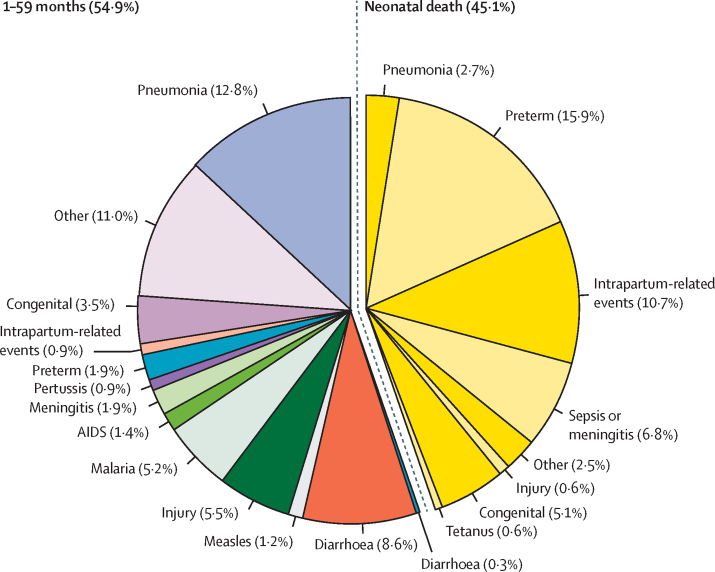
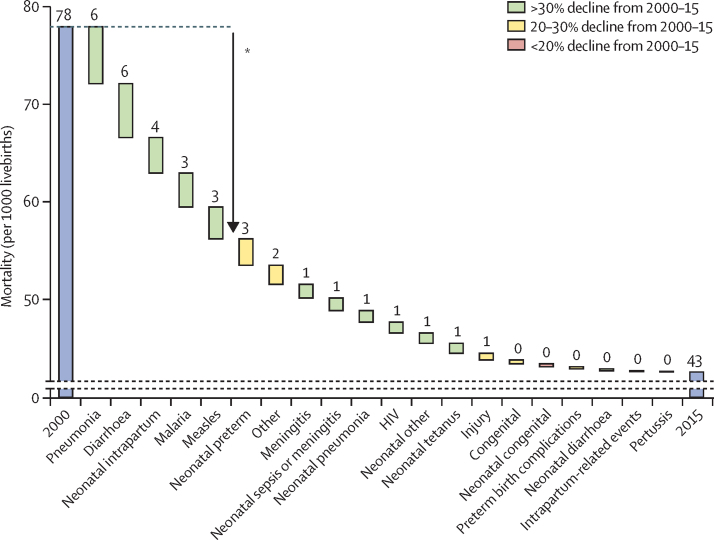
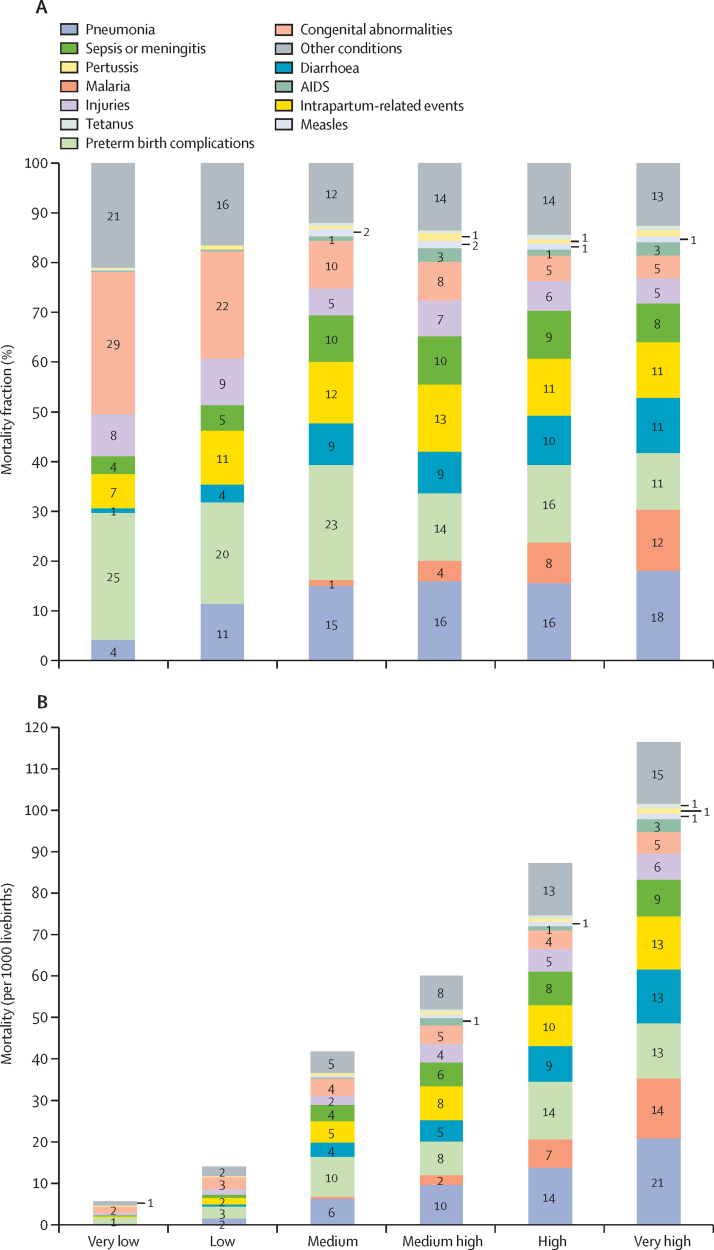
BACKGROUND: Despite remarkable progress in the improvement of child survival between 1990 and 2015, the Millennium Development Goal (MDG) 4 target of a two-thirds reduction of under-5 mortality rate (U5MR) was not achieved globally. In this paper, we updated our annual estimates of child mortality by cause to 2000-15 to reflect on progress toward the MDG 4 and consider implications for the Sustainable Development Goals (SDG) target for child survival. METHODS: We increased the estimation input data for causes of deaths by 43% among neonates and 23% among 1-59-month-olds, respectively. We used adequate vital registration (VR) data where available, and modelled cause-specific mortality fractions applying multinomial logistic regressions using adequate VR for low U5MR countries and verbal autopsy data for high U5MR countries. We updated the estimation to use Plasmodium falciparum parasite rate in place of malaria index in the modelling of malaria deaths; to use adjusted empirical estimates instead of modelled estimates for China; and to consider the effects of pneumococcal conjugate vaccine and rotavirus vaccine in the estimation. FINDINGS: In 2015, among the 5·9 million under-5 deaths, 2·7 million occurred in the neonatal period. The leading under-5 causes were preterm birth complications (1·055 million [95% uncertainty range (UR) 0·935-1·179]), pneumonia (0·921 million [0·812 -1·117]), and intrapartum-related events (0·691 million [0·598 -0·778]). In the two MDG regions with the most under-5 deaths, the leading cause was pneumonia in sub-Saharan Africa and preterm birth complications in southern Asia. Reductions in mortality rates for pneumonia, diarrhoea, neonatal intrapartum-related events, malaria, and measles were responsible for 61% of the total reduction of 35 per 1000 livebirths in U5MR in 2000-15. Stratified by U5MR, pneumonia was the leading cause in countries with very high U5MR. Preterm birth complications and pneumonia were both important in high, medium high, and medium child mortality countries; whereas congenital abnormalities was the most important cause in countries with low and very low U5MR. INTERPRETATION: In the SDG era, countries are advised to prioritise child survival policy and programmes based on their child cause-of-death composition. Continued and enhanced efforts to scale up proven life-saving interventions are needed to achieve the SDG child survival target. FUNDING: Bill & Melinda Gates Foundation, WHO.
Overview
The claims and statistics of this paper haven’t been checked yet.
Free: it reads the open-access text and checks the first 5 claims that cite a source we can check. Create a free account to check every claim.
Integrity signals
Registry
Cites
Statistics
Figures
Verification
Claims the paper makes
The claims and statistics of this paper haven’t been checked yet.
Free: it reads the open-access text and checks the first 5 claims that cite a source we can check. Create a free account to check every claim.
Claims other papers make about this one
Each is checked against this paper’s own text: does it say what the citing paper says it does?
In the citing paper
“it is the leading cause of neonatal mortality (18–20).”
In the citing paper
“Inadequate sanitation services and polluted water supplies are known to be leading drivers of diarrhoeal disease, and globally, diarrhoea represents the second highest cause of mortality among children under the age”
From A planetary health model for reducing exposure to faecal contamination in urban informal settlements: Baseline findings from Makassar, Indonesia. (2021) · cites this paper as Liu et al., 2016
Self-check
Percentages, sums and reported differences re-computed from the paper’s own numbers.
The self-check needs the paper’s full text.
Citations
Cites
Transforming Our World: The 2030 Agenda for Sustainable Development
(2018) · A New Era in Global Health · doi:10.1891/9780826190123.ap02 · Cited by 19,351
Liu, L., Johnson, H. L., Cousens, S., Perin, J., Scott, S., Lawn, J. E., Rudan, I., Campbell, H., Cibulskis, R., Li, M., et al. (2012) · The Lancet · doi:10.1016/s0140-6736(12)60560-1 · Cited by 3,934
Self-citationThe effect of malaria control on Plasmodium falciparum in Africa between 2000 and 2015
Bhatt, S., Weiss, D. J., Cameron, E., Bisanzio, D., Mappin, B., Dalrymple, U., Battle, K. E., Moyes, C. L., Henry, A., Eckhoff, P. A., et al. (2015) · Nature · doi:10.1038/nature15535 · Cited by 3,225
Liu, L., Oza, S., Hogan, D., Perin, J., Rudan, I., Lawn, J. E., Cousens, S., Mathers, C., & Black, R. E. (2015) · The Lancet · doi:10.1016/s0140-6736(14)61698-6 · Cited by 3,167
Self-citationAn Analytical Framework for the Study of Child Survival in Developing Countries
Mosley, W. H., & Chen, L. C. (1984) · Population and Development Review · doi:10.2307/2807954 · Cited by 1,471
Rajaratnam, J. K., Marcus, J. R., Flaxman, A. D., Wang, H., Levin-Rector, A., Dwyer, L., Costa, M., Lopez, A. D., & Murray, C. J. (2010) · The Lancet · doi:10.1016/s0140-6736(10)60703-9 · Cited by 898
You, D., Hug, L., Ejdemyr, S., Idele, P., Hogan, D., Mathers, C., Gerland, P., New, J. R., & Alkema, L. (2015) · The Lancet · doi:10.1016/s0140-6736(15)00120-8 · Cited by 830
Self-citationBhutta, Z. A., Das, J. K., Walker, N., Rizvi, A., Campbell, H., Rudan, I., & Black, R. E. (2013) · The Lancet · doi:10.1016/s0140-6736(13)60648-0 · Cited by 675
Self-citationAn analytical framework for the study of child survival in developing countries. 1984.
Mosley, W. H., & Chen, L.-C. (2003) · Europe PMC (PubMed Central) · Cited by 596
You, D., Hug, L., Ejdemyr, S., & Beise, J. (2015) · Cited by 563
Research works printed but not linked: 4
- United Nations Department of Economic and Social Affairs Population Division World Population Prospects: The 2015 Revision, DVD Edition 2015 United Nations New York
- WHO WHO recommendations on interventions to improve preterm birth outcomes 2015 World Health Organization Geneva http://apps.who.int/iris/bitstream/10665/183037/1/9789241508988_eng.pdf (accessed March 9, 2016). 26447264
- WHO Guideline: managing possible serious bacterial infection in young infants when referral is not feasible 2015 World Health Organization Geneva http://apps.who.int/iris/bitstream/10665/181426/1/9789241509268_eng.pdf (accessed March 9, 2016). 26447263
- The Bill & Melinda Gates Foundation The Bill & Melinda Gates Foundation to fund disease surveillance network in Africa and Asia to prevent childhood mortality and help prepare for the next epidemic. Seattle, USA http://www.gatesfoundation.org/Media-Center/Press-Releases/2015/05/Child-Health-and-Mortality-Prevention-Surveillance-Network 2015 (accessed Sept 30, 2015).
Cited by
Items 201–300 of 1,006
Filho, L. V. R. F. D. S., Zampoli, M., Cohen‐Cymberknoh, M., & Kabra, S. K. (2020) · Paediatric Respiratory Reviews · doi:10.1016/j.prrv.2020.07.004 · Cited by 75
Han, Y., Jiang, P., Dong, T., Ding, X., Chen, T., Villanger, G. D., Aase, H., Huang, L., & Xia, Y. (2018) · Ecotoxicology and Environmental Safety · doi:10.1016/j.ecoenv.2018.04.002 · Cited by 69
Lawal, I. O., Olufade, I. I., Rafiu, B. O., & Aremu, A. O. (2020) · Plants · doi:10.3390/plants9050647 · Cited by 84
Role of Respiratory Syncytial Virus in Pediatric Pneumonia
Bianchini, S., Silvestri, E., Argentiero, A., Fainardi, V., Pisi, G., & Esposito, S. (2020) · Microorganisms · doi:10.3390/microorganisms8122048 · Cited by 70
Okomo, U. A., Senghore, M., Darboe, S., Bojang, E., Zaman, S. M. A., Hossain, M. J., Nwakanma, D. C., Doaré, K. L., Holt, K. E., Hos, N. J., et al. (2020) · The Lancet Microbe · doi:10.1016/s2666-5247(20)30061-6 · Cited by 76
Self-citationThe great obstetrical syndromes and the placenta
Hoffman, M. (2023) · BJOG An International Journal of Obstetrics & Gynaecology · doi:10.1111/1471-0528.17613 · Cited by 82
Mortality Associated With Acute Respiratory Infections Among Children at Home
Caballero, M. T., Bianchi, A. M., Nuño, A., Ferretti, A. J. P., Polack, L. M., Remondino, I., Rodriguez, M. G., Orizzonte, L., Vallone, F., Bergel, E. F., et al. (2018) · The Journal of Infectious Diseases · doi:10.1093/infdis/jiy517 · Cited by 71
“A number of pathogens have been identified as major drivers of pediatric mortality due to respiratory ailments [2, 11].”
BackgroundIntermittent hypoxemia and oxidative stress in preterm infants
Fiore, J. M. D., & Vento, M. (2019) · Respiratory Physiology & Neurobiology · doi:10.1016/j.resp.2019.05.006 · Cited by 68
“4 Sepsis—Despite improvement in newborn care in the modern NICUs, early and late onset sepsis in extremely preterm infants is still frequent and constitutes globally one of the most relevant causes of mortality and short-and-long term morbidities (Liu et al., 2016).”
BackgroundGudicha, D. W., Romero, R. J., Kabiri, D., Hernandez‐Andrade, E. A., Pacora, P., Erez, O., Kusanovic, J. P., Jung, E., Paredes, C., Berry, S. M., et al. (2020) · American Journal of Obstetrics and Gynecology · doi:10.1016/j.ajog.2020.09.002 · Cited by 73
Mallick, R., Mandal, S., & Chouhan, P. (2020) · Children and Youth Services Review · doi:10.1016/j.childyouth.2020.105478 · Cited by 77
Breastfeeding knowledge and relation to prevalence
Suárez-Cotelo, M. D. C., Fernández, M. J. M., Pita-García, P., Arias, B. F., & Novío, S. (2019) · Revista da Escola de Enfermagem da USP · doi:10.1590/s1980-220x2018004503433 · Cited by 95
French, M. A., Fiona Barker, S., Taruc, R. R., Ansariadi, A., Duffy, G. A., Saifuddaolah, M., Zulkifli Agussalim, A., Awaluddin, F., Zainal, Z., Wardani, J., et al. (2021) · Environment International · doi:10.1016/j.envint.2021.106679 · Cited by 63
“(Liu et al., 2016) Water, sanitation and hygiene (WASH) interventions can reduce risk factors associated with diarrhoeal disease in resource-constrained settings.”
BackgroundKangmennaang, J., Bisung, E., & Elliott, S. J. (2020) · International Journal of Environmental Research and Public Health · doi:10.3390/ijerph17030890 · Cited by 73
“This could pose significant risks to health and well-being, since approximately 85 percent of diarrheal diseases among children below age five is attributed to unsafe water and sanitation [4,5].”
BackgroundSystematic Review and Meta-Analysis of Diagnostic Biomarkers for Pediatric Pneumonia
Gunaratnam, L. C., Robinson, J. L., & Hawkes, M. (2021) · Journal of the Pediatric Infectious Diseases Society · doi:10.1093/jpids/piab043 · Cited by 63
Rasool, F. N., Saavedra, M. A., Pamba, S., Perold, V., Mmochi, A. J., Maalim, M. K., Simonsen, L., Buur, L., Pedersen, R. H., Syberg, K., et al. (2020) · Journal of Hazardous Materials · doi:10.1016/j.jhazmat.2020.124591 · Cited by 75
Adewemimo, A., Kalter, H. D., Perin, J., Koffi, A. K., Quinley, J., & Black, R. E. (2017) · PLoS ONE · doi:10.1371/journal.pone.0178129 · Cited by 69
Self-citationEstimating under-five mortality in space and time in a developing world context
Wakefield, J. C., Fuglstad, G., Riebler, A., Godwin, J., Wilson, K., & Clark, S. J. (2018) · Statistical Methods in Medical Research · doi:10.1177/0962280218767988 · Cited by 81
Rare single gene disorders: estimating baseline prevalence and outcomes worldwide
Congenital Disorders Expert Group, Blencowe, H. K., Moorthie, S. A., Petrou, M., Hamamy, H., Povey, S., Bittles, A. H., Gibbons, S., Darlison, M. W., & Modell, B. (2018) · Journal of Community Genetics · doi:10.1007/s12687-018-0376-2 · Cited by 87
Mwananyanda, L. M., Pierre, C. M., Mwansa, J. C. L., Cowden, C., Localio, A. R., Kapasa, M., Machona, S., Lukwesa‐Musyani, C., Chilufya, M., Munanjala, G., et al. (2018) · Clinical Infectious Diseases · doi:10.1093/cid/ciy1114 · Cited by 57
Santosa, W. B., Staines-Urias, E., Tshivuila-Matala, C. O. O., Norris, S. A., & Hemelaar, J. (2019) · AIDS · doi:10.1097/qad.0000000000002222 · Cited by 72
“PTB is the leading cause of neonatal and child mortality worldwide [9], and SGA and LBW are also associated with increased rates of”
BackgroundGelaye, B., Sánchez, S. E., Andrade, A. C., Gómez, O., Coker, A. L., Dole, N., Rondón, M. B., & Williams, M. A. (2019) · Journal of Affective Disorders · doi:10.1016/j.jad.2019.11.006 · Cited by 73
Doku, D. T., Bhutta, Z. A., & Neupane, S. (2020) · BMJ Global Health · doi:10.1136/bmjgh-2019-001558 · Cited by 78
Bickton, F. M., Ndeketa, L., Sibande, G. T., Nkeramahame, J., Payesa, C., & Milanzi, E. B. (2020) · Environmental Health and Preventive Medicine · doi:10.1186/s12199-020-00902-4 · Cited by 71
Uterine contractions in rodent models and humans
Malik, M., Roh, M., & England, S. K. (2021) · Acta Physiologica · doi:10.1111/apha.13607 · Cited by 74
de Souza, D. C., Martin, J. G., Lanziotti, V. S., de Oliveira, C. F., Tonial, C. T., de Carvalho, W. B., Fioretto, J. R., Piva, J. P., Troster, E. J., Bossa, A. S., et al. (2021) · The Lancet Child & Adolescent Health · doi:10.1016/s2352-4642(21)00286-8 · Cited by 85
Mohammadi, Y., Parsaeian, M., Mehdipour, P., Khosravi, A., Larijani, B. A., Sheidaei, A., Mansouri, A., Kasaeian, A., Yazdani, K., Moradi‐Lakeh, M., et al. (2017) · The Lancet Global Health · doi:10.1016/s2214-109x(17)30105-5 · Cited by 72
Fox‐Lewis, A., Takata, J., Miliya, T., Lubell, Y., Soeng, S., Sar, P., Rith, K., McKellar, G., Wuthiekanun, V., McGonagle, E., et al. (2018) · Emerging infectious diseases · doi:10.3201/eid2405.171830 · Cited by 69
“W invasive bacterial infections are a leading cause of childhood deaths, mostly in lowand middle-income countries (1).”
Robertson, N. J., Martinello, K. A., Lingam, I., Avdic-Belltheus, A., Meehan, C., Alconada, D. A., Ragab, S., Bainbridge, A. P., Sokolska, M., Tachrount, M., et al. (2018) · Neurobiology of Disease · doi:10.1016/j.nbd.2018.10.004 · Cited by 65
Satzke, C., Dunne, E. M., Choummanivong, M., Ortika, B. D., Neal, E. F. G., Pell, C. L., Nation, M. L., Fox, K., Nguyen, C. D., Gould, K. A., et al. (2018) · Vaccine · doi:10.1016/j.vaccine.2018.10.077 · Cited by 63
Air pollution, ambient temperature, green space and preterm birth
Kloog, I. (2019) · Current Opinion in Pediatrics · doi:10.1097/mop.0000000000000736 · Cited by 60
“Preterm birth is now the leading cause of child mortality worldwide, accounting for one million deaths in 2015 [3].”
BackgroundSlack, E., Best, K., Rankin, J. M., & Heslehurst, N. (2019) · BMC Pregnancy and Childbirth · doi:10.1186/s12884-019-2585-z · Cited by 73
Niche specialization and spread of Staphylococcus capitis involved in neonatal sepsis
Wirth, T., Bergot, M., Rasigade, J., Pichon, B., Barbier, M., Martins-Simões, P., Jacob, L., Pike, R., Tissières, P., Picaud, J., et al. (2020) · Nature Microbiology · doi:10.1038/s41564-020-0676-2 · Cited by 67
Application of Artificial Intelligence in Early Diagnosis of Spontaneous Preterm Labor and Birth
Lee, K., & Ahn, K. H. (2020) · Diagnostics · doi:10.3390/diagnostics10090733 · Cited by 83
“Every year 15 million births are estimated to be preterm on a global level and preterm birth is the leading cause of neonatal and childhood mortality in the world, responsible for 1 million deaths among those aged less than five years [2,3].”
BackgroundKohli-Lynch, M., Tann, C. J., & Ellis, M. (2019) · International Journal of Environmental Research and Public Health · doi:10.3390/ijerph16224449 · Cited by 66
“Ninety-nine percent of newborn deaths are in low- and middle-income countries (LMICs) and prematurity, intrapartum-related neonatal deaths (‘birth asphyxia’), sepsis and meningitis account for 75% of these [2].”
BackgroundLi, H., Zang, Y., Wang, C., Li, H., Fan, A., Han, C., & Xue, F. (2020) · Frontiers in Cellular and Infection Microbiology · doi:10.3389/fcimb.2020.609488 · Cited by 73
Dibble, M., Ang, J. Z., Mariga, L., Molloy, E. J., & Bokde, A. L. W. (2021) · The Journal of Pediatrics · doi:10.1016/j.jpeds.2021.01.008 · Cited by 61
Couture, C., Brien, M., Boufaied, I., Duval, C., Soglio, D. B. D., Enninga, E. A. L., Cox, B., & Girard, S. (2022) · American Journal of Obstetrics and Gynecology · doi:10.1016/j.ajog.2022.08.035 · Cited by 68
Venkatesan, T., Rees, P., Gardiner, J., Battersby, C., Purkayastha, M., Gale, C. P., & Sutcliffe, A. G. (2023) · Archives of Pediatrics and Adolescent Medicine · doi:10.1001/jamapediatrics.2023.3487 · Cited by 74
Rawashdeh, H., Awawdeh, S., Shannag, F., Henawi, E., Faris, H., Obeid, N., & Hyett, J. A. (2020) · Computational Biology and Chemistry · doi:10.1016/j.compbiolchem.2020.107233 · Cited by 65
Neonatal sepsis: within and beyond China
Dong, Y., Basmaci, R., Titomanlio, L., Sun, B., & Mercier, J. (2020) · Chinese Medical Journal · doi:10.1097/cm9.0000000000000935 · Cited by 65
Scott, J., Kanyangarara, M., Nhama, A., Macete, E., Moss, W. J., & Saúte, F. (2021) · Malaria Journal · doi:10.1186/s12936-021-03738-7 · Cited by 72
“Malaria is the leading cause of death among children under five years in Mozambique [25].”
BackgroundDimitrova, A., McElroy, S., Levy, M. C., Gershunov, A., & Benmarhnia, T. (2022) · The Lancet Planetary Health · doi:10.1016/s2542-5196(21)00325-9 · Cited by 76
Armando, C. J., Rocklöv, J., Sidat, M., Tozan, Y., Mavume, A. F., Bunker, A., & Sewe, M. O. (2023) · Frontiers in Public Health · doi:10.3389/fpubh.2023.1162535 · Cited by 68
Li, J., Feng, S., Wang, Z., He, J., Zhang, Z., Zou, H., Wu, Z., Liu, X., Hong Kui, W. E. I., & Tao, S. (2023) · npj Biofilms and Microbiomes · doi:10.1038/s41522-023-00403-6 · Cited by 68
“Diarrheal disease is common in infants, with more than 500,000 deaths from diarrheal disease reported each year worldwide in children under 5 years of age 1 – 3 .”
Andrade, A. L., Afonso, E. T., Minamisava, R., Bierrenbach, A. L., Cristo, E. B., Morais-Neto, O., Policena, G. M., Domingues, C. M. A. S., & Toscano, C. M. (2017) · PLoS ONE · doi:10.1371/journal.pone.0184204 · Cited by 65
Luong-Thanh, B.-Y., Lumbiganon, P., Pattanittum, P., Laopaiboon, M., Vogel, J. P., Oladapo, O. T., Pileggi‐Castro, C., Mori, R., Jayaratne, K., Qureshi, Z. P., et al. (2019) · Scientific Reports · doi:10.1038/s41598-019-52015-w · Cited by 74
Colston, J. M., François, R., Pisanic, N., Yori, P. P., McCormick, B., Olórtegui, M. P., Gazi, M. A., Svensen, E., Ahmed, M. M. M., Mduma, E. R., et al. (2019) · The Journal of Infectious Diseases · doi:10.1093/infdis/jiz072 · Cited by 59
Self-citationRoca, A., Camara, B., Bognini, J. D., Nakakana, U. N., Somé, A. M., Beloum, N., Rouamba, T., Sillah, F., Danso, M., Jones, J. C. M., et al. (2023) · JAMA · doi:10.1001/jama.2022.24388 · Cited by 62
Gray, C. L., McCowan, L. M. E., Patel, R., Taylor, R. S., & Vickers, M. H. (2017) · Scientific Reports · doi:10.1038/s41598-017-00713-8 · Cited by 64
Association of Gestational Age at Birth With Brain Morphometry
Marroun, H. E., Zou, R., Leeuwenburg, M. F., Steegers, E. A. P., Reiss, I. K. M., Muetzel, R. L., Kushner, S. A., & Tiemeier, H. W. (2020) · Archives of Pediatrics and Adolescent Medicine · doi:10.1001/jamapediatrics.2020.2991 · Cited by 59
Lappan, R. J., Henry, R., Chown, S. L., Luby, S. P., Higginson, E. E., Bata, L., Jirapanjawat, T., Schang, C., Openshaw, J. J., O’Toole, J., et al. (2021) · The Lancet Planetary Health · doi:10.1016/s2542-5196(21)00051-6 · Cited by 62
Silaba, M., Ooko, M., Bottomley, C., Sande, J., Benamore, R. E., Park, K., Ignas, J., Maitland, K., Mturi, N., Makumi, A., et al. (2019) · The Lancet Global Health · doi:10.1016/s2214-109x(18)30491-1 · Cited by 51
Causes of stillbirths among women from South Africa: a prospective, observational study
Madhi, S. A., Briner, C., Maswime, S., Mose, S., Mlandu, P., Chawana, R., Wadula, J., Adam, Y., Izu, A., & Cutland, C. (2019) · The Lancet Global Health · doi:10.1016/s2214-109x(18)30541-2 · Cited by 68
Under-Five Child Growth and Nutrition Status: Spatial Clustering of Indian Districts
Striessnig, E., & Bora, J. K. (2020) · Spatial Demography · doi:10.1007/s40980-020-00058-3 · Cited by 70
Ayenew, A. A. (2021) · Reproductive Health · doi:10.1186/s12978-021-01103-0 · Cited by 56
Giles, M. L., Buttery, J., Davey, M.-A., & Wallace, E. (2019) · Vaccine · doi:10.1016/j.vaccine.2019.08.084 · Cited by 56
The global burden of lower respiratory infections: making progress, but we need to do better
Murdoch, D. R., & Howie, S. R. C. (2018) · The Lancet Infectious Diseases · doi:10.1016/s1473-3099(18)30407-9 · Cited by 55
Ye, Q., & Liu, H. (2021) · Microbes and Infection · doi:10.1016/j.micinf.2021.104911 · Cited by 57
The phenotype and function of preterm infant monocytes: implications for susceptibility to infection
de Jong, E., Strunk, T., Burgner, D. P., Lavoie, P. M., & Currie, A. J. (2017) · Journal of Leukocyte Biology · doi:10.1189/jlb.4ru0317-111r · Cited by 66
Vogel, J. P., Oladapo, O. T., Pileggi‐Castro, C., Adejuyigbe, E. A., Althabe, F., Ariff, S., Ayede, A. I., Baqui, A. H., Costello, A. M. D. L., Chikamata, D. M., et al. (2017) · BMJ Global Health · doi:10.1136/bmjgh-2017-000398 · Cited by 63
Herindrainy, P., Rabenandrasana, M. A. N., Andrianirina, Z. Z., Rakotoarimanana, F. M. J., Padget, M., de Lauzanne, A., Ndir, A., Kermorvant‐Duchemin, E., Garin, B., Piola, P., et al. (2018) · PLoS ONE · doi:10.1371/journal.pone.0193325 · Cited by 60
“Bacterial infections are a leading cause of neonatal deaths in countries with very high under five mortality rate [3,4].”
BackgroundHolmberg, P. J., Temesgen, Z., & Banerjee, R. (2019) · Pediatrics in Review · doi:10.1542/pir.2018-0093 · Cited by 55
Madhi, S. A., Pathirana, J. C., Baillie, V. L., Izu, A., Bassat, Q., Blau, D. M., Breiman, R. F., Hale, M. J., Mathunjwa, A., Martines, R. B., et al. (2019) · Clinical Infectious Diseases · doi:10.1093/cid/ciz574 · Cited by 55
“Nevertheless, more refined methods than verbal autopsies are required to elucidate the CoD, which could identify preventable causes and guide empiric treatment [2, 6].”
BackgroundResultInfluentialDetection of Adventitious Respiratory Sounds based on Convolutional Neural Network
Liu, R., Cai, S., Zhang, K., & Hu, N. (2019) · International Conference on Intelligent Informatics and Biomedical Sciences (ICIIBMS) · doi:10.1109/iciibms46890.2019.8991459 · Cited by 55
“*Corresponding author million children under 5 years old die of acute lower respiratory tract infections, the number of which exceeds the total number of deaths caused by HIV, malaria and tuberculosis in that age group [1].”
BackgroundBorges, L. G. D. A., Pastuschek, J., Heimann, Y., Dawczynski, K., PEONS study group, Bergner, M., Haase, R., Stubert, J., Olbertz, D. M., Plumeier, I., et al. (2023) · BMC Medicine · doi:10.1186/s12916-023-02805-x · Cited by 68
“int/ newsroom/ fact- sheets/ detail/ prete rmbirth), 15 million babies are born preterm (before 37 completed weeks of gestation) every year, and preterm birth complications are the leading cause of death among children under 5 years of age, accounting for approximately 1 million deaths in 2015 [1].”
BackgroundLucas, P., Hilderink, H. B. M., Janssen, P. H., Samir, K. C., van Vuuren, D. P., & Niessen, L. W. (2019) · Global Environmental Change · doi:10.1016/j.gloenvcha.2019.05.009 · Cited by 60
“Major infectious diseases include pneumonia, diarrhoea and malaria (WHO, 2017b), which, in 2015, were responsible for a respective 16%, 9% and 5% of global child mortality (Liu et al., 2016).”
BackgroundPaul, P., Chouhan, P., & Zaveri, A. (2019) · Public Health · doi:10.1016/j.puhe.2019.08.008 · Cited by 66
Horwood, C. M., Haskins, L., Luthuli, S., & McKerrow, N. (2019) · BMC Pediatrics · doi:10.1186/s12887-019-1874-z · Cited by 60
The impact of fossil fuel combustion on children's health and the associated losses of human capital
Zhang, Y., Han, A., Deng, S., Wang, X., Zhang, H., Hajat, S., Ji, J. S., Liang, W., & Huang, C. (2023) · Global Transitions · doi:10.1016/j.glt.2023.07.001 · Cited by 68
Budhathoki, S. S., Gurung, R., Ewald, U., Thapa, J., & Ashish, K. C. (2019) · Acta Paediatrica · doi:10.1111/apa.14706 · Cited by 60
“5% of all deaths of under five-yearolds and 24% of all neonatal deaths in 2013 (3).”
BackgroundTaşdemir, H. İ., & Efe, E. (2019) · International Journal of Nursing Studies · doi:10.1016/j.ijnurstu.2019.06.008 · Cited by 53
Matei, A. C., Antounians, L., & Zani, A. (2019) · Pharmaceutics · doi:10.3390/pharmaceutics11080404 · Cited by 54
“According to the World Health Organization, one of the leading causes of pediatric mortality globally is prematurity [1].”
BackgroundDharmayat, K. I. (2019) · Malawi Medical Journal · doi:10.4314/mmj.v31i3.3 · Cited by 53
“Informed by this framework, our study-specific objectives were to: (1) explore the perceived barriers and facilitators to the wider implementation, scale-up and sustainability of the SL programme in Malawi, (2) identify whether changes need to be made to the SL eCCM App to allow integration with existing systems to me…”
BackgroundMethodThe Changing Landscape of Pediatric Viral Enteropathogens in the Post–Rotavirus Vaccine Era
Halasa, N., Piya, B., Stewart, L. S., Rahman, H. K., Payne, D. C., Woron, A. M., Thomas, L. S., Constantine-Renna, L., Garman, K. N., McHenry, R. E., et al. (2020) · Clinical Infectious Diseases · doi:10.1093/cid/ciaa100 · Cited by 53
“Acute gastroenteritis (AGE) is the second leading cause of death worldwide in children <5 years old, outside the neonatal period [1].”
BackgroundKangaroo mother care: EN-BIRTH multi-country validation study
EN-BIRTH Study Group, Salim, N., Shabani, J., Peven, K., Rahman, Q. S.-U., Ashish, K. C., Shamba, D., Ruysen, H., Rahman, A. E., Naresh Pratap, K. C., et al. (2021) · BMC Pregnancy and Childbirth · doi:10.1186/s12884-020-03423-8 · Cited by 62
Self-citationSurveillance for incidence and etiology of early-onset neonatal sepsis in Soweto, South Africa
Velaphi, S., Westercamp, M., Moleleki, M., Pondo, T., Dangor, Z., Wolter, N., von Gottberg, A., Shang, N., Demirjian, A., Winchell, J. M., et al. (2019) · PLoS ONE · doi:10.1371/journal.pone.0214077 · Cited by 52
Ahmed, K. Y., Page, A., Arora, A., & Ogbo, F. A. (2020) · PLoS ONE · doi:10.1371/journal.pone.0230978 · Cited by 62
Hoffman, M., Clifton, R. G., Biggio, J., Saade, G. R., Ugwu, L. G., Longo, M., Bousleiman, S., Clark, K., Grobman, W. A., Frey, H. A., et al. (2023) · JAMA · doi:10.1001/jama.2023.10812 · Cited by 64
Deribew, A., Biadgilign, S., Deribe, K., Dejene, T., Tessema, G. A., Melaku, Y. A., Lakew, Y., Amare, A. T., Bekele, T., Abera, S. F., et al. (1970) · Ethiopian Journal of Health Sciences · doi:10.4314/ejhs.v29i1.7 · Cited by 51
“In this paper, we used the Global Burden of Diseases (GBD) 2016 data (7-10) to assess the burden (prevalence, incidence, mortality and”
MethodAcácio, S., Mandomando, I., Nhampossa, T., Quintó, L., Vubil, D. C., Sacoor, C. N., Kotloff, K. L., Farag, T. H., Nasrin, D., Macete, E., et al. (2019) · BMC Infectious Diseases · doi:10.1186/s12879-019-3948-9 · Cited by 67
Maternal Immunization: Nature Meets Nurture
Saso, A., & Kampmann, B. (2020) · Frontiers in Microbiology · doi:10.3389/fmicb.2020.01499 · Cited by 60
“…infections compared to uninfected unexposed (HUU) infants, in part explained by lower maternal production and reduced placental transfer of protective IgG (Richard, 2004; Jones et al., 2011; Dauby et al., 2016; Evans et al., 2016; Slogrove et al., 2016; Locks et al., 2017; Weinberg et al., 2018).”
BackgroundBlau, D. M., Baillie, V. L., Els, T., Mahtab, S., Mutevedzi, P. C., Keita, A. M., Kotloff, K. L., Mehta, A., Sow, S. O., Tapia, M. D., et al. (2021) · Clinical Infectious Diseases · doi:10.1093/cid/ciab509 · Cited by 52
Increased preterm birth following maternal wildfire smoke exposure in Brazil
Réquia, W. J., Papatheodorou, S., Koutrakis, P., Mukherjee, R., & Roig, H. L. (2021) · International Journal of Hygiene and Environmental Health · doi:10.1016/j.ijheh.2021.113901 · Cited by 52
Fernandez Turienzo, C., Bick, D., Briley, A. L., Bollard, M., Coxon, K., Cross, P., Silverio, S. A., Singh, C., Seed, P. T., Tribe, R. M., et al. (2020) · PLOS Medicine · doi:10.1371/journal.pmed.1003350 · Cited by 51
“One in 10 babies worldwide are born early every year, and over a million die from complications associated with their prematurity [2].”
BackgroundSerra, G., Miceli, V., Albano, S., & Corsello, G. (2019) · The Italian Journal of Pediatrics/Italian journal of pediatrics · doi:10.1186/s13052-019-0751-6 · Cited by 53
Pediatric Tuberculosis Management: A Global Challenge or Breakthrough?
Maphalle, L. N. F., Michniak‐Kohn, B. B., Ogunrombi, M. O., & Adeleke, O. A. (2022) · Children · doi:10.3390/children9081120 · Cited by 91
Fetal and maternal NLRP3 signaling is required for preterm labor and birth
Motomura, K., Romero, R. J., Galaz, J., Li, T., Garcia‐Flores, V., Xu, Y., Done, B., Arenas‐Hernandez, M., Miller, D., Gutierrez-Contreras, P., et al. (2022) · JCI Insight · doi:10.1172/jci.insight.158238 · Cited by 52
“Introduction Preterm birth, delivery prior to 37 weeks of gestation, is the leading cause of neonatal morbidity and mortality as well as the second greatest cause of childhood death below the age of 5 (1).”
BackgroundEl‐Dib, M., Abend, N. S., Austin, T., Boylan, G. B., Chock, V. Y., Cilio, M. R., Greisen, G. O., Hellström-Westas, L. K., Lemmers, P. M. A., Pellicer, A., et al. (2022) · Pediatric Research · doi:10.1038/s41390-022-02393-1 · Cited by 59
Mick, E., Tsitsiklis, A., Kamm, J., Kalantar, K., Caldera, S., Lyden, A., Tan, M., Detweiler, A. M., Neff, N. F., Osborne, C. M., et al. (2023) · Journal of Clinical Investigation · doi:10.1172/jci165904 · Cited by 58
Kandeel, A., Fahim, M., Deghedy, O., Roshdy, W. H., Khalifa, M. K., El‐Shesheny, R., Kandeil, A., Naguib, A. M., Afifi, S., Mohsen, A., et al. (2023) · BMC Public Health · doi:10.1186/s12889-023-15880-9 · Cited by 57
Japhet, M. O., Famurewa, O., Adesina, O. A., Opaleye, O., Wang, B., Höhne, M., Bock, C., Marques, A. M., & Niendorf, S. (2019) · Journal of Clinical Virology · doi:10.1016/j.jcv.2018.12.004 · Cited by 48
Understanding factors influencing care seeking for sick children in Ebonyi and Kogi States, Nigeria
Dougherty, L., Gilroy, K., Olayemi, A., Ogesanmola, O., Ogaga, F., Nweze, C., Banerjee, J., Oduenyi, C., & Pacqué, M. (2020) · BMC Public Health · doi:10.1186/s12889-020-08536-5 · Cited by 64
Pneumonia Detection Using an Improved Algorithm Based on Faster R-CNN
Yao, S., Chen, Y., Tian, X., & Jiang, R. (2021) · Computational and Mathematical Methods in Medicine · doi:10.1155/2021/8854892 · Cited by 54
Gan, M., Wu, B., Yan, G., Li, G., Sun, L., Lü, G., & Zhou, W. (2021) · BMC Genomics · doi:10.1186/s12864-021-08023-0 · Cited by 62
Persistent diarrhoea: current knowledge and novel concepts
Bandsma, R., Sadiq, K., & Bhutta, Z. A. (2018) · Paediatrics and International Child Health · doi:10.1080/20469047.2018.1504412 · Cited by 50
Sarvan, S., & Efe, E. (2022) · Nurse Education Today · doi:10.1016/j.nedt.2022.105298 · Cited by 67
Stevens, J., Steinmeyer, S. H., Bonfield, M., Peterson, L. S., Wang, T. C., Gray, J. K., Lewkowich, I. P., Xu, Y. J., Du, Y., Guo, M., et al. (2022) · Science Translational Medicine · doi:10.1126/scitranslmed.abl3981 · Cited by 50
Single and Mitochondrial Gene Inheritance Disorder Prediction Using Machine Learning
Nasir, M. U., Khan, M. A., Zubaır, M., Ghazal, T. M., Said, R. A., & Hamadi, H. A. (2022) · Computers, materials & continua/Computers, materials & continua (Print) · doi:10.32604/cmc.2022.028958 · Cited by 56
Neonatal Immunization: Rationale, Current State, and Future Prospects
Whittaker, E., Goldblatt, D., McIntyre, P. B., & Levy, O. (2018) · Frontiers in Immunology · doi:10.3389/fimmu.2018.00532 · Cited by 62
Compliance with the “Baby‐friendly Hospital Initiative for Neonatal Wards” in 36 countries
Maastrup, R., Haiek, L. N., & The Neo‐BFHI Survey Group (2018) · Maternal and Child Nutrition · doi:10.1111/mcn.12690 · Cited by 63
“Globally, an estimated 15 million infants are born prematurely every year (Liu et al., 2016).”
Background
Metadata
- Authors
- Liu, L., Oza, S., Hogan, D., Chu, Y., Perin, J., Zhu, J., Lawn, J. E., Cousens, S., Mathers, C., & Black, R. E.
- Affiliations
- Johns Hopkins University (US)
- London School of Hygiene & Tropical Medicine (GB)
- Sichuan University (CN)
- World Health Organization (CH)
- Corresponding author
- Liu, Li
- Venue
- The Lancet
- Publisher
- Elsevier BV
- Published
- 2016-12
- Volume
- 388
- Issue
- 10063
- Pages
- 3027-3035
- ISSN
- 0099-5355 (ISSN-L)
- 0140-6736
- PMC
- PMC5161777
- OpenAlex
- W2549697535
- Semantic Scholar
- 121b2079d6548c8a5f02456e266dc6dcedfdd15d
- Cited by
- 3,453
- References
- 36
- Citations by year
- 2026: 151 · 2025: 268 · 2024: 326 · 2023: 461 · 2022: 486 · 2021: 548 · 2020: 491 · 2019: 350 · 2018: 263 · 2017: 95 · 2016: 9
- FWCI
- 278.12
- Type
- journal article
- Language
- en
- Open access
- hybrid
- doi.org
- Licence
- cc-by
- www.elsevier.com/tdm/userlicense/1.0/ (tdm)
- creativecommons.org/licenses/by/4.0/ (vor)
- Locations
- The Lancet (publishedVersion, cc-by)
- PubMed Central (publishedVersion, cc-by)
- PubMed (publishedVersion)
- LSHTM Research Online (London School of Hygiene and Tropical Medicine) (acceptedVersion)
- Funders
- Bill and Melinda Gates Foundation
- World Health Organization
- Topics
- Health Sciences › Medicine › Pediatrics, Perinatology and Child Health › Global Maternal and Child Health
- Health Sciences › Medicine › Pediatrics, Perinatology and Child Health › Maternal and Neonatal Healthcare
- Health Sciences › Nursing › Nutrition and Dietetics › Child Nutrition and Water Access
- Keywords
- under-five mortality, neonatal mortality, preterm birth complications, pneumonia, malaria, measles, diarrhea, congenital malformations, verbal autopsy, cause-specific mortality fractions, Millennium Development Goal 4, Sustainable Development Goal 3, child survival, pneumococcal conjugate vaccine, rotavirus vaccine
- MeSH terms
- Africa, Asia, Cause of Death, Child, Preschool, Communicable Diseases, Diarrhea, Goals, Humans, Infant, Infant, Newborn, Malaria, Plasmodium falciparum, Pneumonia, Global Health, Child Mortality
About these checks
Registry, retraction, Cites and statistics results are computed, not judged, with one exception: a printed reference that no index lists is read once by a model before it counts as a citation error. Claims are extracted by a model and kept only when their quote appears verbatim in the text; each cited source is then checked, with a model’s help, for whether it says what the claim relies on. Those verdicts can be wrong — read the claim’s quote and the cited source before relying on one.
Statistics and arithmetic are recomputed, not judged.
Confidence bands are shown only for fields calibrated on our annotated test set. None is calibrated yet, so no band is shown.
What counts as a claim ›How we measure confidence ›How we check this ›
Are you an author, or do you see a problem with this page? Request a review
Data sources
Bibliographic data: Semantic Scholar, OpenAlex, Crossref.
Contains information from the Semantic Scholar Academic Graph Datasets, made available under the ODC Attribution License (ODC-BY 1.0).
Semantic Scholar’s data is described in: Kinney, R., et al. (2023). The Semantic Scholar Open Data Platform. arXiv:2301.10140.
