

Global, regional, and national causes of under-5 mortality in 2000-15: an updated systematic analysis with implications for the Sustainable Development Goals
Open accessThe DOI matches its Crossref record; 35 of the 36 references it cites were found in a registry or an index.
Abstract
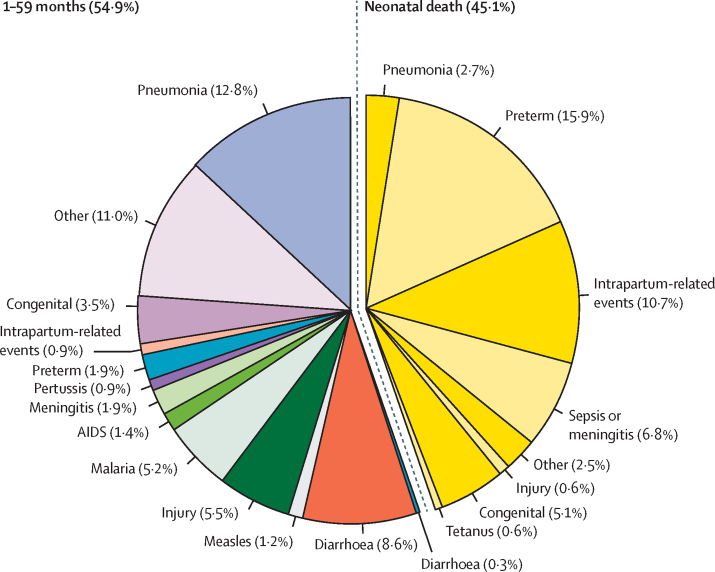
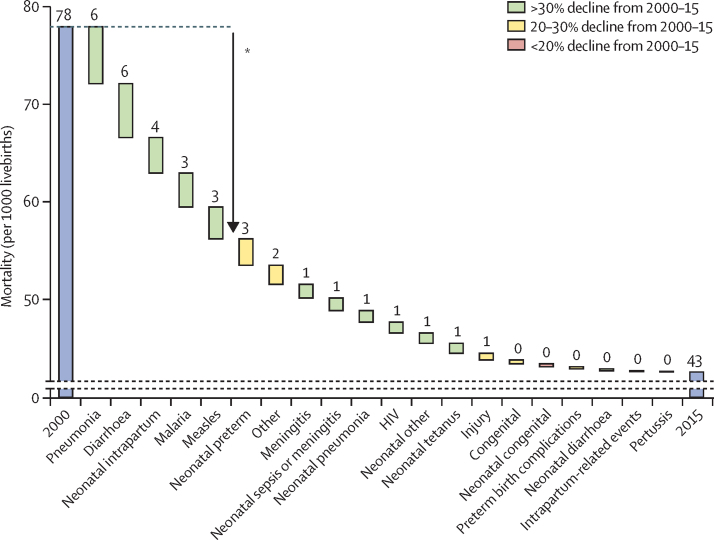
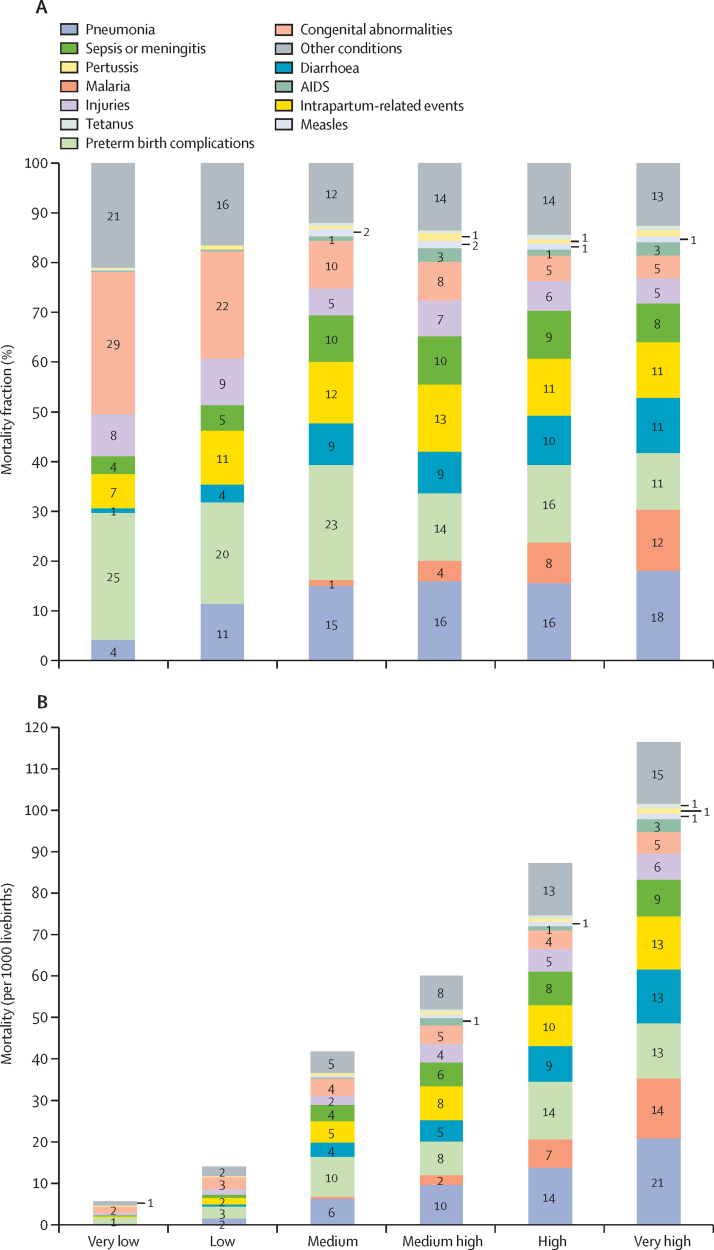
BACKGROUND: Despite remarkable progress in the improvement of child survival between 1990 and 2015, the Millennium Development Goal (MDG) 4 target of a two-thirds reduction of under-5 mortality rate (U5MR) was not achieved globally. In this paper, we updated our annual estimates of child mortality by cause to 2000-15 to reflect on progress toward the MDG 4 and consider implications for the Sustainable Development Goals (SDG) target for child survival. METHODS: We increased the estimation input data for causes of deaths by 43% among neonates and 23% among 1-59-month-olds, respectively. We used adequate vital registration (VR) data where available, and modelled cause-specific mortality fractions applying multinomial logistic regressions using adequate VR for low U5MR countries and verbal autopsy data for high U5MR countries. We updated the estimation to use Plasmodium falciparum parasite rate in place of malaria index in the modelling of malaria deaths; to use adjusted empirical estimates instead of modelled estimates for China; and to consider the effects of pneumococcal conjugate vaccine and rotavirus vaccine in the estimation. FINDINGS: In 2015, among the 5·9 million under-5 deaths, 2·7 million occurred in the neonatal period. The leading under-5 causes were preterm birth complications (1·055 million [95% uncertainty range (UR) 0·935-1·179]), pneumonia (0·921 million [0·812 -1·117]), and intrapartum-related events (0·691 million [0·598 -0·778]). In the two MDG regions with the most under-5 deaths, the leading cause was pneumonia in sub-Saharan Africa and preterm birth complications in southern Asia. Reductions in mortality rates for pneumonia, diarrhoea, neonatal intrapartum-related events, malaria, and measles were responsible for 61% of the total reduction of 35 per 1000 livebirths in U5MR in 2000-15. Stratified by U5MR, pneumonia was the leading cause in countries with very high U5MR. Preterm birth complications and pneumonia were both important in high, medium high, and medium child mortality countries; whereas congenital abnormalities was the most important cause in countries with low and very low U5MR. INTERPRETATION: In the SDG era, countries are advised to prioritise child survival policy and programmes based on their child cause-of-death composition. Continued and enhanced efforts to scale up proven life-saving interventions are needed to achieve the SDG child survival target. FUNDING: Bill & Melinda Gates Foundation, WHO.
Overview
The claims and statistics of this paper haven’t been checked yet.
Free: it reads the open-access text and checks the first 5 claims that cite a source we can check. Create a free account to check every claim.
Integrity signals
Registry
Cites
Statistics
Figures
Verification
Claims the paper makes
The claims and statistics of this paper haven’t been checked yet.
Free: it reads the open-access text and checks the first 5 claims that cite a source we can check. Create a free account to check every claim.
Claims other papers make about this one
Each is checked against this paper’s own text: does it say what the citing paper says it does?
In the citing paper
“it is the leading cause of neonatal mortality (18–20).”
In the citing paper
“Inadequate sanitation services and polluted water supplies are known to be leading drivers of diarrhoeal disease, and globally, diarrhoea represents the second highest cause of mortality among children under the age”
From A planetary health model for reducing exposure to faecal contamination in urban informal settlements: Baseline findings from Makassar, Indonesia. (2021) · cites this paper as Liu et al., 2016
Self-check
Percentages, sums and reported differences re-computed from the paper’s own numbers.
The self-check needs the paper’s full text.
Citations
Cites
Transforming Our World: The 2030 Agenda for Sustainable Development
(2018) · A New Era in Global Health · doi:10.1891/9780826190123.ap02 · Cited by 19,351
Liu, L., Johnson, H. L., Cousens, S., Perin, J., Scott, S., Lawn, J. E., Rudan, I., Campbell, H., Cibulskis, R., Li, M., et al. (2012) · The Lancet · doi:10.1016/s0140-6736(12)60560-1 · Cited by 3,934
Self-citationThe effect of malaria control on Plasmodium falciparum in Africa between 2000 and 2015
Bhatt, S., Weiss, D. J., Cameron, E., Bisanzio, D., Mappin, B., Dalrymple, U., Battle, K. E., Moyes, C. L., Henry, A., Eckhoff, P. A., et al. (2015) · Nature · doi:10.1038/nature15535 · Cited by 3,225
Liu, L., Oza, S., Hogan, D., Perin, J., Rudan, I., Lawn, J. E., Cousens, S., Mathers, C., & Black, R. E. (2015) · The Lancet · doi:10.1016/s0140-6736(14)61698-6 · Cited by 3,167
Self-citationAn Analytical Framework for the Study of Child Survival in Developing Countries
Mosley, W. H., & Chen, L. C. (1984) · Population and Development Review · doi:10.2307/2807954 · Cited by 1,471
Rajaratnam, J. K., Marcus, J. R., Flaxman, A. D., Wang, H., Levin-Rector, A., Dwyer, L., Costa, M., Lopez, A. D., & Murray, C. J. (2010) · The Lancet · doi:10.1016/s0140-6736(10)60703-9 · Cited by 898
You, D., Hug, L., Ejdemyr, S., Idele, P., Hogan, D., Mathers, C., Gerland, P., New, J. R., & Alkema, L. (2015) · The Lancet · doi:10.1016/s0140-6736(15)00120-8 · Cited by 830
Self-citationBhutta, Z. A., Das, J. K., Walker, N., Rizvi, A., Campbell, H., Rudan, I., & Black, R. E. (2013) · The Lancet · doi:10.1016/s0140-6736(13)60648-0 · Cited by 675
Self-citationAn analytical framework for the study of child survival in developing countries. 1984.
Mosley, W. H., & Chen, L.-C. (2003) · Europe PMC (PubMed Central) · Cited by 596
You, D., Hug, L., Ejdemyr, S., & Beise, J. (2015) · Cited by 563
Research works printed but not linked: 4
- United Nations Department of Economic and Social Affairs Population Division World Population Prospects: The 2015 Revision, DVD Edition 2015 United Nations New York
- WHO WHO recommendations on interventions to improve preterm birth outcomes 2015 World Health Organization Geneva http://apps.who.int/iris/bitstream/10665/183037/1/9789241508988_eng.pdf (accessed March 9, 2016). 26447264
- WHO Guideline: managing possible serious bacterial infection in young infants when referral is not feasible 2015 World Health Organization Geneva http://apps.who.int/iris/bitstream/10665/181426/1/9789241509268_eng.pdf (accessed March 9, 2016). 26447263
- The Bill & Melinda Gates Foundation The Bill & Melinda Gates Foundation to fund disease surveillance network in Africa and Asia to prevent childhood mortality and help prepare for the next epidemic. Seattle, USA http://www.gatesfoundation.org/Media-Center/Press-Releases/2015/05/Child-Health-and-Mortality-Prevention-Surveillance-Network 2015 (accessed Sept 30, 2015).
Cited by
Items 701–800 of 1,006
Hong, X., Surkan, P. J., Zhang, B., Keiser, A., Ji, Y., Ji, H., Burd, I. D., Bustamante-Helfrich, B., Ogunwole, S. M., Tang, W., et al. (2020) · Pediatric Research · doi:10.1038/s41390-020-1093-1 · Cited by 25
Self-citationMagge, H., Nahimana, E., Mugunga, J. C., Nkikabahizi, F., Tadiri, E., Sayinzoga, F., Manzi, A., Nyishime, M., Biziyaremye, F., Iyer, H. S., et al. (2020) · Global Health Science and Practice · doi:10.9745/ghsp-d-20-00031 · Cited by 27
“Implementation Successes We found that the successful implementation of a multilevel intervention combining facility readiness, clinical mentoring, and district-wide improvement collaboratives increased QI capacity, improved quality of care, and was temporally associated with reduced neonatal mortality overall and amo…”
BackgroundSimelane, M. S., Chemhaka, G. B., & Zwane, E. N. (2020) · PLoS ONE · doi:10.1371/journal.pone.0241548 · Cited by 24
“8 million under five deaths (53% of the global share) in 2019 [1, 2].”
BackgroundTann, C. J., Kohli-Lynch, M., Nalugya, R., Sadoo, S., Martin, K., Lassman, R., Nanyunja, C., Musoke, M., Sewagaba, M., Nampijja, M., et al. (2021) · Infants & Young Children · doi:10.1097/iyc.0000000000000182 · Cited by 24
“The three leading causes of newborn deaths—preterm birth complications, intrapartum-related events (deaths related to neonatal encephalopathy [NE]), and sepsis—also contribute to a high burden of adverse neurodevelopmental outcomes (Blencowe et al., 2012; Kohli-Lynch et al., 2017; Lee et al., 2013; Liu et al., 2016; S…”
Sempere, J., González‐Camacho, F., Domenech, M., Llamosí, M., Menéndez, I. D. R., López-Ruiz, B., Gimeno, M., Coronel, P., & Yuste, J. (2021) · Journal of Antimicrobial Chemotherapy · doi:10.1093/jac/dkab482 · Cited by 24
Effect of preterm birth on early neonatal, late neonatal, and postneonatal mortality in India
Kannaujiya, A. K., Kumar, K., Upadhyay, A. K., McDougal, L., Raj, A., James, K. S., & Singh, A. (2022) · PLOS Global Public Health · doi:10.1371/journal.pgph.0000205 · Cited by 32
“Such a high burden of preterm births in India assumes significance given global evidence suggests that preterm births are a leading cause of under-five mortality [4, 11].”
BackgroundMotomura, K., Hara, M., Ito, I., Morita, H., & Matsumoto, K. (2023) · Journal of Reproductive Immunology · doi:10.1016/j.jri.2023.103811 · Cited by 26
Zhu, W., Jiang, Z., Cen, L., & Wu, H. (2023) · Journal of Geographical Sciences · doi:10.1007/s11442-023-2082-1 · Cited by 24
“The sustainable development goals articulated convincingly that regional development potential depends on efficiency and justice (David et al., 2013; Liu et al., 2016), indicating that the primary pursuit of land use spatial pattern optimization is to enhance quality (Camara et al., 2020).”
BackgroundWu, Y., Yuan, J., Yuan, Y., Kong, C., Jing, W., Liu, J., Ye, H., & Liu, M. (2023) · Frontiers in Public Health · doi:10.3389/fpubh.2023.1101283 · Cited by 29
Akinlabi, O. C., Nwoko, E.-S. Q., Dada, R. A., Ekpo, S. E., Omotuyi, A., Nwimo, C., Adepoju, A. A., Popoola, O. A., Dougan, G., Thomson, N. R., et al. (2023) · American Journal of Tropical Medicine and Hygiene · doi:10.4269/ajtmh.22-0618 · Cited by 23
Variane, G. F. T., Dahlen, A., Pietrobom, R. F. R., Rodrigues, D. P., Magalhães, M., Mimiça, M. J., Llaguno, N. S., Leandro, D. M. K., Girotto, P. N., Sampaio, L. B., et al. (2023) · JAMA Network Open · doi:10.1001/jamanetworkopen.2023.43429 · Cited by 24
The impact of paediatric antimicrobial stewardship programmes on patient outcomes
Patel, S. V., & Vergnano, S. (2018) · Current Opinion in Infectious Diseases · doi:10.1097/qco.0000000000000449 · Cited by 27
Pervaiz, F., Hossen, S., Chavez, M. A., Miele, C. H., Moulton, L. H., McCollum, E. D., Roy, A., Chowdhury, N. H., Ahmed, S., Begum, N., et al. (2019) · Pediatric Pulmonology · doi:10.1002/ppul.24477 · Cited by 24
Giusto, K., Patki, M., Koya, J., Ashby, C. R., Munnangi, S., Patel, K. R., & Reznik, S. E. (2019) · Nanomedicine · doi:10.2217/nnm-2019-0243 · Cited by 24
Mottahedin, A., Blondel, S., Ek, C. J., Leverin, A., Svedin, P., Hagberg, H., Mallard, C. E., Ghersi‐Egea, J., & Strazielle, N. (2020) · Acta Neuropathologica Communications · doi:10.1186/s40478-019-0877-1 · Cited by 24
Chavula, K., Guenther, T., Valsangkar, B., Lwesha, V., Banda, G., Wensaas, M. B., Luhanga, R., Chimtembo, L., Kinney, M. V., & Dube, Q. (2020) · PLoS ONE · doi:10.1371/journal.pone.0229720 · Cited by 33
“Complications from preterm birth (defined as births occurring before 37 weeks’ gestation) are a leading cause of under-five mortality worldwide, accounting for an estimated 18% of global deaths [1].”
BackgroundMurdoch, J., Curran, R., Cornick, R. V., Picken, S., Bachmann, M. O., Bateman, E. D., Simelane, M. L., & Fairall, L. R. (2020) · BMC Health Services Research · doi:10.1186/s12913-020-05201-w · Cited by 28
Sintayehu, Y., Desalew, A., Geda, B., Shiferaw, K., Tiruye, G., Mulatu, T., & Mezmur, H. (2020) · International Journal of General Medicine · doi:10.2147/ijgm.s255892 · Cited by 24
Anti-Inflammatory Therapies for Treatment of Inflammation-Related Preterm Brain Injury
Prasad, J. D., Gunn, K. C., Davidson, J. O., Galinsky, R., Graham, S. E., Berry, M. J., Bennet, L., Gunn, A. J., & Dean, J. M. (2021) · International Journal of Molecular Sciences · doi:10.3390/ijms22084008 · Cited by 27
“Worldwide, the rates of preterm birth range between 6–15% [1,2].”
BackgroundProgress in the use of ORS and zinc for the treatment of childhood diarrhea
Black, R. E. (2019) · Journal of Global Health · doi:10.7189/jogh.09.010101 · Cited by 41
Self-citationLi, H., Yang, Y. L., Tao, R., & Shang, S. (2024) · Journal of Medical Virology · doi:10.1002/jmv.29929 · Cited by 23
Innate immune sensing of rotavirus by intestinal epithelial cells leads to diarrhea
Hou, G., Son, J., Castro, M. F. G., Kawagishi, T., Ren, X., Roth, A. N., Antia, A., Zeng, Q., DeVeaux, A. L., Feng, N., et al. (2025) · Cell Host & Microbe · doi:10.1016/j.chom.2025.02.005 · Cited by 31
Xiang, L., Wang, K., Miao, L., Kang, L., Li, X., Zhu, J., Liang, J., Li, Q., He, C., & Wang, Y. (2018) · Injury Prevention · doi:10.1136/injuryprev-2018-042853 · Cited by 23
Self-citationFinancial Support to Medicaid-Eligible Mothers Increases Caregiving for Preterm Infants
Andrews, K. G., Martin, M. W., Shenberger, E., Pereira, S., Fink, G., & McConnell, M. A. (2020) · Maternal and Child Health Journal · doi:10.1007/s10995-020-02905-7 · Cited by 26
Kuusela, P., Wennerholm, U., Fadl, H., Wesström, J., Lindgren, P., Hagberg, H., Jacobsson, B., & Valentin, L. (2020) · Acta Obstetricia Et Gynecologica Scandinavica · doi:10.1111/aogs.13895 · Cited by 26
van Wyk, L., Tooke, L., Dippenaar, R., Rhoda, N. R., Lloyd, L. G., Holgate, S., Alexander, R., & Smith, J. (2020) · Neonatology · doi:10.1159/000506987 · Cited by 25
Strengthening Newborn Nutrition Through Establishment of the First Human Milk Bank in Vietnam
Mansen, K., Nguyen, T. T., Nguyen, N. Q., Chung, T., Tran, H. T., Nguyen, N. T., Mathisen, R., Vinh, N. D., Ngo, Y. T. K., & Israel-Ballard, K. A. (2020) · Journal of Human Lactation · doi:10.1177/0890334420948448 · Cited by 23
“Each year, 15 million infants are born prematurely (Chawanpaiboon et al., 2019), leading to 1 million deaths due to complications associated with prematurity (Liu et al., 2016), the leading cause of neonatal mortality globally.”
BackgroundYang, Y., Guo, L., & Shen, Z. (2020) · Midwifery · doi:10.1016/j.midw.2020.102834 · Cited by 23
Recent advances in genetic manipulation of Cryptosporidium
Vinayak, S. (2020) · Current Opinion in Microbiology · doi:10.1016/j.mib.2020.09.010 · Cited by 23
Mwita, S. M., Jande, M. B., Katabalo, D. M., Kamala, B. A., & Dewey, D. (2021) · World Journal of Pediatrics · doi:10.1007/s12519-020-00398-6 · Cited by 30
Oo, N. A. T., Edwards, J. K., Pyakurel, P., Thekkur, P., Maung, T. M., Aye, N. S. S., & Nwe, H. M. (2021) · Tropical Medicine and Infectious Disease · doi:10.3390/tropicalmed6020062 · Cited by 29
“It remains one of the three most frequent causes of neonatal death in developing countries [3] and is a focus of the United Nations’ Sustainable Development Goal #3 [4].”
BackgroundMardian, Y., Naysilla, A. M., Lokida, D., Farida, H., Aman, A. T., Karyana, M., Lukman, N., Kosasih, H., Kline, A., & Lau, C. (2021) · Frontiers in Pediatrics · doi:10.3389/fped.2021.629318 · Cited by 23
Messina, N. L., Pittet, L. F., Gardiner, K., Freyne, B., Francis, K. L., Zufferey, C., Abruzzo, V., Morrison, C., Allen, K. J., Flanagan, K. L., et al. (2021) · The Journal of Infectious Diseases · doi:10.1093/infdis/jiab306 · Cited by 24
Simmons, R., Anthopolos, R., & O’Meara, W. P. (2021) · Scientific Reports · doi:10.1038/s41598-021-95886-8 · Cited by 27
“with respect to realizing the potential of UHC, including (1) the role of public subsidies or health insurance to mitigate the negative impact of user fees for immunization and delivery, (2) investment in physical infrastructure to improve access, (3) engaging the private sector to achieve UHC goals, and (4) closing t…”
BackgroundLokken-Toyli, K. L., Piters, W. A. A. D. S., Zangari, T., Martel, R. A., Kuipers, K., Shopsin, B., Loomis, C. A., Bogaert, D., & Weiser, J. N. (2021) · Mucosal Immunology · doi:10.1038/s41385-021-00438-y · Cited by 25
Luo, X., Deng, J., Mu, X., Yu, N., & Che, X. (2021) · BMC Gastroenterology · doi:10.1186/s12876-021-02044-5 · Cited by 23
Milic, M., Šiljić, M., Ćirković, V., Jovićević, M., Perović, V., Marković, M., Martić, J., Stanojević, M., & Mijač, V. (2021) · Microorganisms · doi:10.3390/microorganisms9122613 · Cited by 32
“Prematurity is a leading cause of death in children <5 years of age [1], and in many cases due to health-care associated (HAI) infection that develops in the first weeks of life [2,3].”
BackgroundBasu, M., & Dasgupta, R. (2021) · Water · doi:10.3390/w13243591 · Cited by 31
Kulkarni, D., Wang, X., Sharland, E., Stansfield, D., Campbell, H. J., & Nair, H. (2022) · EClinicalMedicine · doi:10.1016/j.eclinm.2021.101267 · Cited by 26
Mother and newborn skin-to-skin contact in sub-Saharan Africa: prevalence and predictors
Aboagye, R. G., Boah, M., Okyere, J., Ahinkorah, B. O., Seidu, A., Ameyaw, E. K., Mwamba, B., & Yaya, S. (2022) · BMJ Global Health · doi:10.1136/bmjgh-2021-007731 · Cited by 27
Cheng, A., Yao, Y., Jin, Y., Chen, C., Vullings, R., Xu, L., & Mischi, M. (2022) · IEEE Transactions on Biomedical Engineering · doi:10.1109/tbme.2022.3176668 · Cited by 25
“A CCORDING to the World Health Organization, there are 15 million births occurring before 37 completed weeks of gestation, referred to as preterm birth, each year worldwide, accounting for 5% to 18% of babies born across 184 countries [1].”
BackgroundMemon, Z., Fridman, D., Soofi, S. B., Ahmed, W., Muhammad, S., Rizvi, A., Ahmed, I., Wright, J. R., Cousens, S., & Bhutta, Z. A. (2023) · The Lancet Regional Health - Southeast Asia · doi:10.1016/j.lansea.2023.100231 · Cited by 31
Self-citationArnim, A. O. V. S. A.-V., Attebery, J. E., Kortz, T. B., Kissoon, N. “., MOLYNEUX, E. M., Musa, N. L., Nielsen, K. R., Fink, E. L., & The Pediatric Acute Lung Injury and Sepsis Investigators (PALISI) Network (2017) · Frontiers in Pediatrics · doi:10.3389/fped.2017.00277 · Cited by 31
Maziarz, M., Nabalende, H., Otim, I. O., Legason, I. D., Kinyera, T., Ogwang, M. D., Talisuna, A. O., Reynolds, S. J., Kerchan, P., Bhatia, K. G., et al. (2018) · Malaria Journal · doi:10.1186/s12936-018-2379-1 · Cited by 24
Niermeyer, S., Robertson, N. J., & Ersdal, H. L. (2018) · Seminars in Fetal and Neonatal Medicine · doi:10.1016/j.siny.2018.06.002 · Cited by 24
Boyd, N., King, C., WALKER, I. A., Zadutsa, B., Bernstein, M., Ahmed, S., Roy, A. D., Hanif, A. A. M., Saha, S. C., Majumder, K., et al. (2018) · American Journal of Tropical Medicine and Hygiene · doi:10.4269/ajtmh.18-0016 · Cited by 25
Blockchain: an accelerator for women and children’s health?
Thomason, J. (2017) · Global Health Journal · doi:10.1016/s2414-6447(19)30055-7 · Cited by 23
Applegate, J. A., Ahmed, S., Khan, M. A., Alam, S., Kabir, N., Islam, M., Bhuiyan, M., Islam, J., Rashid, I., Wall, S. N., et al. (2019) · BMJ Global Health · doi:10.1136/bmjgh-2019-001643 · Cited by 28
Applegate, J. A., Ahmed, S., Harrison, M., Callaghan‐Koru, J. A., Mousumi, M., Begum, N., Moin, M. I., Joarder, T., Ahmed, S., George, J., et al. (2020) · PLoS ONE · doi:10.1371/journal.pone.0229988 · Cited by 27
Komakech, H., Lubogo, D., Nabiwemba, E., & Orach, C. G. (2020) · PLoS ONE · doi:10.1371/journal.pone.0231970 · Cited by 22
“Unfortunately, majority of newborn deaths are clustered in low-income countries, with two-thirds occurring in Asia and Africa [2].”
BackgroundGinsberg, K. H., Alsweiler, J., Alyami, M., & Serlachius, A. (2023) · Journal of Clinical Psychology in Medical Settings · doi:10.1007/s10880-022-09902-8 · Cited by 22
Rees, P., Callan, C., Chadda, K. R., Diviney, J., Harnden, F., Gardiner, J., Battersby, C., Gale, C. P., & Sutcliffe, A. G. (2023) · Developmental Medicine & Child Neurology · doi:10.1111/dmcn.15713 · Cited by 24
He, P., Yu, L., Tian, F., Chen, W., Zhang, H., & Zhai, Q. (2024) · Advances in Nutrition · doi:10.1016/j.advnut.2024.100233 · Cited by 27
“Approximately 15 million preterm births occur per annum, accounting for 1 in 9 births worldwide [1], and ~1 million of these children die owing to complications of preterm birth [2].”
BackgroundEarly‐Life Host–Microbial Interactions and Asthma Development: A Lifelong Impact?
Pattaroni, C., Marsland, B. J., & Harris, N. L. (2025) · Immunological Reviews · doi:10.1111/imr.70019 · Cited by 27
“Although infants often experience more severe outcomes from certain infections compared to adults [31, 32], this observation does not necessarily indicate the lack of an effective immune sys-tem but may instead reflect a different state of maturation or activation.”
Ayede, A. I., Kirolos, A., Fowobaje, K. R., Williams, L. J., Bakare, A. A., Oyewole, O. B., Olorunfemi, O. B., Kuna, O., Iwuala, N. T., Oguntoye, A., et al. (2018) · Journal of Global Health · doi:10.7189/jogh.08.020806 · Cited by 22
Naheed, A., Breiman, R. F., Islam, M. S., Saha, S. K., & Naved, R. T. (2019) · PLoS ONE · doi:10.1371/journal.pone.0213238 · Cited by 31
Moraa, P. K., Mweu, M. M., & Njoroge, P. K. (2019) · F1000Research · doi:10.12688/f1000research.19544.2 · Cited by 28
“The leading causes of neonatal mortality globally are preterm birth complications, intrapartum-related events and neonatal sepsis 1,2 .”
InfluentialBelaid, L., Bayo, P., Kamau, L., Nakimuli, E., Tahir, E. O., Lobor, R., Samson, B., & Dimiti, A. (2020) · Conflict and Health · doi:10.1186/s13031-020-00258-0 · Cited by 39
de Jesus, M. C. S., Santos, V. S., Storti-Melo, L. M., de Souza, C. D. F., Barreto, Í. D. D. C., Paes, M. V. C., Lima, P. A. S., Bohland, A. K., Berezin, E. N., Machado, R. L. D., et al. (2020) · Expert Review of Vaccines · doi:10.1080/14760584.2020.1775081 · Cited by 27
Positive End-Expiratory Pressure in Newborn Resuscitation Around Term: A Randomized Controlled Trial
Holte, K., Ersdal, H. L., Eilevstjønn, J., Gomo, Ø., Klingenberg, C., Thallinger, M., Linde, J., Stigum, H., Yeconia, A., Kidanto, H. L., et al. (2020) · PEDIATRICS · doi:10.1542/peds.2020-0494 · Cited by 22
Heparan Sulfate Is a Cellular Receptor for Enteric Human Adenoviruses
Rajan, A., Palm, E., Trulsson, F., Mundigl, S., Becker, M., Persson, B. D., Frängsmyr, L., & Lenman, A. (2021) · Viruses · doi:10.3390/v13020298 · Cited by 22
“With developments in molecular diagnostics, enteric HAdVF40 and -F41 are now recognized as a leading cause of gastroenteritis and diarrhea-associated mortality in young children [6,7].”
BackgroundOlawuyi, O., Ezenwa, B. N., Fajolu, I., Onwuama, M. A. C., & Ezeaka, C. (2021) · Pan African Medical Journal · doi:10.11604/pamj.2021.38.364.22833 · Cited by 35
Tadesse, T., Abuye, H., & Tilahun, G. N. (2021) · BMC Public Health · doi:10.1186/s12889-021-10745-5 · Cited by 30
“Childhood pneumonia and diarrhea are the most important causes of childhood mortality and account for about 30% of all child deaths worldwide [11, 12].”
BackgroundThe Alliance for Maternal and Newborn Health Improvement (AMANHI) Gestational Age Study Group (2021) · BMJ Global Health · doi:10.1136/bmjgh-2021-005688 · Cited by 24
Motomura, K., Romero, R. J., Plazyo, O., Garcia‐Flores, V., Gershater, M., Galaz, J., Miller, D., & Gomez‐Lopez, N. (2021) · Biology of Reproduction · doi:10.1093/biolre/ioab188 · Cited by 26
The Etiology of Childhood Pneumonia in Bangladesh
Brooks, W. A., Zaman, K., Goswami, D., Prosperi, C., Endtz, H. P., Hossain, L., Rahman, M., Ahmed, D., Rahman, M. Z., Banu, S., et al. (2021) · The Pediatric Infectious Disease Journal · doi:10.1097/inf.0000000000002648 · Cited by 22
Zhang, H., Zhang, X., Zhang, H., Luo, H., Yang, F., Wang, J., Huang, C., & Yu, Z. (2022) · Environmental Pollution · doi:10.1016/j.envpol.2022.119357 · Cited by 21
Lemma, K., Misker, D., Kassa, M., Abdulkadir, H., & Otayto, K. (2022) · BMC Pediatrics · doi:10.1186/s12887-022-03342-x · Cited by 22
“Nearly 23% of the neonatal deaths and 29% of early neonatal deaths around the world are accredited to birth asphyxia yearly [6].”
BackgroundGonzalez‐Suarez, A. M., Stybayeva, G., Carey, W. A., & Revzin, A. (2022) · Analytical Chemistry · doi:10.1021/acs.analchem.2c01139 · Cited by 22
Marcy, O., Wobudeya, E., Font, H., Vessière, A., Chabala, C., Khosa, C., Taguebue, J.-V., Moh, R., Mwanga‐Amumpaire, J., Lounnas, M., et al. (2022) · SSRN Electronic Journal · doi:10.1016/s1473-3099(22)00668-5 · Cited by 25
Balasubramani, K., Prasad, K. A., Kodali, N. K., Rasheed, N. K. A., Chellappan, S., Sarma, D. K., Kumar, M., Dixit, R., James, M. M., Behera, S. K., et al. (2022) · Frontiers in Public Health · doi:10.3389/fpubh.2022.906248 · Cited by 35
Redondo, E., Calle, I. R., Mascarós, E., Ocaña, D., Jimeno, I., de Miguel, Á. G., Díaz-Maroto, J. L., Linares, M., Onieva-García, M. Á., González‐Romo, F., et al. (2023) · Antibiotics · doi:10.3390/antibiotics12010138 · Cited by 27
A key role for NLRP3 signaling in preterm labor and birth driven by the alarmin S100B
Galaz, J., Motomura, K., Romero, R. J., Liu, Z., Garcia‐Flores, V., Li, T., Xu, Y., Done, B., Arenas‐Hernandez, M., Kanninen, T. T., et al. (2023) · Translational research · doi:10.1016/j.trsl.2023.04.004 · Cited by 21
Ji, W., Li, G., Jiang, F., Zhang, Y., Wu, F., Zhang, W., Hu, Y., Wang, J., Wei, X., Li, Y., et al. (2023) · Psychological Medicine · doi:10.1017/s0033291723001757 · Cited by 27
Disease spectrum and management of children admitted with acute respiratory infection in Viet Nam
Nguyen, P. T. K., Nguyen, D., Truong, T. N. H., Tran, M. D., Graham, S. M., & Marais, B. J. (2017) · Tropical Medicine & International Health · doi:10.1111/tmi.12874 · Cited by 26
“An estimated 900 000 children <5 years of age died from pneumonia in 2015 [3].”
BackgroundTuti, T., Agweyu, A., Mwaniki, P., Peek, N. B., & English, M. (2017) · BMC Medicine · doi:10.1186/s12916-017-0963-9 · Cited by 29
“It is estimated that more than half the burden is experienced in subSaharan Africa (SSA) [1], where there are limited disease surveillance and research and weak health systems [2].”
BackgroundKortz, T. B., Sawe, H. R., Murray, B. L., Enanoria, W. T. A., Matthay, M. A., & Reynolds, T. A. (2017) · Frontiers in Pediatrics · doi:10.3389/fped.2017.00278 · Cited by 25
Sarrassat, S., Méda, N., Badolo, H., Ouédraogo, M., Somé, H., & Cousens, S. N. (2018) · Tropical Medicine & International Health · doi:10.1111/tmi.13170 · Cited by 22
“Second, our study excluded communities living in and within 5 km of towns and in villages above 5000 inhabitants and is therefore not representative of the rural population of Burkina Faso.”
BackgroundSelf-citationNambuusi, B., Ssempiira, J., Makumbi, F. E., Kasasa, S., & Vounatsou, P. (2019) · Parasite Epidemiology and Control · doi:10.1016/j.parepi.2019.e00089 · Cited by 28
Thai, L., Mousseau, F., Oikonomou, E. K., & Berret, J. (2019) · Colloids and Surfaces B Biointerfaces · doi:10.1016/j.colsurfb.2019.03.020 · Cited by 22
“interfaces (2019) I – Introduction Complications related to premature births are the leading cause of death among children under 5 years of age, responsible for approximately 1 million deaths in 2015 [1, 2, 3]. Prematurity concerns infants born alive before the 37th week of pregnancy and represents nearly 1 in 10 birt…”
BackgroundJoseph, N. T., Piwoz, E., Lee, D., Malata, A. M., & Leslie, H. H. (2020) · Journal of Global Health · doi:10.7189/jogh.10.010501 · Cited by 28
Jullien, S., Pradhan, D., Tashi, T., Sharma, R., Dema, K., García-García, S., Ribó, J. L., Muñoz‐Almagro, C., & Bassat, Q. (2020) · International Journal of Infectious Diseases · doi:10.1016/j.ijid.2020.04.017 · Cited by 22
“Pneumonia is the single largest cause of mortality in children aged under five years, causing an estimated 15.5% of all deaths in children under five years of age, and over 800,000 paediatric deaths annually (Liu et al., 2016; UN IGME, 2018) .”
InfluentialScott, K., Gupta, S., Williams, E., Arthur, M., Somayajulu, U. V., & Noguchi, L. (2020) · BMC Pregnancy and Childbirth · doi:10.1186/s12884-020-03201-6 · Cited by 26
Goyal, N. P., Rongsen‐Chandola, T., Sood, M., Sinha, B., Kumar, A., Qazi, S., Aboubaker, S., Nisar, Y. B., Bahl, R., Bhan, M. K., et al. (2020) · PLoS ONE · doi:10.1371/journal.pone.0243724 · Cited by 29
Modelling the Spatial Distribution and the Factors Associated with Under-Five Mortality in Nigeria
Fagbamigbe, A. F., & Nnanatu, C. C. (2021) · Spatial Demography · doi:10.1007/s40980-021-00078-7 · Cited by 26
Mackenzie, G. A., Vilane, A., Salaudeen, R. A., Hogerwerf, L., van den Brink, S., Wijsman, L. A., Overduin, P. P., Janssens, T., de Silva, T. I., van der Sande, M. A. B., et al. (2019) · Scientific Reports · doi:10.1038/s41598-019-54059-4 · Cited by 22
Teaching Helping Babies Breathe via telehealth: a new application in rural Guatemala
Jones-Bamman, C., Niermeyer, S., McConnell, K., Thomas, J. F., & Olson, C. (2019) · Biomedicine Hub · doi:10.1159/000502934 · Cited by 21
Franke, K. H., Krumkamp, R., Mohammed, A., Sarpong, N., Owusu‐Dabo, E., Brinkel, J., Fobil, J. N., Marinović, A. B., Asihene, P., Boots, M., et al. (2018) · BMC Medical Informatics and Decision Making · doi:10.1186/s12911-018-0600-3 · Cited by 23
Onono, M. A., Abdi, M., Mutai, K. K., Asadhi, E., Nyamai, R., Okoth, P. O., & Qazi, S. (2018) · Acta Paediatrica · doi:10.1111/apa.14405 · Cited by 21
“Bennett S, George A, Rodriguez D, Shearer J, Diallo B, Konate M, et al. Policy challenges facing integrated community case management in Sub-Saharan Africa.”
BackgroundInfluentialEpidemiology of viral respiratory infections in a pediatric reference hospital in Central Panama
Núñez-Samudio, V., & Landires, I. (2021) · BMC Infectious Diseases · doi:10.1186/s12879-020-05720-1 · Cited by 24
Household economic burden of childhood severe pneumonia in Bangladesh: a cost-of-illness study
Sultana, M., Alam, N. H., Ali, N., Faruque, A., Fuchs, G. J., Gyr, N. E., Chisti, M. J., Ahmed, T., & Gold, L. H. (2021) · Archives of Disease in Childhood · doi:10.1136/archdischild-2020-320834 · Cited by 23
Campbell-Yeo, M. L., Dol, J., Richardson, B., McCulloch, H., Hundert, A. S., Foye, S., Dorling, J. S., Afifi, J. K., Bishop, T., Earle, R. J., et al. (2021) · Journal of Neonatal Nursing · doi:10.1016/j.jnn.2021.06.010 · Cited by 24
Asfour, S. S., Alaklobi, F., Abdelrahim, A., Taha, M. Y., Asfour, R. S., Khalil, T. M., & Al-Mouqdad, M. M. (2022) · The Journal of Pediatric Pharmacology and Therapeutics · doi:10.5863/1551-6776-27.2.192 · Cited by 21
Fagbamigbe, A. F., Morakinyo, O. M., & Balogun, F. M. (2022) · BMC Public Health · doi:10.1186/s12889-022-12679-y · Cited by 24
“However, the majority of U5D recorded at this time was from sub-Saharan Africa (almost half of the cases) and Southern Asia (a third of the cases) [3, 4] and these were mainly low-and middleincome countries (LMIC).”
BackgroundUse of Antibiotics in Preterm Newborns
Simeoli, R., Cairoli, S., Decembrino, N., Campi, F., Dionisi‐Vici, C., Corona, A., & Goffredo, B. M. (2022) · Antibiotics · doi:10.3390/antibiotics11091142 · Cited by 28
Delavogia, E., Ntentakis, D. P., CORTINAS, J., Fernandez‐Gonzalez, A., Mitsialis, S. A., & Kourembanas, S. (2022) · Stem Cells · doi:10.1093/stmcls/sxac062 · Cited by 21
Luo, M., Liu, T., Ma, C., Fang, J., Zhao, Z., Wen, Y., Xia, Y., Zhao, Y., & Ji, C. (2023) · Frontiers in Public Health · doi:10.3389/fpubh.2023.978556 · Cited by 21
Research progress on phosphatidylinositol 4-kinase inhibitors
Li, G., Wu, Y., Zhang, Y., Wang, H., Li, M., He, D., Guan, W. X., & Yao, H. (2023) · Biochemical Pharmacology · doi:10.1016/j.bcp.2023.115993 · Cited by 23
Colston, J. M., Ahmed, A. M. S., Soofi, S. B., Svensen, E., Haque, R., Shrestha, J., Nshama, R., Bhutta, Z. A., Lima, I. F. N., Samie, A., et al. (2018) · Epidemiology and Infection · doi:10.1017/s0950268818000304 · Cited by 23
Hasan, A. Z., Saha, S., Saha, S. K., Sahakyan, G., Grigoryan, S., Mwenda, J. M., Antonio, M., Knoll, M. D., Serhan, F., Cohen, A. L., et al. (2018) · Vaccine · doi:10.1016/j.vaccine.2018.06.001 · Cited by 21
Metadata
- Authors
- Liu, L., Oza, S., Hogan, D., Chu, Y., Perin, J., Zhu, J., Lawn, J. E., Cousens, S., Mathers, C., & Black, R. E.
- Affiliations
- Johns Hopkins University (US)
- London School of Hygiene & Tropical Medicine (GB)
- Sichuan University (CN)
- World Health Organization (CH)
- Corresponding author
- Liu, Li
- Venue
- The Lancet
- Publisher
- Elsevier BV
- Published
- 2016-12
- Volume
- 388
- Issue
- 10063
- Pages
- 3027-3035
- ISSN
- 0099-5355 (ISSN-L)
- 0140-6736
- PMC
- PMC5161777
- OpenAlex
- W2549697535
- Semantic Scholar
- 121b2079d6548c8a5f02456e266dc6dcedfdd15d
- Cited by
- 3,453
- References
- 36
- Citations by year
- 2026: 151 · 2025: 268 · 2024: 326 · 2023: 461 · 2022: 486 · 2021: 548 · 2020: 491 · 2019: 350 · 2018: 263 · 2017: 95 · 2016: 9
- FWCI
- 278.12
- Type
- journal article
- Language
- en
- Open access
- hybrid
- doi.org
- Licence
- cc-by
- www.elsevier.com/tdm/userlicense/1.0/ (tdm)
- creativecommons.org/licenses/by/4.0/ (vor)
- Locations
- The Lancet (publishedVersion, cc-by)
- PubMed Central (publishedVersion, cc-by)
- PubMed (publishedVersion)
- LSHTM Research Online (London School of Hygiene and Tropical Medicine) (acceptedVersion)
- Funders
- Bill and Melinda Gates Foundation
- World Health Organization
- Topics
- Health Sciences › Medicine › Pediatrics, Perinatology and Child Health › Global Maternal and Child Health
- Health Sciences › Medicine › Pediatrics, Perinatology and Child Health › Maternal and Neonatal Healthcare
- Health Sciences › Nursing › Nutrition and Dietetics › Child Nutrition and Water Access
- Keywords
- under-five mortality, neonatal mortality, preterm birth complications, pneumonia, malaria, measles, diarrhea, congenital malformations, verbal autopsy, cause-specific mortality fractions, Millennium Development Goal 4, Sustainable Development Goal 3, child survival, pneumococcal conjugate vaccine, rotavirus vaccine
- MeSH terms
- Africa, Asia, Cause of Death, Child, Preschool, Communicable Diseases, Diarrhea, Goals, Humans, Infant, Infant, Newborn, Malaria, Plasmodium falciparum, Pneumonia, Global Health, Child Mortality
About these checks
Registry, retraction, Cites and statistics results are computed, not judged, with one exception: a printed reference that no index lists is read once by a model before it counts as a citation error. Claims are extracted by a model and kept only when their quote appears verbatim in the text; each cited source is then checked, with a model’s help, for whether it says what the claim relies on. Those verdicts can be wrong — read the claim’s quote and the cited source before relying on one.
Statistics and arithmetic are recomputed, not judged.
Confidence bands are shown only for fields calibrated on our annotated test set. None is calibrated yet, so no band is shown.
What counts as a claim ›How we measure confidence ›How we check this ›
Are you an author, or do you see a problem with this page? Request a review
Data sources
Bibliographic data: Semantic Scholar, OpenAlex, Crossref.
Contains information from the Semantic Scholar Academic Graph Datasets, made available under the ODC Attribution License (ODC-BY 1.0).
Semantic Scholar’s data is described in: Kinney, R., et al. (2023). The Semantic Scholar Open Data Platform. arXiv:2301.10140.
