

Global, regional, and national causes of under-5 mortality in 2000-15: an updated systematic analysis with implications for the Sustainable Development Goals
Open accessThe DOI matches its Crossref record; 35 of the 36 references it cites were found in a registry or an index.
Abstract
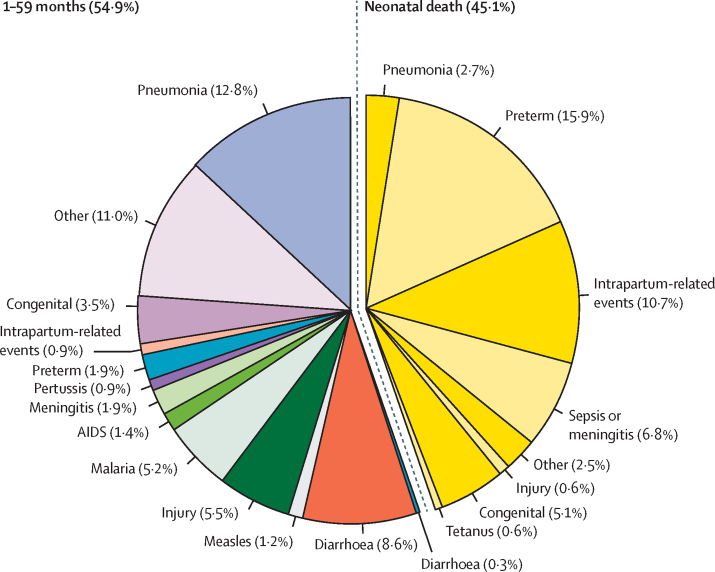
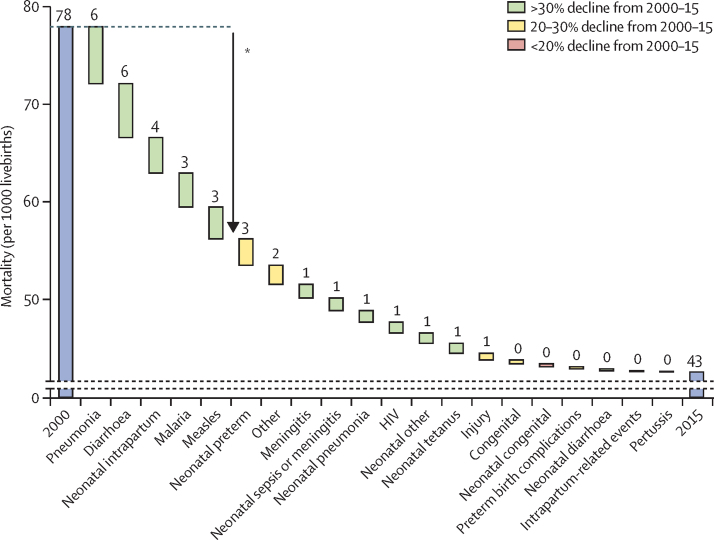
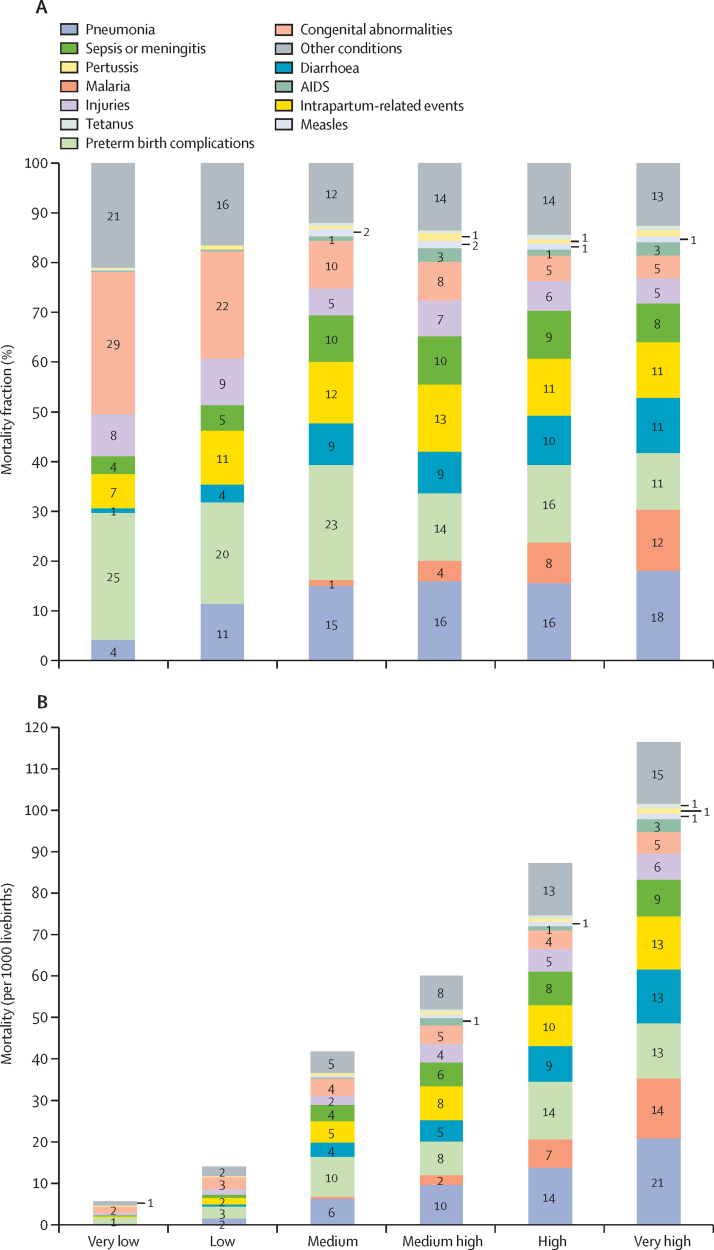
BACKGROUND: Despite remarkable progress in the improvement of child survival between 1990 and 2015, the Millennium Development Goal (MDG) 4 target of a two-thirds reduction of under-5 mortality rate (U5MR) was not achieved globally. In this paper, we updated our annual estimates of child mortality by cause to 2000-15 to reflect on progress toward the MDG 4 and consider implications for the Sustainable Development Goals (SDG) target for child survival. METHODS: We increased the estimation input data for causes of deaths by 43% among neonates and 23% among 1-59-month-olds, respectively. We used adequate vital registration (VR) data where available, and modelled cause-specific mortality fractions applying multinomial logistic regressions using adequate VR for low U5MR countries and verbal autopsy data for high U5MR countries. We updated the estimation to use Plasmodium falciparum parasite rate in place of malaria index in the modelling of malaria deaths; to use adjusted empirical estimates instead of modelled estimates for China; and to consider the effects of pneumococcal conjugate vaccine and rotavirus vaccine in the estimation. FINDINGS: In 2015, among the 5·9 million under-5 deaths, 2·7 million occurred in the neonatal period. The leading under-5 causes were preterm birth complications (1·055 million [95% uncertainty range (UR) 0·935-1·179]), pneumonia (0·921 million [0·812 -1·117]), and intrapartum-related events (0·691 million [0·598 -0·778]). In the two MDG regions with the most under-5 deaths, the leading cause was pneumonia in sub-Saharan Africa and preterm birth complications in southern Asia. Reductions in mortality rates for pneumonia, diarrhoea, neonatal intrapartum-related events, malaria, and measles were responsible for 61% of the total reduction of 35 per 1000 livebirths in U5MR in 2000-15. Stratified by U5MR, pneumonia was the leading cause in countries with very high U5MR. Preterm birth complications and pneumonia were both important in high, medium high, and medium child mortality countries; whereas congenital abnormalities was the most important cause in countries with low and very low U5MR. INTERPRETATION: In the SDG era, countries are advised to prioritise child survival policy and programmes based on their child cause-of-death composition. Continued and enhanced efforts to scale up proven life-saving interventions are needed to achieve the SDG child survival target. FUNDING: Bill & Melinda Gates Foundation, WHO.
Overview
The claims and statistics of this paper haven’t been checked yet.
Free: it reads the open-access text and checks the first 5 claims that cite a source we can check. Create a free account to check every claim.
Integrity signals
Registry
Cites
Statistics
Figures
Verification
Claims the paper makes
The claims and statistics of this paper haven’t been checked yet.
Free: it reads the open-access text and checks the first 5 claims that cite a source we can check. Create a free account to check every claim.
Claims other papers make about this one
Each is checked against this paper’s own text: does it say what the citing paper says it does?
In the citing paper
“it is the leading cause of neonatal mortality (18–20).”
In the citing paper
“Inadequate sanitation services and polluted water supplies are known to be leading drivers of diarrhoeal disease, and globally, diarrhoea represents the second highest cause of mortality among children under the age”
From A planetary health model for reducing exposure to faecal contamination in urban informal settlements: Baseline findings from Makassar, Indonesia. (2021) · cites this paper as Liu et al., 2016
Self-check
Percentages, sums and reported differences re-computed from the paper’s own numbers.
The self-check needs the paper’s full text.
Citations
Cites
Transforming Our World: The 2030 Agenda for Sustainable Development
(2018) · A New Era in Global Health · doi:10.1891/9780826190123.ap02 · Cited by 19,351
Liu, L., Johnson, H. L., Cousens, S., Perin, J., Scott, S., Lawn, J. E., Rudan, I., Campbell, H., Cibulskis, R., Li, M., et al. (2012) · The Lancet · doi:10.1016/s0140-6736(12)60560-1 · Cited by 3,934
Self-citationThe effect of malaria control on Plasmodium falciparum in Africa between 2000 and 2015
Bhatt, S., Weiss, D. J., Cameron, E., Bisanzio, D., Mappin, B., Dalrymple, U., Battle, K. E., Moyes, C. L., Henry, A., Eckhoff, P. A., et al. (2015) · Nature · doi:10.1038/nature15535 · Cited by 3,225
Liu, L., Oza, S., Hogan, D., Perin, J., Rudan, I., Lawn, J. E., Cousens, S., Mathers, C., & Black, R. E. (2015) · The Lancet · doi:10.1016/s0140-6736(14)61698-6 · Cited by 3,167
Self-citationAn Analytical Framework for the Study of Child Survival in Developing Countries
Mosley, W. H., & Chen, L. C. (1984) · Population and Development Review · doi:10.2307/2807954 · Cited by 1,471
Rajaratnam, J. K., Marcus, J. R., Flaxman, A. D., Wang, H., Levin-Rector, A., Dwyer, L., Costa, M., Lopez, A. D., & Murray, C. J. (2010) · The Lancet · doi:10.1016/s0140-6736(10)60703-9 · Cited by 898
You, D., Hug, L., Ejdemyr, S., Idele, P., Hogan, D., Mathers, C., Gerland, P., New, J. R., & Alkema, L. (2015) · The Lancet · doi:10.1016/s0140-6736(15)00120-8 · Cited by 830
Self-citationBhutta, Z. A., Das, J. K., Walker, N., Rizvi, A., Campbell, H., Rudan, I., & Black, R. E. (2013) · The Lancet · doi:10.1016/s0140-6736(13)60648-0 · Cited by 675
Self-citationAn analytical framework for the study of child survival in developing countries. 1984.
Mosley, W. H., & Chen, L.-C. (2003) · Europe PMC (PubMed Central) · Cited by 596
You, D., Hug, L., Ejdemyr, S., & Beise, J. (2015) · Cited by 563
Research works printed but not linked: 4
- United Nations Department of Economic and Social Affairs Population Division World Population Prospects: The 2015 Revision, DVD Edition 2015 United Nations New York
- WHO WHO recommendations on interventions to improve preterm birth outcomes 2015 World Health Organization Geneva http://apps.who.int/iris/bitstream/10665/183037/1/9789241508988_eng.pdf (accessed March 9, 2016). 26447264
- WHO Guideline: managing possible serious bacterial infection in young infants when referral is not feasible 2015 World Health Organization Geneva http://apps.who.int/iris/bitstream/10665/181426/1/9789241509268_eng.pdf (accessed March 9, 2016). 26447263
- The Bill & Melinda Gates Foundation The Bill & Melinda Gates Foundation to fund disease surveillance network in Africa and Asia to prevent childhood mortality and help prepare for the next epidemic. Seattle, USA http://www.gatesfoundation.org/Media-Center/Press-Releases/2015/05/Child-Health-and-Mortality-Prevention-Surveillance-Network 2015 (accessed Sept 30, 2015).
Cited by
Items 501–600 of 1,006
Music Therapy in Preterm Infants Reduces Maternal Distress
Kobus, S., Diezel, M., Dewan, M. V., Hüning, B. M., Dathe, A.-K., Marschik, P. B., Felderhoff‐Mueser, U., & Bruns, N. (2022) · International Journal of Environmental Research and Public Health · doi:10.3390/ijerph20010731 · Cited by 39
“More than every tenth baby worldwide is born before completing the 37th week of gestation, causing approximately 15 million preterm births every year [1].”
BackgroundMourey, F., Sureja, V., Kheni, D., Shah, P., Parikh, D., Upadhyay, U., Satia, M., Shah, D., Troise, C., & Decherf, A. (2020) · Pediatric Infectious Disease Journal · doi:10.1097/inf.0000000000002849 · Cited by 33
Watkins, H. C., Morgan, M. C., Nambuya, H., Waiswa, P., & Lawn, J. E. (2018) · Acta Paediatrica · doi:10.1111/apa.14344 · Cited by 36
“7 million neonatal deaths across the globe in 2015 (1).”
BackgroundSelf-citationLappan, R. J., Chown, S. L., French, M., Perlaza-Jiménez, L., Maćešić, N., Davis, M. D. M., Brown, R. R., Cheng, A., Clasen, T., Conlan, L., et al. (2024) · Environment International · doi:10.1016/j.envint.2024.109046 · Cited by 42
Improving access to tuberculosis preventive therapy and treatment for children
Marais, B. J. (2016) · International Journal of Infectious Diseases · doi:10.1016/j.ijid.2016.12.015 · Cited by 32
“Of the estimated 921 000 (95% confidence interval 812 000–1 117 000) pneumonia deaths that occurred in children under 5 years of age in 2015, most occurred among young children living in TB endemic areas.(13) In these settings, TB is likely to be a substantial cause and comorbidity of childhood pneumonia.”
BackgroundAlcalá, A. C., Pérez, K., Blanco, R., González, R., Ludert, J. E., Liprandi, F., & Vizzi, E. (2018) · Gut Pathogens · doi:10.1186/s13099-018-0232-2 · Cited by 34
Morof, D. F., Serbanescu, F., Goodwin, M. M., Hamer, D. H., Asiimwe, A. R., Hamomba, L., Musumali, M., Binzen, S., Kekitiinwa, A., Picho, B., et al. (2019) · Global Health Science and Practice · doi:10.9745/ghsp-d-18-00272 · Cited by 38
“Moreover, approximately 29% of newborn deaths in sub-Saharan Africa are attributed to intrapartum-related events.(4) Facility-based maternal and newborn care, including access to skilled providers and neonatal resuscitation, improves the likelihood of maternal and infant survival.”
BackgroundIncreasing coverage of pediatric diarrhea treatment in high-burden countries
Schroder, K., Battu, A., Wentworth, L., Houdek, J., Fashanu, C., Wiwa, O., Kihoto, R., Macharia, G., Trikha, N., Bahuguna, P., et al. (2019) · Journal of Global Health · doi:10.7189/jogh.09.010503 · Cited by 33
Okitsu, S., Khamrin, P., Takanashi, S., Thongprachum, A., Hoque, S. A., Takeuchi, H., Khan, M. A., Hasan, S. M. T., Iwata, T., Shimizu, H., et al. (2019) · Infection Genetics and Evolution · doi:10.1016/j.meegid.2019.104055 · Cited by 36
Enoch, A. J., English, M., McGivern, G., & Shepperd, S. (2019) · PLoS Medicine · doi:10.1371/journal.pmed.1002987 · Cited by 37
Fierro, M. A., Asady, B., Brooks, C. F., Cobb, D. W., Villegas, A., Moreno, S. N. J., & Muralidharan, V. (2020) · mBio · doi:10.1128/mbio.03078-19 · Cited by 34
Decoding capsule synthesis in Streptococcus pneumoniae
Su, T., Nakamoto, R., Chun, Y.-Y., Chua, W.-Z., Chen, J.-H., Zik, J. J., & Sham, L. (2020) · FEMS Microbiology Reviews · doi:10.1093/femsre/fuaa067 · Cited by 41
Determinants of preterm survival in a tertiary hospital in Ghana: A ten-year review
Agbeno, E. K., Osarfo, J., Ashong, J., Anane‐Fenin, B., Okai, E., Ofori, A. A., Mohammed, A., Opoku, D. A., Ken‐Amoah, S., Ashong, J., et al. (2021) · PLoS ONE · doi:10.1371/journal.pone.0246005 · Cited by 36
“Prematurity is the major cause of low-birth weight [6], and is also the first of the six leading causes of under-5 mortality, accounting for about a million deaths per year globally [5].”
BackgroundNeonatal resuscitation: EN-BIRTH multi-country validation study
and EN-BIRTH Study Group, Ashish, K. C., Peven, K., Ameen, S., Msemo, G., Basnet, O., Ruysen, H., Zaman, S. B., Mkony, M. F., Sunny, A. K., et al. (2021) · BMC Pregnancy and Childbirth · doi:10.1186/s12884-020-03422-9 · Cited by 35
Self-citationSimen-Kapeu, A., Bogler, L., Weber, A.-C., Ntambi, J., Zagre, N. M., Vollmer, S., & Ekpini, R. E. (2021) · Journal of Global Health · doi:10.7189/jogh.11.13008 · Cited by 34
Understanding the preterm human heart: What do we know so far?
Schuermans, A., & Lewandowski, A. J. (2022) · The Anatomical Record · doi:10.1002/ar.24875 · Cited by 38
“, 2018), and that it remains the leading cause of under-five mortality globally (Liu et al., 2016).”
BackgroundPrenatal exposure to polycyclic aromatic hydrocarbons and gestational age at birth
Freije, S. L., Enquobahrie, D. A., Day, D. B., Loftus, C. T., Szpiro, A. A., Karr, C. J., Trasande, L., Kahn, L. G., Barrett, E. S., Kannan, K., et al. (2022) · Environment International · doi:10.1016/j.envint.2022.107246 · Cited by 38
“PTB complications are the leading causes of death among children under five years of age (Liu et al., 2016) and are associated with neurodevelopmental impairments (Arpino et al.”
BackgroundLiu, K., Chen, Y., Wu, X., Tian, F., 童嘉宁, Yin, A., guan, X., wu, L., & niu, J. (2022) · BMC Pregnancy and Childbirth · doi:10.1186/s12884-022-04780-2 · Cited by 52
A multidisciplinary Prematurity Research Cohort Study
Stout, M. J., Chubiz, J., Raghuraman, N., Zhao, P., Tuuli, M. G., Wang, L. V., Cahill, A. G., Cuculich, P. S., Wang, Y., Jungheim, E. S., et al. (2022) · PLOS ONE · doi:10.1371/journal.pone.0272155 · Cited by 33
“Preterm birth, defined as delivery before 37 weeks’ gestation, affects 1 in 10 babies worldwide and is the leading cause of infant mortality [1].”
BackgroundBryce, E., Gurung, S., Tong, H., Katz, J., Lee, A. C., Black, R. E., & Walker, N. (2022) · Journal of Global Health · doi:10.7189/jogh.12.04013 · Cited by 32
Self-citationBeatriz, E. D., Molnar, B. E., Griffith, J. L., & Salhi, C. (2018) · Health & Place · doi:10.1016/j.healthplace.2018.06.006 · Cited by 41
Yoshida, S., Hatasa, M., Ohsugi, Y., Tsuchiya, Y., Liu, A., Niimi, H., Morita, K., Shimohira, T., Sasaki, N., Maekawa, S., et al. (2022) · Frontiers in Cellular and Infection Microbiology · doi:10.3389/fcimb.2021.745117 · Cited by 33
Peng, Z. Q., Varisco, G., Long, X., Liang, R.-H., Kommers, D. R., Cottaar, W., Andriessen, P., & van Pul, C. (2022) · IEEE Journal of Biomedical and Health Informatics · doi:10.1109/jbhi.2022.3216055 · Cited by 40
Zhou, X., Guo, M., Li, Z., Yu, X., Huang, G., Li, Z., Zhang, X., & Liu, L. (2023) · Frontiers in Public Health · doi:10.3389/fpubh.2022.1017105 · Cited by 42
Self-citationKhan, W., Zaki, N., Ghenimi, N., Ahmad, A., Bian, J., Masud, M. M., Ali, N., Govender, R. D., & Ahmed, L. A. (2023) · PLoS ONE · doi:10.1371/journal.pone.0293925 · Cited by 40
de Gentile, A. S., Juárez, M. D. V., Lución, M. F., Gregorio, G., López, O., Fernández, T., Gioiosa, A., Lobertti, S., Pejito, M. N., López, L., et al. (2025) · The Pediatric Infectious Disease Journal · doi:10.1097/inf.0000000000004878 · Cited by 32
Birindwa, A. M., Emgård, M., Nordén, R., Samuelsson, E., Geravandi, S., Gonzales‐Siles, L., Muhigirwa, B., Kashosi, T. M., Ntagereka, E. M., Manegabe, J. T., et al. (2018) · BMC Pediatrics · doi:10.1186/s12887-018-1332-3 · Cited by 35
Kaunda-Khangamwa, B. N., Steinhardt, L. C., Rowe, A. K., Gumbo, A., Moyo, D., Nsona, H., Troell, P., Zurovac, D., & Mathanga, D. P. (2018) · Malaria Journal · doi:10.1186/s12936-018-2629-2 · Cited by 37
Who interacts with whom? Social mixing insights from a rural population in India
Kumar, S., Gosain, M., Sharma, H., Swetts, E., Amarchand, R., Kumar, R., Lafond, K. E., Dawood, F. S., Jain, S., Widdowson, M., et al. (2018) · PLoS ONE · doi:10.1371/journal.pone.0209039 · Cited by 38
Amadi, H. O., Okonkwo, I. R., Abioye, I. O., Abubakar, A. L., Olateju, E. K., Adesina, C. T., Umar, S., & Eziechila, B. C. (2019) · Paediatrics and International Child Health · doi:10.1080/20469047.2019.1598125 · Cited by 32
Steeg, L. G. V., Flores-García, Y., Zavala, F. P., & Klein, S. L. (2019) · Vaccine · doi:10.1016/j.vaccine.2019.06.075 · Cited by 31
“GSK. Efficacy of GSK Biologicals’ candidate malaria vaccine (257049) against malaria disease caused by P. falciparum infection in infants and chlidren in Africa 17 2 2016 ed2016.”
BackgroundInfluentialSage, E. O., Munguambe, K., Blevins, J., Guilaze, R., Kosia, B., Maixenchs, M., Bassat, Q., Mandomando, I., Kaiser, R., Koné, A., et al. (2019) · Clinical Infectious Diseases · doi:10.1093/cid/ciz564 · Cited by 37
Qi, F., Liu, M., Li, F., Lv, Q., Wang, G., Gong, S., Wang, S., Xu, Y., Bao, L., & Qin, C. (2019) · Frontiers in Microbiology · doi:10.3389/fmicb.2019.02482 · Cited by 32
Bantie, G. M., Meseret, Z., Beyene, M. B., & Bitew, A. (2019) · BMC Pediatrics · doi:10.1186/s12887-019-1869-9 · Cited by 39
Epidemiology of low birth weight in Iran: A systematic review and meta-analysis
Shokri, M., Karimi, P., Zamanifar, H., Kazemi, F., Azami, M., & Badfar, G. (2020) · Heliyon · doi:10.1016/j.heliyon.2020.e03787 · Cited by 42
Serious Game e-Baby Família: an educational technology for premature infant care
D’Agostini, M. M., Aredes, N. D., Campbell, S., & Fonseca, L. M. M. (2020) · Revista Brasileira de Enfermagem · doi:10.1590/0034-7167-2019-0116 · Cited by 32
“Mais que a alta prevalência, a taxa de mortalidade gerada pelas complicações da prematuridade tem aumentado significativamente e se tornou a principal causa de morte neonatal, inclusive entre crianças de até 5 anos(3-4).”
BackgroundAtallah, J., & Mansour, M. K. (2022) · Frontiers in Medicine · doi:10.3389/fmed.2022.805107 · Cited by 37
Nguyen, M. H., Fornes, R., Kamau, N. R., Danielsson, H., Callens, S. F. J., Fransson, E., Engstrand, L. G., Bruyndonckx, R., & Brusselaers, N. (2022) · Journal of Antimicrobial Chemotherapy · doi:10.1093/jac/dkac053 · Cited by 36
Socio-economic and proximate determinants of under-five mortality in Guinea
Ahinkorah, B. O., Budu, E., Seidu, A., Agbaglo, E., Adu, C., Osei, D., Banke-Thomas, A. O., & Yaya, S. (2022) · PLoS ONE · doi:10.1371/journal.pone.0267700 · Cited by 40
“However, under-five mortality remains alarmingly high in many low- and middle-income countries (LMICs) [3].”
BackgroundThe Role of Oxytocin in Abnormal Brain Development: Effect on Glial Cells and Neuroinflammation
Knoop, M. S., Possovre, M.-L., Jacquens, A., Charlet, A., Baud, O., & Darbon, P. (2022) · Cells · doi:10.3390/cells11233899 · Cited by 37
“These two conditions are the leading causes of ante/perinatal stress and brain injury responsible for neurocognitive and behavioral disorders in more than 9 million children each year [3].”
BackgroundMcCollum, E. D., Ahmed, S., Roy, A. D., Islam, M. A., Schuh, H. B., King, C., Hooli, S., Quaiyum, M. A., Ginsburg, A. S., Checkley, W., et al. (2023) · The Lancet Respiratory Medicine · doi:10.1016/s2213-2600(23)00098-x · Cited by 32
Saha, S., Santosham, M., Hussain, M., Black, R. E., & Saha, S. K. (2017) · American Journal of Tropical Medicine and Hygiene · doi:10.4269/ajtmh.17-0586 · Cited by 32
Self-citationThe aetiologies of central nervous system infections in hospitalised Cambodian children
Turner, P., Suy, K., Tan, L. V., Sar, P., Miliya, T., Hong, N. T. T., Hang, V. T. T., Ny, N. T. H., Soeng, S., Day, N., et al. (2017) · BMC Infectious Diseases · doi:10.1186/s12879-017-2915-6 · Cited by 32
Adu‐Bonsaffoh, K., Tamma, E., Nwameme, A. U., Mocking, M., Osman, K. A., & Browne, J. L. (2022) · PLOS Global Public Health · doi:10.1371/journal.pgph.0001303 · Cited by 34
“Preterm birth (PTB) is the leading cause of death in children under five worldwide [1] and a major public health challenge worldwide [2–4].”
BackgroundMcAuliffe, L., Issah, A., Diacci, R., Williams, K., Aubin, A., Phung, J., Wang, C. A., Maouris, A., Leathersich, S. J., Maouris, P., et al. (2023) · BJOG An International Journal of Obstetrics & Gynaecology · doi:10.1111/1471-0528.17438 · Cited by 36
School-age outcomes of children after perinatal brain injury: a systematic review and meta-analysis
Rees, P., Callan, C., Chadda, K. R., Vaal, M. L., Diviney, J., Sabti, S., Harnden, F., Gardiner, J., Battersby, C., Gale, C. P., et al. (2023) · BMJ Paediatrics Open · doi:10.1136/bmjpo-2022-001810 · Cited by 38
Blockade of IL-6R prevents preterm birth and adverse neonatal outcomes
Farías, M., Romero, R. J., Galaz, J., Xu, Y., Miller, D., Garcia‐Flores, V., Arenas‐Hernandez, M., Winters, A. D., Berkowitz, B. A., Podolsky, R. H., et al. (2023) · EBioMedicine · doi:10.1016/j.ebiom.2023.104865 · Cited by 36
Imdad, A., Foster, M. A., Iqbal, J., Fonnesbeck, C., Payne, D. C., Zhang, C., Chappell, J. D., Halasa, N., & Gomez-Duarte, O. G. (2018) · The Pediatric Infectious Disease Journal · doi:10.1097/inf.0000000000001908 · Cited by 33
Management and prevention of imported malaria in children. Update of the French guidelines
Leblanc, C., Vasse, C., Minodier, P., Mornand, P., Naudin, J., Quinet, B., Siriez, J., Sorge, F., de Suremain, N., Théllier, M., et al. (2019) · Médecine et Maladies Infectieuses · doi:10.1016/j.medmal.2019.02.005 · Cited by 37
Ghimire, P. R., Agho, K., Ezeh, O. K., Renzaho, A. M. N., Dibley, M. J., & Raynes‐Greenow, C. H. (2019) · International Journal of Environmental Research and Public Health · doi:10.3390/ijerph16071241 · Cited by 36
Wang, Q., Zhu, G., Yi, L., Cui, X., Wang, H., Wei, R., & Hu, B. (2019) · Neuroscience Bulletin · doi:10.1007/s12264-019-00441-1 · Cited by 38
Kaynezhad, P., Mitra, S., Bale, G. M., Bauer, C., Lingam, I., Meehan, C., Avdic-Belltheus, A., Martinello, K. A., Bainbridge, A. P., Robertson, N. J., et al. (2019) · Neurophotonics · doi:10.1117/1.nph.6.4.045009 · Cited by 40
“Intrapartum-related HI insults are the third leading cause of death across the world in children under the age of 5.(1,2) As one of the most common causes of mortality and morbidity in neo-”
BackgroundClarke, E., Bashorun, A. O., Okoye, M. E., Umesi, A., Hydara, M. B., Adigweme, I., Dhere, R. M., Sethna, V., Kampmann, B., Goldblatt, D., et al. (2019) · Vaccine · doi:10.1016/j.vaccine.2019.08.072 · Cited by 31
“Streptococcus pneumoniae is the leading cause of severe pneumonia worldwide, a condition which, in 2015, caused nearly one million deaths in children under five years old [1].”
BackgroundMalaria in Pregnancy and Adverse Birth Outcomes: New Mechanisms and Therapeutic Opportunities
Ngai, M., Weckman, A. M., Erice, C., McDonald, C. R., Cahill, L. S., Sled, J. G., & Kain, K. C. (2019) · Trends in Parasitology · doi:10.1016/j.pt.2019.12.005 · Cited by 36
Review of Drug Utilization Studies in Neonatal Units: A Global Perspective
Al-Turkait, A., Szatkowski, L., Choonara, I., & Ojha, S. (2020) · International Journal of Environmental Research and Public Health · doi:10.3390/ijerph17165669 · Cited by 41
“This is not unexpected as the burden of infections remains high; neonatal sepsis or meningitis accounted for 16% neonatal deaths globally in 2015 [82].”
BackgroundImpact of maternal obesity on the risk of preterm delivery: insights into pathogenic mechanisms
Tersigni, C., Neri, C., D’Ippolito, S., Garofalo, S., Martino, C., Lanzone, A., Scambia, G., & Simone, N. D. (2020) · The Journal of Maternal-Fetal & Neonatal Medicine · doi:10.1080/14767058.2020.1817370 · Cited by 34
Li, L., & Liu, Z.-P. (2020) · Computational and Structural Biotechnology Journal · doi:10.1016/j.csbj.2020.10.028 · Cited by 33
“The mortality rate accounts for about 0 : 1 % of the number of newborn premature babies [5].”
BackgroundTelemedicine in Pediatric Infectious Diseases
Pappalardo, M., Fanelli, U., Chiné, V., Neglia, C., Gramegna, A., Argentiero, A., & Esposito, S. (2021) · Children · doi:10.3390/children8040260 · Cited by 38
“One of the advantages of following patients with acute infections by telemedicine is to reduce the durations of hospitalization and antibiotic therapy, as demonstrated by a 2008 US retrospective study conducted on three infectious diseases: community-acquired pneumonia, febrile neutropenia and skin-wound infections [2…”
BackgroundTrude, A. C. B., Martins, R. C., Martins‐Silva, T., Blumenberg, C., Carpena, M. X., Del‐Ponte, B., & de Mola, C. L. (2021) · INQUIRY The Journal of Health Care Organization Provision and Financing · doi:10.1177/00469580211048701 · Cited by 37
Impact of Lockdown Measures during COVID-19 Pandemic on Pregnancy and Preterm Birth
Alshaikh, B. N., Cheung, P., Soliman, N., Bründler, M., & Yusuf, K. (2021) · American Journal of Perinatology · doi:10.1055/s-0041-1739357 · Cited by 32
Kumar, P. P., Rashmi, R., Muhammad, T., & Srivastava, S. (2021) · BMC Public Health · doi:10.1186/s12889-021-12178-6 · Cited by 47
Ambient and indoor air pollution exposure and adverse birth outcomes in Adama, Ethiopia
Flanagan, E., Oudin, A., Walles, J. K., Abera, A., Mattisson, K., Isaxon, C., & Malmqvist, E. (2022) · Environment International · doi:10.1016/j.envint.2022.107251 · Cited by 36
Ktari, S., Jmal, I., Mroua, M., Maalej, S., Ayed, N. H. B., Mnif, B., Rhimi, F., & Hammami, A. (2017) · International Journal of Infectious Diseases · doi:10.1016/j.ijid.2017.10.015 · Cited by 31
Cheung, M., Kakembo, N., Ruzgar, N. M., Grabski, D. F., Ullrich, S. J., Muzira, A., Kisa, P., Sekabira, J., & Ozgediz, D. (2019) · Pediatric Surgery International · doi:10.1007/s00383-019-04520-2 · Cited by 31
Vaginal microbiota in pregnancy: Role in induction of labor and seeding the neonate’s microbiota?
Kervinen, K., Kalliala, I. E. J., Livson, S., Virtanen, S., Nieminen, P., & Salonen, A. (2019) · Journal of Biosciences · doi:10.1007/s12038-019-9925-z · Cited by 33
Strategies to achieve adequate vitamin A intake for young children: options for Cameroon
Vosti, S. A., Kagin, J., Engle‐Stone, R., Luo, H., Tarini, A., Clermont, A., Assiene, J. G., Nankap, M., & Brown, K. H. (2019) · Annals of the New York Academy of Sciences · doi:10.1111/nyas.14275 · Cited by 30
de Mey, C., & Enterling, D. (1988) · PubMed · Cited by 34
Satav, A., Crow, R., Potdar, V. A., Dani, V., Satav, S., Chadha, M., Hessong, D., Carosone‐Link, P., Palaskar, S., & Simões, E. A. F. (2021) · Clinical Infectious Diseases · doi:10.1093/cid/ciab508 · Cited by 27
Sherif, M., Abera, D., & Desta, K. (2023) · BMC Pediatrics · doi:10.1186/s12887-023-04399-y · Cited by 37
“It is also the third most common cause of neonatal mortality [17].”
BackgroundTan, K. K., Dang, D. A., Kim, K. H., Kartasasmita, C. B., Kim, H. M., Zhang, X., Shafi, F., Yu, T.-W., Ledesma, E., & Meyer, N. (2017) · Human Vaccines & Immunotherapeutics · doi:10.1080/21645515.2017.1375073 · Cited by 38
“Around 11% of the episodes in each region were hospitalized, and there were 443,800 and 61,900 deaths, respectively.(1,3)”
BackgroundRespiratory syncytial virus is an “opportunistic” killer
Caballero, M. T., & Polack, F. P. (2018) · Pediatric Pulmonology · doi:10.1002/ppul.23963 · Cited by 32
“Pneumonia and diarrhea are responsible for most fatalities during post-neonatal infancy and early childhood.(5) In recent decades, conjugate vaccines have been licensed against the main causes of death associated with pneumonia, Streptococcus pneumoniae and Haemophilus influenzae type B.”
BackgroundNeumann, K., Anderson, C. C., & Denich, M. (2018) · Economics · doi:10.5018/economics-ejournal.ja.2018-25 · Cited by 35
Thorne, L., Nalwoga, A., Mentzer, A. J., de Rougemont, A., Hosmillo, M. D. T., Webb, E. L., Nampijja, M., Muhwezi, A., Carstensen, T., Gurdasani, D., et al. (2018) · The Journal of Infectious Diseases · doi:10.1093/infdis/jiy219 · Cited by 30
“Gastroenteritis remains the second leading cause of infection-related deaths in children under 5 years old globally; sub-Saharan Africa bears the greatest burden [1].”
BackgroundTherapeutic Hypothermia in Brazil: A MultiProfessional National Survey
Variane, G. F. T., Cunha, L. M., Pinto, P., Brandao, P. S., Mascaretti, R. S., Magalhães, M., & SantʼAnna, G. (2018) · American Journal of Perinatology · doi:10.1055/s-0038-1676052 · Cited by 31
Rudge, J. W., Inthalaphone, N., Pavlicek, R. L., Paboriboune, P., Flaissier, B., Chou, M., Steenkeste, N., Davong, V., Vongsouvath, M., Bonath, K. A., et al. (2019) · PLoS ONE · doi:10.1371/journal.pone.0214207 · Cited by 34
“Among the 5,942 million deaths in children under 5 in 2015, 15.5% were due to pneumonia [3] .”
BackgroundInfluentialFactors associated with mortality among asphyxiated newborns in a low-resource setting
Cavallin, F., Menga, A., Brasili, L., Maziku, D. M., Azzimonti, G., Putoto, G., & Trevisanuto, D. (2020) · The Journal of Maternal-Fetal & Neonatal Medicine · doi:10.1080/14767058.2020.1743670 · Cited by 32
A Growing Dilemma: Antenatal Corticosteroids and Long-Term Consequences
Asztalos, E. V., Murphy, K. E., & Matthews, S. G. (2020) · American Journal of Perinatology · doi:10.1055/s-0040-1718573 · Cited by 40
Stillbirth outcome capture and classification in population-based surveys: EN-INDEPTH study
the Every Newborn-INDEPTH Study Collaborative Group, Blencowe, H. K., Bottecchia, M., Kwesiga, D. K., Akuze, J., Haider, M. M., Galiwango, E., Dzabeng, F., Fisker, A. B., Enuameh, Y., et al. (2021) · Population Health Metrics · doi:10.1186/s12963-020-00239-8 · Cited by 35
Self-citationEffects of prematurity on long-term renal health: a systematic review
Sangla, A., & Kandasamy, Y. (2021) · BMJ Open · doi:10.1136/bmjopen-2020-047770 · Cited by 32
Monangi, N., Xu, H. Y., Khanam, R., Khan, W., Deb, S., Pervin, J., Price, J. T., Kennedy, S., Mahmud, A. A., Fan, Y., et al. (2020) · BMJ Global Health · doi:10.1136/bmjgh-2021-005856 · Cited by 32
Community‐acquired pneumonia among children: the latest evidence for an updated management
Nascimento-Carvalho, C. M. (2020) · Jornal de Pediatria (Versão em Português) · doi:10.1016/j.jpedp.2019.08.002 · Cited by 62
Khan, J. R., Hossain, M. B., Chakraborty, P. A., & Mistry, S. K. (2022) · Environmental Science and Pollution Research · doi:10.1007/s11356-021-18460-9 · Cited by 42
Camera fusion for real-time temperature monitoring of neonates using deep learning
Lyra, S., Rixen, J., Heimann, K., Karthik, S., Joseph, J., Jayaraman, K., Orlikowsky, T. W., Sivaprakasam, M., Leonhardt, S. K., & Antink, C. H. (2022) · Medical & Biological Engineering & Computing · doi:10.1007/s11517-022-02561-9 · Cited by 32
“one million children die due to various complications of preterm birth [1], although three-quarters of these deaths could be prevented by proper neonatal care [2].”
BackgroundMachine learning applications on neonatal sepsis treatment: a scoping review
O’Sullivan, C., Tsai, D. H., Wu, I. C.-Y., Boselli, E., Hughes, C. M., Padmanabhan, D., & Hsia, Y. (2023) · BMC Infectious Diseases · doi:10.1186/s12879-023-08409-3 · Cited by 44
Maternal and Neonatal Tetanus Elimination (MNTE) in The WHO African Region
Shibeshi, M. E., Masresha, B., Yakubu, A., Daniel, F., Mihigo, R., Nshimirimana, D., Okeibunor, J., & Akanmori, B. D. (2018) · Journal of Immunological Sciences · doi:10.29245/2578-3009/2018/si.1115 · Cited by 37
Fadlyana, E., Dunne, E. M., Rusmil, K., Tarigan, R., Sudigdoadi, S., Murad, C., Watts, E., Nguyen, C. D., Satzke, C., Dewi, N. E., et al. (2018) · Pneumonia · doi:10.1186/s41479-018-0058-1 · Cited by 33
Baud, O., & Saint-Faust, M. (2019) · Anesthesia & Analgesia · doi:10.1213/ane.0000000000004032 · Cited by 34
Indirect effects of paediatric conjugate vaccines on invasive pneumococcal disease in older adults
Ciruela, P., Broner, S., Izquierdo, C., Pallarés, R., Muñoz‐Almagro, C., Hernández, S., Grau, I., Domínguez, Á., Jané, M., Ciruela, P., et al. (2019) · International Journal of Infectious Diseases · doi:10.1016/j.ijid.2019.06.030 · Cited by 30
Onozuka, D., Gasparrini, A., Sera, F., Hashizume, M., Honda, Y., Nishimura, K., & Hagihara, A. (2019) · Environmental Health Perspectives · doi:10.1289/ehp4731 · Cited by 31
“In 2015, an estimated 526,000 deaths due to diarrhea occurred among children younger than 5 years of age (Liu et al. 2016).”
BackgroundSathish, Y., Lewis, L., Noronha, J. A., Nayak, B. S., Pai, M. S., & Altimier, L. (2019) · Nurse Education in Practice · doi:10.1016/j.nepr.2019.08.006 · Cited by 43
Systematic Review on the Acute Cost-of-illness of Sepsis and Meningitis in Neonates and Infants
Salman, O. M., Procter, S. R., McGregor, C., Paul, P., Hutubessy, R. C. W., Lawn, J. E., & Jit, M. (2019) · The Pediatric Infectious Disease Journal · doi:10.1097/inf.0000000000002500 · Cited by 33
Self-citationThe Epidemiology of Hypoxemic Pneumonia among Young Infants in Malawi
Hooli, S., King, C., Zadutsa, B., Nambiar, B., Makwenda, C., Masache, G., Lufesi, N., Mwansambo, C., Malla, L., Costello, A. M. D. L., et al. (2020) · American Journal of Tropical Medicine and Hygiene · doi:10.4269/ajtmh.19-0516 · Cited by 28
Placenta as a target of trichloroethylene toxicity
Elkin, E. R., Harris, S. M., Su, A. L., Lash, L. H., & Loch-Caruso, R. K. (2020) · Environmental Science Processes & Impacts · doi:10.1039/c9em00537d · Cited by 31
Immune Cells in the Placental Villi Contribute to Intra-amniotic Inflammation
Toothaker, J. M., Presicce, P., Cappelletti, M., Stras, S. F., McCourt, C. C., Chougnet, C. A., Kallapur, S. G., & Konnikova, L. (2020) · Frontiers in Immunology · doi:10.3389/fimmu.2020.00866 · Cited by 28
“As such the lack of changes in the phosphorylation status in choriodecidual immune cells may secondary to (1) alterations in signaling cascades occurs prior to the time point of tissue collection in our experiments; (2) high baseline level of protein phosphorylation, making it challenging to detect any differences; or…”
BackgroundGiles, M., Mantel, C. F., Muñoz, F. M., Moran, A. C., Roos, N., Yusuf, N. H. M., Diaz, T., Ahun, M., Lochlainn, L. N., Wootton, E., et al. (2020) · Vaccine · doi:10.1016/j.vaccine.2020.05.084 · Cited by 29
“The WHO estimated that in 2015, approximately 34,000 newborns died from neonatal tetanus, a 96% reduction from the situation in 1988 [10].”
BackgroundColston, J. M., Faruque, A. S. G., Hossain, M. J., Saha, D., Kanungo, S., Mandomando, I., Nisar, M. I., Zaidi, A. K. M., Omore, R., Breiman, R. F., et al. (2020) · International Journal of Environmental Research and Public Health · doi:10.3390/ijerph17218078 · Cited by 39
“Despite considerable progress in recent years, diarrheal disease remains a major cause of mortality and morbidity in childhood [1,2]—responsible for some 446,000 under-five deaths in 2016 [3]—and its sequelae lead to poor health and economic outcomes in adulthood [4,5].”
BackgroundGintoni, I., Αδαμοπούλου, Μ., & Yapijakis, C. (2021) · In Vivo · doi:10.21873/invivo.12236 · Cited by 35
“Many PTB survivors have visual and hearing problems and, in some cases, learning disabilities later in life (59, 60).”
BackgroundAnele, C. R., Hirakata, V. N., Goldani, M. Z., & da Silva, C. H. (2021) · BMC Public Health · doi:10.1186/s12889-021-10226-9 · Cited by 51
Guinsburg, R., Sañudo, A., Kiffer, C. R. V., Marinonio, A. S. S., Costa-Nobre, D. T., Areco, K. C. N., Kawakami, M. D., Miyoshi, M. H., Bandiera‐Paiva, P., Balda, R. D. C. X., et al. (2021) · BMC Pediatrics · doi:10.1186/s12887-021-02511-8 · Cited by 35
Bortolotto, C. C., Santos, I. S., Vaz, J. D. S., Matijasevich, A., Barros, A. J. D., Barros, F. C., Santos, L. P., & Munhoz, T. N. (2021) · BMC Public Health · doi:10.1186/s12889-021-10368-w · Cited by 34
Metadata
- Authors
- Liu, L., Oza, S., Hogan, D., Chu, Y., Perin, J., Zhu, J., Lawn, J. E., Cousens, S., Mathers, C., & Black, R. E.
- Affiliations
- Johns Hopkins University (US)
- London School of Hygiene & Tropical Medicine (GB)
- Sichuan University (CN)
- World Health Organization (CH)
- Corresponding author
- Liu, Li
- Venue
- The Lancet
- Publisher
- Elsevier BV
- Published
- 2016-12
- Volume
- 388
- Issue
- 10063
- Pages
- 3027-3035
- ISSN
- 0099-5355 (ISSN-L)
- 0140-6736
- PMC
- PMC5161777
- OpenAlex
- W2549697535
- Semantic Scholar
- 121b2079d6548c8a5f02456e266dc6dcedfdd15d
- Cited by
- 3,453
- References
- 36
- Citations by year
- 2026: 151 · 2025: 268 · 2024: 326 · 2023: 461 · 2022: 486 · 2021: 548 · 2020: 491 · 2019: 350 · 2018: 263 · 2017: 95 · 2016: 9
- FWCI
- 278.12
- Type
- journal article
- Language
- en
- Open access
- hybrid
- doi.org
- Licence
- cc-by
- www.elsevier.com/tdm/userlicense/1.0/ (tdm)
- creativecommons.org/licenses/by/4.0/ (vor)
- Locations
- The Lancet (publishedVersion, cc-by)
- PubMed Central (publishedVersion, cc-by)
- PubMed (publishedVersion)
- LSHTM Research Online (London School of Hygiene and Tropical Medicine) (acceptedVersion)
- Funders
- Bill and Melinda Gates Foundation
- World Health Organization
- Topics
- Health Sciences › Medicine › Pediatrics, Perinatology and Child Health › Global Maternal and Child Health
- Health Sciences › Medicine › Pediatrics, Perinatology and Child Health › Maternal and Neonatal Healthcare
- Health Sciences › Nursing › Nutrition and Dietetics › Child Nutrition and Water Access
- Keywords
- under-five mortality, neonatal mortality, preterm birth complications, pneumonia, malaria, measles, diarrhea, congenital malformations, verbal autopsy, cause-specific mortality fractions, Millennium Development Goal 4, Sustainable Development Goal 3, child survival, pneumococcal conjugate vaccine, rotavirus vaccine
- MeSH terms
- Africa, Asia, Cause of Death, Child, Preschool, Communicable Diseases, Diarrhea, Goals, Humans, Infant, Infant, Newborn, Malaria, Plasmodium falciparum, Pneumonia, Global Health, Child Mortality
About these checks
Registry, retraction, Cites and statistics results are computed, not judged, with one exception: a printed reference that no index lists is read once by a model before it counts as a citation error. Claims are extracted by a model and kept only when their quote appears verbatim in the text; each cited source is then checked, with a model’s help, for whether it says what the claim relies on. Those verdicts can be wrong — read the claim’s quote and the cited source before relying on one.
Statistics and arithmetic are recomputed, not judged.
Confidence bands are shown only for fields calibrated on our annotated test set. None is calibrated yet, so no band is shown.
What counts as a claim ›How we measure confidence ›How we check this ›
Are you an author, or do you see a problem with this page? Request a review
Data sources
Bibliographic data: Semantic Scholar, OpenAlex, Crossref.
Contains information from the Semantic Scholar Academic Graph Datasets, made available under the ODC Attribution License (ODC-BY 1.0).
Semantic Scholar’s data is described in: Kinney, R., et al. (2023). The Semantic Scholar Open Data Platform. arXiv:2301.10140.
