

Global, regional, and national causes of under-5 mortality in 2000-15: an updated systematic analysis with implications for the Sustainable Development Goals
Open accessThe DOI matches its Crossref record; 35 of the 36 references it cites were found in a registry or an index.
Abstract
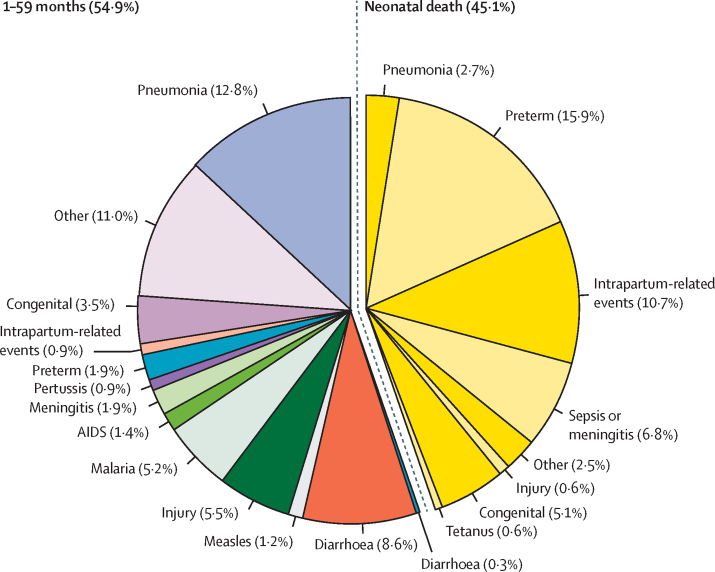
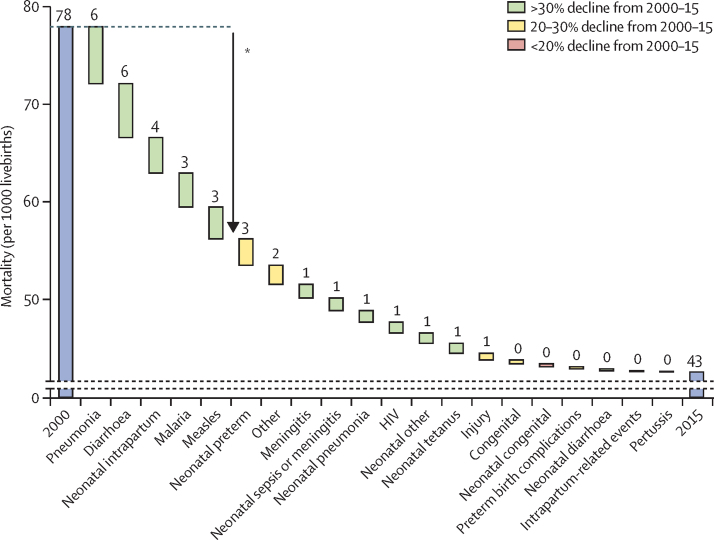
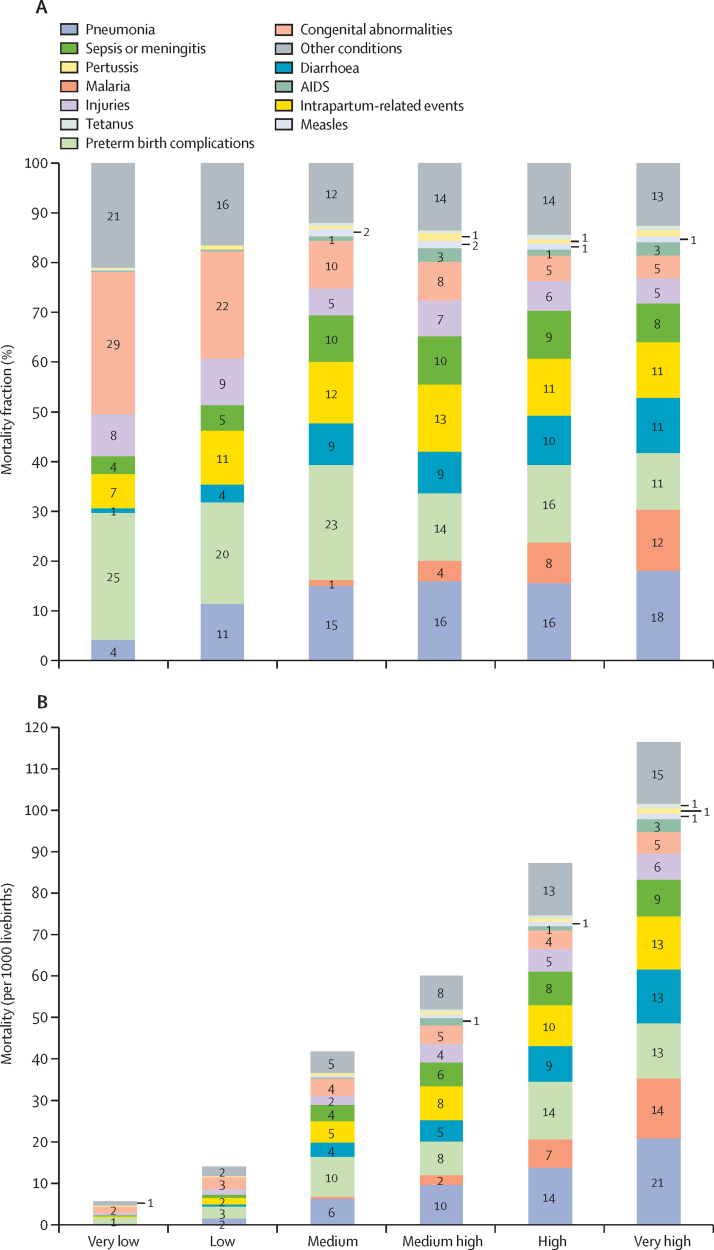
BACKGROUND: Despite remarkable progress in the improvement of child survival between 1990 and 2015, the Millennium Development Goal (MDG) 4 target of a two-thirds reduction of under-5 mortality rate (U5MR) was not achieved globally. In this paper, we updated our annual estimates of child mortality by cause to 2000-15 to reflect on progress toward the MDG 4 and consider implications for the Sustainable Development Goals (SDG) target for child survival. METHODS: We increased the estimation input data for causes of deaths by 43% among neonates and 23% among 1-59-month-olds, respectively. We used adequate vital registration (VR) data where available, and modelled cause-specific mortality fractions applying multinomial logistic regressions using adequate VR for low U5MR countries and verbal autopsy data for high U5MR countries. We updated the estimation to use Plasmodium falciparum parasite rate in place of malaria index in the modelling of malaria deaths; to use adjusted empirical estimates instead of modelled estimates for China; and to consider the effects of pneumococcal conjugate vaccine and rotavirus vaccine in the estimation. FINDINGS: In 2015, among the 5·9 million under-5 deaths, 2·7 million occurred in the neonatal period. The leading under-5 causes were preterm birth complications (1·055 million [95% uncertainty range (UR) 0·935-1·179]), pneumonia (0·921 million [0·812 -1·117]), and intrapartum-related events (0·691 million [0·598 -0·778]). In the two MDG regions with the most under-5 deaths, the leading cause was pneumonia in sub-Saharan Africa and preterm birth complications in southern Asia. Reductions in mortality rates for pneumonia, diarrhoea, neonatal intrapartum-related events, malaria, and measles were responsible for 61% of the total reduction of 35 per 1000 livebirths in U5MR in 2000-15. Stratified by U5MR, pneumonia was the leading cause in countries with very high U5MR. Preterm birth complications and pneumonia were both important in high, medium high, and medium child mortality countries; whereas congenital abnormalities was the most important cause in countries with low and very low U5MR. INTERPRETATION: In the SDG era, countries are advised to prioritise child survival policy and programmes based on their child cause-of-death composition. Continued and enhanced efforts to scale up proven life-saving interventions are needed to achieve the SDG child survival target. FUNDING: Bill & Melinda Gates Foundation, WHO.
Overview
The claims and statistics of this paper haven’t been checked yet.
Free: it reads the open-access text and checks the first 5 claims that cite a source we can check. Create a free account to check every claim.
Integrity signals
Registry
Cites
Statistics
Figures
Verification
Claims the paper makes
The claims and statistics of this paper haven’t been checked yet.
Free: it reads the open-access text and checks the first 5 claims that cite a source we can check. Create a free account to check every claim.
Claims other papers make about this one
Each is checked against this paper’s own text: does it say what the citing paper says it does?
In the citing paper
“it is the leading cause of neonatal mortality (18–20).”
In the citing paper
“Inadequate sanitation services and polluted water supplies are known to be leading drivers of diarrhoeal disease, and globally, diarrhoea represents the second highest cause of mortality among children under the age”
From A planetary health model for reducing exposure to faecal contamination in urban informal settlements: Baseline findings from Makassar, Indonesia. (2021) · cites this paper as Liu et al., 2016
Self-check
Percentages, sums and reported differences re-computed from the paper’s own numbers.
The self-check needs the paper’s full text.
Citations
Cites
Transforming Our World: The 2030 Agenda for Sustainable Development
(2018) · A New Era in Global Health · doi:10.1891/9780826190123.ap02 · Cited by 19,351
Liu, L., Johnson, H. L., Cousens, S., Perin, J., Scott, S., Lawn, J. E., Rudan, I., Campbell, H., Cibulskis, R., Li, M., et al. (2012) · The Lancet · doi:10.1016/s0140-6736(12)60560-1 · Cited by 3,934
Self-citationThe effect of malaria control on Plasmodium falciparum in Africa between 2000 and 2015
Bhatt, S., Weiss, D. J., Cameron, E., Bisanzio, D., Mappin, B., Dalrymple, U., Battle, K. E., Moyes, C. L., Henry, A., Eckhoff, P. A., et al. (2015) · Nature · doi:10.1038/nature15535 · Cited by 3,225
Liu, L., Oza, S., Hogan, D., Perin, J., Rudan, I., Lawn, J. E., Cousens, S., Mathers, C., & Black, R. E. (2015) · The Lancet · doi:10.1016/s0140-6736(14)61698-6 · Cited by 3,167
Self-citationAn Analytical Framework for the Study of Child Survival in Developing Countries
Mosley, W. H., & Chen, L. C. (1984) · Population and Development Review · doi:10.2307/2807954 · Cited by 1,471
Rajaratnam, J. K., Marcus, J. R., Flaxman, A. D., Wang, H., Levin-Rector, A., Dwyer, L., Costa, M., Lopez, A. D., & Murray, C. J. (2010) · The Lancet · doi:10.1016/s0140-6736(10)60703-9 · Cited by 898
You, D., Hug, L., Ejdemyr, S., Idele, P., Hogan, D., Mathers, C., Gerland, P., New, J. R., & Alkema, L. (2015) · The Lancet · doi:10.1016/s0140-6736(15)00120-8 · Cited by 830
Self-citationBhutta, Z. A., Das, J. K., Walker, N., Rizvi, A., Campbell, H., Rudan, I., & Black, R. E. (2013) · The Lancet · doi:10.1016/s0140-6736(13)60648-0 · Cited by 675
Self-citationAn analytical framework for the study of child survival in developing countries. 1984.
Mosley, W. H., & Chen, L.-C. (2003) · Europe PMC (PubMed Central) · Cited by 596
You, D., Hug, L., Ejdemyr, S., & Beise, J. (2015) · Cited by 563
Research works printed but not linked: 4
- United Nations Department of Economic and Social Affairs Population Division World Population Prospects: The 2015 Revision, DVD Edition 2015 United Nations New York
- WHO WHO recommendations on interventions to improve preterm birth outcomes 2015 World Health Organization Geneva http://apps.who.int/iris/bitstream/10665/183037/1/9789241508988_eng.pdf (accessed March 9, 2016). 26447264
- WHO Guideline: managing possible serious bacterial infection in young infants when referral is not feasible 2015 World Health Organization Geneva http://apps.who.int/iris/bitstream/10665/181426/1/9789241509268_eng.pdf (accessed March 9, 2016). 26447263
- The Bill & Melinda Gates Foundation The Bill & Melinda Gates Foundation to fund disease surveillance network in Africa and Asia to prevent childhood mortality and help prepare for the next epidemic. Seattle, USA http://www.gatesfoundation.org/Media-Center/Press-Releases/2015/05/Child-Health-and-Mortality-Prevention-Surveillance-Network 2015 (accessed Sept 30, 2015).
Cited by
Items 801–900 of 1,006
Wang, Y., Wang, W., Wang, L., Bao, Y., Lu, J., Lu, Y. C., Zhang, C., Li, W., Sun, K., & Ying, H. (2018) · American Journal of Reproductive Immunology · doi:10.1111/aji.13073 · Cited by 21
Paediatric deaths in a tertiary government hospital setting, Malawi
Harris, C. A., Mills, R., Seager, E., Blackstock, S. J., Hiwa, T., Pumphrey, J., Langton, J., & Kennedy, N. (2018) · Paediatrics and International Child Health · doi:10.1080/20469047.2018.1536873 · Cited by 21
Sonko, M. A., Dube, F. S., Okoi, C., Diop, A., Thiongane, A., Senghore, M., Ndow, P. S., Worwui, A. K., Faye, P. M., Dieye, B., et al. (2019) · Clinical Infectious Diseases · doi:10.1093/cid/ciz517 · Cited by 25
“The third United Nations Sustainable Development Goals is to ensure healthy lives and promote well-being for all at all ages and targets to reduce under-5 mortality to fewer than 25 per 1000 live births by 2030 [3].”
Mboya, I. B., Mahande, M. J., Obure, J., & Mwambi, H. G. (2020) · PLoS ONE · doi:10.1371/journal.pone.0231636 · Cited by 25
“This may be linked to early pulmonary maturation among females that lowers the risk of respiratory complications[51], one of the leading causes of under-five deaths in low-income countries[13].”
BackgroundXiao, Q., Wen, S., Zhang, X., Xue, L., Zhang, Z., Tan, Y., Du, R., Zhu, Z., Zhu, Y., Wang, T., et al. (2020) · Brain Research Bulletin · doi:10.1016/j.brainresbull.2020.06.011 · Cited by 21
Molecular epidemiology of astrovirus in children with gastroenteritis in southwestern Nigeria
Arowolo, K. O., Ayolabi, C. I., Adeleye, I., Lapinski, B., Santos, J. S., & Raboni, S. M. (2020) · Archives of Virology · doi:10.1007/s00705-020-04741-0 · Cited by 22
Alemayehu, A., Alemayehu, M. A., Arba, A., Abebe, H., Goa, A., Paulos, K., & Obsa, M. S. (2020) · International Journal of Pediatrics · doi:10.1155/2020/3709672 · Cited by 21
“This is based on an expert pediatrician’s or physician’s decision including other symptoms and signs such as bradycardia, tachycardia, irritability, oxygen requirement, and increased frequency of apnea [15].”
MethodFenta, S. M., Biresaw, H. B., & Fentaw, K. D. (2021) · Tropical Medicine and Health · doi:10.1186/s41182-021-00303-5 · Cited by 23
“Most neonatal death results from preterm birth, intrapartum-related complications (birth asphyxia or lack of breathing at birth), infections, and birth defects [4, 5].”
BackgroundMoore, D. P., Baillie, V. L., Mudau, A., Wadula, J., Adams, T., Mangera, S., Verwey, C., Prosperi, C., Higdon, M. M., Haddix, M., et al. (2021) · The Pediatric Infectious Disease Journal · doi:10.1097/inf.0000000000002650 · Cited by 25
Early determination of prognosis in neonatal moderate or severe hypoxic-ischemic encephalopathy
Ambalavanan, N., Shankaran, S., Laptook, A. R., Carper, B. A., Das, A., Carlo, W. A., Cotten, C. M., Duncan, A. F., & Higgins, R. D. (2021) · PEDIATRICS · doi:10.1542/peds.2020-048678 · Cited by 20
Shiroya-Wandabwa, M., Kabue, M., Kasungami, D., Wambua, J. M., Otieno, D., Waka, C., Ngindu, A. M., Ayuyo, C., Kigondu, S., Oliech, J., et al. (2018) · International Journal of Integrated Care · doi:10.5334/ijic.3971 · Cited by 20
“In Kenya, as in most countries in sub-Saharan Africa, the primary causes of preventable death in children after the newborn period are diarrhoea, malaria, and pneumonia, with malnutrition as an underlying cause of all three [1].”
BackgroundEsona, M. D., Gautam, R., Katz, E. M., Jaime, J., Ward, M. L., Wikswo, M. E., Betrapally, N. S., Mijatovic-Rustempasic, S., Selvarangan, R., Harrison, C. J., et al. (2021) · Virus Evolution · doi:10.1093/ve/veab023 · Cited by 20
Non-invasive devices for respiratory sound monitoring
Troncoso-García, A. R., Ortega, J. A., Seepold, R., & Madrid, N. M. (2021) · Procedia Computer Science · doi:10.1016/j.procs.2021.09.076 · Cited by 20
“More children under five years are dying because of acute lower respiratory infections (ALRI) than from malaria, VHI, and tuberculosis [2].”
Amon-Tanoh, M. A., McCambridge, J., Blon, P. K., Kouamé, H. A., Nguipdop‐Djomo, P., Biran, A., & Cousens, S. (2021) · The Lancet Global Health · doi:10.1016/s2214-109x(21)00387-9 · Cited by 27
Self-citationManagement of Placental Transfusion to Neonates After Delivery
McAdams, R. M., & Lakshminrusimha, S. (2021) · Obstetrics and Gynecology · doi:10.1097/aog.0000000000004625 · Cited by 24
Designing a mobile health intervention for preterm home care: Application of conceptual framework
Phagdol, T., Nayak, B. S., Lewis, L., Margaret, B. E., & George, A. (2021) · Public Health Nursing · doi:10.1111/phn.13020 · Cited by 20
“Globally,prematurityistheleading causeofdeathinchildrenunder5yearsofage,responsiblefor approximately one million deaths in 2015 (Liu et al., 2016).”
Sebastian, E., Bykersma, C., Eggleston, A. J., Eddy, K. E., Chim, S. T., Zahroh, R. I., Scott, N., Chou, D., Oladapo, O. T., & Vogel, J. P. (2022) · EClinicalMedicine · doi:10.1016/j.eclinm.2022.101496 · Cited by 29
Tran, H., Nguyen, Y. T. B., Tran, T. T., Le, T. T. T., Thu, H. N. T., Nguyen, C. M., Le, H. T. B., Phan, T. T. N., Vo, T. T. T., Bui, H. T. N., et al. (2022) · Medicine · doi:10.1097/md.0000000000030458 · Cited by 25
“[1,2] To reduce mortality and aid physicians in diagnosing and prescribing the most effective antibiotics for patients, hospitals and medical centers have implemented a variety of innovative medical testing technologies and updated treatment guidelines.”
BackgroundKhan, M. N., Trisha, N. I., & Rashid, M. M. (2022) · Journal of Global Health · doi:10.7189/jogh.12.04081 · Cited by 26
Siffel, C., Hirst, A. K., Sarda, S. P., Chen, H., Ferber, J. R., Kuzniewicz, M. W., & Li, D. (2022) · The Journal of Maternal-Fetal & Neonatal Medicine · doi:10.1080/14767058.2022.2122035 · Cited by 25
Agudelo‐Pérez, S., Serrano, A. C., Celis, P. Á., & Oliveros, H. (2022) · Medicina · doi:10.3390/medicina58111567 · Cited by 30
“During labor and birth, the highest mortality rate is concentrated at 73% of deaths in this period [3,4], mainly due to perinatal asphyxia [5].”
BackgroundVadla, M. S., Moshiro, R., Mdoe, P. F., Eilevstjønn, J., Kvaløy, J. T., Hhoki, B. H., & Ersdal, H. L. (2022) · Advances in Simulation · doi:10.1186/s41077-022-00234-z · Cited by 25
“5 million fresh stillbirths (FSB) and early newborn deaths occur due to intrapartum-related events [1, 2].”
BackgroundNoninvasive electromyometrial imaging of human uterine maturation during term labor
Wang, H., Wen, Z., Wu, W., Sun, Z., Kisrieva-Ware, Z., Lin, Y., Wang, S., Gao, H., Xu, H., Zhao, P., et al. (2023) · Nature Communications · doi:10.1038/s41467-023-36440-0 · Cited by 21
Zhu, Y., Zhang, Y., Jin, Y., Jin, H., Huang, K., Tong, J., Gan, H., Rui, C., Lv, J., Wang, X., et al. (2023) · BMC Medicine · doi:10.1186/s12916-023-03023-1 · Cited by 29
“Extremely preterm birth and very preterm birth have attracted much attention due to high mortality and morbidity [2–5].”
BackgroundDiagnosis and detection of pneumonia using weak-label based on X-ray images: a multi-center study
Guo, K., Cheng, J., Li, K., Wang, L., Lv, Y., & Cao, D. (2023) · BMC Medical Imaging · doi:10.1186/s12880-023-01174-4 · Cited by 27
“It accounts for more than 15% of deaths in children under 5-year [1, 2].”
BackgroundEliminating maternal and neonatal tetanus and closing the immunity gap
Burgess, C., Gasse, F. L., Steinglass, R., Yakubu, A., Raza, A. A., & Johansen, K. (2017) · The Lancet · doi:10.1016/s0140-6736(17)30635-9 · Cited by 20
Community-based approaches for neonatal survival: meta-analyses of randomized trial data
Hanson, C., Kujala, S., Waiswa, P., Marchant, T., & Schellenberg, J. (2017) · Bulletin of the World Health Organization · doi:10.2471/blt.16.175844 · Cited by 24
Vail, B., Spindler, H. H., Morgan, M. C., Cohen, S. R., Christmas, A., Sah, P., Shah, M. B., Das, A., & Walker, D. M. (2017) · BMC Pregnancy and Childbirth · doi:10.1186/s12884-017-1434-1 · Cited by 21
Etiology of Childhood Pneumonia: What We Know, and What We Need to Know!
Mathew, J. L. (2017) · The Indian Journal of Pediatrics · doi:10.1007/s12098-017-2486-y · Cited by 22
Willows, T. M., Moono, M., Mwendafilumba, M., Manasyan, A., & Sharma, A. (2018) · BMC Pregnancy and Childbirth · doi:10.1186/s12884-018-1837-7 · Cited by 27
Clinical management of community-acquired pneumonia in young children
Nascimento‐Carvalho, A. C., & Nascimento-Carvalho, C. M. (2018) · Expert Opinion on Pharmacotherapy · doi:10.1080/14656566.2018.1552257 · Cited by 24
Steinbach, J. C., Goedicke‐Fritz, S., Tutdibi, E., Stutz, R., Kaiser, E., Meyer, S., Baumbach, J., & Zemlin, M. (2019) · Frontiers in Pediatrics · doi:10.3389/fped.2019.00248 · Cited by 20
Nanyonjo, A., Counihan, H., Siduda, S. G., Belay, K., Sebikaari, G., & Tibenderana, J. (2019) · Global Health Action · doi:10.1080/16549716.2019.1678283 · Cited by 22
Azupogo, F., Abdul-Rahaman, F., Gyanteh, B., & Atosona, A. (2019) · Advances in Public Health · doi:10.1155/2019/4313759 · Cited by 28
Shittu, F., Agwai, I. C., Falade, A. G., Bakare, A. A., Graham, H., Iuliano, A., Aranda, Z., McCollum, E. D., Isah, A., Bahiru, S., et al. (2020) · Pediatric Pulmonology · doi:10.1002/ppul.24660 · Cited by 20
Monsivais, L. A., Sheller‐Miller, S., Russell, W. K., Saade, G. R., Dixon, C. L., Urrabaz‐Garza, R., & Menon, R. (2020) · American Journal of Reproductive Immunology · doi:10.1111/aji.13282 · Cited by 23
Alwadhi, V., Sarin, E., Kumar, P., Saboth, P., Khera, A. K., Gupta, S., & Kumar, H. (2020) · Pneumonia · doi:10.1186/s41479-020-00067-2 · Cited by 20
Enablers and barriers of maternal and neonatal immunization programs in Latin America
Álvarez, A., Vilajeliu, A., Magariños, M., Jaúregui, B., Barrera, L. S. G., Whittembury, Á., Cain, E., Garcia, O., Montesanos, R., & Matus, C. R. (2020) · Vaccine · doi:10.1016/j.vaccine.2020.07.051 · Cited by 24
RSV Lower Respiratory Tract Illness in Infants of Low- and Middle-income Countries
Laudanno, S., Yanotti, C. S., & Polack, F. P. (2020) · Acta Medica Academica · doi:10.5644/ama2006-124.297 · Cited by 20
Koffi, A. K., Kalter, H. D., Kamwe, M. A., & Black, R. E. (2020) · Journal of Global Health · doi:10.7189/jogh.10.020901 · Cited by 24
Self-citationPhung, J., Wang, C. A., Reeders, J., Chan, E., Riveros, C., Zakár, T., Paúl, J., Pennell, C. E., & Smith, R. (2021) · American Journal of Obstetrics and Gynecology · doi:10.1016/j.ajog.2021.07.002 · Cited by 23
Thysen, S. M., Fisker, A. B., Byberg, S., Aaby, P., Roy, P., White, R. G., Griffiths, U. K., & Harris, R. C. (2021) · BMJ Global Health · doi:10.1136/bmjgh-2021-006127 · Cited by 21
Howie, S. R. C., Ebruke, B. E., McLellan, J. L., Knoll, M. D., Dione, M. M., Feikin, D. R., Haddix, M., Hammitt, L. L., Machuka, E., Murdoch, D. R., et al. (2021) · The Pediatric Infectious Disease Journal · doi:10.1097/inf.0000000000002766 · Cited by 22
Wu, J., Wang, X., Zhou, M., Chen, G., Du, J., Wang, Y., & Ye, C. (2021) · BMC Pediatrics · doi:10.1186/s12887-021-03018-y · Cited by 32
Vadla, M. S., Mdoe, P. F., Moshiro, R., Haug, I. A., Gomo, Ø., Kvaløy, J. T., Oftedal, B. F., & Ersdal, H. L. (2022) · Children · doi:10.3390/children9020134 · Cited by 25
“7 million of these deaths occurring during the neonatal period [1].”
BackgroundGutiérrez-Tobar, I. F., Londoño-Ruiz, J. P., Mariño, C., Beltrán-Higuera, S. J., Camacho‐Moreno, G., Leal‐Castro, A. L., Patiño-Niño, J. A., Alvarez-Olmos, M. I., Barrero, R., Espinosa, F., et al. (2022) · Vaccine · doi:10.1016/j.vaccine.2022.03.022 · Cited by 20
(2017) · Nature Reviews Disease Primers · doi:10.1038/nrdp.2017.68 · Cited by 20
Maternal serum vitamin D levels and preterm delivery among low‐risk parturients in Lagos, Nigeria
Oluwole, A. A., Okunade, K. S., & Okojie, O. E. (2018) · International Journal of Gynecology & Obstetrics · doi:10.1002/ijgo.12719 · Cited by 26
Beyond wearables and implantables: a scoping review of insertable medical devices
Barbone, A. S., Meftah, M., Markiewicz, K., & Dellimore, K. H. J. (2019) · Biomedical Physics & Engineering Express · doi:10.1088/2057-1976/ab4b32 · Cited by 24
Determinants of lung health across the life course in sub-Saharan Africa
Rylance, S. J., Masekela, R., Banda, N. P. K., & Mortimer, K. J. (2020) · The International Journal of Tuberculosis and Lung Disease · doi:10.5588/ijtld.20.0083 · Cited by 26
Valenciano, S. J., Moiane, B., Lessa, F. C., Chaúque, A., Massora, S., Pimenta, F. C., Mucavele, H., Verani, J. R., Carvalho, M. D. G., Whitney, C. G., et al. (2020) · Journal of the Pediatric Infectious Diseases Society · doi:10.1093/jpids/piaa132 · Cited by 38
Namazzi, G., Achola, K. A., Jenny, A. M., Santos, N., Butrick, E. A., Otieno, P. A., Waiswa, P., & Walker, D. M. (2021) · Implementation Science Communications · doi:10.1186/s43058-021-00109-w · Cited by 21
Cebeci, B., Alderliesten, T., Wijnen, J. P., van der Aa, N. E., Benders, M. J. N. L., de Vries, L. S., van den Hoogen, A., & Groenendaal, F. (2021) · Pediatric Research · doi:10.1038/s41390-021-01539-x · Cited by 22
Sun, Y., Zheng, X., Zhang, H., Zhou, X., Lin, X.-Z., Zheng, Z., Zhang, J., Su, Y., & Zhou, Y. (2021) · Infectious Diseases and Therapy · doi:10.1007/s40121-021-00472-0 · Cited by 19
“Pneumonia is the disease with the highest morbidity and mortality among children \ 5 years of age worldwide [1].”
Backgroundde Souza, D. C., Barreira, E. R., Shieh, H. H., Ventura, A. M. C., Bousso, A., Troster, E. J., & LAPSES, G. (2021) · Revista Brasileira de Terapia Intensiva · doi:10.5935/0103-507x.20210030 · Cited by 33
“(2-4) This problem is even more of a concern in low-middle income countries, where low vaccine coverage rates and poor sanitary conditions lead to a high frequency of infectious diseases.(9-11) Epidemiological data on pediatric sepsis in developing countries, however, are still scarce and incomplete.”
BackgroundA multicenter study of incidence, risk factors and outcomes of babies with birth asphyxia in Nepal
Sunny, A. K., Paudel, P., Tiwari, J., Bagale, B. B., Kukka, A. J., Hong, Z., Ewald, U., Berkelhamer, S. K., & Ashish, K. C. (2021) · BMC Pediatrics · doi:10.1186/s12887-021-02858-y · Cited by 31
Rahman, A. E., Hossain, A. T., Chisti, M. J., Dockrell, D. H., Nair, H., Arifeen, S. E., & Campbell, H. J. (2021) · Journal of Global Health · doi:10.7189/jogh.11.04053 · Cited by 27
Corden, E., Siddiqui, S. H., Sharma, Y. P., Raghib, M. F., Adorno, W., Zulqarnain, F., Ehsan, L., Shrivastava, A., Ahmed, S., Umrani, F. A., et al. (2021) · International Journal of Environmental Research and Public Health · doi:10.3390/ijerph182111691 · Cited by 22
Preterm neonatal mortality in China during 2009–2018: A retrospective study
Yu, X., He, C., Wang, Y., Kang, L., Miao, L., Chen, J., Zhao, Q., Huang, X., Zhu, J., Liang, J., et al. (2021) · PLoS ONE · doi:10.1371/journal.pone.0260611 · Cited by 26
“2 and for reducing pretermrelated neonatal and child mortality [11, 15] China represents a unique example of success in achieving the MDG 4 target of reducing the under-5 mortality rate by two-thirds between 1990 and 2015 and is also one of approximately only a dozen countries that achieved a faster decline in mortali…”
BackgroundSelf-citationWang, H., Huang, J., Jin, X., Chen, C., Zhang, A., Wu, Y., & Chen, C. (2022) · Disease Markers · doi:10.1155/2022/3893653 · Cited by 19
“6 million children who die at ages younger than 5 years, 64% die of sepsis or septic shock caused by severe infection [1, 2].”
BackgroundChan, G. J., Goddard, F. G. B., Hunegnaw, B. M., Mohammed, Y., Hunegnaw, M., Haneuse, S., Bekele, C., & Bekele, D. (2022) · JAMA Network Open · doi:10.1001/jamanetworkopen.2022.18534 · Cited by 25
Rahman, A. E., Ameen, S., Hossain, A. T., Perkins, J. E., Jabeen, S., Majid, T., Uddin, A. F. M. A., Shaikh, M. Z. H., Islam, M. S., Islam, M. J., et al. (2022) · EClinicalMedicine · doi:10.1016/j.eclinm.2022.101511 · Cited by 21
Nelson, E. J., Khan, A. I., Keita, A. M., Brintz, B. J., Keïta, Y., Sanogo, D., Islam, M. T., Khan, Z. H., Rashid, M. M., Nasrin, D., et al. (2022) · Archives of Pediatrics and Adolescent Medicine · doi:10.1001/jamapediatrics.2022.2535 · Cited by 19
Tuti, T., Aluvaala, J., Chelangat, D., Mbevi, G., Wainaina, J., Mumelo, L., Wairoto, K., Mochache, D., Irimu, G., Maina, M., et al. (2022) · PLOS Global Public Health · doi:10.1371/journal.pgph.0000673 · Cited by 26
“These deaths are largely attributable to preterm birth, sepsis and intrapartum complications [2] and hospital admissions with these conditions are still associated with high morbidity in Low- and MiddleIncome Countries (LIMCs) like Kenya [3].”
BackgroundRohwedder, I., Wackerbarth, L. M., Heinig, K., Ballweg, A., Altstätter, J., Ripphahn, M., Nußbaum, C., Salvermoser, M., Bierschenk, S., Straub, T., et al. (2023) · JCI Insight · doi:10.1172/jci.insight.155968 · Cited by 21
Costantino, C., Conforto, A., Bonaccorso, N., Cimino, L., Sciortino, M., Palermo, M., Maiolo, K., Tina, L. G., Betta, P., Caracciolo, M., et al. (2023) · Vaccines · doi:10.3390/vaccines11040718 · Cited by 19
Shi, T., & Huang, L. (2023) · Epidemiology and Infection · doi:10.1017/s0950268823000626 · Cited by 19
Xu, C., Zhang, Q., Xue, Y., Chow, C., Dong, C., Xie, Q., & Cheung, P. (2023) · Frontiers in Pediatrics · doi:10.3389/fped.2023.1138633 · Cited by 24
Ali, M., Xu, C., Nawaz, S., Ahmed, A. E., Hina, Q., & Li, K. (2024) · Life · doi:10.3390/life14010080 · Cited by 30
Gravett, M. G., Menon, R., Tribe, R. M., Hezelgrave, N. L., Kacerovský, M., Soma‐Pillay, P., Jacobsson, B., & McElrath, T. F. (2024) · Frontiers in Medicine · doi:10.3389/fmed.2024.1414428 · Cited by 30
Diarrhoea management practices and child health outcomes in Nigeria: Sub-national analysis
Akinyemi, A. I., Fagbamigbe, A. F., Omoluabi, E., Agunbiade, O. M., & Adebayo, S. O. (2017) · Advances in Integrative Medicine · doi:10.1016/j.aimed.2017.10.002 · Cited by 21
Destyana, R. M., Angkasa, D., & Nuzrina, R. (2018) · Indonesian Journal of Human Nutrition · doi:10.21776/ub.ijhn.2018.005.01.5 · Cited by 19
Kim, Y., Song, M., Lee, J., Seung, H.-J., Kwon, E.-Y., Yu, J. K., Hwang, Y.-O., Yoon, T., Park, T. J., & Lim, I. K. (2018) · Gut Pathogens · doi:10.1186/s13099-018-0263-8 · Cited by 19
Lam, F., Wentworth, L., Cherutich, P., Migiro, S., Abdala, K., Musyoka, M., Ogolla, S. A., Obudho, M., Mwangi, Z., Kihoto, R., et al. (2019) · Journal of Global Health · doi:10.7189/jogh.09.010505 · Cited by 19
Successful treatment of intraamniotic infection/inflammation: a paradigm shift
Gravett, M. G. (2019) · American Journal of Obstetrics and Gynecology · doi:10.1016/j.ajog.2019.05.020 · Cited by 20
Kebede, T. T., Svensson, M., Addissie, A., Trollfors, B., & Andersson, R. (2019) · BMC Public Health · doi:10.1186/s12889-019-7423-8 · Cited by 19
Verhagen, L. M., Rivera-Olivero, I. A., Clerc, M., Chu, M. L. J. N., Gastelaars, J. V. E., Kristensen, M., Berbers, G. A. M., Hermans, P. W. M., de Jonge, M. I., de Waard, J. H., et al. (2020) · Clinical Infectious Diseases · doi:10.1093/cid/ciaa015 · Cited by 22
“Despite progress in the reduction of global childhood mortality over the past 2 decades, respiratory tract infections (RTIs) and gastrointestinal infections (GIIs) remain the leading causes of death in children aged <5 years worldwide, particularly in regions marked by socioeconomic inequality, poor sanitation, inadeq…”
BackgroundNyangabyaki, C., Mworozi, E. A., Namisi, C. P., Nakibuuka, V., Kayiwa, J., Sebunya, R. K., & Mukose, A. D. (2020) · African Health Sciences · doi:10.4314/ahs.v20i1.46 · Cited by 19
Neurodevelopmental outcomes of a randomised trial of intact cord resuscitation
Isacson, M., Gurung, R., Basnet, O., Andersson, O., & Ashish, K. C. (2020) · Acta Paediatrica · doi:10.1111/apa.15401 · Cited by 26
Ickes, S., Oddo, V., Sanders, H., Nduati, R., Denno, D. M., Myhre, J. A., Kinyua, J., Iannotti, L. L., Singa, B. O., Farquhar, C., et al. (2020) · American Journal of Clinical Nutrition · doi:10.1093/ajcn/nqaa351 · Cited by 27
Muhumed, I., Kebira, J. Y., & Mabalhin, M. O. (2021) · Research and Reports in Neonatology · doi:10.2147/rrn.s295820 · Cited by 19
Tocolytics for delaying preterm birth: a network meta-analysis
Wilson, A., Morton, V. H., Marson, E. J., Markland, A. D., Larkai, E., Papadopoulou, A., Coomarasamy, A., Tobías, A., Chou, D., Oladapo, O. T., et al. (2021) · Cochrane Database of Systematic Reviews · doi:10.1002/14651858.cd014978 · Cited by 19
Islam, M. A., & Biswas, B. (2021) · Clinical Epidemiology and Global Health · doi:10.1016/j.cegh.2021.100801 · Cited by 29
Automation of oxygen titration in preterm infants: Current evidence and future challenges
Dargaville, P. A., Marshall, A. P., McLeod, L., Salverda, H. H., Pas, A. B. T., & Gale, T. J. (2021) · Early Human Development · doi:10.1016/j.earlhumdev.2021.105462 · Cited by 18
Rhedin, S., Elfving, K., & Berggren, A. (2021) · Children · doi:10.3390/children8111070 · Cited by 27
“Acute infections represent a major cause of morbidity and mortality in children around the world, predominately in small children living in low- and middle-income countries [1].”
BackgroundSexton, H., Kumarendran, M., Brandon, Z., Shi, C., Kirtley, S., & Hemelaar, J. (2022) · HIV Medicine · doi:10.1111/hiv.13326 · Cited by 26
How to Save 1 Million Lives in a Year in Low- and Middle-Income Countries
Travers, C. P., & Carlo, W. A. (2017) · Neonatology · doi:10.1159/000460512 · Cited by 19
Who's the Target: Mother or Baby?
Kachikis, A. B., Eckert, L. O., & Englund, J. A. (2018) · Viral Immunology · doi:10.1089/vim.2017.0135 · Cited by 23
“Diseasessuch aspneumonia,diarrhea,andmeaslesarelargecontributorsto under-fivemortality(62).”
Pneumococcal Conjugate Vaccine impact assessment in Bangladesh
Baqui, A. H., McCollum, E. D., Saha, S. K., Roy, A. K., Chowdhury, N. H., Harrison, M., Hanif, A. A. M., Simmons, N., Mahmud, A., Begum, N., et al. (2018) · Gates Open Research · doi:10.12688/gatesopenres.12805.1 · Cited by 18
Mortality Predictive Scores for Community-Acquired Pneumonia in Children
Arbo, A., Lovera, D., & de Cuéllar, C. M. (2019) · Current Infectious Disease Reports · doi:10.1007/s11908-019-0666-9 · Cited by 24
Lokken, E. M., Mandaliya, K. N., Srinivasan, S., Richardson, B. A., Kinuthia, J., Lannon, S., Jaoko, W. G., Alumera, H., Kemoli, A., Fay, E., et al. (2020) · BMJ Open · doi:10.1136/bmjopen-2019-035186 · Cited by 18
Diarrhea deaths in children among countries with different levels of the human development index
Riahi, M., Mohammadi, A. A., Moghadam, V. K., Robati, Z., & Bidkhori, M. (2018) · Data in Brief · doi:10.1016/j.dib.2018.02.019 · Cited by 19
Asiedu, A., Nelson, A. R., Gomez, P. P., Tappis, H., Effah, F., & Allen, C. (2019) · Gates Open Research · doi:10.12688/gatesopenres.12936.1 · Cited by 17
Alconada, D. A., Alvarez, F. J., Goñi‐de‐Cerio, F., Hilario, E., & Alvarez, A. A. (2020) · International Journal of Molecular Sciences · doi:10.3390/ijms21041283 · Cited by 19
“[1] brought to light that 45% of the approximately 6 million deaths occurred in the neonatal period.”
BackgroundNgabonzima, A., Kenyon, C. F., Hategeka, C., Utuza, A. J., Banguti, P., Luginaah, I., & Cechetto, D. F. (2020) · BMC Health Services Research · doi:10.1186/s12913-020-05789-z · Cited by 25
Bhoola, P., & Biggs, C. (2020) · Journal of Human Lactation · doi:10.1177/0890334420982915 · Cited by 18
“7 million deaths occur in the neonatal period (Liu et al., 2016).”
BackgroundInfluentialSantorino, D., Dubé, M. M., Bajunirwe, F., Kyakwera, C., Robinson, T., Najjuma, J. N., Cherop, M., Abesiga, L., Namata, T., Brenner, J. L., et al. (2020) · Simulation in Healthcare The Journal of the Society for Simulation in Healthcare · doi:10.1097/sih.0000000000000531 · Cited by 21
“Curriculum deaths per 100,000)(5) and where the highest burden of deaths under the age of 5 years occurs in the neonatal period.(6) These deaths are often from preventable causes such as hemorrhage, sepsis, intrapartum hypoxic events, and preterm complications.”
BackgroundAllwell-Brown, G., Hussain‐Alkhateeb, L., Sewe, M. O., Kitutu, F. E., Strömdahl, S. K., Mårtensson, A., & Johansson, E. W. (2021) · International Journal of Infectious Diseases · doi:10.1016/j.ijid.2021.05.058 · Cited by 24
Cumulative Damage: Cell Death in Posthemorrhagic Hydrocephalus of Prematurity
Sevensky, R., Newville, J., Tang, H. L., Robinson, S., & Jantzie, L. L. (2021) · Cells · doi:10.3390/cells10081911 · Cited by 23
Tandon, P., Diong, C. C., Chong, R. Y., & Nguyen, G. C. (2021) · Canadian Journal of Gastroenterology and Hepatology · doi:10.1155/2021/3037128 · Cited by 19
“&ese adverse outcomes may significantly increase the risk of infant mortality or lead to long-term childhood sequelae such as neurodevelopmental disorders [5].”
Metadata
- Authors
- Liu, L., Oza, S., Hogan, D., Chu, Y., Perin, J., Zhu, J., Lawn, J. E., Cousens, S., Mathers, C., & Black, R. E.
- Affiliations
- Johns Hopkins University (US)
- London School of Hygiene & Tropical Medicine (GB)
- Sichuan University (CN)
- World Health Organization (CH)
- Corresponding author
- Liu, Li
- Venue
- The Lancet
- Publisher
- Elsevier BV
- Published
- 2016-12
- Volume
- 388
- Issue
- 10063
- Pages
- 3027-3035
- ISSN
- 0099-5355 (ISSN-L)
- 0140-6736
- PMC
- PMC5161777
- OpenAlex
- W2549697535
- Semantic Scholar
- 121b2079d6548c8a5f02456e266dc6dcedfdd15d
- Cited by
- 3,453
- References
- 36
- Citations by year
- 2026: 151 · 2025: 268 · 2024: 326 · 2023: 461 · 2022: 486 · 2021: 548 · 2020: 491 · 2019: 350 · 2018: 263 · 2017: 95 · 2016: 9
- FWCI
- 278.12
- Type
- journal article
- Language
- en
- Open access
- hybrid
- doi.org
- Licence
- cc-by
- www.elsevier.com/tdm/userlicense/1.0/ (tdm)
- creativecommons.org/licenses/by/4.0/ (vor)
- Locations
- The Lancet (publishedVersion, cc-by)
- PubMed Central (publishedVersion, cc-by)
- PubMed (publishedVersion)
- LSHTM Research Online (London School of Hygiene and Tropical Medicine) (acceptedVersion)
- Funders
- Bill and Melinda Gates Foundation
- World Health Organization
- Topics
- Health Sciences › Medicine › Pediatrics, Perinatology and Child Health › Global Maternal and Child Health
- Health Sciences › Medicine › Pediatrics, Perinatology and Child Health › Maternal and Neonatal Healthcare
- Health Sciences › Nursing › Nutrition and Dietetics › Child Nutrition and Water Access
- Keywords
- under-five mortality, neonatal mortality, preterm birth complications, pneumonia, malaria, measles, diarrhea, congenital malformations, verbal autopsy, cause-specific mortality fractions, Millennium Development Goal 4, Sustainable Development Goal 3, child survival, pneumococcal conjugate vaccine, rotavirus vaccine
- MeSH terms
- Africa, Asia, Cause of Death, Child, Preschool, Communicable Diseases, Diarrhea, Goals, Humans, Infant, Infant, Newborn, Malaria, Plasmodium falciparum, Pneumonia, Global Health, Child Mortality
About these checks
Registry, retraction, Cites and statistics results are computed, not judged, with one exception: a printed reference that no index lists is read once by a model before it counts as a citation error. Claims are extracted by a model and kept only when their quote appears verbatim in the text; each cited source is then checked, with a model’s help, for whether it says what the claim relies on. Those verdicts can be wrong — read the claim’s quote and the cited source before relying on one.
Statistics and arithmetic are recomputed, not judged.
Confidence bands are shown only for fields calibrated on our annotated test set. None is calibrated yet, so no band is shown.
What counts as a claim ›How we measure confidence ›How we check this ›
Are you an author, or do you see a problem with this page? Request a review
Data sources
Bibliographic data: Semantic Scholar, OpenAlex, Crossref.
Contains information from the Semantic Scholar Academic Graph Datasets, made available under the ODC Attribution License (ODC-BY 1.0).
Semantic Scholar’s data is described in: Kinney, R., et al. (2023). The Semantic Scholar Open Data Platform. arXiv:2301.10140.
