

Global, regional, and national causes of under-5 mortality in 2000-15: an updated systematic analysis with implications for the Sustainable Development Goals
Open accessThe DOI matches its Crossref record; 35 of the 36 references it cites were found in a registry or an index.
Abstract
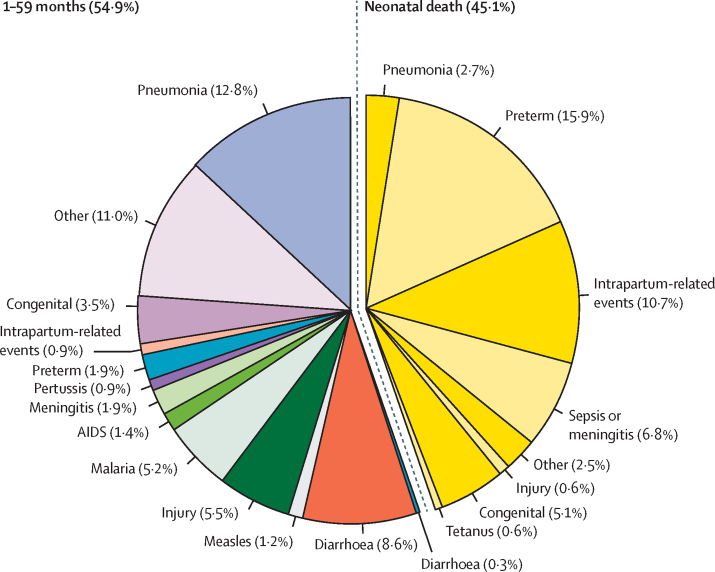
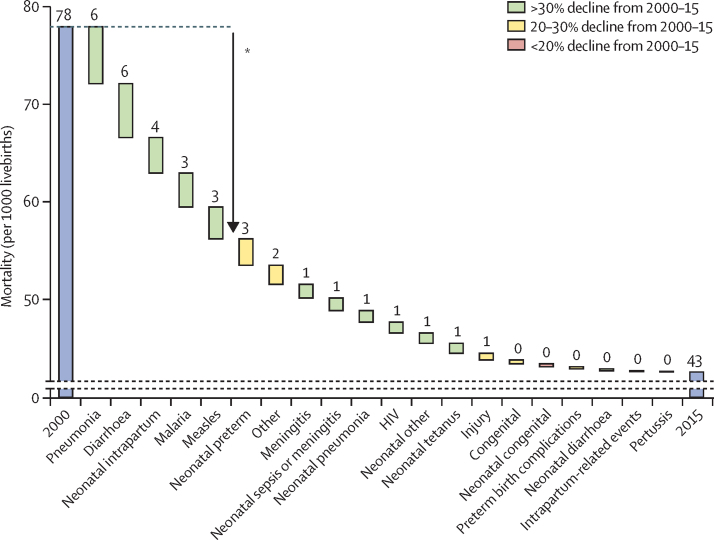
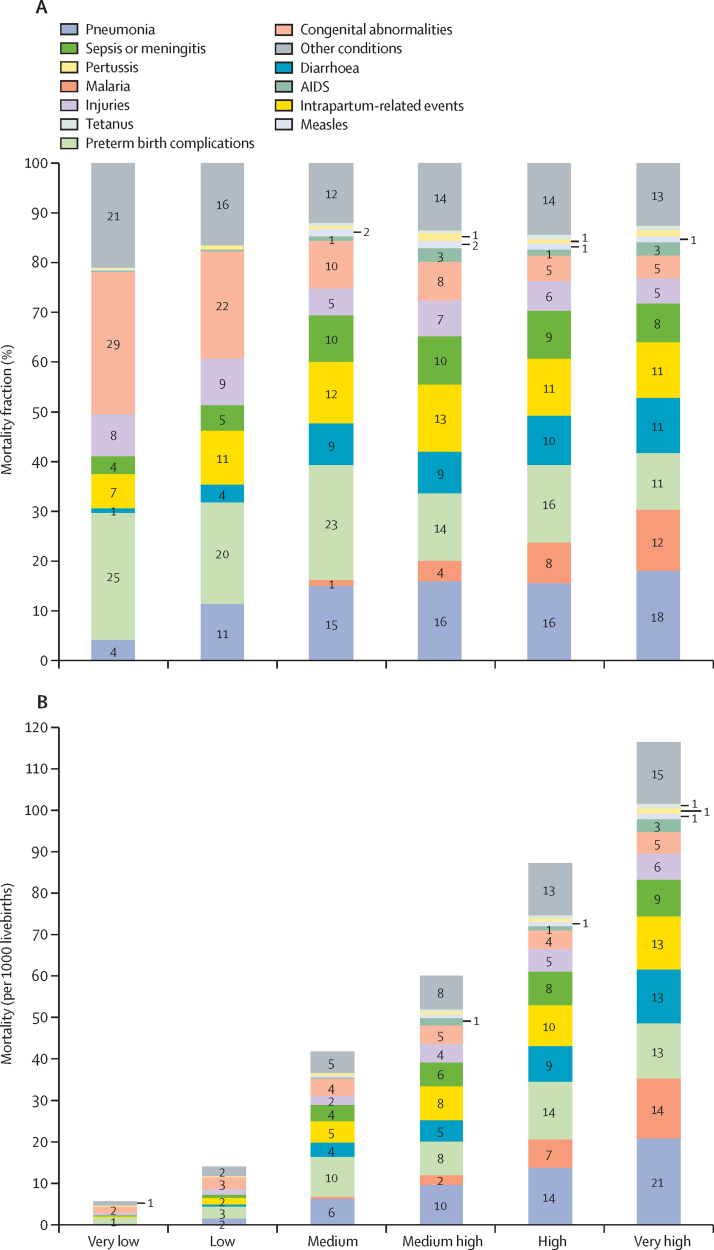
BACKGROUND: Despite remarkable progress in the improvement of child survival between 1990 and 2015, the Millennium Development Goal (MDG) 4 target of a two-thirds reduction of under-5 mortality rate (U5MR) was not achieved globally. In this paper, we updated our annual estimates of child mortality by cause to 2000-15 to reflect on progress toward the MDG 4 and consider implications for the Sustainable Development Goals (SDG) target for child survival. METHODS: We increased the estimation input data for causes of deaths by 43% among neonates and 23% among 1-59-month-olds, respectively. We used adequate vital registration (VR) data where available, and modelled cause-specific mortality fractions applying multinomial logistic regressions using adequate VR for low U5MR countries and verbal autopsy data for high U5MR countries. We updated the estimation to use Plasmodium falciparum parasite rate in place of malaria index in the modelling of malaria deaths; to use adjusted empirical estimates instead of modelled estimates for China; and to consider the effects of pneumococcal conjugate vaccine and rotavirus vaccine in the estimation. FINDINGS: In 2015, among the 5·9 million under-5 deaths, 2·7 million occurred in the neonatal period. The leading under-5 causes were preterm birth complications (1·055 million [95% uncertainty range (UR) 0·935-1·179]), pneumonia (0·921 million [0·812 -1·117]), and intrapartum-related events (0·691 million [0·598 -0·778]). In the two MDG regions with the most under-5 deaths, the leading cause was pneumonia in sub-Saharan Africa and preterm birth complications in southern Asia. Reductions in mortality rates for pneumonia, diarrhoea, neonatal intrapartum-related events, malaria, and measles were responsible for 61% of the total reduction of 35 per 1000 livebirths in U5MR in 2000-15. Stratified by U5MR, pneumonia was the leading cause in countries with very high U5MR. Preterm birth complications and pneumonia were both important in high, medium high, and medium child mortality countries; whereas congenital abnormalities was the most important cause in countries with low and very low U5MR. INTERPRETATION: In the SDG era, countries are advised to prioritise child survival policy and programmes based on their child cause-of-death composition. Continued and enhanced efforts to scale up proven life-saving interventions are needed to achieve the SDG child survival target. FUNDING: Bill & Melinda Gates Foundation, WHO.
Overview
The claims and statistics of this paper haven’t been checked yet.
Free: it reads the open-access text and checks the first 5 claims that cite a source we can check. Create a free account to check every claim.
Integrity signals
Registry
Cites
Statistics
Figures
Verification
Claims the paper makes
The claims and statistics of this paper haven’t been checked yet.
Free: it reads the open-access text and checks the first 5 claims that cite a source we can check. Create a free account to check every claim.
Claims other papers make about this one
Each is checked against this paper’s own text: does it say what the citing paper says it does?
In the citing paper
“it is the leading cause of neonatal mortality (18–20).”
In the citing paper
“Inadequate sanitation services and polluted water supplies are known to be leading drivers of diarrhoeal disease, and globally, diarrhoea represents the second highest cause of mortality among children under the age”
From A planetary health model for reducing exposure to faecal contamination in urban informal settlements: Baseline findings from Makassar, Indonesia. (2021) · cites this paper as Liu et al., 2016
Self-check
Percentages, sums and reported differences re-computed from the paper’s own numbers.
The self-check needs the paper’s full text.
Citations
Cites
Transforming Our World: The 2030 Agenda for Sustainable Development
(2018) · A New Era in Global Health · doi:10.1891/9780826190123.ap02 · Cited by 19,351
Liu, L., Johnson, H. L., Cousens, S., Perin, J., Scott, S., Lawn, J. E., Rudan, I., Campbell, H., Cibulskis, R., Li, M., et al. (2012) · The Lancet · doi:10.1016/s0140-6736(12)60560-1 · Cited by 3,934
Self-citationThe effect of malaria control on Plasmodium falciparum in Africa between 2000 and 2015
Bhatt, S., Weiss, D. J., Cameron, E., Bisanzio, D., Mappin, B., Dalrymple, U., Battle, K. E., Moyes, C. L., Henry, A., Eckhoff, P. A., et al. (2015) · Nature · doi:10.1038/nature15535 · Cited by 3,225
Liu, L., Oza, S., Hogan, D., Perin, J., Rudan, I., Lawn, J. E., Cousens, S., Mathers, C., & Black, R. E. (2015) · The Lancet · doi:10.1016/s0140-6736(14)61698-6 · Cited by 3,167
Self-citationAn Analytical Framework for the Study of Child Survival in Developing Countries
Mosley, W. H., & Chen, L. C. (1984) · Population and Development Review · doi:10.2307/2807954 · Cited by 1,471
Rajaratnam, J. K., Marcus, J. R., Flaxman, A. D., Wang, H., Levin-Rector, A., Dwyer, L., Costa, M., Lopez, A. D., & Murray, C. J. (2010) · The Lancet · doi:10.1016/s0140-6736(10)60703-9 · Cited by 898
You, D., Hug, L., Ejdemyr, S., Idele, P., Hogan, D., Mathers, C., Gerland, P., New, J. R., & Alkema, L. (2015) · The Lancet · doi:10.1016/s0140-6736(15)00120-8 · Cited by 830
Self-citationBhutta, Z. A., Das, J. K., Walker, N., Rizvi, A., Campbell, H., Rudan, I., & Black, R. E. (2013) · The Lancet · doi:10.1016/s0140-6736(13)60648-0 · Cited by 675
Self-citationAn analytical framework for the study of child survival in developing countries. 1984.
Mosley, W. H., & Chen, L.-C. (2003) · Europe PMC (PubMed Central) · Cited by 596
You, D., Hug, L., Ejdemyr, S., & Beise, J. (2015) · Cited by 563
Research works printed but not linked: 4
- United Nations Department of Economic and Social Affairs Population Division World Population Prospects: The 2015 Revision, DVD Edition 2015 United Nations New York
- WHO WHO recommendations on interventions to improve preterm birth outcomes 2015 World Health Organization Geneva http://apps.who.int/iris/bitstream/10665/183037/1/9789241508988_eng.pdf (accessed March 9, 2016). 26447264
- WHO Guideline: managing possible serious bacterial infection in young infants when referral is not feasible 2015 World Health Organization Geneva http://apps.who.int/iris/bitstream/10665/181426/1/9789241509268_eng.pdf (accessed March 9, 2016). 26447263
- The Bill & Melinda Gates Foundation The Bill & Melinda Gates Foundation to fund disease surveillance network in Africa and Asia to prevent childhood mortality and help prepare for the next epidemic. Seattle, USA http://www.gatesfoundation.org/Media-Center/Press-Releases/2015/05/Child-Health-and-Mortality-Prevention-Surveillance-Network 2015 (accessed Sept 30, 2015).
Cited by
Items 301–400 of 1,006
Forsyth, K. D., Tan, T. Q., von König, C. H. W., Heininger, U., Chitkara, A. J., & Plotkin, S. A. (2018) · Vaccine · doi:10.1016/j.vaccine.2018.10.028 · Cited by 53
Papan, C., Meyer-Buehn, M., Laniado, G., Nicolaï, T., Griese, M., & Hüebner, J. (2017) · Infection · doi:10.1007/s15010-017-1088-y · Cited by 49
Host Components That Modulate the Disease Caused by hMPV
Gálvez, N. M. S., Andrade, C. A., Pacheco, G. A., Soto, J. A., Stranger, V., Rivera, T., Vasquez, A. E., & Kalergis, A. M. (2021) · Viruses · doi:10.3390/v13030519 · Cited by 58
Fernandez Turienzo, C., Rayment‐Jones, H., Roe, Y., Silverio, S. A., Coxon, K., Shennan, A. H., & Sandall, J. (2021) · Birth · doi:10.1111/birt.12547 · Cited by 49
Krishnaswamy, S., Lambach, P., & Giles, M. (2019) · Human Vaccines & Immunotherapeutics · doi:10.1080/21645515.2018.1564433 · Cited by 53
Ekhaguere, O. A., Oluwafemi, R. O., Badejoko, B. O., Oyeneyin, L. O., Butali, A., Lowenthal, E. D., & Steenhoff, A. P. (2019) · BMJ Global Health · doi:10.1136/bmjgh-2018-001232 · Cited by 55
Usman, A. K., Wolka, E., Tadesse, Y., Tariku, A., Yeshidinber, A., Teklu, A. M., Senturia, K., Gezahegn, W., & Litch, J. (2019) · BMC Health Services Research · doi:10.1186/s12913-019-4672-2 · Cited by 31
Macina, D., & Evans, K. E. (2021) · Infectious Diseases and Therapy · doi:10.1007/s40121-021-00440-8 · Cited by 52
Anisotropic Mechanical Properties of the Human Uterus Measured by Spherical Indentation
Fang, S., McLean, J. P., Shi, L. T., Vink, J., Hendon, C. P., & Myers, K. M. (2021) · Annals of Biomedical Engineering · doi:10.1007/s10439-021-02769-0 · Cited by 47
Aubin, A., McAuliffe, L., Williams, K., Issah, A., Diacci, R., McAuliffe, J. E., Sabdia, S., Phung, J., Wang, C. A., & Pennell, C. E. (2023) · American Journal of Obstetrics & Gynecology MFM · doi:10.1016/j.ajogmf.2023.101024 · Cited by 60
Xue, T., Wang, R., Tong, M., Kelly, F. J., Liu, H., Li, J., Li, P., Qiu, X., Gong, J., Shang, J., et al. (2023) · The Lancet Planetary Health · doi:10.1016/s2542-5196(23)00165-1 · Cited by 50
Beck, C. T., & Woynar, J. (2017) · Advances in Nursing Science · doi:10.1097/ans.0000000000000176 · Cited by 54
“using Krippendorff’s18 content analysis method resulted in the following 5 themes: (1) stark contrast to images of joyous early motherhood; (2) a cultural overlay to mothers’ NICU experience; (3) issues of ownership and control: feeling impotent; (4) 4 essential prongs of perceived support; and (5) learning to be a NI…”
BackgroundMethodInfluentialMorgan, M. C., Dyer, J., Abril, A., Christmas, A., Mahapatra, T., Das, A., & Walker, D. M. (2018) · BMC Pregnancy and Childbirth · doi:10.1186/s12884-018-2059-8 · Cited by 53
Alene, M., Yismaw, L., Berelie, Y., & Kassie, B. (2019) · BMC Public Health · doi:10.1186/s12889-019-6397-x · Cited by 48
“Evidence suggested that most of under-five deaths in low and middle-income countries are caused by easily treatable and preventable diseases such as; diarrhea, fever, cough, pneumonia, and malaria, despite the existing interventions [4, 5].”
BackgroundBagamian, K. H., Anderson, J. D., Muhib, F., Cumming, O., Laytner, L. A., Wierzba, T. F., & Rheingans, R. (2019) · The Lancet Global Health · doi:10.1016/s2214-109x(19)30456-5 · Cited by 55
Upper respiratory tract colonization with Streptococcus pneumoniae in adults
Arguedas, A. G., Trzciński, K., O’Brien, K. L., Ferreira, D. M., Wyllie, A. L., Weinberger, D. M., Danon, L., Pelton, S. I., Azzari, C., Hammitt, L. L., et al. (2020) · Expert Review of Vaccines · doi:10.1080/14760584.2020.1750378 · Cited by 50
Pace, R. M., Chu, D. M., Prince, A., Ma, J., Seferovic, M. D., & Aagaard, K. M. (2021) · Med · doi:10.1016/j.medj.2021.06.001 · Cited by 53
The transition home of extremely premature babies: An integrative review
Green, J., Fowler, C., Petty, J., & Whiting, L. (2021) · Journal of Neonatal Nursing · doi:10.1016/j.jnn.2020.09.011 · Cited by 47
Cha, S., & Jin, Y. (2019) · International Journal for Equity in Health · doi:10.1186/s12939-019-1102-3 · Cited by 53
Relationship between water and sanitation and maternal health: Evidence from Indonesia
Cameron, L., Chase, C., & Suárez, D. C. (2021) · World Development · doi:10.1016/j.worlddev.2021.105637 · Cited by 64
Cowdell, I., Beck, K., Portwood, C., Sexton, H., Kumarendran, M., Brandon, Z., Kirtley, S., & Hemelaar, J. (2022) · EClinicalMedicine · doi:10.1016/j.eclinm.2022.101368 · Cited by 50
Abraham, A., Le, B. L., Kosti, I., Straub, P., Velez-Edwards, D. R., Davis, L. K., Newton, J. M., Muglia, L. J., Rokas, A., Bejan, C. A., et al. (2022) · BMC Medicine · doi:10.1186/s12916-022-02522-x · Cited by 57
“Background Preterm birth, occurring before 37 weeks of completed gestation, affects approximately 10% of pregnancies globally [1–3] and is the leading cause of infant mortality worldwide [4, 5].”
BackgroundBuijtendijk, M. F., Bet, B. B., Leeflang, M. M., Shah, H., Reuvekamp, T., Goring, T., Docter, D., Timmerman, M. G., Dawood, Y., Lugthart, M. A., et al. (2024) · Cochrane Database of Systematic Reviews · doi:10.1002/14651858.cd014715.pub2 · Cited by 47
Rotavirus strain distribution in Ghana pre- and post- rotavirus vaccine introduction
Lartey, B. L., Damanka, S. A., Dennis, F. E., Enweronu-Laryea, C. C., Addo‐Yobo, E. O. D., Ansong, D., Owusu, S. K., Sagoe, K. W. C., Mwenda, J. M., Diamenu, S. K., et al. (2018) · Vaccine · doi:10.1016/j.vaccine.2018.01.010 · Cited by 47
“Diarrhoea is the fourth leading cause of childhood mortality worldwide, responsible for an estimated 550,000 deaths annually all deaths within this age group [1].”
Chinese Parents' Lived Experiences of having Preterm Infants in NICU: A Qualitative Study
Yu, X., Zhang, J., & Yuan, L. (2020) · Journal of Pediatric Nursing · doi:10.1016/j.pedn.2019.11.002 · Cited by 47
Darroch, J. E. (2018) · doi:10.1363/2018.29523 · Cited by 63
Sensory-based interventions in the NICU: systematic review of effects on preterm brain development
Beltrán, M. I., Dudink, J., de Jong, T. M., Benders, M. J. N. L., & van den Hoogen, A. (2021) · Pediatric Research · doi:10.1038/s41390-021-01718-w · Cited by 59
Zhou, L., McDonald, C. A., Yawno, T., Jenkin, G., Miller, S., & Malhotra, A. K. (2022) · Stem Cells Translational Medicine · doi:10.1093/stcltm/szab024 · Cited by 46
Yun, K. W. (2023) · Korean Journal of Pediatrics · doi:10.3345/cep.2022.01452 · Cited by 93
“5 cases per 1,000 livebirths in 2015.(1) Although mortality rates do not reach the levels observed in low- and middle-income countries, the morbidity and financial burden associated with pneumonia remain significant also in developed countries.”
BackgroundMeulen, A. S.-T., DUCLOS, P. J., McIntyre, P. B., Lewis, K. D. C., Damme, P. V., O’Brien, K. L., & Klugman, K. P. (2016) · Clinical Infectious Diseases · doi:10.1093/cid/ciw530 · Cited by 55
Dabaghi, M., Fusch, G., Saraei, N., Rochow, N., Brash, J. L., Fusch, C., & Selvaganapathy, P. R. (2018) · Biomicrofluidics · doi:10.1063/1.5034791 · Cited by 46
Mitsi, E., Carniel, B. F., Reiné, J., Rylance, J., Zaidi, S. R., Schanoski, A. S., Connor, V., Collins, A. M., Schlitzer, A., Nikolaou, E., et al. (2020) · American Journal of Respiratory and Critical Care Medicine · doi:10.1164/rccm.201903-0607oc · Cited by 46
Bizzego, A., Gabrieli, G., Bornstein, M. H., Deater-Deckard, K. D., Lansford, J. E., Bradley, R. H., Costa, M. E., & Esposito, G. (2021) · International Journal of Environmental Research and Public Health · doi:10.3390/ijerph18031315 · Cited by 55
“For example, a prominent barrier to remediating CM is the belief that only high technology, clinic-based interventions can reduce mortality [50].”
BackgroundPrevalence and factors associated with neonatal sepsis in a tertiary hospital, North West Nigeria
Olorukooba, A. A., Ifusemu, W., Ms, I., Jibril, M. B., Amadu, L., & Lawal, B. (2020) · Nigerian Medical Journal · doi:10.4103/nmj.nmj_31_19 · Cited by 58
CX-DaGAN: Domain Adaptation for Pneumonia Diagnosis on a Small Chest X-Ray Dataset
Sánchez, K., Hinojosa, C. A., Argüello, H., Kouamé, D., Meyrignac, O., & Basarab, A. (2022) · IEEE Transactions on Medical Imaging · doi:10.1109/tmi.2022.3182168 · Cited by 50
“P NEUMONIA is a lung infection that affects 7% of the world population and is the leading cause of death worldwide in children under five years, with about 1.4 million deaths every year [1], [2].”
BackgroundInfluentialThe Role of the Interleukin-1 Family in Complications of Prematurity
Green, E. A., Garrick, S. P., Peterson, B. M., Berger, P. J., Galinsky, R., Hunt, R. W., Cho, S., Bourke, J. E., Nold, M. F., & Nold‐Petry, C. A. (2023) · International Journal of Molecular Sciences · doi:10.3390/ijms24032795 · Cited by 52
“Worldwide, one million infants under 5 years of age died from complications of prematurity in 2015 alone [2].”
BackgroundShort-term neonatal and long-term neurodevelopmental outcome of children born term low birth weight
Kim, H. Y., Cho, G. J., Ahn, K. H., Hong, S., Oh, M., & Kim, H. (2024) · Scientific Reports · doi:10.1038/s41598-024-52154-9 · Cited by 57
Akseer, N., Kamali, M., Bakhache, N., Mirza, M., Mehta, S., Al‐Gashm, S., & Bhutta, Z. A. (2018) · The Lancet · doi:10.1016/s0140-6736(18)30183-1 · Cited by 60
Relationships Between Perinatal Interventions, Maternal-Infant Microbiomes, and Neonatal Outcomes
Valentine, G. C., Chu, D. M., Stewart, C. J., & Aagaard, K. M. (2018) · Clinics in Perinatology · doi:10.1016/j.clp.2018.01.008 · Cited by 58
Kanyangarara, M., Chou, V. B., Creanga, A. A., & Walker, N. (2018) · Journal of Global Health · doi:10.7189/jogh.08.010603 · Cited by 56
Serbanescu, F., Clark, T. A., Goodwin, M. M., Nelson, L. J., Boyd, M. A., Kekitiinwa, A., Kaharuza, F. M., Picho, B., Morof, D. F., Blanton, C., et al. (2019) · Global Health Science and Practice · doi:10.9745/ghsp-d-18-00428 · Cited by 53
Laurent, F. J., & Butin, M. (2019) · Clinical Microbiology and Infection · doi:10.1016/j.cmi.2019.03.009 · Cited by 48
Developing Sustainable City Indicators for Cambodia through Delphi Processes of Panel Surveys
Chan, P., & Lee, M.-H. (2019) · Sustainability · doi:10.3390/su11113166 · Cited by 50
Unintended effects of Janani Suraksha Yojana on maternal care in India
Sen, S., Chatterjee, S., Khan, P. K., & Mohanty, S. K. (2020) · SSM - Population Health · doi:10.1016/j.ssmph.2020.100619 · Cited by 55
“India had the world’s highest under five deaths in 2015 and had contributed to one-fifth of the maternal deaths worldwide (Liu et al., 2016; Montgomery et al., 2014).”
BackgroundGebretsadik, G. G., desta, H. T., Berhe, K., Mulugeta, A., Mohammed, H. A., & Gebremariam, A. (2020) · BMC Pregnancy and Childbirth · doi:10.1186/s12884-020-03151-z · Cited by 45
Kawakami, M. D., Sañudo, A., Teixeira, M. L. P., Andreoni, S., de Castro, J. Q. X., Waldvogel, B. C., Guinsburg, R., & de Almeida, M. F. B. (2021) · BMC Pregnancy and Childbirth · doi:10.1186/s12884-021-03652-5 · Cited by 45
Colostrum Therapy for Human Gastrointestinal Health and Disease
Chandwe, K., & Kelly, P. M. (2021) · Nutrients · doi:10.3390/nu13061956 · Cited by 51
“After the neonatal period, diarrhea is the second leading cause of death for those under the age of 5 years [80].”
BackgroundRahman, S. B., Zheleva, B., Cherian, K. M., Christenson, J. T., Doherty, K., de Ferranti, D., Gauvreau, K., Hickey, P. A., Kumar, R., Kupiec, J. K., et al. (2019) · BMJ Open · doi:10.1136/bmjopen-2018-028307 · Cited by 44
Rahman, A. E., Herrera, S., Rubayet, S., Banik, G., Hasan, R., Ahsan, Z., Siraj, W., Ahmed, A., Siddique, A. B., Rahman, Q. S.-U., et al. (2020) · PLoS ONE · doi:10.1371/journal.pone.0232675 · Cited by 44
Pinto, A. C., Ranasinghe, L., Dodd, P. J., Budhathoki, S. S., Seddon, J. A., & Whittaker, E. (2022) · Frontiers in Pediatrics · doi:10.3389/fped.2022.979769 · Cited by 49
Liu, M., Ma, J., Xu, J., Huangfu, W., Zhang, Y., Ali, Q., Liu, B., Li, D., Cui, Y., Wang, Z., et al. (2024) · International Journal of Biological Macromolecules · doi:10.1016/j.ijbiomac.2024.129696 · Cited by 48
Sake, S. M., Zhang, X., Rajak, M. K., Urbanek‐Quaing, M., Carpentier, A., Gunesch, A. P., Grethe, C., Matthaei, A., Rückert, J., Galloux, M., et al. (2024) · Nature Communications · doi:10.1038/s41467-024-45241-y · Cited by 48
McCollum, E. D., & Ginsburg, A. S. (2017) · Clinical Infectious Diseases · doi:10.1093/cid/cix543 · Cited by 44
“Despite laudable progress, pneumonia remains the leading cause of death in children aged 1–59 months worldwide [5].”
BackgroundDzanibe, S., & Madhi, S. A. (2018) · Expert Review of Vaccines · doi:10.1080/14760584.2018.1496021 · Cited by 45
Seni, J., Mwakyoma, A. A., Mashuda, F., Marando, R., Ahmed, M., DeVinney, R., Pitout, J. D. D., & Mshana, S. E. (2019) · BMC Pediatrics · doi:10.1186/s12887-019-1411-0 · Cited by 49
Ayieko, P., Irimu, G., Ogero, M. O., Mwaniki, P., Malla, L., Julius, T., Chepkirui, M., Mbevi, G., Oliwa, J. N., Agweyu, A., et al. (2019) · Implementation Science · doi:10.1186/s13012-019-0868-4 · Cited by 45
Adam, M., Tomlinson, M., Roux, I. L., LeFevre, A. E., McMahon, S. A., Johnston, J. S., Kirton, A., Mbewu, N., Strydom, S.-L., Prober, C. G., et al. (2019) · BMC Health Services Research · doi:10.1186/s12913-019-4000-x · Cited by 59
Bulabula, A. N. H., Dramowski, A., & Mehtar, S. (2019) · Journal of Hospital Infection · doi:10.1016/j.jhin.2019.10.001 · Cited by 51
Automated detection of early-stage ROP using a deep convolutional neural network
Huang, Y., Basanta, H., Kang, E. Y., Chen, K., Hwang, Y., Lai, C., Campbell, J. P., Chiang, M. F., Chan, R. V. P., Kusaka, S., et al. (2020) · British Journal of Ophthalmology · doi:10.1136/bjophthalmol-2020-316526 · Cited by 51
Congenital Heart Defects and the Risk of Spontaneous Preterm Birth
Matthiesen, N. B., Østergaard, J. R., Hjortdal, V. E., & Henriksen, T. B. (2020) · The Journal of Pediatrics · doi:10.1016/j.jpeds.2020.09.059 · Cited by 49
Preterm Birth Is Correlated With Increased Oral Originated Microbiome in the Gut
Yin, C., Chen, J., Wu, X., Liu, Y., He, Q., Cao, Y., Huang, Y., & Liu, S. (2021) · Frontiers in Cellular and Infection Microbiology · doi:10.3389/fcimb.2021.579766 · Cited by 54
Association Between Human Papillomavirus Infection Among Pregnant Women and Preterm Birth
Niyibizi, J., Mayrand, M., Audibert, F., Monnier, P., Brassard, P., Laporte, L., Lacaille, J., Zahreddine, M., Bédard, M., Girard, I., et al. (2021) · JAMA Network Open · doi:10.1001/jamanetworkopen.2021.25308 · Cited by 61
Clinical Characteristics and Etiology of Community-acquired Pneumonia in US Children, 2015–2018
Yun, K. W., Wallihan, R. G., Desai, A. P., Alter, S. J., Ambroggio, L., Cohen, D. M., El-Assal, O., Marzec, S., Florin, T. A., Keaton, M., et al. (2022) · The Pediatric Infectious Disease Journal · doi:10.1097/inf.0000000000003475 · Cited by 53
“5 per 1000 live births among children 1–59 months old.(1) Although mortality rates in highincome countries are low, the morbidity and financial burden associated with pneumonia remain significant.”
BackgroundEgesa, W. I., Odong, R. J., Kalubi, P., Yamile, O. A., Atwine, D., Turyasiima, M., Kiconco, G., Maren, M. B., Nduwimana, M., & Ssebuufu, R. (2020) · Pediatric Health Medicine and Therapeutics · doi:10.2147/phmt.s266675 · Cited by 57
Machine Learning Approach for Preterm Birth Prediction Using Health Records: Systematic Review
Sharifi-Heris, Z., Laitala, J., Airola, A., Rahmani, A. M., & Bender, M. (2022) · JMIR Medical Informatics · doi:10.2196/33875 · Cited by 58
Data-driven longitudinal characterization of neonatal health and morbidity
Francesco, D. D., Reiss, J. D., Roger, J. M., Tang, A., Chang, A. L., Becker, M., Phongpreecha, T., Espinosa, C. A., Morin, S., Berson, E., et al. (2023) · Science Translational Medicine · doi:10.1126/scitranslmed.adc9854 · Cited by 52
“Prematurity is the leading cause of death in children under 5 years of age and is associated with increased risk of short-and long-term morbidity ( 1 ).”
BackgroundSabir, H., Maes, E., Zweyer, M., Schleehuber, Y., Imam, F. B., Silverman, J. A., White, Y. N., Pang, R., Pașca, A. M., Robertson, N. J., et al. (2023) · Scientific Reports · doi:10.1038/s41598-023-36653-9 · Cited by 49
Guan, T., Xue, T., Gao, S., Hu, M., Liu, X., Qiu, X., Liu, X., & Zhu, T. (2018) · The Science of The Total Environment · doi:10.1016/j.scitotenv.2018.09.279 · Cited by 44
Christmals, C. D., & Armstrong, S. J. (2019) · Heliyon · doi:10.1016/j.heliyon.2019.e02531 · Cited by 53
“The majority of the population of SSA being children requires making children a priority in healthcare and other sectoral policies (Liu et al., 2016; World Bank Group, 2015).”
BackgroundInfluentialPredictors of neonatal sepsis in public referral hospitals, Northwest Ethiopia: A case control study
Akalu, T. Y., Gebremichael, B., Desta, K. W., Aynalem, Y. A., Shiferaw, W. S., & Alamneh, Y. M. (2020) · PLoS ONE · doi:10.1371/journal.pone.0234472 · Cited by 43
“The death is greater than 50% in lots of regions, including Tanzania, Uganda, Congo and India [12].”
BackgroundInfluentialTshivuila-Matala, C. O. O., Honeyman, S. I., Nesbitt, C., Kirtley, S., Kennedy, S., & Hemelaar, J. (2020) · AIDS · doi:10.1097/qad.0000000000002593 · Cited by 47
“PTB is the most important cause of neonatal and child mortality globally [4].”
BackgroundHossain, M. M., Abdulla, F., Banik, R., Yeasmin, S., & Rahman, A. (2022) · PLoS ONE · doi:10.1371/journal.pone.0262927 · Cited by 57
“Millennium Development Goals (MDGs) era had finished by end of 2015, during which the under-5 mortality rate decreased by 53% globally [16].”
BackgroundClinical, laboratorial diagnosis and prophylaxis of measles in Brazil
Xavier, A. R., Rodrigues, T. S., dos Santos, L. S., Lacerda, G. S., & Kanaan, S. (2019) · Jornal Brasileiro de Patologia e Medicina Laboratorial · doi:10.5935/1676-2444.20190035 · Cited by 42
Rhoades, N. S., Hendrickson, S. M., Prongay, K., Haertel, A. J., Gill, L., Edwards, R. A., Garzel, L. M., Slifka, M. K., & Messaoudi, I. (2021) · Mucosal Immunology · doi:10.1038/s41385-021-00418-2 · Cited by 48
Dwivedi, P. P., & Sharma, D. K. (2022) · Results in Engineering · doi:10.1016/j.rineng.2022.100416 · Cited by 49
Medvedev, M. M., Brotherton, H., Gai, A., Tann, C. J., Gale, C. P., Waiswa, P., Elbourne, D. R., Lawn, J. E., & Allen, E. (2020) · The Lancet Child & Adolescent Health · doi:10.1016/s2352-4642(20)30021-3 · Cited by 53
Self-citationLabyrinthopeptins as virolytic inhibitors of respiratory syncytial virus cell entry
Blockus, S., Sake, S. M., Wetzke, M., Grethe, C., Graalmann, T., Pils, M. C., Goffic, R. L., Galloux, M., Prochnow, H., Rox, K., et al. (2020) · Antiviral Research · doi:10.1016/j.antiviral.2020.104774 · Cited by 42
Magowan, S., Burgoine, K. L., Ogara, C., Ditai, J., & Gladstone, M. (2020) · International Breastfeeding Journal · doi:10.1186/s13006-020-00272-1 · Cited by 44
Budge, S., Barnett, M. J., Hutchings, P., Parker, A., Tyrrel, S. F., Hassard, F., Garbutt, C., Moges, M., Woldemedhin, F., & Jemal, M. Y. (2020) · PLoS ONE · doi:10.1371/journal.pone.0232541 · Cited by 49
“Whilst child deaths from diarrhoea dropped by over half in just 15 years between 2000−2015 [1], diarrhoeal episodes have not similarly decreased [2] suggesting a need for better measures to detect and prevent infection.”
BackgroundCaesarean birth and risk of subsequent preterm birth: a retrospective cohort study
Williams, C., Fong, R. Y., Murray, S. R., & Stock, S. J. (2020) · BJOG An International Journal of Obstetrics & Gynaecology · doi:10.1111/1471-0528.16566 · Cited by 204
Ahinkorah, B. O., Budu, E., Seidu, A., Agbaglo, E., Adu, C., Ameyaw, E. K., Ampomah, I. G., Archer, A. G., Kissah-Korsah, K., & Yaya, S. (2021) · PLoS ONE · doi:10.1371/journal.pone.0244395 · Cited by 50
Advanced human-relevant in vitro pulmonary platforms for respiratory therapeutics
Artzy‐Schnirman, A., Raviv, S. A., Doppelt‐Flikshtain, O., Shklover, J., Korin, N., Gross, A., Mizrahi, B., Schroeder, A., & Sznitman, J. (2021) · Advanced Drug Delivery Reviews · doi:10.1016/j.addr.2021.113901 · Cited by 48
“Notoriously, pneumonia stands as the global leading cause of death in children under the age of five [20].”
BackgroundPopovic, A., Bourdon, C., Wang, P. W., Guttman, D. S., Soofi, S. B., Bhutta, Z. A., Bandsma, R., Parkinson, J., & Pell, L. G. (2021) · Nature Communications · doi:10.1038/s41467-021-27010-3 · Cited by 42
Characterization of Term and Preterm Deliveries using Electrohysterograms Signatures
Khan, M. U., Aziz, S., Ibraheem, S., Butt, A., & Shahid, H. (2019) · IEEE Annual Information Technology, Electronics and Mobile Communication Conference (IEMCON) · doi:10.1109/iemcon.2019.8936292 · Cited by 44
“An approximated 15 million babies born every year are preterm and this number is still rising[1-3].”
BackgroundWastnedge, E., Waters, D., Murray, S. R., McGowan, B. S., Chipeta, E. K., Mipando, A. L. N., Gadama, L. A., Gadama, G. M., Masamba, M., Malata, M. P., et al. (2021) · Journal of Global Health · doi:10.7189/jogh.11.04050 · Cited by 56
Harveian Oration 2017: Triumphs and challenges in a world shaped by medicine
Whitty, C. W. M. (2017) · Clinical Medicine · doi:10.7861/clinmedicine.17-6-537 · Cited by 42
Cellular metabolism constrains innate immune responses in early human ontogeny
Kan, B., Michalski, C., Fu, H., Au, H. H. T., Lee, K., Marchant, E. A., Cheng, M. F., Anderson‐Baucum, E. K., Aharoni-Simon, M., Tilley, P. A. G., et al. (2018) · Nature Communications · doi:10.1038/s41467-018-07215-9 · Cited by 45
Eibach, D., Hogan, B., Sarpong, N., Winter, D., Struck, N. S., Adu‐Sarkodie, Y., Owusu‐Dabo, E., Schmidt‐Chanasit, J., May, J., & Cadar, D. (2019) · Scientific Reports · doi:10.1038/s41598-019-38975-z · Cited by 48
Anderson, J. D., Bagamian, K. H., Muhib, F., Baral, R., Laytner, L. A., Amaya, M. P., Wierzba, T. F., & Rheingans, R. (2019) · Vaccine X · doi:10.1016/j.jvacx.2019.100024 · Cited by 46
Dingle, A., Schäferhoff, M., Borghi, J., Sabin, M. L., Arregocés-Castillo, L., Martínez-Álvarez, M., & Pitt, C. (2020) · The Lancet Global Health · doi:10.1016/s2214-109x(20)30005-x · Cited by 45
Bensi, C., Costacurta, M., Belli, S., Paradiso, D., & Docimo, R. (2020) · International Journal of Paediatric Dentistry · doi:10.1111/ipd.12646 · Cited by 54
Role of apoptosis-inducing factor in perinatal hypoxic-ischemic brain injury
Rodríguez, J., Li, T., Xu, Y., Sun, Y., & Zhu, C. (2020) · Neural Regeneration Research · doi:10.4103/1673-5374.290875 · Cited by 44
“Perinatal hypoxiaischemia (HI)-induced brain injury is one of the most common forms of neonatal brain injury, which is more common in the developing countries (Liu et al., 2016).”
Neonatal sepsis in a tertiary unit in South Africa
Pillay, D., Naidoo, L., Swe-Han, K. S., & Mahabeer, Y. (2021) · BMC Infectious Diseases · doi:10.1186/s12879-021-05869-3 · Cited by 57
“8% of neonatal deaths, ranking it as the third highest cause of neonatal demise following preterm births and intrapartum-related events [3].”
BackgroundInfluentialThe economic burden of diarrhea in children under 5 years in Bangladesh
Hasan, M. Z., Mehdi, G. G., Broucker, G. D., Ahmed, S., Ali, M. W., Campo, J. M. D., Constenla, D. O., Patenaude, B., & Uddin, M. J. (2021) · International Journal of Infectious Diseases · doi:10.1016/j.ijid.2021.04.038 · Cited by 51
Iron Supplementation at the Crossroads of Nutrition and Gut Microbiota: The State of the Art
Puga, A. M., Samaniego-Vaesken, M. D. L., Montero-Bravo, A., Ruperto, M., Partearroyo, T., & Varela‐Moreiras, G. (2022) · Nutrients · doi:10.3390/nu14091926 · Cited by 56
von Mollendorf, C., Berger, D., Gwee, A., Duke, T., Graham, H., Russell, F. M., Mulholland, K., & ARI review group (2022) · Journal of Global Health · doi:10.7189/jogh.12.10009 · Cited by 53
Innate Immune Components That Regulate the Pathogenesis and Resolution of hRSV and hMPV Infections
Andrade, C. A., Pacheco, G. A., Gálvez, N. M. S., Soto, J. A., Bueno, S. M., & Kalergis, A. M. (2020) · Viruses · doi:10.3390/v12060637 · Cited by 47
“The human Metapneumovirus (hMPV) is another major viral agent that causes ALRTIs, making it an important pathogen that contributes significantly to the mortality of infants under the age of five [1,2].”
BackgroundSon, J.-Y., Choi, H. M., Miranda, M. L., & Bell, M. L. (2021) · Environmental Research · doi:10.1016/j.envres.2021.112315 · Cited by 48
George, P. E., Thakkar, N., Yasobant, S., Saxena, D. B., & Shah, J. (2023) · The Lancet Regional Health - Southeast Asia · doi:10.1016/j.lansea.2023.100328 · Cited by 51
“20 As such, our dependent (outcome) dichotomous variable of interest was respiratory infection/illness — de fi ned as answer “ yes ” to whether the child had suffered from cough AND fever AND rapid breathing in the previous 2 weeks.”
BackgroundDetermining the burden of respiratory syncytial virus disease: the known and the unknown
Karron, R. A., & Black, R. E. (2017) · The Lancet · doi:10.1016/s0140-6736(17)31476-9 · Cited by 42
Self-citation
Metadata
- Authors
- Liu, L., Oza, S., Hogan, D., Chu, Y., Perin, J., Zhu, J., Lawn, J. E., Cousens, S., Mathers, C., & Black, R. E.
- Affiliations
- Johns Hopkins University (US)
- London School of Hygiene & Tropical Medicine (GB)
- Sichuan University (CN)
- World Health Organization (CH)
- Corresponding author
- Liu, Li
- Venue
- The Lancet
- Publisher
- Elsevier BV
- Published
- 2016-12
- Volume
- 388
- Issue
- 10063
- Pages
- 3027-3035
- ISSN
- 0099-5355 (ISSN-L)
- 0140-6736
- PMC
- PMC5161777
- OpenAlex
- W2549697535
- Cited by
- 3,453
- References
- 36
- Citations by year
- 2026: 151 · 2025: 268 · 2024: 326 · 2023: 461 · 2022: 486 · 2021: 548 · 2020: 491 · 2019: 350 · 2018: 263 · 2017: 95 · 2016: 9
- FWCI
- 278.12
- Type
- journal article
- Language
- en
- Open access
- hybrid
- doi.org
- Licence
- cc-by
- www.elsevier.com/tdm/userlicense/1.0/ (tdm)
- creativecommons.org/licenses/by/4.0/ (vor)
- Locations
- The Lancet (publishedVersion, cc-by)
- PubMed Central (publishedVersion, cc-by)
- PubMed (publishedVersion)
- LSHTM Research Online (London School of Hygiene and Tropical Medicine) (acceptedVersion)
- Funders
- Bill and Melinda Gates Foundation
- World Health Organization
- Topics
- Health Sciences › Medicine › Pediatrics, Perinatology and Child Health › Global Maternal and Child Health
- Health Sciences › Medicine › Pediatrics, Perinatology and Child Health › Maternal and Neonatal Healthcare
- Health Sciences › Nursing › Nutrition and Dietetics › Child Nutrition and Water Access
- Keywords
- under-five mortality, neonatal mortality, preterm birth complications, pneumonia, malaria, measles, diarrhea, congenital malformations, verbal autopsy, cause-specific mortality fractions, Millennium Development Goal 4, Sustainable Development Goal 3, child survival, pneumococcal conjugate vaccine, rotavirus vaccine
- MeSH terms
- Africa, Asia, Cause of Death, Child, Preschool, Communicable Diseases, Diarrhea, Goals, Humans, Infant, Infant, Newborn, Malaria, Plasmodium falciparum, Pneumonia, Global Health, Child Mortality
About these checks
Registry, retraction, Cites and statistics results are computed, not judged, with one exception: a printed reference that no index lists is read once by a model before it counts as a citation error. Claims are extracted by a model and kept only when their quote appears verbatim in the text; each cited source is then checked, with a model’s help, for whether it says what the claim relies on. Those verdicts can be wrong — read the claim’s quote and the cited source before relying on one.
Statistics and arithmetic are recomputed, not judged.
Confidence bands are shown only for fields calibrated on our annotated test set. None is calibrated yet, so no band is shown.
What counts as a claim ›How we measure confidence ›How we check this ›
Are you an author, or do you see a problem with this page? Request a review
Data sources
Bibliographic data: Semantic Scholar, OpenAlex, Crossref.
Contains information from the Semantic Scholar Academic Graph Datasets, made available under the ODC Attribution License (ODC-BY 1.0).
Semantic Scholar’s data is described in: Kinney, R., et al. (2023). The Semantic Scholar Open Data Platform. arXiv:2301.10140.
