

New WHO prevalence estimates of mental disorders in conflict settings: a systematic review and meta-analysis
Open accessThe DOI matches its Crossref record; 31 of the 32 references it cites were found in a registry or an index.
Abstract
BACKGROUND: Existing WHO estimates of the prevalence of mental disorders in emergency settings are more than a decade old and do not reflect modern methods to gather existing data and derive estimates. We sought to update WHO estimates for the prevalence of mental disorders in conflict-affected settings and calculate the burden per 1000 population. METHODS: In this systematic review and meta-analysis, we updated a previous systematic review by searching MEDLINE (PubMed), PsycINFO, and Embase for studies published between Jan 1, 2000, and Aug 9, 2017, on the prevalence of depression, anxiety disorder, post-traumatic stress disorder, bipolar disorder, and schizophrenia. We also searched the grey literature, such as government reports, conference proceedings, and dissertations, to source additional data, and we searched datasets from existing literature reviews of the global prevalence of depression and anxiety and reference lists from the studies that were identified. We applied the Guidelines for Accurate and Transparent Health Estimates Reporting and used Bayesian meta-regression techniques that adjust for predictors of mental disorders to calculate new point prevalence estimates with 95% uncertainty intervals (UIs) in settings that had experienced conflict less than 10 years previously. FINDINGS: We estimated that the prevalence of mental disorders (depression, anxiety, post-traumatic stress disorder, bipolar disorder, and schizophrenia) was 22·1% (95% UI 18·8-25·7) at any point in time in the conflict-affected populations assessed. The mean comorbidity-adjusted, age-standardised point prevalence was 13·0% (95% UI 10·3-16·2) for mild forms of depression, anxiety, and post-traumatic stress disorder and 4·0% (95% UI 2·9-5·5) for moderate forms. The mean comorbidity-adjusted, age-standardised point prevalence for severe disorders (schizophrenia, bipolar disorder, severe depression, severe anxiety, and severe post-traumatic stress disorder) was 5·1% (95% UI 4·0-6·5). As only two studies provided epidemiological data for psychosis in conflict-affected populations, existing Global Burden of Disease Study estimates for schizophrenia and bipolar disorder were applied in these estimates for conflict-affected populations. INTERPRETATION: The burden of mental disorders is high in conflict-affected populations. Given the large numbers of people in need and the humanitarian imperative to reduce suffering, there is an urgent need to implement scalable mental health interventions to address this burden. FUNDING: WHO; Queensland Department of Health, Australia; and Bill & Melinda Gates Foundation.
Overview
The claims and statistics of this paper haven’t been checked yet.
Free: it reads the open-access text and checks the first 5 claims that cite a source we can check. Create a free account to check every claim.
Integrity signals
Registry
Cites
Statistics
Figures
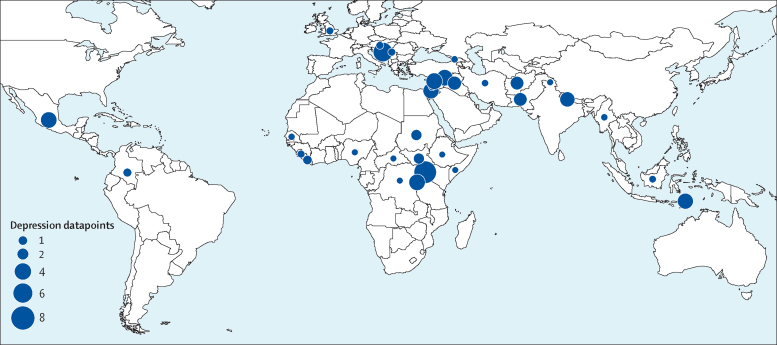
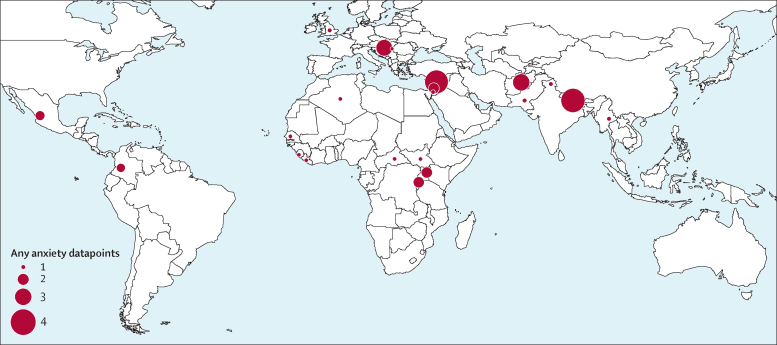
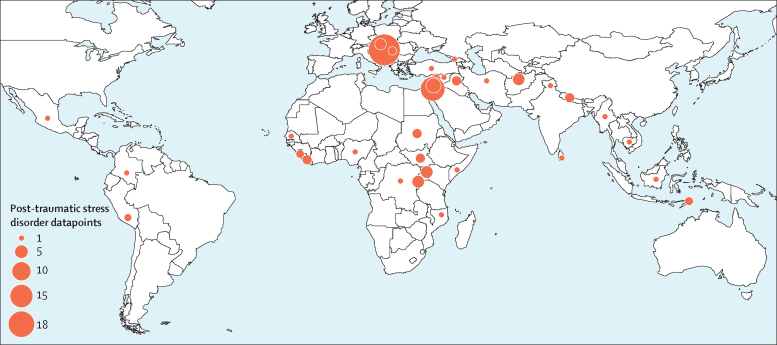
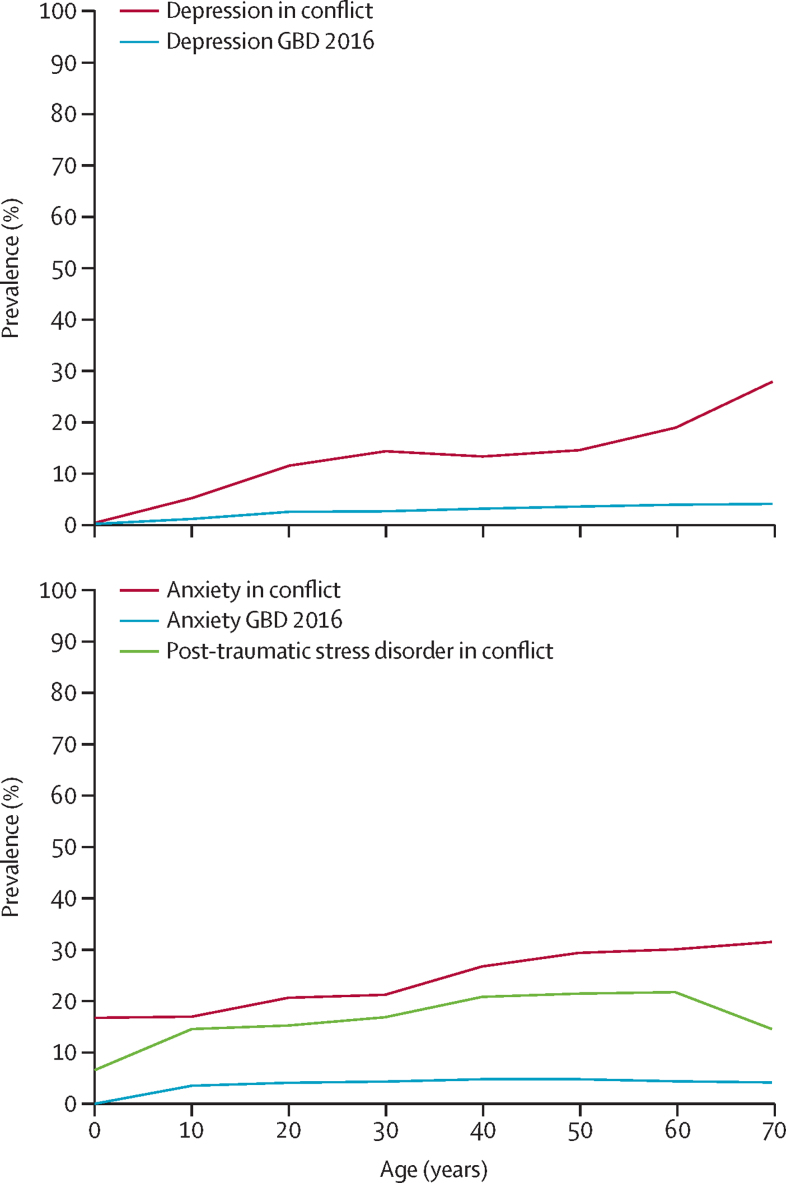
Verification
Claims the paper makes
The claims and statistics of this paper haven’t been checked yet.
Free: it reads the open-access text and checks the first 5 claims that cite a source we can check. Create a free account to check every claim.
Claims other papers make about this one
Each is checked against this paper’s own text: does it say what the citing paper says it does?
The source backs part of the claim, not all of it — or backs it for a different population, condition or comparison.
In the citing paper
“Conflict-affected populations are at elevated risk of psychological distress and a range of mental health disorders. 1”
From Guided self-help to reduce psychological distress in South Sudanese female refugees in Uganda: A cluster randomised trial (2020) · cites this paper as [1]
Experimental — accuracy not yet measuredThe source backs part of the claim, not all of it — or backs it for a different population, condition or comparison.
In the citing paper
“Recent estimates from WHO state that over 20% of refugees will experience mild or moderate mental disorders (e.g., depression, anxiety disorders, and post-traumatic stress disorder or PTSD), while about 4% may experience severe disorders, such as schizophrenia, bipolar disorder, and major depression (Charlson et al. 2019).”
From Throwing therapy at the problem mental health and humanitarian intervention in Palabek refugee settlement, northern Uganda (2023) · cites this paper as Charlson et al. 2019
Experimental — accuracy not yet measuredThe source backs part of the claim, not all of it — or backs it for a different population, condition or comparison.
In the citing paper
“with recent WHO estimates indicating that rates of common mental disorders among conflictaffected individuals may be as high as 22.1% (Charlson et al. 2019)”
From Throwing therapy at the problem mental health and humanitarian intervention in Palabek refugee settlement, northern Uganda (2023) · cites this paper as Charlson et al. 2019
Experimental — accuracy not yet measuredThe source backs part of the claim, not all of it — or backs it for a different population, condition or comparison.
In the citing paper
“A large body of literature points out that people suffering from severe mental disorders are particularly at risk of experiencing neglect, abuse, and abandonment during an emergency, as well as more likely to be severely impacted by an interruption in access to health services (Ostuzzi et al. 2017;Charlson et al. 2019).”
From Throwing therapy at the problem mental health and humanitarian intervention in Palabek refugee settlement, northern Uganda (2023) · cites this paper as Charlson et al. 2019
Experimental — accuracy not yet measuredThe source backs part of the claim, not all of it — or backs it for a different population, condition or comparison.
In the citing paper
“The first covariate identified the mean mortality rate in the previous ten years due to war and terrorism for each GBD location, considering the known association between conflict and elevated prevalence of major depressive disorder and anxiety disorders.12”
From Global, regional, and national burden of 12 mental disorders in 204 countries and territories, 1990-2019: a systematic analysis for the Global Burden of Disease Study 2019. (2022) · cites this paper as [12]
Experimental — accuracy not yet measured
8 more claims about this paper
Create a free account to see every claim other papers make about this one.
Self-check
Percentages, sums and reported differences re-computed from the paper’s own numbers.
The self-check needs the paper’s full text.
Citations
Cites
Vos, T., Abajobir, A. A., Abate, K. H., Abbafati, C., Abbas, K. M., Abd-Allah, F., Abdulkader, R. S., Abdulle, A. M., Abebo, T. A., Abera, S. F., et al. (2017) · The Lancet · doi:10.1016/s0140-6736(17)32154-2 · Cited by 13,220
Self-citationWhiteford, H. A., Degenhardt, L., Rehm, J., Baxter, A. J., Ferrari, A. J., Erskine, H. E., Charlson, F. J., Norman, R. E., Flaxman, A. D., Johns, N., et al. (2013) · The Lancet · doi:10.1016/s0140-6736(13)61611-6 · Cited by 6,006
Self-citationThe kappa statistic in reliability studies: use, interpretation, and sample size requirements
Sim, J., & Wright, C. C. (2005) · Physical Therapy · doi:10.1093/ptj/85.3.257 · Cited by 4,093
60,000 Disaster Victims Speak: Part I. An Empirical Review of the Empirical Literature, 1981–2001
Norris, F. H., Friedman, M. J., Watson, P. J., Byrne, C. M., Diaz, E., & Kaniasty, K. (2002) · Psychiatry: Interpersonal and Biological Processes · doi:10.1521/psyc.65.3.207.20173 · Cited by 3,128
Ferrari, A. J., Charlson, F. J., Norman, R. E., Patten, S. B., Freedman, G., Murray, C. J. L., Vos, T., & Whiteford, H. A. (2013) · PLoS Medicine · doi:10.1371/journal.pmed.1001547 · Cited by 3,115
Self-citationSteel, Z., Chey, T., Silove, D., Marnane, C., Bryant, R. A., & van Ommeren, M. (2009) · JAMA · doi:10.1001/jama.2009.1132 · Cited by 2,246
A Systematic Review of the Prevalence of Schizophrenia
Saha, S., Chant, D., Welham, J., & McGrath, J. (2005) · PLoS Medicine · doi:10.1371/journal.pmed.0020141 · Cited by 2,168
Charlson, F. J., Ferrari, A. J., Santomauro, D. F., Diminic, S., Stockings, E., Scott, J. G., McGrath, J. J., & Whiteford, H. A. (2018) · Schizophrenia Bulletin · doi:10.1093/schbul/sby058 · Cited by 1,647
Self-citationGlobal prevalence of anxiety disorders: a systematic review and meta-regression
Baxter, A. J., Scott, K. M., Vos, T., & Whiteford, H. A. (2013) · Psychological Medicine · doi:10.1017/s003329171200147x · Cited by 1,537
Self-citationFerrari, A. J., Somerville, A. J., Baxter, A. J., Norman, R., Patten, S. B., Vos, T., & Whiteford, H. A. (2013) · Psychological Medicine · doi:10.1017/s0033291712001511 · Cited by 1,230
Self-citation
Research works printed but not linked: 1
- Flaxman AD Vos T Murray CJL An integrative metaregression framework for descriptive epidemiology 2013 University of Washington Press Seattle, WA
Cited by
Items 901–1,000 of 1,003
Interactions between ABC gene polymorphisms and processing speed in predicting depression severity
Jin, M., Ji, L., Ran, M., Bi, Y., Zhang, H., Tao, Y., Xu, H., Zou, S., Zhang, H., Yu, T., et al. (2025) · BMC Psychiatry · doi:10.1186/s12888-025-06507-x · Cited by 3
Khazaie, H., Khazaie, A., Yasamy, M. T., Zakiei, A., & Komasi, S. (2025) · Current Psychology · doi:10.1007/s12144-025-07759-2 · Cited by 3
“Psychological problems such as worry, anxi - ety, depression, and post-traumatic stress are common not only among psychiatric patients but also in those suffering from physical illnesses, as well as in the general population (Charlson et al., 2019 ; Low et al., 2024).”
Chen, S., Wang, D., Zhao, Y., Sun, Y., Luan, Y., Sun, Q., Wang, J., Yan, Y., Yu, J., & Zhou, C. (2025) · Xenobiotica · doi:10.1080/00498254.2025.2498702 · Cited by 3
“…mental illnesses is increasing yearly due to the interference of various factors such as population ageing, the pandemic of the coronavirus disease 2019 (COVID-19), and drug abuse, which constitutes a serious public health issue (Charlson et al. 2019; Favril et al. 2024; McGinty et al. 2024).”
Cao, Y.-B. (2025) · Neuropsychiatric Disease and Treatment · doi:10.2147/ndt.s506447 · Cited by 4
Nakie, G., Kelebie, M. A., Takelle, G. M., Rtbey, G., Andualem, F., Tinsae, T., Kassa, M. A., Fentahun, S., & Melkam, M. (2025) · BMC Psychiatry · doi:10.1186/s12888-025-07284-3 · Cited by 3
“The World Health Organization reports that one in three people are affected by mental disorders, with individuals suffering from being subjected to stigma and social isolation [5].”
van Boetzelaer, E., Sleit, R., Rodriguez, E., Barathi, G. K., Escobio, F., Browne, J. L., Pellecchia, U., van de Kamp, J., Dada, M., Staunton, M., et al. (2025) · BMJ Global Health · doi:10.1136/bmjgh-2025-019822 · Cited by 3
Computer audition for healthcare: A survey on speech analysis
Qian, K., Zhao, Z., Tan, Y., Zhang, W., Cho, M., Zhu, C., Tian, F., Hu, B., Yamamoto, Y., & Schuller, B. W. (2025) · AI Open · doi:10.1016/j.aiopen.2025.10.001 · Cited by 5
Wood, L. J., Christian, M., Perrin, N., Mirindi, A. B., Banywesize, J. H., Mitima, C. M., Binkurhorhwa, A. K., Ntqali, E. M., Ntakwinja, G. M., Remy, M. M., et al. (2020) · Cambridge Prisms Global Mental Health · doi:10.1017/gmh.2020.25 · Cited by 3
“One-third of the participants met the criteria for PTSD, which is higher than WHO estimates of the prevalence of mental disorders (depression, anxiety, PTSD, bipolar disorder, and schizophrenia) as 22⋅1% (95% UI 18⋅8–25⋅7) at any point in time in the conflict-affected populations assessed (Charlson et al., 2019).”
BackgroundLiu, B., Yuan, M., Hu, Y. H., Ge, F., Wang, J., & Zhang, W. (2021) · PubMed Central · doi:10.12182/20210160101 · Cited by 6
Formación de la identidad profesional frente a la crisis global socioambiental
Cuadra-Martínez, D. J., Castro-Carrasco, P. J., Oyanadel, C., González-Palta, I., Sandoval‐Díaz, J., & Perez-Zapata, D. I. (2021) · Liberabit Revista Peruana de Psicología · doi:10.24265/liberabit.2021.v27n2.05 · Cited by 3
Zhao, Y., Liang, Y., Laflamme, L., Rausch, C., Johnell, K., & Möller, J. (2022) · Drug Safety · doi:10.1007/s40264-022-01197-w · Cited by 3
“The use of CNS drugs is widespread, especially among older adults [13].”
BackgroundTownsend, D., Raknes, S., & Hammoud, M. (2022) · Oxford University Press eBooks · doi:10.1093/med-psych/9780197649510.003.0015 · Cited by 4
The differential diagnosis of unipolar and bipolar depression based on EEG signals
Алексеевич, Г. С., & Bokhan, N. A. (2022) · S S Korsakov Journal of Neurology and Psychiatry · doi:10.17116/jnevro202212211151 · Cited by 4
A retrospective data analysis of psychiatric cases in Hargeisa, Somaliland between 2019 and 2020
Abdulrahman, H., Bousleiman, S., Mumin, M., Caqli, I., Hijaz, B. A., Gelaye, B., Fricchione, G. L., & Chemali, Z. N. (2023) · South African Journal of Psychiatry · doi:10.4102/sajpsychiatry.v29i0.1946 · Cited by 4
Психічне здоров’я молоді в умовах військових конфліктів
LOTOTSKA, L., LOTOTSKA, L., & Lototska-Dudyk, U. B. (2022) · Viae Educationis Studies of Education and Didactics · doi:10.15804/ve.2022.03.05 · Cited by 3
Zhou, L., Wu, Z., Zhao, D., Wang, G., Xiao, L., Wang, H., Xie, Y., & Sun, L. (2023) · Journal of Psychiatry and Neuroscience · doi:10.1503/jpn.220079 · Cited by 3
“(1) The 300-bp reads were truncated at any site receiving an average quality score < 20 over a 50-bp sliding window, and the truncated reads shorter than 50 bp were discarded; reads containing ambiguous characters were also discarded.”
Effects of Armed Conflicts and Insecurity on the Mental Health of Nigerians
Femi‐Lawal, V. O., Kabiawu, Y. N., Obinna, G. G., Oladeru, O. F., Aliu, S. O., Basa, F. U., Balkisu, S., & Solaru, B. A. (2023) · Razi International Medical Journal · doi:10.56101/rimj.v3i1.53 · Cited by 3
Bunova, A., & Shikova, D. V. (2023) · Russian Journal of Preventive Medicine · doi:10.17116/profmed20232610127 · Cited by 4
Sleeping Disorders due to the Distress of War
Moroziuk, K. (2023) · Psychosomatic Medicine and General Practice · doi:10.26766/pmgp.v8i2.428 · Cited by 3
Lima, C. A. D. M., Ayalon, L., Banerjee, D., Peisah, C., & Rabheru, K. (2024) · International Psychogeriatrics · doi:10.1017/s1041610223004477 · Cited by 3
“Humanitarian crises present a series of challenges to mental healthcare responses, including (1) the heightened urgency to prioritize and allocate scarce resources, contingent on political will and effective governance, (2) constrained time for training healthcare providers, (3) restricted access to specialists, (4) l…”
BackgroundInfluentialHusnain, M. I. U., Hajizadeh, M., Ahmad, H., & Khanam, R. (2024) · Applied Health Economics and Health Policy · doi:10.1007/s40258-024-00879-z · Cited by 3
“Psychological distress (PD), a type of mental disorder equally common among adults and seniors, is a major public health challenge that substantially contributes to the burden Extended author information available on the last page of the article of disease worldwide [1, 2].”
BackgroundInfluentialCao, X., Tian, X., Wen, Y., Li, P., Ge, R., Li, X., & Mei, F. (2024) · PLoS ONE · doi:10.1371/journal.pone.0291586 · Cited by 3
“The lifetime prevalence of mental disorders can reach 22.1% in volatile regions [2].”
BackgroundInfluentialKardashian, R. A., & Efremov, A. A. (2025) · Psikhiatriya · doi:10.30629/2618-6667-2024-22-6-63-71 · Cited by 3
Чорна, В. В., Аntomonov, М. Y., Сирота, Г., Syrota, M., Kolomiets, V., & Pavlenko, N. P. (2025) · European Journal of Clinical and Experimental Medicine · doi:10.15584/ejcem.2025.1.20 · Cited by 3
Depressive disorders in medical students under chronic stress
Dzeruzhynska, N., & Hyndych, A. (2024) · Psychosomatic Medicine and General Practice · doi:10.26766/pmgp.v9i3.527 · Cited by 3
Chen, Y., Ding, X., Chen, Y., Chen, Y., Aierken, A., & Li, Y. (2025) · Applied Psychology Health and Well-Being · doi:10.1111/aphw.70035 · Cited by 3
Amiri, S., & Hosseini, S. M. (2025) · Eating and Weight Disorders - Studies on Anorexia Bulimia and Obesity · doi:10.1007/s40519-025-01769-6 · Cited by 3
Ribero-Marulanda, S. A., & Novoa-Gómez, M. M. (2019) · International journal of psychological research · doi:10.21500/20112084.4053 · Cited by 4
“…in empathy (McPhedran, 2009), and deficit in the recognition of emotional expressions (Marsh et al., 2008; Petroni et al., 2011) psychological conditions that according to the systematic review conducted by Charlson et al. (2019) can evolve negatively, producing a high burden of mental disorders.”
BackgroundLes bébés dans la guerre: L’exemple du conflit centrafricain
Dozio, E. (2020) · L Autre · doi:10.3917/lautr.062.0151 · Cited by 4
Climate Change: A Challenge to Human Rights, Justice, Equality, and Human Well-Being
Feygina, I., Chapman, D. A., & Markowitz, E. M. (2020) · Cambridge University Press eBooks · doi:10.1017/9781108348607.031 · Cited by 7
Mordeno, I. G., Badawi, J. K., Marcera, J. L., Ramos, J. M. M., & Cada, P. B. (2020) · Current Psychology · doi:10.1007/s12144-020-01170-9 · Cited by 3
Solidarity now? Other stories about researchers, otherness, and polyphony in research
Klevan, T., Karlsson, B., & Borg, M. (2021) · Methodological Innovations · doi:10.1177/20597991211010414 · Cited by 3
“Recent evidence (Charlson et al., 2019) shows an increased prevalence of mental disorders in populations in emergency settings and conflict-afflicted areas, significantly higher than in the general population.”
BackgroundMartland, R., Onwumere, J., Stubbs, B., & Gaughran, F. (2021) · Pilot and Feasibility Studies · doi:10.1186/s40814-021-00937-6 · Cited by 4
Mental health outcomes of COVID-19 quarantine in the Kurdistan Region of Iraq: A Case-Control Study
Seidi, P. A.-M., Kamali, A., Ardebil, M. D., Ali, I., & Jaff, D. (2021) · passer · doi:10.24271/psr.25 · Cited by 3
“It is documented that people in such settings are already in need for receiving mental health services.(13) Findings by local researchers are in agreement with these reports.”
ResultAbdi, Y. A., Said, N. I., Hared, Y. A., Ayeh, I., & Walhad, S. A. (2021) · Somali Health Action Journal · doi:10.36368/shaj.v1i1.246 · Cited by 3
“According to WHO, one in three Somalis are affected by some form of mental illness, a far higher rate than the one in five reported from communities in war zones [5].”
BackgroundRostami, P., Sadeghian, E., & Akbari, A. (2021) · Avicenna Journal of Nursing and Midwifery Care · doi:10.30699/ajnmc.29.4.328 · Cited by 3
The mental health–migration interface among sub-Saharan African and Chinese populations
Renzaho, A. M. N., Hall, B. J., & Chen, W. L. (2022) · Current Opinion in Psychology · doi:10.1016/j.copsyc.2022.101416 · Cited by 3
Miller, S. (2022) · International Review of the Red Cross · doi:10.1017/s1816383122000947 · Cited by 4
Capacidade de manejo de situações de crise por Centros de Atenção Psicossocial Álcool e Drogas
Pierini, M. M., Boska, G. D. A., Claro, H. G., Luz, P. D. O., & de Oliveira, M. A. F. (2023) · Revista Latino-Americana de Enfermagem · doi:10.1590/1518-8345.6167.3850 · Cited by 3
“A Organização Mundial da Saúde (OMS) recomenda, há mais de uma década, que estes atendimentos sejam realizados preferencialmente no contexto comunitário, por equipes ou serviços especializados de saúde mental, porém estes recursos ainda não estão suficientemente disponíveis ou estruturados globalmente(3-5).”
BackgroundYOUNG SCIENTISTS AND METHODS OF IMPROVING MODERN THEORIES
Vladlenov, D. (2023) · doi:10.46299/isg.p.2023.2.2 · Cited by 3
Capriles, I. F., Armijos, A., Angulo, A., Schojan, M., Wainberg, M. L., Bonz, A. G., Tol, W. A., & Greene, M. C. (2024) · International Journal of Environmental Research and Public Health · doi:10.3390/ijerph21040397 · Cited by 3
“[8,9].”
Prina, E., Bano, B., Singh, R. K., Albanese, E., Trujillo, D., Sanguineti, M. C. D., Sorsdahl, K. R., Luitel, N. P., Garman, E. C., Purgato, M., et al. (2024) · BMJ Open · doi:10.1136/bmjopen-2023-083261 · Cited by 3
From Refugees to Immigrants: The Role of Psychology in the Struggle for Human Rights
Khoury, B. A., & Hakim-Larson, J. A. (2020) · Cambridge University Press eBooks · doi:10.1017/9781108348607.015 · Cited by 3
Human Rights and Psychology from Indigenous Perspectives
Blume, A. W., Morse, G. S., & Love, C. (2020) · Cambridge University Press eBooks · doi:10.1017/9781108348607.018 · Cited by 3
Montayre, J., & Ho, M. (2020) · Journal of Emergency Nursing · doi:10.1016/j.jen.2020.07.011 · Cited by 3
Human Rights and Well-Being of Older Persons: Challenges and Opportunities
Sigal, J. A., Quintero, N., & Valente, E. (2020) · Cambridge University Press eBooks · doi:10.1017/9781108348607.021 · Cited by 3
Mental health in conflict settings – Authors' reply
Charlson, F., & van Ommeren, M. (2019) · The Lancet · doi:10.1016/s0140-6736(19)32548-6 · Cited by 3
Self-citationRodela, T. T., Tasnim, S., Mazumder, H., Sharmin, D. F., Faizah, F., Sultana, A., & Hossain, M. M. (2020) · SocArXiv (OSF Preprints) · doi:10.31235/osf.io/mq9au · Cited by 4
Tan, E. Y., Yip, V. T., & Rolles-Abraham, K. L. (2021) · medRxiv · doi:10.1101/2021.07.14.21260546 · Cited by 5
Kurapov, A., Pivorienė, J., Krasilova, Y. M., Proskurnia, A., Balashevych, O., Dubynskyi, O., & Kalaitzaki, A. E. (2023) · Social Inquiry into Well-Being · doi:10.13165/sd-23-21-1-04 · Cited by 5
Attachment theory: survival, trauma, and war through the eyes of Bowlby
Twohig, A., Lyne, J., & McNicholas, F. (2024) · Irish Journal of Psychological Medicine · doi:10.1017/ipm.2024.12 · Cited by 3
“Offurthernoteisthat therateofmentalillnessamongconflictexposedpopulationsis relativelyhighwithasystematicreviewin2019reportingprevalence ratesofmentaldisordersasapproximately1in5,higherthan previouslyreportedmeanglobalprevalencerateof1in14(Charlson et al. 2019).”
Astrocytic glutamate regulation is shaped by adversity and glucocorticoid signallingPreprint
Kaul, D., Curry, A. R., Gerstner, N., Fröhlich, A. S., Krontira, A. C., Kyrousi, C., Smith, C. C., Sutherland, G. T., Dottori, M., Ziller, M. J., et al. (2024) · bioRxiv (Cold Spring Harbor Laboratory) · doi:10.1101/2024.06.24.600362 · Cited by 4
Soltani, E., Bazrafshanb, A., Bahreini, F., & Zaremohazabiyeh, S. (2024) · Research Square · doi:10.21203/rs.3.rs-4583884/v1 · Cited by 3
Kassaye, A., Demilew, D., Fanta, B., Mulat, H., Ali, D., Seid, J., Mulugeta, A., Dereje, J., & Gelelcha, H. (2022) · Research Square · doi:10.21203/rs.3.rs-2319793/v1 · Cited by 3
Gutierrez, G., Stephenson, C., Eadie, J., Moghimi, E., Omrani, M., Groll, D., Soares, C. N., Milev, R., Vazquez, G., Yang, M., et al. (2023) · JMIR Research Protocols · doi:10.2196/46157 · Cited by 3
“These outcomes can include more frequent and severe mood episodes, intellectual disability, loss of independence, and loss of ability to function [2,4,6,7,9-12].”
The use and value of play: Perspectives from the continent of Africa – a scoping review
Gendron, M. M. C. P., van Niekerk, L., & Cloete, L. G. (2022) · Scandinavian Journal of Occupational Therapy · doi:10.1080/11038128.2022.2043433 · Cited by 2
“Included sources noted concerns about the imbalance of playing predominantly on electronic media without engaging in other types of play that could improve different skills across the developmental spectrum [10,48,53,69,72,76,82,96,135].”
BackgroundCurrent Mental Health and Psychosocial Support Policies and Frameworks in Humanitarian Settings
Kan, M. (2022) · Essential clinical social work series · doi:10.1007/978-3-031-12600-0_5 · Cited by 2
Examining the clinical validity of the global psychotrauma screen in refugees
Pinto, J. V., Hoeboer, C. M., Hunt, C. J., O’Toole, B. I., & Olff, M. (2024) · Frontiers in Psychology · doi:10.3389/fpsyg.2024.1394014 · Cited by 3
ABC Family Gene Polymorphisms and Cognitive Functions Interact to Influence Antidepressant Efficacy
Jin, M., Ji, L., Ran, M., Wang, Z., Bi, Y., Zhang, H., Tao, Y., Xu, H., Zou, S., Zhang, H., et al. (2024) · Pharmacopsychiatry · doi:10.1055/a-2437-1751 · Cited by 2
Clinical Characterisation of the Co-Occurrence of Mental and Physical Disorders
Holt, R. I. G. (2025) · Springer eBooks · doi:10.1007/978-3-031-81802-8_6 · Cited by 2
Abuhadra, B. D., Abohadra, R., Nawa, N., & Fujiwara, T. (2025) · Discover Mental Health · doi:10.1007/s44192-025-00156-y · Cited by 6
Developing a Medical Education Framework for Migrant and Refugee Mental Health in Switzerland
Kloeti, A., Abdulrazeq, F., Trevisan, A., Eichinger, T., Asefaw, F., Biller‐Andorno, N., & März, J. W. (2025) · International Journal of Public Health · doi:10.3389/ijph.2025.1608047 · Cited by 2
León, D. C. R., Cano-Sierra, L., Reyes-Rivera, M.-J., Forero-García, S. L., García-Padilla, D., Abitbol, P., & López‐López, W. (2025) · Archives of Public Health · doi:10.1186/s13690-025-01561-z · Cited by 5
“The armed conflict has also been considered a SDMH in Colombia [12, 13, 14, 15], due to the complex mental health problems it has caused in more than six decades of violence [16].”
InfluentialHusnain, M. I. U., Hajizadeh, M., Ahmad, H., & Khanam, R. (2025) · Journal of Public Health · doi:10.1007/s10389-025-02490-5 · Cited by 3
Zvaita, G. T., & Mbara, G. C. (2025) · Social Sciences · doi:10.3390/socsci14060327 · Cited by 2
“These findings are congruent with broader scholarship highlighting the long-term effects of trauma in post-conflict settings (Charlson et al. 2019; Betancourt et al. 2015).”
Epilogue to the war: Afghanistan reports the lowest well-being in recorded history
Stutzman, L. D., Lun, P., Yang, M., Chan, K., & Cheung, F. (2025) · Science Advances · doi:10.1126/sciadv.ads4156 · Cited by 4
RCT of post-conflict trauma interventions in the Central African Republic
Froming, W. J., Zyl, M. V., Froming, K. B., Bouche, V. A. E., & Patel, S. G. (2025) · Cambridge Prisms Global Mental Health · doi:10.1017/gmh.2025.10015 · Cited by 2
“One in five people who have experienced armed conflict develops a mental health diagnosis within 10 years, which may include depression, anxiety, post-traumatic stress disorder (PTSD), bipolar disorder or schizophrenia (Charlson et al., 2019).”
Neagu, O.-A., & Nistor, P. P. (2025) · Revista Romaneasca pentru Educatie Multidimensionala · doi:10.18662/rrem/17.2/976 · Cited by 2
Effect of Gaza war on the mental health of different generations in Egypt
Hassan, N. M., Hammad, R. A., & karem, A. A. A. E. (2025) · BMC Psychology · doi:10.1186/s40359-025-03032-0 · Cited by 2
“The World Health Organization (WHO) estimates that approximately 22.1% of individuals in conflict-affected populations develop mental health disorders, particularly depression, anxiety, and post-traumatic stress disorder (PTSD) [2, 3].”
InfluentialBibliometric Analysis of the Mental Health of International Migrants
Han, L., Jeong, S. N., Kim, S., Eom, Y., & Jung, M. (2025) · International Journal of Environmental Research and Public Health · doi:10.3390/ijerph22081187 · Cited by 2
“Migrants, particularly refugees, often experience severe psychological trauma, leading to high rates of PTSD, depression, anxiety, and other mental disorders [35].”
Nkouonlack, C., Atemlefac, T. A., Tendonglefac, N. M., Nkoké, C., Denis, T., Fufi, N. C., Arnuld, M., Monono, N., & NJAMNSHI, A. K. (2025) · Open Journal of Depression · doi:10.4236/ojd.2025.143004 · Cited by 3
Durbeej, N., Hared, Y. A., Ahmed, A. M., Hassan, H. M., Flacking, R., Joffer, J., Rudman, A., & Osman, F. (2025) · Adolescents · doi:10.3390/adolescents5030042 · Cited by 2
Ekechukwu, E. N. D., Chijioke, U. O., Rotimi, D. T., Dhamija, R. K., Ilechukwu, T. B., Olowoyo, P., Ojeh, A. B., Feng, W., Benjamin, S. C., Dada, O. O., et al. (2025) · Journal of Translational Medicine · doi:10.1186/s12967-024-05987-x · Cited by 3
“Additionally, systematic reviews [6, 7], have typically concentrated on specific disorders without comparing their burdens or exploring how these burdens relate to rehabilitation services.”
Kartiani, A. (2024) · Medicor Journal of Health Informatics and Health Policy · doi:10.61978/medicor.v2i2.747 · Cited by 5
Горбунова, В., Klymchuk, V., Romanchuk, V., & Ivanchuk, I. (2025) · Addiction Research & Theory · doi:10.1080/16066359.2025.2573341 · Cited by 2
“In a crisis like this, the greatest burden of mental health problems falls on vulnerable populations, including children, people with disabilities, ethnic minorities, and people with preexisting mental health conditions (Charlson et al. 2019).”
Benisi-Kohansal, S., Kazeminejad, S., Lotfi, K., Monazzam, M. R., Imani, H., & Esmaillzadeh, A. (2025) · Journal of Health Population and Nutrition · doi:10.1186/s41043-025-01135-3 · Cited by 2
“Global prevalence of depression and anxiety were estimated 10.8 and 21.7%, respectively [4].”
InfluentialDafale, R. S., Kamath, S. U., Bhasin, G., Vasanthalaxmi, K., Bose, U., G, R. B. M., Punja, D., Bharadwaj, A., & Manjula, S. D. (2025) · Nutritional Neuroscience · doi:10.1080/1028415x.2025.2573226 · Cited by 2
“Recent alarming statistics indicate that 300 million people worldwide are suffering from mental disorders, 36.5% of people are stressed, and 50% of people are depression patients [1], highlighting the impact of stress on multiple psychiatric and neurodegenerative disorders [2].”
InfluentialYakubu, Y., Mashat, M. D., Obadiah, A. A., Ochi, E. A. A., Oklewu, V. F., & Idris, I. (2025) · BMC Psychology · doi:10.1186/s40359-025-03525-y · Cited by 5
Radwan, R. S. A., Elazab, E. B. A. B., Senosy, S. A., & Mostafa, Z. M. (2025) · Conflict and Health · doi:10.1186/s13031-025-00726-5 · Cited by 2
“…that approximately one in five people in conflict-affected settings experience depression, anxiety, or PTSD, with an overall prevalence of 22.1% [27], while Steel et al. found a combined prevalence of 30.8% for mental disorders among conflict-exposed but non-displaced populations across 40…”
InfluentialInnab, A., Taleb, F., Mani, Z. A., & Altaheri, A. T. (2025) · International Nursing Review · doi:10.1111/inr.70131 · Cited by 4
Nigus, H. Y., Abay, K. A., & Tabe‐Ojong, M. P. J. (2025) · World Development · doi:10.1016/j.worlddev.2025.107249 · Cited by 2
Psychiatry in times of war and armed conflicts
Ventriglio, A., Castaldelli-Maia, J. M., Torales, J. C., Caycho‐Rodríguez, T., & Bhugra, D. (2025) · International Review of Psychiatry · doi:10.1080/09540261.2025.2603678 · Cited by 2
“PTSD remains the hallmark diagnosis within war-affected populations, with prevalence estimates ranging from 15 to 40% among civilians in conflict zones and up to 50% among combatants (Charlson et al., 2019).”
InfluentialHealth equity and displaced people: challenges, progress, and the path forward
Tawfiles, D., Zughbur, M. R., Rosa, W. E., Dee, E. C., Marhoom, M., Gafer, N., Ginsburg, O., Fouad, F. M., & Sullivan, R. J. (2025) · The Lancet · doi:10.1016/s0140-6736(25)02434-1 · Cited by 4
Volkova, Т. V., Simonova, O. R., & Perlovich, G. L. (2025) · Colloids and Surfaces A Physicochemical and Engineering Aspects · doi:10.1016/j.colsurfa.2025.138728 · Cited by 3
Nalyvaiko, N., Вус, В., Zotova, L., Kreydun, N., Ronzhes, O., Nalyvaiko, O., Proskuriakov, S., & Levytskyi, K. (2026) · Mental Health Global Challenges Journal · doi:10.56508/mhgcj.v9i1.305 · Cited by 3
“This mirrors broader challenges in scaling psychological and psychiatric services during protracted emergencies (Charlson et al., 2019).”
Li, L., Jia, S., Guo, Z., Liu, C., Li, S., Liu, W., Su, H., Wu, J., & Wang, X. (2026) · Journal of Affective Disorders · doi:10.1016/j.jad.2025.121135 · Cited by 2
Kaida, K., Itoi, K., Soeta, Y., Ooie, T., & Oishi, K. (2026) · PLoS ONE · doi:10.1371/journal.pone.0340490 · Cited by 3
Hapon, N., Chudzicka-Czupała, A. E., Dubniak, Z. O., Żywiołek‐Szeja, M., Czupała, M., Yen, C., & Ho, R. (2026) · Mindfulness · doi:10.1007/s12671-026-02768-z · Cited by 3
Jin, Y., Zhang, Y., Zong, X., & Kwan, L. Y. ‐. (2026) · Journal of Affective Disorders · doi:10.1016/j.jad.2026.121381 · Cited by 2
Clonal haematopoiesis of indeterminate potential and risk of incident psychiatric disorders
Yu, Y., Wan, C., Li, J., Sun, Y., Yu, B., Tan, X., Wang, B., Lu, Y., & Wang, N. (2026) · BMC Medicine · doi:10.1186/s12916-026-04720-3 · Cited by 2
“Psychiatric disorders (PDs) impose a huge economic burden on society and are the leading cause of disability globally [1].”
Saleem, J., Hameed, S., Shehzad, M. N., Shahzad, R. B., Ali, N., Aftab, M. M., Khan, S., Asif, A., Amna, I., & Khan, H. Z. (2026) · BMJ Open · doi:10.1136/bmjopen-2025-105937 · Cited by 2
Suleman, S., Hui, C. P., Minhas, R. S., & Vandermorris, A. (2025) · Paediatrics & Child Health · doi:10.1093/pch/pxaf131 · Cited by 2
Geopolitical tension as an emerging structural determinant of population mental health
Torales, J. C., Castaldelli-Maia, J. M., & Ventriglio, A. (2026) · Journal of the Royal Society of Medicine · doi:10.1177/01410768261430257 · Cited by 2
de Queiroz, M. R., Valente, M., Hubloue, I., & Corte, F. D. (2026) · Frontiers in Health Services · doi:10.3389/frhs.2026.1726804 · Cited by 2
Aldbyani, A., Rosen, A., Salem, A. F., & Almansoub, H. A. M. M. (2026) · Conflict and Health · doi:10.1186/s13031-026-00779-0 · Cited by 2
“These barriers mirror those reported in prior assessments of mental health systems in fragile contexts [7, 8].”
Szkup, M., Słowik, K., Czeponis, L., Stankiewicz, M., Jeż, P. U. , & Erjavec, K. (2026) · BMC Public Health · doi:10.1186/s12889-026-27064-2 · Cited by 3
“Many studies have shown that refugees are at an increased risk of experiencing a range of mental health issues, including post-traumatic stress disorder (PTSD), severe anxiety, depression, and even suicidal thoughts or behaviors [17].”
Why geopsychiatry belongs in the medical curriculum: Lessons from a global survey
Torales, J. C., Persaud, A., Smith, A. J., Liebrenz, M., Ramachandran, P., Ayonrinde, O., Alibudbud, R. C., Okasha, T. A., Mufti, K. A., Sharma, D., et al. (2026) · Geopsychiatry · doi:10.1016/j.geopsy.2026.100074 · Cited by 3
Clinical applications of esketamine: Current status and future perspectives
Li, H., Deng, J., Liu, T., & Zhang, Y. (2026) · Journal of International Medical Research · doi:10.1177/03000605261432759 · Cited by 2
“59 A randomized, double-blind, controlled study evaluated the efficacy and safety of esketamine nasal spray at doses of 28, 56, and 84 mg for the treatment of patients with refractory depression.”
Keynejad, R. C., Hatcher, A. M., Sapkota, D., Woollett, N., Honikman, S., & Palfreyman, A. (2026) · PLOS Global Public Health · doi:10.1371/journal.pgph.0006110 · Cited by 4
“While mental health impacts of conflictare well-known [67], they tend to be neglected until post-war legacies of trauma become apparent, with responses often under-resourced [68].”
Frasco, E. (2026) · SSM - Mental Health · doi:10.1016/j.ssmmh.2026.100629 · Cited by 2
Metadata
- Authors
- Charlson, F., van Ommeren, M., Flaxman, A., Cornett, J., Whiteford, H., & Saxena, S.
- Affiliations
- The University of Queensland (AU)
- University of Washington (US)
- Queensland Centre for Mental Health Research (AU)
- Harvard University (US)
- Venue
- The Lancet
- Publisher
- Elsevier BV
- Published
- 2019-07
- Volume
- 394
- Issue
- 10194
- Pages
- 240-248
- ISSN
- 0099-5355 (ISSN-L)
- 0140-6736
- PMC
- PMC6657025
- OpenAlex
- W2950709739
- Cited by
- 1,702
- References
- 32
- Citations by year
- 2026: 282 · 2025: 284 · 2024: 273 · 2023: 276 · 2022: 240 · 2021: 173 · 2020: 152 · 2019: 21
- FWCI
- 22.62
- Type
- journal article
- Language
- en
- Open access
- hybrid
- doi.org
- Licence
- cc-by
- www.elsevier.com/tdm/userlicense/1.0/ (tdm)
- creativecommons.org/licenses/by/4.0/ (vor)
- Locations
- The Lancet (publishedVersion, cc-by)
- Europe PMC (PubMed Central) (publishedVersion, cc-by)
- PubMed Central (publishedVersion, cc-by)
- PubMed (publishedVersion)
- Funders
- World Health Organization
- Queen Mary University of London
- United Nations High Commissioner for Refugees
- Topics
- Health Sciences › Medicine › Psychiatry and Mental health › Mental Health Treatment and Access
- Health Sciences › Health Professions › General Health Professions › Health and Conflict Studies
- Social Sciences › Psychology › Clinical Psychology › Migration, Health and Trauma
- Keywords
- mental illness, conflict-affected populations, war and mental health, depression, anxiety disorders, post-traumatic stress disorder, bipolar disorder, schizophrenia, psychosis, point prevalence, global prevalence estimates, Bayesian meta-regression, comorbidities, disease burden, armed conflict, internally displaced persons
- MeSH terms
- Anxiety Disorders, Mental Disorders, Bipolar Disorder, Depression, Humans, Schizophrenia, Stress Disorders, Post-Traumatic, Warfare, World Health Organization, Prevalence
About these checks
Registry, retraction, Cites and statistics results are computed, not judged, with one exception: a printed reference that no index lists is read once by a model before it counts as a citation error. Claims are extracted by a model and kept only when their quote appears verbatim in the text; each cited source is then checked, with a model’s help, for whether it says what the claim relies on. Those verdicts can be wrong — read the claim’s quote and the cited source before relying on one.
Statistics and arithmetic are recomputed, not judged.
Confidence bands are shown only for fields calibrated on our annotated test set. None is calibrated yet, so no band is shown.
What counts as a claim ›How we measure confidence ›How we check this ›
Are you an author, or do you see a problem with this page? Request a review
Data sources
Bibliographic data: Semantic Scholar, OpenAlex, Crossref.
Contains information from the Semantic Scholar Academic Graph Datasets, made available under the ODC Attribution License (ODC-BY 1.0).
Semantic Scholar’s data is described in: Kinney, R., et al. (2023). The Semantic Scholar Open Data Platform. arXiv:2301.10140.
