

New WHO prevalence estimates of mental disorders in conflict settings: a systematic review and meta-analysis
Open accessThe DOI matches its Crossref record; 31 of the 32 references it cites were found in a registry or an index.
Abstract
BACKGROUND: Existing WHO estimates of the prevalence of mental disorders in emergency settings are more than a decade old and do not reflect modern methods to gather existing data and derive estimates. We sought to update WHO estimates for the prevalence of mental disorders in conflict-affected settings and calculate the burden per 1000 population. METHODS: In this systematic review and meta-analysis, we updated a previous systematic review by searching MEDLINE (PubMed), PsycINFO, and Embase for studies published between Jan 1, 2000, and Aug 9, 2017, on the prevalence of depression, anxiety disorder, post-traumatic stress disorder, bipolar disorder, and schizophrenia. We also searched the grey literature, such as government reports, conference proceedings, and dissertations, to source additional data, and we searched datasets from existing literature reviews of the global prevalence of depression and anxiety and reference lists from the studies that were identified. We applied the Guidelines for Accurate and Transparent Health Estimates Reporting and used Bayesian meta-regression techniques that adjust for predictors of mental disorders to calculate new point prevalence estimates with 95% uncertainty intervals (UIs) in settings that had experienced conflict less than 10 years previously. FINDINGS: We estimated that the prevalence of mental disorders (depression, anxiety, post-traumatic stress disorder, bipolar disorder, and schizophrenia) was 22·1% (95% UI 18·8-25·7) at any point in time in the conflict-affected populations assessed. The mean comorbidity-adjusted, age-standardised point prevalence was 13·0% (95% UI 10·3-16·2) for mild forms of depression, anxiety, and post-traumatic stress disorder and 4·0% (95% UI 2·9-5·5) for moderate forms. The mean comorbidity-adjusted, age-standardised point prevalence for severe disorders (schizophrenia, bipolar disorder, severe depression, severe anxiety, and severe post-traumatic stress disorder) was 5·1% (95% UI 4·0-6·5). As only two studies provided epidemiological data for psychosis in conflict-affected populations, existing Global Burden of Disease Study estimates for schizophrenia and bipolar disorder were applied in these estimates for conflict-affected populations. INTERPRETATION: The burden of mental disorders is high in conflict-affected populations. Given the large numbers of people in need and the humanitarian imperative to reduce suffering, there is an urgent need to implement scalable mental health interventions to address this burden. FUNDING: WHO; Queensland Department of Health, Australia; and Bill & Melinda Gates Foundation.
Overview
The claims and statistics of this paper haven’t been checked yet.
Free: it reads the open-access text and checks the first 5 claims that cite a source we can check. Create a free account to check every claim.
Integrity signals
Registry
Cites
Statistics
Figures
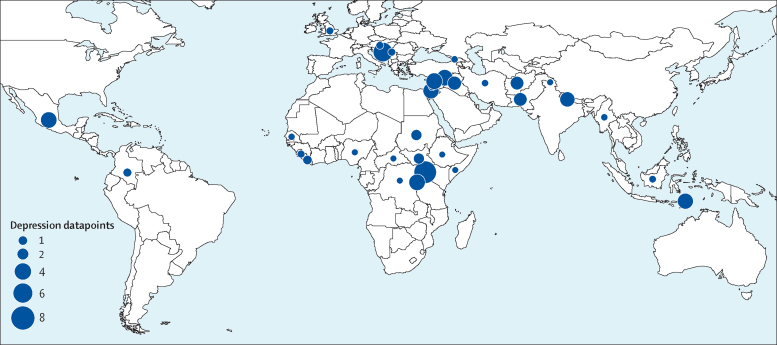
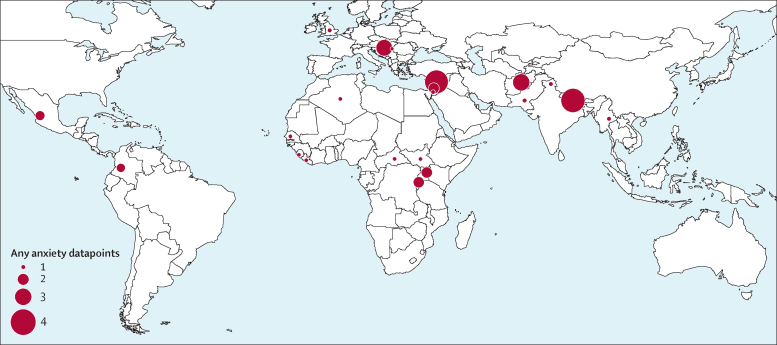
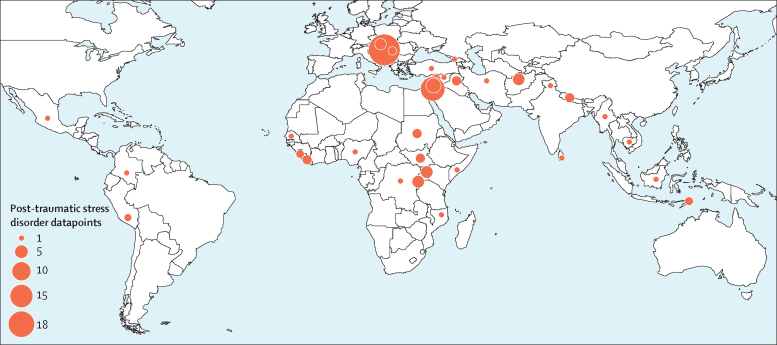
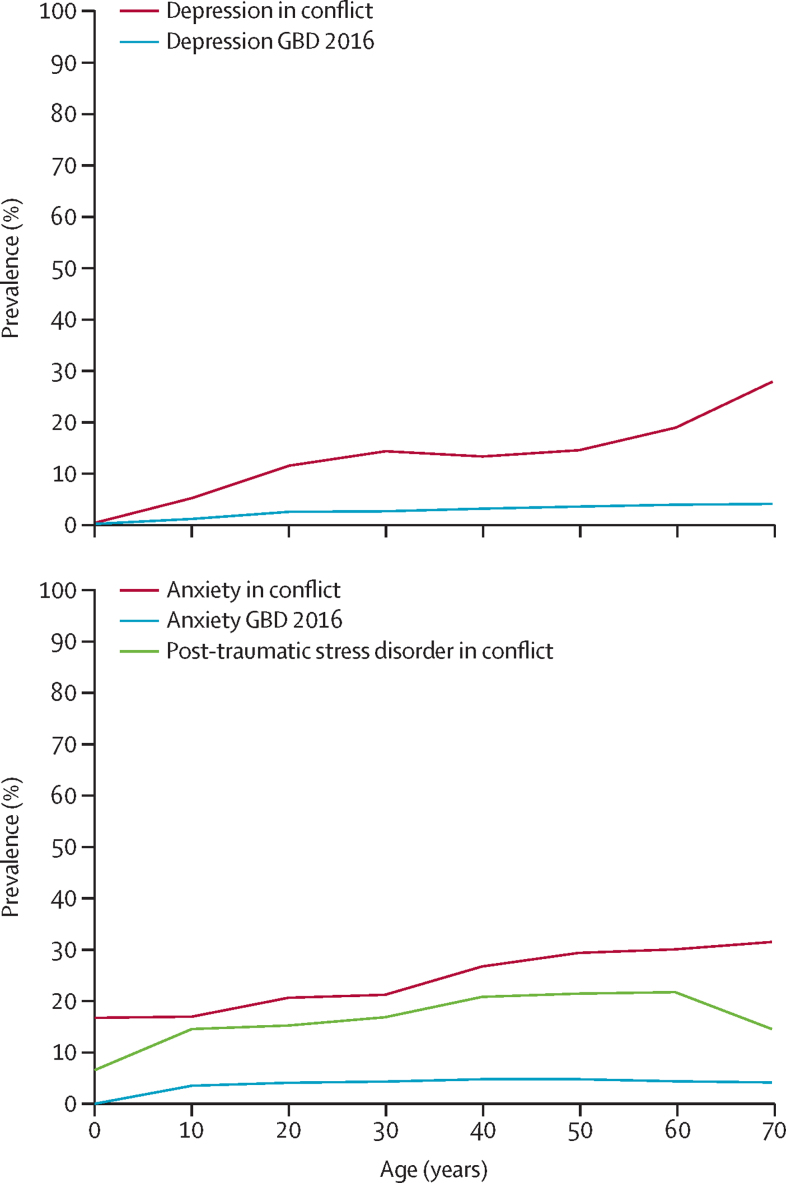
Verification
Claims the paper makes
The claims and statistics of this paper haven’t been checked yet.
Free: it reads the open-access text and checks the first 5 claims that cite a source we can check. Create a free account to check every claim.
Claims other papers make about this one
Each is checked against this paper’s own text: does it say what the citing paper says it does?
The source backs part of the claim, not all of it — or backs it for a different population, condition or comparison.
In the citing paper
“Conflict-affected populations are at elevated risk of psychological distress and a range of mental health disorders. 1”
From Guided self-help to reduce psychological distress in South Sudanese female refugees in Uganda: A cluster randomised trial (2020) · cites this paper as [1]
Experimental — accuracy not yet measuredThe source backs part of the claim, not all of it — or backs it for a different population, condition or comparison.
In the citing paper
“Recent estimates from WHO state that over 20% of refugees will experience mild or moderate mental disorders (e.g., depression, anxiety disorders, and post-traumatic stress disorder or PTSD), while about 4% may experience severe disorders, such as schizophrenia, bipolar disorder, and major depression (Charlson et al. 2019).”
From Throwing therapy at the problem mental health and humanitarian intervention in Palabek refugee settlement, northern Uganda (2023) · cites this paper as Charlson et al. 2019
Experimental — accuracy not yet measuredThe source backs part of the claim, not all of it — or backs it for a different population, condition or comparison.
In the citing paper
“with recent WHO estimates indicating that rates of common mental disorders among conflictaffected individuals may be as high as 22.1% (Charlson et al. 2019)”
From Throwing therapy at the problem mental health and humanitarian intervention in Palabek refugee settlement, northern Uganda (2023) · cites this paper as Charlson et al. 2019
Experimental — accuracy not yet measuredThe source backs part of the claim, not all of it — or backs it for a different population, condition or comparison.
In the citing paper
“A large body of literature points out that people suffering from severe mental disorders are particularly at risk of experiencing neglect, abuse, and abandonment during an emergency, as well as more likely to be severely impacted by an interruption in access to health services (Ostuzzi et al. 2017;Charlson et al. 2019).”
From Throwing therapy at the problem mental health and humanitarian intervention in Palabek refugee settlement, northern Uganda (2023) · cites this paper as Charlson et al. 2019
Experimental — accuracy not yet measuredThe source backs part of the claim, not all of it — or backs it for a different population, condition or comparison.
In the citing paper
“The first covariate identified the mean mortality rate in the previous ten years due to war and terrorism for each GBD location, considering the known association between conflict and elevated prevalence of major depressive disorder and anxiety disorders.12”
From Global, regional, and national burden of 12 mental disorders in 204 countries and territories, 1990-2019: a systematic analysis for the Global Burden of Disease Study 2019. (2022) · cites this paper as [12]
Experimental — accuracy not yet measured
8 more claims about this paper
Create a free account to see every claim other papers make about this one.
Self-check
Percentages, sums and reported differences re-computed from the paper’s own numbers.
The self-check needs the paper’s full text.
Citations
Cites
Vos, T., Abajobir, A. A., Abate, K. H., Abbafati, C., Abbas, K. M., Abd-Allah, F., Abdulkader, R. S., Abdulle, A. M., Abebo, T. A., Abera, S. F., et al. (2017) · The Lancet · doi:10.1016/s0140-6736(17)32154-2 · Cited by 13,220
Self-citationWhiteford, H. A., Degenhardt, L., Rehm, J., Baxter, A. J., Ferrari, A. J., Erskine, H. E., Charlson, F. J., Norman, R. E., Flaxman, A. D., Johns, N., et al. (2013) · The Lancet · doi:10.1016/s0140-6736(13)61611-6 · Cited by 6,006
Self-citationThe kappa statistic in reliability studies: use, interpretation, and sample size requirements
Sim, J., & Wright, C. C. (2005) · Physical Therapy · doi:10.1093/ptj/85.3.257 · Cited by 4,093
60,000 Disaster Victims Speak: Part I. An Empirical Review of the Empirical Literature, 1981–2001
Norris, F. H., Friedman, M. J., Watson, P. J., Byrne, C. M., Diaz, E., & Kaniasty, K. (2002) · Psychiatry: Interpersonal and Biological Processes · doi:10.1521/psyc.65.3.207.20173 · Cited by 3,128
Ferrari, A. J., Charlson, F. J., Norman, R. E., Patten, S. B., Freedman, G., Murray, C. J. L., Vos, T., & Whiteford, H. A. (2013) · PLoS Medicine · doi:10.1371/journal.pmed.1001547 · Cited by 3,115
Self-citationSteel, Z., Chey, T., Silove, D., Marnane, C., Bryant, R. A., & van Ommeren, M. (2009) · JAMA · doi:10.1001/jama.2009.1132 · Cited by 2,246
A Systematic Review of the Prevalence of Schizophrenia
Saha, S., Chant, D., Welham, J., & McGrath, J. (2005) · PLoS Medicine · doi:10.1371/journal.pmed.0020141 · Cited by 2,168
Charlson, F. J., Ferrari, A. J., Santomauro, D. F., Diminic, S., Stockings, E., Scott, J. G., McGrath, J. J., & Whiteford, H. A. (2018) · Schizophrenia Bulletin · doi:10.1093/schbul/sby058 · Cited by 1,647
Self-citationGlobal prevalence of anxiety disorders: a systematic review and meta-regression
Baxter, A. J., Scott, K. M., Vos, T., & Whiteford, H. A. (2013) · Psychological Medicine · doi:10.1017/s003329171200147x · Cited by 1,537
Self-citationFerrari, A. J., Somerville, A. J., Baxter, A. J., Norman, R., Patten, S. B., Vos, T., & Whiteford, H. A. (2013) · Psychological Medicine · doi:10.1017/s0033291712001511 · Cited by 1,230
Self-citation
Research works printed but not linked: 1
- Flaxman AD Vos T Murray CJL An integrative metaregression framework for descriptive epidemiology 2013 University of Washington Press Seattle, WA
Cited by
Items 401–500 of 1,005
Fan, X., Ning, K., Ma, T. S. W., Aung, Y., Tun, H. M., Zaw, P. P. T., Flores, F. P., Chow, M. S. C., Leung, C. M. C., Lun, P., et al. (2024) · The Lancet Regional Health - Southeast Asia · doi:10.1016/j.lansea.2024.100396 · Cited by 23
“10,12,19,62 Further, the E-value of signi fi cant associations indicate that a considerable degree of residual confounding would be required to explain away the point estimate of these associations.”
BackgroundMethodTinsae, T., Shumet, S., Tadesse, G., Takelle, G. M., Rtbey, G., Melkam, M., Andualem, F., Nakie, G., Segon, T., Koye, S., et al. (2024) · Frontiers in Psychiatry · doi:10.3389/fpsyt.2024.1399013 · Cited by 21
Comprehensively Strengthen and Improve Students’ Mental Health System in the New Era
Yuan, W., Jiang, Z., Liu, Y., Chen, Z., Chu, X., & Song, Y. (2024) · China CDC Weekly · doi:10.46234/ccdcw2024.162 · Cited by 15
The impact of events scale-revised (IES-R): Validation of the Ukrainian version
Krupelnytska, L., Yatsenko, N., Keller, V., & Morozova-Larina, O. (2025) · Comprehensive Psychiatry · doi:10.1016/j.comppsych.2025.152593 · Cited by 21
Latifeh, Y., Hanafi, I., Alhoulaiby, S., & Alahdab, F. (2021) · Asian Journal of Psychiatry · doi:10.1016/j.ajp.2021.102681 · Cited by 16
Wang, X., Yin, Z., Sun, Q., Jiang, X., Li, C., Dai, X., & Tang, Y. (2021) · Frontiers in Psychiatry · doi:10.3389/fpsyt.2021.627198 · Cited by 17
Akhtar, A., Koyiet, P., Rahman, A., Schafer, A., Hamdani, S. U., Cuijpers, P., Sijbrandij, M., & Bryant, R. A. (2022) · Depression and Anxiety · doi:10.1002/da.23221 · Cited by 15
“Although some inroads have been made in relation to trauma‐focused psychotherapies, there is a need to understand how scalable interventions, such as PM+, address specific PTSD symptoms in humanitarian and development contexts where the prevalence of PTSD is elevated (Charlson et al., 2019).”
BackgroundLanza‐León, P., Sáez, M. P., & Cantarero, D. (2021) · International Journal of Environmental Health Research · doi:10.1080/09603123.2021.2005780 · Cited by 18
“Mental health problems affect 22% of the world’s population (Charlson et al. 2019) and are a cause of poor physical health (Chung et al. 2018).”
BackgroundSharma, M., Koenen, K. C., Borba, C. P. C., Williams, D. R., & Deng, D. K. (2022) · Journal of Affective Disorders · doi:10.1016/j.jad.2022.02.016 · Cited by 21
Nickerson, A., Byrow, Y., O'Donnell, M. L., Bryant, R. A., Mau, V., McMahon, T., Benson, G. M., & Liddell, B. J. (2022) · Journal of Affective Disorders · doi:10.1016/j.jad.2022.03.057 · Cited by 15
Li, J., Pang, Y., Du, Y., Xia, L., Chen, M., Fan, Y., & Dong, Z. (2022) · Genes & Diseases · doi:10.1016/j.gendis.2022.05.003 · Cited by 17
Ritsema, H., & Armstrong-Hough, M. J. (2023) · Frontiers in Public Health · doi:10.3389/fpubh.2022.1048649 · Cited by 25
Lakin, D. P., Cooper, S. E., Andersen, L. S., Brown, F. L., Augustinavicius, J., Carswell, K., Leku, M. R., Adaku, A., Au, T. M., Bryant, R. A., et al. (2023) · Journal of Consulting and Clinical Psychology · doi:10.1037/ccp0000774 · Cited by 17
Woodward, A., Burchert, S., Barry, A. S., Broerse, J. E. W., Sondorp, E., Bold, A., Ruberl, A., Hessling, J. M., Knaevelsrud, C., Roberts, B., et al. (2023) · SSM - Mental Health · doi:10.1016/j.ssmmh.2023.100231 · Cited by 19
“Conflict-affected populations have a high burden of mental disorders (Charlson et al., 2019; Patan ` e et al., 2022) and those who are refugees often experience major barriers to accessing mental health and psychosocial support (MHPSS) services in host countries arising from stigma, language…”
BackgroundKassaye, A., Demilew, D., Fanta, B., Mulat, H., Ali, D., Seid, J., Mulugeta, A., & Dereje, J. (2023) · PLoS ONE · doi:10.1371/journal.pone.0292848 · Cited by 21
Brown, F. L., Steen, F., Taha, K., Koppenol‐Gonzalez, G. V., Aoun, M., Bryant, R. A., & Jordans, M. J. D. (2024) · International Journal of Mental Health Systems · doi:10.1186/s13033-024-00640-y · Cited by 16
Almasirad, A., Ghadimi, M., Mirahmadi, S., Kodakan, P. A., Jahani, R., Nazari, M., Rezaee, E., Azizian, H., Rabizadeh, P., Tabatabai, S. A., et al. (2021) · Molecular Diversity · doi:10.1007/s11030-021-10182-x · Cited by 15
Is promoting war trauma such a good idea?
TORRE, C., MYLAN, S., PARKER, M., & ALLEN, T. (2019) · Anthropology Today · doi:10.1111/1467-8322.12538 · Cited by 14
“A well-known medical journal, The Lancet, has recently published an important systematic review and metaanalysis of mental disorder estimates in conflict settings by Charlson et al. (2019).”
BackgroundMarkou-Pappas, N., Ragazzoni, L., Truppa, C. T., Salio, F., Barone‐Adesi, F., & Lamine, H. (2025) · Conflict and Health · doi:10.1186/s13031-025-00643-7 · Cited by 14
Yuan, Z., Peng, C., Yang, L.-L., & Chen, H. (2025) · Medicine · doi:10.1097/md.0000000000041139 · Cited by 19
“[1] Events like wars, natural disasters, tragedies, and other traumatic life events can cause PTSD, a persistent and frequently crippling mental health condition with potentially dangerous and far-reaching psychological implications.”
Man, K., Shao, S.-C., Chang, Y.-C., Chi, M., Jeong, H., Lin, S.-J., Su, C.-C., Shin, J.-Y., Wong, K., Wong, I., et al. (2021) · Epidemiology and Psychiatric Sciences · doi:10.1017/s2045796021000494 · Cited by 12
“(Charlson et al., 2019) In children, the prevalence has been reported to be about 6.7% but varies between different countries.”
InfluentialO'Donnell, A. W., Паолини, С., & Stuart, J. (2022) · Transcultural Psychiatry · doi:10.1177/13634615221098309 · Cited by 16
The effects of coloring therapy on patients with generalized anxiety disorder
Samuel, B., Wang, H., Shi, C., Pan, Y., Yu, Y., Zhu, W., & Jing, Z. (2022) · Animal Models and Experimental Medicine · doi:10.1002/ame2.12256 · Cited by 21
The impact of capitalism on mental health: An epidemiological perspective
Eisenberg‐Guyot, J., & Prins, S. J. (2022) · Oxford University Press eBooks · doi:10.1093/med/9780198861478.003.0022 · Cited by 16
Khairat, M., Hodge, S., & Duxbury, A. (2023) · Psychology and Psychotherapy Theory Research and Practice · doi:10.1111/papt.12470 · Cited by 17
Han, H., Xu, M., Wang, J., Li, M. D., & Yang, Z. (2023) · Journal of Advanced Research · doi:10.1016/j.jare.2023.06.001 · Cited by 18
Huang, Y., & Loux, T. (2023) · Mental Health & Prevention · doi:10.1016/j.mhp.2023.200302 · Cited by 11
Ceccarelli, C., Prina, E., Alkasaby, M. A., Cadorin, C., Gandhi, Y., Cristofalo, D., Jamei, Y. A., Muneghina, O., Barbui, C., Jordans, M. J. D., et al. (2023) · Clinical Psychology Review · doi:10.1016/j.cpr.2023.102371 · Cited by 12
Ali, R., Brown, F. L., Stevenson, K., Jordans, M. J. D., Taha, K., Amine, M. E., Steen, F., Meksassi, B., Elias, J., Aoun, M., et al. (2023) · The Journal of Behavioral Health Services & Research · doi:10.1007/s11414-023-09870-3 · Cited by 12
Liu, J., Wang, Y., Mu, W., Liu, Y., Tong, R., Lu, Z., Yuan, H., Jia, F., Zhang, X., Li, Z., et al. (2024) · Frontiers in Psychiatry · doi:10.3389/fpsyt.2024.1342933 · Cited by 18
Ali, A. M. A., Adam, O. A. M., Salem, S. A. M., Hamad, S., Ahmed, N. E. M., Ali, H. M. A., Abass, A. A. M., Abass, H.-A. A. M., Albasher, A. I.-E., Yousif, M. E. E., et al. (2024) · BMC Public Health · doi:10.1186/s12889-024-20972-1 · Cited by 22
Frankova, I., & Sijbrandij, M. (2025) · Frontiers in Digital Health · doi:10.3389/fdgth.2025.1586030 · Cited by 19
Snapshot of a social movement: Mental health and protest classes in Hong Kong
Li, A., Chak, W. H., & Yuen, K. S. L. (2021) · Journal of Affective Disorders · doi:10.1016/j.jad.2021.08.111 · Cited by 16
Iemmi, V. (2021) · Social Science & Medicine · doi:10.1016/j.socscimed.2021.114354 · Cited by 16
“…of DALY for other health conditions (Mackenzie & Kesner, 2016; interviews) and GDP per capita (Peiffer & Boussalis, 2015), and positive associations for the remaining variables (Charlson et al., 2019; Dollar & Levin, 2006; Karlan & List, 2020; Peiffer & Boussalis, 2015; interviews) (Appendix A).”
BackgroundInfluentialZhou, J., Li, J., Zhao, Q., Ou, P., & Zhao, W. (2022) · Frontiers in Psychiatry · doi:10.3389/fpsyt.2022.899344 · Cited by 17
“As shown in surveys, the lifetime prevalence of schizophrenia is estimated to be 0.3% worldwide and 0.83% in China (8, 9) and varies depending on the location, economic conditions, and the diagnostic criteria used.”
BackgroundInfluentialAccurate Prediction of Anxiety Levels in Asian Countries Using a Fuzzy Expert System
Ramzan, M., Hamid, M., Alhussan, A. A., AlEisa, H. N., & Abdallah, H. A. (2023) · Healthcare · doi:10.3390/healthcare11111594 · Cited by 15
“In light of this observation, the WHO estimates that 450 million individuals globally experience stress and anxiety [5].”
BackgroundThe outbreak of the 2022 Russo-Ukrainian war: mental health of poles and their attitude to refugees
Babicki, M., Kowalski, K., & Mastalerz–Migas, A. (2023) · Frontiers in Public Health · doi:10.3389/fpubh.2023.1155904 · Cited by 22
Ba, H., Zhang, L., Peng, H., He, X., & Wang, Y. (2024) · Annals of General Psychiatry · doi:10.1186/s12991-024-00495-0 · Cited by 18
“It is estimated that these disorders impact approximately 22.1% of the world’s population [1].”
BackgroundMethodInfluentialGyawali, B., Harasym, M. C., Hassan, S., Cooper, K., Boschma, A., Bird, M., Konradsen, F., Raju, E., & Tellier, S. (2021) · Journal of Global Health · doi:10.7189/jogh.11.03119 · Cited by 14
The Roles of Cloud-Based Systems on the Cancer-Related Studies: A Systematic Literature Review
Xu, B., & Zhou, F. (2022) · IEEE Access · doi:10.1109/access.2022.3181147 · Cited by 13
“See the following articles for further studies about this part [51-53].”
BackgroundVaillant, J., Kalra, N., Cuneo, A. G., & Rouanet, L. M. (2023) · PLoS ONE · doi:10.1371/journal.pone.0284088 · Cited by 13
Ager, W., Chammay, R. E., Lechner, J., Ventevogel, P., & Vijayakumar, L. (2021) · Intervention · doi:10.4103/intv.intv_24_21 · Cited by 14
Development of the South Sudan Mental Health Assessment Scale
Ng, L. C., Solomon, J. S., Ameresekere, M., Bass, J., Henderson, D. C., & Chakravarty, S. (2021) · Transcultural Psychiatry · doi:10.1177/13634615211059711 · Cited by 13
“, 2014) and few studies that assess mental health prevalence utilizing locally validated scales (Charlson et al., 2019; Ng et al., 2020).”
BackgroundMethodPurgato, M., Tedeschi, F., Turrini, G., Acartürk, C., Anttila, M., Augustinavicious, J., Baumgartner, J. S., Bryant, R. A., Churchill, R. C., İlkkurşun, Z., et al. (2022) · European Journal of Psychotraumatology · doi:10.1080/20008066.2022.2128270 · Cited by 13
“…range of consequences: from psychopathology, as repeatedly found by research linking PTE exposure with increased levels of posttraumatic stress disorder (PTSD) and depression (Charlson et al., 2019; Sijbrandij, 2018; Steel et al., 2009), to resilience and posttraumatic growth (Giacco et al., 2018).”
BackgroundFadare, O., Zanello, G., & Srinivasan, C. (2023) · Economics & Human Biology · doi:10.1016/j.ehb.2023.101234 · Cited by 17
Clinical Supervision across Australia, Türkiye, Syria, and Bangladesh: From WEIRD to WONDERFUL
Lekkeh, S. A., Faruk, M. O., Jahan, S., Beetar, A., Kurt, G., Wells, R., & Wong, S. (2023) · Social Sciences · doi:10.3390/socsci12030170 · Cited by 13
Mihan, R., Mousavi, S. B., Ardakani, M. R. K., Rezaei, H., Hosseinzadeh, S., Astaneh, A. N., & Alikhani, R. (2023) · Iranian Journal of Psychiatry · doi:10.18502/ijps.v18i2.12369 · Cited by 18
“The World Health Organization estimates that one in every four families suffers from a psychiatric disorder (3).”
BackgroundXiong, M., Wu, Z., Zhao, Y., Zhao, D. B., Pan, Z., Wu, X., Liu, W. Q., & Hu, K. (2023) · Brain Research Bulletin · doi:10.1016/j.brainresbull.2023.04.008 · Cited by 13
“The poor sleep, nocturnal cough, and intermittent hypoxia from OSA coupled with cough and dyspnea from IPF itself affects most patients with IPF (Kolilekas et al., 2013; Mermigkis et al., 2017; Clark et al., 2001).”
BackgroundBizouerne, C., Dozio, E., Dlasso, E., Letzelter, A., Abuzeid, A., Roch, K. L., & Farrell, D. P. (2023) · European Journal of Trauma & Dissociation · doi:10.1016/j.ejtd.2023.100362 · Cited by 17
Duarte, F., & Jiménez-Molina, Á. (2023) · Social Science & Medicine · doi:10.1016/j.socscimed.2023.116392 · Cited by 14
Dokkedahl, S. B., & Lahav, Y. (2024) · European Journal of Psychotraumatology · doi:10.1080/20008066.2024.2338670 · Cited by 17
“War is a severe traumatogenic event that may result in long-term mental detriments (Charlson et al., 2019; Palmieri et al., 2008).”
BackgroundEpidemiology and risk factors of mental disorders
Kumar, P. M., Kumar, V., Meenakshi, S., Bahekar, T. N., Narapaka, P. K., Dhingra, S., & Murti, K. (2024) · Elsevier eBooks · doi:10.1016/b978-0-323-95735-9.00003-6 · Cited by 21
Baeva, I. A., Борисовна, Л. Е., Kondakova, I. V., Pezhemskaya, J. S., Соколова, М. Е., & Savenko, Y. S. (2024) · Psychological-Educational Studies · doi:10.17759/psyedu.2024160201 · Cited by 20
Tarnas, M. C., Hamze, M., Tajaldin, B., Sullivan, R. J., Parker, D. M., & Abbara, A. (2024) · Conflict and Health · doi:10.1186/s13031-024-00630-4 · Cited by 13
Liu, X., Wei, Z., Li, L., Li, J., Deng, Y., Liu, Y., Li, H., Peng, D., Wan, X., & Wu, G. (2024) · Journal of Affective Disorders · doi:10.1016/j.jad.2024.12.002 · Cited by 16
Weisz, J. R., Steinberg, J. S., Sun, J., Mair, P., Fitzpatrick, O. M., Karapata, N., Yusyn, M., Sood, G., Danese, A., Adams, K. M., et al. (2025) · The Lancet Primary Care · doi:10.1016/j.lanprc.2025.100001 · Cited by 14
Seidi, P. A.-M., Jaff, D., Connolly, S. M., & Hoffart, A. (2020) · EXPLORE · doi:10.1016/j.explore.2020.06.003 · Cited by 15
Rohingya mHealth: Investigating Mental Health in Kutupalong Refugee Camp
Christensen, L., Ahsan, H., & Mandal, S. (2020) · Intervention · doi:10.4103/intv.intv_10_20 · Cited by 16
“…wake of humanitarian emergencies vary somewhat with circumstances and study methods, a meta-analysis indicate rates of 22.1% for mental disorders (i.e. depression, anxiety, posttraumatic stress disorder, bipolar disorder and schizophrenia) in conflict-affected populations (Charlson et al., 2019).”
BackgroundResultInfluentialLambert, J. E., & Denckla, C. A. (2021) · European Journal of Psychotraumatology · doi:10.1080/20008198.2020.1865671 · Cited by 13
“These distress levels are comparable to or even higher than those found in research with conflict-affected populations (Charlson et al., 2019) and trauma-affected refugees (Steel et al., Community connection −9.296 (2.558) .001 −.207 (.091) .024 Family support −9.606 (3.019) .001 −.333 (.108)…”
ResultInfluentialThe relationship between types of physical activity and mental health among U.S. adults
Bafageeh, F., & Loux, T. M. (2022) · Mental Health & Prevention · doi:10.1016/j.mhp.2022.200244 · Cited by 18
Capturing post-conflict anxieties: towards an analytical framework
Kočan, F., & Zupančіč, R. (2023) · Peacebuilding · doi:10.1080/21647259.2023.2184116 · Cited by 14
“26 In particular, many social and medical science researchers have long sought ways to alleviate such stress.”
BackgroundReal-time sensing of war’s effects on wellbeing with smartphones and smartwatches
Mofaz, M., Yechezkel, M., Einat, H., Kronfeld‐Schor, N., Yamin, D., & Shmueli, E. (2023) · Communications Medicine · doi:10.1038/s43856-023-00284-y · Cited by 14
“Markedly, a recent study suggested that one in fi ve people living in con fl ict-affected regions in the previous ten years will experience depression, anxiety, PTSD, bipolar disorder, or schizophrenia 8 .”
Willis, R., Akik, C., Dirani, Z. E., Truppa, C. T., Zmeter, C., Fleri, F., Perone, S. A., Paci, R., Frederiksen, S., Haidar, C. A., et al. (2023) · PLOS Global Public Health · doi:10.1371/journal.pgph.0001383 · Cited by 15
“For patients who felt unable to manage their condition (Typology 3), reductions in care were greater and more haphazard.”
BackgroundArtificial intelligence (AI) in psychotherapy: A challenging frontier
Jesudason, D., Bacchi, S., & Bastiampillai, T. (2025) · Australasian Psychiatry · doi:10.1177/10398562251346075 · Cited by 12
The global burden of mental and substance use disorders among adolescents and young adults
Zhao, X., Liu, L., Zhang, L., Zhao, P., Jiang, W., & Nahata, M. C. (2026) · Molecular Psychiatry · doi:10.1038/s41380-026-03503-9 · Cited by 21
“Future studies should explore ongoing potential pandemic impacts.”
Greene, M. C., Bencomo, C., Rees, S. J., Ventevogel, P., Likindikoki, S. L., Nemiro, A., Bonz, A. G., Mbwambo, J. K. K., Tol, W. A., & McGovern, T. (2021) · International Journal of Environmental Research and Public Health · doi:10.3390/ijerph182312484 · Cited by 16
“Among the consequences of IPV are mental health problems, which are more prevalent in humanitarian settings, relative to non-humanitarian settings [10].”
BackgroundPeng, X., Pu, Y., Jiang, X., Zheng, Q., Gu, J., Zhou, H., & Deng, D. (2021) · Frontiers in Psychology · doi:10.3389/fpsyg.2021.755347 · Cited by 13
Armstrong-Mensah, E. A., Mitha, N., & McNair, A. (2023) · International Journal of Translational Medical Research and Public Health · doi:10.21106/ijtmrph.431 · Cited by 15
Public Health in Settings of Conflict and Political Instability
Spiegel, P. B., Abrahim, O., Altare, C., & Rajashekharaiah, H. (2023) · Elsevier eBooks · doi:10.1016/b978-0-7020-7959-7.00004-x · Cited by 24
Im, H., Verbillis-Kolp, S., Atiyeh, S., Bonz, A. G., Eadeh, S., George, N., & Wadu, A. M. (2023) · Health & Social Care in the Community · doi:10.1155/2023/6696415 · Cited by 16
Wang, X., Song, S., Dong, N., Lv, R., He, Y., Zhao, Y., & Yue, H. (2024) · Journal of Psychosomatic Research · doi:10.1016/j.jpsychores.2024.111620 · Cited by 12
Wars, Conflicts & Mental Health
Javed, A. (2024) · Pakistan Journal of Medical Sciences · doi:10.12669/pjms.40.5.9505 · Cited by 12
Brackstone, K., Head, M., & Perelli‐Harris, B. (2024) · PLOS Global Public Health · doi:10.1371/journal.pgph.0002623 · Cited by 22
“Women, in particular, are highly vulnerable to mental disorders such as PTSD, depression, and GAD during war [21,22].”
BackgroundCoping with War Stress in Ukrainian Students
Кундій, Ж. П., Skrypnikov, A. M., Isakov, R., Kutsenko, N., Зінченко, Н., & Vasylyeva, G. Y. (2024) · Studies in systems, decision and control · doi:10.1007/978-3-031-57422-1_9 · Cited by 15
Guo, J., He, C.-Y., Song, H., Gao, H., Yao, S., Dong, S., & Yang, T. (2024) · Neuroscience Bulletin · doi:10.1007/s12264-024-01214-1 · Cited by 14
“Schizophrenia is a complex and serious disorder that often results in impaired social and occupational functioning, posing significant harm to individuals’ well-being [1–3].”
Fu, H., Lin, Y., Shao, Y., & Zhang, Z. (2024) · Journal of Happiness Studies · doi:10.1007/s10902-024-00748-5 · Cited by 17
“People are commonly exposed to negative scenes in their daily lives, which can increase the likelihood of developing mental health issues such as anxiety and depression (Charlson et al., 2019).”
Peng, M., Xiao, T., Carter, B., & Shearer, J. (2024) · BMJ Open · doi:10.1136/bmjopen-2023-078750 · Cited by 22
Evaluating and mitigating unfairness in multimodal remote mental health assessments
Jiang, Z., Seyedi, S. S., Griner, E. L., Abbasi, A., Rad, A. B., Kwon, H., Cotes, R. O., & Clifford, G. D. (2024) · PLOS Digital Health · doi:10.1371/journal.pdig.0000413 · Cited by 18
“Mental disorders are the second most common cause of years lived with disability worldwide [1], and approximately one billion people worldwide live with at least one mental disorder, most without access to effective care [2, 3].”
BackgroundShvartsur, R., & Savitsky, B. (2024) · Israel Journal of Health Policy Research · doi:10.1186/s13584-024-00625-9 · Cited by 16
“It is estimated that 22.1% of people who have lived in settings affected by conflict in the preceding 10 years have a moderate or severe mental disorder at some point in time [15].”
BackgroundInfluentialIn the Brain of Phosphodiesterases: Potential Therapeutic Targets for Schizophrenia
Barbagallo, F., Assenza, M. R., & Messina, A. (2024) · Clinical Psychopharmacology and Neuroscience · doi:10.9758/cpn.24.1229 · Cited by 15
A cross-national analysis of demographic variation in self-rated mental health across 22 countries
Okafor, C. N., Jean-Berluche, D., Paltzer, J., Kwon, E., Grigoropoulou, N., VanderWeele, T. J., & Johnson, B. R. (2025) · Communications Medicine · doi:10.1038/s43856-025-01038-8 · Cited by 14
Looha, M. A., Masaebi, F., Abedi, M., Mohseni, N., & Fakharian, A. (2020) · Galen Medical Journal · doi:10.31661/gmj.v9i0.1738 · Cited by 15
“In addition, mental disorders had a higher prevalence among women than men [21, 22].”
Martsenkovskyi, D., Napryeyenko, O., & Martsenkovsky, I. (2020) · GLOBAL PSYCHIATRY ARCHIVES · doi:10.2478/gp-2020-0018 · Cited by 16
“Besides the fact that war exposure is extremely traumatizing for children, it may affect their parents’ mental health too (Charlson et al., 2019).”
BackgroundTay, A. K., Mohsin, M., Mung, H. K., Badrudduza, M., Balasundaram, S., Morgan, K., Parthiban, N., & Silove, D. M. (2020) · Psychological Medicine · doi:10.1017/s0033291720003104 · Cited by 13
“Introduction Over the past three decades, extensive epidemiological data have accumulated concerning the mental health and psychosocial status (MHPSS) of refugee and post-conflict populations worldwide (Carlsson, Mortensen, & Kastrup, 2005; Charlson et al., 2019; Mollica, McInnes, Poole, & Tor, 1998; Tay et al., 2019a…”
BackgroundInfluentialHu, X., Wu, Y., Cheng, C., Liu, X., & Zhou, L. (2021) · Brain and Behavior · doi:10.1002/brb3.2118 · Cited by 12
“PTSD is a serious disorder that occurs after experiencing unusual psychological trauma, such as plague, natural disasters, violent events, and war (Charlson et al., 2019).”
BackgroundLee, E.-J., & Kim, J. (2021) · Journal of Nutrition and Health · doi:10.4163/jnh.2021.54.2.152 · Cited by 12
“disability worldwide and a leading contributor to the overall global burden of disease [3].”
BackgroundAlqhtani, S. S., Barry, C. D., & King, B. (2021) · Saudi Journal of Nursing and Health Care · doi:10.36348/sjnhc.2021.v04i03.002 · Cited by 15
War Related Psycho-Social Problems and Mitigating Strategies: A Time of Crisis, A Time to Act
Yasegnal, A. S. (2022) · Illness Crisis & Loss · doi:10.1177/10541373211073507 · Cited by 19
“Overall, the most common mental disorders reported among people exposed to conflict are PTSD and depression (Charlson et al., 2019).”
BackgroundBoschetti, E., Neri, I., Follo, M. Y., GIORGIO, R. D., Cocco, L., Manzoli, L., & Ratti, S. (2022) · Mini-Reviews in Medicinal Chemistry · doi:10.2174/1389557522666220622111501 · Cited by 15
Schmitt, S., Robjant, K., Elbert, T. R., Carleial, S., Hoeffler, A., Chibashimba, A., Hinkel, H., & Koebach, A. (2022) · PLoS ONE · doi:10.1371/journal.pone.0275421 · Cited by 13
“Consequences for survivors include mental disorders such as posttraumatic stress disorder (PTSD), anxiety and depression [1, 2] as well as aggressive behaviors both among traumatized victims and perpetrators [3].”
BackgroundGu, Y., Guo, H., Zhou, J., & Wang, X. (2023) · BMC Psychiatry · doi:10.1186/s12888-022-04508-8 · Cited by 15
“Background Mental illnesses, mainly presenting as cognitive, affective, and behavioral disorders, affect nearly 1 billion people worldwide [1].”
BackgroundRofo, S., Gelyana, L., Moramarco, S., Alhanabadi, L. H. H., Basa, F. B., Dellagiulia, A., & Gialloreti, L. E. (2023) · Frontiers in Public Health · doi:10.3389/fpubh.2023.1129031 · Cited by 19
Apolipoprotein D as a Potential Biomarker in Neuropsychiatric Disorders
del Valle, E., Rubio-Sardón, N., Menéndez-Pérez, C., Martínez‐Pinilla, E., & Navarro, A. (2023) · International Journal of Molecular Sciences · doi:10.3390/ijms242115631 · Cited by 11
Mi, C., Hou, A., Liu, Y., Qi, X., & Jing, T. (2024) · Frontiers in Psychiatry · doi:10.3389/fpsyt.2024.1351216 · Cited by 13
Ratnayake, R., Wittcoff, A., Majaribu, J., Nzweve, J.-P., Katembo, L., Kasonia, K., Nzanzu, A. K., Kiapi, L., & Ngoy, P. (2021) · Annals of Global Health · doi:10.5334/aogh.3019 · Cited by 14
Geopsychiatry, global vulnerability, mitigation and psychiatry
Persaud, A., & Bhugra, D. (2022) · International Journal of Social Psychiatry · doi:10.1177/00207640221110068 · Cited by 12
“A WHO review of 129 studies in 39 countries showed that among people who have experienced war or other conflict in the previous 10 years, one in five people (22%) had depression, anxiety, post-traumatic stress disorder, bipolar disorder or schizophrenia (Charlson et al., 2019).”
BackgroundRising tide of stress: Global trends and structural predictors over 18 years
Canaletti, E. F., Lun, P., Stutzman, L. D., Chan, M., & Cheung, F. (2025) · Wellbeing Space and Society · doi:10.1016/j.wss.2025.100319 · Cited by 20
Martínez‐Torre, S., Carreño, C., Sordo, L., Llosa, A. E., Ousley, J., Waziri, A., Mathela, R., Umar, R. D., Usman, J., & Sagrado, M. J. (2022) · Conflict and Health · doi:10.1186/s13031-022-00473-x · Cited by 13
“MHPSS programs alleviate suffering, reduce the psychological consequences of war and violence, and constitute a key component of the humanitarian crisis response [2, 3].”
BackgroundGhassemi, E. Y., Thorseth, A. H., Roch, K. L., Heath, T., & White, S. (2023) · PLoS ONE · doi:10.1371/journal.pone.0286494 · Cited by 12
“In humanitarian crises, depressive and anxiety disorders are the most common mental health issues encountered [16, 17].”
BackgroundVereecken, S. J., & Corso, G. (2024) · Cureus · doi:10.7759/cureus.58767 · Cited by 14
“According to the WHO, 22% of individuals living in an area affected by conflict are estimated to have depression, anxiety, PTSD, bipolar disorder, or schizophrenia [1].”
Background
Metadata
- Authors
- Charlson, F., van Ommeren, M., Flaxman, A., Cornett, J., Whiteford, H., & Saxena, S.
- Affiliations
- The University of Queensland (AU)
- University of Washington (US)
- Queensland Centre for Mental Health Research (AU)
- Harvard University (US)
- Venue
- The Lancet
- Publisher
- Elsevier BV
- Published
- 2019-07
- Volume
- 394
- Issue
- 10194
- Pages
- 240-248
- ISSN
- 0099-5355 (ISSN-L)
- 0140-6736
- PMC
- PMC6657025
- OpenAlex
- W2950709739
- Semantic Scholar
- 8667a4e02ed0ec6334728138d6e6a05d247d81e0
- Cited by
- 1,702
- References
- 32
- Citations by year
- 2026: 282 · 2025: 284 · 2024: 273 · 2023: 276 · 2022: 240 · 2021: 173 · 2020: 152 · 2019: 21
- FWCI
- 22.62
- Type
- journal article
- Language
- en
- Open access
- hybrid
- doi.org
- Licence
- cc-by
- www.elsevier.com/tdm/userlicense/1.0/ (tdm)
- creativecommons.org/licenses/by/4.0/ (vor)
- Locations
- The Lancet (publishedVersion, cc-by)
- Europe PMC (PubMed Central) (publishedVersion, cc-by)
- PubMed Central (publishedVersion, cc-by)
- PubMed (publishedVersion)
- Funders
- World Health Organization
- Queen Mary University of London
- United Nations High Commissioner for Refugees
- Topics
- Health Sciences › Medicine › Psychiatry and Mental health › Mental Health Treatment and Access
- Health Sciences › Health Professions › General Health Professions › Health and Conflict Studies
- Social Sciences › Psychology › Clinical Psychology › Migration, Health and Trauma
- Keywords
- mental illness, conflict-affected populations, war and mental health, depression, anxiety disorders, post-traumatic stress disorder, bipolar disorder, schizophrenia, psychosis, point prevalence, global prevalence estimates, Bayesian meta-regression, comorbidities, disease burden, armed conflict, internally displaced persons
- MeSH terms
- Anxiety Disorders, Mental Disorders, Bipolar Disorder, Depression, Humans, Schizophrenia, Stress Disorders, Post-Traumatic, Warfare, World Health Organization, Prevalence
About these checks
Registry, retraction, Cites and statistics results are computed, not judged, with one exception: a printed reference that no index lists is read once by a model before it counts as a citation error. Claims are extracted by a model and kept only when their quote appears verbatim in the text; each cited source is then checked, with a model’s help, for whether it says what the claim relies on. Those verdicts can be wrong — read the claim’s quote and the cited source before relying on one.
Statistics and arithmetic are recomputed, not judged.
Confidence bands are shown only for fields calibrated on our annotated test set. None is calibrated yet, so no band is shown.
What counts as a claim ›How we measure confidence ›How we check this ›
Are you an author, or do you see a problem with this page? Request a review
Data sources
Bibliographic data: Semantic Scholar, OpenAlex, Crossref.
Contains information from the Semantic Scholar Academic Graph Datasets, made available under the ODC Attribution License (ODC-BY 1.0).
Semantic Scholar’s data is described in: Kinney, R., et al. (2023). The Semantic Scholar Open Data Platform. arXiv:2301.10140.
