

New WHO prevalence estimates of mental disorders in conflict settings: a systematic review and meta-analysis
Open accessThe DOI matches its Crossref record; 31 of the 32 references it cites were found in a registry or an index.
Abstract
BACKGROUND: Existing WHO estimates of the prevalence of mental disorders in emergency settings are more than a decade old and do not reflect modern methods to gather existing data and derive estimates. We sought to update WHO estimates for the prevalence of mental disorders in conflict-affected settings and calculate the burden per 1000 population. METHODS: In this systematic review and meta-analysis, we updated a previous systematic review by searching MEDLINE (PubMed), PsycINFO, and Embase for studies published between Jan 1, 2000, and Aug 9, 2017, on the prevalence of depression, anxiety disorder, post-traumatic stress disorder, bipolar disorder, and schizophrenia. We also searched the grey literature, such as government reports, conference proceedings, and dissertations, to source additional data, and we searched datasets from existing literature reviews of the global prevalence of depression and anxiety and reference lists from the studies that were identified. We applied the Guidelines for Accurate and Transparent Health Estimates Reporting and used Bayesian meta-regression techniques that adjust for predictors of mental disorders to calculate new point prevalence estimates with 95% uncertainty intervals (UIs) in settings that had experienced conflict less than 10 years previously. FINDINGS: We estimated that the prevalence of mental disorders (depression, anxiety, post-traumatic stress disorder, bipolar disorder, and schizophrenia) was 22·1% (95% UI 18·8-25·7) at any point in time in the conflict-affected populations assessed. The mean comorbidity-adjusted, age-standardised point prevalence was 13·0% (95% UI 10·3-16·2) for mild forms of depression, anxiety, and post-traumatic stress disorder and 4·0% (95% UI 2·9-5·5) for moderate forms. The mean comorbidity-adjusted, age-standardised point prevalence for severe disorders (schizophrenia, bipolar disorder, severe depression, severe anxiety, and severe post-traumatic stress disorder) was 5·1% (95% UI 4·0-6·5). As only two studies provided epidemiological data for psychosis in conflict-affected populations, existing Global Burden of Disease Study estimates for schizophrenia and bipolar disorder were applied in these estimates for conflict-affected populations. INTERPRETATION: The burden of mental disorders is high in conflict-affected populations. Given the large numbers of people in need and the humanitarian imperative to reduce suffering, there is an urgent need to implement scalable mental health interventions to address this burden. FUNDING: WHO; Queensland Department of Health, Australia; and Bill & Melinda Gates Foundation.
Overview
The claims and statistics of this paper haven’t been checked yet.
Free: it reads the open-access text and checks the first 5 claims that cite a source we can check. Create a free account to check every claim.
Integrity signals
Registry
Cites
Statistics
Figures
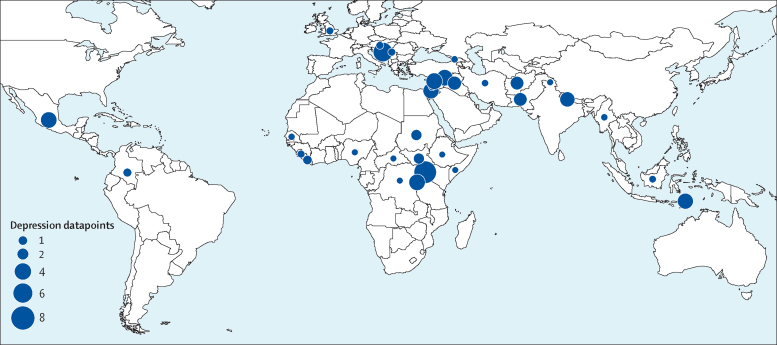
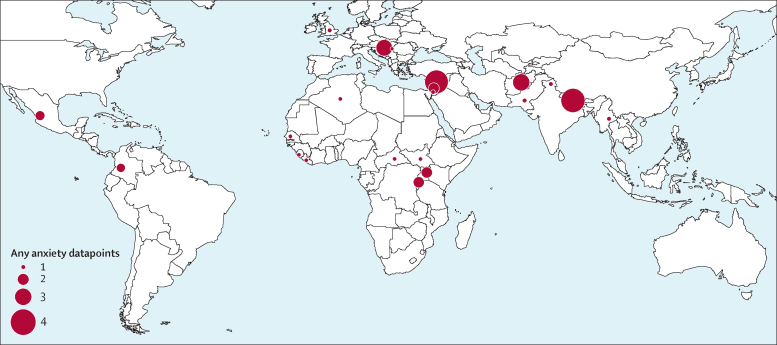
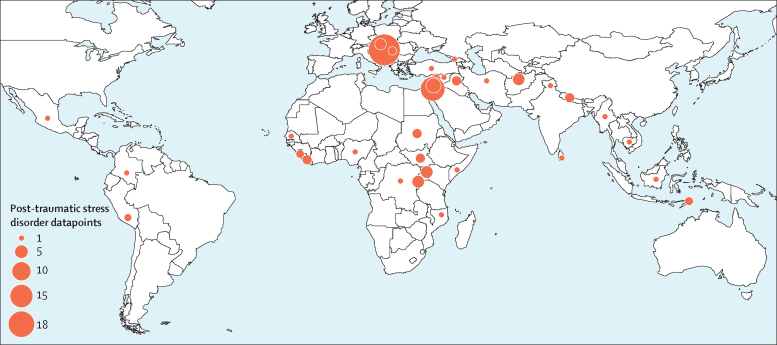
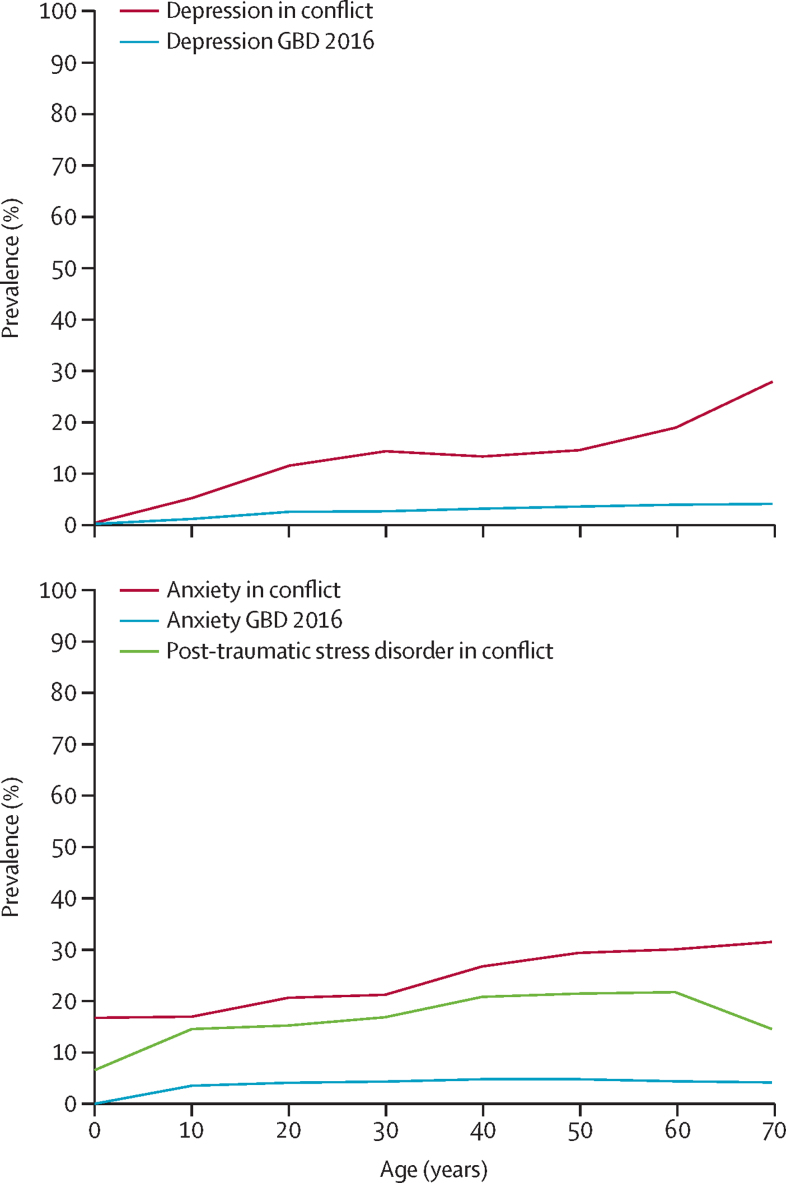
Verification
Claims the paper makes
The claims and statistics of this paper haven’t been checked yet.
Free: it reads the open-access text and checks the first 5 claims that cite a source we can check. Create a free account to check every claim.
Claims other papers make about this one
Each is checked against this paper’s own text: does it say what the citing paper says it does?
The source backs part of the claim, not all of it — or backs it for a different population, condition or comparison.
In the citing paper
“Conflict-affected populations are at elevated risk of psychological distress and a range of mental health disorders. 1”
From Guided self-help to reduce psychological distress in South Sudanese female refugees in Uganda: A cluster randomised trial (2020) · cites this paper as [1]
Experimental — accuracy not yet measuredThe source backs part of the claim, not all of it — or backs it for a different population, condition or comparison.
In the citing paper
“Recent estimates from WHO state that over 20% of refugees will experience mild or moderate mental disorders (e.g., depression, anxiety disorders, and post-traumatic stress disorder or PTSD), while about 4% may experience severe disorders, such as schizophrenia, bipolar disorder, and major depression (Charlson et al. 2019).”
From Throwing therapy at the problem mental health and humanitarian intervention in Palabek refugee settlement, northern Uganda (2023) · cites this paper as Charlson et al. 2019
Experimental — accuracy not yet measuredThe source backs part of the claim, not all of it — or backs it for a different population, condition or comparison.
In the citing paper
“with recent WHO estimates indicating that rates of common mental disorders among conflictaffected individuals may be as high as 22.1% (Charlson et al. 2019)”
From Throwing therapy at the problem mental health and humanitarian intervention in Palabek refugee settlement, northern Uganda (2023) · cites this paper as Charlson et al. 2019
Experimental — accuracy not yet measuredThe source backs part of the claim, not all of it — or backs it for a different population, condition or comparison.
In the citing paper
“A large body of literature points out that people suffering from severe mental disorders are particularly at risk of experiencing neglect, abuse, and abandonment during an emergency, as well as more likely to be severely impacted by an interruption in access to health services (Ostuzzi et al. 2017;Charlson et al. 2019).”
From Throwing therapy at the problem mental health and humanitarian intervention in Palabek refugee settlement, northern Uganda (2023) · cites this paper as Charlson et al. 2019
Experimental — accuracy not yet measuredThe source backs part of the claim, not all of it — or backs it for a different population, condition or comparison.
In the citing paper
“The first covariate identified the mean mortality rate in the previous ten years due to war and terrorism for each GBD location, considering the known association between conflict and elevated prevalence of major depressive disorder and anxiety disorders.12”
From Global, regional, and national burden of 12 mental disorders in 204 countries and territories, 1990-2019: a systematic analysis for the Global Burden of Disease Study 2019. (2022) · cites this paper as [12]
Experimental — accuracy not yet measured
8 more claims about this paper
Create a free account to see every claim other papers make about this one.
Self-check
Percentages, sums and reported differences re-computed from the paper’s own numbers.
The self-check needs the paper’s full text.
Citations
Cites
Vos, T., Abajobir, A. A., Abate, K. H., Abbafati, C., Abbas, K. M., Abd-Allah, F., Abdulkader, R. S., Abdulle, A. M., Abebo, T. A., Abera, S. F., et al. (2017) · The Lancet · doi:10.1016/s0140-6736(17)32154-2 · Cited by 13,220
Self-citationWhiteford, H. A., Degenhardt, L., Rehm, J., Baxter, A. J., Ferrari, A. J., Erskine, H. E., Charlson, F. J., Norman, R. E., Flaxman, A. D., Johns, N., et al. (2013) · The Lancet · doi:10.1016/s0140-6736(13)61611-6 · Cited by 6,006
Self-citationThe kappa statistic in reliability studies: use, interpretation, and sample size requirements
Sim, J., & Wright, C. C. (2005) · Physical Therapy · doi:10.1093/ptj/85.3.257 · Cited by 4,093
60,000 Disaster Victims Speak: Part I. An Empirical Review of the Empirical Literature, 1981–2001
Norris, F. H., Friedman, M. J., Watson, P. J., Byrne, C. M., Diaz, E., & Kaniasty, K. (2002) · Psychiatry: Interpersonal and Biological Processes · doi:10.1521/psyc.65.3.207.20173 · Cited by 3,128
Ferrari, A. J., Charlson, F. J., Norman, R. E., Patten, S. B., Freedman, G., Murray, C. J. L., Vos, T., & Whiteford, H. A. (2013) · PLoS Medicine · doi:10.1371/journal.pmed.1001547 · Cited by 3,115
Self-citationSteel, Z., Chey, T., Silove, D., Marnane, C., Bryant, R. A., & van Ommeren, M. (2009) · JAMA · doi:10.1001/jama.2009.1132 · Cited by 2,246
A Systematic Review of the Prevalence of Schizophrenia
Saha, S., Chant, D., Welham, J., & McGrath, J. (2005) · PLoS Medicine · doi:10.1371/journal.pmed.0020141 · Cited by 2,168
Charlson, F. J., Ferrari, A. J., Santomauro, D. F., Diminic, S., Stockings, E., Scott, J. G., McGrath, J. J., & Whiteford, H. A. (2018) · Schizophrenia Bulletin · doi:10.1093/schbul/sby058 · Cited by 1,647
Self-citationGlobal prevalence of anxiety disorders: a systematic review and meta-regression
Baxter, A. J., Scott, K. M., Vos, T., & Whiteford, H. A. (2013) · Psychological Medicine · doi:10.1017/s003329171200147x · Cited by 1,537
Self-citationFerrari, A. J., Somerville, A. J., Baxter, A. J., Norman, R., Patten, S. B., Vos, T., & Whiteford, H. A. (2013) · Psychological Medicine · doi:10.1017/s0033291712001511 · Cited by 1,230
Self-citation
Research works printed but not linked: 1
- Flaxman AD Vos T Murray CJL An integrative metaregression framework for descriptive epidemiology 2013 University of Washington Press Seattle, WA
Cited by
Items 301–400 of 1,005
Dujardin, K., Tard, C., Diglé, E., Herlin, V., Mutez, E., Davion, J., Wissocq, A., Delforge, V., Kuchcinski, G., & Huin, V. (2024) · Movement Disorders · doi:10.1002/mds.29750 · Cited by 22
Martínez-Burgos, W. J., Montes, E. J. M., Pozzan, R., Serra, J. L., Ocán-Torres, D. Y., Manzoki, M. C., Vieira, R. L., dos Reis, G. A., Rodrigues, C., Karp, S. G., et al. (2024) · Fermentation · doi:10.3390/fermentation10060275 · Cited by 23
Yılmaz, E., Tamam, L., & Cengisiz, C. (2024) · Frontiers in Psychiatry · doi:10.3389/fpsyt.2024.1352288 · Cited by 19
Hillis, S. D., Tucker, S., Baldonado, N., Taradaika, E., Bryn, L., Kharchenko, S. V., Machabelii, T., Taylor, R., Green, P., Goldman, P., et al. (2024) · Journal of Migration and Health · doi:10.1016/j.jmh.2024.100251 · Cited by 31
“Given the very high prevalence of these disorders, experts confirm the urgency in conflict settings of both effectively led by well-trained lay staff; and hold promise for expanded reach through virtual delivery (Charlson et al., 2019).”
BackgroundHousen, T., Ara, S., Shah, A., Shah, S., Lenglet, A., & Pintaldi, G. (2019) · Conflict and Health · doi:10.1186/s13031-019-0243-8 · Cited by 23
“chological distress in affected populations [1, 3].”
BackgroundAn exploratory study of embitterment in traumatized refugees
Spaaij, J., Schick, M., Bryant, R. A., Schnyder, U., Znoj, H., Nickerson, A., & Morina, N. (2021) · BMC Psychology · doi:10.1186/s40359-021-00599-2 · Cited by 24
Fine, S. L., Kane, J. C., Spiegel, P. B., Tol, W. A., & Ventevogel, P. (2022) · BMC Medicine · doi:10.1186/s12916-022-02371-8 · Cited by 20
“Not only do primary health care workers within refugee contexts need to be better equipped to address common mental health conditions (e.g., depression, anxiety, PTSD, and substance use), but more also needs to be done to provide treatment and support outside of health facilities.”
BackgroundResultInfluentialBen‐Azu, B., Chidebe, E. O., Toloyai, P.-E. Y., Annafi, O. S., Oritsemuelebi, B., Asiwe, J. N., Moke, E. G., Ajayi, A. M., Chukwuebuka, N. B., Onuelu, J. E., et al. (2024) · Clinical Traditional Medicine and Pharmacology · doi:10.1016/j.ctmp.2024.200148 · Cited by 22
Spiegel, P., Martinez, E., Abrahim, O., Undie, C., Altare, C., Schmid, B., Abbara, A., Bahattab, A. A. S., Bojórquez, I., Cantor, D. J., et al. (2026) · The Lancet · doi:10.1016/s0140-6736(26)00564-7 · Cited by 30
Owen, E., Massazza, A., Roberts, B., Lokot, M., & Fuhr, D. C. (2022) · Journal of Migration and Health · doi:10.1016/j.jmh.2022.100087 · Cited by 22
Nemiro, A., Hijazi, Z., O'Connell, R., Coetzee, A. R., & Snider, L. (2022) · Intervention · doi:10.4103/intv.intv_20_21 · Cited by 25
War stories in social media: Personal experience of Russia-Ukraine war
Засєкін, С. В., Kuperman, V., Hlova, I., & Zasiekina, L. (2022) · East European Journal of Psycholinguistics · doi:10.29038/eejpl.2022.9.2.zas · Cited by 37
Sex Steroid Hormones in Depressive Disorders as a Basis for New Potential Treatment Strategies
Pillerová, M., Pastorek, M., Borbélyová, V., RILJAK, V., Frick, K. M., Hodosy, J., & Tóthová, Ľ. (2022) · Physiological Research · doi:10.33549/physiolres.935001 · Cited by 21
Evidence-based umbrella review of non-invasive brain stimulation in anxiety disorders
Sá, K. N., Baptista, R. F., Shirahige, L., Razza, L. B., Nogueira, M. G., Coura, M. H. F., dos Santos, L. A., Tanaka, C., Baptista, A. F., Monte-Silva, K. K., et al. (2023) · The European Journal of Psychiatry · doi:10.1016/j.ejpsy.2023.01.001 · Cited by 23
Bou-Orm, I. R., Moussallem, M., Bader, J. K., deLara, M., Varma, V., Diaconu, K., Apaydin, M. C. B., den Bergh, R. V., Ager, A., & Witter, S. (2023) · Conflict and Health · doi:10.1186/s13031-023-00547-4 · Cited by 20
“The most updated WHO estimates reveal that the prevalence of mental health problems (including depression, anxiety, and posttraumatic stress disorders (PTSD)) among conflict-affected populations is around 22% at any point of time [3].”
BackgroundMental health in conflict settings
Seidi, P. A.-M., & Jaff, D. (2019) · The Lancet · doi:10.1016/s0140-6736(19)32554-1 · Cited by 20
Sun, Y., Ji, M., Zhang, X., Chen, J., Wang, Y., & Wang, Z. (2022) · Journal of Affective Disorders · doi:10.1016/j.jad.2022.06.017 · Cited by 19
Insula-cortico-subcortical networks predict interoceptive awareness and stress resilience
Fermin, A. S. R., Sasaoka, T., Maekawa, T., Ono, K., Chan, H.-L., & Yamawaki, S. (2024) · Asian Journal of Psychiatry · doi:10.1016/j.ajp.2024.103991 · Cited by 26
Prevalence of anxiety disorders in Latin America: a systematic review and meta-analysis
Errázuriz, A., Avello-Vega, D., Passi‐Solar, Á., Torres, R., Bacigalupo, F., Crossley, N. A., Undurraga, E. A., & Jones, P. B. (2025) · The Lancet Regional Health - Americas · doi:10.1016/j.lana.2025.101057 · Cited by 32
The impact of Gaza war: online educational challenges and mental health of university students
El-Khodary, B., & Abou-Dagga, S. I. (2025) · Middle East Current Psychiatry · doi:10.1186/s43045-025-00542-w · Cited by 25
“Furthermore, these results are in the line with the estimation of the World Health Organization (WHO) which indicated that one in five persons experiences mental health problems in conflict-affected areas [29].”
The impact of war and forced displacement on the mental health of children and adolescents
Сохор, Н. Р., Ясний, О. Р., Smashna, O., & Hashimova, N. (2024) · Psychosomatic Medicine and General Practice · doi:10.26766/pmgp.v9i1.471 · Cited by 36
Su, X., Cai, R. Y., Uljarević, M., Herwegen, J. V., Dukes, D., Yang, Y., Peng, X., & Samson, A. C. (2021) · Frontiers in Psychiatry · doi:10.3389/fpsyt.2021.708465 · Cited by 23
Logie, C. H., Okumu, M., Latif, M., Parker, S. J., Hakiza, R., Musoke, D. K., Mwima, S., Batte, S., & Kyambadde, P. (2022) · AIDS and Behavior · doi:10.1007/s10461-021-03567-4 · Cited by 21
The neuroanatomy of social trust predicts depression vulnerability
Fermin, A. S. R., Kiyonari, T., Matsumoto, Y., Takagishi, H., Li, Y., Kanai, R., Sakagami, M., Akaishi, R., Ichikawa, N., Takamura, M., et al. (2022) · Scientific Reports · doi:10.1038/s41598-022-20443-w · Cited by 23
Kumari, S., Joseph, J., & Singh, B. (2022) · Applied Nursing Research · doi:10.1016/j.apnr.2022.151657 · Cited by 25
Weissbecker, I., Bháird, C. N. A., Alves, V. R., Ventevogel, P., Willhoite, A., Hijazi, Z., Hanna, F., Atukunda, P., Dakkak, H., & van Ommeren, M. (2023) · World Psychiatry · doi:10.1002/wps.21048 · Cited by 19
Papola, D., Ostuzzi, G., Todesco, B., Gastaldon, C., Hanna, F., Chatterjee, S., van Ommeren, M., & Barbui, C. (2023) · The Lancet Psychiatry · doi:10.1016/s2215-0366(23)00176-1 · Cited by 19
Qian, X., Zhong, Z.-D., Zhang, Y., Qiu, L., & Tan, H.-J. (2023) · Brain Research · doi:10.1016/j.brainres.2023.148723 · Cited by 19
Ketamine cystitis following ketamine therapy for treatment-resistant depression – case report
Chang, M., Juruena, M. F., & Young, A. H. (2024) · BMC Psychiatry · doi:10.1186/s12888-023-05468-3 · Cited by 23
“Over 350 million people worldwide suffer from depression and about one-third of these patients are believed to have treatment-resistant depression (TRD) [7].”
BackgroundRessler, A., Hinchey, L. M.-E., Mast, J., Zucconi, B. E., Bratchuk, A., Parfenukt, N., Roth, D., & Javanbakht, A. (2024) · International Journal of Social Psychiatry · doi:10.1177/00207640241242030 · Cited by 23
“underscore an additional surge in PTSD among Ukrainians following Russia’s full-scale invasion (Charlson et al., 2019; Kang et al., 2023; Zasiekina et al., 2023).”
Wan, R., Wan, R., Xie, Q., Hu, A., Xie, W., Chen, J., & Liu, Y. (2024) · Behavioral Sciences · doi:10.3390/bs15010027 · Cited by 21
“Although 94.4% of people do not develop PTSD after experiencing potentially traumatic events (Koenen et al., 2017; Charlson et al., 2019), certain types of trauma, such as violent conflict or war, have much higher incidence rates, reaching 15.3% (Gravely et al., 2011).”
InfluentialRashid, H. U., Khan, M. N., Imtiaz, A., Ullah, N., Dherani, M., & Rahman, A. (2020) · BMC Pregnancy and Childbirth · doi:10.1186/s12884-020-2841-2 · Cited by 25
Rehman, S., Nabi, B., Pottoo, F. H., Baboota, S., & Ali, J. (2020) · Current Gene Therapy · doi:10.2174/1566523220666200607185903 · Cited by 23
White, R. G., & van der Boor, C. (2021) · Epidemiology and Psychiatric Sciences · doi:10.1017/s2045796021000263 · Cited by 22
Stein, J., Niemeyer, H., Meyer, C., Wirz, C., Eiling, A., Gruzman, R., Heeke, C., Stammel, N., & Knaevelsrud, C. (2021) · Journal of Affective Disorders · doi:10.1016/j.jad.2021.06.042 · Cited by 18
McGowan, N. M., Rucker, J., Yehuda, R., Agrawal, M., Modlin, N. L., Simmons, H., Tofil-Kaluza, A., Das, S., & Goodwin, G. M. (2025) · Journal of Psychopharmacology · doi:10.1177/02698811251362390 · Cited by 25
“The prevalence is higher in at-risk groups such as military veterans, emergency care staff and those living in or migrated from conflict-affected regions (Berger et al., 2012; Charlson et al., 2019; Patanè et al., 2022; Schein et al., 2021).”
Immune-brain plasticity underpins stress and affective behaviors
Lee, J., & Wheeler, M. E. (2025) · Neuron · doi:10.1016/j.neuron.2025.11.020 · Cited by 21
Santos-Costa, N., Baptista‐de‐Souza, D., Canto‐de‐Souza, L., da Costa, V. F., & Nunes‐de‐Souza, R. L. (2021) · Frontiers in Behavioral Neuroscience · doi:10.3389/fnbeh.2021.695735 · Cited by 24
Harris, S., Sandal, G. M., Bye, H. H., Palinkas, L. A., & Binder, P. (2021) · Frontiers in Public Health · doi:10.3389/fpubh.2021.777582 · Cited by 24
Pedersen, G. A., Sangraula, M., Shrestha, P., Lakshmin, P., Schafer, A., Ghimire, R., Luitel, N. P., Jordans, M. J. D., & Kohrt, B. A. (2021) · Journal on Education in Emergencies · doi:10.33682/u4t0-acde · Cited by 25
“Among the most serious effects of conflict, pandemics, and other humanitarian crises is how they disrupt people’s mental health and psychosocial wellbeing (Charlson et al. 2019; Lahiri, van Ommeren, and Roberts 2017).”
BackgroundStrengthening Diabetes Care in Humanitarian Crises in Low- and Middle-income Settings
Kehlenbrink, S., Ansbro, É., Besançon, S., Hassan, S., Roberts, B., & Jobanputra, K. (2022) · The Journal of Clinical Endocrinology & Metabolism · doi:10.1210/clinem/dgac331 · Cited by 19
Kaysen, D. L., van Stolk‐Cooke, K., Kaminer, D., Greene, M. C., López‐Castro, T., & Kane, J. C. (2022) · Cambridge Prisms Global Mental Health · doi:10.1017/gmh.2022.63 · Cited by 21
“Additionally, much of the literature on PTSD in LMICs focuses on civilian populations affected by humanitarian emergencies where the prevalence of PTSD and common mental disorders is generally higher than that observed in the general population (Charlson et al., 2019).”
BackgroundНестик, Т. А. (2023) · Social Psychology and Society · doi:10.17759/sps.2023140401 · Cited by 27
Tremendous Fidelity of Vitamin D3 in Age-related Neurological Disorders
Skv, M., Abraham, S. M., Eshwari, O., Golla, K., Jhelum, P., Maity, S., & Komal, P. (2024) · Molecular Neurobiology · doi:10.1007/s12035-024-03989-w · Cited by 20
Rabbani, F., Zahidie, A., Siddiqui, A., Shah, S., Merali, Z., Saeed, K., & Afifi, M. (2024) · Eastern Mediterranean Health Journal · doi:10.26719/2024.30.5.369 · Cited by 27
“Global estimates suggest that 1 in every 5 individuals residing in a conflict zone experiences mental health conditions such as depression, anxiety, PTSD, bipolar disorder or schizophrenia ( 14 ).”
BackgroundInfluentialAkik, C., Dirani, Z. E., Willis, R., Truppa, C. T., Zmeter, C., Perone, S. A., Roswall, J., Hamadeh, R. R., Blanchet, K., Roberts, B., et al. (2024) · Journal of Migration and Health · doi:10.1016/j.jmh.2024.100269 · Cited by 22
“…risks, including increased levels of mental disorders and stress, exposure to alcohol and smoking, increased cardiovascular risk, and limited access to healthy food and exercise options (Hayman et al., 2015; Maconick et al., 2020; Willis et al., 2023; Charlson et al., 2019; Lo et al., 2017, 2016).”
Vidović, S., Kotromanović, S., & Pogorelić, Z. (2024) · Journal of Clinical Medicine · doi:10.3390/jcm13206240 · Cited by 23
“According to the World Health Organization, one in eight individuals worldwide is affected by a mental disorder [2].”
Sahu, A., Chowdhury, H. A., Gaikwad, M., Chongtham, C., Talukdar, U., Phukan, J. K., Bhattacharyya, D. K., & Barah, P. (2019) · Brain Behavior & Immunity - Health · doi:10.1016/j.bbih.2019.100023 · Cited by 19
Kızılhan, J. I., & Neumann, J. (2020) · Frontiers in Psychiatry · doi:10.3389/fpsyt.2020.00540 · Cited by 24
Challenges and opportunities for Rohingya mental health and psychosocial support programming
Elshazly, M., Budosan, B., Alam, A. N. M. M., Khan, N., & Ventevogel, P. (2019) · Intervention · doi:10.4103/intv.intv_49_19 · Cited by 24
Kim, S. Y., Lee, C. H., Min, C., Park, I., & Choi, H. G. (2020) · Clinical Otolaryngology · doi:10.1111/coa.13558 · Cited by 18
Kishita, N., Morimoto, H., Márquez-González, M., Barrera-Caballero, S., Vara-García, C., Van Hout, E., Contreras, M., & Losada-Baltar, A. (2023) · Journal of Geriatric Psychiatry and Neurology · doi:10.1177/08919887221130269 · Cited by 17
“2%,(3) which is substantially higher than the reported prevalence rate in the general population.(4) Many previous studies have investigated factors associated with depression in family carers of people with dementia.”
BackgroundThe burden of trauma in the life of a refugee
Salim, S. (2024) · Frontiers in Public Health · doi:10.3389/fpubh.2024.1298544 · Cited by 21
Benzian, H., & Listl, S. (2021) · Bundesgesundheitsblatt - Gesundheitsforschung - Gesundheitsschutz · doi:10.1007/s00103-021-03353-6 · Cited by 23
The ‘good life’, personal appearance, and mental health of Congolese refugees in Rwanda and Uganda
Robinson, J. E., Chiumento, A., Kasujja, R., Rutayisire, T., & White, R. G. (2021) · Social Science & Medicine · doi:10.1016/j.socscimed.2021.114641 · Cited by 24
“…2004) Refugee populations have been shown to experience elevated levels of daily stress, social adversity (Lindert et al., 2009; Miller & Rasmussen, 2014; Riley et al., 2017) and common mental health problems (Charlson et al., 2019; Fazel et al., 2005; Priebe et al., 2016; Vossoughi et al., 2018).”
BackgroundInfluentialKyrillos, V., Bosqui, T. J., Moghames, P., Chehade, N., Saad, S., Rahman, D. A., Karam, E. G., Karam, G., Saab, D., Pluess, M., et al. (2022) · Transcultural Psychiatry · doi:10.1177/13634615221105114 · Cited by 22
“The high prevalence of these disorders is in keeping with studies conducted in other con fl ict-affected populations (Charlson et al., 2019; De Jong et al., 2003), but the wide range also points to potential problems in estimating the prevalence of mental disorders.”
BackgroundResultWomen's Mental Health and Lessons Learnt from the COVID-19 Pandemic
Thibaut, F., & ElNahas, G. M. (2023) · Psychiatric Clinics of North America · doi:10.1016/j.psc.2023.04.001 · Cited by 21
“live in conflict zones and express high need for mental health and psychosocial support.(54,55) On the other hand, in South Sudan, it was estimated that around 5 million people were affected by the ongoing prepandemic humanitarian emergency in the”
Kaniasty, K. Z., Baran, M., Urbańska, B., Boczkowska, M., & Hamer, K. (2023) · Applied Psychology Health and Well-Being · doi:10.1111/aphw.12483 · Cited by 20
Augustinavicius, J., Purgato, M., Tedeschi, F., Musci, R. J., Leku, M. R., Carswell, K., Lakin, D. P., van Ommeren, M., Cuijpers, P. J., Sijbrandij, M., et al. (2023) · BMJ Open · doi:10.1136/bmjopen-2020-048043 · Cited by 18
Yu, X., Fan, Z., Yang, T., Li, H., Shi, Y., Ye, L., & Huang, R. (2023) · Clinica Chimica Acta · doi:10.1016/j.cca.2023.117694 · Cited by 17
Seekles, M. L., Kadima, J., Ding, Y., Bulambo, C. B., Kim, J. J., Kukola, J., Omumbu, P. O. L., Mulamba, R. M., Nganda, M. M., Ngenyibungi, S. M., et al. (2023) · International Health · doi:10.1093/inthealth/ihad084 · Cited by 17
Bandt, D. D., Haile, S. R., Devillers, L., Bourrion, B., & Menges, D. (2024) · BMJ Mental Health · doi:10.1136/bmjment-2024-301026 · Cited by 25
The mental health of Ukrainian refugees: a narrative review
Ellis, E., Hazell, C. M., & Mason, O. J. (2024) · Academia Medicine · doi:10.20935/acadmed6232 · Cited by 28
Okumu, M., Logie, C. H., Byansi, W., Cohen, F., Nyoni, T., Nafula, C. N., Hakiza, R., Muzei, J., Appiah‐Kubi, J., Adjabeng, B. K., et al. (2024) · Computers in Human Behavior · doi:10.1016/j.chb.2024.108434 · Cited by 21
Urbanavičė, R., Arab, R. A. E., Hendrixson, V., Austys, D., Jakavonytė-Akstinienė, A., Skvarčevskaja, M., & Istomina, N. (2024) · Frontiers in Public Health · doi:10.3389/fpubh.2024.1411738 · Cited by 19
“The research suggests that refugees often have depression, anxiety disorder, post-traumatic stress disorder (10–13), bipolar disorder, and schizophrenia, and feeling of loneliness in the host country caused an acute stress disorder (13).”
BackgroundInfluentialPerlman, B., Collins, S. M., & Hoek, J. V. D. (2025) · PLOS Global Public Health · doi:10.1371/journal.pgph.0004221 · Cited by 19
“It can also exacerbate anxiety and depression [3–5], potentially compounding mental health issues that are already heightened in contexts with ongoing conflict and insecurity [6].”
Carvalho, S., Gonçalves, Ó. F., Brunoni, A. R., Fernandes-Gonçalves, A., Fregni, F., & Leite, J. (2020) · Frontiers in Psychiatry · doi:10.3389/fpsyt.2020.563058 · Cited by 18
Bosqui, T. J., Mayya, A., Younes, L., Baker, M. C., & Annan, I. (2020) · Conflict and Health · doi:10.1186/s13031-020-00324-7 · Cited by 17
Travers, Á., Abujaber, N., McBride, K. A., Blum, P. T., Wiedemann, N., & Vallières, F. (2022) · International Journal of Mental Health Systems · doi:10.1186/s13033-022-00515-0 · Cited by 22
“Introduction Populations affected by humanitarian emergencies are at risk of adverse mental health outcomes relating to trauma exposure and ongoing adversity and challenging conditions in the crisis aftermath [6].”
BackgroundLi, Q., Zhao, B., Li, W., He, Y., Tang, X., Zhang, T., Zhong, Z., Pan, Q., & Zhang, Y. (2022) · Biochemical and Biophysical Research Communications · doi:10.1016/j.bbrc.2022.05.041 · Cited by 20
Zhou, L., Wang, H., Gu, J., & Gao, F. (2022) · Synapse · doi:10.1002/syn.22247 · Cited by 19
van 't Hof, E., Heim, E., Abi Ramia, J., Burchert, S., Cornelisz, I., Cuijpers, P., El Chammay, R., Harper Shehadeh, M., Noun, P., Smit, F., et al. (2021) · JMIR Research Protocols · doi:10.2196/21585 · Cited by 16
The Impact of P‐Glycoprotein on CNS Drug Efflux and Variability in Response
Paul, P. R., Mishra, M., Bora, S., Kukal, S., Singh, A., Kukreti, S., & Kukreti, R. (2025) · Journal of Biochemical and Molecular Toxicology · doi:10.1002/jbt.70190 · Cited by 19
Pearson, I., Chase, E., Kim, C. V., San, N. M., Ja, H., Hlaing, Z. M., Oo, N., Lae, K., Soe, E. E., Zobrist, B., et al. (2025) · Conflict and Health · doi:10.1186/s13031-025-00668-y · Cited by 20
“Mental health and psychosocial support have historically been overlooked in emergency settings, despite crises and their aftermaths often being characterised by a disproportionately high burden of mental disorders [4].”
Health impacts of armed conflict in Ethiopia: a scoping review of evidence from 2018 to 2023
Ayalew, T. A., Bante, S. A., & Atnafu, D. D. (2025) · BMC Public Health · doi:10.1186/s12889-025-25365-6 · Cited by 20
Mengistu, N., Madoro, D., & Molla, W. (2021) · Neuropsychiatric Disease and Treatment · doi:10.2147/ndt.s338073 · Cited by 16
“” In addition, “nearly one in ten people live with a moderate or severe mental disorder.(1)” In 2021, nearly 50 million people were displaced worldwide because of conflict and violence but still living in their home country.”
Backgroundde Graaff, A. M., Cuijpers, P. J., Leeflang, M., Sferra, I., Uppendahl, J. R., de Vries, R., & Sijbrandij, M. (2021) · Cambridge Prisms Global Mental Health · doi:10.1017/gmh.2021.39 · Cited by 21
“Particularly high prevalence rates have been estimated for specific populations, such as refugees and asylum seekers (Steel et al ., 2009; Charlson et al ., 2019).”
BackgroundPillerová, M., Borbélyová, V., Pastorek, M., RILJAK, V., Hodosy, J., Frick, K. M., & Tóthová, Ľ. (2022) · Frontiers in Psychiatry · doi:10.3389/fpsyt.2022.972158 · Cited by 19
ON WAR, UNCERTAINTY, AND FUTURE: LESSONS LEARNED FROM THE EASTERN PHILOSOPHY
Danylova, T. V., Kuźma, I. B., Sushyi, O., Matviienko, I., Bezhnar, A., Poperechna, G., & Гончаренко, К. С. (2022) · Wiadomości Lekarskie · doi:10.36740/wlek202208117 · Cited by 21
Peng, M., Xiao, T., Carter, B., Chen, P., & Shearer, J. (2022) · International Journal of Environmental Research and Public Health · doi:10.3390/ijerph192315847 · Cited by 16
“1%, and one out of every 11 people (9%) exposed to conflict in the previous ten years would develop a moderate or severe mental disorder [8].”
BackgroundCroasdale, K., Grailey, K., Jennings, N., Mole, J., & Lawrance, E. L. (2023) · The Journal of Climate Change and Health · doi:10.1016/j.joclim.2023.100253 · Cited by 16
Abuhadra, B. D., Doi, S. K., & Fujiwara, T. (2023) · Middle East Current Psychiatry · doi:10.1186/s43045-023-00322-4 · Cited by 16
“, WHO in 2019 estimated that approximately one in five people in post-conflict settings has depression, anxiety disorder, post-traumatic stress disorder [10], it was estimated that about 40% of the most conflict-affected populations could be suffering from PTSD, with 30% of these cases considered to be severe.”
BackgroundCurrent issues of state regulation of psycho-social support in the conditions of war in Ukraine
Korolchuk, O., Zyma, I., Khrapatyi, S., Vikhliaiev, M., & Zavalko, K. (2023) · Neuropsychiatria i Neuropsychologia · doi:10.5114/nan.2023.129075 · Cited by 24
Guo, J., Fang, M., Xiong, Z., Zhou, K., & Zeng, P. H. (2023) · Naunyn-Schmiedeberg s Archives of Pharmacology · doi:10.1007/s00210-023-02628-w · Cited by 17
“Depression (also known as major depressive disorder, MDD) is the main cause of mental disorders that endanger the health of people worldwide and affects approximately 300 million people globally as estimated by the World Health Organization (Charlson et al. 2019; Herrman et al. 2019).”
Bakhtsiyarava, M., Ju, Y., Moran, M. R., Rodríguez, D. A., Dronova, I., Delclòs‐Alió, X., Moore, K., Castillo‐Riquelme, M., & Anza‐Ramirez, C. (2024) · Applied Geography · doi:10.1016/j.apgeog.2024.103219 · Cited by 17
Li, S., Shao, H., Sun, T., Guo, X., Zhang, X., Zeng, Q., Fang, S., Liu, X., Jia, Q., Liu, F., et al. (2024) · Frontiers in Pharmacology · doi:10.3389/fphar.2024.1366683 · Cited by 23
Institutional betrayal in the face of a collective national trauma in Israel
Lahav, Y., & Ben‐Ezra, M. (2024) · The Lancet Regional Health - Europe · doi:10.1016/j.lanepe.2024.100942 · Cited by 16
Dahie, H. A., Osman, M. A., Jimale, Y. A., Mohamud, F. I., Hussein, H. A., Alasow, M. O., Osman, A. A., & Abdullahi, A. M. (2024) · BMJ Open · doi:10.1136/bmjopen-2024-084275 · Cited by 16
Koirala, R., Søegaard, E. G. I., Ojha, S. P., Hauff, E., & Thapa, S. B. (2020) · PLoS ONE · doi:10.1371/journal.pone.0234203 · Cited by 17
“A recent systematic review and meta-analysis conducted by the WHO as well as other studies in the trauma-affected population in both Nepal and worldwide also support this finding [7, 22, 47].”
BackgroundResultJahrami, H., Saif, Z., AlHaddad, M., Faris, M. E., Hammad, L., & Ali, B. (2020) · Heliyon · doi:10.1016/j.heliyon.2020.e04323 · Cited by 19
“Depression is a principal cause of disability worldwide and is a leading contributor to the overall global burden of disease (Charlson et al., 2019).”
BackgroundShapira, S., Sold, A., & Refaeli, T. (2025) · Stress and Health · doi:10.1002/smi.70047 · Cited by 18
“These figures align with literature on trauma exposure in both man‐made (Charlson et al. 2019) and natural disasters (Beaglehole et al. 2018), where abrupt and large‐scale traumatic events are often linked to significant mental health burdens both in the general population, and particularly among…”
Gibbs, A., Abdelatif, N., Said, N., & Jewkes, R. K. (2020) · Global Public Health · doi:10.1080/17441692.2020.1849349 · Cited by 17
“Similarly, a systematic review of any post-conflict populations showed the prevalence of any mental disorder was 22.1% (Charlson et al., 2019).”
BackgroundInfluentialWang, H., He, H., Miao, M., Yu, Y., Liu, H., Zhang, J., Li, F., & Li, J. (2021) · Epidemiology and Psychiatric Sciences · doi:10.1017/s2045796021000421 · Cited by 16
Wessells, M. (2021) · Journal on Migration and Human Security · doi:10.1177/23315024211036014 · Cited by 18
Barbui, C., Tedeschi, F., Acartürk, C., Anttila, M., Au, T. M., Baumgartner, J. S., Carswell, K., Churchill, R. C., Cuijpers, P. J., Karyotaki, E., et al. (2022) · International Journal of Social Psychiatry · doi:10.1177/00207640221132430 · Cited by 19
“…from epidemiological studies, which generally show similar frequencies for depression and PTSD, or slightly higher frequencies for depression, depending on the population surveyed and the study setting (Blackmore et al., 2020; Charlson et al., 2019; Henkelmann et al., 2020; Hoell et al., 2021).”
BackgroundResultInfluentialJahanyar, B., Tabatabaee, H., & Rowhanimanesh, A. (2023) · Computers in Biology and Medicine · doi:10.1016/j.compbiomed.2023.107024 · Cited by 17
Knappe, F., Filippou, K., Hatzigeorgiadis, A., Morres, I. D., Tzormpatzakis, E., Havas, E., Seelig, H., Colledge, F., Ludyga, S., Meier, M., et al. (2023) · Frontiers in Public Health · doi:10.3389/fpubh.2023.1179756 · Cited by 19
THE PROBLEM OF MENTAL HEALTH IN UKRAINE: A PSYCHOLOGICAL ANALYSIS
Ткачишина, О. Р. (2023) · Habitus · doi:10.32782/2663-5208.2023.53.35 · Cited by 15
Chen, Y., Peng, W., Pang, M., Zhu, B., Liu, H., Hu, D., Luo, Y., Wang, S., Wu, S., He, J., et al. (2024) · Frontiers in Public Health · doi:10.3389/fpubh.2024.1306150 · Cited by 17
Ngamaba, K. H., Lombo, L. S., Makopa, I. K., Webber, M., Liuta, J. M., Madinga, J. N., Mampunza, S. M. M., & Heap, C. (2024) · npj Mental Health Research · doi:10.1038/s44184-023-00051-w · Cited by 17
“…the DRC. Similarly, other systematic reviews in con fl ict-affected populations fi nd high frequencies of mental health illnesses such as depression, anxiety, post ‐ traumatic stress disorder, bipolar disorder, and schizophrenia 51 , and PTSD among civilians who have experienced sexual violence 50 .”
Metadata
- Authors
- Charlson, F., van Ommeren, M., Flaxman, A., Cornett, J., Whiteford, H., & Saxena, S.
- Affiliations
- The University of Queensland (AU)
- University of Washington (US)
- Queensland Centre for Mental Health Research (AU)
- Harvard University (US)
- Venue
- The Lancet
- Publisher
- Elsevier BV
- Published
- 2019-07
- Volume
- 394
- Issue
- 10194
- Pages
- 240-248
- ISSN
- 0099-5355 (ISSN-L)
- 0140-6736
- PMC
- PMC6657025
- OpenAlex
- W2950709739
- Semantic Scholar
- 8667a4e02ed0ec6334728138d6e6a05d247d81e0
- Cited by
- 1,702
- References
- 32
- Citations by year
- 2026: 282 · 2025: 284 · 2024: 273 · 2023: 276 · 2022: 240 · 2021: 173 · 2020: 152 · 2019: 21
- FWCI
- 22.62
- Type
- journal article
- Language
- en
- Open access
- hybrid
- doi.org
- Licence
- cc-by
- www.elsevier.com/tdm/userlicense/1.0/ (tdm)
- creativecommons.org/licenses/by/4.0/ (vor)
- Locations
- The Lancet (publishedVersion, cc-by)
- Europe PMC (PubMed Central) (publishedVersion, cc-by)
- PubMed Central (publishedVersion, cc-by)
- PubMed (publishedVersion)
- Funders
- World Health Organization
- Queen Mary University of London
- United Nations High Commissioner for Refugees
- Topics
- Health Sciences › Medicine › Psychiatry and Mental health › Mental Health Treatment and Access
- Health Sciences › Health Professions › General Health Professions › Health and Conflict Studies
- Social Sciences › Psychology › Clinical Psychology › Migration, Health and Trauma
- Keywords
- mental illness, conflict-affected populations, war and mental health, depression, anxiety disorders, post-traumatic stress disorder, bipolar disorder, schizophrenia, psychosis, point prevalence, global prevalence estimates, Bayesian meta-regression, comorbidities, disease burden, armed conflict, internally displaced persons
- MeSH terms
- Anxiety Disorders, Mental Disorders, Bipolar Disorder, Depression, Humans, Schizophrenia, Stress Disorders, Post-Traumatic, Warfare, World Health Organization, Prevalence
About these checks
Registry, retraction, Cites and statistics results are computed, not judged, with one exception: a printed reference that no index lists is read once by a model before it counts as a citation error. Claims are extracted by a model and kept only when their quote appears verbatim in the text; each cited source is then checked, with a model’s help, for whether it says what the claim relies on. Those verdicts can be wrong — read the claim’s quote and the cited source before relying on one.
Statistics and arithmetic are recomputed, not judged.
Confidence bands are shown only for fields calibrated on our annotated test set. None is calibrated yet, so no band is shown.
What counts as a claim ›How we measure confidence ›How we check this ›
Are you an author, or do you see a problem with this page? Request a review
Data sources
Bibliographic data: Semantic Scholar, OpenAlex, Crossref.
Contains information from the Semantic Scholar Academic Graph Datasets, made available under the ODC Attribution License (ODC-BY 1.0).
Semantic Scholar’s data is described in: Kinney, R., et al. (2023). The Semantic Scholar Open Data Platform. arXiv:2301.10140.
