

Pharmacological and psychotherapeutic interventions for management of obsessive-compulsive disorder in adults: a systematic review and network meta-analysis
Open accessThe DOI matches its Crossref record; 88 of the 89 references it cites were found in a registry or an index.
Abstract
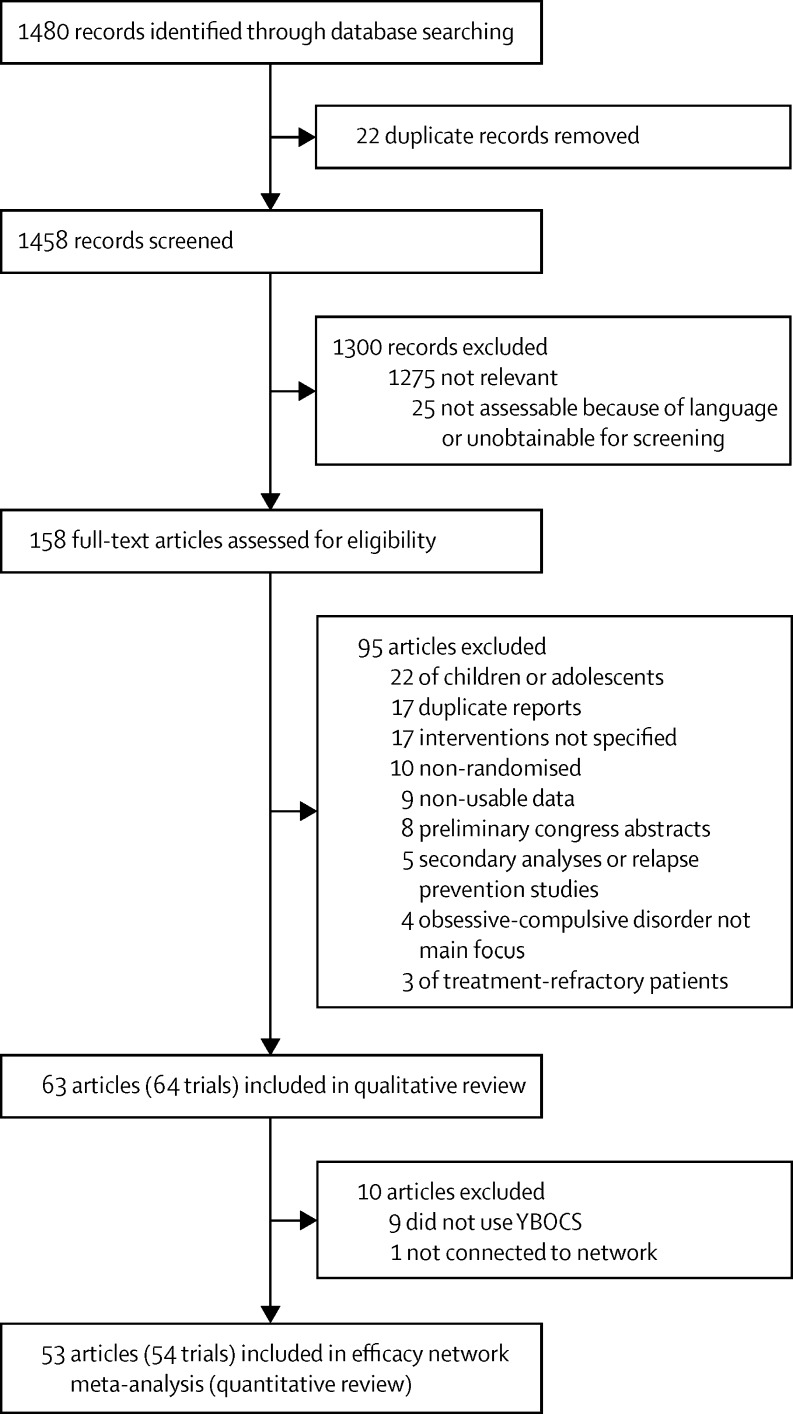
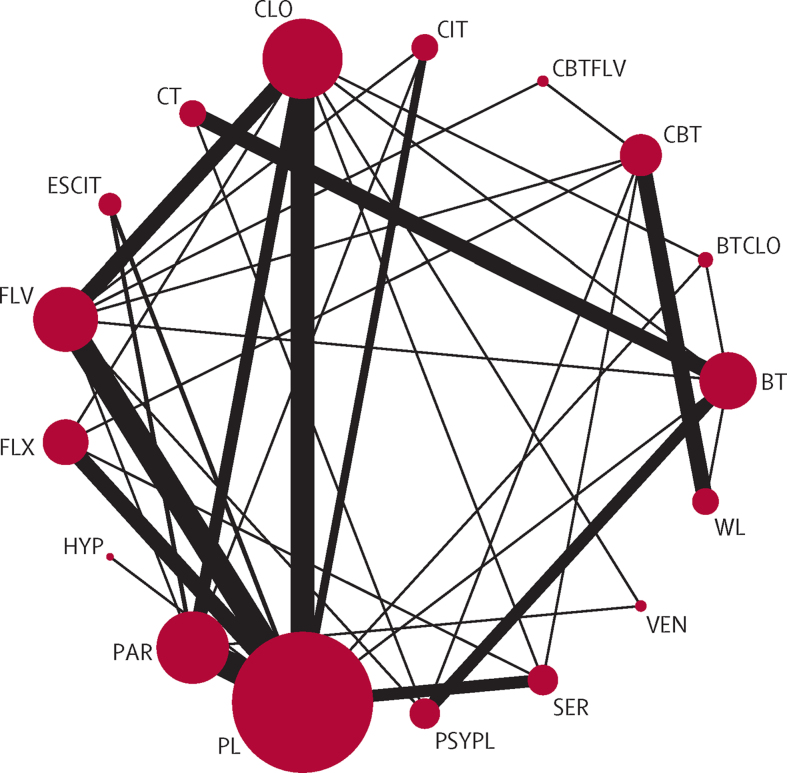
BACKGROUND: Several interventions are available for management of obsessive-compulsive disorder in adults, but few studies have compared their relative efficacy in a single analysis. We aimed to simultaneously compare all available treatments using both direct and indirect data. METHODS: In this systematic review and network meta-analysis, we searched the two controlled trials registers maintained by the Cochrane Collaboration Common Mental Disorders group for trials published up to Feb 16, 2016. We selected randomised controlled trials in which an active psychotherapeutic or pharmacological intervention had been used in adults with obsessive-compulsive disorder. We allowed all comorbidities except for schizophrenia or bipolar disorder. We excluded studies that focused exclusively on treatment-resistant patient populations defined within the same study. We extracted data from published reports. The primary outcome was symptom severity as measured by the Yale-Brown Obsessive Compulsive Scale. We report mean differences with 95% credible intervals compared with placebo. This study is registered with PROSPERO, number CRD42012002441. FINDINGS: We identified 1480 articles in our search and included 53 articles (54 trials; 6652 participants) in the network meta-analysis. Behavioural therapy (mean difference -14·48 [95% credible interval -18·61 to -10·23]; 11 trials and 287 patients), cognitive therapy (-13·36 [-18·40 to -8·21]; six trials and 172 patients), behavioural therapy and clomipramine (-12·97 [-19·18 to -6·74]; one trial and 31 patients), cognitive behavioural therapy and fluvoxamine (-7·50 [-13·89 to -1·17]; one trial and six patients), cognitive behavioural therapy (-5·37 [-9·10 to -1·63]; nine trials and 231 patients), clomipramine (-4·72 [-6·85 to -2·60]; 13 trials and 831 patients), and all SSRIs (class effect -3·49 [95% credible interval -5·12 to -1·81]; 37 trials and 3158 patients) had greater effects than did drug placebo. Clomipramine was not better than were SSRIs (-1·23 [-3·41 to 0·94]). Psychotherapeutic interventions had a greater effect than did medications, but a serious limitation was that most psychotherapeutic trials included patients who were taking stable doses of antidepressants (12 [80%] of the 15 psychotherapy trials explicitly allowed antidepressants). INTERPRETATION: A range of interventions is effective in the management of obsessive-compulsive disorder, but considerable uncertainty and limitations exist regarding their relative efficacy. Taking all the evidence into account, the combination of psychotherapeutic and psychopharmacological interventions is likely to be more effective than are psychotherapeutic interventions alone, at least in severe obsessive-compulsive disorder. FUNDING: National Institute for Health Research.
Overview
The claims and statistics of this paper haven’t been checked yet.
Free: it reads the open-access text and checks the first 5 claims that cite a source we can check. Create a free account to check every claim.
Integrity signals
Registry
Cites
Statistics
Figures
Verification
Claims the paper makes
The claims and statistics of this paper haven’t been checked yet.
Free: it reads the open-access text and checks the first 5 claims that cite a source we can check. Create a free account to check every claim.
Claims other papers make about this one
Each is checked against this paper’s own text: does it say what the citing paper says it does?
The source backs part of the claim, not all of it — or backs it for a different population, condition or comparison.
In the citing paper
“A meta-analysis of headtohead trials directly comparing clomipramine with SSRIs indicated equivalent efficacies [22].”
From Clinical Advances in Treatment Strategies for Obsessive-compulsive Disorder in Adults (2023) · cites this paper as [22]
Experimental — accuracy not yet measuredThe source backs part of the claim, not all of it — or backs it for a different population, condition or comparison.
In the citing paper
“Cognitive-behavioral therapy (CBT) with exposure and response prevention (ERP) as well as pharmacotherapy (i.e., selective serotonin reuptake inhibitors) are evidence-based treatments for OCD [19].”
From Metacognitive Training for Obsessive-Compulsive Disorder: A study protocol for a randomized controlled trial (2020) · cites this paper as [19]
Experimental — accuracy not yet measuredThe cited source says what the claim attributes to it.
In the citing paper
“Despite the limitation that most psychotherapeutic trials included patients were prescribed stable doses of SSRIs [22], meta-analyses of RCTs have consistently demonstrated that CBT/ERP therapy significantly improves OCD symptoms [43,44].”
From Clinical Advances in Treatment Strategies for Obsessive-compulsive Disorder in Adults (2023) · cites this paper as [22]
The cited source says what the claim attributes to it.
In the citing paper
“As there are no noticeable differences in the efficacy between specific SSRIs [22], the adverse effects of SSRIs could be one of the main considerations in the choice of a specific SSRI.”
From Clinical Advances in Treatment Strategies for Obsessive-compulsive Disorder in Adults (2023) · cites this paper as [22]
The check wasn’t confident either way, so it gives no verdict — never disputed.
In the citing paper
“Neurobiological models implicate dysfunction within fronto-striatal systems involved in cognitive control [47].”
From Neural correlates of response inhibition following cognitive behavioral therapy in obsessive–compulsive disorder: a randomized controlled EEG study (2026) · cites this paper as [47]
Experimental — accuracy not yet measured
2 more claims about this paper
Create a free account to see every claim other papers make about this one.
Self-check
Percentages, sums and reported differences re-computed from the paper’s own numbers.
The self-check needs the paper’s full text.
Citations
Cites
Cochrane Handbook for Systematic Reviews of Interventions: Cochrane Book Series
(2008) · doi:10.1002/9780470712184 · Cited by 25,048 · cited 3×
“14 We included studies with a high risk of bias in the main analysis but did sensitivity analyses to examine the eff ect of excluding them.”
InfluentialThe Yale-Brown Obsessive Compulsive Scale: I. Development, Use, and Reliability
Goodman, W. K. (1989) · Archives of General Psychiatry · doi:10.1001/archpsyc.1989.01810110048007 · Cited by 7,712 · cited 3×
“13 Our preferred measure was mean change from baseline score.”
InfluentialThe Yale-Brown Obsessive-Compulsive Scale: Measures of internal consistency
Kim, S. W., Dysken, M. W., Pheley, A. M., & Hoover, K. M. (1994) · Psychiatry Research · doi:10.1016/0165-1781(94)90039-6 · Cited by 2,359
Obsessional-compulsive problems: A cognitive-behavioural analysis
Salkovskis, P. M. (1985) · Behaviour Research and Therapy · doi:10.1016/0005-7967(85)90105-6 · Cited by 1,842
Self-citationSimultaneous comparison of multiple treatments: Combining direct and indirect evidence.
Caldwell, D. M., Ades, A. E., & Higgins, J. P. T. (2005) · BMJ · doi:10.1136/bmj.331.7521.897 · Cited by 1,600
Self-citationDias, S., Sutton, A. J., Ades, A. E., & Welton, N. J. (2013) · Medical Decision Making · doi:10.1177/0272989x12458724 · Cited by 1,207
Self-citationFoa, E. B., Liebowitz, M. R., Kozak, M. J., Davies, S., Campeas, R., Franklin, M. E., Huppert, J. D., Kjernisted, K., Rowan, V., Schmidt, A. B., et al. (2005) · American Journal of Psychiatry · doi:10.1176/appi.ajp.162.1.151 · Cited by 1,048
Dias, S., Welton, N. J., Sutton, A. J., Caldwell, D. M., Lu, G., & Ades, A. E. (2013) · Medical Decision Making · doi:10.1177/0272989x12455847 · Cited by 728
Self-citationCuijpers, P., Sijbrandij, M., Koole, S. L., Andersson, G., Beekman, A. T., & Reynolds, C. F. (2013) · World Psychiatry · doi:10.1002/wps.20038 · Cited by 540
Cuijpers, P., van Straten, A., Bohlmeijer, E., Hollon, S. D., & Andersson, G. (2010) · Psychological Medicine · doi:10.1017/s0033291709006114 · Cited by 533
Research works printed but not linked: 1
- Nakajima T Kudo Y Yamashita I Clinical usefulness of fluvoxamine maleate (SME3110), a selective serotonin reuptake inhibitor, in the treatment of obsessive compulsive disorder: a double blind, placebo controlled study J Clin Therapeut Med 12 1996 409 437
Cited by
Items 101–200 of 421
Beaglehole, B., Glue, P., Neehoff, S., Shadli, S. M., McNaughton, N., Kimber, B., Muirhead, C., de Bie, A., Day-Brown, R., & Medlicott, N. J. (2024) · Journal of Psychopharmacology · doi:10.1177/02698811241301215 · Cited by 27
Kar, S. K., Agrawal, A., Silva‐dos‐Santos, A., Gupta, Y. K., & Deng, Z. (2023) · CNS Spectrums · doi:10.1017/s1092852923006387 · Cited by 25
Williams, T., Stein, D. J., & Ipser, J. (2018) · Evidence-Based Mental Health · doi:10.1136/eb-2017-102718 · Cited by 23
Wheaton, M. G., & Gallina, E. R. (2019) · Journal of Cognitive Psychotherapy · doi:10.1891/0889-8391.33.3.228 · Cited by 24
“Fortunately, effective OCD treatments have been developed, including both medication treatment with serotonin reuptake inhibitors (SRIs) and cognitive-behavioral therapy (CBT), both of which are supported by a substantial base of research support (Skapinakis et al., 2016).”
BackgroundHarika‐Germaneau, G., Heit, D., Chatard, A., Thirioux, B., Langbour, N., & Jaafari, N. (2020) · Brain and Behavior · doi:10.1002/brb3.1648 · Cited by 26
“Despite improvements in pharmacological treatment and psychotherapy, 40%–60% of patients endorse residual and impairing symptoms (Skapinakis et al., 2016).”
Sleep disturbances in treatment‐seeking OCD‐patients: Changes after concentrated exposure treatment
Nordahl, H., Havnen, A., Hansen, B. K. A., Öst, L., & Kvale, G. (2017) · Scandinavian Journal of Psychology · doi:10.1111/sjop.12417 · Cited by 24
Increase value and reduce waste in research on psychological therapies
Cristea, I. A., & Naudet, F. (2019) · Behaviour Research and Therapy · doi:10.1016/j.brat.2019.103479 · Cited by 22
Polak, M., & Tanzer, N. K. (2024) · Clinical Psychology & Psychotherapy · doi:10.1002/cpp.2989 · Cited by 25
Implementation of the Bergen 4-Day Treatment for Obsessive Compulsive Disorder in Iceland.
Davíðsdóttir, S. D., Sigurjónsdóttir, Ó., Ludvigsdottir, S. J., Hansen, B. K. A., Laukvik, I. L., Hagen, K., Björgvinsson, Þ., & Kvale, G. (2019) · PubMed · Cited by 32
Wilson, C., Gattuso, J. J., Hannan, A. J., & Renoir, T. (2023) · Neurobiology of Disease · doi:10.1016/j.nbd.2023.106223 · Cited by 23
“, with a selective serotonin reuptake inhibitor (SSRI)) and/or changes to environmental/lifestyle factors, including increased voluntary physical activity (exercise) (Brown et al., 2007; Olatunji et al., 2013; Skapinakis et al., 2016).”
Buot, A., Karachi, C., Lau, B., Belaïd, H., Fernández-Vidal, S., Welter, M., & Mallet, L. (2020) · Biological Psychiatry Cognitive Neuroscience and Neuroimaging · doi:10.1016/j.bpsc.2020.08.002 · Cited by 25
Pittenger, C., Brennan, B. P., Koran, L. M., Mathews, C. A., Nestadt, G., Pato, M. T., Phillips, K. A., Rodríguez, C. I., Simpson, H. B., Skapinakis, P., et al. (2021) · Psychiatry Research · doi:10.1016/j.psychres.2021.113853 · Cited by 24
Self-citationCohen, S. E., Zantvoord, J. B., Storosum, B. W. C., Mattila, T., Daams, J. G., Wezenberg, B. N., de Boer, A., & Denys, D. A. J. P. (2024) · BMJ Mental Health · doi:10.1136/bmjment-2023-300951 · Cited by 23
“33 However, in contrast to our analysis, Skapinakis et al 31 found that clomipramine was not significantly more efficacious than SSRIs and that any non-significant differences further dissipated when considering studies with low risk of bias.”
Clinical Advances in Treatment Strategies for Obsessive-compulsive Disorder in Adults
Roh, D., Jang, K. W., & Kim, C.-H. (2023) · Clinical Psychopharmacology and Neuroscience · doi:10.9758/cpn.23.1075 · Cited by 20
Cohen, S. E., Niemeijer, M. J., Zantvoord, J. B., van Wingen, G. A., Mocking, R. J. T., & Denys, D. A. J. P. (2025) · Molecular Psychiatry · doi:10.1038/s41380-025-03092-z · Cited by 22
Jiang, J., Wan, K. M., Liu, Y., Tang, Y., Tang, W., Liu, J., Ma, J., Xue, C., Chen, L., Qian, H., et al. (2023) · Neural Plasticity · doi:10.1155/2023/2741287 · Cited by 21
Sarris, J., Byrne, G., Castle, D., Bousman, C., Oliver, G., Cribb, L., Blair-West, S., Brakoulias, V., Camfield, D., Ee, C., et al. (2022) · Progress in Neuro-Psychopharmacology and Biological Psychiatry · doi:10.1016/j.pnpbp.2022.110550 · Cited by 19
“It is used extensively in OCD clinical trials (Fineberg et al., 2020; Goodman et al., 1989; Skapinakis et al., 2016).”
Imai, H., Tajika, A., Narita, H., Yoshinaga, N., Kimura, K., Nakamura, H., Takeshima, N., Hayasaka, Y., Ogawa, Y., & Furukawa, T. (2022) · Journal of Medical Internet Research · doi:10.2196/35940 · Cited by 19
Session-specific effects of the Metacognitive Training for Obsessive-Compulsive Disorder (MCT-OCD)
Miegel, F., Cludius, B., Hottenrott, B., Demiralay, C., Sure, A., & Jelinek, L. (2020) · Psychotherapy Research · doi:10.1080/10503307.2019.1613582 · Cited by 19
“, CBT, pharmacotherapy), many patients still experience severe residual symptoms (Skapinakis et al., 2016).”
InfluentialMohamadi, S., Ahmadzad-Asl, M., Nejadghaderi, S. A., Kermani, R. J. N., Mirbehbahani, S. H., Sinyor, M., Richter, M. A., & Davoudi, F. (2022) · The Canadian Journal of Psychiatry · doi:10.1177/07067437221115029 · Cited by 19
“Arguably, the effect size based on OCD scales, ES: 0.32, or more specifically based on YCOBS and CYBOCS, ES: 0.39 and 0.58, respectively, should be considered as a principal estimate of placebo effect in OCD.”
InfluentialMoreton, S. G., Burden-Hill, A., & Menzies, R. E. (2022) · Clinical Psychologist · doi:10.1080/13284207.2022.2086793 · Cited by 20
Huang, F., Wang, P.-C., Yang, X., Luo, J., Yang, X., & Li, Z. (2022) · Journal of Affective Disorders · doi:10.1016/j.jad.2022.11.073 · Cited by 19
Girone, N., Benatti, B., Bucca, C., Cassina, N., Vismara, M. E. M., & Dell’Osso, B. M. (2024) · Journal of Psychiatric Research · doi:10.1016/j.jpsychires.2024.02.009 · Cited by 20
Miegel, F., Demiralay, C., Moritz, S., Wirtz, J., Hottenrott, B., & Jelinek, L. (2020) · BMC Psychiatry · doi:10.1186/s12888-020-02648-3 · Cited by 18
“, selective serotonin reuptake inhibitors) are evidence-based treatments for OCD [19].”
Moritz, S., Hauschildt, M., Murray, S. C., Pedersen, A., Krausz, M., & Jelinek, L. (2018) · Journal of Obsessive-Compulsive and Related Disorders · doi:10.1016/j.jocrd.2017.12.009 · Cited by 18
A closer look to neural pathways and psychopharmacology of obsessive compulsive disorder
Gargano, S. P., Santos, M. G., Taylor, S. M., & Pastis, I. (2023) · Frontiers in Behavioral Neuroscience · doi:10.3389/fnbeh.2023.1282246 · Cited by 18
Maraone, A., Tarsitani, L., Pinucci, I., & Pasquini, M. (2021) · World Journal of Psychiatry · doi:10.5498/wjp.v11.i9.568 · Cited by 20
Balachander, S., Bajaj, A., Hazari, N., Kumar, A., Anand, N., Manjula, M., Sudhir, P. M., Cherian, A. V., Narayanaswamy, J. C., Jaisoorya, T. S., et al. (2020) · The Canadian Journal of Psychiatry · doi:10.1177/0706743720927830 · Cited by 21
Kazemi, F., Vosough, I., Sepahi, S., & Mohajeri, S. A. (2021) · Human Psychopharmacology Clinical and Experimental · doi:10.1002/hup.2780 · Cited by 22
Tyagi, H., Apergis-Schoute, A. M., Akram, H., Foltynie, T., Limousin, P. D., Drummond, L. M., Fineberg, N. A., Matthews, K., Jahanshahi, M., Robbins, T. W., et al. (2022) · FOCUS The Journal of Lifelong Learning in Psychiatry · doi:10.1176/appi.focus.20105 · Cited by 19
Self-citationKanehisa, M., Kawashima, C., Nakanishi, M., Okamoto, K., Oshita, H., Masuda, K., Takita, F., Izumi, T., Inoue, A., Ishitobi, Y., et al. (2017) · Journal of Affective Disorders · doi:10.1016/j.jad.2017.03.057 · Cited by 18
“The sAA levels in male and female OCD patients were significantly elevated comparted to healthy controls both before and after electrical stimulation.”
InfluentialMoritz, S., Spirandelli, K., Happach, I., Lion, D., & Berna, F. (2018) · Journal of the International Neuropsychological Society · doi:10.1017/s1355617718000097 · Cited by 17
“Yet, cognitive behavioral therapy has replaced psychoanalysis as the primary (evidence-based) treatment for OCD (Gava et al., 2007; Skapinakis et al., 2016).”
Tjelle, K., Opstad, H. B., Solem, S., Kvale, G., Wheaton, M. G., Björgvinsson, Þ., Hansen, B. K. A., & Hagen, K. (2024) · BMC Psychiatry · doi:10.1186/s12888-024-05780-6 · Cited by 17
Kishi, T., Matsuda, Y., & Iwata, N. (2018) · Journal of Alzheimer s Disease · doi:10.3233/jad-180237 · Cited by 19
“However, treat-ment with SRIs is effective in only approximately 40%–60% of patients with OCD [1–3].”
Facets of adult attachment style in patients with obsessive-compulsive disorder
Pozza, A., Dèttore, D., Marazziti, D., Doron, G., Barcaccia, B., & Pallini, S. (2021) · Journal of Psychiatric Research · doi:10.1016/j.jpsychires.2021.09.045 · Cited by 16
Spencer, S. D., Stiede, J. T., Wiese, A. D., Guzick, A. G., Cervin, M., McKay, D., & Storch, E. A. (2023) · Journal of Obsessive-Compulsive and Related Disorders · doi:10.1016/j.jocrd.2023.100805 · Cited by 18
Albert, U., Salvo, G. D., Solia, F., Rosso, G., & Maina, G. (2019) · Current Medicinal Chemistry · doi:10.2174/0929867324666170712114445 · Cited by 16
Three-Week Inpatient Treatment of Obsessive-Compulsive Disorder: A 6-Month Follow-Up Study
Grøtte, T., Hansen, B. K. A., Haseth, S., Vogel, P. A., Güzey, I. C., & Solem, S. (2018) · Frontiers in Psychology · doi:10.3389/fpsyg.2018.00620 · Cited by 16
“The efficacy of cognitive-behavioral therapy (CBT) in treatment of obsessive-compulsive disorder (OCD) has been confirmed in numerous studies and meta-analyses (e.g., Eddy et al., 2004; Öst et al., 2015; Skapinakis et al., 2016).”
Woody, E. Z., Hoffman, K. L., & Szechtman, H. (2019) · Advances in pharmacology · doi:10.1016/bs.apha.2019.04.003 · Cited by 17
Perfectionism in Intensive Residential Treatment of Obsessive–Compulsive Disorder
Wheaton, M. G., Pinto, A. M., Cervoni, C., Crosby, J. M., Tifft, E. D., Mathes, B. M., Garner, L. E., Kirk, N. P. V., Elias, J. A., & Pinto, A. (2019) · Cognitive Therapy and Research · doi:10.1007/s10608-019-10047-6 · Cited by 17
“Although effective treatments exist, there is variability in terms of OCD treatment responses: while many patients experience significant clinical improvements with medication treatment and/or cognitive behavioral therapy (CBT) including exposure and response prevention (EX/RP), other patients may have minimal, if any…”
BackgroundThe Metacognitive Training for obsessive-compulsive disorder: A pilot study
Miegel, F., Demiralay, C., Sure, A., Moritz, S., Hottenrott, B., Cludius, B., & Jelinek, L. (2022) · Current Psychology · doi:10.1007/s12144-020-01158-5 · Cited by 15
“The first-line psychological treatment is cognitive-behavioral therapy (CBT) with exposure and response prevention (Ex/RP; Skapinakis et al., 2016), which has shown to be effective with large effect sizes (Hedges’ g= 1.31; Öst et al., 2015).”
InfluentialCognitive-Behavioral Therapy for Obsessive-Compulsive Disorder: 2021 Update
Noppen, B. L. V., Sassano-Higgins, S. A., Appasani, R. K., & Sapp, F. (2021) · FOCUS The Journal of Lifelong Learning in Psychiatry · doi:10.1176/appi.focus.20210015 · Cited by 16
Holm, S. E. H., Hansen, B. K. A., Kvale, G., Eilertsen, T., Johnsen, B. H., Hystad, S. W., & Solem, S. (2019) · Scandinavian Journal of Psychology · doi:10.1111/sjop.12531 · Cited by 16
Obsessive–Compulsive Disorder in Autism Spectrum Disorder Across the Lifespan
Pazuniak, M., & Pekrul, S. R. (2020) · Psychiatric Clinics of North America · doi:10.1016/j.psc.2020.08.010 · Cited by 17
The role of the dorsal anterior cingulate cortex in obsessive-compulsive disorder
van de Veerdonk, M. M. G. H., van der Vlis, T. A. M. B., Ackermans, L. P. C. M., Schruers, K. R. J., Temel, Y., & Leentjens, A. F. G. (2023) · Deep Brain Stimulation · doi:10.1016/j.jdbs.2023.07.001 · Cited by 14
Bracco, L., Dusi, N., Moltrasio, C., Brambilla, P., & Delvecchio, G. (2023) · Journal of Affective Disorders · doi:10.1016/j.jad.2023.10.034 · Cited by 16
Lounici, A., Iacob, A., Hongler, K., Mölling, M. A., Drechsler, M., Hersberger, L., Sethi, S., Lang, U. E., & Liwinski, T. (2024) · Nutrients · doi:10.3390/nu17010031 · Cited by 14
Meng, F., Han, H., Luo, J., Liu, J., Liu, Z., Tang, Y., Hou, X., Wei, J., Shi, L., Tang, M., et al. (2019) · Journal of Affective Disorders · doi:10.1016/j.jad.2019.04.090 · Cited by 14
Joshi, M., Kar, S. K., & Dalal, P. K. (2022) · CNS Spectrums · doi:10.1017/s1092852922000013 · Cited by 18
Grover, S., & Gupta, B. M. (2022) · Asian Journal of Psychiatry · doi:10.1016/j.ajp.2022.103146 · Cited by 15
Effects of Bergen 4-Day Treatment on Resting-State Graph Features in Obsessive-Compulsive Disorder
Thorsen, A. L., Vriend, C., de Wit, S. J., Ousdal, O. T., Hagen, K., Hansen, B. K. A., Kvale, G., & van den Heuvel, O. A. (2020) · Biological Psychiatry Cognitive Neuroscience and Neuroimaging · doi:10.1016/j.bpsc.2020.01.007 · Cited by 17
A comprehensive review for machine learning on neuroimaging in obsessive-compulsive disorder
Li, X., Kang, Q., & Gu, H. (2023) · Frontiers in Human Neuroscience · doi:10.3389/fnhum.2023.1280512 · Cited by 14
Therapieresistente Zwangsstörungen
Endres, D., Jelinek, L., Domschke, K., & Voderholzer, U. (2024) · Der Nervenarzt · doi:10.1007/s00115-024-01629-1 · Cited by 13
“Diese SSRIs sind metaanalytisch alle ähnlich wirksam [32], weswegen Therapieentscheidungen basierend auf möglichen Interaktionen und dem Nebenwirkungsprofil erfolgen sollten [5].”
Cohen, S. E., Zantvoord, J. B., Mattila, T., Storosum, B. W. C., de Boer, A., & Denys, D. A. J. P. (2024) · European Psychiatry · doi:10.1192/j.eurpsy.2024.1768 · Cited by 14
Pellegrini, L., Giobelli, S., Burato, S., Salvo, G. D., Maina, G., & Albert, U. (2025) · Journal of Affective Disorders · doi:10.1016/j.jad.2025.03.090 · Cited by 16
“…the availability of efficacious therapeutic options, the treat-ment gap for obsessive-compulsive disorder (individuals with OCD not seeking treatment) was estimated to be 25 % in Europe in 2004 (approximately 50 % worldwide) (Hirschtritt et al., 2017; Kohn et al., 2004; Skapinakis et al., 2016).”
Remission of OCD and ulcerative colitis with a ketogenic diet: Case Report
Calabrese, L. V. (2025) · Frontiers in Psychiatry · doi:10.3389/fpsyt.2025.1541414 · Cited by 13
Lv, Q., Wang, Z., Zhang, C., Fan, Q., Zhao, Q., Zeljic, K., Sun, B., Xiao, Z., & Wang, Z. (2017) · EBioMedicine · doi:10.1016/j.ebiom.2017.07.021 · Cited by 13
Gómez, B., Fernández‐Álvarez, J., & García, F. (2022) · Journal of Clinical Psychology · doi:10.1002/jclp.23418 · Cited by 14
Sachs, G., & Erfurth, A. (2017) · The International Journal of Neuropsychopharmacology · doi:10.1093/ijnp/pyx101 · Cited by 13
Dorfman, A., Szechtman, H., & Eilam, D. (2018) · Behavioural Brain Research · doi:10.1016/j.bbr.2018.10.038 · Cited by 13
Benzina, N., Morgiève, M., Euvrard, M., Santos, J. F. A. D., Pélissolo, A., & Mallet, L. (2020) · French Journal of Psychiatry · doi:10.1016/j.fjpsy.2020.02.004 · Cited by 13
Berg, H., Tjelle, K., Hansen, B. K. A., Solem, S., Björgvinsson, Þ., Kvale, G., & Hagen, K. (2025) · BMC Psychiatry · doi:10.1186/s12888-025-06737-z · Cited by 12
Sijercic, I., Whitfield, K. M., Cassin, S. E., & Antony, M. M. (2020) · Journal of Obsessive-Compulsive and Related Disorders · doi:10.1016/j.jocrd.2020.100532 · Cited by 12
Sarris, J. J., Byrne, G. J., Oliver, G., Cribb, L., Blair‐West, S., Castle, D. J., Dean, O. M., Camfield, D., Brakoulias, V., Bousman, C., et al. (2021) · CNS Spectrums · doi:10.1017/s1092852921000638 · Cited by 12
Obsessive-compulsive disorder – A state-of-the-art review
Endres, D., Schiele, M. A., von Zedtwitz, K., Dressle, R. J., Maier, A., Hohagen, F., Baldermann, J. C., Coenen, V. A., Jelinek, L., Domschke, K., et al. (2025) · Neuroscience & Biobehavioral Reviews · doi:10.1016/j.neubiorev.2025.106320 · Cited by 11
Geiger, Y., van Oppen, P., Visser, H. A. D., Eikelenboom, M., van den Heuvel, O. A., & Anholt, G. E. (2024) · Journal of Affective Disorders · doi:10.1016/j.jad.2024.01.155 · Cited by 11
Gualtieri, G., Cuomo, A., Pardossi, S., & Fagiolini, A. M. (2025) · Journal of Clinical Medicine · doi:10.3390/jcm14113858 · Cited by 12
“Combining pharmacological treatment with cognitive–behavioral therapy (CBT), especially exposure and response prevention (ERP), has been proven to be a widely adopted approach in clinical practice [7,8].”
Fernández‐Castilla, B., & Noortgate, W. V. D. (2022) · Behavior Research Methods · doi:10.3758/s13428-022-01905-5 · Cited by 12
The Stuck Song Syndrome: A Case of Musical Obsessions
Rojas, J. M., & Rodríguez, I. L. L. (2018) · American Journal of Case Reports · doi:10.12659/ajcr.912402 · Cited by 11
Preti, A., Meneghelli, A., Poletti, M., & Raballo, A. (2021) · Schizophrenia Research · doi:10.1016/j.schres.2021.11.038 · Cited by 11
Epidemiology of panic disorder and subthreshold panic symptoms in the Greek general population
Politis, S., Bellos, S., Hadjulis, M., Gournellis, R., Petrikis, P., Ploumpidis, D., & Skapinakis, P. (2020) · Psychiatriki · doi:10.22365/jpsych.2020.313.201 · Cited by 10
Self-citationMazzoleni, A., Bhatia, S., Bantounou, M. A., Kumar, N. S., Dzalto, M., & Soiza, R. L. (2023) · BJPsych Open · doi:10.1192/bjo.2023.539 · Cited by 11
Colman, M. D., Millar, J. F. A., Patil, B., Finnegan, D. J., Russell, A., Higson‐Sweeney, N., Aguiar, M. D. S., & Fraser, D. S. (2024) · Journal of Obsessive-Compulsive and Related Disorders · doi:10.1016/j.jocrd.2024.100893 · Cited by 10
“Numerous trials and meta-analyses suggest that CBT, and particularly its ERP elements, yield large effect sizes in the reduction of OCD symptoms (Skapinakis et al., 2016; ¨ et al., 2015, 2022).”
Preliminary effectiveness of the Bergen 4-day treatment for OCD in Iceland
Davíðsdóttir, S. D., Sigurjónsdóttir, Ó., Ludvigsdottir, S. J., Kvale, G., Hansen, B. K. A., Hagen, K., Gunnarsson, Á., Hjartarson, K. H., Skarphéðinsson, G., & Öst, L. (2025) · Cognitive Behaviour Therapy · doi:10.1080/16506073.2025.2453722 · Cited by 11
Cohen, S. E., Storosum, B. W. C., Zantvoord, J. B., Mattila, T., de Boer, A., & Denys, D. A. J. P. (2025) · The British Journal of Psychiatry · doi:10.1192/bjp.2025.87 · Cited by 10
Management of obsessive-compulsive disorder in adults
Abramowitz, J. S., Abramovitch, A., McKay, D., & Draffin, A. (2026) · BMJ · doi:10.1136/bmj-2024-083443 · Cited by 11
van der Vlis, T. A. M. B., Duits, A., van de Veerdonk, M. M. G. H., Mulders, A. E. P., Schruers, K. R. J., Temel, Y., Ackermans, L. P. C. M., & Leentjens, A. F. G. (2021) · Neuromodulation Technology at the Neural Interface · doi:10.1111/ner.13534 · Cited by 10
Balachander, S., Kodancha, P. G., Arumugham, S. S., Sekharan, J. T., Narayanaswamy, J. C., & Reddy, Y. C. J. (2018) · Journal of Clinical Psychopharmacology · doi:10.1097/jcp.0000000000000989 · Cited by 10
Jalenques, I., Asatryan, V., Tauveron-Jalenques, U., Pereira, B., & Rondepierre, F. (2024) · Journal of Psychiatric Research · doi:10.1016/j.jpsychires.2024.09.048 · Cited by 9
Houben, M., Postma, T. S., Fitzsimmons, S., Vriend, C., Batelaan, N. M., Hoogendoorn, A. W., van der Werf, Y. D., & van den Heuvel, O. A. (2024) · Biological Psychiatry Cognitive Neuroscience and Neuroimaging · doi:10.1016/j.bpsc.2024.10.020 · Cited by 15
Bey, K., Willems, S., Dueren, A. L., Philipsen, A., & Wagner, M. (2025) · BMC Psychiatry · doi:10.1186/s12888-025-06655-0 · Cited by 11
Clinical practice guidelines for obsessive-compulsive disorder: 2025 update
Arumugham, S. S., Narayanaswamy, J. C., Balachander, S., Sharma, E., Jaisoorya, T. S., Reddy, S. C., Siddiqui, A., Desouza, A., Shah, P., & Reddy, Y. C. J. (2026) · Indian Journal of Psychiatry · doi:10.4103/indianjpsychiatry_1259_25 · Cited by 13
“Meta-analyses comparing the different SSRIs [33] and direct head-to-head comparisons [34,38] have not shown superiority of any one SSRI over the other.”
InfluentialFinding help for OCD in Australia: development and evaluation of a clinician directory
Cooper, D. D. J., Perkes, I. E., Lam-Po-Tang, J., Farrell, L. J., Brakoulias, V., & Grisham, J. R. (2023) · Australian Psychologist · doi:10.1080/00050067.2023.2189003 · Cited by 9
Yan, H., Zhang, Y., Shan, X., Li, H., Liu, F., Xie, G., Li, P., & Guo, W. (2023) · Journal of Neuroscience Research · doi:10.1002/jnr.25272 · Cited by 10
Therapeutic DBS for OCD Suppresses the Default Mode Network
Slepneva, N., Basich‐Pease, G., Reid, L. B., Frank, A. C., Norbu, T., Krystal, A. D., Sugrue, L. P., Motzkin, J. C., Larson, P., Starr, P. A., et al. (2024) · Human Brain Mapping · doi:10.1002/hbm.70106 · Cited by 9
Early augmentation by using neuromodulation in psychiatric disorder: a kaleidoscopic view
Kar, S. K., & Menon, V. (2021) · CNS Spectrums · doi:10.1017/s1092852921000237 · Cited by 9
Liao, Z., Ding, L., You, C., Chen, Y., & Zhang, W. (2022) · Frontiers in Psychiatry · doi:10.3389/fpsyt.2022.970747 · Cited by 9
Kathiravan, S., & Chakrabarti, S. (2023) · World Journal of Psychiatry · doi:10.5498/wjp.v13.i2.60 · Cited by 9
Dold, M., Bartova, L., Souery, D., Mendlewicz, J., Porcelli, S., Serretti, A., Zohar, J., Montgomery, S., & Kasper, S. F. (2017) · Journal of Affective Disorders · doi:10.1016/j.jad.2017.10.033 · Cited by 10
Network meta-analyses and treatment recommendations for obsessive-compulsive disorder
Wheaton, M. G., DeSantis, S. M., & Simpson, H. B. (2016) · The Lancet Psychiatry · doi:10.1016/s2215-0366(16)30280-2 · Cited by 9
Wheaton, M. G., Kalanthroff, E., Mandel, M., Marsh, R., & Simpson, H. B. (2025) · Journal of Behavior Therapy and Experimental Psychiatry · doi:10.1016/j.jbtep.2025.102019 · Cited by 8
Giacovelli, L., Piccoli, E., Landi, P., Vismara, M. E. M., Benatti, B., & Dell’Osso, B. M. (2025) · International Clinical Psychopharmacology · doi:10.1097/yic.0000000000000583 · Cited by 8
Pattern of occurrence of obsessive-compulsive symptoms in bipolar disorder
Tonna, M., Trinchieri, M., Lucarini, V., Ferrari, M., Ballerini, M., Ossola, P., Panfilis, C. D., & Marchesi, C. (2021) · Psychiatry Research · doi:10.1016/j.psychres.2021.113715 · Cited by 10
Cognitive-behavioral and related therapies for obsessive–compulsive and related disorders
Reddy, Y. C. J., Arumugham, S. S., & Balachander, S. (2021) · Current Opinion in Psychiatry · doi:10.1097/yco.0000000000000731 · Cited by 9
“For example, an earlier network meta-analysis pointed out that most CBT trials included patients who were on SRIs [6].”
Benatti, B., Girone, N., Conti, D., Cafaro, R., Viganò, C. A., Briguglio, M., Marazziti, D., Mucci, F., Gambini, O., Demartini, B., et al. (2021) · CNS Spectrums · doi:10.1017/s109285292100081x · Cited by 8
Doi, S. K., Kobayashi, Y., Takebayashi, Y., Mizokawa, E., Nakagawa, A., Mimura, M., & Horikoshi, M. (2021) · Frontiers in Psychology · doi:10.3389/fpsyg.2021.697717 · Cited by 10
“Effective short-term pharmacological and psychotherapeutic treatments for adult patients with OCD are well-established (Skapinakis et al., 2016; Guzick et al., 2018).”
Orsolini, L., Bellagamba, S., & Volpe, U. (2023) · International Clinical Psychopharmacology · doi:10.1097/yic.0000000000000502 · Cited by 8
“Nevertheless, a substantial percentage of patients still fail to respond to either CBT or SSRIs alone or combined in any meaningful way, or may display residual symptoms in 40–60% of cases, despite the optimization strategy (Skapinakis et al ., 2016).”
Depression and Anxiety Disorders
Karamustafalıoğlu, O., & Yumrukçal, H. (2025) · Wiley eBooks · doi:10.1002/9781119870203.mpg003.pub2 · Cited by 8
Sex and gender differences in OCD: A scoping review and a two subtypes hypothesisPreprint
Zandt, M. A. V., Olfson, E., Stahnke, B., Taylor, S., Wise, A., Williams, C., Bloch, M. H., Pittenger, C., & Pushkarskaya, H. (2025) · medRxiv · doi:10.1101/2025.02.08.25321933 · Cited by 11
Doolub, D., Vibert, N., Botta, F., Razmkon, A., Bouquet, C., Wassouf, I., Millet, B., Harika-Germaneau, G., & Jaafari, N. (2023) · Frontiers in Psychiatry · doi:10.3389/fpsyt.2023.1017206 · Cited by 7
Metadata
- Authors
- Skapinakis, P., Caldwell, D. M., Hollingworth, W., Bryden, P., Fineberg, N. A., Salkovskis, P., Welton, N. J., Baxter, H., Kessler, D., Churchill, R., & Lewis, G.
- Affiliations
- University of Ioannina (GR)
- University of Bristol (GB)
- University of Hertfordshire (GB)
- University of Bath (GB)
- University of York (GB)
- University College London (GB)
- Corresponding author
- Skapinakis, Petros
- ORCID
- Venue
- The Lancet Psychiatry
- Publisher
- Elsevier BV
- Published
- 2016-08
- Volume
- 3
- Issue
- 8
- Pages
- 730-739
- ISSN
- 2215-0366 (ISSN-L)
- PMC
- PMC4967667
- OpenAlex
- W2423509797
- Semantic Scholar
- 6c8a328437615126f0b7c34e785375a47023e70b
- Cited by
- 407
- References
- 89
- Citations by year
- 2026: 35 · 2025: 51 · 2024: 46 · 2023: 50 · 2022: 44 · 2021: 45 · 2020: 43 · 2019: 37 · 2018: 29 · 2017: 16 · 2016: 10
- FWCI
- 4.54
- Type
- journal article
- Language
- en
- Open access
- hybrid
- doi.org
- Licence
- cc-by
- www.elsevier.com/tdm/userlicense/1.0/ (tdm)
- www.elsevier.com/legal/tdmrep-license (tdm)
- creativecommons.org/licenses/by/4.0/ (vor)
- Locations
- The Lancet Psychiatry (publishedVersion, cc-by)
- Europe PMC (PubMed Central) (publishedVersion, cc-by)
- PubMed Central (publishedVersion, cc-by)
- PubMed (publishedVersion)
- Explore Bristol Research (publishedVersion, cc-by)
- White Rose Research Online (University of Leeds, The University of Sheffield, University of York) (acceptedVersion)
- University of Hertfordshire Research Archive (University of Hertfordshire) (acceptedVersion)
- University of Hertfordshire Research Archive (University of Hertfordshire) (submittedVersion, cc-by)
- UCL Discovery (University College London) (submittedVersion)
- Bristol Research (University of Bristol) (submittedVersion, cc-by)
- Funders
- Health Technology Assessment Programme (10/104/41)
- Topics
- Social Sciences › Psychology › Clinical Psychology › Obsessive-Compulsive Spectrum Disorders
- Social Sciences › Psychology › Experimental and Cognitive Psychology › Anxiety, Depression, Psychometrics, Treatment, Cognitive Processes
- Social Sciences › Psychology › Clinical Psychology › Psychoanalysis and Psychopathology Research
- Keywords
- obsessive-compulsive disorder, pharmacotherapy, psychotherapy, clomipramine, selective serotonin reuptake inhibitors, fluvoxamine, cognitive behavioral therapy, behavior therapy, cognitive therapy, Yale-Brown Obsessive Compulsive Scale, symptom severity, treatment efficacy comparison, adults, comorbid depression, anxiety comorbidity, comorbid substance use disorders
- MeSH terms
- Adult, Humans, Obsessive-Compulsive Disorder, Psychotherapy, Psychotropic Drugs, Randomized Controlled Trials as Topic, Treatment Outcome
About these checks
Registry, retraction, Cites and statistics results are computed, not judged, with one exception: a printed reference that no index lists is read once by a model before it counts as a citation error. Claims are extracted by a model and kept only when their quote appears verbatim in the text; each cited source is then checked, with a model’s help, for whether it says what the claim relies on. Those verdicts can be wrong — read the claim’s quote and the cited source before relying on one.
Statistics and arithmetic are recomputed, not judged.
Confidence bands are shown only for fields calibrated on our annotated test set. None is calibrated yet, so no band is shown.
What counts as a claim ›How we measure confidence ›How we check this ›
Are you an author, or do you see a problem with this page? Request a review
Data sources
Bibliographic data: Semantic Scholar, OpenAlex, Crossref.
Contains information from the Semantic Scholar Academic Graph Datasets, made available under the ODC Attribution License (ODC-BY 1.0).
Semantic Scholar’s data is described in: Kinney, R., et al. (2023). The Semantic Scholar Open Data Platform. arXiv:2301.10140.
