

Daily steps and all-cause mortality: a meta-analysis of 15 international cohorts
Open accessThe DOI matches its Crossref record; 43 of the 43 references it cites were found in a registry or an index.
Abstract
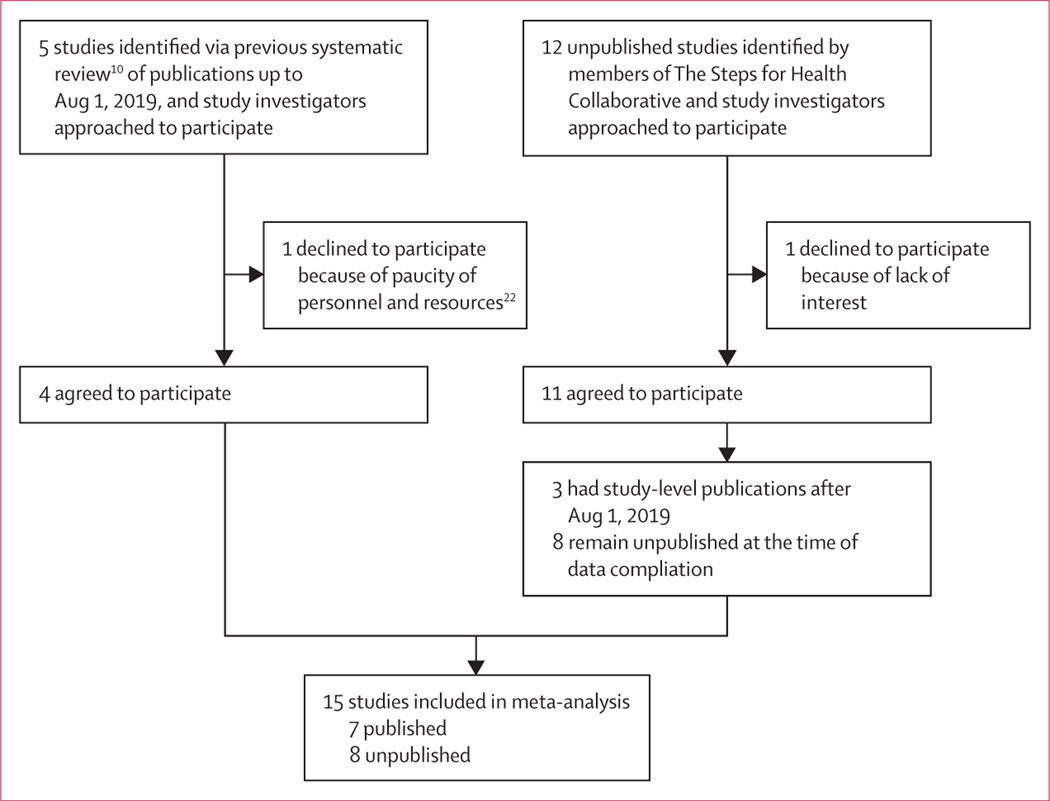
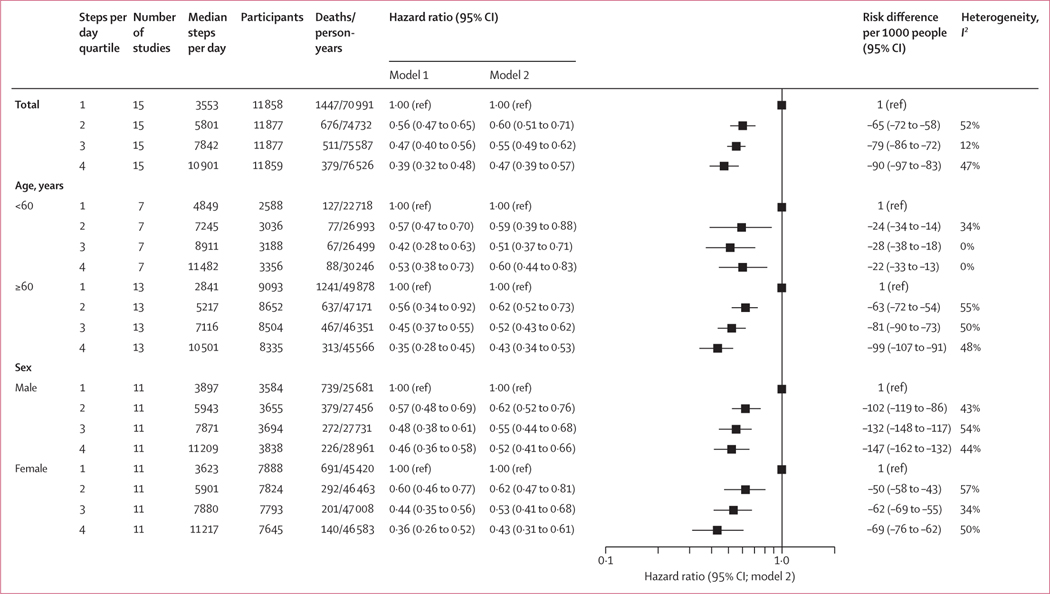
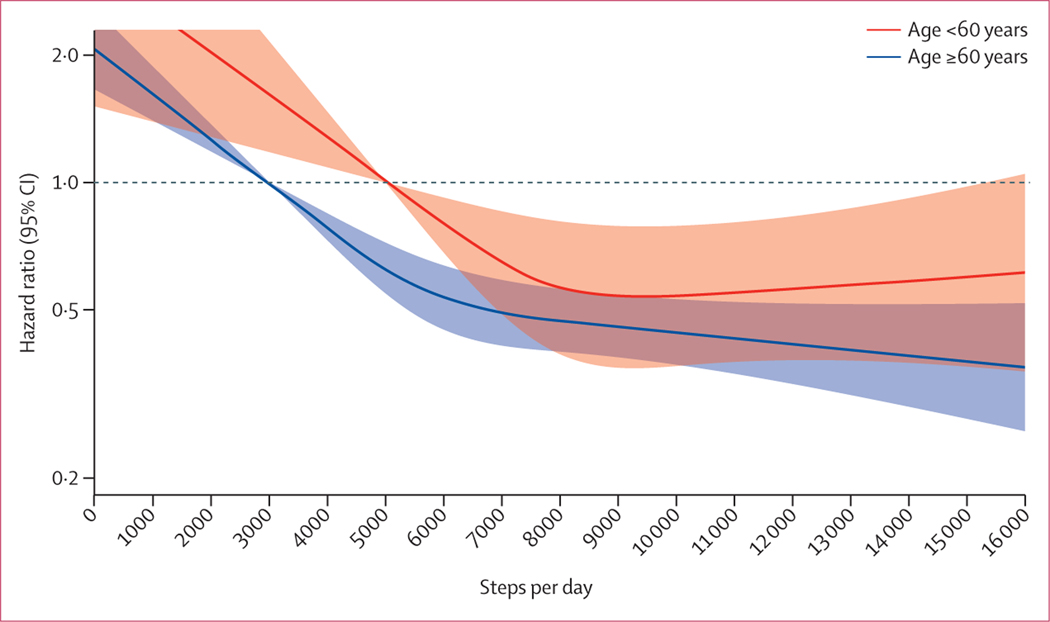
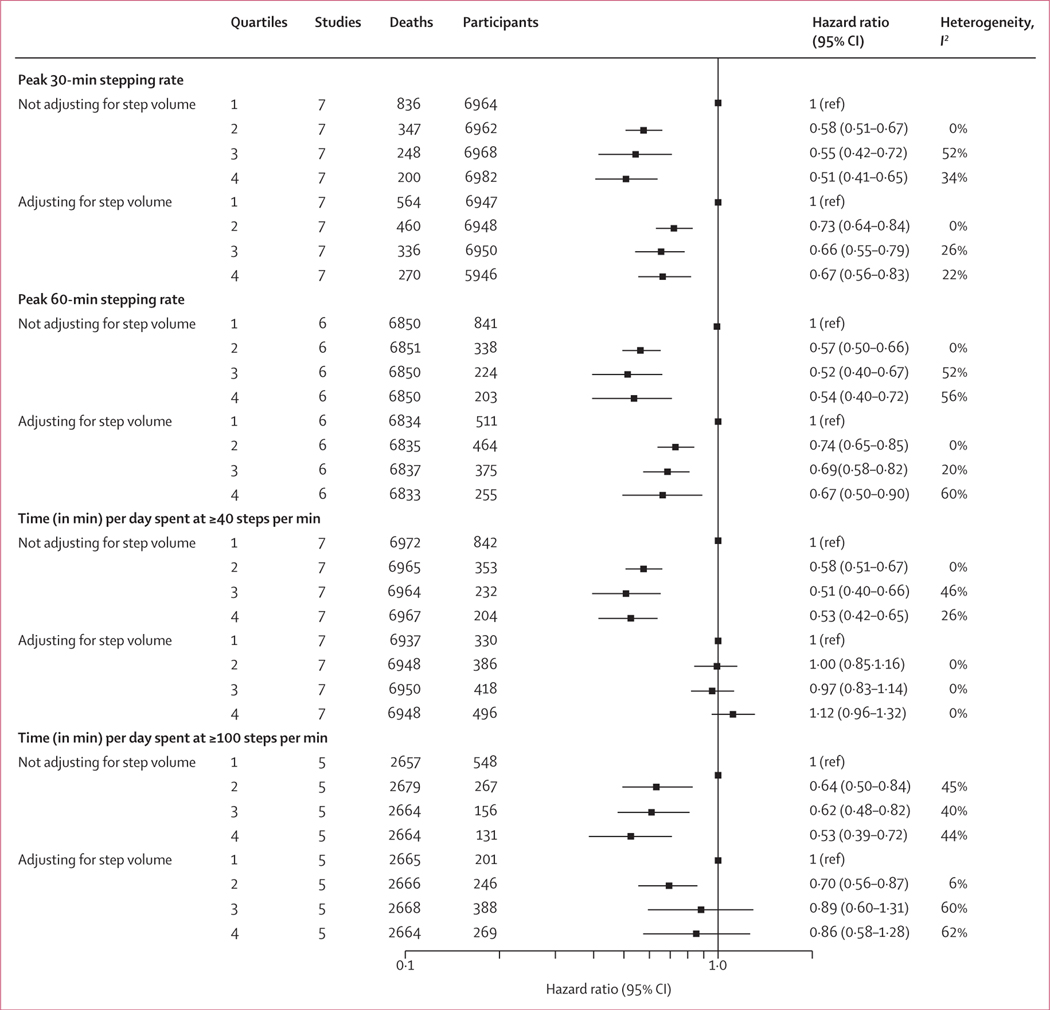
BACKGROUND: Although 10 000 steps per day is widely promoted to have health benefits, there is little evidence to support this recommendation. We aimed to determine the association between number of steps per day and stepping rate with all-cause mortality. METHODS: In this meta-analysis, we identified studies investigating the effect of daily step count on all-cause mortality in adults (aged ≥18 years), via a previously published systematic review and expert knowledge of the field. We asked participating study investigators to process their participant-level data following a standardised protocol. The primary outcome was all-cause mortality collected from death certificates and country registries. We analysed the dose-response association of steps per day and stepping rate with all-cause mortality. We did Cox proportional hazards regression analyses using study-specific quartiles of steps per day and calculated hazard ratios (HRs) with inverse-variance weighted random effects models. FINDINGS: We identified 15 studies, of which seven were published and eight were unpublished, with study start dates between 1999 and 2018. The total sample included 47 471 adults, among whom there were 3013 deaths (10·1 per 1000 participant-years) over a median follow-up of 7·1 years ([IQR 4·3-9·9]; total sum of follow-up across studies was 297 837 person-years). Quartile median steps per day were 3553 for quartile 1, 5801 for quartile 2, 7842 for quartile 3, and 10 901 for quartile 4. Compared with the lowest quartile, the adjusted HR for all-cause mortality was 0·60 (95% CI 0·51-0·71) for quartile 2, 0·55 (0·49-0·62) for quartile 3, and 0·47 (0·39-0·57) for quartile 4. Restricted cubic splines showed progressively decreasing risk of mortality among adults aged 60 years and older with increasing number of steps per day until 6000-8000 steps per day and among adults younger than 60 years until 8000-10 000 steps per day. Adjusting for number of steps per day, comparing quartile 1 with quartile 4, the association between higher stepping rates and mortality was attenuated but remained significant for a peak of 30 min (HR 0·67 [95% CI 0·56-0·83]) and a peak of 60 min (0·67 [0·50-0·90]), but not significant for time (min per day) spent walking at 40 steps per min or faster (1·12 [0·96-1·32]) and 100 steps per min or faster (0·86 [0·58-1·28]). INTERPRETATION: Taking more steps per day was associated with a progressively lower risk of all-cause mortality, up to a level that varied by age. The findings from this meta-analysis can be used to inform step guidelines for public health promotion of physical activity. FUNDING: US Centers for Disease Control and Prevention.
Overview
The claims and statistics of this paper haven’t been checked yet.
Free: it reads the open-access text and checks the first 5 claims that cite a source we can check. Create a free account to check every claim.
Integrity signals
Registry
Cites
Statistics
Figures
Verification
Claims the paper makes
The claims and statistics of this paper haven’t been checked yet.
Free: it reads the open-access text and checks the first 5 claims that cite a source we can check. Create a free account to check every claim.
Claims other papers make about this one
Each is checked against this paper’s own text: does it say what the citing paper says it does?
The source backs part of the claim, not all of it — or backs it for a different population, condition or comparison.
In the citing paper
“uncertainty exists around the strength and shape of the association of daily step count with all-cause mortality and cardiovascular mortality14,15, where recent studies have not used transparent or robustly validated free-living step counting algorithms.”
From Development and Validation of a Machine Learning Wrist-worn Step Detection Algorithm with Deployment in the UK Biobank (2023) · cites this paper as [15]
Experimental — accuracy not yet measuredThe source backs part of the claim, not all of it — or backs it for a different population, condition or comparison.
In the citing paper
“Indeed, observational evidence shows that PA levels lower than recommended threshold are already associated with reduced mortality [65,628,668], and benefits exhibit a curvilinear dose-dependency [628,668].”
From Global consensus on optimal exercise recommendations for enhancing healthy longevity in older adults (ICFSR) (2025) · cites this paper as [65]
Experimental — accuracy not yet measuredThe source backs part of the claim, not all of it — or backs it for a different population, condition or comparison.
In the citing paper
“We therefore used the residual method in which total MVPA was regressed on the bout exposure volume.The resulting residuals were independent variables in the analyses consistent with previous research assessing activity volume over a fixed time interval.20,21”
From Brief bouts of device-measured intermittent lifestyle physical activity and its association with major adverse cardiovascular events and mortality in people who do not exercise: A prospective cohort study (2023) · cites this paper as [20]
Experimental — accuracy not yet measuredThe cited source says what the claim attributes to it.
In the citing paper
“Our findings are consistent with previous literature describing associations between step counts and adverse events10,11.”
From Association of step counts over time with the risk of chronic disease in the All of Us Research Program (2022) · cites this paper as [11]
In the citing paper
“Population based data indicate that even small increases in the number of steps per day are associated with a lower risk of premature death, with the strongest effects observed at approximately 7000 to 10,000 steps per day [142,143].”
From Dietary and Behavioral Strategies for Weight Loss and Weight Loss Maintenance: A Narrative Review (2025) · cites this paper as [142]
Self-check
Percentages, sums and reported differences re-computed from the paper’s own numbers.
The self-check needs the paper’s full text.
Citations
Cites
Measuring inconsistency in meta-analyses
Higgins, J. P. T., Thompson, S. G., Deeks, J. J., & Altman, D. G. (2003) · BMJ · doi:10.1136/bmj.327.7414.557 · Cited by 63,139
Bias in meta-analysis detected by a simple, graphical test
Egger, M., Smith, G. D., Schneider, M., & Minder, C. (1997) · BMJ · doi:10.1136/bmj.315.7109.629 · Cited by 56,722
World Health Organization 2020 guidelines on physical activity and sedentary behaviour
Bull, F. C., Al-Ansari, S. S., Biddle, S., Borodulin, K., Buman, M. P., Cardon, G., Carty, C., Chaput, J.-P., Chastin, S., Chou, R., et al. (2020) · British Journal of Sports Medicine · doi:10.1136/bjsports-2020-102955 · Cited by 11,657
Self-citationExercise and Physical Activity for Older Adults
Chodzko-Zajko, W. J., Proctor, D. N., Fiatarone Singh, M. A., Minson, C. T., Nigg, C. R., Salem, G. J., & Skinner, J. S. (2009) · Medicine & Science in Sports & Exercise · doi:10.1249/mss.0b013e3181a0c95c · Cited by 5,153
Adjustment for total energy intake in epidemiologic studies
Willett, W., Howe, G., & Kushi, L. (1997) · The American Journal of Clinical Nutrition · doi:10.1093/ajcn/65.4.1220s · Cited by 3,758
Prince, S. A., Adamo, K. B., Hamel, M., Hardt, J., Connor Gorber, S., & Tremblay, M. (2008) · International Journal of Behavioral Nutrition and Physical Activity · doi:10.1186/1479-5868-5-56 · Cited by 3,162
Physical Fitness and All-Cause Mortality: A Prospective Study of Healthy Men and Women
Blair, S. N. (1989) · JAMA · doi:10.1001/jama.1989.03430170057028 · Cited by 2,658
Ekelund, U., Tarp, J., Steene-Johannessen, J., Hansen, B. H., Jefferis, B., Fagerland, M. W., Whincup, P., Diaz, K. M., Hooker, S. P., Chernofsky, A., et al. (2019) · BMJ · doi:10.1136/bmj.l4570 · Cited by 1,769
Self-citationAssociation of daily step count and step intensity with mortality among US adults
Saint-Maurice, P. F., Troiano, R. P., Bassett, D. R., Graubard, B. I., Carlson, S. A., Shiroma, E. J., Fulton, J. E., & Matthews, C. E. (2020) · JAMA · doi:10.1001/jama.2020.1382 · Cited by 660
Self-citationAssociation of Step Volume and Intensity With All-Cause Mortality in Older Women
Lee, I.-M., Shiroma, E. J., Kamada, M., Bassett, D. R., Matthews, C. E., & Buring, J. E. (2019) · JAMA Internal Medicine · doi:10.1001/jamainternmed.2019.0899 · Cited by 604
Self-citation
Cited by
Items 101–200 of 678
del Pozo-Cruz, J., Álvarez‐Barbosa, F., Gallardo‐Gómez, D., & Cruz, B. D. P. (2022) · Diabetes Care · doi:10.2337/dc22-0524 · Cited by 20
Bianchini, E., Caliò, B., Alborghetti, M., Rinaldi, D., Hansen, C., Vuillerme, N., Maetzler, W., & Pontieri, F. E. (2022) · Sensors · doi:10.3390/s23010214 · Cited by 19
“For example, previous studies associated a reduced number of steps per day with relevant pathological conditions, including cancer and cardiovascular diseases [4], obesity, major depressive disorder, diabetes and hypertension [5], and in general mortality [6,7].”
BackgroundDietary and Behavioral Strategies for Weight Loss and Weight Loss Maintenance: A Narrative Review
Żurawski, T., & Bartosiewicz, A. (2025) · Nutrients · doi:10.3390/nu18010012 · Cited by 18
“Population based data indicate that even small increases in the number of steps per day are associated with a lower risk of premature death, with the strongest effects observed at approximately 7000 to 10,000 steps per day [142,143].”
Home-Based Cardiac Rehabilitation Among Patients Unwilling to Participate in Hospital-Based Programs
Nabutovsky, I., Breitner, D., Heller, A., Levine, Y., Moreno, M., Scheinowitz, M., Levin, C., & Klempfner, R. (2023) · Journal of Cardiopulmonary Rehabilitation and Prevention · doi:10.1097/hcr.0000000000000796 · Cited by 19
Strączkiewicz, M., Keating, N. L., Thompson, E., Matulonis, U. A., Campos, S. M., Wright, A. A., & Onnela, J.-P. “. (2023) · JMIR Cancer · doi:10.2196/47646 · Cited by 19
“It is also important to prevent chronic disease and premature mortality [2-4].”
BackgroundDeshpande, K., Olynyk, J. K., Ayonrinde, O. T., & Nosaka, K. (2024) · Journal of Clinical Medicine Research · doi:10.14740/jocmr5113 · Cited by 18
“Recent studies have shown a strong association between increased step count and a reduction in the risk of diabetes and all-cause mortality [23, 24].”
BackgroundMazéas, A., Forestier, C., Harel, G., Duclos, M., & Chalabaëv, A. (2024) · Journal of Medical Internet Research · doi:10.2196/47116 · Cited by 18
“For adults aged ≥ 60 years, this reduction in mortality rates is observed with up to approximately 6000 to 8000 steps per day, whereas for adults aged 60 years, the threshold is approximately 8000 to 10,000 steps per day [7].”
Ryrsø, C. K., Dungu, A. M., Hegelund, M. H., Faurholt‐Jepsen, D., Pedersen, B. K., Ritz, C., Lindegaard, B., & Krogh‐Madsen, R. (2022) · Journal of Clinical Medicine · doi:10.3390/jcm11195923 · Cited by 19
“In comparison, the average number of daily steps is approximately 6500 steps/d for healthy individuals [6].”
BackgroundBuendía, R., Karpefors, M., Folkvaljon, F., HUNTER, R., Sillén, H., LUU, L., Docherty, K. F., & Cowie, M. (2024) · Journal of Cardiac Failure · doi:10.1016/j.cardfail.2024.01.016 · Cited by 19
Trajectories of Physical Activity and Chronic Conditions Among Mid-Aged Women
Nemoto, Y., Brown, W. J., Ding, D., Nguyen, B., & Mielke, G. I. (2024) · American Journal of Preventive Medicine · doi:10.1016/j.amepre.2024.05.013 · Cited by 17
Biomarkers of aging: functional aspects still trump molecular parameters
Furrer, R., & Handschin, C. (2025) · npj Aging · doi:10.1038/s41514-025-00207-2 · Cited by 18
Wu, Z., Wang, Y., Zhang, Y., Bennell, K. L., White, D. K., Shen, L., Ren, W., Wei, J., Zeng, C., & Lei, G. (2023) · JMIR Public Health and Surveillance · doi:10.2196/40650 · Cited by 17
Volume and Intensity of Walking and Risk of Chronic Low Back Pain
Haddadj, R., Nordstoga, A. L., Nilsen, T. I. L., Skarpsno, E. S., Kongsvold, A., Flaaten, M., Schipperijn, J., Bach, K., & Mork, P. J. (2025) · JAMA Network Open · doi:10.1001/jamanetworkopen.2025.15592 · Cited by 16
Danielsson, J., Sid, J. E., Andersson, M., Nygren‐Bonnier, M., Egenvall, M., Hagströmer, M., Vossen, L. E., Dohrn, I., & Rydwik, E. (2025) · Journal of Primary Care & Community Health · doi:10.1177/21501319251346417 · Cited by 16
“55 As a high-level of physical activity at the time of diagnosis may be associated with disease-free survival in patients with colorectal cancer, a potential goal of preoperative exercise could be to increase pre-and postoperative physical activity.”
Walking into aging: real-world mobility patterns and digital benchmarks from the InCHIANTI Study
Sanabria, J. L. A., Palumbo, P., Bandinelli, S., D’Ascanio, I., Mellone, S., Paraschiv-Ionescu, A., Küderle, A., Cereatti, A., Din, S. D., Kluge, F., et al. (2025) · npj Aging · doi:10.1038/s41514-025-00245-w · Cited by 17
“6hperdaywithanaverage numberof8525stepsperday,whichalignswithrecommendedphysical activitylevelsforolderadults 19 – 21 .”
Self-citationVos, A. L., de Bruijn, G., Klein, M. C. A., Lakerveld, J., Boerman, S. C., & Smit, E. G. (2023) · JMIR Formative Research · doi:10.2196/40851 · Cited by 17
Angeles, W. W. L.-D. L. (2023) · Academic Pediatrics · doi:10.1016/j.acap.2023.09.014 · Cited by 16
Xu, C., Jia, J., Zhao, B., Yuan, M., Luo, N., Zhang, F., & Wang, H. (2024) · BMJ Open · doi:10.1136/bmjopen-2024-088524 · Cited by 17
“A meta-analysis of eight studies pooled by Paluch et al 16 reported that for older adults, compared with the lowest quartile, quartile 2 had a 20% lower risk of cardiovascular disease (HR: 0.80; 95% CI 0.69 to 0.93), quartile 3 had a 38% lower risk (HR: 0.62; 95% CI 0.52 to 0.74), and quartile 4…”
InfluentialMazéas, A., Chalabaëv, A., Blond, M., Mourgues, C., Pereira, B., & Duclos, M. (2025) · Journal of Medical Internet Research · doi:10.2196/78376 · Cited by 15
“A recent meta-analysis revealed that taking more steps per day was associated with a progressively lower risk of all-cause mortality, regardless of age, health status, or intensity [48].”
Step count and multiple health outcomes: An umbrella review
Ao, Z., He, H., Shi, H., & Liu, H. (2024) · Journal of Evidence-Based Medicine · doi:10.1111/jebm.12596 · Cited by 15
Kitano, N., Fujii, Y., Wada, A., Kawakami, R., Yoshiba, K., Yamaguchi, D., Kai, Y., & Arao, T. (2024) · Journal of Physical Activity and Health · doi:10.1123/jpah.2024-0147 · Cited by 15
Yang, F., Wang, C., Lindsey, M. A., & An, R. (2025) · Kinesiology Review · doi:10.1123/kr.2024-0081 · Cited by 17
Lefferts, E. C., Saavedra, J. M., Song, B. K., Brellenthin, A. G., Pescatello, L. S., & Lee, D.-C. (2023) · Journal of Cardiovascular Development and Disease · doi:10.3390/jcdd10080317 · Cited by 20
“A recent meta-analysis of 34,584 adults at least 60 years of age suggested that more steps per day lowers mortality risk, with walking 6000–8000 steps/day associated with the lowest overall mortality risk [10].”
BackgroundOptimum Dose of Resistance Exercise for Cardiovascular Health and Longevity: Is More Better?
Lee, D.-C., & Lee, I.-M. M. (2023) · Current Cardiology Reports · doi:10.1007/s11886-023-01976-6 · Cited by 15
Self-citationSieber, C., Haag, C., Polhemus, A. M., Haile, S. R., Sylvester, R., Kool, J., Gonzenbach, R. R., & von Wyl, V. (2024) · JMIR Rehabilitation and Assistive Technologies · doi:10.2196/52733 · Cited by 15
“Nevertheless, a threshold of 10,000 daily steps is commonly associated with an active lifestyle [8-10].”
BackgroundMethodDalbo, V. J., & Carron, M. A. (2024) · Sports · doi:10.3390/sports12120335 · Cited by 14
“For example, a meta-analysis [43] comprising 15 studies and 47,471 adult participants reported individuals 60 years of age need to accumulate 8000–10,000 Steps per day to optimally reduce their risk of mortality (i.e., gain no additional benefit from accumulating more Steps), while individuals ≥…”
Chen, T., Chen, S., Honda, T., Kishimoto, H., Nofuji, Y., & Narazaki, K. (2025) · British Journal of Sports Medicine · doi:10.1136/bjsports-2024-108258 · Cited by 15
“4 7 Recently, one meta-analysis of studies among older adults observed that accelerometer-measured moderate- to-vigorous physical activity (MVPA), LPA and sedentary time were significantly associated with mortality.”
de Alencar, G. P., Dellagrana, R. A., Neto, L. B., Carvalho, A. M. A., & Ferreira, J. S. (2022) · Retos · doi:10.47197/retos.v46.93968 · Cited by 14
Calcaterra, V., Bernardelli, G., Malacarne, M., Vandoni, M., Mannarino, S., Pellino, V. C., Larizza, C., Pagani, M., Zuccotti, G., & Lucini, D. (2023) · Nutrients · doi:10.3390/nu15041054 · Cited by 15
Iwasaka, C., Yamada, Y., Nishida, Y., Hara, M., Yasukata, J., Miyoshi, N., Shimanoe, C., Nanri, H., Furukawa, T., Koga, K., et al. (2023) · Experimental Gerontology · doi:10.1016/j.exger.2023.112135 · Cited by 14
Mattison, G., Canfell, O. J., Forrester, D. L., Dobbins, C., Smith, D. B., Reid, D. W., & Sullivan, C. M. (2023) · The Medical Journal of Australia · doi:10.5694/mja2.51920 · Cited by 14
“An increase in steps taken per day has recently been linked to reduced all-cause mortality in a meta-analysis of 15 international cohorts, 15 and can be accurately measured by smartwatches.”
BackgroundDang, K., Ritvo, P., Katz, J. D., Gratzer, D., Knyahnytska, Y., Ortiz, A., Walters, C., Attia, M., Gonzalez‐Torres, C., Lustig, A., et al. (2023) · Interactive Journal of Medical Research · doi:10.2196/46419 · Cited by 15
“Step counts are a well-established measure of PA, with evidence generally indicating that more is better [70] up to around 8000–10,000 steps/day for adults aged 60 years or younger [71].”
BackgroundReducing Mortality and Cardiovascular Disease
Lavie, C. J., German, C. A., & Sanchis‐Gomar, F. (2023) · Journal of the American College of Cardiology · doi:10.1016/j.jacc.2023.08.007 · Cited by 13
Seifert, M., Meretz, D., Haase‐Fielitz, A., Georgi, C., Bannehr, M., Möller, V., Janßen, G., Bramlage, P., Minden, H. H., Meininghaus, D. G., et al. (2024) · Circulation Cardiovascular Quality and Outcomes · doi:10.1161/circoutcomes.124.010877 · Cited by 13
Aguiar, E. J., Turner, D. S., Pleuss, J. D., Zheng, P., Benitez, C. J., & Ducharme, S. W. (2024) · Scandinavian Journal of Medicine and Science in Sports · doi:10.1111/sms.14762 · Cited by 14
“Similar results were also reported by Paluch et al. [16], whereby models characterizing the relationship be-tween peak cadence metrics and all-cause mortality were somewhat attenuated, but remained significant, when controlled for volume (steps/day).”
Behavior change wheel as a tool to promote physical activity in online intervention: a case study
Couto, N., Morgado, V., Pereira, T., Vitorino, A., Bento, T., Alves, S., Duarte‐Mendes, P., & Cid, L. (2025) · Frontiers in Psychology · doi:10.3389/fpsyg.2025.1498351 · Cited by 13
“In line with the study by Paluch et al. (2022), considering the participant’s age, this average number of steps is adequate to reduce all causes of mortality; however, it is below the number of steps suggested as low risk (i.e., 9,000–10,500; Ahmadi et al., 2024).”
Cruz, B. D. P., Ahmadi, M. N., Sabag, A., Saint‐Maurice, P. F., Lee, I.-M. M., & Stamatakis, E. (2025) · Annals of Internal Medicine · doi:10.7326/annals-25-01547 · Cited by 14
Self-citationFitton, J., Nguyen, D. P., Lechat, B., Scott, H., Toson, B., Manners, J., Dunbar, C., Sansom, K., Pinilla, L., Hudson, A. L., et al. (2025) · Communications Medicine · doi:10.1038/s43856-025-01226-6 · Cited by 15
Hamer, M., Blodgett, J. M., & Stamatakis, E. (2022) · Scandinavian Journal of Medicine and Science in Sports · doi:10.1111/sms.14173 · Cited by 13
“15 Consistent with other studies, 3,4 taking measures to control for stepping intensity did not materially alter our results.”
Impact of Dog’s Age and Breed on Dog Owner’s Physical Activity: A German Longitudinal Study
Hielscher, B., Froboese, I., Serpell, J. A., & Gansloßer, U. (2022) · Animals · doi:10.3390/ani12101314 · Cited by 13
Moving Toward the Inclusion of Step-Based Metrics in Physical Activity Guidelines and Surveillance
Mair, J. L., Aguiar, E. J., Stamatakis, E., & Edney, S. M. (2023) · Journal of Physical Activity and Health · doi:10.1123/jpah.2023-0180 · Cited by 13
“over 60 years old was associated with progressively lower risk of all-cause mortality, respectively [7].”
BackgroundDohrn, I., Tarp, J., Steene‐Johannessen, J., Vasankari, T. J., & Hagströmer, M. (2024) · Journal of sport and health science/Journal of Sport and Health Science · doi:10.1016/j.jshs.2024.04.003 · Cited by 13
“52,53 The available data on steps per day for adults from Denmark, Finland, and Norway show similar estimates between the Nordic countries and slightly higher estimates than worldwide data from smartphone applications.”
BackgroundBastos, M., Gonsalves, C., de Almeida, B. P., Cavazzotto, T. G., & da Silva, M. P. (2023) · International Journal of Obesity · doi:10.1038/s41366-023-01452-9 · Cited by 14
Leung, W. K. C., Cheung, J., Wong, V. C. C., Tse, K. K. L., Lee, R. W. Y., Lam, S. C., & Suen, L. K. P. (2024) · BMC Public Health · doi:10.1186/s12889-024-18703-7 · Cited by 13
“In a meta-analysis of 15 international cohorts, a dose–response association between increased number of daily steps and reduced risks of all-cause mortality was apparently evident in adults aged 60 years or older, and the hazard ratio of mortality plateau was reached at 6000–8000 steps per day [50].”
Wearable physiological monitoring of physical exercise and mental health: A systematic review
Chen, F., Zhao, L., Pang, L., Zhang, Y., Lü, L., Li, J., & Liu, C. (2025) · Intelligent Sports and Health · doi:10.1016/j.ish.2024.12.006 · Cited by 16
Billany, R. E., Macdonald, J. H., Burns, S., Chowdhury, R., Ford, E. C., Mubaarak, Z., Sohansoha, G. K., Vadaszy, N., Young, H. M. L., BISHOP, N. C., et al. (2025) · PLoS ONE · doi:10.1371/journal.pone.0316031 · Cited by 13
“However, there is an abundance of literature showing the value of even small increases in daily steps on mortality and health [73–75].”
Step Counting with Attention-based LSTM
Khan, S. S., & Abedi, A. (2022) · IEEE Symposium Series on Computational Intelligence (SSCI) · doi:10.1109/ssci51031.2022.10022210 · Cited by 13
Shibuta, T., Waki, K., Miyake, K., Igarashi, A., Yamamoto‐Mitani, N., Sankoda, A., Takeuchi, Y., Sumitani, M., Yamauchi, T., Nangaku, M., et al. (2023) · JMIR Cardio · doi:10.2196/43940 · Cited by 13
Association of daily step volume and intensity with cardiometabolic risk in older adults
Cabral, L. L. P., Browne, R. A. V., Freire, Y. A., Silva, R. D. M., Vliestra, L., Waters, D. L., Barreira, T. V., & Costa, E. C. (2023) · Experimental Gerontology · doi:10.1016/j.exger.2023.112245 · Cited by 12
Migueles, J. H., Cadenas‐Sánchez, C., Butera, N. M., Bassett, D. R., Wolff‐Hughes, D. L., Schrack, J. A., Saint‐Maurice, P. F., & Shiroma, E. J. (2024) · Journal of sport and health science/Journal of Sport and Health Science · doi:10.1016/j.jshs.2024.100995 · Cited by 15
Self-citationde Loos, A. D., Jiskoot, G., van den Berg-Emons, R. J. G., Louwers, Y. V., Beerthuizen, A., Busschbach, J. J. V., & Laven, J. S. E. (2023) · Journal of Clinical Medicine · doi:10.3390/jcm12072466 · Cited by 12
Transforming Cardiovascular Care With Digital Health
Chaturvedi, A., & Prabhakaran, D. (2024) · JACC Advances · doi:10.1016/j.jacadv.2024.101183 · Cited by 12
Adamakis, M. (2023) · Technologies · doi:10.3390/technologies11010029 · Cited by 12
Bianchini, E., Alborghetti, M., Galli, S., Hansen, C., Zampogna, A., Suppa, A., Salvetti, M., Pontieri, F. E., Rinaldi, D., & Vuillerme, N. (2025) · JMIR mhealth and uhealth · doi:10.2196/64213 · Cited by 12
“While this metric does not provide detailed gait analysis, there is established evidence linking a reduced daily step count to a range of health issues, including oncological and cardiovascular diseases [8], dementia [9], as well as an elevated risk of overall mortality [10-13].”
Yarnall, A. J., Alcock, L., Schlenstedt, C., Armengol, C., Becker, C., Brown, P., Buekers, J., Caulfield, B., Cereatti, A., Cordova‐Rivera, L., et al. (2025) · Journal of Parkinson s Disease · doi:10.1177/1877718x251407026 · Cited by 11
“WB step count per day was comparable, albeit still below recommendations, 54 to those seen at baseline in a large exercise interventional study (7733 in the present work vs. 8874), 55 where participants walked for longer per day (almost two hours), in fewer (233) but longer (29.8 s) bouts than in…”
InfluentialHielscher, B., Gansloßer, U., Serpell, J. A., & Froboese, I. (2022) · Healthcare · doi:10.3390/healthcare10091687 · Cited by 11
Hernández, P. A. F., Farías‐Valenzuela, C., Jofré‐Saldía, E., Marques, A., Kovalskys, I., Gómez, G., Rigotti, A., Cortés, L. Y., García, M. C. Y., Pareja, R. G., et al. (2022) · Scientific Reports · doi:10.1038/s41598-022-23586-y · Cited by 11
Schoenfelder, A., Metcalf, B. S., Langford, J., Stathi, A., Western, M. J., & Hillsdon, M. M. (2023) · Sensors · doi:10.3390/s23115122 · Cited by 11
“In relation to the study population’s mean baseline activity levels (Table 3)—which are typical for older adults [9]—1000 additional steps represented a daily physical activity increase of 17% total steps, 20% slower-paced steps, 172% slower-paced walking steps, or 112% faster-paced walking steps.”
BackgroundBergman, M., Markowitz, J. C., Kronish, I. M., Agarwal, S., Fisch, C. T., Eder-Moreau, E., & Neria, Y. (2023) · The Journal of Clinical Psychiatry · doi:10.4088/jcp.23m14883 · Cited by 12
García, E. L., Lesmes, I. B., Díaz‐Perales, A., Moreno-Arribas, M. V., Baquedano, M. D. P. P., Velasco, A. M. R., Salvo, U. F., Tejedor-Romero, L., Porcel, F. B. O., Laín, S. A., et al. (2023) · Food Risk Assess Europe · doi:10.2903/sp.efsa.2023.fr-0005 · Cited by 12
Buehler, R., & Pucher, J. R. (2024) · Journal of Transport & Health · doi:10.1016/j.jth.2024.101875 · Cited by 13
Schantz, P., Olsson, K. S. E., Eriksson, J. S., & Rosdahl, H. G. (2022) · Frontiers in Public Health · doi:10.3389/fpubh.2022.911863 · Cited by 12
Ferdinand, K. C., Charbonnet, R. M., Laurent, J., & Villavaso, C. D. (2023) · Current Opinion in Cardiology · doi:10.1097/hco.0000000000001040 · Cited by 11
Anaya, G., Gabriel, K. P., St‐Onge, M., Horn, L. V., Alfini, A. J., Badon, S. E., Boushey, C. J., Brown, A. G. M., Depner, C. M., Diaz, K. M., et al. (2024) · Journal of the American Heart Association · doi:10.1161/jaha.124.035818 · Cited by 10
Self-citationKato, H. (2025) · Journal of Transport & Health · doi:10.1016/j.jth.2025.102126 · Cited by 10
Fanaroff, A. C., Coratti, S., Farraday, D., Norton, L. A., Rareshide, C. A. L., Zhu, J., Levin, M. G., Damrauer, S. M., Giri, J. S., Chokshi, N. P., et al. (2025) · Journal of the American Heart Association · doi:10.1161/jaha.124.038921 · Cited by 10
Carter, J. R., Jenkins, N. D. M., Bigalke, J. A., Robinson, A. T., Keller‐Ross, M. L., Greaney, J. L., Fonkoue, I. T., Fadel, P. J., Macefield, V. G., Charkoudian, N., et al. (2026) · American Journal of Physiology-Heart and Circulatory Physiology · doi:10.1152/ajpheart.00041.2026 · Cited by 12
Freire, Y. A., Cabral, L. L. P., Browne, R. A. V., Vlietstra, L., Waters, D. L., Duhamel, T. A., & Costa, E. C. (2022) · Experimental Gerontology · doi:10.1016/j.exger.2022.111989 · Cited by 10
Lee, I.-M. M., Moore, C. C., & Evenson, K. R. (2023) · Journal for the Measurement of Physical Behaviour · doi:10.1123/jmpb.2022-0035 · Cited by 10
Self-citationLifestyle and patterns of physical activity in Hadza foragers
Sayre, M. K., Anyawire, M., Paolo, B., Mabulla, A. Z. P., Pontzer, H., Wood, B. M., & Raichlen, D. A. (2023) · American Journal of Biological Anthropology · doi:10.1002/ajpa.24846 · Cited by 10
“Recommendations for daily step counts are less consistent, but range from 6000 to 10,000 per day (Del Pozo Cruz et al., 2022; Hamer et al., 2022; Paluch et al., 2022; Saint-Maurice et al., 2020).”
Reduction of Financial Health Incentives and Changes in Physical Activity
Spilsbury, S., Wilk, P., Taylor, C. M., Prapavessis, H., & Mitchell, M. (2023) · JAMA Network Open · doi:10.1001/jamanetworkopen.2023.42663 · Cited by 11
Manojlović, M., Roklicer, R., Trivić, T., Carraro, A., Gojković, Z., Maksimovic, N., Bianco, A., & Drid, P. (2024) · BMJ Open Sport & Exercise Medicine · doi:10.1136/bmjsem-2023-001682 · Cited by 10
Dierikx, M., Albers, N., Scheltinga, B. L., & Brinkman, W. (2024) · Lecture notes in computer science · doi:10.1007/978-3-031-58226-4_9 · Cited by 12
Joensuu, L., Waller, K. L., Kankaanpää, A., Palviainen, T., Kaprio, J. A., & Sillanpää, E. (2024) · Medicine & Science in Sports & Exercise · doi:10.1249/mss.0000000000003482 · Cited by 10
Daily Steps as a Public Health Metric for Physical Activity Monitoring and Promotion
Paluch, A. E., Matthews, C. E., Doherty, A., Ekelund, U., Evenson, K. R., Galuska, D. A., Jefferis, B. J. M. H., Kong, L., Kraus, W. E., Lee, I.-M. M., et al. (2025) · Exercise and Sport Sciences Reviews · doi:10.1249/jes.0000000000000375 · Cited by 11
Self-citationDaniele, A., Lucas, S. J. E., & Rendeiro, C. (2025) · The Journal of Physiology · doi:10.1113/jp289038 · Cited by 9
“Finally, both fitness groups took more than 8,000 steps per day, which is above a threshold recently found to be associated with a progressively lower risk of mortality (Paluch et al., 2022).”
Zhou, Y., Frampton, C. M., Dowsey, M. M., Choong, P., Schilling, C. G., & Hirner, M. (2023) · The Journal of Arthroplasty · doi:10.1016/j.arth.2023.05.070 · Cited by 9
Using Computer Vision to Annotate Video-Recoded Direct Observation of Physical Behavior
Keadle, S. K., Eglowski, S., Ylarregui, K., Strath, S. J., Martinez, J., Dekhtyar, A., & Kagan, V. (2024) · Sensors · doi:10.3390/s24072359 · Cited by 11
“…a physically active lifestyle are well-established, and the implementation of devices to measure physical behavior in prospective cohorts and randomized clinical trials has provided important new insight into the type and amount of physical activity that is needed for optimal health benefits [1–3].”
BackgroundSeino, S., Abe, T., Nofuji, Y., Hata, T., Shinkai, S., Kitamura, A., & Fujiwara, Y. (2024) · Frontiers in Public Health · doi:10.3389/fpubh.2024.1357618 · Cited by 9
Piercy, K. L., Vaux‐Bjerke, A., Polster, M., Fulton, J. E., George, S. M., Rose, K., Whitfield, G. P., Wolff‐Hughes, D. L., & Barnett, E. Y. (2024) · Translational Journal of the American College of Sports Medicine · doi:10.1249/tjx.0000000000000275 · Cited by 12
Self-citationSeynaeve, M., Mantini, D., & de Beukelaar, T. T. (2025) · Bioengineering · doi:10.3390/bioengineering12050471 · Cited by 10
Wu, Y., Wang, M., Long, Z., Ye, J., Cao, Y., Pei, B., Gao, Y., Yu, Y., Han, Z., Wang, F., et al. (2023) · Nutrients · doi:10.3390/nu15153373 · Cited by 9
“Recently, some studies aimed to determine the association between the number of steps per day and the risk of all-cause mortality [7,71].”
BackgroundGrannell, A., Hallson, H., Gunlaugsson, B., & Jónsson, H. (2023) · Frontiers in Digital Health · doi:10.3389/fdgth.2023.1250979 · Cited by 10
“The traditional approach is based on the dose response relationship between physical activity, exercise and health (31, 119, 120).”
Backgroundde Mello, R. L., Lopes, A. A. D. S., & Fermino, R. C. (2022) · International Journal of Environmental Research and Public Health · doi:10.3390/ijerph19148355 · Cited by 14
“Leisure-time walking, even in small doses, positively affects health and can reduce the risk of mortality by 40% [69].”
BackgroundMaltagliati, S., Saoudi, I., Sarrazin, P. G., Cullati, S., Sieber, S., Chalabaëv, A., & Cheval, B. (2022) · SSM - Population Health · doi:10.1016/j.ssmph.2022.101272 · Cited by 10
Bidirectional Interplay Between Traumatic Brain Injury and Cardiovascular Dysfunction in Athletes
Kibria, F., Bragina, O. A., Trofimov, A. O., & Bragin, D. E. (2025) · Journal of Clinical Medicine · doi:10.3390/jcm14217712 · Cited by 9
Physical activity, fitness, and longevity
Sanchis‐Gomar, F., Lavie, C. J., Rodríguez, F., Kokkinos, P. F., & Franklin, B. A. (2026) · Progress in Cardiovascular Diseases · doi:10.1016/j.pcad.2026.07.004 · Cited by 8
Peiffer, M., Duquesne, K., Delanghe, M., Oevelen, A. C. V., Mits, S. D., Audenaert, E. A., & Burssens, A. (2024) · Frontiers in Bioengineering and Biotechnology · doi:10.3389/fbioe.2024.1348977 · Cited by 9
Kistner, T. M., Tavormina, A., & Lieberman, D. E. (2024) · American Journal of Human Biology · doi:10.1002/ajhb.24131 · Cited by 8
“…report significant inverse relationships between step counts and all-cause mortality risk as well as cardiovascular disease (Hall et al., 2020; Paluch et al., 2022), while randomized controlled trials consistently show that habitual walking lowers diastolic blood pressure and improves body…”
Wark, G., Kaakoush, N. O., Samocha‐Bonet, D., Ghaly, S., & Danta, M. (2024) · Nutrients · doi:10.3390/nu16193233 · Cited by 8
“While both groups averaged a daily step count in or above the healthy target range (8000–10,000 steps/day), the IBD cohort averaged 18% fewer steps per day than the HC group (9135 versus 10,942 steps/day) [42].”
BackgroundCabral, D. F., dos Santos, V. S., Silva, M. J. G., Leite, G. F., Mesquita, A. P. B., Pascual‐Leone, Á., Cahalin, L. P., Batiston, A. P., Oliveira, A. C. A., & Gomes‐Osman, J. (2022) · Frontiers in Rehabilitation Sciences · doi:10.3389/fresc.2022.923221 · Cited by 8
Jin, Z., Lee, C., Zhang, K., Jeong, R., Gan, T. J., & Richman, D. C. (2023) · Anesthesia & Analgesia · doi:10.1213/ane.0000000000006353 · Cited by 8
Baxter, S. L. K., Corbie-Smith, G. M., & Griffin, S. F. (2023) · Health Services Research · doi:10.1111/1475-6773.14183 · Cited by 9
Norweg, A. M., Hofferber, B., Maguire, S., Oh, C., Raveis, V. H., & Simon, N. M. (2023) · Respiratory Medicine · doi:10.1016/j.rmed.2023.107505 · Cited by 8
Jansen, C.-P., Gottschalk, S., Nerz, C., Labudek, S. E., Kramer-Gmeiner, F., Klenk, J., Clemson, L. M., Todd, C. J., Dams, J., König, H., et al. (2023) · Age and Ageing · doi:10.1093/ageing/afac331 · Cited by 8
Self-citationLan, W., Shu, J., Liu, Y., Xie, C., Sun, J., & Yuan, L. (2025) · BMJ Military Health · doi:10.1136/military-2024-002779 · Cited by 7
“11 Publication bias was assessed using funnel plots, and Egger’s test was applied to evaluate funnel plot symmetry.”
Ash, G. I., Mak, S., Haughton, A. D., Augustine, M., Bodurtha, P. O., Axtell, R. S., Borsari, B., Liu, J. J., Lou, S., Xin, X., et al. (2025) · JMIR mhealth and uhealth · doi:10.2196/51707 · Cited by 7
“For instance, 6000 to 8000 steps per day is associated with a lower risk of health problems such as all-cause mortality, diabetes, and mental health concerns [1,2].”
Predicting Engagement Patterns With Connected Wearable Devices in a Health System: Survival Analysis
Clark, A., Gresham, G. K., Pevnick, J. M., Duncan, R., Kamrava, M. R., & Sobolev, M. (2025) · Journal of Medical Internet Research · doi:10.2196/78507 · Cited by 8
“For example, a recent meta-analysis reported that taking more steps per day was related to a reduced risk of all-cause mortality [8].”
Fiedler, J., Wunsch, K., Hubenschmid, S., Reiterer, H., Renner, B., & Wöll, A. (2025) · JMIR mhealth and uhealth · doi:10.2196/65558 · Cited by 7
“For steps, mean and median values are below the commonly used 10,000 steps per day (70,000 steps per week) goal [97,98] for all participants (Figures 3 and 4 ).”
Lee, Y., & Lee, W. (2025) · Scientific Reports · doi:10.1038/s41598-025-30518-z · Cited by 7
“This lag-time approach is widely used in epidemiologic studies to minimize the influence of preclinical disease 15–17 .”
Metadata
- Authors
- Paluch, A. E., Bajpai, S., Bassett, D. R., Carnethon, M. R., Ekelund, U., Evenson, K. R., Galuska, D. A., Jefferis, B. J., Kraus, W. E., Lee, I.-M., Matthews, C. E., Omura, J. D., Patel, A. V., Pieper, C. F., Rees-Punia, E., Dallmeier, D., Klenk, J., Whincup, P. H., Dooley, E. E., Pettee Gabriel, K., Palta, P., Pompeii, L. A., Chernofsky, A., Larson, M. G., Vasan, R. S., Spartano, N., Ballin, M., Nordström, P., Nordström, A., Anderssen, S. A., Hansen, B. H., Cochrane, J. A., Dwyer, T., Wang, J., Ferrucci, L., Liu, F., Schrack, J., Urbanek, J., Saint-Maurice, P. F., Yamamoto, N., Yoshitake, Y., Newton, R. L., Yang, S., Shiroma, E. J., & Fulton, J. E.
- Affiliations
- University of Massachusetts Amherst (US)
- University of Tennessee at Knoxville (US)
- Northwestern University (US)
- Norwegian Institute of Public Health (NO)
- University of North Carolina at Chapel Hill (US)
- Centers for Disease Control and Prevention (US)
- University College London (GB)
- Duke University (US)
- Brigham and Women's Hospital (US)
- Division of Cancer Epidemiology and Genetics (US)
- American Cancer Society (US)
- Duke Medical Center (US)
- Boston University (US)
- Universität Ulm (DE)
- University of London (GB)
- University of Alabama at Birmingham (US)
- Columbia University Irving Medical Center (US)
- Baylor College of Medicine (US)
- Umeå University (SE)
- UiT The Arctic University of Norway (NO)
- University of Tasmania (AU)
- Murdoch Children's Research Institute (AU)
- National Institute on Aging (US)
- Johns Hopkins University (US)
- Ehime University (JP)
- Meio University (JP)
- Pennington Biomedical Research Center (US)
- Corresponding author
- Paluch, Amanda E
- ORCID
- Paluch, Amanda E
- Bajpai, Shivangi
- Bassett, David R
- Carnethon, Mercedes R
- Ekelund, Ulf
- Evenson, Kelly R
- Jefferis, Barbara J
- Kraus, William E
- Lee, I-Min
- Matthews, Charles E
- Omura, John D
- Patel, Alpa V
- Pieper, Carl F
- Dallmeier, Dhayana
- Klenk, Jochen
- Whincup, Peter H
- Dooley, Erin E
- Palta, Priya
- Pompeii, Lisa A
- Chernofsky, Ariel
- Larson, Martin G
- Vasan, Ramachandran S
- Spartano, Nicole
- Ballin, Marcel
- Nordström, Peter
- Nordström, Anna
- Anderssen, Sigmund A
- Hansen, Bjørge H
- Dwyer, Terence
- Wang, Jing
- Ferrucci, Luigi
- Liu, Fangyu
- Schrack, Jennifer
- Urbanek, Jacek
- Yamamoto, Naofumi
- Newton, Robert L
- Yang, Shengping
- Shiroma, Eric J
- Fulton, Janet E
- Venue
- The Lancet Public Health
- Publisher
- Elsevier BV
- Published
- 2022-03
- Volume
- 7
- Issue
- 3
- Pages
- e219-e228
- ISSN
- 2468-2667 (ISSN-L)
- PMC
- PMC9289978
- OpenAlex
- W4214876227
- Semantic Scholar
- d39b6ce94ba2a2630c12e61d9900c34f001eb731
- Cited by
- 582
- References
- 43
- Citations by year
- 2026: 100 · 2025: 152 · 2024: 155 · 2023: 120 · 2022: 54
- FWCI
- 16.49
- Type
- journal article
- Language
- en
- Open access
- gold
- doi.org
- Licence
- cc-by-nc-nd
- www.elsevier.com/tdm/userlicense/1.0/ (tdm)
- www.elsevier.com/legal/tdmrep-license (tdm)
- creativecommons.org/licenses/by-nc-nd/4.0/ (vor)
- Locations
- The Lancet Public Health (publishedVersion, cc-by-nc-nd)
- PubMed (publishedVersion)
- St George's Online Research Archive (St George's University of London) (acceptedVersion)
- PubMed Central (acceptedVersion, cc-by-nc-nd)
- Civil War Book Review (submittedVersion)
- DiVA at Umeå University (Umeå University) (submittedVersion, other-oa)
- DOAJ (DOAJ: Directory of Open Access Journals) (submittedVersion, cc-by-sa)
- UCL Discovery (University College London) (submittedVersion)
- NORA - Norwegian Open Research Archives (submittedVersion, other-oa)
- Minerva Access (University of Melbourne) (submittedVersion, cc-by)
- NORA - Norwegian Open Research Archives (submittedVersion, cc-by-nc-nd)
- Funders
- U.S. Department of Transportation
- Centers for Disease Control and Prevention
- Robert Wood Johnson Foundation
- National Institute on Aging
- American College of Sports Medicine
- North Carolina Department of Transportation
- National Institutes of Health
- British Heart Foundation
- National Heart, Lung, and Blood Institute
- Deutsche Forschungsgemeinschaft
- Topics
- Health Sciences › Medicine › Public Health, Environmental and Occupational Health › Physical Activity and Health
- Health Sciences › Medicine › Physiology (medical) › Cardiovascular and exercise physiology
- Social Sciences › Transportation › Urban Transport and Accessibility
- Keywords
- daily step count, stepping rate, all-cause mortality, physical activity, dose-response relationship, adults, older adults, mortality risk, physical activity guidelines, cohort studies, restricted cubic splines, publication bias, risk of bias assessment, subgroup analysis, sex differences, age differences, country differences
- MeSH terms
- Adolescent, Adult, Aged, Humans, Middle Aged, Exercise, Proportional Hazards Models, Walking
About these checks
Registry, retraction, Cites and statistics results are computed, not judged, with one exception: a printed reference that no index lists is read once by a model before it counts as a citation error. Claims are extracted by a model and kept only when their quote appears verbatim in the text; each cited source is then checked, with a model’s help, for whether it says what the claim relies on. Those verdicts can be wrong — read the claim’s quote and the cited source before relying on one.
Statistics and arithmetic are recomputed, not judged.
Confidence bands are shown only for fields calibrated on our annotated test set. None is calibrated yet, so no band is shown.
What counts as a claim ›How we measure confidence ›How we check this ›
Are you an author, or do you see a problem with this page? Request a review
Data sources
Bibliographic data: Semantic Scholar, OpenAlex, Crossref.
Contains information from the Semantic Scholar Academic Graph Datasets, made available under the ODC Attribution License (ODC-BY 1.0).
Semantic Scholar’s data is described in: Kinney, R., et al. (2023). The Semantic Scholar Open Data Platform. arXiv:2301.10140.
