

Daily steps and all-cause mortality: a meta-analysis of 15 international cohorts
Open accessThe DOI matches its Crossref record; 43 of the 43 references it cites were found in a registry or an index.
Abstract
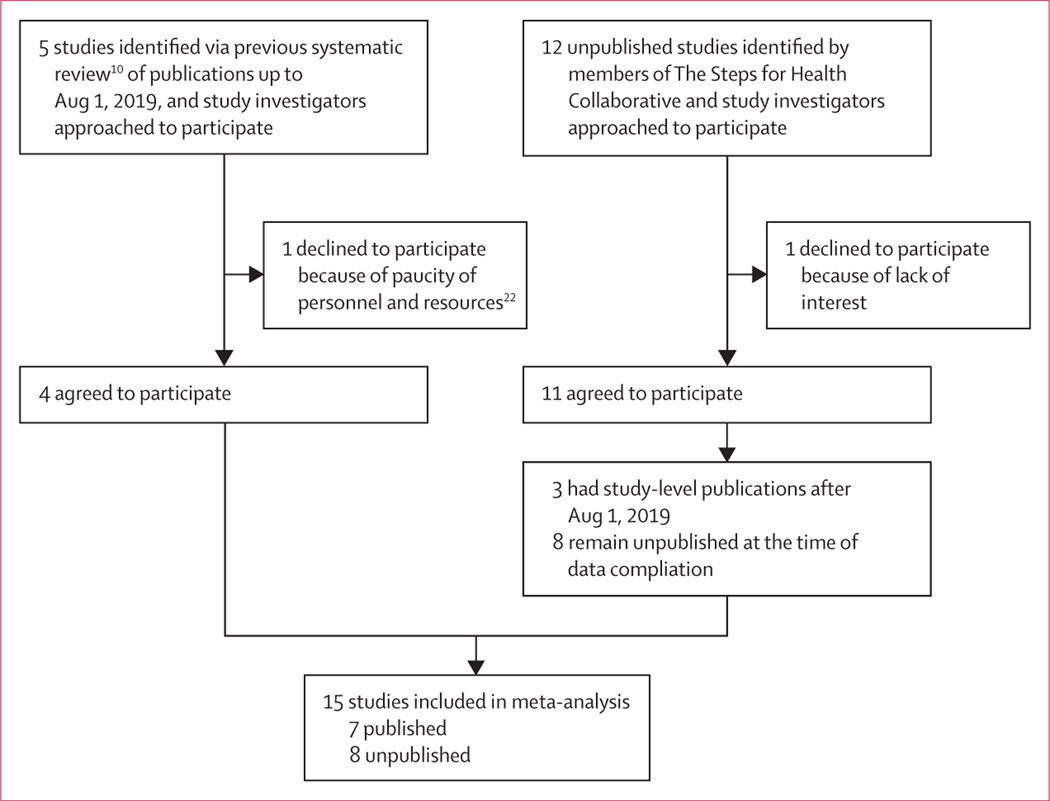
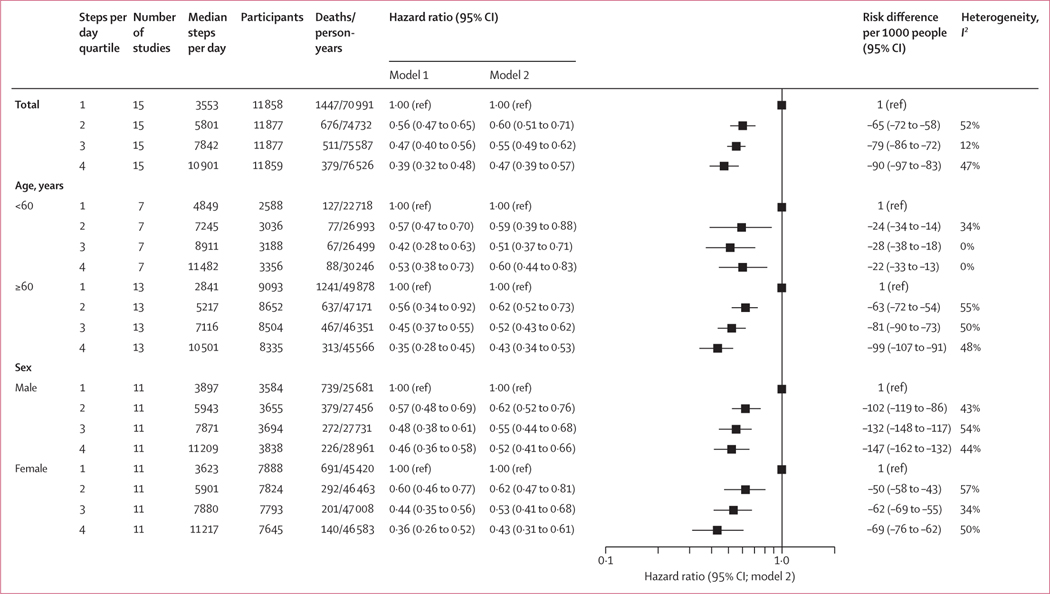
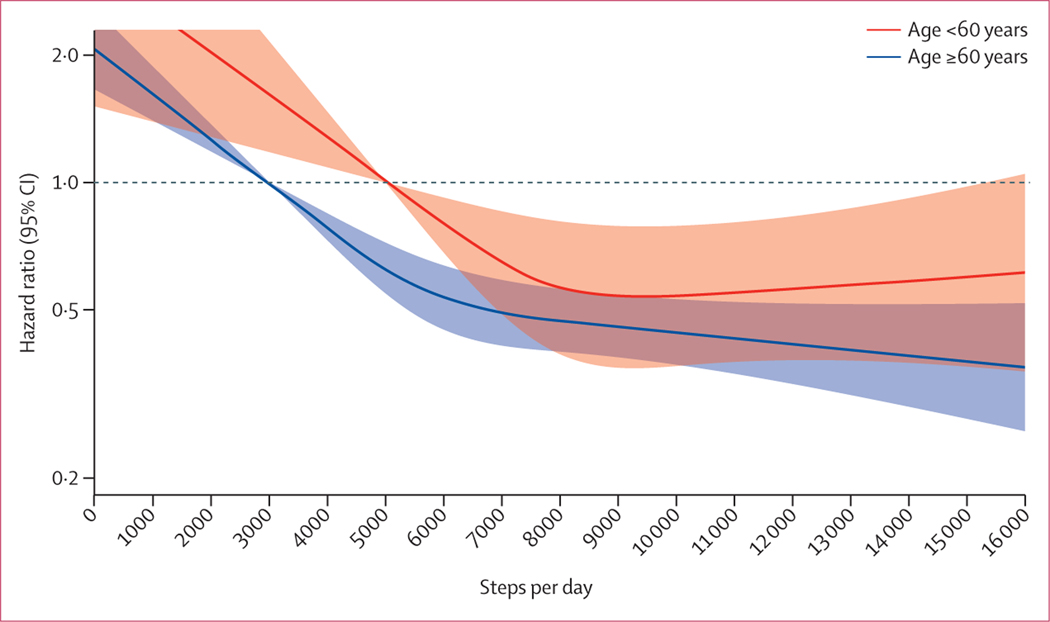
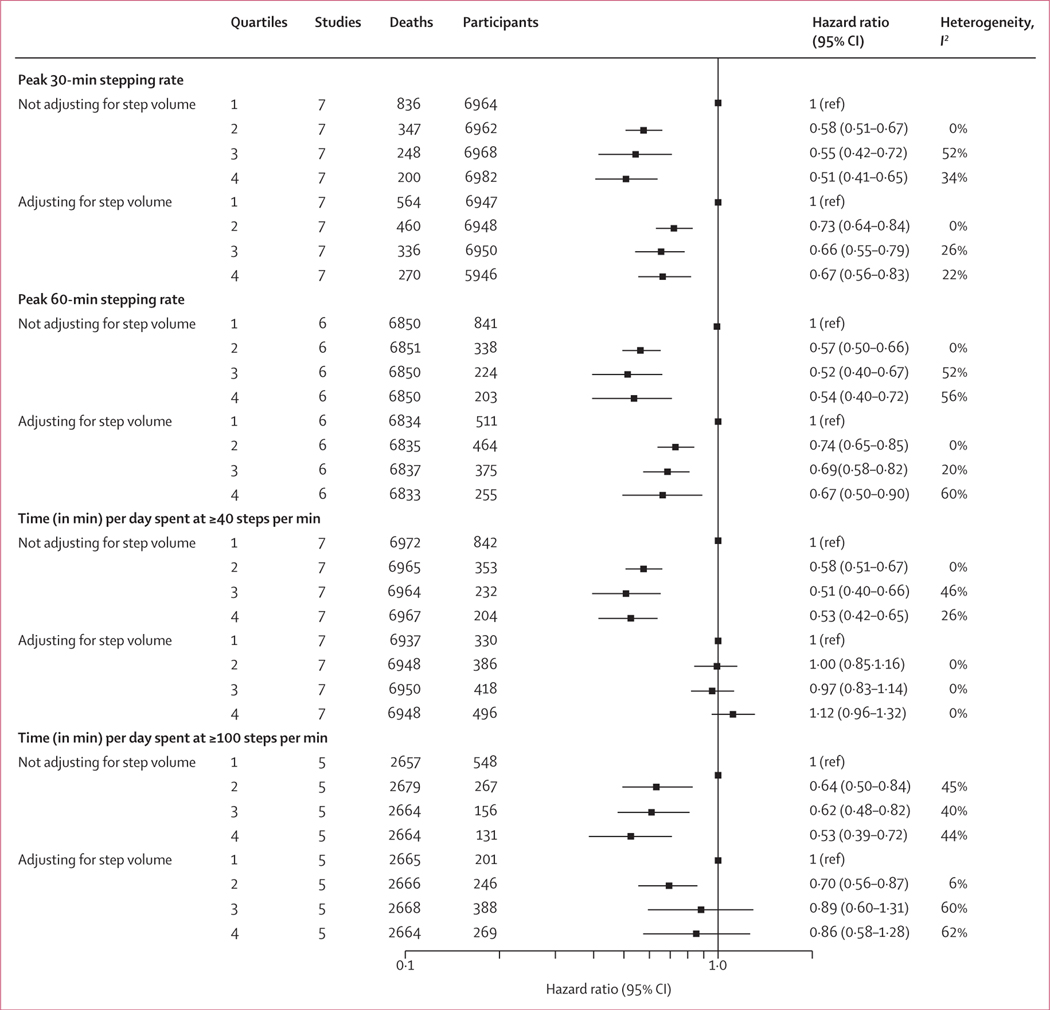
BACKGROUND: Although 10 000 steps per day is widely promoted to have health benefits, there is little evidence to support this recommendation. We aimed to determine the association between number of steps per day and stepping rate with all-cause mortality. METHODS: In this meta-analysis, we identified studies investigating the effect of daily step count on all-cause mortality in adults (aged ≥18 years), via a previously published systematic review and expert knowledge of the field. We asked participating study investigators to process their participant-level data following a standardised protocol. The primary outcome was all-cause mortality collected from death certificates and country registries. We analysed the dose-response association of steps per day and stepping rate with all-cause mortality. We did Cox proportional hazards regression analyses using study-specific quartiles of steps per day and calculated hazard ratios (HRs) with inverse-variance weighted random effects models. FINDINGS: We identified 15 studies, of which seven were published and eight were unpublished, with study start dates between 1999 and 2018. The total sample included 47 471 adults, among whom there were 3013 deaths (10·1 per 1000 participant-years) over a median follow-up of 7·1 years ([IQR 4·3-9·9]; total sum of follow-up across studies was 297 837 person-years). Quartile median steps per day were 3553 for quartile 1, 5801 for quartile 2, 7842 for quartile 3, and 10 901 for quartile 4. Compared with the lowest quartile, the adjusted HR for all-cause mortality was 0·60 (95% CI 0·51-0·71) for quartile 2, 0·55 (0·49-0·62) for quartile 3, and 0·47 (0·39-0·57) for quartile 4. Restricted cubic splines showed progressively decreasing risk of mortality among adults aged 60 years and older with increasing number of steps per day until 6000-8000 steps per day and among adults younger than 60 years until 8000-10 000 steps per day. Adjusting for number of steps per day, comparing quartile 1 with quartile 4, the association between higher stepping rates and mortality was attenuated but remained significant for a peak of 30 min (HR 0·67 [95% CI 0·56-0·83]) and a peak of 60 min (0·67 [0·50-0·90]), but not significant for time (min per day) spent walking at 40 steps per min or faster (1·12 [0·96-1·32]) and 100 steps per min or faster (0·86 [0·58-1·28]). INTERPRETATION: Taking more steps per day was associated with a progressively lower risk of all-cause mortality, up to a level that varied by age. The findings from this meta-analysis can be used to inform step guidelines for public health promotion of physical activity. FUNDING: US Centers for Disease Control and Prevention.
Overview
The claims and statistics of this paper haven’t been checked yet.
Free: it reads the open-access text and checks the first 5 claims that cite a source we can check. Create a free account to check every claim.
Integrity signals
Registry
Cites
Statistics
Figures
Verification
Claims the paper makes
The claims and statistics of this paper haven’t been checked yet.
Free: it reads the open-access text and checks the first 5 claims that cite a source we can check. Create a free account to check every claim.
Claims other papers make about this one
Each is checked against this paper’s own text: does it say what the citing paper says it does?
The source backs part of the claim, not all of it — or backs it for a different population, condition or comparison.
In the citing paper
“uncertainty exists around the strength and shape of the association of daily step count with all-cause mortality and cardiovascular mortality14,15, where recent studies have not used transparent or robustly validated free-living step counting algorithms.”
From Development and Validation of a Machine Learning Wrist-worn Step Detection Algorithm with Deployment in the UK Biobank (2023) · cites this paper as [15]
Experimental — accuracy not yet measuredThe source backs part of the claim, not all of it — or backs it for a different population, condition or comparison.
In the citing paper
“Indeed, observational evidence shows that PA levels lower than recommended threshold are already associated with reduced mortality [65,628,668], and benefits exhibit a curvilinear dose-dependency [628,668].”
From Global consensus on optimal exercise recommendations for enhancing healthy longevity in older adults (ICFSR) (2025) · cites this paper as [65]
Experimental — accuracy not yet measuredThe source backs part of the claim, not all of it — or backs it for a different population, condition or comparison.
In the citing paper
“We therefore used the residual method in which total MVPA was regressed on the bout exposure volume.The resulting residuals were independent variables in the analyses consistent with previous research assessing activity volume over a fixed time interval.20,21”
From Brief bouts of device-measured intermittent lifestyle physical activity and its association with major adverse cardiovascular events and mortality in people who do not exercise: A prospective cohort study (2023) · cites this paper as [20]
Experimental — accuracy not yet measuredThe cited source says what the claim attributes to it.
In the citing paper
“Our findings are consistent with previous literature describing associations between step counts and adverse events10,11.”
From Association of step counts over time with the risk of chronic disease in the All of Us Research Program (2022) · cites this paper as [11]
In the citing paper
“Population based data indicate that even small increases in the number of steps per day are associated with a lower risk of premature death, with the strongest effects observed at approximately 7000 to 10,000 steps per day [142,143].”
From Dietary and Behavioral Strategies for Weight Loss and Weight Loss Maintenance: A Narrative Review (2025) · cites this paper as [142]
Self-check
Percentages, sums and reported differences re-computed from the paper’s own numbers.
The self-check needs the paper’s full text.
Citations
Cites
Measuring inconsistency in meta-analyses
Higgins, J. P. T., Thompson, S. G., Deeks, J. J., & Altman, D. G. (2003) · BMJ · doi:10.1136/bmj.327.7414.557 · Cited by 63,139
Bias in meta-analysis detected by a simple, graphical test
Egger, M., Smith, G. D., Schneider, M., & Minder, C. (1997) · BMJ · doi:10.1136/bmj.315.7109.629 · Cited by 56,722
World Health Organization 2020 guidelines on physical activity and sedentary behaviour
Bull, F. C., Al-Ansari, S. S., Biddle, S., Borodulin, K., Buman, M. P., Cardon, G., Carty, C., Chaput, J.-P., Chastin, S., Chou, R., et al. (2020) · British Journal of Sports Medicine · doi:10.1136/bjsports-2020-102955 · Cited by 11,657
Self-citationExercise and Physical Activity for Older Adults
Chodzko-Zajko, W. J., Proctor, D. N., Fiatarone Singh, M. A., Minson, C. T., Nigg, C. R., Salem, G. J., & Skinner, J. S. (2009) · Medicine & Science in Sports & Exercise · doi:10.1249/mss.0b013e3181a0c95c · Cited by 5,153
Adjustment for total energy intake in epidemiologic studies
Willett, W., Howe, G., & Kushi, L. (1997) · The American Journal of Clinical Nutrition · doi:10.1093/ajcn/65.4.1220s · Cited by 3,758
Prince, S. A., Adamo, K. B., Hamel, M., Hardt, J., Connor Gorber, S., & Tremblay, M. (2008) · International Journal of Behavioral Nutrition and Physical Activity · doi:10.1186/1479-5868-5-56 · Cited by 3,162
Physical Fitness and All-Cause Mortality: A Prospective Study of Healthy Men and Women
Blair, S. N. (1989) · JAMA · doi:10.1001/jama.1989.03430170057028 · Cited by 2,658
Ekelund, U., Tarp, J., Steene-Johannessen, J., Hansen, B. H., Jefferis, B., Fagerland, M. W., Whincup, P., Diaz, K. M., Hooker, S. P., Chernofsky, A., et al. (2019) · BMJ · doi:10.1136/bmj.l4570 · Cited by 1,769
Self-citationAssociation of daily step count and step intensity with mortality among US adults
Saint-Maurice, P. F., Troiano, R. P., Bassett, D. R., Graubard, B. I., Carlson, S. A., Shiroma, E. J., Fulton, J. E., & Matthews, C. E. (2020) · JAMA · doi:10.1001/jama.2020.1382 · Cited by 660
Self-citationAssociation of Step Volume and Intensity With All-Cause Mortality in Older Women
Lee, I.-M., Shiroma, E. J., Kamada, M., Bassett, D. R., Matthews, C. E., & Buring, J. E. (2019) · JAMA Internal Medicine · doi:10.1001/jamainternmed.2019.0899 · Cited by 604
Self-citation
Cited by
Items 501–600 of 678
Warner, A., Vanicek, N., Benson, A. C., Myers, T., & Abt, G. (2025) · Digital Health · doi:10.1177/20552076251326225 · Cited by 2
Optimising physical activity after gestational diabetes: a realist-inspired qualitative study
Ioannou, E. (2024) · Sheffield Hallam University · doi:10.7190/shu-thesis-00648
Consumer wearable devices and disease prevention
Parliamentary Office of Science and Technology, Narain, V., & Lally, C. (2025) · doi:10.58248/pn741 · Cited by 2
Kinesiterapia de la gonartrosis
Savouroux, N. (2025) · EMC - Kinesiterapia - Medicina Física · doi:10.1016/s1293-2965(25)50347-x
Physical activity and sedentary time in Puerto Ricans with the sleep apnea / hypopnea syndrome
Rodríguez, A. G., Santiago-Rodríguez, M. E., & Ramírez-Marrero, F. A. (2025) · Pensar en Movimiento Revista de Ciencias del Ejercicio y la Salud · doi:10.15517/pensarmov.v23i1.58076
Predicting Recovery After Stressors Using Step Count Data Derived From Activity MonitorsPreprint
Baretta, D., Koch, S., Buekers, J., García‐Aymerich, J., Knapová, L., Elavsky, S., Godino, J., Olthof, M., Lichtwarck‐Aschoff, A., Hartigh, R. J. R. D., et al. (2025) · OSF Preprints (OSF Preprints) · doi:10.31219/osf.io/gwvhx_v2
Kinesiterapia della gonartrosi
Savouroux, N. (2025) · EMC - Medicina Riabilitativa · doi:10.1016/s1283-078x(25)50366-8
Adaptación del hueso a las tensiones mecánicas y al esfuerzo
Vico, L. (2025) · EMC - Aparato Locomotor · doi:10.1016/s1286-935x(25)50472-0
Step-Count Distribution as an Indicator of Walking Reserve in People with Gait Vulnerabilities
Abou-Sharkh, A., Morin, S. N., Mate, K., & Mayo, N. E. (2025) · Canadian Geriatrics Journal · doi:10.5770/cgj.28.763
The relationship between daily step count and all-cause mortality – umbrella review
Jurczak, D., Kafara, Z., Görner, K., & Makuch, R. (2025) · Journal of Kinesiology and Exercise Sciences · doi:10.5604/01.3001.0055.1586
Arčon, M., & Šarabon, N. (2025) · Sport Mont · doi:10.26773/smj.250620
Adaptation de l’os aux contraintes mécaniques et à l’effort
Vico, L. (2025) · EMC - Kinésithérapie - Médecine physique - Réadaptation · doi:10.1016/s1283-0887(25)50562-5
Veneros, D. L., Caceres, B. A., Jackman, K., Belloir, J. A., Sharma, Y., Henry, S. B., & Ensari, I. (2025) · BMC Public Health · doi:10.1186/s12889-025-23425-5 · Cited by 1
Integrative Approach in Cardiovascular Disease
Shen, J. (2025) · Nutrition and health · doi:10.1007/978-3-031-87441-3_21
He, Q., Wu, Q., Wu, S., Zhang, X., Chen, S., & Pan, Y. (2025) · Gait & Posture · doi:10.1016/j.gaitpost.2025.07.330
Prendre en charge la douleur chronique
Trousselard, M., & Martin‐Krumm, C. (2025) · Dunod eBooks · doi:10.3917/dunod.brenn.2025.01.0259
Xu, B., Liu, C., Liu, H., Li, H., Chong, Y.-Y., Qin, L., Xu, Z., Ma, K., & Müller, A. M. (2025) · doi:10.2196/preprints.83307
Fukushima, N., Amagasa, S., Takahashi, M., Kikuchi, H., Ono, R., & Inoue, S. (2025) · JMA Journal · doi:10.31662/jmaj.2025-0122
Secades‐Villa, R., Cuesta‐López, I., & González‐Roz, A. (2025) · Drug and Alcohol Dependence · doi:10.1016/j.drugalcdep.2025.112893
Huang, W., Wong, M. K. F., Loh, E. D. W., Koh, T., Tan, A. W., Shen, X., Varli, O., Kong, S. C., Chin, C., Tan, S. Y., et al. (2025) · JMIR mhealth and uhealth · doi:10.2196/71213 · Cited by 1
“However, there is consistent literature suggesting that increasing step count reduces mortality and cardiovascular events [8,38,53].”
Green, N. (2025) · Elsevier eBooks · doi:10.1016/b978-0-443-22358-7.00015-0
Integrating more walking into public transit commuting: a proof-of-concept study
Hadas, Y., Katz, D. E., & Rabinowitz, J. (2025) · BMC Public Health · doi:10.1186/s12889-025-25010-2
“Walking helps prevent chronic diseases such as heart disease, type 2 diabetes, risk of stroke and some cancers [1–3].”
InfluentialSong, D., Hightow‐Weidman, L., Bhandari, B., Yang, Y., Bailey, J., & Wang, J. (2025) · AIDS Care · doi:10.1080/09540121.2025.2564197
“…adults demonstrated that each additional 1000 steps per day above baseline was associated with standardized risk reductions of 6–36% for all-cause mortality over follow-up periods of 4–10 years and 5–21% for cardiovascular events over follow-up periods of 6 months to 6 years (Paluch et al., 2022).”
Self-citationAdaptación del hueso a las tensiones mecánicas y al esfuerzo
Vico, L. (2025) · EMC - Kinesiterapia - Medicina Física · doi:10.1016/s1293-2965(25)51021-6
Brian, M. S., & Feairheller, D. L. (2025) · Journal of Hypertension · doi:10.1097/hjh.0000000000004169
Genário, R. (2025) · Digital Library of Theses and Dissertations (Universidade de São Paulo) · doi:10.11606/t.5.2025.tde-13112025-174918
Araújo, M. B. F., Browne, R. A. V., Freire, Y. A., Lucena, B., Sócrates, J., Costa, E. C., & Cabral, L. L. P. (2025) · Revista Brasileira de Atividade Física & Saúde · doi:10.12820/rbafs.30e0417
Adattamento dell'osso alle sollecitazioni meccaniche e allo sforzo
Vico, L. (2025) · EMC - Medicina Riabilitativa · doi:10.1016/s1283-078x(25)51129-x
Allgemeine Grundlagen, Planung und Organisation des Trainings
Hofmann, P., & Tschakert, G. (2025) · Springer eBooks · doi:10.1007/978-3-662-68883-0_13
Morita, E., Ando, S., Fukuyama, Y., Kikuchi, Y., Kumabe, S., & Yamashina, Y. (2025) · Health Promotion & Physical Activity · doi:10.55225/hppa.678
Promoting Brain Health: Report on Activities of the Bern Brain Health Working Group
Monschein, T., Penner, I., Filchenko, I., Vorster, A. P. A., Sarikaya, H., Tanna, G. L. D., Heldner, M. R., Draganski, B., Adorjan, K., Jung, S., et al. (2025) · Clinical and Translational Neuroscience · doi:10.3390/ctn9040056
Steps to longevity: Association of daily total steps and bouted steps with all-cause mortality
Wang, X. H., Ma, T., Xie, Y. J., Yang, Q., Yang, L., Li, Y., Wang, Q., & Yu, C. (2025) · Journal of Sports Sciences · doi:10.1080/02640414.2025.2600814
“…recent meta-analysis of 15 cohort studies encompassing 47,471 participants found that those in the highest quartile of peak 30 min stepping rates had a 33% lower hazard of all-cause mortality compared to those in the lowest quartile, even after adjusting for total step volume (Paluch et al., 2022).”
No gym or regular routine? Here’s how to stay fit over the holiday break
Nicholas, J. (2025) · The Conversation · doi:10.64628/aa.3pt6pnve7
Yates, T., Henson, J., McBride, P., Maylor, B., Herring, L. Y., Sargeant, J. A., Davies, M. J., Dempsey, P. C., Rowlands, A. V., & Edwardson, C. L. (2024) · Figshare · doi:10.6084/m9.figshare.26575877
Baťalík, L., Chamradova, K., Winnige, P., Dosbaba, F., Batalikova, K., Vlažná, D., Janíková, A., Pepera, G., Abu‐Odah, H., & Su, J. J. (2024) · Figshare · doi:10.6084/m9.figshare.26721981
Karlsson, E., Hanafi, R., Brisby, H., Fors, A., Kemani, M. K., Hedman, H., Nijs, J., & Lundberg, M. (2024) · Figshare · doi:10.6084/m9.figshare.25092495
Culverhouse, J., Hillsdon, M. M., Koster, A., Bosma, H., de Galan, B. E., Savelberg, H. H. C. M., & Pulsford, R. (2024) · Figshare · doi:10.6084/m9.figshare.25792820
Cuthbertson, C. C., Moore, C. C., Sotres-Alvarez, D., HEISS, G. M., Isasi, C. R., Mossavar‐Rahmani, Y., Carlson, J., Gallo, L. C., Llabre, M. M., Garcia‐Bedoya, O., et al. (2022) · Figshare · doi:10.6084/m9.figshare.19607587
Self-citationNiklasson, J., Fagerström, C., Backåberg, S., Lindberg, T., & Bergman, P. (2024) · Figshare · doi:10.6084/m9.figshare.25052267
Culverhouse, J., Hillsdon, M. M., Koster, A., Bosma, H., de Galan, B. E., Savelberg, H. H. C. M., & Pulsford, R. (2024) · Figshare · doi:10.6084/m9.figshare.25792853
Leung, W. K. C., Cheung, J., Wong, V. C. C., Tse, K. K. L., Lee, R. W. Y., Lam, S. C., & Suen, L. K. P. (2024) · Figshare · doi:10.6084/m9.figshare.25727810
Springer, J. (2026) · Iowa Research Online (The University of Iowa) · doi:10.25820/etd.007859
Culverhouse, J., Hillsdon, M. M., & Pulsford, R. (2024) · Figshare · doi:10.6084/m9.figshare.26683420
Karlsson, E., Hanafi, R., Brisby, H., Fors, A., Kemani, M. K., Hedman, H., Nijs, J., & Lundberg, M. (2024) · Figshare · doi:10.6084/m9.figshare.25092551
Culverhouse, J., Hillsdon, M. M., & Pulsford, R. (2024) · Figshare · doi:10.6084/m9.figshare.26683423
Watanabe, D., Yoshida, T., Watanabe, Y., Yamada, Y., Miyachi, M., & Kimura, M. (2023) · Figshare · doi:10.6084/m9.figshare.24902149
Watanabe, D., Yoshida, T., Watanabe, Y., Yamada, Y., Miyachi, M., & Kimura, M. (2024) · Figshare · doi:10.6084/m9.figshare.24902150
Keppler, A. M. (2024) · Electronic Theses of LMU Munich (Ludwig-Maximilians-Universität München) · doi:10.5282/edoc.33839
Lazalde, G. E. (2024) · eScholarship (California Digital Library)
Postoperative exercise rehabilitation after elective colorectal cancer surgery
Paul, M. (2025) · Nottingham ePrints (University of Nottingham)
Tennyson, R. L. (2022) · ResearchWorks at the University of Washington (University of Washington)
Hábitos de vida saludables y el rol de las empresas en su implementación
Bilbao Zapata, S. (2024) · Digital Repository (Polytechnic University of Cartagena)
Durocher, L. (2025) · Le dépôt institutionnel (Université du Québec à Trois-Rivières)
Garstang, K. (2024) · Nottingham Trent University's Institutional Repository (Nottingham Trent Repository)
Forsberg, E., & Lagerström, E. (2023) · DiVA at Umeå University (Umeå University)
Online Assessment in Health and Sport Psychology
(2025) · Frontiers research topics · doi:10.3389/978-2-8325-6735-7
The Impact of Health Education Programs on Chronic Disease Prevention Among Adults
Alotaibi, M. N., Alroqi, F. T., Albahrani, F. H., Habtare, N. Y. A., Hisheam, M. A. M., Musawi, A. M. S., Sharahili, K. A. A., Almutlaq, H. A. A., & Mobaraki, M. Y. (2025) · Saudi Journal of Medicine and Public Health · doi:10.64483/202522260
Lange, K. W. (2025) · Journal of Disease Prevention and Health Promotion · doi:10.5283/jdphp.52
Benito Villena, R. (2025) · Institutional Repository of the University of Granada (University of Granada)
Small, S. R. (2022) · Oxford University Research Archive (ORA) (University of Oxford) · doi:10.5287/ora-7rborwv5g · Cited by 2
Understanding the Impact of Physical Inactivity on Exercise and Health
Burton, H. M., & Dial, M. B. (2025) · ACSMʼs Health & Fitness Journal · doi:10.1249/fit.0000000000001125
Predictive value of the EHIS-PAQ for all-cause mortality
Martínez-Portillo, A., la Cámara, M. Á. D., Granero-Melcón, B., Ortíz, C., Neira-León, M., & Galán, I. (2025) · Journal of Public Health · doi:10.1093/pubmed/fdaf158
Grajera, M. J. A., Estévez‐López, F., Gavilán‐Carrera, B., Luque-Reca, O., Carbonell‐Baeza, A., & Quiñones, I. T. (2025) · Rheumatology International · doi:10.1007/s00296-025-06025-9
“Two recent meta-analyses [44, 45] have suggested slightly lower targets, scores than those in the 3rd tertile (6.4 vs. 7.3; p <.05).”
InfluentialYang, C. (2025) · Journal of sport and health science/Journal of Sport and Health Science · doi:10.1016/j.jshs.2025.101119
Magony, R. E., Brooks, J. S., Schulz, J. M., Pamukoff, D. N., & Thornton, J. S. (2026) · Osteoarthritis and Cartilage Open · doi:10.1016/j.ocarto.2025.100741
“Given daily steps' strong associations with higher physical function and lower all-cause mortality [38,39], the PTOA group's higher daily steps likely contribute to better physical health status.”
New interventions within the healthcare system
Greve, B. (2025) · Edward Elgar Publishing eBooks · doi:10.4337/9781035359141.00011
Concise Introduction to Health and Welfare
Greve, B. (2025) · Edward Elgar Publishing eBooks · doi:10.4337/9781035359141
Greve, B. (2025) · Edward Elgar Publishing eBooks · doi:10.4337/9781035359141.00007
Concluding remarks and policy suggestions
Greve, B. (2025) · Edward Elgar Publishing eBooks · doi:10.4337/9781035359141.00014
Financing and resourcing healthcare systems
Greve, B. (2025) · Edward Elgar Publishing eBooks · doi:10.4337/9781035359141.00012
Pressure and optimising healthcare
Greve, B. (2025) · Edward Elgar Publishing eBooks · doi:10.4337/9781035359141.00013
How the state can influence living a good life
Greve, B. (2025) · Edward Elgar Publishing eBooks · doi:10.4337/9781035359141.00010
The link between health and societal development
Greve, B. (2025) · Edward Elgar Publishing eBooks · doi:10.4337/9781035359141.00008
Indicators of the development of health
Greve, B. (2025) · Edward Elgar Publishing eBooks · doi:10.4337/9781035359141.00009
Dumith, S. C., Feter, N., de Paula, D., dos Reis, R. C. P., Griep, R., Barreto, S. M., Pitanga, F. J. G., Matos, S. M. A., de Almeida, M. D. C. C., Molina, M. D. C., et al. (2026) · Journal of Physical Activity and Health · doi:10.1123/jpah.2025-0687
Foot bone structure and plantar soft tissue deformation behavior in different functional positions
Deng, Y., Chen, J., Ma, S., Tang, J., Yang, X., Tang, L., Xiong, Y., & Zhao, C. (2026) · Quantitative Imaging in Medicine and Surgery · doi:10.21037/qims-2025-869
“The average human walks more than 6,000 steps per day (28), subjecting the foot arch—the primary load-absorbing structure—to substantial cumulative loads.”
Collins, K. A., Counts, J. D., Johnson, J. L., Kennedy, K. G., Saldana, A. A., & Kraus, W. E. (2026) · Journal of Cardiopulmonary Rehabilitation and Prevention · doi:10.1097/hcr.0000000000001007
Self-citationZhang, X., Pan, Y., Qin, C., Wang, A., Hua, N., Gu, H., Yang, Y., Chen, J., & Zhang, Q. (2026) · BMC Geriatrics · doi:10.1186/s12877-026-07132-3
Kang, J., Kim, H. J., Nehs, C. J., & Yon, D. K. (2026) · Archives of Gerontology and Geriatrics · doi:10.1016/j.archger.2026.106187
Horne, J., Allen, N. E., Paul, S. S., Walker, J., & Sue, C. M. (2026) · PLOS Digital Health · doi:10.1371/journal.pdig.0001257
“Evidence suggests that intermittent achievement of age-recommended step targets still offers substantial health benefits and reduced mortality risk [35,36].”
The Influence of Movement Breaks on Sedentary Time and Glycemic Control in Adults with Chronic Pain
Sharpe, C. J. (2024) · TSpace (University of Toronto)
Wong, E. C. H., Lo, R. W. M., Kwan, R. L., Chan, N. N. M., Lam, S. W. Y., Ng, R. Y. K., Wong, S. K. C., & Szeto, G. P. Y. (2026) · Healthcare · doi:10.3390/healthcare14060718
“The present telemedicine exercise program, with the video of rhythmic step exercises to be performed daily, maintained an approximate level of 4–5 METs for pulmonary exercise training [29].”
It’s about Time. Climate friendly work and care with co-benefits for social wellbeing and healthPreprint
Smetschka, B., Kaufmann, L., Egger, C., Dorninger, C., Durstmüller, F., Schmidt, A. E., & Haas, W. (2026) · SSRN Electronic Journal · doi:10.2139/ssrn.6450986
Greve, B. (2025) · Edward Elgar Publishing eBooks · doi:10.4337/9781035359141.fm6
Greve, B. (2025) · Edward Elgar Publishing eBooks · doi:10.4337/9781035359141.fm4
Greve, B. (2025) · Edward Elgar Publishing eBooks · doi:10.4337/9781035359141.fm2
Greve, B. (2025) · Edward Elgar Publishing eBooks · doi:10.4337/9781035359141.fm5
Miura, T., Kuroki, M., & Shimizu, S. (2026) · Annals of Geriatric Medicine and Research · doi:10.4235/agmr.25.0200
Lewalski, T., Słuchocka, J., Florczyk, M., Lewalski, O., Płuciennik, L., & Jeruć, K. (2026) · Quality in Sport · doi:10.12775/qs.2026.53.69944
Daily steps offset risks of sedentary behavior in the All of Us research program
Zheng, N. S., Huang, S. Y., Annis, J. S., Master, H., Full, K. M., & Brittain, E. L. (2026) · Nature Communications · doi:10.1038/s41467-026-71652-0 · Cited by 1
Androshchuk, V., Long, E., Chehab, O., Wilcox, J., McDonaugh, B., Rajani, R., Prendergast, B., Patterson, T., & Redwood, S. R. (2026) · Journal of the American Heart Association · doi:10.1161/jaha.125.047277
“37 Furthermore, in patients with AS, low baseline questionnaire-derived habitual physical activity, 10 reduced functional capacity during 6MWT, 38 and slow gait speed on a 5-minute walk test 39 are significantly associated with an increased 1-year mortality rate following TAVI.”
Pape, S. L. (2024) · theses.fr (ABES) · doi:10.70675/69e41929z0f96z47e6zb749zf76a8a59a799
Bouchan, J. (2025) · theses.fr (ABES) · doi:10.70675/743350e8z80e5z4099z8dccz83c38dd9413a
Shreves, A. H., Maylor, B., Hyde, E. T., Chan, S., Harper, C., Hayes, H. A., Acquah, A., Hong, H. G., Keadle, S. K., Saint‐Maurice, P. F., et al. (2026) · Medicine & Science in Sports & Exercise · doi:10.1249/mss.0000000000004009
Self-citationGodoy-Cumillaf, A. E. R., Fuentes-Merino, P., de Souza-Lima, J., Parra-Saldías, M., Bastías, D. M. D., Farias-Valenzuela, C., Merellano-Navarro, E., Bruneau-Chávez, J., & Rodríguez‐Gutiérrez, E. (2026) · Journal of Clinical Medicine · doi:10.3390/jcm15093191
“This supports the idea that even modest increases in daily physical activity may be meaningfully associated with better mental and physical health outcomes [29–33].”
InfluentialMookerjee, S., Dallman-Porter, A., Tay, T. H. C., Simpson, T., Wu, S., Fusari, G., Harrison, M., Grailey, K., Gregory, J. J., Fertleman, M. B., et al. (2026) · doi:10.2196/preprints.99262
Metadata
- Authors
- Paluch, A. E., Bajpai, S., Bassett, D. R., Carnethon, M. R., Ekelund, U., Evenson, K. R., Galuska, D. A., Jefferis, B. J., Kraus, W. E., Lee, I.-M., Matthews, C. E., Omura, J. D., Patel, A. V., Pieper, C. F., Rees-Punia, E., Dallmeier, D., Klenk, J., Whincup, P. H., Dooley, E. E., Pettee Gabriel, K., Palta, P., Pompeii, L. A., Chernofsky, A., Larson, M. G., Vasan, R. S., Spartano, N., Ballin, M., Nordström, P., Nordström, A., Anderssen, S. A., Hansen, B. H., Cochrane, J. A., Dwyer, T., Wang, J., Ferrucci, L., Liu, F., Schrack, J., Urbanek, J., Saint-Maurice, P. F., Yamamoto, N., Yoshitake, Y., Newton, R. L., Yang, S., Shiroma, E. J., & Fulton, J. E.
- Affiliations
- University of Massachusetts Amherst (US)
- University of Tennessee at Knoxville (US)
- Northwestern University (US)
- Norwegian Institute of Public Health (NO)
- University of North Carolina at Chapel Hill (US)
- Centers for Disease Control and Prevention (US)
- University College London (GB)
- Duke University (US)
- Brigham and Women's Hospital (US)
- Division of Cancer Epidemiology and Genetics (US)
- American Cancer Society (US)
- Duke Medical Center (US)
- Boston University (US)
- Universität Ulm (DE)
- University of London (GB)
- University of Alabama at Birmingham (US)
- Columbia University Irving Medical Center (US)
- Baylor College of Medicine (US)
- Umeå University (SE)
- UiT The Arctic University of Norway (NO)
- University of Tasmania (AU)
- Murdoch Children's Research Institute (AU)
- National Institute on Aging (US)
- Johns Hopkins University (US)
- Ehime University (JP)
- Meio University (JP)
- Pennington Biomedical Research Center (US)
- Corresponding author
- Paluch, Amanda E
- ORCID
- Paluch, Amanda E
- Bajpai, Shivangi
- Bassett, David R
- Carnethon, Mercedes R
- Ekelund, Ulf
- Evenson, Kelly R
- Jefferis, Barbara J
- Kraus, William E
- Lee, I-Min
- Matthews, Charles E
- Omura, John D
- Patel, Alpa V
- Pieper, Carl F
- Dallmeier, Dhayana
- Klenk, Jochen
- Whincup, Peter H
- Dooley, Erin E
- Palta, Priya
- Pompeii, Lisa A
- Chernofsky, Ariel
- Larson, Martin G
- Vasan, Ramachandran S
- Spartano, Nicole
- Ballin, Marcel
- Nordström, Peter
- Nordström, Anna
- Anderssen, Sigmund A
- Hansen, Bjørge H
- Dwyer, Terence
- Wang, Jing
- Ferrucci, Luigi
- Liu, Fangyu
- Schrack, Jennifer
- Urbanek, Jacek
- Yamamoto, Naofumi
- Newton, Robert L
- Yang, Shengping
- Shiroma, Eric J
- Fulton, Janet E
- Venue
- The Lancet Public Health
- Publisher
- Elsevier BV
- Published
- 2022-03
- Volume
- 7
- Issue
- 3
- Pages
- e219-e228
- ISSN
- 2468-2667 (ISSN-L)
- PMC
- PMC9289978
- OpenAlex
- W4214876227
- Semantic Scholar
- d39b6ce94ba2a2630c12e61d9900c34f001eb731
- Cited by
- 582
- References
- 43
- Citations by year
- 2026: 100 · 2025: 152 · 2024: 155 · 2023: 120 · 2022: 54
- FWCI
- 16.49
- Type
- journal article
- Language
- en
- Open access
- gold
- doi.org
- Licence
- cc-by-nc-nd
- www.elsevier.com/tdm/userlicense/1.0/ (tdm)
- www.elsevier.com/legal/tdmrep-license (tdm)
- creativecommons.org/licenses/by-nc-nd/4.0/ (vor)
- Locations
- The Lancet Public Health (publishedVersion, cc-by-nc-nd)
- PubMed (publishedVersion)
- St George's Online Research Archive (St George's University of London) (acceptedVersion)
- PubMed Central (acceptedVersion, cc-by-nc-nd)
- Civil War Book Review (submittedVersion)
- DiVA at Umeå University (Umeå University) (submittedVersion, other-oa)
- DOAJ (DOAJ: Directory of Open Access Journals) (submittedVersion, cc-by-sa)
- UCL Discovery (University College London) (submittedVersion)
- NORA - Norwegian Open Research Archives (submittedVersion, other-oa)
- Minerva Access (University of Melbourne) (submittedVersion, cc-by)
- NORA - Norwegian Open Research Archives (submittedVersion, cc-by-nc-nd)
- Funders
- U.S. Department of Transportation
- Centers for Disease Control and Prevention
- Robert Wood Johnson Foundation
- National Institute on Aging
- American College of Sports Medicine
- North Carolina Department of Transportation
- National Institutes of Health
- British Heart Foundation
- National Heart, Lung, and Blood Institute
- Deutsche Forschungsgemeinschaft
- Topics
- Health Sciences › Medicine › Public Health, Environmental and Occupational Health › Physical Activity and Health
- Health Sciences › Medicine › Physiology (medical) › Cardiovascular and exercise physiology
- Social Sciences › Transportation › Urban Transport and Accessibility
- Keywords
- daily step count, stepping rate, all-cause mortality, physical activity, dose-response relationship, adults, older adults, mortality risk, physical activity guidelines, cohort studies, restricted cubic splines, publication bias, risk of bias assessment, subgroup analysis, sex differences, age differences, country differences
- MeSH terms
- Adolescent, Adult, Aged, Humans, Middle Aged, Exercise, Proportional Hazards Models, Walking
About these checks
Registry, retraction, Cites and statistics results are computed, not judged, with one exception: a printed reference that no index lists is read once by a model before it counts as a citation error. Claims are extracted by a model and kept only when their quote appears verbatim in the text; each cited source is then checked, with a model’s help, for whether it says what the claim relies on. Those verdicts can be wrong — read the claim’s quote and the cited source before relying on one.
Statistics and arithmetic are recomputed, not judged.
Confidence bands are shown only for fields calibrated on our annotated test set. None is calibrated yet, so no band is shown.
What counts as a claim ›How we measure confidence ›How we check this ›
Are you an author, or do you see a problem with this page? Request a review
Data sources
Bibliographic data: Semantic Scholar, OpenAlex, Crossref.
Contains information from the Semantic Scholar Academic Graph Datasets, made available under the ODC Attribution License (ODC-BY 1.0).
Semantic Scholar’s data is described in: Kinney, R., et al. (2023). The Semantic Scholar Open Data Platform. arXiv:2301.10140.
