

Daily steps and all-cause mortality: a meta-analysis of 15 international cohorts
Open accessThe DOI matches its Crossref record; 43 of the 43 references it cites were found in a registry or an index.
Abstract
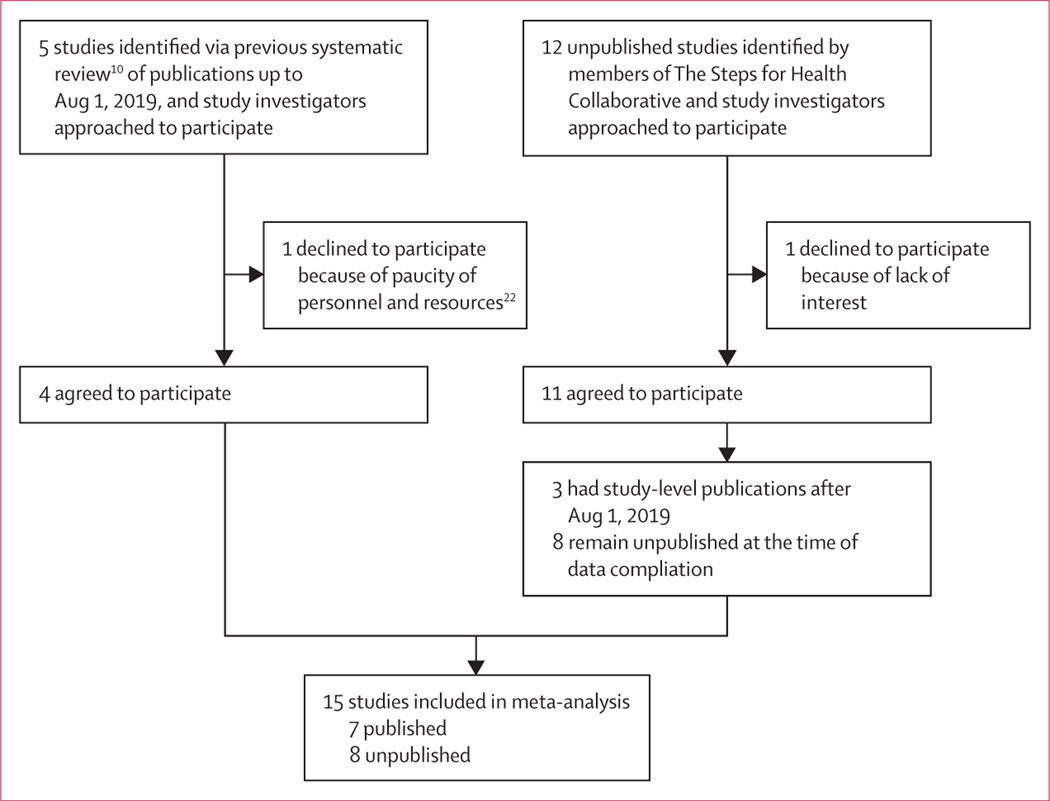
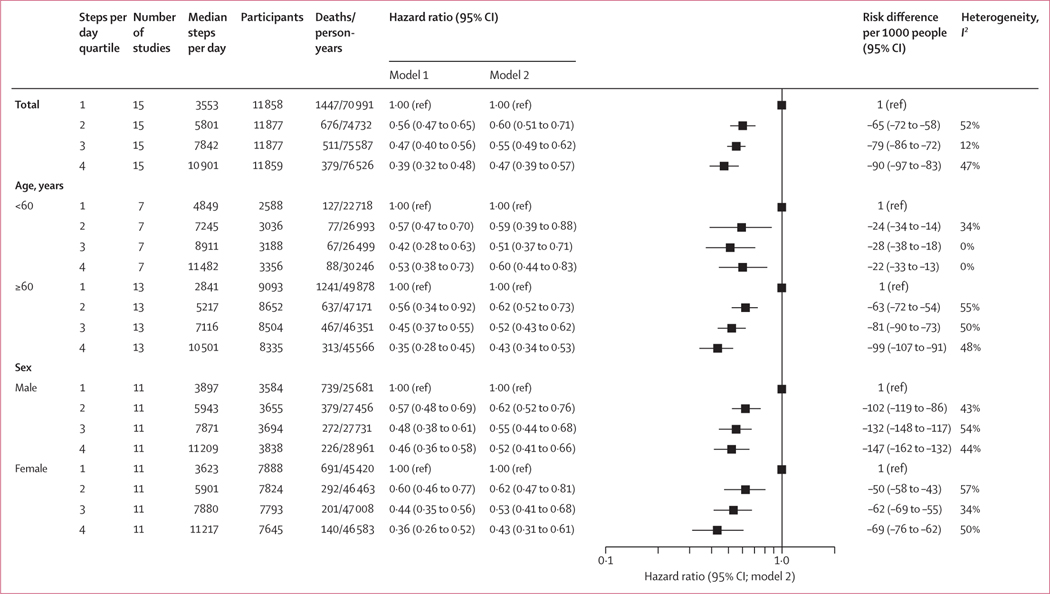
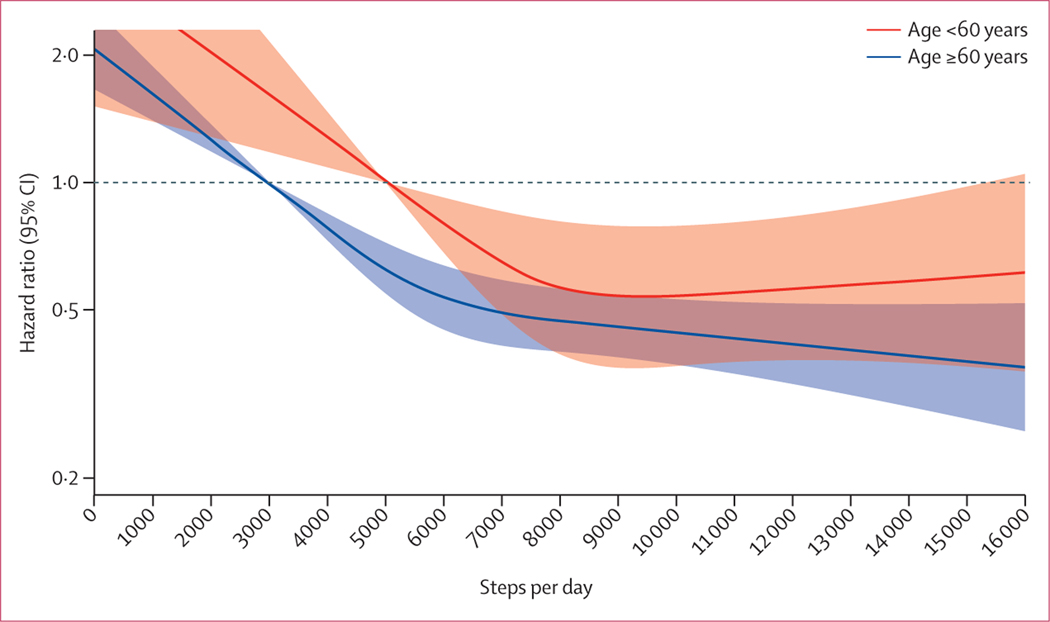
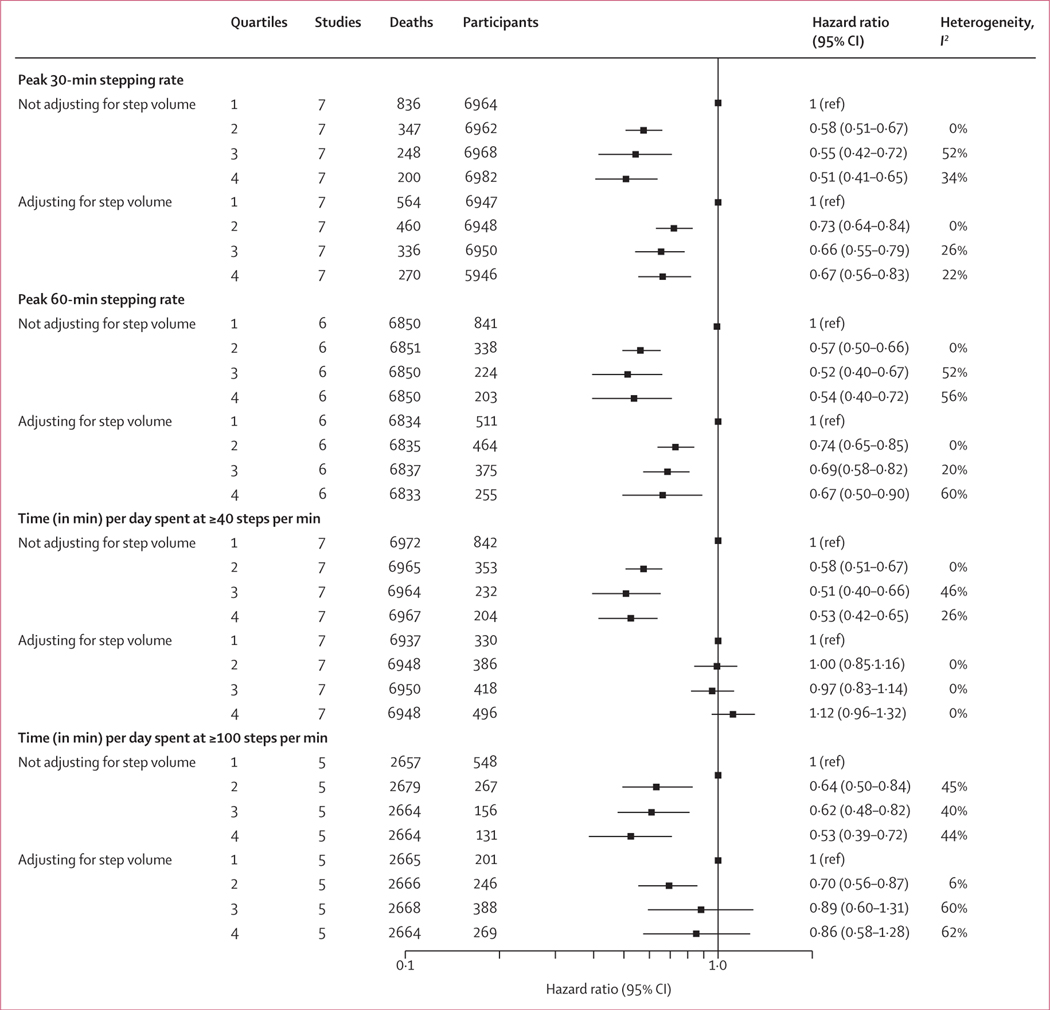
BACKGROUND: Although 10 000 steps per day is widely promoted to have health benefits, there is little evidence to support this recommendation. We aimed to determine the association between number of steps per day and stepping rate with all-cause mortality. METHODS: In this meta-analysis, we identified studies investigating the effect of daily step count on all-cause mortality in adults (aged ≥18 years), via a previously published systematic review and expert knowledge of the field. We asked participating study investigators to process their participant-level data following a standardised protocol. The primary outcome was all-cause mortality collected from death certificates and country registries. We analysed the dose-response association of steps per day and stepping rate with all-cause mortality. We did Cox proportional hazards regression analyses using study-specific quartiles of steps per day and calculated hazard ratios (HRs) with inverse-variance weighted random effects models. FINDINGS: We identified 15 studies, of which seven were published and eight were unpublished, with study start dates between 1999 and 2018. The total sample included 47 471 adults, among whom there were 3013 deaths (10·1 per 1000 participant-years) over a median follow-up of 7·1 years ([IQR 4·3-9·9]; total sum of follow-up across studies was 297 837 person-years). Quartile median steps per day were 3553 for quartile 1, 5801 for quartile 2, 7842 for quartile 3, and 10 901 for quartile 4. Compared with the lowest quartile, the adjusted HR for all-cause mortality was 0·60 (95% CI 0·51-0·71) for quartile 2, 0·55 (0·49-0·62) for quartile 3, and 0·47 (0·39-0·57) for quartile 4. Restricted cubic splines showed progressively decreasing risk of mortality among adults aged 60 years and older with increasing number of steps per day until 6000-8000 steps per day and among adults younger than 60 years until 8000-10 000 steps per day. Adjusting for number of steps per day, comparing quartile 1 with quartile 4, the association between higher stepping rates and mortality was attenuated but remained significant for a peak of 30 min (HR 0·67 [95% CI 0·56-0·83]) and a peak of 60 min (0·67 [0·50-0·90]), but not significant for time (min per day) spent walking at 40 steps per min or faster (1·12 [0·96-1·32]) and 100 steps per min or faster (0·86 [0·58-1·28]). INTERPRETATION: Taking more steps per day was associated with a progressively lower risk of all-cause mortality, up to a level that varied by age. The findings from this meta-analysis can be used to inform step guidelines for public health promotion of physical activity. FUNDING: US Centers for Disease Control and Prevention.
Overview
The claims and statistics of this paper haven’t been checked yet.
Free: it reads the open-access text and checks the first 5 claims that cite a source we can check. Create a free account to check every claim.
Integrity signals
Registry
Cites
Statistics
Figures
Verification
Claims the paper makes
The claims and statistics of this paper haven’t been checked yet.
Free: it reads the open-access text and checks the first 5 claims that cite a source we can check. Create a free account to check every claim.
Claims other papers make about this one
Each is checked against this paper’s own text: does it say what the citing paper says it does?
The source backs part of the claim, not all of it — or backs it for a different population, condition or comparison.
In the citing paper
“uncertainty exists around the strength and shape of the association of daily step count with all-cause mortality and cardiovascular mortality14,15, where recent studies have not used transparent or robustly validated free-living step counting algorithms.”
From Development and Validation of a Machine Learning Wrist-worn Step Detection Algorithm with Deployment in the UK Biobank (2023) · cites this paper as [15]
Experimental — accuracy not yet measuredThe source backs part of the claim, not all of it — or backs it for a different population, condition or comparison.
In the citing paper
“Indeed, observational evidence shows that PA levels lower than recommended threshold are already associated with reduced mortality [65,628,668], and benefits exhibit a curvilinear dose-dependency [628,668].”
From Global consensus on optimal exercise recommendations for enhancing healthy longevity in older adults (ICFSR) (2025) · cites this paper as [65]
Experimental — accuracy not yet measuredThe source backs part of the claim, not all of it — or backs it for a different population, condition or comparison.
In the citing paper
“We therefore used the residual method in which total MVPA was regressed on the bout exposure volume.The resulting residuals were independent variables in the analyses consistent with previous research assessing activity volume over a fixed time interval.20,21”
From Brief bouts of device-measured intermittent lifestyle physical activity and its association with major adverse cardiovascular events and mortality in people who do not exercise: A prospective cohort study (2023) · cites this paper as [20]
Experimental — accuracy not yet measuredThe cited source says what the claim attributes to it.
In the citing paper
“Our findings are consistent with previous literature describing associations between step counts and adverse events10,11.”
From Association of step counts over time with the risk of chronic disease in the All of Us Research Program (2022) · cites this paper as [11]
In the citing paper
“Population based data indicate that even small increases in the number of steps per day are associated with a lower risk of premature death, with the strongest effects observed at approximately 7000 to 10,000 steps per day [142,143].”
From Dietary and Behavioral Strategies for Weight Loss and Weight Loss Maintenance: A Narrative Review (2025) · cites this paper as [142]
Self-check
Percentages, sums and reported differences re-computed from the paper’s own numbers.
The self-check needs the paper’s full text.
Citations
Cites
Measuring inconsistency in meta-analyses
Higgins, J. P. T., Thompson, S. G., Deeks, J. J., & Altman, D. G. (2003) · BMJ · doi:10.1136/bmj.327.7414.557 · Cited by 63,139
Bias in meta-analysis detected by a simple, graphical test
Egger, M., Smith, G. D., Schneider, M., & Minder, C. (1997) · BMJ · doi:10.1136/bmj.315.7109.629 · Cited by 56,722
World Health Organization 2020 guidelines on physical activity and sedentary behaviour
Bull, F. C., Al-Ansari, S. S., Biddle, S., Borodulin, K., Buman, M. P., Cardon, G., Carty, C., Chaput, J.-P., Chastin, S., Chou, R., et al. (2020) · British Journal of Sports Medicine · doi:10.1136/bjsports-2020-102955 · Cited by 11,657
Self-citationExercise and Physical Activity for Older Adults
Chodzko-Zajko, W. J., Proctor, D. N., Fiatarone Singh, M. A., Minson, C. T., Nigg, C. R., Salem, G. J., & Skinner, J. S. (2009) · Medicine & Science in Sports & Exercise · doi:10.1249/mss.0b013e3181a0c95c · Cited by 5,153
Adjustment for total energy intake in epidemiologic studies
Willett, W., Howe, G., & Kushi, L. (1997) · The American Journal of Clinical Nutrition · doi:10.1093/ajcn/65.4.1220s · Cited by 3,758
Prince, S. A., Adamo, K. B., Hamel, M., Hardt, J., Connor Gorber, S., & Tremblay, M. (2008) · International Journal of Behavioral Nutrition and Physical Activity · doi:10.1186/1479-5868-5-56 · Cited by 3,162
Physical Fitness and All-Cause Mortality: A Prospective Study of Healthy Men and Women
Blair, S. N. (1989) · JAMA · doi:10.1001/jama.1989.03430170057028 · Cited by 2,658
Ekelund, U., Tarp, J., Steene-Johannessen, J., Hansen, B. H., Jefferis, B., Fagerland, M. W., Whincup, P., Diaz, K. M., Hooker, S. P., Chernofsky, A., et al. (2019) · BMJ · doi:10.1136/bmj.l4570 · Cited by 1,769
Self-citationAssociation of daily step count and step intensity with mortality among US adults
Saint-Maurice, P. F., Troiano, R. P., Bassett, D. R., Graubard, B. I., Carlson, S. A., Shiroma, E. J., Fulton, J. E., & Matthews, C. E. (2020) · JAMA · doi:10.1001/jama.2020.1382 · Cited by 660
Self-citationAssociation of Step Volume and Intensity With All-Cause Mortality in Older Women
Lee, I.-M., Shiroma, E. J., Kamada, M., Bassett, D. R., Matthews, C. E., & Buring, J. E. (2019) · JAMA Internal Medicine · doi:10.1001/jamainternmed.2019.0899 · Cited by 604
Self-citation
Cited by
Heart Disease and Stroke Statistics—2023 Update: A Report From the American Heart Association
Tsao, C. W., Aday, A. W., Almarzooq, Z. I., Anderson, C. A. M., Arora, P., Avery, C. L., Baker-Smith, C. M., Beaton, A. Z., Boehme, A. K., Buxton, A. E., et al. (2023) · Circulation · doi:10.1161/cir.0000000000001123 · Cited by 8,300
Self-citationMartin, S. S., Aday, A. W., Almarzooq, Z. I., Anderson, C. A. M., Arora, P., Avery, C. L., Baker-Smith, C. M., Barone Gibbs, B., Beaton, A. Z., Boehme, A. K., et al. (2024) · Circulation · doi:10.1161/cir.0000000000001209 · Cited by 2,800
Self-citationMartin, S. S., Aday, A. W., Allen, N. B., Almarzooq, Z. I., Anderson, C. A. M., Arora, P., Avery, C. L., Baker-Smith, C. M., Bansal, N., Beaton, A. Z., et al. (2025) · Circulation · doi:10.1161/cir.0000000000001303 · Cited by 1,080
Bushnell, C., Kernan, W. N., Sharrief, A. Z., Chaturvedi, S., Cole, J. W., Cornwell, W. K., Cosby-Gaither, C., Doyle, S., Goldstein, L. B., Lennon, O., et al. (2024) · Stroke · doi:10.1161/str.0000000000000475 · Cited by 360
Izquierdo, M., de Souto Barreto, P., Arai, H., Bischoff-Ferrari, H. A., Cadore, E. L., Cesari, M., Chen, L.-K., Coen, P. M., Courneya, K. S., Duque, G., et al. (2025) · The Journal of nutrition, health and aging · doi:10.1016/j.jnha.2024.100401 · Cited by 273
Self-citationdel Pozo Cruz, B., Ahmadi, M. N., Lee, I.-M., & Stamatakis, E. (2022) · JAMA Internal Medicine · doi:10.1001/jamainternmed.2022.4000 · Cited by 265
Self-citationThe association between daily step count and all-cause and cardiovascular mortality: a meta-analysis
Banach, M., Lewek, J., Surma, S., Penson, P. E., Sahebkar, A., Martin, S. S., Bajraktari, G., Henein, M. Y., Reiner, Ž., Bielecka-Dąbrowa, A., et al. (2023) · European Journal of Preventive Cardiology · doi:10.1093/eurjpc/zwad229 · Cited by 237
Master, H., Annis, J., Huang, S., Beckman, J. A., Ratsimbazafy, F., Marginean, K., Carroll, R., Natarajan, K., Harrell, F. E., Roden, D. M., et al. (2022) · Nature Medicine · doi:10.1038/s41591-022-02012-w · Cited by 220
Integrating the environmental and genetic architectures of aging and mortality
Argentieri, M. A., Amin, N., Nevado-Holgado, A. J., Sproviero, W., Collister, J. A., Keestra, S. M., Kuilman, M. M., Ginos, B. N. R., Ghanbari, M., Doherty, A., et al. (2025) · Nature Medicine · doi:10.1038/s41591-024-03483-9 · Cited by 211
“…the significant roles of physical activity, smoking, sleep and individual socioeconomic status (household income, employment and home ownership status) in shaping mortality risk 25,26 , we provide a more expanded picture of the myriad biological mechanisms and disease pathways associated with each.”
Physical Activity Over the Lifecourse and Cardiovascular Disease
Perry, A. S., Dooley, E. E., Master, H., Spartano, N. L., Brittain, E. L., & Pettee Gabriel, K. (2023) · Circulation Research · doi:10.1161/circresaha.123.322121 · Cited by 188
Self-citationdel Pozo Cruz, B., Ahmadi, M., Naismith, S. L., & Stamatakis, E. (2022) · JAMA Neurology · doi:10.1001/jamaneurol.2022.2672 · Cited by 184
Ahmadi, M. N., Hamer, M., Gill, J. M. R., Murphy, M., Sanders, J. P., Doherty, A., & Stamatakis, E. (2023) · The Lancet Public Health · doi:10.1016/s2468-2667(23)00183-4 · Cited by 172
“20,21 For the analysis of the percentage contribution of vigorous physical activity, we adjusted for MV-ILPA volume to minimise the possibility that any observed effects are attributed to the higher amounts of activity achieved through vigorous physical activity.”
MethodDaily steps and health outcomes in adults: a systematic review and dose-response meta-analysis
Ding, D., Nguyen, B., Nau, T., Luo, M., Cruz, B. D. P., Dempsey, P. C., Munn, Z., Jefferis, B. J. M. H., Sherrington, C., Calleja, E. A., et al. (2025) · The Lancet Public Health · doi:10.1016/s2468-2667(25)00164-1 · Cited by 184
Self-citationThe multifaceted benefits of walking for healthy aging: from Blue Zones to molecular mechanisms
Ungvari, Z., Fazekas-Pongor, V., Csiszar, A., & Kunutsor, S. K. (2023) · GeroScience · doi:10.1007/s11357-023-00873-8 · Cited by 163
“In this study, it was found that taking as few as 6000 steps per day was associated with a reduction in mortality risk [24].”
BackgroundMethodInfluentialRelationship of Daily Step Counts to All-Cause Mortality and Cardiovascular Events
Stens, N. A., Bakker, E. A., Mañas, A., Buffart, L. M., Ortega, F. B., Lee, D.-C., Thompson, P. D., Thijssen, D. H. J., & Eijsvogels, T. M. H. (2023) · Journal of the American College of Cardiology · doi:10.1016/j.jacc.2023.07.029 · Cited by 343
Prospective Association of Daily Steps With Cardiovascular Disease: A Harmonized Meta-Analysis
Paluch, A. E., Bajpai, S., Ballin, M., Bassett, D. R., Buford, T. W., Carnethon, M. R., Chernofsky, A., Dooley, E. E., Ekelund, U., Evenson, K. R., et al. (2022) · Circulation · doi:10.1161/circulationaha.122.061288 · Cited by 131
Self-citationFigtree, G. A., Vernon, S. T., Harmer, J. A., Gray, M. P., Arnott, C. G., Bachour, E., Barsha, G., Brieger, D. B., Brown, A. D. H., Celermajer, D. S., et al. (2023) · Journal of the American College of Cardiology · doi:10.1016/j.jacc.2023.06.045 · Cited by 127
Koczulla, A. R., Ankermann, T., Behrends, U., Berlit, P., Berner, R., Böing, S., Brinkmann, F., Frank, U., Franke, C., Glöckl, R., et al. (2022) · Pneumologie · doi:10.1055/a-1946-3230 · Cited by 132
“[355] Paluch AE, Bajpai S, Bassett DR et al.”
BackgroundConsumer Wearable Health and Fitness Technology in Cardiovascular Medicine
Petek, B. J., Al‐Alusi, M. A., Moulson, N., Grant, A. J., Besson, C., Guseh, J. S., Wasfy, M. M., Grémeaux, V., Churchill, T. W., & Baggish, A. L. (2023) · Journal of the American College of Cardiology · doi:10.1016/j.jacc.2023.04.054 · Cited by 126
TENG-Boosted Smart Sports with Energy Autonomy and Digital Intelligence
Wang, Y., Gao, Z., Wu, W., Xiong, Y., Luo, J., Sun, Q., Mao, Y., & Wang, Z. L. (2025) · Nano-Micro Letters · doi:10.1007/s40820-025-01778-1 · Cited by 125
“Regular physical activity is a cornerstone of health promotion, providing benefits across various interconnected physiological systems such as cognitive, immune, neurohormonal, cardiovascular, and musculoskeletal systems.”
Dose–response associations, physical activity intensity and mortality risk: A narrative review
Ekelund, U., Sánchez-Lastra, M. A., Dalene, K. E., & Tarp, J. (2023) · Journal of sport and health science/Journal of Sport and Health Science · doi:10.1016/j.jshs.2023.09.006 · Cited by 113
“The Steps for Health Collaborative 29 observed a lower risk of death (33% risk reduction; 95% confidence interval: 0.56 (cid:1) 0.83) in the most active quartile compared with the least active quartile for an intensity defined as the highest number of steps over a 30-min period (peak 30 min).”
BackgroundMethodInfluentialSelf-citationAssociation of Daily Step Patterns With Mortality in US Adults
Inoue, K., Tsugawa, Y., Mayeda, E. R., & Ritz, B. R. (2023) · JAMA Network Open · doi:10.1001/jamanetworkopen.2023.5174 · Cited by 93
Turrini, S., Wong, B., Eldaief, M. C., Press, D. Z., Sinclair, D. A., Koch, G., Avenanti, A., & Santarnecchi, E. (2023) · Ageing Research Reviews · doi:10.1016/j.arr.2023.101939 · Cited by 99
“…15 international cohorts has proven a direct negative association between regular daily exercise, computed as daily steps, and all-cause mortality (Paluch et al., 2022); trials testing exercise interventions show it has cascading effects, improving memory, mood, executive function and promoting…”
BackgroundCardiorespiratory fitness, body mass index and mortality: a systematic review and meta-analysis
Weeldreyer, N. R., Guzman, J. C. D., Paterson, C. A., Allen, J. D., Gaesser, G. A., & Angadi, S. S. (2024) · British Journal of Sports Medicine · doi:10.1136/bjsports-2024-108748 · Cited by 107
“61 62 As such, the varied criteria employed by the included studies may influence the results.”
Lee, E. Y., Cha, S.-A., Yun, J.-S., Lim, S.-Y., Lee, J.-H., Ahn, Y.-B., Yoon, K.-H., Hyun, M. K., & Ko, S.-H. (2022) · Journal of Medical Internet Research · doi:10.2196/37430 · Cited by 83
“When the target of 7500 steps per day was applied [39-41], the difference in goal achievement rates among the groups further increased (UC vs MC vs MPC: 25.9% vs 28.5% vs 30.2%).”
InfluentialNCCN Guidelines® Insights: Survivorship, Version 2.2025
Sanft, T. B., Day, A. T., Ansbaugh, S. M., Ariza‐Heredia, E., Armenian, S. H., Baker, K. S., Ballinger, T. J., Cathcart-Rake, E. J., Cohen, S. H., Evgeniou, E., et al. (2025) · Journal of the National Comprehensive Cancer Network · doi:10.6004/jnccn.2025.0028 · Cited by 76
Ahmadi, M. N., Rezende, L. F. M., Ferrari, G., Cruz, B. D. P., Lee, I.-M. M., & Stamatakis, E. (2024) · British Journal of Sports Medicine · doi:10.1136/bjsports-2023-107221 · Cited by 79
Self-citationBiomarkers of aging: from molecules and surrogates to physiology and function
Furrer, R., & Handschin, C. (2025) · Physiological Reviews · doi:10.1152/physrev.00045.2024 · Cited by 74
Physical activity as a modifiable risk factor in preclinical Alzheimer’s disease
Yau, W. W., Kirn, D. R., Rabin, J. S., Properzi, M. J., Schultz, A. P., Shirzadi, Z., Palmgren, K. A., Matos, P., Maa, C., Pruzin, J. J., et al. (2025) · Nature Medicine · doi:10.1038/s41591-025-03955-6 · Cited by 78
“Emerging literature suggests that higher step counts are linked to lower all-cause mortality 24,25 .”
Intensity or volume: the role of physical activity in longevity
Schwendinger, F., Infanger, D., Lichtenstein, E., Hinrichs, T., Knaier, R., Rowlands, A. V., & Schmidt‐Trucksäss, A. (2024) · European Journal of Preventive Cardiology · doi:10.1093/eurjpc/zwae295 · Cited by 70
Bi, S., Yuan, J., Wang, Y., Zhang, W., Zhang, L., Zhang, Y., Zhu, R., & Luo, L. (2024) · Journal of Medical Internet Research · doi:10.2196/51714 · Cited by 74
“With the widespread use of health trackers and mobile devices, daily step count has become a convenient and reliable indicator for measuring individual physical activity levels [74,75].”
Effect of exercise-based cancer rehabilitation via telehealth: a systematic review and meta-analysis
Baťalík, L., Chamradova, K., Winnige, P., Dosbaba, F., Batalikova, K., Vlažná, D., Janíková, A., Pepera, G., Abu‐Odah, H., & Su, J. J. (2024) · BMC Cancer · doi:10.1186/s12885-024-12348-w · Cited by 65
Wu, S., Li, G., Du, L., Chen, S., Zhang, X., & He, Q. (2023) · Digital Health · doi:10.1177/20552076231176705 · Cited by 62
“Taking more daily steps is associated with a gradually declined risk of allcause mortality with larger effects observed in older adults than young adults.(32,33) However, daily steps cannot fully reflect the PA level of older adults, especially when the time and intensity of PA were targeted.”
BackgroundFanaroff, A. C., Patel, M. S., Chokshi, N. P., Coratti, S., Farraday, D., Norton, L. A., Rareshide, C. A. L., Zhu, J., Klaiman, T. A., Szymczak, J. E., et al. (2024) · Circulation · doi:10.1161/circulationaha.124.069531 · Cited by 61
German, C. A., Baum, S. J., Ferdinand, K. C., Gulati, M., Polonsky, T. S., Toth, P. P., & Shapiro, M. D. (2022) · American Journal of Preventive Cardiology · doi:10.1016/j.ajpc.2022.100432 · Cited by 60
Small, S. R., Chan, S., Walmsley, R., von Fritsch, L., Acquah, A., Mertes, G., Feakins, B. G., Creagh, A. P., Strange, A., Matthews, C. E., et al. (2024) · Medicine & Science in Sports & Exercise · doi:10.1249/mss.0000000000003478 · Cited by 57
“Our current results parallel those of Paluch et al. (15), who demonstrated that higher daily step counts are associated with an incrementally lower risk of all-cause mortality across 15 international longitudinal cohorts nearly exclusively using hip-mounted devices.”
BackgroundResultSelf-citationTime- vs Step-Based Physical Activity Metrics for Health
Hamaya, R., Shiroma, E. J., Moore, C. C., Buring, J. E., Evenson, K. R., & Lee, I.-M. M. (2024) · JAMA Internal Medicine · doi:10.1001/jamainternmed.2024.0892 · Cited by 73
Self-citationAssessment and development of physical education teachers’ physical literacy: A systematic review
Yin, H., Dev, R. D. O., Soh, K. G., Li, F., & Lian, M. (2024) · PLoS ONE · doi:10.1371/journal.pone.0307505 · Cited by 49
“Buckler’s [41] study showed that early childhood teachers’ daily step mean (SD) = 11,832 (4744) (steps/day), which means that most participants have achieved the daily steps (8000–10000) required to stay healthy [73].”
BackgroundExercise, exerkines, and cardiometabolic health: from individual players to a team sport
Robbins, J., & Gerszten, R. E. (2023) · Journal of Clinical Investigation · doi:10.1172/jci168121 · Cited by 46
The Effect of Walking on Depressive and Anxiety Symptoms: Systematic Review and Meta-Analysis
Xu, Z., Zheng, X., Ding, H., Zhang, D., Cheung, P. M.-H., Yang, Z., Tam, K. W., Zhou, W., Chan, D. C. C., Wang, W., et al. (2024) · JMIR Public Health and Surveillance · doi:10.2196/48355 · Cited by 47
“In recent years, more and more studies on walking have been conducted and have attracted attention from the public [12-14].”
BackgroundGiurgiu, M., von Haaren‐Mack, B., Fiedler, J., Woll, S., Burchartz, A., Kolb, S., Ketelhut, S., Kubica, C., Nigg, C., Timm, I., et al. (2024) · Journal of sport and health science/Journal of Sport and Health Science · doi:10.1016/j.jshs.2024.101006 · Cited by 44
“19 However, to date, market access for wearables through certification or authorization relies on regulatory commissions (e.g., European CE (European conformity)- marking or U.S. Food and Drug Administration), which focus primarily on aspects such as the privacy or security of the processed data.”
Li, H., Förstermann, U., Xia, N., Kuntić, M., Münzel, T. F., & Daiber, A. (2025) · Free Radical Biology and Medicine · doi:10.1016/j.freeradbiomed.2025.06.009 · Cited by 41
Cuthbertson, C. C., Moore, C. C., Sotres‐Alvarez, D., HEISS, G. M., Isasi, C. R., Mossavar‐Rahmani, Y., Carlson, J., Gallo, L. C., Llabre, M. M., Garcia‐Bedoya, O., et al. (2022) · International Journal of Behavioral Nutrition and Physical Activity · doi:10.1186/s12966-022-01284-2 · Cited by 41
“Research on steps/day and health outcomes is quickly growing [11, 61] and our findings can contribute to future efforts to develop evidence-based steps/day guidelines.”
BackgroundSelf-citationDose–response relationship between computerized cognitive training and cognitive improvement
Liu, L., Wang, H., Xing, Y., Zhang, Z., Zhang, Q.-G., Dong, M., Ma, Z., Cai, L., Wang, X., & Tang, Y. (2024) · npj Digital Medicine · doi:10.1038/s41746-024-01210-9 · Cited by 41
“Some research of other non-pharmacological interventions studies the dose-response relationship by analyzing the average dose of the individual(i.e.,onepatientunderoneexposure) 25,27 whichwouldneglectthe variation of dose through the study.”
InfluentialEvidence-based yet still challenging! Research on physical activity in old age
Brach, M., de Bruin, E. D., Levin, O., Hinrichs, T., Zijlstra, W., & Netz, Y. (2023) · European Review of Aging and Physical Activity · doi:10.1186/s11556-023-00318-3 · Cited by 39
“Interestingly, one of the findings is that for older women, the mortality risk plateau is only 7500 steps per day [12].”
BackgroundRowlands, A. V., Maylor, B. D., Dawkins, N. P., Dempsey, P. C., Edwardson, C. L., Soczawa-Stronczyk, A. A., Bocian, M., Patterson, M., & Yates, T. (2022) · Journal of Sports Sciences · doi:10.1080/02640414.2022.2147134 · Cited by 39
“Additionally, much of the evidence base on steps and health outcomes has been generated from studies using the waist-worn ActiGraph to assess steps and/or cadence (Paluch et al., 2022) further supporting the appropriateness of the reference measure.”
BackgroundMethodSerper, M., Jones, L., Clement, T., Reddy, K. R., & Reese, P. P. (2023) · Liver Transplantation · doi:10.1097/lvt.0000000000000198 · Cited by 37
“…data are lacking, a recent meta-analysis in the general population showed that taking more steps per day was associated with lower all-cause mortality (up to 6000 – 8000 daily steps among adults 60 or older) [22] and thus represents an important behavior to target with home-based interventions.”
BackgroundRahmati, M., Lee, H., Lee, H., Park, J., Vithran, D. T. A., Li, Y., Kazemi, A., Boyer, L., Fond, G. B., Smith, L., et al. (2025) · Journal of Cachexia Sarcopenia and Muscle · doi:10.1002/jcsm.13772 · Cited by 39
Moller, A. C., Sousa, C. V., Lee, K. J., Alon, D., & Lu, A. S. (2023) · Journal of Medical Internet Research · doi:10.2196/45243 · Cited by 34
Rouyard, T., Yoda, E., Akksilp, K., Dieterich, A. V., Sarin, K. C., Dabak, S. V., & Müller, A. M. (2025) · The Lancet Public Health · doi:10.1016/s2468-2667(25)00038-6 · Cited by 35
Viciana, J., Casado-Robles, C., Guijarro-Romero, S., & Mayorga-Vega, D. (2022) · Journal of Sports Science and Medicine · doi:10.52082/jssm.2022.356 · Cited by 38
Watanabe, D., Yoshida, T., Watanabe, Y., Yamada, Y., Miyachi, M., & Kimura, M. (2023) · Medicine & Science in Sports & Exercise · doi:10.1249/mss.0000000000003133 · Cited by 36
Automation of Systematic Reviews with Large Language Models
Cao, C., Arora, R., Cento, P., Budak, A., Manta, K., Farahani, E., Cecere, M., Selemon, A., Sang, J., Gong, L. X., et al. (2025) · medRxiv · doi:10.1101/2025.06.13.25329541 · Cited by 33
Promoting physical activity for mental health: an updated evidence review and practical guide
McKeon, G., Curtis, J., & Rosenbaum, S. (2022) · Current Opinion in Psychiatry · doi:10.1097/yco.0000000000000796 · Cited by 40
Nakagata, T., Murakami, H., Kawakami, R., Tripette, J., Nakae, S., Yamada, Y., Ishikawa‐Takata, K., Tanaka, S., & Miyachi, M. (2022) · Gait & Posture · doi:10.1016/j.gaitpost.2022.08.004 · Cited by 34
Kvandová, M., Rajlic, S., Stamm, P., Schmal, I., Mihaliková, D., Kuntić, M., Jiménez, M. T. B., Hahad, O., Kollárová, M., Ubbens, H., et al. (2023) · European Journal of Preventive Cardiology · doi:10.1093/eurjpc/zwad075 · Cited by 32
Maylor, B. D., Edwardson, C. L., Dempsey, P. C., Patterson, M. R., Plekhanova, T., Yates, T., & Rowlands, A. V. (2022) · Sensors · doi:10.3390/s22249984 · Cited by 30
Hansen, D., Coninx, K., Beckers, P. J., Cornelissen, V., Kouidi, E. J., Neunhäeuserer, D., Niebauer, J., Spruit, M. A., Takken, T., & Dendale, P. (2023) · European Journal of Preventive Cardiology · doi:10.1093/eurjpc/zwad232 · Cited by 30
Examining the Dose–Response Relationship between Physical Activity and Health Outcomes
Wasfy, M. M., & Lee, I.-M. M. (2022) · NEJM Evidence · doi:10.1056/evidra2200190 · Cited by 32
Self-citationWunsch, K., Fiedler, J., Hubenschmid, S., Reiterer, H., Renner, B., & Wöll, A. (2024) · JMIR mhealth and uhealth · doi:10.2196/51201 · Cited by 30
“For steps, mean and medium values are shortly below the commonly used 10,000 steps per day goal [90,91] for all participants (Figure 3).”
Review of current ECG consumer electronics (pros and cons)
Hilbel, T., & Frey, N. (2022) · Journal of Electrocardiology · doi:10.1016/j.jelectrocard.2022.11.010 · Cited by 30
Buttery, S. C., Williams, P. J., Alghamdi, S. M., Philip, K. E. J., Perkins, A., Kallis, C., Quint, J. K., Polkey, M. I., Breuls, S., Buekers, J., et al. (2023) · European Respiratory Review · doi:10.1183/16000617.0134-2023 · Cited by 30
“Nevertheless, comparable recent work in healthy older people shows a link between more steps per day and increased survival, up to a threshold of 6000 – 8000 steps·day − 1 [71].”
BackgroundZaccardi, F., Rowlands, A. V., Dempsey, P. C., Razieh, C., Henson, J. J., Goldney, J., Maylor, B. D., Bhattacharjee, A., Chudasama, Y., Edwardson, C. L., et al. (2024) · Journal of sport and health science/Journal of Sport and Health Science · doi:10.1016/j.jshs.2024.100970 · Cited by 30
“…investigated the interplay between PA volume and intensity have produced equivocal findings for whether intensity is independently associated with health outcomes, 6,7,12,13 which is compounded by the fact that PA volume and intensity are linked given volume is a product of intensity by time.”
Self-citationDenk, D., Herman, T., Zoetewei, D., Ginis, P., Brozgol, M., Thumm, P. C., Decaluwé, E., Ganz, N., Palmerini, L., Giladi, N., et al. (2022) · Physical Therapy · doi:10.1093/ptj/pzac129 · Cited by 28
Associations of active commuting to school in childhood and physical activity in adulthood
Kaseva, K., Lounassalo, I., Yang, X., Kukko, T., Hakonen, H., Kulmala, J., Pahkala, K., Rovio, S., Hirvensalo, M. H., Raitakari, O. T., et al. (2023) · Scientific Reports · doi:10.1038/s41598-023-33518-z · Cited by 28
Roberts, C. J., Ryan, D. J., Campbell, J. A., & Hardwicke, J. (2024) · Critical Public Health · doi:10.1080/09581596.2024.2338182 · Cited by 33
“…adults demonstrated that there is a negative curvilinear association between step count per day and all-cause mortality, which suggested increasing steps might be beneficial in terms of reducing risk of mortality, particularly among individuals who have lower step volumes (Paluch et al., 2022).”
Physical Activity for Health—Every Minute Counts
Katzmarzyk, P. T., & Jakicic, J. M. (2023) · JAMA · doi:10.1001/jama.2023.11014 · Cited by 26
Investigating walking speed variability of young adults in the real world
Baroudi, L., Yan, X., Newman, M., Barton, K. L., Cain, S. M., & Shorter, K. A. (2022) · Gait & Posture · doi:10.1016/j.gaitpost.2022.08.012 · Cited by 25
Watanabe, D., Yamada, Y., Yoshida, T., Watanabe, Y., Hatamoto, Y., Fujita, H., Miyachi, M., & Kimura, M. (2022) · Scandinavian Journal of Medicine and Science in Sports · doi:10.1111/sms.14234 · Cited by 28
Drugs, clocks and exercise in ageing: hype and hope, fact and fiction
Furrer, R., & Handschin, C. (2022) · The Journal of Physiology · doi:10.1113/jp282887 · Cited by 25
“Endurance and cardiovascular function (for example V˙ O2max (Strasser & Burtscher, 2018), maximal endurance (Kodama et al., 2009) or daily steps (Paluch et al., 2022)), skeletal muscle function (for example muscle and grip strength (Sayer & Kirkwood, 2015), muscle power (Losa-Reyna et al., 2022) or…”
Evaluation of physical health status beyond daily step count using a wearable activity sensor
Xu, Z., Zahradka, N., Ip, S., Koneshloo, A., Roemmich, R. T., Sehgal, S., Highland, K. B., & Searson, P. C. (2022) · npj Digital Medicine · doi:10.1038/s41746-022-00696-5 · Cited by 27
Physical activity levels among people with fibromyalgia: A systematic review and meta‐analysis
Vancampfort, D., Damme, T. V., McGrath, R. L., Machado, V. A., & Schuch, F. B. (2023) · Musculoskeletal Care · doi:10.1002/msc.1771 · Cited by 30
Sarto, F., Bottinelli, R., Franchi, M. V., Porcelli, S., Šimunič, B., Pišot, R., & Narici, M. V. (2023) · Acta Physiologica · doi:10.1111/apha.13986 · Cited by 25
Marcos-Pardo, P. J., Espeso-García, A., Abelleira-Lamela, T., & Machado, D. R. L. (2023) · Experimental Gerontology · doi:10.1016/j.exger.2023.112279 · Cited by 27
Suau, Q., Bianchini, E., Bellier, A., Chardon, M., Milane, T., Hansen, C., & Vuillerme, N. (2024) · Sensors · doi:10.3390/s24030825 · Cited by 26
Hunter, A., Leckie, T., Coe, O., Hardy, B., Fitzpatrick, D., Gonçalves, A., Standing, M.-K., Koulouglioti, C., Richardson, A., & Hodgson, L. E. (2022) · JMIR Rehabilitation and Assistive Technologies · doi:10.2196/25494 · Cited by 29
Geroprotector drugs and exercise: friends or foes on healthy longevity?
Elliehausen, C. J., Anderson, R. M., Diffee, G. M., Rhoads, T. W., Lamming, D. W., Hornberger, T. A., & Konopka, A. R. (2023) · BMC Biology · doi:10.1186/s12915-023-01779-9 · Cited by 27
Fanaroff, A. C., Patel, M. S., Chokshi, N., Coratti, S., Farraday, D., Norton, L., Rareshide, C., Zhu, J., Szymczak, J. E., Russell, L. B., et al. (2023) · American Heart Journal · doi:10.1016/j.ahj.2023.02.014 · Cited by 23
Tarp, J., Dalene, K. E., Fagerland, M. W., Steene-Johannesen, J., Hansen, B. H., Anderssen, S. A., Hagströmer, M., Dohrn, I., Dempsey, P. C., Wijndaele, K., et al. (2024) · American Journal of Preventive Medicine · doi:10.1016/j.amepre.2024.07.022 · Cited by 25
Self-citationGaffney, B. M. M., Davis-Wilson, H. C., Awad, M. E., James, T., Melton, D., Lev, G., Stoneback, J. W., & Christiansen, C. L. (2023) · Disability and Rehabilitation · doi:10.1080/09638288.2023.2200036 · Cited by 23
“Furthermore, progressively lower daily step counts below 6000 steps/day are linked to higher mortality risk for adults over the age of 60 [26].”
BackgroundFitness Trackers to Guide Advice on Activity Prescription
Lee, I.-M. M., Keadle, S. K., & Matthews, C. E. (2023) · JAMA · doi:10.1001/jama.2023.19332 · Cited by 26
Self-citationMonroe, C. M., Cai, B., Edney, S. M., Jake‐Schoffman, D. E., Brazendale, K., Bucko, A., Armstrong, B., Yang, C., & Turner‐McGrievy, G. M. (2023) · International Journal of Behavioral Nutrition and Physical Activity · doi:10.1186/s12966-023-01530-1 · Cited by 24
“These represent clinically meaningful, health-promoting PA values that could have an impact-ful effect at the population level [2, 97] and are situated among mixed short-term findings from previous gamification PA RCTs using device-based measures among adults [37, 49–55, 66, 68, 69, 71, 72, 98–102].”
BackgroundMultimodal knowledge graph construction for risk identification in water diversion projects
Wang, L., Liu, X., Liu, Y., Li, H., Liu, J., & Yang, L. (2024) · Journal of Hydrology · doi:10.1016/j.jhydrol.2024.131155 · Cited by 23
Liu, Y., Mao, S., Xie, W., Humińska‐Lisowska, K., Helena, S. M., Magdalena, D.-Z., Qian, G., & Ossowski, Z. M. (2024) · Scientific Reports · doi:10.1038/s41598-024-77900-x · Cited by 23
“One meta-analysis showed a gradual decrease in the risk of death in older adults who accumulated at least 3000 steps per day and recommended increasing the number of steps to between 6000 and 8000 steps per day 74 .”
Small, S. R., Chan, S., Walmsley, R., Fritsch, L. V., Acquah, A., Mertes, G., Feakins, B. G., Creagh, A., Strange, A., Matthews, C. E., et al. (2023) · doi:10.1101/2023.02.20.23285750 · Cited by 22
Self-citationRamos, C., Magistro, D., Walton, G., Whitham, A., Camp, N., Poveda, C. G., Gibson, G. R., Hough, J., Kinnear, W., & Hunter, K. A. (2025) · GeroScience · doi:10.1007/s11357-025-01605-w · Cited by 24
“The 6000 steps/day cut-off was chosen due to a recently published meta-analysis that showed that there was a decreased risk of mortality in older adults who did above 6000 steps/day [61].”
Moderate-intensity stepping in older adults: insights from treadmill walking and daily living
Yates, T. E., Henson, J. J., McBride, P., Maylor, B. D., Herring, L. Y., Sargeant, J. A., Davies, M. J., Dempsey, P. C., Rowlands, A. V., & Edwardson, C. L. (2023) · International Journal of Behavioral Nutrition and Physical Activity · doi:10.1186/s12966-023-01429-x · Cited by 22
“This is supported by observational studies showing that associations between step cadence and health outcomes are largely attenuated after adjustment for overall stepping volume [9, 11], including in older adults [8, 10].”
ResultStamatakis, E., Ahmadi, M. N., MURPHY, M. H., Chico, T., Milton, K. E., Cruz, B. D. P., Katzmarzyk, P. T., Lee, I.-M. M., & Gill, J. M. R. (2023) · British Journal of Sports Medicine · doi:10.1136/bjsports-2023-106869 · Cited by 24
Self-citationThe evolution of human step counts and its association with the risk of chronic disease
Raichlen, D. A., & Lieberman, D. E. (2022) · Current Biology · doi:10.1016/j.cub.2022.09.030 · Cited by 21
Toth, L. P., Paluch, A. E., Bassett, D. R., Rees‐Punia, E., EBERL, E. M., Park, S., & Evenson, K. R. (2023) · Medicine & Science in Sports & Exercise · doi:10.1249/mss.0000000000003282 · Cited by 22
“Step data have not been released from the NHANES data set, but there is increasing interest in health outcomes related to steps per day (6 – 8).”
BackgroundMethodSelf-citationGarstang, K. R., Jackman, P. C., Healy, L. C., Cooper, S. B., & Magistro, D. (2024) · Journal of Physical Activity and Health · doi:10.1123/jpah.2023-0340 · Cited by 20
Buekers, J., Tchernova, J., Koch, S., Marchena, J., Lemos, J., Becker, C., Bonci, T., Braun, J., Brittain, G., Buckley, E. E., et al. (2025) · International Journal of Behavioral Nutrition and Physical Activity · doi:10.1186/s12966-025-01851-3 · Cited by 20
“Traditionally, most walking assessments were either confined to laboratory settings [11], which do not reflect real-world circumstances [12–16], or primarily focussed on the amount, duration or intensity of real-world walking activity, based on parameters such as daily step count [4, 5].”
InfluentialSelf-citationDooley, E. E., Pompeii, L. A., Palta, P., Martínez-Amezcua, P., Hornikel, B., Evenson, K. R., Schrack, J. A., & Gabriel, K. P. (2022) · Preventive Medicine Reports · doi:10.1016/j.pmedr.2022.101859 · Cited by 23
Self-citationThe impact of perceived injury risk and psychosocial factors on walking equity
Rod, J. E., King, M., & Oviedo-Trespalacios, Ó. (2023) · Transportation Research Part D Transport and Environment · doi:10.1016/j.trd.2022.103590 · Cited by 21
Association of Daily Step Count and Postoperative Complication among All of Us Research Participants
Gehl, C. J., Verhagen, N. B., Shaik, T., Nimmer, K. F., Yang, X., Xing, Y., Taylor, B., Nataliansyah, M. M., Kerns, S. L., & Kothari, A. N. (2024) · Journal of the American College of Surgeons · doi:10.1097/xcs.0000000000001136 · Cited by 23
Daily steps and all-cause mortality: An umbrella review and meta-analysis
Rodríguez-Gutiérrez, E., Torres-Costoso, A., del Pozo Cruz, B., de Arenas-Arroyo, S. N., Pascual-Morena, C., Bizzozero-Peroni, B., & Martínez-Vizcaíno, V. (2024) · Preventive Medicine · doi:10.1016/j.ypmed.2024.108047 · Cited by 19
Liew, S. J., Petrunoff, N., Neelakantan, N., van Dam, R. M., & Müller‐Riemenschneider, F. (2022) · AJPM Focus · doi:10.1016/j.focus.2022.100054 · Cited by 21
“19,20 However, this meta-analysis speci fi cally included one most relevant primary study from each population cohort that reported steps per day as an exposure measure, a simple measure for potential translation of research into practice, which would also be relevant to individuals who might bene fi…”
BackgroundResultDzwiza-Ohlsen, E. N., & Kempermann, G. (2023) · Frontiers in Psychology · doi:10.3389/fpsyg.2023.1174424 · Cited by 19
Bianchini, E., Galli, S., Alborghetti, M., Carolis, L. D., Zampogna, A., Hansen, C., Vuillerme, N., Suppa, A., & Pontieri, F. E. (2023) · Sensors · doi:10.3390/s23218971 · Cited by 22
“More importantly, daily step count has been reported to be associated with general mortality [5,11–14] as well as with the incidence of several pathological conditions such as cancer [15], cardiovascular disease [15], and dementia [16] in older adults.”
BackgroundSaksono, H., & Parker, A. G. (2024) · ACM Transactions on Computer-Human Interaction · doi:10.1145/3674504 · Cited by 19
Metadata
- Authors
- Paluch, A. E., Bajpai, S., Bassett, D. R., Carnethon, M. R., Ekelund, U., Evenson, K. R., Galuska, D. A., Jefferis, B. J., Kraus, W. E., Lee, I.-M., Matthews, C. E., Omura, J. D., Patel, A. V., Pieper, C. F., Rees-Punia, E., Dallmeier, D., Klenk, J., Whincup, P. H., Dooley, E. E., Pettee Gabriel, K., Palta, P., Pompeii, L. A., Chernofsky, A., Larson, M. G., Vasan, R. S., Spartano, N., Ballin, M., Nordström, P., Nordström, A., Anderssen, S. A., Hansen, B. H., Cochrane, J. A., Dwyer, T., Wang, J., Ferrucci, L., Liu, F., Schrack, J., Urbanek, J., Saint-Maurice, P. F., Yamamoto, N., Yoshitake, Y., Newton, R. L., Yang, S., Shiroma, E. J., & Fulton, J. E.
- Affiliations
- University of Massachusetts Amherst (US)
- University of Tennessee at Knoxville (US)
- Northwestern University (US)
- Norwegian Institute of Public Health (NO)
- University of North Carolina at Chapel Hill (US)
- Centers for Disease Control and Prevention (US)
- University College London (GB)
- Duke University (US)
- Brigham and Women's Hospital (US)
- Division of Cancer Epidemiology and Genetics (US)
- American Cancer Society (US)
- Duke Medical Center (US)
- Boston University (US)
- Universität Ulm (DE)
- University of London (GB)
- University of Alabama at Birmingham (US)
- Columbia University Irving Medical Center (US)
- Baylor College of Medicine (US)
- Umeå University (SE)
- UiT The Arctic University of Norway (NO)
- University of Tasmania (AU)
- Murdoch Children's Research Institute (AU)
- National Institute on Aging (US)
- Johns Hopkins University (US)
- Ehime University (JP)
- Meio University (JP)
- Pennington Biomedical Research Center (US)
- Corresponding author
- Paluch, Amanda E
- ORCID
- Paluch, Amanda E
- Bajpai, Shivangi
- Bassett, David R
- Carnethon, Mercedes R
- Ekelund, Ulf
- Evenson, Kelly R
- Jefferis, Barbara J
- Kraus, William E
- Lee, I-Min
- Matthews, Charles E
- Omura, John D
- Patel, Alpa V
- Pieper, Carl F
- Dallmeier, Dhayana
- Klenk, Jochen
- Whincup, Peter H
- Dooley, Erin E
- Palta, Priya
- Pompeii, Lisa A
- Chernofsky, Ariel
- Larson, Martin G
- Vasan, Ramachandran S
- Spartano, Nicole
- Ballin, Marcel
- Nordström, Peter
- Nordström, Anna
- Anderssen, Sigmund A
- Hansen, Bjørge H
- Dwyer, Terence
- Wang, Jing
- Ferrucci, Luigi
- Liu, Fangyu
- Schrack, Jennifer
- Urbanek, Jacek
- Yamamoto, Naofumi
- Newton, Robert L
- Yang, Shengping
- Shiroma, Eric J
- Fulton, Janet E
- Venue
- The Lancet Public Health
- Publisher
- Elsevier BV
- Published
- 2022-03
- Volume
- 7
- Issue
- 3
- Pages
- e219-e228
- ISSN
- 2468-2667 (ISSN-L)
- PMC
- PMC9289978
- OpenAlex
- W4214876227
- Cited by
- 582
- References
- 43
- Citations by year
- 2026: 100 · 2025: 152 · 2024: 155 · 2023: 120 · 2022: 54
- FWCI
- 16.49
- Type
- journal article
- Language
- en
- Open access
- gold
- doi.org
- Licence
- cc-by-nc-nd
- www.elsevier.com/tdm/userlicense/1.0/ (tdm)
- www.elsevier.com/legal/tdmrep-license (tdm)
- creativecommons.org/licenses/by-nc-nd/4.0/ (vor)
- Locations
- The Lancet Public Health (publishedVersion, cc-by-nc-nd)
- PubMed (publishedVersion)
- St George's Online Research Archive (St George's University of London) (acceptedVersion)
- PubMed Central (acceptedVersion, cc-by-nc-nd)
- Civil War Book Review (submittedVersion)
- DiVA at Umeå University (Umeå University) (submittedVersion, other-oa)
- DOAJ (DOAJ: Directory of Open Access Journals) (submittedVersion, cc-by-sa)
- UCL Discovery (University College London) (submittedVersion)
- NORA - Norwegian Open Research Archives (submittedVersion, other-oa)
- Minerva Access (University of Melbourne) (submittedVersion, cc-by)
- NORA - Norwegian Open Research Archives (submittedVersion, cc-by-nc-nd)
- Funders
- U.S. Department of Transportation
- Centers for Disease Control and Prevention
- Robert Wood Johnson Foundation
- National Institute on Aging
- American College of Sports Medicine
- North Carolina Department of Transportation
- National Institutes of Health
- British Heart Foundation
- National Heart, Lung, and Blood Institute
- Deutsche Forschungsgemeinschaft
- Topics
- Health Sciences › Medicine › Public Health, Environmental and Occupational Health › Physical Activity and Health
- Health Sciences › Medicine › Physiology (medical) › Cardiovascular and exercise physiology
- Social Sciences › Transportation › Urban Transport and Accessibility
- Keywords
- daily step count, stepping rate, all-cause mortality, physical activity, dose-response relationship, adults, older adults, mortality risk, physical activity guidelines, cohort studies, restricted cubic splines, publication bias, risk of bias assessment, subgroup analysis, sex differences, age differences, country differences
- MeSH terms
- Adolescent, Adult, Aged, Humans, Middle Aged, Exercise, Proportional Hazards Models, Walking
About these checks
Registry, retraction, Cites and statistics results are computed, not judged, with one exception: a printed reference that no index lists is read once by a model before it counts as a citation error. Claims are extracted by a model and kept only when their quote appears verbatim in the text; each cited source is then checked, with a model’s help, for whether it says what the claim relies on. Those verdicts can be wrong — read the claim’s quote and the cited source before relying on one.
Statistics and arithmetic are recomputed, not judged.
Confidence bands are shown only for fields calibrated on our annotated test set. None is calibrated yet, so no band is shown.
What counts as a claim ›How we measure confidence ›How we check this ›
Are you an author, or do you see a problem with this page? Request a review
Data sources
Bibliographic data: Semantic Scholar, OpenAlex, Crossref.
Contains information from the Semantic Scholar Academic Graph Datasets, made available under the ODC Attribution License (ODC-BY 1.0).
Semantic Scholar’s data is described in: Kinney, R., et al. (2023). The Semantic Scholar Open Data Platform. arXiv:2301.10140.
