

Daily steps and all-cause mortality: a meta-analysis of 15 international cohorts
Open accessThe DOI matches its Crossref record; 43 of the 43 references it cites were found in a registry or an index.
Abstract
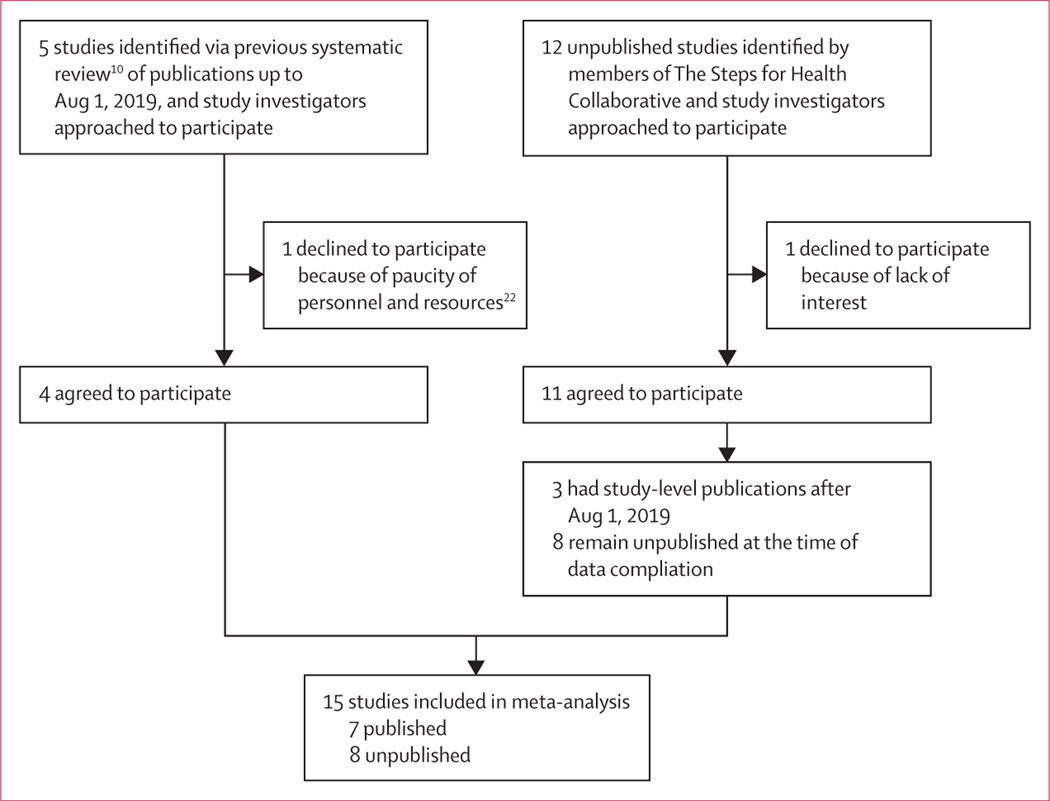
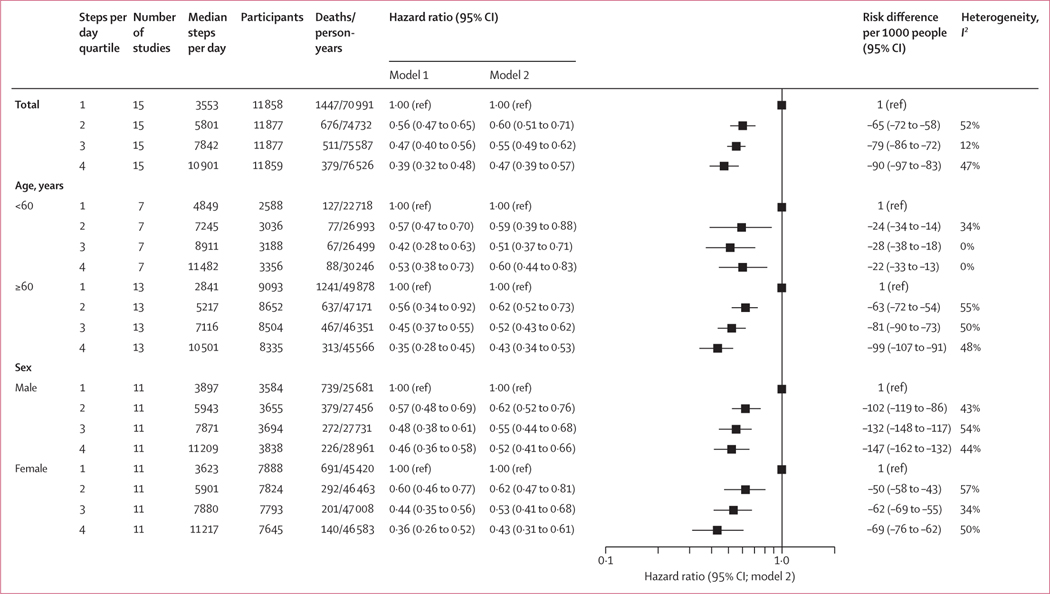
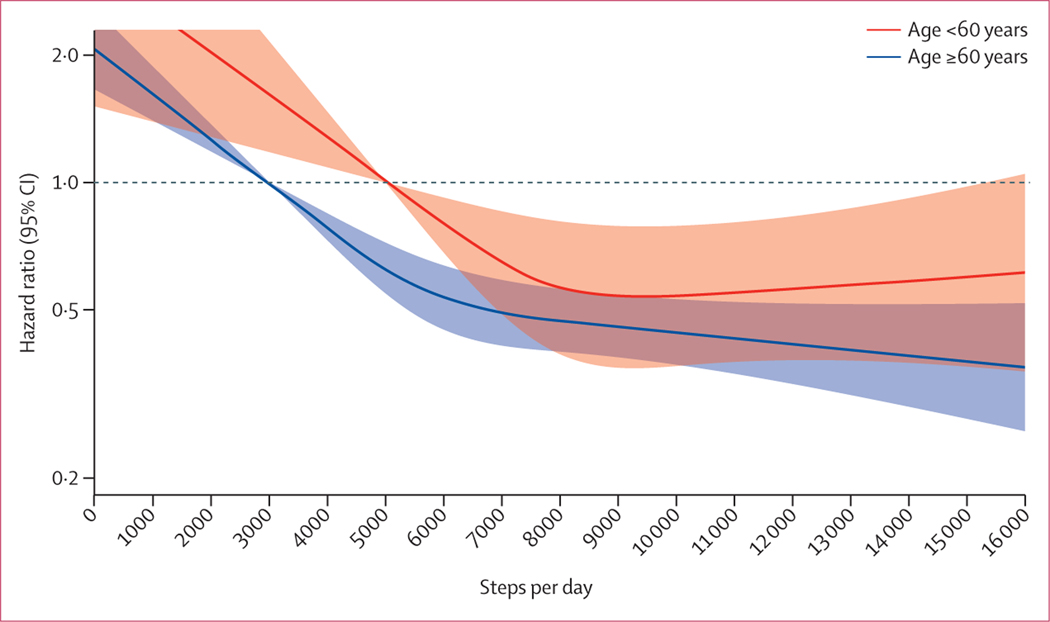
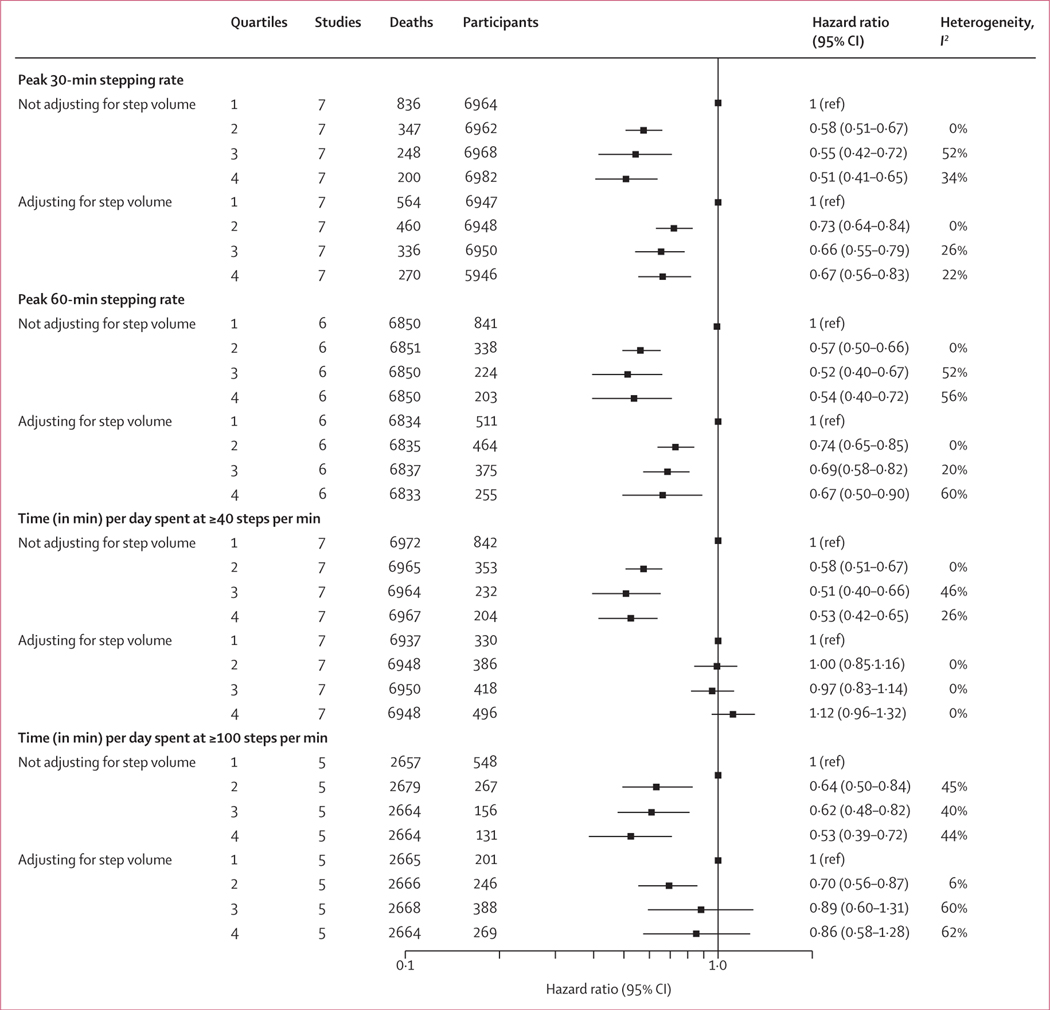
BACKGROUND: Although 10 000 steps per day is widely promoted to have health benefits, there is little evidence to support this recommendation. We aimed to determine the association between number of steps per day and stepping rate with all-cause mortality. METHODS: In this meta-analysis, we identified studies investigating the effect of daily step count on all-cause mortality in adults (aged ≥18 years), via a previously published systematic review and expert knowledge of the field. We asked participating study investigators to process their participant-level data following a standardised protocol. The primary outcome was all-cause mortality collected from death certificates and country registries. We analysed the dose-response association of steps per day and stepping rate with all-cause mortality. We did Cox proportional hazards regression analyses using study-specific quartiles of steps per day and calculated hazard ratios (HRs) with inverse-variance weighted random effects models. FINDINGS: We identified 15 studies, of which seven were published and eight were unpublished, with study start dates between 1999 and 2018. The total sample included 47 471 adults, among whom there were 3013 deaths (10·1 per 1000 participant-years) over a median follow-up of 7·1 years ([IQR 4·3-9·9]; total sum of follow-up across studies was 297 837 person-years). Quartile median steps per day were 3553 for quartile 1, 5801 for quartile 2, 7842 for quartile 3, and 10 901 for quartile 4. Compared with the lowest quartile, the adjusted HR for all-cause mortality was 0·60 (95% CI 0·51-0·71) for quartile 2, 0·55 (0·49-0·62) for quartile 3, and 0·47 (0·39-0·57) for quartile 4. Restricted cubic splines showed progressively decreasing risk of mortality among adults aged 60 years and older with increasing number of steps per day until 6000-8000 steps per day and among adults younger than 60 years until 8000-10 000 steps per day. Adjusting for number of steps per day, comparing quartile 1 with quartile 4, the association between higher stepping rates and mortality was attenuated but remained significant for a peak of 30 min (HR 0·67 [95% CI 0·56-0·83]) and a peak of 60 min (0·67 [0·50-0·90]), but not significant for time (min per day) spent walking at 40 steps per min or faster (1·12 [0·96-1·32]) and 100 steps per min or faster (0·86 [0·58-1·28]). INTERPRETATION: Taking more steps per day was associated with a progressively lower risk of all-cause mortality, up to a level that varied by age. The findings from this meta-analysis can be used to inform step guidelines for public health promotion of physical activity. FUNDING: US Centers for Disease Control and Prevention.
Overview
The claims and statistics of this paper haven’t been checked yet.
Free: it reads the open-access text and checks the first 5 claims that cite a source we can check. Create a free account to check every claim.
Integrity signals
Registry
Cites
Statistics
Figures
Verification
Claims the paper makes
The claims and statistics of this paper haven’t been checked yet.
Free: it reads the open-access text and checks the first 5 claims that cite a source we can check. Create a free account to check every claim.
Claims other papers make about this one
Each is checked against this paper’s own text: does it say what the citing paper says it does?
The source backs part of the claim, not all of it — or backs it for a different population, condition or comparison.
In the citing paper
“uncertainty exists around the strength and shape of the association of daily step count with all-cause mortality and cardiovascular mortality14,15, where recent studies have not used transparent or robustly validated free-living step counting algorithms.”
From Development and Validation of a Machine Learning Wrist-worn Step Detection Algorithm with Deployment in the UK Biobank (2023) · cites this paper as [15]
Experimental — accuracy not yet measuredThe source backs part of the claim, not all of it — or backs it for a different population, condition or comparison.
In the citing paper
“Indeed, observational evidence shows that PA levels lower than recommended threshold are already associated with reduced mortality [65,628,668], and benefits exhibit a curvilinear dose-dependency [628,668].”
From Global consensus on optimal exercise recommendations for enhancing healthy longevity in older adults (ICFSR) (2025) · cites this paper as [65]
Experimental — accuracy not yet measuredThe source backs part of the claim, not all of it — or backs it for a different population, condition or comparison.
In the citing paper
“We therefore used the residual method in which total MVPA was regressed on the bout exposure volume.The resulting residuals were independent variables in the analyses consistent with previous research assessing activity volume over a fixed time interval.20,21”
From Brief bouts of device-measured intermittent lifestyle physical activity and its association with major adverse cardiovascular events and mortality in people who do not exercise: A prospective cohort study (2023) · cites this paper as [20]
Experimental — accuracy not yet measuredThe cited source says what the claim attributes to it.
In the citing paper
“Our findings are consistent with previous literature describing associations between step counts and adverse events10,11.”
From Association of step counts over time with the risk of chronic disease in the All of Us Research Program (2022) · cites this paper as [11]
In the citing paper
“Population based data indicate that even small increases in the number of steps per day are associated with a lower risk of premature death, with the strongest effects observed at approximately 7000 to 10,000 steps per day [142,143].”
From Dietary and Behavioral Strategies for Weight Loss and Weight Loss Maintenance: A Narrative Review (2025) · cites this paper as [142]
Self-check
Percentages, sums and reported differences re-computed from the paper’s own numbers.
The self-check needs the paper’s full text.
Citations
Cites
Measuring inconsistency in meta-analyses
Higgins, J. P. T., Thompson, S. G., Deeks, J. J., & Altman, D. G. (2003) · BMJ · doi:10.1136/bmj.327.7414.557 · Cited by 63,139
Bias in meta-analysis detected by a simple, graphical test
Egger, M., Smith, G. D., Schneider, M., & Minder, C. (1997) · BMJ · doi:10.1136/bmj.315.7109.629 · Cited by 56,722
World Health Organization 2020 guidelines on physical activity and sedentary behaviour
Bull, F. C., Al-Ansari, S. S., Biddle, S., Borodulin, K., Buman, M. P., Cardon, G., Carty, C., Chaput, J.-P., Chastin, S., Chou, R., et al. (2020) · British Journal of Sports Medicine · doi:10.1136/bjsports-2020-102955 · Cited by 11,657
Self-citationExercise and Physical Activity for Older Adults
Chodzko-Zajko, W. J., Proctor, D. N., Fiatarone Singh, M. A., Minson, C. T., Nigg, C. R., Salem, G. J., & Skinner, J. S. (2009) · Medicine & Science in Sports & Exercise · doi:10.1249/mss.0b013e3181a0c95c · Cited by 5,153
Adjustment for total energy intake in epidemiologic studies
Willett, W., Howe, G., & Kushi, L. (1997) · The American Journal of Clinical Nutrition · doi:10.1093/ajcn/65.4.1220s · Cited by 3,758
Prince, S. A., Adamo, K. B., Hamel, M., Hardt, J., Connor Gorber, S., & Tremblay, M. (2008) · International Journal of Behavioral Nutrition and Physical Activity · doi:10.1186/1479-5868-5-56 · Cited by 3,162
Physical Fitness and All-Cause Mortality: A Prospective Study of Healthy Men and Women
Blair, S. N. (1989) · JAMA · doi:10.1001/jama.1989.03430170057028 · Cited by 2,658
Ekelund, U., Tarp, J., Steene-Johannessen, J., Hansen, B. H., Jefferis, B., Fagerland, M. W., Whincup, P., Diaz, K. M., Hooker, S. P., Chernofsky, A., et al. (2019) · BMJ · doi:10.1136/bmj.l4570 · Cited by 1,769
Self-citationAssociation of daily step count and step intensity with mortality among US adults
Saint-Maurice, P. F., Troiano, R. P., Bassett, D. R., Graubard, B. I., Carlson, S. A., Shiroma, E. J., Fulton, J. E., & Matthews, C. E. (2020) · JAMA · doi:10.1001/jama.2020.1382 · Cited by 660
Self-citationAssociation of Step Volume and Intensity With All-Cause Mortality in Older Women
Lee, I.-M., Shiroma, E. J., Kamada, M., Bassett, D. R., Matthews, C. E., & Buring, J. E. (2019) · JAMA Internal Medicine · doi:10.1001/jamainternmed.2019.0899 · Cited by 604
Self-citation
Cited by
Items 601–678 of 678
Aumento semanal de pasos reduce presión arterial en adultos jóvenes normotensos sanos
Espinoza-Salinas, A., Alarcón, R., Curín, E., & Russell-Guzmán, J. (2026) · Journal of Sport and Health Research · doi:10.58727/jshr.115256
Taskin, G., Kıyak, R., Çakas, M., Çağlar, B., Duman, E., Deniz, I. E., & Işık, Ö. (2026) · Frontiers in Medicine · doi:10.3389/fmed.2026.1747169
“These benefits are mediated through improvements in endothelial function, lipid profile, insulin sensitivity, and inflammation, contributing to cardiovascular protection (18, 19).”
Razzaq, A. N., & F. R. (2026) · UMS Library Center of Academic Activities (Universitas Surakarta)
Brehm, S., Tanaka, L. F., Majeed, Y., Barnikel, M., le Roux, C., Ghiani, A., Jansen, C.-P., & Jaeger, S. U. (2026) · medRxiv · doi:10.64898/2026.05.08.26351469
A Qualitative Study of the Hearing Aid Step-Counting Feature in Active Older Adults
Rahme, M., Folkeard, P., Naus, A., & Scollie, S. D. (2026) · American Journal of Audiology · doi:10.1044/2026_aja-25-00290
Narkbunnam, R., Chareancholvanich, K., Achawakulthep, C., Awirotananon, K., & Pornrattanamaneewong, C. (2026) · BMC Geriatrics · doi:10.1186/s12877-026-07657-7
“…n = 4,840) reported that accumulating 8,000 versus 4,000 steps per day was associated with a 51% lower risk of all-cause mortality [6], a finding subsequently supported by a meta-analysis of 15 international cohorts reporting a plateau at 6,000–8,000 steps per day among adults aged ≥ 60 years [7].”
Precision Physical Activity Prescription via Reinforcement Learning for Functional ActionsPreprint
Lin, G., Miao, R., Sacheck, J., & Zhang, X. (2026) · medRxiv · doi:10.64898/2026.05.18.26353525
“A growing body of evidence demonstrates that daily steps are strongly associated with diverse health benefits [e.g., 3, 10, 28].”
Rimawati, N., Irawan, R. J., Wismanadi, H., Wahyudi, H., & Rusdiawan, A. (2026) · Sriwijaya Journal of Sport · doi:10.55379/sjs.v5i3.264
Inankur, A., O'Hare, D., Arevalo, E., Dursus-Élisée, R., Schwartz, L. P., & Sterling, S. R. (2026) · Nutrients · doi:10.3390/nu18111683
“We recommended a general goal of at least 10,000 steps/day due to mortality benefit with this dose of exercise in people with pre-diabetes and diabetes in a general population under 60 years of age [47,48].”
Zhang, X., Li, S., Mai, Y., Chen, H., Wu, H., Li, C., Zhao, L., & Peng, J. (2026) · Frontiers in Cardiovascular Medicine · doi:10.3389/fcvm.2026.1847561
Milgrom, Y., Sharif, Y., Milgrom, C., Shafrir, A., & Safadi, R. (2026) · Canadian Liver Journal · doi:10.3138/canlivj-2026-0006
Friedly, J., Bateman, L., Berdan, L. G., Casaburi, R. H., Erdmann, N. B., Felker, G. M., Itchon-Ramos, N., Keteyian, S. J., MacIntyre, N. R., O'Brien, L., et al. (2026) · medRxiv · doi:10.64898/2026.06.02.26354455
Baretta, D., Rüttimann, C. L., & Inauen, J. (2026) · Applied Psychology Health and Well-Being · doi:10.1111/aphw.70161 · Cited by 1
Martínez-Amezcua, P., Zhang, W., Dooley, E. E., Hornikel, B., Pompeii, L., Evenson, K. R., Rippon, B., Windham, B. G., Mosley, T. H., Schrack, J. A., et al. (2026) · Alzheimer s & Dementia Translational Research & Clinical Interventions · doi:10.1002/trc2.70252 · Cited by 1
Self-citationFedewa, M. V., Kerch, C. J., Simmang, M. K., Grasso, K., & Aguiar, E. J. (2026) · American Journal of Lifestyle Medicine · doi:10.1177/15598276261459337
Kwon, E., Kim, H., Hwang, O., Ryoo, S., Kim, Y., & Yang, Y. (2026) · Research in Community and Public Health Nursing · doi:10.12799/rcphn.2025.01375
“Participants were retrospectively categorized into a high-step volume group (HSG) and a low-step volume group (LSG) using 8,000 steps as the threshold [15], based on the average daily step counts recorded during the program period for descriptive comparison.”
Daily Steps and Life Expectancy: A Life Table Analysis of a Population-Representative Sample
Zhuang, J., Liu, T., Holzapfel, S. D., Ma, T., Lei, J., Li, G., & Pang, M. Y. C. (2026) · Journal of Physical Activity and Health · doi:10.1123/jpah.2025-0892
Shimabukuro, T., Nagamatsu, M., NISHIMURA, T., Imai, A., Kishigami, K., Hashimoto, K., Kurihara, T., Hashimoto, T., & Sanada, K. (2026) · Scientific Reports · doi:10.1038/s41598-026-59306-z
“In contrast, the mean daily step count 23,24 and the prevalence of SF 7,25 align closely with values reported in prior studies.”
Daily relationship between air pollution and physical activity in an industrial region
Knapová, L., Lískovec, R., Cho, Y. W., Baretta, D., Keller, J., & Elavsky, S. (2026) · Applied Psychology Health and Well-Being · doi:10.1111/aphw.70186 · Cited by 1
“Although they do not capture all dimensions of PA, such as activity intensity or non-stepping types of activities, they are readily interpretable and have been linked to important health outcomes in recent meta-analytic evidence (Ding et al., 2025; Paluch et al., 2022).”
Santos, V. R. D. S., Cassemiliano, G., Farche, A. C. S., Lee, S., Message, L. B., Rossi, P. G., & Takahashi, A. C. D. M. (2026) · Brazilian Journal of Medical and Biological Research · doi:10.1590/1414-431x2026e14959
“A greater number of daily steps has also been linked to other health bene fi ts in older adults, such as lower incidence of chronic diseases, fewer hospitalizations, and reduced risk of all-cause mortality (3,4).”
Espin, A., & Júdice, P. B. (2026) · Scandinavian Journal of Medicine and Science in Sports · doi:10.1111/sms.70344
From exercise to movement: understanding cardiovascular risk across the whole day
O’Driscoll, J. M., & Edwards, J. J. (2026) · European Journal of Preventive Cardiology · doi:10.1093/eurjpc/zwag368
When Healers Hurt: Suicide Risk amongst Doctors and the Role of Gatekeepers: A narrative review
Singh, M., Sobhani, A., Solanki, H. K., Jangra, J., & Mohan, A. B. (2026) · Preventive Medicine Research & Reviews · doi:10.4103/pmrr.pmrr_229_25
Daily Step Count Is Associated with Frailty Status in Veterans Presenting for Major Operations
Rove, J. Y., Su, Y., Stevens‐Lapsley, J. E., Lum, H. D., & Robinson, T. N. (2026) · Geriatrics · doi:10.3390/geriatrics11040088
“Low daily step counts are associated with mortality, and higher daily step counts have been associated with decreased risk of all-cause mortality and dementia [14,15].”
Chukwuemeka, U. M., Anakor, A. C., Nuvey, F. S., Amaechi, I. A., Lokonon, B. E., Laurean, J., Nwankwo, I. U., Nwokoye, E., Fokou, G., Maruf, F. A., et al. (2026) · Discover Public Health · doi:10.1186/s12982-026-02497-7
“…target is supported by evidence associating this level of ambulatory activity with reductions in cardiovascular and all-cause mortality risk [25], and the 150 heart-point target corresponds directly to the WHO-recommended minimum of 150 min of moderate-intensity PA per week, operationalised…”
Tracking walking change post-relocation: A big data quasi-experiment of built environment effects
Huang, N., Lu, D., Guo, W., & Zhang, W. (2026) · Transportation Research Part D Transport and Environment · doi:10.1016/j.trd.2026.105529
Time- versus Step-Based Physical Activity Metrics for Disability Incidence in Older Adults
Shimoda, T., Katayama, O., Yamaguchi, R., Nakajima, C., Kawakami, A., Yamagiwa, D., Akaida, S., & Shimada, H. (2026) · Gerontology · doi:10.1159/000553408
Lyden, K. A., Speirs, C., Granat, M. H., & Clarke-Cornwell, A. M. (2026) · Journal for the Measurement of Physical Behaviour · doi:10.1123/jmpb.2025-0060
Kato, H. (2026) · SSM - Population Health · doi:10.1016/j.ssmph.2026.101958
“Epidemiological evidence consistently links higher PA to reduced mortality and morbidity (del Pozo Cruz, Ahmadi, Lee, et al., 2022; Inoue et al., 2023; Paluch et al., 2022; Saint-Maurice et al., 2020).”
Burch, K., Hamkins, J., McDaniel, L. T., Costa, A. R. C. E., Yang, Z., Stenum, J., Pagliocchini, A., Szczesny, C., Langdon, J. M., Chellappa, R. R., et al. (2026) · medRxiv · doi:10.64898/2026.08.04.26359742
Physical Fitness and All-Cause Mortality in Older Adults
Wu, M.-C., Hsu, C.-T., Hsu, H.-T., Ho, C., Shy, D.-Y., Lin, L.-H., Hung, C.-C., Chen, Y., Chen, C., Liaw, Y., et al. (2026) · JAMA Network Open · doi:10.1001/jamanetworkopen.2026.28227
Couto, N., Jacinto, M., Antunes, R., Monteiro, D., Brito, J. P., & Bento, T. (2026) · Journal of Medical Internet Research · doi:10.2196/105113
Kim, H., Hino, K., Fuerst, F., & Shimizu, C. (2026) · Journal of Transport & Health · doi:10.1016/j.jth.2026.102418
Hunter, A., Stewart, S., Coles, C., England, C., & Fabes, J. (2026) · Research Square · doi:10.21203/rs.3.rs-10475033/v1
Body Mass Index in Clinical Practice
McFarlane, S. I. (2026) · Directory of Open access Books (OAPEN Foundation)
WEARABLE HEALTH TECHNOLOGIES AND THE MEDICALIZATION OF EVERYDAY LIFE: A SOCIO-MEDICAL REVIEW
Sierant, M., Kwaśniewska, M., Zmysłowska, K., Hajdaniak, A., Kiersztyn, J. M., Grabowska, A., Seńcio, N., Szatkowska, A., & Stadnik, K. A. (2026) · International Journal of Innovative Technologies in Social Science · doi:10.31435/ijitss.3(51).2026.6462
Gwak, J., Fujie, T., Motohashi, A., & Tokunaga, T. (2026) · International Journal of Environmental Research and Public Health · doi:10.3390/ijerph23091152
Physical inactivity in preclinical Alzheimer's disease: Risk factor, early symptom, or both?
Zhao, J., Li, X., Wu, M., & Zhang, Z. (2026) · Alzheimer s & Dementia Translational Research & Clinical Interventions · doi:10.1002/trc2.70316
“14 Taken together, emerging evidence from these observational cohorts suggests a model in which physical activity does not mean-ingfully alter amyloid accumulation but may dampen tau propagation and neurodegeneration, enhancing resilience to existing pathology.”
Wei, L., Ahmadi, M. N., Koemel, N. A., Biswas, R. K., Cruz, B. D. P., & Stamatakis, E. (2026) · British Journal of Sports Medicine · doi:10.1136/bjsports-2025-111173
Kume, M. H. (2026) · Advances In Clinical And Medical Research · doi:10.52793/acmr.2026.7(4)-133
Tsubota, D., Arai, K., Yamada, Y., & Kato, H. (2026) · Transportation Research Interdisciplinary Perspectives · doi:10.1016/j.trip.2026.102253
Regina, J., Seydoux, C., Grand, C., Grémeaux, V., Vollenweider, P., Kraege, V., Harpe, R. D. L., & Comte, D. (2026) · Frontiers in Sports and Active Living · doi:10.3389/fspor.2026.1782609
Marshall, I. P., McGlone, P. J., Schermerhorn, J. T., Shear, B. M., Brodke, D. J., O’Toole, R. V., Slobogean, G. P., & O’Hara, N. N. (2026) · JBJS Open Access · doi:10.2106/jbjs.oa.26.00214
Nogueira, S., Loureiro, M., Azevedo, P., & Novo, A. (2026) · Revista Portuguesa de Enfermagem de Reabilitação · doi:10.33194/rper.2026.43656
Roth, C. (2026) · Discover Public Health · doi:10.1186/s12982-026-02962-3
“These findings are further supported by evidence from additional secondary analyses [2, 32].”
İnsan Yaşamında Hareketliliğin Önemi
YILMAZ, B. (2026) · Özgür Yayınları eBooks · doi:10.58830/ozgur.pub1420.c5742
Leblanc, V., Brousmiche, D., Hubert, A., Bentegeac, R., Meirhaeghe, A., Amouyel, P., Hamroun, A., Genin, M., Lanier, C., Gabet, S., et al. (2026) · Journal of Epidemiology and Population Health · doi:10.1016/j.jeph.2026.203796
Promoting Physical Activity Matters for Health, but Not Enough to Turn the Tide of Obesity
Oka, M. (2026) · Trends in Public Health · doi:10.3390/tph1030019
Physical Activity and Adolescent Brain Structure, Mental Health, and Academic Outcomes
Li, Q., Paluch, A. E., & Rakesh, D. (2026) · JAMA Network Open · doi:10.1001/jamanetworkopen.2026.36973
Self-citationQuantifying parks as preventive health assets using population-scale mobility data
Su, H., Li, W., Li, S., Ke, S., & Zhang, H. (2026) · Nature Communications · doi:10.1038/s41467-026-78106-7
Erlenbach, E. D. (2023) · Illinois Digital Environment for Access to Learning and Scholarship (University of Illinois at Urbana-Champaign)
Zhong, Y., Li, K., Zeng, L., Yang, X., Cai, C., Yu, B., Yang, S., & Dou, Q. (2026) · Journal of Clinical Medicine · doi:10.3390/jcm15197744
“This notion is supported by a large meta-analysis indicating that a lower daily step count (6000–8000 steps) is sufficient to reduce mortality risk in adults aged 60 years and older, whereas a higher threshold (8000–10,000 steps) is required for younger adults [37].”
Self-citationAl-Lahham, S., Hayek, M. F., Zabin, L. M., Said, N. B., Ziraeni, A., Najajra, F., Alrob, S. A., Ali, M. F. A., Shokr, E. A., & Sabola, N. (2026) · Scientific Reports · doi:10.1038/s41598-026-75651-5
Responsiveness of Hip and Wrist Accelerometer-Based Physical Activity Estimates in Youth
Remillard, N. M., Hibbing, P. R., LaMunion, S. R., & Crouter, S. E. (2026) · Journal for the Measurement of Physical Behaviour · doi:10.1123/jmpb.2026-0005
Cañizares, A. S., Méndez, S. H., Hernández‐López, M. J., Vera-Pérez, J. A., & Ruzafa‐Martínez, M. (2026) · Healthcare · doi:10.3390/healthcare14203441
“In agreement with this evidence, our study showed that the intervention group obtained a mean of 1300 steps more per day than the control group, coming close to the recommended threshold of 6000 daily steps for older adults [41].”
Katinė, A., Gray, S. R., & Ratkevičius, A. (2026) · Baltic Journal of Sport and Health Sciences · doi:10.33607/bjshs.v2i143.2361
Steps to Better Health: An Everyday Guide to Walking
Webber, B. J. (2026) · American Journal of Lifestyle Medicine · doi:10.1177/15598276261488034
Aura, C. (2026) · Archive of Doctoral Theses and Digital Collections (University of Calabria)
Madeira, R., Esteves, D., Neiva, H. P., Pinto, N., Nunes, C., Maia, A., Vercelli, A., & Pato, M. V. (2026) · Healthcare · doi:10.3390/healthcare14203539
“…particularly cardiovascular disease and several types of cancer [14–16], increasing longevity and reducing all-cause mortality in older adults [16–19], improving cognitive function and attenuating age-related cognitive decline [20–25], and optimizing physical functionality, including strength,…”
Liu, X., Meng, J., Dai, X., Liu, P., Yin, H., Wang, S., & Gao, S. (2026) · Current Problems in Surgery · doi:10.1016/j.cpsurg.2026.102201
Clinical Walking Speed, Free-Living Walking Cadence, and All-Cause Mortality
Haddadj, R., Danilevicz, I. M., Rowlands, A. V., van Hees, V. T., Landré, B., Faucheur, A. L., Singh‐Manoux, A., Mork, P. J., & Sabia, S. (2026) · JAMA Network Open · doi:10.1001/jamanetworkopen.2026.40122 · Cited by 1
Learning on the Move: A Teaching Activity for the College Classroom
Dolechek, R., Phelan, J. M., & Mesa, D. D. (2026) · The National Teaching & Learning Forum · doi:10.1002/ntlf.70044
Measuring Mobility Function in Everyday Life—Beyond the Stopwatch
Vetrano, D. L. (2026) · JAMA Network Open · doi:10.1001/jamanetworkopen.2026.40133
Facility location models based on rectilinear distance to achieve desirable walking distances
Soejima, Y., & Kurita, O. (2026) · Journal of the City Planning Institute of Japan · doi:10.11361/journalcpij.61.832
Goh, S. S. S., Yeo, K. K., Yap, J. J. L., Kong, S. C., Lim, W. K., Wong, M. K. F., Ng, E. Y. K., 申霞艳, Tan, A. W., & 黃偉婷 (2026) · Frontiers in Digital Health · doi:10.3389/fdgth.2026.1982891
Translating Daily Step Count Targets From Research-Grade Approaches to a Consumer Wearable
Thomas, J. J. C., Edwardson, C. L., Taylor, S., Eckmann, H. R., Donoso, I. A. P., & Rowlands, A. V. (2026) · Journal for the Measurement of Physical Behaviour · doi:10.1123/jmpb.2026-0026
Alecu, Ş., & Onea, G. A. (2026) · Journal of Functional Morphology and Kinesiology · doi:10.3390/jfmk11040457
Results from Shanghai’s 2025 report card on physical activity for adultsPreprint
Yin, H., Zhao, D., Wang, J., 王道, 郑樊慧, Chen, Y., 洪金涛, Zhai, B., Qiu, J., & Wang, C. (2026) · Research Square · doi:10.21203/rs.3.rs-11048280/v1
Self-citationZhao, Y., Wei, L., Liu, D., Yang, H., Shi, C., Sun, L., & Wang, L. (2026) · Sustainability · doi:10.3390/su182111281
Emergent regularity of walking patterns: evidence from Swiss citiesPreprint
Lin, G.-S., Hendrick, M., Llaguno-Munitxa, M., & Manoli, G. (2026) · arXiv (Cornell University) · doi:10.48550/arxiv.2611.06529
Weinmayr, G., Braisch, J. U., Klenk, J., Denkinger, M., Dallmeier, D., Rothenbacher, D., & Peter, R. S. (2026) · Scientific Reports · doi:10.1038/s41598-026-78988-z
Self-citationSandag, S. P., Sumarmi, S., Arafah, S., & Lainsamputty, F. (2026) · An Idea Nursing Journal · doi:10.53690/inj.v5i3.886
Fromherz, P., Stein, M. J., Lendt, C., Bamberg, F., Baurecht, H., Brandes, M., Brummer, J., Fischer, B., Herbolsheimer, F., Keil, T., et al. (2026) · BMC Medicine · doi:10.1186/s12916-026-05385-8
Hauner, H., Dietrich, A., & Seidemann, L. (2026) · Elsevier eBooks · doi:10.1016/b978-3-437-23857-4.00036-9
Cody, R., Beck, J., Brand, S., Donath, L., Faude, O., Hatzinger, M., Imboden, C., Kreppke, J.-N., Lang, U. E., Ludyga, S., et al. (2023) · doi:10.3389/fpsyt.2022.1045158.s001
O’Brien, M. W., Neyedli, H. F., Bosquet, L., Leadbetter, B., Smith, A., Gallant, F., Tanguay, P., Bélanger, M., & Mekari, S. (2023) · doi:10.3389/fragi.2023.1196389.s001
Metadata
- Authors
- Paluch, A. E., Bajpai, S., Bassett, D. R., Carnethon, M. R., Ekelund, U., Evenson, K. R., Galuska, D. A., Jefferis, B. J., Kraus, W. E., Lee, I.-M., Matthews, C. E., Omura, J. D., Patel, A. V., Pieper, C. F., Rees-Punia, E., Dallmeier, D., Klenk, J., Whincup, P. H., Dooley, E. E., Pettee Gabriel, K., Palta, P., Pompeii, L. A., Chernofsky, A., Larson, M. G., Vasan, R. S., Spartano, N., Ballin, M., Nordström, P., Nordström, A., Anderssen, S. A., Hansen, B. H., Cochrane, J. A., Dwyer, T., Wang, J., Ferrucci, L., Liu, F., Schrack, J., Urbanek, J., Saint-Maurice, P. F., Yamamoto, N., Yoshitake, Y., Newton, R. L., Yang, S., Shiroma, E. J., & Fulton, J. E.
- Affiliations
- University of Massachusetts Amherst (US)
- University of Tennessee at Knoxville (US)
- Northwestern University (US)
- Norwegian Institute of Public Health (NO)
- University of North Carolina at Chapel Hill (US)
- Centers for Disease Control and Prevention (US)
- University College London (GB)
- Duke University (US)
- Brigham and Women's Hospital (US)
- Division of Cancer Epidemiology and Genetics (US)
- American Cancer Society (US)
- Duke Medical Center (US)
- Boston University (US)
- Universität Ulm (DE)
- University of London (GB)
- University of Alabama at Birmingham (US)
- Columbia University Irving Medical Center (US)
- Baylor College of Medicine (US)
- Umeå University (SE)
- UiT The Arctic University of Norway (NO)
- University of Tasmania (AU)
- Murdoch Children's Research Institute (AU)
- National Institute on Aging (US)
- Johns Hopkins University (US)
- Ehime University (JP)
- Meio University (JP)
- Pennington Biomedical Research Center (US)
- Corresponding author
- Paluch, Amanda E
- ORCID
- Paluch, Amanda E
- Bajpai, Shivangi
- Bassett, David R
- Carnethon, Mercedes R
- Ekelund, Ulf
- Evenson, Kelly R
- Jefferis, Barbara J
- Kraus, William E
- Lee, I-Min
- Matthews, Charles E
- Omura, John D
- Patel, Alpa V
- Pieper, Carl F
- Dallmeier, Dhayana
- Klenk, Jochen
- Whincup, Peter H
- Dooley, Erin E
- Palta, Priya
- Pompeii, Lisa A
- Chernofsky, Ariel
- Larson, Martin G
- Vasan, Ramachandran S
- Spartano, Nicole
- Ballin, Marcel
- Nordström, Peter
- Nordström, Anna
- Anderssen, Sigmund A
- Hansen, Bjørge H
- Dwyer, Terence
- Wang, Jing
- Ferrucci, Luigi
- Liu, Fangyu
- Schrack, Jennifer
- Urbanek, Jacek
- Yamamoto, Naofumi
- Newton, Robert L
- Yang, Shengping
- Shiroma, Eric J
- Fulton, Janet E
- Venue
- The Lancet Public Health
- Publisher
- Elsevier BV
- Published
- 2022-03
- Volume
- 7
- Issue
- 3
- Pages
- e219-e228
- ISSN
- 2468-2667 (ISSN-L)
- PMC
- PMC9289978
- OpenAlex
- W4214876227
- Semantic Scholar
- d39b6ce94ba2a2630c12e61d9900c34f001eb731
- Cited by
- 582
- References
- 43
- Citations by year
- 2026: 100 · 2025: 152 · 2024: 155 · 2023: 120 · 2022: 54
- FWCI
- 16.49
- Type
- journal article
- Language
- en
- Open access
- gold
- doi.org
- Licence
- cc-by-nc-nd
- www.elsevier.com/tdm/userlicense/1.0/ (tdm)
- www.elsevier.com/legal/tdmrep-license (tdm)
- creativecommons.org/licenses/by-nc-nd/4.0/ (vor)
- Locations
- The Lancet Public Health (publishedVersion, cc-by-nc-nd)
- PubMed (publishedVersion)
- St George's Online Research Archive (St George's University of London) (acceptedVersion)
- PubMed Central (acceptedVersion, cc-by-nc-nd)
- Civil War Book Review (submittedVersion)
- DiVA at Umeå University (Umeå University) (submittedVersion, other-oa)
- DOAJ (DOAJ: Directory of Open Access Journals) (submittedVersion, cc-by-sa)
- UCL Discovery (University College London) (submittedVersion)
- NORA - Norwegian Open Research Archives (submittedVersion, other-oa)
- Minerva Access (University of Melbourne) (submittedVersion, cc-by)
- NORA - Norwegian Open Research Archives (submittedVersion, cc-by-nc-nd)
- Funders
- U.S. Department of Transportation
- Centers for Disease Control and Prevention
- Robert Wood Johnson Foundation
- National Institute on Aging
- American College of Sports Medicine
- North Carolina Department of Transportation
- National Institutes of Health
- British Heart Foundation
- National Heart, Lung, and Blood Institute
- Deutsche Forschungsgemeinschaft
- Topics
- Health Sciences › Medicine › Public Health, Environmental and Occupational Health › Physical Activity and Health
- Health Sciences › Medicine › Physiology (medical) › Cardiovascular and exercise physiology
- Social Sciences › Transportation › Urban Transport and Accessibility
- Keywords
- daily step count, stepping rate, all-cause mortality, physical activity, dose-response relationship, adults, older adults, mortality risk, physical activity guidelines, cohort studies, restricted cubic splines, publication bias, risk of bias assessment, subgroup analysis, sex differences, age differences, country differences
- MeSH terms
- Adolescent, Adult, Aged, Humans, Middle Aged, Exercise, Proportional Hazards Models, Walking
About these checks
Registry, retraction, Cites and statistics results are computed, not judged, with one exception: a printed reference that no index lists is read once by a model before it counts as a citation error. Claims are extracted by a model and kept only when their quote appears verbatim in the text; each cited source is then checked, with a model’s help, for whether it says what the claim relies on. Those verdicts can be wrong — read the claim’s quote and the cited source before relying on one.
Statistics and arithmetic are recomputed, not judged.
Confidence bands are shown only for fields calibrated on our annotated test set. None is calibrated yet, so no band is shown.
What counts as a claim ›How we measure confidence ›How we check this ›
Are you an author, or do you see a problem with this page? Request a review
Data sources
Bibliographic data: Semantic Scholar, OpenAlex, Crossref.
Contains information from the Semantic Scholar Academic Graph Datasets, made available under the ODC Attribution License (ODC-BY 1.0).
Semantic Scholar’s data is described in: Kinney, R., et al. (2023). The Semantic Scholar Open Data Platform. arXiv:2301.10140.
