

Daily steps and all-cause mortality: a meta-analysis of 15 international cohorts
Open accessThe DOI matches its Crossref record; 43 of the 43 references it cites were found in a registry or an index.
Abstract
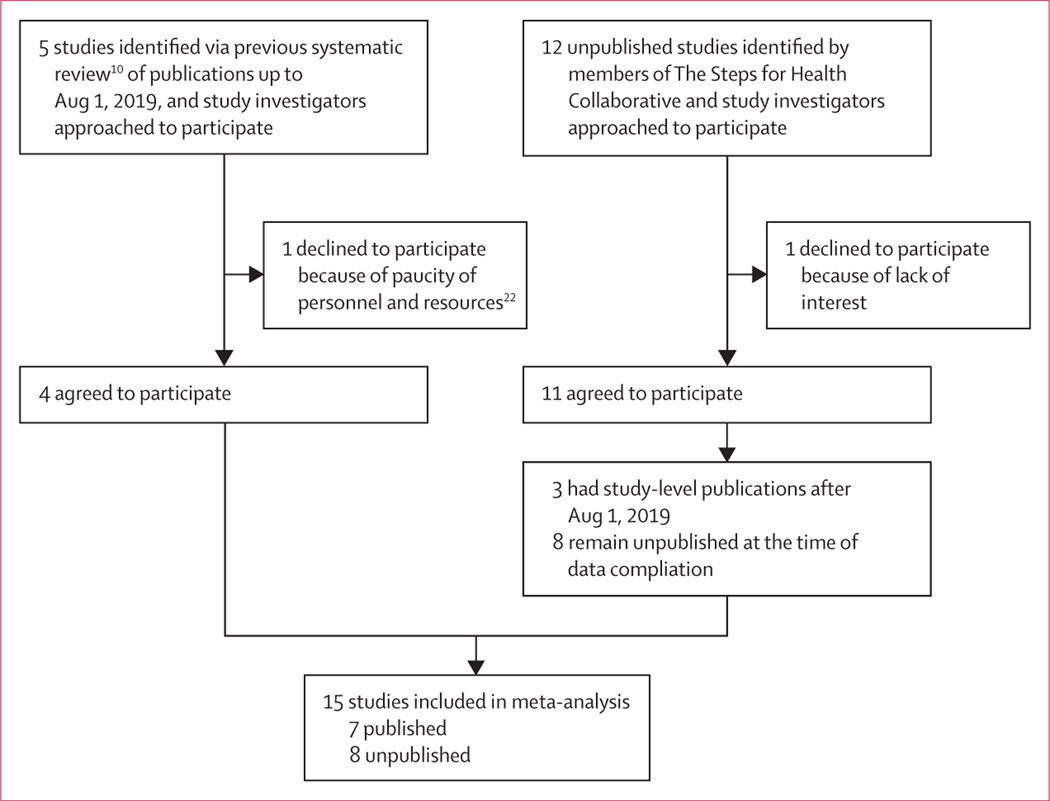
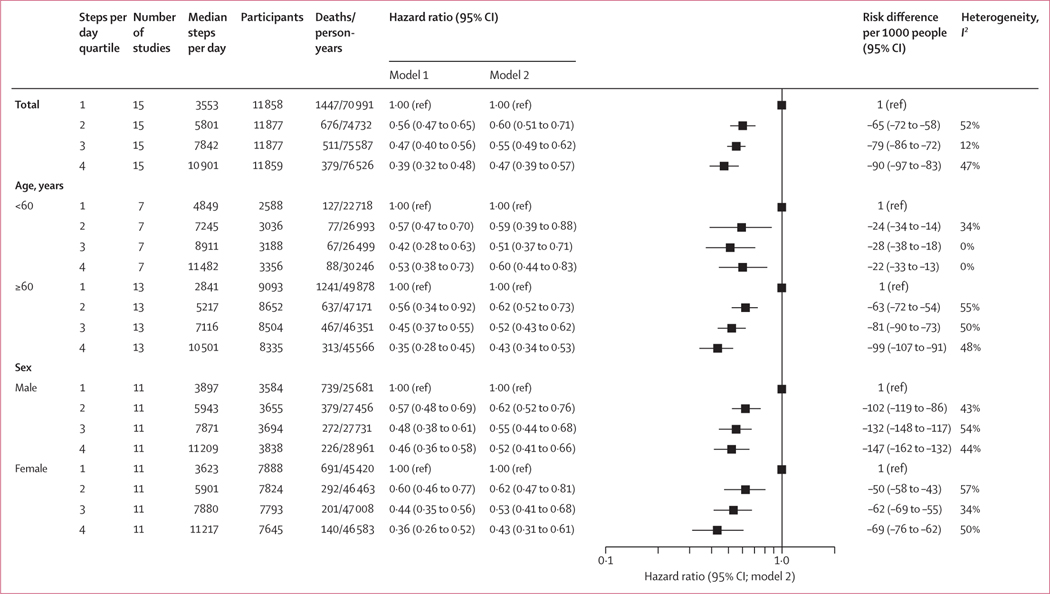
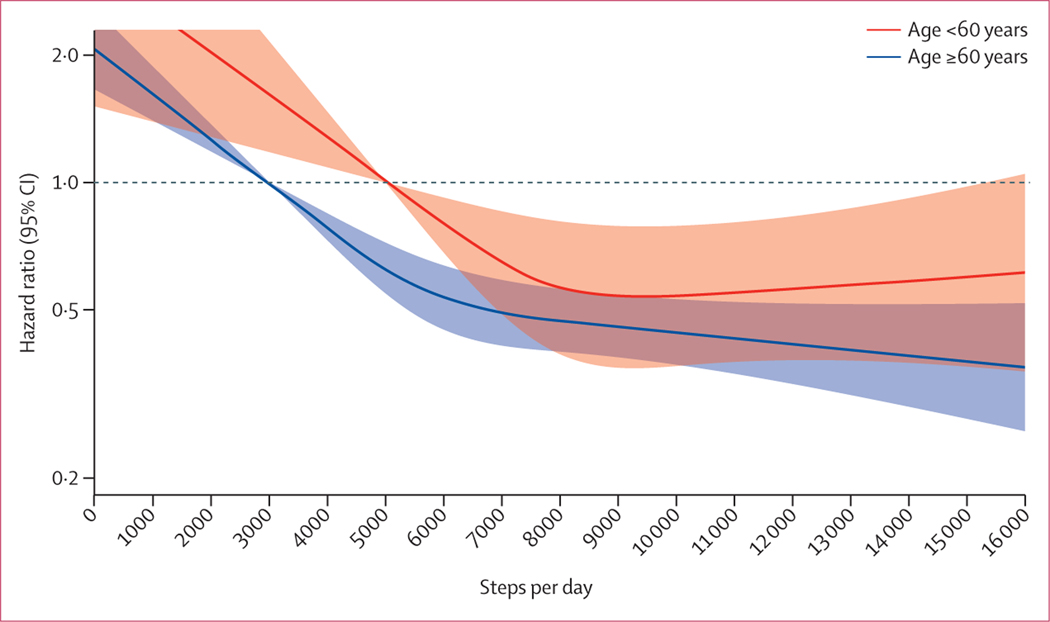
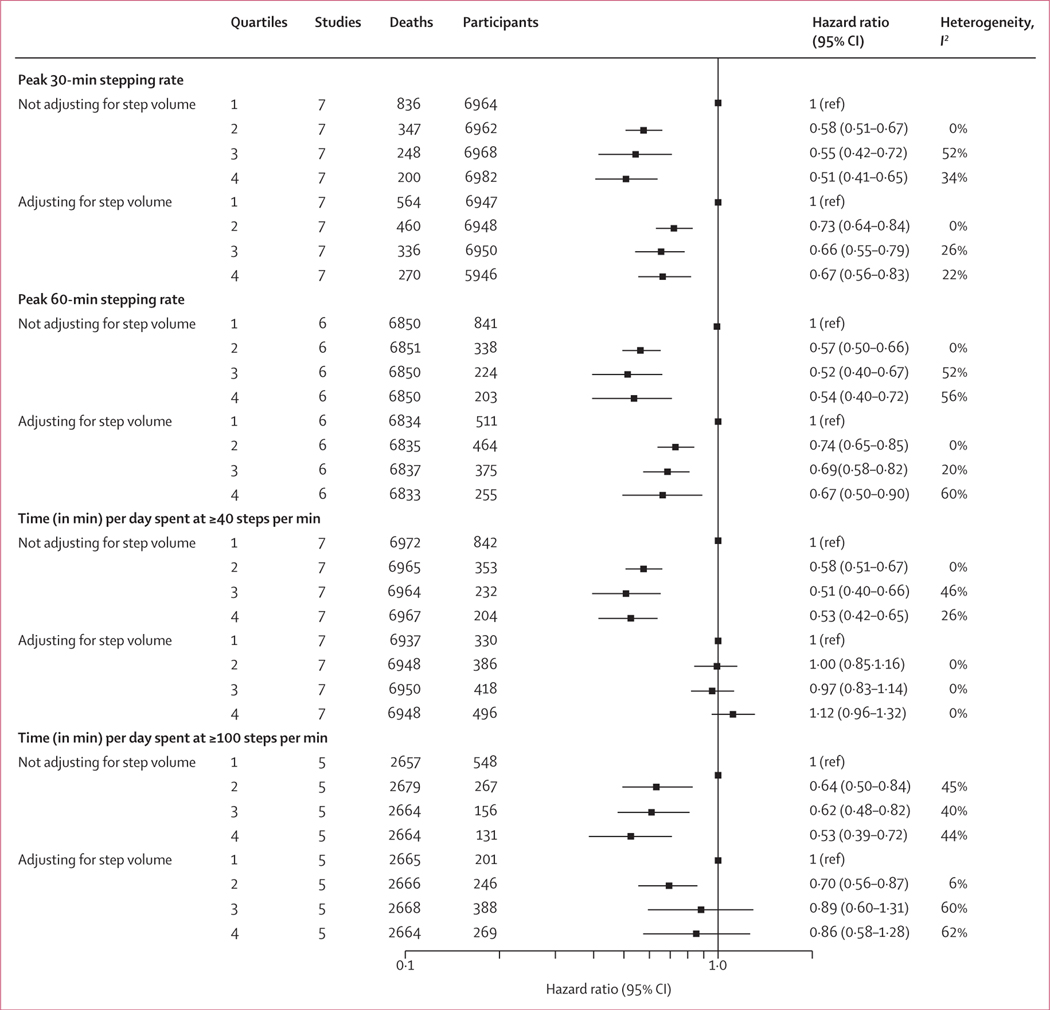
BACKGROUND: Although 10 000 steps per day is widely promoted to have health benefits, there is little evidence to support this recommendation. We aimed to determine the association between number of steps per day and stepping rate with all-cause mortality. METHODS: In this meta-analysis, we identified studies investigating the effect of daily step count on all-cause mortality in adults (aged ≥18 years), via a previously published systematic review and expert knowledge of the field. We asked participating study investigators to process their participant-level data following a standardised protocol. The primary outcome was all-cause mortality collected from death certificates and country registries. We analysed the dose-response association of steps per day and stepping rate with all-cause mortality. We did Cox proportional hazards regression analyses using study-specific quartiles of steps per day and calculated hazard ratios (HRs) with inverse-variance weighted random effects models. FINDINGS: We identified 15 studies, of which seven were published and eight were unpublished, with study start dates between 1999 and 2018. The total sample included 47 471 adults, among whom there were 3013 deaths (10·1 per 1000 participant-years) over a median follow-up of 7·1 years ([IQR 4·3-9·9]; total sum of follow-up across studies was 297 837 person-years). Quartile median steps per day were 3553 for quartile 1, 5801 for quartile 2, 7842 for quartile 3, and 10 901 for quartile 4. Compared with the lowest quartile, the adjusted HR for all-cause mortality was 0·60 (95% CI 0·51-0·71) for quartile 2, 0·55 (0·49-0·62) for quartile 3, and 0·47 (0·39-0·57) for quartile 4. Restricted cubic splines showed progressively decreasing risk of mortality among adults aged 60 years and older with increasing number of steps per day until 6000-8000 steps per day and among adults younger than 60 years until 8000-10 000 steps per day. Adjusting for number of steps per day, comparing quartile 1 with quartile 4, the association between higher stepping rates and mortality was attenuated but remained significant for a peak of 30 min (HR 0·67 [95% CI 0·56-0·83]) and a peak of 60 min (0·67 [0·50-0·90]), but not significant for time (min per day) spent walking at 40 steps per min or faster (1·12 [0·96-1·32]) and 100 steps per min or faster (0·86 [0·58-1·28]). INTERPRETATION: Taking more steps per day was associated with a progressively lower risk of all-cause mortality, up to a level that varied by age. The findings from this meta-analysis can be used to inform step guidelines for public health promotion of physical activity. FUNDING: US Centers for Disease Control and Prevention.
Overview
The claims and statistics of this paper haven’t been checked yet.
Free: it reads the open-access text and checks the first 5 claims that cite a source we can check. Create a free account to check every claim.
Integrity signals
Registry
Cites
Statistics
Figures
Verification
Claims the paper makes
The claims and statistics of this paper haven’t been checked yet.
Free: it reads the open-access text and checks the first 5 claims that cite a source we can check. Create a free account to check every claim.
Claims other papers make about this one
Each is checked against this paper’s own text: does it say what the citing paper says it does?
The source backs part of the claim, not all of it — or backs it for a different population, condition or comparison.
In the citing paper
“uncertainty exists around the strength and shape of the association of daily step count with all-cause mortality and cardiovascular mortality14,15, where recent studies have not used transparent or robustly validated free-living step counting algorithms.”
From Development and Validation of a Machine Learning Wrist-worn Step Detection Algorithm with Deployment in the UK Biobank (2023) · cites this paper as [15]
Experimental — accuracy not yet measuredThe source backs part of the claim, not all of it — or backs it for a different population, condition or comparison.
In the citing paper
“Indeed, observational evidence shows that PA levels lower than recommended threshold are already associated with reduced mortality [65,628,668], and benefits exhibit a curvilinear dose-dependency [628,668].”
From Global consensus on optimal exercise recommendations for enhancing healthy longevity in older adults (ICFSR) (2025) · cites this paper as [65]
Experimental — accuracy not yet measuredThe source backs part of the claim, not all of it — or backs it for a different population, condition or comparison.
In the citing paper
“We therefore used the residual method in which total MVPA was regressed on the bout exposure volume.The resulting residuals were independent variables in the analyses consistent with previous research assessing activity volume over a fixed time interval.20,21”
From Brief bouts of device-measured intermittent lifestyle physical activity and its association with major adverse cardiovascular events and mortality in people who do not exercise: A prospective cohort study (2023) · cites this paper as [20]
Experimental — accuracy not yet measuredThe cited source says what the claim attributes to it.
In the citing paper
“Our findings are consistent with previous literature describing associations between step counts and adverse events10,11.”
From Association of step counts over time with the risk of chronic disease in the All of Us Research Program (2022) · cites this paper as [11]
In the citing paper
“Population based data indicate that even small increases in the number of steps per day are associated with a lower risk of premature death, with the strongest effects observed at approximately 7000 to 10,000 steps per day [142,143].”
From Dietary and Behavioral Strategies for Weight Loss and Weight Loss Maintenance: A Narrative Review (2025) · cites this paper as [142]
Self-check
Percentages, sums and reported differences re-computed from the paper’s own numbers.
The self-check needs the paper’s full text.
Citations
Cites
Measuring inconsistency in meta-analyses
Higgins, J. P. T., Thompson, S. G., Deeks, J. J., & Altman, D. G. (2003) · BMJ · doi:10.1136/bmj.327.7414.557 · Cited by 63,139
Bias in meta-analysis detected by a simple, graphical test
Egger, M., Smith, G. D., Schneider, M., & Minder, C. (1997) · BMJ · doi:10.1136/bmj.315.7109.629 · Cited by 56,722
World Health Organization 2020 guidelines on physical activity and sedentary behaviour
Bull, F. C., Al-Ansari, S. S., Biddle, S., Borodulin, K., Buman, M. P., Cardon, G., Carty, C., Chaput, J.-P., Chastin, S., Chou, R., et al. (2020) · British Journal of Sports Medicine · doi:10.1136/bjsports-2020-102955 · Cited by 11,657
Self-citationExercise and Physical Activity for Older Adults
Chodzko-Zajko, W. J., Proctor, D. N., Fiatarone Singh, M. A., Minson, C. T., Nigg, C. R., Salem, G. J., & Skinner, J. S. (2009) · Medicine & Science in Sports & Exercise · doi:10.1249/mss.0b013e3181a0c95c · Cited by 5,153
Adjustment for total energy intake in epidemiologic studies
Willett, W., Howe, G., & Kushi, L. (1997) · The American Journal of Clinical Nutrition · doi:10.1093/ajcn/65.4.1220s · Cited by 3,758
Prince, S. A., Adamo, K. B., Hamel, M., Hardt, J., Connor Gorber, S., & Tremblay, M. (2008) · International Journal of Behavioral Nutrition and Physical Activity · doi:10.1186/1479-5868-5-56 · Cited by 3,162
Physical Fitness and All-Cause Mortality: A Prospective Study of Healthy Men and Women
Blair, S. N. (1989) · JAMA · doi:10.1001/jama.1989.03430170057028 · Cited by 2,658
Ekelund, U., Tarp, J., Steene-Johannessen, J., Hansen, B. H., Jefferis, B., Fagerland, M. W., Whincup, P., Diaz, K. M., Hooker, S. P., Chernofsky, A., et al. (2019) · BMJ · doi:10.1136/bmj.l4570 · Cited by 1,769
Self-citationAssociation of daily step count and step intensity with mortality among US adults
Saint-Maurice, P. F., Troiano, R. P., Bassett, D. R., Graubard, B. I., Carlson, S. A., Shiroma, E. J., Fulton, J. E., & Matthews, C. E. (2020) · JAMA · doi:10.1001/jama.2020.1382 · Cited by 660
Self-citationAssociation of Step Volume and Intensity With All-Cause Mortality in Older Women
Lee, I.-M., Shiroma, E. J., Kamada, M., Bassett, D. R., Matthews, C. E., & Buring, J. E. (2019) · JAMA Internal Medicine · doi:10.1001/jamainternmed.2019.0899 · Cited by 604
Self-citation
Cited by
Items 301–400 of 678
Daily Walking and Mortality in Racially and Socioeconomically Diverse U.S. Adults
Liu, L., Jia, G., Shrubsole, M. J., Wen, W., Andersen, S. W., Sudenga, S. L., & Zheng, W. (2025) · American Journal of Preventive Medicine · doi:10.1016/j.amepre.2025.107738 · Cited by 3
Assessing the Step Count Accuracy and Reliability of Four Commercial Smart Watches
Rider, B. C., LaBarge, J., Aylward, S., Brumels, K., Coughlin, A. M., & Montoye, A. H. K. (2025) · Journal for the Measurement of Physical Behaviour · doi:10.1123/jmpb.2025-0012 · Cited by 3
Beauchamp, M., Kirkwood, R. N., Cooper, C., McIlroy, W. E., Ooteghem, K. V., Beyer, K. B., Richardson, J. A., Kuspinar, A., McNicholas, P. D., Newbold, K. B., et al. (2025) · BMJ Open · doi:10.1136/bmjopen-2025-105223 · Cited by 3
“25 26 In 2022, we established the McMaster Monitoring My Mobility (MacM3) research platform, with the primary objective of characterising later-life trajectories of early mobility decline through longitudinal, multisensor-based data collected from a large cohort of older adults exhibiting differing…”
Liles, S. C., Cleveland, R. J., Jakiela, J. T., Copson, J., Töre, N. G., Golightly, Y. M., Werner, D. M., & White, D. K. (2025) · Arthritis Care & Research · doi:10.1002/acr.70024 · Cited by 3
“Our study fi ndings are consistent with previous studies showing that physical activity overall is related to mortality when measured in terms of low levels of leisure-time physical activity, 45 steps/day, 46 and moderate and vigorous intensity physical activity.”
Kato, H. (2026) · Transportation Research Interdisciplinary Perspectives · doi:10.1016/j.trip.2026.101862 · Cited by 4
Zheng, P., MacDonald, H. V., Richardson, M. T., Man, K., McDonough, I. M., & Aguiar, E. J. (2024) · Journal of Aging and Physical Activity · doi:10.1123/japa.2023-0363 · Cited by 3
Morita, E., Ando, S., Fukuyama, Y., Kikuchi, Y., Kumabe, S., & Yamashina, Y. (2024) · BioSocial Health Journal. · doi:10.34172/bshj.36 · Cited by 3
“Therefore, a target of 8000 steps/day, widely recognized as beneficial for maintaining good health, 12 was adopted.”
Healthy Behavior for Preventing Cognitive Disability in Older Persons
Lauretani, F., Marcato, A., & Testa, C. (2025) · International Journal of Environmental Research and Public Health · doi:10.3390/ijerph22020262 · Cited by 3
“The same results were achieved among adults younger than 60 years when increasing their number of steps to 8000–10,000 per day [2].”
Wei, C., Tzeng, R.-C., Tai, H.-C., Su, C.-H., & Chiu, P. (2025) · Therapeutic Advances in Neurological Disorders · doi:10.1177/17562864251330251 · Cited by 3
Fukushima, N., Amagasa, S., Kikuchi, H., Ono, R., & Inoue, S. (2025) · Journal of Physical Activity and Health · doi:10.1123/jpah.2024-0702 · Cited by 3
Guseh, J. S., & Figueroa, J. F. (2023) · JAMA Network Open · doi:10.1001/jamanetworkopen.2023.5184 · Cited by 3
Impact of Chronic Cough on Quality of Life
Oliveira, A., Grave, A. S., Brooks, D., & Satia, I. (2026) · Barcelona Respiratory Network · doi:10.23866/brnrev:2023-m0090 · Cited by 4
Xiao, W., Wang, B., Bai, X., Tang, S., & Zhang, Y. (2023) · Frontiers in Public Health · doi:10.3389/fpubh.2023.1308375 · Cited by 3
“…not meet the recommended thresholds for reducing the risk of falling (5,000 steps per day) (64) and all-cause mortality (6,000–8,000 steps per day) (65), it is essential to not to lose the sight of the fact that our way aims to cultivate a disciplined active lifestyle among sedentary individuals…”
BackgroundWatanabe, D., Yoshida, T., Watanabe, Y., Yamada, Y., Miyachi, M., & Kimura, M. (2023) · International Journal of Behavioral Nutrition and Physical Activity · doi:10.1186/s12966-023-01550-x · Cited by 3
“The optimal step counts associated with the lowest mortality risk show a similarity between these studies [12, 29] and meet the target value outlined in physical activity guidelines for older adults by the WHO, the United States, and Japan [18].”
BackgroundMeguro, T., Takayama, F., Hammarlund, H., & Honjo, M. (2024) · International Journal of Occupational Medicine and Environmental Health · doi:10.13075/ijomeh.1896.02317 · Cited by 3
Linhares, M., Oliveira, G. T. A., Cabral, D. A. R., Rêgo, M. L. D. M., Araújo, A. D. O., Silva, R. D. M., da Silva, L. R. F., de Lima, M. N. M., Neto, L. D. O., Cureau, F. V., et al. (2024) · Psychology of sport and exercise · doi:10.1016/j.psychsport.2024.102643 · Cited by 3
Feehan, L. M., Xie, H. W., Lu, N., & LI, L. C. (2024) · Journal of Activity Sedentary and Sleep Behaviors · doi:10.1186/s44167-024-00049-5 · Cited by 3
“…differences across the profiles for alignment with selected quality metrics of sleep, sitting and walking and for meeting published evidence-based benchmarks for adults for daily steps [23], weekly MVPA [24], and selected elements within the Canadian 24-hour movement guidelines for adults [25, 26].”
BackgroundMethodZhou, M., Gebreslassie, M., de León, A. P., Tynelius, P., Ahlqvist, V. H., Dahlén, M., Berglind, D., Lager, A., & Brynedal, B. (2024) · Preventive Medicine · doi:10.1016/j.ypmed.2024.107969 · Cited by 3
The Physical Activities in Obesity
Hamasaki, H. (2024) · Springer eBooks · doi:10.1007/978-3-031-62491-9_13 · Cited by 4
Using SEM Model for Fighting Diabetes: Strategic Communication Plan in Jakarta City, Indonesia
Herari, N., Assegaff, S. B., Utomo, A. G., & Friscillia, A. P. (2024) · Jurnal Komunikasi Malaysian Journal of Communication · doi:10.17576/jkmjc-2024-4004-30 · Cited by 3
Frederick, G. M., Threadgill, E. G., Yli-Piipari, S. R., & Kirk, T. N. (2025) · Research Quarterly for Exercise and Sport · doi:10.1080/02701367.2025.2494266 · Cited by 3
“…exhibited median values around 3,300, which is less than those reported in previous studies in this population (Holbrook et al., 2013; Marmeleira et al., 2013, 2014; Willis et al., 2012) and less than half of the 7,000–9,000 recommended for the general adult population (Paluch et al., 2022).”
Lüke, T., Brandenburg, V. M., Partetzke, T. M., Voss, F., & Spaderna, H. (2025) · The Journal of Cardiovascular Nursing · doi:10.1097/jcn.0000000000001242 · Cited by 3
Total physical activity matters for brain health
Anstey, K. J. (2024) · Nature Aging · doi:10.1038/s43587-024-00712-1 · Cited by 3
Reflections on daily steps and health outcomes – Authors' reply
Ding, D., Owen, K., Nguyen, B., Luo, M., & Clare, P. J. (2025) · The Lancet Public Health · doi:10.1016/s2468-2667(25)00248-8 · Cited by 3
Stamatakis, E., Koemel, N. A., Mitchell, J. J., Atkin, A. J., Pulsford, R., Chong, K. H., Rangul, V., Blodgett, J. M., Biswas, R. K., Celis-Morales, C. A., et al. (2026) · British Journal of Sports Medicine · doi:10.1136/bjsports-2025-111283 · Cited by 3
“…methods, which followed the empirical establishment of brand/model-agnostic standards, 20 was partly motivated by recent landmark papers 7 35–37 combining data across different wear placements and the rapid growth of machine learning-based wrist accelerometry methods 10 11 38 that allow…”
Self-citationDederichs, R., Voß, J., & Falz, R. (2024) · Die Chirurgie · doi:10.1007/s00104-024-02060-7 · Cited by 2
“Diese Vielfalt führt jedoch zu einem heterogenen Bild hin-sichtlich der Effekte von eHealth-Diensten zur Verbesserung der kA [15, 27, 28].”
Blair, C. K., Brown-Glaberman, U. A., Walters, S. T., Pestak, C. R., Boyce, T. W., Barriga, L., Burgess, E., Tawfik, B., Killough, C. M., Kinney, A. Y., et al. (2024) · JMIR Research Protocols · doi:10.2196/59504 · Cited by 2
“The initial call included a discussion about the number of daily steps associated with good health in older adults (7000-9000) [75-77] and the benefits of spreading out activity throughout the day (ie, breaking up sedentary time through at least minimal stepping each hour).”
Alexander, A. C., Businelle, M. S., Cheney, M. K., Cohn, A. M., McNeill, L. H., Short, K. R., Frank-Pearce, S. G., Bradley, D., Estrada, K., Flores, I., et al. (2025) · JMIR Research Protocols · doi:10.2196/69771 · Cited by 2
“Participants will not be incentivized beyond 10,000 steps per day, consistent with previous research showing limited additional health benefits [93,95-100].”
Niu, J., Liu, X., Wang, X., Gao, F., Yu, P., Zhou, Q., & Wang, Q. (2025) · BMC Anesthesiology · doi:10.1186/s12871-025-02968-5 · Cited by 2
“Not only does high-intensity structured exercise provide benefits, but even lower levels of physical activity, such as increasing daily steps, can improve cognitive function and reduce the overall risk of mortality [11].”
Joo, J., Lee, M., Yoon, J., Cho, H., Warrier, G., Thrul, J., & Cho, J. (2025) · JMIR mhealth and uhealth · doi:10.2196/66227 · Cited by 2
Morikawa, M., Harada, K., Kurita, S., Nishijima, C., Fujii, K., Kakita, D., Yamashiro, Y., Takayanagi, N., Sudo, M., & Shimada, H. (2025) · Journal of Epidemiology & Community Health · doi:10.1136/jech-2024-223574 · Cited by 2
Daily Steps After Hip Fracture in Older Adults and Their Relationship with Functional Recovery
Boixareu, C. B., Anton, L., del Amo, L. M., Fuentes, M. B., Delgado, G. P., Ussia, M. D. D. B., Royuela, A., Martín‐Sánchez, F. J., Ruiz, R. M. M., García, C. F., et al. (2025) · Journal of Clinical Medicine · doi:10.3390/jcm14113906 · Cited by 2
Westrop, S. C., Niven, A. G., Melville, C. A., Speir, D., & McGarty, A. M. (2025) · Journal of Applied Research in Intellectual Disabilities · doi:10.1111/jar.70105 · Cited by 2
Zhang, W., Mu, Q., Chen, P., He, Y., Zhou, Y., Fang, J., Tang, C., Guo, J., Du, W., Lin, L., et al. (2025) · BMC Public Health · doi:10.1186/s12889-025-24181-2 · Cited by 3
“The number of steps taken each day is a simple and quantifiable indicator of physical activity [8].”
Iodice, F., Cuffaro, L., Romoli, M., Bianchini, E., Sparaco, M., Arighi, A., Cerami, C., Salemme, S., Reale, G., Orologio, I., et al. (2025) · Neurological Sciences · doi:10.1007/s10072-025-08428-9 · Cited by 2
Kato, H., Hanaie, K., & Nakagawa, K. (2025) · Research in Transportation Economics · doi:10.1016/j.retrec.2025.101639 · Cited by 2
Twelve-month pilot study on wearables to enhance health and quality of life in older adults
Pani, J., Fiorini, L., Rovini, E., Giuliani, F., Russo, S., Lorusso, L., Iannacone, G., Toccafondi, L., Calamida, N., & Cavallo, F. (2025) · Health and Technology · doi:10.1007/s12553-025-01016-z · Cited by 2
Hamaya, R., Evenson, K. R., Lieberman, D. E., & Lee, I.-M. M. (2025) · British Journal of Sports Medicine · doi:10.1136/bjsports-2025-110311 · Cited by 2
“While inverse dose-response associations between step counts and all-cause mortality or incident cardiovascular disease (CVD) are well documented, 10 11 few data exist on the frequency of meeting daily step thresholds and clinical outcomes.”
Self-citationCheng, S., Lei, S., Hou, C., Qin, J., Du, X., Yue, X., & Guo, Y. (2025) · GeroScience · doi:10.1007/s11357-025-01983-1 · Cited by 3
“However, these recommendations primarily rely on evidence derived from studies involving younger adults [7, 8], despite documented age-related variations in exposure-response relationships [9].”
Bates‐Fraser, L. C., Masters, M., Donzella, S. M., Chiang, K. E., Whalen, S., Zhong, C., Swain, C. T. V., Tam, R. M., Sullivan, K. R., Hartman, S. J., et al. (2025) · JNCI Cancer Spectrum · doi:10.1093/jncics/pkaf106 · Cited by 2
“24 24-26 Because of the use of rolling 2-week averages and the absence of a true preintervention baseline (collected after random assignment) and other fixed assessment time points, total steps per day and cadence outcomes were descriptively summarized without formal group-by-time comparisons.”
Self-citationDeterminanty i wzorce rekreacyjnej mobilności przestrzennej polskich wędkarzy
Karpiński, E. A., & Skrzypczak, A. R. (2025) · Prace Komisji Geografii Komunikacji PTG · doi:10.4467/2543859xpkg.25.006.22669 · Cited by 2
Xue Ming, T. A. N. G., Zhong, X., Liu, T., Shi, G., Li, K., Liu, X., Zhang, C., & Zhong, X. (2025) · Frontiers in Public Health · doi:10.3389/fpubh.2025.1676192 · Cited by 2
Rahman, M. H., Arian, A., Konda, S., McGuinn, L. A., Islam, H., Chowdhury, M. A. H., Shahriar, H., Rayna, S. E., Farzana, S., Tasmin, S., et al. (2025) · The Journal of Clinical Endocrinology & Metabolism · doi:10.1210/clinem/dgaf673 · Cited by 3
Relationship between falls and physical activity in daily life of people with Parkinson's disease
Maas, B. R., de Vries, G.-J., Valenti, G., Ejupi, A., Bloem, B. R., Darweesh, S. K. L., & de Vries, N. M. (2025) · Parkinsonism & Related Disorders · doi:10.1016/j.parkreldis.2025.108166 · Cited by 2
Genetic Predisposition to Excess Body Weight and Survival in Women Diagnosed With Breast Cancer
Bodelón, C., Landry, M., Lori, A., Hodge, J. M., Choudhury, P. P., Rees‐Punia, E., Wang, Y., McCullough, L. E., Patel, A. V., & Teras, L. R. (2026) · JAMA Network Open · doi:10.1001/jamanetworkopen.2025.53687 · Cited by 2
Self-citationEffects of Different Gamification Delivery Strategies on Physical Activity in Young Adults: An RCT
Liu, J. Z., Chen, R. Y., Rouyard, T., Munkhtogoo, D., & Tsai, F.-J. (2026) · American Journal of Preventive Medicine · doi:10.1016/j.amepre.2026.108297 · Cited by 2
Hamdani, N., Oliveira, J., Santana, P., Ferretti, G. M., Mehta, P., Stubbs, P. W., Sherrington, C., Verhagen, A. P., Tiedemann, A., & Saragiotto, B. T. (2026) · Journal of Orthopaedic and Sports Physical Therapy · doi:10.2519/jospt.2026.13825 · Cited by 2
Examining the Role of Wearables in Inflammatory Arthritis Care: A Narrative Literature Review
Hariharan, S., Chen, K., Kulkarni, A., Scher, J. U., Haberman, R. H., & Barua, S. (2026) · The Journal of Rheumatology · doi:10.3899/jrheum.2025-0784 · Cited by 2
“…metaanalysis of 51 studies on wearable devices found that 1205 patients with various forms of IA walked an average of 1709 steps per day, which is well below the range of the 6000-8000 daily steps 31,32 that studies have shown provide optimal health benefit for a wide range of health conditions.”
Hyde, E. T., Hayes, H. A., Matthews, C. E., Shreves, A. H., Ylarregui, K., Brennan, S., & Keadle, S. K. (2026) · Medicine & Science in Sports & Exercise · doi:10.1249/mss.0000000000003989 · Cited by 2
Self-citationSañudo, B., Sañudo, J. I., Feria, A., Schwarz, D., Langbein, E., & Sánchez-Oliver, A. J. (2026) · Disability and Rehabilitation Assistive Technology · doi:10.1080/17483107.2026.2671844 · Cited by 2
Kaur, M., Rudnik, J., Meisner, P. D., Williams, A., & Lauwerys, B. (2026) · PAIN Reports · doi:10.1097/pr9.0000000000001451 · Cited by 2
Chanteau, A., Faity, G. V., Mahé, G., Sabia, S., & Faucheur, A. L. (2026) · Sports Medicine - Open · doi:10.1186/s40798-026-01039-4 · Cited by 2
The relationship between mortality and daily number of steps in type 2 diabetes
Charles, D., Sabouret, P. F., Moll, A., Plisson, M., Nasir, K., Biondi‐Zoccai, G., GULATI, M., Bhatt, D. L., & Fysekidis, M. (2022) · Panminerva Medica · doi:10.23736/s0031-0808.22.04732-2 · Cited by 2
Step-Based Metrics and Translations of Physical Activity Guidelines among Adults in the HCHS/SOL
Moore, C. C., Cuthbertson, C. C., Sotres‐Alvarez, D., Castañeda, S. F., Cordero, C., Daviglus, M. L., Mossavar‐Rahmani, Y., Perreira, K. M., & Evenson, K. R. (2023) · Medicine & Science in Sports & Exercise · doi:10.1249/mss.0000000000003177 · Cited by 2
“EP ID EM IO LO G Y evidence should be considered alongside dose–response relationships between stepping patterns and health outcomes (11,12) to develop step-based public health recommendations that are consistent with prior literature and established PA guidelines, while better communicating the levels of PA required…”
Self-citationPlanta, O., Cami, M., Matskiv, J., Plonka, A., Gros, A., & Beauchet, O. (2023) · European Geriatric Medicine · doi:10.1007/s41999-023-00831-9 · Cited by 2
“Those with less than 6000 steps were classified as inactive [19].”
BackgroundCosta, E. C., Freire, Y. A., Ritti‐Dias, R. M., Alves, C. P. D. L., Cabral, L. L. P., Barreira, T. V., & Waters, D. L. (2024) · American Journal of Human Biology · doi:10.1002/ajhb.24112 · Cited by 2
“Step count is an objective, easy-to-monitor, and under-standable metric of physical activity that can be measured and stored by various simple wearable devices in free-living conditions over long periods (Bassett et al., 2017; Kraus et al., 2019; Mair et al., 2023; Paluch et al., 2022).”
InfluentialLyu, H., Sugita, N., Komatsu, S., Wakasugi, M., Yokoseki, A., Yoshihara, A., Kobayashi, T., Satô, K., Kawashima, H., Onodera, O., et al. (2024) · Heliyon · doi:10.1016/j.heliyon.2024.e32512 · Cited by 2
Aysha, T., Zaki, S., Alam, M. F., Sharma, S. R., Alnasser, S. M., Alqahatn, A. S., Mujaddadi, A., Raza, A., & Nuhmani, S. (2024) · International Journal of Critical Illness and Injury Science · doi:10.4103/ijciis.ijciis_74_23 · Cited by 2
Förderung und Aufrechterhaltung der Bewegung geriatrischer Patient*innen
Pauls, M., & Benzinger, P. (2024) · Geriatrie up2date · doi:10.1055/a-2331-0035 · Cited by 2
Townsend, R., Ramani, A., Rodriguez, E., Haughian, J., & Stewart, L. (2024) · Brain Behavior and Immunity Integrative · doi:10.1016/j.bbii.2024.100079 · Cited by 2
Zhu, Q., Wu, C., Yu, S., Chen, Z., Yang, S., Yu, C., Bai, G., Meng, R., Huang, B., Gong, W., et al. (2024) · Aging Research · doi:10.26599/agr.2024.9340032 · Cited by 2
Self-citationRoth, L. H. O., Jankowski, J. M., Meindl, D., Clay, G., Mlynski, C., Freiman, O., Nordmann, A. L., Stenzel, L.-C., & Wagner, V. (2024) · Collabra Psychology · doi:10.1525/collabra.125242 · Cited by 2
Effectiveness of intermittent cash incentives to increase step counts
Batchelder, S. R., Devoto, A., & Washington, W. D. (2024) · Journal of Applied Behavior Analysis · doi:10.1002/jaba.2929 · Cited by 2
The Impacts of Engagement in Men's Sheds on Incidental Physical Activity and Wellbeing Outcomes
Guerrini, B., Clarke, J. J., Smith, B. J., McVeigh, J. A., Holmes, K., Wild, J., Talbot, R., Ashley, J., & McEvoy, P. M. (2025) · Health Promotion Journal of Australia · doi:10.1002/hpja.958 · Cited by 2
Meretz, D., Seifert, M., Haase‐Fielitz, A., Georgi, C., Bannehr, M., Möller, V., Minden, H., Meininghaus, D. G., Janßen, G., & Butter, C. (2025) · Journal of Interventional Cardiology · doi:10.1155/joic/3825972 · Cited by 2
Mechanism Design for Personalized Policy: A Field Experiment Incentivizing Exercise
Dizon-Ross, R., & Zucker, A. (2025) · Econometrica · doi:10.3386/w33624 · Cited by 4
Impact of Individual Factors on Exercise Dose During a Walking Intervention in People With Stroke
McCartney, K. M., Pohlig, R. T., Tulimieri, D. T., Boyne, P., Morton, S. M., & Reisman, D. S. (2025) · Neurology Report · doi:10.1097/npt.0000000000000517 · Cited by 2
Yang, Z., Liang, Y., Liu, H., Zhou, L., Peng, X., Lai, Y., Yuan, C., Liu, X., Zhou, N., Zhang, W., et al. (2025) · International Journal of Cardiology Cardiovascular Risk and Prevention · doi:10.1016/j.ijcrp.2025.200452 · Cited by 3
“Walking, a simple and accessible form of PA, is associated with lower rates of CAD [11], stroke [12], and mortality [12 – 14] in the general population.”
Rogler, J., Krumpoch, S., Freiberger, E., Lindemann, U., & Kob, R. (2025) · European Geriatric Medicine · doi:10.1007/s41999-025-01262-4 · Cited by 3
“The multiple benefits of walking make it an easily accessible and healthy daily PA [40] and previous research stated, that among adults aged 60 years or older, an average of 6000 to 8000 steps per day even leads to decreased mortality risk [41].”
Diet, Exercise, and Behavior Therapy
Schumacher, L. M., Sarwer, D. B., & Allison, K. C. (2023) · Springer eBooks · doi:10.1007/978-3-031-40116-9_43 · Cited by 2
Pîrșcoveanu, C.-I., Hansen, E. A., Franch, J., & Madeleine, P. (2024) · Human Movement Science · doi:10.1016/j.humov.2024.103268 · Cited by 2
Gong, Y., Gong, Y., 王子扬, Li, X., & Gu, Y. (2025) · PeerJ · doi:10.7717/peerj.19519 · Cited by 3
“Other studies, such as Banach et al. (2023) , Paluch et al. (2022) and Ahmadi et al. (2024) , also indicated that a similar daily step count can reduce mortality risk, even in individuals with high sedentary time ( Stens et al., 2023 ).”
Bujdoš, G., Adamčák, Š., Marko, M., & Bartík, P. (2023) · Health-saving technologies rehabilitation and physical therapy · doi:10.58962/hstrpt.2023.4.1.7-19 · Cited by 2
Nawrin, S. S., Inada, H., Momma, H., & Nagatomi, R. (2023) · bioRxiv (Cold Spring Harbor Laboratory) · doi:10.1101/2023.06.04.543652 · Cited by 2
Stability and Volatility of Human Rest-Activity Rhythms: Insights from Very Long Actograms (VLAs)Preprint
Adhyapak, N., Abboud, M. A., Rao, P. S. K., Kar, A., Mignot, E. J.-M., delucca, G., Smagula, S. F., & Krishnan, V. (2024) · medRxiv · doi:10.1101/2024.01.22.24301243 · Cited by 2
Becker, M. A., & Monti, D. (2024) · Journal of the Academy of Consultation-Liaison Psychiatry · doi:10.1016/j.jaclp.2024.05.003 · Cited by 2
Not like us: Exploring the cardiovascular consequences of ultramarathons
Babcock, M. C., & Robinson, A. T. (2024) · Experimental Physiology · doi:10.1113/ep092003 · Cited by 2
Harper, C., Sturge, A., Chan, S., Maylor, B. D., Shreves, A. H., Meier, D., Patkee, P., Schoonbee, J., Strange, A., Nabholz, C. E., et al. (2025) · medRxiv · doi:10.1101/2025.04.03.25325101 · Cited by 2
Precision Physical Activity Prescription via Reinforcement Learning for Functional ActionsPreprint
Lin, G., Miao, R., Sacheck, J., & Zhang, X. (2026) · arXiv (Cornell University) · doi:10.48550/arxiv.2605.19208 · Cited by 2
“A growing body of evidence demonstrates that daily steps are strongly associated with diverse health benefits [e.g., 3, 10, 28].”
Systematic Reviews to Inform Practice, March/April 2023
Barger, M. K., & Howe‐Heyman, A. (2023) · Journal of Midwifery & Women s Health · doi:10.1111/jmwh.13479 · Cited by 1
Latrille, C., Hayot, M., Bosselut, G., Bughin, F., & Boiché, J. C. S. (2024) · Journal of Behavioral Medicine · doi:10.1007/s10865-024-00474-6 · Cited by 1
“In light of the recommendations (Paluch et al., 2022; Tudor-Locke et al., 2008, 2011), the level of physical activity in individuals with OSA remains quite low (Mendelson et al., 2018a, 2018b).”
Rubin, D. S., Conroy, D. E., & Danilovich, M. (2024) · Journal of Aging and Physical Activity · doi:10.1123/japa.2023-0174 · Cited by 1
Tamaki, Y., Hiratsuka, Y., & Kumakawa, T. (2024) · Journal of Ageing and Longevity · doi:10.3390/jal4040025 · Cited by 1
Peng, T., Liu, C., Yang, T., Liao, L., Li, Q., Liang, H., Zhang, J., Xie, C., Wang, W., & Li, C. (2025) · BMC Gastroenterology · doi:10.1186/s12876-025-03606-7 · Cited by 1
“However, a meta-analysis suggests that 8,000 steps per day may be the ideal threshold for reducing all-cause mortality risk, beyond which no further risk reduction is observed [26].”
Røynesdal, Ø. B., Andersen, E., Pereira, H. V., Wyke, S., Gray, C. M., Jelsma, J. G. M., Hunt, K., Mutrie, N., Silva, M. N., Sørensen, M., et al. (2025) · Health Education Journal · doi:10.1177/00178969251323509 · Cited by 1
“…health benefits such as lowered risk of all-cause mortality and cardiovascular disease (CVD) morbidity and mortality across age, gender and weight, as well as reduced systolic and diastolic blood pressure and body weight (Banach et al., 2023; Paluch et al., 2022; Stamatakis et al., 2018).”
Watanabe, D., Yoshida, T., Watanabe, Y., Yamada, Y., Miyachi, M., & Kimura, M. (2025) · Journal of Epidemiology · doi:10.2188/jea.je20240385 · Cited by 1
“39,40 The results from studies with shorter follow-up periods may be overestimated due to confounding factors related to poor health status and reverse causality.”
Jeng, B., Cutter, G., & Motl, R. W. (2025) · Journal of the International Neuropsychological Society · doi:10.1017/s1355617725000049 · Cited by 1
“Of note, there is evidence for dose and/or threshold associations for steps/day and outcomes in the general population (Paluch et al., 2022; Shibukawa et al., 2024; Sofi et al., 2011), and we focused on this for cognition in MS.”
Hunter, A., & Fabes, J. (2025) · F1000Research · doi:10.12688/f1000research.161851.1 · Cited by 1
“22,23”
Suffoletto, B. P., Mayer, W., Toth, C., Ashenburg, N. G., Lin, M., Losak, M., & Kim, D. A. (2025) · Aging Clinical and Experimental Research · doi:10.1007/s40520-025-03030-7 · Cited by 1
Kittner, P., Buergel, T., Lin, C. M. G. J., Willich, S. N., Keil, T., Müller‐Riemenschneider, F., & Krist, L. (2025) · BMC Public Health · doi:10.1186/s12889-025-22922-x · Cited by 1
“Additionally, using a minimum wear time of 12 h instead of more often used 10 h reduces the risk of overestimating physical activity levels due to par-tial-day recordings and ensures a more comprehensive representation of daily activity patterns [41, 42].”
Stensland, P. J., Huml, M. R., & Sanders, G. J. (2025) · The Sport Psychologist · doi:10.1123/tsp.2024-0051 · Cited by 1
Wang, X., & Ma, T. (2025) · Journal of Physical Activity and Health · doi:10.1123/jpah.2025-0031 · Cited by 2
Associations Between Daily Step Counts and Sleep Parameters in Parkinson’s Disease: A Scoping Review
Milane, T., Bianchini, E., Chardon, M., Barbieri, F. A., Hansen, C., & Vuillerme, N. (2025) · Sensors · doi:10.3390/s25144447 · Cited by 1
“Additionally, a number of studies highlighted that an increase in daily steps is linked to a reduction in all-cause mortality [32,33] and specific conditions such as cardiovascular disorders and cancer [34] and dementia [35].”
Millward, C., Lyman, K., Lucero, S., LeCheminant, J. D., Jenkins, C., Strongo, K., Snow, G. L., LeBlanc, H., Palmer, L., & Richards, R. (2025) · Nutrients · doi:10.3390/nu17152563 · Cited by 1
“Step counts were compared to levels shown to reduce all-cause mortality in adults (6000–10,000) [34].”
Bolarinde, S. O., Martha, A. T., SUBULADE, A., & Olutowo, K.-I. O. (2025) · Journal of Advances in Sports and Physical Education · doi:10.36348/jaspe.2025.v08i07.001 · Cited by 1
Magony, R. E., Inch, K. M., Schulz, J. M., Getgood, A. M. J., Bryant, D., Pamukoff, D. N., & Thornton, J. S. (2025) · Clinical Journal of Sport Medicine · doi:10.1097/jsm.0000000000001366 · Cited by 1
Cramer, H., Mörchen, L., Vagedes, J., Klenk, J., Jäger, S., Schleinzer, A., Anheyer, D., Bîlc, M. I., Schröter, M., Keßler, C. S., et al. (2025) · BMJ Open · doi:10.1136/bmjopen-2025-107840 · Cited by 1
“35 38 However, for patients with post- COVID-19, exercise tolerance is often limited, and standard programmes may trigger PEM.”
Self-citationRefisch, A., Gutfleisch, L., Emden, D., Holstein, V., Gruber, M., Goltermann, J., Richter, M., Ratzsch, J., Fleuchaus, A., Leehr, E. J., et al. (2026) · JMIR Mental Health · doi:10.2196/81120 · Cited by 3
“There is growing evidence that links step counts to physical and mental health outcomes, including MDD [23, 24].”
Meat in the diet of athletes and active adults
Egan, B. (2025) · Meat Science · doi:10.1016/j.meatsci.2025.110005 · Cited by 1
Fialho, P. M. M., Schmitz, E., Vomhof, M., Icks, A., Lang, A., Kuß, O., Cardon, G., Weyers, S., & Pischke, C. R. (2025) · International Journal of Behavioral Nutrition and Physical Activity · doi:10.1186/s12966-025-01850-4 · Cited by 1
“The risk is plateauing for younger adults ( 60 years) at 8000 to 10,000 steps per day and for older adults (≥ 60 years) at 6000 to 8000 daily steps [12].”
Metadata
- Authors
- Paluch, A. E., Bajpai, S., Bassett, D. R., Carnethon, M. R., Ekelund, U., Evenson, K. R., Galuska, D. A., Jefferis, B. J., Kraus, W. E., Lee, I.-M., Matthews, C. E., Omura, J. D., Patel, A. V., Pieper, C. F., Rees-Punia, E., Dallmeier, D., Klenk, J., Whincup, P. H., Dooley, E. E., Pettee Gabriel, K., Palta, P., Pompeii, L. A., Chernofsky, A., Larson, M. G., Vasan, R. S., Spartano, N., Ballin, M., Nordström, P., Nordström, A., Anderssen, S. A., Hansen, B. H., Cochrane, J. A., Dwyer, T., Wang, J., Ferrucci, L., Liu, F., Schrack, J., Urbanek, J., Saint-Maurice, P. F., Yamamoto, N., Yoshitake, Y., Newton, R. L., Yang, S., Shiroma, E. J., & Fulton, J. E.
- Affiliations
- University of Massachusetts Amherst (US)
- University of Tennessee at Knoxville (US)
- Northwestern University (US)
- Norwegian Institute of Public Health (NO)
- University of North Carolina at Chapel Hill (US)
- Centers for Disease Control and Prevention (US)
- University College London (GB)
- Duke University (US)
- Brigham and Women's Hospital (US)
- Division of Cancer Epidemiology and Genetics (US)
- American Cancer Society (US)
- Duke Medical Center (US)
- Boston University (US)
- Universität Ulm (DE)
- University of London (GB)
- University of Alabama at Birmingham (US)
- Columbia University Irving Medical Center (US)
- Baylor College of Medicine (US)
- Umeå University (SE)
- UiT The Arctic University of Norway (NO)
- University of Tasmania (AU)
- Murdoch Children's Research Institute (AU)
- National Institute on Aging (US)
- Johns Hopkins University (US)
- Ehime University (JP)
- Meio University (JP)
- Pennington Biomedical Research Center (US)
- Corresponding author
- Paluch, Amanda E
- ORCID
- Paluch, Amanda E
- Bajpai, Shivangi
- Bassett, David R
- Carnethon, Mercedes R
- Ekelund, Ulf
- Evenson, Kelly R
- Jefferis, Barbara J
- Kraus, William E
- Lee, I-Min
- Matthews, Charles E
- Omura, John D
- Patel, Alpa V
- Pieper, Carl F
- Dallmeier, Dhayana
- Klenk, Jochen
- Whincup, Peter H
- Dooley, Erin E
- Palta, Priya
- Pompeii, Lisa A
- Chernofsky, Ariel
- Larson, Martin G
- Vasan, Ramachandran S
- Spartano, Nicole
- Ballin, Marcel
- Nordström, Peter
- Nordström, Anna
- Anderssen, Sigmund A
- Hansen, Bjørge H
- Dwyer, Terence
- Wang, Jing
- Ferrucci, Luigi
- Liu, Fangyu
- Schrack, Jennifer
- Urbanek, Jacek
- Yamamoto, Naofumi
- Newton, Robert L
- Yang, Shengping
- Shiroma, Eric J
- Fulton, Janet E
- Venue
- The Lancet Public Health
- Publisher
- Elsevier BV
- Published
- 2022-03
- Volume
- 7
- Issue
- 3
- Pages
- e219-e228
- ISSN
- 2468-2667 (ISSN-L)
- PMC
- PMC9289978
- OpenAlex
- W4214876227
- Semantic Scholar
- d39b6ce94ba2a2630c12e61d9900c34f001eb731
- Cited by
- 582
- References
- 43
- Citations by year
- 2026: 100 · 2025: 152 · 2024: 155 · 2023: 120 · 2022: 54
- FWCI
- 16.49
- Type
- journal article
- Language
- en
- Open access
- gold
- doi.org
- Licence
- cc-by-nc-nd
- www.elsevier.com/tdm/userlicense/1.0/ (tdm)
- www.elsevier.com/legal/tdmrep-license (tdm)
- creativecommons.org/licenses/by-nc-nd/4.0/ (vor)
- Locations
- The Lancet Public Health (publishedVersion, cc-by-nc-nd)
- PubMed (publishedVersion)
- St George's Online Research Archive (St George's University of London) (acceptedVersion)
- PubMed Central (acceptedVersion, cc-by-nc-nd)
- Civil War Book Review (submittedVersion)
- DiVA at Umeå University (Umeå University) (submittedVersion, other-oa)
- DOAJ (DOAJ: Directory of Open Access Journals) (submittedVersion, cc-by-sa)
- UCL Discovery (University College London) (submittedVersion)
- NORA - Norwegian Open Research Archives (submittedVersion, other-oa)
- Minerva Access (University of Melbourne) (submittedVersion, cc-by)
- NORA - Norwegian Open Research Archives (submittedVersion, cc-by-nc-nd)
- Funders
- U.S. Department of Transportation
- Centers for Disease Control and Prevention
- Robert Wood Johnson Foundation
- National Institute on Aging
- American College of Sports Medicine
- North Carolina Department of Transportation
- National Institutes of Health
- British Heart Foundation
- National Heart, Lung, and Blood Institute
- Deutsche Forschungsgemeinschaft
- Topics
- Health Sciences › Medicine › Public Health, Environmental and Occupational Health › Physical Activity and Health
- Health Sciences › Medicine › Physiology (medical) › Cardiovascular and exercise physiology
- Social Sciences › Transportation › Urban Transport and Accessibility
- Keywords
- daily step count, stepping rate, all-cause mortality, physical activity, dose-response relationship, adults, older adults, mortality risk, physical activity guidelines, cohort studies, restricted cubic splines, publication bias, risk of bias assessment, subgroup analysis, sex differences, age differences, country differences
- MeSH terms
- Adolescent, Adult, Aged, Humans, Middle Aged, Exercise, Proportional Hazards Models, Walking
About these checks
Registry, retraction, Cites and statistics results are computed, not judged, with one exception: a printed reference that no index lists is read once by a model before it counts as a citation error. Claims are extracted by a model and kept only when their quote appears verbatim in the text; each cited source is then checked, with a model’s help, for whether it says what the claim relies on. Those verdicts can be wrong — read the claim’s quote and the cited source before relying on one.
Statistics and arithmetic are recomputed, not judged.
Confidence bands are shown only for fields calibrated on our annotated test set. None is calibrated yet, so no band is shown.
What counts as a claim ›How we measure confidence ›How we check this ›
Are you an author, or do you see a problem with this page? Request a review
Data sources
Bibliographic data: Semantic Scholar, OpenAlex, Crossref.
Contains information from the Semantic Scholar Academic Graph Datasets, made available under the ODC Attribution License (ODC-BY 1.0).
Semantic Scholar’s data is described in: Kinney, R., et al. (2023). The Semantic Scholar Open Data Platform. arXiv:2301.10140.
