

Daily steps and all-cause mortality: a meta-analysis of 15 international cohorts
Open accessThe DOI matches its Crossref record; 43 of the 43 references it cites were found in a registry or an index.
Abstract
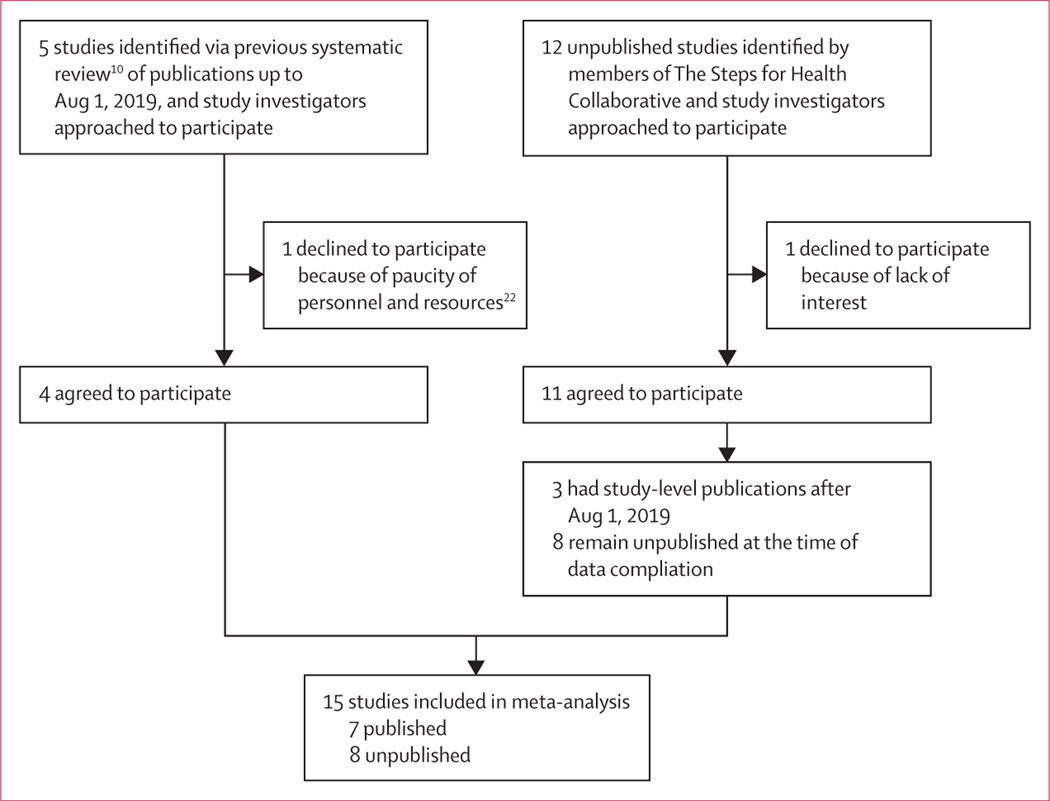
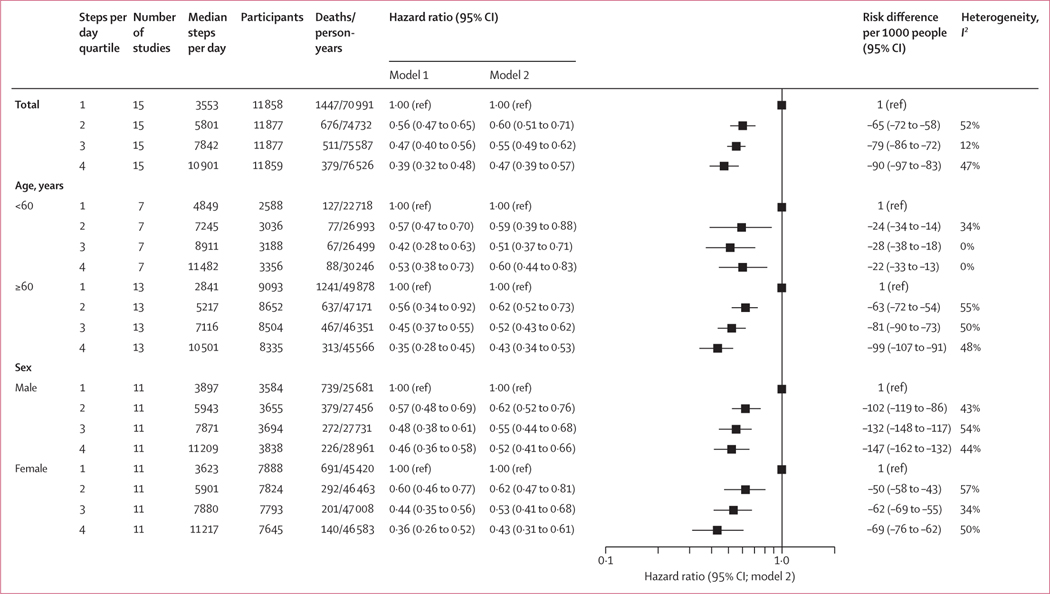
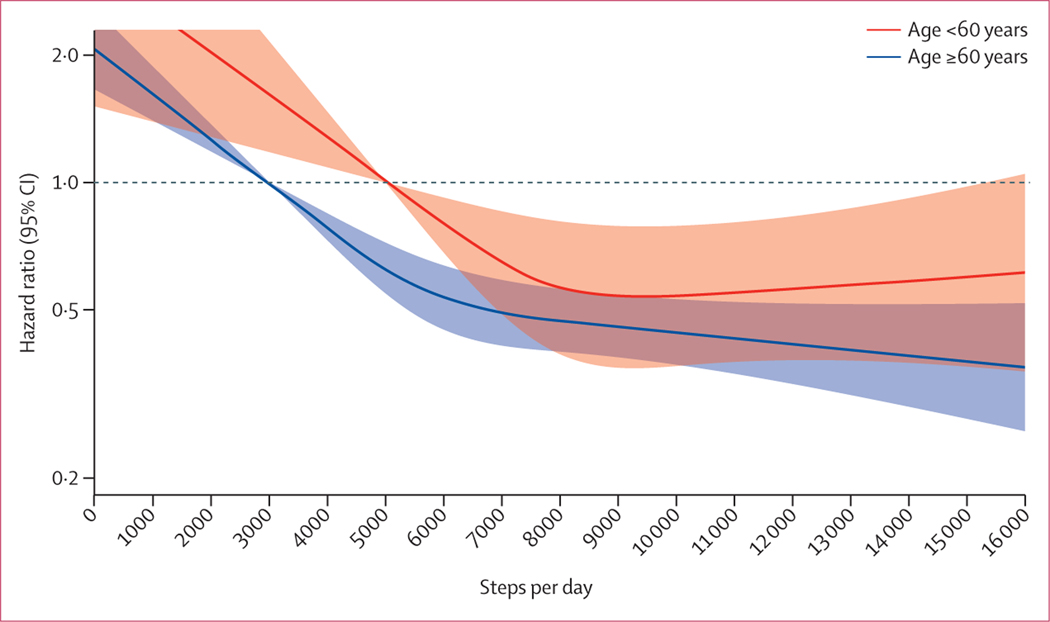
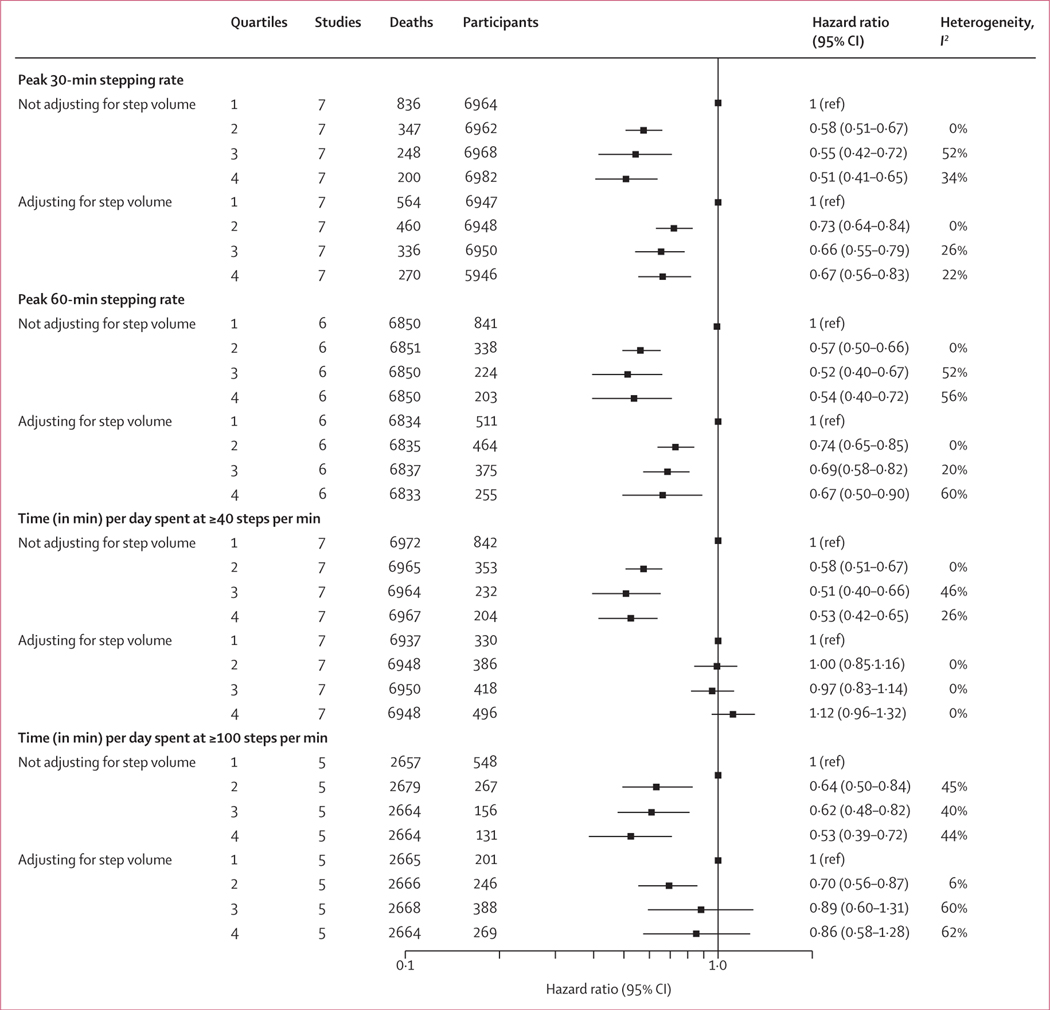
BACKGROUND: Although 10 000 steps per day is widely promoted to have health benefits, there is little evidence to support this recommendation. We aimed to determine the association between number of steps per day and stepping rate with all-cause mortality. METHODS: In this meta-analysis, we identified studies investigating the effect of daily step count on all-cause mortality in adults (aged ≥18 years), via a previously published systematic review and expert knowledge of the field. We asked participating study investigators to process their participant-level data following a standardised protocol. The primary outcome was all-cause mortality collected from death certificates and country registries. We analysed the dose-response association of steps per day and stepping rate with all-cause mortality. We did Cox proportional hazards regression analyses using study-specific quartiles of steps per day and calculated hazard ratios (HRs) with inverse-variance weighted random effects models. FINDINGS: We identified 15 studies, of which seven were published and eight were unpublished, with study start dates between 1999 and 2018. The total sample included 47 471 adults, among whom there were 3013 deaths (10·1 per 1000 participant-years) over a median follow-up of 7·1 years ([IQR 4·3-9·9]; total sum of follow-up across studies was 297 837 person-years). Quartile median steps per day were 3553 for quartile 1, 5801 for quartile 2, 7842 for quartile 3, and 10 901 for quartile 4. Compared with the lowest quartile, the adjusted HR for all-cause mortality was 0·60 (95% CI 0·51-0·71) for quartile 2, 0·55 (0·49-0·62) for quartile 3, and 0·47 (0·39-0·57) for quartile 4. Restricted cubic splines showed progressively decreasing risk of mortality among adults aged 60 years and older with increasing number of steps per day until 6000-8000 steps per day and among adults younger than 60 years until 8000-10 000 steps per day. Adjusting for number of steps per day, comparing quartile 1 with quartile 4, the association between higher stepping rates and mortality was attenuated but remained significant for a peak of 30 min (HR 0·67 [95% CI 0·56-0·83]) and a peak of 60 min (0·67 [0·50-0·90]), but not significant for time (min per day) spent walking at 40 steps per min or faster (1·12 [0·96-1·32]) and 100 steps per min or faster (0·86 [0·58-1·28]). INTERPRETATION: Taking more steps per day was associated with a progressively lower risk of all-cause mortality, up to a level that varied by age. The findings from this meta-analysis can be used to inform step guidelines for public health promotion of physical activity. FUNDING: US Centers for Disease Control and Prevention.
Overview
The claims and statistics of this paper haven’t been checked yet.
Free: it reads the open-access text and checks the first 5 claims that cite a source we can check. Create a free account to check every claim.
Integrity signals
Registry
Cites
Statistics
Figures
Verification
Claims the paper makes
The claims and statistics of this paper haven’t been checked yet.
Free: it reads the open-access text and checks the first 5 claims that cite a source we can check. Create a free account to check every claim.
Claims other papers make about this one
Each is checked against this paper’s own text: does it say what the citing paper says it does?
The source backs part of the claim, not all of it — or backs it for a different population, condition or comparison.
In the citing paper
“uncertainty exists around the strength and shape of the association of daily step count with all-cause mortality and cardiovascular mortality14,15, where recent studies have not used transparent or robustly validated free-living step counting algorithms.”
From Development and Validation of a Machine Learning Wrist-worn Step Detection Algorithm with Deployment in the UK Biobank (2023) · cites this paper as [15]
Experimental — accuracy not yet measuredThe source backs part of the claim, not all of it — or backs it for a different population, condition or comparison.
In the citing paper
“Indeed, observational evidence shows that PA levels lower than recommended threshold are already associated with reduced mortality [65,628,668], and benefits exhibit a curvilinear dose-dependency [628,668].”
From Global consensus on optimal exercise recommendations for enhancing healthy longevity in older adults (ICFSR) (2025) · cites this paper as [65]
Experimental — accuracy not yet measuredThe source backs part of the claim, not all of it — or backs it for a different population, condition or comparison.
In the citing paper
“We therefore used the residual method in which total MVPA was regressed on the bout exposure volume.The resulting residuals were independent variables in the analyses consistent with previous research assessing activity volume over a fixed time interval.20,21”
From Brief bouts of device-measured intermittent lifestyle physical activity and its association with major adverse cardiovascular events and mortality in people who do not exercise: A prospective cohort study (2023) · cites this paper as [20]
Experimental — accuracy not yet measuredThe cited source says what the claim attributes to it.
In the citing paper
“Our findings are consistent with previous literature describing associations between step counts and adverse events10,11.”
From Association of step counts over time with the risk of chronic disease in the All of Us Research Program (2022) · cites this paper as [11]
In the citing paper
“Population based data indicate that even small increases in the number of steps per day are associated with a lower risk of premature death, with the strongest effects observed at approximately 7000 to 10,000 steps per day [142,143].”
From Dietary and Behavioral Strategies for Weight Loss and Weight Loss Maintenance: A Narrative Review (2025) · cites this paper as [142]
Self-check
Percentages, sums and reported differences re-computed from the paper’s own numbers.
The self-check needs the paper’s full text.
Citations
Cites
Measuring inconsistency in meta-analyses
Higgins, J. P. T., Thompson, S. G., Deeks, J. J., & Altman, D. G. (2003) · BMJ · doi:10.1136/bmj.327.7414.557 · Cited by 63,139
Bias in meta-analysis detected by a simple, graphical test
Egger, M., Smith, G. D., Schneider, M., & Minder, C. (1997) · BMJ · doi:10.1136/bmj.315.7109.629 · Cited by 56,722
World Health Organization 2020 guidelines on physical activity and sedentary behaviour
Bull, F. C., Al-Ansari, S. S., Biddle, S., Borodulin, K., Buman, M. P., Cardon, G., Carty, C., Chaput, J.-P., Chastin, S., Chou, R., et al. (2020) · British Journal of Sports Medicine · doi:10.1136/bjsports-2020-102955 · Cited by 11,657
Self-citationExercise and Physical Activity for Older Adults
Chodzko-Zajko, W. J., Proctor, D. N., Fiatarone Singh, M. A., Minson, C. T., Nigg, C. R., Salem, G. J., & Skinner, J. S. (2009) · Medicine & Science in Sports & Exercise · doi:10.1249/mss.0b013e3181a0c95c · Cited by 5,153
Adjustment for total energy intake in epidemiologic studies
Willett, W., Howe, G., & Kushi, L. (1997) · The American Journal of Clinical Nutrition · doi:10.1093/ajcn/65.4.1220s · Cited by 3,758
Prince, S. A., Adamo, K. B., Hamel, M., Hardt, J., Connor Gorber, S., & Tremblay, M. (2008) · International Journal of Behavioral Nutrition and Physical Activity · doi:10.1186/1479-5868-5-56 · Cited by 3,162
Physical Fitness and All-Cause Mortality: A Prospective Study of Healthy Men and Women
Blair, S. N. (1989) · JAMA · doi:10.1001/jama.1989.03430170057028 · Cited by 2,658
Ekelund, U., Tarp, J., Steene-Johannessen, J., Hansen, B. H., Jefferis, B., Fagerland, M. W., Whincup, P., Diaz, K. M., Hooker, S. P., Chernofsky, A., et al. (2019) · BMJ · doi:10.1136/bmj.l4570 · Cited by 1,769
Self-citationAssociation of daily step count and step intensity with mortality among US adults
Saint-Maurice, P. F., Troiano, R. P., Bassett, D. R., Graubard, B. I., Carlson, S. A., Shiroma, E. J., Fulton, J. E., & Matthews, C. E. (2020) · JAMA · doi:10.1001/jama.2020.1382 · Cited by 660
Self-citationAssociation of Step Volume and Intensity With All-Cause Mortality in Older Women
Lee, I.-M., Shiroma, E. J., Kamada, M., Bassett, D. R., Matthews, C. E., & Buring, J. E. (2019) · JAMA Internal Medicine · doi:10.1001/jamainternmed.2019.0899 · Cited by 604
Self-citation
Cited by
Items 401–500 of 678
Sverdrup, K., Ustad, A., Tangen, G. G., Kongsvold, A., Vereijken, B., Strand, B. H., Selbæk, G., Ernstsen, L., & Mork, P. J. (2026) · Scientific Reports · doi:10.1038/s41598-026-36355-y · Cited by 1
“In our study, time spent walking decreased with higher age for both women and men, consistent with previous findings 39 .”
Bianchini, E., Garramone, F., Rinaldi, D., Alborghetti, M., Carolis, L. D., Galli, S., Suppa, A., Salvetti, M., Hansen, C., & Vuillerme, N. (2026) · Journal of NeuroEngineering and Rehabilitation · doi:10.1186/s12984-025-01873-9 · Cited by 1
“Although this parameter does not provide detailed insights of subtle gait disorders, a reduced number of daily steps is associated with risk of overall mortality [7] and various health conditions such as cancer, cardiovascular diseases, and dementia [8, 9].”
Body Mass Index and Optimizing Physical Activity Levels in Rehabilitation Patients
Nartea, R., & Gheorghievici, G. L. (2026) · IntechOpen eBooks · doi:10.5772/intechopen.1014055 · Cited by 1
Silacci, A., Cherubini, M., Boldi, A., Rapp, A., & Caon, M. (2026) · CHI Conference on Human Factors in Computing Systems · doi:10.1145/3772318.3790303 · Cited by 4
“Recent meta-analytic evidence indicates that substantial health and mortality benefits occur at lower activity levels – approximately 8,000-10,000 steps for young adults [57].”
Román, P. Á. L., Pérez, A. D. L. C., MONTILLA, J. A. P., Sánchez, J. S., Zurita, M. L., & Linares, J. C. C. (2026) · Epidemiologia · doi:10.3390/epidemiologia7010024 · Cited by 1
“Likewise, taking more steps per day was linked with a gradually lower risk of all-cause mortality, up to a level that differs by age, with the risk plateauing for older adults (aged ≥ 60 years) at approximately 6000–8000 steps per day [45].”
Achawakulthep, C., Khattiya, S., Chareancholvanich, K., Pornrattanamaneewong, C., Awirotananon, K., & Narkbunnam, R. (2026) · Journal of Orthopaedic Surgery and Research · doi:10.1186/s13018-025-06591-5 · Cited by 1
“Despite marked improvements in PROMs, only a sub-set converted perceived recovery into greater free-living walking volume [25].”
Cohen, E., Andersen, C. R., Moody, K. M., Swartz, M. C., Robertson, M. C., Rajan, A., Honey, T. A., Lugo, S. P. M., Waterman, G., & Schadler, K. (2026) · Cancer Medicine · doi:10.1002/cam4.71674 · Cited by 1
Generating Diverse Routes with Lengths Within a Specified Range
MUTOH, S., Amano, Y., & Imai, K. (2026) · IEICE Transactions on Fundamentals of Electronics Communications and Computer Sciences · doi:10.1587/transfun.2025dmp0023 · Cited by 1
Springer, J., Steinbrink, G. M., Tetmeyer, L. L., Mellen, K., Marcussen, B. L., Bond, D. S., Wu, Y., & Carr, L. J. (2026) · Journal of Behavioral Medicine · doi:10.1007/s10865-026-00647-5 · Cited by 1
Gadahad, P. R., Joshi, A. N., & Dumre, R. P. (2026) · CHI Conference on Human Factors in Computing Systems · doi:10.1145/3772318.3791564 · Cited by 1
The PhasED Framework: A Measurement Theory-Based Approach to Algorithm Development and Evaluation
Keadle, S. K., Strath, S. J., Giurgiu, M., Fuller, D., Martinez, J., Doherty, A., Ahmadi, M., Hyde, E. T., Troiano, R. P., & Matthews, C. E. (2026) · Journal for the Measurement of Physical Behaviour · doi:10.1123/jmpb.2025-0074 · Cited by 3
Self-citationPhysical Activity in Cardiovascular Disease Prevention: A Narrative Review
Oćwieja, Z., Wyborska, A., Fengler, K., Jakubowska, O., Pietrzak, K., Carreno, M. G., Urbanik, A., Mińkowski, M., Kominiak, D., & Solecka, K. (2026) · Quality in Sport · doi:10.12775/qs.2026.55.71615 · Cited by 1
Physical Activity Levels Among Older Adults in Urban Central Asia: A Cross-Sectional Study
Tolegenova, Y., Abduldayeva, A. A., Aiypkhanova, A., Doszhanova, G. N., & Kozhamkulov, O. (2026) · Healthcare · doi:10.3390/healthcare14131843 · Cited by 1
“Physical activity (PA) is a key modifiable determinant of healthy aging and is associated with lower mortality and reduced risk of major noncommunicable disease outcomes in older adults [1–5].”
Imes, C. C., Sciurba, F., Hergenroeder, A. L., Ren, D., Lendermon, E. A., Willey, B. M., Cline, A. C., Moon, S. J., Vendetti, M. L., Jones, K. B., et al. (2026) · International Journal of Telerehabilitation · doi:10.63144/ijt.2026.6734 · Cited by 1
Paluch, A. E., Evenson, K. R., EBERL, E. M., Marcotte, S. P., Parvizi, P., Rees‐Punia, E., Toth, L. P., & Bassett, D. R. (2026) · Journal of sport and health science/Journal of Sport and Health Science · doi:10.1016/j.jshs.2026.101162 · Cited by 1
Self-citationEckert, T., Gordt, K., Haas, A.-S., Böttinger, M. J., Schubert, A.-L., Snijder-Steinhilber, M., Wahl, H.-W., Bauer, J. M., Klenk, J., Sanabria, J. L. A., et al. (2026) · European Review of Aging and Physical Activity · doi:10.1186/s11556-026-00431-z · Cited by 1
“In our sample, walking activity clearly exceeded evidence-based step-count recommendations derived from recent cohort studies [45, 46] and meta-analyses corresponding to activity levels associated with a substantially reduced mortality risk [8].”
Self-citationSawada, K., Hishikawa, N., Shinjo, H., Kubo, M., Kimura, H., Yamanaka, A., Ohashi, S., Matoba, S., & Mikami, Y. (2026) · Journal of Gerontology and Geriatrics · doi:10.3390/jgg74030031 · Cited by 1
“Daily step count is a practical and interpretable indicator of ambulatory behavior in epidemiological research [3].”
Cao, H., Wu, J., Yuan, Y., Li, J., Feng, W., Baierdi, A., Li, M., Wang, Y., & Zhao, J. (2026) · Frontiers in Pharmacology · doi:10.3389/fphar.2026.1885629 · Cited by 1
Yang, S., Li, M., Li, Y., Chang, Y., Hu, S., Kou, X., & Liu, X. (2026) · Frontiers in Public Health · doi:10.3389/fpubh.2026.1934024 · Cited by 1
“Physical inactivity is a leading modifiable risk factor for non-communicable diseases (NCDs) and a significant contributor to the global burden of disease (1–4).”
Self-citationBo, N., Sudnick, A. M., Counts, J. D., Kennedy, K. G., Saldana, A. A., Collins, K. A., Bennett, W. C., Johnson, J. L., Huffman, K. M., Paluch, A. E., et al. (2026) · Experimental Gerontology · doi:10.1016/j.exger.2026.113337 · Cited by 1
Self-citationDavies, M. J., Aroda, V. R., Bajaj, M. S., ElSayed, N. A., Giorgino, F., Green, J., Kalyani, R. R., Maruthur, N. M., Mathieu, C., Rosas, S. E., et al. (2026) · Diabetologia · doi:10.1007/s00125-026-06855-7 · Cited by 1
Bai, Y., Tang, Y., Zhao, Y., Ma, L., Ma, Y., & Wang, Z. (2026) · JMIR Human Factors · doi:10.2196/98592 · Cited by 1
“Lower daily step counts, reduced activity, and more sedentary profiles are associated with higher all-cause mortality and cardiovascular risk [4,20-22].”
Physical activity, sedentary behaviour, and healthy ageing in older adults
Koemel, N. A., Valenzuela, P. L., D’Amore, C., Jáuregui, A., Ku, P., Beauchamp, M., Stamatakis, E., & Ahmadi, M. N. (2026) · The Lancet Healthy Longevity · doi:10.1016/j.lanhl.2026.100913 · Cited by 2
Marcotte, R. T., Bachman, S. L., Zhai, Y., Clay, I., & Lyden, K. A. (2024) · Digital Biomarkers · doi:10.1159/000542850 · Cited by 2
Cabral, L. L. P., Meredith-Jones, K., Browne, R. A. V., Freire, Y. A., Vlietstra, L., Waters, D. L., Barreira, T. V., & Costa, E. C. (2025) · Archives of Physical Medicine and Rehabilitation · doi:10.1016/j.apmr.2025.10.025 · Cited by 1
da Silva, J. H. B., Germano-Soares, A. H., de Oliveira, T. V., Silva, L. C. B., Filho, V. C. B., Silva, T. C. D. A., & Tassitano, R. M. (2026) · International Journal of Medical Informatics · doi:10.1016/j.ijmedinf.2026.106370 · Cited by 1
Probst, P., Santos, S., Barros, G., Morais, M., Garcia, S., Koch, P., Dias, J. B., Leal, A., Periquito, R., André, S., et al. (2026) · Sensors · doi:10.3390/s26072278 · Cited by 1
“In all cases, workplace step counts fell substantially short of the recommended daily target of 9000 steps for a person of 51 years of age [58].”
Loesch, J., Kim, S., Simons, M. L., Hamza, E., Brown, J., Valencia, S., Garg, S., Pasricha, T. S., Singh, P., Ballou, S., et al. (2026) · The American Journal of Gastroenterology · doi:10.14309/ajg.0000000000004037 · Cited by 1
Behavioral eco-wellness: Definition, conceptual framework, and research agenda
Barrett, B., Cornwall, K. J., Grabow, M., & Goldberg, S. B. (2026) · Journal of Environmental Psychology · doi:10.1016/j.jenvp.2026.103095 · Cited by 1
Lager, C., Dove, A. E., Rizzuto, D., Ars, J., Boström, A., Calderón‐Larrañaga, A., & Welmer, A. (2026) · European Review of Aging and Physical Activity · doi:10.1186/s11556-026-00422-0 · Cited by 1
“…and average duration of sedentary behaviour bouts were dichotomised at the median; time spent in moderate-to-vigorous physical activity and sedentary behaviour were divided into tertiles; number of steps was dichotomised using a threshold of 8000 steps per day, based on previous literature [30].”
Baretta, D., Mazéas, A., Chalabaëv, A., Inauen, J., & Chevance, G. (2026) · npj Exercise Medicine and Health · doi:10.1038/s44437-026-00003-4 · Cited by 1
Lui, E. H. Y., & Mobbs, R. J. (2026) · Journal of Neurology · doi:10.1007/s00415-026-14131-2 · Cited by 1
“Walking speed and gait characteristics have been associated with cognitive decline, mortality, neurodegenerative trajectories, and disease progression [3–5], while gait alterations may provide early indications of several neurological and musculoskeletal conditions [6, 7].”
Verbrugghe, J., Reneman, M. F., Cunningham, C., Ciccone, D. K., Budzisz, A., Kocot-Kępska, M., Malliou, N., Vægter, H. B., & Meeus, M. (2026) · European Journal of Pain · doi:10.1002/ejp.70398 · Cited by 1
“These findings are consistent with previous large cohort meta-analyses (Paluch et al. 2022; Stens et al. 2023).”
Bassett, D. R. (2022) · Medicine & Science in Sports & Exercise · doi:10.1249/mss.0000000000003036 · Cited by 1
Self-citationThe Stryd Foot Pod Is a Valid Measure of Stepping Cadence During Treadmill Walking and Running
Shivgulam, M. E., Petterson, J. L., Pellerine, L. P., Kimmerly, D. S., & O'Brien, M. W. (2023) · Journal for the Measurement of Physical Behaviour · doi:10.1123/jmpb.2022-0031 · Cited by 2
Greaney, M. L., Xu, F., Ward‐Ritacco, C. L., Cohen, S. A., Ellis, K. A., & Riebe, D. A. (2023) · International Journal of Environmental Research and Public Health · doi:10.3390/ijerph20042778 · Cited by 2
Kulik, A., Rosłoniec, E., Madejski, P., Spannbauer, A., Mika, P., Różycka, I., Weber‐Nowakowska, K., & Trzeciak, J. (2023) · Annals of Agricultural and Environmental Medicine · doi:10.26444/aaem/159686 · Cited by 1
“The most frequently repeated recommendation regarding step count relevant to adult health benefits is 10,000 steps per day [21].”
BackgroundBewegungsempfehlungen in der Prävention und Therapie der Adipositas
Joisten, C. (2023) · Adipositas - Ursachen Folgeerkrankungen Therapie · doi:10.1055/a-1973-8793 · Cited by 1
McBride, P., Henson, J. J., Edwardson, C. L., Maylor, B. D., Dempsey, P. C., Rowlands, A. V., Davies, M. J., Khunti, K., & Yates, T. E. (2023) · Medicine & Science in Sports & Exercise · doi:10.1249/mss.0000000000003180 · Cited by 2
“Recent large studies have suggested associations between step cadence and mortality are partially or fully mediated by controlling for overall steps per day (12,13,18).”
BackgroundWalking or how many steps is enough for us to be health?
Sovová, E. (2023) · Medicína pro praxi · doi:10.36290/med.2023.010 · Cited by 1
Klimafreundliches Arbeiten im Gesundheitswesen
Grah, C. (2023) · Pneumo News · doi:10.1007/s15033-023-3477-5 · Cited by 1
“Die Umstellung auf mehr Bewegung und nichtmo torisierte Fortbewegung kann einen großen doppelt wirksamen Hebel für Klimaschutz und zugleich Gesundheitsschutz auslö sen – und ist damit in jedem Lebensalter zentral für Therapie und Prävention der wichtigsten Volksleiden wie HerzKreislauf Krankheiten, Übergewicht, Di…”
BackgroundO'Brien, M. W., Neyedli, H. F., Bosquet, L., Leadbetter, B., Smith, A., Gallant, F., Tanguay, P., Bélanger, M. F., & Mekari, S. (2023) · Frontiers in Aging · doi:10.3389/fragi.2023.1196389 · Cited by 1
“For example, the Short Physical Performance Battery is a well-established series of lower-limb assessments designed for older adults is predictive of disability and mortality (Guralnik et al, 1994; Pavasini et al, 2016).”
BackgroundDiet, Exercise, and Behavior Therapy
Schumacher, L. M., Sarwer, D. B., & Allison, K. C. (2023) · Springer eBooks · doi:10.1007/978-3-319-12125-3_43-2 · Cited by 1
Shi, B., Du, L., Li, Q., Wu, S., Ge, H., Chen, S., Zhang, X., & He, Q. (2023) · Geriatric Nursing · doi:10.1016/j.gerinurse.2023.10.031 · Cited by 1
Leisure-Time Physical Activity and its Relationship with Gender and Walking Time to The Park or Gym
Rosa, C. D., Yamada, A. K., & Menuchi, M. R. T. P. (2023) · Licere · doi:10.35699/2447-6218.2023.48218 · Cited by 1
Mbabazi, J., MacGregor, F., Breckon, J. D., Tolchard, B., Watson, D. J., Hogg, J., Kunonga, E., Nalweyiso, D. I., Teke, J., Dawson, R., et al. (2024) · Cogent Public Health · doi:10.1080/27707571.2023.2294518 · Cited by 1
Pellerine, L. P., Miller, K., Frayne, R. J., & O'Brien, M. W. (2024) · Sports Medicine and Health Science · doi:10.1016/j.smhs.2024.02.001 · Cited by 1
“20 Our sample averaged (5 960 (cid:1) 3 037) steps/day, which was close to this step count recommendation for healthy older populations.”
BackgroundWei, L., Ahmadi, M. N., Biswas, R. K., Trost, S. G., & Stamatakis, E. (2024) · Scandinavian Journal of Medicine and Science in Sports · doi:10.1111/sms.14719 · Cited by 1
Adult Sports Participation and Physical Activity: How About Curling?
Kanters, M. A., Hipp, J. A., Bunds, K. S., Casper, J. M., & Nelson, R. (2024) · Journal of Healthy Eating and Active Living · doi:10.51250/jheal.v4i2.92 · Cited by 1
Finding Time and Energy to Exercise—5 Tips for Surgeons
McDermott, J., Lum, S. S., & de Virgilio, C. (2024) · JAMA Surgery · doi:10.1001/jamasurg.2024.3400 · Cited by 1
Gardner, A. W., Montgomery, P. S., Wang, M., Liang, M., Zhang, S., Pomilla, W. A., & Cherin, N. G. (2024) · American Journal of Medicine Open · doi:10.1016/j.ajmo.2024.100084 · Cited by 1
“38-40 Therefore, a higher daily step count recommendation, such as between 7000 and 10,000 steps/d, which supports our previous work, 19 may be more appropriate for individuals with MetS when using the more accurate StepWatch activity monitor or the ActiGraph model 7164.”
Sales, D. R. L., Ferrari, G., da Silva, J. P., Bergamo, R. R., Moda, P. P. O., dos Santos, A., dos Santos, M., & Matsudo, V. K. R. (2025) · Scientific Reports · doi:10.1038/s41598-025-85601-2 · Cited by 2
Corrêa, M. A., Cabral, J. C. C., & Dias, A. C. G. (2025) · Cuadernos de Psicología del Deporte · doi:10.6018/cpd.612491 · Cited by 1
The Triple 6 Approach to Walking: Enhancing Health and Mitigating Disease through Daily Steps
Fatima, G., Parvez, S., Hadi, N. R., & SZENTIVANYI, M. (2025) · Journal of Frontiers in Multidisciplinary Research · doi:10.54660/.ijfmr.2025.6.1.80-85 · Cited by 2
Solberg, A., Aspvik, N. P., Lydersen, S., Midttun, S., Reitlo, L. S., Steinshamn, S., Ingebrigtsen, J. E., Helbostad, J. L., Wisløff, U., & Stensvold, D. (2025) · Journal of Physical Activity and Health · doi:10.1123/jpah.2024-0767 · Cited by 1
Gravesteijn, A. S., Rietberg, M. B., de Groot, V., Hirsch, M. A., Vanbellingen, T., Jaspers, R. T., Vriend, C., van de Berg, W. D. J., van den Heuvel, O. A., van Wegen, E. E. H., et al. (2025) · Brain Sciences · doi:10.3390/brainsci15090945 · Cited by 1
“During the eight-week intervention period, participants in the MA group will be encouraged to increase their daily step count by approximately 3000 steps on at least five days each week, relative to their personal baseline [83].”
Buehler, R., Pucher, J. R., Wittwer, R., & Gerike, R. (2026) · Journal of Transport & Health · doi:10.1016/j.jth.2026.102447 · Cited by 1
Gad, W., Chandler, B., Jones, B. W., Muvuka, B., Guerrero, J., & Mangum, J. (2024) · Proceedings of IMPRS · doi:10.18060/27938 · Cited by 1
Freire, Y. A., Rosa-Souza, F. J., Cabral, L. L. P., Browne, R. A. V., Júnior, J. C. D. F., Waters, D. L., Mielke, G. I., & Costa, E. C. (2024) · Geriatric Nursing · doi:10.1016/j.gerinurse.2024.04.003 · Cited by 1
Demystifying CO2: lessons from nutrition labeling and step countingPreprint
Filipowicz, A. L. S., Shamma, D. A., Mohanty, V., & Hogan, C. (2025) · arXiv (Cornell University) · doi:10.48550/arxiv.2504.00333 · Cited by 1
“First, regular walking is an effective form of aerobic exercise, and increases in daily step count are consistently associated with better overall health outcomes [3, 18, 30].”
Characterization Of Rock For Boreability Evaluation Using Fracture Material Properties
Nelson, P. P., & Fong, F. L. C. (1986) · The 27th U.S. Symposium on Rock Mechanics (USRMS) · Cited by 4
Living a long life is a multi-step process
Montoye, A. H. K., & Conger, S. A. (2022) · The Lancet Public Health · doi:10.1016/s2468-2667(22)00012-3
Learning by reading: A review of recent diabetes articles
Bloomgarden, Z. T. (2022) · Journal of Diabetes · doi:10.1111/1753-0407.13272
“A metaanalysis of daily step count data from 47 471 participants in 15 studies with 3013 deaths showed that the lowest mortality was at approximately 8000 steps per day, with the appearance of a particularly steep dose– response relationship for participants age 60 and over, for whom relative mortality was 44%, 55%, a…”
BackgroundCaminar más pasos por día se asocia a una menor mortalidad por todas las causas
Dell’Era, S. (2022) · Evidencia actualizacion en la práctica ambulatoria · doi:10.51987/evidencia.v25i1.6995 · Cited by 1
Paying people to be healthy: Limited time offerPreprint
Spilsbury, S., Wilk, P., Taylor, C. M., Prapavessis, H., & Mitchell, M. (2022) · Research Square · doi:10.21203/rs.3.rs-1723426/v1
Mañas, A., Cruz, B. D. P., Ekelund, U., Losa‐Reyna, J., Rodríguez‐Gómez, I., Carnicero, J. A. C., Rodríguez‐Mañas, L., García‐García, F. J., & Ara, I. (2022) · Journal of sport and health science/Journal of Sport and Health Science · doi:10.1016/j.jshs.2022.09.001
Self-citationAryan, Z., Gordon, E. A., & Waller, A. H. (2022) · JAMA Cardiology · doi:10.1001/jamacardio.2022.4119
Flekač, M. (2023) · Vnitřní lékařství · doi:10.36290/vnl.2023.051
Step your way to a longer life: examining the relation between step counts, morbidity and mortality
Blond, K., & Grøntved, A. (2023) · Evidence-Based Nursing · doi:10.1136/ebnurs-2022-103683
Shi, C., & Park, A. (2023) · International Conference on Machine Learning & Applications (CMLA) · doi:10.5121/csit.2023.131016
Association of daily step patterns with frailty in community older Chinese women
Li, T., Du, L., Hu, C., Pan, Y., He, Q., Chen, S., & Zhang, X. (2023) · Geriatric Nursing · doi:10.1016/j.gerinurse.2023.08.024
Nichtmedikamentöse Behandlung alter Menschen mit Diabetes: Schulung, Ernährung, Bewegung
Hauner, H. (2023) · Die Diabetologie · doi:10.1007/s11428-023-01098-1
COMPORTAMENTO SEDENTÁRIO EM RELAÇÃO AOS MEIOS DE LOCOMOÇÃO VERTICAL EM ESPAÇO COMERCIAL
Vieira, C. M. D. S., MELO, L. P. D., Barreto, A. F. S., Silva, I. G. B. A., Santos, R. C. M., & Alencar, N. E. S. (2023) · Revista Foco · doi:10.54751/revistafoco.v16n9-116
USO DE ESCADAS COMO OPÇÃO DE DESLOCAMENTO EM SHOPPING DE TERESINA PIAUÍ
Vieira, C. M. D. S., MELO, L. P. D., Barreto, A. F. S., Silva, I. G. B. A., Santos, R. C. M., & Alencar, N. E. S. (2023) · Congresso Nacional de Inovações em Saúde · doi:10.51161/conais2023/21093
Europski forum o životu nakon moždanog udara
Bartolović, J., Jurlina, H., & Budinčević, H. (2023) · Logopedija · doi:10.31299/log.13.2.1
Wall, J. T., Xie, H., & Wang, X. (2024) · Journal of Personalized Medicine · doi:10.3390/jpm14020127
“Less studied, activity above this range also has beneficial health effects [54,59,61–64].”
BackgroundSacino, A. N., Norvell, D., Gorbacheva, A., Sajid, A., Avantaggio, A., Oskouian, R. J., & Chapman, J. R. (2024) · American Journal of Lifestyle Medicine · doi:10.1177/15598276241238170
Designing Novel Approaches to Personalise Behaviour Change in Intelligent Systems
Scott, D. (2024) · Cronfa (Swansea University) · doi:10.23889/suthesis.65829 · Cited by 1
Kubota, A., & Hamaguchi, T. (2024) · Journal of Physical Therapy Science · doi:10.1589/jpts.36.252
Dederichs, R., Voß, J., & Falz, R. (2024) · best practice onkologie · doi:10.1007/s11654-024-00581-5
(2024) · Frontiers research topics · doi:10.3389/978-2-8325-5010-6
Physical Activity, Metabolites, and Breast Cancer Associations
Watts, E. L., Moore, S. C., Abar, L., Hong, H. G., Saint‐Maurice, P. F., O’Connell, C. P., Matthews, C. E., & Loftfield, E. (2024) · Current Developments in Nutrition · doi:10.1016/j.cdnut.2024.103702
Self-citationNawrin, S. S., Inada, H., Momma, H., & Nagatomi, R. (2024) · Research Square · doi:10.21203/rs.3.rs-4515397/v1
Sociodemographic precursors of explicit and implicit attitudes towards physical activity
Saoudi, I., Maltagliati, S., Chalabaëv, A., Sarrazin, P. G., & Cheval, B. (2024) · Psychology and Health · doi:10.1080/08870446.2024.2371964
Exercise reshapes aging bodies and minds
Chen, L. (2024) · Archives of Gerontology and Geriatrics · doi:10.1016/j.archger.2024.105581
Kokubo, Y., Nakajima, H., Izubuchi, Y., & Matsumine, A. (2024) · Journal of Orthopaedics Trauma and Rehabilitation · doi:10.1177/22104917231214804
“19 Several studies suggested that rehabilitation of patients with cancer was crucial to improve prognosis.”
Physical Activity and Moving More
Kehoe, R. M., & Gan, J. C. (2024) · Springer Publishing Company eBooks · doi:10.1891/9780826145024.0007
Effects of a dog activity tracker on owners’ walking: a community-based randomised controlled trial
Ahmadi, M. N., Biswas, R. K., Powell, L., Bauman, A. E., Sherrington, C., Podberscek, A. L., McGreevy, P. D., Rhodes, R. E., & Stamatakis, E. (2024) · BMC Research Notes · doi:10.1186/s13104-024-06989-0
“…such as active commuting or recreational maybe, in part, why we did not see changes in walking pace (e.g.: peak 30 cadence), which may have additional health benefits beyond total daily steps [17, 24], even when increasing walking pace or activity intensity occurs in short bursts [25, 26].”
Optimizing Walking Routes for Step Goals using Knapsack Algorithm
Purba, S. E. M., Tambunan, S. R., & Pardede, C. (2024) · International Conference on Technology Innovation and Its Applications (ICTIIA) · doi:10.1109/ictiia61827.2024.10761544
“These findings underscore the importance of regular physical activity in enhancing longevity and overall health [1].”
InfluentialEvaluating a Community-Based Walking Program: A Mixed-Methods Assessment of Community Capacity
Spitz, L., Valenzuela, R., & Salinas, J. J. (2024) · Journal of Physical Activity and Health · doi:10.1123/jpah.2023-0286
Predicting Recovery After Stressors Using Step Count Data Derived From Activity MonitorsPreprint
Baretta, D., Koch, S., Buekers, J., García‐Aymerich, J., Knapová, L., Elavsky, S., Godino, J., Olthof, M., Lichtwarck‐Aschoff, A., Hartigh, R. J. R. D., et al. (2024) · OSF Preprints (OSF Preprints) · doi:10.31219/osf.io/gwvhx
Aguiar, E. J., Lucas, K. J., Benitez, C. J., Adandom, I. I., Toth, L. P., & Ducharme, S. W. (2024) · Journal for the Measurement of Physical Behaviour · doi:10.1123/jmpb.2024-0025
Step Count: The Next Vital Sign
Adams, H. C., Costello, B. T., & Rogers, J. G. (2025) · Journal of General Internal Medicine · doi:10.1007/s11606-024-09197-5
Baker, K., Das, J., Rochester, L., Din, S. D., & Naisby, J. (2025) · Geriatrics · doi:10.3390/geriatrics10010008
“The average step count per day was around 10,000 for both groups, which is high compared to the average step count measured in previous studies for older adults [39] and PwP [40,41], and the average bout length was around 14 s for both groups.”
Reading and Understanding Health Research: A Critical Approach
Weaver, R. R., & Jia, Q. (2025) · Routledge eBooks · doi:10.4324/9781003595663 · Cited by 1
Gait and mobility assessment in cardio-respiratory conditions
Megaritis, D., Hume, E., Echevarria, C., & Vogiatzis, I. (2025) · Elsevier eBooks · doi:10.1016/b978-0-443-21484-4.00014-4
Birmpili, P., Brocklebank, L. A., Portas, L., Littlejohns, T. J., & Doherty, A. (2026) · European Journal of Preventive Cardiology · doi:10.1093/eurjpc/zwag306
“While in agreement with existing literature, 18,30,31 our study found a weaker association between step count and CVD, with 24% higher risk of CVD in low vs. high step count groups in fully adjusted models, compared to 138% higher risk reported in a meta-analysis of 4 studies.”
Roelofse, V., Hewer, G., Onwubu, S. C., Haffejee, F., & Pillay, J. D. (2024) · African Journal for Physical Activity and Health Sciences (AJPHES) · doi:10.37597/ajphes.2024.30.4.7
Esboço para uma teoria do modo de viver humano ativo
Bueno, J. W. F. (2024) · Digital Library of Theses and Dissertations (Universidade de São Paulo) · doi:10.11606/t.39.2024.tde-12022025-125402
Metadata
- Authors
- Paluch, A. E., Bajpai, S., Bassett, D. R., Carnethon, M. R., Ekelund, U., Evenson, K. R., Galuska, D. A., Jefferis, B. J., Kraus, W. E., Lee, I.-M., Matthews, C. E., Omura, J. D., Patel, A. V., Pieper, C. F., Rees-Punia, E., Dallmeier, D., Klenk, J., Whincup, P. H., Dooley, E. E., Pettee Gabriel, K., Palta, P., Pompeii, L. A., Chernofsky, A., Larson, M. G., Vasan, R. S., Spartano, N., Ballin, M., Nordström, P., Nordström, A., Anderssen, S. A., Hansen, B. H., Cochrane, J. A., Dwyer, T., Wang, J., Ferrucci, L., Liu, F., Schrack, J., Urbanek, J., Saint-Maurice, P. F., Yamamoto, N., Yoshitake, Y., Newton, R. L., Yang, S., Shiroma, E. J., & Fulton, J. E.
- Affiliations
- University of Massachusetts Amherst (US)
- University of Tennessee at Knoxville (US)
- Northwestern University (US)
- Norwegian Institute of Public Health (NO)
- University of North Carolina at Chapel Hill (US)
- Centers for Disease Control and Prevention (US)
- University College London (GB)
- Duke University (US)
- Brigham and Women's Hospital (US)
- Division of Cancer Epidemiology and Genetics (US)
- American Cancer Society (US)
- Duke Medical Center (US)
- Boston University (US)
- Universität Ulm (DE)
- University of London (GB)
- University of Alabama at Birmingham (US)
- Columbia University Irving Medical Center (US)
- Baylor College of Medicine (US)
- Umeå University (SE)
- UiT The Arctic University of Norway (NO)
- University of Tasmania (AU)
- Murdoch Children's Research Institute (AU)
- National Institute on Aging (US)
- Johns Hopkins University (US)
- Ehime University (JP)
- Meio University (JP)
- Pennington Biomedical Research Center (US)
- Corresponding author
- Paluch, Amanda E
- ORCID
- Paluch, Amanda E
- Bajpai, Shivangi
- Bassett, David R
- Carnethon, Mercedes R
- Ekelund, Ulf
- Evenson, Kelly R
- Jefferis, Barbara J
- Kraus, William E
- Lee, I-Min
- Matthews, Charles E
- Omura, John D
- Patel, Alpa V
- Pieper, Carl F
- Dallmeier, Dhayana
- Klenk, Jochen
- Whincup, Peter H
- Dooley, Erin E
- Palta, Priya
- Pompeii, Lisa A
- Chernofsky, Ariel
- Larson, Martin G
- Vasan, Ramachandran S
- Spartano, Nicole
- Ballin, Marcel
- Nordström, Peter
- Nordström, Anna
- Anderssen, Sigmund A
- Hansen, Bjørge H
- Dwyer, Terence
- Wang, Jing
- Ferrucci, Luigi
- Liu, Fangyu
- Schrack, Jennifer
- Urbanek, Jacek
- Yamamoto, Naofumi
- Newton, Robert L
- Yang, Shengping
- Shiroma, Eric J
- Fulton, Janet E
- Venue
- The Lancet Public Health
- Publisher
- Elsevier BV
- Published
- 2022-03
- Volume
- 7
- Issue
- 3
- Pages
- e219-e228
- ISSN
- 2468-2667 (ISSN-L)
- PMC
- PMC9289978
- OpenAlex
- W4214876227
- Semantic Scholar
- d39b6ce94ba2a2630c12e61d9900c34f001eb731
- Cited by
- 582
- References
- 43
- Citations by year
- 2026: 100 · 2025: 152 · 2024: 155 · 2023: 120 · 2022: 54
- FWCI
- 16.49
- Type
- journal article
- Language
- en
- Open access
- gold
- doi.org
- Licence
- cc-by-nc-nd
- www.elsevier.com/tdm/userlicense/1.0/ (tdm)
- www.elsevier.com/legal/tdmrep-license (tdm)
- creativecommons.org/licenses/by-nc-nd/4.0/ (vor)
- Locations
- The Lancet Public Health (publishedVersion, cc-by-nc-nd)
- PubMed (publishedVersion)
- St George's Online Research Archive (St George's University of London) (acceptedVersion)
- PubMed Central (acceptedVersion, cc-by-nc-nd)
- Civil War Book Review (submittedVersion)
- DiVA at Umeå University (Umeå University) (submittedVersion, other-oa)
- DOAJ (DOAJ: Directory of Open Access Journals) (submittedVersion, cc-by-sa)
- UCL Discovery (University College London) (submittedVersion)
- NORA - Norwegian Open Research Archives (submittedVersion, other-oa)
- Minerva Access (University of Melbourne) (submittedVersion, cc-by)
- NORA - Norwegian Open Research Archives (submittedVersion, cc-by-nc-nd)
- Funders
- U.S. Department of Transportation
- Centers for Disease Control and Prevention
- Robert Wood Johnson Foundation
- National Institute on Aging
- American College of Sports Medicine
- North Carolina Department of Transportation
- National Institutes of Health
- British Heart Foundation
- National Heart, Lung, and Blood Institute
- Deutsche Forschungsgemeinschaft
- Topics
- Health Sciences › Medicine › Public Health, Environmental and Occupational Health › Physical Activity and Health
- Health Sciences › Medicine › Physiology (medical) › Cardiovascular and exercise physiology
- Social Sciences › Transportation › Urban Transport and Accessibility
- Keywords
- daily step count, stepping rate, all-cause mortality, physical activity, dose-response relationship, adults, older adults, mortality risk, physical activity guidelines, cohort studies, restricted cubic splines, publication bias, risk of bias assessment, subgroup analysis, sex differences, age differences, country differences
- MeSH terms
- Adolescent, Adult, Aged, Humans, Middle Aged, Exercise, Proportional Hazards Models, Walking
About these checks
Registry, retraction, Cites and statistics results are computed, not judged, with one exception: a printed reference that no index lists is read once by a model before it counts as a citation error. Claims are extracted by a model and kept only when their quote appears verbatim in the text; each cited source is then checked, with a model’s help, for whether it says what the claim relies on. Those verdicts can be wrong — read the claim’s quote and the cited source before relying on one.
Statistics and arithmetic are recomputed, not judged.
Confidence bands are shown only for fields calibrated on our annotated test set. None is calibrated yet, so no band is shown.
What counts as a claim ›How we measure confidence ›How we check this ›
Are you an author, or do you see a problem with this page? Request a review
Data sources
Bibliographic data: Semantic Scholar, OpenAlex, Crossref.
Contains information from the Semantic Scholar Academic Graph Datasets, made available under the ODC Attribution License (ODC-BY 1.0).
Semantic Scholar’s data is described in: Kinney, R., et al. (2023). The Semantic Scholar Open Data Platform. arXiv:2301.10140.
