

Daily steps and all-cause mortality: a meta-analysis of 15 international cohorts
Open accessThe DOI matches its Crossref record; 43 of the 43 references it cites were found in a registry or an index.
Abstract
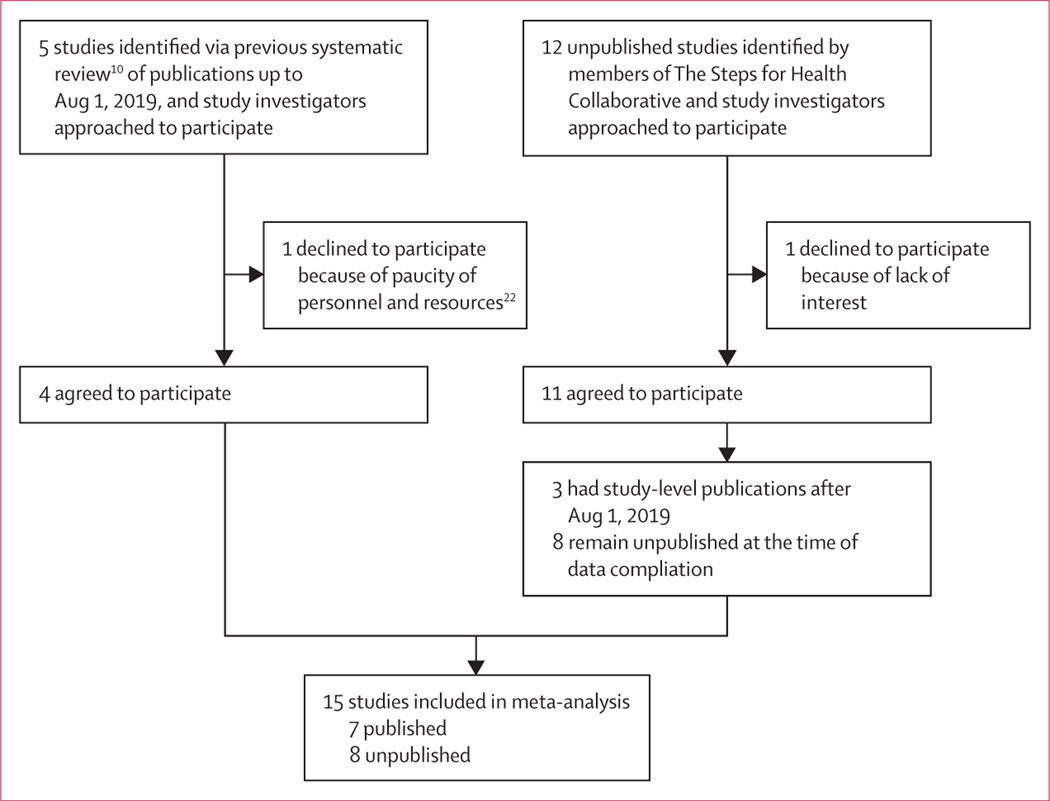
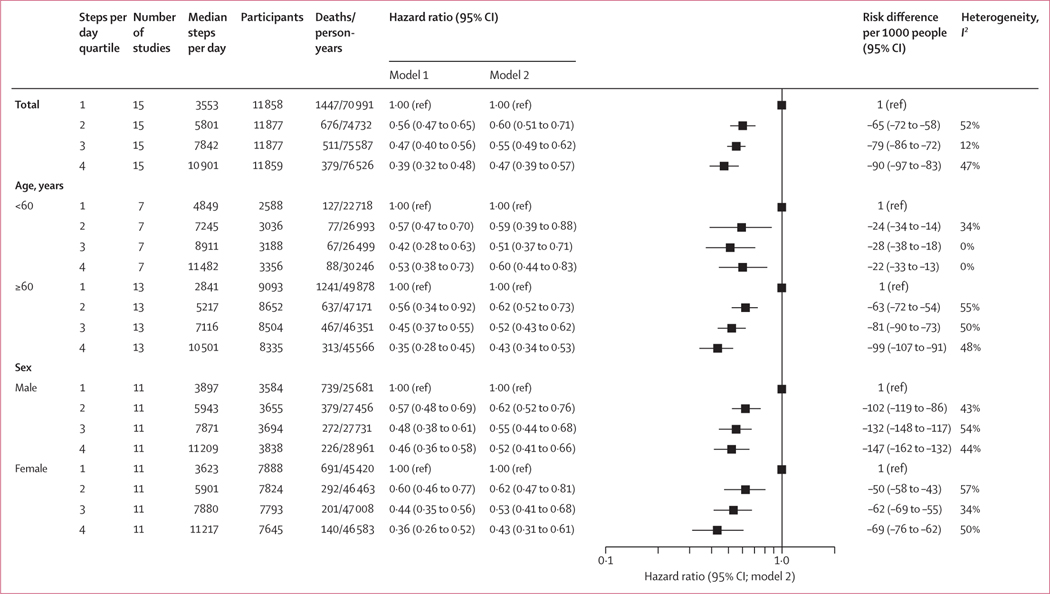
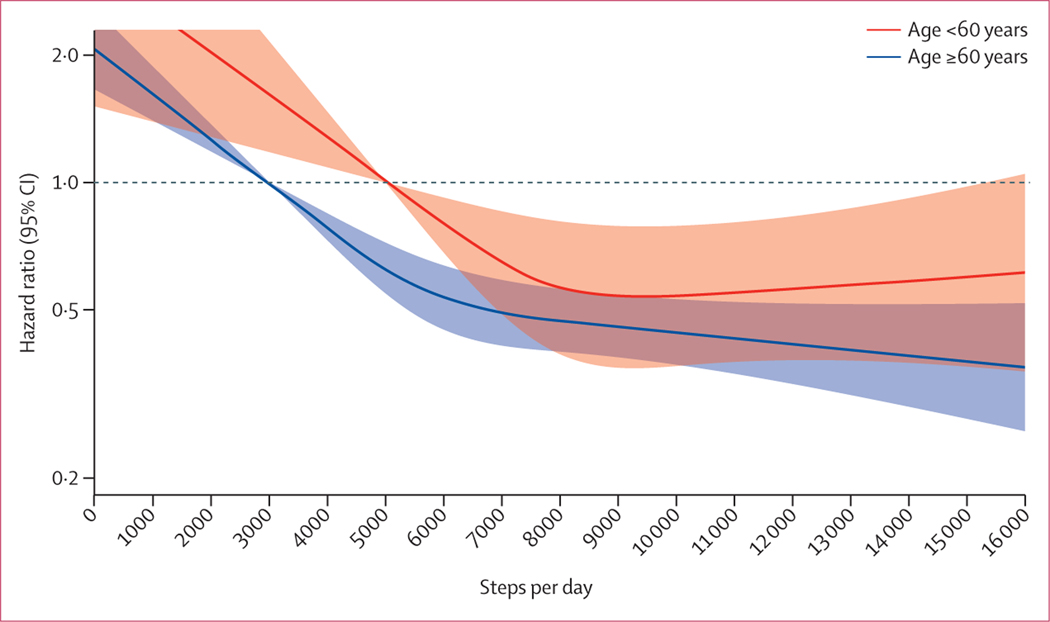
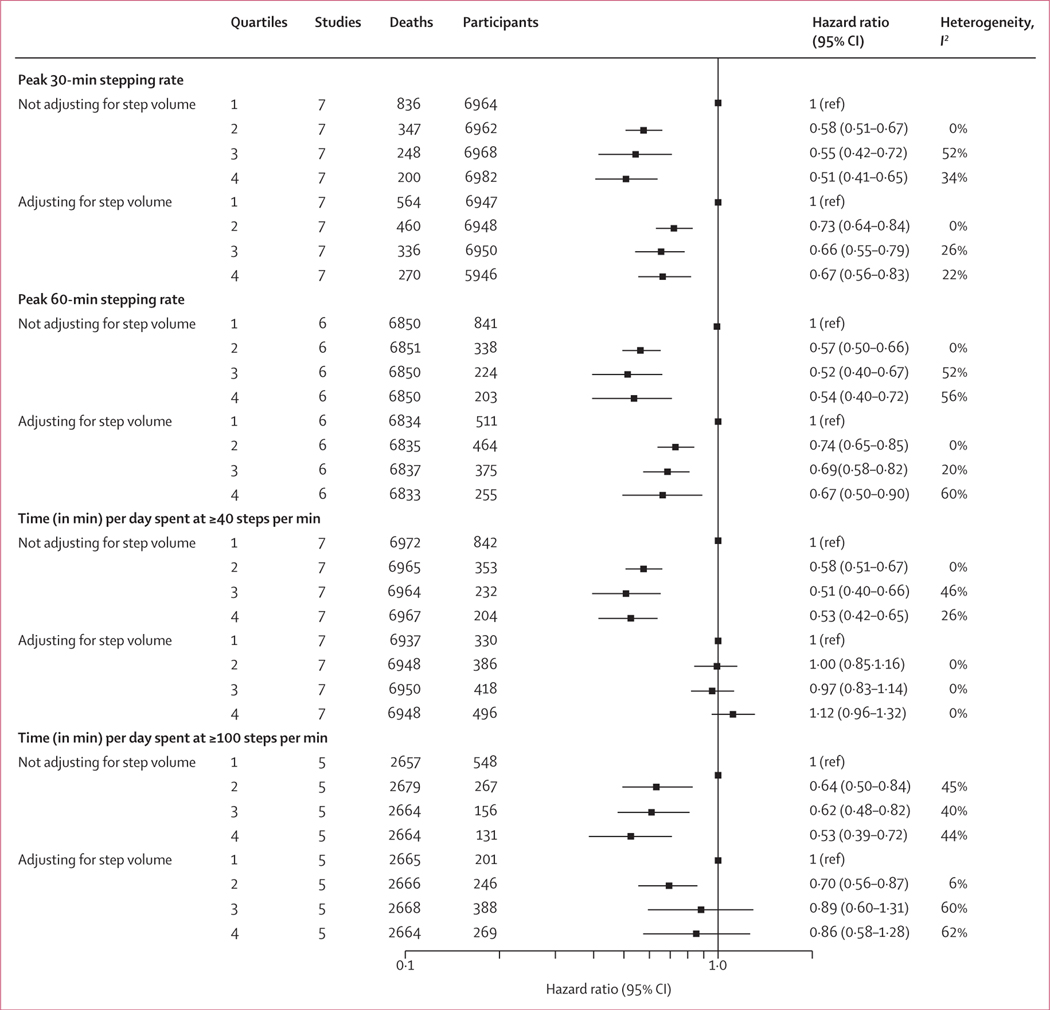
BACKGROUND: Although 10 000 steps per day is widely promoted to have health benefits, there is little evidence to support this recommendation. We aimed to determine the association between number of steps per day and stepping rate with all-cause mortality. METHODS: In this meta-analysis, we identified studies investigating the effect of daily step count on all-cause mortality in adults (aged ≥18 years), via a previously published systematic review and expert knowledge of the field. We asked participating study investigators to process their participant-level data following a standardised protocol. The primary outcome was all-cause mortality collected from death certificates and country registries. We analysed the dose-response association of steps per day and stepping rate with all-cause mortality. We did Cox proportional hazards regression analyses using study-specific quartiles of steps per day and calculated hazard ratios (HRs) with inverse-variance weighted random effects models. FINDINGS: We identified 15 studies, of which seven were published and eight were unpublished, with study start dates between 1999 and 2018. The total sample included 47 471 adults, among whom there were 3013 deaths (10·1 per 1000 participant-years) over a median follow-up of 7·1 years ([IQR 4·3-9·9]; total sum of follow-up across studies was 297 837 person-years). Quartile median steps per day were 3553 for quartile 1, 5801 for quartile 2, 7842 for quartile 3, and 10 901 for quartile 4. Compared with the lowest quartile, the adjusted HR for all-cause mortality was 0·60 (95% CI 0·51-0·71) for quartile 2, 0·55 (0·49-0·62) for quartile 3, and 0·47 (0·39-0·57) for quartile 4. Restricted cubic splines showed progressively decreasing risk of mortality among adults aged 60 years and older with increasing number of steps per day until 6000-8000 steps per day and among adults younger than 60 years until 8000-10 000 steps per day. Adjusting for number of steps per day, comparing quartile 1 with quartile 4, the association between higher stepping rates and mortality was attenuated but remained significant for a peak of 30 min (HR 0·67 [95% CI 0·56-0·83]) and a peak of 60 min (0·67 [0·50-0·90]), but not significant for time (min per day) spent walking at 40 steps per min or faster (1·12 [0·96-1·32]) and 100 steps per min or faster (0·86 [0·58-1·28]). INTERPRETATION: Taking more steps per day was associated with a progressively lower risk of all-cause mortality, up to a level that varied by age. The findings from this meta-analysis can be used to inform step guidelines for public health promotion of physical activity. FUNDING: US Centers for Disease Control and Prevention.
Overview
The claims and statistics of this paper haven’t been checked yet.
Free: it reads the open-access text and checks the first 5 claims that cite a source we can check. Create a free account to check every claim.
Integrity signals
Registry
Cites
Statistics
Figures
Verification
Claims the paper makes
The claims and statistics of this paper haven’t been checked yet.
Free: it reads the open-access text and checks the first 5 claims that cite a source we can check. Create a free account to check every claim.
Claims other papers make about this one
Each is checked against this paper’s own text: does it say what the citing paper says it does?
The source backs part of the claim, not all of it — or backs it for a different population, condition or comparison.
In the citing paper
“uncertainty exists around the strength and shape of the association of daily step count with all-cause mortality and cardiovascular mortality14,15, where recent studies have not used transparent or robustly validated free-living step counting algorithms.”
From Development and Validation of a Machine Learning Wrist-worn Step Detection Algorithm with Deployment in the UK Biobank (2023) · cites this paper as [15]
Experimental — accuracy not yet measuredThe source backs part of the claim, not all of it — or backs it for a different population, condition or comparison.
In the citing paper
“Indeed, observational evidence shows that PA levels lower than recommended threshold are already associated with reduced mortality [65,628,668], and benefits exhibit a curvilinear dose-dependency [628,668].”
From Global consensus on optimal exercise recommendations for enhancing healthy longevity in older adults (ICFSR) (2025) · cites this paper as [65]
Experimental — accuracy not yet measuredThe source backs part of the claim, not all of it — or backs it for a different population, condition or comparison.
In the citing paper
“We therefore used the residual method in which total MVPA was regressed on the bout exposure volume.The resulting residuals were independent variables in the analyses consistent with previous research assessing activity volume over a fixed time interval.20,21”
From Brief bouts of device-measured intermittent lifestyle physical activity and its association with major adverse cardiovascular events and mortality in people who do not exercise: A prospective cohort study (2023) · cites this paper as [20]
Experimental — accuracy not yet measuredThe cited source says what the claim attributes to it.
In the citing paper
“Our findings are consistent with previous literature describing associations between step counts and adverse events10,11.”
From Association of step counts over time with the risk of chronic disease in the All of Us Research Program (2022) · cites this paper as [11]
In the citing paper
“Population based data indicate that even small increases in the number of steps per day are associated with a lower risk of premature death, with the strongest effects observed at approximately 7000 to 10,000 steps per day [142,143].”
From Dietary and Behavioral Strategies for Weight Loss and Weight Loss Maintenance: A Narrative Review (2025) · cites this paper as [142]
Self-check
Percentages, sums and reported differences re-computed from the paper’s own numbers.
The self-check needs the paper’s full text.
Citations
Cites
Measuring inconsistency in meta-analyses
Higgins, J. P. T., Thompson, S. G., Deeks, J. J., & Altman, D. G. (2003) · BMJ · doi:10.1136/bmj.327.7414.557 · Cited by 63,139
Bias in meta-analysis detected by a simple, graphical test
Egger, M., Smith, G. D., Schneider, M., & Minder, C. (1997) · BMJ · doi:10.1136/bmj.315.7109.629 · Cited by 56,722
World Health Organization 2020 guidelines on physical activity and sedentary behaviour
Bull, F. C., Al-Ansari, S. S., Biddle, S., Borodulin, K., Buman, M. P., Cardon, G., Carty, C., Chaput, J.-P., Chastin, S., Chou, R., et al. (2020) · British Journal of Sports Medicine · doi:10.1136/bjsports-2020-102955 · Cited by 11,657
Self-citationExercise and Physical Activity for Older Adults
Chodzko-Zajko, W. J., Proctor, D. N., Fiatarone Singh, M. A., Minson, C. T., Nigg, C. R., Salem, G. J., & Skinner, J. S. (2009) · Medicine & Science in Sports & Exercise · doi:10.1249/mss.0b013e3181a0c95c · Cited by 5,153
Adjustment for total energy intake in epidemiologic studies
Willett, W., Howe, G., & Kushi, L. (1997) · The American Journal of Clinical Nutrition · doi:10.1093/ajcn/65.4.1220s · Cited by 3,758
Prince, S. A., Adamo, K. B., Hamel, M., Hardt, J., Connor Gorber, S., & Tremblay, M. (2008) · International Journal of Behavioral Nutrition and Physical Activity · doi:10.1186/1479-5868-5-56 · Cited by 3,162
Physical Fitness and All-Cause Mortality: A Prospective Study of Healthy Men and Women
Blair, S. N. (1989) · JAMA · doi:10.1001/jama.1989.03430170057028 · Cited by 2,658
Ekelund, U., Tarp, J., Steene-Johannessen, J., Hansen, B. H., Jefferis, B., Fagerland, M. W., Whincup, P., Diaz, K. M., Hooker, S. P., Chernofsky, A., et al. (2019) · BMJ · doi:10.1136/bmj.l4570 · Cited by 1,769
Self-citationAssociation of daily step count and step intensity with mortality among US adults
Saint-Maurice, P. F., Troiano, R. P., Bassett, D. R., Graubard, B. I., Carlson, S. A., Shiroma, E. J., Fulton, J. E., & Matthews, C. E. (2020) · JAMA · doi:10.1001/jama.2020.1382 · Cited by 660
Self-citationAssociation of Step Volume and Intensity With All-Cause Mortality in Older Women
Lee, I.-M., Shiroma, E. J., Kamada, M., Bassett, D. R., Matthews, C. E., & Buring, J. E. (2019) · JAMA Internal Medicine · doi:10.1001/jamainternmed.2019.0899 · Cited by 604
Self-citation
Cited by
Items 201–300 of 678
A Smartphone-Based Shopping Mall Walking Program and Daily Walking Steps
Matsuoka, Y., Yoshida, H., & Hanazato, M. (2024) · JAMA Network Open · doi:10.1001/jamanetworkopen.2023.53957 · Cited by 7
Spartano, N. L., Zhang, Y., Liu, C., Chernofsky, A., Lin, H., Trinquart, L., Borrelli, B., Pathiravasan, C. H., Kheterpal, V., Nowak, C., et al. (2024) · JMIR Biomedical Engineering · doi:10.2196/54631 · Cited by 7
“Experts polled were those who participated as an author in the meta-analysis of 15 international cohorts with accelerometer data published by Paluch et al [11].”
BackgroundMethodInfluentialSelf-citationMa, H., & Liu, Y. (2024) · Scientific Reports · doi:10.1038/s41598-024-77226-8 · Cited by 7
Aktar, B., Balcı, B., Boz, H. E., Ozalan, S. F., Öztura, İ., & Baklan, B. (2024) · Epilepsy & Behavior · doi:10.1016/j.yebeh.2024.110198 · Cited by 7
Cody, R., Beck, J., Brand, S., Donath, L., Faude, O., Hatzinger, M., Imboden, C., Kreppke, J.-N., Lang, U. E., Ludyga, S., et al. (2023) · Frontiers in Psychiatry · doi:10.3389/fpsyt.2022.1045158 · Cited by 7
Cassidy, B. R., Logan, S., Farley, J. A., Owen, D. B., Sonntag, W. E., & Drevets, D. A. (2023) · Frontiers in Immunology · doi:10.3389/fimmu.2023.1146690 · Cited by 7
The Physiological and Molecular Links Between Physical Activity and Brain Health: A Review
Schock, S., & Hakim, A. M. (2023) · Neuroscience Insights · doi:10.1177/26331055231191523 · Cited by 8
Reisgies, H., Shukri, A., Scheckel, B., Karasch, O., Wiesen, D., Stock, S., & Müller, D. (2023) · Social Science & Medicine · doi:10.1016/j.socscimed.2023.116341 · Cited by 8
Fan, J., Liu, Q., Dai, H., Zhou, D., Guo, Y., Xu, J., Wang, L., Hu, P., Jiang, J., Lin, X., et al. (2023) · Circulation Cardiovascular Quality and Outcomes · doi:10.1161/circoutcomes.123.010066 · Cited by 7
“19 Similarly, a cohort of old women with a mean age of 72 years found that mortality rates progressively decreased with more steps per day before leveling at ≈ 7500 steps/d. 20 Our study with a mean age of 73 years suggested a lower threshold of about 5000 steps for TAVR patients.”
BackgroundSelf-citationThe Effects of a Guided Mindful Walk on Mental Health in University Students
Burdick, A. A. V., & Camhi, S. M. (2024) · International journal of exercise science · doi:10.70252/xxrm5481 · Cited by 8
Yoon, I. M., Kim, K. J., Lee, K.-H., Yoo, D.-W., & Oh, H. (2025) · Current Therapeutic Research · doi:10.1016/j.curtheres.2025.100776 · Cited by 8
Wu, Q., Li, G., Zhang, X., Pan, Y., Chen, S., Chen, J., & He, Q. (2025) · Journal of Sports Sciences · doi:10.1080/02640414.2025.2496082 · Cited by 6
Savytska, M., Baka, O., Манжалій, Е., Kyriienko, D., Falalyeyeva, T. M., Strubchevska, O., Futornyi, S., Пастухова, В. А., Lukyantseva, H. V., Sichel, L. S., et al. (2026) · Frontiers in Endocrinology · doi:10.3389/fendo.2026.1802045 · Cited by 6
Physical Activity, Cardiorespiratory Fitness, and Atherosclerotic Cardiovascular Disease: Part 2
Franklin, B. A., & Jae, S. Y. (2024) · Pulse · doi:10.1159/000541166 · Cited by 8
Ars, J., Calderón‐Larrañaga, A., Beridze, G., Laukka, E. J., Farrés-Godayol, P., Pérez, L. M., Inzitari, M., & Welmer, A. (2024) · American Journal of Geriatric Psychiatry · doi:10.1016/j.jagp.2024.09.017 · Cited by 6
Shimoda, T., Tomida, K., Nakajima, C., Kawakami, A., & Shimada, H. (2024) · Journal of the American Medical Directors Association · doi:10.1016/j.jamda.2024.105356 · Cited by 7
Lee, Y. H., & Hwang, J.-H. (2025) · International Journal of Mental Health Promotion · doi:10.32604/ijmhp.2025.060685 · Cited by 6
Kim, M., Mansour-Assi, S. J., Mistiri, M. E., Park, J.-H., Banerjee, S., Khan, O., Torre, S. A. D. L., Higgins, M., Godino, J., Patrick, K., et al. (2025) · JMIR Research Protocols · doi:10.2196/70599 · Cited by 6
Digital Activity Markers in Chronic Inflammatory Demyelinating Polyneuropathy
Masanneck, L., Voth, J., Gmahl, N., Jendretzky, K. F., Huntemann, N., Werner, N. M., Schmidt, L., Oeztuerk, M., Quint, P., Schroeter, C. B., et al. (2025) · Annals of Clinical and Translational Neurology · doi:10.1002/acn3.70137 · Cited by 6
Zahid, S., Peng, A. W., Razavi, A. C., Yao, Z., Blumenthal, R. S., & Blaha, M. J. (2025) · American Journal of Preventive Cardiology · doi:10.1016/j.ajpc.2025.101281 · Cited by 6
“In select individuals, pharmacotherapy is needed to treat clinical obesity and reduce CVD [34,35].”
Kumar, A. (2025) · Journal of the Association of Physicians of India · doi:10.59556/japi.73.1058 · Cited by 7
Predicting recovery after stressors using step count data derived from activity monitors
Baretta, D., Koch, S., Buekers, J., García‐Aymerich, J., Knapová, L., Elavsky, S., Godino, J., Olthof, M., Lichtwarck‐Aschoff, A., Hartigh, R. J. R. D., et al. (2025) · npj Digital Medicine · doi:10.1038/s41746-025-01998-0 · Cited by 6
HONDA, K., Sekiguchi, Y., & Izumi, S. (2023) · Biomechanics · doi:10.3390/biomechanics3010010 · Cited by 6
“Daily physical activity is assessed by the number of steps per day and inactivity is associated with risk of death [1] and stroke [2], stroke-related severity [3], and prefrail status [4].”
BackgroundAaltonen, S., Urjansson, M., Varjonen, A., Vähä‐Ypyä, H., Iso‐Markku, P., Kaartinen, S., Vasankari, T. J., Kujala, U. M., Silventoinen, K., Kaprio, J. A., et al. (2023) · PLoS ONE · doi:10.1371/journal.pone.0294817 · Cited by 7
“Moreover, there is evidence that mortality is lower among those older individuals who take more than 3000 steps per day [34, 35] (13 participants in our study).”
BackgroundNiklasson, J., Fagerström, C., Backåberg, S., Lindberg, T., & Bergman, P. (2024) · BMC Geriatrics · doi:10.1186/s12877-024-04681-3 · Cited by 6
“Our findings regarding health and physical activity, in terms of increased daily steps, are consistent with those of Paluch, Bajpai [25].”
MethodResultCulverhouse, J., Hillsdon, M. M., & Pulsford, R. M. (2024) · BMC Public Health · doi:10.1186/s12889-024-17976-2 · Cited by 6
“These differences in the pattern of upright events and accumulation of steps would be expected to moderate any observed relationships between total daily steps and health outcomes [8, 14–16 , 34 ].”
BackgroundWu, S., Li, G., Shi, B., Ge, H., Chen, S., Zhang, X., & He, Q. (2024) · Digital Health · doi:10.1177/20552076241239182 · Cited by 10
Cuthbertson, C. C., Evenson, K. R., Wen, F., Moore, C. C., Howard, A. G., Di, C., Parada, H., Matthews, C. E., Manson, J. E., Buring, J. E., et al. (2024) · Preventive Medicine · doi:10.1016/j.ypmed.2024.108070 · Cited by 6
Self-citationNiu, J., Li, Y., Zhou, Q., Liu, X., Yu, P., Gao, F., Gao, X., & Wang, Q. (2024) · Aging Clinical and Experimental Research · doi:10.1007/s40520-024-02846-z · Cited by 6
“In a meta-analysis of 15 international cohorts, it was found that an increase in daily steps was associated with a gradual decrease in the risk of all-cause mortality [43 ].”
BackgroundKato, H. (2024) · Scientific Reports · doi:10.1038/s41598-024-82232-x · Cited by 6
Bianchini, E., Rinaldi, D., Carolis, L. D., Galli, S., Alborghetti, M., Hansen, C., Suppa, A., Salvetti, M., Pontieri, F. E., & Vuillerme, N. (2025) · JMIR Formative Research · doi:10.2196/63153 · Cited by 9
Meta-analysis of Per-Day Step Count and All-Cause Mortality
Isath, A. M., Virani, S. S., Wang, Z., Lavie, C. J., Naidu, S. S., Messerli, F. H., & Krittanawong, C. (2022) · The American Journal of Cardiology · doi:10.1016/j.amjcard.2022.06.056 · Cited by 7
Association of the interaction between daily step counts and frailty with disability in older adults
Watanabe, D., Yoshida, T., Watanabe, Y., Yamada, Y., Miyachi, M., & Kimura, M. (2024) · GeroScience · doi:10.1007/s11357-024-01471-y · Cited by 5
Gao, S., Zhou, X., Koffman, L. J., Wanigatunga, A. A., Schrack, J. A., Crainiceanu, C. M., & Muschelli, J. (2025) · The Journals of Gerontology Series A · doi:10.1093/gerona/glaf034 · Cited by 6
Self-citationKikuchi, H., Fukushima, N., Amagasa, S., & Inoue, S. (2025) · Medicine & Science in Sports & Exercise · doi:10.1249/mss.0000000000003693 · Cited by 5
Burnell, K., Albani, S. C., Garrett, S. L., Prinstein, M. J., & Telzer, E. H. (2026) · Journal of Adolescent Health · doi:10.1016/j.jadohealth.2025.12.251 · Cited by 5
Araszkiewicz, A., Borys, S., Broncel, M., Budzynski, A. Z., Cyganek, K., Cypryk, K., CYRANKA, K. M., Czupryniak, L., Dąbrowski, M., Dzida, G. J., et al. (2026) · Current Topics in Diabetes · doi:10.5114/ctd/219306 · Cited by 5
Shah, S., Chen, Y., owen, A., Ekegren, C. L., Talic, S., Ilić, D., & Gašević, D. (2026) · American Journal of Health Promotion · doi:10.1177/08901171261438402 · Cited by 5
Luciano, F., Crova, F., & Canella, F. (2023) · Journal of Physical Activity and Health · doi:10.1123/jpah.2022-0189 · Cited by 5
Fretts, A. M., Siscovick, D. S., Malloy, K., Sitlani, C. M., Navas‐Acién, A., Zhang, Y., Umans, J. G., Cole, S. A., Best, L. G., & Howard, B. V. (2023) · JAMA Network Open · doi:10.1001/jamanetworkopen.2023.11476 · Cited by 5
Filanowski, P. M., & Slade, E. (2023) · Sports Medicine and Health Science · doi:10.1016/j.smhs.2023.07.007 · Cited by 5
Age and Sex Differences in Physical Activity of Portuguese Adults and Older Adults
Bento, T., Mota, M. P., Vitorino, A., Monteiro, D., Cid, L., & Couto, N. (2023) · Healthcare · doi:10.3390/healthcare11233019 · Cited by 6
“More research is needed to identify the number of steps per day that should be recommended; however, data from the literature synthesis demonstrate the health potential of everyday walking for large segments of populations [22,23].”
BackgroundInfluentialAnthuber, L., Sommer, F., Wolf, S., Vlasenko, D., Hoffmann, M., Arndt, T. T., Schiele, S., Anthuber, M., & Schrempf, M. C. (2023) · BMJ Open · doi:10.1136/bmjopen-2023-076298 · Cited by 6
Karlsson, E., Hanafi, R., Brisby, H., Fors, A., Kemani, M. K., Hedman, H., Nijs, J., & Lundberg, M. (2024) · Pilot and Feasibility Studies · doi:10.1186/s40814-023-01433-9 · Cited by 5
“Since steps per day is associated with a progressively lower risk of all-cause mortality up to 6000–8000 steps per day in people over 60 years of age [17], walking is recommended directly after surgery.”
BackgroundPhysical Activity Intensity and Risk of Dementia
Brellenthin, A. G., Lee, D.-C., Lefferts, E. C., Lefferts, W. K., Dougherty, R. J., & Kim, Y. (2024) · American Journal of Preventive Medicine · doi:10.1016/j.amepre.2024.01.015 · Cited by 6
Yamamoto, N., Maruyama, K., Saito, I., Tomooka, K., Tanigawa, T., Kawamura, R., Takata, Y., & Osawa, H. (2024) · International Journal of Obesity · doi:10.1038/s41366-024-01483-w · Cited by 5
Self-citationSaavedra, J. M., Lefferts, E. C., Song, B. K., & Lee, D.-C. (2024) · Frontiers in Sports and Active Living · doi:10.3389/fspor.2024.1384845 · Cited by 5
“Furthermore, a growing body of epidemiologic evidence suggests that greater daily steps are favorably associated with a wide range of outcomes in older adulthood, including activities of daily living (17), cardiovascular disease (18), and premature mortality (19).”
BackgroundMayer, J. S., Kohlhas, L., Stermann, J., Medda, J. E., Brandt, G. A., Grimm, O., Pawley, A. D., Asherson, P. J., Sanchez, J. P., Richarte, V., et al. (2024) · European Archives of Psychiatry and Clinical Neuroscience · doi:10.1007/s00406-024-01784-1 · Cited by 5
“Third, participants showed already high physical activity before start of intervention (i.e. mean number of steps per day above the recommended criterion of 10,000) [34] and most participants had medium ( n = 56, 28”
BackgroundPhysical activity, metabolites, and breast cancer associations
Watts, E. L., Moore, S. C., Abar, L., Hong, H. G., Saint‐Maurice, P. F., O’Connell, C., Matthews, C. E., & Loftfield, E. (2024) · JNCI Journal of the National Cancer Institute · doi:10.1093/jnci/djae246 · Cited by 5
Self-citationFanaroff, A. C., Orr, J. A., Anucha, C., Kim, E., Rareshide, C. A. L., Echevarria, M., Rodarte, S., Kassabian, M., Balasian, E., Ky, B., et al. (2024) · American Heart Journal · doi:10.1016/j.ahj.2024.10.021 · Cited by 6
Physical activity, sedentary time and health – a narrative review with new insights
Ekelund, U., Tarp, J., Sánchez-Lastra, M. A., & Dalene, K. E. (2024) · Danish Medical Journal · doi:10.61409/a06240433 · Cited by 6
Self-citationNakade, T., Maeda, D., Matsue, Y., Kagiyama, N., Fujimoto, Y., Sunayama, T., Dotare, T., Jujo, K., Saito, K., Kamiya, K., et al. (2025) · European Journal of Preventive Cardiology · doi:10.1093/eurjpc/zwaf069 · Cited by 5
Predicting Post-Fracture Recovery with Smartphone Mobility Data: A Proof-of-Concept Study
Shear, B. M., Brodke, D. J., Hancock, G. R., McGlone, P. J., Demyanovich, H. K., Li, V., Bell, A. C., Okhuereigbe, D. O., Slobogean, G. P., O’Toole, R. V., et al. (2025) · Journal of Bone and Joint Surgery · doi:10.2106/jbjs.24.01305 · Cited by 6
Qin, J., Gong, Y., Hu, R., Lou, Y., Xuan, X., Wang, P., & Gong, G. (2025) · Frontiers in Public Health · doi:10.3389/fpubh.2025.1613375 · Cited by 6
Rees‐Punia, E., Masters, M., Whalen, S., Hartman, S. J., Sullivan, K. R., Westmaas, J. L., Teras, L. R., & Patel, A. V. (2025) · British Journal of Sports Medicine · doi:10.1136/bjsports-2024-109332 · Cited by 6
“34 35 This intervention can also easily be implemented at the population level with relatively low effort, and, if expanded, these small individual-level changes across an inactive population can be quite meaningful.”
Self-citationBidirectional association of daily steps with sarcopenia: a longitudinal study
Wang, Y., Wu, Z., Zhang, Y., Yang, Z., Li, C., Wei, J., Lei, G., & Zeng, C. (2025) · Annals of Medicine · doi:10.1080/07853890.2025.2537353 · Cited by 5
“The widespread availability of wearable devices equipped with step-counting features has enabled the general population to monitor their walking behaviours conveniently [8,9].”
Wieteska, M., Szmit, S., Florczyk, M., Witowicz, A., & Kurzyna, M. (2022) · International Journal of Environmental Research and Public Health · doi:10.3390/ijerph19148343 · Cited by 5
“A meta-analysis of 15 studies was observed progressively decreasing the risk of mortality among adults aged 60 years and older with an increasing number of steps per day until 6000–8000 steps per day and among adults younger than 60 years until 8000–10,000 steps per day [29].”
MethodOhkubo, H., Fujita, K., Nakano, A., Amakusa, Y., Mori, Y., Fukumitsu, K., Fukuda, S., Kanemitsu, Y., Uemura, T., Tajiri, T., et al. (2022) · Journal of Thoracic Disease · doi:10.21037/jtd-22-813 · Cited by 5
“A meta-analysis showed that the daily step count was negatively associated with the risk of all-cause mortality, up to a level that varied with age (21).”
Ohkubo, H., Fujita, K., Ito, K., Nakano, A., Horiuchi, M., Mori, Y., Fukumitsu, K., Fukuda, S., Kanemitsu, Y., Uemura, T., et al. (2023) · Internal Medicine · doi:10.2169/internalmedicine.2584-23 · Cited by 5
Haukeland-Parker, S., Jervan, Ø., Ghanima, W., Spruit, M. A., Holst, R., Tavoly, M., Gleditsch, J., & Johannessen, H. H. (2024) · Research and Practice in Thrombosis and Haemostasis · doi:10.1016/j.rpth.2024.102366 · Cited by 5
“A recent meta-analysis recommended 8000 to 10,000 steps per day as suf fi cient for reducing the risk of all-cause mortality [35].”
MethodCulverhouse, J., Hillsdon, M. M., Koster, A., Bosma, H., de Galan, B. E., Savelberg, H. H. C. M., & Pulsford, R. M. (2024) · European Review of Aging and Physical Activity · doi:10.1186/s11556-024-00343-w · Cited by 5
“Higher step volume is associated with a range of health outcomes [61], though evidence on the independent effect of step-rate is equivocal [62].”
BackgroundDaily Physical Activity in Asthma and the Effect of Mepolizumab Therapy
Panagiotou, M., Koulouris, N. G., Koutsoukou, A., & Rovina, N. (2022) · Journal of Personalized Medicine · doi:10.3390/jpm12101692 · Cited by 5
“Robust evidence shows that an increasing daily step count is associated with progressively lower mortality risk, with the risk plateauing for older adults (aged ≥ 60 years) at approximately 6000–8000 steps per day and for younger adults (aged < 60 years) at approximately 8000–10,000 steps per day [33], but only 55% of…”
BackgroundCosta, E. C., da Silva, G. O., Freire, Y. A., Kanegusuku, H., Wolosker, N., Cucato, G. G., Correia, M. D. A., & Ritti‐Dias, R. M. (2023) · Vascular Medicine · doi:10.1177/1358863x231214476 · Cited by 5
Sugawara, A. T., Pretto, L. R. D., Simis, M., Fregni, F., & Battistella, L. R. (2024) · Advances in Rehabilitation Science and Practice · doi:10.1177/27536351241261023 · Cited by 6
Mazéas, A. (2023) · theses.fr (ABES) · doi:10.70675/fee10bdcz3939z4feazbd43z0c792fd8a928 · Cited by 5
Bartosiewicz, A., Matłosz, P., Wyszyńska, J., Łuszczki, E., Oleksy, Ł., Adamska, O., Martínez‐Rodríguez, A., & Mazur, A. (2023) · Frontiers in Public Health · doi:10.3389/fpubh.2023.1300662 · Cited by 4
Association of back pain with all-cause and cause-specific mortality among older men: a cohort study
Roseen, E. J., McNaughton, D. T., Harrison, S. L., Downie, A., Øverås, C. K., Nim, C. G., Jenkins, H. J., Young, J. J., Hartvigsen, J., Stone, K. L., et al. (2024) · Pain Medicine · doi:10.1093/pm/pnae040 · Cited by 4
Jin, M., Tian, L., Yu, J. Z., Kuang, X., Fang, J., Chen, S., & Shi, H. (2025) · PeerJ · doi:10.7717/peerj.19459 · Cited by 4
“For node selection, we employed an automatic method based on the minimum Akaike Information Criterion (AIC) value to determine node locations ( Huang et al., 2022 ; Paluch et al., 2022 ).”
Rúnarsdóttir, T. R., Skírnisdóttir, S., Thors, H., Harðardóttir, H., Corral‐Jara, K. F., Klonowski, A. M., Halldorsson, T. I., Marteinsson, V., & Guðjónsdóttir, M. (2025) · Molecular Nutrition & Food Research · doi:10.1002/mnfr.70137 · Cited by 4
“Both groups were relatively physically active at Period 1, measured in steps per day and time spent in vigorous intensity, considering what is deemed enough for health benefits [65].”
Ars, J., Beridze, G., Farrés-Godayol, P., Pérez, L.-M., Inzitari, M., Calderón-Larrañaga, A., & Welmer, A.-K. (2025) · GeroScience · doi:10.1007/s11357-025-01756-w · Cited by 4
“However, strategies such as higher volume and intensity of PA, as well as shorter episodes of SB, have shown promise [5, 9, 49, 60, 61].”
Griffiths, B., Al-Ajmi, R., Clifton, I., Birch, R. J., Peckham, D. G., & Price, O. J. (2026) · European Respiratory Review · doi:10.1183/16000617.0165-2025 · Cited by 4
“…preserves functional independence, reduces the risk of falls and enhances health-related quality of life [8, 9], whereas in the context of disease, physical inactivity (assessed via daily steps) is considered a significant risk factor associated with increased morbidity and mortality [10, 11].”
Stamatakis, E., Koemel, N. A., Milton, K. E., Keadle, S. K., Florindo, A. A., Hamer, M., Hallal, P. C., & Ahmadi, M. N. (2026) · Journal of Physical Activity and Health · doi:10.1123/jpah.2026-0466 · Cited by 4
Sequeira, M., Pereira, C. R., & Alvarez, M. (2023) · Health Promotion International · doi:10.1093/heapro/daad075 · Cited by 5
Physical inactivity causes exercise resistance of fat metabolism: harbinger or culprit of disease?
Coyle, E. F. (2024) · The Journal of Physiology · doi:10.1113/jp284169 · Cited by 4
“…and causes exercise resistance appears similar to the pattern of all-cause mortality with inactivity in terms of increased mortality with decreased steps and parallel increases in PPL and reduced fat oxidation (Banach et al., 2023; Burton & Coyle, 2021; Paluch et al., 2022) (Figs 3 and 4).”
InfluentialWei, Y., Chen, Z., Sun, N., Tang, Z., Guo, H., & Zeng, C. (2024) · Chinese Journal of Traumatology · doi:10.1016/j.cjtee.2024.08.006 · Cited by 4
Guediri, A., Mandigout, S., Agbohessou, K. G., Daviet, J., & Compagnat, M. (2024) · American Journal of Physical Medicine & Rehabilitation · doi:10.1097/phm.0000000000002649 · Cited by 4
“11 Similarly, a recent meta-analysis found that walking 6000 to 10,000 steps can reduce mortality risk by 42% for older adults (>60 yrs old).”
Bloch‐Ibenfeldt, M., Demnitz, N., Gates, A. T., Garde, E., Siebner, H. R., Kjær, M., & Boraxbekk, C. (2025) · BMC Geriatrics · doi:10.1186/s12877-025-05778-z · Cited by 4
“Further, the participants also walked a high number of steps per day, which, when compared to quartile data of steps/ day in somewhat similar populations, indicates that the LISA-participants indeed had had high daily physical activity levels [54, 55].”
WEI, L., Ahmadi, M. N., Blodgett, J. M., Aguiar, E. J., Biswas, R. K., Koemel, N. A., Cruz, B. D. P., & Stamatakis, E. (2025) · Medicine & Science in Sports & Exercise · doi:10.1249/mss.0000000000003887 · Cited by 4
“…for stepping intensity, peak 30-min and 60-min cadence were inversely associated with lower risk of ACM in a large harmonized meta-analysis (5), whereas other studies limited to older women (7) and middle-aged and older adults (9) did not exhibit such an association using peak 1-min and…”
InfluentialCocoa flavanols protect endothelial function during prolonged sitting in healthy older adults
Daniele, A., Lucas, S. J. E., & Rendeiro, C. (2026) · Food & Function · doi:10.1039/d5fo02793d · Cited by 4
Cook, I. (2022) · BMC Research Notes · doi:10.1186/s13104-022-06045-9 · Cited by 5
“Given the link between step indices and health [8, 9], the exploration of step indices is warranted, especially in rural settings where step cadence data is sparse.”
BackgroundDemographic, Clinical, and Psychosocial Predictors of Exercise Adherence: The STRRIDE Trials
Collins, K. A., Huffman, K. M., Wolever, R. Q., Smith, P. J., Ross, L. M., Siegler, I. C., Jakicic, J. M., Costa, P. T., & Kraus, W. E. (2023) · Translational Journal of the American College of Sports Medicine · doi:10.1249/tjx.0000000000000229 · Cited by 4
“Participants answered the following questions (question number in parentheses) regarding physical function: “Over the past four weeks, how satisfied have you beenwith (1) your overall level of physical fitness? (2) the muscle strength in your legs? (3) your level of endurance or stamina? (5) your overall level of ener…”
BackgroundSelf-citationYin, S., Du, L., He, Q., Pan, Y., Li, T., Ren, X., Chen, S., & Zhang, X. (2023) · Preventive Medicine · doi:10.1016/j.ypmed.2023.107722 · Cited by 4
Chen, S., Yang, C., Hyun, J., & Ku, P. (2023) · Psychology of sport and exercise · doi:10.1016/j.psychsport.2023.102561 · Cited by 5
Timmins, I. R., Zaccardi, F., Yates, T. E., & Dudbridge, F. (2024) · Scientific Reports · doi:10.1038/s41598-024-60398-8 · Cited by 4
“Fourth, our approach assumes a linear relationship between walking pace and cardiovascular risk, though it is plausible that the true dose–response is curvilinear with risk reductions plateauing at the highest levels of walking pace 61 , consistent with other physical activity measures 62,63 .”
Nawrin, S. S., Inada, H., Momma, H., & Nagatomi, R. (2024) · Journal of Activity Sedentary and Sleep Behaviors · doi:10.1186/s44167-024-00059-3 · Cited by 5
“A recent meta-analysis reported that taking more steps per day was associated with lower mortality risk, where the risk plateaued at approximately 6,000– 8,000 steps or 8,000–10,000 steps per day for older ( ≥ 60 years) or younger adults ( 60 years), respectively [15].”
Kurita, O. (2024) · Journal of the City Planning Institute of Japan · doi:10.11361/journalcpij.59.1155 · Cited by 4
Guo, T., Zhou, Y., Yang, G., Zhong, A., Pan, X., Pu, Y., Simons, M., Sheng, L., & Chai, X. (2025) · BMC Public Health · doi:10.1186/s12889-024-21216-y · Cited by 4
Physical Activity, Steps, and Cardiovascular Disease: A Literature Review
Saldana, G., Liu, L. L., & German, C. A. (2025) · Heart and Mind · doi:10.4103/hm.hm-d-24-00094 · Cited by 4
Scheffey, K., Aronson, J., Goncalves, Y., Greysen, R., Iwu, A., Kwong, P. L., Nezir, F., Small, D. S., & Glanz, K. (2025) · Contemporary Clinical Trials · doi:10.1016/j.cct.2025.107909 · Cited by 5
“A meta-analysis of cohort studies showed progressive benefits of increasing PA up to 8000–10,000 steps/day for adults younger than 60 and up to 6000–8000 steps/day for older adults [7].”
Russell, L. B., Volpp, K. G. M., Patel, M. S., Chokshi, N. P., Coratti, S., Farraday, D., Norton, L. A., Rareshide, C. A. L., Zhu, J., Klaiman, T. A., et al. (2025) · Circulation Cardiovascular Quality and Outcomes · doi:10.1161/circoutcomes.124.011839 · Cited by 4
Moua, T., & Benzo, R. (2025) · Expert Review of Respiratory Medicine · doi:10.1080/17476348.2025.2539540 · Cited by 4
“For example, increasing mean steps per day has been associated with improved mortality across healthy and chronically ill patients [100–103], including ILD as described in one recent meta-analysis [104], and may serve as an easily measurable and approachable endpoints long after the PR intervention…”
In Vitro Evaluation of Hemiarthroplasty Bearing Materials: A Scoping Review (Part I)
Marinò, V., Vecchi, F. D., Koya, T., Begin, L. M., Moore, D. C., Crisco, J. J., & Wimmer, M. A. (2025) · Journal of Orthopaedic Research® · doi:10.1002/jor.70026 · Cited by 6
Dinets, A., Gorobeiko, M., Zdorna, V. V., Hoperia, V., & Lovin, A. (2022) · INTERNATIONAL JOURNAL OF ENDOCRINOLOGY (Ukraine) · doi:10.22141/2224-0721.18.3.2022.1161 · Cited by 4
Dalal, J. J., Almahmeed, W. A., Krittayaphong, R., Nicholls, S. J., Soomro, K., & Yeo, K. K. (2023) · Journal of Asian Pacific Society of Cardiology · doi:10.15420/japsc.2022.24 · Cited by 7
Hanai, T., Nishimura, K., Unome, S., Miwa, T., Nakahata, Y., Imai, K., Suetsugu, A., Takai, K., & Shimizu, M. (2023) · Journal of Gastroenterology · doi:10.1007/s00535-023-02047-x · Cited by 4
“The recommended number of daily steps for general health promotion is 10,000 [21], but that for patients with CLD specifically is unknown and warrants further study.”
Get up, stand up ! Ce que les tests de lever de chaise nous disent de l’insuffisance respiratoire
Delorme, M., & Bonnevie, T. (2024) · Revue des Maladies Respiratoires · doi:10.1016/j.rmr.2024.06.003 · Cited by 3
Buchan, D. S. (2024) · Journal of Sports Sciences · doi:10.1080/02640414.2024.2404784 · Cited by 3
“Since then, several studies have reported a positive association between increased daily step counts and lower all-cause mortality (Del Pozo Cruz et al., 2022; Hall et al., 2020; Lee et al., 2019; Paluch et al., 2022; Saint-Maurice et al., 2020).”
Impact of Home-Based Cardiac Rehabilitation on Physical Function, Outcomes, and Costs
MYERS, J. N., Owoc, K., Fonda, H., Chan, K., Oo, T. Z., Nallamshetty, S., & Nguyen, P. K. P. (2025) · Journal of Cardiopulmonary Rehabilitation and Prevention · doi:10.1097/hcr.0000000000000931 · Cited by 3
Greenwood-Hickman, M. A., Zhu, W., Idu, A., Harrington, L. B., McCurry, S. M., LaCroix, A. Z., Shaw, P. A., & Rosenberg, D. E. (2025) · International Journal of Environmental Research and Public Health · doi:10.3390/ijerph22050704 · Cited by 3
Vaishnav, A. G., & Desai, S. (2025) · Annals of Indian Academy of Neurology · doi:10.4103/aian.aian_156_25 · Cited by 5
Metadata
- Authors
- Paluch, A. E., Bajpai, S., Bassett, D. R., Carnethon, M. R., Ekelund, U., Evenson, K. R., Galuska, D. A., Jefferis, B. J., Kraus, W. E., Lee, I.-M., Matthews, C. E., Omura, J. D., Patel, A. V., Pieper, C. F., Rees-Punia, E., Dallmeier, D., Klenk, J., Whincup, P. H., Dooley, E. E., Pettee Gabriel, K., Palta, P., Pompeii, L. A., Chernofsky, A., Larson, M. G., Vasan, R. S., Spartano, N., Ballin, M., Nordström, P., Nordström, A., Anderssen, S. A., Hansen, B. H., Cochrane, J. A., Dwyer, T., Wang, J., Ferrucci, L., Liu, F., Schrack, J., Urbanek, J., Saint-Maurice, P. F., Yamamoto, N., Yoshitake, Y., Newton, R. L., Yang, S., Shiroma, E. J., & Fulton, J. E.
- Affiliations
- University of Massachusetts Amherst (US)
- University of Tennessee at Knoxville (US)
- Northwestern University (US)
- Norwegian Institute of Public Health (NO)
- University of North Carolina at Chapel Hill (US)
- Centers for Disease Control and Prevention (US)
- University College London (GB)
- Duke University (US)
- Brigham and Women's Hospital (US)
- Division of Cancer Epidemiology and Genetics (US)
- American Cancer Society (US)
- Duke Medical Center (US)
- Boston University (US)
- Universität Ulm (DE)
- University of London (GB)
- University of Alabama at Birmingham (US)
- Columbia University Irving Medical Center (US)
- Baylor College of Medicine (US)
- Umeå University (SE)
- UiT The Arctic University of Norway (NO)
- University of Tasmania (AU)
- Murdoch Children's Research Institute (AU)
- National Institute on Aging (US)
- Johns Hopkins University (US)
- Ehime University (JP)
- Meio University (JP)
- Pennington Biomedical Research Center (US)
- Corresponding author
- Paluch, Amanda E
- ORCID
- Paluch, Amanda E
- Bajpai, Shivangi
- Bassett, David R
- Carnethon, Mercedes R
- Ekelund, Ulf
- Evenson, Kelly R
- Jefferis, Barbara J
- Kraus, William E
- Lee, I-Min
- Matthews, Charles E
- Omura, John D
- Patel, Alpa V
- Pieper, Carl F
- Dallmeier, Dhayana
- Klenk, Jochen
- Whincup, Peter H
- Dooley, Erin E
- Palta, Priya
- Pompeii, Lisa A
- Chernofsky, Ariel
- Larson, Martin G
- Vasan, Ramachandran S
- Spartano, Nicole
- Ballin, Marcel
- Nordström, Peter
- Nordström, Anna
- Anderssen, Sigmund A
- Hansen, Bjørge H
- Dwyer, Terence
- Wang, Jing
- Ferrucci, Luigi
- Liu, Fangyu
- Schrack, Jennifer
- Urbanek, Jacek
- Yamamoto, Naofumi
- Newton, Robert L
- Yang, Shengping
- Shiroma, Eric J
- Fulton, Janet E
- Venue
- The Lancet Public Health
- Publisher
- Elsevier BV
- Published
- 2022-03
- Volume
- 7
- Issue
- 3
- Pages
- e219-e228
- ISSN
- 2468-2667 (ISSN-L)
- PMC
- PMC9289978
- OpenAlex
- W4214876227
- Semantic Scholar
- d39b6ce94ba2a2630c12e61d9900c34f001eb731
- Cited by
- 582
- References
- 43
- Citations by year
- 2026: 100 · 2025: 152 · 2024: 155 · 2023: 120 · 2022: 54
- FWCI
- 16.49
- Type
- journal article
- Language
- en
- Open access
- gold
- doi.org
- Licence
- cc-by-nc-nd
- www.elsevier.com/tdm/userlicense/1.0/ (tdm)
- www.elsevier.com/legal/tdmrep-license (tdm)
- creativecommons.org/licenses/by-nc-nd/4.0/ (vor)
- Locations
- The Lancet Public Health (publishedVersion, cc-by-nc-nd)
- PubMed (publishedVersion)
- St George's Online Research Archive (St George's University of London) (acceptedVersion)
- PubMed Central (acceptedVersion, cc-by-nc-nd)
- Civil War Book Review (submittedVersion)
- DiVA at Umeå University (Umeå University) (submittedVersion, other-oa)
- DOAJ (DOAJ: Directory of Open Access Journals) (submittedVersion, cc-by-sa)
- UCL Discovery (University College London) (submittedVersion)
- NORA - Norwegian Open Research Archives (submittedVersion, other-oa)
- Minerva Access (University of Melbourne) (submittedVersion, cc-by)
- NORA - Norwegian Open Research Archives (submittedVersion, cc-by-nc-nd)
- Funders
- U.S. Department of Transportation
- Centers for Disease Control and Prevention
- Robert Wood Johnson Foundation
- National Institute on Aging
- American College of Sports Medicine
- North Carolina Department of Transportation
- National Institutes of Health
- British Heart Foundation
- National Heart, Lung, and Blood Institute
- Deutsche Forschungsgemeinschaft
- Topics
- Health Sciences › Medicine › Public Health, Environmental and Occupational Health › Physical Activity and Health
- Health Sciences › Medicine › Physiology (medical) › Cardiovascular and exercise physiology
- Social Sciences › Transportation › Urban Transport and Accessibility
- Keywords
- daily step count, stepping rate, all-cause mortality, physical activity, dose-response relationship, adults, older adults, mortality risk, physical activity guidelines, cohort studies, restricted cubic splines, publication bias, risk of bias assessment, subgroup analysis, sex differences, age differences, country differences
- MeSH terms
- Adolescent, Adult, Aged, Humans, Middle Aged, Exercise, Proportional Hazards Models, Walking
About these checks
Registry, retraction, Cites and statistics results are computed, not judged, with one exception: a printed reference that no index lists is read once by a model before it counts as a citation error. Claims are extracted by a model and kept only when their quote appears verbatim in the text; each cited source is then checked, with a model’s help, for whether it says what the claim relies on. Those verdicts can be wrong — read the claim’s quote and the cited source before relying on one.
Statistics and arithmetic are recomputed, not judged.
Confidence bands are shown only for fields calibrated on our annotated test set. None is calibrated yet, so no band is shown.
What counts as a claim ›How we measure confidence ›How we check this ›
Are you an author, or do you see a problem with this page? Request a review
Data sources
Bibliographic data: Semantic Scholar, OpenAlex, Crossref.
Contains information from the Semantic Scholar Academic Graph Datasets, made available under the ODC Attribution License (ODC-BY 1.0).
Semantic Scholar’s data is described in: Kinney, R., et al. (2023). The Semantic Scholar Open Data Platform. arXiv:2301.10140.
