

Effectiveness of wearable activity trackers to increase physical activity and improve health: a systematic review of systematic reviews and meta-analyses.
Open accessThe DOI matches its Crossref record; 80 of the 80 references it cites were found in a registry or an index; 32 of the 50 sources its claims cite were checked for support.
Abstract
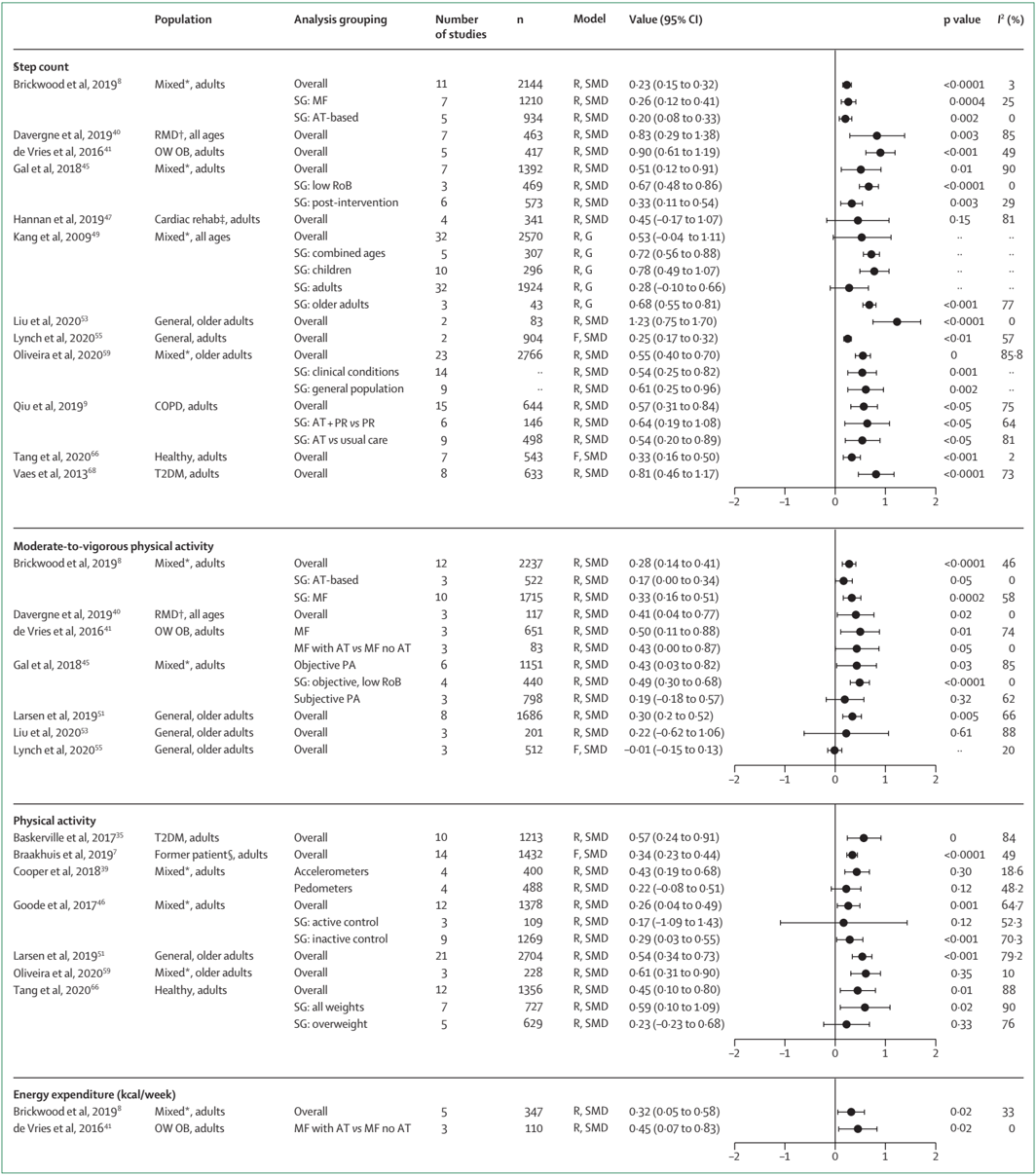
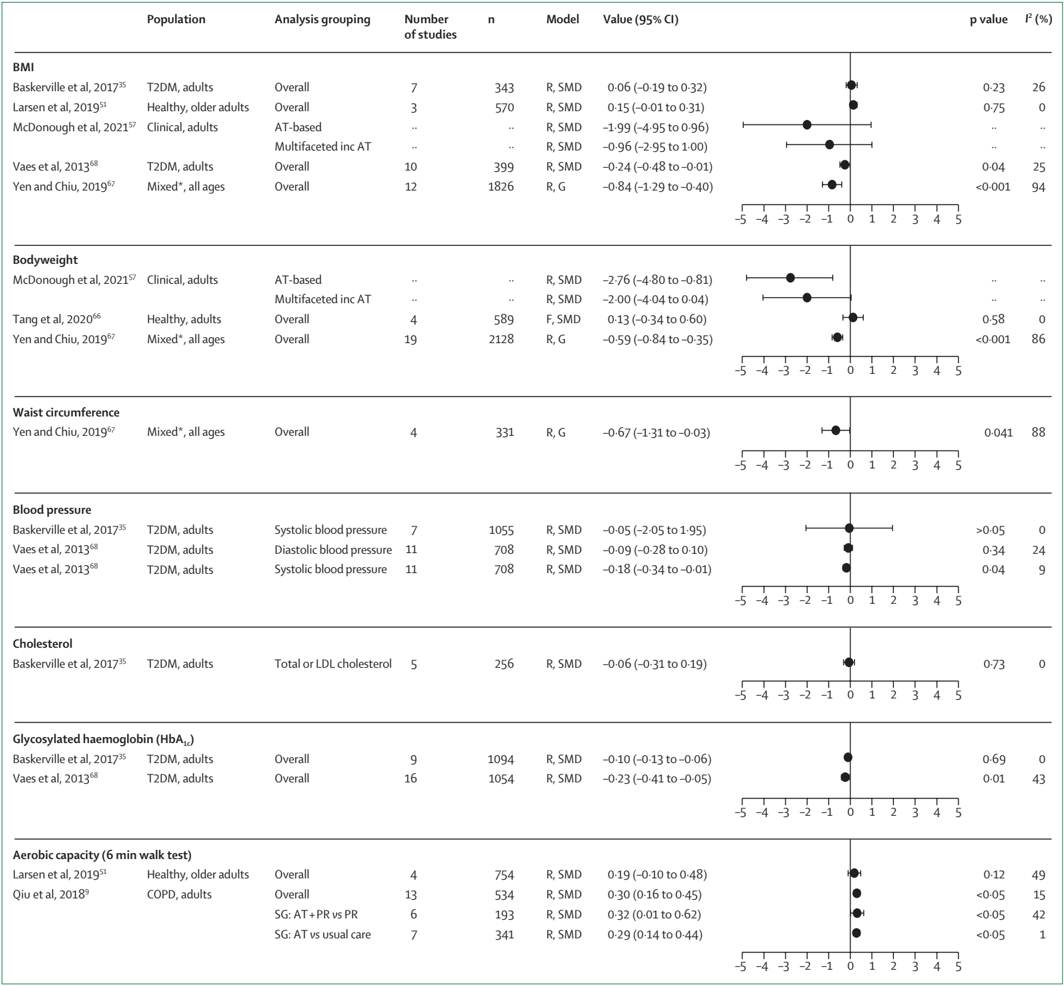
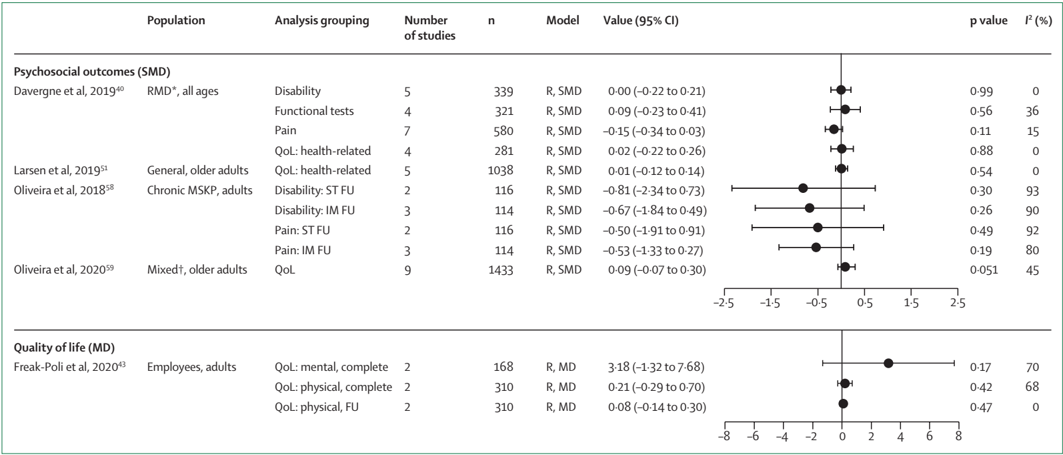
Wearable activity trackers offer an appealing, low-cost tool to address physical inactivity. This systematic review of systematic reviews and meta-analyses (umbrella review) aimed to examine the effectiveness of activity trackers for improving physical activity and related physiological and psychosocial outcomes in clinical and non-clinical populations. Seven databases (Embase, MEDLINE, Ovid Emcare, Scopus, SPORTDiscus, the Cochrane Library, and Web of Science) were searched from database inception to April 8, 2021. Systematic reviews of primary studies using activity trackers as interventions and reporting physical activity, physiological, or psychosocial outcomes were eligible for inclusion. In total, 39 systematic reviews and meta-analyses were identified, reporting results from 163 992 participants spanning all age groups, from both healthy and clinical populations. Taken together, the meta-analyses suggested activity trackers improved physical activity (standardised mean difference [SMD] 0·3-0·6), body composition (SMD 0·7-2·0), and fitness (SMD 0·3), equating to approximately 1800 extra steps per day, 40 min per day more walking, and reductions of approximately 1 kg in bodyweight. Effects for other physiological (blood pressure, cholesterol, and glycosylated haemoglobin) and psychosocial (quality of life and pain) outcomes were typically small and often non-significant. Activity trackers appear to be effective at increasing physical activity in a variety of age groups and clinical and non-clinical populations. The benefit is clinically important and is sustained over time. Based on the studies evaluated, there is sufficient evidence to recommend the use of activity trackers.
Overview
CoChat Summary
TL;DR
This umbrella review of 39 systematic reviews and meta-analyses found that wearable activity trackers increase physical activity and improve some body-composition and fitness outcomes across clinical and non-clinical populations. Effects on other physiological and psychosocial outcomes were generally small and often non-significant.
Key findings
- Activity trackers improved physical activity (SMD 0.3–0.6), body composition (SMD 0.7–2.0), and fitness (SMD 0.3), equating to approximately 1800 extra steps per day, 40 min per day more walking, and about 1 kg reduction in bodyweight.
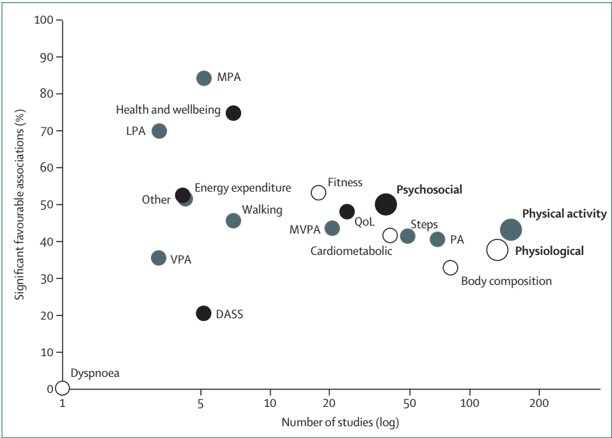
- Across all narratively synthesised studies, 41% showed significant favourable associations, 57% non-significant associations, and 3% significant unfavourable associations.
- Effects for blood pressure, cholesterol, glycosylated haemoglobin, quality of life, and pain were typically small and often non-significant; bodyweight, waist circumference, BMI, and aerobic capacity had the strongest evidence for improvement.
- The 39 reviews included 163,992 participants (abstract) and 390 unique component studies; corrected covered area was 2.3%, indicating slight overlap.
Methods
- Umbrella review reported per PRISMA and prospectively registered on PROSPERO (CRD42021246494); seven databases were searched from inception to April 8, 2021.
- Eligible studies were systematic reviews of experimental studies using wearable activity trackers as an intervention in any human population and reporting physical activity, physiological, or psychosocial outcomes; 39 reviews were included.
- Because of overlap among component studies, a meta-analysis of meta-analyses was not appropriate; findings were narratively synthesised with forest plots, AMSTAR 2 risk-of-bias appraisal, corrected covered area, and subgroup/sensitivity analyses.
Limitations
- The paper states that any umbrella review is limited by the included systematic reviews; populations were not exhaustive, most reviews were graded low or critically low confidence by AMSTAR 2, and a wide range of specific outcome metrics were used.
- The paper states that some included reviews contained some studies with inappropriate designs, which would probably underestimate effect sizes, and that few reviews examined wearable activity trackers alone.
- The paper states that most component randomised controlled trials were done in high-income countries, no systematic reviews addressed activity-tracker interventions in populations with mental health illnesses, and longer-term studies on physiological and broader psychosocial outcomes are needed.
Model-written summary. Check it against the paper before relying on it.
Integrity signals
Registry
Cites
Statistics
Figures
Verification
Claims the paper makes
18 Valid · 2 Not valid · 17 Not checked · 86 Own results and interpretations
Some cited sources support this claim and some don’t — read each source’s verdict below.
In the paper
“These improvements are relatively strong when considered in the broader field of physical activity interventions.”
§ Effectiveness of wearable activity trackers to increase physical activity and improve health: a systematic review of systematic reviews and meta-analyses > Discussion
What the sources say
- Partly supportedcites [69] Watson A, Timperio A, Brown H, Best K, Hesketh KD. Effect of classroom-based physical activity interventions on academic and physical activity outcomes: a systematic review and meta-analysis. Int J Behav Nutr Phys Act 2017; 14: 114. sourceExperimental — accuracy not yet measured
The Results (Academic-related outcomes; page unavailable) report improvements in on-task behaviour and some measures of academic achievement after classroom-based physical activity. Neither those results nor the Limitations section compares the size of these improvements with effects in the broader field of physical activity interventions, so the relative-strength claim is unsupported. (LLM, conf=0.78)
- Disputedcites [70] Conn VS, Hafdahl AR, Cooper PS, Brown LM, Lusk SL. Meta-analysis of workplace physical activity interventions. Am J Prev Med 2009; 37: 330-39. sourceExperimental — accuracy not yet measured
The Discussion describes the physical activity, fitness, and health benefits as modest, not relatively strong. It also reports that the physical activity effect was similar to one prior worksite synthesis and smaller than another; our copy provides no page number for these passages. (LLM, conf=0.87)
Checked by a reasoning model — may be wrong.
boosted- Asserted: passes — The authors put it forward as true.
- Checkable: passes — It can be checked against evidence.
- Load-bearing: passes — The paper’s conclusions depend on it.
- Based: passes — The paper gives a reason why it holds.
- Partly supported
Every source the paper cites for this claim was checked and supports it.
In the paper
“their use has been associated with increased physical activity.[7][8][9]”
§ Effectiveness of wearable activity trackers to increase physical activity and improve health: a systematic review of systematic reviews and meta-analyses > Introduction
What the sources say
- Supportedcites [7] Braakhuis HEM, Berger MAM, Bussmann JBJ. Effectiveness of healthcare interventions using objective feedback on physical activity: a systematic review and meta-analysis. J Rehabil Med 2019; 51: 151-59. source
The Discussion (page unavailable) states that the review's findings support an increase in physical activity with objective feedback from wearable monitors. The claim says “associated with,” rather than attributing the increase to trackers alone; the reviewed healthcare interventions often included other strategies. (LLM, conf=0.90)
- Supportedcites [8] Brickwood KJ, Watson G, O'Brien J, Williams AD. Consumer-based wearable activity trackers increase physical activity participation: systematic review and meta-analysis. JMIR Mhealth Uhealth 2019; 7: e11819. source
The Discussion’s “Physical Activity Participation” section reports significant improvements in daily steps, moderate-to-vigorous physical activity, and energy expenditure for participants in interventions that included a consumer-based wearable activity tracker, compared with controls. The paper notes that the quality of evidence was low or very low, but the citing sentence’s cautious wording—“associated with”—is consistent with its findings. (LLM, conf=0.93)
- Supportedcites [9] Qiu S, Cai X, Wang X, et al. Using step counters to promote physical activity and exercise capacity in patients with chronic obstructive pulmonary disease: a meta-analysis. Ther Adv Respir Dis 2018; 12: 1753466618787386. source
The Results section (‘Step counter use and physical activity’) reports that, across 15 randomized trials in patients with COPD, use of step counters significantly increased physical activity compared with controls. The Introduction identifies step counters as wearable devices that monitor physical activity, so the paper supports the stated association for this type of activity tracker. (LLM, conf=0.91)
plainstates an association- Asserted: passes — The authors put it forward as true.
- Checkable: passes — It can be checked against evidence.
- Load-bearing: passes — The paper’s conclusions depend on it.
- Based: passes — The paper gives a reason why it holds.
- Supported
Every source the paper cites for this claim was checked and supports it.
In the paper
“Wearable activity trackers promote behaviourchange techniques, such as self-monitoring and goal setting, 6”
§ Effectiveness of wearable activity trackers to increase physical activity and improve health: a systematic review of systematic reviews and meta-analyses > Introduction
What the sources say
- Supportedcites [6] Lyons EJ, Lewis ZH, Mayrsohn BG, Rowland JL. Behavior change techniques implemented in electronic lifestyle activity monitors: a systematic content analysis. J Med Internet Res 2014; 16: e192. source
The Results section reports that goal-setting and self-monitoring were found in all the activity-monitor systems studied. This supports the claim that wearable activity trackers provide these behaviour-change techniques. (LLM, conf=0.93)
plainstates a cause- Asserted: passes — The authors put it forward as true.
- Checkable: passes — It can be checked against evidence.
- Load-bearing: passes — The paper’s conclusions depend on it.
- Based: passes — The paper gives a reason why it holds.
- Supported
The cited sources support only part of this claim — read each source’s verdict below.
In the paper
“benefits for LDL cholesterol in populations of mixed disease (mean difference -0•32 mmol/L, 95% CI -0•51 to -0•12; appendix p 32), 42”
§ Effectiveness of wearable activity trackers to increase physical activity and improve health: a systematic review of systematic reviews and meta-analyses > Results according to risk of bias and population subgroups
What the sources say
- Partly supportedcites [42] Franssen WMA, Franssen GHLM, Spaas J, Solmi F, Eijnde BO. Can consumer wearable activity tracker-based interventions improve physical activity and cardiometabolic health in patients with chronic diseases? A systematic review and meta-analysis of randomised controlled trials. Int J Behav Nutr Phys Act 2020; 17: 57. sourceExperimental — accuracy not yet measured
The Results (Physical activity and cardiometabolic health; page unavailable) report a significant LDL-cholesterol reduction in participants with chronic diseases. However, the reported mean difference is −5.70 mg/dL (95% CI −9.24 to −2.15), approximately −0.15 mmol/L (95% CI −0.24 to −0.06), not the claimed −0.32 mmol/L (95% CI −0.51 to −0.12). (LLM, conf=0.90)
plainstates a cause- Asserted: passes — The authors put it forward as true.
- Checkable: passes — It can be checked against evidence.
- Load-bearing: passes — The paper’s conclusions depend on it.
- Based: passes — The paper gives a reason why it holds.
- Partly supported
The cited sources support only part of this claim — read each source’s verdict below.
In the paper
“They showed that the multifaceted interventions yielded effects around 50% larger than those using wearable activity trackers alone.”
§ Effectiveness of wearable activity trackers to increase physical activity and improve health: a systematic review of systematic reviews and meta-analyses > Review
What the sources say
- Partly supportedcites [8] Brickwood KJ, Watson G, O'Brien J, Williams AD. Consumer-based wearable activity trackers increase physical activity participation: systematic review and meta-analysis. JMIR Mhealth Uhealth 2019; 7: e11819. sourceExperimental — accuracy not yet measured
The Discussion (Physical Activity Participation; page unavailable) says multifaceted interventions had larger effects on physical activity participation than wearable-based interventions when each was compared with controls. It does not report an effect around 50% larger; the Results give MVPA effect sizes of 0.33 and 0.17, respectively. The comparison is therefore supported, but the claimed magnitude is not. (LLM, conf=0.88)
plainstates a cause- Asserted: passes — The authors put it forward as true.
- Checkable: passes — It can be checked against evidence.
- Load-bearing: unclear — It is unclear whether the paper’s conclusions depend on it.
- Based: passes — The paper gives a reason why it holds.
- Partly supported
57 more claims
Create a free account to see all 123 claims and every source verdict.
- It may state two separate claims as one. 49
- Probably not a substantial claim. 19
Claims other papers make about this one
Each is checked against this paper’s own text: does it say what the citing paper says it does?
The source backs part of the claim, not all of it — or backs it for a different population, condition or comparison.
In the citing paper
“Additional tools such as wearable activity trackers can encourage increased physical activity of an additional 1800 steps per day on average, or 0.5 to 1.5 kg of weight loss.76”
From Obesity Management in Adults: A Review (2023) · cites this paper as [76]
Experimental — accuracy not yet measuredThe source backs part of the claim, not all of it — or backs it for a different population, condition or comparison.
In the citing paper
“An umbrella review found little evidence that PA trackers improve HbA1c in people with T2D.15”
From Mobile Health Biometrics to Enhance Exercise and Physical Activity Adherence in Type 2 Diabetes (MOTIVATE-T2D): a decentralised feasibility randomised controlled trial delivered across the UK and Canada (2025) · cites this paper as [15]
Experimental — accuracy not yet measuredThe cited source says what the claim attributes to it.
In the citing paper
“Evidence from randomised controlled trials (RCTs) and systematic reviews indicates that fitness trackers are effective at increasing physical activity, as measured by daily steps and minutes of moderate-to-vigorous physical activities (MVPA) [17,24,25].”
From Economic evaluation of wearable fitness trackers versus metformin for preventing type 2 diabetes in the UK population (2025) · cites this paper as [25]
The cited source says what the claim attributes to it.
In the citing paper
“A systematic review of meta-analyses concludes that interventions using wearable devices increased step counts on average by around 1800 steps per day, walking time by about 40 min per day, and MVPA by nearly 6 min per day [25].”
From Economic evaluation of wearable fitness trackers versus metformin for preventing type 2 diabetes in the UK population (2025) · cites this paper as [25]
The cited source says what the claim attributes to it.
In the citing paper
“However, the effects of increasing PA via the use of PA trackers on outcomes relevant to the clinical management of T2D are unclear.”
2 more claims about this paper
Create a free account to see every claim other papers make about this one.
Self-check
Percentages, sums and reported differences re-computed from the paper’s own numbers.
Each contradiction between two passages listed here was confirmed by an independent check.
Rated minor: it would not touch a result — a value no result rests on, a p-value that stays on the same side of the significance level, or a conflict that is clerical, resolved elsewhere in the paper, or outside its own findings.
In the paper
§ Effectiveness of wearable activity trackers to increase physical activity and improve health: a systematic review of systematic reviews and meta-analyses > Results according to risk of bias and population subgroups
“the meta-analysis by Larsen and colleagues 51 found an effect size of 0•34”
§ Effectiveness of wearable activity trackers to increase physical activity and improve health: a systematic review of systematic reviews and meta-analyses > References
“51. Kirk MA, Amiri M, Pirbaglou M, Ritvo P. Wearable technology and physical activity behavior change in adults with chronic cardiometabolic disease: a systematic review and meta-analysis.”
Rated minor: it would not touch a result — a value no result rests on, a p-value that stays on the same side of the significance level, or a conflict that is clerical, resolved elsewhere in the paper, or outside its own findings.
In the paper
§ Effectiveness of wearable activity trackers to increase physical activity and improve health: a systematic review of systematic reviews and meta-analyses > Abstract
“In total, 39 systematic reviews and meta-analyses were identified, reporting results from 163 992 participants”
§ Effectiveness of wearable activity trackers to increase physical activity and improve health: a systematic review of systematic reviews and meta-analyses > Review
“The volume of included studies investigating the efficacy of wearable trackers is large-39 systematic reviews and 390 component experimental studies covering 163 841 participants (not accounting for overlap).”
Citations
Cites
Liberati, A., Altman, D. G., Tetzlaff, J., Mulrow, C., Gøtzsche, P. C., Ioannidis, J. P. A., Clarke, M., Devereaux, P. J., Kleijnen, J., & Moher, D. (2009) · PLoS Medicine · doi:10.1371/journal.pmed.1000100 · Cited by 28,164
Liberati, A., Altman, D. G., Tetzlaff, J., Mulrow, C., Gotzsche, P. C., Ioannidis, J. P. A., Clarke, M., Devereaux, P. J., Kleijnen, J., & Moher, D. (2009) · BMJ · doi:10.1136/bmj.b2700 · Cited by 17,648
Shea, B. J., Reeves, B. C., Wells, G., Thuku, M., Hamel, C., Moran, J., Moher, D., Tugwell, P., Welch, V., Kristjansson, E., et al. (2017) · BMJ · doi:10.1136/bmj.j4008 · Cited by 10,636
Lee, I.-M., Shiroma, E. J., Lobelo, F., Puska, P., Blair, S. N., & Katzmarzyk, P. T. (2012) · The Lancet · doi:10.1016/s0140-6736(12)61031-9 · Cited by 8,215
Cochrane Handbook for Systematic Reviews of Interventions
Higgins, J. P. T., Green, S., & Ben Van Den, A. (2020) · International Coaching Psychology Review · doi:10.53841/bpsicpr.2020.15.2.123 · Cited by 5,670
The well-built clinical question: A key to evidence-based decisions
(1995) · ACP Journal Club · doi:10.7326/acpjc-1995-123-3-a12 · Cited by 2,931
Analysing data and undertaking meta‐analyses
Deeks, J. J., Higgins, J. P., Altman, D. G., & on behalf of the Cochrane Statistical Methods Group (2019) · Cochrane Handbook for Systematic Reviews of Interventions · doi:10.1002/9781119536604.ch10 · Cited by 2,672
Aromataris, E., Fernandez, R., Godfrey, C. M., Holly, C., Khalil, H., & Tungpunkom, P. (2015) · International Journal of Evidence-Based Healthcare · doi:10.1097/xeb.0000000000000055 · Cited by 2,587
The economic burden of physical inactivity: a global analysis of major non-communicable diseases
Ding, D., Lawson, K. D., Kolbe-Alexander, T. L., Finkelstein, E. A., Katzmarzyk, P. T., van Mechelen, W., & Pratt, M. (2016) · The Lancet · doi:10.1016/s0140-6736(16)30383-x · Cited by 2,201
Using Pedometers to Increase Physical Activity and Improve Health: A Systematic Review
Bravata, D. M., Smith-Spangler, C., Sundaram, V., Gienger, A. L., Lin, N., Lewis, R., Stave, C. D., Olkin, I., & Sirard, J. R. (2007) · JAMA · doi:10.1001/jama.298.19.2296 · Cited by 2,064
Cited by
Items 101–200 of 564
Hesketh, K., Low, J., Andrews, R., Blitz, S., Buckley, B., Falkenhain, K., Job, J., Jones, C. A., Jones, H., Jung, M. E., et al. (2025) · BMJ Open · doi:10.1136/bmjopen-2024-092260 · Cited by 13
Giardulli, B., Marazzi, D., Nespoli, A., Leuzzi, G., Dell’Isola, A., Prior, Y., & Battista, S. (2025) · Osteoarthritis and Cartilage Open · doi:10.1016/j.ocarto.2025.100584 · Cited by 15
A complex systems view on physical activity with actionable insights for behaviour change
Schüler, J., Heino, M. T. J., Balagué, N., Chater, A., Grüber, M., Kanning, M. K., Keim, D. A., Mier, D. U., Moreno‐Villanueva, M., Nußbeck, F. W., et al. (2025) · Nature Human Behaviour · doi:10.1038/s41562-025-02279-2 · Cited by 14
“However, it often neglects physiological factors 31–33 or addresses them as secondary outcomes 34 , although better integration is called for 35 .”
Fitton, J., Nguyen, D. P., Lechat, B., Scott, H., Toson, B., Manners, J., Dunbar, C., Sansom, K., Pinilla, L., Hudson, A. L., et al. (2025) · Communications Medicine · doi:10.1038/s43856-025-01226-6 · Cited by 15
“Comparatively, intervention research indicates that simply providing someone with a step count monitoring device can lead to increases of ~1800 steps per day 91 .”
Peng, S., Othman, A. T., Khairani, A. Z., zeng, G., Xiaogang, Z., & Fang, Y. (2023) · Digital Health · doi:10.1177/20552076231188213 · Cited by 18
“The findings of PABI significantly improving PA among college students are consistent with previous reviews conducted among general adults,15,29,30,32,33 school-based children,39 elders,40,41 clinical population,42 and rehabilitation populations.52 An umbrella review from Ferguson et al.53 synthesized 39 reviews and f…”
MethodInfluentialAmbient air pollution and Children's health: An umbrella review
Liu, K.-Y., Zhang, H., Bo, Y., Chen, Y., Zhang, P., Huang, C., Yu, Z., & Gao, Z. (2024) · Atmospheric Pollution Research · doi:10.1016/j.apr.2024.102108 · Cited by 15
Ng, J. Y. Y., Zhang, J. H., Hui, S. S., Jiang, G., Yau, F., Cheng, J. S.-C., & Ha, A. S. C. (2024) · PLoS ONE · doi:10.1371/journal.pone.0299295 · Cited by 15
Zhao, X., Forbes, A., Ghazaleh, H. A., He, Q., Huang, J., Asaad, M., Cheng, L., & Duaso, M. (2024) · International Journal of Nursing Studies · doi:10.1016/j.ijnurstu.2024.104884 · Cited by 15
Smiley, A., & Finkelstein, J. (2024) · Diagnostics · doi:10.3390/diagnostics15010052 · Cited by 13
Tam, W., Alajlani, M., & Abd-Alrazaq, A. A. (2023) · Journal of Medical Internet Research · doi:10.2196/42950 · Cited by 15
Kókai, L. L., Ceallaigh, D. O., Wijtzes, A. I., van Lennep, J. E. R., Duvekot, J. J., Hagger, M. S., Cawley, J., Burdorf, A., Rohde, K. I. M., & van Kippersluis, H. (2025) · JAMA Network Open · doi:10.1001/jamanetworkopen.2025.2656 · Cited by 14
Ramalho, A. L. G., Paulo, R. M., Duarte‐Mendes, P., Serrano, J., & Petrica, J. (2024) · Healthcare · doi:10.3390/healthcare12090935 · Cited by 12
“This approach leads to an overall increase in daily PA [27–29].”
BackgroundZhou, W., Shang, S., & Cho, Y. (2024) · Journal of Medical Internet Research · doi:10.2196/51291 · Cited by 13
“This is consistent with observational studies of general adults [12] and older adults [13] and meta-analyses of clinical trials [8,10,18].”
InfluentialWai, J. P. M., Wen, C. P., Tsai, M. K., Chen, C. H., Lee, J.-H., Chu, T.-W. D., Chiou, H. Y., Wen, C., Tari, A. R., Wisløff, U., et al. (2025) · Progress in Cardiovascular Diseases · doi:10.1016/j.pcad.2025.01.004 · Cited by 13
Russell, E., Kirk, A. F., Dunlop, M. D., Hodgson, W., Patience, M., & Egan, K. J. (2025) · Journal of Medical Internet Research · doi:10.2196/66294 · Cited by 15
Exercise training in metabolic and bariatric surgery: An overview of systematic reviews
Hussien, J., Asselin, M., Bond, D. S., Wu, Y., Ly, V., Creel, D. B., Papasavas, P. K., Goodpaster, B. H., & Baillot, A. (2025) · Obesity Reviews · doi:10.1111/obr.13920 · Cited by 13
“31”
Althobiani, M. A., Khan, B., Shah, A., Ranjan, Y., Mendes, R. G., Folarin, A., Mandal, S., Porter, J. C., & Hurst, J. R. (2023) · International Journal of COPD · doi:10.2147/copd.s405386 · Cited by 13
“https://doi.org/10.2147/COPD.S405386 DovePress International Journal of Chronic Obstructive Pulmonary Disease 2023:18 1408 Powered by TCPDF (www.tcpdf.org) I am not aware of any patients in my area being offered wearables to use.”
BackgroundInfluentialEthical considerations in using sensors to remotely assess pediatric health behaviors.
Psihogios, A. M., King‐Dowling, S., Mitchell, J. A., McGrady, M. E., & Williamson, A. A. (2024) · American Psychologist · doi:10.1037/amp0001196 · Cited by 15
Economic burden of low cardiorespiratory fitness in Canada
Chaput, J.-P., Janssen, I., Sampasa-Kanyinga, H., Tomkinson, G. R., & Lang, J. J. (2023) · Preventive Medicine · doi:10.1016/j.ypmed.2023.107424 · Cited by 11
Mobile Health and Preventive Medicine
Waalen, J. (2023) · Medical Clinics of North America · doi:10.1016/j.mcna.2023.06.003 · Cited by 15
Zhao, F., Balthazaar, S. J. T., Hiremath, S. V., Nightingale, T. E., & Panza, G. S. (2024) · Archives of Physical Medicine and Rehabilitation · doi:10.1016/j.apmr.2024.06.014 · Cited by 11
Oba, T., Takano, K., Katahira, K., & Kimura, K. (2024) · BMJ Open Sport & Exercise Medicine · doi:10.1136/bmjsem-2024-001983 · Cited by 17
“Second, we aimed to analyse PA-related variables as comprehensively as possible, but exhaustive assessments with any relevant measures were not possible for pragmatic reasons.”
Kwah, L. K., Doshi, K., Wai, E., Hollis, J., Bird, M., Pua, Y., Thumboo, J., Low, L. L., He, H. G., Silva, D. A. D., et al. (2024) · BMC Public Health · doi:10.1186/s12889-024-20403-1 · Cited by 16
“…in healthy children, adults, older adults and clinical populations (e.g., type 2 diabetes, Chronic Obstructive Pulmonary Disease, overweight or obesity) in a recent umbrella review of 39 systematic reviews and meta-analyses [18], its effectiveness is yet to be proven in the stroke population [19].”
BackgroundEnhancing chronic disease management through physical activity and pedometry-based health monitoring
Fedorchenko, Y., Zimba, O., Sagtaganov, Z., & Yessirkepov, M. (2024) · Rheumatology International · doi:10.1007/s00296-024-05738-7 · Cited by 12
From Wristbands to Implants: The Transformative Role of Wearables in Heart Failure Care
Gregório, C., Agostinho, J. R., Rigueira, J., Santos, R., Pinto, F. J., & Brito, D. A. (2024) · Healthcare · doi:10.3390/healthcare12242572 · Cited by 12
Tokarewicz, J., Jankowiak, B., Klimaszewska, K., Święczkowski, M., Matlak, K., & Dobrzycki, S. (2025) · Journal of Clinical Medicine · doi:10.3390/jcm14030729 · Cited by 17
“Wearable activity trackers significantly increase physical activity in various age groups, equating to 1800 additional steps per day, 40 extra minutes per day more walking, and a loss of approximately 1 kg in body weight [144].”
Optimizing wrist-worn wearable compliance with insights from two Parkinson’s disease cohort studies
Meinders, M. J., Heathers, L., Ho, K. C., Russell, L., Li, C., Bloem, B. R., Marks, W. J., & Kapur, R. (2025) · npj Parkinson s Disease · doi:10.1038/s41531-025-01016-w · Cited by 13
“Pedometersandphysicalactivitytrackersare often used to increase physical activity 34 .”
Yu, Y., Wang, H., Li, W., Guo, H., & Chen, Y. (2025) · Frontiers in Neurology · doi:10.3389/fneur.2025.1655192 · Cited by 15
Sandham, M. H., Reed, K., Cowperthwait, L., Dawson, A., & Jarden, R. (2023) · Mayo Clinic Proceedings Digital Health · doi:10.1016/j.mcpdig.2023.05.006 · Cited by 11
Kerstiens, S., Gleason, L. J., Huisingh-Scheetz, M. J., Landi, A. J., Rubin, D. S., Ferguson, M. K., Quinn, M. T., Holl, J. L., & Madariaga, M. L. L. (2024) · BMC Geriatrics · doi:10.1186/s12877-024-04743-6 · Cited by 14
The current state of physical activity assessment and interventions with public policy solutions
Whitsel, L. P., Bantham, A., Chase, P. J., Dunn, P. J., Hovind, L., & McSwain, B. Y. (2024) · Progress in Cardiovascular Diseases · doi:10.1016/j.pcad.2024.02.012 · Cited by 11
Takano, K., Oba, T., Katahira, K., & Kimura, K. (2024) · JMIR mhealth and uhealth · doi:10.2196/51216 · Cited by 12
“First, we used an active control condition (ie, self-monitoring offered by a wearable device), unlike previous trials that compared the presence and absence of an activity tracker [10], which may have mitigated the detectable between-condition effects.”
BackgroundMethodInfluentialMonteiro, F. C., Silva, F. D. O., Waclawovsky, A. J., Ferreira, J. V., de Jesus‐Moraleida, F. R., Schuch, F. B., Ward, P. B., Rosenbaum, S., Morell, R., Carneiro, L. S. R. D. S. F., et al. (2024) · PLoS ONE · doi:10.1371/journal.pone.0301583 · Cited by 10
Eboreime, K. O., Hughes, J. G., Lee, R., & Luo, J. (2025) · Journal of Clinical Medicine · doi:10.3390/jcm14031003 · Cited by 12
Digital therapeutics for insomnia: an umbrella review and meta-meta-analysis
Li, C., Luo, Q., & Wu, H. Y. (2025) · npj Digital Medicine · doi:10.1038/s41746-025-01946-y · Cited by 15
“The resultsofreviewswithdifferentriskofbiasratingswerefoundtobecon-sistent,whichindicatedtherobustnessofthe fi ndings 27,56 .”
Wearable data link urban green space to physical activity
Lu, Y., Reichert, M., Guerry, A. D., Yuan, Q., Li, Y., Rydström, A., Wu, T., Reinhard, I., Rehder, J., King, A. C., et al. (2025) · Nature Health · doi:10.1038/s44360-025-00011-y · Cited by 18
Artese, A., Rawat, R., & Sung, A. D. (2023) · Current Opinion in Clinical Nutrition & Metabolic Care · doi:10.1097/mco.0000000000000970 · Cited by 12
“behavioral interventions, with favorable changes reported for outcomes such as physical activity, BP, body composition, waist circumference, and cardiorespiratory fitness in both healthy and chronic disease populations [57].”
Hoover, R. L., Xu, J., Conklin, J., Nichols, H. B., Smitherman, A. B., Valle, C. G., Schwartz, T. A., Mayer, D. K., & Hirschey, R. (2024) · Journal of Adolescent and Young Adult Oncology · doi:10.1089/jayao.2023.0047 · Cited by 11
“62 A second systematic review reported that wearable devices effectively increase PA and improve health-related outcomes.”
O’Neil-Pirozzi, T. M., Cappon, D., & Pascual‐Leone, Á. (2023) · Frontiers in Dementia · doi:10.3389/frdem.2023.1254986 · Cited by 13
A large-scale observational study of the causal effects of a behavioral health nudge
Nazaret, A., & Sapiro, G. (2023) · Science Advances · doi:10.1126/sciadv.adi1752 · Cited by 13
“Wearables provide a unique opportunity for such studies ( 41 ).”
Konishi, N., Oba, T., Takano, K., Katahira, K., & Kimura, K. (2024) · JMIR mhealth and uhealth · doi:10.2196/59708 · Cited by 11
“Another umbrella review [10] focused on interventions using wearable activity trackers to improve PA.”
Factors influencing reducing sedentary time in home office employees
Coffey, A., Parés-Salomón, I., Bort‐Roig, J., Proper, K. I., Walsh, D. M. J., Reckman, P., Vaqué-Crusellas, C., Señé-Mir, A. M., Puig-Ribera, A. M., & Dowd, K. (2025) · Scientific Reports · doi:10.1038/s41598-025-08831-4 · Cited by 9
Advancements in Sensor Technology for Monitoring and Management of Chronic Coronary Syndrome
Cricco, R., Segreti, A., Ferro, A., Beato, S., Castaldo, G., Ciancio, M., Sacco, F. M., Pennazza, G., Ussia, G. P., & Grigioni, F. (2025) · Sensors · doi:10.3390/s25154585 · Cited by 11
Cereda, F. (2025) · Curriculum Studies in Health and Physical Education · doi:10.1080/25742981.2025.2566164 · Cited by 9
“Much of the existing research focuses on the efficacy of WT in increasing physical activity levels, with high-level evidence from umbrella reviews now confirming that these devices are generally effective tools for modifying behaviour (e.g. Ferguson et al., 2022; Longhini et al., 2024).”
Li, Y., Fang, Y., & Gu, S. (2025) · Revista da Escola de Enfermagem da USP · doi:10.1590/1980-220x-reeusp-2024-0454en · Cited by 4
“However, traditional BBT measurement requires fixed timing and location, typically every morning before arising, which involves manually entering data into an application and measuring body temperature to track mens-truation and ovulation (37,38) .”
Alqahtani, N., Bashatah, A., Alharbi, M. K., & Syed, W. (2025) · Scientific Reports · doi:10.1038/s41598-025-22743-3 · Cited by 14
“Despite their benefits, FTs and mobile health apps also contribute to reducing the need for expensive medical interventions by monitoring heart rate, sleep quality, and promoting physical exercise and self-management of chronic illnesses 24,29,30 .”
Role of the internet of medical things in care for patients with interstitial lung disease
Nakshbandi, G., Moor, C. C., & Wijsenbeek, M. S. (2023) · Current Opinion in Pulmonary Medicine · doi:10.1097/mcp.0000000000000971 · Cited by 11
“ration, or environmental exposure using in-built sensors [34].”
BackgroundKerstiens, S., Bender, E. M., Rizzo, M. G., Landi, A., Gleason, L. J., Huisingh-Scheetz, M. J., Rubin, D. S., Ferguson, M. K., & Madariaga, M. L. L. (2023) · Digital Health · doi:10.1177/20552076231203957 · Cited by 9
“and the behavior change techniques have been shown to increase physical activity in adults.(15) Consumers have positively reported on wearable devices’ ability to help manage”
BackgroundFinet, M., Bellicha, A., Sage, É., Glorion, M., Kennel, T., Labro, M., Trillat, B., Fischler, M., Vallée, A., Guen, M. L., et al. (2023) · Journal of Clinical Anesthesia · doi:10.1016/j.jclinane.2022.111048 · Cited by 9
Wearable electronic devices in parasports: A focused review on para athlete classification
Nikolis, L., Graff, C. J., Nikolis, A., & Tow, S. (2024) · PM&R · doi:10.1002/pmrj.13136 · Cited by 9
Dong, M. (2024) · International Journal of Human-Computer Interaction · doi:10.1080/10447318.2024.2405785 · Cited by 13
“Several studies have reported that apart from helping users reduce their health-tracking costs (Jakicic et al., 2016; Jamwal et al., 2023; Ridgers et al., 2016), smartwatches are efficient in fitness promotion and health management (Dobson et al., 2023; Ferguson et al., 2022; Rote, 2017).”
Rowland, S. A., Bach, C., Simon, K., Westmark, D., & Sperling, E. L. (2024) · Digital Health · doi:10.1177/20552076241282381 · Cited by 11
Kim, Y., Park, K., & Noh, H. (2025) · JMIR mhealth and uhealth · doi:10.2196/64458 · Cited by 14
“A comprehensive analysis of systematic reviews showed that the use of activity trackers is effective in increasing physical activity levels across various age groups [50].”
Manz, K., Krug, S., Kühnelt, C., Lemcke, J., Öztürk, I., & Loss, J. (2025) · JMIR mhealth and uhealth · doi:10.2196/59199 · Cited by 10
“The authors of an umbrella review concluded that the usage of CWs is effective in increasing PA [29].”
Nøhr, N., Zangger, G., Dalum, F. B., Skou, S. T., Juhl, C. B., & Bricca, A. (2025) · Journal of Physical Activity and Health · doi:10.1123/jpah.2025-0014 · Cited by 10
Smartwatch Use and Physician Well-Being: A Randomized Clinical Trial
Dyrbye, L. N., West, C. P., Wilton, A. R., Satele, D., & Athreya, A. P. (2025) · JAMA Network Open · doi:10.1001/jamanetworkopen.2025.27275 · Cited by 10
Straiton, N., Hollings, M., Gullick, J. G., & Gallagher, R. D. (2023) · Sensors · doi:10.3390/s23063347 · Cited by 8
“Using wearables to do this may help both clinicians and AS patients understand their cardiovascular fitness and help identify opportunities to reverse any physical deconditioning either before or after AVR [44].”
BackgroundLu, Z., Signer, T., Sylvester, R., Gonzenbach, R. R., von Wyl, V., & Haag, C. (2023) · JMIR mhealth and uhealth · doi:10.2196/50729 · Cited by 8
“A previous umbrella meta-analysis found good evidence for the beneficial health effects of activity sensor–supported lifestyle management changes, particularly for physical activity outcomes or weight loss [27].”
BackgroundBeyond validation: getting wearable activity trackers into cardiovascular care—a discussion paper
Straiton, N., Moons, P., Verstrael, A., Liu, M., & Winter, M. M. (2024) · European Journal of Cardiovascular Nursing · doi:10.1093/eurjcn/zvae019 · Cited by 9
Kazé, A. D., Santhanam, P., Ahima, R. S., Bertoni, A. G., & Echouffo-Tcheugui, J. B. (2024) · Diabetes Care · doi:10.2337/dc24-0294 · Cited by 8
Kayange, H., Mun, J., Park, Y., Choi, J., & Choi, J. (2024) · Electronics · doi:10.3390/electronics13193888 · Cited by 8
Lee, M., Ash, G. I., & Nam, S. (2025) · Health Policy and Technology · doi:10.1016/j.hlpt.2025.101017 · Cited by 8
Maximidou, T., & Mons, U. (2025) · American Journal of Preventive Cardiology · doi:10.1016/j.ajpc.2025.101015 · Cited by 9
Wilson, S., Beswick, E., Morrell, R., Bhogal, S., Tolley, C. L., Whitfield, T. J., Wing, K., Ardle, R. M., Hassan, N., Walker, Z., et al. (2025) · BMC Digital Health · doi:10.1186/s44247-025-00191-3 · Cited by 9
“However, one systematic review suggested wrist worn activity trackers cannot significantly improve physiology (e.g., reducing high blood pressure) [65].”
The role of pulmonary rehabilitation in severe asthma: a comprehensive review
Guarnieri, G., Pozza, M., & Vianello, A. (2025) · Frontiers in Medicine · doi:10.3389/fmed.2025.1709710 · Cited by 11
How human mobility shapes daily exposure to greenspaces: A systematic review
Ma, H., & Kwan, M. (2025) · Environmental Research · doi:10.1016/j.envres.2025.123397 · Cited by 11
Guan, Z., Li, H., Hernández-Jiménez, S. C., Amissah-Arthur, K. N., Schmidt, M. I., Masood, S., Zeng, D., Jia, W., Lim, L.-L., & Sheng, B. (2026) · The Lancet Diabetes & Endocrinology · doi:10.1016/s2213-8587(26)00010-0 · Cited by 9
Wilde, L., Percy, C. A., Clark, C. C. T., Ward, G., Wark, P. A., & Sewell, L. (2023) · Respiratory Medicine · doi:10.1016/j.rmed.2023.107395 · Cited by 9
Digital measures in epilepsy in low-resourced environments
Ali, A., & Clarke, D. (2023) · Expert Review of Pharmacoeconomics & Outcomes Research · doi:10.1080/14737167.2023.2270163 · Cited by 7
“Unfortunately, prior clinical research in LMICs and underserved populations has created concerns for unwar-ranted, often paternalistic and potentially unethical bias, exposing vulnerable populations to potential harm and who rarely reap subsequent benefits [23,24,35].”
BackgroundDeng, H., Abouzeid, C. A., Shepler, L. J., Ni, P., Slavin, M. D., Barron, D. S., Herrera‐Escobar, J. P., Kazis, L. E., Ryan, C. M., & Schneider, J. C. (2024) · Archives of Physical Medicine and Rehabilitation · doi:10.1016/j.apmr.2024.05.011 · Cited by 7
de Looff, P. C., Noordzij, M. L., Nijman, H. L. I., Goedhard, L. E., Bogaerts, S., & Didden, R. (2024) · Frontiers in Psychiatry · doi:10.3389/fpsyt.2024.1330993 · Cited by 7
“…resulted in small to medium effect sizes of wearable technology, including fi tness trackers, activity trackers and biofeedback devices on stress, sleep, physical activity, depression, emotional and behavioral self-regulation, cardiovascular functioning, and metabolic syndrome (14, 16, 20, 24 – 31).”
BackgroundTam, S., Alibhai, S. M. H., Hassanieh, D. E., Kumar, R., Mattsson, J., Atenafu, E. G., Avery, L. M., Bernstein, L. J., Chang, E. B., Langelier, D. M., et al. (2024) · Blood Advances · doi:10.1182/bloodadvances.2024012968 · Cited by 9
Vecchiato, M., Duregon, F., Zanardo, E., Baioccato, V., Quinto, G., Livio, A., Mazzucato, B., Sarri, C., Bellis, L., Carella, C., et al. (2024) · Frontiers in Sports and Active Living · doi:10.3389/fspor.2024.1436742 · Cited by 8
Jin, X., Wang, W., Sun, Q., Chen, Y., Xu, B., & Tian, H. (2024) · BMC Public Health · doi:10.1186/s12889-024-21045-z · Cited by 7
Mayer, C., Walch, O., Dempsey, W., Hannay, K. M., Clingan, C., Bowen, Z., Rozwadowski, M., Reichert, Z. R., Henry, N. L., Alumkal, J. J., et al. (2025) · Cell Reports Medicine · doi:10.1016/j.xcrm.2025.102001 · Cited by 14
“27 Increased activity levels may therefore contribute to the fatigue reduction observed in both groups, although the lack of a baseline activity level in our study makes this difficult to quantify.”
Digital and innovative tools for better health and productivity at the workplace
Vazquez-Venegas, P. I., Devaux, M., Aihara, H., & Cecchini, M. (2024) · OECD health working papers · doi:10.1787/2ce05eb6-en · Cited by 16
Mitigating fraud in a fully decentralized clinical trial of a digital health intervention
Moore, J. B., Chieng, A., Pirner, M., Pajarito, S., Vogel, E. A., Bowdring, M. A., Bullard, L., Robinson, A. H., & Prochaska, J. J. (2025) · Annals of Behavioral Medicine · doi:10.1093/abm/kaaf047 · Cited by 7
An umbrella review of systematic reviews of the impact of wrist-worn wearables on health outcomes
Glišić, M., Llane, A., Stojic, S., Llanaj, E., Roa‐Díaz, Z. M., Raguindin, P. F., Kastrati, L., Weed, L., Turakhia, M. P., Ashley, E. A., et al. (2025) · Physiological Reviews · doi:10.1152/physrev.00049.2024 · Cited by 6
Shen, L., Wei, Y., Zhou, J., Li, Y., Qiao, L., You, D., Jiang, Y., Jiang, Z., Wei, X., & Ma, X. (2026) · Cell Reports Medicine · doi:10.1016/j.xcrm.2026.102588 · Cited by 16
“40 Thus, treating this item as non-critical better aligns with current methodological evaluation practices for meta-analyses.”
AlNamlah, L. A., Konswa, A. A., Alakeel, R. A., & Taieb, H. A. E. (2026) · Discover Public Health · doi:10.1186/s12982-026-01479-z · Cited by 8
“…reviews and meta-analyses indicate that wearable activity trackers and other digital physical activity interventions can produce small-to-moderate increases in steps and physical activity, with larger and more sustained effects when paired with behaviour change techniques and/or coaching [34, 35].”
Trumpf, R., Schulte, L. E., Schroeder, H., Larsen, R. T., Häussermann, P., Zijlstra, W., & Fleiner, T. (2023) · European Review of Aging and Physical Activity · doi:10.1186/s11556-023-00320-9 · Cited by 7
“Their use has been associated with increased physical activity levels [7].”
BackgroundWu, S., Li, G., Shi, B., Ge, H., Chen, S., Zhang, X., & He, Q. (2024) · Digital Health · doi:10.1177/20552076241239182 · Cited by 10
“In recent years, wearable activity trackers (WATs) have been proved an effective and promising method to promote PA. 26 – 29 WATs empower users to monitor their steps, physical activity level or sitting time, sleep duration which can help users to achieve goals such as staying fi t and active,…”
MethodZhao, Y., Banerjee, T., Liu, N., & Kim, J. G. (2024) · CHI Conference Extended Abstracts on Human Factors in Computing Systems (CHI EA) · doi:10.1145/3613905.3650907 · Cited by 8
Physical Education Teachers’ Health Literacy: First Evidence from Lithuania
Šukys, S., Trinkūnienė, L., & Tilindienė, I. (2024) · Healthcare · doi:10.3390/healthcare12131346 · Cited by 10
“An assessment of systematic reviews also confirmed that the use of various activity trackers (fitness trackers, activity-tracking smartwatches, and pedometers) could be effective in increasing children’s and adults’ physical activity [84].”
BackgroundBotonis, O. K., Mendley, J., Aalla, S., Veit, N. C., Fanton, M., Lee, J. Y., Tripathi, V., Pandi, V., Khobragade, A., Chaudhary, S. K., et al. (2024) · npj Digital Medicine · doi:10.1038/s41746-024-01287-2 · Cited by 7
“…targeted clinical measures at high levels of accuracy (e.g., heart rate, respiration rate, body temperature, and percent oxygen saturation) as well as provide insight into the quality of health over time (e.g., sleep quality 33 , physical activity 34,35 , and disease diagnosis and treatment 36 ).”
BackgroundLewis, B. A., Napolitano, M. A., Buman, M. P., Williams, D. M., & Nigg, C. R. (2024) · Journal of Behavioral Medicine · doi:10.1007/s10865-024-00533-y · Cited by 7
Taguibao, C., Ajraoui, S., Centra, J., Reid, K. F., Daskalopoulou, C., Freniche, A. C., Hamilton, A. L., Horstman, A. M. H., Collins, B. X., Dunn, J., et al. (2025) · Clinical and Translational Science · doi:10.1111/cts.70191 · Cited by 7
Zhang, L., Xie, Q., Qiu, S. S., Liu, M., You, F., & Zhao, X. (2025) · Digital Health · doi:10.1177/20552076251337948 · Cited by 8
“7 Furthermore, in studies of wearable devices, data sharing is an important topic, as it serves as a key cue for the health communication process in an increasingly complex health decision-making landscape within the information society.”
Are Wearables Effective in LMICs?
Sachdeva, M., Dugerdil, A., Flahault, A., & Carrara, V. (2025) · Public health reviews · doi:10.3389/phrs.2025.1607940 · Cited by 6
“Consequently, the review described wearable trackers as a recommended tool [9].”
d’Unienville, N. M. A., Singh, B., Gower, B., Szeto, K., Badger, H., Krywanio, M., Maher, C. A., & Thewlis, D. (2025) · Osteoarthritis and Cartilage · doi:10.1016/j.joca.2025.07.003 · Cited by 7
Self-citationChow, K. M., Chan, C. W. H., Anderson, D. J., Porter‐Steele, J., Leung, A. W. Y., Law, B. M. H., & McCarthy, A. L. (2023) · Heliyon · doi:10.1016/j.heliyon.2023.e15591 · Cited by 7
Kwan, R. Y. C., Liu, J. Y. W., Lee, P. H., Sin, O. S. K., Wong, J. S. W., Fu, M. R., & Suen, L. K. P. (2023) · Trials · doi:10.1186/s13063-023-07335-8 · Cited by 9
Bellisario, V., Squillacioti, G., Ghelli, F., Monti, M., Correale, L., Montomoli, C., & Bono, R. (2024) · Complementary Therapies in Medicine · doi:10.1016/j.ctim.2024.103040 · Cited by 11
Artificial Intelligence and Augmented Reality in Physical Activity: A Review of Systems and Devices
Solas-Martínez, J. L., Suárez-Manzano, S., la Torre‐Cruz, M. J. D., & Ruiz‐Ariza, A. (2023) · Springer series on cultural computing · doi:10.1007/978-3-031-27166-3_14 · Cited by 10
Therapeutic exercise following lumbar spine surgery: a narrative review
Haddas, R., Remis, A., Barzilay, Y., Puvanesarajah, V., Keller, J., Clifford, B. M., Lantz, J. M., & Mayer, J. M. (2025) · North American Spine Society Journal (NASSJ) · doi:10.1016/j.xnsj.2025.100620 · Cited by 17
The Challenge of Measuring Exercise: Advancing Metrological Barriers in Wearable Sensing
Corso, J. L., & Peikon, E. (2025) · JMIR mhealth and uhealth · doi:10.2196/79347 · Cited by 5
“Exercise continually stands out as one of the most effective interventions for improving the quality of life [8], and the addition of activity trackers has been shown to improve exercise-related outcomes in both clinical and healthy populations [9].”
The rise of large language models in wearable health sensing
Farrahi, V. (2025) · Intelligent Medicine · doi:10.1016/j.imed.2025.12.003 · Cited by 5
Encuesta nacional de tendencias de fitness en España para 2026
Veiga, Ó. L., Palos, J. J., & Valcarce-Torrente, M. (2026) · Retos · doi:10.47197/retos.v76.117986 · Cited by 7
Mayer, J. S., Kohlhas, L., Stermann, J., Medda, J. E., Brandt, G. A., Grimm, O., Pawley, A. D., Asherson, P. J., Sanchez, J. P., Richarte, V., et al. (2024) · European Archives of Psychiatry and Clinical Neuroscience · doi:10.1007/s00406-024-01784-1 · Cited by 5
Cuesta‐López, I., Secades‐Villa, R., & González‐Roz, A. (2024) · Current Addiction Reports · doi:10.1007/s40429-024-00573-z · Cited by 5
Metadata
- Authors
- Ferguson, T., Olds, T., Curtis, R., Blake, H., Crozier, A. J., Dankiw, K., Dumuid, D., Kasai, D., O'Connor, E., Virgara, R., & Maher, C.
- Affiliations
- University of South Australia (AU)
- Corresponding author
- Maher, Carol
- ORCID
- Venue
- The Lancet Digital Health
- Publisher
- Elsevier BV
- Published
- 2022-08
- Volume
- 4
- Issue
- 8
- Pages
- e615-e626
- ISSN
- 2589-7500 (ISSN-L)
- OpenAlex
- W4285891242
- Semantic Scholar
- e4f38c44da2bf83fa39c30b60da1506cfddb9af0
- Cited by
- 605
- References
- 71
- Citations by year
- 2026: 198 · 2025: 169 · 2024: 161 · 2023: 70 · 2022: 6
- FWCI
- 16.74
- Type
- journal article
- Language
- en
- Open access
- gold
- doi.org
- Licence
- cc-by-nc-nd
- www.elsevier.com/tdm/userlicense/1.0/ (tdm)
- www.elsevier.com/legal/tdmrep-license (tdm)
- creativecommons.org/licenses/by-nc-nd/4.0/ (vor)
- Locations
- The Lancet Digital Health (publishedVersion, cc-by-nc-nd)
- PubMed (publishedVersion)
- UniSA Research Outputs Repository (University of South Australia) (acceptedVersion)
- Adelaide Research & Scholarship (AR&S) (University of Adelaide) (submittedVersion, cc-by-nc-nd)
- Topics
- Health Sciences › Medicine › Public Health, Environmental and Occupational Health › Physical Activity and Health
- Health Sciences › Health Professions › General Health Professions › Mobile Health and mHealth Applications
- Physical Sciences › Computer Science › Computer Vision and Pattern Recognition › Context-Aware Activity Recognition Systems
- Keywords
- wearable activity trackers, physical activity, physical inactivity, body composition, fitness, blood pressure, cholesterol, glycemic control, quality of life, pain, clinical populations, non-clinical population, step count, walking
- MeSH terms
- Fitness Trackers, Systematic Reviews as Topic, Humans, Quality of Life, Exercise
About these checks
Registry, retraction, Cites and statistics results are computed, not judged, with one exception: a printed reference that no index lists is read once by a model before it counts as a citation error. Claims are extracted by a model and kept only when their quote appears verbatim in the text; each cited source is then checked, with a model’s help, for whether it says what the claim relies on. Those verdicts can be wrong — read the claim’s quote and the cited source before relying on one.
The claim verdicts this report counts are experimental: their accuracy is not yet measured.
A language model drew the claims from the paper on 2026-10-09, under version 3 of the claim definition (model deepseek-v4.1-flash, prompt extract-v3).
A second model labelled each claim on 2026-10-09 (model jev-1.13-20260917, definition revision gold-guideline-v0.2).
Cited sources are checked with a language model’s help (gpt-6-sol).
Statistics and arithmetic are recomputed, not judged.
Confidence bands are shown only for fields calibrated on our annotated test set. None is calibrated yet, so no band is shown.
What counts as a claim ›How we measure confidence ›How we check this ›
Are you an author, or do you see a problem with this page? Request a review
Data sources
Bibliographic data: Semantic Scholar, OpenAlex, Crossref.
Contains information from the Semantic Scholar Academic Graph Datasets, made available under the ODC Attribution License (ODC-BY 1.0).
Semantic Scholar’s data is described in: Kinney, R., et al. (2023). The Semantic Scholar Open Data Platform. arXiv:2301.10140.
