

Effectiveness of wearable activity trackers to increase physical activity and improve health: a systematic review of systematic reviews and meta-analyses.
Open accessThe DOI matches its Crossref record; 80 of the 80 references it cites were found in a registry or an index; 32 of the 50 sources its claims cite were checked for support.
Abstract
Wearable activity trackers offer an appealing, low-cost tool to address physical inactivity. This systematic review of systematic reviews and meta-analyses (umbrella review) aimed to examine the effectiveness of activity trackers for improving physical activity and related physiological and psychosocial outcomes in clinical and non-clinical populations. Seven databases (Embase, MEDLINE, Ovid Emcare, Scopus, SPORTDiscus, the Cochrane Library, and Web of Science) were searched from database inception to April 8, 2021. Systematic reviews of primary studies using activity trackers as interventions and reporting physical activity, physiological, or psychosocial outcomes were eligible for inclusion. In total, 39 systematic reviews and meta-analyses were identified, reporting results from 163 992 participants spanning all age groups, from both healthy and clinical populations. Taken together, the meta-analyses suggested activity trackers improved physical activity (standardised mean difference [SMD] 0·3-0·6), body composition (SMD 0·7-2·0), and fitness (SMD 0·3), equating to approximately 1800 extra steps per day, 40 min per day more walking, and reductions of approximately 1 kg in bodyweight. Effects for other physiological (blood pressure, cholesterol, and glycosylated haemoglobin) and psychosocial (quality of life and pain) outcomes were typically small and often non-significant. Activity trackers appear to be effective at increasing physical activity in a variety of age groups and clinical and non-clinical populations. The benefit is clinically important and is sustained over time. Based on the studies evaluated, there is sufficient evidence to recommend the use of activity trackers.
Overview
CoChat Summary
TL;DR
This umbrella review of 39 systematic reviews and meta-analyses found that wearable activity trackers increase physical activity and improve some body-composition and fitness outcomes across clinical and non-clinical populations. Effects on other physiological and psychosocial outcomes were generally small and often non-significant.
Key findings
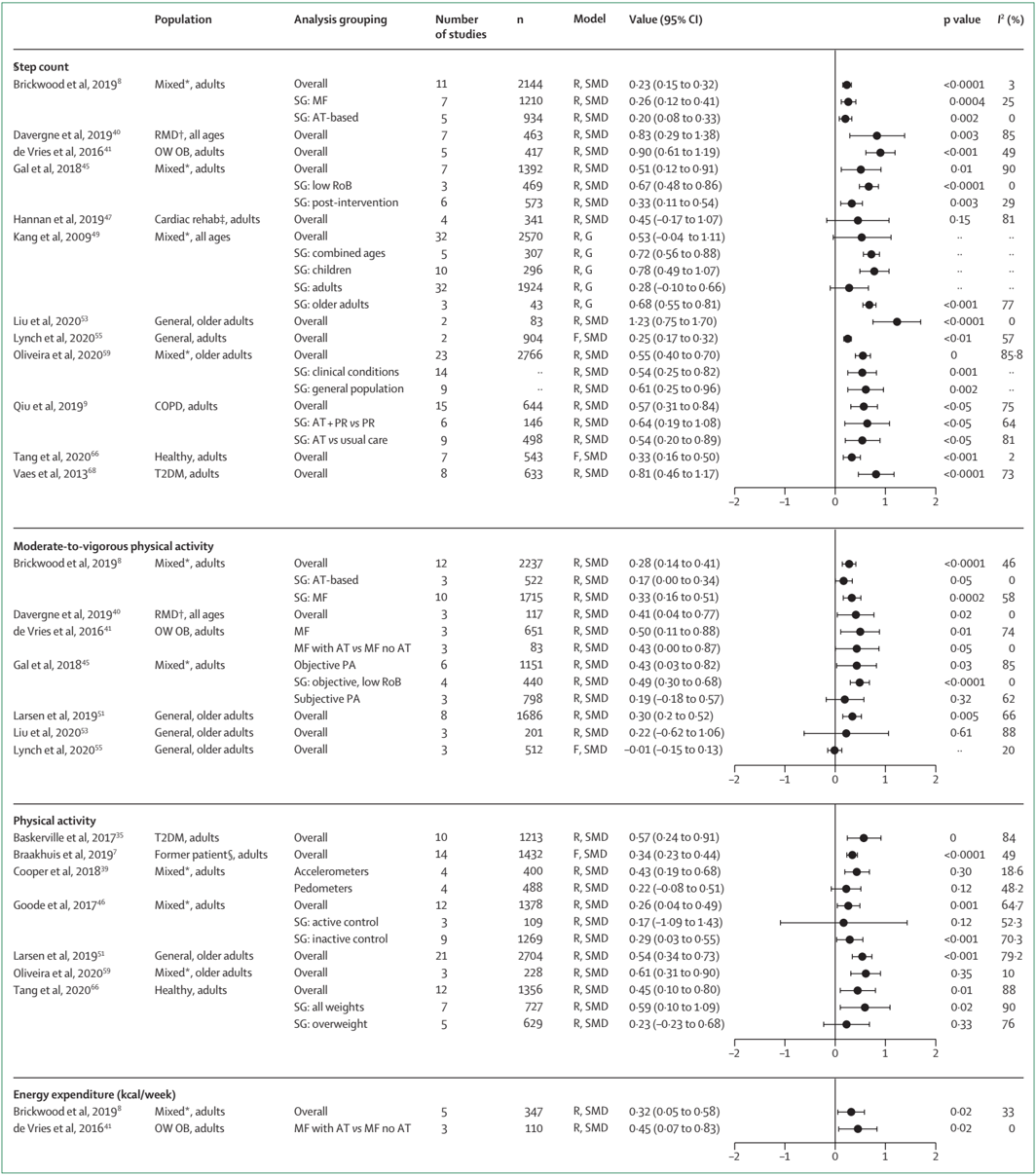
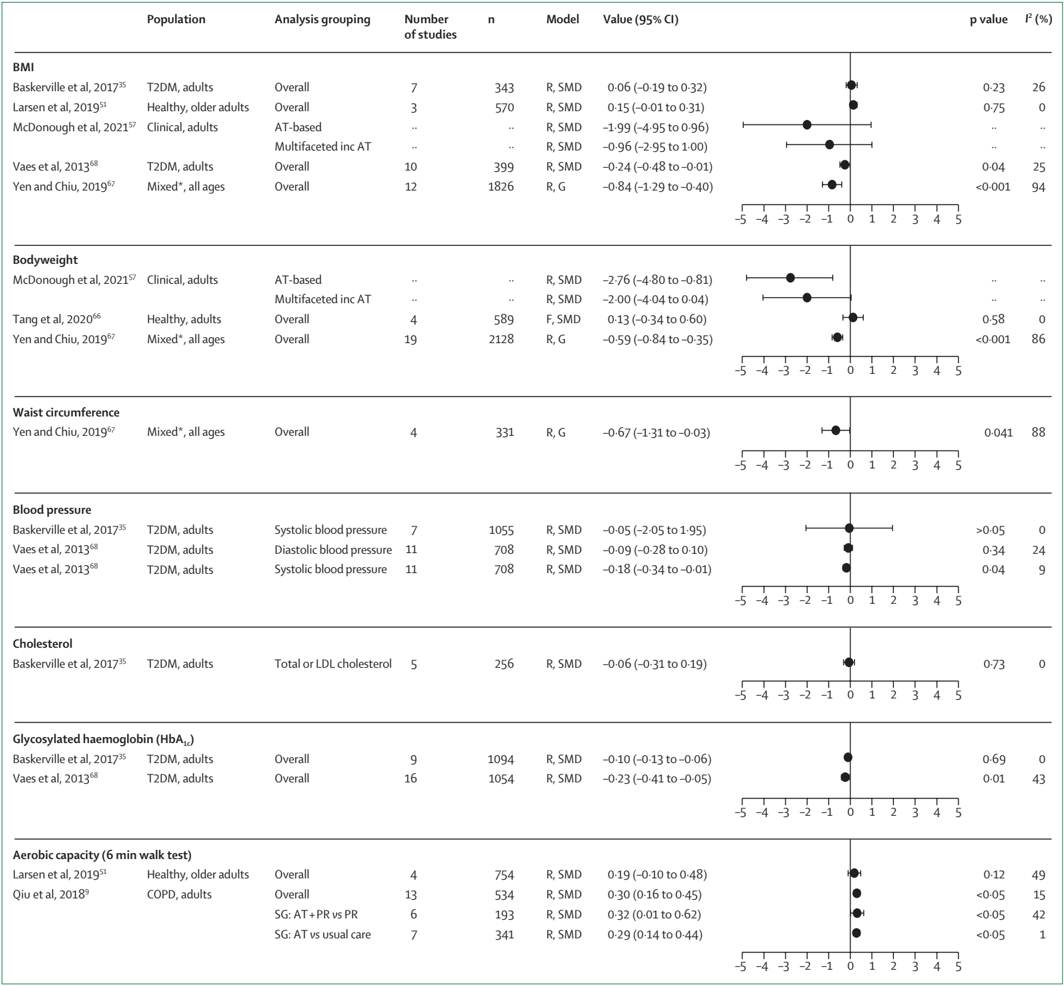
- Activity trackers improved physical activity (SMD 0.3–0.6), body composition (SMD 0.7–2.0), and fitness (SMD 0.3), equating to approximately 1800 extra steps per day, 40 min per day more walking, and about 1 kg reduction in bodyweight.
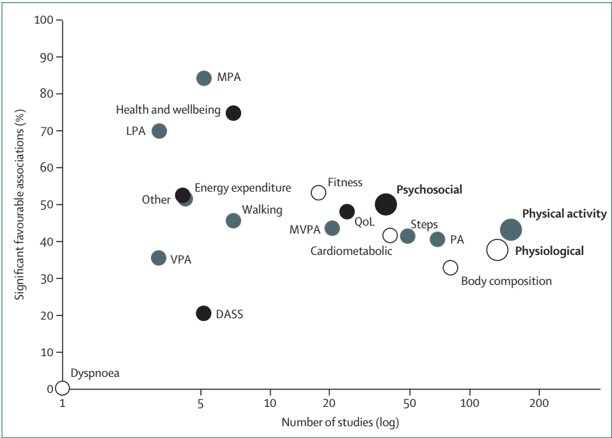
- Across all narratively synthesised studies, 41% showed significant favourable associations, 57% non-significant associations, and 3% significant unfavourable associations.
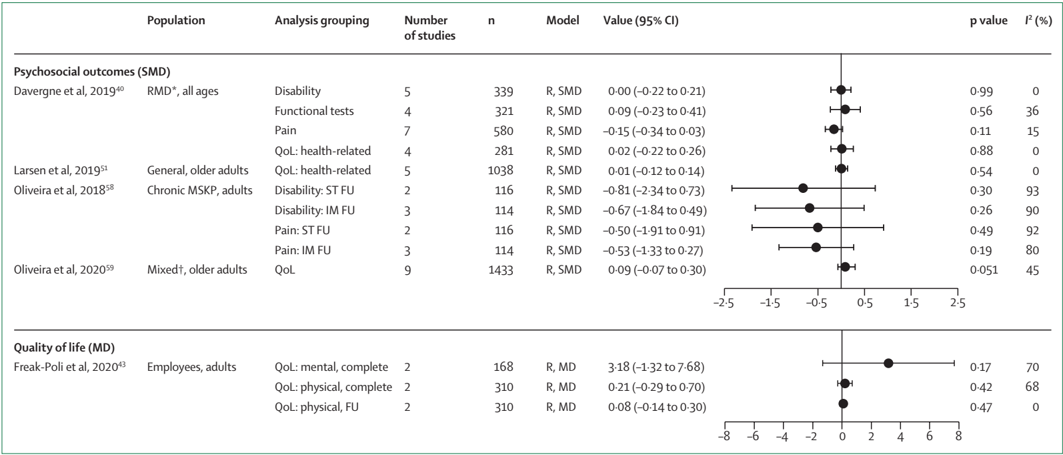
- Effects for blood pressure, cholesterol, glycosylated haemoglobin, quality of life, and pain were typically small and often non-significant; bodyweight, waist circumference, BMI, and aerobic capacity had the strongest evidence for improvement.
- The 39 reviews included 163,992 participants (abstract) and 390 unique component studies; corrected covered area was 2.3%, indicating slight overlap.
Methods
- Umbrella review reported per PRISMA and prospectively registered on PROSPERO (CRD42021246494); seven databases were searched from inception to April 8, 2021.
- Eligible studies were systematic reviews of experimental studies using wearable activity trackers as an intervention in any human population and reporting physical activity, physiological, or psychosocial outcomes; 39 reviews were included.
- Because of overlap among component studies, a meta-analysis of meta-analyses was not appropriate; findings were narratively synthesised with forest plots, AMSTAR 2 risk-of-bias appraisal, corrected covered area, and subgroup/sensitivity analyses.
Limitations
- The paper states that any umbrella review is limited by the included systematic reviews; populations were not exhaustive, most reviews were graded low or critically low confidence by AMSTAR 2, and a wide range of specific outcome metrics were used.
- The paper states that some included reviews contained some studies with inappropriate designs, which would probably underestimate effect sizes, and that few reviews examined wearable activity trackers alone.
- The paper states that most component randomised controlled trials were done in high-income countries, no systematic reviews addressed activity-tracker interventions in populations with mental health illnesses, and longer-term studies on physiological and broader psychosocial outcomes are needed.
Model-written summary. Check it against the paper before relying on it.
Integrity signals
Registry
Cites
Statistics
Figures
Verification
Claims the paper makes
18 Valid · 2 Not valid · 17 Not checked · 86 Own results and interpretations
Some cited sources support this claim and some don’t — read each source’s verdict below.
In the paper
“These improvements are relatively strong when considered in the broader field of physical activity interventions.”
§ Effectiveness of wearable activity trackers to increase physical activity and improve health: a systematic review of systematic reviews and meta-analyses > Discussion
What the sources say
- Partly supportedcites [69] Watson A, Timperio A, Brown H, Best K, Hesketh KD. Effect of classroom-based physical activity interventions on academic and physical activity outcomes: a systematic review and meta-analysis. Int J Behav Nutr Phys Act 2017; 14: 114. sourceExperimental — accuracy not yet measured
The Results (Academic-related outcomes; page unavailable) report improvements in on-task behaviour and some measures of academic achievement after classroom-based physical activity. Neither those results nor the Limitations section compares the size of these improvements with effects in the broader field of physical activity interventions, so the relative-strength claim is unsupported. (LLM, conf=0.78)
- Disputedcites [70] Conn VS, Hafdahl AR, Cooper PS, Brown LM, Lusk SL. Meta-analysis of workplace physical activity interventions. Am J Prev Med 2009; 37: 330-39. sourceExperimental — accuracy not yet measured
The Discussion describes the physical activity, fitness, and health benefits as modest, not relatively strong. It also reports that the physical activity effect was similar to one prior worksite synthesis and smaller than another; our copy provides no page number for these passages. (LLM, conf=0.87)
Checked by a reasoning model — may be wrong.
boosted- Asserted: passes — The authors put it forward as true.
- Checkable: passes — It can be checked against evidence.
- Load-bearing: passes — The paper’s conclusions depend on it.
- Based: passes — The paper gives a reason why it holds.
- Partly supported
Every source the paper cites for this claim was checked and supports it.
In the paper
“their use has been associated with increased physical activity.[7][8][9]”
§ Effectiveness of wearable activity trackers to increase physical activity and improve health: a systematic review of systematic reviews and meta-analyses > Introduction
What the sources say
- Supportedcites [7] Braakhuis HEM, Berger MAM, Bussmann JBJ. Effectiveness of healthcare interventions using objective feedback on physical activity: a systematic review and meta-analysis. J Rehabil Med 2019; 51: 151-59. source
The Discussion (page unavailable) states that the review's findings support an increase in physical activity with objective feedback from wearable monitors. The claim says “associated with,” rather than attributing the increase to trackers alone; the reviewed healthcare interventions often included other strategies. (LLM, conf=0.90)
- Supportedcites [8] Brickwood KJ, Watson G, O'Brien J, Williams AD. Consumer-based wearable activity trackers increase physical activity participation: systematic review and meta-analysis. JMIR Mhealth Uhealth 2019; 7: e11819. source
The Discussion’s “Physical Activity Participation” section reports significant improvements in daily steps, moderate-to-vigorous physical activity, and energy expenditure for participants in interventions that included a consumer-based wearable activity tracker, compared with controls. The paper notes that the quality of evidence was low or very low, but the citing sentence’s cautious wording—“associated with”—is consistent with its findings. (LLM, conf=0.93)
- Supportedcites [9] Qiu S, Cai X, Wang X, et al. Using step counters to promote physical activity and exercise capacity in patients with chronic obstructive pulmonary disease: a meta-analysis. Ther Adv Respir Dis 2018; 12: 1753466618787386. source
The Results section (‘Step counter use and physical activity’) reports that, across 15 randomized trials in patients with COPD, use of step counters significantly increased physical activity compared with controls. The Introduction identifies step counters as wearable devices that monitor physical activity, so the paper supports the stated association for this type of activity tracker. (LLM, conf=0.91)
plainstates an association- Asserted: passes — The authors put it forward as true.
- Checkable: passes — It can be checked against evidence.
- Load-bearing: passes — The paper’s conclusions depend on it.
- Based: passes — The paper gives a reason why it holds.
- Supported
Every source the paper cites for this claim was checked and supports it.
In the paper
“Wearable activity trackers promote behaviourchange techniques, such as self-monitoring and goal setting, 6”
§ Effectiveness of wearable activity trackers to increase physical activity and improve health: a systematic review of systematic reviews and meta-analyses > Introduction
What the sources say
- Supportedcites [6] Lyons EJ, Lewis ZH, Mayrsohn BG, Rowland JL. Behavior change techniques implemented in electronic lifestyle activity monitors: a systematic content analysis. J Med Internet Res 2014; 16: e192. source
The Results section reports that goal-setting and self-monitoring were found in all the activity-monitor systems studied. This supports the claim that wearable activity trackers provide these behaviour-change techniques. (LLM, conf=0.93)
plainstates a cause- Asserted: passes — The authors put it forward as true.
- Checkable: passes — It can be checked against evidence.
- Load-bearing: passes — The paper’s conclusions depend on it.
- Based: passes — The paper gives a reason why it holds.
- Supported
The cited sources support only part of this claim — read each source’s verdict below.
In the paper
“benefits for LDL cholesterol in populations of mixed disease (mean difference -0•32 mmol/L, 95% CI -0•51 to -0•12; appendix p 32), 42”
§ Effectiveness of wearable activity trackers to increase physical activity and improve health: a systematic review of systematic reviews and meta-analyses > Results according to risk of bias and population subgroups
What the sources say
- Partly supportedcites [42] Franssen WMA, Franssen GHLM, Spaas J, Solmi F, Eijnde BO. Can consumer wearable activity tracker-based interventions improve physical activity and cardiometabolic health in patients with chronic diseases? A systematic review and meta-analysis of randomised controlled trials. Int J Behav Nutr Phys Act 2020; 17: 57. sourceExperimental — accuracy not yet measured
The Results (Physical activity and cardiometabolic health; page unavailable) report a significant LDL-cholesterol reduction in participants with chronic diseases. However, the reported mean difference is −5.70 mg/dL (95% CI −9.24 to −2.15), approximately −0.15 mmol/L (95% CI −0.24 to −0.06), not the claimed −0.32 mmol/L (95% CI −0.51 to −0.12). (LLM, conf=0.90)
plainstates a cause- Asserted: passes — The authors put it forward as true.
- Checkable: passes — It can be checked against evidence.
- Load-bearing: passes — The paper’s conclusions depend on it.
- Based: passes — The paper gives a reason why it holds.
- Partly supported
The cited sources support only part of this claim — read each source’s verdict below.
In the paper
“They showed that the multifaceted interventions yielded effects around 50% larger than those using wearable activity trackers alone.”
§ Effectiveness of wearable activity trackers to increase physical activity and improve health: a systematic review of systematic reviews and meta-analyses > Review
What the sources say
- Partly supportedcites [8] Brickwood KJ, Watson G, O'Brien J, Williams AD. Consumer-based wearable activity trackers increase physical activity participation: systematic review and meta-analysis. JMIR Mhealth Uhealth 2019; 7: e11819. sourceExperimental — accuracy not yet measured
The Discussion (Physical Activity Participation; page unavailable) says multifaceted interventions had larger effects on physical activity participation than wearable-based interventions when each was compared with controls. It does not report an effect around 50% larger; the Results give MVPA effect sizes of 0.33 and 0.17, respectively. The comparison is therefore supported, but the claimed magnitude is not. (LLM, conf=0.88)
plainstates a cause- Asserted: passes — The authors put it forward as true.
- Checkable: passes — It can be checked against evidence.
- Load-bearing: unclear — It is unclear whether the paper’s conclusions depend on it.
- Based: passes — The paper gives a reason why it holds.
- Partly supported
57 more claims
Create a free account to see all 123 claims and every source verdict.
- It may state two separate claims as one. 49
- Probably not a substantial claim. 19
Claims other papers make about this one
Each is checked against this paper’s own text: does it say what the citing paper says it does?
The source backs part of the claim, not all of it — or backs it for a different population, condition or comparison.
In the citing paper
“Additional tools such as wearable activity trackers can encourage increased physical activity of an additional 1800 steps per day on average, or 0.5 to 1.5 kg of weight loss.76”
From Obesity Management in Adults: A Review (2023) · cites this paper as [76]
Experimental — accuracy not yet measuredThe source backs part of the claim, not all of it — or backs it for a different population, condition or comparison.
In the citing paper
“An umbrella review found little evidence that PA trackers improve HbA1c in people with T2D.15”
From Mobile Health Biometrics to Enhance Exercise and Physical Activity Adherence in Type 2 Diabetes (MOTIVATE-T2D): a decentralised feasibility randomised controlled trial delivered across the UK and Canada (2025) · cites this paper as [15]
Experimental — accuracy not yet measuredThe cited source says what the claim attributes to it.
In the citing paper
“Evidence from randomised controlled trials (RCTs) and systematic reviews indicates that fitness trackers are effective at increasing physical activity, as measured by daily steps and minutes of moderate-to-vigorous physical activities (MVPA) [17,24,25].”
From Economic evaluation of wearable fitness trackers versus metformin for preventing type 2 diabetes in the UK population (2025) · cites this paper as [25]
The cited source says what the claim attributes to it.
In the citing paper
“A systematic review of meta-analyses concludes that interventions using wearable devices increased step counts on average by around 1800 steps per day, walking time by about 40 min per day, and MVPA by nearly 6 min per day [25].”
From Economic evaluation of wearable fitness trackers versus metformin for preventing type 2 diabetes in the UK population (2025) · cites this paper as [25]
The cited source says what the claim attributes to it.
In the citing paper
“However, the effects of increasing PA via the use of PA trackers on outcomes relevant to the clinical management of T2D are unclear.”
2 more claims about this paper
Create a free account to see every claim other papers make about this one.
Self-check
Percentages, sums and reported differences re-computed from the paper’s own numbers.
Each contradiction between two passages listed here was confirmed by an independent check.
Rated minor: it would not touch a result — a value no result rests on, a p-value that stays on the same side of the significance level, or a conflict that is clerical, resolved elsewhere in the paper, or outside its own findings.
In the paper
§ Effectiveness of wearable activity trackers to increase physical activity and improve health: a systematic review of systematic reviews and meta-analyses > Results according to risk of bias and population subgroups
“the meta-analysis by Larsen and colleagues 51 found an effect size of 0•34”
§ Effectiveness of wearable activity trackers to increase physical activity and improve health: a systematic review of systematic reviews and meta-analyses > References
“51. Kirk MA, Amiri M, Pirbaglou M, Ritvo P. Wearable technology and physical activity behavior change in adults with chronic cardiometabolic disease: a systematic review and meta-analysis.”
Rated minor: it would not touch a result — a value no result rests on, a p-value that stays on the same side of the significance level, or a conflict that is clerical, resolved elsewhere in the paper, or outside its own findings.
In the paper
§ Effectiveness of wearable activity trackers to increase physical activity and improve health: a systematic review of systematic reviews and meta-analyses > Abstract
“In total, 39 systematic reviews and meta-analyses were identified, reporting results from 163 992 participants”
§ Effectiveness of wearable activity trackers to increase physical activity and improve health: a systematic review of systematic reviews and meta-analyses > Review
“The volume of included studies investigating the efficacy of wearable trackers is large-39 systematic reviews and 390 component experimental studies covering 163 841 participants (not accounting for overlap).”
Citations
Cites
Liberati, A., Altman, D. G., Tetzlaff, J., Mulrow, C., Gøtzsche, P. C., Ioannidis, J. P. A., Clarke, M., Devereaux, P. J., Kleijnen, J., & Moher, D. (2009) · PLoS Medicine · doi:10.1371/journal.pmed.1000100 · Cited by 28,164
Liberati, A., Altman, D. G., Tetzlaff, J., Mulrow, C., Gotzsche, P. C., Ioannidis, J. P. A., Clarke, M., Devereaux, P. J., Kleijnen, J., & Moher, D. (2009) · BMJ · doi:10.1136/bmj.b2700 · Cited by 17,648
Shea, B. J., Reeves, B. C., Wells, G., Thuku, M., Hamel, C., Moran, J., Moher, D., Tugwell, P., Welch, V., Kristjansson, E., et al. (2017) · BMJ · doi:10.1136/bmj.j4008 · Cited by 10,636
Lee, I.-M., Shiroma, E. J., Lobelo, F., Puska, P., Blair, S. N., & Katzmarzyk, P. T. (2012) · The Lancet · doi:10.1016/s0140-6736(12)61031-9 · Cited by 8,215
Cochrane Handbook for Systematic Reviews of Interventions
Higgins, J. P. T., Green, S., & Ben Van Den, A. (2020) · International Coaching Psychology Review · doi:10.53841/bpsicpr.2020.15.2.123 · Cited by 5,670
The well-built clinical question: A key to evidence-based decisions
(1995) · ACP Journal Club · doi:10.7326/acpjc-1995-123-3-a12 · Cited by 2,931
Analysing data and undertaking meta‐analyses
Deeks, J. J., Higgins, J. P., Altman, D. G., & on behalf of the Cochrane Statistical Methods Group (2019) · Cochrane Handbook for Systematic Reviews of Interventions · doi:10.1002/9781119536604.ch10 · Cited by 2,672
Aromataris, E., Fernandez, R., Godfrey, C. M., Holly, C., Khalil, H., & Tungpunkom, P. (2015) · International Journal of Evidence-Based Healthcare · doi:10.1097/xeb.0000000000000055 · Cited by 2,587
The economic burden of physical inactivity: a global analysis of major non-communicable diseases
Ding, D., Lawson, K. D., Kolbe-Alexander, T. L., Finkelstein, E. A., Katzmarzyk, P. T., van Mechelen, W., & Pratt, M. (2016) · The Lancet · doi:10.1016/s0140-6736(16)30383-x · Cited by 2,201
Using Pedometers to Increase Physical Activity and Improve Health: A Systematic Review
Bravata, D. M., Smith-Spangler, C., Sundaram, V., Gienger, A. L., Lin, N., Lewis, R., Stave, C. D., Olkin, I., & Sirard, J. R. (2007) · JAMA · doi:10.1001/jama.298.19.2296 · Cited by 2,064
Cited by
Items 301–400 of 564
Stakeholder perspectives on environmental health-related testing
Laas, K., Barreto, K. V., & Hildt, E. (2025) · Frontiers in Environmental Health · doi:10.3389/fenvh.2025.1610200 · Cited by 1
Sureephong, P., Laothiang, A., Inthawong, K., Satprasoet, S., & Auttajinda, N. (2025) · IFIP advances in information and communication technology · doi:10.1007/978-3-031-93323-3_19 · Cited by 2
Zhu, Q., Tang, L., Lin, P., Zeng, F., & Lan, M. (2026) · BMC Nursing · doi:10.1186/s12912-026-04441-1 · Cited by 1
“An umbrella review suggests that wearable activity trackers can, overall, increase physical activity and yield some physical and psychological benefits, indicating their potential as an adjunct for home-based exercise rehabilitation [30].”
Mobile Health for Monitoring and Supporting Mobility in Multiple Sclerosis
Sasaki, J. E., Sebastião, É., & Motl, R. W. (2026) · Exercise and Sport Sciences Reviews · doi:10.1249/jes.0000000000000382 · Cited by 1
Fan, C., Dong, Z., Wang, Y., Zhang, L., Gao, R., Yang, M., & Guo, L. (2026) · Archives of Public Health · doi:10.1186/s13690-026-01910-6 · Cited by 1
“…suggests that healthtech may facilitates psychological protection by strengthening self-monitoring and promoting salutary behavior change such as improved sleep, which resonates with the putative benefits of digital health tools for behavior modification and symptom monitoring [14, 15, 47, 48].”
Isakadze, N., Armoundas, A. A., Sanders, P., Andrade, J. G., Baykaner, T., Lorvidhaya, P., Cutler, M. J., PASSMAN, R. S., Pundi, K. N., Noseworthy, P., et al. (2026) · Heart Rhythm · doi:10.1016/j.hrthm.2026.04.002 · Cited by 1
Zimniak, L., Soufiah, E., Ha, C. S. R., Gretschel, S., & Paschold, M. (2026) · BMC Surgery · doi:10.1186/s12893-026-03864-6 · Cited by 1
“These smart devices are easy to use, commercially available, and capable of supporting mobility through reminder functions [11].”
Song, X., & Tian, Z. (2026) · Frontiers in Psychology · doi:10.3389/fpsyg.2026.1850780 · Cited by 1
Soulard, J., Mendelson, M., Baillieul, S., Gastaldi, R., & Baillet, A. C. (2023) · Revue du Rhumatisme · doi:10.1016/j.rhum.2022.12.017 · Cited by 2
The use of wearable technology in a comprehensive chronic pain management programme
Balkić, J., Dimitrijević, I., Radoš, I., & Banjari, I. (2023) · THE NEW ARMENIAN MEDICAL JOURNAL · doi:10.56936/18290825-2023.17.1-46 · Cited by 1
Fundoiano-Hershcovitz, ., ASHER, I. B., Kantor, H., Rahmon, S., Ritholz, M. D., Horwitz, D. L., Manejwala, O., & Goldstein, P. (2024) · Frontiers in Endocrinology · doi:10.3389/fendo.2024.1446405 · Cited by 3
Comparative Validity of Two Thigh-Worn Activity Monitors in Free-Living Conditions
Duhamahoro, J., Lamoureux, N. R., Hibbing, P. R., Taylor, M. A., & Welk, G. J. (2025) · Journal for the Measurement of Physical Behaviour · doi:10.1123/jmpb.2024-0034 · Cited by 1
Thomassen, E. E. K., Tveter, A. T., Berg, I. J., Kristianslund, E. K., Reiner, A. H., Hakim, S., Gossec, L., Macfarlane, G. J., de Thurah, A. L., & Østerås, N. (2025) · JMIR Human Factors · doi:10.2196/68645 · Cited by 2
“Considering the potential benefits of physical activity monitoring, activity trackers may prove valuable in guiding and motivating patients to engage in higher levels of physical activity [2].”
Wearable Smart Devices: Innovations Through AI and Cyberbiosecurity Threats
Purnell, A., Barnett, M., Potter, L. N., & Palmer, X. (2025) · European Conference on Cyber Warfare and Security · doi:10.34190/eccws.24.1.3612 · Cited by 1
Tassone, V. K., Quesnel, D. A., Parkington, K. B., Rueda, A., Martin, J., Lee, G. H., Teixeira, A., deJonge, M. L., Lou, W. Y. W., Wiljer, D., et al. (2025) · PLoS ONE · doi:10.1371/journal.pone.0330848 · Cited by 2
“Moreover, receiving feedback and self-monitoring (e.g., via wearable activity trackers and data visualization platforms) can improve PA [37,89] and adoption of healthy behaviours more broadly [90].”
Ding, D. (2025) · Journal of sport and health science/Journal of Sport and Health Science · doi:10.1016/j.jshs.2025.101093 · Cited by 1
Edelson, J. B., Schneider, L. M., O’Malley, S., Somogie, J., Huang, J., Li, N., Boyle, C., O’Connor, M. J., Paridon, S. M., Lin, K. Y., et al. (2025) · JHLT Open · doi:10.1016/j.jhlto.2025.100421 · Cited by 3
“27 Furthermore, we hypothesized that the ability to monitor one’s heart rate in real-time would contribute to HT recipients’ sense of safety, an important theme identified through focused interviews.”
Refisch, A., Gutfleisch, L., Emden, D., Holstein, V., Gruber, M., Goltermann, J., Richter, M., Ratzsch, J., Fleuchaus, A., Leehr, E. J., et al. (2026) · JMIR Mental Health · doi:10.2196/81120 · Cited by 3
“Step counts also provide an interpretable and goal-oriented measure of overall activity, capturing not only deliberate exercise but also habitual movement in daily life [26,27].”
Physicians’ and Medical Students’ Perceptions of Physical Activity Monitors in Patient Care
O'Brien, M. W., Pink, J., Reid, R. O., Aziz, F. B., Harenberg, S., Cartwright, C., Halliwell, C., & Reid, R. E. R. (2025) · Translational Journal of the American College of Sports Medicine · doi:10.1249/tjx.0000000000000326 · Cited by 1
Hauben, J., Luthy, J., Nafiu, T., Brengartner, A., Omar, M., Nemati, D., Zhao, S., Brock, G. N., Urse, K., Paro, J., et al. (2025) · Contemporary Clinical Trials · doi:10.1016/j.cct.2025.108152 · Cited by 1
Borges, G. C., Moreira, V. D. F., & Bertapelli, F. (2025) · Sensors · doi:10.3390/s25237278 · Cited by 1
“…from reviews involving other developmental and functional disabilities—such as mobility impairments [17], autism spectrum disorder [18], and chronic metabolic or pulmonary diseases [16]—also supports the feasibility and clinical relevance of wearable-based monitoring for health surveillance.”
Dawson, R., Kay, J., Cameron, L., Bucalon, B., Sherrington, C., & Haynes, A. S. (2025) · Healthcare · doi:10.3390/healthcare14010086 · Cited by 1
“…reviews confirm that activity trackers and smartphone apps, especially those using feedback, gamification and personalisation, effectively increase step counts across adult populations [7,8,17], though frail or multimorbid older people receiving aged care services are not specifically represented.”
Xie, Z., Shi, Y., Tu, Y., Bi, K., Huang, D., Chen, T., & Du, J. (2026) · Sleep Medicine · doi:10.1016/j.sleep.2026.108860 · Cited by 1
Li, Y., Li, Q., & Chen, X. (2026) · Frontiers in Public Health · doi:10.3389/fpubh.2026.1778082 · Cited by 1
“First, intervention designs vary substantially across studies (device type, feedback modality, behavior-change components, and intervention intensity/duration), which likely contributes to heterogeneous effects (17, 20, 27).”
InfluentialMateo‐Orcajada, A., Vaquero‐Cristóbal, R., & Abenza‐Cano, L. (2026) · Wearable Technologies · doi:10.1017/wtc.2026.10039 · Cited by 1
Outline: The Long-Term Impact of Exercise on Adolescent Growth and Development
Millán-Domingo, F., González, A. D. L. R., & Villa, M. A. C. (2026) · Advances in experimental medicine and biology · doi:10.1007/978-981-95-7000-3_16 · Cited by 1
Armas, R. E. D., & Singh, J. P. (2026) · Current Cardiology Reports · doi:10.1007/s11886-026-02358-4 · Cited by 2
Leung, W. C. W., Hubbard, M., Lee, J., Kim, M., Tiralla, G., & Shi, L. (2026) · American Journal of Hypertension · doi:10.1093/ajh/hpag031 · Cited by 1
Wang, M. S., Qin, A., Wu, S., & Zhang, J. (2026) · Journal of Affective Disorders · doi:10.1016/j.jad.2026.121804 · Cited by 1
Subing, S. O., & Jannah, M. (2026) · ALINEA Jurnal Bahasa Sastra dan Pengajarannya · doi:10.58218/alinea.v6i1.2483 · Cited by 1
Zhou, Y., & Xu, L. (2026) · Frontiers in Public Health · doi:10.3389/fpubh.2026.1726172 · Cited by 1
“A cross-national European study involving 17 countries found that digital health literacy was positively associated with physical activity (OR = 1.42), while mobile app interventions increased physical activity by 12–20% (10), and wearable device users increased their daily steps by 2,000 (11, 12).”
InfluentialChoi, E., Choi, S., & Jang, S.-Y. (2026) · Journal of Medical Internet Research · doi:10.2196/88276 · Cited by 1
“Overall, these findings are broadly consistent with those of prior studies reporting favorable findings regarding wearable devices and physical activity [5,16,17].”
Wellness Watch or Worry Watch? Negative Psychological Impacts of Wearable Devices
Meegahapola, L., Creswell, J. D., & Quercia, D. (2026) · Proceedings of the ACM on Interactive Mobile Wearable and Ubiquitous Technologies · doi:10.1145/3810204 · Cited by 1
Secondhand smoke exposure and human health: an umbrella review
Zhang, S., Li, S., Yang, X., Cheng, Z., Zhou, T. Y., Xu, B., Yang, Z., Wu, W., Liao, H., Huang, J., et al. (2026) · Nature Human Behaviour · doi:10.1038/s41562-026-02480-x · Cited by 1
“…item 7 of AMSTAR 2 (‘providing a list of excluded studies’) from a critical to a non-critical item, considering that meta-analyses commonly omit excluded study lists in practice, and maintaining this item as critical would inappropriately underestimate overall methodological quality 114,115 .”
Zakaria, L. (2026) · American Journal of Lifestyle Medicine · doi:10.1177/15598276261450511 · Cited by 2
Wearable-derived cardiovascular fitness age and its lifestyle correlates in 442 adults
Shanmugam, A., Gupta, K., Dhawale, N., Singhal, V., Kumar, M., Srinivasan, B., & Narasimhan, V. (2026) · Frontiers in Digital Health · doi:10.3389/fdgth.2026.1842633 · Cited by 2
“Behavioral-change literature on wearable self-monitoring reports that consumer activity trackers support increases in physical activity through self-monitoring and feedback mechanisms [33], with effects of clinically meaningful magnitude that can be sustained over time [34].”
Allain, J. E., MacDonald, E. E., Waghorn, J., & O'Brien, M. W. (2026) · Journal for the Measurement of Physical Behaviour · doi:10.1123/jmpb.2026-0018 · Cited by 1
Use of wearable technologies for physical activity promotion in older adults: A systematic review
Félix, J., Vale, A. F., Sá, C., Santos, R. S., Kontio, E., Pinheiro, A. R., & Sousa, A. S. P. (2026) · Ageing Research Reviews · doi:10.1016/j.arr.2026.103258 · Cited by 1
Paluch, A. E., Evenson, K. R., EBERL, E. M., Marcotte, S. P., Parvizi, P., Rees‐Punia, E., Toth, L. P., & Bassett, D. R. (2026) · Journal of sport and health science/Journal of Sport and Health Science · doi:10.1016/j.jshs.2026.101162 · Cited by 1
Mallardo, M., Messina, A., Monda, V., Marra, M. L., Monda, A., Allocca, S., Casillo, M., Maio, G. D., Perrone, P., Daniele, A., et al. (2026) · Nutrients · doi:10.3390/nu18172748 · Cited by 1
“These tools are scalable and may facilitate self-monitoring and long-term engagement in healthy behaviors, although their specific contribution to maintaining weight loss following incretin-based therapy requires further investigation [288,289].”
Ryu, S., Kringle, E. A., & Gao, Z. (2026) · Journal of School Health · doi:10.1111/josh.70219 · Cited by 2
Yoshikoshi, S., Hinakura, K., Sakurai, R., Kawai, H., Sasai, H., Shirobe, M., Deguchi, N., Wakui, T., 本川, 敬., Awata, S., et al. (2026) · Digital Health · doi:10.1177/20552076261491092 · Cited by 1
The emerging role of wearables in cardiac care
Sigfstead, S., & Cheung, C. C. (2023) · University of Toronto Medical Journal · doi:10.33137/utmj.v100i2.41461 · Cited by 2
Oh, I.-Y., Jeon, J.-J., Kim, J.-B., Hyeon, J.-Y., Yeon, J.-M., Ha, H.-J., Han, S.-M., Kang, D.-G., & So, W.-Y. (2024) · The Asian Journal of Kinesiology · doi:10.15758/ajk.2024.26.1.60 · Cited by 1
Examining the Use of Wearable Health Devices for Tracking Physical Activity in Elderly Populations
Kayani, A., Sajid, I., Azfar, H., Habiba, U., Zafar, I., & Masood, R. (2024) · Allied Medical Research Journal · doi:10.59564/amrj/02.01/006 · Cited by 1
Physical Activity Repetition Count Extraction From Sparse mmWave Radar Point-Cloud
Tiwari, G. (2024) · IEEE Applied Sensing Conference (APSCON) · doi:10.1109/apscon60364.2024.10465981 · Cited by 1
Gawron, N., Zębrowski, A., & Hintze, B. (2024) · Przegląd Psychologiczny · doi:10.31648/przegldpsychologiczny.10468 · Cited by 1
Bolstering the Prognostic Utility of Coronary Risk Assessments with PAI: A Physical Activity Metric
Nauman, J., Mirzaamin, T., Franklin, B. A., Nes, B. M., Lavie, C. J., Dunn, P. J., Arena, R. A., Wen, C. P., Tari, A. R., & Wisløff, U. (2024) · Medicine & Science in Sports & Exercise · doi:10.1249/mss.0000000000003584 · Cited by 2
Maylor, B. D., Rowlands, A. V., Daley, A., Sanders, J. P., Yates, T., & Edwardson, C. L. (2024) · Journal for the Measurement of Physical Behaviour · doi:10.1123/jmpb.2023-0056 · Cited by 2
Almalki, M. (2024) · Informatics in Medicine Unlocked · doi:10.1016/j.imu.2024.101610 · Cited by 1
The Importance of Research in Public Health
(2020) · Springer Publishing Company eBooks · doi:10.1891/9780826182067.0001 · Cited by 1
Alòs, F., Puig-Ribera, A. M., Bort‐Roig, J., Chirveches-Pérez, E., Martín-Cantera, C., Franch‐Nadal, J., & Colomer, M. À. (2023) · Research Square · doi:10.21203/rs.3.rs-3128775/v1 · Cited by 2
Proactive Behavior Change Techniques (ProBCTs) in Physical Activity and Healthy EatingPreprint
Schüler, J., & Bieleke, M. (2023) · Research Square · doi:10.21203/rs.3.rs-3133092/v1 · Cited by 1
Körner, S., Staller, M. S., & Bonn, B. (2024) · Springer eBooks · doi:10.1007/978-3-658-44294-1_2 · Cited by 1
Zhang, X., Yang, D., Chen, S., Wang, L., Li, X., Luo, J., Wang, Z., Meng, M., Li, X., Jiang, H., et al. (2025) · SSRN Electronic Journal · doi:10.2139/ssrn.5194340 · Cited by 1
Xu, Y., & García-Lorenzo, B. (2025) · BMC Digital Health · doi:10.1186/s44247-025-00194-0
“Evidence from randomised controlled trials (RCTs) and systematic reviews indicates that fitness trackers are effective at increasing physical activity, as measured by daily steps and minutes of moderate-to-vigorous physical activities (MVPA) [17, 24, 25].”
Will electronic skins become a quintessential health tracker for everyday life?
Shah, A. M. (2022) · Artificial Organs · doi:10.1111/aor.14430
Motivation Prediction for Persuasive Intervention at Appropriate Timing to Promote Exercises
Yuasa, T., Harada, F., & Shimakawa, H. (2023) · Lecture notes in networks and systems · doi:10.1007/978-981-99-3091-3_52
Telemedizin in der Rheumatologie
Krusche, M., & Xiong, T. (2023) · Aktuelle Rheumatologie · doi:10.1055/a-2120-0772
“Der Einsatz von Wearables kann hierbei zu einer Steigerung der körperlichen Aktivität führen [23, 26].”
Fitness bracelet for optimizing life
Polozov, A., Maltseva, N. A., Petukhova, M. V., & Polozova, K. (2023) · Scientific and educational basics in physical culture and sports · doi:10.57006/2782-3245-2023-9-1-41-51
Motahari-Nezhad, H. (2023) · CUB Ph.D. Dissertations (Corvinus University of Budapest) · doi:10.14267/phd.2023046 · Cited by 3
Wagner, V., Gravesen, P., Ghaziani, E., Olsen, M. H., & Riberholt, C. G. (2023) · Heliyon · doi:10.1016/j.heliyon.2023.e21927 · Cited by 1
“A valid and well-documented method for quantifying physical activity is accelerometers embedded in wearable devices with or without user feedback [14].”
BackgroundMethodErgebnisse der 4. Fachtagung Bewegungstherapie 2023
Streber, R., Bestmann, A., Brüggemann, S., Göhner, W., Heimsoth, J., Kinkel, S., Peters, S., Pfeifer, K., Reusch, A., Schaller, A., et al. (2023) · B&G Bewegungstherapie und Gesundheitssport · doi:10.1055/a-2185-8183
“Welches Potenzial digitale Behand-lungsformate [z. B. [11, 12]] oder digitale Technologien (z. B. Wearables [13]) für die Versorgung von Personen mit chronischen, nicht-übertragbaren Erkrankungen besitzen, ist schon seit Jahren Gegenstand der bewegungsbezoge-nen Versorgungsforschung.”
BackgroundSystème de récompense et rythmes biologiques
Tebeka, S., Mauries, S., & Geoffroy, P. A. (2023) · Elsevier eBooks · doi:10.1016/b978-2-294-77934-3.00009-3 · Cited by 1
Predictive Activity Modelling of Glucose (Pam-G): A Study of Type 1 Diabetes in Free-LivingPreprint
Bilal, A., Thabit, H., Nutter, P. W., & Harper, S. (2024) · SSRN Electronic Journal · doi:10.2139/ssrn.4797415
Ferreira, L. F., Cardoso, J. R., & da Rosa, L. H. T. (2024) · PLoS ONE · doi:10.1371/journal.pone.0302843
Ching, J., Duff, S., & Hernandez, J. (2024) · medRxiv · doi:10.1101/2024.06.05.24306788 · Cited by 1
“16,17 Among healthy adults, wearable-based interventions were associated with improvements in physical activity over an average of 21 weeks, and long-term follow-up found that approximately 40% of the short-term improvements were maintained through 3-4 years.”
BackgroundKuechly, H. A., Kurkowski, S. C., Bonamer, J. P., Johnson, B., Smith, R. D. J., Shah, N. S., Fernández, A. R., Meyer, J., & Laughlin, R. T. (2024) · Journal of Orthopedics and Orthopedic Surgery · doi:10.29245/2767-5130/2024/2.1201
Determination of walking energy expenditure as an indicator of walking fatigue
Kopytkov, D., Ponkratov, D., Samchuk, G., Yaruta, A., & Kitchenko, N. (2024) · IOP Conference Series Earth and Environmental Science · doi:10.1088/1755-1315/1376/1/012035
Alkhamis, T., Shawaf, T., El‐Deeb, W., Almubarak, A. I., Al-Ali, M. A., Almuaqqil, M. N., Aiyan, A. A., & Homeida, A. M. (2024) · Scientific Reports · doi:10.1038/s41598-024-72605-7
“However, their continuous evaluation and research are necessary due to the need for constant redesign and upgrades 24,25 .”
BackgroundThe economic feasibility of digital health and telerehabilitation
Sharma, P., Gupta, M., & Kalra, R. (2024) · Elsevier eBooks · doi:10.1016/b978-0-443-13619-1.00004-0
(2024) · Frontiers research topics · doi:10.3389/978-2-8325-5531-6
Hodgson, W., Kirk, A. F., Lennon, M., & Janssen, X. (2024) · JMIR Diabetes · doi:10.2196/60066 · Cited by 1
“Activity trackers are technological devices designed to measure the users’ steps, distance moved, physical activity intensity, and sedentary behavior [9].”
Technology Interventions and Support for Total Worker Health ®
Tapp, L. (2024) · Wiley eBooks · doi:10.1002/9781394302147.ch7
Walking the Camino de Santiago: A case study of endurance and wearable technology
Boppre, G. (2024) · Wearable Technology · doi:10.54517/wt3008
Smith, J., Nagy, P., Tod, D., Holland, C., & Jarvis, H. L. (2025) · PLoS ONE · doi:10.1371/journal.pone.0318567
Aktives Altern mittels IKT – aktuelle Möglichkeiten und Herausforderungen
Jungreitmayr, S. (2025) · Springer eBooks · doi:10.1007/978-3-662-68241-8_11-1
The Missing Subject in Health Federated Learning: Preventive and Personalized Care
Diniz, J. M. (2025) · Studies in computational intelligence · doi:10.1007/978-3-031-78841-3_6 · Cited by 1
A 12-Step Framework to Support Resilience in Osteopathic Family Physicians
Sadeghi, H. (2025) · Journal of the Osteopathic Family Physicians of California · doi:10.58858/040203
He, G., He, W., & Qiao, F. (2025) · Digital Health · doi:10.1177/20552076251338896 · Cited by 1
“5 It might not only provide precise biometric data but also offer personalized guidance and support to encourage and sustain health-promoting behaviors.”
Ajewole, E. S. (2025) · Advanced sciences and technologies for security applications · doi:10.1007/978-3-031-82031-1_28
Chan, H. Y., & Toh, H. J. (2025) · International Review of Law Computers & Technology · doi:10.1080/13600869.2025.2510440 · Cited by 1
“Digital health technologies such as wearable fitness trackers and smartwatches are broadly used for general lifestyle and activity tracking, or clinical monitoring of diseases (El-Amrawy and Nounou 2015; Ferguson et al. 2022; Tricás-Vidal et al. 2022).”
Künstliche Intelligenz zur Förderung von körperlicher Aktivität
Farrahi, V., Sánchez-Trigo, H., Schmidt, M., & Jaitner, T. (2025) · Springer eBooks · doi:10.1007/978-3-662-68950-9_18 · Cited by 1
Ingram, T. A., Barnett, R., Shakaib, N., Jones, S., Sengupta, R., & Rouse, P. C. (2025) · Arthritis & Rheumatology · doi:10.1002/art.43277
“54 Other technologies, such as laser acupuncture devices 55,56 or intervention speci fi c devices, 57 were rarely provided to participants, which may re fl ect the speci fi city of treatment, training needs, or cost to service.”
Artificial Intelligence to Promote Physical Activity
Farrahi, V., Sánchez-Trigo, H., Schmidt, M., & Jaitner, T. (2025) · Springer eBooks · doi:10.1007/978-3-662-70155-3_18 · Cited by 1
Deng, Y., Wang, M., Li, C., & Wu, H. Y. (2025) · European Geriatric Medicine · doi:10.1007/s41999-025-01257-1 · Cited by 2
Garg, D., Kumar, G., Singh, H., Rana, P. S., Mavuduru, R. S., Pattanaik, S., & Jindal, N. (2025) · Computing · doi:10.1007/s00607-025-01532-w
Liu, Z., Meng, Y., Tian, S., Liu, B., Xiao, Y., Lei, Z., & Hu, Z. (2025) · doi:10.2196/preprints.82474
USING ACTIVITY TRACKER AND SMARTWATCH IN FITNESS
Yarmolenko, M., Yakovenko, O. O., Stroganov, S., Lut, I., & Pinchuk, V. (2025) · Scientific Journal of National Pedagogical Dragomanov University Series 15 Scientific and pedagogical problems of physical culture (physical culture and sports) · doi:10.31392/udu-nc.series15.2025.08(195).44
Astbury, N. M. (2024) · The Conversation · doi:10.64628/ab.g4f7rtphe
Leung, W. C. W., Hubbard, M., Lee, J., Kim, M., & Shi, L. (2025) · Journal of Asthma · doi:10.1080/02770903.2025.2555301
Larasati, T. Y., & Harwani, Y. (2025) · International Journal of Indonesian Business Review · doi:10.54099/ijibr.v4i2.1510
“The result is consistent with Davis (1989) and Ferguson (2022), who stressed the joint effect of usefulness and awareness.”
InfluentialA Review of Behavioral, Dietary, and Fitness Data Analyses in Health-Related ResearchPreprint
Mori, M. (2025) · SocArXiv (OSF Preprints) · doi:10.31235/osf.io/ewr4y_v1
Secades‐Villa, R., Cuesta‐López, I., & González‐Roz, A. (2025) · Drug and Alcohol Dependence · doi:10.1016/j.drugalcdep.2025.112893
Huang, W., Wong, M. K. F., Loh, E. D. W., Koh, T., Tan, A. W., Shen, X., Varli, O., Kong, S. C., Chin, C., Tan, S. Y., et al. (2025) · JMIR mhealth and uhealth · doi:10.2196/71213 · Cited by 1
“Moreover, there is a strong body of evidence suggesting that interventions using wearable activity trackers result in improvements in the physical activity of users; however, the effectiveness of these interventions on physiological outcomes remains uncertain [19].”
Ma, G., Xin, H., Zhu, L., Li, W., Fan, Z., Li, K., & Wang, W. (2025) · Research Square · doi:10.21203/rs.3.rs-7413340/v1
Effects of Physical Activity and Purpose in Life in Cognitive Aging
Sadeghi, F. (2025) · The Research Repository @ WVU (West Virginia University) · doi:10.33915/etd.12940
Li, Y., Fang, Y., & Gu, S. (2025) · Revista da Escola de Enfermagem da USP · doi:10.1590/1980-220x-reeusp-2024-0454es
Wearable Activity Trackers: Nurse Practitioners’ Knowledge, Perceptions, and Experiences
Gellasch, P., Kartoz, C., & D’Antonio, G. (2025) · The Journal for Nurse Practitioners · doi:10.1016/j.nurpra.2025.105558
Bélanger, M. F., Registe, P. P. W., Faivre, P., Tanguay, P., Jemaa, S., Gallant, F., Giroux, M.-A., Thibault, V., Hakim, J., Clément, J.-F., et al. (2025) · Journal of Behavioral Medicine · doi:10.1007/s10865-025-00611-9
“No other HLT was associated with the odds of reporting some participation in PA.”
Influential
Metadata
- Authors
- Ferguson, T., Olds, T., Curtis, R., Blake, H., Crozier, A. J., Dankiw, K., Dumuid, D., Kasai, D., O'Connor, E., Virgara, R., & Maher, C.
- Affiliations
- University of South Australia (AU)
- Corresponding author
- Maher, Carol
- ORCID
- Venue
- The Lancet Digital Health
- Publisher
- Elsevier BV
- Published
- 2022-08
- Volume
- 4
- Issue
- 8
- Pages
- e615-e626
- ISSN
- 2589-7500 (ISSN-L)
- OpenAlex
- W4285891242
- Semantic Scholar
- e4f38c44da2bf83fa39c30b60da1506cfddb9af0
- Cited by
- 605
- References
- 71
- Citations by year
- 2026: 198 · 2025: 169 · 2024: 161 · 2023: 70 · 2022: 6
- FWCI
- 16.74
- Type
- journal article
- Language
- en
- Open access
- gold
- doi.org
- Licence
- cc-by-nc-nd
- www.elsevier.com/tdm/userlicense/1.0/ (tdm)
- www.elsevier.com/legal/tdmrep-license (tdm)
- creativecommons.org/licenses/by-nc-nd/4.0/ (vor)
- Locations
- The Lancet Digital Health (publishedVersion, cc-by-nc-nd)
- PubMed (publishedVersion)
- UniSA Research Outputs Repository (University of South Australia) (acceptedVersion)
- Adelaide Research & Scholarship (AR&S) (University of Adelaide) (submittedVersion, cc-by-nc-nd)
- Topics
- Health Sciences › Medicine › Public Health, Environmental and Occupational Health › Physical Activity and Health
- Health Sciences › Health Professions › General Health Professions › Mobile Health and mHealth Applications
- Physical Sciences › Computer Science › Computer Vision and Pattern Recognition › Context-Aware Activity Recognition Systems
- Keywords
- wearable activity trackers, physical activity, physical inactivity, body composition, fitness, blood pressure, cholesterol, glycemic control, quality of life, pain, clinical populations, non-clinical population, step count, walking
- MeSH terms
- Fitness Trackers, Systematic Reviews as Topic, Humans, Quality of Life, Exercise
About these checks
Registry, retraction, Cites and statistics results are computed, not judged, with one exception: a printed reference that no index lists is read once by a model before it counts as a citation error. Claims are extracted by a model and kept only when their quote appears verbatim in the text; each cited source is then checked, with a model’s help, for whether it says what the claim relies on. Those verdicts can be wrong — read the claim’s quote and the cited source before relying on one.
The claim verdicts this report counts are experimental: their accuracy is not yet measured.
A language model drew the claims from the paper on 2026-10-09, under version 3 of the claim definition (model deepseek-v4.1-flash, prompt extract-v3).
A second model labelled each claim on 2026-10-09 (model jev-1.13-20260917, definition revision gold-guideline-v0.2).
Cited sources are checked with a language model’s help (gpt-6-sol).
Statistics and arithmetic are recomputed, not judged.
Confidence bands are shown only for fields calibrated on our annotated test set. None is calibrated yet, so no band is shown.
What counts as a claim ›How we measure confidence ›How we check this ›
Are you an author, or do you see a problem with this page? Request a review
Data sources
Bibliographic data: Semantic Scholar, OpenAlex, Crossref.
Contains information from the Semantic Scholar Academic Graph Datasets, made available under the ODC Attribution License (ODC-BY 1.0).
Semantic Scholar’s data is described in: Kinney, R., et al. (2023). The Semantic Scholar Open Data Platform. arXiv:2301.10140.
