

Effectiveness of wearable activity trackers to increase physical activity and improve health: a systematic review of systematic reviews and meta-analyses.
Open accessThe DOI matches its Crossref record; 80 of the 80 references it cites were found in a registry or an index; 32 of the 50 sources its claims cite were checked for support.
Abstract
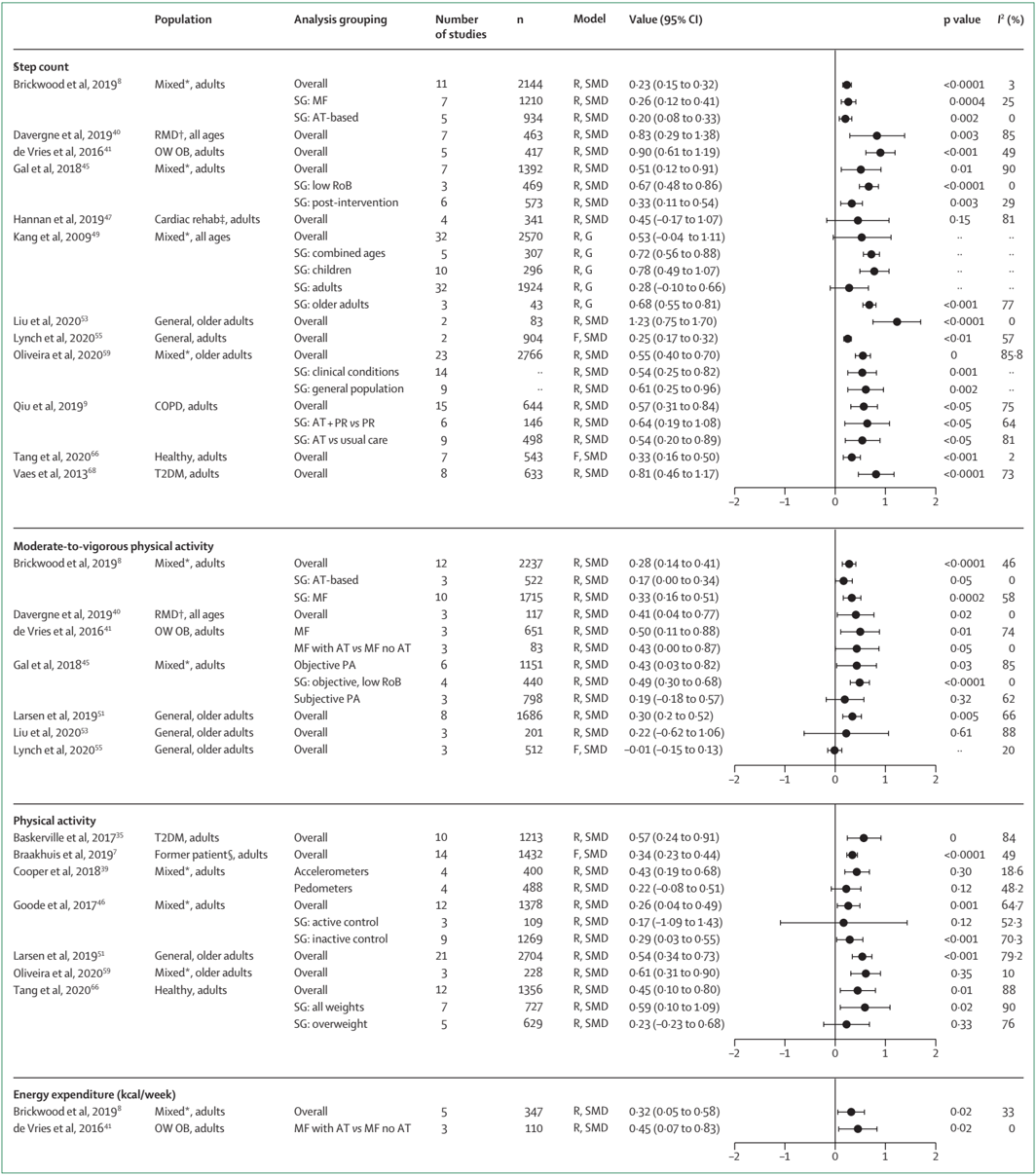
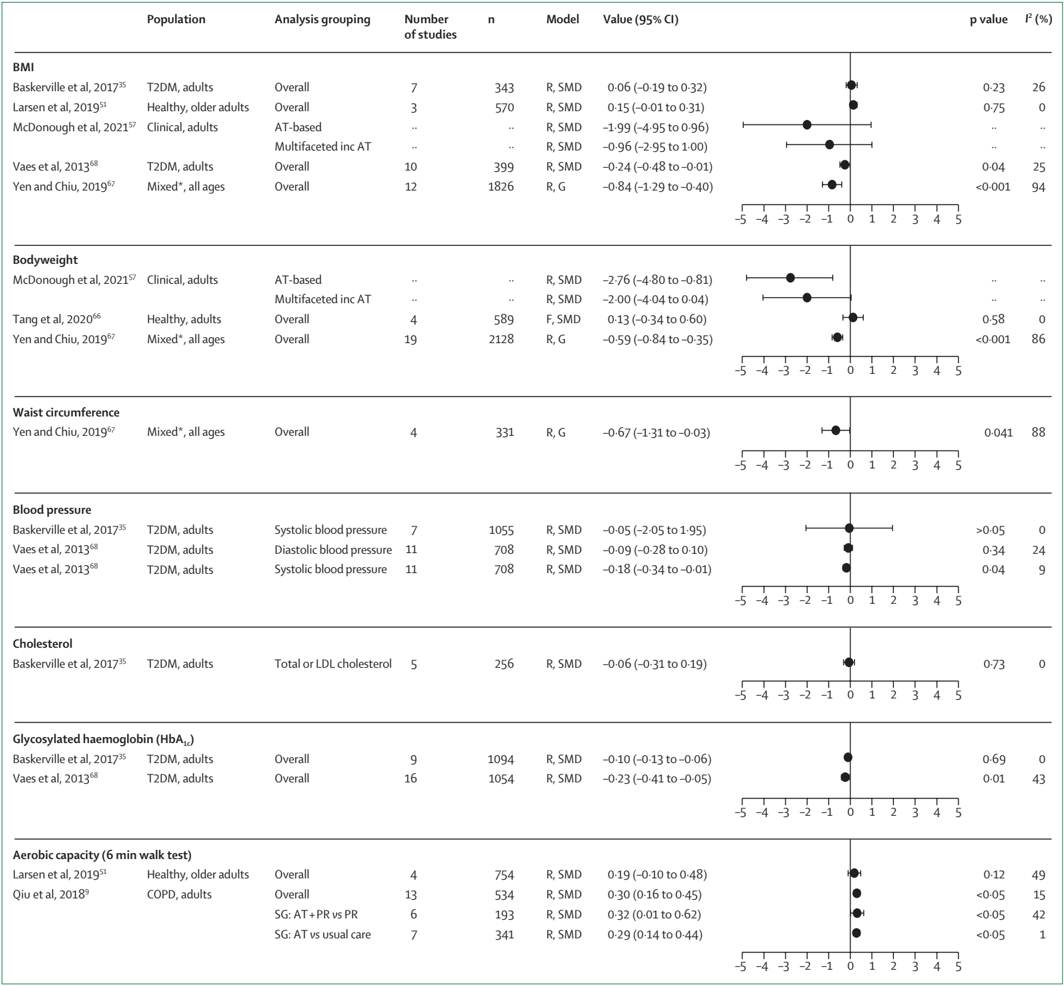
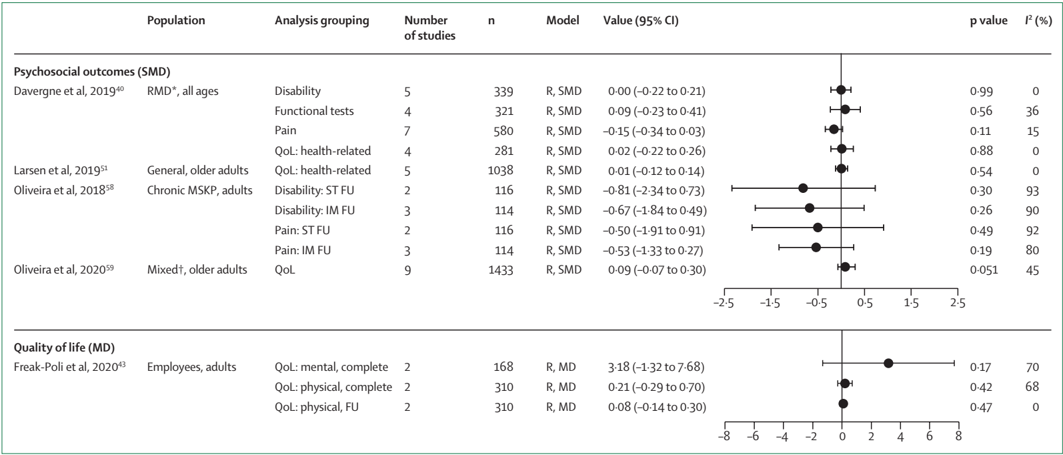
Wearable activity trackers offer an appealing, low-cost tool to address physical inactivity. This systematic review of systematic reviews and meta-analyses (umbrella review) aimed to examine the effectiveness of activity trackers for improving physical activity and related physiological and psychosocial outcomes in clinical and non-clinical populations. Seven databases (Embase, MEDLINE, Ovid Emcare, Scopus, SPORTDiscus, the Cochrane Library, and Web of Science) were searched from database inception to April 8, 2021. Systematic reviews of primary studies using activity trackers as interventions and reporting physical activity, physiological, or psychosocial outcomes were eligible for inclusion. In total, 39 systematic reviews and meta-analyses were identified, reporting results from 163 992 participants spanning all age groups, from both healthy and clinical populations. Taken together, the meta-analyses suggested activity trackers improved physical activity (standardised mean difference [SMD] 0·3-0·6), body composition (SMD 0·7-2·0), and fitness (SMD 0·3), equating to approximately 1800 extra steps per day, 40 min per day more walking, and reductions of approximately 1 kg in bodyweight. Effects for other physiological (blood pressure, cholesterol, and glycosylated haemoglobin) and psychosocial (quality of life and pain) outcomes were typically small and often non-significant. Activity trackers appear to be effective at increasing physical activity in a variety of age groups and clinical and non-clinical populations. The benefit is clinically important and is sustained over time. Based on the studies evaluated, there is sufficient evidence to recommend the use of activity trackers.
Overview
CoChat Summary
TL;DR
This umbrella review of 39 systematic reviews and meta-analyses found that wearable activity trackers increase physical activity and improve some body-composition and fitness outcomes across clinical and non-clinical populations. Effects on other physiological and psychosocial outcomes were generally small and often non-significant.
Key findings
- Activity trackers improved physical activity (SMD 0.3–0.6), body composition (SMD 0.7–2.0), and fitness (SMD 0.3), equating to approximately 1800 extra steps per day, 40 min per day more walking, and about 1 kg reduction in bodyweight.
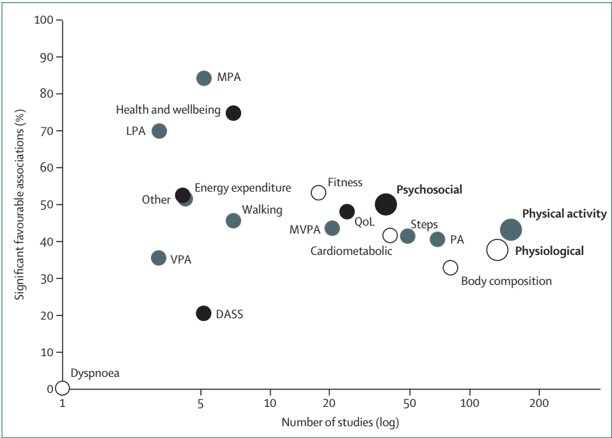
- Across all narratively synthesised studies, 41% showed significant favourable associations, 57% non-significant associations, and 3% significant unfavourable associations.
- Effects for blood pressure, cholesterol, glycosylated haemoglobin, quality of life, and pain were typically small and often non-significant; bodyweight, waist circumference, BMI, and aerobic capacity had the strongest evidence for improvement.
- The 39 reviews included 163,992 participants (abstract) and 390 unique component studies; corrected covered area was 2.3%, indicating slight overlap.
Methods
- Umbrella review reported per PRISMA and prospectively registered on PROSPERO (CRD42021246494); seven databases were searched from inception to April 8, 2021.
- Eligible studies were systematic reviews of experimental studies using wearable activity trackers as an intervention in any human population and reporting physical activity, physiological, or psychosocial outcomes; 39 reviews were included.
- Because of overlap among component studies, a meta-analysis of meta-analyses was not appropriate; findings were narratively synthesised with forest plots, AMSTAR 2 risk-of-bias appraisal, corrected covered area, and subgroup/sensitivity analyses.
Limitations
- The paper states that any umbrella review is limited by the included systematic reviews; populations were not exhaustive, most reviews were graded low or critically low confidence by AMSTAR 2, and a wide range of specific outcome metrics were used.
- The paper states that some included reviews contained some studies with inappropriate designs, which would probably underestimate effect sizes, and that few reviews examined wearable activity trackers alone.
- The paper states that most component randomised controlled trials were done in high-income countries, no systematic reviews addressed activity-tracker interventions in populations with mental health illnesses, and longer-term studies on physiological and broader psychosocial outcomes are needed.
Model-written summary. Check it against the paper before relying on it.
Integrity signals
Registry
Cites
Statistics
Figures
Verification
Claims the paper makes
18 Valid · 2 Not valid · 17 Not checked · 86 Own results and interpretations
Some cited sources support this claim and some don’t — read each source’s verdict below.
In the paper
“These improvements are relatively strong when considered in the broader field of physical activity interventions.”
§ Effectiveness of wearable activity trackers to increase physical activity and improve health: a systematic review of systematic reviews and meta-analyses > Discussion
What the sources say
- Partly supportedcites [69] Watson A, Timperio A, Brown H, Best K, Hesketh KD. Effect of classroom-based physical activity interventions on academic and physical activity outcomes: a systematic review and meta-analysis. Int J Behav Nutr Phys Act 2017; 14: 114. sourceExperimental — accuracy not yet measured
The Results (Academic-related outcomes; page unavailable) report improvements in on-task behaviour and some measures of academic achievement after classroom-based physical activity. Neither those results nor the Limitations section compares the size of these improvements with effects in the broader field of physical activity interventions, so the relative-strength claim is unsupported. (LLM, conf=0.78)
- Disputedcites [70] Conn VS, Hafdahl AR, Cooper PS, Brown LM, Lusk SL. Meta-analysis of workplace physical activity interventions. Am J Prev Med 2009; 37: 330-39. sourceExperimental — accuracy not yet measured
The Discussion describes the physical activity, fitness, and health benefits as modest, not relatively strong. It also reports that the physical activity effect was similar to one prior worksite synthesis and smaller than another; our copy provides no page number for these passages. (LLM, conf=0.87)
Checked by a reasoning model — may be wrong.
boosted- Asserted: passes — The authors put it forward as true.
- Checkable: passes — It can be checked against evidence.
- Load-bearing: passes — The paper’s conclusions depend on it.
- Based: passes — The paper gives a reason why it holds.
- Partly supported
Every source the paper cites for this claim was checked and supports it.
In the paper
“their use has been associated with increased physical activity.[7][8][9]”
§ Effectiveness of wearable activity trackers to increase physical activity and improve health: a systematic review of systematic reviews and meta-analyses > Introduction
What the sources say
- Supportedcites [7] Braakhuis HEM, Berger MAM, Bussmann JBJ. Effectiveness of healthcare interventions using objective feedback on physical activity: a systematic review and meta-analysis. J Rehabil Med 2019; 51: 151-59. source
The Discussion (page unavailable) states that the review's findings support an increase in physical activity with objective feedback from wearable monitors. The claim says “associated with,” rather than attributing the increase to trackers alone; the reviewed healthcare interventions often included other strategies. (LLM, conf=0.90)
- Supportedcites [8] Brickwood KJ, Watson G, O'Brien J, Williams AD. Consumer-based wearable activity trackers increase physical activity participation: systematic review and meta-analysis. JMIR Mhealth Uhealth 2019; 7: e11819. source
The Discussion’s “Physical Activity Participation” section reports significant improvements in daily steps, moderate-to-vigorous physical activity, and energy expenditure for participants in interventions that included a consumer-based wearable activity tracker, compared with controls. The paper notes that the quality of evidence was low or very low, but the citing sentence’s cautious wording—“associated with”—is consistent with its findings. (LLM, conf=0.93)
- Supportedcites [9] Qiu S, Cai X, Wang X, et al. Using step counters to promote physical activity and exercise capacity in patients with chronic obstructive pulmonary disease: a meta-analysis. Ther Adv Respir Dis 2018; 12: 1753466618787386. source
The Results section (‘Step counter use and physical activity’) reports that, across 15 randomized trials in patients with COPD, use of step counters significantly increased physical activity compared with controls. The Introduction identifies step counters as wearable devices that monitor physical activity, so the paper supports the stated association for this type of activity tracker. (LLM, conf=0.91)
plainstates an association- Asserted: passes — The authors put it forward as true.
- Checkable: passes — It can be checked against evidence.
- Load-bearing: passes — The paper’s conclusions depend on it.
- Based: passes — The paper gives a reason why it holds.
- Supported
Every source the paper cites for this claim was checked and supports it.
In the paper
“Wearable activity trackers promote behaviourchange techniques, such as self-monitoring and goal setting, 6”
§ Effectiveness of wearable activity trackers to increase physical activity and improve health: a systematic review of systematic reviews and meta-analyses > Introduction
What the sources say
- Supportedcites [6] Lyons EJ, Lewis ZH, Mayrsohn BG, Rowland JL. Behavior change techniques implemented in electronic lifestyle activity monitors: a systematic content analysis. J Med Internet Res 2014; 16: e192. source
The Results section reports that goal-setting and self-monitoring were found in all the activity-monitor systems studied. This supports the claim that wearable activity trackers provide these behaviour-change techniques. (LLM, conf=0.93)
plainstates a cause- Asserted: passes — The authors put it forward as true.
- Checkable: passes — It can be checked against evidence.
- Load-bearing: passes — The paper’s conclusions depend on it.
- Based: passes — The paper gives a reason why it holds.
- Supported
The cited sources support only part of this claim — read each source’s verdict below.
In the paper
“benefits for LDL cholesterol in populations of mixed disease (mean difference -0•32 mmol/L, 95% CI -0•51 to -0•12; appendix p 32), 42”
§ Effectiveness of wearable activity trackers to increase physical activity and improve health: a systematic review of systematic reviews and meta-analyses > Results according to risk of bias and population subgroups
What the sources say
- Partly supportedcites [42] Franssen WMA, Franssen GHLM, Spaas J, Solmi F, Eijnde BO. Can consumer wearable activity tracker-based interventions improve physical activity and cardiometabolic health in patients with chronic diseases? A systematic review and meta-analysis of randomised controlled trials. Int J Behav Nutr Phys Act 2020; 17: 57. sourceExperimental — accuracy not yet measured
The Results (Physical activity and cardiometabolic health; page unavailable) report a significant LDL-cholesterol reduction in participants with chronic diseases. However, the reported mean difference is −5.70 mg/dL (95% CI −9.24 to −2.15), approximately −0.15 mmol/L (95% CI −0.24 to −0.06), not the claimed −0.32 mmol/L (95% CI −0.51 to −0.12). (LLM, conf=0.90)
plainstates a cause- Asserted: passes — The authors put it forward as true.
- Checkable: passes — It can be checked against evidence.
- Load-bearing: passes — The paper’s conclusions depend on it.
- Based: passes — The paper gives a reason why it holds.
- Partly supported
The cited sources support only part of this claim — read each source’s verdict below.
In the paper
“They showed that the multifaceted interventions yielded effects around 50% larger than those using wearable activity trackers alone.”
§ Effectiveness of wearable activity trackers to increase physical activity and improve health: a systematic review of systematic reviews and meta-analyses > Review
What the sources say
- Partly supportedcites [8] Brickwood KJ, Watson G, O'Brien J, Williams AD. Consumer-based wearable activity trackers increase physical activity participation: systematic review and meta-analysis. JMIR Mhealth Uhealth 2019; 7: e11819. sourceExperimental — accuracy not yet measured
The Discussion (Physical Activity Participation; page unavailable) says multifaceted interventions had larger effects on physical activity participation than wearable-based interventions when each was compared with controls. It does not report an effect around 50% larger; the Results give MVPA effect sizes of 0.33 and 0.17, respectively. The comparison is therefore supported, but the claimed magnitude is not. (LLM, conf=0.88)
plainstates a cause- Asserted: passes — The authors put it forward as true.
- Checkable: passes — It can be checked against evidence.
- Load-bearing: unclear — It is unclear whether the paper’s conclusions depend on it.
- Based: passes — The paper gives a reason why it holds.
- Partly supported
57 more claims
Create a free account to see all 123 claims and every source verdict.
- It may state two separate claims as one. 49
- Probably not a substantial claim. 19
Claims other papers make about this one
Each is checked against this paper’s own text: does it say what the citing paper says it does?
The source backs part of the claim, not all of it — or backs it for a different population, condition or comparison.
In the citing paper
“Additional tools such as wearable activity trackers can encourage increased physical activity of an additional 1800 steps per day on average, or 0.5 to 1.5 kg of weight loss.76”
From Obesity Management in Adults: A Review (2023) · cites this paper as [76]
Experimental — accuracy not yet measuredThe source backs part of the claim, not all of it — or backs it for a different population, condition or comparison.
In the citing paper
“An umbrella review found little evidence that PA trackers improve HbA1c in people with T2D.15”
From Mobile Health Biometrics to Enhance Exercise and Physical Activity Adherence in Type 2 Diabetes (MOTIVATE-T2D): a decentralised feasibility randomised controlled trial delivered across the UK and Canada (2025) · cites this paper as [15]
Experimental — accuracy not yet measuredThe cited source says what the claim attributes to it.
In the citing paper
“Evidence from randomised controlled trials (RCTs) and systematic reviews indicates that fitness trackers are effective at increasing physical activity, as measured by daily steps and minutes of moderate-to-vigorous physical activities (MVPA) [17,24,25].”
From Economic evaluation of wearable fitness trackers versus metformin for preventing type 2 diabetes in the UK population (2025) · cites this paper as [25]
The cited source says what the claim attributes to it.
In the citing paper
“A systematic review of meta-analyses concludes that interventions using wearable devices increased step counts on average by around 1800 steps per day, walking time by about 40 min per day, and MVPA by nearly 6 min per day [25].”
From Economic evaluation of wearable fitness trackers versus metformin for preventing type 2 diabetes in the UK population (2025) · cites this paper as [25]
The cited source says what the claim attributes to it.
In the citing paper
“However, the effects of increasing PA via the use of PA trackers on outcomes relevant to the clinical management of T2D are unclear.”
2 more claims about this paper
Create a free account to see every claim other papers make about this one.
Self-check
Percentages, sums and reported differences re-computed from the paper’s own numbers.
Each contradiction between two passages listed here was confirmed by an independent check.
Rated minor: it would not touch a result — a value no result rests on, a p-value that stays on the same side of the significance level, or a conflict that is clerical, resolved elsewhere in the paper, or outside its own findings.
In the paper
§ Effectiveness of wearable activity trackers to increase physical activity and improve health: a systematic review of systematic reviews and meta-analyses > Results according to risk of bias and population subgroups
“the meta-analysis by Larsen and colleagues 51 found an effect size of 0•34”
§ Effectiveness of wearable activity trackers to increase physical activity and improve health: a systematic review of systematic reviews and meta-analyses > References
“51. Kirk MA, Amiri M, Pirbaglou M, Ritvo P. Wearable technology and physical activity behavior change in adults with chronic cardiometabolic disease: a systematic review and meta-analysis.”
Rated minor: it would not touch a result — a value no result rests on, a p-value that stays on the same side of the significance level, or a conflict that is clerical, resolved elsewhere in the paper, or outside its own findings.
In the paper
§ Effectiveness of wearable activity trackers to increase physical activity and improve health: a systematic review of systematic reviews and meta-analyses > Abstract
“In total, 39 systematic reviews and meta-analyses were identified, reporting results from 163 992 participants”
§ Effectiveness of wearable activity trackers to increase physical activity and improve health: a systematic review of systematic reviews and meta-analyses > Review
“The volume of included studies investigating the efficacy of wearable trackers is large-39 systematic reviews and 390 component experimental studies covering 163 841 participants (not accounting for overlap).”
Citations
Cites
Liberati, A., Altman, D. G., Tetzlaff, J., Mulrow, C., Gøtzsche, P. C., Ioannidis, J. P. A., Clarke, M., Devereaux, P. J., Kleijnen, J., & Moher, D. (2009) · PLoS Medicine · doi:10.1371/journal.pmed.1000100 · Cited by 28,164
Liberati, A., Altman, D. G., Tetzlaff, J., Mulrow, C., Gotzsche, P. C., Ioannidis, J. P. A., Clarke, M., Devereaux, P. J., Kleijnen, J., & Moher, D. (2009) · BMJ · doi:10.1136/bmj.b2700 · Cited by 17,648
Shea, B. J., Reeves, B. C., Wells, G., Thuku, M., Hamel, C., Moran, J., Moher, D., Tugwell, P., Welch, V., Kristjansson, E., et al. (2017) · BMJ · doi:10.1136/bmj.j4008 · Cited by 10,636
Lee, I.-M., Shiroma, E. J., Lobelo, F., Puska, P., Blair, S. N., & Katzmarzyk, P. T. (2012) · The Lancet · doi:10.1016/s0140-6736(12)61031-9 · Cited by 8,215
Cochrane Handbook for Systematic Reviews of Interventions
Higgins, J. P. T., Green, S., & Ben Van Den, A. (2020) · International Coaching Psychology Review · doi:10.53841/bpsicpr.2020.15.2.123 · Cited by 5,670
The well-built clinical question: A key to evidence-based decisions
(1995) · ACP Journal Club · doi:10.7326/acpjc-1995-123-3-a12 · Cited by 2,931
Analysing data and undertaking meta‐analyses
Deeks, J. J., Higgins, J. P., Altman, D. G., & on behalf of the Cochrane Statistical Methods Group (2019) · Cochrane Handbook for Systematic Reviews of Interventions · doi:10.1002/9781119536604.ch10 · Cited by 2,672
Aromataris, E., Fernandez, R., Godfrey, C. M., Holly, C., Khalil, H., & Tungpunkom, P. (2015) · International Journal of Evidence-Based Healthcare · doi:10.1097/xeb.0000000000000055 · Cited by 2,587
The economic burden of physical inactivity: a global analysis of major non-communicable diseases
Ding, D., Lawson, K. D., Kolbe-Alexander, T. L., Finkelstein, E. A., Katzmarzyk, P. T., van Mechelen, W., & Pratt, M. (2016) · The Lancet · doi:10.1016/s0140-6736(16)30383-x · Cited by 2,201
Using Pedometers to Increase Physical Activity and Improve Health: A Systematic Review
Bravata, D. M., Smith-Spangler, C., Sundaram, V., Gienger, A. L., Lin, N., Lewis, R., Stave, C. D., Olkin, I., & Sirard, J. R. (2007) · JAMA · doi:10.1001/jama.298.19.2296 · Cited by 2,064
Cited by
Items 501–564 of 564
Daka, R., & Rambe, A. (2026) · Journal of Health Medical and Psychological Studies · doi:10.65310/0d349f21
“The dominance of adult-focused studies indicates that wearable technology research has initially developed within contexts related to lifestyle modification, chronic disease prevention, and health behavior management among mature populations (Ferguson et al., 2022).”
InfluentialBoatemaa, A., Osei, B., Yaw, O. R., & Forkuo, G. O. (2026) · Research Square · doi:10.21203/rs.3.rs-10434622/v1
Yang, Q., & Zhang, T. (2026) · Digital Health · doi:10.1177/20552076261474014
“85,86 Looking ahead, wearable technology in cardiovascular medicine is likely to evolve in three directions.”
Velos*, D. L. C. P. A. J. P. (2026) · International Journal of Biosciences (IJB) · doi:10.12692/ijb/28.4.209-219
Allain, J. E., Waghorn, J., MacDonald, E. E., & O'Brien, M. W. (2026) · Journal for the Measurement of Physical Behaviour · doi:10.1123/jmpb.2026-0019
Ma, H., Liu, G., Pei, R., Li, S., Liu, Z., Wang, A., Tang, X., Li, Q., Huang, R.-R., Zhang, J., et al. (2026) · Research Square · doi:10.21203/rs.3.rs-5470873/v1
Domínguez‐Navarro, F., Gámez-Paya, J., Blasco, J., Hernández‐Guillén, D., Costa-Moreno, E., & Pérez-Maletzki, J. (2026) · Musculoskeletal Science and Practice · doi:10.1016/j.msksp.2026.103619
Yang, L., & Wang, X. (2026) · Frontiers in Public Health · doi:10.3389/fpubh.2026.1888001
Artificial Intelligence in Exercise Programming and Coaching: Opportunities and Limitations.
Reiner, S. L., Pearson, R., Reed, R. A., Olenick, A., & Pojednic, R. (2026) · Current sports medicine reports · doi:10.1249/jsr.0000000000001357
Lampe, E. W., Gorrell, S., Lee, A. R., Presseller, E. K., & Manasse, S. M. (2026) · Digital Health · doi:10.1177/20552076261476177
Zhuang, S., Yu, M., Ip, H. L., Huang, Y., Fong, D. Y. T., & Lok, K. Y. W. (2026) · International Journal of Nursing Studies · doi:10.1016/j.ijnurstu.2026.105660
Wang, Y.-T., & Liu, C. T. (2026) · Journal of Medical Internet Research · doi:10.2196/105514
A holistic energy expenditure tracking framework: fuelling wellness with holistic energy tracking
Kadam, P., Kaur, G., Panchal, L., & Nirkhi, S. M. (2026) · IAES International Journal of Artificial Intelligence · doi:10.11591/ijai.v15.i4.pp3546-3555
“The automatic method of measuring PA is by mobile APPs [8], [9], web apps [10] or wearable devices like fitness bands [11], [12].”
Advancing Physical Activity Behavior Change: The Potential of Serious Digital Health Technologies
Attoh-Mensah, E. (2026) · Frontiers research topics · doi:10.3389/978-2-8325-8492-7
Park, S.-J., Yang, H. J., Choi, C., & Bum, C.-H. (2026) · Frontiers in Public Health · doi:10.3389/fpubh.2026.1911509 · Cited by 3
Sañudo, B., Sañudo, J. I., Feria, A., Schwarz, D., Langbein, E., & Sánchez-Oliver, A. J. (2026) · Disability and Rehabilitation Assistive Technology · doi:10.1080/17483107.2026.2716567
Chen, S., Lian, J., Hu, W., Wang, T., & Cao, Y. (2026) · Frontiers in Public Health · doi:10.3389/fpubh.2026.1922940
WEARABLE HEALTH TECHNOLOGIES AND THE MEDICALIZATION OF EVERYDAY LIFE: A SOCIO-MEDICAL REVIEW
Sierant, M., Kwaśniewska, M., Zmysłowska, K., Hajdaniak, A., Kiersztyn, J. M., Grabowska, A., Seńcio, N., Szatkowska, A., & Stadnik, K. A. (2026) · International Journal of Innovative Technologies in Social Science · doi:10.31435/ijitss.3(51).2026.6462
Levet-Bourtayre, J., Brinkman, C., Pacheco, G., Levy, E., Baez, S., & Blue, M. N. M. (2026) · Journal of Technology in Behavioral Science · doi:10.1007/s41347-026-00703-6
Master, H., Perry, A., Annis, J. S., Nayor, M. G., Murthy, V. L., Shah, R. V., & Brittain, E. L. (2026) · doi:10.2196/preprints.110326
Multidisciplinary expert consensus on clinical diagnosis and therapies for low back pain
Gao, B., Chai, R., Wang, G., Song, Y., Shang, L., Huang, J., Cao, X., Hai, Y., Luo, Z., Hai, Y., et al. (2026) · Bone Research · doi:10.1038/s41413-026-00572-y
“141 These fi ndings suggest that wearable devices are more useful for improving activity monitoring, exercise adherence, and behavioral engagement than for direct pain relief.”
2026 ESC Guidelines on cardiac rehabilitation
Bäck, M., Wilhelm, M., Marcin, T., Machado, F. V. C., Sandberg, A., Buccheri, S., Conde, A. C., Czapla, M., Rosa, S. D., Gibson, I., et al. (2026) · European Journal of Preventive Cardiology · doi:10.1093/eurjpc/zwag417 · Cited by 4
Moghadam, B. H., & Gaeini, A. A. (2026) · Journal of Translational Medical Research · doi:10.66224/jbums.33.25
Hamdani, N., Saragiotto, B. T., Stubbs, P. W., Oliveira, J., Tiedemann, A., Sherrington, C., Santana, P., Ferretti, G. M., Verhagen, A. P., & Mehta, P. (2026) · The Journal of Frailty & Aging · doi:10.1016/j.tjfa.2026.100180
“While systematic reviews have examined activity trackers in older adults [1,35 – 39] and on mixed-age populations [29,30, 40] most included individuals 60 years, healthy populations, or mixed populations (healthy and diseased) limiting the generalisability to people with underlying health…”
Ata, S. K., Zhou, W., Tandi, J., Lee, W. Q., Chan, Y. E., Guretno, F., Veeramani, A., Liu, W., Tan, J., Wijaya, F. B., et al. (2026) · Journal of Medical Internet Research · doi:10.2196/86629
Digital health, technology, AI, and wearables in obesity care
Hallock, R., Cabandugama, P. K., & Patel, N. (2026) · Advances in pharmacology · doi:10.1016/bs.apha.2026.06.004
Wang, C., Han, C., Sun, J., & Fang, T. (2026) · Frontiers in Nutrition · doi:10.3389/fnut.2026.1853482
Mekruksavanich, S., Phaphan, W., & Jitpattanakul, A. (2026) · International Conference on Big Data Analytics and Practices (IBDAP) · doi:10.1109/ibdap69915.2026.11677994
Osinaike, J., Copeland, R., & Hardcastle, S. J. (2026) · BMC Family Practice · doi:10.1186/s12875-026-03544-7
Zhu, Q., Tu, Y., Li, X., & Chang, P. (2026) · Behavioral Sciences · doi:10.3390/bs16091645
“The evidence base for digital tools that do move activity is built on interventions defined by automated self-monitoring and feedback (Ferguson et al., 2022; Laranjo et al., 2021).”
InfluentialMalaikah, S. (2026) · Frontiers in Digital Health · doi:10.3389/fdgth.2026.1871670
Active Aging Through ICT—Current Opportunities and Challenges
Jungreitmayr, S. (2026) · Springer eBooks · doi:10.1007/978-3-662-73013-3_11
The Efficacy of Auditory and Haptic Cues Delivered via a Wearable Device to Guide Walking Intensity
Warner, A., Vanicek, N., Benson, A. C., Myers, T., & Abt, G. (2026) · Communications in Kinesiology · doi:10.51224/cik.2026.7780
Tóth, K., Takács, P., & Balatoni, I. (2026) · Debreceni Szemle · doi:10.59424/debreceniszemle/2026/34//56-70
van Lotringen, C. M., Kelders, S. M., Westerhof, G. J., & Noordzij, M. L. (2026) · Digital Health · doi:10.1177/20552076261483463 · Cited by 1
Amadei, M., Reichenberger, D., Tung, D., Gannon, H., Gorovoy, S. B., Diaz-Pacheco, A., & Grandner, M. A. (2026) · Arteriosclerosis Thrombosis and Vascular Biology · doi:10.1161/atvbaha.126.322875
Zola, N., Ifdil, I., Zatrahadi, M. F., & Zulvi, N. A. W. (2026) · JRTI (Jurnal Riset Tindakan Indonesia) · doi:10.29210/30036997000
“…can extend these interventions beyond the laboratory, consistent with the broader trajectory of wearable sensing in sport (Seshadri et al., 2019; Ferguson et al., 2022; Ajami & Teimouri, 2015) and with machine-learning-based physiological analysis (Bellfield et al., 2022; Palermi et al., 2024;…”
Advances in integrated diagnostics: Innovation and translation of laboratory diagnostic technologies
Bernardini, S., & Zhang, J. (2026) · Integrated Diagnostics · doi:10.1016/j.intdia.2026.100005
Chávez, L. F. J. G., Haro, J. L., Almanzar, P. C., & Zavalza, A. R. P. (2026) · Retos · doi:10.47197/retos.v84.118781
Human-Centric Wearable AI: Defining an Emerging Form of Human-Computer InteractionPreprint
Pedersen, I. (2026) · SSRN Electronic Journal · doi:10.2139/ssrn.7541966
Non-Pharmacological and Non-Surgical Options to Combat Obesity
Memon, A. Q. (2026) · Medical Forum Monthly · doi:10.60110/medforum.370928
Li, X., Jiang, Y., Wang, Y., Wang, Y., & Liu, Y. (2026) · Frontiers in Public Health · doi:10.3389/fpubh.2026.1945553
“Systematic reviews of digital interventions among college students and healthy young adults have reported small, inconsistent or outcome-specific effects (8–10).”
InfluentialGillings, E., Greenberg, N. L., Steves, C. J., & Leightley, D. (2026) · doi:10.2196/preprints.113820
Goldman, D., Kortowich, L., & Nagra, M. (2026) · American Journal of Lifestyle Medicine · doi:10.1177/15598276261496228
Bottlenecks in cardiovascular prevention: Can artificial intelligence close the gap?
Beuque, G., de Fréminville, J.-B., Boutigny, A., Duchâteau, J., Lequeux, B., Pathak, A., Bailly, G., & Boulestreau, R. (2026) · Archives of cardiovascular diseases · doi:10.1016/j.acvd.2026.09.005
van Vliet, M. H. M., Versluis, A., Penfornis, K. M., Baccinelli, W., Scheltinga, B. L., Albers, N., Chavannes, N. H., Rippe, R. C. A., & Meijer, E. (2026) · Digital Health · doi:10.1177/20552076261450745
Luo, J., Niu, Y., Ni, M., Zhang, J., & Guo, Z. (2026) · Frontiers in Cardiovascular Medicine · doi:10.3389/fcvm.2026.1877770
Rukavina, A.-M. J., & Pongračić, L. (2026) · Baltic Journal of Sport and Health Sciences · doi:10.33607/bjshs.v2i143.2360
Exercise Prescriptions for Cardiovascular Health in Adults: 2026 ACC Scientific Statement
MYERS, J. N., Beckie, T. M., Chastin, S., Fleg, J. L., Kitzman, D. W., Thompson, P. D., & Wasfy, M. M. (2026) · Journal of the American College of Cardiology · doi:10.1016/j.jacc.2026.09.008 · Cited by 2
Steps to Better Health: An Everyday Guide to Walking
Webber, B. J. (2026) · American Journal of Lifestyle Medicine · doi:10.1177/15598276261488034
Tracking fitness, comparing bodies: Social comparison and exercise activity among college students
Selby, C. M., Holody, K. J., & Carter, E. L. (2026) · Computers in Human Behavior · doi:10.1016/j.chb.2026.109216
Baduanjin Exercise Across Clinical Conditions: An Umbrella Review
Yuan, D., Xu, B., Zhao, R., 崔永胜, 杨克新, 金哲锋, Sun, K., Wei, J., Zhu, L., Qin, X., et al. (2026) · Journal of Evidence-Based Medicine · doi:10.1111/jebm.70196
Kunst, C., Reichert, D., Rehder, J., Lenz, B., Giurgiu, M., & Reichert, M. (2026) · Bundesgesundheitsblatt - Gesundheitsforschung - Gesundheitsschutz · doi:10.1007/s00103-026-04320-9
Modern fitness as health promoting physical activity: scientific approaches and development trends
Гунина, Л. М., Іванович, О. О., & Rakhmanova, Y. V. (2026) · Academic Visions · doi:10.66556/2786-586x.60.guninaorlova-l
Mutairi, A. A., Al-Ramadan, M., Qarin, M. I. A., Al-Abbas, M. S., Qahtani, N. A. A., Maghraby, M. A. A., Ahsan, M., & Abualait, T. (2026) · Medicine · doi:10.1097/md.0000000000051091
“[21] Tools like the International Physical Activity Questionnaire Short Form (IPAQ-SF) have been widely used due to their cost-effectiveness and ease of administration.”
Lehto, M., & Neittaanmäki, P. (2026) · JYU Reports · doi:10.17011/jyureports/113
Donegà, G., Vecchiato, M., Demeco, A., Sirico, F., Gnasso, R., Ruosi, C., Cerciello, S., Guzzini, M., Nutarelli, S., & Palermi, S. (2026) · Journal of Functional Morphology and Kinesiology · doi:10.3390/jfmk11040448
Conceptualizing longevity in nursing: a multidimensional framework for healthspan optimization
Doğan, S. E., & Altınbaş, Y. (2026) · Geriatric Nursing · doi:10.1016/j.gerinurse.2026.104430
Impact of Fitness Trackers on Health and Wellness Management: A Case Study for College-Aged Students
Mitra, S. (2026) · International Journal of Strategic Decision Sciences · doi:10.4018/ijsds.426660
Metadata
- Authors
- Ferguson, T., Olds, T., Curtis, R., Blake, H., Crozier, A. J., Dankiw, K., Dumuid, D., Kasai, D., O'Connor, E., Virgara, R., & Maher, C.
- Affiliations
- University of South Australia (AU)
- Corresponding author
- Maher, Carol
- ORCID
- Venue
- The Lancet Digital Health
- Publisher
- Elsevier BV
- Published
- 2022-08
- Volume
- 4
- Issue
- 8
- Pages
- e615-e626
- ISSN
- 2589-7500 (ISSN-L)
- OpenAlex
- W4285891242
- Semantic Scholar
- e4f38c44da2bf83fa39c30b60da1506cfddb9af0
- Cited by
- 605
- References
- 71
- Citations by year
- 2026: 198 · 2025: 169 · 2024: 161 · 2023: 70 · 2022: 6
- FWCI
- 16.74
- Type
- journal article
- Language
- en
- Open access
- gold
- doi.org
- Licence
- cc-by-nc-nd
- www.elsevier.com/tdm/userlicense/1.0/ (tdm)
- www.elsevier.com/legal/tdmrep-license (tdm)
- creativecommons.org/licenses/by-nc-nd/4.0/ (vor)
- Locations
- The Lancet Digital Health (publishedVersion, cc-by-nc-nd)
- PubMed (publishedVersion)
- UniSA Research Outputs Repository (University of South Australia) (acceptedVersion)
- Adelaide Research & Scholarship (AR&S) (University of Adelaide) (submittedVersion, cc-by-nc-nd)
- Topics
- Health Sciences › Medicine › Public Health, Environmental and Occupational Health › Physical Activity and Health
- Health Sciences › Health Professions › General Health Professions › Mobile Health and mHealth Applications
- Physical Sciences › Computer Science › Computer Vision and Pattern Recognition › Context-Aware Activity Recognition Systems
- Keywords
- wearable activity trackers, physical activity, physical inactivity, body composition, fitness, blood pressure, cholesterol, glycemic control, quality of life, pain, clinical populations, non-clinical population, step count, walking
- MeSH terms
- Fitness Trackers, Systematic Reviews as Topic, Humans, Quality of Life, Exercise
About these checks
Registry, retraction, Cites and statistics results are computed, not judged, with one exception: a printed reference that no index lists is read once by a model before it counts as a citation error. Claims are extracted by a model and kept only when their quote appears verbatim in the text; each cited source is then checked, with a model’s help, for whether it says what the claim relies on. Those verdicts can be wrong — read the claim’s quote and the cited source before relying on one.
The claim verdicts this report counts are experimental: their accuracy is not yet measured.
A language model drew the claims from the paper on 2026-10-09, under version 3 of the claim definition (model deepseek-v4.1-flash, prompt extract-v3).
A second model labelled each claim on 2026-10-09 (model jev-1.13-20260917, definition revision gold-guideline-v0.2).
Cited sources are checked with a language model’s help (gpt-6-sol).
Statistics and arithmetic are recomputed, not judged.
Confidence bands are shown only for fields calibrated on our annotated test set. None is calibrated yet, so no band is shown.
What counts as a claim ›How we measure confidence ›How we check this ›
Are you an author, or do you see a problem with this page? Request a review
Data sources
Bibliographic data: Semantic Scholar, OpenAlex, Crossref.
Contains information from the Semantic Scholar Academic Graph Datasets, made available under the ODC Attribution License (ODC-BY 1.0).
Semantic Scholar’s data is described in: Kinney, R., et al. (2023). The Semantic Scholar Open Data Platform. arXiv:2301.10140.
