

Effectiveness of wearable activity trackers to increase physical activity and improve health: a systematic review of systematic reviews and meta-analyses.
Open accessThe DOI matches its Crossref record; 80 of the 80 references it cites were found in a registry or an index; 32 of the 50 sources its claims cite were checked for support.
Abstract
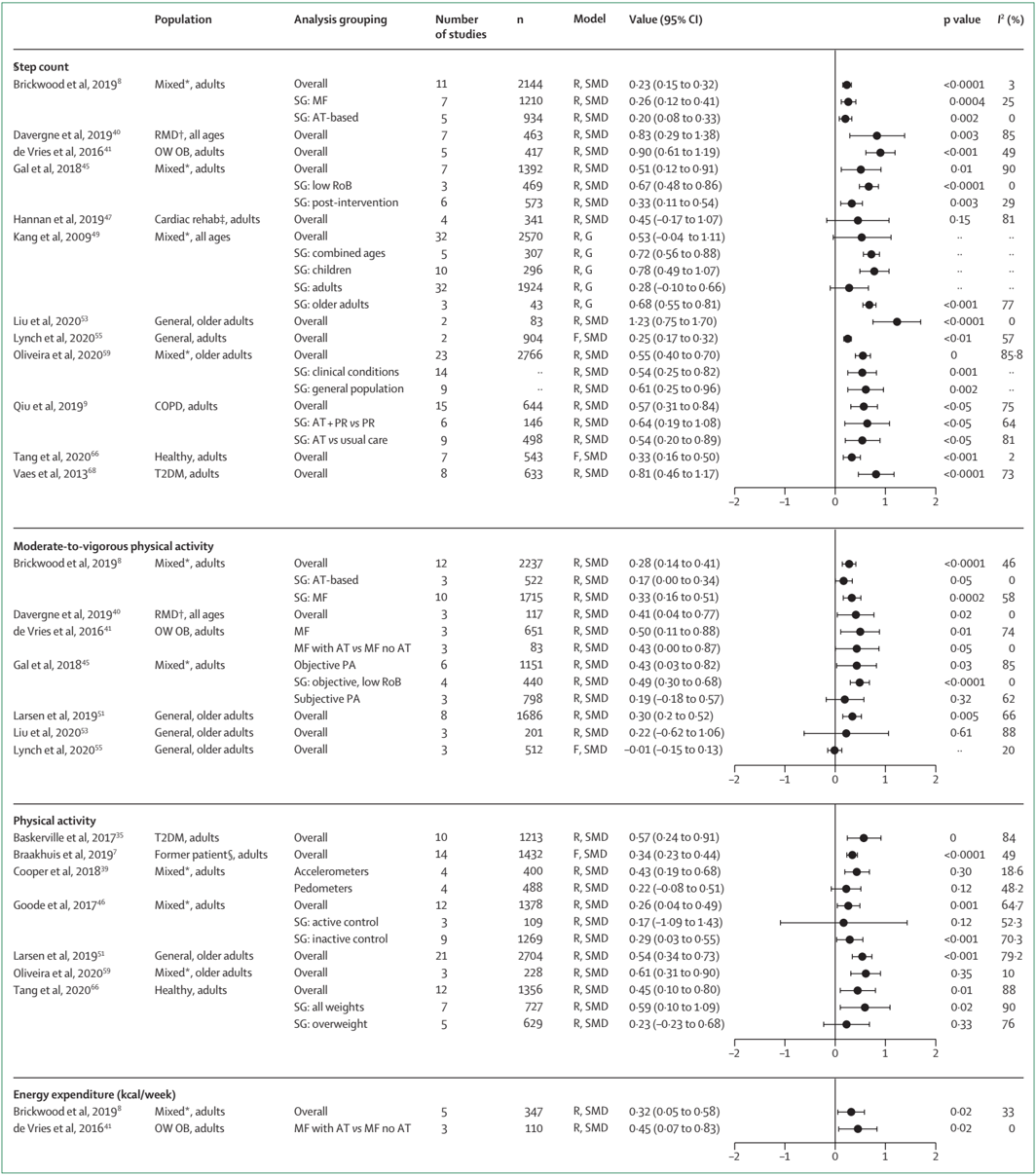
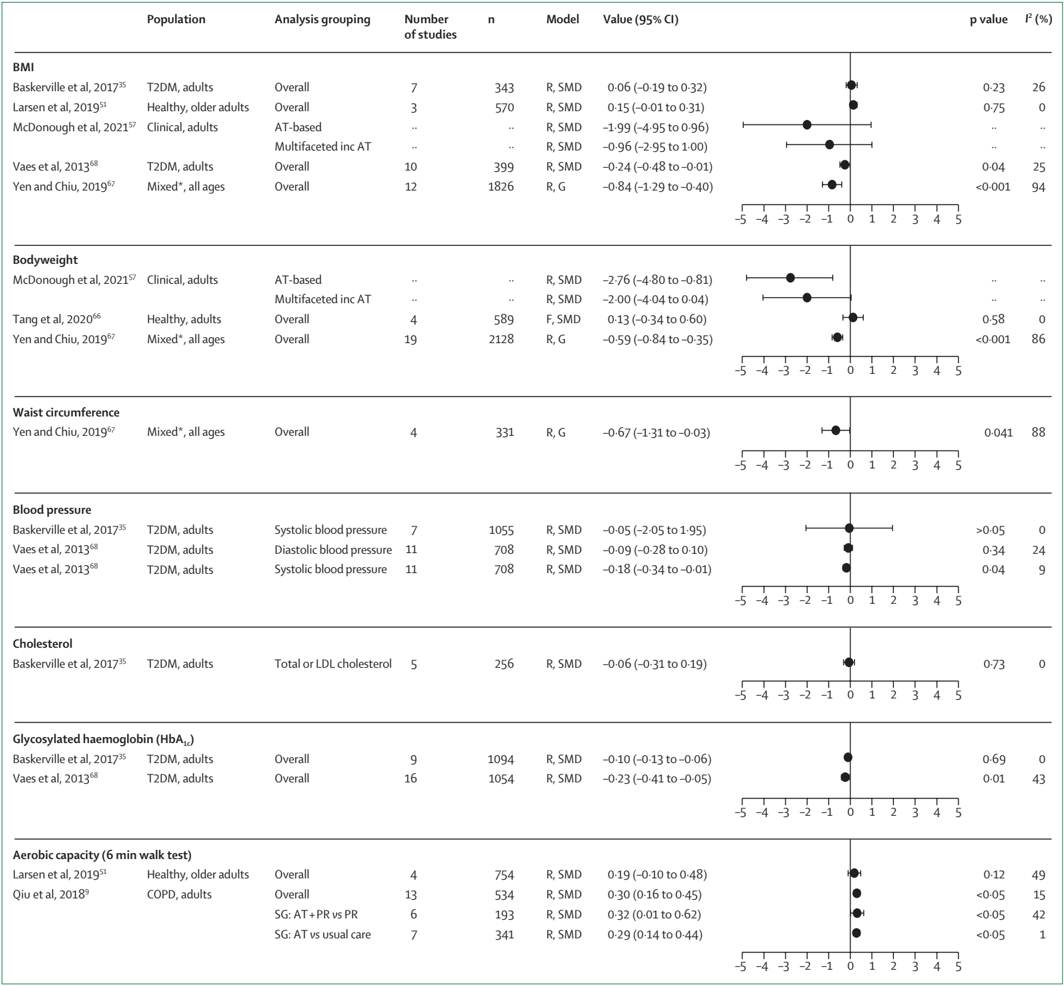
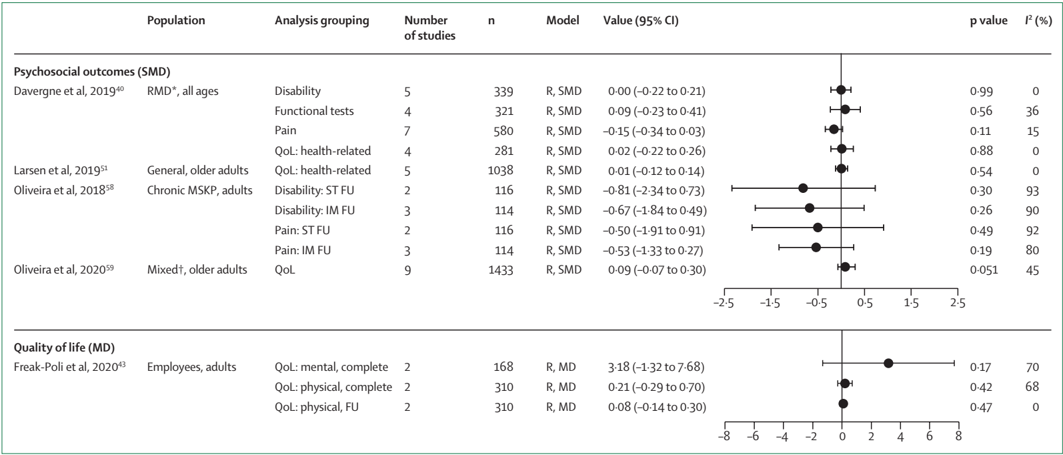
Wearable activity trackers offer an appealing, low-cost tool to address physical inactivity. This systematic review of systematic reviews and meta-analyses (umbrella review) aimed to examine the effectiveness of activity trackers for improving physical activity and related physiological and psychosocial outcomes in clinical and non-clinical populations. Seven databases (Embase, MEDLINE, Ovid Emcare, Scopus, SPORTDiscus, the Cochrane Library, and Web of Science) were searched from database inception to April 8, 2021. Systematic reviews of primary studies using activity trackers as interventions and reporting physical activity, physiological, or psychosocial outcomes were eligible for inclusion. In total, 39 systematic reviews and meta-analyses were identified, reporting results from 163 992 participants spanning all age groups, from both healthy and clinical populations. Taken together, the meta-analyses suggested activity trackers improved physical activity (standardised mean difference [SMD] 0·3-0·6), body composition (SMD 0·7-2·0), and fitness (SMD 0·3), equating to approximately 1800 extra steps per day, 40 min per day more walking, and reductions of approximately 1 kg in bodyweight. Effects for other physiological (blood pressure, cholesterol, and glycosylated haemoglobin) and psychosocial (quality of life and pain) outcomes were typically small and often non-significant. Activity trackers appear to be effective at increasing physical activity in a variety of age groups and clinical and non-clinical populations. The benefit is clinically important and is sustained over time. Based on the studies evaluated, there is sufficient evidence to recommend the use of activity trackers.
Overview
CoChat Summary
TL;DR
This umbrella review of 39 systematic reviews and meta-analyses found that wearable activity trackers increase physical activity and improve some body-composition and fitness outcomes across clinical and non-clinical populations. Effects on other physiological and psychosocial outcomes were generally small and often non-significant.
Key findings
- Activity trackers improved physical activity (SMD 0.3–0.6), body composition (SMD 0.7–2.0), and fitness (SMD 0.3), equating to approximately 1800 extra steps per day, 40 min per day more walking, and about 1 kg reduction in bodyweight.
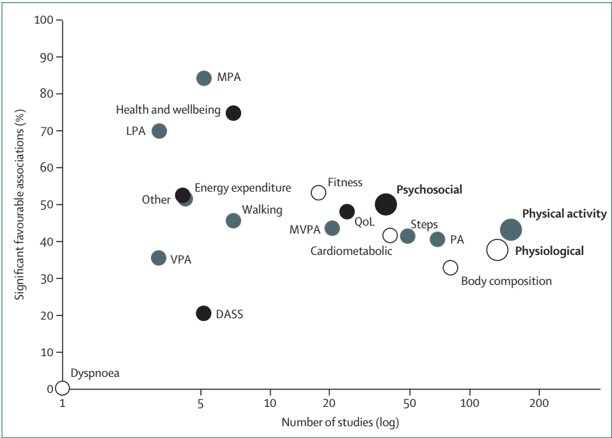
- Across all narratively synthesised studies, 41% showed significant favourable associations, 57% non-significant associations, and 3% significant unfavourable associations.
- Effects for blood pressure, cholesterol, glycosylated haemoglobin, quality of life, and pain were typically small and often non-significant; bodyweight, waist circumference, BMI, and aerobic capacity had the strongest evidence for improvement.
- The 39 reviews included 163,992 participants (abstract) and 390 unique component studies; corrected covered area was 2.3%, indicating slight overlap.
Methods
- Umbrella review reported per PRISMA and prospectively registered on PROSPERO (CRD42021246494); seven databases were searched from inception to April 8, 2021.
- Eligible studies were systematic reviews of experimental studies using wearable activity trackers as an intervention in any human population and reporting physical activity, physiological, or psychosocial outcomes; 39 reviews were included.
- Because of overlap among component studies, a meta-analysis of meta-analyses was not appropriate; findings were narratively synthesised with forest plots, AMSTAR 2 risk-of-bias appraisal, corrected covered area, and subgroup/sensitivity analyses.
Limitations
- The paper states that any umbrella review is limited by the included systematic reviews; populations were not exhaustive, most reviews were graded low or critically low confidence by AMSTAR 2, and a wide range of specific outcome metrics were used.
- The paper states that some included reviews contained some studies with inappropriate designs, which would probably underestimate effect sizes, and that few reviews examined wearable activity trackers alone.
- The paper states that most component randomised controlled trials were done in high-income countries, no systematic reviews addressed activity-tracker interventions in populations with mental health illnesses, and longer-term studies on physiological and broader psychosocial outcomes are needed.
Model-written summary. Check it against the paper before relying on it.
Integrity signals
Registry
Cites
Statistics
Figures
Verification
Claims the paper makes
18 Valid · 2 Not valid · 17 Not checked · 86 Own results and interpretations
Some cited sources support this claim and some don’t — read each source’s verdict below.
In the paper
“These improvements are relatively strong when considered in the broader field of physical activity interventions.”
§ Effectiveness of wearable activity trackers to increase physical activity and improve health: a systematic review of systematic reviews and meta-analyses > Discussion
What the sources say
- Partly supportedcites [69] Watson A, Timperio A, Brown H, Best K, Hesketh KD. Effect of classroom-based physical activity interventions on academic and physical activity outcomes: a systematic review and meta-analysis. Int J Behav Nutr Phys Act 2017; 14: 114. sourceExperimental — accuracy not yet measured
The Results (Academic-related outcomes; page unavailable) report improvements in on-task behaviour and some measures of academic achievement after classroom-based physical activity. Neither those results nor the Limitations section compares the size of these improvements with effects in the broader field of physical activity interventions, so the relative-strength claim is unsupported. (LLM, conf=0.78)
- Disputedcites [70] Conn VS, Hafdahl AR, Cooper PS, Brown LM, Lusk SL. Meta-analysis of workplace physical activity interventions. Am J Prev Med 2009; 37: 330-39. sourceExperimental — accuracy not yet measured
The Discussion describes the physical activity, fitness, and health benefits as modest, not relatively strong. It also reports that the physical activity effect was similar to one prior worksite synthesis and smaller than another; our copy provides no page number for these passages. (LLM, conf=0.87)
Checked by a reasoning model — may be wrong.
boosted- Asserted: passes — The authors put it forward as true.
- Checkable: passes — It can be checked against evidence.
- Load-bearing: passes — The paper’s conclusions depend on it.
- Based: passes — The paper gives a reason why it holds.
- Partly supported
Every source the paper cites for this claim was checked and supports it.
In the paper
“their use has been associated with increased physical activity.[7][8][9]”
§ Effectiveness of wearable activity trackers to increase physical activity and improve health: a systematic review of systematic reviews and meta-analyses > Introduction
What the sources say
- Supportedcites [7] Braakhuis HEM, Berger MAM, Bussmann JBJ. Effectiveness of healthcare interventions using objective feedback on physical activity: a systematic review and meta-analysis. J Rehabil Med 2019; 51: 151-59. source
The Discussion (page unavailable) states that the review's findings support an increase in physical activity with objective feedback from wearable monitors. The claim says “associated with,” rather than attributing the increase to trackers alone; the reviewed healthcare interventions often included other strategies. (LLM, conf=0.90)
- Supportedcites [8] Brickwood KJ, Watson G, O'Brien J, Williams AD. Consumer-based wearable activity trackers increase physical activity participation: systematic review and meta-analysis. JMIR Mhealth Uhealth 2019; 7: e11819. source
The Discussion’s “Physical Activity Participation” section reports significant improvements in daily steps, moderate-to-vigorous physical activity, and energy expenditure for participants in interventions that included a consumer-based wearable activity tracker, compared with controls. The paper notes that the quality of evidence was low or very low, but the citing sentence’s cautious wording—“associated with”—is consistent with its findings. (LLM, conf=0.93)
- Supportedcites [9] Qiu S, Cai X, Wang X, et al. Using step counters to promote physical activity and exercise capacity in patients with chronic obstructive pulmonary disease: a meta-analysis. Ther Adv Respir Dis 2018; 12: 1753466618787386. source
The Results section (‘Step counter use and physical activity’) reports that, across 15 randomized trials in patients with COPD, use of step counters significantly increased physical activity compared with controls. The Introduction identifies step counters as wearable devices that monitor physical activity, so the paper supports the stated association for this type of activity tracker. (LLM, conf=0.91)
plainstates an association- Asserted: passes — The authors put it forward as true.
- Checkable: passes — It can be checked against evidence.
- Load-bearing: passes — The paper’s conclusions depend on it.
- Based: passes — The paper gives a reason why it holds.
- Supported
Every source the paper cites for this claim was checked and supports it.
In the paper
“Wearable activity trackers promote behaviourchange techniques, such as self-monitoring and goal setting, 6”
§ Effectiveness of wearable activity trackers to increase physical activity and improve health: a systematic review of systematic reviews and meta-analyses > Introduction
What the sources say
- Supportedcites [6] Lyons EJ, Lewis ZH, Mayrsohn BG, Rowland JL. Behavior change techniques implemented in electronic lifestyle activity monitors: a systematic content analysis. J Med Internet Res 2014; 16: e192. source
The Results section reports that goal-setting and self-monitoring were found in all the activity-monitor systems studied. This supports the claim that wearable activity trackers provide these behaviour-change techniques. (LLM, conf=0.93)
plainstates a cause- Asserted: passes — The authors put it forward as true.
- Checkable: passes — It can be checked against evidence.
- Load-bearing: passes — The paper’s conclusions depend on it.
- Based: passes — The paper gives a reason why it holds.
- Supported
The cited sources support only part of this claim — read each source’s verdict below.
In the paper
“benefits for LDL cholesterol in populations of mixed disease (mean difference -0•32 mmol/L, 95% CI -0•51 to -0•12; appendix p 32), 42”
§ Effectiveness of wearable activity trackers to increase physical activity and improve health: a systematic review of systematic reviews and meta-analyses > Results according to risk of bias and population subgroups
What the sources say
- Partly supportedcites [42] Franssen WMA, Franssen GHLM, Spaas J, Solmi F, Eijnde BO. Can consumer wearable activity tracker-based interventions improve physical activity and cardiometabolic health in patients with chronic diseases? A systematic review and meta-analysis of randomised controlled trials. Int J Behav Nutr Phys Act 2020; 17: 57. sourceExperimental — accuracy not yet measured
The Results (Physical activity and cardiometabolic health; page unavailable) report a significant LDL-cholesterol reduction in participants with chronic diseases. However, the reported mean difference is −5.70 mg/dL (95% CI −9.24 to −2.15), approximately −0.15 mmol/L (95% CI −0.24 to −0.06), not the claimed −0.32 mmol/L (95% CI −0.51 to −0.12). (LLM, conf=0.90)
plainstates a cause- Asserted: passes — The authors put it forward as true.
- Checkable: passes — It can be checked against evidence.
- Load-bearing: passes — The paper’s conclusions depend on it.
- Based: passes — The paper gives a reason why it holds.
- Partly supported
The cited sources support only part of this claim — read each source’s verdict below.
In the paper
“They showed that the multifaceted interventions yielded effects around 50% larger than those using wearable activity trackers alone.”
§ Effectiveness of wearable activity trackers to increase physical activity and improve health: a systematic review of systematic reviews and meta-analyses > Review
What the sources say
- Partly supportedcites [8] Brickwood KJ, Watson G, O'Brien J, Williams AD. Consumer-based wearable activity trackers increase physical activity participation: systematic review and meta-analysis. JMIR Mhealth Uhealth 2019; 7: e11819. sourceExperimental — accuracy not yet measured
The Discussion (Physical Activity Participation; page unavailable) says multifaceted interventions had larger effects on physical activity participation than wearable-based interventions when each was compared with controls. It does not report an effect around 50% larger; the Results give MVPA effect sizes of 0.33 and 0.17, respectively. The comparison is therefore supported, but the claimed magnitude is not. (LLM, conf=0.88)
plainstates a cause- Asserted: passes — The authors put it forward as true.
- Checkable: passes — It can be checked against evidence.
- Load-bearing: unclear — It is unclear whether the paper’s conclusions depend on it.
- Based: passes — The paper gives a reason why it holds.
- Partly supported
57 more claims
Create a free account to see all 123 claims and every source verdict.
- It may state two separate claims as one. 49
- Probably not a substantial claim. 19
Claims other papers make about this one
Each is checked against this paper’s own text: does it say what the citing paper says it does?
The source backs part of the claim, not all of it — or backs it for a different population, condition or comparison.
In the citing paper
“Additional tools such as wearable activity trackers can encourage increased physical activity of an additional 1800 steps per day on average, or 0.5 to 1.5 kg of weight loss.76”
From Obesity Management in Adults: A Review (2023) · cites this paper as [76]
Experimental — accuracy not yet measuredThe source backs part of the claim, not all of it — or backs it for a different population, condition or comparison.
In the citing paper
“An umbrella review found little evidence that PA trackers improve HbA1c in people with T2D.15”
From Mobile Health Biometrics to Enhance Exercise and Physical Activity Adherence in Type 2 Diabetes (MOTIVATE-T2D): a decentralised feasibility randomised controlled trial delivered across the UK and Canada (2025) · cites this paper as [15]
Experimental — accuracy not yet measuredThe cited source says what the claim attributes to it.
In the citing paper
“Evidence from randomised controlled trials (RCTs) and systematic reviews indicates that fitness trackers are effective at increasing physical activity, as measured by daily steps and minutes of moderate-to-vigorous physical activities (MVPA) [17,24,25].”
From Economic evaluation of wearable fitness trackers versus metformin for preventing type 2 diabetes in the UK population (2025) · cites this paper as [25]
The cited source says what the claim attributes to it.
In the citing paper
“A systematic review of meta-analyses concludes that interventions using wearable devices increased step counts on average by around 1800 steps per day, walking time by about 40 min per day, and MVPA by nearly 6 min per day [25].”
From Economic evaluation of wearable fitness trackers versus metformin for preventing type 2 diabetes in the UK population (2025) · cites this paper as [25]
The cited source says what the claim attributes to it.
In the citing paper
“However, the effects of increasing PA via the use of PA trackers on outcomes relevant to the clinical management of T2D are unclear.”
2 more claims about this paper
Create a free account to see every claim other papers make about this one.
Self-check
Percentages, sums and reported differences re-computed from the paper’s own numbers.
Each contradiction between two passages listed here was confirmed by an independent check.
Rated minor: it would not touch a result — a value no result rests on, a p-value that stays on the same side of the significance level, or a conflict that is clerical, resolved elsewhere in the paper, or outside its own findings.
In the paper
§ Effectiveness of wearable activity trackers to increase physical activity and improve health: a systematic review of systematic reviews and meta-analyses > Results according to risk of bias and population subgroups
“the meta-analysis by Larsen and colleagues 51 found an effect size of 0•34”
§ Effectiveness of wearable activity trackers to increase physical activity and improve health: a systematic review of systematic reviews and meta-analyses > References
“51. Kirk MA, Amiri M, Pirbaglou M, Ritvo P. Wearable technology and physical activity behavior change in adults with chronic cardiometabolic disease: a systematic review and meta-analysis.”
Rated minor: it would not touch a result — a value no result rests on, a p-value that stays on the same side of the significance level, or a conflict that is clerical, resolved elsewhere in the paper, or outside its own findings.
In the paper
§ Effectiveness of wearable activity trackers to increase physical activity and improve health: a systematic review of systematic reviews and meta-analyses > Abstract
“In total, 39 systematic reviews and meta-analyses were identified, reporting results from 163 992 participants”
§ Effectiveness of wearable activity trackers to increase physical activity and improve health: a systematic review of systematic reviews and meta-analyses > Review
“The volume of included studies investigating the efficacy of wearable trackers is large-39 systematic reviews and 390 component experimental studies covering 163 841 participants (not accounting for overlap).”
Citations
Cites
Liberati, A., Altman, D. G., Tetzlaff, J., Mulrow, C., Gøtzsche, P. C., Ioannidis, J. P. A., Clarke, M., Devereaux, P. J., Kleijnen, J., & Moher, D. (2009) · PLoS Medicine · doi:10.1371/journal.pmed.1000100 · Cited by 28,164
Liberati, A., Altman, D. G., Tetzlaff, J., Mulrow, C., Gotzsche, P. C., Ioannidis, J. P. A., Clarke, M., Devereaux, P. J., Kleijnen, J., & Moher, D. (2009) · BMJ · doi:10.1136/bmj.b2700 · Cited by 17,648
Shea, B. J., Reeves, B. C., Wells, G., Thuku, M., Hamel, C., Moran, J., Moher, D., Tugwell, P., Welch, V., Kristjansson, E., et al. (2017) · BMJ · doi:10.1136/bmj.j4008 · Cited by 10,636
Lee, I.-M., Shiroma, E. J., Lobelo, F., Puska, P., Blair, S. N., & Katzmarzyk, P. T. (2012) · The Lancet · doi:10.1016/s0140-6736(12)61031-9 · Cited by 8,215
Cochrane Handbook for Systematic Reviews of Interventions
Higgins, J. P. T., Green, S., & Ben Van Den, A. (2020) · International Coaching Psychology Review · doi:10.53841/bpsicpr.2020.15.2.123 · Cited by 5,670
The well-built clinical question: A key to evidence-based decisions
(1995) · ACP Journal Club · doi:10.7326/acpjc-1995-123-3-a12 · Cited by 2,931
Analysing data and undertaking meta‐analyses
Deeks, J. J., Higgins, J. P., Altman, D. G., & on behalf of the Cochrane Statistical Methods Group (2019) · Cochrane Handbook for Systematic Reviews of Interventions · doi:10.1002/9781119536604.ch10 · Cited by 2,672
Aromataris, E., Fernandez, R., Godfrey, C. M., Holly, C., Khalil, H., & Tungpunkom, P. (2015) · International Journal of Evidence-Based Healthcare · doi:10.1097/xeb.0000000000000055 · Cited by 2,587
The economic burden of physical inactivity: a global analysis of major non-communicable diseases
Ding, D., Lawson, K. D., Kolbe-Alexander, T. L., Finkelstein, E. A., Katzmarzyk, P. T., van Mechelen, W., & Pratt, M. (2016) · The Lancet · doi:10.1016/s0140-6736(16)30383-x · Cited by 2,201
Using Pedometers to Increase Physical Activity and Improve Health: A Systematic Review
Bravata, D. M., Smith-Spangler, C., Sundaram, V., Gienger, A. L., Lin, N., Lewis, R., Stave, C. D., Olkin, I., & Sirard, J. R. (2007) · JAMA · doi:10.1001/jama.298.19.2296 · Cited by 2,064
Cited by
Obesity Management in Adults: A Review
Elmaleh-Sachs, A., Schwartz, J. L., Bramante, C. T., Nicklas, J. M., Gudzune, K. A., & Jay, M. (2023) · JAMA · doi:10.1001/jama.2023.19897 · Cited by 813
Wearable Devices in Cardiovascular Medicine
Hughes, A., Shandhi, M. M. H., Master, H., Dunn, J., & Brittain, E. (2023) · Circulation Research · doi:10.1161/circresaha.122.322389 · Cited by 291
Obesity and cardiovascular disease: An ESC clinical consensus statement
Koskinas, K. C., Van Craenenbroeck, E. M., Antoniades, C., Blüher, M., Gorter, T. M., Hanssen, H., Marx, N., McDonagh, T. A., Mingrone, G., Rosengren, A., et al. (2024) · European Heart Journal · doi:10.1093/eurheartj/ehae508 · Cited by 313
JCS/JHFS 2025 Guideline on Diagnosis and Treatment of Heart Failure
Kitai, T., Kohsaka, S., Kato, T., Kato, E., Sato, K., Teramoto, K., Yaku, H., Akiyama, E., Ando, M., Izumi, C., et al. (2025) · Circulation Journal · doi:10.1253/circj.cj-25-0002 · Cited by 191
Physical Activity Over the Lifecourse and Cardiovascular Disease
Perry, A. S., Dooley, E. E., Master, H., Spartano, N. L., Brittain, E. L., & Pettee Gabriel, K. (2023) · Circulation Research · doi:10.1161/circresaha.123.322121 · Cited by 188
E-Tattoos: Toward Functional but Imperceptible Interfacing with Human Skin
Li, H., Tan, P., Rao, Y., Bhattacharya, S., Wang, Z., Kim, S., Gangopadhyay, S., Shi, H., Jankovic, M., Huh, H., et al. (2024) · Chemical Reviews · doi:10.1021/acs.chemrev.3c00626 · Cited by 151
AI-Driven Wearable Bioelectronics in Digital Healthcare
Huang, G., Chen, X., & Liao, C. (2025) · Biosensors · doi:10.3390/bios15070410 · Cited by 138
“Their user-friendly interfaces, combined with seamless integration with smartphones and health apps, have made them popular among both fitness enthusiasts and individuals seeking to improve their health [65–67].”
Obesity and cardiovascular disease: an ESC clinical consensus statement
Koskinas, K. C., Craenenbroeck, E. M. V., Antoniades, C. A., Blüher, M., Gorter, T. M., Hanssen, H., Marx, N., McDonagh, T. A., Mingrone, G., Rosengren, A., et al. (2024) · European Journal of Preventive Cardiology · doi:10.1093/eurjpc/zwae279 · Cited by 148
Singh, B., Ahmed, M., Staiano, A. E., Gough, C., Petersen, J., Vandelanotte, C., Kracht, C., Huong, C., Yin, Z., Vasiloglou, M. F., et al. (2024) · npj Digital Medicine · doi:10.1038/s41746-024-01172-y · Cited by 115
“Incomparisontoarecentumbrellareviewof wearableactivitytrackers 28 ,thee-andm-Healthinterventionsinourreview showed a similar improvement in daily steps ( + 1330 steps compared to + 1800 steps in Ferguson et al. 28 ) and MVPA ( + 8 min per day compared to + 6 mininFergusonetal.”
InfluentialSelf-citationAdvanced Wearable Medical Devices and Their Role in Transformative Remote Health Monitoring
Tariq, M. U. (2024) · Advances in healthcare information systems and administration book series · doi:10.4018/979-8-3693-3661-8.ch015 · Cited by 139
Consumer Wearable Health and Fitness Technology in Cardiovascular Medicine
Petek, B. J., Al‐Alusi, M. A., Moulson, N., Grant, A. J., Besson, C., Guseh, J. S., Wasfy, M. M., Grémeaux, V., Churchill, T. W., & Baggish, A. L. (2023) · Journal of the American College of Cardiology · doi:10.1016/j.jacc.2023.04.054 · Cited by 126
Wearable Devices to Improve Physical Activity and Reduce Sedentary Behaviour: An Umbrella Review
Longhini, J., Marzaro, C., Bargeri, S., Palese, A., Dell’Isola, A., Turolla, A., Pillastrini, P., Battista, S., Castellini, G., Cook, C. E., et al. (2024) · Sports Medicine - Open · doi:10.1186/s40798-024-00678-9 · Cited by 109
“Furthermore, the aforementioned recent umbrella review [14] did not investigate SB, providing room for improvement for evaluating the efficacy of WDs, considering that SB is widely studied alongside physical activity.”
BackgroundResultInfluentialAu, W. W., Recchia, F., Fong, D., Wong, S. H., Chan, D. K. C., Capio, C. M., Yu, C. C.-W., Wong, S. W. S., Sit, C. H. P., Ip, P., et al. (2024) · The Lancet Digital Health · doi:10.1016/s2589-7500(24)00139-0 · Cited by 97
Yi, S., Yam, E. L. Y., Cheruvettolil, K., Linos, E., Gupta, A., Palaniappan, L. P., Rajeshuni, N., Vaska, K. G., Schulman, K. A., & Eggleston, K. N. (2024) · Journal of Medical Internet Research · doi:10.2196/57612 · Cited by 91
“…has been proven effective to varying degrees in health education, disease screening, and linkages to care and treatment services [34-38], while wearable devices can increase physical activity and improve health [39], and Internet of Things–enabled systems can support community eldercare [40].”
Köhler, C., Bartschke, A., Fürstenau, D., Schaaf, T., & Salgado, E. (2024) · Journal of Medical Internet Research · doi:10.2196/58936 · Cited by 85
“For instance, Ferguson et al [69] documented an increase of up to 40 minutes in daily walking time, while Li et al [70] emphasized smartwatches’ positive effect on user activity levels.”
Patterns of Ownership and Usage of Wearable Devices in the United States, 2020-2022: Survey Study
Nagappan, A., Krasniansky, A., & Knowles, M. (2024) · Journal of Medical Internet Research · doi:10.2196/56504 · Cited by 83
Biomarkers of aging: from molecules and surrogates to physiology and function
Furrer, R., & Handschin, C. (2025) · Physiological Reviews · doi:10.1152/physrev.00045.2024 · Cited by 74
Santos, A., Braaten, K., MacPherson, M., Vasconcellos, D., Vis-Dunbar, M., Lonsdale, C., Lubans, D., & Jung, M. E. (2023) · International Journal of Behavioral Nutrition and Physical Activity · doi:10.1186/s12966-023-01535-w · Cited by 59
Ambient fine particulate matter and pregnancy outcomes: An umbrella review
Song, S., Gao, Z., Zhang, X., Zhao, X., Chang, H., Zhang, J., Yu, Z., Huang, C., & Zhang, H. (2023) · Environmental Research · doi:10.1016/j.envres.2023.116652 · Cited by 67
Chandrasekaran, R., Muhammed Sadiq, T., & Moustakas, E. (2025) · Journal of Medical Internet Research · doi:10.2196/63879 · Cited by 79
“The potential of these devices to transform health care delivery is underscored by their ability to empower individuals to take proactive measures toward their health [6-8] and to facilitate health care professionals in delivering more personalized and timely interventions [9-11].”
Olawade, D. B., Aderinto, N., David-Olawade, A. C., Egbon, E., Adereni, T., Popoola, M. R., & Tiwari, R. (2024) · Clinical Neurology and Neurosurgery · doi:10.1016/j.clineuro.2024.108689 · Cited by 72
Kanaparthy, N. S., Villuendas-Rey, Y., Bakare, T., Diao, Z., Iscoe, M., Loza, A., Wright, D., Safranek, C., Faustino, I. V., Brackett, A., et al. (2025) · JMIR AI · doi:10.2196/76743 · Cited by 57
“Similarly, wearable health monitors such as fitness trackers and smartwatches, initially praised for enhancing patient engagement, often produce data that are not clinically actionable and can contribute to patient anxiety, without clear evidence of improved health outcomes [17,18].”
Nichol, B., McCready, J. L., Erfani, G., Comparcini, D., Simonetti, V., Cicolini, G., Mikkonen, K., Yamakawa, M., & Tomietto, M. (2024) · International Journal of Nursing Studies · doi:10.1016/j.ijnurstu.2024.104730 · Cited by 87
Alley, S., Waters, K., Parker, F., Peiris, D. L. I. H. K., Fien, S., Rebar, A. L., & Vandelanotte, C. (2024) · International Journal of Behavioral Nutrition and Physical Activity · doi:10.1186/s12966-024-01694-4 · Cited by 66
“This is similar to previous meta-reviews within the digital health field [28].”
Mincarone, P., Bodini, A., Tumolo, M. R., Sabina, S., Colella, R., Mannini, L., Sabato, E., & Leo, C. G. (2024) · JMIR Public Health and Surveillance · doi:10.2196/49772 · Cited by 72
“This approach can be facilitated by the use of activity trackers [105,106].”
The potential role for artificial intelligence in fracture risk prediction
Hong, N., Whittier, D. E., Glüer, C.-C., & Leslie, W. D. (2024) · The Lancet Diabetes & Endocrinology · doi:10.1016/s2213-8587(24)00153-0 · Cited by 53
Transforming wearable data into personal health insights using large language model agents
Merrill, M. A., Paruchuri, A., Rezaei, N., Kovacs, G., Perez, J., Liu, Y., Schenck, E., Hammerquist, N., Sunshine, J., Tailor, S. A., et al. (2026) · Nature Communications · doi:10.1038/s41467-025-67922-y · Cited by 103
“The dataset spans at most 31 days of October 2023, aggregated from daily metrics (e.g., steps, sleep minutes, heart rate variability, activity zone minutes) and exercise events listed in Supplementary Tables 6 and 7.”
Del-Valle-Soto, C., López-Pimentel, J. C., Vázquez-Castillo, J., Nolazco-Flores, J. A., Velázquez, R., Varela-Aldás, J., & Visconti, P. (2024) · Sensors · doi:10.3390/s24082429 · Cited by 52
Shah, A., Althobiani, M. A., Saigal, A., Ogbonnaya, C., Hurst, J. R., & Mandal, S. (2023) · npj Digital Medicine · doi:10.1038/s41746-023-00962-0 · Cited by 58
“Similar fi ndings were concluded from a recent umbrella review of fi ve systematic reviews looking at the impact of activity trackers on psychosocial outcomes and quality of life in healthy participants and those with rheumatological and connective tissue disorders 62 .”
Szeto, K., Arnold, J. B., Singh, B., Gower, B., Simpson, C., & Maher, C. A. (2023) · JAMA Network Open · doi:10.1001/jamanetworkopen.2023.18478 · Cited by 60
Self-citationZheng, S., Edney, S. M., Goh, C. H., Tai, B. C., Mair, J. L., Castro, Ó., Salamanca-Sanabria, A., Kowatsch, T., van Dam, R. M., & Müller‐Riemenschneider, F. (2023) · EClinicalMedicine · doi:10.1016/j.eclinm.2023.102309 · Cited by 60
JCS/JHFS 2025 Guideline on Diagnosis and Treatment of Heart Failure
Kitai, T., Kohsaka, S., Kato, T., Kato, E. T., Sato, K., TERAMOTO, K., Yaku, H., Akiyama, E., Ando, M., Izumi, C., et al. (2025) · Journal of Cardiac Failure · doi:10.1016/j.cardfail.2025.02.014 · Cited by 67
Wu, S., Li, G., Du, L., Chen, S., Zhang, X., & He, Q. (2023) · Digital Health · doi:10.1177/20552076231176705 · Cited by 62
Economic Perspective of the Use of Wearables in Health Care: A Systematic Review
Velasquez, G. D. D. S., Borna, S., Maniaci, M. J., Coffey, J. D., Haider, C. R., Demaerschalk, B. M., & Forte, A. J. (2024) · Mayo Clinic Proceedings Digital Health · doi:10.1016/j.mcpdig.2024.05.003 · Cited by 61
Singh, B., CHASTIN, S. F. M., Miatke, A., Curtis, R., Dumuid, D., Brinsley, J., Ferguson, T., Szeto, K., Simpson, C., Eglitis, E., et al. (2024) · JMIR mhealth and uhealth · doi:10.2196/56972 · Cited by 53
“These studies have shown that interventions using consumer-based wearable activity trackers can increase physical activity participation and lead to significant improvements in health outcomes, across a range of populations [7-12].”
Self-citationAddissouky, T. A., Sayed, I. E. T. E., Ali, M. M. A., Wang, Y., Baz, A. E., Elarabany, N., & Khalil, A. A. (2024) · Journal of Clinical Cardiology · doi:10.33696/cardiology.5.048 · Cited by 61
Harber, M. P., MYERS, J. N., Bonikowske, A. R., Muntaner‐Mas, A., Molina‐García, P., Arena, R. A., & Ortega, F. B. (2024) · Progress in Cardiovascular Diseases · doi:10.1016/j.pcad.2024.02.009 · Cited by 50
Wang, G., Chang, F., Gu, Z., Kasraian, D., & van Wesemael, P. J. V. (2024) · BMC Public Health · doi:10.1186/s12889-024-18195-5 · Cited by 44
Lee, J. H., Kong, S., Shin, S., Lee, G., Kim, H. K., Shim, Y. M., Cho, J., Kang, D., & Park, H. Y. (2024) · JAMA Network Open · doi:10.1001/jamanetworkopen.2024.34180 · Cited by 46
Digital Health Interventions to Improve Mental Health in Patients With Cancer: Umbrella Review
Zhong, C., Luo, X., Tan, M., Chi, J., Guo, B., Tang, J., Guo, Z., Deng, S., Zhang, Y., & Wu, Y. (2025) · Journal of Medical Internet Research · doi:10.2196/69621 · Cited by 47
“Nevertheless, published umbrella reviews in the field of digital health care focused on physical activity [34] or other individuals [35], lacking research on mental health aspects.”
Li, Z., Cheng, S., Guo, B., Ding, L., Liang, Y., Shen, Y., Li, J., Hu, Y., Long, T., Guo, X., et al. (2024) · European Heart Journal · doi:10.1093/eurheartj/ehae406 · Cited by 41
Xiao, N., Ding, Y., Cui, B., Li, R., Qu, X.-R., Zhou, H., Au, K.-H., Fan, X.-D., Xie, J.-C., Huang, Y., et al. (2024) · The Innovation Medicine · doi:10.59717/j.xinn-med.2024.100090 · Cited by 43
2026 ACSM Worldwide Fitness Trends: Future Directions of the Health and Fitness Industry
McAvoy, C. R., Batrakoulis, A., Camhi, S. M., Sansone, J., Stanfield, J. T., Reed, R., & Contributors, I. (2025) · ACSMʼs Health & Fitness Journal · doi:10.1249/fit.0000000000001110 · Cited by 52
Garcia, M. B., Revano, T. F., Loresco, P. J. M., Maaliw, R. R., III, Oducado, R. M., & Uludağ, K. (2022) · IEEE International Conference on Humanoid, Nanotechnology, Information Technology, Communication and Control, Environment, and Management (HNICEM) · doi:10.1109/hnicem57413.2022.10109490 · Cited by 39
“Recently, there is an increasing interest in wearable activity trackers and a systematic review learned that they affect physical activity [38].”
BackgroundRealigning the physical activity research agenda for population health, equity, and wellbeing
Ding, D., CHASTIN, S. F. M., Salvo, D., Nau, T., Gebel, K., Sánchez-Lastra, M. A., Luo, M., Crochemore‐Silva, I., Ekelund, U., & Bauman, A. E. (2024) · The Lancet · doi:10.1016/s0140-6736(24)01540-x · Cited by 42
Beyond “just” fun: The role of exergames in advancing health promotion and disease prevention
Manser, P., de Bruin, E. D., Temprado, J.-J., Bherer, L., & Herold, F. (2025) · Neuroscience & Biobehavioral Reviews · doi:10.1016/j.neubiorev.2025.106260 · Cited by 42
“This approach has the potential to encourage more regular PA, as is the case with wearable activity trackers, which are effective in increasing PA in a variety of age groups and clinical and non-clinical populations, with clinically important benefits being sustained over time [80].”
Liu, X., Xu, M., Wang, H., & Zhu, L. (2025) · Nutrients · doi:10.3390/nu17162695 · Cited by 41
“These devices can monitor an individual’s activity level, heart rate, calorie expenditure, sleep quality, and other physiological data in real time and help individuals assess their health status through data analysis [71,72].”
Human Digital Twin, the Development and Impact on Design
Song, Y. (2023) · Journal of Computing and Information Science in Engineering · doi:10.1115/1.4063132 · Cited by 46
Heizmann, A.-N., Chapelle, C., Laporte, S., Roche, F., Hupin, D., & Hello, C. L. (2023) · BMJ Open · doi:10.1136/bmjopen-2022-069966 · Cited by 41
A randomized trial of a mobile health intervention to augment cardiac rehabilitation
Golbus, J. R., Gupta, K., Stevens, R., Jeganathan, V. S. E., Luff, E., Shi, J., Dempsey, W., Boyden, T. F., Mukherjee, B., Kohnstamm, S., et al. (2023) · npj Digital Medicine · doi:10.1038/s41746-023-00921-9 · Cited by 41
Cui, Z., Song, Y., & Du, X. (2024) · Frontiers in Psychology · doi:10.3389/fpsyg.2024.1458899 · Cited by 40
“For instance, wearable fitness trackers provide real-time feedback, allowing students to monitor their progress and set personal goals, which can be highly motivating (Ferguson et al., 2022).”
BackgroundRouyard, T., Yoda, E., Akksilp, K., Dieterich, A. V., Sarin, K. C., Dabak, S. V., & Müller, A. M. (2025) · The Lancet Public Health · doi:10.1016/s2468-2667(25)00038-6 · Cited by 35
Li, R., Li, Y.-A., Wang, L., Li, L., Fu, C., Hu, D., & Wei, Q. (2025) · Journal of Medical Internet Research · doi:10.2196/59507 · Cited by 36
“…tracker–based interventions leverage the unique capabilities of these devices to provide personalized goal setting and motivational activation [20] and are often designed to promote behavior change and increase adherence, particularly in boosting physical activity and physiological outcomes [21].”
Xu, Z., Samsudin, S., Yaacob, A., & Xi, M. (2025) · International Journal of Psychology · doi:10.1002/ijop.70044 · Cited by 43
Sifaoui, A., & Eastin, M. S. (2024) · Cryptography · doi:10.3390/cryptography8020026 · Cited by 38
“Traditional monitoring devices are often relied upon in clinical research to address health issues such as inactive lifestyles and obesity [8].”
BackgroundMaylor, B. D., Edwardson, C. L., Dempsey, P. C., Patterson, M. R., Plekhanova, T., Yates, T., & Rowlands, A. V. (2022) · Sensors · doi:10.3390/s22249984 · Cited by 30
“A recent systematic review showed that wearing a consumer physical activity device is effective at increasing physical activity [10].”
BackgroundOba, T., Takano, K., Katahira, K., & Kimura, K. (2023) · JMIR mhealth and uhealth · doi:10.2196/49148 · Cited by 34
“Evidence supports the positive effects of mobile health (mHealth) interventions on physical activity (PA) [4-12], and a recent meta-analysis [13] suggested that activity trackers have a moderate-sized effect in improving PA, equating to an increase of 1800 steps per day and a reduction of 1 kg in…”
BackgroundModeling personalized heart rate response to exercise and environmental factors with wearables data
Nazaret, A., Tonekaboni, S., Darnell, G., Ren, S., Sapiro, G., & Miller, A. C. (2023) · npj Digital Medicine · doi:10.1038/s41746-023-00926-4 · Cited by 47
“Such wearable data carry the potential for machine learning (ML) models to discover new correlates of human health from device signals 2 .”
BackgroundApplication of wearables for remote monitoring of oncology patients: A scoping review
Cloß, K., Verket, M., Müller‐Wieland, D., Marx, N., Schuett, K. A., Jost, E., Crysandt, M. M., Beier, F., Brümmendorf, T. H., Kobbe, G., et al. (2024) · Digital Health · doi:10.1177/20552076241233998 · Cited by 35
“11 Wearables have been successfully applied to early detect COVID-19, 12 heart failure, 13 Alzheimer ’ s disease 14 and seizures in patients with epilepsy, 15 as well as health deterioration or adverse events (AE) of certain therapies.”
BackgroundMethodInfluentialPerry, A. S., Annis, J. S., Master, H., Nayor, M., Hughes, A., Kouame, A., Natarajan, K., Marginean, K., Murthy, V., Roden, D. M., et al. (2023) · The Journal of Clinical Endocrinology & Metabolism · doi:10.1210/clinem/dgac695 · Cited by 29
Liang, F., Yang, X., Peng, W. H., Zhen, S., Cao, W., Li, Q., Xiao, Z., Gong, M., Wang, Y., & Gu, D. (2023) · The Lancet Regional Health - Western Pacific · doi:10.1016/j.lanwpc.2023.100817 · Cited by 37
“15,16,18 However, these studies usually failed to clarify the mechanism of the intervention and failed to explain what component of the apps lead to what kind of behavior change.”
BackgroundUsing and Appropriating Technology to Support The Menopause Journey in the UK
Burst, E. L., Felice, M. C., & O'Kane, A. (2024) · International Conference on Human Factors in Computing Systems · doi:10.1145/3613904.3642694 · Cited by 25
Jiang, S., Ng, J. Y. Y., Chong, K. H., Peng, B., & Ha, A. S. C. (2024) · Journal of Medical Internet Research · doi:10.2196/52905 · Cited by 30
“These variables were selected based on existing evidence that highlights their significant moderating effects on eHealth interventions targeting movement behaviors [53,66,67].”
Kolovelonis, A., Syrmpas, I., Marcuzzi, A., Khudair, M., Ng, K., Tempest, G. D., Perić, R., Bartos̆, F., Maier, M., Brandes, M., et al. (2024) · BMC Public Health · doi:10.1186/s12889-024-19136-y · Cited by 28
“For example, walking to and from school can have a meaningful contribution to adolescents’ PA [88], while using activity trackers may increase PA [89].”
BackgroundGiurgiu, M., Timm, I., Ebner‐Priemer, U., Schmiedek, F., & Neubauer, A. (2024) · npj Mental Health Research · doi:10.1038/s44184-024-00113-7 · Cited by 30
Readiness, recovery, and strain: an evaluation of composite health scores in consumer wearables
Doherty, C., Baldwin, M., Lambe, R., Burke, D., & Altini, M. (2025) · Translational Exercise Biomedicine · doi:10.1515/teb-2025-0001 · Cited by 33
Ha, T., Moon, J., Yu, H., Fan, X., & Paulson, L. (2025) · International Journal of Behavioral Nutrition and Physical Activity · doi:10.1186/s12966-025-01811-x · Cited by 27
“The high prevalence of accelerometers, found in 24 of the 58 studies, likely reflects their relative affordability, ease of use, and objectivity in measuring PA, a point also supported by Ferguson et al.‘s review [28].”
Wearable devices and cardiovascular health: revolutionizing remote monitoring and disease prevention
Hughes, A. M., Taylor, D. J., Morris, P. D., & Brittain, E. L. (2026) · European Heart Journal · doi:10.1093/eurheartj/ehag189 · Cited by 33
LI, L. C., Xie, H. W., Feehan, L. M., Shaw, C., Lu, N., Ramachandran, S., Wang, E., Therrien, S., Mucha, J., Hoens, A. M., et al. (2023) · Rheumatology · doi:10.1093/rheumatology/kead709 · Cited by 25
Gong, E., Wang, H., Zhu, W., Galea, G., Xu, J., Yan, L. L., & Shao, R. (2024) · BMJ · doi:10.1136/bmj-2023-076768 · Cited by 24
Validating the Fitbit Charge 4© wearable activity monitor for use in physical activity interventions
Waddell, A., Birkett, S. T., Broom, D. R., McGregor, G., & Harwood, A. E. (2024) · Journal of science and medicine in sport · doi:10.1016/j.jsams.2024.01.007 · Cited by 24
Beckett, D., Curtis, R., Szeto, K., & Maher, C. A. (2025) · Journal of Medical Internet Research · doi:10.2196/56251 · Cited by 24
“An umbrella review encompassing 719 primary studies demonstrated that WAT-based interventions significantly improved physical activity, daily step count, time spent in moderate to vigorous physical activity, body composition, blood pressure, and fitness among 163,992 participants [14].”
Self-citationThe future of healthy ageing: Wearables in public health, disease prevention and healthcare
Menassa, M., Wilmont, I., Beigrezaei, S., Knobbe, A., Arita, V. A., Valderrama, J. F., Bridge, L. A., Verschuren, W. M. M., Rennie, K. L., Franco, O. H., et al. (2025) · Maturitas · doi:10.1016/j.maturitas.2025.108254 · Cited by 26
Exercise Recommendations and Practical Considerations for Asthma Management—An EAACI Position Paper
Price, O. J., Papadopoulos, N. G., Antolín‐Amérigo, D., Backer, V., Bougault, V., Giacco, S. R. D., Gawlik, R., Eguíluz‐Gracia, I., Heffler, E. M., Janson, C., et al. (2025) · Allergy · doi:10.1111/all.16573 · Cited by 22
“…( k = 39 systematic reviews and meta-analyses; n = 163,992) concluded that wearable activity monitors lead to a clinically important and sustained improvement in physical activity in a variety of clinical populations and age groups (> 1800 extra steps per day and 40-min more daily walking) [114].”
Szeto, K., Arnold, J. B., & Maher, C. A. (2024) · International Journal of Behavioral Nutrition and Physical Activity · doi:10.1186/s12966-024-01567-w · Cited by 23
“There is a substantial evidence base demonstrating that wearable activity trackers are effective for increasing physical activity across a wide range of healthy and clinical populations, age groups, and settings [17, 18].”
BackgroundSelf-citationAizamddin, M. F., Ariffin, Z. Z., Amdan, N. A. N., Nawawi, M. A., Jani, N. A., Safian, M. F., Shaffee, S. N. A., Daud, N. M. R. N. M., Thant, M. M. M., & Mahat, M. M. (2024) · ACS Omega · doi:10.1021/acsomega.3c09871 · Cited by 19
Wang, K., Saragadam, A., Kaur, J., Dogra, A., Cao, S. C., Ghafurian, M., Butt, Z. A., Abhari, S., Chumachenko, D., & Morita, P. P. (2025) · Internet of Things · doi:10.1016/j.iot.2025.101502 · Cited by 20
Dafny, H. A., Champion, S., Gebremichael, L. G., Pearson, V., Hendriks, J., Clark, R. A., de Plaza, M. A. P., Gulyani, A., Hines, S. J., & Beleigoli, A. M. R. (2023) · European Heart Journal - Quality of Care and Clinical Outcomes · doi:10.1093/ehjqcco/qcad005 · Cited by 25
“Ferguson et al. (2022) recommend the use of devices, indicating the impact of devices, when used as part of programmes to increase physical activity, was positive, clinically important, and sustained for at least 6 months.”
Monroe, C. M., Cai, B., Edney, S. M., Jake‐Schoffman, D. E., Brazendale, K., Bucko, A., Armstrong, B., Yang, C., & Turner‐McGrievy, G. M. (2023) · International Journal of Behavioral Nutrition and Physical Activity · doi:10.1186/s12966-023-01530-1 · Cited by 24
Oliveira, J. S., Sherrington, C., Rissel, C. E., Howard, K., Tong, A., Merom, D., Wickham, J. B., Bauman, A. E., Lord, S. R., Lindley, R. I., et al. (2024) · British Journal of Sports Medicine · doi:10.1136/bjsports-2023-107027 · Cited by 22
“40 Another possible explanation for the sustained effect of the intervention on walking but not physical activity counts is that many participants chose walking as a physical activity goal at baseline.”
BackgroundAlthobiani, M. A., Russell, A., Jacob, J., Ranjan, Y., Ahmad, R., Folarin, A., Hurst, J. R., & Porter, J. C. (2025) · Frontiers in Medicine · doi:10.3389/fmed.2025.1361667 · Cited by 19
“Wearables are defined as electronic devices that can be worn by individuals on the body to track physiological parameters such as respiratory rate, heart rate, physical activity, and sleep patterns (83).”
Woll, S., Birkenmaier, D., Biri, G. I., Nissen, R., Lutz, L., Schroth, M., Ebner‐Priemer, U., & Giurgiu, M. (2025) · JMIR mhealth and uhealth · doi:10.2196/59660 · Cited by 24
“The purpose of their application is variable, such as an observational tool in surveillance studies [9]; a motivational tool in interventions [10]; a way to better understand the underlying mechanisms of health, treatment, and recovery (ie, understanding the role of physical behavior in it); or as…”
Virgara, R., Singh, B., O’Connor, E. J., Szeto, K., Merkx, Z., Rees, C., Gilson, N. D., & Maher, C. A. (2024) · BMC Public Health · doi:10.1186/s12889-024-19929-1 · Cited by 24
“A recent systematic review of systematic reviews of wearable activity trackers similarly reported strong evidence of improvements in physical activity behaviour but not in cardiometabolic health biomarkers [52].”
BackgroundSelf-citationAn umbrella review of efficacy of digital health interventions for workers
Iwakura, M., Ozeki, C., Jung, S., Yamazaki, T., Miki, T., Nohara, M., & Nomura, K. (2025) · npj Digital Medicine · doi:10.1038/s41746-025-01578-2 · Cited by 20
2026 ESC Guidelines on cardiac rehabilitation
Bäck, M., Wilhelm, M., Marcin, T., Machado, F. V. C., Sandberg, A., Buccheri, S., Conde, A. C., Czapla, M., Rosa, S. D., Gibson, I., et al. (2026) · European Heart Journal · doi:10.1093/eurheartj/ehag099 · Cited by 41
Kardan, M., Jung, A., Iqbal, M., Keshtkar, S., Geidl, W., & Pfeifer, K. (2024) · BMC Digital Health · doi:10.1186/s44247-024-00097-6 · Cited by 22
“There is evidence that DIs can be effective to promote PA in both clinical (e.g. individuals with obesity, chronic pain) [52, 94–96], and healthy populations [58, 97].”
BackgroundKerksick, C. M., Moon, J. M., Walden, K., Hagele, A. M., Allen, L. E., Gaige, C. J., Krieger, J. M., Jäger, R., Pane, M., & Mumford, P. W. (2024) · Beneficial Microbes · doi:10.1163/18762891-bja00002 · Cited by 18
Grosicki, G. J., Fielding, F., Kim, J., Chapman, C., Olaru, M., von Hippel, W., & Holmes, K. E. (2025) · Sensors · doi:10.3390/s25082437 · Cited by 18
“Consistent with prior research showing that activity trackers appear to be effective at increasing physical activity [26], we observed increases in both weekly and daily activity durations over the 12-week study period.”
Benefits of a Wearable Activity Tracker with Safety Features for Older Adults: An Intervention Study
Touzery, S. H., Šetinc, M., & Dolničar, V. (2022) · International Journal of Environmental Research and Public Health · doi:10.3390/ijerph192315723 · Cited by 24
“For example, a recent systematic review of systematic reviews and meta-analyses (39 studies) [30] found that WATs appeared to be effective in increasing PA in a variety of age groups.”
BackgroundMethodInfluentialEffectiveness of telemedicine on common mental disorders: An umbrella review and meta-meta-analysis
Chen, J., Li, C., An, K., Dong, X., Liu, J., & Wu, H. Y. (2024) · Computers in Human Behavior · doi:10.1016/j.chb.2024.108325 · Cited by 22
Baumann, M., Weinberger, N., Maia, M., & Schmid, K. (2023) · Digital Health · doi:10.1177/20552076231163996 · Cited by 17
Non-pharmaceutical interventions to optimize cancer immunotherapy
Boesch, M., Baty, F., Rassouli, F., Kowatsch, T., Joerger, M., Früh, M., & Brutsche, M. H. (2023) · OncoImmunology · doi:10.1080/2162402x.2023.2255459 · Cited by 19
Regan, C., Rosen, P. V., Andermo, S., Hagströmer, M., Johansson, U., & Rossen, J. (2024) · Digital Health · doi:10.1177/20552076241247935 · Cited by 17
Herold, F., Theobald, P., Gronwald, T., Kaushal, N., Zou, L., de Bruin, E. D., Bherer, L., & Müller, N. G. (2024) · JMIR Aging · doi:10.2196/56433 · Cited by 17
“…positive lifestyle changes [57,63-65] by fostering a higher level of regular physical activity (eg, via wearable physical activity trackers [66,67] or via apps or online classes to remotely deliver home-based exercise sessions [64]), which is especially relevant for adults living in rural…”
BackgroundPolycystic Ovary Syndrome and the Internet of Things: A Scoping Review
Graca, S., Alloh, F., Lagojda, L., Dallaway, A., Kyrou, I., Randeva, H. S., & Kite, C. (2024) · Healthcare · doi:10.3390/healthcare12161671 · Cited by 14
“For example, wearables are increasingly used in chronic disease management [21], smart maternal healthcare [22], and to increase physical activity [23].”
BackgroundChua, R. E. C., Lau, Y., Ang, W. W., Boey, A. A. Y. F., & Lau, S. T. (2024) · Journal of Diabetes · doi:10.1111/1753-0407.70002 · Cited by 14
“…16 Franssen et al., 17 Hodkinson et al., 19 Kirk et al., 20 and Wang et al. 24 The possible explanation is that people with diabetes were aware of PA levels through immediate feedback from wearables, 75,76 where this awareness promotes self-evaluation and self-reinforcement of the behavior change.”
BackgroundThe State of Cardiovascular Health in the European Union
OECD (2025) · OECD eBooks · doi:10.1787/ea7a15f4-en · Cited by 41
Zhang, X., Qiao, X., Peng, K., Gao, S., & Hao, Y. (2023) · International Journal of Behavioral Medicine · doi:10.1007/s12529-023-10188-9 · Cited by 18
de Vries, H., Delahaij, R., van Zwieten, M. H. J., Verhoef, H., & Kamphuis, W. (2025) · JMIR mhealth and uhealth · doi:10.2196/60708 · Cited by 15
“Wearable-based interventions can be supportive at increasing physical activity [25], reducing body weight [25-27], and improving sleep outcomes [28].”
Digital health technology use among people aged 55 years and over: Findings from the 45 and up study
Mizrahi, D., Goldsbury, D. E., Sarich, P., Cust, A. E., Houssami, N., Stamatakis, E., Canfell, K., Weber, M. F., & Steinberg, J. (2025) · International Journal of Medical Informatics · doi:10.1016/j.ijmedinf.2025.105911 · Cited by 17
Metadata
- Authors
- Ferguson, T., Olds, T., Curtis, R., Blake, H., Crozier, A. J., Dankiw, K., Dumuid, D., Kasai, D., O'Connor, E., Virgara, R., & Maher, C.
- Affiliations
- University of South Australia (AU)
- Corresponding author
- Maher, Carol
- ORCID
- Venue
- The Lancet Digital Health
- Publisher
- Elsevier BV
- Published
- 2022-08
- Volume
- 4
- Issue
- 8
- Pages
- e615-e626
- ISSN
- 2589-7500 (ISSN-L)
- OpenAlex
- W4285891242
- Cited by
- 605
- References
- 71
- Citations by year
- 2026: 198 · 2025: 169 · 2024: 161 · 2023: 70 · 2022: 6
- FWCI
- 16.74
- Type
- journal article
- Language
- en
- Open access
- gold
- doi.org
- Licence
- cc-by-nc-nd
- www.elsevier.com/tdm/userlicense/1.0/ (tdm)
- www.elsevier.com/legal/tdmrep-license (tdm)
- creativecommons.org/licenses/by-nc-nd/4.0/ (vor)
- Locations
- The Lancet Digital Health (publishedVersion, cc-by-nc-nd)
- PubMed (publishedVersion)
- UniSA Research Outputs Repository (University of South Australia) (acceptedVersion)
- Adelaide Research & Scholarship (AR&S) (University of Adelaide) (submittedVersion, cc-by-nc-nd)
- Topics
- Health Sciences › Medicine › Public Health, Environmental and Occupational Health › Physical Activity and Health
- Health Sciences › Health Professions › General Health Professions › Mobile Health and mHealth Applications
- Physical Sciences › Computer Science › Computer Vision and Pattern Recognition › Context-Aware Activity Recognition Systems
- Keywords
- wearable activity trackers, physical activity, physical inactivity, body composition, fitness, blood pressure, cholesterol, glycemic control, quality of life, pain, clinical populations, non-clinical population, step count, walking
- MeSH terms
- Fitness Trackers, Systematic Reviews as Topic, Humans, Quality of Life, Exercise
About these checks
Registry, retraction, Cites and statistics results are computed, not judged, with one exception: a printed reference that no index lists is read once by a model before it counts as a citation error. Claims are extracted by a model and kept only when their quote appears verbatim in the text; each cited source is then checked, with a model’s help, for whether it says what the claim relies on. Those verdicts can be wrong — read the claim’s quote and the cited source before relying on one.
The claim verdicts this report counts are experimental: their accuracy is not yet measured.
A language model drew the claims from the paper on 2026-10-09, under version 3 of the claim definition (model deepseek-v4.1-flash, prompt extract-v3).
A second model labelled each claim on 2026-10-09 (model jev-1.13-20260917, definition revision gold-guideline-v0.2).
Cited sources are checked with a language model’s help (gpt-6-sol).
Statistics and arithmetic are recomputed, not judged.
Confidence bands are shown only for fields calibrated on our annotated test set. None is calibrated yet, so no band is shown.
What counts as a claim ›How we measure confidence ›How we check this ›
Are you an author, or do you see a problem with this page? Request a review
Data sources
Bibliographic data: Semantic Scholar, OpenAlex, Crossref.
Contains information from the Semantic Scholar Academic Graph Datasets, made available under the ODC Attribution License (ODC-BY 1.0).
Semantic Scholar’s data is described in: Kinney, R., et al. (2023). The Semantic Scholar Open Data Platform. arXiv:2301.10140.
