

Effectiveness of wearable activity trackers to increase physical activity and improve health: a systematic review of systematic reviews and meta-analyses.
Open accessThe DOI matches its Crossref record; 80 of the 80 references it cites were found in a registry or an index; 32 of the 50 sources its claims cite were checked for support.
Abstract
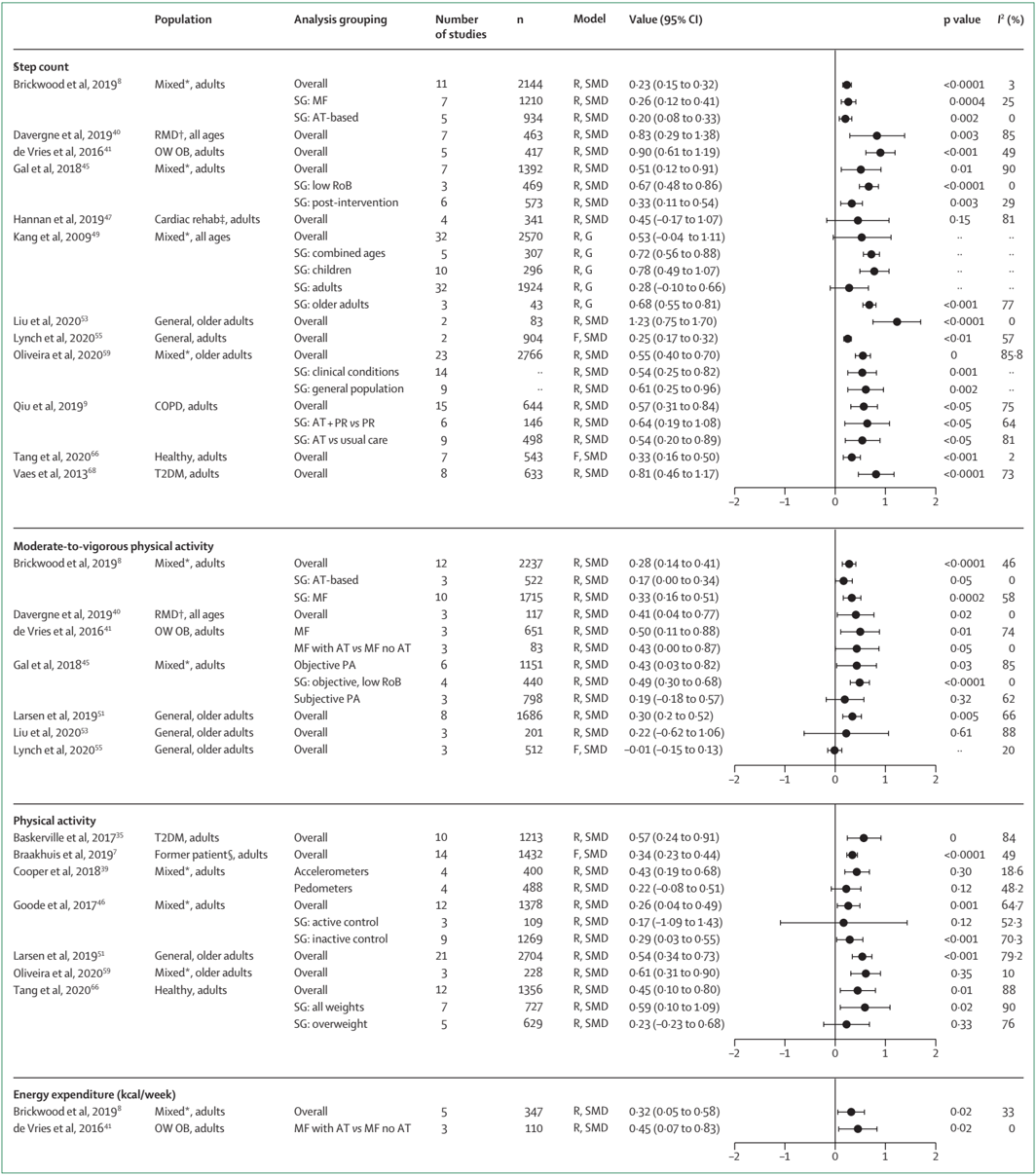
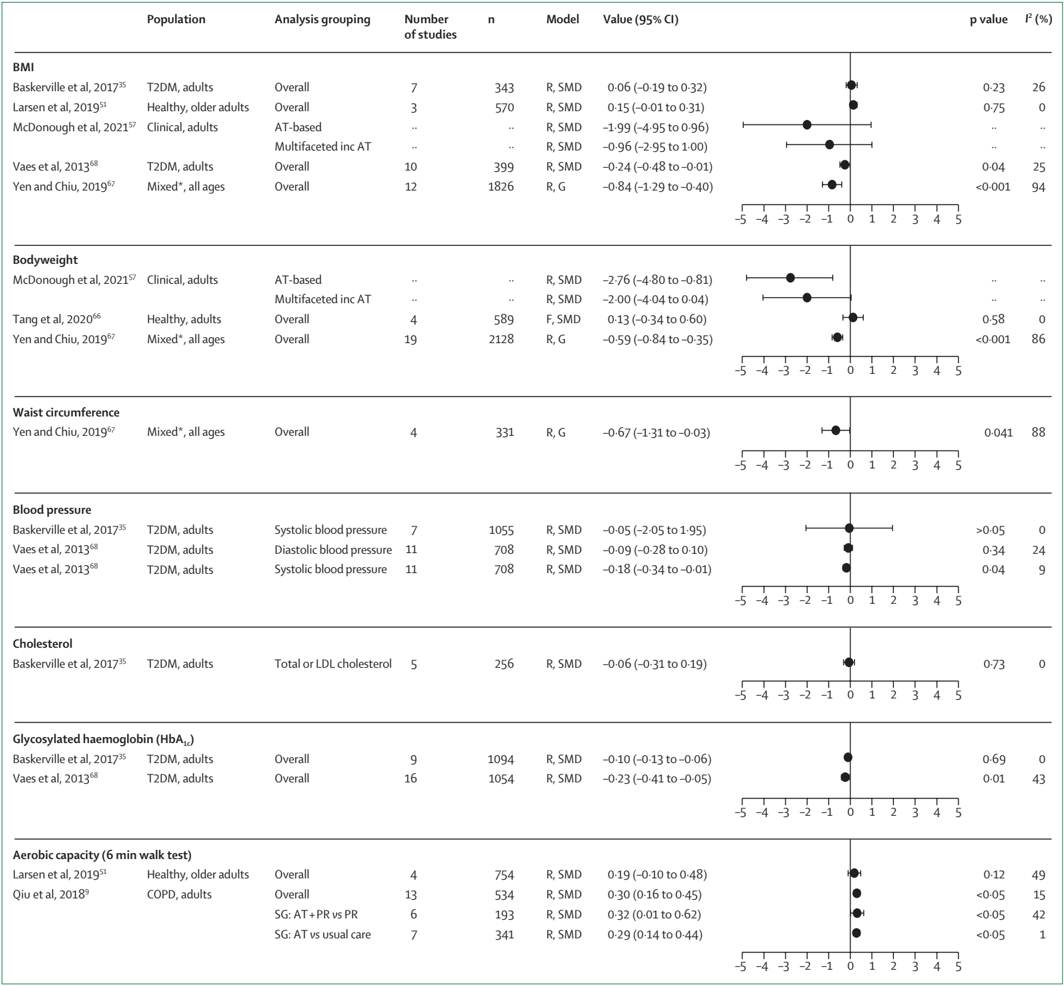
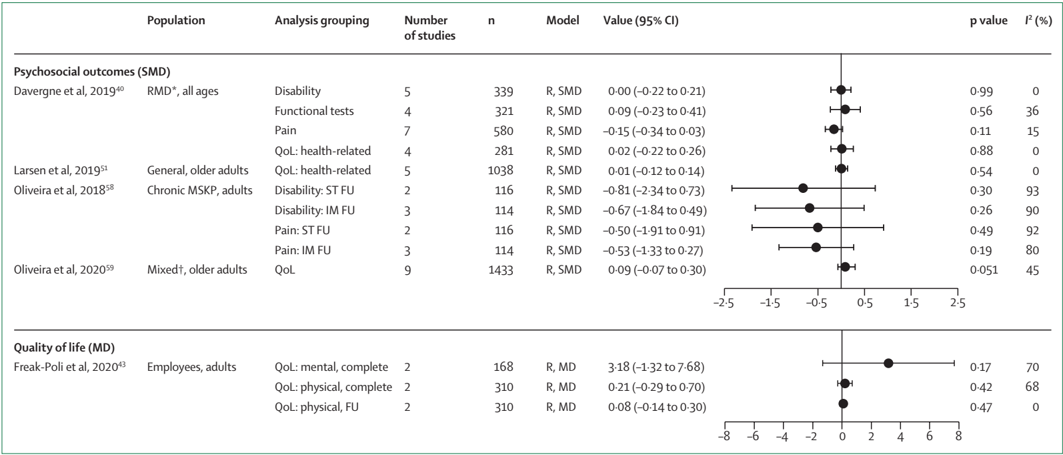
Wearable activity trackers offer an appealing, low-cost tool to address physical inactivity. This systematic review of systematic reviews and meta-analyses (umbrella review) aimed to examine the effectiveness of activity trackers for improving physical activity and related physiological and psychosocial outcomes in clinical and non-clinical populations. Seven databases (Embase, MEDLINE, Ovid Emcare, Scopus, SPORTDiscus, the Cochrane Library, and Web of Science) were searched from database inception to April 8, 2021. Systematic reviews of primary studies using activity trackers as interventions and reporting physical activity, physiological, or psychosocial outcomes were eligible for inclusion. In total, 39 systematic reviews and meta-analyses were identified, reporting results from 163 992 participants spanning all age groups, from both healthy and clinical populations. Taken together, the meta-analyses suggested activity trackers improved physical activity (standardised mean difference [SMD] 0·3-0·6), body composition (SMD 0·7-2·0), and fitness (SMD 0·3), equating to approximately 1800 extra steps per day, 40 min per day more walking, and reductions of approximately 1 kg in bodyweight. Effects for other physiological (blood pressure, cholesterol, and glycosylated haemoglobin) and psychosocial (quality of life and pain) outcomes were typically small and often non-significant. Activity trackers appear to be effective at increasing physical activity in a variety of age groups and clinical and non-clinical populations. The benefit is clinically important and is sustained over time. Based on the studies evaluated, there is sufficient evidence to recommend the use of activity trackers.
Overview
CoChat Summary
TL;DR
This umbrella review of 39 systematic reviews and meta-analyses found that wearable activity trackers increase physical activity and improve some body-composition and fitness outcomes across clinical and non-clinical populations. Effects on other physiological and psychosocial outcomes were generally small and often non-significant.
Key findings
- Activity trackers improved physical activity (SMD 0.3–0.6), body composition (SMD 0.7–2.0), and fitness (SMD 0.3), equating to approximately 1800 extra steps per day, 40 min per day more walking, and about 1 kg reduction in bodyweight.
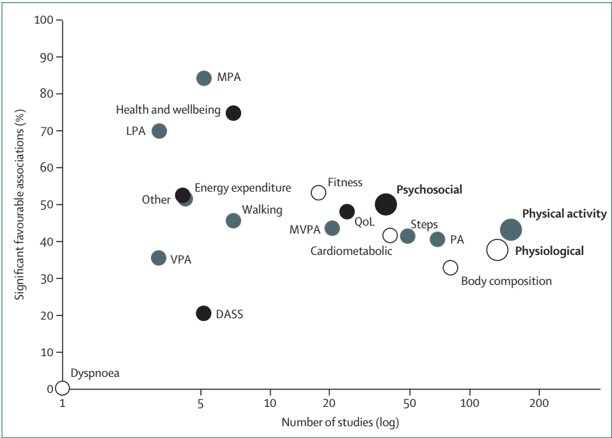
- Across all narratively synthesised studies, 41% showed significant favourable associations, 57% non-significant associations, and 3% significant unfavourable associations.
- Effects for blood pressure, cholesterol, glycosylated haemoglobin, quality of life, and pain were typically small and often non-significant; bodyweight, waist circumference, BMI, and aerobic capacity had the strongest evidence for improvement.
- The 39 reviews included 163,992 participants (abstract) and 390 unique component studies; corrected covered area was 2.3%, indicating slight overlap.
Methods
- Umbrella review reported per PRISMA and prospectively registered on PROSPERO (CRD42021246494); seven databases were searched from inception to April 8, 2021.
- Eligible studies were systematic reviews of experimental studies using wearable activity trackers as an intervention in any human population and reporting physical activity, physiological, or psychosocial outcomes; 39 reviews were included.
- Because of overlap among component studies, a meta-analysis of meta-analyses was not appropriate; findings were narratively synthesised with forest plots, AMSTAR 2 risk-of-bias appraisal, corrected covered area, and subgroup/sensitivity analyses.
Limitations
- The paper states that any umbrella review is limited by the included systematic reviews; populations were not exhaustive, most reviews were graded low or critically low confidence by AMSTAR 2, and a wide range of specific outcome metrics were used.
- The paper states that some included reviews contained some studies with inappropriate designs, which would probably underestimate effect sizes, and that few reviews examined wearable activity trackers alone.
- The paper states that most component randomised controlled trials were done in high-income countries, no systematic reviews addressed activity-tracker interventions in populations with mental health illnesses, and longer-term studies on physiological and broader psychosocial outcomes are needed.
Model-written summary. Check it against the paper before relying on it.
Integrity signals
Registry
Cites
Statistics
Figures
Verification
Claims the paper makes
18 Valid · 2 Not valid · 17 Not checked · 86 Own results and interpretations
Some cited sources support this claim and some don’t — read each source’s verdict below.
In the paper
“These improvements are relatively strong when considered in the broader field of physical activity interventions.”
§ Effectiveness of wearable activity trackers to increase physical activity and improve health: a systematic review of systematic reviews and meta-analyses > Discussion
What the sources say
- Partly supportedcites [69] Watson A, Timperio A, Brown H, Best K, Hesketh KD. Effect of classroom-based physical activity interventions on academic and physical activity outcomes: a systematic review and meta-analysis. Int J Behav Nutr Phys Act 2017; 14: 114. sourceExperimental — accuracy not yet measured
The Results (Academic-related outcomes; page unavailable) report improvements in on-task behaviour and some measures of academic achievement after classroom-based physical activity. Neither those results nor the Limitations section compares the size of these improvements with effects in the broader field of physical activity interventions, so the relative-strength claim is unsupported. (LLM, conf=0.78)
- Disputedcites [70] Conn VS, Hafdahl AR, Cooper PS, Brown LM, Lusk SL. Meta-analysis of workplace physical activity interventions. Am J Prev Med 2009; 37: 330-39. sourceExperimental — accuracy not yet measured
The Discussion describes the physical activity, fitness, and health benefits as modest, not relatively strong. It also reports that the physical activity effect was similar to one prior worksite synthesis and smaller than another; our copy provides no page number for these passages. (LLM, conf=0.87)
Checked by a reasoning model — may be wrong.
boosted- Asserted: passes — The authors put it forward as true.
- Checkable: passes — It can be checked against evidence.
- Load-bearing: passes — The paper’s conclusions depend on it.
- Based: passes — The paper gives a reason why it holds.
- Partly supported
Every source the paper cites for this claim was checked and supports it.
In the paper
“their use has been associated with increased physical activity.[7][8][9]”
§ Effectiveness of wearable activity trackers to increase physical activity and improve health: a systematic review of systematic reviews and meta-analyses > Introduction
What the sources say
- Supportedcites [7] Braakhuis HEM, Berger MAM, Bussmann JBJ. Effectiveness of healthcare interventions using objective feedback on physical activity: a systematic review and meta-analysis. J Rehabil Med 2019; 51: 151-59. source
The Discussion (page unavailable) states that the review's findings support an increase in physical activity with objective feedback from wearable monitors. The claim says “associated with,” rather than attributing the increase to trackers alone; the reviewed healthcare interventions often included other strategies. (LLM, conf=0.90)
- Supportedcites [8] Brickwood KJ, Watson G, O'Brien J, Williams AD. Consumer-based wearable activity trackers increase physical activity participation: systematic review and meta-analysis. JMIR Mhealth Uhealth 2019; 7: e11819. source
The Discussion’s “Physical Activity Participation” section reports significant improvements in daily steps, moderate-to-vigorous physical activity, and energy expenditure for participants in interventions that included a consumer-based wearable activity tracker, compared with controls. The paper notes that the quality of evidence was low or very low, but the citing sentence’s cautious wording—“associated with”—is consistent with its findings. (LLM, conf=0.93)
- Supportedcites [9] Qiu S, Cai X, Wang X, et al. Using step counters to promote physical activity and exercise capacity in patients with chronic obstructive pulmonary disease: a meta-analysis. Ther Adv Respir Dis 2018; 12: 1753466618787386. source
The Results section (‘Step counter use and physical activity’) reports that, across 15 randomized trials in patients with COPD, use of step counters significantly increased physical activity compared with controls. The Introduction identifies step counters as wearable devices that monitor physical activity, so the paper supports the stated association for this type of activity tracker. (LLM, conf=0.91)
plainstates an association- Asserted: passes — The authors put it forward as true.
- Checkable: passes — It can be checked against evidence.
- Load-bearing: passes — The paper’s conclusions depend on it.
- Based: passes — The paper gives a reason why it holds.
- Supported
Every source the paper cites for this claim was checked and supports it.
In the paper
“Wearable activity trackers promote behaviourchange techniques, such as self-monitoring and goal setting, 6”
§ Effectiveness of wearable activity trackers to increase physical activity and improve health: a systematic review of systematic reviews and meta-analyses > Introduction
What the sources say
- Supportedcites [6] Lyons EJ, Lewis ZH, Mayrsohn BG, Rowland JL. Behavior change techniques implemented in electronic lifestyle activity monitors: a systematic content analysis. J Med Internet Res 2014; 16: e192. source
The Results section reports that goal-setting and self-monitoring were found in all the activity-monitor systems studied. This supports the claim that wearable activity trackers provide these behaviour-change techniques. (LLM, conf=0.93)
plainstates a cause- Asserted: passes — The authors put it forward as true.
- Checkable: passes — It can be checked against evidence.
- Load-bearing: passes — The paper’s conclusions depend on it.
- Based: passes — The paper gives a reason why it holds.
- Supported
The cited sources support only part of this claim — read each source’s verdict below.
In the paper
“benefits for LDL cholesterol in populations of mixed disease (mean difference -0•32 mmol/L, 95% CI -0•51 to -0•12; appendix p 32), 42”
§ Effectiveness of wearable activity trackers to increase physical activity and improve health: a systematic review of systematic reviews and meta-analyses > Results according to risk of bias and population subgroups
What the sources say
- Partly supportedcites [42] Franssen WMA, Franssen GHLM, Spaas J, Solmi F, Eijnde BO. Can consumer wearable activity tracker-based interventions improve physical activity and cardiometabolic health in patients with chronic diseases? A systematic review and meta-analysis of randomised controlled trials. Int J Behav Nutr Phys Act 2020; 17: 57. sourceExperimental — accuracy not yet measured
The Results (Physical activity and cardiometabolic health; page unavailable) report a significant LDL-cholesterol reduction in participants with chronic diseases. However, the reported mean difference is −5.70 mg/dL (95% CI −9.24 to −2.15), approximately −0.15 mmol/L (95% CI −0.24 to −0.06), not the claimed −0.32 mmol/L (95% CI −0.51 to −0.12). (LLM, conf=0.90)
plainstates a cause- Asserted: passes — The authors put it forward as true.
- Checkable: passes — It can be checked against evidence.
- Load-bearing: passes — The paper’s conclusions depend on it.
- Based: passes — The paper gives a reason why it holds.
- Partly supported
The cited sources support only part of this claim — read each source’s verdict below.
In the paper
“They showed that the multifaceted interventions yielded effects around 50% larger than those using wearable activity trackers alone.”
§ Effectiveness of wearable activity trackers to increase physical activity and improve health: a systematic review of systematic reviews and meta-analyses > Review
What the sources say
- Partly supportedcites [8] Brickwood KJ, Watson G, O'Brien J, Williams AD. Consumer-based wearable activity trackers increase physical activity participation: systematic review and meta-analysis. JMIR Mhealth Uhealth 2019; 7: e11819. sourceExperimental — accuracy not yet measured
The Discussion (Physical Activity Participation; page unavailable) says multifaceted interventions had larger effects on physical activity participation than wearable-based interventions when each was compared with controls. It does not report an effect around 50% larger; the Results give MVPA effect sizes of 0.33 and 0.17, respectively. The comparison is therefore supported, but the claimed magnitude is not. (LLM, conf=0.88)
plainstates a cause- Asserted: passes — The authors put it forward as true.
- Checkable: passes — It can be checked against evidence.
- Load-bearing: unclear — It is unclear whether the paper’s conclusions depend on it.
- Based: passes — The paper gives a reason why it holds.
- Partly supported
57 more claims
Create a free account to see all 123 claims and every source verdict.
- It may state two separate claims as one. 49
- Probably not a substantial claim. 19
Claims other papers make about this one
Each is checked against this paper’s own text: does it say what the citing paper says it does?
The source backs part of the claim, not all of it — or backs it for a different population, condition or comparison.
In the citing paper
“Additional tools such as wearable activity trackers can encourage increased physical activity of an additional 1800 steps per day on average, or 0.5 to 1.5 kg of weight loss.76”
From Obesity Management in Adults: A Review (2023) · cites this paper as [76]
Experimental — accuracy not yet measuredThe source backs part of the claim, not all of it — or backs it for a different population, condition or comparison.
In the citing paper
“An umbrella review found little evidence that PA trackers improve HbA1c in people with T2D.15”
From Mobile Health Biometrics to Enhance Exercise and Physical Activity Adherence in Type 2 Diabetes (MOTIVATE-T2D): a decentralised feasibility randomised controlled trial delivered across the UK and Canada (2025) · cites this paper as [15]
Experimental — accuracy not yet measuredThe cited source says what the claim attributes to it.
In the citing paper
“Evidence from randomised controlled trials (RCTs) and systematic reviews indicates that fitness trackers are effective at increasing physical activity, as measured by daily steps and minutes of moderate-to-vigorous physical activities (MVPA) [17,24,25].”
From Economic evaluation of wearable fitness trackers versus metformin for preventing type 2 diabetes in the UK population (2025) · cites this paper as [25]
The cited source says what the claim attributes to it.
In the citing paper
“A systematic review of meta-analyses concludes that interventions using wearable devices increased step counts on average by around 1800 steps per day, walking time by about 40 min per day, and MVPA by nearly 6 min per day [25].”
From Economic evaluation of wearable fitness trackers versus metformin for preventing type 2 diabetes in the UK population (2025) · cites this paper as [25]
The cited source says what the claim attributes to it.
In the citing paper
“However, the effects of increasing PA via the use of PA trackers on outcomes relevant to the clinical management of T2D are unclear.”
2 more claims about this paper
Create a free account to see every claim other papers make about this one.
Self-check
Percentages, sums and reported differences re-computed from the paper’s own numbers.
Each contradiction between two passages listed here was confirmed by an independent check.
Rated minor: it would not touch a result — a value no result rests on, a p-value that stays on the same side of the significance level, or a conflict that is clerical, resolved elsewhere in the paper, or outside its own findings.
In the paper
§ Effectiveness of wearable activity trackers to increase physical activity and improve health: a systematic review of systematic reviews and meta-analyses > Results according to risk of bias and population subgroups
“the meta-analysis by Larsen and colleagues 51 found an effect size of 0•34”
§ Effectiveness of wearable activity trackers to increase physical activity and improve health: a systematic review of systematic reviews and meta-analyses > References
“51. Kirk MA, Amiri M, Pirbaglou M, Ritvo P. Wearable technology and physical activity behavior change in adults with chronic cardiometabolic disease: a systematic review and meta-analysis.”
Rated minor: it would not touch a result — a value no result rests on, a p-value that stays on the same side of the significance level, or a conflict that is clerical, resolved elsewhere in the paper, or outside its own findings.
In the paper
§ Effectiveness of wearable activity trackers to increase physical activity and improve health: a systematic review of systematic reviews and meta-analyses > Abstract
“In total, 39 systematic reviews and meta-analyses were identified, reporting results from 163 992 participants”
§ Effectiveness of wearable activity trackers to increase physical activity and improve health: a systematic review of systematic reviews and meta-analyses > Review
“The volume of included studies investigating the efficacy of wearable trackers is large-39 systematic reviews and 390 component experimental studies covering 163 841 participants (not accounting for overlap).”
Citations
Cites
Liberati, A., Altman, D. G., Tetzlaff, J., Mulrow, C., Gøtzsche, P. C., Ioannidis, J. P. A., Clarke, M., Devereaux, P. J., Kleijnen, J., & Moher, D. (2009) · PLoS Medicine · doi:10.1371/journal.pmed.1000100 · Cited by 28,164
Liberati, A., Altman, D. G., Tetzlaff, J., Mulrow, C., Gotzsche, P. C., Ioannidis, J. P. A., Clarke, M., Devereaux, P. J., Kleijnen, J., & Moher, D. (2009) · BMJ · doi:10.1136/bmj.b2700 · Cited by 17,648
Shea, B. J., Reeves, B. C., Wells, G., Thuku, M., Hamel, C., Moran, J., Moher, D., Tugwell, P., Welch, V., Kristjansson, E., et al. (2017) · BMJ · doi:10.1136/bmj.j4008 · Cited by 10,636
Lee, I.-M., Shiroma, E. J., Lobelo, F., Puska, P., Blair, S. N., & Katzmarzyk, P. T. (2012) · The Lancet · doi:10.1016/s0140-6736(12)61031-9 · Cited by 8,215
Cochrane Handbook for Systematic Reviews of Interventions
Higgins, J. P. T., Green, S., & Ben Van Den, A. (2020) · International Coaching Psychology Review · doi:10.53841/bpsicpr.2020.15.2.123 · Cited by 5,670
The well-built clinical question: A key to evidence-based decisions
(1995) · ACP Journal Club · doi:10.7326/acpjc-1995-123-3-a12 · Cited by 2,931
Analysing data and undertaking meta‐analyses
Deeks, J. J., Higgins, J. P., Altman, D. G., & on behalf of the Cochrane Statistical Methods Group (2019) · Cochrane Handbook for Systematic Reviews of Interventions · doi:10.1002/9781119536604.ch10 · Cited by 2,672
Aromataris, E., Fernandez, R., Godfrey, C. M., Holly, C., Khalil, H., & Tungpunkom, P. (2015) · International Journal of Evidence-Based Healthcare · doi:10.1097/xeb.0000000000000055 · Cited by 2,587
The economic burden of physical inactivity: a global analysis of major non-communicable diseases
Ding, D., Lawson, K. D., Kolbe-Alexander, T. L., Finkelstein, E. A., Katzmarzyk, P. T., van Mechelen, W., & Pratt, M. (2016) · The Lancet · doi:10.1016/s0140-6736(16)30383-x · Cited by 2,201
Using Pedometers to Increase Physical Activity and Improve Health: A Systematic Review
Bravata, D. M., Smith-Spangler, C., Sundaram, V., Gienger, A. L., Lin, N., Lewis, R., Stave, C. D., Olkin, I., & Sirard, J. R. (2007) · JAMA · doi:10.1001/jama.298.19.2296 · Cited by 2,064
Cited by
Items 401–500 of 564
Rowe, G., Weight, D., Rea, A., Conlon, J. A., Wood, F. M., & Edgar, D. W. (2025) · PLoS ONE · doi:10.1371/journal.pone.0333504 · Cited by 2
“Wearable activity devices, commonly used by non-injured populations to monitor motion [1], have been shown to increase activity levels over time [2,3].”
Understanding the continued use of wrist-worn wearables for wellness: insights from long-term users
Alsahafi, R., Almalki, L., Bahareth, F., Al-Alsheikh, N., & Meccawy, M. (2025) · International Journal of Information Technology · doi:10.1007/s41870-025-02770-z · Cited by 3
Future prospects, challenges and ethics of cutting-edge technologies in smart healthcare system
Maroufi, Y. K. E., Sánchez, T. A., Sánchez, L. M. F., & Mahmoud, N. S. B. (2025) · Elsevier eBooks · doi:10.1016/b978-0-443-36434-1.00039-2
Vach, W., Rybitschka, D., Wearing, S. C., Gösele, A., Weidermann, F., & Jakob, M. (2025) · Sensors · doi:10.3390/s25216666
López‐Bueno, R., Cruz, B. D. P., Yang, L., López-Gil, J. F., Andersen, L. L., & Calatayud, J. (2025) · Journal of the American Medical Directors Association · doi:10.1016/j.jamda.2025.106000
Aadland, E., Kvalheim, O. M., Haugland, E. S., Vabø, K. B., & Aadland, K. N. (2025) · BMC Public Health · doi:10.1186/s12889-025-25722-5
“Since intervention effects on PA often are small [15–18], multivariate pattern analysis should be well suited to detect between-group differences by allowing inclusion of richer data and by exploiting the correlated nature of these data.”
Farley, B., Radetich, E., D’Alessandro, J. S., & Bulaj, G. W. (2025) · Healthcare · doi:10.3390/healthcare13243220 · Cited by 2
“In addition, coupling DTx-and AI-based personalized coaching with wearables, such as activity trackers, may improve engagement in lifestyle modification; however, more research is needed in evaluating long-term retention in the primary prevention using digital health technologies [110].”
Multimorbidity measurement strategies for predicting hospital visits
Neves, B. D., Moreira, J. M., Gonçalves, S., Cerejo, J., Mota, I., Silva, N. A., Leite, F., & Silva, M. J. (2025) · BMC Health Services Research · doi:10.1186/s12913-025-13817-z
Chen, A. X., Lee, V. Y., Donges, K., Giancas, C., Angell, B. J., Parmenter, B. J., Barrett, H. L., Henry, A., Patel, A. A., & Arnott, C. G. (2025) · BMJ Open · doi:10.1136/bmjopen-2025-107551
“Additional exclusion criteria include known intolerance or allergy to semaglutide, current use of a semaglutide or another GLP-1 RA, or known personal or family history of medullary thyroid cancer or multiple endocrine neoplasia type 2 gene.”
InfluentialYadav, S., & Soni, E. (2025) · International Journal of Innovative Research in Engineering & Management · doi:10.55524/ijirem.2025.12.6.7 · Cited by 1
Szeto, K., Arnold, J., & Maher, C. (2024) · Figshare · doi:10.6084/m9.figshare.25406109
Self-citationKolovelonis, A., Syrmpas, I., Marcuzzi, A., Khudair, M., Ng, K., Tempest, G. D., Perić, R., Bartos̆, F., Maier, M., Brandes, M., et al. (2024) · Figshare · doi:10.6084/m9.figshare.26739348
Kolovelonis, A., Syrmpas, I., Marcuzzi, A., Khudair, M., Ng, K., Tempest, G. D., Perić, R., Bartos̆, F., Maier, M., Brandes, M., et al. (2024) · Figshare · doi:10.6084/m9.figshare.26739351
Virgara, R., Singh, B., O’Connor, E. J., Szeto, K., Merkx, Z., Rees, C., Gilson, N. D., & Maher, C. (2024) · Figshare · doi:10.6084/m9.figshare.27124070
Self-citationVirgara, R., Singh, B., O’Connor, E. J., Szeto, K., Merkx, Z., Rees, C., Gilson, N. D., & Maher, C. (2024) · Figshare · doi:10.6084/m9.figshare.27124064
Self-citationDigital Gastronomy in the Home
Spence, C., & Velasco, C. (2025) · Springer eBooks · doi:10.1007/978-3-031-91050-0_7
Virgara, R., Singh, B., O’Connor, E. J., Szeto, K., Merkx, Z., Rees, C., Gilson, N. D., & Maher, C. (2024) · Figshare · doi:10.6084/m9.figshare.27124076
Self-citationKolovelonis, A., Syrmpas, I., Marcuzzi, A., Khudair, M., Ng, K., Tempest, G. D., Perić, R., Bartos̆, F., Maier, M., Brandes, M., et al. (2024) · Figshare · doi:10.6084/m9.figshare.26739345
Virgara, R., Singh, B., O’Connor, E. J., Szeto, K., Merkx, Z., Rees, C., Gilson, N. D., & Maher, C. (2024) · Figshare · doi:10.6084/m9.figshare.27124061
Self-citationVirgara, R., Singh, B., O’Connor, E. J., Szeto, K., Merkx, Z., Rees, C., Gilson, N. D., & Maher, C. (2024) · Figshare · doi:10.6084/m9.figshare.27124073
Self-citationSzeto, K., Arnold, J., & Maher, C. (2024) · Figshare · doi:10.6084/m9.figshare.25405944
Self-citationKerstiens, S., Gleason, L. J., Huisingh-Scheetz, M. J., Landi, A. J., Rubin, D. S., Ferguson, M. K., Quinn, M. T., Holl, J. L., & Madariaga, M. L. L. (2024) · Figshare · doi:10.6084/m9.figshare.25138053
Kerstiens, S., Gleason, L. J., Huisingh-Scheetz, M. J., Landi, A. J., Rubin, D. S., Ferguson, M. K., Quinn, M. T., Holl, J. L., & Madariaga, M. L. L. (2024) · Figshare · doi:10.6084/m9.figshare.25137983
Virgara, R., Singh, B., O’Connor, E. J., Szeto, K., Merkx, Z., Rees, C., Gilson, N. D., & Maher, C. (2024) · Figshare · doi:10.6084/m9.figshare.27124067
Self-citationLonghini, J., Marzaro, C., Bargeri, S., Palese, A., Dell’Isola, A., Turolla, A., Pillastrini, P., Battista, S., Castellini, G., Cook, C., et al. (2024) · Figshare · doi:10.6084/m9.figshare.24997198
Neves, B. D., Haghighi, E. D., Pereira, H. V., Costa, F., Carlos, J., Ferreira, D., Moreno, P., Ferreira, P. M., Machado, J., Goncalves, B., et al. (2024) · Figshare · doi:10.6084/m9.figshare.26653795
Aktives Altern mittels IKT – aktuelle Möglichkeiten und Herausforderungen
Jungreitmayr, S. (2025) · Springer eBooks · doi:10.1007/978-3-662-70475-2_11
Laflamme, G., Trudeau, F., Lehoux, M.-C., Lemoyne, J., Brousseau‐Foley, M., & Houle, J. (2025) · BMC Family Practice · doi:10.1186/s12875-025-03138-9
WAT Am I? Exploring the Psychological Characteristics of WAT Users
Lasikiewicz, N., & Scudds, A. (2025) · Journal of Technology in Behavioral Science · doi:10.1007/s41347-025-00591-2
App-Based Coaching Improves Physical Activity in Patients With HFpEF
Zeid, S., Buch, G., Soehne, J., Velmeden, D., Tröbs, S., Dinh, W., Simon, P. D., Michal, M., Prochaska, J. H., & Wild, P. S. (2026) · JACC Heart Failure · doi:10.1016/j.jchf.2025.102845
Ahmed, F., Almutairi, B. M., & Alharbi, S. S. (2026) · Nutrition & Metabolism · doi:10.1186/s12986-026-01078-4
“Fewer research specifically assesses how smartwatches and fitness trackers raise awareness of nutritional consumption, despite systematic reviews and randomized trials confirming that they increase physical activity levels and decrease sedentary behavior [11, 31].”
Exercise, stress, and infertility: have we had it wrong all these years?
Schoyer, K. D., & Zhang, C. D. (2026) · Fertility and Sterility · doi:10.1016/j.fertnstert.2026.01.004
Tóth, K., Takács, P., & Balatoni, I. (2026) · Debreceni Szemle · doi:10.59424/debreceniszemle/2026/34//18
“(Tang 2020; Brickwood 2019; Ferguson 2022; Au 2024; Li 2025) Vizsgálatunk célja az okoseszköz-használat, a fizikai aktivitás és a szocio-demográfiai jellemzők kapcsolatának feltárása volt a Debreceni Egyetem Egészségtudományi Karának hallgatói körében.”
Preg-Fit: An Essential Fitness Band for Pregnant Women
Urkude, G., Rathod, K., Manjusha Nambiar, P. V., & Kharya, S. (2025) · International Conference on Information Systems and Computer Networks (ISCON) · doi:10.1109/iscon65210.2025.11341715
“The study [5] examines the effects of wearable activity devices on physical activity levels and fitness outcomes via a comprehensive assessment of various methodical examinations and systematic insights.”
Bianchini, E., Garramone, F., Rinaldi, D., Alborghetti, M., Carolis, L. D., Galli, S., Suppa, A., Salvetti, M., Hansen, C., & Vuillerme, N. (2026) · Journal of NeuroEngineering and Rehabilitation · doi:10.1186/s12984-025-01873-9 · Cited by 1
“Previous studies, indeed, have reported that activity trackers can increase physical activity [85].”
Szeto, K., Arnold, J. B., Singh, B., Diestel-Feddersen, P., Edwards, D., Cheary, S., Basso, M. L., & Maher, C. A. (2026) · BMC Health Services Research · doi:10.1186/s12913-026-14066-4
“While this study adds to the broader evidence base for using WATs for PA promotion in clinical settings, our findings for changes in PA should be interpreted cautiously, given the feasibility nature of this trial [16–19 , 57].”
Self-citationYamakita, M., Ando, D., Sato, M., Akiyama, Y., Yamaguchi, K., & Yamagata, Z. (2026) · Children · doi:10.3390/children13020184
Jarecsny, T., Egri, C., Kosik, R., Schwab, R., Mechtler, L. L., Szöllösi, G. J., Schandl, L., Tomasics, G., Gyuricsko, I., Pázmándi, E. M., et al. (2026) · BMC Public Health · doi:10.1186/s12889-026-26355-y · Cited by 3
“…indicates that such tools are associated with modest but significant and sustained improvements in physical activity levels and body weight when embedded within structured lifestyle interventions [83], typically reducing body weight by 1–2 kg over 6–12 months compared with standard care alone [79].”
Li, Y., Huang, Q., Ge, J., Liu, Y., Geng, S., Li, Q., Chen, X., Zhu, Y., Guo, X., Lu, F., et al. (2026) · BMC Family Practice · doi:10.1186/s12875-026-03216-6
“Despite the potential of digital health for chronic disease management in older adults [72–77], robust evidence on its effective and sustainable integration into resource-limited primary care routine remains scarce.”
Role of Wearable Devices in Monitoring Rehabilitation Outcomes in Physiotherapy Patients
Mehmood, S., Manzoor, F., & Ali, Z. (2026) · Healer Journal of Biomedical and Health Sciences · doi:10.55735/bx6h5j73
Bilal, A., Thabit, H., Nutter, P. W., & Harper, S. (2026) · Frontiers in Sports and Active Living · doi:10.3389/fspor.2026.1718510 · Cited by 1
Leinonen, A., Huikari, S., Kärmeniemi, M., Kari, J. T., Korpelainen, R., Kujala, U. M., Ding, D., & Nurkkala, M. (2026) · Preventive Medicine · doi:10.1016/j.ypmed.2026.108542
Managing BMI and Emotional Distress Using mHealth: Nationally Representative Survey Study
Mi, R. Z., Shen, F., & Strugala, J. (2026) · JMIR mhealth and uhealth · doi:10.2196/75499
“A meta-analysis found that the use of activity trackers was associated with an average daily increase of 1800 steps, 40 minutes of walking, and 1 kg weight loss [25].”
Vas-Barna, R., Császár, G., Mándó, Z., & Boros, S. (2026) · Orvosi Hetilap · doi:10.1556/650.2026.33491
Supervía, M., de Murieta, E. S., Figueroa, J., Arroyo-Riaño, M. O., de Munain, M. L. L., de Miguel, C., Laxe, S., Marco, E., & Morata, A. B. (2026) · Rehabilitación · doi:10.1016/j.rh.2026.100968
Physical activity decreases the likelihood of peripheral neuropathy in persons with diabetes
Reynolds, E. L., Russman, D., Baskozos, G., Eid, S., Feldman, E. L., Bennett, D., & Callaghan, B. C. (2026) · Journal of Neurology Neurosurgery & Psychiatry · doi:10.1136/jnnp-2025-337592
“24 Among persons with DPN, increased PA lowered pDPN odds in females but not in males.”
Mak, S., McManus, P., Greer, S., Haws, K., Carlson, C. J., Chandler, H. K., Osinubi, O., & Ash, G. I. (2026) · JMIR Human Factors · doi:10.2196/82177
“This may be applicable for veterans with GWI with decreased cognitive function, since the smartwatch may serve as a cognitive support tool to reduce tracking burden, create accountability, increase awareness of how behavior can affect health, and prompt discussions with care team [27].”
The metabolic cost of steep incline treadmill walking
Yeo, D., Carlson, A. R., Johnston, J. I., Ziegler, B. L., Wentz, R. J., Downs, J. H., Kim, C., & Johnson, B. D. (2026) · Sports Medicine and Health Science · doi:10.1016/j.smhs.2026.03.002
Adeyemi, O. J., Boatright, D. B., & Chodosh, J. (2026) · Journal of Ageing and Longevity · doi:10.3390/jal6010033
Baťalík, L., Godula, B. J., Jelínek, L., & Sovová, E. (2026) · Cor et Vasa · doi:10.33678/cor.2025.099
Du, Y. N., Wang, J., Choi, B. Y., Hazuda, H. P., & Song, L. (2026) · JMIR Formative Research · doi:10.2196/79591 · Cited by 1
“In the digital era, increasing evidence shows that wearable and mobile health devices, such as Fitbit fitness trackers, have the potential to promote healthy lifestyles, such as increased physical activity and weight loss in adults [17,18].”
Woldamanuel, Y., Rossen, J., Anderbro, T., Rosen, P., Bergman, P., Hagströmer, M., & Johansson, U. (2026) · Journal of Primary Care & Community Health · doi:10.1177/21501319261434134
“21 The Sophia Step Study, a 2-year, 3-armed randomized controlled trial (RCT), evaluated the effects of a pedo-meter-based intervention with and without counseling in individuals with prediabetes or type 2 diabetes.”
日本人健常大学生における研究室内と日常生活時の歩行状態の比較
Hina, S., Kazuko, I.-T., Yuki, T., & Azumi, H. (2024) · Institutional Repositories DataBase (IRDB)
A Competitive Intelligence Framework for Predicting Physical Fitness Outcomes Using Data Analytics
Xi, X., Mazalan, N. S., & Nazarudin, M. N. (2026) · Journal of Sustainable Competitive Intelligence · doi:10.37497/eaglesustainable.v16i.636
Manole, L. M., Țarcă, E., Spoială, E.-L., Boca, L. O., Donos, M. A., Păduraru, G., Ghiga, G., Ţarcă, V., Pînzariu, A. C., & Trandafir, L. M. (2026) · Diagnostics · doi:10.3390/diagnostics16081162
“In adults, wearable-based interventions have demonstrated modest but measurable improvements in daily step count and cardiometabolic parameters, compared with usual care interventions [89,90].”
Zhang, H., Zhang, H., Chen, H., & Liu, J. (2026) · Frontiers in Medicine · doi:10.3389/fmed.2026.1778386
Godoy-Cumillaf, A. E. R., Fuentes-Merino, P., de Souza-Lima, J., Parra-Saldías, M., Bastías, D. M. D., Farias-Valenzuela, C., Merellano-Navarro, E., Bruneau-Chávez, J., & Rodríguez‐Gutiérrez, E. (2026) · Journal of Clinical Medicine · doi:10.3390/jcm15093191
“In addition, daily step count has gained increasing attention as a simple and objective metric of habitual ambulatory activity, with the advantage of being easily monitored through wearable devices and translated into practical public health messages [16].”
InfluentialKulnik, S. T., Leitner, V., & Leysen, D. (2026) · European Journal of Cardiovascular Nursing · doi:10.1093/eurjcn/zvag103
Aumento semanal de pasos reduce presión arterial en adultos jóvenes normotensos sanos
Espinoza-Salinas, A., Alarcón, R., Curín, E., & Russell-Guzmán, J. (2026) · Journal of Sport and Health Research · doi:10.58727/jshr.115256
Chen, M., Movia, M., Chua, X. H., Tan, S. Y. X., Zheng, S., Jin, K., Topothai, T., Padmapriya, N., Edney, S., & Müller‐Riemenschneider, F. (2026) · medRxiv · doi:10.64898/2026.04.28.26351917
Shape Your Body Within Intelligent Vehicles: Smart Exercising Services with Agentic AI
Liu, S., Tian, Y., Liu, Y., Li, J., Qin, R., & Liang, X. (2026) · IEEE/CAA Journal of Automatica Sinica · doi:10.1109/jas.2026.125981
Chugh, G., Mondal, A., Chakraborty, S., & Chakraborty, S. (2026) · doi:10.1145/3774906.3800489
Herschelman, L., & Dickson, C. A. (2026) · Springer eBooks · doi:10.1007/978-3-032-19116-8_16
Humphreys, G., Jensen, S., Manchester, K., Sanal‐Hayes, N. E. M., & Gluchowski, A. (2026) · medRxiv · doi:10.64898/2026.05.14.26353189
Samet, I., Ridene, F., Arous, M. S., & Saidane, M. (2026) · IEEE International Conference on Complex Systems and Intelligent Computing (ICCSIC) · doi:10.1109/iccsic69301.2026.11521693
“While AI is accepted as a pragmatic, accessible trainer for developing the body's own articulation [80, 83], there is a clear preference for human guidance where possible.”
Li, C., Hu, W., Cai, H., Wang, B., tong, Y., Zou, Y., & Liu, F. (2026) · Journal of Hazardous Materials Advances · doi:10.1016/j.hazadv.2026.101240
EFFICACY OF 20-20-20 RULE COMPLIANCE THROUGH BIOFEEDBACK WEARABLES
Ameen, M., Hussain, S., Faheem, R., Ain, Q. U., Batool, A., Kaleem, R. M. W., Aamir, M. R., & Sarfraz, B. (2026) · Journal of medical & health sciences review. · doi:10.65035/wxbfkk04
Yang, Z., Sun, M., Wang, W. W., Zhang, X., Lu, B., Qi, Y., Zhang, S., Pan, L., Zhou, Z., Yang, N., et al. (2026) · Journal of Medical Internet Research · doi:10.2196/preprints.101766
Dybicz, M., Endler, O., Jurkowska, K., Madrzak, J., Ciastoń, M., Filuk, M., Fidelus, J., Dutkiewicz, D., Czerniewska, J., & Handzel, M. (2026) · International Journal of Innovative Technologies in Social Science · doi:10.31435/ijitss.2(50).2026.5636
Baumann, H., Thomas, G., Alley, S., Duncan, M. J., Browne, M., Wollesen, B., Vandelanotte, C., & Gilson, N. D. (2026) · Frontiers in Digital Health · doi:10.3389/fdgth.2026.1801405
Transforming Dementia Caregiving Through Assistive Technologies
Zhang, Q., Wu, Y., & Xu, L. (2026) · Frontiers research topics · doi:10.3389/978-2-8325-8067-7
Wearable‐based phenotyping of activity patterns during pregnancy
Barak, O., Bauer, A. D., Vaisbuch, E., Piekos, S. N., & Sadovsky, Y. (2026) · Pregnancy · doi:10.1002/pmf2.70326 · Cited by 1
“…counts provide a general measure of physical activity, relying solely on such aggregate metrics, which may include measures such as total distance or energy expenditure, could mask underlying patterns of activity and sedentary behavior that are relevant to pregnancy outcomes [11, 14, 15, 19, 20].”
Belief drives physiology: A wearable device expectancy study in healthy young adults
Kidwell, J. A., Thomas, J., Yamamoto, T., Roberts, C., Bhalodia, D., Doherty, K., Taylor, S., Neufeld, E. V., & Dolezal, B. A. (2026) · Journal of Physical Education and Sport · doi:10.7752/jpes.2026.05095
Carlson, J., Materia, F. T., Moon, M., Ryu, S., Yeager, C., Steel, C., Shields, K., Gill, H. S., Berkley‐Patton, J., & Catley, D. (2026) · JMIR mhealth and uhealth · doi:10.2196/76991
Sumpena, A., Agus, H., Yunita, S. F., Zein, F. S., Lamanda, S., Pratama, B. A., & Rasydiq, H. (2026) · International journal of human movement and sports sciences · doi:10.13189/saj.2026.140415
Domingo-Molina, R., Martínez-Maestre, M. Á., Tejero, S., Reverte-Pagola, G., Madueño, A. F., & Sañudo, B. (2026) · Proceedings of the Institution of Mechanical Engineers Part H Journal of Engineering in Medicine · doi:10.1177/09544119261451975
Die Zukunft der Betrieblichen Gesundheitsförderung
Klein, T. (2025) · Springer eBooks · doi:10.1007/978-3-658-48184-1_15
Wang, X., & Wang, X. (2026) · Research Square · doi:10.21203/rs.3.rs-9984763/v1
Quisbert-Trujillo, E., & Vuillerme, N. (2026) · JMIR mhealth and uhealth · doi:10.2196/88237
“Wearable activity monitoring (WAM) devices, such as smartwatches, fitness bands, and pedometers, are widely endorsed for promoting physical activity (PA) [1,2] and well-being [3].”
Botting, N., Gonçalves, A., Leckie, T., Wheelwright, S. J., Harding, S., Koulouglioti, C., & Hodgson, L. E. (2026) · BJA Open · doi:10.1016/j.bjao.2026.100572
Algorithm for using Internet of Things tools in e-learning for student athletes
Yefremenko, A., Piatysotska, S., Коваль, С., Кофанов, І., & Крайник, Я. (2026) · Слобожанський науково-спортивний вісник · doi:10.15391/snsv.2026-2.12
Digital Phenotyping of Physical Activity and Mortality in Cancer Survivors
Li, Y., Niu, T., Xiang, Z., Zhao, J., Zhang, J., & Fan, L. (2026) · MedComm – Future Medicine · doi:10.1002/mef2.70064
Bhaireddy, N. (2026) · International Journal For Multidisciplinary Research · doi:10.36948/ijfmr.2026.v08i04.82945
Chen, Y., Yu, Q., Xu, H., Zhang, L., Li, W., & Wu, Y. (2026) · Reviews in Cardiovascular Medicine · doi:10.31083/rcm48196
“This effect can be further enhanced through JITAI, offering promising opportunities for HF management [107,108,109].”
Hayashi, H., Hasegawa, K., Takagi, Y., & Mizutani, H. (2026) · Digital Health · doi:10.1177/20552076261466410
Roy, C., Bhattacharya, K., & Kaski, K. K. (2026) · Journal of Social Physics · doi:10.53941/jsp.2026.100007 · Cited by 2
“One of them is that users are driven by the need to improve their physical fitness and these devices can serve as aid by providing instant feedback along with features such as reminders to move, to achieve daily step goals and details of the workout [5].”
van Lotringen, C. M., Dekkers, T., Kelders, S. M., Westerhof, G. J., & Noordzij, M. L. (2026) · JMIR Formative Research · doi:10.2196/92279
Exploring wearable device use in relation to eating habitsPreprint
Warner, A., Kimble, R., & Brown, D. (2026) · Research Square · doi:10.21203/rs.3.rs-9887124/v1
The Use of Wearable Technology in Monitoring Physical Activity and Training: A Systematic Review
Grzybowska, D., Grzyb, W., Idzik, K., Jaślikowska, A., Kubicki, A., Kurnik, M., Leśniak, M., Niderla, N., Rachwal, N., & Rzeszutek, J. (2026) · Quality in Sport · doi:10.12775/qs.2026.62.73379 · Cited by 1
“An umbrella review published in The Lancet Digital Health synthesized 39 systematic reviews and meta-analyses encompassing both clinical and non-clinical populations [12].”
InfluentialGustafson, S. E., Patel, S. R., Fudim, M., Mentz, R. J., Sauer, A. J., Lala, A., Harrington, J., Pandey, A., Svetlichnaya, J., Fitzpatrick, J. K., et al. (2026) · Heart Failure Reviews · doi:10.1007/s10741-026-10653-z
Quan, S., Fu, X., Cai, H., Zhang, W., Geng, Y., Tian, Q., Ren, Z., Xu, Y., An, C., Li, J., et al. (2026) · Molecular Biomedicine · doi:10.1186/s43556-026-00513-5
“…tools (e.g., wearable accelerometers and fitness trackers) to collect real-time data on PA intensity, duration, and frequency, which will help to accurately explore the dose-dependent and cumulative effects of PA on synaptic plasticity and cognitive function in aging and preclinical AD [45, 46].”
Carson, J., Castro, E., Higgins, M., Godino, J., & Larsen, B. (2026) · Measurement in Physical Education and Exercise Science · doi:10.1080/1091367x.2026.2704743
“In the past decade, the number of wearable trackers that shipped worldwide grew by over one thousand percent (Ferguson et al., 2022).”
Muñoz-López, M., Sancho-Haro, E. S., Zabaleta-Korta, A., Rodríguez, A. M., López‐Gil, J. F., Tornero-Aguilera, J. F., & Sepulveda, R. A. Y. (2026) · Sports · doi:10.3390/sports14070304
“Existing reviews often focus on individual model families, such as HIIT, sedentary behavior interruptions, wearables, or digital interventions, rather than examining how these approaches collectively reflect a broader reconfiguration of exercise for real-world adult lifestyles [4,8,10,12,13].”
Corredoira, P. M. F., Kaski, J. C., Duncker, D., Dörr, M., Wilhelm, M., Tubaro, M., Schuuring, M. J., Mamas, M. A., Petersen, S. E., Vidal-Pérez, R., et al. (2026) · European Heart Journal - Digital Health · doi:10.1093/ehjdh/ztag074
Harnessing Mothers’ Union Activities as a Means to Enhance Church Marriages
Ayang, J., & Mwesigwa, D. (2026) · East African Journal of Traditions Culture and Religion · doi:10.37284/eajtcr.9.1.5383
Zachariah, D., Kakooza, D., Pothas, S., Thomas, A., & Kruger, I. M. (2026) · International Journal of Environmental Research and Public Health · doi:10.3390/ijerph23070921 · Cited by 1
“Digital health technologies and wearable sensors may provide additional opportunities for longitudinal assessment of physical activity, functional capacity, and symptom progression in real-world settings [22].”
Gürkan, D. Y., Gürkan, O., & Çakmak, R. (2026) · BMC Digital Health · doi:10.1186/s44247-026-00292-7
KILIC, M., & Büyükbeşe, M. A. (2026) · Exploratory Research and Hypothesis in Medicine · doi:10.14218/erhm.2026.00019
Vanherle, J., Nieste, I., Joris, P. J., Franssen, W. M. A., & Eijnde, B. O. (2026) · Research Square · doi:10.21203/rs.3.rs-10313086/v1
Smart-часы для медицины. Обзор
Мизева, И. А., & Кулеш, А. А. (2026) · Perm Scientific Center Journal · doi:10.7242/2658-705x/2026.1.1 · Cited by 2
Metadata
- Authors
- Ferguson, T., Olds, T., Curtis, R., Blake, H., Crozier, A. J., Dankiw, K., Dumuid, D., Kasai, D., O'Connor, E., Virgara, R., & Maher, C.
- Affiliations
- University of South Australia (AU)
- Corresponding author
- Maher, Carol
- ORCID
- Venue
- The Lancet Digital Health
- Publisher
- Elsevier BV
- Published
- 2022-08
- Volume
- 4
- Issue
- 8
- Pages
- e615-e626
- ISSN
- 2589-7500 (ISSN-L)
- OpenAlex
- W4285891242
- Semantic Scholar
- e4f38c44da2bf83fa39c30b60da1506cfddb9af0
- Cited by
- 605
- References
- 71
- Citations by year
- 2026: 198 · 2025: 169 · 2024: 161 · 2023: 70 · 2022: 6
- FWCI
- 16.74
- Type
- journal article
- Language
- en
- Open access
- gold
- doi.org
- Licence
- cc-by-nc-nd
- www.elsevier.com/tdm/userlicense/1.0/ (tdm)
- www.elsevier.com/legal/tdmrep-license (tdm)
- creativecommons.org/licenses/by-nc-nd/4.0/ (vor)
- Locations
- The Lancet Digital Health (publishedVersion, cc-by-nc-nd)
- PubMed (publishedVersion)
- UniSA Research Outputs Repository (University of South Australia) (acceptedVersion)
- Adelaide Research & Scholarship (AR&S) (University of Adelaide) (submittedVersion, cc-by-nc-nd)
- Topics
- Health Sciences › Medicine › Public Health, Environmental and Occupational Health › Physical Activity and Health
- Health Sciences › Health Professions › General Health Professions › Mobile Health and mHealth Applications
- Physical Sciences › Computer Science › Computer Vision and Pattern Recognition › Context-Aware Activity Recognition Systems
- Keywords
- wearable activity trackers, physical activity, physical inactivity, body composition, fitness, blood pressure, cholesterol, glycemic control, quality of life, pain, clinical populations, non-clinical population, step count, walking
- MeSH terms
- Fitness Trackers, Systematic Reviews as Topic, Humans, Quality of Life, Exercise
About these checks
Registry, retraction, Cites and statistics results are computed, not judged, with one exception: a printed reference that no index lists is read once by a model before it counts as a citation error. Claims are extracted by a model and kept only when their quote appears verbatim in the text; each cited source is then checked, with a model’s help, for whether it says what the claim relies on. Those verdicts can be wrong — read the claim’s quote and the cited source before relying on one.
The claim verdicts this report counts are experimental: their accuracy is not yet measured.
A language model drew the claims from the paper on 2026-10-09, under version 3 of the claim definition (model deepseek-v4.1-flash, prompt extract-v3).
A second model labelled each claim on 2026-10-09 (model jev-1.13-20260917, definition revision gold-guideline-v0.2).
Cited sources are checked with a language model’s help (gpt-6-sol).
Statistics and arithmetic are recomputed, not judged.
Confidence bands are shown only for fields calibrated on our annotated test set. None is calibrated yet, so no band is shown.
What counts as a claim ›How we measure confidence ›How we check this ›
Are you an author, or do you see a problem with this page? Request a review
Data sources
Bibliographic data: Semantic Scholar, OpenAlex, Crossref.
Contains information from the Semantic Scholar Academic Graph Datasets, made available under the ODC Attribution License (ODC-BY 1.0).
Semantic Scholar’s data is described in: Kinney, R., et al. (2023). The Semantic Scholar Open Data Platform. arXiv:2301.10140.
