

Impulsivity and cognitive distortions in pathological gamblers attending the UK National Problem Gambling Clinic: a preliminary report
Open accessThe DOI matches its Crossref record; 82 of the 83 references it cites were found in a registry or an index.
Abstract
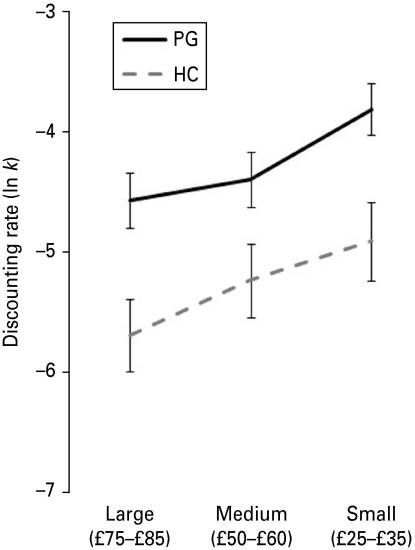
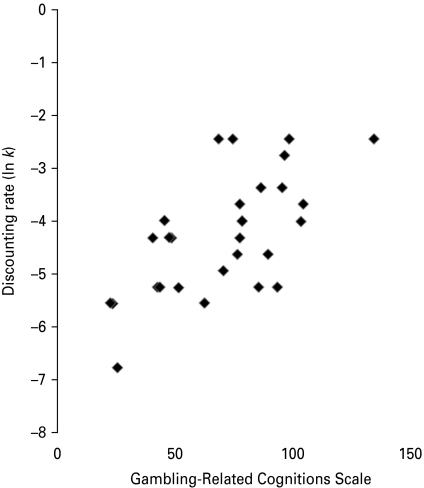
Background: Pathological gambling (PG) is a form of behavioural addiction that has been associated with elevated impulsivity and also cognitive distortions in the processing of chance, probability and skill. We sought to assess the relationship between the level of cognitive distortions and state and trait measures of impulsivity in treatment-seeking pathological gamblers. Method: Thirty pathological gamblers attending the National Problem Gambling Clinic, the first National Health Service clinic for gambling problems in the UK, were compared with 30 healthy controls in a case-control design. Cognitive distortions were assessed using the Gambling-Related Cognitions Scale (GRCS). Trait impulsivity was assessed using the UPPS-P, which includes scales of urgency, the tendency to be impulsive in positive or negative mood states. Delay discounting rates were taken as a state measure of impulsive choice. Results: Pathological gamblers had elevated impulsivity on several UPPS-P subscales but effect sizes were largest (Cohen's d>1.4) for positive and negative urgency. The pathological gamblers also displayed higher levels of gambling distortions, and elevated preference for immediate rewards, compared to controls. Within the pathological gamblers, there was a strong relationship between the preference for immediate rewards and the level of cognitive distortions (R2=0.41). Conclusions: Impulsive choice in the gamblers was correlated with the level of gambling distortions, and we hypothesize that an impulsive decision-making style may increase the acceptance of erroneous beliefs during gambling play.
Overview
The claims and statistics of this paper haven’t been checked yet.
Free: it reads the open-access text and checks the first 5 claims that cite a source we can check. Create a free account to check every claim.
Integrity signals
Registry
Cites
Statistics
Figures
Verification
Claims the paper makes
The claims and statistics of this paper haven’t been checked yet.
Free: it reads the open-access text and checks the first 5 claims that cite a source we can check. Create a free account to check every claim.
Claims other papers make about this one
Each is checked against this paper’s own text: does it say what the citing paper says it does?
The source backs part of the claim, not all of it — or backs it for a different population, condition or comparison.
In the citing paper
“While typical individuals exhibit an increase in gambling motivation in response to near-misses, and overestimate the frequency of one of two equally probable outcomes after a run of the alternate outcome, these effects are increased in those with problematic gambling behaviour (Fortune and Goodie, 2012; Michalczuk et al., 2011).”
From Atypical interoception as a common risk factor for psychopathology: A review (2021) · cites this paper as Michalczuk et al., 2011
Experimental — accuracy not yet measured
Self-check
Percentages, sums and reported differences re-computed from the paper’s own numbers.
The self-check needs the paper’s full text.
Citations
Cites
(1998) · The Journal of Clinical Psychiatry · Cited by 19,139
(1998) · PubMed · Cited by 10,216
The mini international neuropsychiatric interview
Lecrubier, Y., Sheehan, D., Hergueta, T., & Weiller, E. (1998) · European Psychiatry · doi:10.1016/s0924-9338(99)80239-9 · Cited by 5,872
Whiteside, S. P., & Lynam, D. R. (2001) · Personality and Individual Differences · doi:10.1016/s0191-8869(00)00064-7 · Cited by 4,123 · cited 1×
“This construct was initially identified by Whiteside & Lynam (2001) using a composite of the Barratt and Eysenck scales and the Zuckerman Sensation Seeking Scale, and subsequent work by Cyders, Smith and colleagues (Cyders & Smith, 2008 b ) has distinguished positive and negative aspects of urgency.”
Separate neural systems value immediate and delayed monetary rewards
McClure, S. M., Laibson, D. I., Loewenstein, G., & Cohen, J. D. (2004) · Science · doi:10.1126/science.1100907 · Cited by 3,089 · cited 1×
“The resolution of these inter-temporal decisions recruits neural regions, including the ventral striatum and ventromedial prefrontal cortex (McClure et al. 2004 ; Hariri et al. 2006 ; Sellitto et al. 2010), that are implicated in the pathophysiology of problem gambling (Potenza et al.”
(1987) · American Journal of Psychiatry · doi:10.1176/ajp.144.9.1184 · Cited by 2,948
Heroin addicts have higher discount rates for delayed rewards than non-drug-using controls.
Kirby, K. N., Petry, N. M., & Bickel, W. K. (1999) · Journal of Experimental Psychology: General · doi:10.1037/0096-3445.128.1.78 · Cited by 2,171 · cited 5×
“This is in keeping with past personality studies in the general population, which primarily find an association with the Barratt non-planning subscale (Kirby et al. 1999 ; Mobini et al. 2007 ; Koff & Lucas, 2011).”
InfluentialEvenden, J. L. (1999) · Psychopharmacology · doi:10.1007/pl00005481 · Cited by 2,044 · cited 2×
“Rather than being a unidimensional construct, impulsivity is being increasingly viewed as a constellation of traits, including a lack of planning or forethought, reduced perseverance and the seeking of novel or intense sensory experiences (Evenden, 1999; Verdejo-Garcia et al. 2008).”
A pathways model of problem and pathological gambling
Blaszczynski, A., & Nower, L. (2002) · Addiction · doi:10.1046/j.1360-0443.2002.00015.x · Cited by 2,013 · cited 3×
“PG is thought to arise through a combination of biological, social and psychological risk factors (Blaszczynski & Nower, 2002; Sharpe, 2002).”
A Discounting Framework for Choice With Delayed and Probabilistic Rewards.
Green, L., & Myerson, J. (2004) · Psychological Bulletin · doi:10.1037/0033-2909.130.5.769 · Cited by 1,676 · cited 2×
“This is a consistent finding in the behavioural economics literature (Chapman, 1996; Green & Myerson, 2004), and, as in the original study using this measure in heroin addicts (Kirby et al .”
Research works printed but not linked: 1
- Nelson HE Willison J 1991 National Adult Reading Test (NART) Test Manual NFER-Nelson Windsor, UK
Cited by
Problematic use of the mobile phone: A literature review and a pathways model
Billieux, J. (2012) · Current Psychiatry Reviews · doi:10.2174/157340012803520522 · Cited by 794
“For example, research on gambling pointed out that cognitive distortions are highly prevalent in problem gamblers [60] and influence gambling behaviors (e.g., persistence in playing despite losses) [61].”
BackgroundValidation of a short French version of the UPPS-P Impulsive Behavior Scale
Billieux, J., Rochat, L., Ceschi, G., Carré, A., Offerlin-Meyer, I., Defeldre, A.-C., Khazaal, Y., Besche-Richard, C., & Van der Linden, M. (2012) · Comprehensive Psychiatry · doi:10.1016/j.comppsych.2011.09.001 · Cited by 430
Robbins, T., & Clark, L. (2015) · Current Opinion in Neurobiology · doi:10.1016/j.conb.2014.09.005 · Cited by 296
Self-citationClark, L., Stokes, P. R., Wu, K., Michalczuk, R., Benecke, A., Watson, B. J., Egerton, A., Piccini, P., Nutt, D. J., Bowden-Jones, H., et al. (2012) · NeuroImage · doi:10.1016/j.neuroimage.2012.06.067 · Cited by 193
“Case–control comparisons on the Urgency facet yielded stronger effect sizes than 'narrow' impulsivity (i.e. lack of planning, lack of perseverance), which was also seen in a larger group recruited from the same clinical setting (Michalczuk et al., 2011).”
InfluentialSelf-citationAtypical interoception as a common risk factor for psychopathology: A review
Brewer, R., Murphy, J., & Bird, G. (2021) · Neuroscience & Biobehavioral Reviews · doi:10.1016/j.neubiorev.2021.07.036 · Cited by 180
Validation of a short Spanish version of the UPPS-P impulsive behaviour scale
Cándido, A., Orduña, E., Perales, J. C., Verdejo-García, A., & Billieux, J. (2012) · Trastornos Adictivos · doi:10.1016/s1575-0973(12)70048-x · Cited by 176
Self-citationImpulsivity traits and addiction-related behaviors in youth
Rømer Thomsen, K., Callesen, M. B., Hesse, M., Kvamme, T. L., Pedersen, M. M., Pedersen, M. U., & Voon, V. (2018) · Journal of Behavioral Addictions · doi:10.1556/2006.7.2018.22 · Cited by 173
Disordered gambling: the evolving concept of behavioral addiction
Clark, L. (2014) · Annals of the New York Academy of Sciences · doi:10.1111/nyas.12558 · Cited by 196
Self-citationNeural correlates of cognitive control in gambling disorder: a systematic review of fMRI studies
Moccia, L., Pettorruso, M., De Crescenzo, F., De Risio, L., di Nuzzo, L., Martinotti, G., Bifone, A., Janiri, L., & Di Nicola, M. (2017) · Neuroscience & Biobehavioral Reviews · doi:10.1016/j.neubiorev.2017.04.025 · Cited by 158
“Mood-related impulsivity, for example, has been found to be particularly relevant in PG individuals (Michalczuk et al., 2011), whose impulsive acts and decreased cognitive control have been hypothesized to arise through an interaction with current emotional states (Billieux et al.”
Distorted expectancy coding in problem gambling: is the addictive in the anticipation?
van Holst, R. J., Veltman, D. J., Büchel, C., van den Brink, W., & Goudriaan, A. E. (2012) · Biological Psychiatry · doi:10.1016/j.biopsych.2011.12.030 · Cited by 155
Albein-Urios, N., Martinez-González, J. M., Lozano, Ó., Clark, L., & Verdejo-García, A. (2012) · Drug and Alcohol Dependence · doi:10.1016/j.drugalcdep.2012.03.008 · Cited by 153
Self-citationSensation-seeking: dopaminergic modulation and risk for psychopathology
Norbury, A., & Husain, M. (2015) · Behavioural Brain Research · doi:10.1016/j.bbr.2015.04.015 · Cited by 142
Risk-taking and decision-making in youth: Relationships to addiction vulnerability
Balogh, K. N., Mayes, L. C., & Potenza, M. N. (2013) · Journal of Behavioral Addictions · doi:10.1556/jba.2.2013.1.1 · Cited by 118
“Prospective studies suggest that excessive impulsivity during adolescence predicts problematic gambling behavior later in life (Dussault et al., 2011; Michalczuk et al., 2011).”
BackgroundDamage to insula abolishes cognitive distortions during simulated gambling
Clark, L., Studer, B., Bruss, J., Tranel, D., & Bechara, A. (2014) · Proceedings of the National Academy of Sciences · doi:10.1073/pnas.1322295111 · Cited by 117
“The overall level of distorted thinking is elevated in people with gambling problems (11, 12), and these cognitions can be targeted effectively in psychological therapy for disordered gambling (13).”
BackgroundSelf-citationComponents of Impulsivity in Gambling Disorder
Hodgins, D. C., & Holub, A. (2015) · International Journal of Mental Health and Addiction · doi:10.1007/s11469-015-9572-z · Cited by 105
“A large group of studies have demonstrated a positive cross-sectional association with self-report measures of impulsivity and gambling involvement and gambling disorder in both clinical (Grall-Bronnec et al. 2012; Ledgerwood and Petry 2010; Billieux et al. 2012; Albein-Urios et al. 2012; Whiteside et al. 2005; Hwang…”
BackgroundPathological choice: the neuroscience of gambling and gambling addiction
Clark, L., Averbeck, B., Payer, D., Sescousse, G., Winstanley, C. A., & Xue, G. (2013) · The Journal of Neuroscience · doi:10.1523/jneurosci.3231-13.2013 · Cited by 116
“To date, most of the research on these distortions has been in healthy samples; and although questionnaire measures, such as the Gambling Related Cognitions Scale (Raylu and Oei, 2004), indicate a clear increase in the overall propensity toward these erroneous beliefs in pathological gamblers (Michalczuk et al., 2011)…”
BackgroundSelf-citationBrain structure correlates of emotion-based rash impulsivity
Muhlert, N., & Lawrence, A. D. (2015) · NeuroImage · doi:10.1016/j.neuroimage.2015.04.061 · Cited by 113
“Contents lists available at ScienceDirect NeuroImage j ourna l homepage: www.e lsev ie r .com/ locate /yn img Brain structure correlates of emotion-based rash impulsivity N. Muhlert ⁎, A.D. Lawrence”
BackgroundMethodBlunted Endogenous Opioid Release Following an Oral Amphetamine Challenge in Pathological Gamblers
Mick, I., Myers, J., Ramos, A. C., Stokes, P. R. A., Erritzoe, D., Colasanti, A., Gunn, R. N., Rabiner, E. A., Searle, G. E., Waldman, A. D., et al. (2016) · Neuropsychopharmacology · doi:10.1038/npp.2015.340 · Cited by 112
“Consistent with previous research, we found significantly higher impulsivity scores using the UPPS scale in PG compared with HV (Clark et al, 2012; Forbush et al, 2008; Fuentes et al, 2006; Michalczuk et al, 2011).”
ResultSelf-citationDecreased saliency processing as a neural measure of Barratt impulsivity in healthy adults
Farr, O. M., Hu, S., Zhang, S., & Li, C. R. (2012) · NeuroImage · doi:10.1016/j.neuroimage.2012.07.049 · Cited by 114
“Impulsivity affects and sometimes defines a number of psychiatric disorders, including attention deficit hyperactivity, substance abuse, gambling, schizophrenia, borderline personality and bipolar disorders, many of which are associated with altered inhibitory control (Aron et al., 2003; Dagher and Robbins, 2009; Deli…”
Impulsivity Derived From the Dark Side: Neurocircuits That Contribute to Negative Urgency
Zorrilla, E. P., & Koob, G. F. (2019) · Frontiers in Behavioral Neuroscience · doi:10.3389/fnbeh.2019.00136 · Cited by 99
“In a case-control study of 30 pathological gamblers and their respective controls, negative and positive urgency showed the greatest effect sizes of all impulsivity dimensions that discriminated groups (Michalczuk et al., 2011).”
BackgroundTrait and neurobiological underpinnings of negative emotion regulation in gambling disorder
Navas, J. F., Contreras‐Rodríguez, O., Verdejo‐Román, J., Perandrés‐Gómez, A., Albein‐Urios, N., Verdejo‐García, A., & Perales, J. C. (2017) · Addiction · doi:10.1111/add.13751 · Cited by 93
Risk Factors for Gambling Problems Specifically Associated with Sports Betting
Russell, A. M. T., Hing, N., & Browne, M. (2019) · Journal of Gambling Studies · doi:10.1007/s10899-019-09848-x · Cited by 109
Decision making, impulsivity, and addictions: Do Parkinson's disease patients jump to conclusions?
Djamshidian, A., O’Sullivan, S. S., Sanotsky, Y., Sharman, S., Matviyenko, Y., Foltynie, T., Michalczuk, R., Avilés-Olmos, I., Fedoryshyn, L., Doherty, K. A., et al. (2012) · Movement Disorders · doi:10.1002/mds.25105 · Cited by 105
“cision making is often linked with addiction and has been reported in patients with substance abuse and pathological gambling.(1,2) It is also observed in a subgroup of patients with Parkinson’s disease (PD) who develop impulsive-compulsive behaviors (ICBs) on dopaminergic medication.”
BackgroundSelf-citationVelotti, P., Rogier, G., Beomonte Zobel, S., & Billieux, J. (2021) · Clinical Psychology Review · doi:10.1016/j.cpr.2021.102037 · Cited by 100
Emotional and non-emotional pathways to impulsive behavior and addiction.
Torres, A., Catena, A., Megías, A., Maldonado, A., Cándido, A., Verdejo-García, A., & Perales, J. C. (2013) · Frontiers in Human Neuroscience · doi:10.3389/fnhum.2013.00043 · Cited by 99
“This is consistent with previous reports that negative urgency is a sign of overpathologization in addictive processes (e.g., Michalczuk et al., 2011), but not with those in which negative urgency has been linked to cocaine neurotoxic effects.”
ResultSelf-citationNeophytou, K., Theodorou, M., Artemi, T.-F., Theodorou, C., & Panayiotou, G. (2023) · Journal of Contextual Behavioral Science · doi:10.1016/j.jcbs.2023.01.004 · Cited by 106
Weinsztok, S. C., Brassard, S. L., Balodis, I. M., Martin, L. E., & Amlung, M. T. (2021) · Frontiers in Behavioral Neuroscience · doi:10.3389/fnbeh.2021.786358 · Cited by 109
Conceptual Framework of Harmful Gambling, Third Edition
Abbott, M., Binde, P., Clark, L., Hodgins, D. C., Johnson, M. R., Manitowabi, D., Quilty, L. C., Spångberg, J., Volberg, R. A., Walker, D. M., et al. (2018) · doi:10.33684/cfhg3.en · Cited by 100
Self-citationCosenza, M., & Nigro, G. (2015) · Journal of Adolescence · doi:10.1016/j.adolescence.2015.08.015 · Cited by 80
Delay discounting and impulsivity traits in young and older gambling disorder patients
Steward, T., Mestre-Bach, G., Fernández-Aranda, F., Granero, R., Perales, J. C., Navas, J. F., Soriano-Mas, C., Baño, M., Fernández-Formoso, J. A., Martín-Romera, V., et al. (2017) · Addictive Behaviors · doi:10.1016/j.addbeh.2017.03.001 · Cited by 85
Canale, N., Vieno, A., Griffiths, M. D., Rubaltelli, E., & Santinello, M. (2015) · Psychology of Addictive Behaviors · doi:10.1037/adb0000060 · Cited by 86
Billieux, J., Van der Linden, M., Khazaal, Y., Zullino, D., & Clark, L. (2012) · British Journal of Psychology · doi:10.1111/j.2044-8295.2011.02083.x · Cited by 82
Self-citationPsychometric properties of the 7-item game addiction scale among french and German speaking adults
Khazaal, Y., Chatton, A., Rothen, S., Achab, S., Thorens, G., Zullino, D., & Gmel, G. (2016) · BMC Psychiatry · doi:10.1186/s12888-016-0836-3 · Cited by 79
“The findings are in line with numerous studies linking impulsivity and specific cue reactivity with other addictive behaviors [46–48], Internet addiction [17, 29] or gambling-related disorders [49].”
ResultNavas, J. F., Verdejo‐García, A., LÓpez-GÓmez, M., Maldonado, A., & Perales, J. C. (2016) · Journal of Behavioral Addictions · doi:10.1556/2006.5.2016.040 · Cited by 91
“Other studies, however, have reported a different ordering of size effects for the GRCS subscales (Michalczuk et al., 2011), which could be accounted for by the varying composition of the gamblers’ samples across studies.”
ResultBody Dysmorphic Disorder in Patients Seeking Abdominoplasty, Rhinoplasty, and Rhytidectomy
de Brito, M. J. A., Nahas, F. X., Córdas, T. A., Tavares, H., & Ferreira, L. M. (2016) · Plastic & Reconstructive Surgery · doi:10.1097/01.prs.0000475753.33215.8f · Cited by 98
“623 1–3 hr/day 8 (16) 9 (11) 4 (16) >3 hr/day 39 (76) 64 (81) 21 (84) Defect severity†‡ Real — — — χ2 = 5.”
Impulsivity traits and gambling cognitions associated with gambling preferences and clinical status
Navas, J. F., Billieux, J., Perandrés‐Gómez, A., López-Torrecillas, F., Cândido, A., & Perales, J. C. (2017) · International Gambling Studies · doi:10.1080/14459795.2016.1275739 · Cited by 92
“…urgency and lack of premeditation have repeatedly been associated with problematic gambling, with some evidence that negative urgency may have the strongest effect size when comparing GDPs against controls (Billieux et al., 2012a; Blain et al., 2015; MacLaren et al., 2011; Michalczuk et al., 2011).”
BackgroundMallorquí‐Bagué, N., Vintró‐Alcaraz, C., Verdejo‐García, A., Granero, R., Fernández‐Aranda, F., Magaña, P., Mena-Moreno, T., Aymamí, N., Gómez‐Peña, M., del Pino‐Gutiérrez, A., et al. (2019) · European Psychiatry · doi:10.1016/j.eurpsy.2019.06.006 · Cited by 87
“So far, studies have reported elevated cognitive distortions and trait impulsivity in patients with GD compared to healthy controls [12] and specific associations between cognitive distortions and some facets of impulsivity (i.”
BackgroundIrrational Choice under Uncertainty Correlates with Lower Striatal D2/3Receptor Binding in Rats
Cocker, P. J., Dinelle, K., Kornelson, R., Sossi, V., & Winstanley, C. A. (2012) · The Journal of Neuroscience · doi:10.1523/jneurosci.0626-12.2012 · Cited by 76
“Our data therefore match clinical observations that the degree of biased decision-making under uncertainty, rather than simple preference for high risk, differentiates problem gamblers from the general population (Coventry and Brown, 1993; Michalczuk et al., 2011).”
BackgroundResultDimensions of Impulsivity in Gambling Disorder
Mestre‐Bach, G., Steward, T., Granero, R., Fernández‐Aranda, F., Mena-Moreno, T., Vintró‐Alcaraz, C., Lozano‐Madrid, M., Menchón, J. M., Potenza, M. N., & Jiménez‐Múrcia, S. (2020) · Scientific Reports · doi:10.1038/s41598-019-57117-z · Cited by 82
Savvidou, L. G., Fagundo, A. B., Fernández‐Aranda, F., Granero, R., Claes, L., Mallorquí‐Bagué, N., Verdejo‐García, A., Steiger, H., Israël, M., Moragas, L., et al. (2016) · Comprehensive Psychiatry · doi:10.1016/j.comppsych.2016.10.005 · Cited by 88
“Three studies have been conducted with UPPS-P so far and GD in clinical samples [24,28,29].”
BackgroundMethodResultInfluentialWeiland, B. J., Heitzeg, M. M., Zald, D., Cummiford, C., Love, T., Zucker, R. A., & Zubieta, J.-K. (2014) · Psychiatry Research: Neuroimaging · doi:10.1016/j.pscychresns.2014.05.015 · Cited by 66
“Impulsivity has been proposed as a major endophenotype associated with disorders of behavioral control, such as substance use and pathological gambling, as well as co-morbid neuropsychiatric disorders, such as bipolar disorder and borderline personality disorder (Dick et al., 2010; Michalczuk et al., 2011; Zucker et a…”
Del Prete, F., Steward, T., Navas, J. F., Fernández-Aranda, F., Jiménez-Murcia, S., Oei, T. P. S., & Perales, J. C. (2017) · Journal of Behavioral Addictions · doi:10.1556/2006.6.2017.001 · Cited by 70
“Second, and more importantly, we sought to confirm and extend previously identified associations between gambling-related cognitive distortion levels, measures of impulsivity, and gambling behavior (Michalczuk et al., 2011).”
BackgroundShifted risk preferences in pathological gambling
Ligneul, R., Sescousse, G., Barbalat, G., Domenech, P., & Dreher, J. (2012) · Psychological Medicine · doi:10.1017/s0033291712001900 · Cited by 82
“The notion of discounting was initially used to describe the subjective devaluation of rewards delayed in time, and this ‘delay discounting’ has been reliably linked to trait impulsivity, in both healthy subjects and pathological gamblers (Michalczuk et al. 2011).”
BackgroundWinning and losing: Effects on impulsive action.
Verbruggen, F., Chambers, C., Lawrence, N., & McLaren, I. P. L. (2017) · Journal of Experimental Psychology Human Perception & Performance · doi:10.1037/xhp0000284 · Cited by 80
Cyders, M. A., Dzemidzic, M., Eiler, W. J., Coskunpinar, A., Karyadi, K. A., & Kareken, D. A. (2015) · Cerebral Cortex · doi:10.1093/cercor/bhu123 · Cited by 69
“…by Coskunpinar et al. 2013), binge eating (see a review by Fischer et al. 2008), gambling (e.g., Cyders and Smith 2008b; Fischer and Smith 2008; Michalczuk et al. 2011), sexual risk-taking (e.g., Zapolski et al. 2009; Dir et al. 2013), and drug use (e.g., Verdejo-Garcia et al. 2007; Zapolski…”
BackgroundWho Bets on Micro Events (Microbets) in Sports?
Russell, A. M. T., Hing, N., Browne, M., Li, E., & Vitartas, P. (2018) · Journal of Gambling Studies · doi:10.1007/s10899-018-9810-y · Cited by 67
Gambling among European professional athletes. Prevalence and associated factors
Grall‐Bronnec, M., Caillon, J., Humeau, É., Perrot, B., Remaud, M., Guilleux, A., Rocher, B., Sauvaget, A., & Challet‐Bouju, G. (2016) · Journal of Addictive Diseases · doi:10.1080/10550887.2016.1177807 · Cited by 75
“The urgency, premeditation, perseverance, and sensation seeking (UPPS)-Short Form questionnaire was used for the current study.(23,50,51) The first version of the UPPS(52) was developed with the aim of measuring”
BackgroundMethodAmplified Striatal Responses to Near-Miss Outcomes in Pathological Gamblers
Sescousse, G., Janssen, L. K., Hashemi, M. M., Timmer, M. H. M., Geurts, D. E. M., ter Huurne, N. P., Clark, L., & Cools, R. (2016) · Neuropsychopharmacology · doi:10.1038/npp.2016.43 · Cited by 76
“Although the behavioral vulnerability of pathological gamblers to such cognitive distortions is well established (Michalczuk et al, 2011), the underlying neural and neurochemical mechanisms remain elusive.”
BackgroundSelf-citationGambling Motives: Do They Explain Cognitive Distortions in Male Poker Gamblers?
Mathieu, S., Barrault, S., Brunault, P., & Varescon, I. (2017) · Journal of Gambling Studies · doi:10.1007/s10899-017-9700-8 · Cited by 72
“Unlike the results found previously, in pathological gamblers (Michalczuk et al. 2011; Navas et al. 2016) and pathological gambling poker players (Barrault and Varescon 2013), the illusion of control does not appear to be an important belief.”
ResultThe paradoxical relationship between emotion regulation and gambling-related cognitive biases
de Lara, C. M. R., Navas, J. F., & Perales, J. C. (2019) · PLoS ONE · doi:10.1371/journal.pone.0220668 · Cited by 69
Devos, G., Clark, L., Bowden‐Jones, H., Grall‐Bronnec, M., Challet‐Bouju, G., Khazaal, Y., Maurage, P., & Billieux, J. (2019) · Journal of Affective Disorders · doi:10.1016/j.jad.2019.08.096 · Cited by 67
“Across many studies, cognitive distortions assessed via self-report questionnaires are elevated in groups with gambling problems (Marmurek et al., 2014; Michalczuk et al., 2011; Navas et al., 2017).”
BackgroundSelf-citationRisk-Taking, Delay Discounting, and Time Perspective in Adolescent Gamblers: An Experimental Study
Cosenza, M., Griffiths, M. D., Nigro, G., & Ciccarelli, M. (2016) · Journal of Gambling Studies · doi:10.1007/s10899-016-9623-9 · Cited by 61
Zendle, D. I. (2019) · PeerJ · doi:10.7717/peerj.7700 · Cited by 65
“Problem gamblers often exhibit elevated levels of impulsivity (Michalczuk et al., 2011; Alessi & Petry, 2003).”
BackgroundAlbein‐Urios, N., Martínez-González, J. M., Lozano, O. M., Moreno-López, L., Soriano‐Mas, C., & Verdejo‐García, A. (2013) · Drug and Alcohol Dependence · doi:10.1016/j.drugalcdep.2013.02.008 · Cited by 57
Characteristics of Treatment Seeking Problem Gamblers with Adult ADHD
Reid, R. C., Campos, M. D., Selochan, N., & FONG, T. W. (2018) · International Journal of Mental Health and Addiction · doi:10.1007/s11469-018-9986-5 · Cited by 55
Impulse control disorders in Parkinson’ disease: the role of personality and cognitive status
Poletti, M., & Bonuccelli, U. (2012) · Journal of Neurology · doi:10.1007/s00415-012-6506-6 · Cited by 63
Gambling-Related Cognitive Distortions in Residential Treatment for Gambling Disorder
Ledgerwood, D. M., Dyshniku, F., McCarthy, J. E., Ostojic‐Aitkens, D., Forfitt, J., & Rumble, S. (2019) · Journal of Gambling Studies · doi:10.1007/s10899-019-09895-4 · Cited by 57
The blurred future of adolescent gamblers: Impulsivity, time horizon, and emotional distress
Nigro, G., Cosenza, M., & Ciccarelli, M. (2017) · Frontiers in Psychology · doi:10.3389/fpsyg.2017.00486 · Cited by 52
“As regards to delay discounting, the results are in accordance with previous research demonstrating that pathological gamblers devalue or discount delayed rewards to a greater extent than nongamblers and non-problem gamblers do (Petry and Casarella, 1999; e.g., Alessi and Petry, 2003;Madden et al., 2011;Michalczuk et…”
ResultGames in the Brain: Neural Substrates of Gambling Addiction
Murch, W. S., & Clark, L. (2016) · The Neuroscientist · doi:10.1177/1073858415591474 · Cited by 69
Self-citationCanale, N., Vieno, A., Griffiths, M. D., Marino, C., Chieco, F., Disperati, F., Andriolo, S., & Santinello, M. (2015) · Computers in Human Behavior · doi:10.1016/j.chb.2015.10.012 · Cited by 58
Um, M., Hershberger, A. R., Whitt, Z. T., & Cyders, M. A. (2018) · Borderline Personality Disorder and Emotion Dysregulation · doi:10.1186/s40479-018-0084-x · Cited by 58
“These traits have been shown to relate to a wide range of psychopathology, including, but not limited to, substance use [52, 53], problem gambling [54, 55], risky”
BackgroundCocker, P. J., & Winstanley, C. A. (2014) · Behavioural Brain Research · doi:10.1016/j.bbr.2014.10.043 · Cited by 54
Gambling and violence in a nationally representative sample of UK men
Roberts, A. D. L., Coid, J. W., King, R., Murphy, R., Turner, J. J., Bowden‐Jones, H., du Preez, K. P., & Landon, J. (2016) · Addiction · doi:10.1111/add.13522 · Cited by 69
“One factor of interest is impaired impulse control, as pathological gambling has been shown to be associated with elevated impulsivity [54-57]; and elevated impulsivity is also”
BackgroundSelf-citationSchluter, M. G., Kim, H. S. A., Poole, J. C., Hodgins, D. C., McGrath, D. S., Dobson, K. S., & Taveres, H. (2018) · Addictive Behaviors · doi:10.1016/j.addbeh.2018.11.038 · Cited by 52
Adolescent development of cortical oscillations: Power, phase, and support of cognitive maturation
Marek, S., Tervo-Clemmens, B., Klein, N., Foran, W., Ghuman, A. S., & Luna, B. (2018) · PLOS Biology · doi:10.1371/journal.pbio.2004188 · Cited by 48
Comparison of impulsivity in non-problem, at-risk and problem gamblers
Yan, W.-S., Zhang, R., Lan, Y., Li, Y., & Sui, N. (2016) · Scientific Reports · doi:10.1038/srep39233 · Cited by 50
Mills, D. J., Li, W., & Nower, L. (2020) · Addiction Research & Theory · doi:10.1080/16066359.2020.1787389 · Cited by 51
“Individual differences including trait anxiety, depression, and impulsivity and experiences of childhood maltreatment are associated with an elevated risk for problem gambling (Nower et al. 2004; Vachon and Bagby 2009; Kotov et al. 2010; Michalczuk et al. 2011; Nower and Blaszczynski 2017).”
BackgroundJara-Rizzo, M. F., Navas, J. F., Catena, A., & Perales, J. C. (2019) · Journal of Gambling Studies · doi:10.1007/s10899-019-09868-7 · Cited by 52
Predicting Problem Gambling in Australian Adults Using a Multifaceted Model of Impulsivity
Blain, B., Gill, P. R., & Teese, R. (2015) · International Gambling Studies · doi:10.1080/14459795.2015.1029960 · Cited by 50
“In contrast, studies by Billieux et al. (2012a) and Michalczuk et al. (2011) found no significant difference in sensation seeking between treatment-seeking pathological gamblers and matched controls.”
BackgroundMethodResultInfluentialSelf-reported impulsivity and inhibitory control in problem gamblers
Lorains, F. K., Stout, J. C., Bradshaw, J. L., Dowling, N. A., & Enticott, P. G. (2014) · Journal of Clinical and Experimental Neuropsychology · doi:10.1080/13803395.2013.873773 · Cited by 40
Perception and identification of random events.
Zhao, J., Hahn, U., & Osherson, D. N. (2014) · Journal of Experimental Psychology Human Perception & Performance · doi:10.1037/a0036816 · Cited by 50
Internet Gamblers Differ on Social Variables: A Latent Class Analysis
Khazaal, Y., Chatton, A., Achab, S., Monney, G., Thorens, G., Dufour, M., ZULLINO, D. F., & Rothen, S. (2016) · Journal of Gambling Studies · doi:10.1007/s10899-016-9664-0 · Cited by 47
Rogier, G., Colombi, F., & Velotti, P. (2020) · Current Psychology · doi:10.1007/s12144-020-00638-y · Cited by 41
Kim, H. S. A., Poole, J. C., Hodgins, D. C., McGrath, D. S., & Dobson, K. S. (2018) · Addiction Research & Theory · doi:10.1080/16066359.2018.1455188 · Cited by 43
“heightened impulsivity during intense negative and positive affect, respectively) as risk factors in the development of addictive disorders, including gambling (Whiteside et al. 2005; Cyders and Smith 2008; Fischer and Smith 2008; Michalczuk et al. 2011; Billieux et al. 2012; Grall-Bronnec et al. 2012; Blain et al. 20…”
BackgroundInfluentialPsychological factors and alcohol use in problematic mobile phone use in the Spanish population
De-Sola, J., Talledo, H., Rubio, G., & de Fonseca, F. R. (2017) · Frontiers in Psychiatry · doi:10.3389/fpsyt.2017.00011 · Cited by 39
“In other words, it is a behavior that occurs with little or no precaution (26) and that involves significant cognitive distortions (27, 28).”
BackgroundSuboptimal choice by pigeons: An analog of human gambling behavior
Zentall, T. R. (2013) · Behavioural Processes · doi:10.1016/j.beproc.2013.11.004 · Cited by 41
A naturalistic study of recovering gamblers: What gets better and when they get better
Rossini, D., Fuentes, D., & Tavares, H. (2015) · Psychiatry Research · doi:10.1016/j.psychres.2015.03.003 · Cited by 45
Evidence for GABA‐A receptor dysregulation in gambling disorder: correlation with impulsivity
Mick, I., Ramos, A. C., Myers, J., Stokes, P. R. A., Chandrasekera, S., Erritzøe, D., Méndez, M. A., Gunn, R. N., Rabiner, E. A., Searle, G. E., et al. (2016) · Addiction Biology · doi:10.1111/adb.12457 · Cited by 40
“Given there were only a few current smokers, we are unable to explore further the impact of smoking on [11C]Ro15-4513 VT binding in GD. Consistent with previous work, we found higher impulsivity scores in individuals with GD compared with HV (Clark et al. 2012; Michalczuk et al. 2011).”
Self-citationMestre‐Bach, G., Steward, T., Granero, R., Fernández‐Aranda, F., del Pino‐Gutiérrez, A., Mallorquí‐Bagué, N., Mena-Moreno, T., Vintró‐Alcaraz, C., Moragas, L., Aymamí, N., et al. (2019) · European Psychiatry · doi:10.1016/j.eurpsy.2018.09.002 · Cited by 45
“The role of sensation seeking, as assessed by the UPPS-P, is not clear in the case of GD and some studies do not support higher levels of this trait in comparison with healthy controls [20,23,24].”
BackgroundGambling and Impulsivity Traits: A Recipe for Criminal Behavior?
Mestre‐Bach, G., Steward, T., Granero, R., Fernández‐Aranda, F., Talón-Navarro, M. T., Cuquerella, À., Baño, M., Moragas, L., del Pino‐Gutiérrez, A., Aymamí, N., et al. (2018) · Frontiers in Psychiatry · doi:10.3389/fpsyt.2018.00006 · Cited by 43
La impulsividad: ¿Antesala de las adicciones comportamentales?
De-Sola, J., Rubio, G., & de Fonseca, F. R. (2013) · African journal of rhetoric · doi:10.21134/haaj.v13i2.211 · Cited by 78
Canale, N., Vieno, A., Bowden‐Jones, H., & Billieux, J. (2017) · Addiction · doi:10.1111/add.13641 · Cited by 36
“Moreover, it has been shown that urgency is the impulsivity facet that distinguishes more strongly between treatment-seeking pathological gamblers and matched control participants [6].”
BackgroundSelf-citationGarcia-Caballero, A., Lluch, M. T., Ramírez-Gendrau, I., Garrido, G., Vallès, V., & Aragay, N. (2018) · Adicciones · doi:10.20882/adicciones.965 · Cited by 43
Gainsbury, S., Abarbanel, B., & Blaszczynski, A. P. (2020) · Frontiers in Psychiatry · doi:10.3389/fpsyt.2020.574884 · Cited by 36
de Brito, M. J. A., Neto, M. S., de Oliveira, M. F., Córdas, T. A., Duarte, L. S., Rosella, M. F. N. D. S. M., Felix, G. D. A. A., & Ferreira, L. M. (2015) · Brazilian Journal of Psychiatry · doi:10.1590/1516-4446-2015-1664 · Cited by 39
Impulsivity Predictors of Problem Gambling and Impaired Control
Haw, J. (2015) · International Journal of Mental Health and Addiction · doi:10.1007/s11469-015-9603-9 · Cited by 38
“[22] group comparison and the Blain et al.”
ResultSchluter, M. G., Kim, H. S. A., & Hodgins, D. C. (2018) · Journal of Behavioral Addictions · doi:10.1556/2006.7.2018.117 · Cited by 36
“Moreover, these scores were within the range of scores observed in previous research with problem and disordered gambling populations (Haw, 2017; Michalczuk et al., 2011).”
ResultDowling, N. A., Oldenhof, E., Shandley, K. A., Youssef, G. J., Vasiliadis, S. D., Thomas, S. A., Frydenberg, E., & Jackson, A. C. (2017) · Addictive Behaviors · doi:10.1016/j.addbeh.2017.09.003 · Cited by 35
Down and Out in London: Addictive Behaviors in Homelessness
Sharman, S., Dreyer, J., Clark, L., & Bowden‐Jones, H. (2016) · Journal of Behavioral Addictions · doi:10.1556/2006.5.2016.037 · Cited by 40
“Similar to treatment-seeking pathological gamblers in a British clinical sample (Michalczuk et al., 2011), our homeless participants identified Fixed Odds Betting Terminals as the most problematic form of gambling.”
ResultSelf-citationImpulsivity, Gambling Cognitions, and the Gambler’s Fallacy in University Students
Marmurek, H. H. C., Switzer, J. L., & D’Alvise, J. (2013) · Journal of Gambling Studies · doi:10.1007/s10899-013-9421-6 · Cited by 38
“Moreover, the healthy controls in Michalczuk et al. (2011) scored a maximum of 2 on the PGSI which is consistent with the present pooling of the non-problem and low risk categories.”
BackgroundResultInfluentialRomo, L., Legauffre, C., Guilleux, A., Valleur, M., Magalon, D., Fatseas, M., Chéreau, I., Luquiens, A., Vénisse, J.-L., _, _., et al. (2016) · Journal of Behavioral Addictions · doi:10.1556/2006.5.2016.070 · Cited by 36
“As noted by Michalczuk et al. (2011), the links between impulsivity, immediate reward, and the level of cognitive distortions could largely explain the severity of a gambling disorder.”
Backgroundde Brito, M. J. A., Nahas, F. X., Ortega, N. R. S., Córdas, T. A., Dini, G. M., Neto, M. S., & Ferreira, L. M. (2013) · International Journal of Medical Informatics · doi:10.1016/j.ijmedinf.2013.04.007 · Cited by 33
“[11] R.”
BackgroundBuen, A., & Flack, M. (2021) · Journal of Gambling Studies · doi:10.1007/s10899-021-10039-w · Cited by 37
“As gambling becomes habitual, the tendency to accept erroneous beliefs regarding personal skill and over-estimation of the chances of winning emerge (Michalczuk et al., 2011; Raylu et al., 2016).”
BackgroundVintró‐Alcaraz, C., Mestre‐Bach, G., Granero, R., Gómez‐Peña, M., Moragas, L., Fernández‐Aranda, F., & Jiménez‐Múrcia, S. (2021) · Addictive Behaviors · doi:10.1016/j.addbeh.2021.107176 · Cited by 37
Marmurek, H. H. C., Switzer, J. L., & D’Alvise, J. (2014) · Journal of Behavioral Addictions · doi:10.1556/jba.3.2014.007 · Cited by 39
“Michalczuk et al. (2011) found that the preference for immediate small rewards over delayed larger rewards in a delay discounting paradigm was more strongly associated with gambling related cognitions than with self-reported impulsivity.”
BackgroundMethodResultInfluentialCognitive Distortions in Gamblers and Non-gamblers of a Representative Spanish Sample
Labrador, M., Labrador, F. J., Crespo, M., Echeburúa, E., & Becoña, E. (2019) · Journal of Gambling Studies · doi:10.1007/s10899-019-09870-z · Cited by 35
Pilatti, A., Lozano, O. M., & Cyders, M. A. (2015) · Psychological Assessment · doi:10.1037/pas0000124 · Cited by 35
“Mean scores on both urgency subscales, but not on Sensation Seeking, were not significantly different between pathological gamblers and healthy controls (Michalczuk et al., 2011).”
BackgroundPorchet, R. I., Boekhoudt, L., Studer, B., Gandamaneni, P. K., Rani, N., Binnamangala, S., Müller, U., & Clark, L. (2013) · Frontiers in Behavioral Neuroscience · doi:10.3389/fnbeh.2013.00138 · Cited by 33
“The objective of the current study was to assess the effects of the opioid receptor antagonist naltrexone and the dopamine D2 receptor antagonist haloperidol on gambling behavior.”
BackgroundSelf-citationReward Preferences of Pathological Gamblers Under Conditions of Uncertainty: An Experimental Study
Ciccarelli, M., Malinconico, R., Griffiths, M. D., Nigro, G., & Cosenza, M. (2016) · Journal of Gambling Studies · doi:10.1007/s10899-016-9593-y · Cited by 33
“Consistent with previous research that, starting from the classification of gambling as ‘‘impulse control disorder’’ has revealed the strong relation between impulsivity and problem gambling, the present study confirmed that the level of impulsivity is higher in pathological gamblers compared to controls (e.g., MacKil…”
BackgroundResultDual effects of ‘losses disguised as wins’ and near-misses in a slot machine game
Sharman, S., Aitken, M. R. F., & Clark, L. (2015) · International Gambling Studies · doi:10.1080/14459795.2015.1020959 · Cited by 34
Self-citation
Metadata
- Authors
- Michalczuk, R., Bowden-Jones, H., Verdejo-Garcia, A., & Clark, L.
- Affiliations
- University of Cambridge (GB)
- Corresponding author
- Clark, L.
- ORCID
- Clark, L.
- Venue
- Psychological Medicine
- Publisher
- Cambridge University Press (CUP)
- Published
- 2011-06-29
- Volume
- 41
- Issue
- 12
- Pages
- 2625-2635
- ISSN
- 0033-2917 (ISSN-L)
- 1469-8978
- PMC
- PMC3206226
- OpenAlex
- W1973481178
- Cited by
- 248
- References
- 83
- Citations by year
- 2026: 4 · 2025: 8 · 2024: 7 · 2023: 13 · 2022: 12 · 2021: 15 · 2020: 17 · 2019: 28 · 2018: 25 · 2017: 18 · 2016: 32 · 2015: 21 · 2014: 23 · 2013: 12 · 2012: 11
- FWCI
- 16.53
- Type
- journal article
- Language
- en
- Open access
- hybrid
- doi.org
- Licence
- cc-by-nc-sa
- www.cambridge.org/core/terms (unspecified)
- Locations
- Psychological Medicine (publishedVersion, cc-by-nc-sa)
- Europe PMC (PubMed Central) (publishedVersion, cc-by-nc-sa)
- PubMed Central (publishedVersion, cc-by-nc-sa)
- PubMed (publishedVersion)
- UCL Discovery (University College London) (submittedVersion)
- Funders
- Wellcome Trust (093875)
- Society for the Study of Addiction
- Medical Research Council (G0802725)
- Topics
- Social Sciences › Psychology › Clinical Psychology › Gambling Behavior and Treatments
- Social Sciences › Decision Sciences › General Decision Sciences › Decision-Making and Behavioral Economics
- Health Sciences › Medicine › Epidemiology › Substance Abuse Treatment and Outcomes
- Keywords
- gambling addiction, impulsivity, cognitive distortions, delay discounting, impulsive choice, urgency, positive urgency, negative urgency, UPPS-P, treatment-seeking gamblers, behavioral addiction
- MeSH terms
- Adult, Cognition Disorders, Female, Gambling, United Kingdom, Humans, Impulsive Behavior, Male, Middle Aged, Psychiatric Status Rating Scales, Psychological Tests, Psychotherapy, Reward, Case-Control Studies, Young Adult
About these checks
Registry, retraction, Cites and statistics results are computed, not judged, with one exception: a printed reference that no index lists is read once by a model before it counts as a citation error. Claims are extracted by a model and kept only when their quote appears verbatim in the text; each cited source is then checked, with a model’s help, for whether it says what the claim relies on. Those verdicts can be wrong — read the claim’s quote and the cited source before relying on one.
Statistics and arithmetic are recomputed, not judged.
Confidence bands are shown only for fields calibrated on our annotated test set. None is calibrated yet, so no band is shown.
What counts as a claim ›How we measure confidence ›How we check this ›
Are you an author, or do you see a problem with this page? Request a review
Data sources
Bibliographic data: Semantic Scholar, OpenAlex, Crossref.
Contains information from the Semantic Scholar Academic Graph Datasets, made available under the ODC Attribution License (ODC-BY 1.0).
Semantic Scholar’s data is described in: Kinney, R., et al. (2023). The Semantic Scholar Open Data Platform. arXiv:2301.10140.
