

A structured literature review on the role of mindfulness, mindful eating and intuitive eating in changing eating behaviours: effectiveness and associated potential mechanisms
Open accessThe DOI matches its Crossref record; 96 of the 97 references it cites were found in a registry or an index.
Abstract
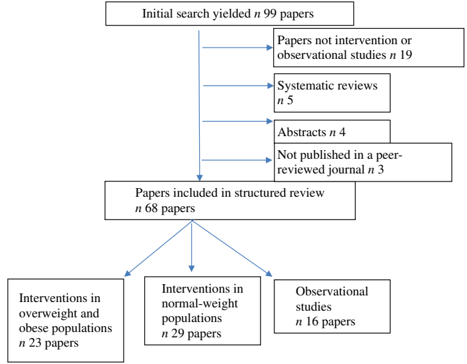
The role of mindfulness, mindful eating and a newer concept of intuitive eating in modulating eating habits is an area of increasing interest. In this structured literature review, a summary of the current evidence is presented, together with details of interventions undertaken and the tools to measure outcomes. It is broad in scope given the emerging evidence base in this area. The review yielded sixty-eight publications: twenty-three interventions in obese/overweight populations; twenty-nine interventions in normal-weight populations; sixteen observational studies, three of which were carried out in overweight/obese populations. Mindfulness-based approaches appear most effective in addressing binge eating, emotional eating and eating in response to external cues. There is a lack of compelling evidence for the effectiveness of mindfulness and mindful eating in weight management. Mindfulness-based approaches may prevent weight gain. Reduced food intake was seen in some of the studies in overweight and obese populations, but this was less apparent in the studies in normal-weight populations. The evidence base for intuitive eating is limited to date and further research is needed to examine its potential in altering eating behaviours. Mindfulness appears to work by an increased awareness of internal, rather than external, cues to eat. Mindfulness and mindful eating have the potential to address problematic eating behaviours and the challenges many face with controlling their food intake. Encouraging a mindful eating approach would seem to be a positive message to be included in general weight management advice to the public.
Overview
The claims and statistics of this paper haven’t been checked yet.
Free: it reads the open-access text and checks the first 5 claims that cite a source we can check. Create a free account to check every claim.
Integrity signals
Registry
Cites
Statistics
Figures
Verification
Claims the paper makes
The claims and statistics of this paper haven’t been checked yet.
Free: it reads the open-access text and checks the first 5 claims that cite a source we can check. Create a free account to check every claim.
Claims other papers make about this one
Each is checked against this paper’s own text: does it say what the citing paper says it does?
The cited source says what the claim attributes to it.
In the citing paper
“Therefore, mindful eating promotes healthier eating behaviors by enhancing individuals' awareness of hunger and satiety cues, fostering conscious food choices, and improving understanding of how internal states and external factors influence eating [3, 5].”
From Four Facet Mindful Eating and Eating Disorder Risk: Mediation By Depression and Body Mass Index. (2026) · cites this paper as [5]
Self-check
Percentages, sums and reported differences re-computed from the paper’s own numbers.
The self-check needs the paper’s full text.
Citations
Cites
The benefits of being present: Mindfulness and its role in psychological well-being
Brown, K. W., & Ryan, R. M. (2003) · Journal of Personality and Social Psychology · doi:10.1037/0022-3514.84.4.822 · Cited by 13,448 · cited 1×
“(2) The Mindfulness Awareness Attention Scale contained fifteen items((62)).”
Background(2008) · Medical Entomology and Zoology · Cited by 7,477
Mindfulness: A proposed operational definition.
Bishop, S. R., Lau, M., Shapiro, S., Carlson, L., Anderson, N. D., Carmody, J., Segal, Z. V., Abbey, S., Speca, M., Velting, D., et al. (2004) · Clinical Psychology: Science and Practice · doi:10.1093/clipsy.bph077 · Cited by 7,234 · cited 3×
“In mindfulness, an individual observes their immediate experience using an open and non-judgemental stance((3)).”
BackgroundThe Eating Attitudes Test: psychometric features and clinical correlates
Garner, D. M., Olmsted, M. P., Bohr, Y., & Garfinkel, P. E. (1982) · Psychological Medicine · doi:10.1017/s0033291700049163 · Cited by 4,962 · cited 2×
“Tools used to measure eating-related behaviours Eating behaviours were most frequently assessed using the Dutch Eating Behaviour Questionnaire(65), the Eating Attitudes Test(66) and the Eating Disorders Examination Questionnaire(67).”
MethodMindfulness practice leads to increases in regional brain gray matter density
Hölzel, B. K., Carmody, J., Vangel, M., Congleton, C., Yerramsetti, S. M., Gard, T., & Lazar, S. W. (2011) · Psychiatry Research: Neuroimaging · doi:10.1016/j.pscychresns.2010.08.006 · Cited by 1,914 · cited 1×
“emotional regulation and self-referential processing((92)).”
Chiesa, A., & Serretti, A. (2009) · The Journal of Alternative and Complementary Medicine · doi:10.1089/acm.2008.0495 · Cited by 1,681 · cited 1×
“Recent reviews have examined the evidence for mindfulness in the management of pain((5,6)), depression((7,8)) and psychological well-being((9,10)).”
BackgroundLoving-Kindness and Compassion Meditation: Potential for Psychological Interventions
Hofmann, S. G., Grossman, P., & Hinton, D. E. (2011) · Clinical Psychology Review · doi:10.1016/j.cpr.2011.07.003 · Cited by 960 · cited 1×
“Recent reviews have examined the evidence for mindfulness in the management of pain((5,6)), depression((7,8)) and psychological well-being((9,10)).”
BackgroundPiet, J., & Hougaard, E. (2011) · Clinical Psychology Review · doi:10.1016/j.cpr.2011.05.002 · Cited by 807 · cited 1×
“Recent reviews have examined the evidence for mindfulness in the management of pain((5,6)), depression((7,8)) and psychological well-being((9,10)).”
BackgroundTylka, T. L., & Kroon Van Diest, A. M. (2013) · Journal of Counseling Psychology · doi:10.1037/a0030893 · Cited by 763 · cited 2×
“Intuitive eating, when measured, was evaluated using the Intuitive Eating Scale(64) which contains twenty-one items.”
MethodAn Exploratory Study of a Meditation-based Intervention for Binge Eating Disorder
Kristeller, J. L., & Hallett, C. B. (1999) · Journal of Health Psychology · doi:10.1177/135910539900400305 · Cited by 681 · cited 9×
“Hunger awareness was measured in two overweight/obese populations and positive results were reported in both studies((11,28)).”
BackgroundInfluential
Cited by
Items 101–200 of 432
Nakamura, T., Akamatsu, R., & Yoshiike, N. (2021) · Nutrients · doi:10.3390/nu13124439 · Cited by 17
“The application of mindfulness to eating has developed into a personal approach to improving eating behaviors, which is referred to as mindful eating (ME) [4].”
BackgroundValidation and Reliability of the Turkish Version of the Mindful Eating Inventory in Adults
Bozkurt, O., Bozkurt, B. K., Çelik, Ö. M., & Köksal, E. (2024) · Mindfulness · doi:10.1007/s12671-023-02272-8 · Cited by 15
“Also, the person is aware of why the eating behavior occurs, is aware of emotions, and pays attention to eating (Kocaadam-Bozkurt et al., 2022; Warren et al., 2017).”
Clarke, E. D., Stanford, J., Gómez‐Martín, M., & Collins, C. E. (2024) · Nutrition & Dietetics · doi:10.1111/1747-0080.12869 · Cited by 19
Pandya, S. P. (2020) · Journal of Pediatric Nursing · doi:10.1016/j.pedn.2020.06.014 · Cited by 13
Role of gastronomy and new technologies in shaping healthy diets
Pérez‐Rodrigo, C., & Bartrina, J. A. (2020) · Elsevier eBooks · doi:10.1016/b978-0-12-820057-5.00002-9 · Cited by 20
Mindfulness-based treatment for smoking cessation: a randomized controlled trial
Araújo, M. S., da Silva, L. M., Pereira, G. M. A., Pinto, N. F., Costa, F. M., Moreira, L., Nunes, D. P., Canan, M. G. M., & de Oliveira, M. H. S. (2021) · Jornal Brasileiro de Pneumologia · doi:10.36416/1806-3756/e20210254 · Cited by 17
“(8) Later, they were successfully used in the treatment of depression, anxiety,(9) eating disorders, and addictions,(10) and only recently have they been adapted for smoking cessation.”
He, D., Singh, H. K. G., Alavi, M., Koo, H. C., Fariduddin, M. N., Wee, L. H., & Siau, C. S. (2025) · Journal of Eating Disorders · doi:10.1186/s40337-025-01287-x · Cited by 19
“For instance, mindfulness-based approaches have been shown to reduce emotional eating by promoting a non-judgmental awareness of emotional states [91].”
Zhang, Q., O'Connor, D. B., & Hugh‐Jones, S. (2022) · Applied Psychology Health and Well-Being · doi:10.1111/aphw.12393 · Cited by 17
Bahl, S., Milne, G. R., & Miller, E. G. (2023) · Journal of Consumer Affairs · doi:10.1111/joca.12542 · Cited by 15
Schembre, S. M., Jospe, M. R., Bedrick, E. J., Li, L., Brewster, A. M., Levy, E. J., Dirba, D. D., Campbell, M., Taylor, R. W., & Basen‐Engquist, K. (2022) · Cancer Prevention Research · doi:10.1158/1940-6207.capr-21-0298 · Cited by 12
Beslenme Durumunun Duygusal Yeme, Gece Yeme ve Uyku Kalitesi Üzerindeki Etkileri
Şen, G. G., & Kabaran, S. (2021) · Kocaeli Üniversitesi Sağlık Bilimleri Dergisi · doi:10.30934/kusbed.952227 · Cited by 14
de Bruin, W. E., Ward, A. L., Taylor, R. W., & Jospe, M. R. (2019) · BMJ Open · doi:10.1136/bmjopen-2019-032248 · Cited by 15
Kao, T. A., Ling, J., Alanazi, M. O., Atwa, A., & Suriyawong, W. (2023) · Obesity Research & Clinical Practice · doi:10.1016/j.orcp.2023.05.006 · Cited by 15
Janssen, L. K., Duif, I., Speckens, A. E. M., van Loon, I., Wegman, J., de Vries, J. H. M., Cools, R., & Aarts, E. (2023) · Frontiers in Nutrition · doi:10.3389/fnut.2023.1115727 · Cited by 12
“(72) concludes that there is a lack of compelling evidence of mindfulness and mindful eating interventions leading to a reduction in weight.”
BackgroundBarakat, M. M., Salim, N. A., Malaeb, D. N., Dabbous, M., Sakr, F., Hallit, S. R., Fekih‐Romdhane, F., & Obeïd, S. (2024) · BMC Public Health · doi:10.1186/s12889-024-17812-7 · Cited by 16
“Absolutely, promoting mindfulness in the context of eating can indeed have a positive impact on addressing problematic eating behaviors [60].”
BackgroundBear, D., Hosker-Field, A. M., Westall, K., D'Alessio, H., & Cresswell, M. (2024) · International Journal of Drug Policy · doi:10.1016/j.drugpo.2024.104514 · Cited by 15
Mindful Eating and Diet Quality Among US Adults With Lower Incomes
Hammad, N. M., Slotnick, M. J., Fung, T. T., Gilbert‐Diamond, D., Cheung, L., & Leung, C. W. (2024) · Journal of the Academy of Nutrition and Dietetics · doi:10.1016/j.jand.2024.11.009 · Cited by 14
Savard, C., Yan, E., Plante, A.-S., Bégin, C., Robitaille, J., Michaud, A., Lemieux, S., Provencher, V., & Morisset, A. (2020) · Eating and Weight Disorders - Studies on Anorexia Bulimia and Obesity · doi:10.1007/s40519-020-01057-5 · Cited by 11
Frank, M. L., Sprada, G. B., Hultstrand, K. V., West, C. E., Livingston, J. A., & Sato, A. F. (2021) · Journal of American College Health · doi:10.1080/07448481.2021.1936536 · Cited by 14
Moghimi, E., Davis, C. A., Bonder, R., Knyahnytska, Y., & Quilty, L. C. (2021) · Progress in Neuro-Psychopharmacology and Biological Psychiatry · doi:10.1016/j.pnpbp.2021.110492 · Cited by 14
Maternal mindful eating as a target for improving metabolic outcomes in pregnant women with obesity
Lindsay, K. L., Most, J., Buehler, K., Kebbe, M., Altazan, A. D., & Redman, L. M. (2021) · Frontiers in Bioscience-Landmark · doi:10.52586/5048 · Cited by 14
“Mindfulness and mindful eating have been found to exert beneficial effects on eating behaviors [22] and glycemic control [23] in nonpregnant, highmetabolic risk populations.”
BackgroundSaúl, L. Á., Sanfeliciano, A., Botella, L., Perea, R., & Gonzalez-Puerto, J. A. (2022) · International Journal of Environmental Research and Public Health · doi:10.3390/ijerph19031411 · Cited by 20
“t the same time, from this position, the ability to enjoy eating must be included—perhaps in a much more conscious way; perhaps through therapeutic interventions to enhance mindfulness—so that he could fully experience the act of eating and savouring food [30,31].”
BackgroundTaking a closer look at mindful eating: incremental validity and importance of subfacets
Peitz, D., & Warschburger, P. (2022) · Eating and Weight Disorders - Studies on Anorexia Bulimia and Obesity · doi:10.1007/s40519-022-01383-w · Cited by 14
“Moreover, further preliminary attempts assume that mindfulness may operate through increased awareness of physical hunger and satiety cues as well as increased awareness of and reduced responsiveness to external and emotional cues [7].”
BackgroundResultInfluentialGreater mindful eating practice is associated with better reversal learning
Janssen, L. K., Duif, I., van Loon, I., de Vries, J. H. M., Speckens, A. E. M., Cools, R., & Aarts, E. (2018) · Scientific Reports · doi:10.1038/s41598-018-24001-1 · Cited by 11
Development and validation of the Multidimensional Internally Regulated Eating Scale (MIRES)
Palascha, A., van Kleef, E., de Vet, E., & van Trijp, J. C. M. (2020) · PLoS ONE · doi:10.1371/journal.pone.0239904 · Cited by 10
Sumińska, S., & Rynkiewicz, A. (2025) · PLoS ONE · doi:10.1371/journal.pone.0322413 · Cited by 14
“Consistent with our results, previous research has shown that MBSR helps reduce substance abuse [91], improve sleep quality [92,93], influence cognitive functioning [94], change eating behaviors [95,96], as well as overall functioning in many aspects of life [97].”
Talbot, C. V., Campbell, C. E. R., & Greville-Harris, M. (2023) · Eating and Weight Disorders - Studies on Anorexia Bulimia and Obesity · doi:10.1007/s40519-023-01554-3 · Cited by 14
“While there is currently limited research explicitly looking at the role of intuitive eating in promoting changes in eating behaviour [51], there is evidence that the ability to detect and discriminate interoceptive cues such as hunger and satiety may be impaired in individuals with eating disorders [52, 53].”
BackgroundEnhancing Well-being Through Food: A Conversational Agent for Mindful Eating and Cooking
Parra, M. O., Castro, L. A., & Favela, J. (2023) · ACM International Joint Conference on Pervasive and Ubiquitous Computing (UbiComp) · doi:10.1145/3594739.3610732 · Cited by 14
“3610732 observing how food affects our senses, and acknowledging the physical and emotional sensations that arise while eating [18].”
BackgroundȘerban, D. M., Ursoniu, S., Moleriu, R. D., Banu, A., & Șerban, C. L. (2024) · Nutrients · doi:10.3390/nu16121894 · Cited by 18
“It is important to recognize that individuals often make food choices unconsciously, leading to unintentional overeating and weight gain [7].”
BackgroundMindful acceptance, not awareness, associated with lower food susceptibility
Keirns, N. G., Stout, M. E., Smith, C. E., Layman, H. M., Cole, K. L. M., Ciciolla, L. M., & Hawkins, M. A. W. (2021) · Eating and Weight Disorders - Studies on Anorexia Bulimia and Obesity · doi:10.1007/s40519-021-01288-0 · Cited by 12
Modrzejewska, J., Modrzejewska, A., Czepczor‐Bernat, K., & Matusik, P. (2022) · PLoS ONE · doi:10.1371/journal.pone.0266016 · Cited by 11
“Mindfulness-Based Eating Awareness Training [62], program based on the Health Beliefs Model [18]), promote healthy eating and weight loss, which also prevents obesity [60, 63, 64].”
BackgroundReam, M. E., Saez-Flores, E., Taub, C. J., Diaz, A., Frasca, D., Blomberg, B. B., & Antoni, M. H. (2022) · Frontiers in Bioscience-Landmark · doi:10.31083/j.fbl2705148 · Cited by 11
“…research should investigate the role of emotional eating in the relationship between BMI, stress management, and inflammation, as well as the role of other eating styles (i.e., mindless vs mindful eating [75], intuitive eating [76], restrictive eating [77]), to add further nuance to these findings.”
ResultPreissner, C. E., Oenema, A., & de Vries, H. (2022) · BMC Psychology · doi:10.1186/s40359-022-00977-4 · Cited by 16
van den Tol, A. J. M., Coulthard, H., Lang, V. A., & Wallis, D. J. (2022) · Appetite · doi:10.1016/j.appet.2022.105947 · Cited by 14
Exploring the relationship between orthorexia nervosa, mindful eating and guilt and shame
Thorne, J., Hussain, M., & Mantzios, M. (2022) · Health Psychology Report · doi:10.5114/hpr/152733 · Cited by 20
“Some literature suggests that it in‑ volves making conscious food choices, responding to hunger and satiety cues, and recognising the physical senses of food, rather than relying on psychological hunger and external cues (Warren et al., 2017).”
BackgroundZhang, Q., Hugh‐Jones, S., & O'Connor, D. B. (2022) · Appetite · doi:10.1016/j.appet.2022.106097 · Cited by 12
Craven, M. R. A., & Thakur, E. R. (2024) · Translational Gastroenterology and Hepatology · doi:10.21037/tgh-23-121 · Cited by 14
“Mindful eating includes awareness of the five senses while preparing and eating food, and noticing the cognitive, physical, and emotional responses to eating (69,70).”
Henninger, S. H., Fibieger, A. Y., Magkos, F., & Ritz, C. (2023) · Nutrients · doi:10.3390/nu15071646 · Cited by 12
“In short, mindful eating aims at aligning eating habits with inner hunger and satiety signals rather than counting calories [8,9].”
BackgroundWahabi, H., Esmaeil, S. A., Alzeidan, R. A., Jamal, A. A., & Fayed, A. A. (2023) · Healthcare · doi:10.3390/healthcare11121737 · Cited by 20
“• Research should focus on effective and acceptable means of changing the type and habit of food consumption in the community and among at-risk populations [65,66].”
BackgroundLiu, X., Xiao, R., Tang, F., & Wu, S. (2021) · Current Psychology · doi:10.1007/s12144-021-01372-9 · Cited by 10
Promoting Healthy Eating Practices through Persuasion Processes
Requero, B., Santos, D., Cancela, A., Briñol, P., & Petty, R. E. (2021) · Basic and Applied Social Psychology · doi:10.1080/01973533.2021.1929987 · Cited by 10
“As another example, an Intuitive Eating program encouraged individuals to focus on internal body signals (i.e., hunger, satiety, and appetite) as a guide for attitudes relevant to eating (Warren et al., 2017).”
Is mindful eating higher in individuals with orthorexia nervosa?: a cross-sectional study
Demirer, B., & Yardımcı, H. (2023) · Journal of Public Health · doi:10.1007/s10389-023-01829-0 · Cited by 9
“It has been reported that increased ability of mindful eating has the power to reduce problematic eating behaviors and difficulties in controlling the food intake of many people (Warren et al. 2017).”
Mindful eating for overweight and obese women in Brazil: An exploratory mixed-methods pilot study.
Salvo, V., Sanudo, A., Kristeller, J., Schveitzer, M. C., Martins, P., Favarato, M. L., & Demarzo, M. (2022) · Nutrition and Health · doi:10.1177/02601060211052794 · Cited by 8
“Mindfulness-based approaches appear to be most effective in addressing emotional eating, external eating, and binge eating (Warren et al., 2017), even though in many studies it does not result in weight loss (Roesler and Nishi, 2020).”
BackgroundUgarte, C. A., Cruzat‐Mandich, C., Quiñones, Á., Díaz-Tendero, D., Gallegos, M., Gil, A. A., & Cepeda‐Benito, A. (2023) · Frontiers in Psychology · doi:10.3389/fpsyg.2023.1101120 · Cited by 10
Preissner, C. E., Vilier, L., de Vries, H., & Oenema, A. (2024) · Health Psychology Review · doi:10.1080/17437199.2024.2310115 · Cited by 12
Bayram, H. M., & Gürbüz, M. (2025) · International Journal of Food Sciences and Nutrition · doi:10.1080/09637486.2025.2462185 · Cited by 8
“For example, intuitive eaters have been found to show better psychological and behavioural health and lower levels of depression, anxiety, and stress symptoms (Warren et al. 2017; Hazzard et al. 2021; Linardon et al. 2021).”
Silva, T. A., Flôres, A. T., Buttros, T. S., Motarelli, J. H. F., Pena, G. D. G., Penaforte, F. R. D. O., & Japúr, C. C. (2025) · Journal of Human Nutrition and Dietetics · doi:10.1111/jhn.70040 · Cited by 14
“Some studies proposed that mindfulness training can stimulate the brain areas involved in interoception increasing awareness of the body's internal state [41].”
Meriç, Ç. S., & Ayhan, N. Y. (2025) · International Journal of Environmental Health Research · doi:10.1080/09603123.2025.2492362 · Cited by 8
“Individuals acquire healthy eating habits with the sustainability of food diversity in hunger-satiety signals and portion control (Warren et al. 2017).”
The Role of Mindfulness and Mindful Eating in Sustainable Food Choices: A Scoping Review
Pompili, S., & Carfora, V. (2025) · Mindfulness · doi:10.1007/s12671-025-02576-x · Cited by 13
“Thus, exploring new ways to face these issues may prove beneficial; in particular, mindfulness and mindful eating have been proposed by some researchers as promising strategies but require extensive investigation (Warren et al., 2017).”
InfluentialEvgin, D., & Kılıç, K. M. (2022) · Psychology in the Schools · doi:10.1002/pits.22834 · Cited by 14
Manku, R., Egan, H. H., Keyte, R., Hussain, M., & Mantzios, M. (2019) · Health Psychology Report · doi:10.5114/hpr.2019.88057 · Cited by 10
Obesity Management in Primary Care During and Beyond the COVID-19 Pandemic
Mulugeta, W. M. (2020) · The Journal for Nurse Practitioners · doi:10.1016/j.nurpra.2020.11.007 · Cited by 9
Goldstein, S. P., Thomas, J. G., Brick, L. A. D., Zhang, F., & Forman, E. M. (2021) · Appetite · doi:10.1016/j.appet.2021.105440 · Cited by 8
Laitinen, A. L., Tilles‐Tirkkonen, T., Karhunen, L. J., & Talvia, S. S. (2021) · British Food Journal · doi:10.1108/bfj-02-2021-0174 · Cited by 22
Huang, S., Riccardi, D., Pflanzer, S., Redwine, L. S., Gray, H. L., Carson, T. L., McDowell, M., Thompson, Z., Hubbard, J. J., & Pabbathi, S. R. (2023) · Nutrients · doi:10.3390/nu15194205 · Cited by 13
Bayram, H. M., Güzeldere, H. K. B., ÇİNTESUN, E. E., & Çelik, Z. M. (2024) · The North African Journal of Food and Nutrition Research · doi:10.51745/najfnr.8.18.70-79 · Cited by 12
Senra, H., Duarte, C., Carvalho, S. A., Simões, L., Ferreira, C., Palmeira, L., Matos, M., Cunha, M. I. V. A., Castilho, P., de Sousa, B. C., et al. (2025) · International Journal of Eating Disorders · doi:10.1002/eat.24432 · Cited by 8
“…compassion-focused therapies have also shown potential for reducing binge eating behaviors and comorbid mental health problems (Duarte et al. 2021; Grohmann and Laws 2021; Katterman et al. 2014; Kelly and Carter 2015; Messer et al. 2021; Sala et al. 2020; Serpell et al. 2020; Warren et al. 2017).”
Rasmussen, E. B., Rodriguez, L. R., & Pemberton, S. (2022) · Mindfulness · doi:10.1007/s12671-022-01828-4 · Cited by 10
“This process slows the pace of eating and increases awareness of the amount, quality, and quantity of the food that is eaten, as well as interoceptive stimuli that are related to appetite and satiety, which ultimately may lead to a reduction in food intake (Scisco et al., 2011; Warren et al., 2017).”
BackgroundDakin, C. A., Finlayson, G., Horgan, G. W., Palmeira, A. L., Heitmann, B. L., Larsen, S. C., Sniehotta, F. F., & Stubbs, R. J. (2023) · Appetite · doi:10.1016/j.appet.2023.106980 · Cited by 8
“Intuitive eating, is one such EBT that involves a rejection of calorie restriction diets, avoids labelling food as ‘bad’ and aims to improve gratification with food (Warren et al., 2017).”
Muñoz-Mireles, G., Mantzios, M., Schellinger, J. N., Messiah, S. E., & Marroquín, E. (2023) · Mindfulness · doi:10.1007/s12671-023-02236-y · Cited by 8
“In the 2017 review by Warren et al. (2017), mindful eating practices reduced binge eating in all 13 studies reported.”
InfluentialHe, J., Wang, Z., Fu, Y., Wang, Y., Yi, S., Ji, F., & Nagata, J. M. (2024) · Appetite · doi:10.1016/j.appet.2024.107320 · Cited by 12
Aoun, A., Ghoussoub, C., Farsoun, C. G., Mallah, A., Ayoub, F., Trezia, N., & Karam, S. A. (2024) · Journal of the American Nutrition Association · doi:10.1080/27697061.2024.2428290 · Cited by 25
Bersch-Ferreira, Â. C., Weber, B., da Silva, J. G. S. T., Pagano, R., Figueiró, M. F., da Silva, L. R., Mota, L. G. D. S., Suzumura, É. A., Torreglosa, C. R., Lara, E. D. S., et al. (2020) · Current Diabetes Reviews · doi:10.2174/1573399816666200810131055 · Cited by 8
Mindful Eating Questionnaire for Children: Validation and Reliability in Turkish Children
Bozkurt, B. K., Köksal, E., & Ateş, F. S. Ö. (2022) · Mindfulness · doi:10.1007/s12671-022-01889-5 · Cited by 12
“Studies conducted so far have shown an inverse relationship between mindful eating and eating behavior disorders (Godfrey et al., 2015; Özkan & Bilici, 2021; Warren et al., 2017).”
BackgroundOliveira, J. P. T., do Carmo, S. G., Aragão, B. D. A., Cunha, J., & Botelho, P. B. (2023) · Nutrition · doi:10.1016/j.nut.2023.111972 · Cited by 10
Ngo, L., Lee, J., Rutherford, S., & Phung, H. N. (2023) · Health Promotion Journal of Australia · doi:10.1002/hpja.726 · Cited by 10
Initial Validation of the Brazilian Mindful Eating Scale Among Overweight and Low-Income Women
Salvo, V., Curado, D. F., Sañudo, A., Rezende, F. A. C., & Demarzo, M. (2023) · Mindfulness · doi:10.1007/s12671-023-02122-7 · Cited by 6
“, 2020) of overweight and binge eaters’ eating behavior (Keyte et al., 2020; Kristeller & Wolever, 2011; Warren et al., 2017), with promising results for obesity (Carrière et al.”
BackgroundFood Appreciation Scale Development and Dimensionality Assessment
Cosgrove, K., & Wharton, C. M. (2023) · International Journal of Environmental Research and Public Health · doi:10.3390/ijerph20146345 · Cited by 6
“Mindful eating has been shown in the past to be successful in some populations in terms of improving healthy eating practices and supporting weight management attempts [4].”
BackgroundWhat Are You Hungry for? The 9 Hunger Mindful Eating Online Randomized Controlled Trial
Peitz, D., & Warschburger, P. (2023) · Mindfulness · doi:10.1007/s12671-023-02263-9 · Cited by 7
“In this way, ATM exercises, as well as mindful eating–based interventions in general, not only possess the potential to modify maladaptive eating but may also increase adaptive eating (Kristel-ler & Wolever, 2011; Warren et al., 2017), such as intuitive eating .”
Validity and Reliability of the Turkish Version of the Mindful Eating Behavior Scale
Dinç, Ö., Yıldız, E. A., Okburan, G., & Büyüktuncer, Z. (2025) · Nutrients · doi:10.3390/nu17193083 · Cited by 9
Wormley, A. S., & Cohen, A. B. (2025) · Cambridge University Press eBooks · doi:10.1017/9781009421898 · Cited by 5
Mindful eating as the next therapeutic frontier in nutritional psychiatry
Fernández-Demeneghi, R., Sánchez-Bizama, J., Martínez-Moreno, A. G., Vargas-Moreno, I., Ramírez-Rodríguez, R., Puga-Olguín, A., & Barradas, E. Y. F. (2026) · Frontiers in Nutrition · doi:10.3389/fnut.2026.1726847 · Cited by 8
Wang, D., Hu, Y., Zhou, H., Ye, Z., & Fu, J. (2022) · Nutrients · doi:10.3390/nu14142854 · Cited by 6
“Due to less resistance to natural eating desires compared to dieting [1], mindful eating has been recognized as an effective intervention that could help obese people lose weight safely.”
BackgroundShan, D., Wang, Y., Tousey-Pfarrer, M., Guo, C., Wan, M., Wang, P., Dai, Z., Ge, F., & Zhang, J. (2024) · Child and Adolescent Psychiatry and Mental Health · doi:10.1186/s13034-023-00685-w · Cited by 6
“Encourage mindful eating practices, undistracted mealtimes, aware‑ ness of satiety cues, and promote nutritious home‑cooked meals over take‑out food consumption to foster healthier eating habits in chil‑ dren and adolescents [53] 2.”
BackgroundDejene, A., Carter, Z., Woo, E., Sun, S., Loucks, E. B., & Proulx, J. A. (2024) · Global Advances in Integrative Medicine and Health · doi:10.1177/27536130241244744 · Cited by 12
“40 Through clinical trials showcasing its effectiveness in addressing physical and psychological conditions, MBSR has gained widespread popularity and accessibility in the United States.”
BackgroundShan, R., Shao, S., Li, L.-D., Zhang, D., Chen, J., Xiao, W., Zhang, X., & Liu, Z. (2025) · European Journal of Pediatrics · doi:10.1007/s00431-024-05958-w · Cited by 9
“Additionally, given the limited theoretical elaboration on how MBIs influence behavioral change in children [32], this review is pivotal in advancing theoretical development and informing the design of theory-driven mindfulness-based behavioral interventions for childhood obesity.”
Mindful Eating, BMI, Sleep, and Vitamin D: A Cross-Sectional Study of Cypriot and Greek Adults
Andreou, E. P., Mouski, C., Georgaki, E., Andreou, N., Christoforou, C., Abboud, M., Korfiati, P., Kaxiri, F., Papaioannou, M., Philippou, C., et al. (2024) · Nutrients · doi:10.3390/nu16244308 · Cited by 5
Disordered Eating in Emerging Adults: A Narrative Review and Recommendations for Prevention
El-Jor, C., Hallez, Q., Filippone, L., Flaudias, V., & Shankland, R. (2025) · Emerging Adulthood · doi:10.1177/21676968251318056 · Cited by 9
“Mindful eating is thus primarily characterized as: being aware in the present moment while eating and intentionally paying attention, without judgment, to one ’ s senses, including physical and emotional sensations (Warren et al., 2017).”
Açık, M., & Çin, N. N. A. (2025) · Frontiers in Nutrition · doi:10.3389/fnut.2025.1458082 · Cited by 9
Psychometric validation of the Turkish expanded mindful eating scale
Doğan, G., Çakmak, E., Kahraman, C. Ş., & Ayhan, N. Y. (2025) · PLoS ONE · doi:10.1371/journal.pone.0328175 · Cited by 6
Yücel, S., & Metin, Z. E. (2025) · Food Science & Nutrition · doi:10.1002/fsn3.70716 · Cited by 5
“In addition, mindful eating behaviors can contribute to a greater sense of control, like reducing the risk of overeating and emotional eating (Warren et al. 2017).”
Anand, C., Hengst, K., Gellner, R., & Englert, H. S. (2023) · Scientific Reports · doi:10.1038/s41598-022-27063-4 · Cited by 5
Mindfulness, mental health, and motives for eating tasty foods when not in metabolic need
Moore, K. G., Rice, J. D., Gampher, J. E., & Boggiano, M. M. (2024) · Frontiers in Psychology · doi:10.3389/fpsyg.2023.1308609 · Cited by 6
“Mindfulness-based interventions for obesity and MHDs have surged in popularity (Rogers et al., 2017; Warren et al., 2017; Xue et al., 2019; Tran et al., 2022).”
BackgroundGutiérrez‐Domingo, T., Farhane‐Medina, N. Z., Villaécija, J., Vivas, S., Tabernero, C., Castillo‐Mayén, R., & Luque, B. (2024) · Healthcare · doi:10.3390/healthcare12181876 · Cited by 7
“…of which is to establish a healthy and mindful relationship with food, understood as a trend that tries to reconcile emotions with the moment of eating—as some studies in this regard already indicate [50–52], could generate promising benefits, both in psychological and biomedical variables.”
ResultSáenz, C., Hooper, S. L., Orange, T., Knight, A., Barragan, M., Lynch, T., Remenapp, A., Coyle, K., Winters, C., & Hausenblas, H. A. (2021) · Journal of the American College of Nutrition · doi:10.1080/07315724.2021.1875338 · Cited by 5
“Intuitive eating uses mindfulness and internal cues of hunger and satiety to guide a variety of meal-related decisions (22,23) such as food choice, portion control, and meal timing.”
BackgroundHussain, M., Unchiasu, M., Wood, J. S., Samways, N., Keyte, R., Egan, H. H., & Mantzios, M. (2022) · Journal of Cognitive Enhancement · doi:10.1007/s41465-022-00246-7 · Cited by 8
Gebeyehu, D. T., Alemu, B., & Belete, G. (2022) · BMC Nutrition · doi:10.1186/s40795-022-00564-1 · Cited by 6
“Comparably, the study done on “mindfulness, mindful eating and intuitive eating in changing eating behaviors” [36] indicated that it is possible to change the consumers’ eating habits easily if they are not strongly addicted, and committed.”
Vassou, C., Yannakoulia, M., Cropley, M., & Panagiotakos, D. B. (2023) · Journal of Human Nutrition and Dietetics · doi:10.1111/jhn.13149 · Cited by 7
The effect of a mindfulness-based body scan exercise on food intake during TV watching
Ahmadyar, K., Robinson, E., & Tapper, K. (2023) · Appetite · doi:10.1016/j.appet.2023.107131 · Cited by 5
“One proposed mechanism centers around the idea that mindfulness enhances interoceptive awareness of hunger and satiety (Tapper, 2022; Warren et al., 2017).”
BackgroundInteroception and self-regulation of eating behaviors and weight status in college students
Jeune, S. C., Graziano, P. A., Campa, A. L., & Coccia, C. C. (2024) · Journal of American College Health · doi:10.1080/07448481.2024.2319200 · Cited by 9
“40 Although both eating styles are vastly different from each other, they share a common-ality of self-control, “eating for purpose”, and require high interoception and self-regulation.”
Staab, P. A., Williams, A. J., Robertson, M. D. A., & Slovák, P. (2024) · CHI Conference on Human Factors in Computing Systems · doi:10.1145/3613904.3643054 · Cited by 10
“Our counselors evoke the familiar as a way to teach IA and with prior research indicating the potential advantages of mindful eating for individuals with DEBs [49, 136], we were interested in exploring this as a medium for estrangement, a strategy seen in previous HCI work [71, 137].”
BackgroundUnraveling the intricacies of the gut-brain axis: from physiology to psychology and obesity
Kodidala, S. R., Kaur, H., Manjunath, S., & Akula, G. R. (2024) · Сибирский научный медицинский журнал · doi:10.18699/ssmj20240502 · Cited by 6
Parra, M. O., Castro, L. A., & Favela, J. (2021) · Avances en Interacción Humano-Computadora · doi:10.47756/aihc.y6i1.79 · Cited by 7
“In this practice people focus only on their food and avoid distractions, and has been reported to be effective in addressing binge eating, emotional eating and eating in response to external cues [30].”
BackgroundMindfulness: Implications for Research Methods.
Culbreth, R. E., & Spratling, R. (2022) · Journal of Pediatric Health Care · doi:10.1016/j.pedhc.2022.01.004 · Cited by 4
Exploring the association of body mass index, mindful and emotional eating to orthorexia
Davies, G., Kalika, E., Hussain, M., Egan, H. H., & Mantzios, M. (2022) · Health Psychology Report · doi:10.5114/hpr/153966 · Cited by 11
“In recent years, the practice of mindful eating has been examined in obese, overweight, and normal-weight populations (e.g., Warren et al., 2017).”
BackgroundBarriers and facilitators of intuitive eating in postmenopausal women: A qualitative study
Vorlet, J., & Carrard, I. (2023) · Health Psychology Open · doi:10.1177/20551029231157515 · Cited by 8
“IE studies tend to incorporate a wide variety of elements into their interventions, making it difficult to isolate a single effective component (Warren et al., 2017).”
BackgroundIceta, S., Panahi, S., García‐García, I., & Michaud, A. (2021) · Current Obesity Reports · doi:10.1007/s13679-021-00452-y · Cited by 8
Pannicke, B., Kaiser, T., Reichenberger, J., & Blechert, J. (2020) · PsyArXiv (OSF Preprints) · doi:10.31234/osf.io/enur3 · Cited by 6
Mindful eating is associated with a healthier plant-based diet in the NutriNet-Santé study
Paolassini-Guesnier, P., Beekum, M. V., Kesse‐Guyot, E., Baudry, J., Shankland, R., Rodhain, A., Bellicha, A., Leys, C., Herçberg, S., Touvier, M., et al. (2025) · Scientific Reports · doi:10.1038/s41598-025-02195-5 · Cited by 5
Takehana, A., Tanaka, D., Arai, M., Hattori, Y., Yoshimoto, T., Matsui, T., Sadato, N., Chikazoe, J., & Jimura, K. (2024) · Cerebral Cortex · doi:10.1093/cercor/bhae302 · Cited by 4
Metadata
- Authors
- Warren, J. M., Smith, N., & Ashwell, M.
- Affiliations
- University of Oxford (GB)
- Corresponding author
- Warren, Janet M.
- Venue
- Nutrition Research Reviews
- Publisher
- Cambridge University Press (CUP)
- Published
- 2017-07-18
- Volume
- 30
- Issue
- 2
- Pages
- 272-283
- ISSN
- 0954-4224 (ISSN-L)
- 1475-2700
- OpenAlex
- W2739082572
- Semantic Scholar
- 084ccf96fb5a49401eb8d985c7702fea5427696b
- Cited by
- 435
- References
- 97
- Citations by year
- 2026: 70 · 2025: 60 · 2024: 68 · 2023: 55 · 2022: 60 · 2021: 63 · 2020: 32 · 2019: 17 · 2018: 9 · 2017: 1
- FWCI
- 2.48
- Type
- journal article
- Language
- en
- Open access
- hybrid
- doi.org
- Locations
- Nutrition Research Reviews (publishedVersion, cc-by)
- PubMed (publishedVersion)
- Topics
- Social Sciences › Psychology › Clinical Psychology › Eating Disorders and Behaviors
- Health Sciences › Nursing › Nutrition and Dietetics › Nutrition, Health and Food Behavior
- Social Sciences › Psychology › Clinical Psychology › Mindfulness and Compassion Interventions
- Keywords
- mindfulness, mindful eating, intuitive eating, eating behaviour, weight management, obesity, binge eating, emotional eating, dietary intake, weight gain prevention, mindfulness-based interventions, mechanisms of change
- MeSH terms
- Awareness, Behavior Therapy, Cues, Eating, Emotions, Feeding Behavior, Food Preferences, Humans, Hunger, Obesity, Treatment Outcome, Overweight, Binge-Eating Disorder, Mindfulness
About these checks
Registry, retraction, Cites and statistics results are computed, not judged, with one exception: a printed reference that no index lists is read once by a model before it counts as a citation error. Claims are extracted by a model and kept only when their quote appears verbatim in the text; each cited source is then checked, with a model’s help, for whether it says what the claim relies on. Those verdicts can be wrong — read the claim’s quote and the cited source before relying on one.
Statistics and arithmetic are recomputed, not judged.
Confidence bands are shown only for fields calibrated on our annotated test set. None is calibrated yet, so no band is shown.
What counts as a claim ›How we measure confidence ›How we check this ›
Are you an author, or do you see a problem with this page? Request a review
Data sources
Bibliographic data: Semantic Scholar, OpenAlex, Crossref.
Contains information from the Semantic Scholar Academic Graph Datasets, made available under the ODC Attribution License (ODC-BY 1.0).
Semantic Scholar’s data is described in: Kinney, R., et al. (2023). The Semantic Scholar Open Data Platform. arXiv:2301.10140.
