

A structured literature review on the role of mindfulness, mindful eating and intuitive eating in changing eating behaviours: effectiveness and associated potential mechanisms
Open accessThe DOI matches its Crossref record; 96 of the 97 references it cites were found in a registry or an index.
Abstract
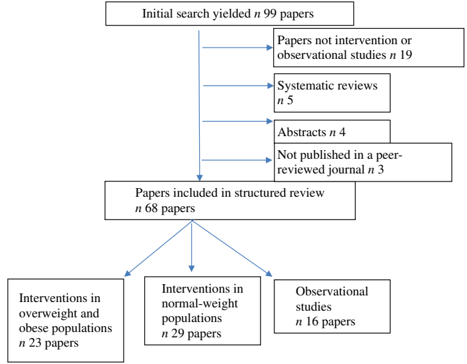
The role of mindfulness, mindful eating and a newer concept of intuitive eating in modulating eating habits is an area of increasing interest. In this structured literature review, a summary of the current evidence is presented, together with details of interventions undertaken and the tools to measure outcomes. It is broad in scope given the emerging evidence base in this area. The review yielded sixty-eight publications: twenty-three interventions in obese/overweight populations; twenty-nine interventions in normal-weight populations; sixteen observational studies, three of which were carried out in overweight/obese populations. Mindfulness-based approaches appear most effective in addressing binge eating, emotional eating and eating in response to external cues. There is a lack of compelling evidence for the effectiveness of mindfulness and mindful eating in weight management. Mindfulness-based approaches may prevent weight gain. Reduced food intake was seen in some of the studies in overweight and obese populations, but this was less apparent in the studies in normal-weight populations. The evidence base for intuitive eating is limited to date and further research is needed to examine its potential in altering eating behaviours. Mindfulness appears to work by an increased awareness of internal, rather than external, cues to eat. Mindfulness and mindful eating have the potential to address problematic eating behaviours and the challenges many face with controlling their food intake. Encouraging a mindful eating approach would seem to be a positive message to be included in general weight management advice to the public.
Overview
The claims and statistics of this paper haven’t been checked yet.
Free: it reads the open-access text and checks the first 5 claims that cite a source we can check. Create a free account to check every claim.
Integrity signals
Registry
Cites
Statistics
Figures
Verification
Claims the paper makes
The claims and statistics of this paper haven’t been checked yet.
Free: it reads the open-access text and checks the first 5 claims that cite a source we can check. Create a free account to check every claim.
Claims other papers make about this one
Each is checked against this paper’s own text: does it say what the citing paper says it does?
The cited source says what the claim attributes to it.
In the citing paper
“Therefore, mindful eating promotes healthier eating behaviors by enhancing individuals' awareness of hunger and satiety cues, fostering conscious food choices, and improving understanding of how internal states and external factors influence eating [3, 5].”
From Four Facet Mindful Eating and Eating Disorder Risk: Mediation By Depression and Body Mass Index. (2026) · cites this paper as [5]
Self-check
Percentages, sums and reported differences re-computed from the paper’s own numbers.
The self-check needs the paper’s full text.
Citations
Cites
The benefits of being present: Mindfulness and its role in psychological well-being
Brown, K. W., & Ryan, R. M. (2003) · Journal of Personality and Social Psychology · doi:10.1037/0022-3514.84.4.822 · Cited by 13,448 · cited 1×
“(2) The Mindfulness Awareness Attention Scale contained fifteen items((62)).”
Background(2008) · Medical Entomology and Zoology · Cited by 7,477
Mindfulness: A proposed operational definition.
Bishop, S. R., Lau, M., Shapiro, S., Carlson, L., Anderson, N. D., Carmody, J., Segal, Z. V., Abbey, S., Speca, M., Velting, D., et al. (2004) · Clinical Psychology: Science and Practice · doi:10.1093/clipsy.bph077 · Cited by 7,234 · cited 3×
“In mindfulness, an individual observes their immediate experience using an open and non-judgemental stance((3)).”
BackgroundThe Eating Attitudes Test: psychometric features and clinical correlates
Garner, D. M., Olmsted, M. P., Bohr, Y., & Garfinkel, P. E. (1982) · Psychological Medicine · doi:10.1017/s0033291700049163 · Cited by 4,962 · cited 2×
“Tools used to measure eating-related behaviours Eating behaviours were most frequently assessed using the Dutch Eating Behaviour Questionnaire(65), the Eating Attitudes Test(66) and the Eating Disorders Examination Questionnaire(67).”
MethodMindfulness practice leads to increases in regional brain gray matter density
Hölzel, B. K., Carmody, J., Vangel, M., Congleton, C., Yerramsetti, S. M., Gard, T., & Lazar, S. W. (2011) · Psychiatry Research: Neuroimaging · doi:10.1016/j.pscychresns.2010.08.006 · Cited by 1,914 · cited 1×
“emotional regulation and self-referential processing((92)).”
Chiesa, A., & Serretti, A. (2009) · The Journal of Alternative and Complementary Medicine · doi:10.1089/acm.2008.0495 · Cited by 1,681 · cited 1×
“Recent reviews have examined the evidence for mindfulness in the management of pain((5,6)), depression((7,8)) and psychological well-being((9,10)).”
BackgroundLoving-Kindness and Compassion Meditation: Potential for Psychological Interventions
Hofmann, S. G., Grossman, P., & Hinton, D. E. (2011) · Clinical Psychology Review · doi:10.1016/j.cpr.2011.07.003 · Cited by 960 · cited 1×
“Recent reviews have examined the evidence for mindfulness in the management of pain((5,6)), depression((7,8)) and psychological well-being((9,10)).”
BackgroundPiet, J., & Hougaard, E. (2011) · Clinical Psychology Review · doi:10.1016/j.cpr.2011.05.002 · Cited by 807 · cited 1×
“Recent reviews have examined the evidence for mindfulness in the management of pain((5,6)), depression((7,8)) and psychological well-being((9,10)).”
BackgroundTylka, T. L., & Kroon Van Diest, A. M. (2013) · Journal of Counseling Psychology · doi:10.1037/a0030893 · Cited by 763 · cited 2×
“Intuitive eating, when measured, was evaluated using the Intuitive Eating Scale(64) which contains twenty-one items.”
MethodAn Exploratory Study of a Meditation-based Intervention for Binge Eating Disorder
Kristeller, J. L., & Hallett, C. B. (1999) · Journal of Health Psychology · doi:10.1177/135910539900400305 · Cited by 681 · cited 9×
“Hunger awareness was measured in two overweight/obese populations and positive results were reported in both studies((11,28)).”
BackgroundInfluential
Cited by
Causes of Emotional Eating and Matched Treatment of Obesity
van Strien, T. (2018) · Current Diabetes Reports · doi:10.1007/s11892-018-1000-x · Cited by 501
Mindfulness and Behavior Change
Schuman-Olivier, Z., Trombka, M., Lovas, D. A., Brewer, J. A., Vago, D. R., Gawande, R., Dunne, J. P., Lazar, S. W., Loucks, E. B., & Fulwiler, C. (2020) · Harvard Review of Psychiatry · doi:10.1097/hrp.0000000000000277 · Cited by 435
Eating Behaviour Changes during the COVID-19 Pandemic: A Systematic Review of Longitudinal Studies
González-Monroy, C., Gómez-Gómez, I., Olarte-Sánchez, C. M., & Motrico, E. (2021) · International Journal of Environmental Research and Public Health · doi:10.3390/ijerph182111130 · Cited by 215
“Evidence-based interventions have demonstrated the efficacy of nutritional education programmes into adaptative eating behaviour [57], what might involve an urgent call to action for governments and social sectors focused on health promotion.”
BackgroundMindful eating: what we know so far
Tapper, K. (2022) · Nutrition Bulletin · doi:10.1111/nbu.12559 · Cited by 146
Aranceta-Bartrina, J., Partearroyo, T., López-Sobaler, A., Ortega, R., Varela-Moreiras, G., Serra-Majem, L., Pérez-Rodrigo, C., & The Collaborative Group for the Dietary Guidelines for the Spanish Population (SENC) (2019) · Nutrients · doi:10.3390/nu11112675 · Cited by 104
“Diet quality has been independently associated with education level, food cravings, and awareness towards eating [81].”
BackgroundMindfulness-based emotional eating awareness training: taking the emotional out of eating
Lattimore, P. (2020) · Eating and Weight Disorders - Studies on Anorexia, Bulimia and Obesity · doi:10.1007/s40519-019-00667-y · Cited by 96
“The range of measures chosen relected aspects of the curriculum taught on the course, and evidence regarding the correlates of emotional eating measures to date, namely: behavioural inhibition, emotion related impulse regulation, cue-driven eating, ability to distinguish between physical and emotional cues to eat (int…”
BackgroundInfluentialWinkens, L. H. H., van Strien, T., Barrada, J. R., Brouwer, I. A., Penninx, B. W. J. H., & Visser, M. (2018) · Journal of the Academy of Nutrition and Dietetics · doi:10.1016/j.jand.2018.01.015 · Cited by 96
Bédard, A., Lamarche, P.-O., Grégoire, L.-M., Trudel-Guy, C., Provencher, V., Desroches, S., & Lemieux, S. (2020) · PLoS ONE · doi:10.1371/journal.pone.0244292 · Cited by 117
Betancourt‐Núñez, A., Torres‐Castillo, N., Martínez‐López, E., Loera-Rodríguez, C. O. D., Durán-Barajas, E., Márquez‐Sandoval, F., Bernal-Orozco, M. F., Garaulet, M., & Vizmanos-Lamotte, B. (2022) · Nutrients · doi:10.3390/nu14071371 · Cited by 106
“One approach that can be applied in interventions in overweight or obese populations to improve emotional eating is mindfulness-based interventions [57].”
BackgroundPeitz, D., Schulze, J., & Warschburger, P. (2020) · Appetite · doi:10.1016/j.appet.2020.105039 · Cited by 90
Smith, J., Ang, X. Q., Giles, E. L., & Traviss‐Turner, G. (2023) · International Journal of Environmental Research and Public Health · doi:10.3390/ijerph20032722 · Cited by 110
“Glisenti and Strodl [89] suggested that DBT may be more effective than CBT in reducing EE as DBT focusses on both emotion regulation and Mindfulness [89], but there was only one study identified in this review that used DBT. Forman et al. [90] suggested Acceptancebased strategies may eliminate and reduce EE compared t…”
BackgroundInfluentialTurgon, R., Ruffault, A., Juneau, C., Blatier, C., & Shankland, R. (2019) · Mindfulness · doi:10.1007/s12671-019-01216-5 · Cited by 88
Lie Fong, S., Douma, A., & Verhaeghe, J. (2021) · Journal of Gynecology Obstetrics and Human Reproduction · doi:10.1016/j.jogoh.2020.101894 · Cited by 64
Mindfulness-Based Blood Pressure Reduction (MB-BP): Stage 1 single-arm clinical trial
Loucks, E. B., Nardi, W. R., Gutman, R., Kronish, I. M., Saadeh, F. B., Li, Y., Wentz, A. E., Webb, J., Vago, D. R., Harrison, A., et al. (2019) · PLOS ONE · doi:10.1371/journal.pone.0223095 · Cited by 60
“[69–71] While studies to date suggest possible effects of mindfulness on eating behaviors such as binge eating and emotional eating,[72] there is a dearth of information on the relation of mindfulness with evidence-based dietary risk factors for hypertension such as the DASH diet, Mediterranean diet, salt consumption…”
BackgroundSchnepper, R., Richard, A., Wilhelm, F. H., & Blechert, J. (2019) · Journal of Consulting and Clinical Psychology · doi:10.1037/ccp0000361 · Cited by 57
Stanszus, L., Frank, P., & Geiger, S. M. (2019) · Appetite · doi:10.1016/j.appet.2019.104325 · Cited by 80
Cambi, M. P. C., Baretta, G. A. P., Magro, D. D. O., Boguszewski, C. L., Ribeiro, I. B., Jirapinyo, P., & de Moura, D. T. H. (2021) · Obesity Surgery · doi:10.1007/s11695-020-05164-1 · Cited by 64
Morillo‐Sarto, H., del Hoyo, Y. L., Pérez‐Aranda, A., Modrego‐Alarcón, M., Barceló‐Soler, A., Borao, L., Puebla‐Guedea, M., Demarzo, M., García‐Campayo, J., & Montero‐Marín, J. (2022) · European Eating Disorders Review · doi:10.1002/erv.2958 · Cited by 82
“Such eating pattern would promote the conscious choice of food, developing awareness of the differences between physical hunger and ‘emotional’ hunger, noticing the satiety signs, and eating healthily as a response to all those signals, which could produce healthier lifestyle behaviours (Kristeller & Wolever, 2011; Wa…”
BackgroundInfluentialCognitive dysfunction is a risk factor for overeating and obesity.
Gunstad, J., Sanborn, V. E., & Hawkins, M. A. W. (2020) · American Psychologist · doi:10.1037/amp0000585 · Cited by 58
Behavioral approaches to nutrition and eating patterns for managing type 2 diabetes: A review
Salvia, M. G., & Quatromoni, P. A. (2023) · American Journal of Medicine Open · doi:10.1016/j.ajmo.2023.100034 · Cited by 91
Family Meals, Conviviality, and the Mediterranean Diet among Families with Adolescents
de la Torre-Moral, A., Fàbregues, S., Bach-Faig, A., Fornieles-Deu, A., Medina, F. X., Aguilar, A., & Sánchez‐Carracedo, D. (2021) · International Journal of Environmental Research and Public Health · doi:10.3390/ijerph18052499 · Cited by 68
“The “how” involves socializing when eating and, as complementary aspects, self-awareness of satiety and hunger signals, eating slowly, and chewing well [7].”
BackgroundBock, B. C., Thind, H. K., Fava, J. L., DUNSIGER, S. I., Guthrie, K. M., Stroud, L. R., Gopalakrishnan, G., Sillice, M. A., & Wu, W. (2018) · Complementary Therapies in Medicine · doi:10.1016/j.ctim.2018.09.019 · Cited by 60
Development and Validation of the Four Facet Mindful Eating Scale (FFaMES)
Carrière, K., Shireen, S. H., Siemers, N., Preißner, C. E., Starr, J., Falk, C., & Knäuper, B. (2022) · Appetite · doi:10.1016/j.appet.2021.105689 · Cited by 47
SWAN: Designing a Companion Spoon for Mindful Eating
Khot, R. A., Yi, J.-Y., & Aggarwal, D. (2020) · International Conference on Tangible, Embedded, and Embodied Interaction (TEI) · doi:10.1145/3374920.3375009 · Cited by 55
Mantzios, M., Egan, H. H., & Asif, T. (2019) · Journal of Cognitive Enhancement · doi:10.1007/s41465-019-00159-y · Cited by 56
“…healthier eating behaviours (Mantzios andWilson 2014, 2015a;Mantzios andGiannou 2014), such as a decrease in external and emotional eating (Warren et al. 2017; O’Reilly et al. 2014), an increased intake of fruit and vegetables (Dutt et al. 2018; Gilbert &Waltz, 2010), as well as a…”
BackgroundIturbe, I., Echeburúa, E., & Maíz, E. (2021) · Clinical Psychology & Psychotherapy · doi:10.1002/cpp.2695 · Cited by 57
The Intuitive Eating Scale-3: Development and psychometric evaluation
Tylka, T. L., Maïano, C., Fuller‐Tyszkiewicz, M., Linardon, J., Burnette, C. B., Todd, J., & Swami, V. (2024) · Appetite · doi:10.1016/j.appet.2024.107407 · Cited by 53
Strategies for Reducing Salt and Sugar Intakes in Individuals at Increased Cardiometabolic Risk
Ponzo, V., Pellegrini, M., Costelli, P., Vázquez‐Araújo, L., Gayoso, L., D’Eusebio, C., Ghigo, E., & Bo, S. (2021) · Nutrients · doi:10.3390/nu13010279 · Cited by 51
“Mindfulness-based eating interventions may be also worth considering as a strategy to modulate eating habits [138] and may have potential to strengthen the effects of cardiovascular health promotion programs [139,140].”
BackgroundSalvo, V., Curado, D. F., Sañudo, A., Kristeller, J. L., Schveitzer, M. C., Favarato, M. L., Isidoro, W., & Demarzo, M. (2022) · Appetite · doi:10.1016/j.appet.2022.106131 · Cited by 54
“…eating reduction (Alberts, Mulkens, Smeets, & Thewissen, 2010; Godfrey, Gallo, & Afari, 2015; Katterman, Kleinman, Hood, Nackers, & Corsica, 2014; Warren et al., 2017) and, in several publications, have also supported weight loss (Dunn et al., 2018; Kidd, Graor, & Murrock, 2013; Mason et al.,…”
Chew, H. S. J., Chew, N., Loong, S. S. E., Lim, S. L., Tam, W., Chin, Y. H., Chao, A. M., Dimitriadis, G. K., Gao, Y., So, J. B. Y., et al. (2024) · Journal of Medical Internet Research · doi:10.2196/46036 · Cited by 69
“This coincides with a review that reported the effectiveness of mindful eating interventions on reducing food consumption in people with overweight and obesity [55].”
Pannicke, B., Kaiser, T., Reichenberger, J., & Blechert, J. (2021) · International Journal of Behavioral Nutrition and Physical Activity · doi:10.1186/s12966-020-01066-8 · Cited by 45
“In contrast, eating in response to hunger is considered functional by most ‘intuitive eating’ inspired diets, which might have effects on weight maintenance [87], however, evidence for a general health beneficial potential of ‘intuitive eating’ concepts is still needed [88].”
BackgroundIntuitive Eating Intervention and Diet Quality in Adults: A Systematic Literature Review
Hensley-Hackett, K., Bosker, J., Keefe, A. G., Reidlinger, D. P., Warner, M. M., D’Arcy, A., & Utter, J. (2022) · Journal of Nutrition Education and Behavior · doi:10.1016/j.jneb.2022.08.008 · Cited by 45
Morillo‐Sarto, H., Barceló‐Soler, A., Herrera‐Mercadal, P., Pantilie, B., Navarro‐Gil, M., García‐Campayo, J., & Montero‐Marín, J. (2019) · BMJ Open · doi:10.1136/bmjopen-2019-031327 · Cited by 49
Denman, E., Parker, E., Ashley, M. A., Harris, D. M., Halaki, M., Flood, V. M., & Stefoska‐Needham, A. (2021) · Journal of Eating Disorders · doi:10.1186/s40337-021-00380-1 · Cited by 40
Mantzios, M., Skillett, K., & Egan, H. H. (2019) · European Journal of Health Psychology · doi:10.1027/2512-8442/a000040 · Cited by 43
Ahmed, H. O. (2020) · Annals of Medicine and Surgery · doi:10.1016/j.amsu.2020.09.024 · Cited by 43
Zervos, K., Koletsi, M., Mantzios, M., Skopeliti, N., Tsitsas, G., & Naska, A. (2021) · Psychological Reports · doi:10.1177/0033294120988104 · Cited by 42
“Each one is assessed on a six-point Likert scale and measures levels of day-to-day awareness, attention and observation (Lofgren, 2015; Warren et al., 2017).”
BackgroundMethodInfluentialMindful eating and change in depressive symptoms: Mediation by psychological eating styles
Winkens, L. H. H., van Strien, T., Brouwer, I. A., Penninx, B. W. J. H., & Visser, M. (2019) · Appetite · doi:10.1016/j.appet.2018.11.009 · Cited by 34
Mueller‐Stierlin, A. S., Cornet, S., Peisser, A., Jaeckle, S., Lehle, J., Mörkl, S., & Teasdale, S. B. (2022) · Nutrients · doi:10.3390/nu14132616 · Cited by 42
“Them I am full so to speak, but not happy”) and emphasize the need for interventions of regular eating and mindful eating as a possibility to counteract food cravings in people with SMI [49].”
BackgroundNutrition Strategies for Reducing Risk of Burnout Among Physicians and Health Care Professionals
Esquivel, M. K. (2020) · American Journal of Lifestyle Medicine · doi:10.1177/1559827620976538 · Cited by 43
“individuals who report emotional eating or binge eating behaviors.(20) Mindfulness-”
BackgroundBeccia, A. L., Ruf, A., Druker, S. K., Ludwig, V. U., & Brewer, J. A. (2020) · The Journal of Alternative and Complementary Medicine · doi:10.1089/acm.2019.0318 · Cited by 38
“42,43 Indeed, MBIs are associated with improvements across a range of disordered eating behaviors, 44–46 and may be readily implemented into community-based settings.”
Bessems, K. M. H. H., Linssen, E., Lomme, M., & van Assema, P. (2020) · International Journal of Environmental Research and Public Health · doi:10.3390/ijerph17072535 · Cited by 42
“Examples of behavioural determinants that have been found relevant and to be targeted in comprehensive interventions are misconceptions and awareness of personal consumption compared to recommendations [26], motivation or attitude [27], self-efficacy [28], taste and liking [29], food label use [30], portion size aware…”
BackgroundMindfulness, mood, and food: The mediating role of positive affect
Hsu, T., & Forestell, C. A. (2020) · Appetite · doi:10.1016/j.appet.2020.105001 · Cited by 35
Sugars and Sweet Taste: Addictive or Rewarding?
Greenberg, D., & Peter, J. V. S. (2021) · International Journal of Environmental Research and Public Health · doi:10.3390/ijerph18189791 · Cited by 43
Nutrition Education for the Health-care Provider Improves Patient Outcomes
Baute, V., Sampath-Kumar, R., Nelson, S., & Basil, B. (2018) · Global Advances in Health and Medicine · doi:10.1177/2164956118795995 · Cited by 37
“This is an emerging eating philosophy which emphasizes paying attention to internal hunger cues and being mentally present during mealtime.(9) Practicing mindful eating involves setting an allotted time to eat while seated at a table without distractions like technology.”
BackgroundDoes mindful eating affect the diet quality of adults?
Dogan, B. G., & Tengilimoglu-Metin, M. M. (2023) · Nutrition · doi:10.1016/j.nut.2023.112010 · Cited by 32
Vanzhula, I. A., & Levinson, C. A. (2020) · Mindfulness · doi:10.1007/s12671-020-01343-4 · Cited by 40
Neumark‐Sztainer, D., Wall, M. M., Levine, A., Barr‐Anderson, D. J., Eisenberg, M. E., & Larson, N. (2020) · International Journal of Eating Disorders · doi:10.1002/eat.23421 · Cited by 32
Palascha, A., van Kleef, E., de Vet, E., & van Trijp, J. C. M. (2021) · Appetite · doi:10.1016/j.appet.2021.105280 · Cited by 28
Mindfulness-based programs for the prevention of childhood obesity: A systematic review
Perez, B. D. L., & Delgado-Ríos, M. (2021) · Appetite · doi:10.1016/j.appet.2021.105725 · Cited by 28
Eaton, M., Probst, Y., Foster, T., Messore, J., & Robinson, L. D. (2024) · Appetite · doi:10.1016/j.appet.2024.107361 · Cited by 36
“Other studies have found improved glycaemic control in people living with diabetes, (Warren, Smith, & Ashwell, 2017) and associations with lower fasting glucose, (de Queiroz et al., 2022) lower odds of inadequate glycaemic control, (Soares et al., 2021) and physical health indicators, including…”
BackgroundKao, T. A., Ling, J., Alanazi, M. O., Atwa, A., & Liu, S. (2024) · Obesity Reviews · doi:10.1111/obr.13860 · Cited by 43
Mindfulness, mindful eating e comer intuitivo na abordagem da obesidade e transtornos alimentares
Barbosa, M. R., Penaforte, F. R. D. O., & Silva, A. F. D. S. (2020) · SMAD Revista Eletrônica Saúde Mental Álcool e Drogas (Edição em Português) · doi:10.11606/issn.1806-6976.smad.2020.165262 · Cited by 57
Internally regulated eating style: a comprehensive theoretical framework
Palascha, A., van Kleef, E., de Vet, E., & van Trijp, J. C. M. (2020) · British Journal Of Nutrition · doi:10.1017/s0007114520003840 · Cited by 31
Chawner, L. R., Yu, S., Cunningham, P. M., Rolls, B. J., & Hetherington, M. M. (2021) · Appetite · doi:10.1016/j.appet.2021.105898 · Cited by 30
Mindful eating, intuitive eating, and the loss of control over eating
Bennett, B. L., & Latner, J. D. (2022) · Eating Behaviors · doi:10.1016/j.eatbeh.2022.101680 · Cited by 26
Pereira, R. A., Alvarenga, M. D. S., Avesani, C. M., & Cuppari, L. (2020) · Nephrology Dialysis Transplantation · doi:10.1093/ndt/gfaa177 · Cited by 31
Orthorexia nervosa, mindful eating, and perfectionism: an exploratory investigation
Miley, M., Egan, H. H., Wallis, D. J., & Mantzios, M. (2022) · Eating and Weight Disorders - Studies on Anorexia Bulimia and Obesity · doi:10.1007/s40519-022-01440-4 · Cited by 40
“Through promoting the awareness and attentional facets of mindfulness towards the eating process, problematic eating behaviours can be addressed [75], although past definitions of ME have been challenged for being vague and unreliable [44].”
BackgroundRodgers, M., Migdal, A. L., Rodríguez, T. G., Chen, Z.-Z., Nath, A. K., Gerszten, R. E., Kasid, N., Toschi, E., Tripaldi, J., Heineman, B., et al. (2021) · Frontiers in Endocrinology · doi:10.3389/fendo.2021.742873 · Cited by 24
Does food intake mediate the association between mindful eating and change in depressive symptoms?
Winkens, L., Elstgeest, L., van Strien, T., Penninx, B., Visser, M., & Brouwer, I. (2020) · Public Health Nutrition · doi:10.1017/s1368980019003732 · Cited by 19
“As mindfulness-based interventions with an eating component were much more effective in reducing maladaptive eating behaviours compared with interventions without a mindful eating component(10,11), previous research started to examine associations between mindful eating andmental well-being.”
BackgroundMałachowska, A., & Jeżewska-Zychowicz, M. (2022) · Nutrients · doi:10.3390/nu14051109 · Cited by 26
“According to the research, intuitive and mindful eating may be associated with a greater ability of food intake regulation [4,12,16,17].”
BackgroundInfluentialHayashi, L. C., Benasi, G., St‐Onge, M., & Aggarwal, B. (2021) · Journal of Complementary and Integrative Medicine · doi:10.1515/jcim-2021-0294 · Cited by 29
No Pie in the (Digital) Sky: Co-Imagining the Food Metaverse
Covaci, A., Alhasan, K., Loonker, M., Farrell, B., Tabbaa, L., Ppali, S., & Ang, C. S. (2023) · CHI Conference on Human Factors in Computing Systems · doi:10.1145/3544548.3581305 · Cited by 24
“These present an inspirational value for experiences which can foster the improvement of our relationship with food by bringing change from the inside [70].”
BackgroundTrimester-Specific Intuitive Eating in Association With Gestational Weight Gain and Diet Quality
Plante, A.-S., Savard, C., Lemieux, S., Carbonneau, É., Robitaille, J., Provencher, V., & Morisset, A. (2019) · Journal of Nutrition Education and Behavior · doi:10.1016/j.jneb.2019.01.011 · Cited by 26
Gayoso, L., de Tomás, I., Téllez, R., Maíz, E., & Etxeberría, U. (2021) · Mindfulness · doi:10.1007/s12671-020-01587-0 · Cited by 26
Intuitive eating and its influence on self-reported weight and eating behaviors
Giacone, L., Sob, C., Siegrist, M., & Hartmann, C. (2024) · Eating Behaviors · doi:10.1016/j.eatbeh.2024.101844 · Cited by 30
(2020) · Revista Iberoamericana de Psicología y Salud · doi:10.23923/j.rips.2020.01.034 · Cited by 21
Kalika, E., Egan, H. H., & Mantzios, M. (2022) · Eating and Weight Disorders - Studies on Anorexia Bulimia and Obesity · doi:10.1007/s40519-022-01407-5 · Cited by 30
“This is an unexpected finding as previous studies showed that mindful eating was effective in interventions to lose weight and to reduce food intake [79], however, this was conducted in overweight/obese populations and the present sample was of an average weight.”
ResultStrout, K. A., Schwartz‐Mette, R. A., McNamara, J., Parsons, K., Walsh, D., Bonnet, J., O’Brien, L. M., Robinson, K. N., Sibley, S., Smith, A. K., et al. (2023) · JMIR Research Protocols · doi:10.2196/49020 · Cited by 21
“Mindful eating describes applying mindfulness practices to internal hunger and satiety cues and incorporating a nonjudgmental, self-compassion–led viewpoint in navigating dietary choices [64].”
BackgroundDamigou, E., Kouvari, M., Chrysohoou, C. A., Barkas, F., Kravvariti, E., Dalmyras, D., Koutsogianni, A. D., Tsioufis, C. P., Pitsavos, C. S., Liberopoulos, E. N., et al. (2023) · Nutrients · doi:10.3390/nu15204428 · Cited by 27
“Mindful eating started as an approach to tackle disordered eating as it has been associated with weight gain prevention and better psychological health [50–52].”
BackgroundBehavioral Determinants of Objectively Assessed Diet Quality in Obese Pregnancy
Most, J., Rebello, C. J., Altazan, A. D., Martin, C. K., Amant, M. S., & Redman, L. M. (2019) · Nutrients · doi:10.3390/nu11071446 · Cited by 27
“Increasing consciousness about diet choices may benefit diet quality [53,54].”
BackgroundFelske, A. N., Williamson, T. M., Rash, J. A., Telfer, J. A., Toivonen, K. I., & Campbell, T. (2022) · Behavioral Medicine · doi:10.1080/08964289.2020.1828255 · Cited by 20
“These results are consistent with previous studies that have reported the impact of MBIs on ED symptoms, including binge eating and emotional eating.(52,69) These results are of practical importance given the detrimental effects of pre-surgical eating pathology, particularly binge eating and grazing on surgery outcome…”
ResultBraun, T. D., Unick, J. L., Abrantes, A. M., Dalrymple, K. L., Conboy, L. A., Schifano, E. D., Park, C. L., & Lazar, S. W. (2021) · Appetite · doi:10.1016/j.appet.2021.105810 · Cited by 31
Perspective: A Framework for Addressing Dynamic Food Consumption Processes
Taylor, J., Allman-Farinelli, M. A., Chen, J., Gauglitz, J. M., Hamideh, D., Jankowska, M. M., Johnson, A. J., Rangan, A., Spruijt‐Metz, D., Yang, J., et al. (2022) · Advances in Nutrition · doi:10.1093/advances/nmab156 · Cited by 20
“Food consumption can also be defined based on how food is eaten in terms of quantity, such as speed of eating, or in terms of quality, such as characterizing mindful eating (34).”
Dietary Risk Factors and Eating Behaviors in Peripheral Arterial Disease (PAD)
Cecchini, A. L., Biscetti, F., Rando, M. M., Nardella, E., Pecorini, G., Eraso, L. H., DiMuzio, P. J., Gasbarrini, A., Massetti, M., & Flex, A. (2022) · International Journal of Molecular Sciences · doi:10.3390/ijms231810814 · Cited by 37
“Patients, especially those with multiple and severe metabolic alterations, as observed in PAD, often have a conflicting relationship with nutrition, which hinders compliance with dietary guidelines and aggravates the severity of individual pathologies and dietary risk factors [684].”
BackgroundHow food overconsumption has hijacked our notions about eating as a pleasurable activity
de Ridder, D. T. D., & Gillebaart, M. (2022) · Current Opinion in Psychology · doi:10.1016/j.copsyc.2022.101324 · Cited by 23
“Intuitive eating generally seems to have positive effects on eating-related outcomes such as food choice and intake, and people’s relationship with food [46,48].”
Female sweet-likers have enhanced cross-modal interoceptive abilities
Iatridi, V., Quadt, L., Hayes, J. E., Garfinkel, S. N., & Yeomans, M. R. (2021) · Appetite · doi:10.1016/j.appet.2021.105290 · Cited by 25
Braun, T. D., Olson, K., Panza, E., Lillis, J., Schumacher, L., Abrantes, A. M., Kunicki, Z., & Unick, J. L. (2022) · Obesity Science & Practice · doi:10.1002/osp4.616 · Cited by 18
Mindful Eating is Associated with a Better Diet Quality in the Nutrinet-Santé Study
Paolassini-Guesnier, P., Beekum, M. V., Kesse‐Guyot, E., Baudry, J., Srour, B., Bellicha, A., Shankland, R., Rodhain, A., Leys, C., Herçberg, S., et al. (2024) · Appetite · doi:10.1016/j.appet.2024.107797 · Cited by 30
“…paying attention to the eating experience with all the senses (seeing, tasting, hearing, smelling, and feeling), and witnessing the emotional and physical reactions that occur before, during, and after the eating experience without judgment or reaction (Albers 2008; Warren, Smith, et Ashwell 2017).”
InfluentialWeight Loss Trajectories in Healthy Weight Coaching: Cohort Study
Kupila, S. K. E., Venäläinen, M. S., Suojanen, L.-U., Rosengård‐Bärlund, M., Ahola, A. J., Elo, L. L., & Pietiläinen, K. H. (2022) · JMIR Formative Research · doi:10.2196/26374 · Cited by 23
“Specifically, ACT increases mindfulness, self-regulation, and psychological flexibility [24-27].”
BackgroundMindful and Intuitive Eating Imagery on Instagram: A Content Analysis
Hoare, J. K., Lister, N. B., Garnett, S. P., Baur, L. A., & Jebeile, H. (2022) · Nutrients · doi:10.3390/nu14183834 · Cited by 27
“Mindful eating interventions have effectively reduced some maladaptive eating behaviours, including binge eating and emotional eating [26].”
BackgroundMercado, D., Werthmann, J., Duarte, T., Campbell, I., & Schmidt, U. (2023) · Journal of Eating Disorders · doi:10.1186/s40337-023-00780-5 · Cited by 17
“This is supported by studies using mindful-eating interventions (see [70] for review).”
Fostering Resilience and Wellness: The Synergy of Mindful Eating and the Mediterranean Lifestyle
Christodoulou, E., Deligiannidou, G.-E., Kontogiorgis, C. A., Giaginis, C., & Koutelidakis, A. Ε. (2024) · Applied Biosciences · doi:10.3390/applbiosci3010004 · Cited by 22
Leon, A. D., Roemmich, J. N., & Casperson, S. L. (2020) · Nutrients · doi:10.3390/nu12123750 · Cited by 25
“Research using MBIs has shown that the cultivation of mindfulness can be effective in changing obesity-related eating behaviors, including emotional eating [36,37].”
BackgroundBraun, T. D., Riley, K. E., Kunicki, Z. J., Finkelstein-Fox, L., Conboy, L. A., Park, C. L., Schifano, E., Abrantes, A. M., & Lazar, S. W. (2021) · Health Psychology and Behavioral Medicine · doi:10.1080/21642850.2021.1992282 · Cited by 17
“intuitive eating, less eating pathology, and improved body image (Sairanen et al., 2015; Sala, Shankar Ram, Vanzhula, & Levinson, 2020; Warren et al., 2017).”
BackgroundHussain, M., Egan, H. H., Keyte, R., Strachan, R., Tahrani, A. A., & Mantzios, M. (2022) · Nutrition and Health · doi:10.1177/02601060221094671 · Cited by 19
“For example, mindful eating has shown to successfully moderate intake of calori fi c foods despite desire to consume more, suggesting mindful eating can generate increased satiety (Mantzios et al., 2019a, 2019b; Warren et al., 2017).”
BackgroundResultLiu, Y., Cui, T., Barnhart, W. R., Wang, Q., Yu, Y., & He, J. (2023) · Appetite · doi:10.1016/j.appet.2023.106512 · Cited by 19
Powell, L. H., Daniels, B. T., Drees, B. M., Karavolos, K., Lohse, B., Masters, K. S., Nicklas, J. M., Ruder, E. H., Suzuki, S., Trabold, N., et al. (2024) · American Heart Journal · doi:10.1016/j.ahj.2023.12.016 · Cited by 17
Amicis, R. S. D., Cancello, R., Capodaglio, P., Gobbi, M., Brunani, A., Gilardini, L., Castenuovo, G., Molinari, E., Barbieri, V., Mambrini, S. P., et al. (2021) · Obesity Facts · doi:10.1159/000513283 · Cited by 17
Associations between body image, eating behavior, and diet quality
Jackson, A., Parker, L. A., Sano, Y., Cox, A. E., & Lanigan, J. D. (2022) · Nutrition and Health · doi:10.1177/02601060221090696 · Cited by 24
“According to the National Health and Nutrition Examination Survey (NHANES), the average diet quality of Americans as measured by the Healthy Eating Index (HEI) is 57.7 out of 100 2015; Warren et al., 2017).”
BackgroundInfluentialFasting diets: what are the impacts on eating behaviors, sleep, mood, and well-being?
Hosseini, E., Ammar, A., Josephson, J. K., Gibson, D. L., Askari, G., Bragazzi, N. L., Trabelsi, K., Schöllhorn, W. I., & Mokhtari, Z. (2024) · Frontiers in Nutrition · doi:10.3389/fnut.2023.1256101 · Cited by 20
Küçükosmanoğlu, H. S., Cramer, H., Tavakoly, R., Moosburner, A., & Bîlc, M. I. (2024) · Current Psychiatry Reports · doi:10.1007/s11920-024-01548-7 · Cited by 17
Understanding Screen-based Dining Practices through the Lens of Mindful Eating
Khot, R. A., Aggarwal, D., & Pasumarthy, N. (2022) · CHI Conference on Human Factors in Computing Systems · doi:10.1145/3491102.3517651 · Cited by 21
“intake [20], numerous studies indicate the benefts of mindful eating towards regulating healthy eating behaviors [88, 102].”
BackgroundFunctionality and User Review Analysis of Mobile Apps for Mindfulness Eating and Eating Disorders
Guluzade, L., & Sas, C. (2024) · Designing Interactive Systems Conference · doi:10.1145/3643834.3661521 · Cited by 23
“Given the value of mindfulness eating for physical and emotional health [99], HCI research has also started to explore aspects of mindfulness eating such as slow eating through smart tableware [54, 57, 101], wearables [58], AR/VR [73, 85], 3D printed food [63] or apps for mindfulness eating [44].”
BackgroundEat Like a Chef: A Mindful Eating Intervention for Health Care Providers
Knol, L. L., Lawrence, J. C., & Rebecca de la, O. (2020) · Journal of Nutrition Education and Behavior · doi:10.1016/j.jneb.2020.02.024 · Cited by 16
Aymes, E., Lisembard, G., Dallongeville, J., Rousseaux, J., Dumont, M., Amouyel, P., Romon, M., & Meirhaeghe, A. (2022) · Obesity Science & Practice · doi:10.1002/osp4.593 · Cited by 18
“Lastly, the use of the mediation model was limited by the strong assumption whereby one variable has a causal effect on another; nevertheless, the literature data on eating behavior, eating habits and obesity support its model.(10,13,14,18,19,30,31) In conclusion, the present study identified a number of lifestyle and…”
MethodBono, D., Belyk, M., Longo, M. R., & Dick, F. (2022) · Neuroscience & Biobehavioral Reviews · doi:10.1016/j.neubiorev.2022.104730 · Cited by 16
“By exploring the raisin with our tongue we can not only tell its size, but also its overall shape, wrinkliness, hardness, texture, and taste (cf. raisin meditation task: Nelson, 2017; Warren et al., 2017).”
Duszka, K., Gregor, A., Reichel, M., Baierl, A., Fahrngruber, C., & König, J. S. (2020) · PLoS ONE · doi:10.1371/journal.pone.0232099 · Cited by 21
Taylor, V. A., Moseley, I. H., Sun, S., Smith, R. S., Roy, A., Ludwig, V. U., & Brewer, J. A. (2021) · Journal of Behavioral Addictions · doi:10.1556/2006.2021.00020 · Cited by 19
“On the other hand, mindfulness-based interventions hold promise in more effectively targeting maladaptive habitual eating (Warren, Smith, & Ashwell, 2017), as they have been proposed to in fl uence addictive behaviors by altering the lower-level reinforcement learning mechanisms responsible for…”
Lazarevich, I., Irigoyen‐Camacho, M. E., Vázquez, C. C. R., Tolentino, R. G., Velázquez-Alva, M. C., & Zepeda‐Zepeda, M. A. (2025) · Behavioral Sciences · doi:10.3390/bs15050669 · Cited by 19
“Therefore, it is important to identify effective strategies for weight management that can improve eating behaviors (Warren et al., 2017).”
Metadata
- Authors
- Warren, J. M., Smith, N., & Ashwell, M.
- Affiliations
- University of Oxford (GB)
- Corresponding author
- Warren, Janet M.
- Venue
- Nutrition Research Reviews
- Publisher
- Cambridge University Press (CUP)
- Published
- 2017-07-18
- Volume
- 30
- Issue
- 2
- Pages
- 272-283
- ISSN
- 0954-4224 (ISSN-L)
- 1475-2700
- OpenAlex
- W2739082572
- Semantic Scholar
- 084ccf96fb5a49401eb8d985c7702fea5427696b
- Cited by
- 435
- References
- 97
- Citations by year
- 2026: 70 · 2025: 60 · 2024: 68 · 2023: 55 · 2022: 60 · 2021: 63 · 2020: 32 · 2019: 17 · 2018: 9 · 2017: 1
- FWCI
- 2.48
- Type
- journal article
- Language
- en
- Open access
- hybrid
- doi.org
- Locations
- Nutrition Research Reviews (publishedVersion, cc-by)
- PubMed (publishedVersion)
- Topics
- Social Sciences › Psychology › Clinical Psychology › Eating Disorders and Behaviors
- Health Sciences › Nursing › Nutrition and Dietetics › Nutrition, Health and Food Behavior
- Social Sciences › Psychology › Clinical Psychology › Mindfulness and Compassion Interventions
- Keywords
- mindfulness, mindful eating, intuitive eating, eating behaviour, weight management, obesity, binge eating, emotional eating, dietary intake, weight gain prevention, mindfulness-based interventions, mechanisms of change
- MeSH terms
- Awareness, Behavior Therapy, Cues, Eating, Emotions, Feeding Behavior, Food Preferences, Humans, Hunger, Obesity, Treatment Outcome, Overweight, Binge-Eating Disorder, Mindfulness
About these checks
Registry, retraction, Cites and statistics results are computed, not judged, with one exception: a printed reference that no index lists is read once by a model before it counts as a citation error. Claims are extracted by a model and kept only when their quote appears verbatim in the text; each cited source is then checked, with a model’s help, for whether it says what the claim relies on. Those verdicts can be wrong — read the claim’s quote and the cited source before relying on one.
Statistics and arithmetic are recomputed, not judged.
Confidence bands are shown only for fields calibrated on our annotated test set. None is calibrated yet, so no band is shown.
What counts as a claim ›How we measure confidence ›How we check this ›
Are you an author, or do you see a problem with this page? Request a review
Data sources
Bibliographic data: Semantic Scholar, OpenAlex, Crossref.
Contains information from the Semantic Scholar Academic Graph Datasets, made available under the ODC Attribution License (ODC-BY 1.0).
Semantic Scholar’s data is described in: Kinney, R., et al. (2023). The Semantic Scholar Open Data Platform. arXiv:2301.10140.
