

Empirical evidence for definitions of episode, remission, recovery, relapse and recurrence in depression: a systematic review
Open accessThe DOI matches its Crossref record; 67 of the 69 references it cites were found in a registry or an index; 4 of the 67 sources its claims cite were checked for support.
Abstract
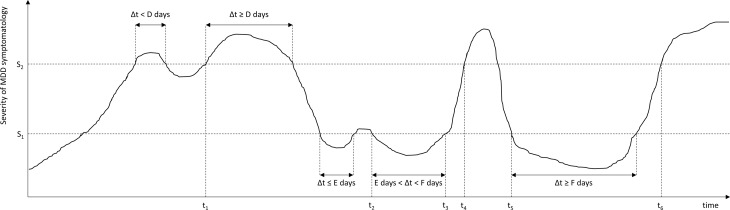
Aims.: For the past quarter of a century, Frank et al.’s (1991) consensus-based definitions of major depressive disorder (MDD) episode, remission, recovery, relapse and recurrence have been the paramount driving forces for consistency in MDD research as well as in clinical practice. This study aims to review the evidence for the empirical validation of Frank et al.’s proposed concept definitions and to discuss evidence-based modifications. Methods.: A literature search of Web of Science and PubMed from 1/1/1991 to 08/30/2017 identified all publications which referenced Frank et al.’s request for definition validation. Publications with data relevant for validation were included and checked for referencing other studies providing such data. Results.: A total of 56 studies involving 39 315 subjects were included, mainly presenting data to validate the severity and duration thresholds for defining remission and recovery. Most studies indicated that the severity threshold for defining remission should decrease. Additionally, specific duration thresholds to separate remission from recovery did not add any predictive value to the notion that increased remission duration alleviates the risk of reoccurrence of depressive symptoms. Only limited data were available to validate the severity and duration criteria for defining a depressive episode. Conclusions.: Remission can best be defined as a less symptomatic state than previously assumed (Hamilton Rating Scale for Depression, 17-item version (HAMD-17) ⩽4 instead of ⩽7), without applying a duration criterion. Duration thresholds to separate remission from recovery are not meaningful. The minimal duration of depressive symptoms to define a depressive episode should be longer than 2 weeks, although further studies are required to recommend an exact duration threshold. These results are relevant for researchers and clinicians aiming to use evidence-based depression outcomes.
Overview
CoChat Summary
TL;DR
This systematic review of 56 studies covering 39,315 subjects found that Frank et al.’s consensus definitions are only partly empirically supported. The authors conclude remission is best defined as HAMD-17 ≤4 rather than ≤7 without a duration criterion, duration thresholds separating remission from recovery are not meaningful, and the minimal depressive episode duration should be longer than 2 weeks though an exact threshold remains unclear.
Key findings
- Across 56 included studies and 39,315 subjects, most evidence concerned severity and duration thresholds for remission and recovery; only limited data were available to validate severity and duration criteria for defining a depressive episode.
- Remission can best be defined as HAMD-17 ≤4 instead of ≤7, roughly equivalent to MADRS ≤5, and without applying a duration criterion; specific duration thresholds to separate remission from recovery did not add predictive value, and the majority of studies did not show a clear point of rarity.
- The minimal duration of depressive symptoms to define a depressive episode should be longer than 2 weeks, although the review refrains from recommending an exact threshold; two general-population studies found 25% of episodes remitted after 4 weeks and 50% after 8–12 weeks.
- Only one study provided data on the fully symptomatic threshold, advising HAMD-17 ≥7 or ≥14 depending on the CGI-S gold standard, so there was not enough evidence to make recommendations for that threshold.
Methods
- Systematic review largely adhering to PRISMA; searched Web of Science and PubMed from 1 January 1991 to 30 August 2017 for publications referencing Frank et al.’s request for definition validation, without language restrictions.
- Excluded studies not focused on MDD, non-empirical studies, irrelevant study types, and those evaluating associations or cause-effect relations; focused on HAMD-17 and MADRS cut-offs and on survival curves or equivalent data for duration thresholds.
- Two authors extracted data independently and resolved discrepancies by discussion; reference checks added studies. From 1,570 identified papers, 214 duplicates and 26 non-obtainable papers were removed, 117 papers remained after selection, 49 additional records came from references, 110 were excluded after full-text assessment, yielding 56 included studies.
Limitations
- Stated by the authors: included studies had greatly varying populations and treatments; a substantial part of the data had to be extracted from survival curves that only rarely showed confidence intervals and often lacked a clearly labelled time axis, making it difficult to assess exactly when measurement began.
- Stated by the authors: comparing studies was not straightforward because they differed in populations, operationalisations of remission, recovery, relapse and recurrence, and often uncontrolled treatments.
- Evident from the text: evidence was especially limited for validating the fully symptomatic threshold and the duration threshold for a depressive episode, with the authors noting that a prospective general-population study screening frequently for depressive symptoms is still required.
Model-written summary. Check it against the paper before relying on it.
Integrity signals
Registry
Cites
Statistics
Figures
Verification
Claims the paper makes
4 Valid · 0 Not valid · 35 Not checked · 39 Own results and interpretations
The cited sources support only part of this claim — read each source’s verdict below.
In the paper
“Although two studies show that half of the depressive episodes in the general population remit within 3 months after their onset”
§ Empirical evidence for definitions of episode, remission, recovery, relapse and recurrence in depression: a systematic review > Discussion > Duration threshold for episode
What the sources say
- Not matchedcites Eaton et al. 1997
An author–year citation the paper’s reference list doesn’t settle. We don’t search these by name.
- Supportedcites Spijker et al. 2002 matched to “Duration of major depressive episodes in the general population: Results from the Netherlands Mental Health Survey and Incidence Study (NEMESIS)” (2002) source
The Results (p. 3) report that 50% of respondents with major depressive episodes recovered within 3 months. The methods (p. 2) state that the study did not distinguish remission from recovery, so the citing sentence's use of “remit” is consistent with its measure. (LLM, conf=0.92)
plain- Asserted: passes — The authors put it forward as true.
- Checkable: passes — It can be checked against evidence.
- Load-bearing: passes — The paper’s conclusions depend on it.
- Based: passes — The paper gives a reason why it holds.
- Not matched
A claim is checked only against the cited paper’s full text, never its abstract, and none is available for its sources.
In the paper
“However, the exact amount of time necessary to achieve this drop (as counted from the start of the asymptomatic period) differs per study, ranging from about 2 months (O'Leary et al. 2010) to about 3 years (Judd et al. 1998).”
§ Empirical evidence for definitions of episode, remission, recovery, relapse and recurrence in depression: a systematic review > Results > Duration thresholds for remission and recovery
What the sources say
- Not checked — no full text of the sourcecites O'Leary et al. 2010 matched to “Onset of remission and relapse in depression: Testing operational criteria through course description in a second Dublin cohort of first-admission participants” (2010) source
- Not checked — no full text of the sourcecites Judd et al. 1998 matched to “Major depressive disorder: A prospective study of residual subthreshold depressive symptoms as predictor of rapid relapse” (1998) source
plain- Asserted: passes — The authors put it forward as true.
- Checkable: passes — It can be checked against evidence.
- Load-bearing: passes — The paper’s conclusions depend on it.
- Based: passes — The paper gives a reason why it holds.
A result the paper reports from its own data — it cites no other source for it, so there is none to check. The quote shows it is in the paper.
In the paper
“Only one study focusing on the fully symptomatic threshold was obtained (see Table 2).”
§ Empirical evidence for definitions of episode, remission, recovery, relapse and recurrence in depression: a systematic review > Results > Severity threshold for the fully symptomatic range
plain- Asserted: passes — The authors put it forward as true.
- Checkable: passes — It can be checked against evidence.
- Load-bearing: unclear — It is unclear whether the paper’s conclusions depend on it.
- Based: passes — The paper gives a reason why it holds.
A result the paper states — it cites no source for it, so there is none to check. The quote shows it is in the paper.
In the paper
“The third and largest group of studies compared the prognosis of patients with different levels of depressive symptomatology, usually in terms of relapse/recurrence risk (see Table 4).”
§ Empirical evidence for definitions of episode, remission, recovery, relapse and recurrence in depression: a systematic review > Results > Severity threshold for the asymptomatic range
plainstates an association- Asserted: passes — The authors put it forward as true.
- Checkable: passes — It can be checked against evidence.
- Load-bearing: unclear — It is unclear whether the paper’s conclusions depend on it.
- Based: passes — The paper gives a reason why it holds.
A claim is checked only against the cited paper’s full text, never its abstract, and none is available for its sources.
In the paper
“Several studies show some indication of a sudden drop in relapse/recurrence rate a certain time after remission/recovery was obtained”
§ Empirical evidence for definitions of episode, remission, recovery, relapse and recurrence in depression: a systematic review > Results > Duration thresholds for remission and recovery
What the sources say
- Not checked — no full text of the sourcecites Paykel et al. 1995 matched to “Residual symptoms after partial remission: an important outcome in depression” (1995) source
- Not checked — no full text of the sourcecites Judd et al. 1998 matched to “Major depressive disorder: A prospective study of residual subthreshold depressive symptoms as predictor of rapid relapse” (1998) source
- Not checked — no full text of the sourcecites O'Leary et al. 2010 matched to “Onset of remission and relapse in depression: Testing operational criteria through course description in a second Dublin cohort of first-admission participants” (2010) source
hedgedstates an association- Asserted: passes — The authors put it forward as true.
- Checkable: passes — It can be checked against evidence.
- Load-bearing: passes — The paper’s conclusions depend on it.
- Based: passes — The paper gives a reason why it holds.
42 more claims
Create a free account to see all 78 claims and to verify the 1 reference still open.
- It may state two separate claims as one. 13
- Probably not a substantial claim. 24
Claims other papers make about this one
Each is checked against this paper’s own text: does it say what the citing paper says it does?
The source backs part of the claim, not all of it — or backs it for a different population, condition or comparison.
In the citing paper
“Achieving full remission from depression is complex, and research investigating the course of depression is often criticized for a lack of consensus about key points of change within the depression cycle [55, 56].”
From Fear of depression recurrence among individuals with remitted depression: a qualitative interview study (2024) · cites this paper as [55]
Experimental — accuracy not yet measuredThe source backs part of the claim, not all of it — or backs it for a different population, condition or comparison.
In the citing paper
“Previous research on recovery from depression has predominantly focused on intervention mechanisms such as medications and behavioral therapies (69–75), often overlooking the subjective experience of recovery and how individuals perceive, select, and accept treatments during the process.”
From Anti-stigmatizing: a collaborative autoethnography on recovery from depression (2024) · cites this paper as [69]
Experimental — accuracy not yet measured
Self-check
Percentages, sums and reported differences re-computed from the paper’s own numbers.
Each contradiction between two passages listed here was confirmed by an independent check.
Rated minor: it would not touch a result — a value no result rests on, a p-value that stays on the same side of the significance level, or a conflict that is clerical, resolved elsewhere in the paper, or outside its own findings.
In the paper
§ Empirical evidence for definitions of episode, remission, recovery, relapse and recurrence in depression: a systematic review > Results
“| Paykel et al. | 1995 | Patients, GB | 57 | 61 |”
§ Empirical evidence for definitions of episode, remission, recovery, relapse and recurrence in depression: a systematic review > Results
“| Paykel et al. | 1995 | Patients, USA | 57 | 61 |”
Rated minor: it would not touch a result — a value no result rests on, a p-value that stays on the same side of the significance level, or a conflict that is clerical, resolved elsewhere in the paper, or outside its own findings.
In the paper
§ Empirical evidence for definitions of episode, remission, recovery, relapse and recurrence in depression: a systematic review > Results
“CGI-S = 1 (=normal /min. Sx)”
§ Empirical evidence for definitions of episode, remission, recovery, relapse and recurrence in depression: a systematic review > Results
“CGI-S, Clinical Global Impression – Severity scale (1, very much improved; 2, much improved; 3, minimally improved; 4, no change; 5, minimally worse; 6, much worse; 7=very much worse)”
Rated minor: it would not touch a result — a value no result rests on, a p-value that stays on the same side of the significance level, or a conflict that is clerical, resolved elsewhere in the paper, or outside its own findings.
In the paper
§ Empirical evidence for definitions of episode, remission, recovery, relapse and recurrence in depression: a systematic review > Results
“| Peselow et al. | 2015 | Patients, USA | 387 | 59 |”
§ Empirical evidence for definitions of episode, remission, recovery, relapse and recurrence in depression: a systematic review > Results
“| Peselow et al. | 2015 | Patients, USA | 387 | 32 |”
Rated minor: it would not touch a result — a value no result rests on, a p-value that stays on the same side of the significance level, or a conflict that is clerical, resolved elsewhere in the paper, or outside its own findings.
In the paper
§ Empirical evidence for definitions of episode, remission, recovery, relapse and recurrence in depression: a systematic review > Results
“MDD PSR = 1; authors argue recovery should be defined as PSR = 0b”
§ Empirical evidence for definitions of episode, remission, recovery, relapse and recurrence in depression: a systematic review > Results
“Psychiatric status ratings: (1) asymptomatic (return to usual self); (2) residual/mild affective Sx; (3) partial remission, moderate Sx or impairment; (4) marked/major Sx or impairment; (5) meets definite MDD criteria without prominent psychotic Sx or extreme impairment; (6) meets definite criteria with prominent psychotic Sx or extreme impairment.”
Citations
Cites
Preferred Reporting Items for Systematic Reviews and Meta-Analyses: the PRISMA statement
Moher, D., Liberati, A., Tetzlaff, J., Altman, D. G., & for the PRISMA Group (2009) · BMJ · doi:10.1136/bmj.b2535 · Cited by 83,823
Preferred Reporting Items for Systematic Reviews and Meta-Analyses: The PRISMA Statement
Moher, D., Liberati, A., Tetzlaff, J., Altman, D. G., & The PRISMA Group (2009) · PLoS Medicine · doi:10.1371/journal.pmed.1000097 · Cited by 64,042
Preferred reporting items for systematic reviews and meta-analyses: the PRISMA Statement.
(2009) · PubMed Central · Cited by 44,859
Wang, G., Ma, R., Qiao, G., Wada, K., Aizawa, Y., & Satoh, T. (2015) · Integrative Medicine International · doi:10.1159/000368408 · Cited by 18,657
The Epidemiology of Depression Across Cultures
Kessler, R. C., & Bromet, E. J. (2013) · Annual Review of Public Health · doi:10.1146/annurev-publhealth-031912-114409 · Cited by 2,657
Frank, E. (1991) · Archives of General Psychiatry · doi:10.1001/archpsyc.1991.01810330075011 · Cited by 1,959 · cited 17×
“Not only were the specific operationalisations of the duration criteria by Frank et al. (1991) and Rush et al. (2006) not empirically supported, it seems that the whole concept of these duration criteria must be rejected.”
BackgroundMethodResultInfluentialMoffitt, T. E., Caspi, A., Taylor, A., Kokaua, J., Milne, B. J., Polanczyk, G., & Poulton, R. (2010) · Psychological Medicine · doi:10.1017/s0033291709991036 · Cited by 938 · cited 2×
“…within 3 months after their onset (Eaton et al. 1997; Spijker et al. 2002), it seems likely that many short ‘episodes’ of only a few days are missed since these episodes are infrequently retrospectively indicated, and short episodes are more easily forgotten than long ones (Moffitt et al. 2010).”
BackgroundRecurrence after recovery from major depressive disorder during 15 years of observational follow-up
Mueller, T. I., Leon, A. C., Keller, M. B., Solomon, D. A., Endicott, J., Coryell, W., Warshaw, M., & Maser, J. D. (1999) · American Journal of Psychiatry · doi:10.1176/ajp.156.7.1000 · Cited by 897 · cited 3×
“…process rather than a discrete one (Maj et al. 1992; Shea et al. 1992; Flint & Rifat, 1997; Kessing et al. 1998; Van Weel-Baumgarten et al. 1998; Mueller et al. 1999; O’Leary et al. 2000; Solomon et al. 2000; Mattisson et al. 2007; Dunlop et al. 2012; Martínez-Amorós et al. 2012; Seemüller et…”
BackgroundMultiple recurrences of major depressive disorder
Solomon, D. A., Keller, M. B., Leon, A. C., Mueller, T. I., Lavori, P. W., Shea, M. T., Coryell, W., Warshaw, M., Turvey, C., Maser, J. D., et al. (2000) · American Journal of Psychiatry · doi:10.1176/appi.ajp.157.2.229 · Cited by 835 · cited 5×
“Other studies do not find such a sudden drop at all, instead suggesting that the diminishing hazard of return of symptoms is a gradual process rather than a discrete one (Maj et al. 1992; Shea et al. 1992; Flint & Rifat, 1997; Kessing et al. 1998; Van Weel-Baumgarten et al. 1998; Mueller et al. 1999; O’Leary et al. 20…”
BackgroundInfluentialResidual symptoms after partial remission: an important outcome in depression
Paykel, E. S., Ramana, R., Cooper, Z., Hayhurst, H., Kerr, J., & Barocka, A. (1995) · Psychological Medicine · doi:10.1017/s0033291700033146 · Cited by 791 · cited 9×
“Several studies show some indication of a sudden drop in relapse/recurrence rate a certain time after remission/recovery was obtained (Paykel et al. 1995; Riso et al. 1997; Judd et al. 1998; Van Londen et al. 1998; Heinze et al. 2002; Kanai et al. 2003; Kennedy et al. 2003; Naz et al. 2007; Holma et al. 2008; de Jonge…”
BackgroundInfluentialReport by the ACNP Task Force on Response and Remission in Major Depressive Disorder
Rush, A. J., Kraemer, H. C., Sackeim, H. A., Fava, M., Trivedi, M. H., Frank, E., Ninan, P. T., Thase, M. E., Gelenberg, A. J., Kupfer, D. J., et al. (2006) · Neuropsychopharmacology · doi:10.1038/sj.npp.1301131 · Cited by 707 · cited 3×
“Specific consensus-based recommendations for these thresholds were provided in Frank et al.’s (1991) report and revised in a follow-up report by Rush et al. (2006).”
BackgroundJudd, L. L., Akiskal, H. S., Maser, J. D., Zeller, P. J., Endicott, J., Coryell, W., Paulus, M. P., Kunovac, J. L., Leon, A. C., Mueller, T. I., et al. (1998) · Journal of Affective Disorders · doi:10.1016/s0165-0327(98)00138-4 · Cited by 590
Spijker, J., De Graaf, R., Bijl, R. V., Beekman, A. T. F., Ormel, J., & Nolen, W. A. (2002) · British Journal of Psychiatry · doi:10.1192/bjp.181.3.208 · Cited by 514
Shea, M. T. (1992) · Archives of General Psychiatry · doi:10.1001/archpsyc.1992.01820100026006 · Cited by 509
Eaton, W. W. (1997) · Archives of General Psychiatry · doi:10.1001/archpsyc.1997.01830230023003 · Cited by 489 · cited 9×
“Age (range & M (S.D.) at T1) Estimated point of rarity Episode Remission Recovery Relapse Recurrence Judd et al. 2016 Patients, USA 322 60 M = 40 (15), R = 17–76 RDC criteria ≥2 week with ≥5 Sx including intense sadness or dysphoria Various def. of recovery were compared, differing on severity (PSR = 1 vs. 2)b and dur…”
BackgroundMethodInfluentialNierenberg, A. A., Husain, M. M., Trivedi, M. H., Fava, M., Warden, D., Wisniewski, S. R., Miyahara, S., & Rush, A. J. (2010) · Psychological Medicine · doi:10.1017/s0033291709006011 · Cited by 458 · cited 4×
“…scored above it (Paykel et al. 1995; Maier et al. 1997; Riso et al. 1997; Judd et al. 1998; 2000, 2016; Van Londen et al. 1998; Fava et al. 1999; Kanai et al. 2003; Pintor et al. 2004; Taylor et al. 2004; Nierenberg et al. 2010; Dunlop et al. 2012; Kiosses & Alexopoulos, 2013; Peselow et al. 2015).”
BackgroundInfluentialJudd, L. L., Paulus, M. J., Schettler, P. J., Akiskal, H. S., Endicott, J., Leon, A. C., Maser, J. D., Mueller, T., Solomon, D. A., & Keller, M. B. (2000) · American Journal of Psychiatry · doi:10.1176/appi.ajp.157.9.1501 · Cited by 458 · cited 2×
“…on depressive symptom scales had a better prognosis than those who scored above it (Paykel et al. 1995; Maier et al. 1997; Riso et al. 1997; Judd et al. 1998; 2000, 2016; Van Londen et al. 1998; Fava et al. 1999; Kanai et al. 2003; Pintor et al. 2004; Taylor et al. 2004; Nierenberg et al.…”
BackgroundEstimating remission from untreated major depression: a systematic review and meta-analysis
Whiteford, H. A., Harris, M. G., McKeon, G., Baxter, A., Pennell, C., Barendregt, J. J., & Wang, J. (2013) · Psychological Medicine · doi:10.1017/s0033291712001717 · Cited by 375 · cited 2×
“The meta-analysis by Whiteford et al. (2013) covering the rate of spontaneous remission in untreated depression showed that this rate decreases continuously over time.”
BackgroundResponse and remission criteria in major depression – A validation of current practice
Riedel, M., Möller, H.-J., Obermeier, M., Schennach-Wolff, R., Bauer, M., Adli, M., Kronmüller, K., Nickel, T., Brieger, P., Laux, G., et al. (2010) · Journal of Psychiatric Research · doi:10.1016/j.jpsychires.2010.03.006 · Cited by 288
Defining remission by cut off score on the MADRS: selecting the optimal value
Hawley, C. J., Gale, T. M., & Sivakumaran, T. (2002) · Journal of Affective Disorders · doi:10.1016/s0165-0327(01)00451-7 · Cited by 266
Zimmerman, M., Posternak, M. A., & Chelminski, I. (2004) · Journal of Psychiatric Research · doi:10.1016/j.jpsychires.2004.03.007 · Cited by 229 · cited 13×
“The second group of studies based on the optimal asymptomatic threshold on the mean scores or statistical upper limits of the general population (Zimmerman et al. 2004a, b; see Table 3).”
BackgroundMethodInfluential(1992) · American Journal of Psychiatry · doi:10.1176/ajp.149.6.795 · Cited by 228 · cited 3×
“Whiteford et al. 2013 Patients, USA 749 73 M = 34 Differs per study Differs per study N/A N/A N/A Duration thresholds for remission and recovery Maj et al. 1992 Patients, IT 72 58 M = 42 (7), R = 27–55 RDC after interview with SADS-L N/A ≥8 week absence of prominent dysphonic mood (RDC MDD crit.”
BackgroundRecurrence in affective disorder: I. Case register study
Kessing, L. V., Bolwig, T. G., Andersen, P. K., & Mortensen, P. B. (1998) · British Journal of Psychiatry · doi:10.1192/bjp.172.1.23 · Cited by 214
Leucht, S., Fennema, H., Engel, R., Kaspers–Janssen, M., Lepping, P., & Szegedi, A. (2013) · Journal of Affective Disorders · doi:10.1016/j.jad.2012.12.001 · Cited by 211 · cited 5×
“…standard (Hawley et al. 2002; Zimmerman et al. 2004d, 2005; Bandelow et al. 2006; Ballesteros et al. 2007; Riedel et al. 2010; Romera et al. 2011; Leucht et al. 2013; Sacchetti et al. 2015), most often the Clinical Global Impression-Severity scale (CGI-S) or some measure of functioning (see…”
BackgroundMethodInfluentialBandelow, B., Baldwin, D. S., Dolberg, O. T., Andersen, H. F., & Stein, D. J. (2006) · The Journal of Clinical Psychiatry · doi:10.4088/jcp.v67n0914 · Cited by 203
Birmaher, B., Williamson, D. E., Dahl, R. E., Axelson, D. A., Kaufman, J., Dorn, L. D., & Ryan, N. D. (2004) · Journal of the American Academy of Child & Adolescent Psychiatry · doi:10.1097/00004583-200401000-00015 · Cited by 193
KENNEDY, N., ABBOTT, R., & PAYKEL, E. S. (2003) · Psychological Medicine · doi:10.1017/s003329170300744x · Cited by 165 · cited 9×
“[3] DSM-4 MDD Kennedy et al. 2003 Patients, GB 65 61 M = 41, R = 20–65 ±5 month RDC (LIFE and PSR at T2) N/A ≥8 week asymptomatic (≤2 Sx RDC) N/A New Ex RDC MDD after recovery Birmaher et al. 2004 Patients, USA 68 43 M = 11, R = 8–16 Inclusion when MDD according to DSM-3-R N/A No MDD ≥2 month, based on K-SADS-E or SAD…”
BackgroundInfluentialPrien, R. F. (1991) · Archives of General Psychiatry · doi:10.1001/archpsyc.1991.01810330020003 · Cited by 155
Time to recurrence after recovery from major depressive episodes and its predictors
KANAI, T., TAKEUCHI, H., FURUKAWA, T. A., YOSHIMURA, R., IMAIZUMI, T., KITAMURA, T., & TAKAHASHI, K. (2003) · Psychological Medicine · doi:10.1017/s0033291703007827 · Cited by 140
Zimmerman, M., Chelminski, I., & Posternak, M. (2004) · Journal of Nervous & Mental Disease · doi:10.1097/01.nmd.0000138226.22761.39 · Cited by 136
Wakefield, J. C., & Schmitz, M. F. (2013) · World Psychiatry · doi:10.1002/wps.20015 · Cited by 133 · cited 4×
“556 P.L.de Z w art et al. Wakefield & Schmitz (2013) argued that ‘uncomplicated’ depressive episodes, defined as <2 months in duration combined with the absence of certain ‘heavy’ symptoms such as suicidal ideation and psychomotor retardation, should not be classified as MDD.”
BackgroundInfluentialThree- to 5-year prospective follow-up of outcome in major depression
VAN LONDEN, L., MOLENAAR, R. P. G., GOEKOOP, J. G., ZWINDERMAN, A. H., & ROOIJMANS, H. G. M. (1998) · Psychological Medicine · doi:10.1017/s0033291797006466 · Cited by 126
Recurrence of Major Depressive Disorder in Hospitalized Children and Adolescents
EMSLIE, G. J., RUSH, A. J., WEINBERG, W. A., GULLION, C. M., RINTELMANN, J., & HUGHES, C. W. (1997) · Journal of the American Academy of Child & Adolescent Psychiatry · doi:10.1097/00004583-199706000-00015 · Cited by 121
Long-term outcome of major depressive disorder in psychiatric patients is variable
Holma, K. M., Holma, I. A. K., Melartin, T. K., Rytsälä, H. J., & Isometsä, E. T. (2008) · The Journal of Clinical Psychiatry · doi:10.4088/jcp.v69n0205 · Cited by 120
Defining Remission on the Montgomery-Asberg Depression Rating Scale
Zimmerman, M., Posternak, M. A., & Chelminski, I. (2004) · The Journal of Clinical Psychiatry · doi:10.4088/jcp.v65n0204 · Cited by 117
Zimmerman, M., Martinez, J. A., Attiullah, N., Friedman, M., Toba, C., Boerescu, D. A., & Rahgeb, M. (2012) · The Journal of Clinical Psychiatry · doi:10.4088/jcp.11m07203 · Cited by 108
Zimmerman, M., Chelminski, I., & Posternak, M. (2004) · International Clinical Psychopharmacology · doi:10.1097/00004850-200401000-00001 · Cited by 105
The long-term course of depressive disorders in the Lundby Study
MATTISSON, C., BOGREN, M., HORSTMANN, V., MUNK-JÖRGENSEN, P., & NETTELBLADT, P. (2007) · Psychological Medicine · doi:10.1017/s0033291707000074 · Cited by 95
Judd, L. L., Paulus, M. P., & Zeller, P. (1999) · Archives of General Psychiatry · doi:10.1001/archpsyc.56.8.764 · Cited by 90
Remission onset and relapse in depression
O’Leary, D., Costello, F., Gormley, N., & Webb, M. (2000) · Journal of Affective Disorders · doi:10.1016/s0165-0327(99)00086-5 · Cited by 87 · cited 3×
“…a discrete one (Maj et al. 1992; Shea et al. 1992; Flint & Rifat, 1997; Kessing et al. 1998; Van Weel-Baumgarten et al. 1998; Mueller et al. 1999; O’Leary et al. 2000; Solomon et al. 2000; Mattisson et al. 2007; Dunlop et al. 2012; Martínez-Amorós et al. 2012; Seemüller et al. 2014; Peselow et…”
BackgroundMethodThe relationship between major and subthreshold variants of unipolar depression
Maier, W., Gänsicke, M., & Weiffenbach, O. (1997) · Journal of Affective Disorders · doi:10.1016/s0165-0327(97)00058-x · Cited by 84 · cited 4×
“…those who scored below a certain threshold on depressive symptom scales had a better prognosis than those who scored above it (Paykel et al. 1995; Maier et al. 1997; Riso et al. 1997; Judd et al. 1998; 2000, 2016; Van Londen et al. 1998; Fava et al. 1999; Kanai et al. 2003; Pintor et al. 2004;…”
BackgroundInfluentialRiso, L. P., Thase, M. E., Howland, R. H., Friedman, E. S., Simons, A. D., & Tu, X. M. (1997) · Journal of Affective Disorders · doi:10.1016/s0165-0327(96)01420-6 · Cited by 81
Is the Cutoff to Define Remission on the Hamilton Rating Scale for Depression Too High?
Zimmerman, M., Posternak, M. A., & Chelminski, I. (2005) · Journal of Nervous & Mental Disease · doi:10.1097/01.nmd.0000154840.63529.5d · Cited by 79 · cited 3×
“These two groups mentioned a variety of optimal asymptomatic thresholds for the HAMD-17 ranging from 42 (Zimmerman et al. 2005) to 410 (Zimmerman et al. 2004b) and for the MADRS 44 (Zimmerman et al. 2004a, 2004d) to 411 (Bandelow et al. 2006).”
BackgroundPintor, L., Torres, X., Navarro, V., Matrai, S., & Gastó, C. (2004) · Journal of Affective Disorders · doi:10.1016/j.jad.2003.11.008 · Cited by 76
Ten year follow-up of depression after diagnosis in general practice.
van Weel-Baumgarten, E. M., van den Bosch, W., van den Hoogen, H., & Zitman, F. G. (1998) · Europe PMC (PubMed Central) · Cited by 72
Long term outcome of primary care depression
Yiend, J., Paykel, E., Merritt, R., Lester, K., Doll, H., & Burns, T. (2009) · Journal of Affective Disorders · doi:10.1016/j.jad.2009.01.026 · Cited by 67 · cited 2×
“A third group of studies shows atypical survival curves where the time-specific risk of return of symptoms even increases over time during certain time intervals (Eaton et al. 1997; Emslie et al. 1997; Birmaher et al. 2004; Pintor et al. 2004; Yiend et al. 2009).”
BackgroundBallesteros, J., Bobes, J., Bulbena, A., Luque, A., Dal−Ré, R., Ibarra, N., & Güemes, I. (2007) · Journal of Affective Disorders · doi:10.1016/j.jad.2006.12.015 · Cited by 63
Zimmerman, M., Posternak, M. A., & Chelminski, I. (2004) · International Clinical Psychopharmacology · doi:10.1097/01.yic.0000130232.57629.46 · Cited by 61
Heterogeneity among depressed outpatients considered to be in remission
Zimmerman, M., Posternak, M. A., & Chelminski, I. (2007) · Comprehensive Psychiatry · doi:10.1016/j.comppsych.2006.10.005 · Cited by 53 · cited 3×
“2015), who are psychosocially impaired (Zimmerman et al. 2007) and who do not consider themselves as remitted (Zimmerman et al.”
BackgroundZimmerman, M., Martinez, J., Attiullah, N., Friedman, M., Toba, C., Boerescu, D. A., & Rahgeb, M. (2012) · Depression and Anxiety · doi:10.1002/da.20870 · Cited by 51
Romera, I., Pérez, V., Menchón, J. M., Polavieja, P., & Gilaberte, I. (2011) · Psychiatry Research · doi:10.1016/j.psychres.2010.06.023 · Cited by 50 · cited 3×
“The first group of studies selected the optimal threshold by maximising the correspondence to some gold standard (Hawley et al. 2002; Zimmerman et al. 2004d, 2005; Bandelow et al. 2006; Ballesteros et al. 2007; Riedel et al. 2010; Romera et al. 2011; Leucht et al. 2013; Sacchetti et al. 2015), most often the Clinical…”
BackgroundSeemüller, F., Meier, S., Obermeier, M., Musil, R., Bauer, M., Adli, M., Kronmüller, K., Holsboer, F., Brieger, P., Laux, G., et al. (2014) · European Archives of Psychiatry and Clinical Neuroscience · doi:10.1007/s00406-014-0495-7 · Cited by 45
The effect of treatment on the two-year course of late-life depression
Flint, A. J., & Rifat, S. L. (1997) · British Journal of Psychiatry · doi:10.1192/bjp.170.3.268 · Cited by 43
Judd, L. L., Schettler, P. J., Rush, A. J., Coryell, W. H., Fiedorowicz, J. G., & Solomon, D. A. (2016) · The Journal of Clinical Psychiatry · doi:10.4088/jcp.15m09918 · Cited by 40 · cited 9×
“Age (range & M (S.D.) at T1) Estimated point of rarity Episode Remission Recovery Relapse Recurrence Judd et al. 2016 Patients, USA 322 60 M = 40 (15), R = 17–76 RDC criteria ≥2 week with ≥5 Sx including intense sadness or dysphoria Various def. of recovery were compared, differing on severity (PSR = 1 vs. 2)b and dur…”
BackgroundInfluentialMontgomery-Åsberg severity gradations
(1997) · American Journal of Psychiatry · doi:10.1176/ajp.154.9.1320b · Cited by 39 · cited 8×
“Partial remission MADRS 10 (1 MADRS Sx = 3 allowed if rest 3) Full remission ≥ 6 month ≥1 month return to MDD DSM-3-R, before recovery Recurrence defined as relapse, but during recovery.”
BackgroundInfluentialZimmerman, M. A., Martinez, J. H., Attiullah, N., Friedman, M. A., Toba, C., & Boerescu, D. A. (2012) · Journal of Affective Disorders · doi:10.1016/j.jad.2012.03.044 · Cited by 37
Zimmerman, M., Martinez, J., Attiullah, N., Friedman, M., Toba, C., & Boerescu, D. A. (2012) · Depression and Anxiety · doi:10.1002/da.21987 · Cited by 37
Martínez-Amorós, E., Cardoner, N., Soria, V., Gálvez, V., Menchón, J. M., & Urretavizcaya, M. (2012) · The Journal of ECT · doi:10.1097/yct.0b013e31823e2705 · Cited by 35
Is there a Definition of Remission in Late-Life Depression that Predicts Later Relapse?
Taylor, W. D., McQuoid, D. R., Steffens, D. C., & Krishnan, K. (2004) · Neuropsychopharmacology · doi:10.1038/sj.npp.1300549 · Cited by 21
Kiosses, D. N., & Alexopoulos, G. S. (2013) · Psychological Medicine · doi:10.1017/s0033291712000967 · Cited by 21
Peselow, E. D., Tobia, G., Karamians, R., Pizano, D., & IsHak, W. W. (2015) · Psychiatry Research · doi:10.1016/j.psychres.2014.11.022 · Cited by 19 · cited 7×
“Multiple studies showed that those who scored below a certain threshold on depressive symptom scales had a better prognosis than those who scored above it (Paykel et al. 1995; Maier et al. 1997; Riso et al. 1997; Judd et al. 1998; 2000, 2016; Van Londen et al. 1998; Fava et al. 1999; Kanai et al. 2003; Pintor et al. 2…”
BackgroundMethodInfluentialNAZ, B., CRAIG, T. J., BROMET, E. J., FINCH, S. J., FOCHTMANN, L. J., & CARLSON, G. A. (2007) · Psychological Medicine · doi:10.1017/s0033291707000141 · Cited by 18
Recovery and subsequent recurrence in patients with recurrent major depressive disorder
Dunlop, B. W., Holland, P., Bao, W., Ninan, P. T., & Keller, M. B. (2012) · Journal of Psychiatric Research · doi:10.1016/j.jpsychires.2012.03.002 · Cited by 15
Duration of subsequent episodes and periods of recovery in recurrent major depression
de Jonge, P., Conradi, H. J., Kaptein, K. I., Bockting, C., Korf, J., & Ormel, J. (2010) · Journal of Affective Disorders · doi:10.1016/j.jad.2009.12.013 · Cited by 11
Self-citationSacchetti, E., Frank, E., Siracusano, A., Racagni, G., Vita, A., & Turrina, C. (2015) · International Clinical Psychopharmacology · doi:10.1097/yic.0000000000000074 · Cited by 11 · cited 6×
“The consensus among these authors seems to be that the currently often-used threshold of HAMD-17 47 is too high, as it leads to the inclusion of too many patients with poor functioning (Sacchetti et al. 2015), who are psychosocially impaired (Zimmerman et al.”
BackgroundResultInfluentialRelapse and recurrence of depressed patients: a retrospective study
Heinze, G., Salcedo, V. V., & Cortés, J. (2002) · Salud Mental · Cited by 7
O'Leary, D., Hickey, T., Lagendijk, M., & Webb, M. (2010) · Journal of Affective Disorders · doi:10.1016/j.jad.2010.02.107 · Cited by 4
Research works printed but not linked: 2
- World Health Organization (1993). The ICD-10 Classification of Mental and Behavioural Disorders: Diagnostic Criteria for Research. World Health Organization: Geneva.
- American Psychiatric Association (2013). Diagnostic and Statistical Manual of Mental Disorders (DSM-5®). American Psychiatric Pub: Washington, DC.
Cited by
Major Depression and Its Recurrences: Life Course Matters
Monroe, S. M., & Harkness, K. L. (2022) · Annual Review of Clinical Psychology · doi:10.1146/annurev-clinpsy-072220-021440 · Cited by 608
Cheng, J., Hu, H., Ju, Y., Liu, J., Wang, M., Liu, B., & Zhang, Y. (2024) · General Psychiatry · doi:10.1136/gpsych-2023-101374 · Cited by 196
van Ginneken, N., Chin, W. Y., Lim, Y. C., Ussif, A., Singh, R., Shahmalak, U., Purgato, M., Rojas-García, A., Uphoff, E., McMullen, S., et al. (2021) · Cochrane Database of Systematic Reviews · doi:10.1002/14651858.cd009149.pub3 · Cited by 188
The Role of Gut Dysbiosis in the Pathophysiology of Neuropsychiatric Disorders
Anand, N., Gorantla, V. R., & Chidambaram, S. B. (2022) · Cells · doi:10.3390/cells12010054 · Cited by 171
Role of the intestinal microbiome, intestinal barrier and psychobiotics in depression
Trzeciak, P., & Herbet, M. (2021) · Nutrients · doi:10.3390/nu13030927 · Cited by 139
“Depression (major depressive disorder, MDD) is a serious medical illness that negatively affects thoughts, behavior, feelings, motivation, and sense of well-being [1].”
Background
Metadata
- Authors
- de Zwart, P. L., Jeronimus, B. F., & de Jonge, P.
- Affiliations
- University Medical Center Groningen (NL)
- Venue
- Epidemiology and Psychiatric Sciences
- Publisher
- Cambridge University Press (CUP)
- Published
- 2018-05-17
- Volume
- 28
- Issue
- 5
- Pages
- 544-562
- ISSN
- 2045-7960 (ISSN-L)
- 2045-7979
- PMC
- PMC7032752
- OpenAlex
- W2803564469
- Cited by
- 189
- References
- 69
- Citations by year
- 2026: 15 · 2025: 26 · 2024: 38 · 2023: 25 · 2022: 26 · 2021: 24 · 2020: 19 · 2019: 11 · 2018: 3
- FWCI
- 1.69
- Type
- journal article
- Language
- en
- Open access
- hybrid
- doi.org
- Locations
- Epidemiology and Psychiatric Sciences (publishedVersion, cc-by)
- PubMed Central (publishedVersion, cc-by)
- PubMed (publishedVersion)
- University of Groningen research database (University of Groningen / Centre for Information Technology) (submittedVersion, cc-by)
- Topics
- Health Sciences › Medicine › Pharmacology (medical) › Treatment of Major Depression
- Social Sciences › Psychology › Experimental and Cognitive Psychology › Anxiety, Depression, Psychometrics, Treatment, Cognitive Processes
- Social Sciences › Psychology › Experimental and Cognitive Psychology › Mental Health Research Topics
- Keywords
- major depressive disorder, remission, recovery, relapse, recurrence, severity thresholds, duration thresholds, remission duration, depressive symptoms, outcome measures
- MeSH terms
- Adult, Antidepressive Agents, Depression, Depressive Disorder, Humans, Psychiatric Status Rating Scales, Recurrence, Remission Induction, Outcome Assessment, Health Care, Evidence-Based Practice
About these checks
Registry, retraction, Cites and statistics results are computed, not judged, with one exception: a printed reference that no index lists is read once by a model before it counts as a citation error. Claims are extracted by a model and kept only when their quote appears verbatim in the text; each cited source is then checked, with a model’s help, for whether it says what the claim relies on. Those verdicts can be wrong — read the claim’s quote and the cited source before relying on one.
A language model drew the claims from the paper on 2026-10-10, under version 3 of the claim definition (model deepseek-v4.1-flash, prompt extract-v3).
A second model labelled each claim on 2026-10-10 (model jev-1.13-20260917, definition revision gold-guideline-v0.2).
Cited sources are checked with a language model’s help (gpt-6-sol).
Statistics and arithmetic are recomputed, not judged.
Confidence bands are shown only for fields calibrated on our annotated test set. None is calibrated yet, so no band is shown.
What counts as a claim ›How we measure confidence ›How we check this ›
Are you an author, or do you see a problem with this page? Request a review
Data sources
Bibliographic data: Semantic Scholar, OpenAlex, Crossref.
Contains information from the Semantic Scholar Academic Graph Datasets, made available under the ODC Attribution License (ODC-BY 1.0).
Semantic Scholar’s data is described in: Kinney, R., et al. (2023). The Semantic Scholar Open Data Platform. arXiv:2301.10140.
