

A review and meta-analysis of age-based stereotype threat: negative stereotypes, not facts, do the damage
Open accessThe DOI matches its Crossref record; 81 of the 83 references it cites were found in a registry or an index.
Abstract
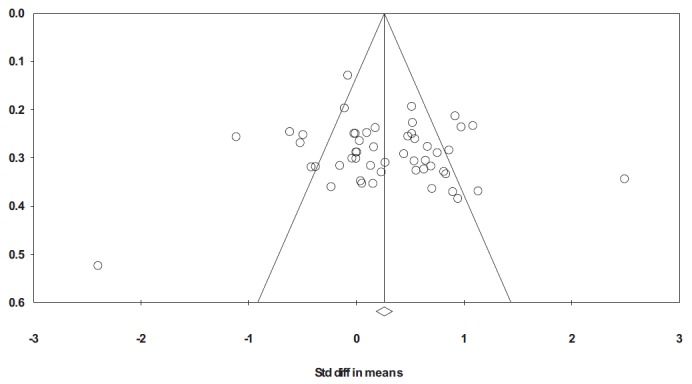
Stereotype threat effects arise when an individual feels at risk of confirming a negative stereotype about their group and consequently underperforms on stereotype relevant tasks (Steele, 2010). Among older people, underperformance across cognitive and physical tasks is hypothesized to result from age-based stereotype threat (ABST) because of negative age-stereotypes regarding older adults' competence. The present review and meta-analyses examine 22 published and 10 unpublished articles, including 82 effect sizes (N = 3882) investigating ABST on older people's (Mage = 69.5) performance. The analysis revealed a significant small-to-medium effect of ABST (d = .28) and important moderators of the effect size. Specifically, older adults are more vulnerable to ABST when (a) stereotype-based rather than fact-based manipulations are used (d = .52); (b) when performance is tested using cognitive measures (d = .36); and (c) occurs reliably when the dependent variable is measured proximally to the manipulation. The review raises important theoretical and methodological issues, and areas for future research.
Overview
The claims and statistics of this paper haven’t been checked yet.
Free: it reads the open-access text and checks the first 5 claims that cite a source we can check. Create a free account to check every claim.
Integrity signals
Registry
Cites
Statistics
Figures
Verification
Claims the paper makes
The claims and statistics of this paper haven’t been checked yet.
Free: it reads the open-access text and checks the first 5 claims that cite a source we can check. Create a free account to check every claim.
Claims other papers make about this one
Each is checked against this paper’s own text: does it say what the citing paper says it does?
The source backs part of the claim, not all of it — or backs it for a different population, condition or comparison.
In the citing paper
“five meta-analyses that showed negative age beliefs can adversely affect the health of older persons [11–15]”
From Global reach of ageism on older persons' health: a systematic review (2020) · cites this paper as [14]
Experimental — accuracy not yet measuredThe source backs part of the claim, not all of it — or backs it for a different population, condition or comparison.
In the citing paper
“previous systematic reviews have not examined how both levels simultaneously influence health”
From Global reach of ageism on older persons' health: a systematic review (2020) · cites this paper as [14]
Experimental — accuracy not yet measured
Self-check
Percentages, sums and reported differences re-computed from the paper’s own numbers.
The self-check needs the paper’s full text.
Citations
Cites
Statistical Power Analysis for the Behavioral Sciences
Muller, K. (1989) · Technometrics · doi:10.1080/00401706.1989.10488618 · Cited by 99,167
Statistical power analysis for the behavioral sciences
(1990) · Computers, Environment and Urban Systems · doi:10.1016/0198-9715(90)90050-4 · Cited by 65,269
A Coefficient of Agreement for Nominal Scales
Cohen, J. (1960) · Educational and Psychological Measurement · doi:10.1177/001316446002000104 · Cited by 42,398 · cited 1×
“All variables coded showed high interrater agreement (Cohen’s kappa or (cid:5) ; Cohen, 1960; Mean (cid:5) (cid:2) .95).”
Statistical Power Analysis for the Behavioral Sciences (2nd ed.).
Lachenbruch, P. A., & Cohen, J. (1989) · Journal of the American Statistical Association · doi:10.2307/2290095 · Cited by 37,395
Statistical Methods for Meta-Analysis
Wasserman, S., Hedges, L. V., & Olkin, I. (1988) · Journal of Educational Statistics · doi:10.2307/1164953 · Cited by 10,326
(2000) · Cited by 9,198
The file drawer problem and tolerance for null results.
Rosenthal, R. (1979) · Psychological Bulletin · doi:10.1037/0033-2909.86.3.638 · Cited by 9,068 · cited 1×
“As identified by Rosenthal (1979), unattained unpublished studies may exist that represent a bias against the publication of nonsignificant results.”
Stereotype threat and the intellectual test performance of African Americans.
Steele, C. M., & Aronson, J. (1995) · Journal of Personality and Social Psychology · doi:10.1037/0022-3514.69.5.797 · Cited by 9,020 · cited 6×
“…as blatant) led participants to behave contrary to expectations defined by the stereotype, in line with “stereotype reac-tance” theory (Brehm, 1966); whereas stereotype-based cues (defined as subtle) led to behavioral assimilation, as predicted by stereotype threat theory (Steele & Aronson, 1995).”
Influential(1999) · Cited by 6,104
Pettigrew, T. F. (1998) · Annual Review of Psychology · doi:10.1146/annurev.psych.49.1.65 · Cited by 6,001 · cited 1×
“This appears to work through familiar mechanisms of intergroup contact (Pettigrew, 1998), which can counteract stereotypes and mean that intergroup comparisons do not give rise to anxiety.”
Research works printed but not linked: 6
- Bensadon B. A. (2010). Memory self-efficacy and memory effects in aging (Unpublished doctoral dissertation). University of Florida, Gainesville, Florida.
- * Lambert A. E. (2011). On attentional control and the elderly driving stereotype (Unpublished doctoral thesis). University of Utah, Salt Lake City, Utah.
- * Lamont R. A. (2011). Stereotype threat and physical performance among the elderly: Exploration of mechanisms and after-effects. Unpublished master’s dissertation.
- Moldoff M. A. (2010). The joke’s on you: The effects of disparaging political humor on young citizens’ attitudes and behaviours (Unpublished doctoral thesis). University of North Carolina, Chapel Hill.
- Nelson T. D. (2002). Ageism: Stereotyping and prejudice against older persons. Cambridge, MA: MIT Press.
- Tajfel H., & Turner J. C. (1979). An integrative theory of social conflict In Austin W. G. & Worchel S. (Eds.), The social psychology of intergroup relations (pp. 33– 47). Monterey, CA: Brooks/Cole.
Cited by
Items 101–200 of 656
Schlemmer, M., & Desrichard, O. (2017) · Clinical Gerontologist · doi:10.1080/07317115.2017.1307891 · Cited by 40
“…examinations are associated with factors that have been consistently linked to lower memory performance, such as stress, anxiety, and evaluation (Lamont et al., 2015; Sindi et al., 2013), it would seem reasonable to assume that memory performance is likely to be subject to a white coat…”
BackgroundResultInfluentialShepherd, B. F., & Brochu, P. M. (2020) · Aggression and Violent Behavior · doi:10.1016/j.avb.2020.101435 · Cited by 41
Franco, C., Amutio, A., Mañas, I., Gázquez, J. J., & Pérez-Fuentes, M. D. C. (2017) · Terapia psicológica · doi:10.4067/s0718-48082017000100007 · Cited by 39
Birkland, J. L. H. (2022) · New Media & Society · doi:10.1177/14614448221108959 · Cited by 43
“This is due to stereotype threat: older adults underperform on tasks when faced with a negative stereotype about their performance in that area (Lamont et al., 2015).”
BackgroundMarquet, M., Boutaayamou, M., Schwartz, C., Locquet, M., Bruyère, O., Croisier, J., & Adam, S. (2018) · Archives of Gerontology and Geriatrics · doi:10.1016/j.archger.2018.06.013 · Cited by 41
Older adults, perceived ageism, civic participation and mental health: a qualitative study
von Humboldt, S., Costa, A., Ilyas, N., & Leal, I. M. P. (2024) · Aging & Mental Health · doi:10.1080/13607863.2024.2348611 · Cited by 39
“…et al., 2017), individuals show reduced physical and functional mental health (Levy, 2009), are less likely to engage in preventive health behaviours (e.g. eating a balanced diet, exercising, medication adherence; Levy, 2009) and underperform on cognitive or memory tests (Lamont et al., 2015).”
Levy, S. R., & Apriceno, M. (2019) · OBM Geriatrics · doi:10.21926/obm.geriatr.1904083 · Cited by 44
Intersections of ageism toward older adults and other isms during the COVID‐19 pandemic
Ramírez, L. F., Monahan, C., Palacios‐Espinosa, X., & Levy, S. R. (2022) · Journal of Social Issues · doi:10.1111/josi.12574 · Cited by 38
Isopahkala-Bouret, U. (2015) · Journal of Aging Studies · doi:10.1016/j.jaging.2015.07.001 · Cited by 42
“Well-intentioned colleagues can bombard aging workers with cues to age stereotyping by offering help, using patronizing tones and excluding them from certain activities, for example (Lamont et al., 2015).”
BackgroundInfluentialAge-sensitive job design antecedents of innovative work behavior: The role of cognitive job demands
Hernaus, T., Marić, M., & Černe, M. (2019) · Journal of Managerial Psychology · doi:10.1108/jmp-10-2018-0478 · Cited by 46
Better policy interventions through intersectionality
Cole, E. R., & Duncan, L. E. (2022) · Social Issues and Policy Review · doi:10.1111/sipr.12090 · Cited by 40
Benefits of Well‐Being Training in Healthy Older Adults
Cantarella, A., Borella, E., Marigo, C., & Beni, R. D. (2017) · Applied Psychology Health and Well-Being · doi:10.1111/aphw.12091 · Cited by 37
Female Chess Players Outperform Expectations When Playing Men
Stafford, T. (2018) · Psychological Science · doi:10.1177/0956797617736887 · Cited by 41
Intergenerational contact during and beyond COVID‐19
Drury, L., Abrams, D., & Swift, H. J. (2022) · Journal of Social Issues · doi:10.1111/josi.12551 · Cited by 36
“…messages (Arpino et al., 2021; Pritchard, 2021), have the potential to trigger benevolent stereotypes about older people’s competence with digital technology (Drury et al., 2017c), or induce age-based stereotype threat, and expectancy confirmation (Lamont et al., 2015; Mariano et al., 2021).”
BackgroundSelf-citationAgeism and Neuropsychological Tests
Ben‐David, B. M., Malkin, G., & Erel, H. (2018) · International perspectives on aging · doi:10.1007/978-3-319-73820-8_17 · Cited by 39
Women on the edge of a breakthrough? A stereotype threat theory of women’s angel investing
Harrison, R., Botelho, T., & Mason, C. M. (2020) · International Small Business Journal Researching Entrepreneurship · doi:10.1177/0266242620927312 · Cited by 35
“As the link between competition-related stereotype threat and performance is well-established, as a number of meta-analyses have demonstrated (Lamont et al., 2015; Stoet and Geary, 2012; Walton and Spencer, 2009), we draw on research into competition and performance in heteronormative environments to frame our discuss…”
BackgroundXi, W., Zhang, X., & Ayalon, L. (2022) · Computers in Human Behavior · doi:10.1016/j.chb.2022.107234 · Cited by 36
“Based on stereotype threat theory (Steele, 1997; Steele & Aronson, 1995), older adults who are negatively stereotyped as having low competence are likely to experience age-based stereotypes threat when negative age-stereotypes become salient (Lamont, Swift, & Abrams, 2015; Wheeler & Petty, 2001).”
BackgroundEmbodied ageism: “I don't know if you do get to an age where you're too old to learn”
Vickerstaff, S. A., & van der Horst, M. (2022) · Journal of Aging Studies · doi:10.1016/j.jaging.2022.101054 · Cited by 35
Sinclair, C., Joffe, T., Ginnivan, N., Parker, S. K., & Anstey, K. J. (2023) · Work Aging and Retirement · doi:10.1093/workar/waad013 · Cited by 40
The effect of cognitive testing and feedback on older adults’ subjective age
Geraci, L. D., Forrest, R. L. D., Hughes, M. L., Saenz, G. D., & Tirso, R. (2017) · Aging Neuropsychology and Cognition · doi:10.1080/13825585.2017.1299853 · Cited by 34
Ritter, S. M., & Rietzschel, E. F. (2017) · Springer eBooks · doi:10.1007/978-3-319-57306-9_5 · Cited by 36
Creating new spheres of experience in the transition to a nursing home
Zittoun, T., Grossen, M., & Salamin, F. T. (2020) · Learning Culture and Social Interaction · doi:10.1016/j.lcsi.2020.100458 · Cited by 32
Impact of Flexible Work Arrangements on Key Challenges to Work Engagement Among Older Workers
Allen, J., Alpass, F., Szabó, Á., & Stephens, C. V. (2021) · Work Aging and Retirement · doi:10.1093/workar/waab010 · Cited by 39
Lissitsa, S., & Chachashvili‐Bolotin, S. (2015) · Poetics · doi:10.1016/j.poetic.2015.06.002 · Cited by 46
The impact of age stereotype threats on older consumers' intention to buy masstige brand products
Bae, H., & Jo, S. H. (2022) · International Journal of Consumer Studies · doi:10.1111/ijcs.12867 · Cited by 35
Pennington, C. R., Litchfield, D., McLatchie, N. M., & Heim, D. (2018) · European Journal of Social Psychology · doi:10.1002/ejsp.2540 · Cited by 33
Leanos, S., Kürüm, E., Strickland-Hughes, C. M., Ditta, A. S., Nguyen, G., Felix, M., Yum, H., Rebok, G. W., & Wu, R. (2019) · The Journals of Gerontology Series B · doi:10.1093/geronb/gbz084 · Cited by 35
RetractedFan, J., Zhao, H.-M., Liu, Y., Kong, L., Mao, J., & Li, J. (2020) · BMC Medical Education · doi:10.1186/s12909-020-02111-7 · Cited by 31
Strickland-Hughes, C. M., Dillon, K. E., West, R. L., & Ebner, N. C. (2020) · Cognition · doi:10.1016/j.cognition.2020.104253 · Cited by 31
Leanos, S., Kürüm, E., Strickland-Hughes, C. M., Ditta, A. S., Nguyen, G., Felix, M., Yum, H., Rebok, G. W., & Wu, R. (2023) · The Journals of Gerontology Series B · doi:10.1093/geronb/gbad053 · Cited by 29
Espiritualidad, religiosidad y síntomas depresivos en personas mayores del norte de Chile
Gallardo-Peralta, L. P., & Sánchez-Moreno, E. (2020) · Terapia psicológica · doi:10.4067/s0718-48082020000200169 · Cited by 43
Fernández-Jiménez, C., Dumitrache, C. G., Rubio, L., & Ruiz-Montero, P. J. (2024) · Ageing and Society · doi:10.1017/s0144686x22000332 · Cited by 28
“…ageism predicts lower performance levels on memory tests (Horton et al ., 2008; Stephan et al ., 2016; Molden and Maxfield, 2017) and other cognitive abilities such as processing speed or verbal fluency (Lamont et al ., 2015; Robertson et al ., 2016; Stephan et al ., 2016; Seidler and Wolff, 2017).”
BackgroundJacobs, W. L., Das, E., & Schagen, S. B. (2016) · Psychology and Health · doi:10.1080/08870446.2016.1244535 · Cited by 30
Ike, T. J., Jidong, D. E., Ike, M. L., & Ayobi, E. E. (2023) · Criminology & Criminal Justice · doi:10.1177/17488958231181987 · Cited by 28
“Boundary theory could also aid in understanding public attitudes towards and perceptions towards ex-offenders’ reintegration by analysing ‘the lines that include and define some people, groups, and things while excluding others’ (Lamont et al., 2015: 850).”
Robertson, G. (2017) · Self & Society · doi:10.1080/03060497.2017.1334986 · Cited by 33
Castro, N. A. B., Zamora, A. A. C., Castruita, R. M. C., Banda-Sauceda, N. C., & de la Cruz, M. (2020) · Frontiers in Psychology · doi:10.3389/fpsyg.2019.02668 · Cited by 29
Sippli, K., Schmalzried, P., Rieger, M. A., & Voelter‐Mahlknecht, S. (2021) · International Archives of Occupational and Environmental Health · doi:10.1007/s00420-020-01639-x · Cited by 32
“, a behavior that occurs when an individual feels at risk of confirming a negative stereotype about their group, which often occurs in regard to aging at work (Lamont et al. 2015; Isopahkala-Bouret 2015).”
BackgroundStereotypes about very old people and perceived societal appreciation in very old age
Reissmann, M., Geithner, L., Storms, A., & Woopen, C. (2021) · Zeitschrift für Gerontologie und Geriatrie · doi:10.1007/s00391-021-01971-y · Cited by 32
Abrams, D., Swift, H. J., Lamont, R. A., & Drury, L. (2016) · BIROn (Birkbeck, University of London) · doi:10.13140/rg.2.1.4460.2001 · Cited by 28
Self-citationHow does ageism influence frailty? A preliminary study using a structural equation model
Ye, B., Gao, J., Fu, H., Chen, H., Dong, W., & Gu, M. C. (2020) · BMC Geriatrics · doi:10.1186/s12877-020-01749-8 · Cited by 31
Drury, L., & Fasbender, U. (2024) · Journal of Occupational and Organizational Psychology · doi:10.1111/joop.12539 · Cited by 27
An Exploration of Factors Associated With Ageist Stereotype Threat in a Medical Setting
Phibbs, S. C., & Hooker, K. A. (2017) · The Journals of Gerontology Series B · doi:10.1093/geronb/gbx034 · Cited by 30
“A recent meta-analysis of 32 age-based stereotype threat studies discovered a significant but modest effect size (d = 0.28) on performance domains (Lamont et al., 2015).”
BackgroundInfluentialZhao, H., Wu, B., Shi, J., Reifsnider, E., Fan, J., Li, J., & Mao, J. (2020) · Teaching and Learning in Medicine · doi:10.1080/10401334.2020.1784739 · Cited by 27
“Ageism has many concerning implications for older adults.(13) Ageism is linked to low self-esteem, increased stress, poor health, and shortened life expectancy.”
BackgroundSon, D., & Updegraff, K. A. (2021) · Adolescent Research Review · doi:10.1007/s40894-021-00177-y · Cited by 30
“These reflect prevalent stereotypes about older populations in Western cultures (Lamont et al., 2015).”
BackgroundSex and Love Among Older Adults in the Digital World: A Scoping Review
Gewirtz‐Meydan, A., Opuda, E., & Ayalon, L. (2022) · The Gerontologist · doi:10.1093/geront/gnac093 · Cited by 29
Zuber, S., Ihle, A., Blum, A., Desrichard, O., & Kliegel, M. (2017) · The Journals of Gerontology Series B · doi:10.1093/geronb/gbx097 · Cited by 28
Interview expectancies: awareness of potential biases influences behaviour in interviewees
Adams-Quackenbush, N. M., Horselenberg, R., Hubert, J., Vrij, A., & Koppen, P. J. V. (2019) · Psychiatry Psychology and Law · doi:10.1080/13218719.2018.1485522 · Cited by 29
Contact with older people, ageism, and containment behaviours during the COVID ‐19 pandemic
Visintin, E. P. (2021) · Journal of Community & Applied Social Psychology · doi:10.1002/casp.2504 · Cited by 29
Desombre, C., Anegmar, S., & Delelis, G. (2017) · European Journal of Psychology of Education · doi:10.1007/s10212-016-0327-4 · Cited by 31
Nunes, C., Álvarez-Dardet, S. M., Martins, C. S., & Martins, H. (2018) · Psicologia Reflexão e Crítica · doi:10.1186/s41155-018-0085-0 · Cited by 25
“These negative stereotypes have important social and economic implications (Lamont et al., 2015), which are particularly relevant given the aging population.”
BackgroundFleuren, B. P. I., van Amelsvoort, L. G. P. M., de Grip, A., Zijlstra, F., & Kant, I. (2018) · Scandinavian Journal of Work Environment & Health · doi:10.5271/sjweh.3741 · Cited by 27
“Still, the idea that older workers function less well seems to persist among both employers and older employees themselves (29, 30) and affect employment decisions (22).”
BackgroundBowen, C. E., Spuling, S. M., Kornadt, A. E., & Wiest, M. (2019) · European Journal of Ageing · doi:10.1007/s10433-019-00548-4 · Cited by 30
Jameson, M. M. (2019) · Adult Education Quarterly · doi:10.1177/0741713619896324 · Cited by 26
“This may be particularly true for women in mathematics, as a stereotype continues to exist that mathematics is a masculine domain (Siivonen, 2013), so female adult learners may be subject to a double stereotype effect in mathematics (Lamont et al., 2015).”
BackgroundFirzly, N., de Beeck, L. V., & Lagacé, M. (2020) · Canadian Journal on Aging / La Revue canadienne du vieillissement · doi:10.1017/s0714980820000173 · Cited by 31
Saner, R., & Yiu, L. S. (2020) · Cambridge University Press eBooks · doi:10.1017/9781108348607.008 · Cited by 25
Interactions between stereotype threat, subjective aging, and memory in older adults
Marquet, M., Missotten, P., Dardenne, B., & Adam, S. (2017) · Aging Neuropsychology and Cognition · doi:10.1080/13825585.2017.1413166 · Cited by 26
“effects of stereotype threat among older adults has focused on the effects of threat on mostly cognitive measures (Lamont et al., 2015).”
BackgroundInfluentialNegative Aging Stereotypes Disrupt both the Selection and Execution of Strategies in Older Adults
Lemaire, P., Brun, F., & Régner, I. (2018) · Gerontology · doi:10.1159/000486756 · Cited by 27
“With an assumed d of 0.52 when using stereotype-based manipulations as we do here (Lamont et al., 2015), our 2 × 2 mixed design could achieve 80% power with as few as 44 participants, given a modest (r = 0.30) anticipated correlation between our repeated measures (i.e., type of words).”
MethodInfluentialThe Adaptation Process of Aging
Nikitin, J., & Freund, A. M. (2019) · Cambridge University Press eBooks · doi:10.1017/9781316677018.018 · Cited by 26
Stereotype Threat at Work: A Meta-Analysis
von Hippel, C., Kühner, C., Coundouris, S. P., Lim, A. J. Y., Henry, J. D., & Zacher, H. (2024) · Personality and Social Psychology Bulletin · doi:10.1177/01461672241297884 · Cited by 28
“These studies have demonstrated the acute, detrimental effects of stereotype threat on performance outcomes, particularly in educational and testing environments (e.g., Lamont et al., 2015; Nguyen & Ryan, 2008).”
McConatha, J. T., Kumar, V. K., & Magnarelli, J. (2022) · International Journal of Environmental Research and Public Health · doi:10.3390/ijerph19137554 · Cited by 27
“The results of a meta-analysis [26] indicate that age-based negative stereotype threats about competence held by older workers can negatively impact their memory (d = 0.”
ResultSaemi, E., Moteshareie, E., Jalilinasab, S., Afrash, S., & Deshayes, M. (2022) · Psychology of sport and exercise · doi:10.1016/j.psychsport.2022.102334 · Cited by 24
Ramírez, L. F., Palacios‐Espinosa, X., Dyar, C., Lytle, A. E., & Levy, S. R. (2018) · Journal of Adult Development · doi:10.1007/s10804-018-9299-8 · Cited by 26
“Age stereotypes also affect cognition as indicated by a meta-analysis which found that the memory and cognitive performances of older adults are impacted by age-based stereotype threat (Lamont et al. 2015).”
BackgroundReducing Tourist Stereotyping: Effectiveness of Communication Messages
Tung, V. W. S. (2020) · Journal of Travel Research · doi:10.1177/0047287519900002 · Cited by 27
“For example, younger individuals may judge those who are senior as less competent (Lamont, Swift, and Abrams 2015).”
BackgroundSwift, H. J., Abrams, D., Drury, L., & Lamont, R. A. (2018) · Springer eBooks · doi:10.1007/978-3-319-16999-6_2431-1 · Cited by 24
Self-citationDouble Jeopardy-Analyzing the Combined Effect of Age and Gender Stereotype Threat on Older Workers
Manzi, C., Sorgente, A., Reverberi, E., Tagliabue, S., & Gorli, M. (2021) · Frontiers in Psychology · doi:10.3389/fpsyg.2020.606690 · Cited by 26
Stereotype Threat Reduces the Positivity of Older Adults’ Recall
Barber, S. J., Seliger, J., Yeh, N., & Tan, S. C. (2018) · The Journals of Gerontology Series B · doi:10.1093/geronb/gby026 · Cited by 23
Doncel‐García, B., Lajas, Á. M., Fernández-Gutiérrez, N., Fernández‐Atutxa, A., Elgarresta, I. L., & Irazusta, J. (2021) · Archives of Gerontology and Geriatrics · doi:10.1016/j.archger.2021.104567 · Cited by 23
Lamont, R. A., Swift, H. J., & Drury, L. (2021) · Frontiers in Psychology · doi:10.3389/fpsyg.2021.640567 · Cited by 23
“The most up-to-date metaanalysis of this research area shows support for ABST effects on the memory and wider cognitive performance of older adults (Lamont et al., 2015), and some research has investigated how ABST effects physical outcomes, such as walking and grip strength (Lamont et al.”
BackgroundSelf-citationDo better in math: How your body posture may change stereotype threat response
Peper, E., Harvey, R., Mason, L., & Lin, I. (2018) · NeuroRegulation · doi:10.15540/nr.5.2.67 · Cited by 25
Thomas, A. K., Smith, A. M., & Mazerolle, M. (2018) · The Journals of Gerontology Series B · doi:10.1093/geronb/gby031 · Cited by 24
“…demonstrated that older adults perform more poorly across a variety of memory tests when under the pressure of stereotype threat (for reviews see Barber, 2017; Lamont et al., 2015), only one other study has investigated the impact of threat on memory for a complex event (Henkel, 2014).”
BackgroundAwareness of genetic risk in the Dominantly Inherited Alzheimer Network (DIAN)
Aschenbrenner, A. J., James, B. D., McDade, E., Wang, G., Lim, Y. Y., Benzinger, T. L. S., Cruchaga, C., Goate, A., Xiong, C., Perrin, R. J., et al. (2020) · Alzheimer s & Dementia · doi:10.1002/alz.12010 · Cited by 23
Kranz, D., Thomas, N. M., & Hofer, J. (2021) · Frontiers in Psychology · doi:10.3389/fpsyg.2021.658797 · Cited by 22
Pengpid, S., & Peltzer, K. (2021) · BMC Geriatrics · doi:10.1186/s12877-021-02508-z · Cited by 21
Young Group Identification and Motives as Predictors of Ageism, Aging Anxiety, and Life Satisfaction
Taşdemir, N. (2020) · The Journal of Genetic Psychology · doi:10.1080/00221325.2020.1783195 · Cited by 22
González-Domínguez, S., Muñoz, M., Ausín, B., Castellanos, M. Á., & Santos, E. P. (2016) · Aging & Mental Health · doi:10.1080/13607863.2016.1247422 · Cited by 24
Smith, A. M., Gallo, D. A., Barber, S. J., Maddox, K. B., & Thomas, A. K. (2017) · The Gerontologist · doi:10.1093/geront/gnx057 · Cited by 21
Gender Stereotype Threat Undermines Dance Performance and Learning in Boys
Bastos, B. D. P., Chiviacowsky, S., Drews, R., & Cardozo, P. (2023) · Journal of Motor Behavior · doi:10.1080/00222895.2023.2166454 · Cited by 19
“Despite a large number of studies observing the effects of stereotype threat in different contexts and populations over the past 30 years (for reviews, see Chalabaev & Sarrazin, 2020; Lamont et al., 2015; Spencer et al., 2016), research looking the effects of stereotype in motor learning is limited.”
BackgroundAgeism as a Modifying Influence on COVID-19 Health Beliefs and Intention to Social Distance
Graf, A. S., & Carney, A. K. (2021) · Journal of Aging and Health · doi:10.1177/0898264321997004 · Cited by 21
“Swift et al., 2017 identified three mechanisms by which ageism disrupts active aging, two of which emphasize the internalization of ageist beliefs: (1) stereotype embodiment (e.g., Levy, 2009); (2) stereotype threat (e.g., Lamont et al., 2015); and (3) age discrimination (e.g., Nelson, 2016).”
BackgroundBarber, S. J., Shoemaker, K. J., & Dotson, V. M. (2024) · Policy Insights from the Behavioral and Brain Sciences · doi:10.1177/23727322241268400 · Cited by 21
“Age-based stereotype threat is another way that negative old-age stereotypes can adversely impact older people ’ s cognition, health, and performance (for a meta-analysis, see Lamont et al., 2015).”
Aging Perceptions in Tsimane’ Amazonian Forager–Farmers Compared With Two Industrialized Societies
Sorokowski, P., Sorokowska, A., Frąckowiak, T., & Löckenhoff, C. E. (2015) · The Journals of Gerontology Series B · doi:10.1093/geronb/gbv080 · Cited by 62
Experiencing Computer Anxiety Later in Life: The Role of Stereotype Threat
Ivan, L., & Schiau, I. (2016) · Lecture notes in computer science · doi:10.1007/978-3-319-39943-0_33 · Cited by 21
Lester, E. G., & Murrell, A. R. (2021) · Aging & Mental Health · doi:10.1080/13607863.2021.1950613 · Cited by 20
“Overall, ageism has negative effects on physical and mental well-being (Lamont et al., 2015), and a culture or society’s perspective on aging can directly contribute to one’s negative aging expectations.”
Learning as an Important Privilege: A Life Span Perspective with Implications for Successful Aging
Wu, R., Zhao, J., Cheung, C. S.-S., Natsuaki, M. N., Rebok, G. W., & Strickland-Hughes, C. M. (2021) · Human Development · doi:10.1159/000514554 · Cited by 21
“…the perception of low expectations, which can be due to implicit attitudes and explicit stereotypes, can lead to dampened performance on subsequent assessments (e.g., Shapiro & Neuberg, 2007; Steele & Aronson, 1995, see similar findings with older adults, e.g., Barber, 2017; Lamont et al., 2015).”
BackgroundResultMind the ad: How personality requirements affect older and younger job seekers' job attraction
Koçak, A., Rooman, C., Duyck, W., & Derous, E. (2022) · Journal of Occupational and Organizational Psychology · doi:10.1111/joop.12396 · Cited by 20
False feedback and beliefs influence name recall in younger and older adults
Strickland-Hughes, C. M., West, R. L., Smith, K. A., & Ebner, N. C. (2016) · Memory · doi:10.1080/09658211.2016.1260746 · Cited by 20
“Because of age stereotypes, emphasis on memory and/or performance in general tends to create concern for older but not younger individuals (Geraci & Miller, 2013; Hess & Hinson, 2006; Lamont et al., 2015).”
BackgroundMeasuring Discrimination against Older People Applying the Fraboni Scale of Ageism
Hofmeister‐Tóth, Á., Neulinger, Á., & Debreceni, J. (2021) · Information · doi:10.3390/info12110458 · Cited by 18
“, deterioration in the mental health of older people [17], increasing mortality [18], exclusion of older citizens [19], loneliness, and a decline in cognitive abilities [20].”
BackgroundA Case for Feminism in Programming Language Design
Hermans, F., & Schlesinger, A. (2024) · ACM SIGPLAN International Symposium on New Ideas, New Paradigms, and Reflections on Programming and Software (Onward!) · doi:10.1145/3689492.3689809 · Cited by 20
“There is a wealth of literature empirically observing and exploring mitigation strategies for stereotype threat across marginalized identities [77, 97, 101, 102, 129].”
“Sinking” or sinking?: Identity salience and shifts in Black women's athletic performance
Howard, S., & Borgella, A. M. (2018) · Psychology of sport and exercise · doi:10.1016/j.psychsport.2018.08.016 · Cited by 18
The distinct effect of multiple sources of stereotype threat
Desombre, C., Jury, M., Bagès, C., & Brasselet, C. (2018) · The Journal of Social Psychology · doi:10.1080/00224545.2018.1544540 · Cited by 17
Stegmann, S., Braun, S., Junker, N. M., & van Dick, R. (2020) · Journal of Applied Social Psychology · doi:10.1111/jasp.12636 · Cited by 18
Aged experience – A cultural developmental investigation
Hviid, P. (2020) · Learning Culture and Social Interaction · doi:10.1016/j.lcsi.2020.100386 · Cited by 19
Nicolas, P., Lemaire, P., & Régner, I. (2020) · Journal of Experimental Psychology General · doi:10.1037/xge0000647 · Cited by 18
“As a result, under ABST, when participants reduced their use of the better strategy, the difference in performance (control–threat) was larger on homogenous than on heterogeneous problems.”
BackgroundMethodResultInfluentialZhang, L. (2024) · International Journal of Human-Computer Interaction · doi:10.1080/10447318.2024.2314352 · Cited by 17
“…stereotypes in the technology domain (e.g., older adults lack proficiency or understanding in using technology) have been shown to adversely influence the way older adults approach technologies (e.g., taking a more cautious or even avoidant approach) (Lamont et al., 2015; Popham & Hess, 2015).”
Mo, Y., Chen, L., Zhou, Y., Bone, A. E., Maddocks, M. M., & Evans, C. (2024) · Journal of Cachexia Sarcopenia and Muscle · doi:10.1002/jcsm.13576 · Cited by 17
Factors that affect younger and older adults’ causal attributions of robot behaviour
Pak, R., Crumley-Branyon, J. J., de Visser, E. J., & Rovira, E. M. (2020) · Ergonomics · doi:10.1080/00140139.2020.1734242 · Cited by 20
“Conversely, the extent of age-based stereotype threat within physical domains is unclear (Lamont, Swift, & Abrams, 2015), indicating that aging stereotypes are indeed multidimensional such that physical decline might not be perceived as negatively as a cognitive failure.”
BackgroundAltering age and gender stereotypes by creating the Halo and Horns Effects with facial expressions
Radeke, M. K., & Stahelski, A. J. (2020) · Humanities and Social Sciences Communications · doi:10.1057/s41599-020-0504-6 · Cited by 22
Shifting Minds: A Quantitative Reappraisal of Cognitive-Intervention Research
Moreau, D. (2020) · Perspectives on Psychological Science · doi:10.1177/1745691620950696 · Cited by 17
Lifespan Perspectives on Age-Related Stereotypes, Prejudice, and Discrimination at Work (and Beyond)
McCarthy, J., Heraty, N., & Bamberg, A. (2019) · Elsevier eBooks · doi:10.1016/b978-0-12-812756-8.00017-7 · Cited by 19
Jiang, D., Zhang, Y., Zhu, H., & Wang, X. (2024) · Frontiers in Psychology · doi:10.3389/fpsyg.2024.1336120 · Cited by 19
“These studies have primarily focused on work experience or professional expertise (Schmader et al., 2008; Lamont et al., 2015), leadership support, and employee collaboration (Huang, 2019; Cao et al., 2022).”
BackgroundAttitudes to ageing among older Norwegian adults living in the community
Kalfoss, M. H. (2017) · British Journal of Community Nursing · doi:10.12968/bjcn.2017.22.5.238 · Cited by 16
Metadata
- Authors
- Lamont, R. A., Swift, H. J., & Abrams, D.
- Affiliations
- University of Kent (GB)
- Corresponding author
- Abrams, Dominic
- Venue
- Psychology and Aging
- Published
- 2015-03
- Volume
- 30
- Issue
- 1
- Pages
- 180-193
- ISSN
- 0882-7974 (ISSN-L)
- 1939-1498
- PMC
- PMC4360754
- OpenAlex
- W2135485953
- Cited by
- 583
- References
- 83
- Citations by year
- 2026: 25 · 2025: 46 · 2024: 48 · 2023: 40 · 2022: 58 · 2021: 74 · 2020: 120 · 2019: 49 · 2018: 51 · 2017: 32 · 2016: 29 · 2015: 11
- FWCI
- 11.55
- Type
- journal article
- Language
- en
- Update notices
- correction (2018-08-09)
- Open access
- hybrid
- doi.org
- Licence
- Locations
- Psychology and Aging (publishedVersion, other-oa)
- PubMed Central (publishedVersion, cc-by)
- PubMed (publishedVersion)
- Kent Academic Repository (University of Kent) (acceptedVersion)
- Funders
- UK Economic and Social Research Council (ES/I012141/1)
- Topics
- Social Sciences › Psychology › Developmental and Educational Psychology › Aging and Gerontology Research
- Social Sciences › Sociology and Political Science › Social and Intergroup Psychology
- Social Sciences › Demography › Retirement, Disability, and Employment
- Keywords
- age stereotypes, older adults, underperformance, stereotype threat, cognitive performance, physical performance, moderators of effect size, aging
- MeSH terms
- Aged, Aged, 80 and over, Aging, Cognition, Female, Humans, Male, Stereotyping
About these checks
Registry, retraction, Cites and statistics results are computed, not judged, with one exception: a printed reference that no index lists is read once by a model before it counts as a citation error. Claims are extracted by a model and kept only when their quote appears verbatim in the text; each cited source is then checked, with a model’s help, for whether it says what the claim relies on. Those verdicts can be wrong — read the claim’s quote and the cited source before relying on one.
Statistics and arithmetic are recomputed, not judged.
Confidence bands are shown only for fields calibrated on our annotated test set. None is calibrated yet, so no band is shown.
What counts as a claim ›How we measure confidence ›How we check this ›
Are you an author, or do you see a problem with this page? Request a review
Data sources
Bibliographic data: Semantic Scholar, OpenAlex, Crossref.
Contains information from the Semantic Scholar Academic Graph Datasets, made available under the ODC Attribution License (ODC-BY 1.0).
Semantic Scholar’s data is described in: Kinney, R., et al. (2023). The Semantic Scholar Open Data Platform. arXiv:2301.10140.
