

A review and meta-analysis of age-based stereotype threat: negative stereotypes, not facts, do the damage
Open accessThe DOI matches its Crossref record; 81 of the 83 references it cites were found in a registry or an index.
Abstract
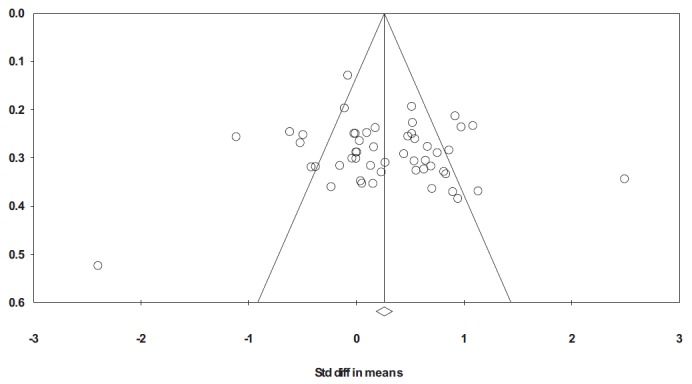
Stereotype threat effects arise when an individual feels at risk of confirming a negative stereotype about their group and consequently underperforms on stereotype relevant tasks (Steele, 2010). Among older people, underperformance across cognitive and physical tasks is hypothesized to result from age-based stereotype threat (ABST) because of negative age-stereotypes regarding older adults' competence. The present review and meta-analyses examine 22 published and 10 unpublished articles, including 82 effect sizes (N = 3882) investigating ABST on older people's (Mage = 69.5) performance. The analysis revealed a significant small-to-medium effect of ABST (d = .28) and important moderators of the effect size. Specifically, older adults are more vulnerable to ABST when (a) stereotype-based rather than fact-based manipulations are used (d = .52); (b) when performance is tested using cognitive measures (d = .36); and (c) occurs reliably when the dependent variable is measured proximally to the manipulation. The review raises important theoretical and methodological issues, and areas for future research.
Overview
The claims and statistics of this paper haven’t been checked yet.
Free: it reads the open-access text and checks the first 5 claims that cite a source we can check. Create a free account to check every claim.
Integrity signals
Registry
Cites
Statistics
Figures
Verification
Claims the paper makes
The claims and statistics of this paper haven’t been checked yet.
Free: it reads the open-access text and checks the first 5 claims that cite a source we can check. Create a free account to check every claim.
Claims other papers make about this one
Each is checked against this paper’s own text: does it say what the citing paper says it does?
The source backs part of the claim, not all of it — or backs it for a different population, condition or comparison.
In the citing paper
“five meta-analyses that showed negative age beliefs can adversely affect the health of older persons [11–15]”
From Global reach of ageism on older persons' health: a systematic review (2020) · cites this paper as [14]
Experimental — accuracy not yet measuredThe source backs part of the claim, not all of it — or backs it for a different population, condition or comparison.
In the citing paper
“previous systematic reviews have not examined how both levels simultaneously influence health”
From Global reach of ageism on older persons' health: a systematic review (2020) · cites this paper as [14]
Experimental — accuracy not yet measured
Self-check
Percentages, sums and reported differences re-computed from the paper’s own numbers.
The self-check needs the paper’s full text.
Citations
Cites
Statistical Power Analysis for the Behavioral Sciences
Muller, K. (1989) · Technometrics · doi:10.1080/00401706.1989.10488618 · Cited by 99,167
Statistical power analysis for the behavioral sciences
(1990) · Computers, Environment and Urban Systems · doi:10.1016/0198-9715(90)90050-4 · Cited by 65,269
A Coefficient of Agreement for Nominal Scales
Cohen, J. (1960) · Educational and Psychological Measurement · doi:10.1177/001316446002000104 · Cited by 42,398 · cited 1×
“All variables coded showed high interrater agreement (Cohen’s kappa or (cid:5) ; Cohen, 1960; Mean (cid:5) (cid:2) .95).”
Statistical Power Analysis for the Behavioral Sciences (2nd ed.).
Lachenbruch, P. A., & Cohen, J. (1989) · Journal of the American Statistical Association · doi:10.2307/2290095 · Cited by 37,395
Statistical Methods for Meta-Analysis
Wasserman, S., Hedges, L. V., & Olkin, I. (1988) · Journal of Educational Statistics · doi:10.2307/1164953 · Cited by 10,326
(2000) · Cited by 9,198
The file drawer problem and tolerance for null results.
Rosenthal, R. (1979) · Psychological Bulletin · doi:10.1037/0033-2909.86.3.638 · Cited by 9,068 · cited 1×
“As identified by Rosenthal (1979), unattained unpublished studies may exist that represent a bias against the publication of nonsignificant results.”
Stereotype threat and the intellectual test performance of African Americans.
Steele, C. M., & Aronson, J. (1995) · Journal of Personality and Social Psychology · doi:10.1037/0022-3514.69.5.797 · Cited by 9,020 · cited 6×
“…as blatant) led participants to behave contrary to expectations defined by the stereotype, in line with “stereotype reac-tance” theory (Brehm, 1966); whereas stereotype-based cues (defined as subtle) led to behavioral assimilation, as predicted by stereotype threat theory (Steele & Aronson, 1995).”
Influential(1999) · Cited by 6,104
Pettigrew, T. F. (1998) · Annual Review of Psychology · doi:10.1146/annurev.psych.49.1.65 · Cited by 6,001 · cited 1×
“This appears to work through familiar mechanisms of intergroup contact (Pettigrew, 1998), which can counteract stereotypes and mean that intergroup comparisons do not give rise to anxiety.”
Taking time seriously: A theory of socioemotional selectivity.
Carstensen, L. L., Isaacowitz, D. M., & Charles, S. T. (1999) · American Psychologist · doi:10.1037//0003-066x.54.3.165 · Cited by 5,377 · cited 1×
“It is also possible that some older adults may avoid the negative experience of ABST by disengaging from important activities (Osborne, 1997; Carstensen, Isaacowitz, & Charles, 1999).”
A Theory of Psychological Reactance
Torrance, E. P., & Brehm, J. W. (1968) · The American Journal of Psychology · doi:10.2307/1420824 · Cited by 4,759 · cited 2×
“…cues (defined as blatant) led participants to behave contrary to expectations defined by the stereotype, in line with “stereotype reac-tance” theory (Brehm, 1966); whereas stereotype-based cues (defined as subtle) led to behavioral assimilation, as predicted by stereotype threat theory (Steele &…”
Baumeister, R. F. (1984) · Journal of Personality and Social Psychology · doi:10.1037//0022-3514.46.3.610 · Cited by 1,665 · cited 1×
“However, some research suggests that stereotype threat may affect physical performance if the individual attends too much to largely proceduralized tasks (Baumeister, 1984; Beilock et al., 2006), or if threatened individuals alter performance goals (Smith, 2004; Stone & McWhinnie, 2008).”
An integrated process model of stereotype threat effects on performance
Schmader, T., Johns, M., & Forbes, C. (2008) · Psychological Review · doi:10.1037/0033-295x.115.2.336 · Cited by 1,576 · cited 4×
“Ambiguity and uncertainty about the application of the negative age stereotype may increase distracting thoughts (Hirsh, Mar, & Peterson, 2012), which in turn deplete cognitive resources needed for the task at hand (Schmader, Johns, & Forbes, 2008).”
InfluentialSocial Identity Theory: Constructive and Critical Advances.
Billig, M., Abrams, D., & Hogg, M. A. (1991) · Contemporary Sociology · doi:10.2307/2076221 · Cited by 1,564 · cited 1×
“These factors present a threat to one’s identity due to the value that is placed on having a positive and distinct social identity, as highlighted by social identity theory (Abrams & Hogg, 1990; Tajfel & Turner, 1979).”
Self-citationExperimental disclosure and its moderators: A meta-analysis.
Frattaroli, J. (2006) · Psychological Bulletin · doi:10.1037/0033-2909.132.6.823 · Cited by 1,502 · cited 2×
“This is a technique used to address publication bias (Frattaroli, 2006; Hawkins, Blanchard, Baldwin, & Fawcett, 2008).”
De Boef, S., & Keele, L. (2008) · American Journal of Political Science · doi:10.1111/j.1540-5907.2007.00307.x · Cited by 1,010
This Old Stereotype: The Pervasiveness and Persistence of the Elderly Stereotype
Cuddy, A. J. C., Norton, M. I., & Fiske, S. T. (2005) · Journal of Social Issues · doi:10.1111/j.1540-4560.2005.00405.x · Cited by 940
Nguyen, H.-H. D., & Ryan, A. M. (2008) · Journal of Applied Psychology · doi:10.1037/a0012702 · Cited by 913
The effects of stereotype activation on behavior: A review of possible mechanisms.
Wheeler, S. C., & Petty, R. E. (2001) · Psychological Bulletin · doi:10.1037//0033-2909.127.6.797 · Cited by 771 · cited 1×
“Stereotype threat is theorized to operate through distinct motivation-based mechanisms, often linked to emotion (distinct from automatic or “cold” priming effects, see Wheeler & Petty, 2001).”
Bargh, J. A., & Pietromonaco, P. (1982) · Journal of Personality and Social Psychology · doi:10.1037//0022-3514.43.3.437 · Cited by 697 · cited 2×
“…stereotype is primed without the individuals’ awareness (e.g., subliminally or through other forms of priming such as sentence-unscrambling tasks), the stereotype may become more cognitively accessible and directly affect associated behavior (Bargh & Pietromonaco, 1982), this is stereotype priming.”
Battle of the sexes: gender stereotype confirmation and reactance in negotiations
Kray, L. J., Thompson, L., & Galinsky, A. (2001) · Journal of Personality and Social Psychology · doi:10.1037/0022-3514.80.6.942 · Cited by 690
Ageism: Stereotyping and Prejudice against Older Persons
Moberg, D. O., & Nelson, T. D. (2003) · Contemporary Sociology · doi:10.2307/1556464 · Cited by 652 · cited 1×
“Because ageism toward older adults is widely accepted and endemic in subtle forms (Nelson, 2002), it may often be difficult to disambiguate the intention behind actions toward older adults.”
Psychological entropy: a framework for understanding uncertainty-related anxiety
Hirsh, J. B., Mar, R. A., & Peterson, J. B. (2012) · Psychological Review · doi:10.1037/a0026767 · Cited by 606 · cited 1×
“Ambiguity and uncertainty about the application of the negative age stereotype may increase distracting thoughts (Hirsh, Mar, & Peterson, 2012), which in turn deplete cognitive resources needed for the task at hand (Schmader, Johns, & Forbes, 2008).”
The impact of stereotype threat on age differences in memory performance
Hess, T. M., Auman, C., Colcombe, S. J., & Rahhal, T. A. (2003) · The Journals of Gerontology Series B: Psychological Sciences and Social Sciences · doi:10.1093/geronb/58.1.p3 · Cited by 578 · cited 8×
“Some research has suggested that the extent to which individuals identify with the performance domain and see it as important can moderate ABST effects, such that ABST effects are stronger on domains that are highly valued (Hess et al., 2003; Joanisse, Gagnon, & Voloaca, 2013).”
InfluentialDoes marriage and relationship education work? A meta-analytic study.
Hawkins, A. J., Blanchard, V. L., Baldwin, S. A., & Fawcett, E. B. (2008) · Journal of Consulting and Clinical Psychology · doi:10.1037/a0012584 · Cited by 553 · cited 1×
“This is a technique used to address publication bias (Frattaroli, 2006; Hawkins, Blanchard, Baldwin, & Fawcett, 2008).”
Doddering But Dear: Process, Content, and Function in Stereotyping of Older Persons
Cuddy, A. J. C., & Fiske, S. T. (2002) · Ageism · doi:10.7551/mitpress/1157.003.0004 · Cited by 517
Major, B., Spencer, S., Schmader, T., Wolfe, C., & Crocker, J. (1998) · Personality and Social Psychology Bulletin · doi:10.1177/0146167298241003 · Cited by 476
Race and academic disidentification.
Osborne, J. W. (1997) · Journal of Educational Psychology · doi:10.1037//0022-0663.89.4.728 · Cited by 415 · cited 1×
“It is also possible that some older adults may avoid the negative experience of ABST by disengaging from important activities (Osborne, 1997; Carstensen, Isaacowitz, & Charles, 1999).”
Shapiro, J. R., & Neuberg, S. L. (2007) · Personality and Social Psychology Review · doi:10.1177/1088868306294790 · Cited by 398 · cited 1×
“Furthermore, there is an ambiguity surrounding the nature of “stereotype threat” and how this manifests as an individual concern (Shapiro & Neuberg, 2007).”
Mullen, B. (2013) · Psychology Press eBooks · doi:10.4324/9780203771938 · Cited by 385 · cited 1×
“A random effects model—which takes into account both the between-study and within-study variance when weighting effect sizes—was used due to methodological heterogeneity between the studies (Mullen, 1989).”
Seibt, B., & Förster, J. (2004) · Journal of Personality and Social Psychology · doi:10.1037/0022-3514.87.1.38 · Cited by 376 · cited 1×
“Recent evidence suggests that stereotype threat (e.g., Seibt & Förster, 2004) and more specifically, ABST (Barber & Mather, 2013; Hess, Emery, & Queen, 2009; Popham & Hess, in press) may elicit a “prevention” focus (Higgins, 1999), whereby the individual aims not to perform poorly (as opposed to…”
Walton, G. M., & Spencer, S. J. (2009) · Psychological Science · doi:10.1111/j.1467-9280.2009.02417.x · Cited by 366
How Young and Older Adults Differ in Their Responses to Perceived Age Discrimination.
Garstka, T. A., Schmitt, M. T., Branscombe, N. R., & Hummert, M. L. (2004) · Psychology and Aging · doi:10.1037/0882-7974.19.2.326 · Cited by 329
Steele, J., James, J. B., & Barnett, R. C. (2002) · Psychology of Women Quarterly · doi:10.1111/1471-6402.00042 · Cited by 313
Integrated process modeling: An ontological evaluation
Green, P., & Rosemann, M. (2000) · Information Systems · doi:10.1016/s0306-4379(00)00010-7 · Cited by 287
Multiple social identities and stereotype threat: Imbalance, accessibility, and working memory.
Rydell, R. J., McConnell, A. R., & Beilock, S. L. (2009) · Journal of Personality and Social Psychology · doi:10.1037/a0014846 · Cited by 256
Abrams, D., Eller, A., & Bryant, J. (2006) · Psychology and Aging · doi:10.1037/0882-7974.21.4.691 · Cited by 242 · cited 4×
“For example, Abrams, Eller, and Bryant (2006, p. 694) stated that “it is widely assumed that intellectual performance declines with age.””
InfluentialSelf-citationHess, T. M., Hinson, J. T., & Statham, J. A. (2004) · Psychology and Aging · doi:10.1037/0882-7974.19.3.495 · Cited by 231 · cited 2×
“For example, Hess, Hinson, and Statham (2004) used a sentence unscrambling task in which target words represented common beliefs about older adults (Experiment 1), and a lexical-decision task, which presented consciously perceivable prime words (Experiment 2).”
Beilock, S. L., Jellison, W. A., Rydell, R. J., McConnell, A. R., & Carr, T. H. (2006) · Personality and Social Psychology Bulletin · doi:10.1177/0146167206288489 · Cited by 226
How Feelings of Stereotype Threat Influence Older Adults' Memory Performance
Chasteen, A. L., Bhattacharyya, S., Horhota, M., Tam, R., & Hasher, L. (2005) · Experimental Aging Research · doi:10.1080/03610730590948177 · Cited by 221 · cited 8×
“These have included both implicit measures of stereotype activation (Chasteen et al., 2005; Hess et al., 2003; Thomas & Dubois, 2011) and self-report measures of ABST (Chasteen et al., 2005; Gaillard et al., 2011; Joanisse et al., 2013; Swift et al., 2013).”
Influential‘Help me! I’m old!’ How negative aging stereotypes create dependency among older adults
Coudin, G., & Alexopoulos, T. (2010) · Aging & Mental Health · doi:10.1080/13607861003713182 · Cited by 212 · cited 2×
“Studies were excluded if they did not include performance-based dependent variables (e.g., Auman, Bosworth, & Hess, 2005; Coudin & Alexopoulos, 2010; von Hippel, Kalok-erinos & Henry, 2013).”
Smith, J. L. (2004) · Educational Psychology Review · doi:10.1023/b:edpr.0000034020.20317.89 · Cited by 209 · cited 1×
“However, some research suggests that stereotype threat may affect physical performance if the individual attends too much to largely proceduralized tasks (Baumeister, 1984; Beilock et al., 2006), or if threatened individuals alter performance goals (Smith, 2004; Stone & McWhinnie, 2008).”
Evidence that blatant versus subtle stereotype threat cues impact performance through dual processes
Stone, J., & McWhinnie, C. M. (2007) · Journal of Experimental Social Psychology · doi:10.1016/j.jesp.2007.02.006 · Cited by 189 · cited 2×
“Stone and McWhinnie (2008) suggest that effects of different threat manipulations may depend on the task domain.”
Stereotype threat among older employees: relationship with job attitudes and turnover intentions
von Hippel, C., Kalokerinos, E. K., & Henry, J. D. (2013) · Psychology and Aging · doi:10.1037/a0029825 · Cited by 182 · cited 1×
“Some research has begun to recognize this need for testing ABST in more varied settings (von Hippel et al., 2013), and to explore a wider range of performance outcomes, for example, dependent behaviors (Coudin & Alexopoulos, 2010) and learning outcomes (Fritzsche et al., 2009).”
Ageism in Europe: Findings from the European Social Survey
Abrams, D., Russell, P. S., Vauclair, C., & Swift, H. J. (2011) · Kent Academic Repository (University of Kent) · Cited by 177
Self-citationDesrichard, O., & Köpetz, C. (2005) · European Journal of Social Psychology · doi:10.1002/ejsp.249 · Cited by 177 · cited 5×
“…approach does not account for situations in which a series of performance measures is also preceded by or interspersed with other measures, such as evaluation apprehension (Chasteen et al., 2005), expected performance (Desrichard & Kopetz, 2005) or an Implicit Association Test (Hess et al., 2003).”
InfluentialSCHOLL, J. M., & Sabat, S. R. (2008) · Ageing and Society · doi:10.1017/s0144686x07006241 · Cited by 167 · cited 1×
“Studies were excluded if they used a nonexperimental design (e.g., Scholl & Sabat, 2008; von Hippel et al., 2005).”
Instructional manipulations and age differences in memory: Now you see them, now you don't.
Rahhal, T. A., Hasher, L., & Colcombe, S. J. (2001) · Psychology and Aging · doi:10.1037//0882-7974.16.4.697 · Cited by 148
Abrams, D., Crisp, R. J., Marques, S., Fagg, E., Bedford, L., & Provias, D. (2008) · Psychology and Aging · doi:10.1037/a0014293 · Cited by 146 · cited 6×
“For example, these studies measured performance on math tests (Abrams et al., 2008), a letter cancellation task (Popham & Hess, in press), a crossword task (Swift et al., 2013), a block design task (Hehman & Bugental, 2013), a mental rotation task (Horhota, n.d.) and other mixed tests of cognitive…”
InfluentialSelf-citationHess, T. M., Hinson, J. T., & Hodges, E. A. (2009) · Experimental Aging Research · doi:10.1080/03610730802716413 · Cited by 142 · cited 6×
“Further, individual difference variables such as, psychological age, stigma consciousness (Hess et al., 2009; Kang & Chasteen, 2009), domain identification (Hess et al., 2009; Joanisse et al., 2013), and self-efficacy (Andreoletti & Lachman, 2004; Desrichard & Kopetz, 2005) may be relevant as…”
InfluentialAge-related variation in the influences of aging stereotypes on memory in adulthood.
Hess, T. M., & Hinson, J. T. (2006) · Psychology and Aging · doi:10.1037/0882-7974.21.3.621 · Cited by 132 · cited 3×
“At the time of writing, 22 published articles have tested ABST effects, several of which failed to find effects on performance (Andreoletti & Lachman, 2004; Hess & Hinson, 2006; Hess, Hinson, & Hodges, 2009; Horton, Baker, Pearce, & Deakin, 2010; Kang & Chasteen, 2009; O’Brien & Hummert, 2006).”
Different Groups, Different Threats: A Multi-Threat Approach to the Experience of Stereotype Threats
Shapiro, J. R. (2011) · Personality and Social Psychology Bulletin · doi:10.1177/0146167211398140 · Cited by 127
Kang, S. K., & Chasteen, A. L. (2009) · The International Journal of Aging and Human Development · doi:10.2190/ag.69.3.c · Cited by 117 · cited 3×
“At the time of writing, 22 published articles have tested ABST effects, several of which failed to find effects on performance (Andreoletti & Lachman, 2004; Hess & Hinson, 2006; Hess, Hinson, & Hodges, 2009; Horton, Baker, Pearce, & Deakin, 2010; Kang & Chasteen, 2009; O’Brien & Hummert, 2006).”
The Other Within Us: Feminist Explorations on Women and Aging
Pearsall, M. (1997) · Cited by 113
Stereotype Threat Strengthens Automatic Recall and Undermines Controlled Processes in Older Adults
Mazerolle, M., Régner, I., Morisset, P., Rigalleau, F., & Huguet, P. (2012) · Psychological Science · doi:10.1177/0956797612437607 · Cited by 111
Haslam, C., Morton, T. A., Haslam, S. A., Varnes, L., Graham, R., & Gamaz, L. (2012) · Psychology and Aging · doi:10.1037/a0027754 · Cited by 108 · cited 3×
“) and other mixed tests of cognitive ability that sometimes include a memory component (Abrams et al., 2006; Haslam et al., 2012).”
Coping With Stereotype Threat: Denial as an Impression Management Strategy.
von Hippel, W., von Hippel, C., Conway, L., Preacher, K. J., Schooler, J. W., & Radvansky, G. A. (2005) · Journal of Personality and Social Psychology · doi:10.1037/0022-3514.89.1.22 · Cited by 107 · cited 2×
“Studies were excluded if they used a nonexperimental design (e.g., Scholl & Sabat, 2008; von Hippel et al., 2005).”
O'Brien, L. T., & Hummert, M. L. (2006) · Social Cognition · doi:10.1521/soco.2006.24.3.338 · Cited by 100 · cited 2×
“At the time of writing, 22 published articles have tested ABST effects, several of which failed to find effects on performance (Andreoletti & Lachman, 2004; Hess & Hinson, 2006; Hess, Hinson, & Hodges, 2009; Horton, Baker, Pearce, & Deakin, 2010; Kang & Chasteen, 2009; O’Brien & Hummert, 2006).”
Swift, H. J., Abrams, D., & Marques, S. (2012) · The Journals of Gerontology Series B · doi:10.1093/geronb/gbs044 · Cited by 95 · cited 4×
“These have included both implicit measures of stereotype activation (Chasteen et al., 2005; Hess et al., 2003; Thomas & Dubois, 2011) and self-report measures of ABST (Chasteen et al., 2005; Gaillard et al., 2011; Joanisse et al., 2013; Swift et al., 2013).”
InfluentialSelf-citationStereotype Threat Can Both Enhance and Impair Older Adults’ Memory
Barber, S. J., & Mather, M. (2013) · Psychological Science · doi:10.1177/0956797613497023 · Cited by 95
On the Malleability of Performance: Implications for Seniors
Horton, S., Baker, J., Pearce, G. W., & Deakin, J. M. (2008) · Journal of Applied Gerontology · doi:10.1177/0733464808315291 · Cited by 93
Promotion and prevention as a motivational duality: Implications for evaluative processes.
Higgins, E. T. (1999) · Cited by 91
Task Demands Moderate Stereotype Threat Effects on Memory Performance
Hess, T. M., Emery, L., & Queen, T. L. (2009) · The Journals of Gerontology Series B · doi:10.1093/geronb/gbp044 · Cited by 81 · cited 8×
“Further, individual difference variables such as, psychological age, stigma consciousness (Hess et al., 2009; Kang & Chasteen, 2009), domain identification (Hess et al., 2009; Joanisse et al., 2013), and self-efficacy (Andreoletti & Lachman, 2004; Desrichard & Kopetz, 2005) may be relevant as…”
InfluentialSusceptibility and Resilience to Memory Aging Stereotypes: Education Matters More than Age
Andreoletti, C., & Lachman, M. E. (2004) · Experimental Aging Research · doi:10.1080/03610730490274167 · Cited by 76 · cited 3×
“However, not all older adults are vulnerable to ABST effects (e.g., Andreoletti & Lachman, 2004; Fritzsche, DeRouin, & Salas, 2009).”
Stereotype Threat: A Meta-Analysis Comparing African Americans to Hispanic Americans1
NADLER, J. T., & CLARK, M. H. (2011) · Journal of Applied Social Psychology · doi:10.1111/j.1559-1816.2011.00739.x · Cited by 73 · cited 4×
“Previous stereotype threat meta-analyses have not investigated the extent to which sample characteristics moderate stereotype threat effects (Horton et al., 2008; Nadler & Clarke, 2011; Nguyen & Ryan, 2008; Walton & Spencer, 2009).”
InfluentialSwift, H. J., Lamont, R. A., & Abrams, D. (2012) · BMJ Open · doi:10.1136/bmjopen-2012-001064 · Cited by 73 · cited 4×
“At present, ABST effects on motor skills have produced mixed findings (Horton et al., 2010; Swift et al., 2012).”
InfluentialSelf-citationAge Attributions and Aging Health: Contrast Between the United States and Japan
Levy, B. R., Ashman, O., & Slade, M. D. (2009) · The Journals of Gerontology Series B · doi:10.1093/geronb/gbp002 · Cited by 71 · cited 1×
“Yet it is known that age stereotyping does differ across cultures (Levy, Ashman, & Slade, 2009), and even within Europe (Abrams et al., 2011).”
Age Differences in the Underlying Mechanisms of Stereotype Threat Effects
Popham, L. E., & Hess, T. M. (2015) · The Journals of Gerontology Series B: Psychological Sciences and Social Sciences · doi:10.1093/geronb/gbt093 · Cited by 67
Immunity to Popular Stereotypes of Aging? Seniors and Stereotype Threat
Horton, S., Baker, J. R., Pearce, W., & Deakin, J. M. (2010) · Educational Gerontology · doi:10.1080/03601270903323976 · Cited by 66 · cited 4×
“Also, in Horton et al.’s (2010) study the ABST manipulation was followed by measures of walking speed, physical self-description, and recall performance.”
InfluentialThe impact of Stereotype Threat on the simulated driving performance of older drivers
Joanisse, M., Gagnon, S., & Voloaca, M. (2012) · Accident Analysis & Prevention · doi:10.1016/j.aap.2012.05.032 · Cited by 56 · cited 4×
“These have included both implicit measures of stereotype activation (Chasteen et al., 2005; Hess et al., 2003; Thomas & Dubois, 2011) and self-report measures of ABST (Chasteen et al., 2005; Gaillard et al., 2011; Joanisse et al., 2013; Swift et al., 2013).”
InfluentialAuman, C., Bosworth, H. B., & Hess, T. M. (2005) · The Journals of Gerontology Series B · doi:10.1093/geronb/60.1.p3 · Cited by 52
Reducing the Burden of Stereotype Threat Eliminates Age Differences in Memory Distortion
Thomas, A. K., & Dubois, S. J. (2011) · Psychological Science · doi:10.1177/0956797611425932 · Cited by 49 · cited 3×
“These have included both implicit measures of stereotype activation (Chasteen et al., 2005; Hess et al., 2003; Thomas & Dubois, 2011) and self-report measures of ABST (Chasteen et al., 2005; Gaillard et al., 2011; Joanisse et al., 2013; Swift et al., 2013).”
“Life stage-specific” variations in performance in response to age stereotypes.
Hehman, J. A., & Bugental, D. B. (2013) · Developmental Psychology · doi:10.1037/a0029559 · Cited by 39 · cited 4×
“Hehman and Bugental (2013) found that highlighting ste-reotypes of young people as less experienced and wise than older adults resulted in a “stereotype challenge” effect whereby younger adults (mean age (cid:2) 18.72) performed better when confronted with these stereotypes.”
InfluentialThe Effects of Stereotype Threat and Pacing on Older Adults' Learning Outcomes
Fritzsche, B. A., DeRouin, R. E., & Salas, E. (2009) · Journal of Applied Social Psychology · doi:10.1111/j.1559-1816.2009.00546.x · Cited by 36 · cited 6×
“Moreover, some studies have shown that ABST manipulations can improve performance (Fritzsche et al., 2009).”
InfluentialGaillard, M., Desmette, D., & Keller, J. (2010) · European Review of Applied Psychology · doi:10.1016/j.erap.2010.11.001 · Cited by 27 · cited 5×
“These have included both implicit measures of stereotype activation (Chasteen et al., 2005; Hess et al., 2003; Thomas & Dubois, 2011) and self-report measures of ABST (Chasteen et al., 2005; Gaillard et al., 2011; Joanisse et al., 2013; Swift et al., 2013).”
InfluentialA psychological predictor of elders' driving performance: social‐comparisons on the road
Levy, B. R., Ng, R., Myers, L. M., & Marottoli, R. A. (2013) · Journal of Applied Social Psychology · doi:10.1111/j.1559-1816.2013.01035.x · Cited by 9 · cited 1×
“Stereotypes of aging have been argued to be more self-relevant for women (Levy, Ng, Myers, & Marottoli, 2013).”
Training older adults: the role of strategy use and stereotype threat
Cavanagh, T. M., Kraiger, K., Byrne, Z. S., Rhodes, M., & Chermack, T. (2007) · Digital Collections of Colorado (Colorado State University) · doi:10.25675/3.023977 · Cited by 2
Effects of Stereotype Threat on Older Adults' Prospective Memory Performance
Kominsky, T. K. (2005) · SHAREOK (University of Oklahoma; Oklahoma State University; Central Oklahoma University) · Cited by 1
It's not all downhill: The effects of instructions on age differences on an explicit memory task.
Rahhal, T. A. (1998) · Cited by 1
Research works printed but not linked: 6
- Bensadon B. A. (2010). Memory self-efficacy and memory effects in aging (Unpublished doctoral dissertation). University of Florida, Gainesville, Florida.
- * Lambert A. E. (2011). On attentional control and the elderly driving stereotype (Unpublished doctoral thesis). University of Utah, Salt Lake City, Utah.
- * Lamont R. A. (2011). Stereotype threat and physical performance among the elderly: Exploration of mechanisms and after-effects. Unpublished master’s dissertation.
- Moldoff M. A. (2010). The joke’s on you: The effects of disparaging political humor on young citizens’ attitudes and behaviours (Unpublished doctoral thesis). University of North Carolina, Chapel Hill.
- Nelson T. D. (2002). Ageism: Stereotyping and prejudice against older persons. Cambridge, MA: MIT Press.
- Tajfel H., & Turner J. C. (1979). An integrative theory of social conflict In Austin W. G. & Worchel S. (Eds.), The social psychology of intergroup relations (pp. 33– 47). Monterey, CA: Brooks/Cole.
Cited by
Spencer, S. J., Logel, C., & Davies, P. G. (2016) · Annual Review of Psychology · doi:10.1146/annurev-psych-073115-103235 · Cited by 920
“These researchers also discovered that age-based stereotype-threat effects were larger when the stereotype-threat manipulations were based on stereotypes rather than based on actual facts (Lamont et al. 2015).”
Global reach of ageism on older persons' health: a systematic review
Chang, E.-S., Kannoth, S., Levy, S., Wang, S.-Y., Lee, J. E., & Levy, B. R. (2020) · PLOS ONE · doi:10.1371/journal.pone.0220857 · Cited by 912
“These cognitive-impairment studies, conducted in China, Germany, Ireland, and the United States [85–89], complement the numerous experimental studies that found ageism predicted the cognitive performance of older persons [90, 91], a conclusion supported by two meta-analyses [12,14].”
Interventions to Reduce Ageism Against Older Adults: A Systematic Review and Meta-Analysis
Burnes, D., Sheppard, C., Henderson, C. R., Wassel, M., Cope, R., Barber, C., & Pillemer, K. (2019) · American Journal of Public Health · doi:10.2105/ajph.2019.305123 · Cited by 723
“Furthermore, compelling findings have emerged demonstrating that negative attitudes toward aging pose a significant risk to health andwell-being in the later years.(3,4) Adoption of widespread negative attitudes toward aging contributes to mortality risk, poor functional health, and slower recovery from illness.”
BackgroundContemporary Perspectives on Ageism
(2018) · International Perspectives on Aging · doi:10.1007/978-3-319-73820-8 · Cited by 593
Ageism Amplifies Cost and Prevalence of Health Conditions
Levy, B. R., Slade, M. D., Chang, E.-S., Kannoth, S., & Wang, S.-Y. (2020) · The Gerontologist · doi:10.1093/geront/gny131 · Cited by 412
Metadata
- Authors
- Lamont, R. A., Swift, H. J., & Abrams, D.
- Affiliations
- University of Kent (GB)
- Corresponding author
- Abrams, Dominic
- Venue
- Psychology and Aging
- Published
- 2015-03
- Volume
- 30
- Issue
- 1
- Pages
- 180-193
- ISSN
- 0882-7974 (ISSN-L)
- 1939-1498
- PMC
- PMC4360754
- OpenAlex
- W2135485953
- Cited by
- 583
- References
- 83
- Citations by year
- 2026: 25 · 2025: 46 · 2024: 48 · 2023: 40 · 2022: 58 · 2021: 74 · 2020: 120 · 2019: 49 · 2018: 51 · 2017: 32 · 2016: 29 · 2015: 11
- FWCI
- 11.55
- Type
- journal article
- Language
- en
- Update notices
- correction (2018-08-09)
- Open access
- hybrid
- doi.org
- Licence
- Locations
- Psychology and Aging (publishedVersion, other-oa)
- PubMed Central (publishedVersion, cc-by)
- PubMed (publishedVersion)
- Kent Academic Repository (University of Kent) (acceptedVersion)
- Funders
- UK Economic and Social Research Council (ES/I012141/1)
- Topics
- Social Sciences › Psychology › Developmental and Educational Psychology › Aging and Gerontology Research
- Social Sciences › Sociology and Political Science › Social and Intergroup Psychology
- Social Sciences › Demography › Retirement, Disability, and Employment
- Keywords
- age stereotypes, older adults, underperformance, stereotype threat, cognitive performance, physical performance, moderators of effect size, aging
- MeSH terms
- Aged, Aged, 80 and over, Aging, Cognition, Female, Humans, Male, Stereotyping
About these checks
Registry, retraction, Cites and statistics results are computed, not judged, with one exception: a printed reference that no index lists is read once by a model before it counts as a citation error. Claims are extracted by a model and kept only when their quote appears verbatim in the text; each cited source is then checked, with a model’s help, for whether it says what the claim relies on. Those verdicts can be wrong — read the claim’s quote and the cited source before relying on one.
Statistics and arithmetic are recomputed, not judged.
Confidence bands are shown only for fields calibrated on our annotated test set. None is calibrated yet, so no band is shown.
What counts as a claim ›How we measure confidence ›How we check this ›
Are you an author, or do you see a problem with this page? Request a review
Data sources
Bibliographic data: Semantic Scholar, OpenAlex, Crossref.
Contains information from the Semantic Scholar Academic Graph Datasets, made available under the ODC Attribution License (ODC-BY 1.0).
Semantic Scholar’s data is described in: Kinney, R., et al. (2023). The Semantic Scholar Open Data Platform. arXiv:2301.10140.
