

A review and meta-analysis of age-based stereotype threat: negative stereotypes, not facts, do the damage
Open accessThe DOI matches its Crossref record; 81 of the 83 references it cites were found in a registry or an index.
Abstract
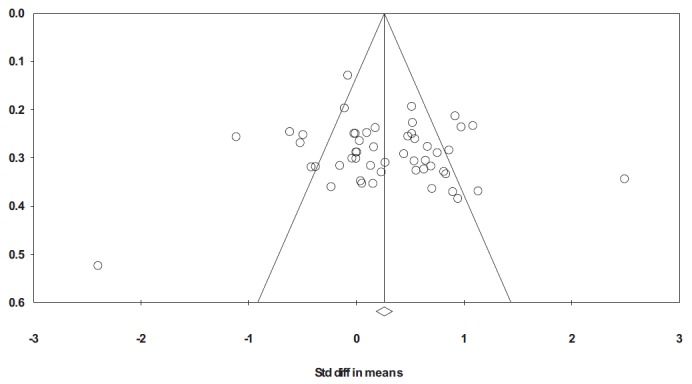
Stereotype threat effects arise when an individual feels at risk of confirming a negative stereotype about their group and consequently underperforms on stereotype relevant tasks (Steele, 2010). Among older people, underperformance across cognitive and physical tasks is hypothesized to result from age-based stereotype threat (ABST) because of negative age-stereotypes regarding older adults' competence. The present review and meta-analyses examine 22 published and 10 unpublished articles, including 82 effect sizes (N = 3882) investigating ABST on older people's (Mage = 69.5) performance. The analysis revealed a significant small-to-medium effect of ABST (d = .28) and important moderators of the effect size. Specifically, older adults are more vulnerable to ABST when (a) stereotype-based rather than fact-based manipulations are used (d = .52); (b) when performance is tested using cognitive measures (d = .36); and (c) occurs reliably when the dependent variable is measured proximally to the manipulation. The review raises important theoretical and methodological issues, and areas for future research.
Overview
The claims and statistics of this paper haven’t been checked yet.
Free: it reads the open-access text and checks the first 5 claims that cite a source we can check. Create a free account to check every claim.
Integrity signals
Registry
Cites
Statistics
Figures
Verification
Claims the paper makes
The claims and statistics of this paper haven’t been checked yet.
Free: it reads the open-access text and checks the first 5 claims that cite a source we can check. Create a free account to check every claim.
Claims other papers make about this one
Each is checked against this paper’s own text: does it say what the citing paper says it does?
The source backs part of the claim, not all of it — or backs it for a different population, condition or comparison.
In the citing paper
“five meta-analyses that showed negative age beliefs can adversely affect the health of older persons [11–15]”
From Global reach of ageism on older persons' health: a systematic review (2020) · cites this paper as [14]
Experimental — accuracy not yet measuredThe source backs part of the claim, not all of it — or backs it for a different population, condition or comparison.
In the citing paper
“previous systematic reviews have not examined how both levels simultaneously influence health”
From Global reach of ageism on older persons' health: a systematic review (2020) · cites this paper as [14]
Experimental — accuracy not yet measured
Self-check
Percentages, sums and reported differences re-computed from the paper’s own numbers.
The self-check needs the paper’s full text.
Citations
Cites
Statistical Power Analysis for the Behavioral Sciences
Muller, K. (1989) · Technometrics · doi:10.1080/00401706.1989.10488618 · Cited by 99,167
Statistical power analysis for the behavioral sciences
(1990) · Computers, Environment and Urban Systems · doi:10.1016/0198-9715(90)90050-4 · Cited by 65,269
A Coefficient of Agreement for Nominal Scales
Cohen, J. (1960) · Educational and Psychological Measurement · doi:10.1177/001316446002000104 · Cited by 42,398 · cited 1×
“All variables coded showed high interrater agreement (Cohen’s kappa or (cid:5) ; Cohen, 1960; Mean (cid:5) (cid:2) .95).”
Statistical Power Analysis for the Behavioral Sciences (2nd ed.).
Lachenbruch, P. A., & Cohen, J. (1989) · Journal of the American Statistical Association · doi:10.2307/2290095 · Cited by 37,395
Statistical Methods for Meta-Analysis
Wasserman, S., Hedges, L. V., & Olkin, I. (1988) · Journal of Educational Statistics · doi:10.2307/1164953 · Cited by 10,326
(2000) · Cited by 9,198
The file drawer problem and tolerance for null results.
Rosenthal, R. (1979) · Psychological Bulletin · doi:10.1037/0033-2909.86.3.638 · Cited by 9,068 · cited 1×
“As identified by Rosenthal (1979), unattained unpublished studies may exist that represent a bias against the publication of nonsignificant results.”
Stereotype threat and the intellectual test performance of African Americans.
Steele, C. M., & Aronson, J. (1995) · Journal of Personality and Social Psychology · doi:10.1037/0022-3514.69.5.797 · Cited by 9,020 · cited 6×
“…as blatant) led participants to behave contrary to expectations defined by the stereotype, in line with “stereotype reac-tance” theory (Brehm, 1966); whereas stereotype-based cues (defined as subtle) led to behavioral assimilation, as predicted by stereotype threat theory (Steele & Aronson, 1995).”
Influential(1999) · Cited by 6,104
Pettigrew, T. F. (1998) · Annual Review of Psychology · doi:10.1146/annurev.psych.49.1.65 · Cited by 6,001 · cited 1×
“This appears to work through familiar mechanisms of intergroup contact (Pettigrew, 1998), which can counteract stereotypes and mean that intergroup comparisons do not give rise to anxiety.”
Research works printed but not linked: 6
- Bensadon B. A. (2010). Memory self-efficacy and memory effects in aging (Unpublished doctoral dissertation). University of Florida, Gainesville, Florida.
- * Lambert A. E. (2011). On attentional control and the elderly driving stereotype (Unpublished doctoral thesis). University of Utah, Salt Lake City, Utah.
- * Lamont R. A. (2011). Stereotype threat and physical performance among the elderly: Exploration of mechanisms and after-effects. Unpublished master’s dissertation.
- Moldoff M. A. (2010). The joke’s on you: The effects of disparaging political humor on young citizens’ attitudes and behaviours (Unpublished doctoral thesis). University of North Carolina, Chapel Hill.
- Nelson T. D. (2002). Ageism: Stereotyping and prejudice against older persons. Cambridge, MA: MIT Press.
- Tajfel H., & Turner J. C. (1979). An integrative theory of social conflict In Austin W. G. & Worchel S. (Eds.), The social psychology of intergroup relations (pp. 33– 47). Monterey, CA: Brooks/Cole.
Cited by
Spencer, S. J., Logel, C., & Davies, P. G. (2016) · Annual Review of Psychology · doi:10.1146/annurev-psych-073115-103235 · Cited by 920
“These researchers also discovered that age-based stereotype-threat effects were larger when the stereotype-threat manipulations were based on stereotypes rather than based on actual facts (Lamont et al. 2015).”
Global reach of ageism on older persons' health: a systematic review
Chang, E.-S., Kannoth, S., Levy, S., Wang, S.-Y., Lee, J. E., & Levy, B. R. (2020) · PLOS ONE · doi:10.1371/journal.pone.0220857 · Cited by 912
“These cognitive-impairment studies, conducted in China, Germany, Ireland, and the United States [85–89], complement the numerous experimental studies that found ageism predicted the cognitive performance of older persons [90, 91], a conclusion supported by two meta-analyses [12,14].”
Interventions to Reduce Ageism Against Older Adults: A Systematic Review and Meta-Analysis
Burnes, D., Sheppard, C., Henderson, C. R., Wassel, M., Cope, R., Barber, C., & Pillemer, K. (2019) · American Journal of Public Health · doi:10.2105/ajph.2019.305123 · Cited by 723
“Furthermore, compelling findings have emerged demonstrating that negative attitudes toward aging pose a significant risk to health andwell-being in the later years.(3,4) Adoption of widespread negative attitudes toward aging contributes to mortality risk, poor functional health, and slower recovery from illness.”
BackgroundContemporary Perspectives on Ageism
(2018) · International Perspectives on Aging · doi:10.1007/978-3-319-73820-8 · Cited by 593
Ageism Amplifies Cost and Prevalence of Health Conditions
Levy, B. R., Slade, M. D., Chang, E.-S., Kannoth, S., & Wang, S.-Y. (2020) · The Gerontologist · doi:10.1093/geront/gny131 · Cited by 412
Determinants of Ageism against Older Adults: A Systematic Review
Marques, S., Mariano, J., Mendonça, J., De Tavernier, W., Hess, M., Naegele, L., Peixeiro, F., & Martins, D. (2020) · International Journal of Environmental Research and Public Health · doi:10.3390/ijerph17072560 · Cited by 313
Wurm, S., Diehl, M., Kornadt, A. E., Westerhof, G. J., & Wahl, H.-W. (2017) · Developmental Review · doi:10.1016/j.dr.2017.08.002 · Cited by 304
Swift, H. J., Abrams, D., Lamont, R. A., & Drury, L. (2017) · Social Issues and Policy Review · doi:10.1111/sipr.12031 · Cited by 289
“Control baseline conditions do not mention the age/stereotype relevance of the task, whereas nullification baseline conditions attempt to challenge or counter the relevant negative age stereotype (see Lamont et al., 2015 for a full review).”
BackgroundMethodInfluentialSelf-citationAgeism and Psychological Well-Being Among Older Adults: A Systematic Review
Kang, H., & Kim, H. (2022) · Gerontology and Geriatric Medicine · doi:10.1177/23337214221087023 · Cited by 305
“Several systematic reviews have examined ageism and its effects on older adults: these include assessments of how stereotypes of aging affect memory and cognitive performance (Lamont et al., 2015), ageism’s broad effects, and theories that explain ageism (North & Fiske, 2012).”
BackgroundProgress on Understanding Ageism
Levy, S. R., & Macdonald, J. L. (2016) · Journal of Social Issues · doi:10.1111/josi.12153 · Cited by 264
“…stereotypes play on care providers as well as directly on older persons as ageism can influence people’s cognitive, mental, and physical health (e.g., Abrams et al., 2006; Hausdorff et al., 1999; Hess et al., 2003; Lamont et al., 2015; Levy, 2000; Levy, 2009; Levy et al., 2006; Swift et al., 2013).”
BackgroundA systematic review of existing ageism scales
Ayalon, L., Dolberg, P., Mikulionienė, S., Perek-Białas, J., Rapolienė, G., Stypinska, J., Willińska, M., & de la Fuente-Núñez, V. (2019) · Ageing Research Reviews · doi:10.1016/j.arr.2019.100919 · Cited by 226
“Indeed, ageist beliefs and attitudes have been shown to impair older people’s cognitive and functional performance (Lamont et al., 2015), result in poorer mental health (Wurm and Benyamini, 2014), increased morbidity (Allen, 2015) and poorer recovery from disability (Levy et al.”
COVID-19 and ageism: How positive and negative responses impact older adults and society.
Monahan, C., Macdonald, J., Lytle, A., Apriceno, M., & Levy, S. R. (2020) · American Psychologist · doi:10.1037/amp0000699 · Cited by 256
Stereotypes of Aging: Their Effects on the Health of Older Adults
Dionigi, R. A. (2015) · Journal of Geriatrics · doi:10.1155/2015/954027 · Cited by 202
Macdonald, J. L., & Levy, S. R. (2016) · Journal of Social Issues · doi:10.1111/josi.12161 · Cited by 166
Experiences of Everyday Ageism and the Health of Older US Adults
Allen, J. O., Solway, E., Kirch, M., Singer, D., Kullgren, J. T., Moïse, V., & Malani, P. N. (2022) · JAMA Network Open · doi:10.1001/jamanetworkopen.2022.17240 · Cited by 191
Ageism, Healthy Life Expectancy and Population Ageing: How Are They Related?
Officer, A., Thiyagarajan, J. A., Schneiders, M. L., Nash, P., & de la Fuente-Núñez, V. (2020) · International Journal of Environmental Research and Public Health · doi:10.3390/ijerph17093159 · Cited by 182
“For example, a meta-analysis found that direct exposure to negative ageing stereotypes was significantly associated with poorer performance on a range of physical and cognitive tasks in older people [9].”
BackgroundPerceived age discrimination across age in Europe: From an ageing society to a society for all ages.
Bratt, C., Abrams, D., Swift, H. J., Vauclair, C.-M., & Marques, S. (2018) · Developmental Psychology · doi:10.1037/dev0000398 · Cited by 161
Self-citationToo old for technology? Stereotype threat and technology use by older adults
Mariano, J., Marques, S., Ramos, M. R., Gerardo, F., Cunha, C. L. D., Girenko, A., Alexandersson, J., Stree, B., Lamanna, M., Lorenzatto, M., et al. (2022) · Behaviour & Information Technology · doi:10.1080/0144929x.2021.1882577 · Cited by 160
“Stereotype threat has been found to disrupt older adults ’ performance across a wide range of cognitive and physical tasks (for a review, see Lamont, Swift, and Abrams 2015).”
BackgroundOld and Unemployable? How Age‐Based Stereotypes Affect Willingness to Hire Job Candidates
Abrams, D., Swift, H. J., & Drury, L. (2016) · Journal of Social Issues · doi:10.1111/josi.12158 · Cited by 189
“This not only poses a stereotype threat that could well harm their actual capacity to perform well at work (Lamont et al., 2015), but has potential to decrease job satisfaction and job commitment (Macdonald & Levy, 2016).”
BackgroundSelf-citation“But at the age of 85? Forget it!”: Internalized ageism, a barrier to technology use
Köttl, H., Gallistl, V., Rohner, R., & Ayalon, L. (2021) · Journal of Aging Studies · doi:10.1016/j.jaging.2021.100971 · Cited by 170
“Embodied age stereotypes may then act as self-fulfilling prophecies, and prompt older adults to behave in ways that confirm the stereotype and potentially affect mental and physical functioning negatively or lead to withdrawal from certain activities (Lamont, Swift, & Abrams, 2015).”
BackgroundEngage Me: The Mature-Age Worker and Stereotype Threat
Kulik, C. T., Perera, S., & Cregan, C. (2016) · Academy of Management Journal · doi:10.5465/amj.2015.0564 · Cited by 152
Promoting healthy aging by confronting ageism.
Nelson, T. D. (2016) · American Psychologist · doi:10.1037/a0040221 · Cited by 171
Bullock, J. L., Lockspeiser, T., del Pino-Jones, A., Richards, R., Teherani, A., & Hauer, K. E. (2020) · Academic Medicine · doi:10.1097/acm.0000000000003628 · Cited by 145
Associations of Ageism and Health: A Systematic Review of Quantitative Observational Studies
Hu, R. X., Luo, M., Zhang, A., & Li, L. (2020) · Research on Aging · doi:10.1177/0164027520980130 · Cited by 149
“…studies find that negative age stereotypes adversely affect older people’s physical, physiological, and cognitive performance (Horton et al., 2008; Lamont et al., 2015; Meisner, 2012), and Lamont et al. (2015) suggest that the effects of age stereotypes are stronger on cognitive performance than…”
BackgroundA Phase Model of Intergenerational Learning in Organizations
Gerpott, F. H., Lehmann‐Willenbrock, N., & Voelpel, S. C. (2016) · Academy of Management Learning and Education · doi:10.5465/amle.2015.0185 · Cited by 163
Gentile, A., Boca, S., & Giammusso, I. (2018) · Psychology of sport and exercise · doi:10.1016/j.psychsport.2018.07.013 · Cited by 164
Barber, S. J. (2017) · Perspectives on Psychological Science · doi:10.1177/1745691616656345 · Cited by 151
“Memory and cognition are the most commonly studied outcomes in age-based stereotype-threat research studies (see Lamont et al., 2015).”
InfluentialJob Crafting: Older Workers’ Mechanism for Maintaining Person-Job Fit
Wong, C. M., & Tetrick, L. E. (2017) · Frontiers in Psychology · doi:10.3389/fpsyg.2017.01548 · Cited by 146
“Since ageism is one of the most prevalent discrimination at workplaces, older employees are constantly faced with negative age stereotyping cues (Lamont et al., 2015).”
BackgroundPositive age beliefs protect against dementia even among elders with high-risk gene
Levy, B. R., Slade, M. D., Pietrzak, R. H., & Ferrucci, L. (2018) · PLoS ONE · doi:10.1371/journal.pone.0191004 · Cited by 129
Age-based stereotype threat and work outcomes: Stress appraisals and rumination as mediators.
von Hippel, C., Kalokerinos, E. K., Haanterä, K., & Zacher, H. (2018) · Psychology and Aging · doi:10.1037/pag0000308 · Cited by 125
Aging and Decision-Making: A Conceptual Framework for Future Research - A Mini-Review
Löckenhoff, C. E. (2017) · Gerontology · doi:10.1159/000485247 · Cited by 128
Levy, S. R., Lytle, A. E., & Macdonald, J. L. (2022) · Journal of Social Issues · doi:10.1111/josi.12568 · Cited by 121
Rethinking Explicit Expectations: Connecting Placebos, Social Cognition, and Contextual Perception
Schwarz, K. A., Pfister, R., & Büchel, C. (2016) · Trends in Cognitive Sciences · doi:10.1016/j.tics.2016.04.001 · Cited by 124
Ageism: The Relationship between Age Stereotypes and Age Discrimination
Voß, P., Bodner, E., & Rothermund, K. (2018) · International perspectives on aging · doi:10.1007/978-3-319-73820-8_2 · Cited by 131
Gender, Brokerage, and Performance: A Construal Approach
Brands, R. A., & Mehra, A. (2018) · Academy of Management Journal · doi:10.5465/amj.2016.0860 · Cited by 116
Rababa, M., Hammouri, A. M., Hweidi, I. M., & Ellis, J. L. (2020) · Nursing and Health Sciences · doi:10.1111/nhs.12701 · Cited by 109
Instapals: Reducing ageism by facilitating intergenerational contact and providing aging education
Lytle, A. E., Nowacek, N., & Levy, S. R. (2020) · Gerontology & Geriatrics Education · doi:10.1080/02701960.2020.1737047 · Cited by 108
Stereotype Threat Effects on Older Adults’ Episodic and Working Memory: A Meta-Analysis
Armstrong, B. A., Gallant, S. N., Li, L., Patel, K., & Wong, B. I. (2017) · The Gerontologist · doi:10.1093/geront/gnx056 · Cited by 110
“This finding aligns with Lamont et al.’s (2015) hypothesis that ambiguity in subtle ST induction may increase distracting thoughts during the experiment, which consumes cognitive resources from the task at hand and may impair performance on tasks that require working memory abilities.”
BackgroundResultInfluentialFlore, P. C., Mulder, J., & Wicherts, J. M. (2018) · Comprehensive Results in Social Psychology · doi:10.1080/23743603.2018.1559647 · Cited by 111
“…2003; Spencer et al., 1999) and driving tests (Yeung & von Hippel, 2008), elderly were found to underperform on memory tests and cognitive tests (Lamont, Swift, & Abrams, 2015) and students from lower socio-economic backgrounds were found to underperform on intelligence tests (Désert, Préaux, &…”
BackgroundAge-stereotype Paradox: Opportunity for Social Change
Levy, B. R. (2017) · The Gerontologist · doi:10.1093/geront/gnx059 · Cited by 102
Haft, S. L., de Magalhães, C. G., & Hoeft, F. (2022) · Journal of Learning Disabilities · doi:10.1177/00222194221087383 · Cited by 114
“, 2013), age-based stereotype threat (d = 0.32; Lamont et al., 2015) and stereotype threat based on immigrant background (d = 0.”
BackgroundInfluentialFactors for successful e-learning: does age matter?
Fleming, J., Becker, K. L., & Newton, C. J. (2016) · Education + Training · doi:10.1108/et-07-2015-0057 · Cited by 117
Shewach, O. R., Sackett, P. R., & Quint, S. (2019) · Journal of Applied Psychology · doi:10.1037/apl0000420 · Cited by 97
“However, we excluded elderly samples examining age-based stereotypes, as Lamont, Swift, and Abrams (2015) address age-based stereotype threat in a recent meta-analysis.”
BackgroundBullock, J. L., Lai, C. J., Lockspeiser, T. M., O’Sullivan, P., Aronowitz, P. B., Dellmore, D., Fung, C.-C., Knight, C. L., & Hauer, K. E. (2019) · Academic Medicine · doi:10.1097/acm.0000000000002905 · Cited by 99
Implementing reverse mentoring to address social isolation among older adults
Breck, B. M., Dennis, C. B., & Leedahl, S. N. (2018) · Journal of Gerontological Social Work · doi:10.1080/01634372.2018.1448030 · Cited by 100
Cognitive Aging in a Social and Affective Context: Advances Over the Past 50 Years
Kensinger, E. A., & Gutchess, A. H. (2016) · The Journals of Gerontology Series B · doi:10.1093/geronb/gbw056 · Cited by 87
Ageism and Technology: The Role of Internalized Stereotypes
Ivan, L., & Cutler, S. J. (2021) · University of Toronto Quarterly · doi:10.3138/utq.90.2.05 · Cited by 94
Autistic people’s perspectives on stereotypes: An interpretative phenomenological analysis
Treweek, C., Wood, C., Martin, J., & Freeth, M. (2019) · Autism · doi:10.1177/1362361318778286 · Cited by 60
The Tourist Stereotype Model: Positive and Negative Dimensions
Tung, V. W. S., King, B. E. M., & Tse, S. W. T. (2019) · Journal of Travel Research · doi:10.1177/0047287518821739 · Cited by 86
“In age stereotypes, younger people often judge more senior individuals as being less physically and mentally competent (Lamont, Swift, and Abrams 2015).”
BackgroundSex/gender differences in cognitive abilities
Kheloui, S., Jacmin-Park, S., Larocque, O., Kerr, P., Rossi, M., Cartier, L., & Juster, R.-P. (2023) · Neuroscience & Biobehavioral Reviews · doi:10.1016/j.neubiorev.2023.105333 · Cited by 78
Supporting the old but neglecting the young? The two faces of ageism.
Bratt, C., Abrams, D., & Swift, H. J. (2020) · Developmental Psychology · doi:10.1037/dev0000903 · Cited by 83
“In turn, this could have implications for stereotype embodiment and vulnerability to ste-reotype threat effects (B. Levy, 2009; Lamont, Swift, & Abrams, 2015).”
Self-citationMariano, J., Marques, S., Ramos, M. R., Gerardo, F., & de Vries, H. (2020) · Frontiers in Psychology · doi:10.3389/fpsyg.2020.568972 · Cited by 78
“To the best of our knowledge, this is the first longitudinal study to investigate the long-term consequences of stereotype threat among older adults (for reviews, see Lamont et al., 2015; Barber, 2020).”
BackgroundInfluentialVirtual reality for psychological assessment in clinical practice.
Parsons, T. D., & Phillips, A. S. (2016) · Practice Innovations · doi:10.1037/pri0000028 · Cited by 76
Rossi, S., Xenidou‐Dervou, I., Şimşek, E., Artemenko, C., Daróczy, G., Nuerk, H., & Cipora, K. (2022) · Annals of the New York Academy of Sciences · doi:10.1111/nyas.14779 · Cited by 79
Self-perceptions and awareness of aging: past, present, and future
Diehl, M. K., Brothers, A. F., & Wahl, H. (2021) · Elsevier eBooks · doi:10.1016/b978-0-12-816094-7.00001-5 · Cited by 86
Relations between views on ageing and perceived age discrimination: a domain-specific perspective
Voß, P., Wolff, J. K., & Rothermund, K. (2016) · European Journal of Ageing · doi:10.1007/s10433-016-0381-4 · Cited by 74
“These views on ageing might prompt older adults to behave in a way that confirms the stereotype (Horton et al. 2008; Lamont et al. 2015; Levy 2009) or a previously encountered ageist attitude (Hehman and Bugental 2015).”
BackgroundInfluentialLeedahl, S. N., Brasher, M. S., LoBuono, D. L., Wood, B. M., & Estus, E. L. (2020) · Sustainability · doi:10.3390/su12176870 · Cited by 79
“As a result of ageism in society, older adults face pervasive negative stereotypes, such as the common view that physical and mental competence decline with age [10,11].”
The applied implications of age-based stereotype threat for older adults.
Barber, S. J. (2020) · Journal of Applied Research in Memory and Cognition · doi:10.1016/j.jarmac.2020.05.002 · Cited by 76
Ageing simulation in health and social care education: A mixed methods systematic review
Eost‐Telling, C., Kingston, P., Taylor, L., & Emmerson, L. (2020) · Journal of Advanced Nursing · doi:10.1111/jan.14577 · Cited by 69
The Everyday Ageism Scale: Development and Evaluation
Allen, J. O., Solway, E. S., Kirch, M., Singer, D., Kullgren, J. T., & Malani, P. (2021) · Journal of Aging and Health · doi:10.1177/08982643211036131 · Cited by 74
“Existing research related to instances of everyday ageism and their relationships with health is largely experimental in nature and conducted in controlled laboratory settings (Lamont et al., 2015; Meisner, 2012).”
BackgroundGenerational differences at work? A meta‐analysis and qualitative investigation
Ravid, D. M., Costanza, D. P., & Romero, M. R. (2024) · Journal of Organizational Behavior · doi:10.1002/job.2827 · Cited by 73
Action Regulation Across the Adult Lifespan (ARAL): A Metatheory of Work and Aging
Zacher, H., Hacker, W., & Fresé, M. (2016) · Work Aging and Retirement · doi:10.1093/workar/waw015 · Cited by 70
The Cambridge Handbook of Psychology and Human Rights
Dudgeon, P., Carey, T. A., Hammond, S., Hirvonen, T., Kyrios, M., Roufeil, L., & Smith, P. (2020) · Cambridge University Press eBooks · doi:10.1017/9781108348607 · Cited by 73
Vauclair, C., Lima, M. L., Abrams, D., Swift, H. J., & Bratt, C. (2016) · Psychology and Aging · doi:10.1037/pag0000125 · Cited by 75
“Stereotype threat can also result in stereotype-confirming behavior such as substantial decrements in cognitive and physical performance (Lamont et al., 2015).”
BackgroundSelf-citationOn studying ageism in long-term care: a systematic review of the literature
José, J. D. S., & Amado, C. A. F. (2016) · International Psychogeriatrics · doi:10.1017/s1041610216001915 · Cited by 74
“that it produces a deterioration of sense of selfworth (McHugh, 2003), as well as a decline in memory and cognitive performance of the “victims” (Lamont et al., 2015).”
BackgroundSheffler, P., Rodríguez, T. M., Cheung, C. S.-S., & Wu, R. (2021) · Wiley Interdisciplinary Reviews Cognitive Science · doi:10.1002/wcs.1585 · Cited by 73
Technology makes older adults feel older
Caspi, A., Daniel, M., & Kavé, G. (2018) · Aging & Mental Health · doi:10.1080/13607863.2018.1479834 · Cited by 75
Mazerolle, M., Régner, I., Barber, S. J., Paccalin, M., Miazola, A.-C., Huguet, P., & Rigalleau, F. (2016) · The Journals of Gerontology Series B · doi:10.1093/geronb/gbw083 · Cited by 67
Self-Perceptions of Aging and Everyday ICT Engagement: A Test of Reciprocal Associations
Köttl, H., Cohn‐Schwartz, E., & Ayalon, L. (2020) · The Journals of Gerontology Series B · doi:10.1093/geronb/gbaa168 · Cited by 66
A Lifespan Perspective on Creativity and Innovation at Work
Rietzschel, E. F., Zacher, H., & Stroebe, W. (2016) · Work Aging and Retirement · doi:10.1093/workar/waw005 · Cited by 70
Origins of Ageism at the Individual Level
Lev, S., Wurm, S., & Ayalon, L. (2018) · International perspectives on aging · doi:10.1007/978-3-319-73820-8_4 · Cited by 89
COVID-19 and Everyday ICT Use: The Discursive Construction of Old Age in German Media
Köttl, H., Tatzer, V. C., & Ayalon, L. (2021) · The Gerontologist · doi:10.1093/geront/gnab126 · Cited by 57
The Self-Stigma of Hearing Loss in Adults and Older Adults: A Systematic Review
da Silva, J. C., de Araújo, C. M., Lüders, D., Santos, R. S., de Lacerda, A. B. M., José, M. R., & Guarinello, A. C. (2023) · Ear and Hearing · doi:10.1097/aud.0000000000001398 · Cited by 62
“In addition, there is clear evidence that older adults’ memory and cognitive performance are negatively affected by the threat of the age stereo-type and that these effects are present in both sexes and all age groups (Lamont et al. 2015).”
BackgroundManzi, C., Paderi, F., Benet‐Martínez, V., & Coen, S. (2018) · European Journal of Social Psychology · doi:10.1002/ejsp.2533 · Cited by 62
Dimensions of Work-Related Age Stereotypes and In-Group Favoritism
Kleissner, V., & Jahn, G. (2019) · Research on Aging · doi:10.1177/0164027519896189 · Cited by 63
“If older people are confronted with negative age stereotypes, they experience lower quality of life (Palacios et al., 2009) and perform worse (Lamont et al., 2015).”
BackgroundTechnologically-enhanced psychological interventions for older adults: a scoping review
Riboni, F. V., Comazzi, B., Bercovitz, K. E., Castelnuovo, G., Molinari, E., & Pagnini, F. (2020) · BMC Geriatrics · doi:10.1186/s12877-020-01594-9 · Cited by 80
Siebert, J., Wahl, H., & Schröder, J. (2016) · The Journals of Gerontology Series B · doi:10.1093/geronb/gbw050 · Cited by 62
“Our results substantially add to the emerging evidence (Lamont et al., 2015; Stephan et al., 2014) that the longterm effect of ATOA on cognitive functioning is not limited to memory function.”
ResultToward interventions to reduce internalized ageism
Steward, A. T. (2021) · Journal of Human Behavior in the Social Environment · doi:10.1080/10911359.2021.1898516 · Cited by 59
“Associations between ageism and cognitive impairment have been demonstrated in two metaanalyses (Chang et al., 2020; Horton et al., 2008; Lamont et al., 2015), experimental research (Chang et al., 2020; Lee & Lee, 2018; B. R. Levy, 1996), and in studies conducted in the United States, Germany,…”
MethodConfucian Values as a Buffer Against Age-Based Stereotype Threat for Chinese Older Adults
Tan, S. C., & Barber, S. J. (2020) · The Journals of Gerontology: Series B · doi:10.1093/geronb/gby049 · Cited by 56
“26 reported in a meta-analysis for stereotype-based manipulations of threat in older adults (Lamont et al., 2015), and specified an alpha of .”
BackgroundRahn, G., Martiny, S. E., & Nikitin, J. (2020) · Work Aging and Retirement · doi:10.1093/workar/waaa005 · Cited by 57
From Successful Ageing to Ageing Well: A Narrative Review
Waddell, C., Van Doorn, G., Power, G., & Statham, D. (2024) · The Gerontologist · doi:10.1093/geront/gnae109 · Cited by 55
“This, in turn, can affect longevity (i.e., those with greater negative self-perceptions of ageing live shorter lives; Levy et al., 2002) and reduce cognitive performance (Lamont et al., 2015).”
Chiviacowsky, S., Cardozo, P. L., & Chalabaëv, A. (2018) · Psychology of sport and exercise · doi:10.1016/j.psychsport.2018.02.012 · Cited by 57
Gutiérrez, B. A., Scheibe, S., Stroebe, K. E., Postmes, T., & Yperen, N. W. V. (2018) · Psychology and Aging · doi:10.1037/pag0000263 · Cited by 58
“Yet, evidence—which includes experimental studies—is compelling regarding the causal claims of age attributions affecting well-being (e.g., Lamont et al., 2015; Stewart et al., 2012).”
BackgroundImplicit and Explicit Measurement of Work-Related Age Attitudes and Age Stereotypes
Kleissner, V., & Jahn, G. (2020) · Frontiers in Psychology · doi:10.3389/fpsyg.2020.579155 · Cited by 53
A Novel Theoretical Life Course Framework for Triggering Cognitive Development across the Lifespan
Wu, R., Rebok, G. W., & Lin, F. V. (2016) · Human Development · doi:10.1159/000458720 · Cited by 51
Implications of metastereotypes for attitudes toward intergenerational contact
Fowler, C., & Gasiorek, J. (2018) · Group Processes & Intergroup Relations · doi:10.1177/1368430217744032 · Cited by 52
Barber, S. J., Hamel, K. A., Ketcham, C., Lui, K., & Taylor-Ketcham, N. R. (2020) · Psychology and Aging · doi:10.1037/pag0000440 · Cited by 56
“In summary, negative age-based evaluations typically impair older adults’ performance by invoking stereotype threat (Lamont et al., 2015).”
BackgroundMethodInfluentialKnight, R. L., Chalabaëv, A., McNarry, M. A., Mackintosh, K. A., & Hudson, J. (2021) · British Journal of Health Psychology · doi:10.1111/bjhp.12548 · Cited by 53
“In a meta-analysis of 22 published and 10 unpublished studies, Lamont, Swift, and Abrams (2015) identified that age-based stereotype threat significantly affected performance across health domains in older adults (mean d = 0.32) regardless of gender, age or underlying health status.”
BackgroundInfluentialPerceived discrimination: Associations with physical and cognitive function in older adults.
Shankar, A., & Hinds, P. (2017) · Health Psychology · doi:10.1037/hea0000522 · Cited by 48
Burmeister, A., Gerpott, F. H., Hirschi, A., Scheibe, S., Pak, K., & Kooij, D. T. A. M. (2020) · Academy of Management Learning and Education · doi:10.5465/amle.2019.0348 · Cited by 48
Social Support and Attitudes to Aging in Later Life
Lamont, R. A., Nelis, S. M., Quinn, C., & Clare, L. (2016) · The International Journal of Aging and Human Development · doi:10.1177/0091415016668351 · Cited by 48
Self-citationHealthcare Professionals’ Views and Perspectives towards Aging
Palsgaard, P. K., Vieytes, C. A. M., Peterson, N., Francis, S. L., Monroe-Lord, L., Sahyoun, N. R., Marra, M. V., Weidauer, L. A., Xu, F., & Arthur, A. E. (2022) · International Journal of Environmental Research and Public Health · doi:10.3390/ijerph192315870 · Cited by 48
Fresson, M., Dardenne, B., Geurten, M., & Meulemans, T. (2017) · The Clinical Neuropsychologist · doi:10.1080/13854046.2017.1307456 · Cited by 53
“Secondly and relatedly, the recent meta-analysis conducted by Lamont et al. (2015) about the impact of ST on older persons’ performance showed a greater effect size for cognitive tasks than for memory tasks, which could also explain the lack of ST effect on memory tasks.”
BackgroundMethodInfluentialAge identity, stereotypes and older consumers’ service experiences
Westberg, K., Reid, M., & Kopanidis, F. Z. (2020) · Journal of Services Marketing · doi:10.1108/jsm-10-2019-0386 · Cited by 47
Fasel, N., Vauclair, C., Lima, M. L., & Abrams, D. (2020) · Ageing and Society · doi:10.1017/s0144686x20000537 · Cited by 49
“Such stereotypes may appear well intended, aiming at helping older people; however, they often result in patronising policies that are detrimental for older people’s empowerment (Lamont et al., 2015).”
BackgroundResultInfluentialSelf-citationSelf‐affirmation reduces the socioeconomic attainment gap in schools in England
Hadden, I. R., Easterbrook, M. J., Nieuwenhuis, M., Fox, K. J., & Dolan, P. (2020) · British Journal of Educational Psychology · doi:10.1111/bjep.12291 · Cited by 43
Associations Between Everyday ICT Usage and (Self-)Ageism: A Systematic Literature Review
Köttl, H., Allen, L., Mannheim, I., & Ayalon, L. (2022) · The Gerontologist · doi:10.1093/geront/gnac075 · Cited by 46
Individual consequences of age stereotypes on older workers: A systematic review
Weber, J., Angerer, P., & Müller, A. (2019) · Zeitschrift für Gerontologie und Geriatrie · doi:10.1007/s00391-019-01506-6 · Cited by 50
Agisem in the European Region: Finding from the European Social Survey
Swift, H. J., Abrams, D., Marques, S., Vauclair, C., Bratt, C., & Lima, M. L. (2018) · International perspectives on aging · doi:10.1007/978-3-319-73820-8_27 · Cited by 41
Self-citationThe Subjective Experience of Ageism: The Perceived Ageism Questionnaire (PAQ)
Brinkhof, L. P., de Wit, S., Murre, J. M. J., Krugers, H. J., & Ridderinkhof, K. R. (2022) · International Journal of Environmental Research and Public Health · doi:10.3390/ijerph19148792 · Cited by 44
“…or stereotype threat; [19,20]), individuals show reduced physical and functional mental health [5,21–23], are less likely to engage in preventive health behaviors (e.g., eating a balanced diet, exercising, medication adherence; [24]) and under-perform on cognitive or memory tests [25–27].”
Background
Metadata
- Authors
- Lamont, R. A., Swift, H. J., & Abrams, D.
- Affiliations
- University of Kent (GB)
- Corresponding author
- Abrams, Dominic
- Venue
- Psychology and Aging
- Published
- 2015-03
- Volume
- 30
- Issue
- 1
- Pages
- 180-193
- ISSN
- 0882-7974 (ISSN-L)
- 1939-1498
- PMC
- PMC4360754
- OpenAlex
- W2135485953
- Cited by
- 583
- References
- 83
- Citations by year
- 2026: 25 · 2025: 46 · 2024: 48 · 2023: 40 · 2022: 58 · 2021: 74 · 2020: 120 · 2019: 49 · 2018: 51 · 2017: 32 · 2016: 29 · 2015: 11
- FWCI
- 11.55
- Type
- journal article
- Language
- en
- Update notices
- correction (2018-08-09)
- Open access
- hybrid
- doi.org
- Licence
- Locations
- Psychology and Aging (publishedVersion, other-oa)
- PubMed Central (publishedVersion, cc-by)
- PubMed (publishedVersion)
- Kent Academic Repository (University of Kent) (acceptedVersion)
- Funders
- UK Economic and Social Research Council (ES/I012141/1)
- Topics
- Social Sciences › Psychology › Developmental and Educational Psychology › Aging and Gerontology Research
- Social Sciences › Sociology and Political Science › Social and Intergroup Psychology
- Social Sciences › Demography › Retirement, Disability, and Employment
- Keywords
- age stereotypes, older adults, underperformance, stereotype threat, cognitive performance, physical performance, moderators of effect size, aging
- MeSH terms
- Aged, Aged, 80 and over, Aging, Cognition, Female, Humans, Male, Stereotyping
About these checks
Registry, retraction, Cites and statistics results are computed, not judged, with one exception: a printed reference that no index lists is read once by a model before it counts as a citation error. Claims are extracted by a model and kept only when their quote appears verbatim in the text; each cited source is then checked, with a model’s help, for whether it says what the claim relies on. Those verdicts can be wrong — read the claim’s quote and the cited source before relying on one.
Statistics and arithmetic are recomputed, not judged.
Confidence bands are shown only for fields calibrated on our annotated test set. None is calibrated yet, so no band is shown.
What counts as a claim ›How we measure confidence ›How we check this ›
Are you an author, or do you see a problem with this page? Request a review
Data sources
Bibliographic data: Semantic Scholar, OpenAlex, Crossref.
Contains information from the Semantic Scholar Academic Graph Datasets, made available under the ODC Attribution License (ODC-BY 1.0).
Semantic Scholar’s data is described in: Kinney, R., et al. (2023). The Semantic Scholar Open Data Platform. arXiv:2301.10140.
