

A review and meta-analysis of age-based stereotype threat: negative stereotypes, not facts, do the damage
Open accessThe DOI matches its Crossref record; 81 of the 83 references it cites were found in a registry or an index.
Abstract
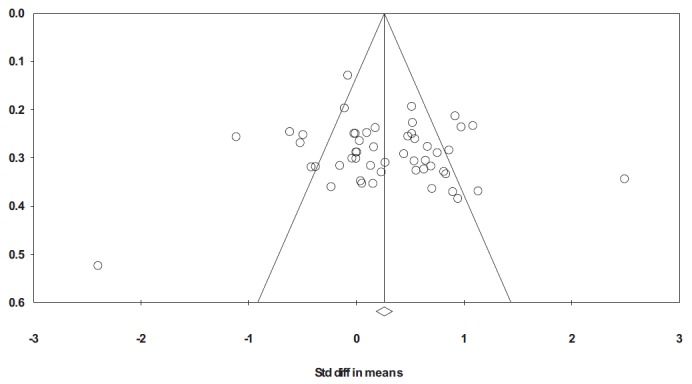
Stereotype threat effects arise when an individual feels at risk of confirming a negative stereotype about their group and consequently underperforms on stereotype relevant tasks (Steele, 2010). Among older people, underperformance across cognitive and physical tasks is hypothesized to result from age-based stereotype threat (ABST) because of negative age-stereotypes regarding older adults' competence. The present review and meta-analyses examine 22 published and 10 unpublished articles, including 82 effect sizes (N = 3882) investigating ABST on older people's (Mage = 69.5) performance. The analysis revealed a significant small-to-medium effect of ABST (d = .28) and important moderators of the effect size. Specifically, older adults are more vulnerable to ABST when (a) stereotype-based rather than fact-based manipulations are used (d = .52); (b) when performance is tested using cognitive measures (d = .36); and (c) occurs reliably when the dependent variable is measured proximally to the manipulation. The review raises important theoretical and methodological issues, and areas for future research.
Overview
The claims and statistics of this paper haven’t been checked yet.
Free: it reads the open-access text and checks the first 5 claims that cite a source we can check. Create a free account to check every claim.
Integrity signals
Registry
Cites
Statistics
Figures
Verification
Claims the paper makes
The claims and statistics of this paper haven’t been checked yet.
Free: it reads the open-access text and checks the first 5 claims that cite a source we can check. Create a free account to check every claim.
Claims other papers make about this one
Each is checked against this paper’s own text: does it say what the citing paper says it does?
The source backs part of the claim, not all of it — or backs it for a different population, condition or comparison.
In the citing paper
“five meta-analyses that showed negative age beliefs can adversely affect the health of older persons [11–15]”
From Global reach of ageism on older persons' health: a systematic review (2020) · cites this paper as [14]
Experimental — accuracy not yet measuredThe source backs part of the claim, not all of it — or backs it for a different population, condition or comparison.
In the citing paper
“previous systematic reviews have not examined how both levels simultaneously influence health”
From Global reach of ageism on older persons' health: a systematic review (2020) · cites this paper as [14]
Experimental — accuracy not yet measured
Self-check
Percentages, sums and reported differences re-computed from the paper’s own numbers.
The self-check needs the paper’s full text.
Citations
Cites
Statistical Power Analysis for the Behavioral Sciences
Muller, K. (1989) · Technometrics · doi:10.1080/00401706.1989.10488618 · Cited by 99,167
Statistical power analysis for the behavioral sciences
(1990) · Computers, Environment and Urban Systems · doi:10.1016/0198-9715(90)90050-4 · Cited by 65,269
A Coefficient of Agreement for Nominal Scales
Cohen, J. (1960) · Educational and Psychological Measurement · doi:10.1177/001316446002000104 · Cited by 42,398 · cited 1×
“All variables coded showed high interrater agreement (Cohen’s kappa or (cid:5) ; Cohen, 1960; Mean (cid:5) (cid:2) .95).”
Statistical Power Analysis for the Behavioral Sciences (2nd ed.).
Lachenbruch, P. A., & Cohen, J. (1989) · Journal of the American Statistical Association · doi:10.2307/2290095 · Cited by 37,395
Statistical Methods for Meta-Analysis
Wasserman, S., Hedges, L. V., & Olkin, I. (1988) · Journal of Educational Statistics · doi:10.2307/1164953 · Cited by 10,326
(2000) · Cited by 9,198
The file drawer problem and tolerance for null results.
Rosenthal, R. (1979) · Psychological Bulletin · doi:10.1037/0033-2909.86.3.638 · Cited by 9,068 · cited 1×
“As identified by Rosenthal (1979), unattained unpublished studies may exist that represent a bias against the publication of nonsignificant results.”
Stereotype threat and the intellectual test performance of African Americans.
Steele, C. M., & Aronson, J. (1995) · Journal of Personality and Social Psychology · doi:10.1037/0022-3514.69.5.797 · Cited by 9,020 · cited 6×
“…as blatant) led participants to behave contrary to expectations defined by the stereotype, in line with “stereotype reac-tance” theory (Brehm, 1966); whereas stereotype-based cues (defined as subtle) led to behavioral assimilation, as predicted by stereotype threat theory (Steele & Aronson, 1995).”
Influential(1999) · Cited by 6,104
Pettigrew, T. F. (1998) · Annual Review of Psychology · doi:10.1146/annurev.psych.49.1.65 · Cited by 6,001 · cited 1×
“This appears to work through familiar mechanisms of intergroup contact (Pettigrew, 1998), which can counteract stereotypes and mean that intergroup comparisons do not give rise to anxiety.”
Research works printed but not linked: 6
- Bensadon B. A. (2010). Memory self-efficacy and memory effects in aging (Unpublished doctoral dissertation). University of Florida, Gainesville, Florida.
- * Lambert A. E. (2011). On attentional control and the elderly driving stereotype (Unpublished doctoral thesis). University of Utah, Salt Lake City, Utah.
- * Lamont R. A. (2011). Stereotype threat and physical performance among the elderly: Exploration of mechanisms and after-effects. Unpublished master’s dissertation.
- Moldoff M. A. (2010). The joke’s on you: The effects of disparaging political humor on young citizens’ attitudes and behaviours (Unpublished doctoral thesis). University of North Carolina, Chapel Hill.
- Nelson T. D. (2002). Ageism: Stereotyping and prejudice against older persons. Cambridge, MA: MIT Press.
- Tajfel H., & Turner J. C. (1979). An integrative theory of social conflict In Austin W. G. & Worchel S. (Eds.), The social psychology of intergroup relations (pp. 33– 47). Monterey, CA: Brooks/Cole.
Cited by
Items 301–400 of 656
Overcoming age differences in memory retrieval by reducing stereotype threat
Mazerolle, M., Rotolo, L., & Maquestiaux, F. (2023) · Memory & Cognition · doi:10.3758/s13421-023-01488-2 · Cited by 7
“Because older adults are often stereotyped as being senile and less cognitively capable (Hummert, 2011), they can experience stereotype threat when undergoing cognitive evaluation and show reduced performance on various physical and cognitive tests (Lamont et al., 2015).”
Men’s Social Connectedness in Later Life: A Qualitative Study with Older Men
Pereira, H., Silva, P., Torre, R. D., dos Santos, M. R., Moutinho, A., Solinho, S., Proença, C., Cabral, J. M., & Santos, A. J. (2024) · Geriatrics · doi:10.3390/geriatrics9020053 · Cited by 10
“One of these challenges is the social stigma associated with ageing, which can lead to the exclusion and marginalization of older people [54–57].”
BackgroundParker, G. J., Ownsworth, T., Haslam, C., & Shum, D. (2020) · The Gerontologist · doi:10.1093/geront/gnaa191 · Cited by 9
Desrichard, O., Heiser, N. H., Renaud, O., Zuber, S., Oris, M., & Kliegel, M. (2022) · The Clinical Neuropsychologist · doi:10.1080/13854046.2022.2150689 · Cited by 7
Age-based stereotype threat effects on dynamic balance in healthy older adults
Borel, L., Alescio‐Lautier, B., Léonard, J., & Régner, I. (2024) · Frontiers in Systems Neuroscience · doi:10.3389/fnsys.2024.1309158 · Cited by 8
“In a relevant meta-analysis conducted by Lamont et al. (2015) on age-based stereotype threat, they reported an effect size of d = 0.52 when using stereotype-based instructions, like those employed in our studies.”
BackgroundMethodInfluentialVallet, F., Agrigoroaei, S., Beaudoin, M., Fournet, N., Paignon, A., Roulin, J., & Desrichard, O. (2015) · Cairn.info · Cited by 12
Drury, L., Bobrowicz, A., Cameron, L., & Abrams, D. (2017) · Lecture notes in computer science · doi:10.1007/978-3-319-58530-7_32 · Cited by 12
“Research shows that both explicit and subtle cues about negative age stereotypes are sufficient to have a detrimental effect on older adults’ cognitive and physical performance [25].”
BackgroundSelf-citationDan v življenju starejših odraslih: kaj jih osrečuje?
Kavčič, T., & Avsec, A. (2018) · Psihološka obzorja · doi:10.20419/2018.27.485 · Cited by 8
Studer-Luethi, B., Brasser, M., Lusti, S., & Schaerli, R. (2021) · Archives of Public Health · doi:10.1186/s13690-021-00670-9 · Cited by 8
“Such stereotypes were shown to negatively affect performance of older adults [33] and increase dementia worry [45].”
BackgroundPrejudice and unlawful behaviour: Exploring levers for change
Abrams, D., Swift, H. J., & Mahmood, L. (2016) · Kent Academic Repository (University of Kent) · doi:10.13140/rg.2.1.2676.5047 · Cited by 13
Self-citationEditorial: Age-Based Stereotype Threat Effects on Performance Outcomes
Swift, H. J., Barber, S. J., Lamont, R. A., Weiss, D. J., & Chasteen, A. L. (2021) · Frontiers in Psychology · doi:10.3389/fpsyg.2021.773615 · Cited by 7
Self-citationShifting Minds: A Quantitative Reappraisal of Cognitive Intervention ResearchPreprint
Moreau, D. (2020) · PsyArXiv (OSF Preprints) · doi:10.31234/osf.io/ns7fh · Cited by 7
Experiences of ageism and digital technology use among older adults
Gudynaite, G., Zamalijeva, O., Pakalniškienė, V., & Gegieckaitė, G. (2025) · Frontiers in Psychology · doi:10.3389/fpsyg.2025.1669321 · Cited by 9
“Some scholars argue that as long as individuals do not internalize stereotypes, relationships may not affect their self-perception (Minichiello et al., 2000), while others suggest that people don’t need to agree with the stereotypes for them to influence behavior and performance (Lamont et al., 2015).”
Rababa, M., Hammouri, A. M., & Al-Rawashdeh, S. Y. (2020) · Working with Older People · doi:10.1108/wwop-08-2020-0042 · Cited by 6
Ageism from the perspective of older adults: A phenomenological study
Yıldırım, G., Yurdakul, B., & Kağnıcı, D. Y. (2024) · Educational Gerontology · doi:10.1080/03601277.2024.2384623 · Cited by 6
“Lamont et al. (2015) reported that exposure to negative views on aging affected the mental and physical health of older adults and led both older adults and the society to have a negative view about aging.”
Stereotype Threat: A Situated Theory of Social Cognition
Murphy, M. C., Taylor, V. J., & Steele, C. M. (2024) · Oxford University Press eBooks · doi:10.1093/oxfordhb/9780197763414.013.15 · Cited by 12
Views on Aging Throughout the Adult Lifespan: Age Grading in Five Dimensions
Wurm, S., Gehring, M., Blawert, A., Zok, K., Schröder, H., & Kornadt, A. E. (2025) · GeroPsych · doi:10.1024/1662-9647/a000347 · Cited by 9
Allen, J. O. (2025) · Journal of Aging and Health · doi:10.1177/08982643251378211 · Cited by 6
“Most existing research on routine ageism has been qualitative or experimental in nature (Lamont et al., 2015; Meisner, 2012; Previtali et al., 2022).”
Ayalon, L., Perel-Levin, S., Georgantzi, N., & Lima, C. D. M. (2021) · American Journal of Geriatric Psychiatry · doi:10.1016/j.jagp.2021.06.014 · Cited by 6
Ekwonye, A. U., Brueggemann, A., Gerdes, S., Phi, K. M., Kloepfer, V., Karmacharya, P., Phung, V., & Sidek, S. M. (2022) · Gerontology & Geriatrics Education · doi:10.1080/02701960.2022.2057968 · Cited by 6
“Unfortunately, negative messages can become internalized with negative consequences for both older people (Lamont et al., 2015; Levy & Apriceno, 2019) and younger adults (Levy et al., 2009).”
BackgroundParker, G. J., Haslam, C., Stuart, J., Shum, D., & Ownsworth, T. (2022) · Aging & Mental Health · doi:10.1080/13607863.2022.2116399 · Cited by 6
Appreciative Advising: Six Phases to Mitigate Stereotype Threat Among Student Athletes
English, J. A., & Kruger, A. C. (2016) · Digital Archive @ GSU · Cited by 6
Is there an association between ageist attitudes and frailty?
Salguero, D., Ferri‐Guerra, J., Mohammed, Y. N., Baskaran, D., Aparicio‐Ugarriza, R., Mintzer, M. J., & Ruiz, J. G. (2019) · BMC Geriatrics · doi:10.1186/s12877-019-1357-y · Cited by 6
Human Trafficking: Vulnerabilities, Human Rights Violations, and Psychological Consequences
Sidun, N. M., & Flores, Y. G. (2020) · Cambridge University Press eBooks · doi:10.1017/9781108348607.019 · Cited by 9
Febriani, A., & Sanitioso, R. B. (2021) · Cross-Cultural Research · doi:10.1177/1069397121997074 · Cited by 6
“Previous research has shown that the elderly performed significantly worse than young people on memory tasks when the task instruction mentioned (vs. did not mention) memory ability (Desrichard & Köpetz, 2005; Lamont et al., 2015; Rahhal et al., 2001).”
ResultExploring Gender- and Race-Based Financial Stereotypes in Black and White College Students
Dzokoto, V. A. A., Hagiwara, N., & Belgrave, F. Z. (2023) · Journal of Financial Counseling and Planning · doi:10.1891/jfcp-2021-0020 · Cited by 6
“At the intrapersonal level, research has consistently shown that concern about confirming negative stereotypes impairs behavior across domains such as education, health, workplace, and aging (Aronson et al., 2013; Lamont et al., 2015).”
BackgroundHermann, J. M. (2019) · Springer eBooks · doi:10.1007/978-3-658-27275-3_2 · Cited by 14
Human Rights and Reconciliation: Theoretical and Empirical Connections
Vélez, G., Twose, G. H. J., & López‐López, W. (2020) · Cambridge University Press eBooks · doi:10.1017/9781108348607.037 · Cited by 7
Swift, H. J., Abrams, D., & Lamont, R. A. (2021) · Springer eBooks · doi:10.1007/978-3-030-22009-9_586 · Cited by 9
Self-citationDementia and learning : The use of tablet computers in joint activities
Ingebrand, E. (2023) · Linköping studies in arts and science · doi:10.3384/9789180750714 · Cited by 6
Bouazzaoui, B., Fay, S., Alibran, É., Martinez, L., Pinard, F., Kerhardy, N., Onsekiz, T., & Taconnat, L. (2024) · Frontiers in Psychology · doi:10.3389/fpsyg.2024.1399131 · Cited by 5
Mental health and treatment challenges in older adults
Laidlaw, K., Charlesworth, G. M., & Bhar, S. S. (2025) · Nature Reviews Psychology · doi:10.1038/s44159-025-00500-7 · Cited by 5
“The psychology of ageing is complex and nuanced, and contrary to stereotypical beliefs about ageing 17 , older people at the population level present with greater happiness and wellbeing than younger people 18 .”
Older Adults’ Emotion Recognition Ability Is Unaffected by Stereotype Threat
Atkinson, L., Murray, J. E., & Halberstadt, J. B. (2021) · Frontiers in Psychology · doi:10.3389/fpsyg.2020.605724 · Cited by 5
“Generally, the limited existing research suggests that data obtained using MTurk samples are comparable to data obtained from the general population, including for older adults (e.g., Lemaster et al., 2015; Mortensen and Hughes, 2018).”
ResultAllen, C. L., Montes, E., Hoang, T., Romo, T., Peña, J. F., & Navarro, J. (2023) · Health Communication · doi:10.1080/10410236.2023.2277573 · Cited by 5
“Future studies should replicate our findings using older and overweight participants, which could conceivably be more at risk of stereotype threat due to prevalent negative stereotypes about age (Lamont et al., 2015) and weight (Seacat & Mickelson, 2009).”
Long-Term Effects of a Real-World Multi-Skill Intervention on Older Adults’ Growth Mindset
Kyeong, Y., Kürüm, E., Ferguson, L., Sheffler, P., Rebok, G. W., & Wu, R. (2023) · The International Journal of Aging and Human Development · doi:10.1177/00914150231219255 · Cited by 5
“Such age-based stereotype threats may temporarily lower older adults ’ performance on cognitive tasks (e.g., Lamont et al., 2015), making it seem as if they are experiencing cognitive decline.”
Between Islands – an Intergenerational Contact and Creative Practice Program
Lytle, A. E., & Nowacek, N. (2024) · Journal of Intergenerational Relationships · doi:10.1080/15350770.2024.2344551 · Cited by 5
“Furthermore, exposure to negative views of aging influences older adults’ mental and physical health, and it can influence the future health of younger individuals who believe in and come to embody negative aging stereotypes (Lamont et al., 2015; B. Levy, 2009; S. R. Levy & Apriceno, 2019).”
Stereotype Threat und Politisches Wissen
Ihme, T. A., & Tausendpfund, M. (2018) · Springer eBooks · doi:10.1007/978-3-658-21216-2_5 · Cited by 7
Stereotype und negative Emotionen in Marketing und Kommunikation
Papen, M.-C. (2018) · Springer eBooks · doi:10.1007/978-3-658-24217-6_14 · Cited by 5
Poverty and the Human Rights of Children and Youth through the Lenses of Psychology and Sociology
Gilles, J. K.-J., Pells, K., Morrow, V., & Ruck, M. D. (2020) · Cambridge University Press eBooks · doi:10.1017/9781108348607.007 · Cited by 5
Age-based stereotype threat and neuropsychological performance in older adults
Caughie, C. A., Kronenberger, O. R., Cobb, J., Margaris, H., McFarland, C. W., & Hall, S. (2022) · Aging Neuropsychology and Cognition · doi:10.1080/13825585.2022.2068498 · Cited by 5
“The age-based stereotype threat condition for cognitive performance was developed in relation to metaanalytic data indicating the most salient forms of stereotype threat exposure (Lamont et al., 2015).”
BackgroundInfluentialVisiones sobre el género y el envejecimiento en hombres y mujeres trabajadores en Colombia
Ramírez, L. F., Ocampo-Palacio, J. G., Palacios‐Espinosa, X., & Levy, S. R. (2022) · Universitas Psychologica · doi:10.11144/javeriana.upsy21.vgeh · Cited by 6
“…y bienestar (Casad & Bryant, 2016; Chang et al., 2020), su rendimiento tanto a nivel físico (Meisner, 2012) como cognoscitivo (Meisner, 2012; Lamont et al., 2015), llevándolos a experimentar menor satisfacción y compromiso laboral y más problemas de salud mental asociados con el trabajo…”
BackgroundCan Acquired Skill and Technology Mitigate Age-Related Declines in Learning Rate?
Charness, N. H. (2019) · Springer eBooks · doi:10.1007/978-3-030-24135-3_12 · Cited by 6
Salhi, L., & Bergström, Z. M. (2020) · Memory · doi:10.1080/09658211.2020.1719161 · Cited by 5
Dissociative threat: underperforming to distance the self from undesirable groups
Hazzouri, M. E., Carvalho, S. W., & Main, K. (2020) · European Journal of Marketing · doi:10.1108/ejm-10-2019-0772 · Cited by 5
Shpakou, A., Klimatckaia, L. G., Kuzniatsou, A., Laskienė, S., & Зайцева, О. В. (2021) · Family Medicine & Primary Care Review · doi:10.5114/fmpcr.2021.103159 · Cited by 7
“In addition, these processes are accompanied by a significant restructuring of consciousness in connection with a change in lifestyle, the intra-family climate, a decrease in vitality, which can lead to partial or complete dependence on other persons, and often to a more serious phenomenon – social insecurity, isolati…”
BackgroundStereotype accommodation concerning older people
Stanciu, A. (2021) · International Journal of Psychology · doi:10.1002/ijop.12800 · Cited by 6
“…reported here extend the theoretical considerations of the stereotype embodiment theory (Levy, 2009) and the theory of age-based stereotype threat (Lamont et al., 2015) with its initial evidence that, when acculturating, immigrants can integrate stereotypical content learned in their host…”
The Impact of Naturalistic Age Stereotype Activation
Strickland-Hughes, C. M., & West, R. L. (2021) · Frontiers in Psychology · doi:10.3389/fpsyg.2021.685448 · Cited by 6
Tecnologias Educacionais Estereotipadas: Um desafio a ser enfrentado
Santos, J., Benevides, K. A., Andrade, E., Nascimento, J., Silva, K., Bittencourt, I. I., Pereira, M. E., Fernandes, S. C. S., Bittencourt, C. C. D. B. L. D., & Isotani, S. (2022) · Revista Brasileira de Informática na Educação · doi:10.5753/rbie.2022.2293 · Cited by 7
Dudgeon, P., Carey, T. A., Hammond, S., Hirvonen, T., Kyrios, M., Roufeil, L., & Smith, P. (2020) · Cambridge University Press eBooks · doi:10.1017/9781108348607.038 · Cited by 6
Understanding older male prisoners' satisfaction with quality of life and wellbeing
de Motte, C. (2015) · Nottingham Trent University's Institutional Repository (Nottingham Trent Repository) · Cited by 12
A Social Identity Model for Education
Abrams, D., Houston, D. M., Masser, B., & McKimmie, B. M. (2018) · Oxford University Press eBooks · doi:10.1093/oxfordhb/9780190263362.013.1 · Cited by 6
Self-citationHarrington, E. E., Gamaldo, A. A., Sliwinski, M. J., Hakun, J. G., Buxton, O. M., Katz, M. J., Derby, C. A., Foor, K., Engeland, C. G., & Graham‐Engeland, J. E. (2025) · Current Psychology · doi:10.1007/s12144-024-07266-w · Cited by 4
“Pertinent to cognition, activation of age-based stereotypes has been associated with poor cognitive test performance among older adults (Lamont et al., 2015), and more frequent racial discrimination has been related to poor cognitive performance among Black adults (Barnes et al., 2012; Keating et…”
Remr, J. (2025) · Geriatrics · doi:10.3390/geriatrics11010002 · Cited by 4
Leading Intergenerational Learning in Organizations: An Example from Turkey
Polöat, S., Günçavdı, G., & Yılmaz, Y. (2021) · European Journal for Research on the Education and Learning of Adults · doi:10.3384/rela.2000-7426.3473 · Cited by 4
Percepción del edadismo y la fragilidad en población mayor
Muñoz, E., & Muñoz, M. S. (2024) · Conocimiento Enfermero · doi:10.60108/ce.290 · Cited by 4
Gender inequality in the political participation of Islamic society: between analysis and strategy
Azizah, N., Armoyu, M., & Nkwede, J. O. (2024) · Journal of Policy and Development Studies · doi:10.4314/jpds.v15i2.16 · Cited by 4
Miguel, I. C., & Pedroso‐Chaparro, M. D. S. (2025) · Aging & Mental Health · doi:10.1080/13607863.2025.2499952 · Cited by 4
“This strong age-group identification could lead to greater anxiety about being targeted by negative ageism (e.g. Lamont et al., 2015).”
Human Rights Developments from the Universal Declaration to the Present
McFarland, S. G., & Zamora, R. I. (2020) · Cambridge University Press eBooks · doi:10.1017/9781108348607.003 · Cited by 4
Życzyńska-Ciołek, D., & Kołczyńska, M. (2020) · International Journal of Public Opinion Research · doi:10.1093/ijpor/edaa015 · Cited by 4
Bertrams, A., Lindner, C., Muntoni, F., & Retelsdorf, J. (2022) · Frontiers in Psychology · doi:10.3389/fpsyg.2022.794896 · Cited by 5
Mental rotation in depth as the optical difference of pictures
Niall, K. K. (2023) · Methods in Psychology · doi:10.1016/j.metip.2023.100111 · Cited by 4
Young university students’ cultural values, filial obligation norms, and ageism toward older people
Taşdemir, N. (2024) · Analyses of Social Issues and Public Policy · doi:10.1111/asap.12438 · Cited by 5
The Knowledge of Memory Aging Questionnaire: Factor Structure and Correlates in a Lifespan Sample.
Calamia, M. R., Reese‐Melancon, C., Cherry, K. E., Hawley, K. S., & Jazwinski, S. M. (2016) · PubMed Central · Cited by 4
Unpacking stereotype influences on source-monitoring processes: What mouse tracking can tell us
Wulff, L., & Scharf, S. E. (2019) · Journal of Experimental Social Psychology · doi:10.1016/j.jesp.2019.103917 · Cited by 4
Hashimoto, K., Muto, T., Spencer, S. D., & Masuda, A. (2020) · Journal of Contextual Behavioral Science · doi:10.1016/j.jcbs.2020.08.006 · Cited by 6
Nastasi, B. K., & Naser, S. C. (2020) · Cambridge University Press eBooks · doi:10.1017/9781108348607.016 · Cited by 4
Stone, R. C., Gage, W. H., & Baker, J. R. (2020) · Journal of Applied Gerontology · doi:10.1177/0733464820965340 · Cited by 6
“Despite the majority of societal stereotypes focusing on physical performance declines (Nelson, 2016), few studies have examined facets of older adult physical performances after exposure to age-stereotypes (Lamont et al., 2015).”
BackgroundMethodInfluentialGilet, A.-L., Evrard, C., Galharret, J., & Colombel, F. (2021) · Frontiers in Psychology · doi:10.3389/fpsyg.2020.606249 · Cited by 4
The Impact of Stereotype Threat on Memory and Cognition in Older Adults
McDougall, G. J., Monroe, T. B., Pituch, K. A., Carter, M. A., & Abbott, L. S. (2021) · Western Journal of Nursing Research · doi:10.1177/01939459211029718 · Cited by 6
“As stated by numerous researchers there is no standard measure of ST (Barber, 2017; Lamont et al., 2015; Picho & Brown, 2011; Ulrich & Stine-Morrow, 2018).”
BackgroundExploring the role of age in workplace intimidation in the US restaurant industry
Yanson, R., Doucet, J. M., & Lambert, A. D. (2021) · Employee Relations · doi:10.1108/er-02-2020-0074 · Cited by 4
Martiny, S. E., Götz, T., & Keller, M. M. (2021) · Springer eBooks · doi:10.1007/978-3-658-27789-5_23 · Cited by 4
Impact of stereotype threat on brain activity during memory tasks in older adults
Chen, Y.-T., McDonough, I. M., Faig, K. E., Norman, G. J., & Gallo, D. A. (2022) · NeuroImage · doi:10.1016/j.neuroimage.2022.119413 · Cited by 4
Experimental Studies on Subjective Views of Aging: Overview, Challenges, and Future Directions
Hans-Werner-Wahl, & Kornadt, A. E. (2022) · International perspectives on aging · doi:10.1007/978-3-031-11073-3_14 · Cited by 4
Efthymiou, A. C., Rovithis, M., & Kalaitzaki, A. E. (2022) · Journal of Psychology and Psychotherapy Research · doi:10.12974/2313-1047.2022.09.1 · Cited by 4
“The healthcare professionals, specifically physicians and nurses, tend to neglect older people’s HL education due to negative stereotypes and communication difficulties [21, 22].”
Backgroundde Moissac, D., Roch-Gagné, M., Ba, H., Gueye, N. R., & Ether, S. (2016) · Développement Humain Handicap et Changement Social · doi:10.7202/1086381ar · Cited by 4
Mental Health and Human Rights
Marks, S. P., Verdeli, L., & Willis, S. (2020) · Cambridge University Press eBooks · doi:10.1017/9781108348607.013 · Cited by 8
Levy, S. R., & Macdonald, J. L. (2019) · Springer eBooks · doi:10.1007/978-3-319-69892-2_597-1 · Cited by 5
Female chess players outperform expectations when playing menPreprint
Stafford, T. (2017) · PsyArXiv (OSF Preprints) · doi:10.31234/osf.io/bpy3t · Cited by 4
Tseng, J. T., Hsiao, H., Yu, A. P., & Chen, Y. (2021) · Journal of the Society for Social Work and Research · doi:10.1086/715817 · Cited by 3
“…attitudes toward aging or one’s future self is associated with significant health consequences in later life, such as mortality risk, poor functional health, slower recovery from illnesses, and worsened mental health (Bryant et al., 2012; Lamont et al., 2015; Meisner, 2012; Wurm et al., 2017).”
BackgroundA gerontology theory–informed Pilot intervention to enhance geriatric physical therapy education
Williams, C., & Gendron, T. L. (2025) · Gerontology & Geriatrics Education · doi:10.1080/02701960.2025.2573367 · Cited by 3
“…age beliefs from internal and external sources yield substantial and measurable impacts on multidimensional healthcare outcomes (Chang et al., 2020; Lamont et al., 2015; Levy, 2009; Westerhof et al., 2014), functional performance (Levy, Slade, & Kasl S, 2002; Sargent-Cox et al., 2012) gait speed…”
Huang, H., Li, C., & Mei, M. (2026) · Journal of Innovation & Knowledge · doi:10.1016/j.jik.2026.101011 · Cited by 3
“ABST in the workplace refers to situational dilemmas encountered by older employees arising from their anticipation of negative stereotypes held by outgroups who perceive older individuals as possessing diminished learning abilities and job performance (Lamont et al., 2015; Steele & Aronson, 1995).”
Kroon, A. C. (2019) · Management Communication Quarterly · doi:10.1177/0893318919846464 · Cited by 3
Children and Violence across the Life Span: A Global and Socioecological Perspective
Farrar, J., Thomson, D., & Betancourt, T. S. (2020) · Cambridge University Press eBooks · doi:10.1017/9781108348607.027 · Cited by 5
Finnigan, S., Zhong, J., & Tse, D. C. K. (2025) · Current Research in Behavioral Sciences · doi:10.1016/j.crbeha.2025.100180 · Cited by 5
Wenjing, P. A. N., Wen, F., & Zuo, B. (2018) · Advances in Psychological Science · doi:10.3724/sp.j.1042.2018.01670 · Cited by 6
The Association of Ageist Attitudes With All-Cause Hospitalizations and Mortality
Mohammed, Y. N., Ferri‐Guerra, J., Salguero, D., Baskaran, D., Aparicio‐Ugarriza, R., Mintzer, M. J., & Ruiz, J. G. (2019) · Gerontology and Geriatric Medicine · doi:10.1177/2333721419892687 · Cited by 3
“The stereotype threat theory posits that under specific conditions involving widely held stereotypes, older persons would act subconsciously to fulfill those stereotypes, even when the outcome becomes detrimental to themselves (Lamont et al., 2015).”
BackgroundClimate Change: A Challenge to Human Rights, Justice, Equality, and Human Well-Being
Feygina, I., Chapman, D. A., & Markowitz, E. M. (2020) · Cambridge University Press eBooks · doi:10.1017/9781108348607.031 · Cited by 7
Canada, B., Gigante, D., Martinent, G., & Stéphan, Y. (2021) · Movement & Sport Sciences - Science & Motricité · doi:10.1051/sm/2021006 · Cited by 3
Literacy and perceptions of aging: Evidence from the Dani in Papua
Sorokowski, P., Oleszkiewicz, A., Löckenhoff, C. E., Kowal, M., Frąckowiak, T., & Małecki, W. (2021) · Language & Communication · doi:10.1016/j.langcom.2021.11.003 · Cited by 3
Gardiner, E., & Chen, M. K.-L. (2022) · Handbook series in occupational health sciences · doi:10.1007/978-3-030-29010-8_22 · Cited by 3
Toward a New Approach to Investigate the Role of Working Memory in Stereotype Threat Effects
Piroelle, M., Abadie, M., & Régner, I. (2022) · Brain Sciences · doi:10.3390/brainsci12121647 · Cited by 3
“Stereotype threat effects in cognitive performance in older adults have been widely demonstrated, particularly in memory [42,43].”
BackgroundYang, M., & Bai, X. (2022) · Lecture notes in computer science · doi:10.1007/978-3-031-17902-0_44 · Cited by 3
Intergenerational Learning in Action
Tambaum, T. (2023) · Springer international handbooks of education · doi:10.1007/978-3-031-19592-1_35 · Cited by 5
Memory self-efficacy and working memory
Mashinchi, G. M., Hall, S., & Cotter, K. A. (2023) · Aging Neuropsychology and Cognition · doi:10.1080/13825585.2023.2259023 · Cited by 3
“Our sample is nearing or is at the age in which age-related stereotype threat has been found to affect individuals (Lamont et al., 2015).”
BackgroundKnight, R. L., Chalabaëv, A., Mackintosh, K. A., McNarry, M. A., & Hudson, J. (2024) · PLoS ONE · doi:10.1371/journal.pone.0301279 · Cited by 3
“More particularly, it has been shown that intergenerational contact may protect older adults from experiencing stereotype threat [6], which refers to the stress-related responses that occur when individuals feel they are at risk of confirming negative stereotypes [8, 9].”
BackgroundGood Intentions Aside: Stereotype Threat in the Face of Media Strategies to Counter Age Bias
Kroon, A. C., & van Selm, M. (2024) · Research on Aging · doi:10.1177/01640275241249117 · Cited by 4
“The negative effects of age-based stereotype threat and age discrimination are well-documented, indicating a small-to-medium impact on memory and cognitive performance (Lamont et al., 2015).”
Older and younger job seekers’ attention towards metastereotypes in job ads
Koçak, A., Dirix, N., Duyck, W., Schellaert, M., & Derous, E. (2024) · PLoS ONE · doi:10.1371/journal.pone.0312323 · Cited by 3
“For instance, information recall levels of older-aged people [39] as well as younger-aged people [40] can be impaired when confronted with cues that activate negative age stereotypes (i.e., task instructions or explicit statements that imply that older/younger people tend to perform worse).”
BackgroundResultSlipping on Stereotypes – Gender Effects in the Erosion of Ethical Behavior
Bodenschatz, A., & Walkowitz, G. (2020) · Journal of Economic Psychology · doi:10.1016/j.joep.2024.102785 · Cited by 4
Multiple Gender Stereotype Threats in Motor Performance and Learning
Heidrich, C. V., Cardozo, P. L., & Chiviacowsky, S. (2025) · Research Quarterly for Exercise and Sport · doi:10.1080/02701367.2025.2492183 · Cited by 5
“A phenomenon extensively investigated in the cognitive domain (Lamont et al., 2015; Spencer et al., 2016), as well as in motor performance (Beilock & McConnell, 2004; Chalabaev et al., 2013) and learning (Cardozo et al., 2021; Heidrich & Chiviacowsky, 2015), is stereotype threat.”
The duality of human cognition: operations and intentionality in mental life and illness
Heinrichs, R. W. (2019) · Neuroscience & Biobehavioral Reviews · doi:10.1016/j.neubiorev.2019.11.002 · Cited by 3
Metadata
- Authors
- Lamont, R. A., Swift, H. J., & Abrams, D.
- Affiliations
- University of Kent (GB)
- Corresponding author
- Abrams, Dominic
- Venue
- Psychology and Aging
- Published
- 2015-03
- Volume
- 30
- Issue
- 1
- Pages
- 180-193
- ISSN
- 0882-7974 (ISSN-L)
- 1939-1498
- PMC
- PMC4360754
- OpenAlex
- W2135485953
- Cited by
- 583
- References
- 83
- Citations by year
- 2026: 25 · 2025: 46 · 2024: 48 · 2023: 40 · 2022: 58 · 2021: 74 · 2020: 120 · 2019: 49 · 2018: 51 · 2017: 32 · 2016: 29 · 2015: 11
- FWCI
- 11.55
- Type
- journal article
- Language
- en
- Update notices
- correction (2018-08-09)
- Open access
- hybrid
- doi.org
- Licence
- Locations
- Psychology and Aging (publishedVersion, other-oa)
- PubMed Central (publishedVersion, cc-by)
- PubMed (publishedVersion)
- Kent Academic Repository (University of Kent) (acceptedVersion)
- Funders
- UK Economic and Social Research Council (ES/I012141/1)
- Topics
- Social Sciences › Psychology › Developmental and Educational Psychology › Aging and Gerontology Research
- Social Sciences › Sociology and Political Science › Social and Intergroup Psychology
- Social Sciences › Demography › Retirement, Disability, and Employment
- Keywords
- age stereotypes, older adults, underperformance, stereotype threat, cognitive performance, physical performance, moderators of effect size, aging
- MeSH terms
- Aged, Aged, 80 and over, Aging, Cognition, Female, Humans, Male, Stereotyping
About these checks
Registry, retraction, Cites and statistics results are computed, not judged, with one exception: a printed reference that no index lists is read once by a model before it counts as a citation error. Claims are extracted by a model and kept only when their quote appears verbatim in the text; each cited source is then checked, with a model’s help, for whether it says what the claim relies on. Those verdicts can be wrong — read the claim’s quote and the cited source before relying on one.
Statistics and arithmetic are recomputed, not judged.
Confidence bands are shown only for fields calibrated on our annotated test set. None is calibrated yet, so no band is shown.
What counts as a claim ›How we measure confidence ›How we check this ›
Are you an author, or do you see a problem with this page? Request a review
Data sources
Bibliographic data: Semantic Scholar, OpenAlex, Crossref.
Contains information from the Semantic Scholar Academic Graph Datasets, made available under the ODC Attribution License (ODC-BY 1.0).
Semantic Scholar’s data is described in: Kinney, R., et al. (2023). The Semantic Scholar Open Data Platform. arXiv:2301.10140.
