

A review and meta-analysis of age-based stereotype threat: negative stereotypes, not facts, do the damage
Open accessThe DOI matches its Crossref record; 81 of the 83 references it cites were found in a registry or an index.
Abstract
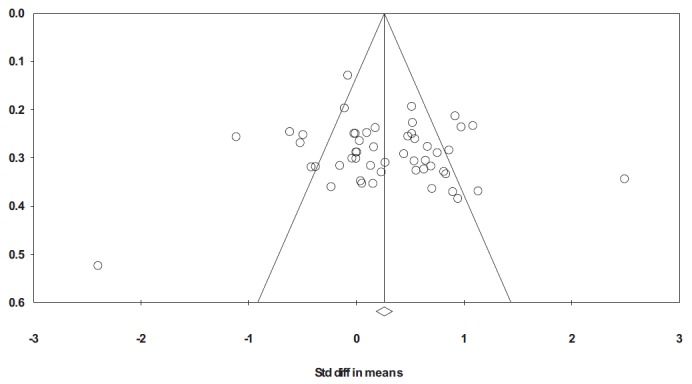
Stereotype threat effects arise when an individual feels at risk of confirming a negative stereotype about their group and consequently underperforms on stereotype relevant tasks (Steele, 2010). Among older people, underperformance across cognitive and physical tasks is hypothesized to result from age-based stereotype threat (ABST) because of negative age-stereotypes regarding older adults' competence. The present review and meta-analyses examine 22 published and 10 unpublished articles, including 82 effect sizes (N = 3882) investigating ABST on older people's (Mage = 69.5) performance. The analysis revealed a significant small-to-medium effect of ABST (d = .28) and important moderators of the effect size. Specifically, older adults are more vulnerable to ABST when (a) stereotype-based rather than fact-based manipulations are used (d = .52); (b) when performance is tested using cognitive measures (d = .36); and (c) occurs reliably when the dependent variable is measured proximally to the manipulation. The review raises important theoretical and methodological issues, and areas for future research.
Overview
The claims and statistics of this paper haven’t been checked yet.
Free: it reads the open-access text and checks the first 5 claims that cite a source we can check. Create a free account to check every claim.
Integrity signals
Registry
Cites
Statistics
Figures
Verification
Claims the paper makes
The claims and statistics of this paper haven’t been checked yet.
Free: it reads the open-access text and checks the first 5 claims that cite a source we can check. Create a free account to check every claim.
Claims other papers make about this one
Each is checked against this paper’s own text: does it say what the citing paper says it does?
The source backs part of the claim, not all of it — or backs it for a different population, condition or comparison.
In the citing paper
“five meta-analyses that showed negative age beliefs can adversely affect the health of older persons [11–15]”
From Global reach of ageism on older persons' health: a systematic review (2020) · cites this paper as [14]
Experimental — accuracy not yet measuredThe source backs part of the claim, not all of it — or backs it for a different population, condition or comparison.
In the citing paper
“previous systematic reviews have not examined how both levels simultaneously influence health”
From Global reach of ageism on older persons' health: a systematic review (2020) · cites this paper as [14]
Experimental — accuracy not yet measured
Self-check
Percentages, sums and reported differences re-computed from the paper’s own numbers.
The self-check needs the paper’s full text.
Citations
Cites
Statistical Power Analysis for the Behavioral Sciences
Muller, K. (1989) · Technometrics · doi:10.1080/00401706.1989.10488618 · Cited by 99,167
Statistical power analysis for the behavioral sciences
(1990) · Computers, Environment and Urban Systems · doi:10.1016/0198-9715(90)90050-4 · Cited by 65,269
A Coefficient of Agreement for Nominal Scales
Cohen, J. (1960) · Educational and Psychological Measurement · doi:10.1177/001316446002000104 · Cited by 42,398 · cited 1×
“All variables coded showed high interrater agreement (Cohen’s kappa or (cid:5) ; Cohen, 1960; Mean (cid:5) (cid:2) .95).”
Statistical Power Analysis for the Behavioral Sciences (2nd ed.).
Lachenbruch, P. A., & Cohen, J. (1989) · Journal of the American Statistical Association · doi:10.2307/2290095 · Cited by 37,395
Statistical Methods for Meta-Analysis
Wasserman, S., Hedges, L. V., & Olkin, I. (1988) · Journal of Educational Statistics · doi:10.2307/1164953 · Cited by 10,326
(2000) · Cited by 9,198
The file drawer problem and tolerance for null results.
Rosenthal, R. (1979) · Psychological Bulletin · doi:10.1037/0033-2909.86.3.638 · Cited by 9,068 · cited 1×
“As identified by Rosenthal (1979), unattained unpublished studies may exist that represent a bias against the publication of nonsignificant results.”
Stereotype threat and the intellectual test performance of African Americans.
Steele, C. M., & Aronson, J. (1995) · Journal of Personality and Social Psychology · doi:10.1037/0022-3514.69.5.797 · Cited by 9,020 · cited 6×
“…as blatant) led participants to behave contrary to expectations defined by the stereotype, in line with “stereotype reac-tance” theory (Brehm, 1966); whereas stereotype-based cues (defined as subtle) led to behavioral assimilation, as predicted by stereotype threat theory (Steele & Aronson, 1995).”
Influential(1999) · Cited by 6,104
Pettigrew, T. F. (1998) · Annual Review of Psychology · doi:10.1146/annurev.psych.49.1.65 · Cited by 6,001 · cited 1×
“This appears to work through familiar mechanisms of intergroup contact (Pettigrew, 1998), which can counteract stereotypes and mean that intergroup comparisons do not give rise to anxiety.”
Research works printed but not linked: 6
- Bensadon B. A. (2010). Memory self-efficacy and memory effects in aging (Unpublished doctoral dissertation). University of Florida, Gainesville, Florida.
- * Lambert A. E. (2011). On attentional control and the elderly driving stereotype (Unpublished doctoral thesis). University of Utah, Salt Lake City, Utah.
- * Lamont R. A. (2011). Stereotype threat and physical performance among the elderly: Exploration of mechanisms and after-effects. Unpublished master’s dissertation.
- Moldoff M. A. (2010). The joke’s on you: The effects of disparaging political humor on young citizens’ attitudes and behaviours (Unpublished doctoral thesis). University of North Carolina, Chapel Hill.
- Nelson T. D. (2002). Ageism: Stereotyping and prejudice against older persons. Cambridge, MA: MIT Press.
- Tajfel H., & Turner J. C. (1979). An integrative theory of social conflict In Austin W. G. & Worchel S. (Eds.), The social psychology of intergroup relations (pp. 33– 47). Monterey, CA: Brooks/Cole.
Cited by
Items 401–500 of 656
From Refugees to Immigrants: The Role of Psychology in the Struggle for Human Rights
Khoury, B. A., & Hakim-Larson, J. A. (2020) · Cambridge University Press eBooks · doi:10.1017/9781108348607.015 · Cited by 3
Human Rights and Well-Being of Older Persons: Challenges and Opportunities
Sigal, J. A., Quintero, N., & Valente, E. (2020) · Cambridge University Press eBooks · doi:10.1017/9781108348607.021 · Cited by 3
Human Rights and Psychology from Indigenous Perspectives
Blume, A. W., Morse, G. S., & Love, C. (2020) · Cambridge University Press eBooks · doi:10.1017/9781108348607.018 · Cited by 3
Chasteen, A. L., Bergstrom, V. N. Z., Schiralli, J. E., & Forestier, J. M. L. (2019) · Springer eBooks · doi:10.1007/978-3-319-69892-2_584-1 · Cited by 3
Fraboni, F., Angelis, M. D., Plesnik, D., Altini, A., Depolo, M., Zani, B., Prati, G., & Pietrantoni, L. (2018) · Communications in computer and information science · doi:10.1007/978-3-319-92285-0_48 · Cited by 2
Weight Discrimination in the Workplace: Current Knowledge and Future Research Needs
Roehling, M. V., Choi, M. G., & Roehling, P. V. (2019) · Emerald Group Publishing Limited eBooks · doi:10.1108/978-1-64113-613-620251006 · Cited by 5
Wadsworth, D., Tulloch, K., Wright, H. H., Linton, C., Baker, J., Fien, S., Szabo, H., Askew, C. D., & Schaumberg, M. A. (2023) · Collegian Journal of the Royal College of Nursing Australia · doi:10.1016/j.colegn.2022.11.005 · Cited by 2
Nieto, M., López, R., Ros, L., & Latorre, J. M. (2025) · Scientific Reports · doi:10.1038/s41598-025-92603-7 · Cited by 1
“Importantly, ageist stereotypes, that is the image of older people characterized by negative ideas related to physical and cognitive limitations 24–26 have deleterious effects on older adults’ cognitive performance 27,28 .”
An Ecological Systems Framework for Work and Aging
Marcus, J., Rudolph, C. W., & Zacher, H. (2020) · Emerald Group Publishing Limited eBooks · doi:10.1108/978-1-64802-006-320251009 · Cited by 12
Validation of the everyday ageism scale in Iranian older adults
Afrashteh, M. Y. (2025) · BMC Psychology · doi:10.1186/s40359-025-03660-6 · Cited by 2
“Research has shown that beliefs and attitudes about aging impair both cognitive and functional performance in older adults [14], lead to poorer mental health [15], psychological distress, and increased illness [13, 16], as well as higher levels of depression [17] and loneliness [18, 19].”
Effect of stereotype threat on the performance of elementary school children: a meta-analysis
Magoutier, F., Vallée, B., & Pansu, P. (2026) · European Journal of Psychology of Education · doi:10.1007/s10212-025-01025-6 · Cited by 2
“…on stigmatized adults and teenagers (Armstrong et al., 2017; Blascovich et al., 2001; Doyle & Voyer, 2016; Gen-tile et al., 2018; Good et al., 2003; Lamont et al., 2015; Picho et al., 2013; Régner et al., 2014; Spencer et al., 1999), but to our knowledge, only one meta-analysis has examined…”
Man, G.-M., & Man, M. (2018) · Scientific Bulletin · doi:10.2478/bsaft-2018-0011 · Cited by 3
Cultivating Our Common Humanity: Reflections on Freedom of Thought, Conscience, and Religion
Penn, M. L., Groff, M. Z., & Kourosh, N. (2020) · Cambridge University Press eBooks · doi:10.1017/9781108348607.014 · Cited by 2
Thompson, A. D., & Çiftçi, A. (2020) · Cambridge University Press eBooks · doi:10.1017/9781108348607.035 · Cited by 2
Psychosocial Features of Movements That Have Advanced Human Rights
Christie, D. J., Bretherton, D., & Lunn, L. (2020) · Cambridge University Press eBooks · doi:10.1017/9781108348607.024 · Cited by 4
Ego-depletion and increased stereotyping of the older adults as forgetful in the Chinese culture
Zhang, X., & Peng, C. (2020) · Journal of Psychology in Africa · doi:10.1080/14330237.2020.1821306 · Cited by 2
Park, L. J. (2021) · Educational Gerontology · doi:10.1080/03601277.2021.2009981 · Cited by 2
“Studies have found that negative attitudes toward aging predict a potential health risk in late life (Lamont et al., 2015; Wurm et al., 2017).”
BackgroundFeasibility of a Home-Based Task-Switching Training in Middle-Aged Caregivers
Lanfer, S. S. L., Enge, S., Melzer, M., Wegge, J., & Kliegel, M. (2022) · Journal of Cognitive Enhancement · doi:10.1007/s41465-021-00237-0 · Cited by 2
Relación entre variables psicosociales y actitud hacia el envejecimiento
Bardera, C. P., Vegas, K. E. M., Cézar, R. F., & Pinto, N. S. (2022) · International Journal of Developmental and Educational Psychology Revista INFAD de psicología · doi:10.17060/ijodaep.2022.n1.v1.2305 · Cited by 5
“En relación con los estereotipos respecto al envejecimiento, se pueden distinguir dos grupos según su valoración negativa o positiva (Lamont et al., 2015).”
BackgroundZHANG, B., Jin, D., Ma, M., & Xu, R. (2022) · Acta Psychologica Sinica · doi:10.3724/sp.j.1041.2022.00951 · Cited by 3
Effects of age-based stereotype threat on time-based prospective memory
Tsang, A. P. L., Chan, S. C. Y., Lu, H. J., & Wong, C. C. (2024) · Frontiers in Psychology · doi:10.3389/fpsyg.2024.1379160 · Cited by 2
“Lamont et al. (2015), for example, suggested that using a subtler approach could elicit negative emotional responses due to its ambiguity.”
BackgroundYoelin, A. B. (2024) · Therapeutic Recreation Journal · doi:10.18666/trj-2024-v58-i4-12369 · Cited by 2
Kuball, T., Meixelsberger, K., & Jahn, G. (2024) · The International Journal of Aging and Human Development · doi:10.1177/00914150241301032 · Cited by 2
“…shows that priming negative age stereotypes can lead to disidenti fi cation with stereotyped domains (Woodcock et al., 2012) and impair older adults ’ performance in memory and cognitive tasks (Lamont et al., 2015; Swift et al., 2021), due to fear of con fi rming these stereotypes (Barber, 2017).”
Ignorance isn’t bliss: Addressing ageism with formal university education
Strickland-Hughes, C. M., Carmichael, M., & West, R. L. (2025) · Educational Gerontology · doi:10.1080/03601277.2025.2486362 · Cited by 2
Kanama, D., Ito, S., Muranaka, S., & Watanabe, T. (2025) · Journal of Economic Structures · doi:10.1186/s40008-025-00352-7 · Cited by 3
“Middle-aged and older professionals are often perceived as less creative and innovative than their younger counterparts (Lyons and Kuron 2014; Lamont et al. 2015; Zani-boni 2015).”
Ageism during the 2024 U.S. Presidential Election: thematic analysis of tweets
Bacsu, J.-D., Jamali, A. A., Ménard, A., Fiske, D., O’Connell, M. E., Funk, M., Vellani, S., D’Souza, M. S., Fehr, F. C., Mah, J. C., et al. (2025) · The Gerontologist · doi:10.1093/geront/gnaf166 · Cited by 3
Evans, T., Scott, J. E. T., WALKER, R. B., Luszcz, M. A., Mazzucchelli, T. G., Wilton-Harding, B., & Windsor, T. D. (2025) · Ageing and Society · doi:10.1017/s0144686x2510041x · Cited by 2
“…about ageing are assimilated from the surrounding culture and become internalised and self-relevant, potentially resulting in poorer health (Levy, Slade and Gill 2006; Levy, Slade, May and Caracciolo 2006), cognitive performance (Lamont et al. 2015) and psychosocial outcomes (Emile et al. 2014).”
Koch, J. M., Chiao, H., & Nel, J. A. (2020) · Cambridge University Press eBooks · doi:10.1017/9781108348607.036 · Cited by 4
Decolonization and Liberation Psychology: The Case of Psychology in South Africa
de la Rey, C., & Thompson, C. E. F. (2020) · Cambridge University Press eBooks · doi:10.1017/9781108348607.032 · Cited by 3
Human Rights Seen through a Cultural Lens: Perspectives from Africa and Asia
Jaipal, R., & Gaba, A. (2020) · Cambridge University Press eBooks · doi:10.1017/9781108348607.020 · Cited by 4
How Fear and Hope Shaped the Universal Declaration of Human Rights
Black, A. M., & Cooper, M. D. (2020) · Cambridge University Press eBooks · doi:10.1017/9781108348607.002 · Cited by 2
Reproductive Justice, Psychology, and Human Rights
Chrisler, J. C., & Sagrestano, L. M. (2020) · Cambridge University Press eBooks · doi:10.1017/9781108348607.022 · Cited by 2
Connecting Human Rights and Psychological Ethics in a Globalizing World: Issues and Recommendations
Gauthier, J. G., & Sinclair, C. M. (2020) · Cambridge University Press eBooks · doi:10.1017/9781108348607.004 · Cited by 3
Okorodudu, C., Kuriansky, J., Walker, P. R., & Denmark, F. L. (2020) · Cambridge University Press eBooks · doi:10.1017/9781108348607.005 · Cited by 3
Canetto, S. S., & Burn, S. M. (2020) · Cambridge University Press eBooks · doi:10.1017/9781108348607.009 · Cited by 3
Why Preventing Ageist Attitudes Is Not Enough during COVID-19 Pandemic
Cabin, S., & Jardin, E. (2021) · Health & Social Work · doi:10.1093/hsw/hlab008 · Cited by 2
Demir, B., & Mandıracıoğlu, A. (2021) · Ege Tıp Dergisi · doi:10.19161/etd.950574 · Cited by 2
Saito, T. I., Hugenberg, K., Motoki, K., & Nouchi, R. (2023) · Japanese Psychological Research · doi:10.1111/jpr.12472 · Cited by 3
Isopahkala-Bouret, U., & Niemi, H. (2016) · Social Inquiry into Well-Being · doi:10.13165/siiw-16-2-1-03 · Cited by 2
Levy, B. R. (2020) · Springer eBooks · doi:10.1007/978-3-319-69892-2_604-1 · Cited by 2
Levy, S. R., & Macdonald, J. L. (2021) · Springer eBooks · doi:10.1007/978-3-030-22009-9_597 · Cited by 2
Sterns, H. L., & Walker, R. V. (2017) · Springer eBooks · doi:10.1007/978-981-287-082-7_309 · Cited by 2
Jecker, N. S. (2020) · Wiley eBooks · doi:10.1002/9780470015902.a0028976 · Cited by 2
Levy, S. R., Apriceno, M., Macdonald, J. L., & Lytle, A. E. (2018) · Oxford University Press eBooks · doi:10.1093/obo/9780199828340-0224 · Cited by 5
Gerontology and geriatrics: Care and context. Towards Integration
Musselwhite, C. (2025) · Cogent Gerontology · doi:10.1080/28324897.2025.2479446 · Cited by 1
Flores, R. L., Okorodudu, C., & Shepherd, V. A. (2020) · Cambridge University Press eBooks · doi:10.1017/9781108348607.006 · Cited by 2
Empowerment of the ageing population: a contribution to active ageing
Voelcker, I., & Kalache, A. (2017) · Oxford University Press eBooks · doi:10.1093/med/9780198701590.003.0162 · Cited by 1
Garcia, J.-F., & Oiry, E. (2023) · Management & Avenir · doi:10.3917/mav.135.0083 · Cited by 1
Balfanz, R. W., Lofton, R., Kim‐Christian, P., McDermott, L., & Clark, E. (2023) · Oxford University Press eBooks · doi:10.1093/oxfordhb/9780199841332.013.33 · Cited by 1
Lineweaver, T. T., Wetli, A. C., Nicoson, C., Tucker, A. J., & Hertzog, C. K. (2023) · Experimental Aging Research · doi:10.1080/0361073x.2023.2295202 · Cited by 1
“…has been shown to be more prominent in older adults for whom the stereotypes are most self-relevant compared to younger adults (Hess et al., 2004, Lamont et al., 2015, Levy, 1996, Stein et al., 2002), we also predicted stronger assimilation and contrast effects in middle-age and older adults…”
InfluentialThe Transformation of a Person’s Life Plans in Mature Age
Shcherbakova, T. N., & Inozemtseva, O. M. (2024) · Innovative science psychology pedagogy defectology · doi:10.23947/2658-7165-2023-6-6-18-26 · Cited by 1
Ageismus im Gesundheitswesen: Perspektiven der feministischen Medizinethik
Langmann, E. (2024) · Menschenrechte in der Medizin · doi:10.14361/9783839474051 · Cited by 2
Dual pathways of aging stereotype threat at work: impacts on work behaviors of older workers
Liu, L., Wang, Z., Guo, X., Li, S., & Wu, X. (2025) · Frontiers in Psychology · doi:10.3389/fpsyg.2025.1486911 · Cited by 1
Hu, Q., Yang, L., Hu, F., Xu, C., & Zhang, Q. (2025) · Journal of Gerontological Social Work · doi:10.1080/01634372.2025.2470247 · Cited by 1
“Meta-analyses also showed a small-to-medium effect of age stereotype threat on the WM performance of older adults (Armstrong et al., 2017; Lamont et al., 2015).”
Nakanishi, A., Ichikawa, M., & Sano, Y. (2025) · JMIR Infodemiology · doi:10.2196/69321 · Cited by 1
“Ageism toward older people is especially high [57] and can adversely affect physical and mental health, such as reduced cognitive function [58], shorter life expectancy [59], deteriorated mental health [60], and increased isolation [61], prompting initiatives to counteract it [62].”
Detecting social biases using mental state inference.
Asaba, M., Davis, I., Leonard, J., & Jara‐Ettinger, J. (2025) · Journal of Personality and Social Psychology · doi:10.1037/pspa0000451 · Cited by 1
Belchior, P. D. C., Couture, M., Welik, J., Park, M., Joubert, S., Gagné, J., & Bier, N. (2025) · Disability and Rehabilitation Assistive Technology · doi:10.1080/17483107.2025.2546020 · Cited by 1
“…situations, it can become a threat, when for instance, older adults don’t seek care by assuming that health problems are an inevitable consequence of growing old [11]. in other instances, some older adults might avoid participating in activities for fear of confirming a certain ste-reotype [10].”
Müller, A. C., Kornadt, A. E., & Notthoff, N. (2025) · European Journal of Ageing · doi:10.1007/s10433-025-00874-w · Cited by 1
“A priori power analysis using G*Power (Faul et al. 2007) indicated a total required sample size of 75 participants ( f = 0.33; α = 0.05; (1-β ) = 0.80), based on effect sizes reported in related studies (Swift et al. 2012; Lamont et al. 2015).”
InfluentialMorganti, F. (2025) · IntechOpen eBooks · doi:10.5772/intechopen.1011741 · Cited by 1
Kroon, Å. (2025) · Feminist Media Studies · doi:10.1080/14680777.2025.2572714 · Cited by 1
Dallabrida, Y. M., Bagatini, F. Z., & Botelho, D. (2025) · Psychology and Marketing · doi:10.1002/mar.70067 · Cited by 2
“The moderation by mean sample age among older adults — with younger samples showing stronger effects — contrasts with the findings from Lamont et al. (2015), who found no moderating effect and even hypothesized that older samples would experience more age ‐ based ST, as literature expects stronger…”
Knopf, L., Domes, G., & Kamp, S. (2025) · Frontiers in Aging Neuroscience · doi:10.3389/fnagi.2025.1666566 · Cited by 1
“Further studies have shown that activating age-based stereotypes can reduce cognitive performance in various tasks (for reviews, see Barber, 2020; Dionigi, 2015; also see Lamont et al., 2015 for a meta-analysis).”
Age perceptions and physical health: implications for physiology, function, and well-being
Williams, C., Gendron, T. L., & Waters, L. (2025) · Elsevier eBooks · doi:10.1016/b978-0-443-33827-4.00005-5 · Cited by 1
Matera, C., Nerini, A., Paradisi, M., & Chiti, L. (2024) · Community psychology in global perspective · doi:10.1285/i24212113v10i1p133 · Cited by 2
Allen, J. O., Qin, W., Kiefer, M., & Cunnyngham, K. E. (2026) · Aging & Mental Health · doi:10.1080/13607863.2026.2625856 · Cited by 1
“Ageist incidents have been shown to prompt short-term alterations in cognition and mood (Bodner et al., 2021; lamont et al., 2015; levy, 2003; lewis et al., 2023).”
Deshayes, M., Clément-Guillotin, C., & Chalabaev, A. (2026) · Journal of Sports Sciences · doi:10.1080/02640414.2026.2631321 · Cited by 1
“Several reviews and meta-analyses have concluded that inducing an age-based negative stereotype has the expected negative effect on these cognitive abilities (e.g., Dionigi, 2015; Horton et al., 2008; Lamont et al., 2015).”
InfluentialLu, Y., Liao, S., Ma, G., Guo, Z., Li, T., Zhou, Y., Sun, Y. Y., & Zhang, X. (2026) · The Journals of Gerontology Series B · doi:10.1093/geronb/gbag045 · Cited by 1
Barbiani, D., Antonietti, A., & Pagnini, F. (2026) · International Journal of Clinical and Health Psychology · doi:10.1016/j.ijchp.2026.100673 · Cited by 1
“…older adulthood may represent a useful context in which to examine placebo mechanisms, given the central role of expectations, beliefs, and contextual influences in shaping aging trajectories(Pagnini et al., 2019; Lamont et al., 2015; Hsu et al., 2010; Miche et al., 2014; Stephan et al., 2013).”
Chen, Z., Liu, Y., Yin, S., & Zhang, X. (2026) · BMC Geriatrics · doi:10.1186/s12877-026-07701-6 · Cited by 2
“Stereotype Embodiment Theory [37] and Age-Based Stereotype Threat [34] further suggest a psychological mechanism through which autonomy-undermin-ing experiences may translate into functional decline.”
Mertens, E. J., Broekharst, D. S. E., Hanzen, N., de Rooij, K., van Agthoven, M., & Bloem, S. (2026) · Frontiers in Aging · doi:10.3389/fragi.2026.1850676 · Cited by 1
“Meta-analyses and reviews have addressed the adverse health outcomes resulting from ageism, ranging from psychosocial impacts to poorer physical health (Chang et al., 2020; Lamont et al., 2015; Meisner, 2012).”
The moderation effect of cognitive fusion on behavioral assimilation to age stereotype
Hashimoto, K., & Muto, T. (2018) · The Japanese journal of psychology · doi:10.4992/jjpsy.90.17337 · Cited by 1
The Lingering Effects of Stereotype Threat: Stereotype Threat Spillover
Zhen, W., & Yong, X. (2019) · Psychology of China · doi:10.35534/pc.0107029 · Cited by 1
2.1 LSBTIQ* und Alter(n) aus psychologischer Sicht
Kranz, D. (2020) · Vandenhoeck & Ruprecht eBooks · doi:10.13109/9783666702723.17 · Cited by 1
Psychology and the Global Human Rights Agenda on Sexual Orientation and Gender Identity
Horne, S. G., & Manalastas, E. J. (2020) · Cambridge University Press eBooks · doi:10.1017/9781108348607.023 · Cited by 2
Human Rights: A Psychologist’s Path to “Do No Harm”
Sveaass, N., & Woolf, L. M. (2020) · Cambridge University Press eBooks · doi:10.1017/9781108348607.010 · Cited by 1
Education of Psychologists for Human Rights Awareness, Accountability, and Action
Tibbitts, F. L., & Hagenaars, P. (2020) · Cambridge University Press eBooks · doi:10.1017/9781108348607.033 · Cited by 2
Vega, M. Y., & Otto, C. (2020) · Cambridge University Press eBooks · doi:10.1017/9781108348607.017 · Cited by 1
Huminuik, K., & Wyndham, J. M. (2020) · Cambridge University Press eBooks · doi:10.1017/9781108348607.039 · Cited by 2
Child Rights: Why They Matter and How to Realize Them
Wessells, M., & Kostelny, K. (2020) · Cambridge University Press eBooks · doi:10.1017/9781108348607.011 · Cited by 1
Psychology and Human Rights in the Age of Genomics and Neuroscience
Singh, K., & Gibson, G. C. (2020) · Cambridge University Press eBooks · doi:10.1017/9781108348607.028 · Cited by 1
Explicit and Implicit Cognitive Processes Associated With Microaggression Endorsement
McLean, M. A., Roche, J. M., Audet, L. R., Stribling, D., & Kaufman, R. (2021) · Perspectives of the ASHA Special Interest Groups · doi:10.1044/2021_persp-21-00005 · Cited by 1
Soylu-Konak, N. S., & Teközel, M. (2021) · Psikoloji Çalışmaları / Studies in Psychology · doi:10.26650/sp2020-802511 · Cited by 1
Bertrams, A., Lindner, C., Siems-Muntoni, F., & Retelsdorf, J. (2022) · doi:10.48350/169082 · Cited by 1
Martiny, S. E., Götz, T., & Keller, M. M. (2020) · Springer eBooks · doi:10.1007/978-3-658-27825-0_23-1 · Cited by 1
Younger and Older Adult Reports of Affect in Familiar and Unfamiliar Persons
Ready, R. E., Santorelli, G., Mather, M. A., & Laws, H. B. (2022) · GeroPsych · doi:10.1024/1662-9647/a000292 · Cited by 1
Klein, A. (2022) · Open Journal of Social Sciences · doi:10.4236/jss.2022.106008 · Cited by 1
The Effect of Age on Mental Status of Air Traffic Controllers During Intensive Simulation Training
Chen, Z., Zhang, J., Shan, H., Chen, Y., Hu, P. F., & Tian, X. (2022) · Lecture notes in computer science · doi:10.1007/978-3-031-17615-9_37 · Cited by 1
Relation between workplace stereotypes, explicit attitudes and implicit attitudes
Fan, X. (2023) · SHS Web of Conferences · doi:10.1051/shsconf/202318003010 · Cited by 2
PERSPECTIVES ON MENTAL HEALTH: AGING AND CIVIC PARTICIPATION IN OLD ADULTHOOD
von Humboldt, S., Costa, A., Ilyas, N., & Leal, I. M. P. (2024) · Psicologia Saúde & Doenças · doi:10.15309/24psd250101 · Cited by 1
Bengtsson, L. (2025) · International Journal of Discrimination and the Law · doi:10.1177/13582291241308088 · Cited by 1
“Ageism in the workplace not only affects the wider society, but also has harmful effects on an individual ’ s wellbeing as it is a risk factor leading to depression, anxiety and increased stress (Chang et al., 2020; Kang and Kim, 2022; Lamont et al., 2015).”
Clemson, V., Grey, E., Barnett, J. C., Burfitt, E., & Gillison, F. (2025) · JMIR Aging · doi:10.2196/68951 · Cited by 1
“…example, in response to age-based stereotype threats (ie, pressure to avoid confirming or exacerbating stereotypes when taking part in an activity; [20]), some studies show poorer performance in physical activities, such as walking speed [21], while others show improved performance, for example in…”
Ageism in emergency departments: impact and solutions
Colantoni, A., Belletti, I., Carini, C., & Bertini, A. (2025) · European Journal of Emergency Medicine · doi:10.1097/mej.0000000000001230 · Cited by 1
“Exposure to negative stereotypes can induce stress responses in elderly patients [10].”
Ma, Y., Zhang, H., & Zhang, B. (2025) · Experimental Aging Research · doi:10.1080/0361073x.2025.2516377 · Cited by 1
“Given the varying effects of different stereotype activation methods in previous studies (Armstrong et al., 2017; Lamont et al., 2015; Weiss & Kornadt, 2018), our manipulation was designed with two key considerations to ensure its effectiveness: relevance to self, as well as beliefs and attitudes…”
Wadsworth, D., Cash, B., Robson, K., Tulloch, K., Couper, R., Kolesaric, S., Schaumberg, M. A., & Fitzpatrick, S. (2025) · Aging & Mental Health · doi:10.1080/13607863.2025.2529269 · Cited by 1
“Stereotypes and attitudinal bias are known to influence the health of older adults (Lamont et al., 2015), and present specific barriers to accessing rural mental health supports (Cheesmond et al., 2019; Kavanagh et al., 2023).”
Tackling Ageism in the Workplace
Swift, H. J., Steeden, B., & Randsley de Moura, G. (2021) · Kent Academic Repository (University of Kent) · Cited by 1
Self-citationValidation factorielle d’une mesure des menaces du stéréotype en langue française
Desombre, C., Jury, M., Renard, M., & Brasselet, C. (2020) · L’Année psychologique · doi:10.3917/anpsy1.204.0251 · Cited by 2
Stereotype threat among European Roma adults
Želinský, T. (2020) · Applied Economics Letters · doi:10.1080/13504851.2020.1855301 · Cited by 1
“Another significant portion of literature studies negative stereotypes affecting old er adults (Lamont, Swift, and Abrams 2015).”
BackgroundYaşlanmayla İlgili Kalıp Yargı Tehdidinin Bellek Performansı Üzerindeki Etkisi
Gülpek, D. Ö., Güleç, H., & Tekman, H. G. (2021) · Toplum ve sosyal hizmet(Online)/Toplum ve sosyal hizmet · doi:10.33417/tsh.855213 · Cited by 1
Lamont, R. A. (2015) · Kent Academic Repository (University of Kent) · Cited by 2
Self-citationThe influence of guilt presumptive language on investigative interview outcomes
Adams-Quackenbush, N. M. (2019) · Research Publications (Maastricht University) · doi:10.26481/dis.20190618naq · Cited by 3
Metadata
- Authors
- Lamont, R. A., Swift, H. J., & Abrams, D.
- Affiliations
- University of Kent (GB)
- Corresponding author
- Abrams, Dominic
- Venue
- Psychology and Aging
- Published
- 2015-03
- Volume
- 30
- Issue
- 1
- Pages
- 180-193
- ISSN
- 0882-7974 (ISSN-L)
- 1939-1498
- PMC
- PMC4360754
- OpenAlex
- W2135485953
- Cited by
- 583
- References
- 83
- Citations by year
- 2026: 25 · 2025: 46 · 2024: 48 · 2023: 40 · 2022: 58 · 2021: 74 · 2020: 120 · 2019: 49 · 2018: 51 · 2017: 32 · 2016: 29 · 2015: 11
- FWCI
- 11.55
- Type
- journal article
- Language
- en
- Update notices
- correction (2018-08-09)
- Open access
- hybrid
- doi.org
- Licence
- Locations
- Psychology and Aging (publishedVersion, other-oa)
- PubMed Central (publishedVersion, cc-by)
- PubMed (publishedVersion)
- Kent Academic Repository (University of Kent) (acceptedVersion)
- Funders
- UK Economic and Social Research Council (ES/I012141/1)
- Topics
- Social Sciences › Psychology › Developmental and Educational Psychology › Aging and Gerontology Research
- Social Sciences › Sociology and Political Science › Social and Intergroup Psychology
- Social Sciences › Demography › Retirement, Disability, and Employment
- Keywords
- age stereotypes, older adults, underperformance, stereotype threat, cognitive performance, physical performance, moderators of effect size, aging
- MeSH terms
- Aged, Aged, 80 and over, Aging, Cognition, Female, Humans, Male, Stereotyping
About these checks
Registry, retraction, Cites and statistics results are computed, not judged, with one exception: a printed reference that no index lists is read once by a model before it counts as a citation error. Claims are extracted by a model and kept only when their quote appears verbatim in the text; each cited source is then checked, with a model’s help, for whether it says what the claim relies on. Those verdicts can be wrong — read the claim’s quote and the cited source before relying on one.
Statistics and arithmetic are recomputed, not judged.
Confidence bands are shown only for fields calibrated on our annotated test set. None is calibrated yet, so no band is shown.
What counts as a claim ›How we measure confidence ›How we check this ›
Are you an author, or do you see a problem with this page? Request a review
Data sources
Bibliographic data: Semantic Scholar, OpenAlex, Crossref.
Contains information from the Semantic Scholar Academic Graph Datasets, made available under the ODC Attribution License (ODC-BY 1.0).
Semantic Scholar’s data is described in: Kinney, R., et al. (2023). The Semantic Scholar Open Data Platform. arXiv:2301.10140.
