

A review and meta-analysis of age-based stereotype threat: negative stereotypes, not facts, do the damage
Open accessThe DOI matches its Crossref record; 81 of the 83 references it cites were found in a registry or an index.
Abstract
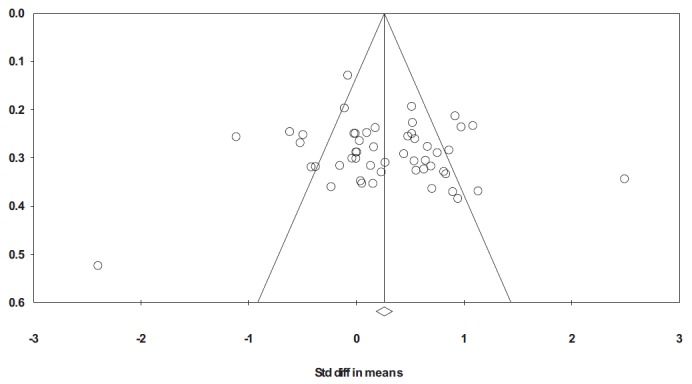
Stereotype threat effects arise when an individual feels at risk of confirming a negative stereotype about their group and consequently underperforms on stereotype relevant tasks (Steele, 2010). Among older people, underperformance across cognitive and physical tasks is hypothesized to result from age-based stereotype threat (ABST) because of negative age-stereotypes regarding older adults' competence. The present review and meta-analyses examine 22 published and 10 unpublished articles, including 82 effect sizes (N = 3882) investigating ABST on older people's (Mage = 69.5) performance. The analysis revealed a significant small-to-medium effect of ABST (d = .28) and important moderators of the effect size. Specifically, older adults are more vulnerable to ABST when (a) stereotype-based rather than fact-based manipulations are used (d = .52); (b) when performance is tested using cognitive measures (d = .36); and (c) occurs reliably when the dependent variable is measured proximally to the manipulation. The review raises important theoretical and methodological issues, and areas for future research.
Overview
The claims and statistics of this paper haven’t been checked yet.
Free: it reads the open-access text and checks the first 5 claims that cite a source we can check. Create a free account to check every claim.
Integrity signals
Registry
Cites
Statistics
Figures
Verification
Claims the paper makes
The claims and statistics of this paper haven’t been checked yet.
Free: it reads the open-access text and checks the first 5 claims that cite a source we can check. Create a free account to check every claim.
Claims other papers make about this one
Each is checked against this paper’s own text: does it say what the citing paper says it does?
The source backs part of the claim, not all of it — or backs it for a different population, condition or comparison.
In the citing paper
“five meta-analyses that showed negative age beliefs can adversely affect the health of older persons [11–15]”
From Global reach of ageism on older persons' health: a systematic review (2020) · cites this paper as [14]
Experimental — accuracy not yet measuredThe source backs part of the claim, not all of it — or backs it for a different population, condition or comparison.
In the citing paper
“previous systematic reviews have not examined how both levels simultaneously influence health”
From Global reach of ageism on older persons' health: a systematic review (2020) · cites this paper as [14]
Experimental — accuracy not yet measured
Self-check
Percentages, sums and reported differences re-computed from the paper’s own numbers.
The self-check needs the paper’s full text.
Citations
Cites
Statistical Power Analysis for the Behavioral Sciences
Muller, K. (1989) · Technometrics · doi:10.1080/00401706.1989.10488618 · Cited by 99,167
Statistical power analysis for the behavioral sciences
(1990) · Computers, Environment and Urban Systems · doi:10.1016/0198-9715(90)90050-4 · Cited by 65,269
A Coefficient of Agreement for Nominal Scales
Cohen, J. (1960) · Educational and Psychological Measurement · doi:10.1177/001316446002000104 · Cited by 42,398 · cited 1×
“All variables coded showed high interrater agreement (Cohen’s kappa or (cid:5) ; Cohen, 1960; Mean (cid:5) (cid:2) .95).”
Statistical Power Analysis for the Behavioral Sciences (2nd ed.).
Lachenbruch, P. A., & Cohen, J. (1989) · Journal of the American Statistical Association · doi:10.2307/2290095 · Cited by 37,395
Statistical Methods for Meta-Analysis
Wasserman, S., Hedges, L. V., & Olkin, I. (1988) · Journal of Educational Statistics · doi:10.2307/1164953 · Cited by 10,326
(2000) · Cited by 9,198
The file drawer problem and tolerance for null results.
Rosenthal, R. (1979) · Psychological Bulletin · doi:10.1037/0033-2909.86.3.638 · Cited by 9,068 · cited 1×
“As identified by Rosenthal (1979), unattained unpublished studies may exist that represent a bias against the publication of nonsignificant results.”
Stereotype threat and the intellectual test performance of African Americans.
Steele, C. M., & Aronson, J. (1995) · Journal of Personality and Social Psychology · doi:10.1037/0022-3514.69.5.797 · Cited by 9,020 · cited 6×
“…as blatant) led participants to behave contrary to expectations defined by the stereotype, in line with “stereotype reac-tance” theory (Brehm, 1966); whereas stereotype-based cues (defined as subtle) led to behavioral assimilation, as predicted by stereotype threat theory (Steele & Aronson, 1995).”
Influential(1999) · Cited by 6,104
Pettigrew, T. F. (1998) · Annual Review of Psychology · doi:10.1146/annurev.psych.49.1.65 · Cited by 6,001 · cited 1×
“This appears to work through familiar mechanisms of intergroup contact (Pettigrew, 1998), which can counteract stereotypes and mean that intergroup comparisons do not give rise to anxiety.”
Research works printed but not linked: 6
- Bensadon B. A. (2010). Memory self-efficacy and memory effects in aging (Unpublished doctoral dissertation). University of Florida, Gainesville, Florida.
- * Lambert A. E. (2011). On attentional control and the elderly driving stereotype (Unpublished doctoral thesis). University of Utah, Salt Lake City, Utah.
- * Lamont R. A. (2011). Stereotype threat and physical performance among the elderly: Exploration of mechanisms and after-effects. Unpublished master’s dissertation.
- Moldoff M. A. (2010). The joke’s on you: The effects of disparaging political humor on young citizens’ attitudes and behaviours (Unpublished doctoral thesis). University of North Carolina, Chapel Hill.
- Nelson T. D. (2002). Ageism: Stereotyping and prejudice against older persons. Cambridge, MA: MIT Press.
- Tajfel H., & Turner J. C. (1979). An integrative theory of social conflict In Austin W. G. & Worchel S. (Eds.), The social psychology of intergroup relations (pp. 33– 47). Monterey, CA: Brooks/Cole.
Cited by
Items 201–300 of 656
Schmank, C. J., & James, L. E. (2019) · Aging Neuropsychology and Cognition · doi:10.1080/13825585.2019.1641177 · Cited by 16
Swab, R. G., Javadian, G., Gupta, V. K., & Pierce, C. A. (2021) · Group & Organization Management · doi:10.1177/10596011211016989 · Cited by 17
Régner, I., Mazerolle, M., Alescio‐Lautier, B., Clarys, D., Michel, B. F., Paccalin, M., Piolino, P., Rigalleau, F., Sambuchi, N., & Huguet, P. (2015) · Alzheimer Disease & Associated Disorders · doi:10.1097/wad.0000000000000129 · Cited by 19
Gvili, R.-L., & Bodner, E. (2021) · International Journal of Environmental Research and Public Health · doi:10.3390/ijerph18136736 · Cited by 15
“According to this theory, when older people are faced with negative stereotypes about their decline [50], they feel threatened, as they fear fulfilling the nature of these stereotypes [51].”
BackgroundScholarios, D., & HEIJDEN, B. I. J. M. V. D. (2021) · Frontiers in Psychology · doi:10.3389/fpsyg.2021.763746 · Cited by 15
“Research spanning decades has revealed the presence of such age stereotyping (e.g., Rosen and Jerdee, 1976; Kite and Johnson, 1988; Boerlijst et al., 1998; Chiu et al., 2001; Posthuma and Campion, 2009; Finkelstein et al., 2015; Lamont et al., 2015; Kulik et al., 2016; Zaniboni et al., 2019).”
BackgroundHow to Age More Positively? Analyzing Determinants that Shape Attitudes Towards Aging
Manzi, C., Adorni, R., Giannella, V. A., & Steca, P. (2023) · Journal of Adult Development · doi:10.1007/s10804-023-09447-6 · Cited by 18
“Typically, the most common stereotypes about older people refer to a decrease in both physical and cognitive competence (Fiske et al., 2002; Lamont et al., 2015).”
Oti-Boadi, M., Andoh–Arthur, J., Abekah‐Carter, K., & Abukuri, D. N. (2024) · International Journal of Social Psychiatry · doi:10.1177/00207640241227128 · Cited by 16
“Some studies have shown that the negative perceptions associated with old age have an undesirable impact on the memory and cognitive processing of older adults (Giasson & Chopik, 2020; Lamont et al., 2015).”
Background“I Want to Send a Message to My Friend”: Exploring the Shift of Agency to Older Adults in HRI
Simão, H., Gonçalves, D., Pires, A. C., Abreu, L. V., Bernardino, A. J. M., Forlizzi, J., & Guerreiro, T. (2024) · International Journal of Social Robotics · doi:10.1007/s12369-024-01128-y · Cited by 14
“Asymmetries might derive from personality traits [77, 78] or different cognitive abilities [79, 80], leading some participants to feel detached from the activities proposed.”
Rhodes, R. E., Rebar, A. L., & Strachan, S. M. (2025) · Psychology of sport and exercise · doi:10.1016/j.psychsport.2025.102923 · Cited by 15
People with dementia positioning themselves as learners
Ingebrand, E., Samuelsson, C., & Hydén, L. (2020) · Educational Gerontology · doi:10.1080/03601277.2020.1855501 · Cited by 14
Memory Age-based Stereotype Threat: Role of Locus of Control and Anxiety
Bouazzaoui, B., Fay, S., Sastoque, L. G., Semaine, M., Isingrini, M. L., & Taconnat, L. (2019) · Experimental Aging Research · doi:10.1080/0361073x.2019.1693009 · Cited by 17
“This is in line with previous studies investigating the memory stereotype threat effect (see Armstrong et al., 2017; Barber,2017; Lamont et al., 2015 for reviews).”
MethodResultInfluentialWhen Culture Influences Genes: Positive Age Beliefs Amplify the Cognitive-Aging Benefit of APOE ε2
Levy, B. R., Slade, M. D., Pietrzak, R. H., & Ferrucci, L. (2020) · The Journals of Gerontology Series B · doi:10.1093/geronb/gbaa126 · Cited by 16
“Covariates In all models, we included covariates that have been found to be associated with the predictors and/or the outcome of cognition (Lamont et al., 2015; Levy, 2009; Wisdom et al., 2011).”
MethodResultSmith, E. B., Desai, M. M., Slade, M. D., & Levy, B. R. (2018) · Journal of Aging and Health · doi:10.1177/0898264318784183 · Cited by 16
Swift, H. J., Abrams, D., & Lamont, R. A. (2019) · Springer eBooks · doi:10.1007/978-3-319-69892-2_586-1 · Cited by 16
Self-citationMwangala, P. N., Nasambu, C., Wagner, R. G., Newton, C. R. J. C., & Abubakar, A. A. (2024) · International Journal of Public Health · doi:10.3389/ijph.2024.1606284 · Cited by 13
“Ageism, commonly conceptualized as the stereotyping, prejudice and discrimination against people based on age, is becoming increasingly important in older adults [54].”
BackgroundWorkplace youngism: a scoping review of agism toward younger workers
Schmitz, S., Rosa, M. H., Patient, D., Vauclair, C., & Mariano, J. (2025) · Work Aging and Retirement · doi:10.1093/workar/waaf004 · Cited by 15
Santos, J., Bittencourt, I. I., Reis, M., Challco, G. C., & Isotani, S. (2022) · Humanities and Social Sciences Communications · doi:10.1057/s41599-022-01220-6 · Cited by 15
“Some studies investigated and discussed the stereotype threat effect (Flore and Wicherts, 2015; Lamont et al., 2015; Nguyen and Ryan, 2008; Shewach et al., 2019) and its correlation with performance (Lewis Jr and Michalak, 2019).”
BackgroundThe perception of ageing and age discrimination
Swift, H. J., Drury, L., & Lamont, R. A. (2016) · BIROn (Birkbeck, University of London) · Cited by 19
Self-citationChalabaëv, A., Palluel, E., & Ruchaud, F. (2020) · Psychology of sport and exercise · doi:10.1016/j.psychsport.2020.101740 · Cited by 15
“In order to prevent dissipation of stereotypes effects over time (Lamont et al., 2015), the stereotype-related instructions were repeated every three trials.”
BackgroundMethodActing Wisely: Eliminating Negative Bias in Medical Education—Part 1: The Fundamentals
Plews-Ogan, M. L., Bell, T. D., Townsend, G., Canterbury, R. J., & Wilkes, D. S. (2020) · Academic Medicine · doi:10.1097/acm.0000000000003699 · Cited by 13
Aging Impairs Inhibitory Control Over Incidental Cues: A Construal-Level Perspective
Hadar, L., Trope, Y., & Ben‐David, B. M. (2021) · Psychological Science · doi:10.1177/0956797621998316 · Cited by 14
“Additionally, operation of electronics may induce an age-based stereotype threat (Lamont et al., 2015), deterring older participants from hard-to-use products.”
BackgroundPsychological Interventions Targeting Adults’ Subjective Views of Aging
Diehl, M. K., Nehrkorn-Bailey, A. M., & Tseng, H.-Y. (2022) · International perspectives on aging · doi:10.1007/978-3-031-11073-3_17 · Cited by 14
Publication bias and stereotype threat research: A reply to Zigerell.
Ryan, A. M., & Nguyen, H.-H. D. (2017) · Journal of Applied Psychology · doi:10.1037/apl0000242 · Cited by 15
Wong, J. T., & Gallo, D. A. (2017) · The Journals of Gerontology Series B · doi:10.1093/geronb/gbx103 · Cited by 15
The Sweet Spot: Curvilinear Effects of Media Exemplar Typicality on Stereotype Change
Joyce, N., Harwood, J., & Springer, S. (2019) · Journal of Media Psychology Theories Methods and Applications · doi:10.1027/1864-1105/a000258 · Cited by 15
Bunda, K., & Busseri, M. A. (2019) · Social Cognition · doi:10.1521/soco.2019.37.3.206 · Cited by 13
“The predictive effect of the slope of the subjective trajectory for SRH on the slope of the physical health trajectory is consistent with our hypothesis based on stereotype embodiment theory (Lamont et al., 2015; Levy, 2009).”
ResultHenry, R. S., Perrin, P. B., & Smith, E. R. (2019) · Journal of Aging Research · doi:10.1155/2019/3672725 · Cited by 14
“)is may be for a few reasons including that age is the only social identity that everyone has the possibility of joining [4], people may cultivate ageist beliefs across a life span—internalizing themwhen they are younger and becoming more salient as they age [8], and ageism has been posited as a protective or defensiv…”
BackgroundBarriers to intergenerational learning: a case of a workplace in Turkey
Polat, S., & Yılmaz, Y. (2020) · Leadership & Organization Development Journal · doi:10.1108/lodj-07-2019-0330 · Cited by 19
Heimrich, K. G., Prell, T., & Schönenberg, A. (2022) · Frontiers in Medicine · doi:10.3389/fmed.2022.901420 · Cited by 13
Emile, M., Chalabaëv, A., Colson, S. S., Vaulerin, J., Falzon, C., & d’Arripe-Longueville, F. (2016) · Psychophysiology · doi:10.1111/psyp.12780 · Cited by 14
Diagnosis threat and underperformance: The threat must be relevant and implicit
Fresson, M., Dardenne, B., & Meulemans, T. (2018) · Journal of Clinical and Experimental Neuropsychology · doi:10.1080/13803395.2017.1420143 · Cited by 12
“This apparent discrepancy between our results and those of studies showing underperformance by high identified individuals following explicit threat may perhaps be better understood by considering the distinction made by Lamont et al. (2015).”
InfluentialEffects of Stereotype Threat and Prior Task Success on Older Adults’ Eyewitness Memory
Rossi‐Arnaud, C., Spataro, P., & Geraci, L. D. (2018) · Journal of Applied Research in Memory and Cognition · doi:10.1016/j.jarmac.2018.02.001 · Cited by 14
Deshayes, M., Clément-Guillotin, C., Chorin, F., Guérin, O., & Zory, R. (2020) · Psychology of sport and exercise · doi:10.1016/j.psychsport.2020.101793 · Cited by 14
Stanciu, A. (2020) · Ageing and Society · doi:10.1017/s0144686x20001257 · Cited by 16
“Culturally learned ageism is generally latent in people’s minds and becomes activated and retrieved in specific circumstances (Levy, 2009; Lamont et al., 2015).”
BackgroundEffects of prior-task failure on arithmetic performance: A study in young and older adults
Lemaire, P. (2021) · Memory & Cognition · doi:10.3758/s13421-021-01161-6 · Cited by 13
True performance: reducing stereotype threat effect in older adults’ clinical assessment of memory
Follenfant, A., & Atzeni, T. (2019) · Aging Neuropsychology and Cognition · doi:10.1080/13825585.2019.1703893 · Cited by 13
Murphy, D. J., Porter, M. M., Mackenzie, C. S., & Chipperfield, J. G. (2024) · Gerontology & Geriatrics Education · doi:10.1080/02701960.2024.2360395 · Cited by 12
“A related body of work on age-based stereotype threat also suggests that when older adults are confronted by these aging stereotypes, performance on various tasks, and especially cognitive tasks, reliably decreases (Lamont, Swift, & Abrams, 2015; Mayr & Stine-Morrow, 2018).”
Li, Z., & Fu, B. (2024) · Behavioral Sciences · doi:10.3390/bs14060473 · Cited by 13
“This threat can be viewed as a social identity threat that is perceived when older adults perceive to encounter situational cues that suggest marginalization of their group [23].”
BackgroundYounger and Older Adults’ Cognitive and Physical Functioning in a Virtual Reality Age Manipulation
Vahle, N. M., & Tomasik, M. J. (2022) · Frontiers in Aging · doi:10.3389/fragi.2022.851687 · Cited by 12
Nieland, S., Mahendran, K., & Crafter, S. (2022) · Culture & Psychology · doi:10.1177/1354067x211066815 · Cited by 11
“Despite stereotypical views of decline in cognitive capacity and memory (Lamont et al., 2015), there is a generation that has the ability to recall World War II and life immediately afterwards.”
BackgroundHsiao, H., Tseng, J. T., Hsu, Y.-J., Chen, T. T.-W., Wang, Y., & Kuo, T. (2022) · Research on Social Work Practice · doi:10.1177/10497315221146189 · Cited by 14
“Adopting negative attitudes toward ageing or the future self at an early age is a growing concern because studies have identi fi ed an associated risk to health and well-being (Lamont et al., 2015; Wurm et al., 2017).”
BackgroundEdadismo y discursos de las personas mayores sobre la vejez y el envejecer en Chile
Lizarraga, A. P., Correa, C. B., Bascur, E. F., & Magnère, P. P. (2023) · Athenea Digital Revista de pensamiento e investigación social · doi:10.5565/rev/athenea.3386 · Cited by 11
Che, S. L., Lei, W. I., Hung, T., & Leong, S. M. (2024) · BMC Geriatrics · doi:10.1186/s12877-024-04961-y · Cited by 11
“There have been extensive studies demonstrating that one’s view on ageing can have a significant long-term adverse impact on their own health [24–27].”
BackgroundStereotype Threat and the Cognitive Performance of Older Adults
Barber, S. J., & Lui, K. (2020) · Cambridge University Press eBooks · doi:10.1017/9781108552684.025 · Cited by 11
Gauthier, K., Morand, A., Dutheil, F., Alescio‐Lautier, B., Boucraut, J., Clarys, D., Eustache, F., Girard, N. J., Guedj, É., Mazerolle, M., et al. (2019) · BMJ Open · doi:10.1136/bmjopen-2019-032265 · Cited by 11
Yuan, T., Liang, L., Zheng, C., Li, H., Zhang, J., Kiyum, M., Xu, J., Wang, M., & Mei, S. (2024) · Applied Psychology Health and Well-Being · doi:10.1111/aphw.12585 · Cited by 12
Bick, N., Froehlich, L., Voltmer, J.-B., Raimann, J., Reich-Stiebert, N., Seidel, N., Burchart, M., Martiny, S. E., Nikitin, J., Stürmer, S., et al. (2024) · Frontiers in Psychology · doi:10.3389/fpsyg.2024.1346503 · Cited by 11
“A large number of studies has shown performance-related consequences of social identity threat in face-to-face contexts, e.g., for women (Schmader, 2002; Bell et al., 2003), older people (Hess et al., 2003; Lamont et al., 2015), or immigrants (Steele and Aronson, 1995; Appel et al., 2015).”
BackgroundNg, L. C., Kim, H. J., Hebl, M. R., King, E. B., & Fagundes, C. P. (2025) · Scientific Reports · doi:10.1038/s41598-025-07489-2 · Cited by 11
Haynes, A. S., Gilchrist, H., Oliveira, J. S., Sherrington, C., & Tiedemann, A. (2023) · Physical Activity and Health · doi:10.5334/paah.221 · Cited by 11
“Perceptions that technology is designed for and by young healthy people may exacerbate this apprehension (Weber et al., 2021), as may ‘stereotype threat’ where fear of conforming to a negative stereotype can undermine competency (Lamont et al., 2015).”
BackgroundUsing art and creative practice to provide education about ageism and age stereotypes
Nowacek, N., & Lytle, A. E. (2023) · Educational Gerontology · doi:10.1080/03601277.2023.2184980 · Cited by 10
How to Provide Feedback? The Role of Robot’s Language and Feedback Framework
Huang, H., & Rau, P. P. (2023) · International Journal of Human-Computer Interaction · doi:10.1080/10447318.2023.2223946 · Cited by 11
“Among various social cues, age, gender and ethnicity have been found to be important for interpersonal relationships, affecting relationship managements (Dunn & Dawson, 1951; Lamont et al., 2015; Vick et al., 2008).”
BackgroundGuerdoux, E., & Trouillet, R. (2019) · Journal of Clinical and Experimental Neuropsychology · doi:10.1080/13803395.2018.1564250 · Cited by 11
Cavuoto, M. G., Franzese, S., & Kinsella, G. (2020) · Archives of Clinical Neuropsychology · doi:10.1093/arclin/acaa093 · Cited by 12
Riboni, F. V., & Pagnini, F. (2021) · Aging & Mental Health · doi:10.1080/13607863.2021.1932741 · Cited by 10
“However, stereotypes seem to affect older adults at different levels, and not all of the aged population appears vulnerable to them (Lamont et al., 2015).”
BackgroundInfluentialRegulatory focus and perceptions of ageing: exploring the connections
Fawsitt, F., Dockray, S., & Setti, A. (2021) · Aging & Mental Health · doi:10.1080/13607863.2021.1952550 · Cited by 10
“This has been reliably found in three meta-analyses on stereotype threat in older adults (Armstrong et al., 2017; Lamont et al., 2015; Meisner, 2012).”
BackgroundResultWeissbecker, I., Ventevogel, P., Hanna, F., & Pathare, S. (2020) · Cambridge University Press eBooks · doi:10.1017/9781108348607.026 · Cited by 11
Who provides feedback to older drivers when driving ability tails off: The role of age stereotypes
Söllner, M., & Florack, A. (2018) · Transportation Research Part F Traffic Psychology and Behaviour · doi:10.1016/j.trf.2018.10.016 · Cited by 11
Levy, B. R. (2021) · Springer eBooks · doi:10.1007/978-3-030-22009-9_604 · Cited by 11
Duan, Y., Liu, H.-H., Wang, Z., & Tse, H. H. M. (2024) · Journal of Knowledge Management · doi:10.1108/jkm-03-2024-0324 · Cited by 9
Rababa, M., & Hammouri, A. M. (2021) · Ageing International · doi:10.1007/s12126-021-09466-2 · Cited by 9
“…2011), hypertension, cardiovascular disorders (Allen, 2015), high mortality rates (Ayalon & Gum, 2011), memory loss and cognitive impairment (Lamont et al., 2015), patients’ dissatisfaction, depression (Bodner et al., 2018), low self-esteem, low self-confidence (Meisner, 2012),…”
Backgroundvan Vuuren, T., HEIJDEN, B. I. J. M. V. D., & Semeijn, J. (2023) · Frontiers in Psychology · doi:10.3389/fpsyg.2023.1128535 · Cited by 10
“However, the effect of age-related stereotyping seems to play a larger role in these results than the aging process itself (Lamont et al., 2015).”
Ng, R., & Indran, N. (2023) · Journal of Aging & Social Policy · doi:10.1080/08959420.2023.2238538 · Cited by 9
“Despite an abundance of evidence supporting the predominance of negative age stereotypes (Burnes et al., 2019; Chang et al., 2020; Lamont et al., 2015), scholars have drawn attention to the multidimensionality of such stereotypes.”
Measuring ageism: Psychometric analysis of the Portuguese short form of the Fraboni Scale (FSA-SF)
Neto, J., & Neto, F. F. M. (2024) · Measurement Instruments for the Social Sciences · doi:10.5964/miss.11993 · Cited by 10
“A meta-analytic study reviewing data from 32 articles concluded that being stereotyped negatively im paired older people’s cognitive and functional performance (Lamont et al., 2015).”
BackgroundPutting Individual Motivations into the Societal Context
Chalabaëv, A., & Sarrazin, P. G. (2020) · Wiley eBooks · doi:10.1002/9781119568124.ch2 · Cited by 10
Cultural Differences in Susceptibility to Stereotype Threat: France versus India
Nicolas, P., Régner, I., & Lemaire, P. (2020) · The Journals of Gerontology Series B · doi:10.1093/geronb/gbaa087 · Cited by 9
Does the Effect of Stereotypes in Older People Depend Upon Task Intensity?
Deshayes, M., Zory, R., Radel, R., & Clément-Guillotin, C. (2021) · Research on Aging · doi:10.1177/01640275211020680 · Cited by 9
“They have mostly observed that memory or cognitive performances are impaired after exposure to a negative aging stereotype (for a review, see Lamont et al., 2015), confirming that aging stereotypes may impact older adults’ performance.”
BackgroundAgeism Towards Oneself vs. Ageism Towards Others in the Context of Views of Aging
Ayalon, L. (2022) · International perspectives on aging · doi:10.1007/978-3-031-11073-3_3 · Cited by 10
Can a course on aging with a service-learning component change students’ attitudes toward aging?
Hart, L. W., & Chen, J. (2023) · Educational Gerontology · doi:10.1080/03601277.2023.2178171 · Cited by 9
Socio-cognitive profiles for visual learning in young and older adults
Christian, J., Goldstone, A., Kuai, S., Chin, W. W., Abrams, D., & Kourtzi, Z. (2015) · Frontiers in Aging Neuroscience · doi:10.3389/fnagi.2015.00105 · Cited by 10
“…improvement in nonverbal tasks, previous studies have linked accuracy of learning to variables such as individual’s social perceptions (including cognitive style; Sternberg and Zhang, 2011), motivation (Dweck, 1986; Lau and Roeser, 2008), selfconfidence and self-esteem (Lamont et al., 2015).”
BackgroundSelf-citationMazerolle, M., Régner, I., Rigalleau, F., & Huguet, P. (2020) · Journal of Visualized Experiments · doi:10.3791/59922 · Cited by 10
When Older Adults Outperform Young Adults: Effects of Prior-Task Success in Arithmetic
Lemaire, P., Gouraud, J., & Nicolas, P. (2019) · Gerontology · doi:10.1159/000500673 · Cited by 11
Urban Design, Public Spaces, and Social Cohesion : Evidence from a Virtual Reality Experiment
Abella, J. L., Fruttero, A., Tas, E. O., & Taj, U. (2020) · World Bank, Washington, DC eBooks · doi:10.1596/1813-9450-9407 · Cited by 9
Lemaire, P., & Brun, F. (2018) · Journal of Cognition · doi:10.5334/joc.17 · Cited by 8
Deshayes, M., Palermo, A., Korchi, K., & Philippe, A. G. (2022) · Frontiers in Sports and Active Living · doi:10.3389/fspor.2022.998724 · Cited by 8
Yaş Ayrımcılığı: Etkiler ve Çözüm Önerileri
Dikmen, R. D. (2023) · Geriatrik Bilimler Dergisi · doi:10.47141/geriatrik.1163213 · Cited by 10
Piaton, S., Adam, S., Roger‐Leroi, V., & Vallet, G. T. (2024) · Educational Gerontology · doi:10.1080/03601277.2024.2328889 · Cited by 8
“Discrimination against older adults has deleterious consequences on their somatic and psychological health especially when ageism comes from health professionals (Chang et al., 2020; Lamont et al., 2015).”
BackgroundStereotype Threat and Educational Tracking: A Field Experiment in Chinese Vocational High Schools
Chu, J., Loyalka, P. K., Li, G., Gao, L., & Song, Y. (2018) · Socius Sociological Research for a Dynamic World · doi:10.1177/2378023118782011 · Cited by 10
Haapala, I., Carr, A., Biggs, S. G., & Kurrle, S. (2018) · International Psychogeriatrics · doi:10.1017/s1041610218000935 · Cited by 9
“…with gerontological research showing that attitudes toward ageing vary by age-group and that these interact with attitudes toward dementia (Behuniak, 2011; Zelig, 2014), often creating negative social perceptions (North and Fiske, 2012) and effects on people’s sense of agency (Lamont et al., 2015).”
Playing with a Purpose: The Role of Games and Gamification in Modern Assessment Practices
Weidner, N., & Short, E. (2019) · Cambridge University Press eBooks · doi:10.1017/9781108649636.008 · Cited by 12
Improving the psychosocial environment for older trainees: Technological training as an illustration
Taylor, M. A., & Bisson, J. B. (2021) · Human Resource Management Review · doi:10.1016/j.hrmr.2020.100821 · Cited by 11
Lytle, A. E., Kowal, M. S., Macdonald, J. L., & Levy, S. R. (2021) · The Gerontologist · doi:10.1093/geront/gnab171 · Cited by 8
Examining the Role of Memorable Messages in the Process of Communication about Aging
Gettings, P. E., & Kuang, K. (2023) · Health Communication · doi:10.1080/10410236.2023.2258307 · Cited by 8
“In other words, how we talk (and think) about aging processes can directly influence our health and/or health-related behaviors (e.g., Lamont et al., 2015; Wurm et al., 2017).”
Deshayes, M., Caudroit, J., Martin, G., Aillaud, L., & Clément-Guillotin, C. (2024) · Psychology of sport and exercise · doi:10.1016/j.psychsport.2024.102686 · Cited by 8
Machine learning based cognitive skills calculations for different emotional conditions
Ahmad, S., & Adnan, A. (2015) · IEEE International Conference on Cognitive Informatics & Cognitive Computing (ICCI*CC) · doi:10.1109/icci-cc.2015.7259381 · Cited by 8
Perceptions of health‐care professionals’ treatment of older people
Hussain, R., Kendig, H. L., O’Loughlin, K., & Cannon, L. (2017) · Australian Journal on Ageing · doi:10.1111/ajag.12437 · Cited by 9
Wulff, L., & Kuhlmann, B. G. (2020) · Memory & Cognition · doi:10.3758/s13421-019-01008-1 · Cited by 8
Gaymard, S., Chauveau, L., & Cohen, G. (2022) · Journal of Women & Aging · doi:10.1080/08952841.2022.2044704 · Cited by 8
“Several studies highlight the fact that attitudes toward the elderly are more negative than attitudes toward younger people, such as appearing less competent (Cuddy & Fiske, 2002; Gaymard, 2006; Lamont et al., 2015).”
BackgroundDifference in Perception of Onset of Old Age in Traditional (Hadza) and Modern (Polish) Societies
Frąckowiak, T., Groyecka-Bernard, A., Oleszkiewicz, A., Butovskaya, M., Żelaźniewicz, A., & Sorokowski, P. (2020) · International Journal of Environmental Research and Public Health · doi:10.3390/ijerph17197079 · Cited by 9
Understanding Older Adults' Memory Distortion in the Light of Stereotype Threat
Mazerolle, M., Smith, A. M., Torrance, M. G., & Thomas, A. K. (2021) · Frontiers in Psychology · doi:10.3389/fpsyg.2021.628696 · Cited by 10
“Additionally, the impact of participants’ age was investigated in the Armstrong et al. (2017) and Lamont et al. (2015) meta-analyses and age was not found to influence the effect of stereotype threat on older adults’ performance.”
BackgroundResultInfluentialImpact of Economic Status on Mental Health in Older Age: A Scoping Review
Romdhani, A., Amagli, F., Sayon, S., Hamed, F. B., Fekih, R., & Amor, S. B. (2025) · Sage Open Aging · doi:10.1177/30495334251343244 · Cited by 7
From Human Resources to Human Rights: Tools for Humanitarian Work Psychology
Reichman, W., & Carr, S. C. (2020) · Cambridge University Press eBooks · doi:10.1017/9781108348607.030 · Cited by 7
Endorsement and embodiment of cautiousness-related age stereotypes
Huang, T., & Rothermund, K. (2023) · Frontiers in Psychology · doi:10.3389/fpsyg.2023.1091763 · Cited by 8
Exploring the motivational consequences of intergenerational contact: a social identity perspective
Chen, A., Ai, S., Gui, C., & Ling, Y. (2024) · Current Psychology · doi:10.1007/s12144-024-07057-3 · Cited by 7
“When intergenera - tional contact helps mitigate negative perceptions of older employees—such as beliefs that they are outdated or no lon - ger valuable—the perceived threat to their social identity is reduced (Lamont et al., 2015).”
Age-based stereotype threat effects: From the laboratory to the clinical setting
Régner, I., & Huguet, P. (2024) · Cortex · doi:10.1016/j.cortex.2024.12.006 · Cited by 7
Chen, S., & Wan, Z. (2025) · Psychology Research and Behavior Management · doi:10.2147/prbm.s497371 · Cited by 6
“While extensive studies have established the significant impact of perceived ageism on older adults’ mental health, 7,13–15 and some research has explored the effects of mental health on self-directed ageism among older individuals, 23 the potential link between younger individuals’ mental health…”
Sánchez‐García, J., Lima, M. L., Marques, S., Gil‐Lacruz, A. I., & Gil‐Lacruz, M. (2025) · Journal of Applied Social Psychology · doi:10.1111/jasp.13099 · Cited by 8
I-deals: Not Ideal for Employee Diversity?
Perera, S., & Li, Y. (2022) · Springer eBooks · doi:10.1007/978-3-030-88516-8_10 · Cited by 9
Tolerance to Dizziness Intensity Increases With Age in People With Chronic Dizziness
Prell, T., Mendorf, S., & Axer, H. (2022) · Frontiers in Neurology · doi:10.3389/fneur.2022.934627 · Cited by 7
Intergenerational Learning in Action
Tambaum, T. (2022) · Springer international handbooks of education · doi:10.1007/978-3-030-67930-9_35-1 · Cited by 11
The self-perceived age of GenX women: prioritising female subjective age identity in marketing
Gillooley, S.-M., Resnick, S. M., Woodall, T., & Allison, S. (2023) · European Journal of Marketing · doi:10.1108/ejm-04-2022-0267 · Cited by 8
Metadata
- Authors
- Lamont, R. A., Swift, H. J., & Abrams, D.
- Affiliations
- University of Kent (GB)
- Corresponding author
- Abrams, Dominic
- Venue
- Psychology and Aging
- Published
- 2015-03
- Volume
- 30
- Issue
- 1
- Pages
- 180-193
- ISSN
- 0882-7974 (ISSN-L)
- 1939-1498
- PMC
- PMC4360754
- OpenAlex
- W2135485953
- Cited by
- 583
- References
- 83
- Citations by year
- 2026: 25 · 2025: 46 · 2024: 48 · 2023: 40 · 2022: 58 · 2021: 74 · 2020: 120 · 2019: 49 · 2018: 51 · 2017: 32 · 2016: 29 · 2015: 11
- FWCI
- 11.55
- Type
- journal article
- Language
- en
- Update notices
- correction (2018-08-09)
- Open access
- hybrid
- doi.org
- Licence
- Locations
- Psychology and Aging (publishedVersion, other-oa)
- PubMed Central (publishedVersion, cc-by)
- PubMed (publishedVersion)
- Kent Academic Repository (University of Kent) (acceptedVersion)
- Funders
- UK Economic and Social Research Council (ES/I012141/1)
- Topics
- Social Sciences › Psychology › Developmental and Educational Psychology › Aging and Gerontology Research
- Social Sciences › Sociology and Political Science › Social and Intergroup Psychology
- Social Sciences › Demography › Retirement, Disability, and Employment
- Keywords
- age stereotypes, older adults, underperformance, stereotype threat, cognitive performance, physical performance, moderators of effect size, aging
- MeSH terms
- Aged, Aged, 80 and over, Aging, Cognition, Female, Humans, Male, Stereotyping
About these checks
Registry, retraction, Cites and statistics results are computed, not judged, with one exception: a printed reference that no index lists is read once by a model before it counts as a citation error. Claims are extracted by a model and kept only when their quote appears verbatim in the text; each cited source is then checked, with a model’s help, for whether it says what the claim relies on. Those verdicts can be wrong — read the claim’s quote and the cited source before relying on one.
Statistics and arithmetic are recomputed, not judged.
Confidence bands are shown only for fields calibrated on our annotated test set. None is calibrated yet, so no band is shown.
What counts as a claim ›How we measure confidence ›How we check this ›
Are you an author, or do you see a problem with this page? Request a review
Data sources
Bibliographic data: Semantic Scholar, OpenAlex, Crossref.
Contains information from the Semantic Scholar Academic Graph Datasets, made available under the ODC Attribution License (ODC-BY 1.0).
Semantic Scholar’s data is described in: Kinney, R., et al. (2023). The Semantic Scholar Open Data Platform. arXiv:2301.10140.
