

A review and meta-analysis of age-based stereotype threat: negative stereotypes, not facts, do the damage
Open accessThe DOI matches its Crossref record; 81 of the 83 references it cites were found in a registry or an index.
Abstract
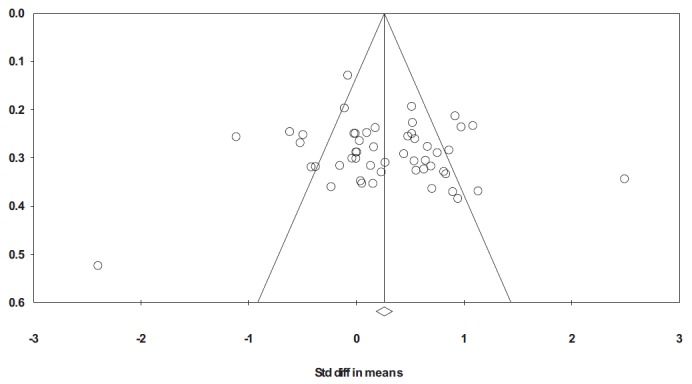
Stereotype threat effects arise when an individual feels at risk of confirming a negative stereotype about their group and consequently underperforms on stereotype relevant tasks (Steele, 2010). Among older people, underperformance across cognitive and physical tasks is hypothesized to result from age-based stereotype threat (ABST) because of negative age-stereotypes regarding older adults' competence. The present review and meta-analyses examine 22 published and 10 unpublished articles, including 82 effect sizes (N = 3882) investigating ABST on older people's (Mage = 69.5) performance. The analysis revealed a significant small-to-medium effect of ABST (d = .28) and important moderators of the effect size. Specifically, older adults are more vulnerable to ABST when (a) stereotype-based rather than fact-based manipulations are used (d = .52); (b) when performance is tested using cognitive measures (d = .36); and (c) occurs reliably when the dependent variable is measured proximally to the manipulation. The review raises important theoretical and methodological issues, and areas for future research.
Overview
The claims and statistics of this paper haven’t been checked yet.
Free: it reads the open-access text and checks the first 5 claims that cite a source we can check. Create a free account to check every claim.
Integrity signals
Registry
Cites
Statistics
Figures
Verification
Claims the paper makes
The claims and statistics of this paper haven’t been checked yet.
Free: it reads the open-access text and checks the first 5 claims that cite a source we can check. Create a free account to check every claim.
Claims other papers make about this one
Each is checked against this paper’s own text: does it say what the citing paper says it does?
The source backs part of the claim, not all of it — or backs it for a different population, condition or comparison.
In the citing paper
“five meta-analyses that showed negative age beliefs can adversely affect the health of older persons [11–15]”
From Global reach of ageism on older persons' health: a systematic review (2020) · cites this paper as [14]
Experimental — accuracy not yet measuredThe source backs part of the claim, not all of it — or backs it for a different population, condition or comparison.
In the citing paper
“previous systematic reviews have not examined how both levels simultaneously influence health”
From Global reach of ageism on older persons' health: a systematic review (2020) · cites this paper as [14]
Experimental — accuracy not yet measured
Self-check
Percentages, sums and reported differences re-computed from the paper’s own numbers.
The self-check needs the paper’s full text.
Citations
Cites
Statistical Power Analysis for the Behavioral Sciences
Muller, K. (1989) · Technometrics · doi:10.1080/00401706.1989.10488618 · Cited by 99,167
Statistical power analysis for the behavioral sciences
(1990) · Computers, Environment and Urban Systems · doi:10.1016/0198-9715(90)90050-4 · Cited by 65,269
A Coefficient of Agreement for Nominal Scales
Cohen, J. (1960) · Educational and Psychological Measurement · doi:10.1177/001316446002000104 · Cited by 42,398 · cited 1×
“All variables coded showed high interrater agreement (Cohen’s kappa or (cid:5) ; Cohen, 1960; Mean (cid:5) (cid:2) .95).”
Statistical Power Analysis for the Behavioral Sciences (2nd ed.).
Lachenbruch, P. A., & Cohen, J. (1989) · Journal of the American Statistical Association · doi:10.2307/2290095 · Cited by 37,395
Statistical Methods for Meta-Analysis
Wasserman, S., Hedges, L. V., & Olkin, I. (1988) · Journal of Educational Statistics · doi:10.2307/1164953 · Cited by 10,326
(2000) · Cited by 9,198
The file drawer problem and tolerance for null results.
Rosenthal, R. (1979) · Psychological Bulletin · doi:10.1037/0033-2909.86.3.638 · Cited by 9,068 · cited 1×
“As identified by Rosenthal (1979), unattained unpublished studies may exist that represent a bias against the publication of nonsignificant results.”
Stereotype threat and the intellectual test performance of African Americans.
Steele, C. M., & Aronson, J. (1995) · Journal of Personality and Social Psychology · doi:10.1037/0022-3514.69.5.797 · Cited by 9,020 · cited 6×
“…as blatant) led participants to behave contrary to expectations defined by the stereotype, in line with “stereotype reac-tance” theory (Brehm, 1966); whereas stereotype-based cues (defined as subtle) led to behavioral assimilation, as predicted by stereotype threat theory (Steele & Aronson, 1995).”
Influential(1999) · Cited by 6,104
Pettigrew, T. F. (1998) · Annual Review of Psychology · doi:10.1146/annurev.psych.49.1.65 · Cited by 6,001 · cited 1×
“This appears to work through familiar mechanisms of intergroup contact (Pettigrew, 1998), which can counteract stereotypes and mean that intergroup comparisons do not give rise to anxiety.”
Research works printed but not linked: 6
- Bensadon B. A. (2010). Memory self-efficacy and memory effects in aging (Unpublished doctoral dissertation). University of Florida, Gainesville, Florida.
- * Lambert A. E. (2011). On attentional control and the elderly driving stereotype (Unpublished doctoral thesis). University of Utah, Salt Lake City, Utah.
- * Lamont R. A. (2011). Stereotype threat and physical performance among the elderly: Exploration of mechanisms and after-effects. Unpublished master’s dissertation.
- Moldoff M. A. (2010). The joke’s on you: The effects of disparaging political humor on young citizens’ attitudes and behaviours (Unpublished doctoral thesis). University of North Carolina, Chapel Hill.
- Nelson T. D. (2002). Ageism: Stereotyping and prejudice against older persons. Cambridge, MA: MIT Press.
- Tajfel H., & Turner J. C. (1979). An integrative theory of social conflict In Austin W. G. & Worchel S. (Eds.), The social psychology of intergroup relations (pp. 33– 47). Monterey, CA: Brooks/Cole.
Cited by
Items 601–656 of 656
Sánchez García, J., Gil‐Lacruz, M., & Gil Lacruz, A. I. (2023) · Zaguan (University of Zaragoza Repository)
Herédia, A. M. D. (2019) · Repositório Institucional da Universidade Autónoma de Lisboa (Universidade Autónoma de Lisboa)
Cheriet, N. (2024) · ORBi (University of Liège) · Cited by 3
Man, K. M. X. (2025) · Nottingham ePrints (University of Nottingham)
Julien, A. (2023) · Spectrum Research Repository (Concordia University)
Prejudice and unlawful behaviour: exploring levers for \nchange
Abrams, D., Swift, H. J., & Mahmood, L. (2016) · Digital Education Resource Archive (University College London)
Self-citationAndersson, J. (2022) · Lincoln (University of Nebraska)
The Effects of Exposure to Appropriated Slurs on Stereotype Threat
Guthrie, C. M. (2021) · ScholarWorks (Walden University)
Haugen, H. O. (2018) · NORA - Norwegian Open Research Archives
Innovative and Creative Behaviours in the Modern Workplace: Causes and Consequences
Mustafa, M. J. (2025) · Frontiers research topics · doi:10.3389/978-2-8325-6628-2
Santos, I. J. (2024) · LA Referencia (Red Federada de Repositorios Institucionales de Publicaciones Científicas)
Essays on Stereotype Threat and Consumer Responses
Dallabrida, Y. M. (2023) · LA Referencia (Red Federada de Repositorios Institucionales de Publicaciones Científicas)
Ilesanmi, I. O., & Beirman, A. T. E. (2026) · Journal of Internal Displacement · doi:10.4314/jid.v16i1.4
Determination of surgical nurses' willingness to provide care to elderly patients and discrimination
Kaya, G. (2023) · Hasan Kalyoncu University Institutional Repository (Hasan Kalyoncu University)
Digital Interventions for Older Adults
Barbiani, D., & Pagnini, F. (2026) · Springer eBooks · doi:10.1007/978-3-032-08980-9_11
Age stereotypes of middle school students
GÜLERYÜZ, O., & Kılcan, B. (2026) · Educational Gerontology · doi:10.1080/03601277.2026.2630695
Understanding motivations of older adventurers.
Tierney, J., & Lydon, J. (2019) · Research@THEA · Cited by 1
Perceived age discrimination and cognitive function in older Korean adults: a cross-sectional study
You, S., & Kim, G. (2026) · Aging & Mental Health · doi:10.1080/13607863.2026.2639635
“This process is particularly vulnerable to aging, and its effects persist throughout old age (Lamont et al., 2015).”
Interpersonal ageism and its impact on older adults health and care engagement in China
Shao, B., Chen, Y., Wang, X., & Tang, J. (2026) · Geriatric Nursing · doi:10.1016/j.gerinurse.2026.103987 · Cited by 1
(2022) · Directory of Open access Books (OAPEN Foundation)
Nestro, C. S., & Douthit, K. Z. (2018) · UR Research (University of Rochester)
Stereotypes: the representation of older adults and ageing in Australian newspapers
Butson, M. L., & Wright, R. K. (2026) · Ageing and Society · doi:10.1017/s0144686x26100658
“These internalized beliefs may negatively impact mental and physical functioning and lead to withdrawal from certain activities and social institutions (Lamont et al. 2015; Centre for Better Ageing 2023).”
Houtin, L. (2018) · theses.fr (ABES) · doi:10.70675/7506be16z7782z40bez89efzb37929eb9a36 · Cited by 1
A strategy perspective on age-based stereotype threat : studies in arithmetic
Nicolas, P. (2019) · theses.fr (ABES) · doi:10.70675/13483821z56e4z4810z90f8z3fe8a720bc8f
Thomas, P. (2020) · theses.fr (ABES) · doi:10.70675/f97acb7dz809ez4b06zaab8z6661d1142f20 · Cited by 2
Gauthier, K. (2021) · theses.fr (ABES) · doi:10.70675/e93bfacdzd348z45e6zac53zf9c5f7e715bf
L’âgisme chez les étudiants en chirurgie dentaire : comment le quantifier et le qualifier ?
Piaton, S. (2022) · theses.fr (ABES) · doi:10.70675/60250a17z72f6z4a94z9c07z93529fba95a1
Mental Health Stereotypes and Aging: Effects on Mood and Decision Making
Gao, X. S., Ready, R. E., & Wang, R. (2026) · Experimental Aging Research · doi:10.1080/0361073x.2026.2673755
“…robust data that age-based stereotype threats about memory and cognition negatively affect older adults’ performance in memory and cognitive tasks (Armstrong et al., 2017; Lamont et al., 2015), we expected negative information about the mental health of older adults to have adverse effects on mood.”
How the Social Context Influences Cognitive Performance in Older Adults: the Age of Examiner Effect
Heiser, N. H. (2026) · Archive ouverte UNIGE (University of Geneva) · doi:10.13097/archive-ouverte/unige:193828
APPROACHING "THE END": METAPHORS OF OLD AGE IN THE LITERARY DISCOURSE
Holyk, S. V. (2021) · Lege artis Language yesterday today tomorrow · doi:10.34135/lartis.21.6.2.01
Junge, M. (2025) · Qucosa (Saxon State and University Library Dresden)
de Boer, L., Reichard, B., Poos, J. M., Houwer, J. F. H. D., Swartenbroekx, T., Aro, O. A., Rajicic, A., Brouwer, A., Dopper, E. G. P., Kaat, L. D., et al. (2026) · Journal of Neurology · doi:10.1007/s00415-026-13892-0
“5 Trajectories (95% CI) pre-and post-awareness on cognitive, behavioral, and neuropsychiatric outcomes in learners with a maximum of 3 follow-ups pre-and -post learning genetic status influenced by stress and emotional pressure, which may distort their measurement of pure cognitive ability [31, 32].”
The wisdom-frailty paradox: Mapping age stereotypes in contemporary Iranian media
Moazamigoudarzi, M., Wibisono, A. H., Yaghoobzadeh, A., & Poorcheraghi, H. (2026) · Educational Gerontology · doi:10.1080/03601277.2026.2684779
RODRIGUEZ, G. M., & REBOLLO, M. M. (2024) · doi:10.59466/lp202606
Mazlum, A., Tekin, C., Karakaya, H., Dever, A., Bulut, E., Çetin, M. S., Toprak, M., Dereli, G., Kurt, G., Akbaş, A., et al. (2026) · Akademisyen Kitabevi eBooks · doi:10.37609/akya.4201
Age Diversity and Workplace Perceptions: Insights from the 2019 Working Longer Survey
Bennett, J. (2026) · Trends in Psychology · doi:10.1007/s43076-026-00529-4
Subjektive Annahmen über die menschliche Natur
Landwehr, A. (2026) · Publication Server of the Catholic University Eichstätt-Ingolstadt (Catholic University of Eichstätt-Ingolstadt) · doi:10.17904/ku.opus-1061
Sastoque, L. G., Gilet, A.-L., & Bouazzaoui, B. (2026) · Memory · doi:10.1080/09658211.2026.2711903
“…underperform in cognitive or physical tasks, specifically those targeting the stereotyped domains (e.g., Barber, 2020; Brothers et al., 2021; Coudin & Alexopoulos, 2010; Deshayes et al., 2025; Hu et al., 2025; Lamont et al., 2015; Pedroso-Chaparro et al., 2023; Ramírez & Palacios-Espi-nosa, 2016).”
Santiago, A. A. B. (2024) · Repositorio Institucional Universidad de Huanuco
Empathy, Gender, Engineering Discipline, and Stereotype Threat
Vale, J. R., Howcroft, J., & Kirkscey, R. (2026) · Proceedings of the Canadian Engineering Education Association (CEEA) · doi:10.24908/pceea.2026.21601
Song, S., 贾铠阳, & Hou, B. (2026) · Frontiers in Psychology · doi:10.3389/fpsyg.2026.1911901
“Lamont et al. (2015) demonstrated that stereotype threat effects are robust across multiple domains and may vary according to individuals’ subjective aging appraisals and age-related self-views.”
InfluentialNobles, M. (2026) · The Scholarship East Carolina University's Institutional Repository (East Carolina University)
Shimizu, Y. (2026) · Educational Gerontology · doi:10.1080/03601277.2026.2730613 · Cited by 1
Frings, D. (2026) · Routledge eBooks · doi:10.4324/9781003627616
Park, J., & Rothermund, K. (2026) · Elsevier eBooks · doi:10.1016/b978-0-443-27490-9.00016-6
Li, J., Hou, D. X., & Tay, L. (2026) · Journal of Business and Psychology · doi:10.1007/s10869-026-10152-w
Intervenção psicológica em adultos mais velhos em contexto militar
Barra, F. M. D. S. (2025) · Repositório Institucional da Universidade Autónoma de Lisboa (Universidade Autónoma de Lisboa)
Ruiz, E. B., Urcola‐Pardo, F., & Navascués, M. L. J. (2026) · Zaguan (Universidad de Zaragoza)
Bullock, J. L., Brown, C. E., Casanova-Pérez, R., & Wood, B. R. (2026) · Journal of the Association of Nurses in AIDS Care · doi:10.1097/jnc.0000000000000709
Yeaqubi, A. M. (2025) · Stout in Business and Management · doi:10.61424/gwt94998
Age Effects in Story Recall: Comparing the Narrative Similarities of Memories for a Fictional Movie
Cheriet, N., & Bastin, C. (2026) · The International Journal of Aging and Human Development · doi:10.1177/00914150261495472
Parry-Vaughan, N. (2025) · City Research Online (City University London)
Scott, T., Kugelman, M., & Salmon, A. J. (2026) · Frontiers in Psychology · doi:10.3389/fpsyg.2026.1949869
“Aging anxiety, particularly among middle-aged adults, has also been associated with increased depression and loneliness (Bergman and Segel-Karpas, 2021; Curșeu et al., 2021; Lamont et al., 2015; Swift et al., 2017).”
Metadata
- Authors
- Lamont, R. A., Swift, H. J., & Abrams, D.
- Affiliations
- University of Kent (GB)
- Corresponding author
- Abrams, Dominic
- Venue
- Psychology and Aging
- Published
- 2015-03
- Volume
- 30
- Issue
- 1
- Pages
- 180-193
- ISSN
- 0882-7974 (ISSN-L)
- 1939-1498
- PMC
- PMC4360754
- OpenAlex
- W2135485953
- Cited by
- 583
- References
- 83
- Citations by year
- 2026: 25 · 2025: 46 · 2024: 48 · 2023: 40 · 2022: 58 · 2021: 74 · 2020: 120 · 2019: 49 · 2018: 51 · 2017: 32 · 2016: 29 · 2015: 11
- FWCI
- 11.55
- Type
- journal article
- Language
- en
- Update notices
- correction (2018-08-09)
- Open access
- hybrid
- doi.org
- Licence
- Locations
- Psychology and Aging (publishedVersion, other-oa)
- PubMed Central (publishedVersion, cc-by)
- PubMed (publishedVersion)
- Kent Academic Repository (University of Kent) (acceptedVersion)
- Funders
- UK Economic and Social Research Council (ES/I012141/1)
- Topics
- Social Sciences › Psychology › Developmental and Educational Psychology › Aging and Gerontology Research
- Social Sciences › Sociology and Political Science › Social and Intergroup Psychology
- Social Sciences › Demography › Retirement, Disability, and Employment
- Keywords
- age stereotypes, older adults, underperformance, stereotype threat, cognitive performance, physical performance, moderators of effect size, aging
- MeSH terms
- Aged, Aged, 80 and over, Aging, Cognition, Female, Humans, Male, Stereotyping
About these checks
Registry, retraction, Cites and statistics results are computed, not judged, with one exception: a printed reference that no index lists is read once by a model before it counts as a citation error. Claims are extracted by a model and kept only when their quote appears verbatim in the text; each cited source is then checked, with a model’s help, for whether it says what the claim relies on. Those verdicts can be wrong — read the claim’s quote and the cited source before relying on one.
Statistics and arithmetic are recomputed, not judged.
Confidence bands are shown only for fields calibrated on our annotated test set. None is calibrated yet, so no band is shown.
What counts as a claim ›How we measure confidence ›How we check this ›
Are you an author, or do you see a problem with this page? Request a review
Data sources
Bibliographic data: Semantic Scholar, OpenAlex, Crossref.
Contains information from the Semantic Scholar Academic Graph Datasets, made available under the ODC Attribution License (ODC-BY 1.0).
Semantic Scholar’s data is described in: Kinney, R., et al. (2023). The Semantic Scholar Open Data Platform. arXiv:2301.10140.
