

Mutational landscape and significance across 12 major cancer types
Open accessThe DOI matches its Crossref record; 39 of the 40 references it cites were found in a registry or an index.
Abstract
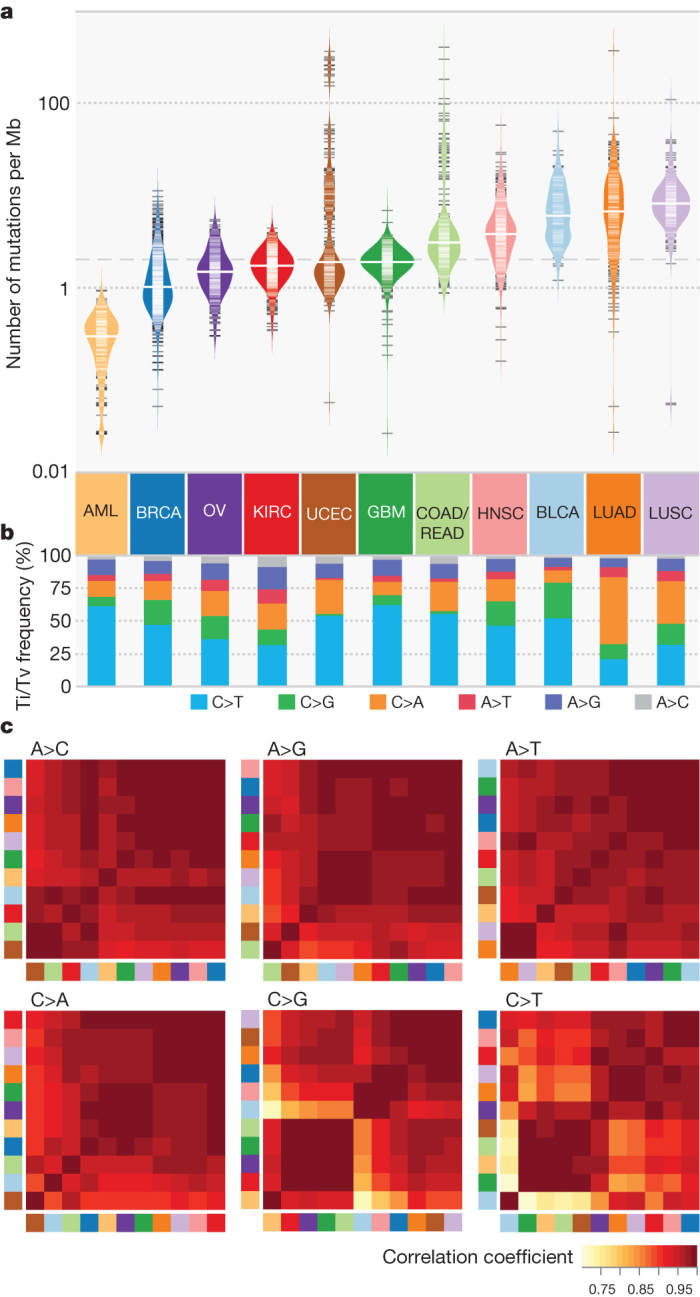
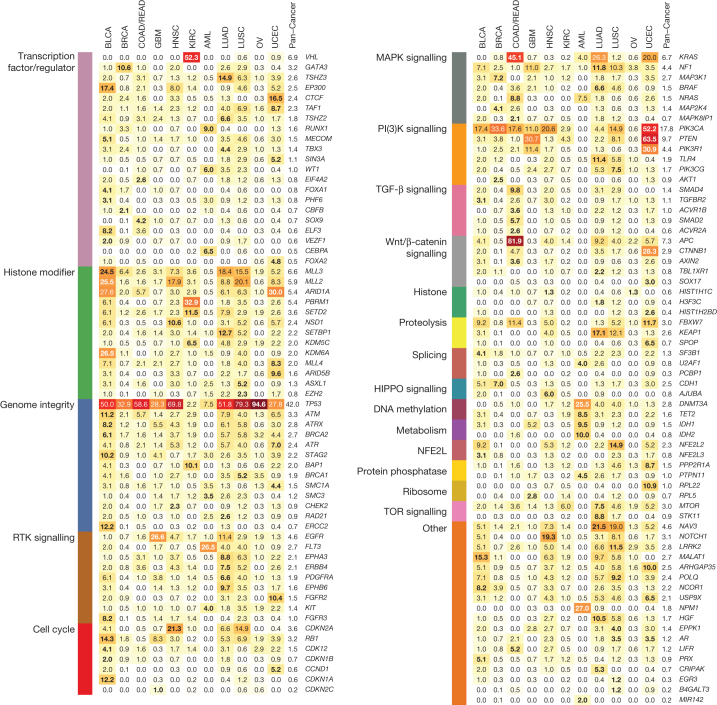
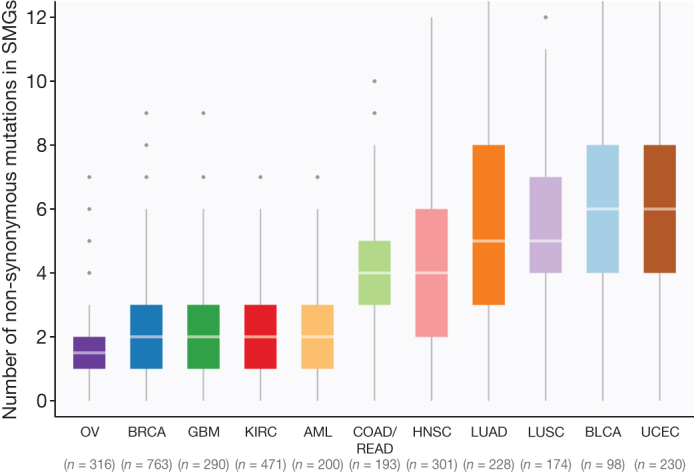
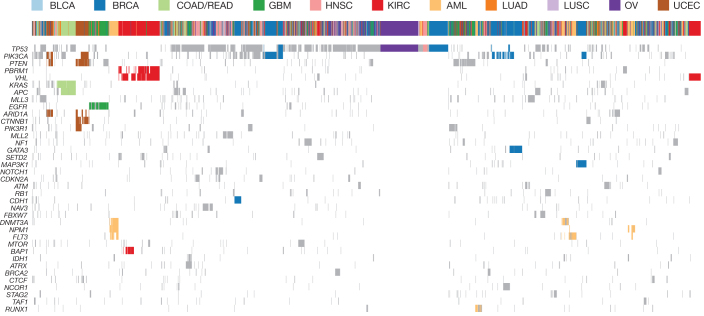
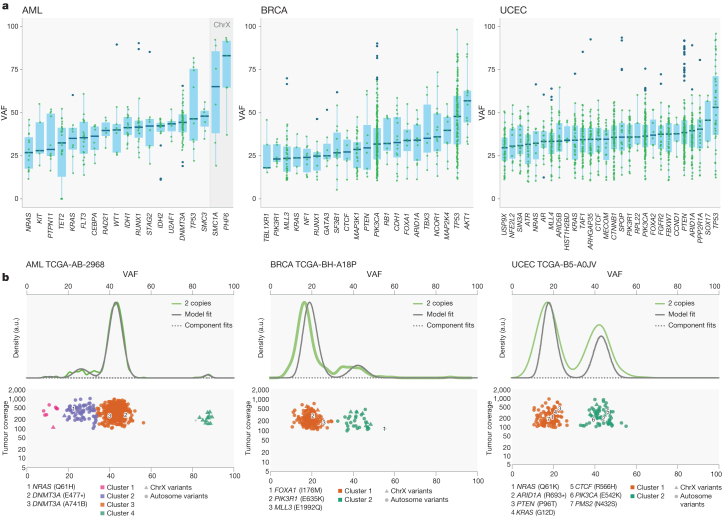
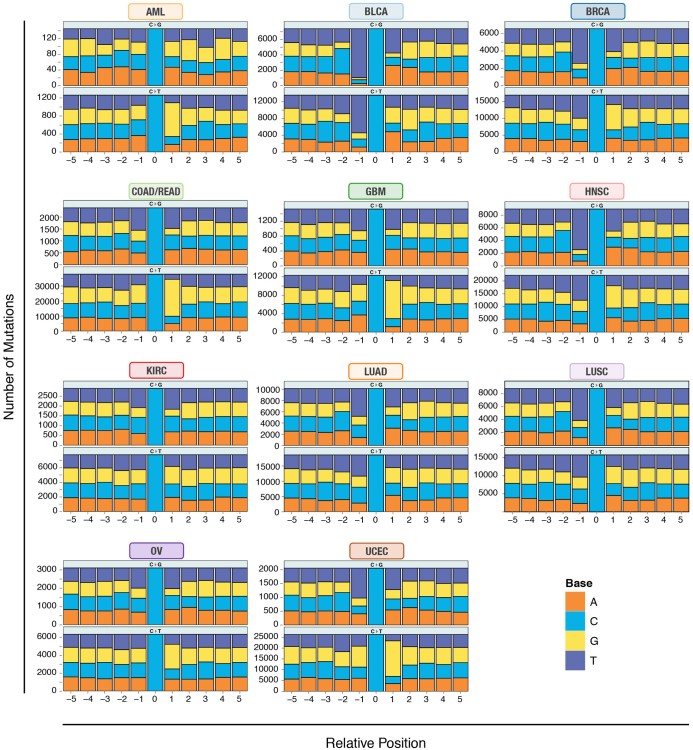
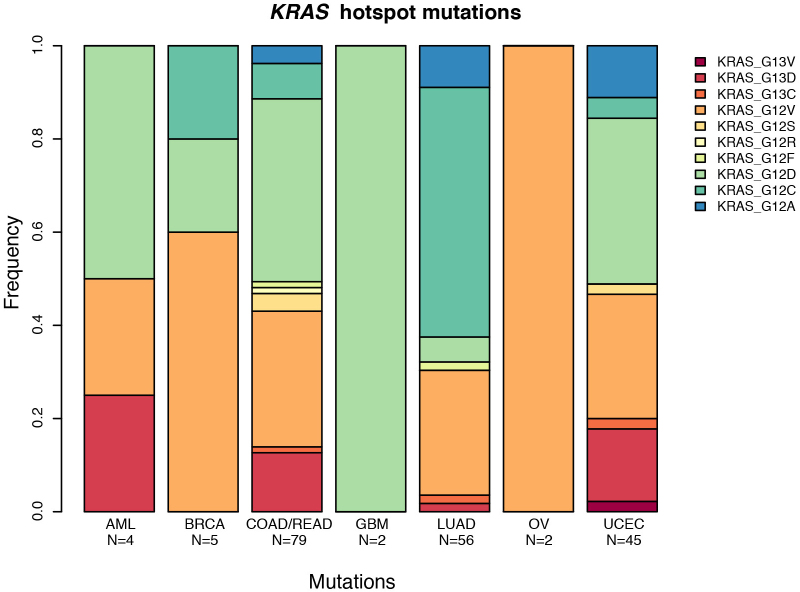
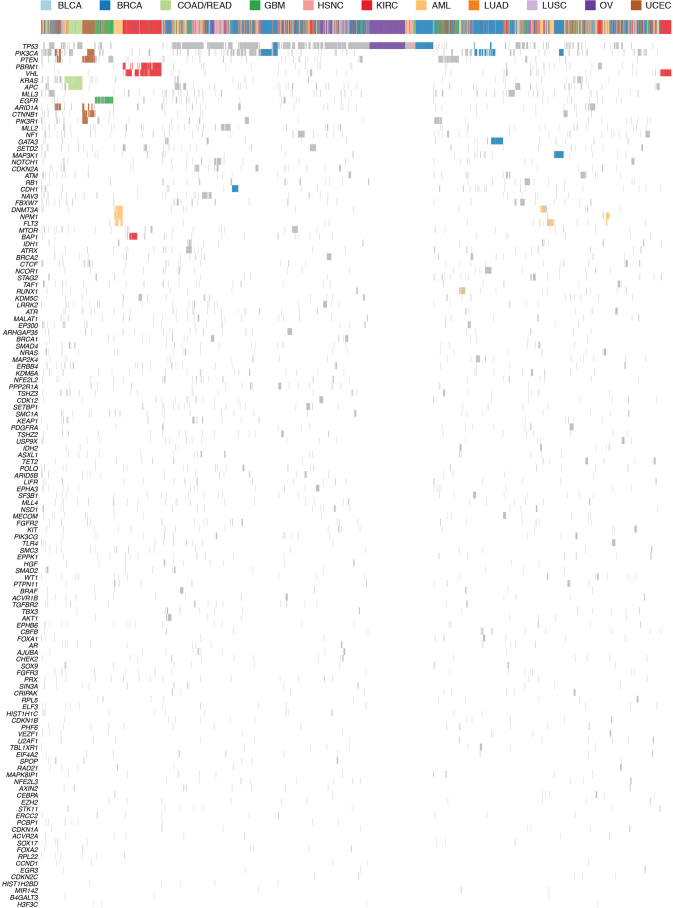
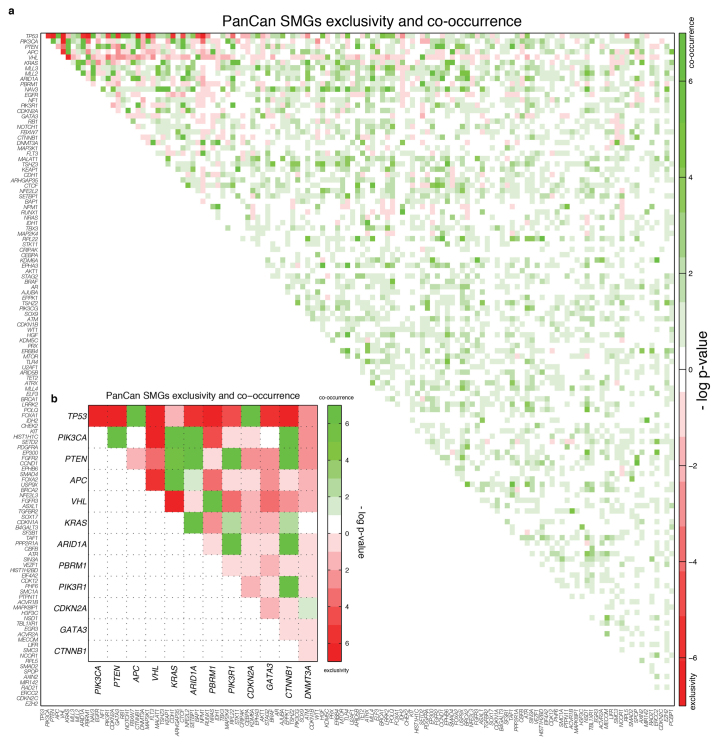
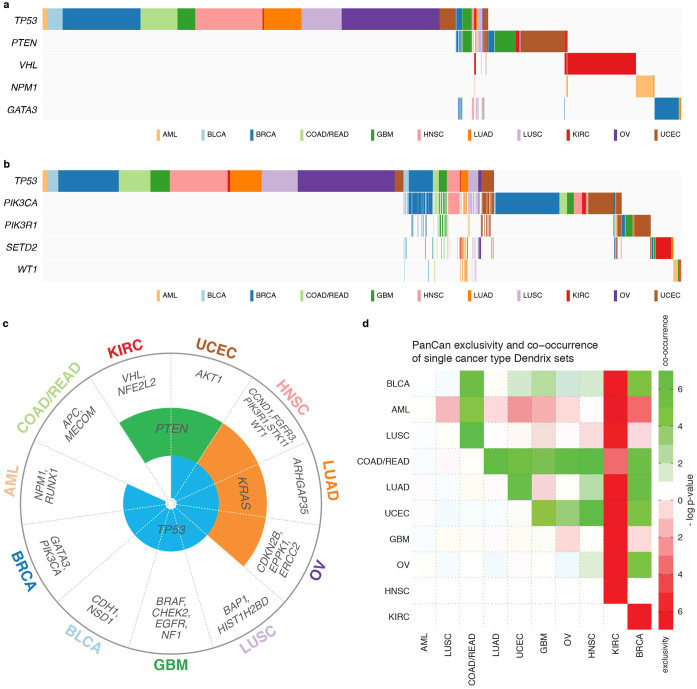
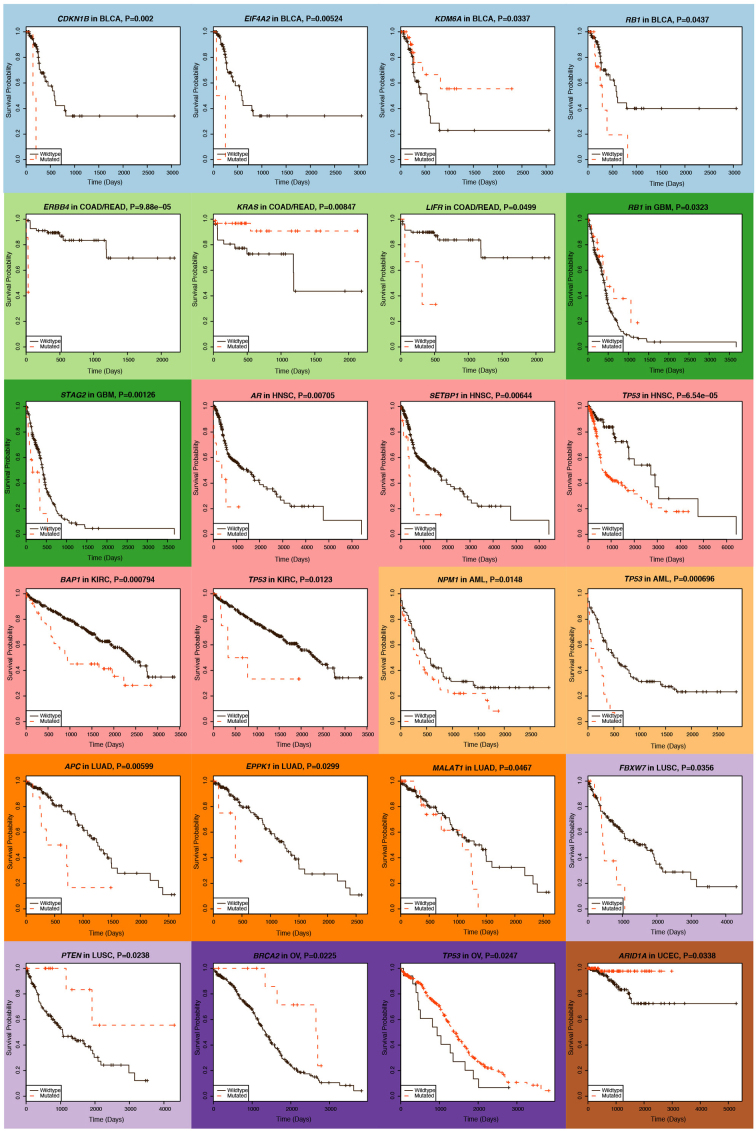
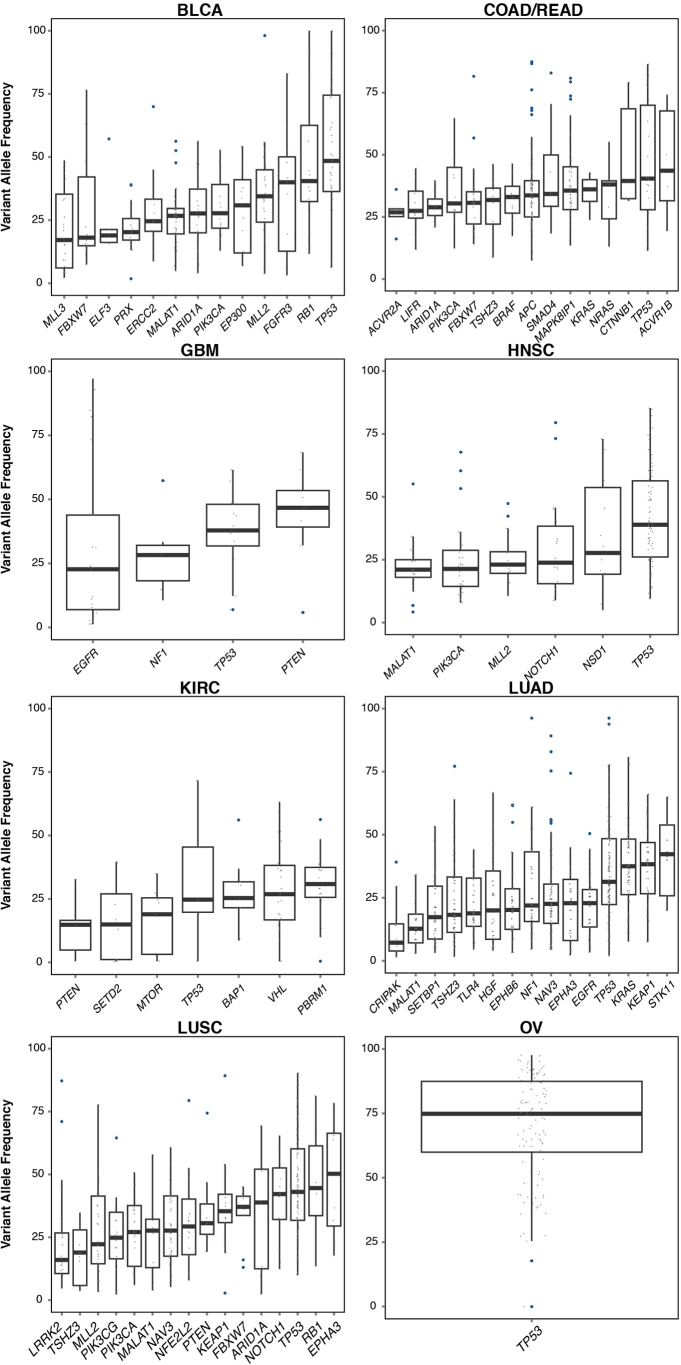
The Cancer Genome Atlas (TCGA) has used the latest sequencing and analysis methods to identify somatic variants across thousands of tumours. Here we present data and analytical results for point mutations and small insertions/deletions from 3,281 tumours across 12 tumour types as part of the TCGA Pan-Cancer effort. We illustrate the distributions of mutation frequencies, types and contexts across tumour types, and establish their links to tissues of origin, environmental/carcinogen influences, and DNA repair defects. Using the integrated data sets, we identified 127 significantly mutated genes from well-known (for example, mitogen-activated protein kinase, phosphatidylinositol-3-OH kinase, Wnt/β-catenin and receptor tyrosine kinase signalling pathways, and cell cycle control) and emerging (for example, histone, histone modification, splicing, metabolism and proteolysis) cellular processes in cancer. The average number of mutations in these significantly mutated genes varies across tumour types; most tumours have two to six, indicating that the number of driver mutations required during oncogenesis is relatively small. Mutations in transcriptional factors/regulators show tissue specificity, whereas histone modifiers are often mutated across several cancer types. Clinical association analysis identifies genes having a significant effect on survival, and investigations of mutations with respect to clonal/subclonal architecture delineate their temporal orders during tumorigenesis. Taken together, these results lay the groundwork for developing new diagnostics and individualizing cancer treatment. As part of The Cancer Genome Atlas Pan-Cancer effort, data analysis for point mutations and small indels from 3,281 tumours and 12 tumour types is presented; among the findings are 127 significantly mutated genes from cellular processes with both established and emerging links in cancer, and an indication that the number of driver mutations required for oncogenesis is relatively small. As part of The Cancer Genome Atlas Pan-Cancer project, these authors present data analysis for point mutations and small indels from more than 3,000 tumours representing 12 tumour types. Among the findings are 127 significantly mutated genes from cellular processes with both established and emerging links to cancer, and an indication that the number of driver mutations required for oncogenesis is relatively small. Additional analyses also identify genes with significant impact on survival and a likely temporal order of mutational events during tumorigenesis.
Overview
The claims and statistics of this paper haven’t been checked yet.
Free: it reads the open-access text and checks the first 5 claims that cite a source we can check. Create a free account to check every claim.
Integrity signals
Registry
Cites
Statistics
Figures
Verification
Claims the paper makes
The claims and statistics of this paper haven’t been checked yet.
Free: it reads the open-access text and checks the first 5 claims that cite a source we can check. Create a free account to check every claim.
Claims other papers make about this one
Each is checked against this paper’s own text: does it say what the citing paper says it does?
The source backs part of the claim, not all of it — or backs it for a different population, condition or comparison.
In the citing paper
“However, TP53 is inactivated in a major fraction of human tumors, mainly by missense mutations in the DNA-binding core domain of p533,4, leading to loss of DNA binding and p53-dependent transactivation of target genes such as p21, Bax and Puma.”
From Inhibition of the glutaredoxin and thioredoxin systems and ribonucleotide reductase by mutant p53-targeting compound APR-246 (2018) · cites this paper as [3]
Experimental — accuracy not yet measuredThe check wasn’t confident either way, so it gives no verdict — never disputed.
In the citing paper
“Current next-generation sequencing (NGS) technology is limited in the detection of rare variant alleles due to an intrinsic sequencing error rate of ~ 0.1%19.”
From Role of TP53 mutations in the origin and evolution of therapy-related acute myeloid leukaemia (2015) · cites this paper as [19]
Experimental — accuracy not yet measuredThe check wasn’t confident either way, so it gives no verdict — never disputed.
In the citing paper
“Yet, these mutations occur significantly more often in human disease than transversion mutations (62% transition vs 38% transversion29,63).”
From One-step generation of tumor models by base editor multiplexing in adult stem cell-derived organoids (2023) · cites this paper as [63]
Experimental — accuracy not yet measuredIn the citing paper
“Mutations in TP53 are thought to occur in more than 50% of all human malignancies.6,7”
From p53: from understanding its structure to advances in therapeutic targeting (2026) · cites this paper as [6]
In the citing paper
“Among somatically mutated genes, TP53 mutations are the most common.6”
From p53: from understanding its structure to advances in therapeutic targeting (2026) · cites this paper as [6]
Self-check
Percentages, sums and reported differences re-computed from the paper’s own numbers.
The self-check needs the paper’s full text.
Citations
Cites
Hanahan, D., & Weinberg, R. A. (2000) · Cell · doi:10.1016/s0092-8674(00)81683-9 · Cited by 29,219
Comprehensive molecular portraits of human breast tumours
The Cancer Genome Atlas Network (2012) · Nature · doi:10.1038/nature11412 · Cited by 12,129
Comprehensive molecular characterization of human colon and rectal cancer
The Cancer Genome Atlas Network (2012) · Nature · doi:10.1038/nature11252 · Cited by 8,499
Integrated genomic analyses of ovarian carcinoma
Perou, C. M. (2019) · Carolina Digital Repository (University of North Carolina at Chapel Hill) · doi:10.17615/hvp3-wg08 · Cited by 7,925
Vogelstein, B., Papadopoulos, N., Velculescu, V. E., Zhou, S., Diaz, L. A., & Kinzler, K. W. (2013) · Science · doi:10.1126/science.1235122 · Cited by 7,863
Comprehensive genomic characterization defines human glioblastoma genes and core pathways
The Cancer Genome Atlas Research Network (2008) · Nature · doi:10.1038/nature07385 · Cited by 7,735
Self-citationAn Integrated Genomic Analysis of Human Glioblastoma Multiforme
Parsons, D. W., Jones, S., Zhang, X., Lin, J. C.-H., Leary, R. J., Angenendt, P., Mankoo, P., Carter, H., Siu, I.-M., Gallia, G. L., et al. (2008) · Science · doi:10.1126/science.1164382 · Cited by 5,857
Integrated genomic characterization of endometrial carcinoma
The Cancer Genome Atlas Research Network, & Levine, D. A. (2013) · Nature · doi:10.1038/nature12113 · Cited by 5,784
Mutational heterogeneity in cancer and the search for new cancer-associated genes
Lawrence, M. S., Stojanov, P., Polak, P., Kryukov, G. V., Cibulskis, K., Sivachenko, A., Carter, S. L., Stewart, C., Mermel, C. H., Roberts, S. A., et al. (2013) · Nature · doi:10.1038/nature12213 · Cited by 5,461
Genomic and Epigenomic Landscapes of Adult De Novo Acute Myeloid Leukemia
The Cancer Genome Atlas Research Network (2013) · New England Journal of Medicine · doi:10.1056/nejmoa1301689 · Cited by 5,078
Cited by
Items 901–1,000 of 1,028
Emerging roles of DYRK2 in cancer
Tandon, V., de la Vega, L., & Banerjee, S. (2020) · Journal of Biological Chemistry · doi:10.1074/jbc.rev120.015217 · Cited by 70
Sang, L., Wang, X., Xu, D., & Zhao, W. (2018) · World Journal of Gastroenterology · doi:10.3748/wjg.v24.i24.2605 · Cited by 69
Jang, B., Han, W., & Kim, I. A. (2019) · Radiotherapy and Oncology · doi:10.1016/j.radonc.2019.11.003 · Cited by 69
Immunotherapy in Breast Cancer: Current Practice and Clinical Challenges
Gagliato, D. D. M., Buzaid, A. C., Pérez-García, J. M., & Cortés, J. (2020) · BioDrugs · doi:10.1007/s40259-020-00436-9 · Cited by 69
Ademuyiwa, F. O., Gao, F., Street, C., Chen, I., Northfelt, D., Wesolowski, R., Arora, M., Brufsky, A., Dees, E. C., Santa-Maria, C. A., et al. (2022) · npj Breast Cancer · doi:10.1038/s41523-022-00500-3 · Cited by 69
Identification of Distinct Tumor Subpopulations in Lung Adenocarcinoma via Single-Cell RNA-seq
Min, J.-W., Kim, W. J., Han, J. A., Jung, Y.-J., Kim, K.-T., Park, W.-Y., Lee, H.-O., & Choi, S. S. (2015) · PLOS ONE · doi:10.1371/journal.pone.0135817 · Cited by 60
Statistically identifying tumor suppressors and oncogenes from pan-cancer genome-sequencing data
Kumar, R. D., Searleman, A. C., Swamidass, S. J., Griffith, O. L., & Bose, R. (2015) · Bioinformatics · doi:10.1093/bioinformatics/btv430 · Cited by 69
Setd2 deficiency impairs hematopoietic stem cell self-renewal and causes malignant transformation
Zhang, Y.-L., Sun, J.-W., Xie, Y.-Y., Zhou, Y., Liu, P., Song, J.-C., Xu, C., Wang, L., Liu, D., Xu, A., et al. (2018) · Cell Research · doi:10.1038/s41422-018-0015-9 · Cited by 72
Radiotherapy-Induced Digestive Injury: Diagnosis, Treatment and Mechanisms
Chen, G., Han, Y., Zhang, H., Tu, W., & Zhang, S. (2021) · Frontiers in Oncology · doi:10.3389/fonc.2021.757973 · Cited by 72
Knol, J. C., Lyu, M., Böttger, F., Monteiro, M. N., Pham, T. V., Rolfs, F., Vallés‐Martí, A., Schelfhorst, T., Haas, R. R. D. G., Bijnsdorp, I. V., et al. (2025) · Cancer Cell · doi:10.1016/j.ccell.2025.05.003 · Cited by 69
Klinghammer, K. F., Raguse, J. D., Plath, T., Albers, A. E., Joehrens, K., Zakarneh, A., Brzezicha, B., Wulf‐Goldenberg, A., Keilholz, U., Hoffmann, J., et al. (2014) · International Journal of Cancer · doi:10.1002/ijc.29344 · Cited by 71
Wang, J., Liu, Q., & Shyr, Y. (2015) · BMC Genomics · doi:10.1186/1471-2164-16-s7-s5 · Cited by 71
Patterns and processes of somatic mutations in nine major cancers
Jia, P., Pao, W. J., & Zhao, Z. (2014) · BMC Medical Genomics · doi:10.1186/1755-8794-7-11 · Cited by 68
Vargas, H. A., Miccò, M., Hong, S. I., Goldman, D. A., Dao, F., Weigelt, B., Soslow, R. A., Hricak, H., Levine, D. A., & Sala, E. (2014) · Radiology · doi:10.1148/radiol.14141477 · Cited by 68
Fadlullah, M. Z. H., Chiang, I. K., Dionne, K. R., Yee, P. S., Gan, C. P., Sam, K. K., Tiong, K. H., Ng, K. W., Martín, D., Lim, K. P., et al. (2016) · Oncotarget · doi:10.18632/oncotarget.8533 · Cited by 68
Boscolo‐Rizzo, P., Mosto, M. C. D., Rampazzo, E., Giunco, S., Mistro, A. D., Menegaldo, A., Baboçi, L., Mantovani, M., Tirelli, G., & Rossi, A. D. (2016) · Cancer and Metastasis Reviews · doi:10.1007/s10555-016-9633-1 · Cited by 68
Deng, Y., Luo, S., Deng, C., Luo, T., Yin, W., Zhang, H., Zhang, Y., Zhang, X., Lan, Y., Ping, Y., et al. (2017) · Briefings in Bioinformatics · doi:10.1093/bib/bbx109 · Cited by 68
STAT3 is a master regulator of epithelial identity and KRAS-driven tumorigenesis
D’Amico, S., Shi, J., Martin, B. L., Crawford, H. C., Petrenko, O., & Reich, N. C. (2018) · Genes & Development · doi:10.1101/gad.311852.118 · Cited by 69
p53’s Extended Reach: The Mutant p53 Secretome
Pavlakis, E., & Stiewe, T. (2020) · Biomolecules · doi:10.3390/biom10020307 · Cited by 69
Resolving DNA Damage: Epigenetic Regulation of DNA Repair
Karakaidos, P., Karagiannis, D., & Rampias, T. N. (2020) · Molecules · doi:10.3390/molecules25112496 · Cited by 68
Triangular Relationship between p53, Autophagy, and Chemotherapy Resistance
Xu, J., Patel, N. H., & Gewirtz, D. A. (2020) · International Journal of Molecular Sciences · doi:10.3390/ijms21238991 · Cited by 68
Enhancer alterations in cancer: a source for a cell identity crisis
Kron, K. J., Bailey, S. D., & Lupien, M. (2014) · Genome Medicine · doi:10.1186/s13073-014-0077-3 · Cited by 68
Manipulation of Innate and Adaptive Immunity through Cancer Vaccines
Sayour, E. J., & Mitchell, D. A. (2017) · Journal of Immunology Research · doi:10.1155/2017/3145742 · Cited by 68
Tissue specificity of DNA damage response and tumorigenesis
Sun, S., Osterman, M. D., & Li, M. (2019) · Cancer Biology and Medicine · doi:10.20892/j.issn.2095-3941.2019.0097 · Cited by 68
High-throughput functional evaluation of human cancer-associated mutations using base editors
Kim, Y., Lee, S., Cho, S., Park, J., Chae, D., Park, T., Minna, J. D., & Kim, S. (2022) · Nature Biotechnology · doi:10.1038/s41587-022-01276-4 · Cited by 67
Chen, S., Liu, H., Liao, C., Huang, P.-J., Huang, Y., Hsu, A., Tang, P., Chang, Y., Chen, H., & Yen, T. (2015) · Oncotarget · doi:10.18632/oncotarget.3768 · Cited by 67
Pritchett, T. L., Bader, H. L., Henderson, J., & Hsu, T. (2014) · Oncogene · doi:10.1038/onc.2014.197 · Cited by 67
OncodriveROLE classifies cancer driver genes in loss of function and activating mode of action
Schroeder, M. P., Rubio-Perez, C., Tamborero, D., Gonzalez-Perez, A., & Lopez-Bigas, N. (2014) · Bioinformatics · doi:10.1093/bioinformatics/btu467 · Cited by 60
MSEA: detection and quantification of mutation hotspots through mutation set enrichment analysis
Jia, P., Wang, Q., Chen, Q., Hutchinson, K. E., Pao, W. J., & Zhao, Z. (2014) · Genome biology · doi:10.1186/preaccept-1822061407140231 · Cited by 67
Targeting Therapeutic Liabilities Engendered by PIK3R1 Mutations for Cancer Treatment
Cheung, L. W., & Mills, G. B. (2016) · Pharmacogenomics · doi:10.2217/pgs.15.174 · Cited by 61
Bolen, C. R., McCord, R., Huet, S., Frampton, G. M., Bourgon, R., Jardin, F., Dartigues, P., Punnoose, E. A., Szafer‐Glusman, E., Xerri, L., et al. (2017) · Blood Advances · doi:10.1182/bloodadvances.2016000786 · Cited by 67
Cao, B., Fang, Z., Liao, P., Zhou, X., Xiong, J., Zeng, S., & Lu, H. (2017) · Oncotarget · doi:10.18632/oncotarget.21544 · Cited by 62
Kang, H., Pettinga, D., Schubert, A. D., Ladenson, P. W., Ball, D. W., Chung, J., Schrock, A. B., Madison, R. W., Frampton, G. M., Stephens, P. J., et al. (2018) · The Oncologist · doi:10.1634/theoncologist.2018-0334 · Cited by 67
The Discovery of Mutated Driver Pathways in Cancer: Models and Algorithms
Zhang, J., & Zhang, S. (2016) · IEEE Transactions on Computational Biology and Bioinformatics · doi:10.1109/tcbb.2016.2640963 · Cited by 67
Liu, S., Zhao, Q., Peng, C. Y., Mao, Q., Wu, F., Zhang, F., Feng, Q., He, G., & Han, B. (2021) · European Journal of Medicinal Chemistry · doi:10.1016/j.ejmech.2021.113359 · Cited by 67
Kotler, E., Shani, O., Goldfeld, G., Lotan-Pompan, M., Tarcic, O., Gershoni, A., Hopf, T. A., Marks, D. S., Oren, M., & Segal, E. (2018) · Molecular Cell · doi:10.1016/j.molcel.2018.08.013 · Cited by 58
One-step generation of tumor models by base editor multiplexing in adult stem cell-derived organoids
Geurts, M. H., Gandhi, S., Boretto, M. G., Akkerman, N., Derks, L. L. M., van Son, G., Celotti, M., Harshuk-Shabso, S., Peci, F., Begthel, H., et al. (2023) · Nature Communications · doi:10.1038/s41467-023-40701-3 · Cited by 66
Harnessing Pandemonium: The Clinical Implications of Tumor Heterogeneity in Ovarian Cancer
Blagden, S. P. (2015) · Frontiers in Oncology · doi:10.3389/fonc.2015.00149 · Cited by 66
Xie, F., Zhang, J. J., Wang, J., Reuben, A., Xu, W., Yi, X., Varn, F. S., Ye, Y., Cheng, J., Yu, M., et al. (2020) · Clinical Cancer Research · doi:10.1158/1078-0432.ccr-19-1744 · Cited by 66
Self-citationKa, N., Lim, G. Y., Hwang, S., Kim, S.-S., & Lee, M. (2021) · Cell Reports · doi:10.1016/j.celrep.2021.110138 · Cited by 66
Fan, L., Sowmya, A., Meijering, E. H. W., & Song, Y. (2022) · IEEE Transactions on Medical Imaging · doi:10.1109/tmi.2022.3228275 · Cited by 66
Pagadala, M. S., Sears, T. J., Wu, V. H., Pérez‐Guijarro, E., Kim, H., Castro, A., Talwar, J. V., González-Colín, C., Cao, S., Schmiedel, B. J., et al. (2023) · Nature Communications · doi:10.1038/s41467-023-38271-5 · Cited by 66
Unique Molecular Landscapes in Cancer: Implications for Individualized, Curated Drug Combinations
Wheler, J. J., Lee, J. J., & Kurzrock, R. (2014) · Cancer Research · doi:10.1158/0008-5472.can-14-2329 · Cited by 66
Park, S., & Lehner, B. (2015) · Molecular Systems Biology · doi:10.15252/msb.20156102 · Cited by 61
CTCF genetic alterations in endometrial carcinoma are pro-tumorigenic
Marshall, A. D., Bailey, C. G., Champ, K., Vellozzi, M., O’Young, P., Metierre, C., Feng, Y., Thoeng, A., Richards, A. M., Schmitz, U., et al. (2017) · Oncogene · doi:10.1038/onc.2017.25 · Cited by 66
Self-citationPfeifer, C. R., Alvey, C. M., Irianto, J., & Discher, D. E. (2017) · Current Opinion in Systems Biology · doi:10.1016/j.coisb.2017.04.005 · Cited by 66
The number of key carcinogenic events can be predicted from cancer incidence
Belikov, A. V. (2017) · Scientific Reports · doi:10.1038/s41598-017-12448-7 · Cited by 66
The genomic and epigenomic landscape in thymic carcinoma
Saito, M., Fujiwara, Y., Asao, T., Honda, T., Shimada, Y., Kanai, Y., Tsuta, K., Kono, K., WATANABE, S.-I. I., Ohe, Y., et al. (2017) · Carcinogenesis · doi:10.1093/carcin/bgx094 · Cited by 66
p53 tumor suppressor and iron homeostasis
Zhang, J., & Chen, X. (2018) · FEBS Journal · doi:10.1111/febs.14638 · Cited by 66
PRODIGY: personalized prioritization of driver genes
Dinstag, G., & Shamir, R. (2019) · Bioinformatics · doi:10.1093/bioinformatics/btz815 · Cited by 66
Metabolic Reprogramming in Cancer Is Induced to Increase Proton Production
Sun, H., Zhou, Y., Skaro, M. F., Wu, Y., Qu, Z., Mao, F., Zhao, S., & Xu, Y. (2020) · Cancer Research · doi:10.1158/0008-5472.can-19-3392 · Cited by 66
Shahbandi, A., & Jackson, J. G. (2019) · npj Precision Oncology · doi:10.1038/s41698-018-0074-x · Cited by 65
Hotspot mutant p53-R273H inhibits KLF6 expression to promote cell migration and tumor metastasis
Sun, S., Chen, H., Sun, L., Wang, M., Wu, X., & Xiao, Z. J. (2020) · Cell Death and Disease · doi:10.1038/s41419-020-02814-1 · Cited by 66
Coordination between cell proliferation and apoptosis after DNA damage in Drosophila
Ruiz-Losada, M., González, R., Peropadre, A., Gil‐Gálvez, A., Tena, J. J., Baonza, A., & Estella, C. (2021) · Cell Death and Differentiation · doi:10.1038/s41418-021-00898-6 · Cited by 65
The multifaceted roles of cohesin in cancer
Nardo, M. D., Pallotta, M. M., & Musio, A. (2022) · Journal of Experimental & Clinical Cancer Research · doi:10.1186/s13046-022-02321-5 · Cited by 65
Prospects for targeting PD-1 and PD-L1 in various tumor types.
Kim, J. W., & Eder, J. P. (2014) · PubMed · Cited by 67
Ninjurin 1 has two opposing functions in tumorigenesis in a p53-dependent manner
Yang, H. J., Zhang, J., Yan, W., Cho, S.-J., Lucchesi, C. A., Chen, M., Huang, E. C., Scoumanne, A., Zhang, W., & Chen, X. (2017) · Proceedings of the National Academy of Sciences · doi:10.1073/pnas.1711814114 · Cited by 65
IDH2 inhibition enhances proteasome inhibitor responsiveness in hematological malignancies
Bergaggio, E., Riganti, C., Garaffo, G., Vitale, N., Mereu, E., Bandini, C., Pellegrino, E., Pullano, V., Omedè, P., Todoerti, K., et al. (2018) · Blood · doi:10.1182/blood-2018-05-850826 · Cited by 65
Systemic candidiasis in four foals
Reilly, L. K., & Palmer, J. E. (1994) · Journal of the American Veterinary Medical Association · doi:10.2460/javma.1994.205.03.464 · Cited by 65
ATP-Dependent Chromatin Remodeling Complexes as Novel Targets for Cancer Therapy
Mayes, K., Qiu, Z., Alhazmi, A., & Landry, J. W. (2014) · Advances in cancer research · doi:10.1016/b978-0-12-800249-0.00005-6 · Cited by 66
Translational genomics of ovarian clear cell carcinoma
Khalique, S., Lord, C. J., Banerjee, S. N., & Natrajan, R. (2019) · Seminars in Cancer Biology · doi:10.1016/j.semcancer.2019.10.025 · Cited by 64
Miari, K. E., Guzmán, M. L., Wheadon, H., & Williams, M. T. S. (2021) · Frontiers in Cell and Developmental Biology · doi:10.3389/fcell.2021.692800 · Cited by 67
The functional relevance of somatic synonymous mutations in melanoma and other cancers
Gotea, V., Gartner, J. J., Qutob, N., Elnitski, L. L., & Samuels, Y. (2015) · Pigment Cell & Melanoma Research · doi:10.1111/pcmr.12413 · Cited by 64
Pasmant, É., Gilbert‐Dussardier, B., Petit, A., de Laval, B., Luscan, A., Gruber, A., Lapillonne, H., Deswarte, C., Goussard, P., Laurendeau, I., et al. (2014) · Oncogene · doi:10.1038/onc.2013.587 · Cited by 64
Hofmann-Apitius, M., Ball, G., Gebel, S., Bagewadi, S., De Bono, B., Schneider, R., Page, M., Kodamullil, A., Younesi, E., Ebeling, C., et al. (2015) · International Journal of Molecular Sciences · doi:10.3390/ijms161226148 · Cited by 55
Hamm, C. A., Moran, D. M., Rao, K., Trusk, P. B., Pry, K. J., Sausen, M., Jones, S., Velculescu, V. E., Cristofanilli, M., & Bacus, S. S. (2016) · Molecular Cancer Therapeutics · doi:10.1158/1535-7163.mct-15-0353 · Cited by 64
Unsupervised detection of cancer driver mutations with parsimony-guided learning
Kumar, R. D., Swamidass, S. J., & Bose, R. (2016) · Nature Genetics · doi:10.1038/ng.3658 · Cited by 64
Hofman, I. J., van Duin, M., Bruyne, E. D., Fancello, L., Mulligan, G., Geerdens, E., Garelli, E., Mancini, C., Lemmens, H., Delforge, M., et al. (2016) · Leukemia · doi:10.1038/leu.2016.370 · Cited by 64
Pan-cancer analysis distinguishes transcriptional changes of aneuploidy from proliferation
Buccitelli, C., Salgueiro, L., Rowald, K., Sotillo, R., Mardin, B. R., & Korbel, J. O. (2017) · Genome Research · doi:10.1101/gr.212225.116 · Cited by 64
Therapeutic targeting of mutant p53 in pediatric acute lymphoblastic leukemia
Demir, S., Boldrin, E., Sun, Q., Hampp, S., Tausch, E., Eckert, C., Ebinger, M., Handgretinger, R., Kronnie, G. T., Wiesmüller, L., et al. (2020) · Haematologica · doi:10.3324/haematol.2018.199364 · Cited by 55
PP2A: A Promising Biomarker and Therapeutic Target in Endometrial Cancer
Remmerie, M., & Janssens, V. (2019) · Frontiers in Oncology · doi:10.3389/fonc.2019.00462 · Cited by 65
Gatti-Mays, M. E., Karzai, F. H., Soltani, S. N., Zimmer, A. S., Green, J. E., Lee, M.-J., Trepel, J. B., Yuno, A., Lipkowitz, S., Nair, J. R., et al. (2020) · The Oncologist · doi:10.1634/theoncologist.2020-0491 · Cited by 64
Cellular Plasticity and Tumor Microenvironment in Gliomas: The Struggle to Hit a Moving Target
Gargini, R., Segura‐Collar, B., & Gómez, P. S. (2020) · Cancers · doi:10.3390/cancers12061622 · Cited by 65
Heim, D., Budczies, J., Stenzinger, A., Treue, D., Hufnagl, P., Denkert, C., Dietel, M., & Klauschen, F. (2014) · International Journal of Cancer · doi:10.1002/ijc.28882 · Cited by 63
The enemy of my enemy is my friend
Harris, I. S., & Brugge, J. S. (2015) · Nature · doi:10.1038/nature15644 · Cited by 63
Mair, B., Konopka, T., Kerzendorfer, C., Sleiman, K., Šalic, Š., Serra, V., Muellner, M. K., Theodorou, V., & Nijman, S. M. B. (2016) · PLoS Genetics · doi:10.1371/journal.pgen.1006279 · Cited by 63
Zhao, G., Wang, Q., Gu, Q., Qiang, W., Wei, J., Dong, P., Watari, H., Li, W., & Yue, J. (2017) · Oncotarget · doi:10.18632/oncotarget.21863 · Cited by 63
Rebalancing Protein Homeostasis Enhances Tumor Antigen Presentation
Jaeger, A. M., Stopfer, L., Lee, S., Gaglia, G., Sandel, D., Santagata, S., Lin, N. U., Trepel, J. B., White, F., Jacks, T., et al. (2019) · Clinical Cancer Research · doi:10.1158/1078-0432.ccr-19-0596 · Cited by 61
Chong, S. Y., Cutler, S., Lin, J., Tsai, C.-H., Tsai, H., Biggins, S., Tsukiyama, T., Lo, Y., & Kao, C.-F. (2020) · Nature Communications · doi:10.1038/s41467-020-14595-4 · Cited by 64
Somerville, T. D. D., Xu, Y., Wu, X., Maia-Silva, D., Hur, S. K., de Almeida, L. M. N., Preall, J. B., Koo, P. K., & Vakoc, C. R. (2020) · Proceedings of the National Academy of Sciences · doi:10.1073/pnas.1921484117 · Cited by 63
Mutant p53 oncogenicity: dominant-negative or gain-of-function?
Stein, Y., Aloni-Grinstein, R., & Rotter, V. (2020) · Carcinogenesis · doi:10.1093/carcin/bgaa117 · Cited by 53
Roskoski, R. J. (2021) · Pharmacological Research · doi:10.1016/j.phrs.2021.105579 · Cited by 63
The whole-genome panorama of cancer drivers
Sabarinathan, R., Pich, O., Martincorena, I., Rubio-Perez, C., Juul, M., Wala, J., Schumacher, S., Shapira, O., Sidiropoulos, N., Waszak, S. M., et al. (2017) · bioRxiv (Cold Spring Harbor Laboratory) · doi:10.1101/190330 · Cited by 54
Pajic, M., Herrmann, D., Vennin, C., Conway, J. R. W., Chin, V. T., Johnsson, A., Welch, H. C. E., & Timpson, P. (2015) · Small GTPases · doi:10.4161/21541248.2014.973749 · Cited by 62
The current landscape of molecular profiling in the treatment of epithelial ovarian cancer
Haunschild, C., & Tewari, K. S. (2020) · Gynecologic Oncology · doi:10.1016/j.ygyno.2020.09.043 · Cited by 63
Zhou, J., Guo, H., Liu, L., Hao, S., Guo, Z. J., Zhang, F., Gao, Y., Wang, Z., & Zhang, W. (2021) · Journal of Cellular and Molecular Medicine · doi:10.1111/jcmm.16264 · Cited by 62
Geng, W., Lv, Z., Fan, J., Xu, J., Mao, K., Yin, Z., Qing, W., & Jin, Y. (2021) · Frontiers in Cell and Developmental Biology · doi:10.3389/fcell.2021.657667 · Cited by 62
Cross-Talk between p53 and Wnt Signaling in Cancer
Xiao, Q., Werner, J., Venkatachalam, N., Boonekamp, K. E., Ebert, M. P. A., & Zhan, T. (2022) · Biomolecules · doi:10.3390/biom12030453 · Cited by 63
Engineering chimeric antigen receptor T cells for solid tumour therapy
Liu, L., Qu, Y., Cheng, L., Yoon, C. W., He, P., Monther, A., Guo, T., Chittle, S. J., & Wang, Y. (2022) · Clinical and Translational Medicine · doi:10.1002/ctm2.1141 · Cited by 62
Song, H., Wu, J., Tang, Y., Dai, Y., Xiang, X., Li, Y., Wu, L., Wu, J., Liang, Y., Xing, Y., et al. (2023) · Science Translational Medicine · doi:10.1126/scitranslmed.abn9155 · Cited by 62
Kriegs, M., Gurtner, K., Can, Y., Brammer, I., Rieckmann, T., Oertel, R., Wysocki, M., Dorniok, F., Gal, A., Grob, T. J., et al. (2015) · Radiotherapy and Oncology · doi:10.1016/j.radonc.2015.02.018 · Cited by 62
Mechanisms of Base Substitution Mutagenesis in Cancer Genomes
Bacolla, A., Cooper, D. N., & Vásquez, K. M. (2014) · Genes · doi:10.3390/genes5010108 · Cited by 63
Cheng, F., Zhao, J., Fooksa, M., & Zhao, Z. (2016) · Journal of the American Medical Informatics Association · doi:10.1093/jamia/ocw007 · Cited by 62
Hartmaier, R. J., Charo, J., Fabrizio, D. A., Goldberg, M. E., Albacker, L. A., Pao, W. J., & Chmielecki, J. (2017) · Genome Medicine · doi:10.1186/s13073-017-0408-2 · Cited by 62
Zagorac, I., Fernandez-Gaitero, S., Penning, R., Post, H., Bueno, M. J., Mouron, S. A., Manso, L., Morente, M. M., Alonso, S. R., Serra, V., et al. (2018) · Nature Communications · doi:10.1038/s41467-018-05742-z · Cited by 63
Characterization of background noise in capture-based targeted sequencing data
Park, G., Park, J. K., Shin, S., Jeon, H.-J., Kim, N. K. D., Kim, Y. J., Shin, H., Lee, E., Lee, K. H., Son, D., et al. (2017) · Genome biology · doi:10.1186/s13059-017-1275-2 · Cited by 63
The DNMT3A R882H mutant displays altered flanking sequence preferences
Emperle, M., Rajavelu, A., Kunert, S., Arimondo, P. B., Reinhardt, R., Jurkowska, R. Z., & Jeltsch, A. (2018) · Nucleic Acids Research · doi:10.1093/nar/gky168 · Cited by 62
The USP7 inhibitor P5091 induces cell death in ovarian cancers with different p53 status.
Wang, M., Zhang, Y., Wang, T., Zhang, J., Zhou, Z., Sun, Y., Wang, S., Shi, Y., Luan, X., Zhang, Y., et al. (2017) · Cellular Physiology and Biochemistry · doi:10.1159/000484062 · Cited by 60
Przybyl, J., Chabon, J. J., Spans, L., Ganjoo, K. N., Vennam, S., Newman, A. M., Forgó, E., Varma, S., Zhu, S., Debiec-Rychter, M., et al. (2018) · Clinical Cancer Research · doi:10.1158/1078-0432.ccr-17-3704 · Cited by 59
De Novo Mutations Activating Germline TP53 in an Inherited Bone-Marrow-Failure Syndrome
Toki, T., Yoshida, K., Wang, R., Nakamura, S., Maekawa, T., Goi, K., Katoh, M. C., Mizuno, S., Sugiyama, F., Kanezaki, R., et al. (2018) · The American Journal of Human Genetics · doi:10.1016/j.ajhg.2018.07.020 · Cited by 55
Metadata
- Authors
- Kandoth, C., McLellan, M. D., Vandin, F., Ye, K., Niu, B., Lu, C., Xie, M., Zhang, Q., McMichael, J. F., Wyczalkowski, M. A., Leiserson, M. D. M., Miller, C. A., Welch, J. S., Walter, M. J., Wendl, M. C., Ley, T. J., Wilson, R. K., Raphael, B. J., & Ding, L.
- Affiliations
- Washington University in St. Louis (US)
- Brown University (US)
- Corresponding author
- Ding, Li
- ORCID
- Venue
- Nature
- Published
- 2013-10-16
- Volume
- 502
- Issue
- 7471
- Pages
- 333-339
- ISSN
- 0028-0836 (ISSN-L)
- 1476-4687
- PMC
- PMC3927368
- OpenAlex
- W2022495797
- Cited by
- 4,419
- References
- 40
- Citations by year
- 2026: 162 · 2025: 243 · 2024: 311 · 2023: 324 · 2022: 380 · 2021: 395 · 2020: 417 · 2019: 377 · 2018: 410 · 2017: 414 · 2016: 407 · 2015: 327 · 2014: 237 · 2013: 8
- FWCI
- 114.79
- Type
- journal article
- Language
- en
- Open access
- hybrid
- doi.org
- Licence
- cc-by-nc-sa
- creativecommons.org/licenses/by-nc-sa/3.0/ (tdm)
- creativecommons.org/licenses/by-nc-sa/3.0/ (vor)
- Locations
- Nature (publishedVersion, cc-by-nc-sa)
- PubMed Central (publishedVersion, cc-by-nc-sa)
- PubMed (publishedVersion)
- Europe PMC (PubMed Central) (acceptedVersion, cc-by-nc-sa)
- Padua Research Archive (University of Padova) (submittedVersion, cc-by-nc-sa)
- RePEc: Research Papers in Economics (submittedVersion)
- Funders
- National Science Foundation (1016648)
- National Human Genome Research Institute (U01HG006517, U54HG003079, R01HG005690)
- National Cancer Institute (PO1CA101937, R01CA180006, P01CA101937)
- Topics
- Life Sciences › Biochemistry, Genetics and Molecular Biology › Cancer Research › Cancer Genomics and Diagnostics
- Life Sciences › Biochemistry, Genetics and Molecular Biology › Molecular Biology › Chromatin Remodeling and Cancer
- Life Sciences › Biochemistry, Genetics and Molecular Biology › Genetics › Genomics and Rare Diseases
- Keywords
- somatic mutations, point mutations, small insertions and deletions, significantly mutated genes, driver mutations, pan-cancer analysis, histone modifiers, transcription factors, histone modifications, splicing, carcinogenesis, clonal architecture, subclonal evolution, tissue specificity, DNA repair deficiency, carcinogens, cancer pathways, cancer metabolism
- MeSH terms
- Cell Cycle, Clone Cells, DNA Repair, Humans, Models, Genetic, Mutation, Neoplasms, Oncogenes, Time Factors, Cohort Studies, Survival Analysis, Point Mutation, Phosphatidylinositol 3-Kinases, Receptor Protein-Tyrosine Kinases, Mitogen-Activated Protein Kinases, INDEL Mutation, Carcinogenesis
About these checks
Registry, retraction, Cites and statistics results are computed, not judged, with one exception: a printed reference that no index lists is read once by a model before it counts as a citation error. Claims are extracted by a model and kept only when their quote appears verbatim in the text; each cited source is then checked, with a model’s help, for whether it says what the claim relies on. Those verdicts can be wrong — read the claim’s quote and the cited source before relying on one.
Statistics and arithmetic are recomputed, not judged.
Confidence bands are shown only for fields calibrated on our annotated test set. None is calibrated yet, so no band is shown.
What counts as a claim ›How we measure confidence ›How we check this ›
Are you an author, or do you see a problem with this page? Request a review
Data sources
Bibliographic data: Semantic Scholar, OpenAlex, Crossref.
Contains information from the Semantic Scholar Academic Graph Datasets, made available under the ODC Attribution License (ODC-BY 1.0).
Semantic Scholar’s data is described in: Kinney, R., et al. (2023). The Semantic Scholar Open Data Platform. arXiv:2301.10140.
