

Mutational landscape and significance across 12 major cancer types
Open accessThe DOI matches its Crossref record; 39 of the 40 references it cites were found in a registry or an index.
Abstract
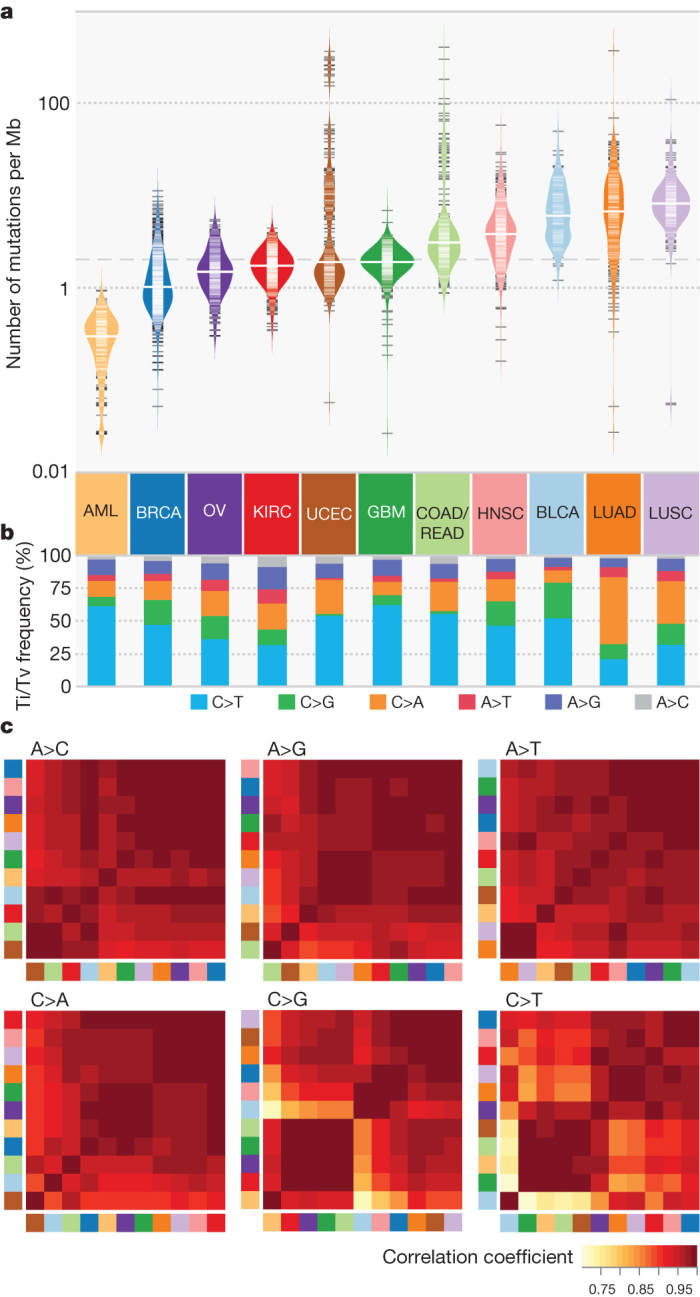
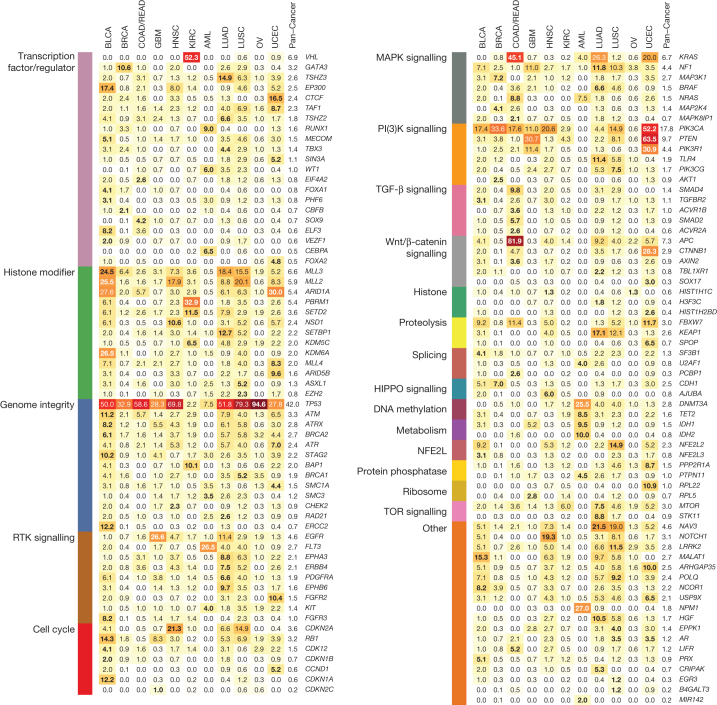
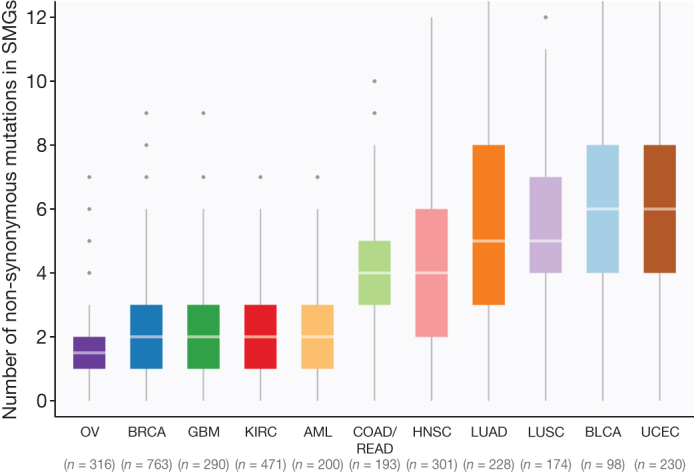
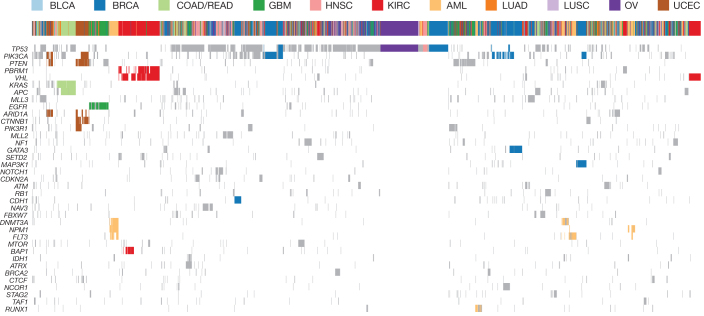
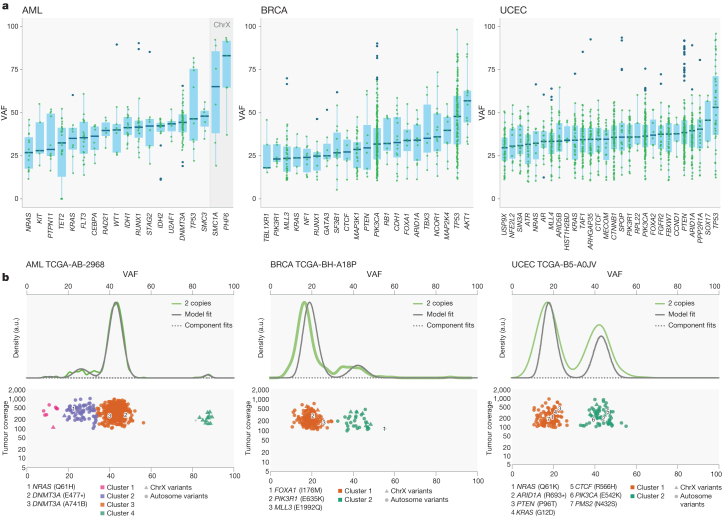
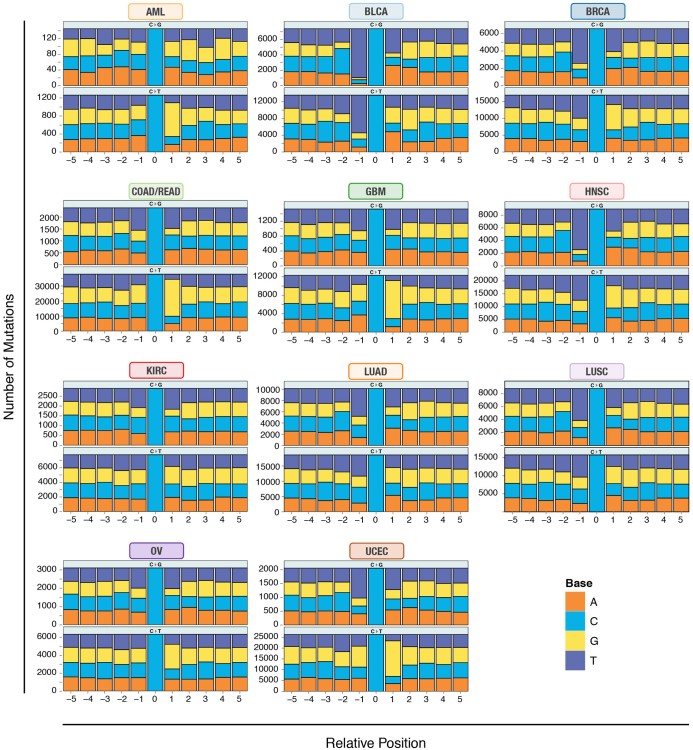
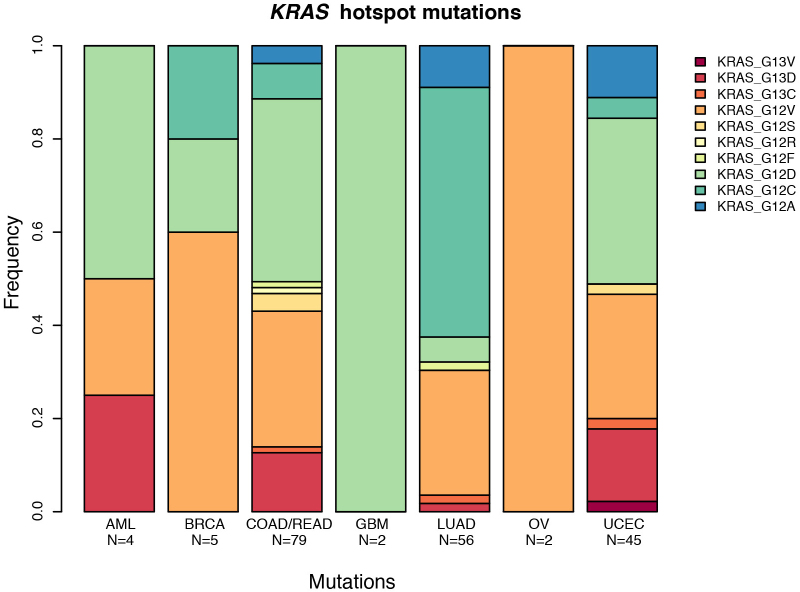
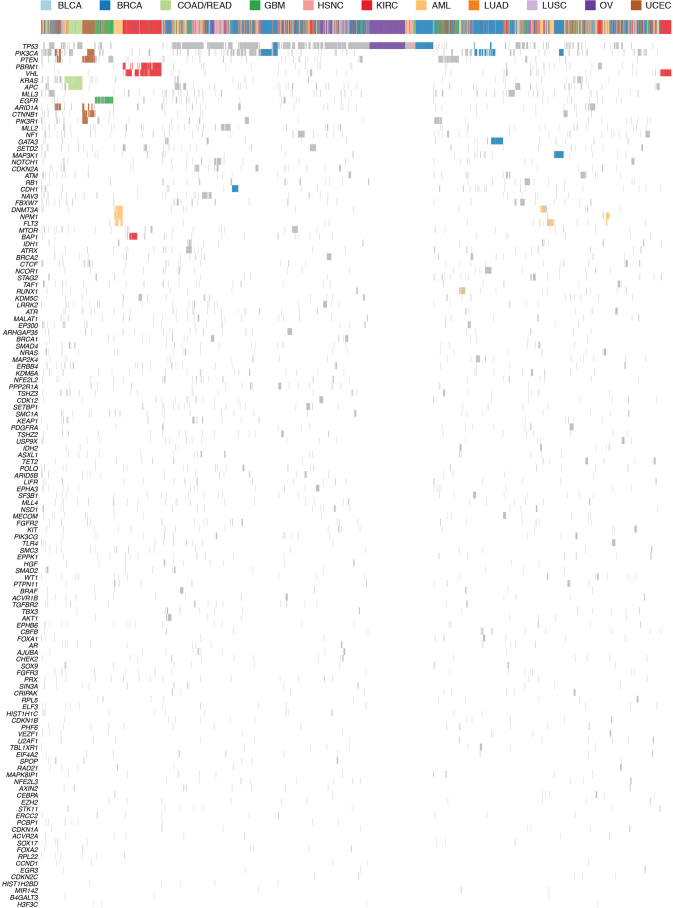
The Cancer Genome Atlas (TCGA) has used the latest sequencing and analysis methods to identify somatic variants across thousands of tumours. Here we present data and analytical results for point mutations and small insertions/deletions from 3,281 tumours across 12 tumour types as part of the TCGA Pan-Cancer effort. We illustrate the distributions of mutation frequencies, types and contexts across tumour types, and establish their links to tissues of origin, environmental/carcinogen influences, and DNA repair defects. Using the integrated data sets, we identified 127 significantly mutated genes from well-known (for example, mitogen-activated protein kinase, phosphatidylinositol-3-OH kinase, Wnt/β-catenin and receptor tyrosine kinase signalling pathways, and cell cycle control) and emerging (for example, histone, histone modification, splicing, metabolism and proteolysis) cellular processes in cancer. The average number of mutations in these significantly mutated genes varies across tumour types; most tumours have two to six, indicating that the number of driver mutations required during oncogenesis is relatively small. Mutations in transcriptional factors/regulators show tissue specificity, whereas histone modifiers are often mutated across several cancer types. Clinical association analysis identifies genes having a significant effect on survival, and investigations of mutations with respect to clonal/subclonal architecture delineate their temporal orders during tumorigenesis. Taken together, these results lay the groundwork for developing new diagnostics and individualizing cancer treatment. As part of The Cancer Genome Atlas Pan-Cancer effort, data analysis for point mutations and small indels from 3,281 tumours and 12 tumour types is presented; among the findings are 127 significantly mutated genes from cellular processes with both established and emerging links in cancer, and an indication that the number of driver mutations required for oncogenesis is relatively small. As part of The Cancer Genome Atlas Pan-Cancer project, these authors present data analysis for point mutations and small indels from more than 3,000 tumours representing 12 tumour types. Among the findings are 127 significantly mutated genes from cellular processes with both established and emerging links to cancer, and an indication that the number of driver mutations required for oncogenesis is relatively small. Additional analyses also identify genes with significant impact on survival and a likely temporal order of mutational events during tumorigenesis.
Overview
The claims and statistics of this paper haven’t been checked yet.
Free: it reads the open-access text and checks the first 5 claims that cite a source we can check. Create a free account to check every claim.
Integrity signals
Registry
Cites
Statistics
Figures
Verification
Claims the paper makes
The claims and statistics of this paper haven’t been checked yet.
Free: it reads the open-access text and checks the first 5 claims that cite a source we can check. Create a free account to check every claim.
Claims other papers make about this one
Each is checked against this paper’s own text: does it say what the citing paper says it does?
The source backs part of the claim, not all of it — or backs it for a different population, condition or comparison.
In the citing paper
“However, TP53 is inactivated in a major fraction of human tumors, mainly by missense mutations in the DNA-binding core domain of p533,4, leading to loss of DNA binding and p53-dependent transactivation of target genes such as p21, Bax and Puma.”
From Inhibition of the glutaredoxin and thioredoxin systems and ribonucleotide reductase by mutant p53-targeting compound APR-246 (2018) · cites this paper as [3]
Experimental — accuracy not yet measuredThe check wasn’t confident either way, so it gives no verdict — never disputed.
In the citing paper
“Current next-generation sequencing (NGS) technology is limited in the detection of rare variant alleles due to an intrinsic sequencing error rate of ~ 0.1%19.”
From Role of TP53 mutations in the origin and evolution of therapy-related acute myeloid leukaemia (2015) · cites this paper as [19]
Experimental — accuracy not yet measuredThe check wasn’t confident either way, so it gives no verdict — never disputed.
In the citing paper
“Yet, these mutations occur significantly more often in human disease than transversion mutations (62% transition vs 38% transversion29,63).”
From One-step generation of tumor models by base editor multiplexing in adult stem cell-derived organoids (2023) · cites this paper as [63]
Experimental — accuracy not yet measuredIn the citing paper
“Mutations in TP53 are thought to occur in more than 50% of all human malignancies.6,7”
From p53: from understanding its structure to advances in therapeutic targeting (2026) · cites this paper as [6]
In the citing paper
“Among somatically mutated genes, TP53 mutations are the most common.6”
From p53: from understanding its structure to advances in therapeutic targeting (2026) · cites this paper as [6]
Self-check
Percentages, sums and reported differences re-computed from the paper’s own numbers.
The self-check needs the paper’s full text.
Citations
Cites
Hanahan, D., & Weinberg, R. A. (2000) · Cell · doi:10.1016/s0092-8674(00)81683-9 · Cited by 29,219
Comprehensive molecular portraits of human breast tumours
The Cancer Genome Atlas Network (2012) · Nature · doi:10.1038/nature11412 · Cited by 12,129
Comprehensive molecular characterization of human colon and rectal cancer
The Cancer Genome Atlas Network (2012) · Nature · doi:10.1038/nature11252 · Cited by 8,499
Integrated genomic analyses of ovarian carcinoma
Perou, C. M. (2019) · Carolina Digital Repository (University of North Carolina at Chapel Hill) · doi:10.17615/hvp3-wg08 · Cited by 7,925
Vogelstein, B., Papadopoulos, N., Velculescu, V. E., Zhou, S., Diaz, L. A., & Kinzler, K. W. (2013) · Science · doi:10.1126/science.1235122 · Cited by 7,863
Comprehensive genomic characterization defines human glioblastoma genes and core pathways
The Cancer Genome Atlas Research Network (2008) · Nature · doi:10.1038/nature07385 · Cited by 7,735
Self-citationAn Integrated Genomic Analysis of Human Glioblastoma Multiforme
Parsons, D. W., Jones, S., Zhang, X., Lin, J. C.-H., Leary, R. J., Angenendt, P., Mankoo, P., Carter, H., Siu, I.-M., Gallia, G. L., et al. (2008) · Science · doi:10.1126/science.1164382 · Cited by 5,857
Integrated genomic characterization of endometrial carcinoma
The Cancer Genome Atlas Research Network, & Levine, D. A. (2013) · Nature · doi:10.1038/nature12113 · Cited by 5,784
Mutational heterogeneity in cancer and the search for new cancer-associated genes
Lawrence, M. S., Stojanov, P., Polak, P., Kryukov, G. V., Cibulskis, K., Sivachenko, A., Carter, S. L., Stewart, C., Mermel, C. H., Roberts, S. A., et al. (2013) · Nature · doi:10.1038/nature12213 · Cited by 5,461
Genomic and Epigenomic Landscapes of Adult De Novo Acute Myeloid Leukemia
The Cancer Genome Atlas Research Network (2013) · New England Journal of Medicine · doi:10.1056/nejmoa1301689 · Cited by 5,078
Cited by
Charoentong, P., Finotello, F., Angelova, M., Mayer, C., Efremova, M., Rieder, D., Hackl, H., & Trajanoski, Z. (2017) · Cell Reports · doi:10.1016/j.celrep.2016.12.019 · Cited by 5,041
Molecular and genetic properties of tumors associated with local immune cytolytic activity
Rooney, M. S., Shukla, S. A., Wu, C. J., Getz, G., & Hacohen, N. (2015) · Cell · doi:10.1016/j.cell.2014.12.033 · Cited by 3,825
“…mutation calls were accessed from TumorPortal (Lawrence et al., 2014), Synapse workspace syn1729383 (https://www.synapse.org/#!Synapse:syn1729383; Kandoth et al., 2013), TCGA Data Portal (https://tcga-data.nci.nih.gov/tcga), GDAC Firehose (http://gdac.broadinstitute.org/), and the TCGA Research…”
Review The Cancer Genome Atlas (TCGA): an immeasurable source of knowledge
Tomczak, K., Czerwińska, P., & Wiznerowicz, M. (2015) · Współczesna Onkologia · doi:10.5114/wo.2014.47136 · Cited by 3,492
Zehir, A., Benayed, R., Shah, R. H., Syed, A., Middha, S., Kim, H. R., Srinivasan, P., Gao, J., Chakravarty, D., Devlin, S. M., et al. (2017) · Nature Medicine · doi:10.1038/nm.4333 · Cited by 3,380
A pathology atlas of the human cancer transcriptome
Uhlen, M., Zhang, C., Lee, S., Sjöstedt, E., Fagerberg, L., Bidkhori, G., Benfeitas, R., Arif, M., Liu, Z., Edfors, F., et al. (2017) · Science · doi:10.1126/science.aan2507 · Cited by 3,371
“For some patient tumors, the global expression pattern resembles other cancer types more than it does the given type of diagnosed cancer, which reinforces previous discoveries (12).”
ResultDiscovery and saturation analysis of cancer genes across 21 tumour types
Lawrence, M. S., Stojanov, P., Mermel, C. H., Robinson, J. T., Garraway, L. A., Golub, T. R., Meyerson, M., Gabriel, S. B., Lander, E. S., & Getz, G. (2014) · Nature · doi:10.1038/nature12912 · Cited by 3,096
Triple-negative breast cancer: challenges and opportunities of a heterogeneous disease
Bianchini, G., Balko, J. M., Mayer, I. A., Sanders, M. E., & Gianni, L. (2016) · Nature Reviews Clinical Oncology · doi:10.1038/nrclinonc.2016.66 · Cited by 3,079
“PI(3) kinase is associated with a mechanism of immunoresistance in breast and prostate cancer.”
BackgroundCoudray, N., Ocampo, P. S., Sakellaropoulos, T., Narula, N., Snuderl, M., Fenyö, D., Moreira, A. L., Razavian, N., & Tsirigos, A. (2018) · Nature Medicine · doi:10.1038/s41591-018-0177-5 · Cited by 2,930
The landscape of long noncoding RNAs in the human transcriptome
Iyer, M. K., Niknafs, Y. S., Malik, R., Singhal, U., Sahu, A., Hosono, Y., Barrette, T. R., Prensner, J. R., Evans, J. R., Zhao, S., et al. (2015) · Nature Genetics · doi:10.1038/ng.3192 · Cited by 2,738
“Primer pairs with the following parameters were selected: (1) amplicon length between 80–140 bp (2) primer GC content between 35–65%, and (3) primer length greater than 20 bp.”
MethodInfluentialA comprehensive map of molecular drug targets
Santos, R., Ursu, O., Gaulton, A., Bento, A. P., Donadi, R. S., Bologa, C. G., Karlsson, A., Al-Lazikani, B., Hersey, A., Oprea, T. I., et al. (2017) · Nature Reviews Drug Discovery · doi:10.1038/nrd.2016.230 · Cited by 2,427
MPDL3280A (anti-PD-L1) treatment leads to clinical activity in metastatic bladder cancer
Powles, T., Eder, J. P., Fine, G. D., Braiteh, F. S., Loriot, Y., Cruz, C., Bellmunt, J., Burris, H. A., Petrylak, D. P., Teng, S.-L., et al. (2014) · Nature · doi:10.1038/nature13904 · Cited by 2,381
The immune contexture in cancer prognosis and treatment
Fridman, W. H., Zitvogel, L., Sautès–Fridman, C., & Kroemer, G. (2017) · Nature Reviews Clinical Oncology · doi:10.1038/nrclinonc.2017.101 · Cited by 2,263
Comprehensive Characterization of Cancer Driver Genes and Mutations
Bailey, M. H., Tokheim, C., Porta-Pardo, E., Sengupta, S., Bertrand, D., Weerasinghe, A., Colaprico, A., Wendl, M. C., Kim, J., Reardon, B., et al. (2018) · Cell · doi:10.1016/j.cell.2018.02.060 · Cited by 2,256
“Our driver detection dataset ultimately consisted of 9,079 samples having 1,457,702 total mutations (Figure S1B), where the number of mutations per sample was widely distributed across cancer types, as previously noted (Figures 1B and 1C) (Kandoth et al., 2013; Lawrence et al., 2013; Tamborero et al., 2013b).”
BackgroundInfluentialSelf-citationEvolution of the Cancer Stem Cell Model
Kreso, A., & Dick, J. E. (2014) · Cell Stem Cell · doi:10.1016/j.stem.2014.02.006 · Cited by 2,224
The PI3K–AKT network at the interface of oncogenic signalling and cancer metabolism
Hoxhaj, G., & Manning, B. D. (2020) · Nature Reviews Cancer · doi:10.1038/s41568-019-0216-7 · Cited by 2,137
A Landscape of Pharmacogenomic Interactions in Cancer
Iorio, F., Knijnenburg, T. A., Vis, D. J., Bignell, G. R., Menden, M. P., Schubert, M., Aben, N., Gonçalves, E., Barthorpe, S., Lightfoot, H., et al. (2016) · Cell · doi:10.1016/j.cell.2016.06.017 · Cited by 2,090
Role of hypoxia in cancer therapy by regulating the tumor microenvironment
Jing, X., Yang, F., Shao, C., Wei, K., Xie, M., Shen, H., & Shu, Y. (2019) · Molecular Cancer · doi:10.1186/s12943-019-1089-9 · Cited by 2,054
“Given the central role of mitochondria, the comprehensive connection between HIF, mitochondrial activity, and chemoresistance provides a new direction of research for explaining therapy failure and proposing innovative treatment strategies [116].”
BackgroundSelf-citationStandards and Guidelines for the Interpretation and Reporting of Sequence Variants in Cancer
Li, M. M., Datto, M., Duncavage, E. J., Kulkarni, S., Lindeman, N. I., Roy, S., Tsimberidou, A. M., Vnencak-Jones, C. L., Wolff, D. J., Younes, A., et al. (2017) · The Journal of Molecular Diagnostics · doi:10.1016/j.jmoldx.2016.10.002 · Cited by 2,030
Reimand, J., Isserlin, R., Voisin, V., Kucera, M., Tannus-Lopes, C., Rostamianfar, A., Wadi, L., Meyer, M., Wong, J., Xu, C., et al. (2019) · Nature Protocols · doi:10.1038/s41596-018-0103-9 · Cited by 1,970
Non-small-cell lung cancers: a heterogeneous set of diseases
Chen, Z., Fillmore, C. M., Hammerman, P. S., Kim, C. F., & Wong, K.-K. (2014) · Nature Reviews Cancer · doi:10.1038/nrc3775 · Cited by 1,942
Variation in cancer risk among tissues can be explained by the number of stem cell divisions
Tomasetti, C., & Vogelstein, B. (2015) · Science · doi:10.1126/science.1260825 · Cited by 1,927
Humphrey, P. A., Moch, H., Cubilla, A. L., Ulbright, T. M., & Reuter, V. E. (2016) · European Urology · doi:10.1016/j.eururo.2016.02.028 · Cited by 1,916
Age-related mutations associated with clonal hematopoietic expansion and malignancies
Xie, M., Lu, C., Wang, J., McLellan, M. D., Johnson, K. J., Wendl, M. C., McMichael, J. F., Schmidt, H. K., Yellapantula, V., Miller, C. A., et al. (2014) · Nature Medicine · doi:10.1038/nm.3733 · Cited by 1,874
Self-citationSenescence in Health and Disease
He, S., & Sharpless, N. E. (2017) · Cell · doi:10.1016/j.cell.2017.05.015 · Cited by 1,766
Pereira, B., Chin, S.-F., Rueda, O. M., Vollan, H.-K. M., Provenzano, E., Bardwell, H. A., Pugh, M., Jones, L., Russell, R., Sammut, S.-J., et al. (2016) · Nature Communications · doi:10.1038/ncomms11479 · Cited by 1,717
The landscape of genomic alterations across childhood cancers
ICGC PedBrain-Seq Project, Gröbner, S. N., ICGC MMML-Seq Project, Worst, B. C., Weischenfeldt, J., Buchhalter, I., Kleinheinz, K., Rudneva, V. A., Johann, P. D., Balasubramanian, G. P., et al. (2018) · Nature · doi:10.1038/nature25480 · Cited by 1,572
“…cancers in children, adolescents, and young adults, by incorporating small mutations and copy-number or structural variants on somatic and germline levels, and by identifying putative cancer genes and comparing them to those previously reported in adult cancers by The Cancer Genome Atlas (TCGA) 7 .”
InfluentialThe Cancer Stem Cell Niche: How Essential Is the Niche in Regulating Stemness of Tumor Cells?
Plaks, V., Kong, N., & Werb, Z. (2015) · Cell Stem Cell · doi:10.1016/j.stem.2015.02.015 · Cited by 1,557
Mutant p53 in Cancer: New Functions and Therapeutic Opportunities
Muller, P. A. J., & Vousden, K. H. (2014) · Cancer Cell · doi:10.1016/j.ccr.2014.01.021 · Cited by 1,545
“TP53 is the most commonly mutated gene in human cancer (Kandoth et al., 2013).”
BackgroundUniversal Patterns of Selection in Cancer and Somatic Tissues
Martincorena, I., Raine, K. M., Gerstung, M., Dawson, K. J., Haase, K., Van Loo, P., Davies, H., Stratton, M. R., & Campbell, P. J. (2017) · Cell · doi:10.1016/j.cell.2017.09.042 · Cited by 1,523
Hoadley, K. A., Yau, C., Wolf, D. M., Cherniack, A. D., Tamborero, D., Ng, S., Leiserson, M. D. M., Niu, B., McLellan, M. D., Uzunangelov, V., et al. (2014) · Cell · doi:10.1016/j.cell.2014.06.049 · Cited by 1,499
Self-citationFeng, Y., Spezia, M., Huang, S., Yuan, C., Zeng, Z., Zhang, L., Ji, X., Liu, W., Huang, B., Luo, W., et al. (2018) · Genes & Diseases · doi:10.1016/j.gendis.2018.05.001 · Cited by 1,486
Identification of pre-leukaemic haematopoietic stem cells in acute leukaemia
Shlush, L. I., Zandi, S., Mitchell, A., Chen, W. C., Brandwein, J. M., Gupta, V., Kennedy, J. A., Schimmer, A. D., Schuh, A. C., Yee, K. W., et al. (2014) · Nature · doi:10.1038/nature13038 · Cited by 1,443
Somatic mutation in cancer and normal cells
Martincorena, I., & Campbell, P. J. (2015) · Science · doi:10.1126/science.aab4082 · Cited by 1,396
The functions and unique features of long intergenic non-coding RNA
Ransohoff, J. D., Wei, Y., & Khavari, P. A. (2018) · Nature Reviews Molecular Cell Biology · doi:10.1038/nrm.2017.104 · Cited by 1,330
Network pharmacology: curing causal mechanisms instead of treating symptoms
Nogales, C., Mamdouh, Z. M., List, M., Kiel, C., Casas, A. I., & Schmidt, H. H. H. W. (2022) · Trends in Pharmacological Sciences · doi:10.1016/j.tips.2021.11.004 · Cited by 1,201
Transcriptional Addiction in Cancer
Bradner, J. E., Hnisz, D., & Young, R. A. (2017) · Cell · doi:10.1016/j.cell.2016.12.013 · Cited by 1,194
The emerging roles of YAP and TAZ in cancer
Moroishi, T., Hansen, C. G., & Guan, K.-L. (2015) · Nature Reviews Cancer · doi:10.1038/nrc3876 · Cited by 1,145
The multiple mechanisms that regulate p53 activity and cell fate
Hafner, A., Bulyk, M. L., Jambhekar, A., & Lahav, G. (2019) · Nature Reviews Molecular Cell Biology · doi:10.1038/s41580-019-0110-x · Cited by 1,129
Metabolic regulation of cell growth and proliferation
Zhu, J., & Thompson, C. B. (2019) · Nature Reviews Molecular Cell Biology · doi:10.1038/s41580-019-0123-5 · Cited by 1,116
The whole-genome landscape of medulloblastoma subtypes
Northcott, P. A., Buchhalter, I., Morrissy, A. S., Hovestadt, V., Weischenfeldt, J., Ehrenberger, T., Gröbner, S., Segura-Wang, M., Zichner, T., Rudneva, V. A., et al. (2017) · Nature · doi:10.1038/nature22973 · Cited by 1,112
Daly, M. B., Pal, T., Berry, M. P., Buys, S. S., Dickson, P., Domchek, S. M., Elkhanany, A., Friedman, S., Goggins, M., Hutton, M. L., et al. (2021) · Journal of the National Comprehensive Cancer Network · doi:10.6004/jnccn.2021.0001 · Cited by 1,112
Gaillard, H., García-Muse, T., & Aguilera, A. (2015) · Nature Reviews Cancer · doi:10.1038/nrc3916 · Cited by 1,089
Biological and therapeutic impact of intratumor heterogeneity in cancer evolution
McGranahan, N., & Swanton, C. (2015) · Cancer Cell · doi:10.1016/j.ccell.2014.12.001 · Cited by 1,077
“When one considers the possibility that each tumor clademay harbor one ormore driver events, the numberof cancergenesoperating inanadvanced tumormay rise substantially beyond the current estimates of two to six per tumor (Kandoth et al., 2013).”
BackgroundClonal evolution in breast cancer revealed by single nucleus genome sequencing
Wang, Y., Waters, J., Leung, M. L., Unruh, A., Roh, W., Shi, X., Chen, K., Scheet, P., Vattathil, S., Liang, H., et al. (2014) · Nature · doi:10.1038/nature13600 · Cited by 1,029
Targeting p53 pathways: mechanisms, structures, and advances in therapy
Wang, H., Guo, M., Wei, H., & Chen, Y. (2023) · Signal Transduction and Targeted Therapy · doi:10.1038/s41392-023-01347-1 · Cited by 1,016
“198 The major type of mutation in TP53 is a missense mutation, a single amino acid substitution and the DNA binding domain (DBD) is the most common mutated region 199,200 (Fig.”
BackgroundIntratumor Heterogeneity: The Rosetta Stone of Therapy Resistance
Marusyk, A., Janiszewska, M., & Polyak, K. (2020) · Cancer Cell · doi:10.1016/j.ccell.2020.03.007 · Cited by 1,009
Hegde, P. S., Karanikas, V., & Evers, S. (2016) · Clinical Cancer Research · doi:10.1158/1078-0432.ccr-15-1507 · Cited by 1,000
Sharifi-Rad, J., Rayess, Y. E., Rizk, A. A., Sadaka, C., Zgheib, R., Zam, W., Sestito, S., Rapposelli, S., Neffe-Skocińska, K., Zielińska, D., et al. (2020) · Frontiers in Pharmacology · doi:10.3389/fphar.2020.01021 · Cited by 937
Deep learning in cancer diagnosis, prognosis and treatment selection
Tran, K. A., Kondrashova, O., Bradley, A., Williams, E. D., Pearson, J. V., & Waddell, N. (2021) · Genome Medicine · doi:10.1186/s13073-021-00968-x · Cited by 932
Best, M. G., Sol, N., Kooi, I., Tannous, J., Westerman, B. A., Rustenburg, F., Schellen, P., Verschueren, H., Post, E., Koster, J., et al. (2015) · Cancer Cell · doi:10.1016/j.ccell.2015.09.018 · Cited by 916
Leiserson, M. D. M., Vandin, F., Wu, H.-T., Dobson, J. R., Eldridge, J. V., Thomas, J. L., Papoutsaki, A., Kim, Y., Niu, B., McLellan, M., et al. (2015) · Nature Genetics · doi:10.1038/ng.3168 · Cited by 903
Self-citationPan-cancer genome and transcriptome analyses of 1,699 paediatric leukaemias and solid tumours
Ma, X., Liu, Y., Liu, Y., Alexandrov, L. B., Edmonson, M. N., Gawad, C., Zhou, X., Li, Y., Rusch, M. C., Easton, J., et al. (2018) · Nature · doi:10.1038/nature25795 · Cited by 901
“Panel a and b are scaled to the total number of samples with WGS (n=651), WGS or WES (1,639), respectively.”
BackgroundMethodInfluentialRole of TP53 mutations in the origin and evolution of therapy-related acute myeloid leukaemia
Wong, T. N., Ramsingh, G., Young, A. L., Miller, C. A., Touma, W., Welch, J. S., Lamprecht, T. L., Shen, D., Hundal, J., Fulton, R. S., et al. (2015) · Nature · doi:10.1038/nature13968 · Cited by 892
Self-citationTargeting mutant p53 for efficient cancer therapy
Bykov, V. J. N., Eriksson, S. E., Bianchi, J., & Wiman, K. G. (2018) · Nature Reviews Cancer · doi:10.1038/nrc.2017.109 · Cited by 889
The UCSC Genome Browser database: 2019 update
Haeussler, M., Zweig, A. S., Tyner, C., Speir, M. L., Rosenbloom, K. R., Raney, B. J., Lee, C. M., Lee, B. T., Hinrichs, A. S., Gonzalez, J. N., et al. (2019) · Nucleic Acids Research · doi:10.1093/nar/gky1095 · Cited by 877
Exosome-based liquid biopsies in cancer: opportunities and challenges
Yu, W., Hurley, J., Roberts, D., Chakrabortty, S. K., Enderle, D., Noerholm, M., Breakefield, X. O., & Skog, J. K. (2021) · Annals of Oncology · doi:10.1016/j.annonc.2021.01.074 · Cited by 870
Cancer Stem Cells: Basic Concepts and Therapeutic Implications
Nassar, D., & Blanpain, C. (2016) · Annual Review of Pathology: Mechanisms of Disease · doi:10.1146/annurev-pathol-012615-044438 · Cited by 869
Tumor Mutational Burden as a Predictive Biomarker in Solid Tumors
Sha, D., Jin, Z., Budczies, J., Kluck, K., Stenzinger, A., & Sinicrope, F. A. (2020) · Cancer Discovery · doi:10.1158/2159-8290.cd-20-0522 · Cited by 859
Scalable Open Science Approach for Mutation Calling of Tumor Exomes Using Multiple Genomic Pipelines
Ellrott, K., Bailey, M. H., Saksena, G., Covington, K. R., Kandoth, C., Stewart, C., Hess, J., Ma, S., Chiotti, K. E., McLellan, M., et al. (2018) · Cell Systems · doi:10.1016/j.cels.2018.03.002 · Cited by 852
Self-citationAssessment of Minimal Residual Disease in Standard-Risk AML
Ivey, A., Hills, R. K., Simpson, M. A., Jovanovic, J. V., Gilkes, A., Grech, A., Patel, Y., Bhudia, N., Farah, H., Mason, J., et al. (2016) · New England Journal of Medicine · doi:10.1056/nejmoa1507471 · Cited by 845
Epigenetic modulators, modifiers and mediators in cancer aetiology and progression
Feinberg, A. P., Koldobskiy, M. A., & Göndör, A. (2016) · Nature Reviews Genetics · doi:10.1038/nrg.2016.13 · Cited by 841
DNA Replication Stress as a Hallmark of Cancer
Macheret, M., & Halazonetis, T. D. (2015) · Annual Review of Pathology: Mechanisms of Disease · doi:10.1146/annurev-pathol-012414-040424 · Cited by 823
Chang, M. T., Asthana, S., Gao, S. P., Lee, B. H., Chapman, J. S., Kandoth, C., Gao, J., Socci, N. D., Solit, D. B., Olshen, A. B., et al. (2016) · Nature Biotechnology · doi:10.1038/nbt.3391 · Cited by 808
Self-citationTan, A. S., Baty, J. W., Dong, L.-F., Bezawork-Geleta, A., Endaya, B., Goodwin, J., Bajzikova, M., Kovarova, J., Peterka, M., Yan, B., et al. (2015) · Cell Metabolism · doi:10.1016/j.cmet.2014.12.003 · Cited by 785
Mutant p53 as a guardian of the cancer cell
Mantovani, F., Collavin, L., & Del Sal, G. (2019) · Cell Death & Differentiation · doi:10.1038/s41418-018-0246-9 · Cited by 775
High-intensity sequencing reveals the sources of plasma circulating cell-free DNA variants
Razavi, P., Li, B. T., Brown, D. N., Jung, B., Hubbell, E., Shen, R., Abida, W., Juluru, K., De Bruijn, I., Hou, C., et al. (2019) · Nature Medicine · doi:10.1038/s41591-019-0652-7 · Cited by 769
Pan-cancer analysis of the extent and consequences of intratumor heterogeneity
Andor, N., Graham, T. A., Jansen, M., Xia, L. C., Aktipis, C. A., Petritsch, C., Ji, H. P., & Maley, C. C. (2016) · Nature Medicine · doi:10.1038/nm.3984 · Cited by 768
PI3K/Akt/mTOR Pathway and Its Role in Cancer Therapeutics: Are We Making Headway?
Peng, Y., Wang, Y., Zhou, C., Mei, W., & Zeng, C. (2022) · Frontiers in Oncology · doi:10.3389/fonc.2022.819128 · Cited by 763
Ribosomal proteins: functions beyond the ribosome
Zhou, X., Liao, W.-J., Liao, J.-M., Liao, P., & Lu, H. (2015) · Journal of Molecular Cell Biology · doi:10.1093/jmcb/mjv014 · Cited by 743
Roles and mechanisms of alternative splicing in cancer — implications for care
Bonnal, S. C., López-Oreja, I., & Valcárcel, J. (2020) · Nature Reviews Clinical Oncology · doi:10.1038/s41571-020-0350-x · Cited by 731
Bouaoun, L., Sonkin, D., Ardin, M., Hollstein, M., Byrnes, G., Zavadil, J., & Olivier, M. (2016) · Human Mutation · doi:10.1002/humu.23035 · Cited by 730
Signaling Receptors for TGF-β Family Members
Heldin, C.-H., & Moustakas, A. (2016) · Cold Spring Harbor Perspectives in Biology · doi:10.1101/cshperspect.a022053 · Cited by 711
The Role of Cholesterol in Cancer
Kuzu, O. F., Noory, M. A., & Robertson, G. P. (2016) · Cancer Research · doi:10.1158/0008-5472.can-15-2613 · Cited by 708
Molecular profiling of cancer patients enables personalized combination therapy: the I-PREDICT study
Sicklick, J. K., Kato, S., Okamura, R., Schwaederle, M., Hahn, M. E., Williams, C. B., De, P., Krie, A., Piccioni, D. E., Miller, V. A., et al. (2019) · Nature Medicine · doi:10.1038/s41591-019-0407-5 · Cited by 707
Suppression of insulin feedback enhances the efficacy of PI3K inhibitors
Hopkins, B. D., Pauli, C., Du, X., Wang, D. G., Li, X., Wu, D., Amadiume, S. C., Goncalves, M. D., Hodakoski, C., Lundquist, M. R., et al. (2018) · Nature · doi:10.1038/s41586-018-0343-4 · Cited by 706
ESR1 mutations—a mechanism for acquired endocrine resistance in breast cancer
Jeselsohn, R., Buchwalter, G., De Angelis, C., Brown, M., & Schiff, R. (2015) · Nature Reviews Clinical Oncology · doi:10.1038/nrclinonc.2015.117 · Cited by 704
Clonal haematopoiesis harbouring AML-associated mutations is ubiquitous in healthy adults
Young, A. L., Challen, G. A., Birmann, B. M., & Druley, T. E. (2016) · Nature Communications · doi:10.1038/ncomms12484 · Cited by 692
Clonal status of actionable driver events and the timing of mutational processes in cancer evolution
McGranahan, N., Favero, F., de Bruin, E. C., Birkbak, N. J., Szallasi, Z., & Swanton, C. (2015) · Science Translational Medicine · doi:10.1126/scitranslmed.aaa1408 · Cited by 685
Proliferation of cells with HIV integrated into cancer genes contributes to persistent infection
Wagner, T. A., McLaughlin, S., Garg, K., Cheung, C. Y. K., Larsen, B. B., Styrchak, S., Huang, H. C., Edlefsen, P. T., Mullins, J. I., & Frenkel, L. M. (2014) · Science · doi:10.1126/science.1256304 · Cited by 677
Hijacked in cancer: the KMT2 (MLL) family of methyltransferases
Rao, R. C., & Dou, Y. (2015) · Nature Reviews Cancer · doi:10.1038/nrc3929 · Cited by 669
PARP and PARG inhibitors in cancer treatment
Slade, D. (2020) · Genes & Development · doi:10.1101/gad.334516.119 · Cited by 667
Genomic Evolution of Breast Cancer Metastasis and Relapse
Yates, L. R., Knappskog, S., Wedge, D., Farmery, J. H. R., Gonzalez, S., Martincorena, I., Alexandrov, L. B., Van Loo, P., Haugland, H. K., Lilleng, P. K., et al. (2017) · Cancer Cell · doi:10.1016/j.ccell.2017.07.005 · Cited by 665
A molecular portrait of microsatellite instability across multiple cancers
Cortes-Ciriano, I., Lee, S., Park, W.-Y., Kim, T.-M., & Park, P. J. (2017) · Nature Communications · doi:10.1038/ncomms15180 · Cited by 658
Bernard, E., Nannya, Y., Hasserjian, R. P., Devlin, S. M., Tuechler, H., Medina-Martinez, J. S., Yoshizato, T., Shiozawa, Y., Saiki, R., Malcovati, L., et al. (2020) · Nature Medicine · doi:10.1038/s41591-020-1008-z · Cited by 648
Li, Z., Ivanov, A. A., Su, R., Gonzalez-Pecchi, V., Qi, Q., Liu, S., Webber, P., McMillan, E., Rusnak, L., Pham, C., et al. (2017) · Nature Communications · doi:10.1038/ncomms15350 · Cited by 647
ATM and ATR as therapeutic targets in cancer
Weber, A. M., & Ryan, A. J. (2015) · Pharmacology & Therapeutics · doi:10.1016/j.pharmthera.2014.12.001 · Cited by 635
A Pan-Cancer Proteogenomic Atlas of PI3K/AKT/mTOR Pathway Alterations
Zhang, Y., Kwok-Shing Ng, P., Kucherlapati, M., Chen, F., Liu, Y., Tsang, Y. H., de Velasco, G., Jeong, K. J., Akbani, R., Hadjipanayis, A., et al. (2017) · Cancer Cell · doi:10.1016/j.ccell.2017.04.013 · Cited by 626
“A number of genes in the pathway were found significantly mutated or copy altered in pan-cancer analyses (Chang et al., 2016; Kandoth et al., 2013; Lawrence et al., 2014; Zack et al., 2013), including PIK3CA 4 Cancer Cell 31, 1–13, June 12, 2017 (14% mutated across all cancers; 6% amplified), PTEN…”
BackgroundThe emerging clinical relevance of genomics in cancer medicine
Berger, M. F., & Mardis, E. R. (2018) · Nature Reviews Clinical Oncology · doi:10.1038/s41571-018-0002-6 · Cited by 626
Comparative Molecular Analysis of Gastrointestinal Adenocarcinomas
Liu, Y., Sethi, N. S., Hinoue, T., Schneider, B. G., Cherniack, A. D., Sanchez-Vega, F., Seoane, J. A., Farshidfar, F., Bowlby, R., Islam, M., et al. (2018) · Cancer Cell · doi:10.1016/j.ccell.2018.03.010 · Cited by 615
Mutational landscape of aggressive cutaneous squamous cell carcinoma
Pickering, C. R., Zhou, J. H., Lee, J. J., Drummond, J. A., Peng, S. A., Saade, R. E., Tsai, K. Y., Curry, J. L., Tetzlaff, M. T., Lai, S. Y., et al. (2014) · Clinical Cancer Research · doi:10.1158/1078-0432.ccr-14-1768 · Cited by 612
Driver Fusions and Their Implications in the Development and Treatment of Human Cancers
Gao, Q., Liang, W.-W., Foltz, S. M., Mutharasu, G., Jayasinghe, R. G., Cao, S., Liao, W.-W., Reynolds, S. M., Wyczalkowski, M. A., Yao, L., et al. (2018) · Cell Reports · doi:10.1016/j.celrep.2018.03.050 · Cited by 604
Self-citationGenomic and transcriptomic profiling expands precision cancer medicine: the WINTHER trial
Rodon, J., Soria, J.-C., Berger, R., Miller, W. H., Rubin, E., Kugel, A., Tsimberidou, A., Saintigny, P., Ackerstein, A., Braña, I., et al. (2019) · Nature Medicine · doi:10.1038/s41591-019-0424-4 · Cited by 578
Shen, J., Ju, Z., Zhao, W., Wang, L., Peng, Y., Ge, Z., Nagel, Z. D., Zou, J., Wang, C., Kapoor, P., et al. (2018) · Nature Medicine · doi:10.1038/s41591-018-0012-z · Cited by 562
Ruijtenberg, S., & van den Heuvel, S. (2016) · Cell Cycle · doi:10.1080/15384101.2015.1120925 · Cited by 553
Comprehensive Characterization of Cancer Driver Genes and Mutations
Bailey, M. H., Tokheim, C., Porta-Pardo, E., Sengupta, S., Bertrand, D., Weerasinghe, A., Colaprico, A., Wendl, M. C., Kim, J., Reardon, B., et al. (2018) · Cell · doi:10.1016/j.cell.2018.07.034 · Cited by 552
Self-citationTranslational Implications of Tumor Heterogeneity
Jamal-Hanjani, M., Quezada, S. A., Larkin, J., & Swanton, C. (2015) · Clinical Cancer Research · doi:10.1158/1078-0432.ccr-14-1429 · Cited by 549
The foundations of immune checkpoint blockade and the ipilimumab approval decennial
Korman, A. J., Garrett-Thomson, S. C., & Lonberg, N. (2022) · Nature Reviews Drug Discovery · doi:10.1038/s41573-021-00345-8 · Cited by 548
The biology of circulating tumor cells
Pantel, K., & Speicher, M. R. (2016) · Oncogene · doi:10.1038/onc.2015.192 · Cited by 539
Epigenetic balance of gene expression by Polycomb and COMPASS families
Piunti, A., & Shilatifard, A. (2016) · Science · doi:10.1126/science.aad9780 · Cited by 524
Plimack, E. R., Dunbrack, R. L., Brennan, T. A., Andrake, M. D., Zhou, Y., Serebriiskii, I. G., Slifker, M., Alpaugh, K., Dulaimi, E., Palma, N., et al. (2015) · European Urology · doi:10.1016/j.eururo.2015.07.009 · Cited by 519
Metadata
- Authors
- Kandoth, C., McLellan, M. D., Vandin, F., Ye, K., Niu, B., Lu, C., Xie, M., Zhang, Q., McMichael, J. F., Wyczalkowski, M. A., Leiserson, M. D. M., Miller, C. A., Welch, J. S., Walter, M. J., Wendl, M. C., Ley, T. J., Wilson, R. K., Raphael, B. J., & Ding, L.
- Affiliations
- Washington University in St. Louis (US)
- Brown University (US)
- Corresponding author
- Ding, Li
- ORCID
- Venue
- Nature
- Published
- 2013-10-16
- Volume
- 502
- Issue
- 7471
- Pages
- 333-339
- ISSN
- 0028-0836 (ISSN-L)
- 1476-4687
- PMC
- PMC3927368
- OpenAlex
- W2022495797
- Cited by
- 4,419
- References
- 40
- Citations by year
- 2026: 162 · 2025: 243 · 2024: 311 · 2023: 324 · 2022: 380 · 2021: 395 · 2020: 417 · 2019: 377 · 2018: 410 · 2017: 414 · 2016: 407 · 2015: 327 · 2014: 237 · 2013: 8
- FWCI
- 114.79
- Type
- journal article
- Language
- en
- Open access
- hybrid
- doi.org
- Licence
- cc-by-nc-sa
- creativecommons.org/licenses/by-nc-sa/3.0/ (tdm)
- creativecommons.org/licenses/by-nc-sa/3.0/ (vor)
- Locations
- Nature (publishedVersion, cc-by-nc-sa)
- PubMed Central (publishedVersion, cc-by-nc-sa)
- PubMed (publishedVersion)
- Europe PMC (PubMed Central) (acceptedVersion, cc-by-nc-sa)
- Padua Research Archive (University of Padova) (submittedVersion, cc-by-nc-sa)
- RePEc: Research Papers in Economics (submittedVersion)
- Funders
- National Science Foundation (1016648)
- National Human Genome Research Institute (U01HG006517, U54HG003079, R01HG005690)
- National Cancer Institute (PO1CA101937, R01CA180006, P01CA101937)
- Topics
- Life Sciences › Biochemistry, Genetics and Molecular Biology › Cancer Research › Cancer Genomics and Diagnostics
- Life Sciences › Biochemistry, Genetics and Molecular Biology › Molecular Biology › Chromatin Remodeling and Cancer
- Life Sciences › Biochemistry, Genetics and Molecular Biology › Genetics › Genomics and Rare Diseases
- Keywords
- somatic mutations, point mutations, small insertions and deletions, significantly mutated genes, driver mutations, pan-cancer analysis, histone modifiers, transcription factors, histone modifications, splicing, carcinogenesis, clonal architecture, subclonal evolution, tissue specificity, DNA repair deficiency, carcinogens, cancer pathways, cancer metabolism
- MeSH terms
- Cell Cycle, Clone Cells, DNA Repair, Humans, Models, Genetic, Mutation, Neoplasms, Oncogenes, Time Factors, Cohort Studies, Survival Analysis, Point Mutation, Phosphatidylinositol 3-Kinases, Receptor Protein-Tyrosine Kinases, Mitogen-Activated Protein Kinases, INDEL Mutation, Carcinogenesis
About these checks
Registry, retraction, Cites and statistics results are computed, not judged, with one exception: a printed reference that no index lists is read once by a model before it counts as a citation error. Claims are extracted by a model and kept only when their quote appears verbatim in the text; each cited source is then checked, with a model’s help, for whether it says what the claim relies on. Those verdicts can be wrong — read the claim’s quote and the cited source before relying on one.
Statistics and arithmetic are recomputed, not judged.
Confidence bands are shown only for fields calibrated on our annotated test set. None is calibrated yet, so no band is shown.
What counts as a claim ›How we measure confidence ›How we check this ›
Are you an author, or do you see a problem with this page? Request a review
Data sources
Bibliographic data: Semantic Scholar, OpenAlex, Crossref.
Contains information from the Semantic Scholar Academic Graph Datasets, made available under the ODC Attribution License (ODC-BY 1.0).
Semantic Scholar’s data is described in: Kinney, R., et al. (2023). The Semantic Scholar Open Data Platform. arXiv:2301.10140.
